12 Eco Friendly Aesthetic Photography Development Ideas
Photography is entering a more intentional era, and eco friendly aesthetic photography ideas are becoming increasingly relevant as photographers look for ways to combine visual beauty with responsible creative choices. In 2026, photography trends are moving toward authenticity, natural textures, film inspired character, local environments, and more honest sustainability stories. Current visual research also shows a shift away from overly polished imagery toward photographs that feel specific, human, and connected to real places and experiences.
Eco conscious photography is not simply about photographing plants, forests, or other environmental subjects. It is about considering how the photographer creates an image, what materials they use, where they travel, what they photograph, and how they communicate a story. A sustainable aesthetic can come from simple choices such as using existing props, working with natural light, exploring nearby locations, or allowing authentic textures and imperfections to remain visible.

The most interesting development is that sustainability and aesthetics are no longer separate ideas. The same qualities that make an image feel environmentally conscious can also make it feel contemporary. Natural colors, organic textures, imperfect surfaces, documentary moments, and real environments can create photographs with a distinctive visual identity without requiring elaborate sets or excessive production.
Why Eco Friendly Aesthetic Photography Is Becoming More Important in 2026
The photography landscape has changed considerably in recent years. Digital cameras and editing software make it easier than ever to create extremely clean and technically polished photographs. At the same time, audiences are becoming more interested in images that feel genuine and less manufactured.
Current 2026 photography trend research highlights authenticity, film inspired aesthetics, imperfections, documentary influence, and more human visual storytelling. This creates an interesting opportunity for sustainable photography because environmental responsibility often works best when it feels genuine rather than staged.
Sustainability storytelling is also becoming more specific. Getty Images identifies a 2026 shift toward showing real places, communities, actions, and details instead of relying on generic environmental symbols. That means a photograph of an actual community garden can communicate more than a generic image filled with green leaves and recycling symbols.
This change gives photographers greater creative freedom. Instead of trying to make every photograph obviously look “eco friendly,” they can build a recognizable style around natural materials, local environments, authentic moments, subtle colors, and thoughtful compositions.
1. Analog Revival Eco Photography
The renewed interest in analog photography is one of the most noticeable visual developments of 2026. Film inspired photography has gained attention because its grain, color variation, softer rendering, and small imperfections provide something that highly processed digital images often lack. Current photography trend reports describe the return of film and the appeal of imperfect imagery as part of a wider desire for authenticity.
This trend can become particularly interesting when combined with sustainable photography practices. Instead of treating photography equipment as something that needs constant replacement, photographers can explore the creative potential of cameras they already own. Second hand cameras and older equipment can also become part of a more intentional approach to photography.
The environmental benefit should not be exaggerated, because analog photography still involves materials and processing. However, the philosophy behind slower and more deliberate shooting can encourage photographers to become more thoughtful about every frame.
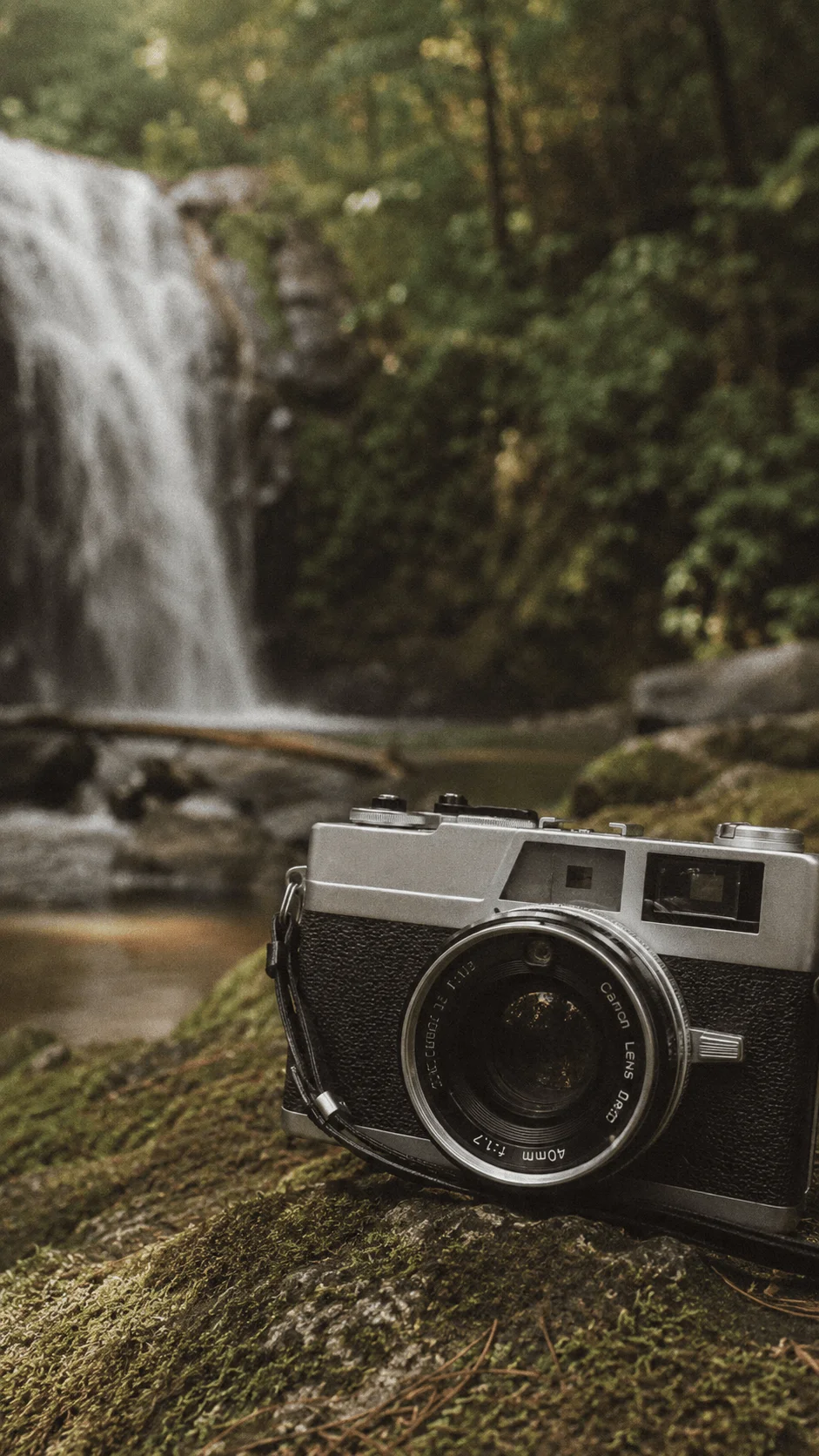
The aesthetic itself works beautifully with environmental subjects. Imagine photographing an old wooden building surrounded by wild plants, a local market filled with reusable containers, or a quiet path after rainfall. A slightly softer image with natural grain can make these subjects feel intimate and timeless.
Digital photographers can also explore an analog inspired appearance without purchasing film equipment. Natural lighting, restrained editing, subtle grain, gentle contrast, and realistic colors can create character without making the image look artificially aged. The goal should be to develop an authentic visual atmosphere rather than simply adding a filter.
2. Imperfect Nature Aesthetic Photography
One of the strongest directions in current photography is the acceptance of imperfection. Instead of removing every unusual shadow, texture, movement, or irregular detail, photographers are increasingly allowing these characteristics to remain part of the photograph. Current 2026 aesthetic research describes candid, slightly imperfect, film inspired imagery as an important visual direction.
This approach works naturally with environmental photography because nature rarely follows perfect visual rules. Leaves have holes, trees grow unevenly, stones have different surfaces, and sunlight changes from moment to moment. These details can make an image feel more believable.
An imperfect nature aesthetic might involve photographing a weathered tree rather than a perfectly maintained garden. It could mean capturing fallen leaves, rough bark, muddy paths, faded walls covered with climbing plants, or flowers that have passed their peak.

Composition also becomes more relaxed. Instead of positioning every element perfectly, photographers can allow branches to enter the frame naturally or include small distractions that provide context. Slight movement can add energy to photographs of grass, leaves, water, or people interacting with outdoor environments.
The important point is that imperfection should remain intentional. A photograph does not automatically become artistic simply because it contains flaws. The photographer should decide which imperfections contribute to the mood and which ones genuinely distract from the subject.
3. Zero Waste Still Life Photography
Still life photography offers an excellent opportunity to explore zero waste photography ideas because photographers can create sophisticated compositions using objects that already exist.
Traditional still life shoots can involve purchasing new backgrounds, decorative objects, artificial plants, disposable materials, and other props. A more sustainable approach begins by looking around the home, studio, or workplace for materials that already have visual character.
Old ceramics, wooden boards, fabric, books, glass containers, fruits, vegetables, stones, dried leaves, paper packaging, and household objects can all become part of a composition. Their previous purpose does not limit their photographic potential.
The visual strength comes from combining these materials thoughtfully. A rough wooden surface can provide contrast against a smooth ceramic object. Folded linen can introduce soft texture. A glass container can interact with sunlight and create reflections. Fruits and vegetables can bring organic shapes and natural colors into the scene.

Natural light can make these compositions even more attractive. A window can create directional illumination, while nearby curtains can soften the light. Moving the subject only a few inches can change the shadows and create an entirely different atmosphere.
This approach also encourages experimentation. Instead of purchasing a specific prop because it appears in another photographer’s work, photographers can ask what existing objects could communicate the same idea. That shift can produce more personal images while reducing unnecessary consumption.
4. Local Nature Photography
You do not need an exotic destination to create compelling environmental photographs. Local nature photography is becoming an increasingly meaningful approach because photographers can discover visual stories in places they might normally ignore.
A nearby park, garden, roadside tree, community green space, wetland, riverbank, agricultural area, or small wooded location can provide countless subjects. Returning to the same place repeatedly can reveal changes that a single visit would never show.
For example, one location might look completely different after rainfall compared with a dry afternoon. The same trees can produce different compositions in early morning and late evening. Seasonal changes can also transform colors, textures, wildlife activity, and available light.
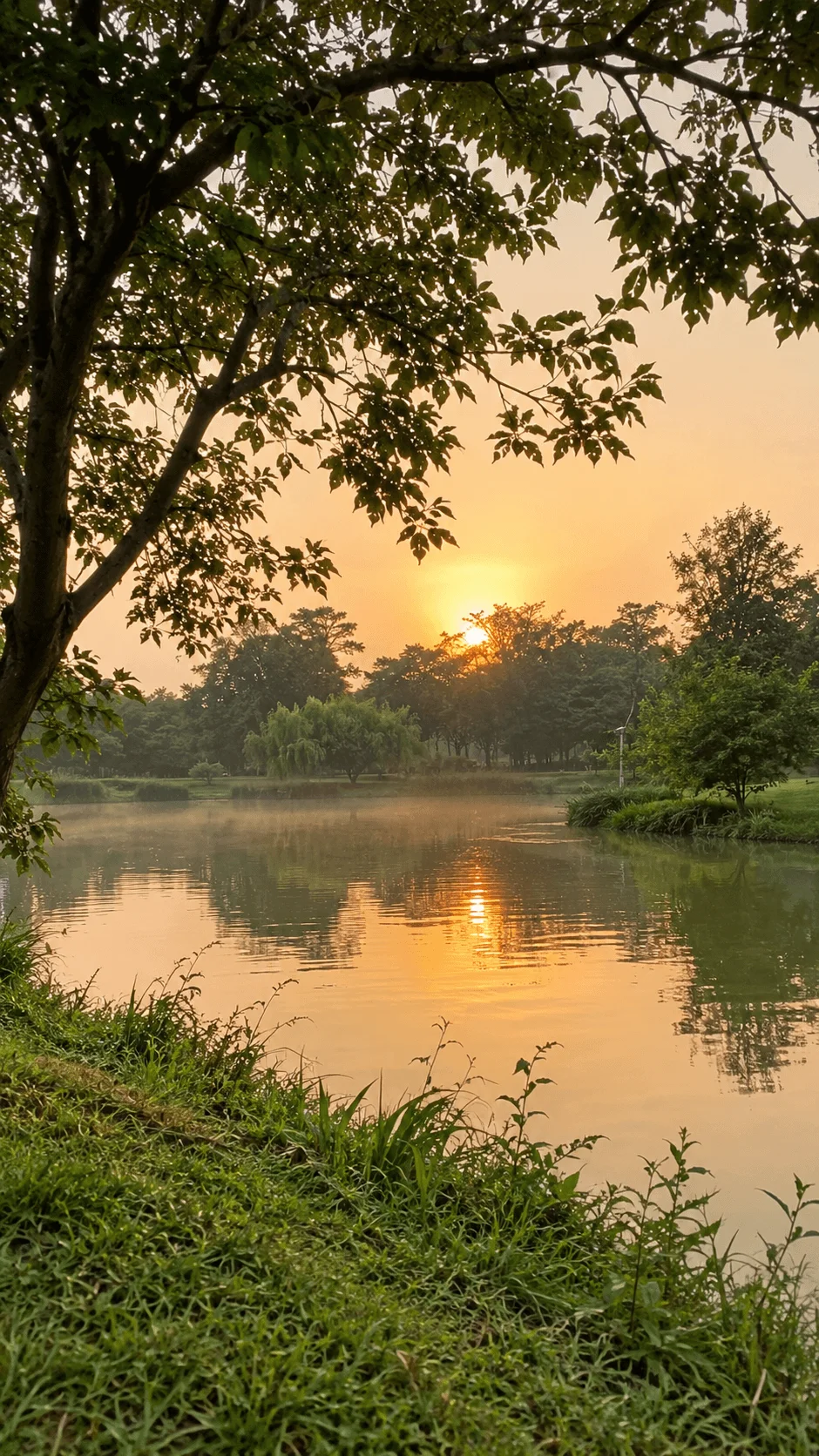
This approach reduces the need for unnecessary long distance travel while also encouraging deeper observation. A photographer who repeatedly visits one location may begin noticing small details that a first time visitor would miss.
Local photography can also create stronger environmental storytelling. Instead of presenting nature as a distant and exotic concept, the photographer shows that environmental changes happen close to where people actually live.
5. Rewilding Photography
Rewilding photography provides a fresh way to approach environmental storytelling. Rather than focusing only on untouched landscapes, this style documents places where nature is recovering, habitats are being restored, or native ecosystems are returning.
A rewilding project might include restored wetlands, newly planted native vegetation, recovering forests, wildlife habitats, or agricultural areas being transformed into more diverse ecosystems.
The visual possibilities are extensive. A wide photograph can establish the landscape, while close photographs can show new plants, insects, soil, water, or small signs of ecological recovery. People working within the landscape can add another layer to the story.
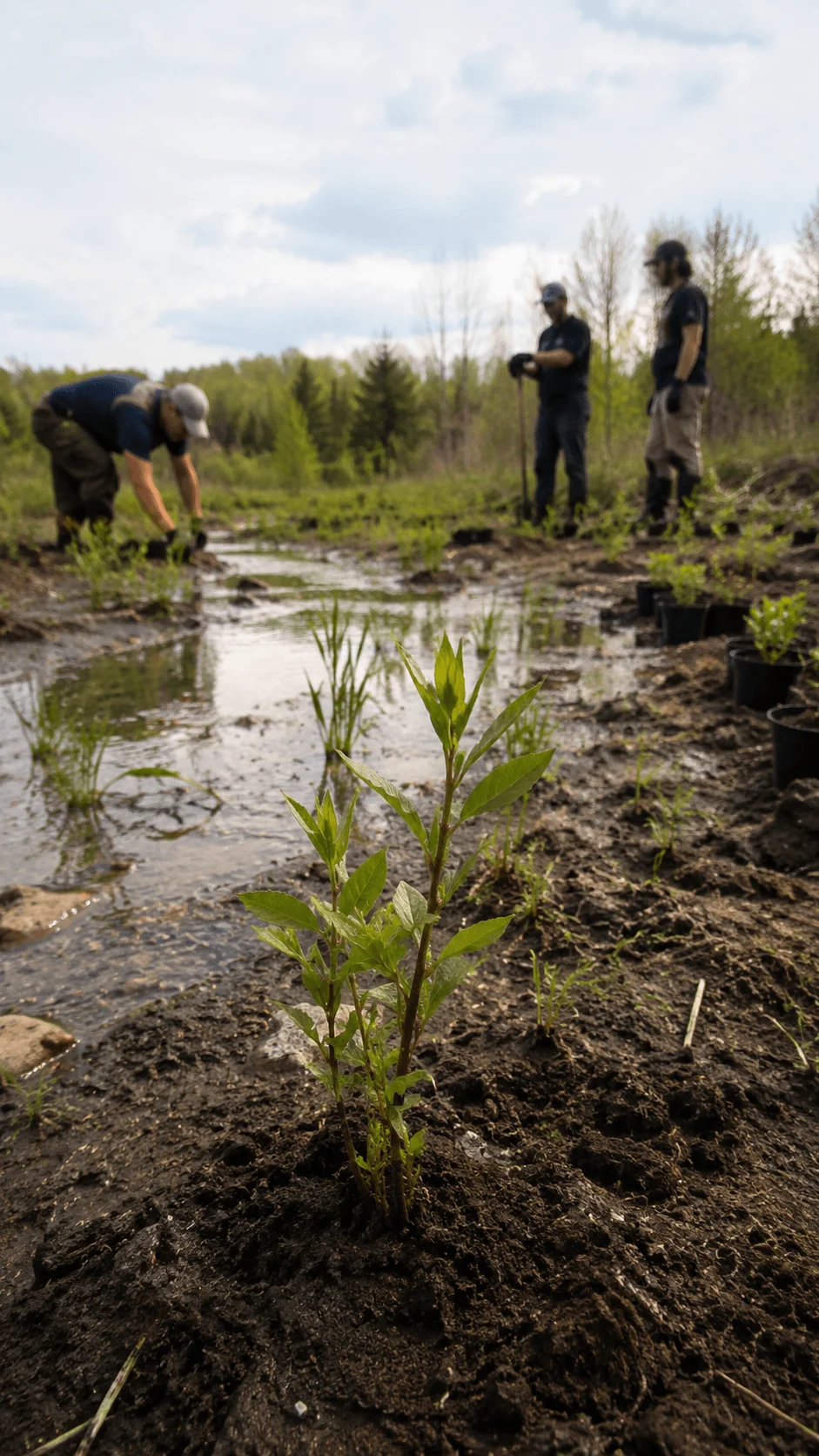
The most powerful approach often involves showing change rather than simply showing beauty. A recovering landscape may not look perfect, and that is precisely what makes it interesting. Young plants, disturbed soil, temporary structures, and partially restored areas can communicate that environmental recovery takes time.
This connects strongly with the newer approach to sustainable visual storytelling. Current 2026 research emphasizes showing real progress, real places, and real actions rather than relying on idealized environmental imagery.
6. Biodiversity Storytelling Photography
Biodiversity photography moves beyond the idea of taking one attractive photograph of an animal or plant. It focuses on relationships between different parts of an ecosystem and uses photography to communicate a larger story.
A single location might contain trees, insects, birds, flowers, water, soil, fungi, and people. Each subject provides a different perspective on the same environment.
A photographer could create a visual sequence that begins with a wide landscape and gradually moves toward smaller details. A photograph of a forest establishes the environment, while close images of leaves, insects, flowers, or water reveal what exists within it.
This approach can make environmental photography more educational without sacrificing its aesthetic quality. Strong compositions, thoughtful use of light, natural color palettes, and careful framing can turn ecological information into visually engaging storytelling.
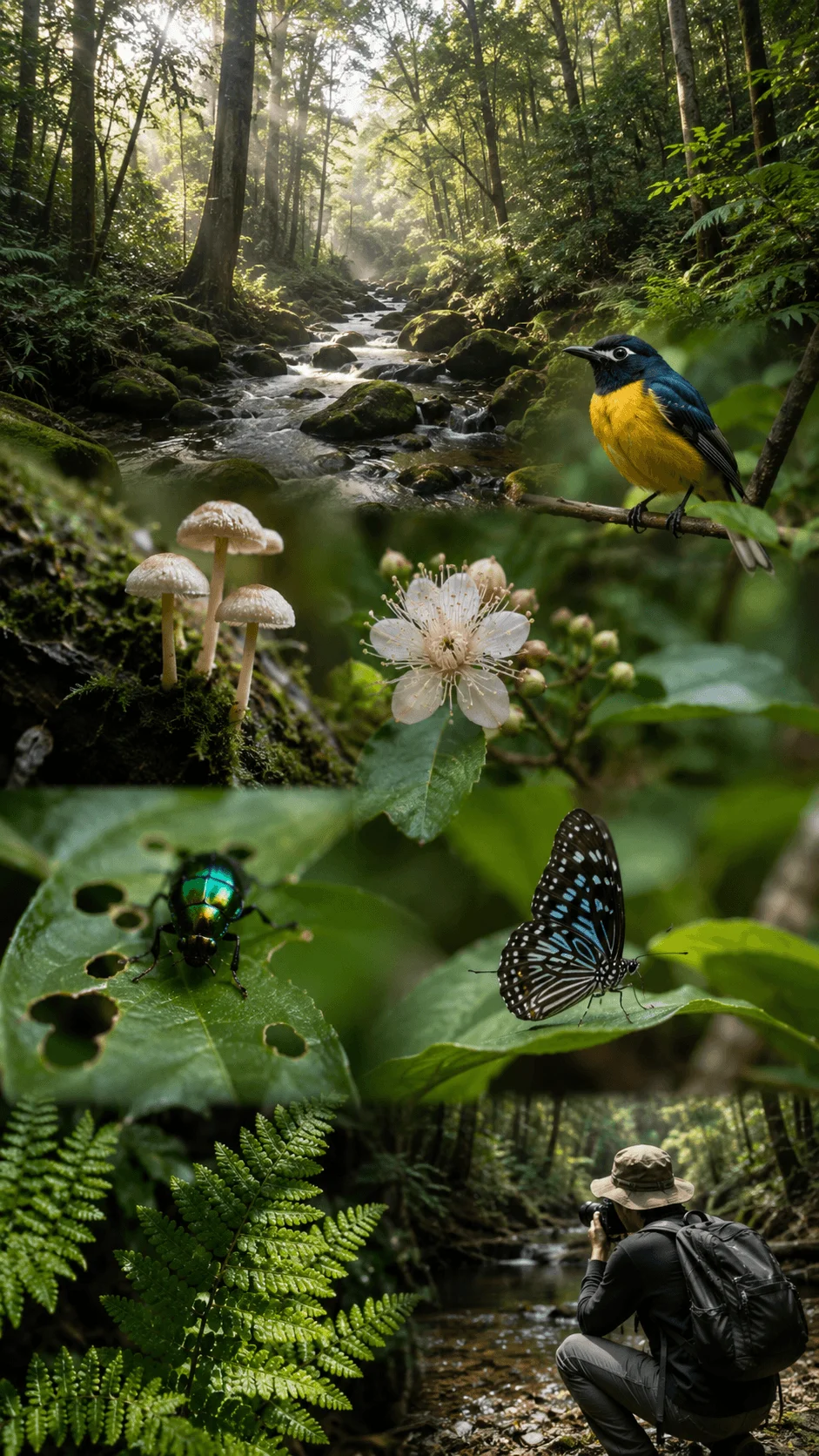
Biodiversity also encourages photographers to look beyond conventionally beautiful subjects. A small insect on a leaf or an unusual plant growing through a crack may not initially seem as impressive as a mountain landscape, but careful observation can reveal remarkable patterns, textures, and relationships.
The result is a form of sustainable visual storytelling that encourages viewers to notice the complexity of ordinary environments.
7. Earth Tone Eco Photography
Earth tone photography has become a natural fit for sustainable aesthetic photography because it draws inspiration directly from the colors found in natural environments. Soft brown, muted green, warm beige, cream, terracotta, natural gray, and subdued blue can create photographs that feel calm, grounded, and organic.
The appeal of an earth tone photography aesthetic goes beyond simply choosing a particular color palette. Photographers can build the entire visual environment around natural colors. A wooden surface can provide a warm brown background for a product photograph, while linen fabric can introduce a soft cream texture. Plants, dried flowers, stones, clay objects, and natural landscapes can provide additional colors without requiring artificial decorations.
Lighting plays an important role in this style. Soft morning light can create gentle highlights across natural materials, while late afternoon light can introduce warmer tones. Overcast conditions can produce a softer appearance that works especially well with muted colors.

Photographers can also use earth tones when photographing people, architecture, food, products, and interiors. Natural fabrics, wooden structures, stone surfaces, and neutral surroundings can create a cohesive visual identity.
One important development is that sustainable photography does not need to rely on green imagery all the time. Constantly using green leaves, recycling symbols, and plants can make environmental content look predictable. Earth tones provide a broader and more sophisticated visual language.
The strongest results usually come from allowing the environment to provide the colors naturally. Instead of heavily changing colors during editing, photographers can look for naturally occurring combinations and preserve their original character.
8. Slow Photography Ideas for a More Sustainable Creative Process
Slow photography is about becoming more deliberate with the photographic process. Instead of rushing from one location to another or taking hundreds of images without much consideration, photographers spend more time observing a subject and understanding its surroundings.
This approach has an important connection with sustainable photography because it can reduce unnecessary travel and encourage photographers to work with places that already exist around them.
A photographer might choose one local park and return to it several times throughout the year. Each visit can reveal something different. Spring may bring new plants and brighter colors, while summer can create dense foliage. Autumn can transform the same location with fallen leaves, and winter may reveal shapes that remain hidden during other seasons.
Slow photography can also improve creative decision making. When photographers stop rushing, they have more time to notice how shadows move across a surface, how clouds change the quality of light, or how wildlife interacts with its environment.
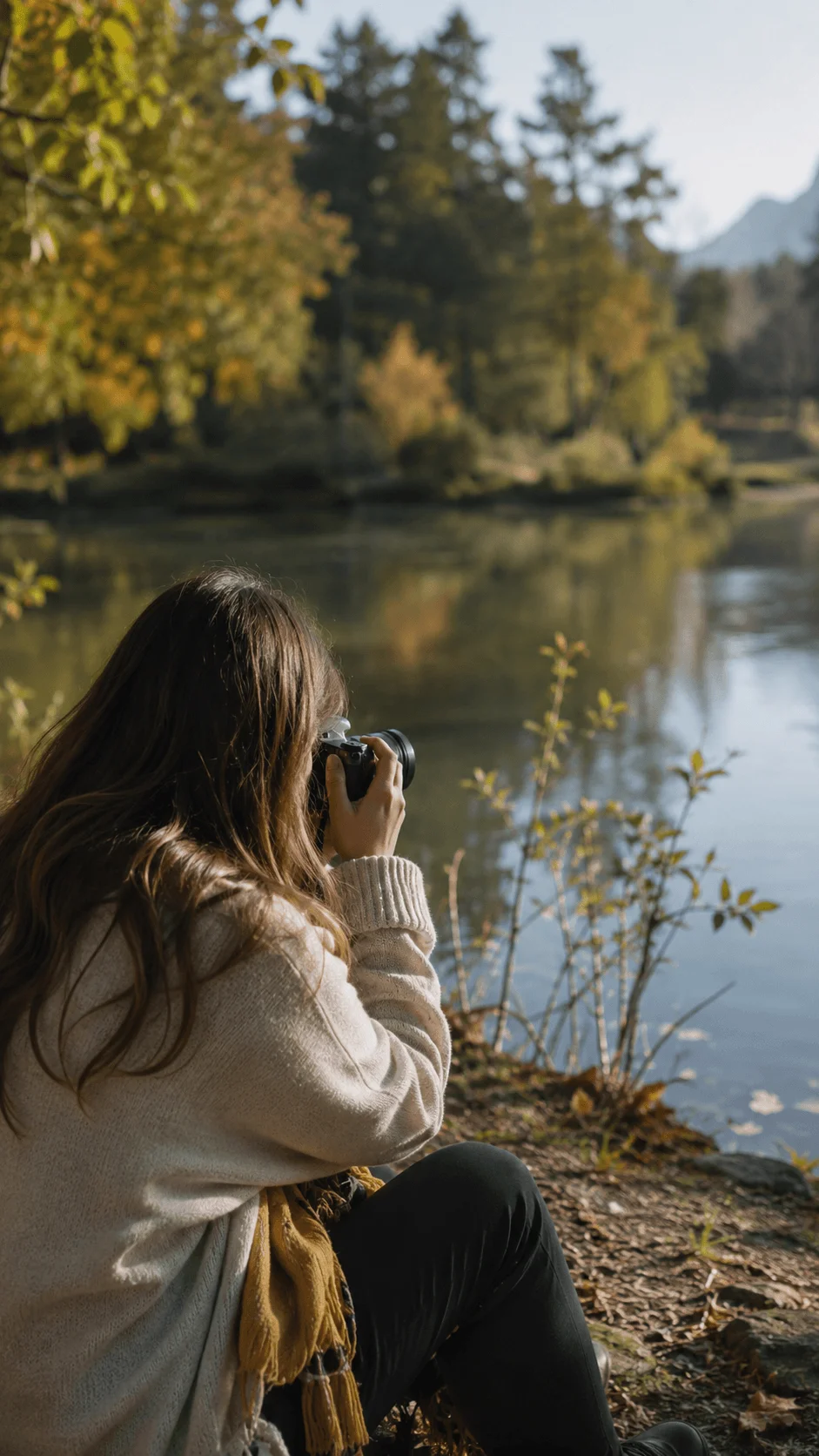
The process can make ordinary subjects more interesting. A single tree may seem unremarkable during a quick visit, but repeated observation can reveal unusual textures, seasonal changes, reflections, insects, birds, and patterns around it.
Slow photography also fits the growing preference for authentic visual storytelling. Rather than trying to create a dramatic photograph immediately, photographers allow the story to develop through observation.
This does not mean that every photographer needs to take fewer photographs. The important idea is to become more intentional about why each photograph is being created.
9. Natural Weather Photography
Weather can completely transform the appearance of a location, making it one of the most accessible tools for creating an atmospheric natural aesthetic.
Rain can produce reflections on streets, leaves, windows, and buildings. Fog can simplify a landscape by hiding distant details. Clouds can create dramatic patterns across the sky, while overcast conditions can produce soft and evenly distributed light.
Instead of treating these conditions as obstacles, photographers can make them part of the visual concept.
A rainy forest, for example, can reveal details that remain hidden during dry weather. Wet leaves become reflective, tree bark appears darker, and small streams may become more visible. A photographer can use these details to create intimate environmental images.
Fog offers another creative opportunity. It naturally separates foreground subjects from distant objects and can create a quiet atmosphere without requiring artificial effects. Photographers can use silhouettes, layered compositions, and negative space to emphasize the mood.
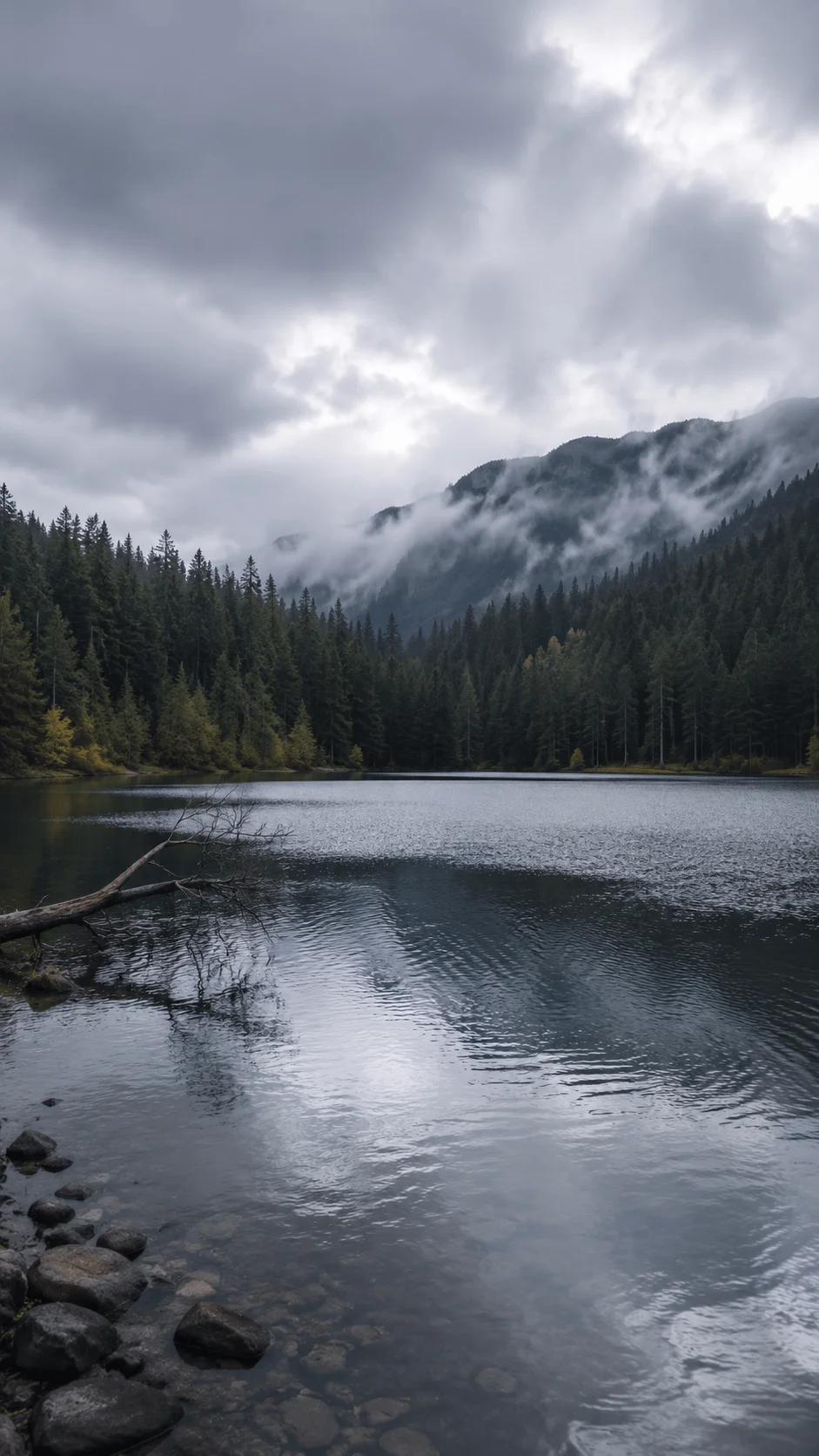
Wind can also introduce movement. Grass, leaves, fabric, and branches can become dynamic elements within an image. A slower shutter speed can emphasize movement while maintaining the natural character of the scene.
Natural weather photography fits eco friendly photography techniques particularly well because the atmosphere itself provides visual effects. Instead of constructing elaborate sets, photographers can work with conditions that already exist.
Safety and environmental responsibility should still come first. Photographers should avoid damaging sensitive environments simply to capture a particular image and should respect wildlife during extreme weather conditions.
10. Eco Friendly Product Photography Ideas
Commercial photography can also benefit from sustainable aesthetic principles. Brands increasingly want photographs that communicate quality and environmental awareness without making sustainability look artificial.
Eco friendly product photography ideas can begin with the materials surrounding the product. Reusable wood, stone, ceramic, linen, glass, paper, and existing household objects can create attractive backgrounds without requiring disposable studio decorations.
Natural light can also produce a premium appearance. A simple window can create directional shadows and highlights that give a product dimension. Reflective surfaces can be positioned carefully to control light without requiring complicated equipment.
Composition matters just as much as the materials. A product does not need a large collection of props to look visually interesting. One carefully chosen surface, a subtle texture, and a natural shadow can sometimes create a stronger photograph than a crowded arrangement.

This approach works especially well for brands that sell skincare, clothing, handmade products, food, accessories, home products, and environmentally conscious goods.
However, photographers should avoid creating misleading sustainability imagery. Adding leaves around a product does not automatically make the photograph sustainable. A genuine sustainable aesthetic should support the brand’s actual message rather than simply using environmental symbols as decoration.
The best commercial images communicate sustainability through simplicity, material choices, natural settings, and authentic storytelling.
11. Sustainable Drone Landscape Photography
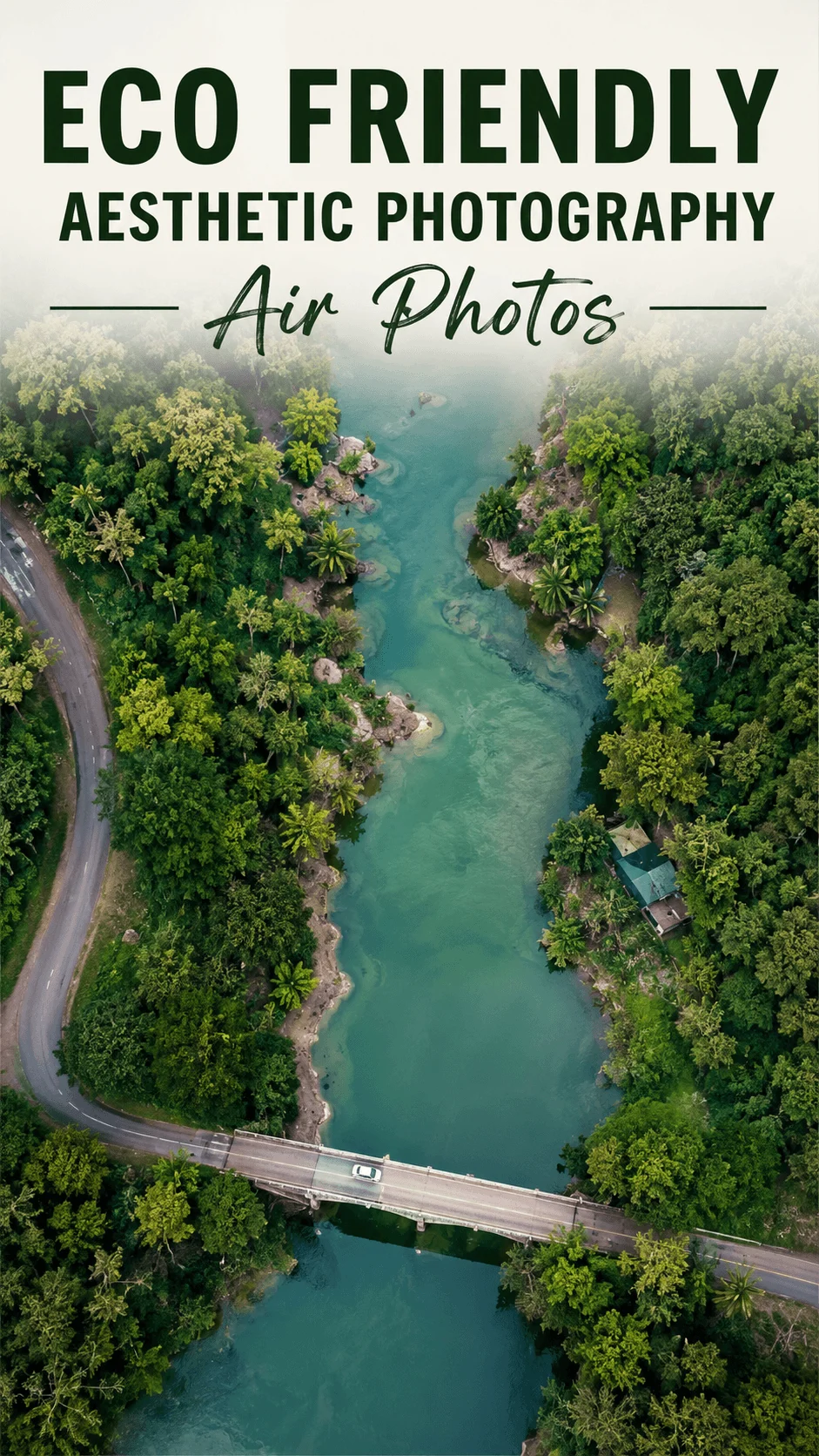
Drone photography provides a completely different perspective on the natural world. From above, photographers can reveal patterns, shapes, and relationships that are difficult to understand from ground level.
Forests can appear as complex patterns of trees and pathways. Rivers can create winding shapes across landscapes. Agricultural fields can reveal geometric compositions, while coastlines can show the relationship between land and water.
Sustainable drone photography becomes particularly valuable when the aerial perspective supports an environmental story. Photographers can document habitat restoration, changing shorelines, wetlands, forests, agricultural landscapes, and other environments where a wider perspective provides useful context.

The aesthetic possibilities are also significant. Aerial images often produce strong geometric compositions, natural patterns, contrasting textures, and large areas of negative space.
Responsible operation remains essential. Photographers should follow local drone regulations and avoid disturbing birds or other wildlife. Sensitive environments require particular care because an impressive photograph is never more important than the wellbeing of the environment being photographed.
The strongest aerial environmental photographs therefore combine visual beauty with a clear reason for showing the landscape from above.
12. Bio Based and Experimental Photography Processes
One of the most unusual developments connected with sustainable photography involves experiments with alternative photographic materials and processes.
Artists and photographers are exploring ways to create images using materials derived from biological or natural sources. Experimental approaches can involve plant based materials, handmade photographic surfaces, alternative developers, natural pigments, and processes inspired by historic photographic techniques.
These approaches are still developing, so photographers should avoid assuming that every natural or plant based process automatically has a lower environmental impact. The complete process matters, including how materials are grown, processed, transported, used, and disposed of.
The creative possibilities, however, are fascinating. Bio based processes can introduce organic textures, irregular surfaces, unusual colors, and variations that are difficult to reproduce through conventional digital editing.

Recent experimental work such as BioCyan research demonstrates how artists are exploring biomaterials as part of the future of photographic experimentation.
Plant based photographic experiments also demonstrate how photographers can rethink traditional processes and investigate alternative materials.
For photographers interested in developing a distinctive style, this area offers something especially valuable. The resulting imperfections and material variations can become part of the identity of the photograph itself.
How to Develop Your Own Eco Friendly Photography Aesthetic
Creating a sustainable visual identity does not require photographers to completely change their equipment or photography style. It can begin with small creative decisions.
Start by observing the environments that already surround you. A nearby street, garden, park, market, building, or natural area can provide enough material for an entire photography project.
Pay attention to textures before looking for subjects. Rough wood, cracked walls, stone, fabric, leaves, water, soil, and aged surfaces can become important visual elements. These textures can make photographs feel more connected to the physical world.
Natural light can also become a defining part of the style. Instead of immediately reaching for artificial lighting, photographers can study how sunlight enters a room, how shadows change throughout the day, and how cloudy conditions affect colors.
Props should receive similar consideration. Before purchasing something for a shoot, look at what is already available. Existing objects often create more personal photographs because they have their own history and character.
Color can then tie everything together. An earth tone palette can create consistency across photographs, while subtle variations can prevent the images from becoming repetitive.
Editing should support the natural character of the photograph rather than erase it. Excessive smoothing, aggressive color changes, and artificial effects can remove the textures that make sustainable aesthetic photography distinctive.
Most importantly, photographers should develop a personal reason for choosing sustainable methods. The strongest environmental photographs usually communicate something beyond appearance. They show a relationship with a place, material, community, ecosystem, or creative process.
The Future of Eco Conscious Visual Storytelling
The most interesting thing about current sustainable photography trends is that they are becoming less predictable. Environmental photography no longer needs to follow one visual formula.
A photograph can be sustainable and cinematic. It can be minimal and colorful. It can use film inspired textures or highly detailed digital imagery. It can focus on biodiversity, local communities, products, architecture, landscapes, or experimental materials.
The common element is intentionality.
Current visual research suggests that sustainability storytelling is becoming more grounded in real places, real actions, and specific human experiences. This creates opportunities for photographers to move away from predictable environmental symbols and develop more meaningful stories.
The combination of authenticity and sustainability may become one of the defining characteristics of modern eco conscious photography. Natural imperfections, local environments, reused materials, subtle colors, and genuine moments can create photographs that feel both contemporary and timeless.
Conclusion:
The future of eco friendly aesthetic photography ideas is not about making every photograph look green or filling every composition with plants. It is about reconsidering how photographers approach the entire creative process.
Analog inspired imagery can encourage a slower and more intentional approach. Imperfect nature photography can celebrate the irregular qualities of the natural world. Zero waste still life photography can transform ordinary objects into beautiful compositions. Local photography can reduce unnecessary travel while creating deeper connections with familiar environments.
Rewilding and biodiversity photography can turn environmental subjects into meaningful stories, while earth tone aesthetics can create a natural visual identity without relying on predictable environmental imagery. Slow photography encourages observation, natural weather creates atmosphere without elaborate production, and sustainable product photography demonstrates how commercial work can combine visual quality with thoughtful material choices.
Emerging bio based processes also show that the future of photography may involve completely new ways of thinking about photographic materials and image making.
Ultimately, sustainable photography does not require perfection. It requires awareness and creativity. Photographers can begin with the places they already know, the materials they already have, and the natural light that already surrounds them. By combining these simple resources with thoughtful composition and authentic storytelling, they can create photographs that look beautiful while carrying a deeper environmental meaning.
The strongest sustainable aesthetic is therefore not a fixed style. It is a creative mindset that allows photographers to make more intentional choices while discovering beauty in natural materials, imperfect moments, familiar environments, and genuine stories.