
Eco Friendly Christmas Tree Decorations You Can Make
Looking for Eco Friendly Christmas Tree Decorations You Can Make without filling your shopping cart? A beautiful Christmas tree can begin with things already tucked into kitchen drawers, craft boxes and closets. Recycled paper, fabric remnants and simple natural finds can become festive accents that look personal rather than mass produced.
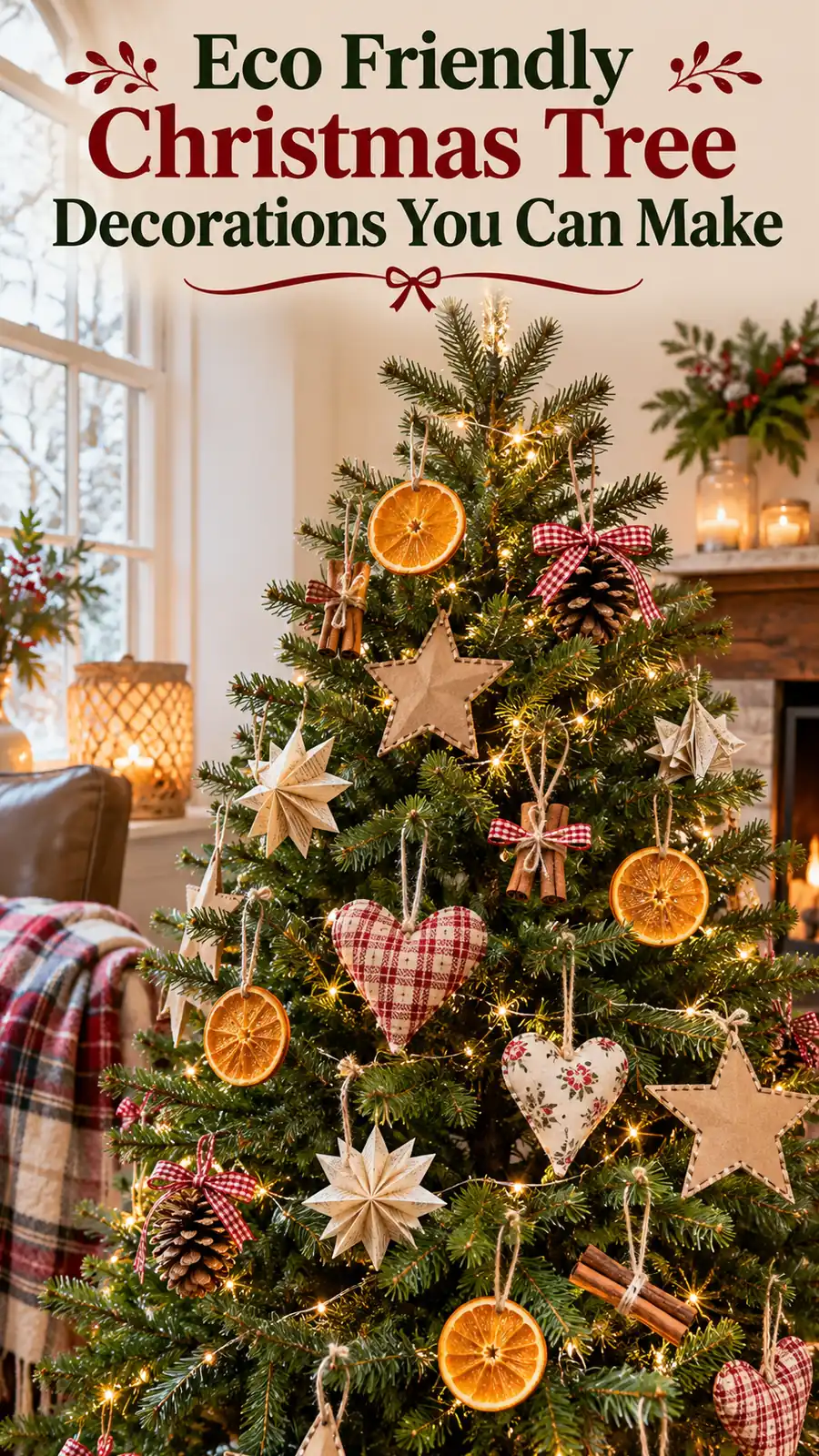
These twelve approachable projects bring together rustic textures, cheerful color and practical ways to reuse materials. Each idea offers a different look, so you can choose a few that suit your space instead of making everything. The goal is to create decorations you enjoy, keep, repair and bring out again whenever possible.
Dried Orange Slice Ornaments
Drying slices of citrus creates translucent ornaments that catch warm tree lights beautifully. Choose oranges that are already getting soft but are still safe to handle, and slice them evenly so the pieces dry at a similar rate. Pat the slices with a clean towel, arrange them on a baking sheet, and use a low oven with adult supervision until they are thoroughly dry. Let them cool before threading cotton string through a small hole near the rind.

Hang citrus slices individually at different heights or tie two or three together with a cinnamon stick. Lemon and grapefruit slices offer subtle changes in size and color, although thicker grapefruit pieces need more drying time. Store the finished ornaments in a dry, ventilated container, and discard any that develop moisture or mold. These natural Christmas tree ornaments work especially well beside simple wooden stars and warm white lights.
Pinecone Decorations with Reused Ribbon
Pinecones give a Christmas tree texture without requiring a bag of new ornaments. Collect fallen cones only where gathering is allowed, then gently brush away dirt and allow them to dry completely. Choose small cones for thin branches and larger ones for the lower part of a sturdy tree. A short length of ribbon saved from last year’s gifts makes an attractive hanging loop.

Tie the ribbon snugly around the upper scales or attach it with a little craft glue. You can leave each pinecone natural or lightly brush the tips with leftover water based paint for a snowy look. Skip loose glitter, which sheds tiny plastic particles and can make cleanup difficult. A cluster of pinecones in different natural shades creates an understated woodland style that looks deliberate rather than unfinished.
Recycled Cardboard Star Ornaments
Shipping boxes and cereal cartons can become lightweight stars with very little preparation. Draw a star on scrap paper to make a reusable template, trace it onto clean cardboard, and cut several shapes. Younger makers can decorate prepared shapes with washable paint, pencil patterns or torn bits of leftover wrapping paper. Punch a hole near the top and add a cotton hanging loop.
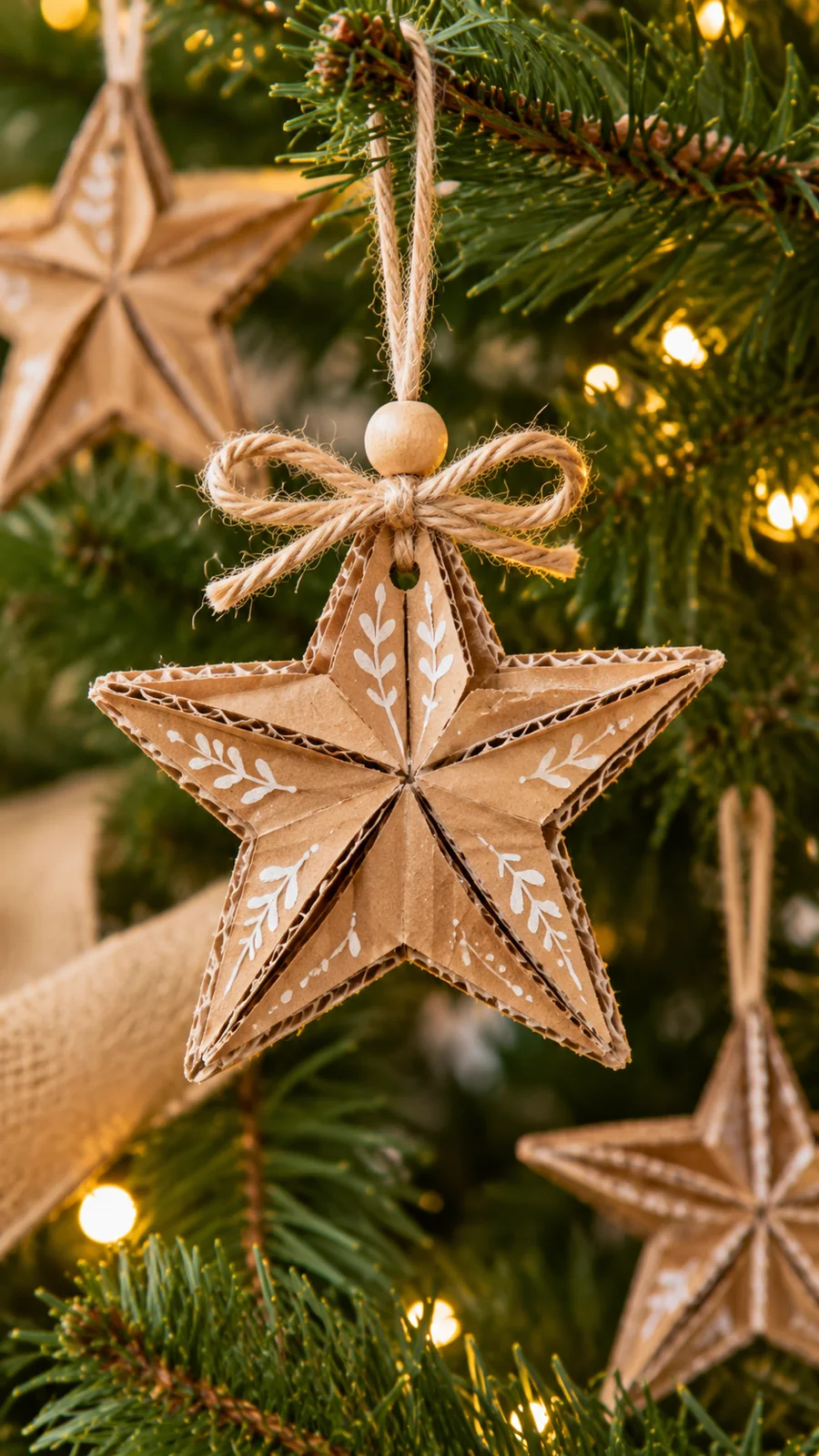
For a layered effect, cut one smaller star and glue it on top of a larger one. Leave some of the natural cardboard exposed for a rustic finish or use saved red and green paper for a brighter tree. Thin cardboard hangs best near the tips of branches, while thicker corrugated pieces benefit from a wider loop. Keep your template for next Christmas so future batches are quick to assemble.
Fabric Scrap Stuffed Hearts and Stars
Old shirts, worn pillowcases and sewing offcuts can turn into soft ornaments with personal meaning. Cut pairs of matching heart or star shapes, keeping the printed side facing outward. Join most of the edges with simple stitches, fill the shape with tiny clean fabric scraps, and close the opening. Sew a loop of saved ribbon into the top seam.

These ornaments are easy to personalize with a stitched initial, a simple button taken from an unwearable garment or contrasting thread. Choose tightly woven fabric when possible because it holds its shape and contains stuffing more reliably. If a piece tears next year, mend it instead of discarding the whole ornament. Soft decorations are particularly convenient for lightweight branches and can be stored without the padding that fragile ornaments require.
Folded Paper Fan and Accordion Stars
Old calendars, maps, magazines and clean gift wrap have patterns that can look striking when folded. Cut equal strips or squares from paper you already have, then fold each piece back and forth into narrow pleats. Join the folded sections with glue to form a circular fan, or pinch the ends into points for a star. Add string through a reinforced paper tab.
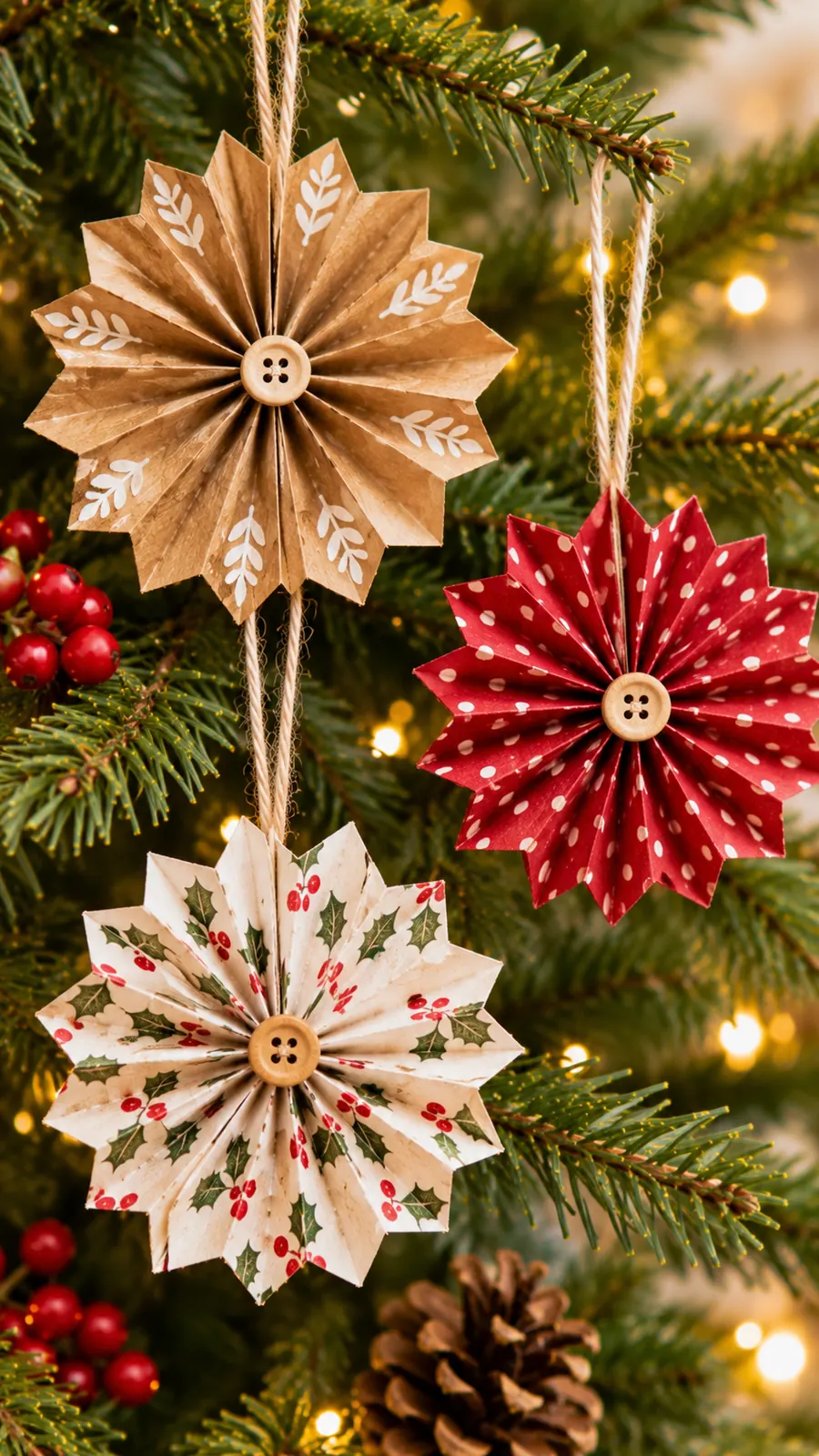
Mix neutral book pages with colorful magazine advertisements for a tree full of contrast. Keeping each fold approximately the same width helps the ornament look neat, but small differences add charm. Avoid using treasured photographs or books that someone still wants to read. When you take the decorations down, flatten them gently and store them between pieces of cardboard so they retain their shape for another season.
Cinnamon Stick Bundle Ornaments
A few cinnamon sticks tied together create compact decorations with a cozy farmhouse appearance. Use sticks already sitting in the pantry rather than buying a large package just for crafting. Arrange two or three into a short bundle and secure them with a bit of cotton twine. A tiny strip of scrap fabric tied around the center adds color without covering the natural texture.
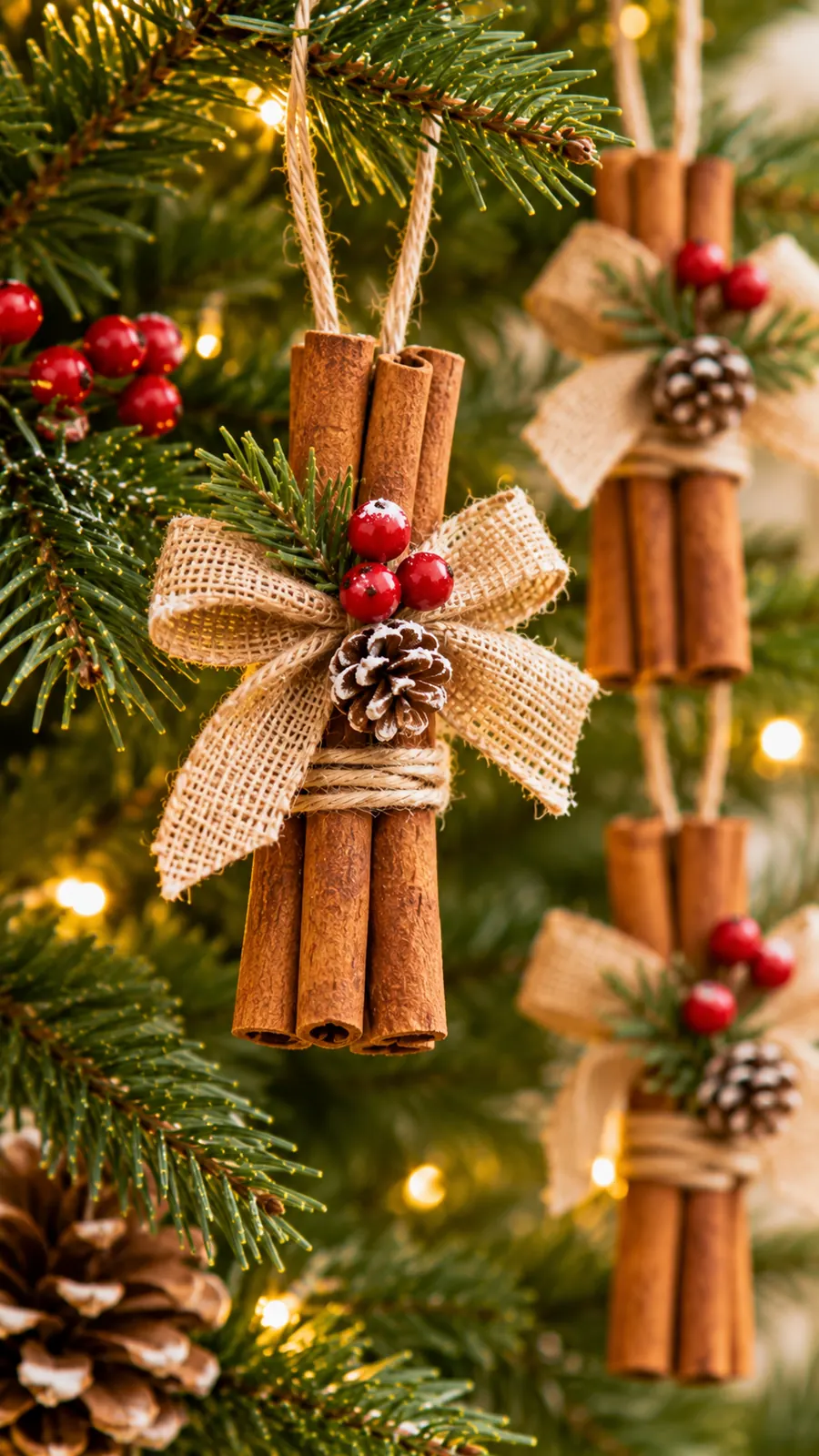
Cinnamon bundles pair well with dried citrus, neutral paper stars and pinecones. Keep the bundles small so they do not pull branches downward, and check that the string cannot slide free. Their scent may fade with time, but that does not stop them from being attractive decorations. Keep them out of the reach of pets that chew unfamiliar objects, and place them away from candles and other sources of heat.
Yarn Wrapped Cardboard Trees
Short lengths of leftover yarn are often too small for knitting projects but perfect for miniature Christmas trees. Cut a triangular tree shape from a used box and wrap the yarn around it until most of the cardboard disappears. Tuck the end beneath the previous wraps or secure it with a dab of craft glue. Add a reused thread loop for hanging.

Combining several yarn colors makes each little tree look handmade and cheerful. Try pale cream for a soft winter theme or leftover green yarn for a traditional look. You can stitch a tiny wooden bead onto the front if you already own one, but the ornaments do not need extra embellishments. Cardboard and yarn also make a forgiving project for beginners because uneven wrapping gives the finished piece texture.
Upcycled Jar Lid Picture Frames
A clean metal jar lid can frame a tiny holiday scene or family message. Wash and dry the lid carefully, check that there are no sharp edges, and trace its inner circle onto a piece of scrap paper. Decorate the paper with a miniature drawing, a greeting or a small printed photograph. Attach the picture inside the lid using a removable paper adhesive.
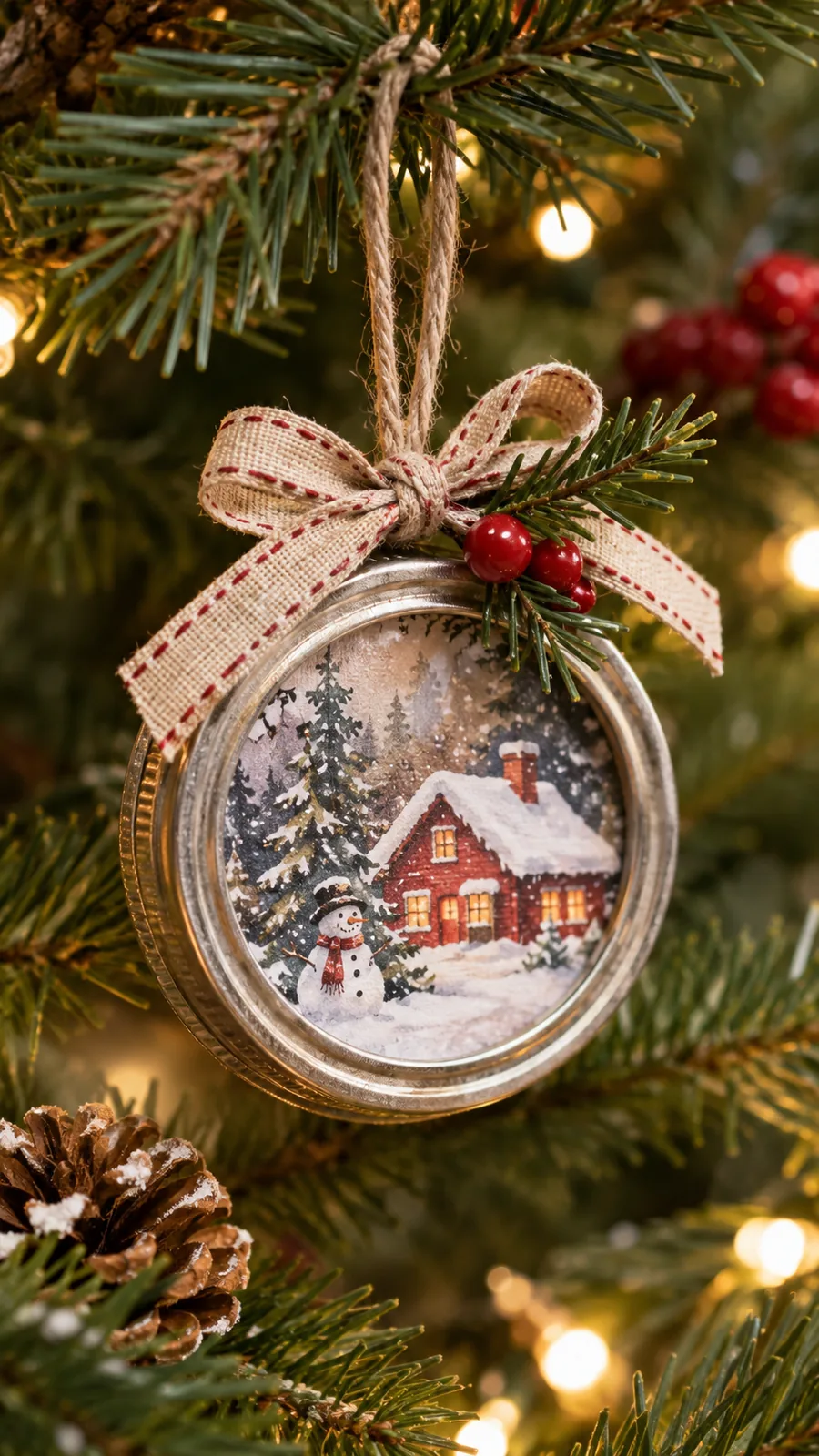
Use a narrow strip of saved fabric around the edge if you want a finished look. Have an adult help secure the hanging loop where necessary, and reserve heavier lids for strong inner branches. The nicest feature is that you can replace the paper design each year without replacing the lid itself. Unlike throwaway themed ornaments, these miniature frames can change with the family’s memories and still remain useful.
Handmade Salt Dough Keepsakes
Salt dough is an affordable option for preserving a child’s drawing or a simple stamped design. Combine plain flour, salt and enough water to make a firm, workable dough, then roll it out and cut small shapes with existing cookie cutters. Make a hanging hole before drying them thoroughly according to a reliable salt dough recipe. Allow the ornaments to cool completely before decorating.

Press a leaf or simple pattern into the dough before it dries to create texture without buying embellishments. Write the year on the back so the ornament becomes a keepsake. Salt dough is not edible and can be dangerous if eaten by pets, especially dogs, so keep it securely out of their reach. Store finished pieces somewhere dry because moisture can soften or damage them over time.
Popcorn and Cranberry Style Garlands
A traditional popcorn garland brings movement and a nostalgic homemade look to a tree. Prepare plain popped corn, let it cool, and thread pieces onto cotton string with help from an adult for any needle work. If you have suitable fresh cranberries, you can alternate them for color, but remember that fresh fruit can spoil and may stain fabric or floors.

A reusable alternative is to cut small red circles from leftover fabric and place them between popcorn pieces. Drape garlands loosely rather than pulling branches together, and keep them away from pets and small children who might try to eat them. A fresh food garland should be removed promptly if it begins to deteriorate. For storage across years, choose the paper or fabric version instead of food.
Cork and Twine Miniature Decorations
Saved natural cork stoppers can become small tree decorations without much alteration. Use clean, dry corks and wrap a narrow band of leftover yarn or twine around each one. Tie a loop above the cork to make a simple rustic pendant. Another option is to group three corks in a triangular arrangement and secure them with craft adhesive to suggest a tiny tree.

Keep cork decorations lightweight and avoid drilling or cutting when an uncomplicated wrapped design works just as well. Natural cork has an appealing texture beside paper and fabric ornaments, and it is easy to reuse in different displays. If you do not already have corks, skip this project rather than buying an entire package solely for one decoration. Working with available materials is the point of a low waste Christmas.
A Reusable Fabric Bow Tree Topper
The top of the tree deserves attention, and an oversized bow made from existing fabric can replace a fragile new topper. Look for a clean piece of fabric from an old tablecloth, dress or curtain. Fold it into a wide ribbon shape, form two balanced loops and leave tails long enough to drape gently down the upper branches. Secure the middle with matching thread or a spare strip of fabric.
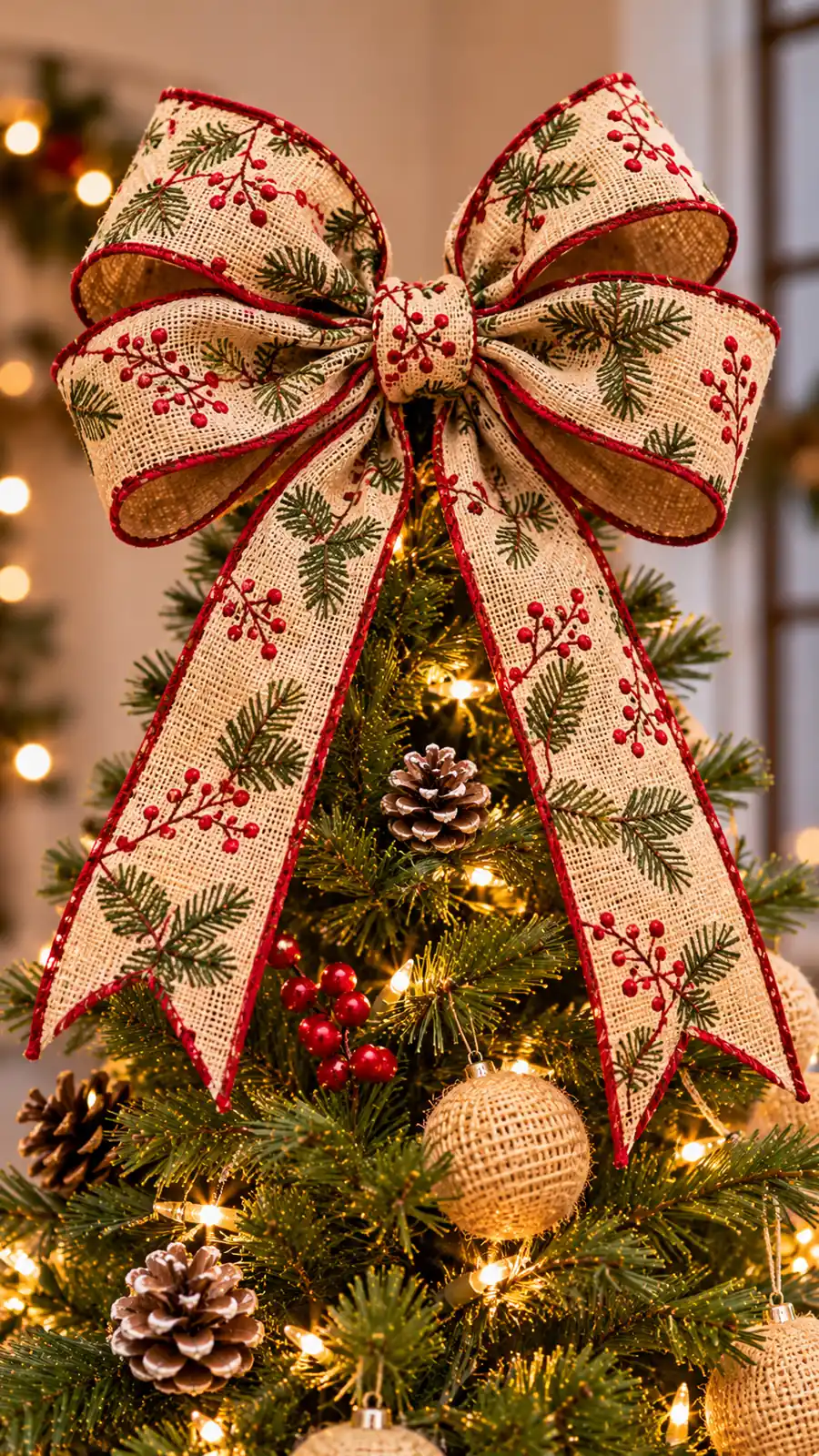
Attach the bow loosely to a stable top branch instead of pulling or bending the tree tip. Reused fabric can be ironed flat before shaping, with adult help if needed, and refreshed in a new color arrangement each season. A patterned bow adds a festive focal point while keeping the overall tree decoration theme simple. When the holidays finish, untie or fold the piece carefully and use it again next year.
How to Choose Materials for a Lower Waste Tree
The easiest place to begin is your existing holiday box. Reuse ornaments that still work, repair loose loops and choose a few new handmade accents instead of replacing everything. Gather clean cardboard, fabric scraps, old paper, short pieces of ribbon and natural items responsibly. This approach typically saves money and keeps more useful material in circulation.
Consider weight, durability and how an item will be disposed of before making it. A reusable fabric ornament may serve your household longer than a natural ornament that must be remade every year. Avoid mixing unnecessary coatings, plastic glitter and heavy adhesives into pieces you hope to compost or recycle. Local recycling rules differ, so do not assume a finished mixed material ornament belongs in the recycling bin.
How to Style Handmade Decorations on Your Christmas Tree
A cohesive tree does not require identical decorations. Select two or three colors from what you already own, then repeat shapes at different heights to establish rhythm. Place heavier jar lid frames and cork clusters toward the inner, sturdy branches. Reserve the lighter paper stars, citrus slices and fabric ornaments for outer tips.
Start with decorations you already have and fill visible gaps with handmade pieces. Warm lights can bring out the translucent color in dried fruit and the texture of woven materials. Leave enough space between ornaments to let the greenery show. Mixing something sentimental with something simple creates a tree that feels lived in rather than purchased all at once.
Safety, Storage and Reuse Tips
Keep handmade decorations away from open flames and sources of excessive heat. Choose electric lights in good condition, follow their manufacturer instructions, and avoid hanging paper or fabric directly against hot bulbs. Adults should supervise hot ovens, sharp tools and needle work. Small detached decorations can be a choking hazard for younger children, while edible looking ornaments may attract pets.
After Christmas, sort ornaments by what can be reused, repaired, composted or recycled under local rules. Store fully dry natural pieces in a breathable container and keep delicate paper pieces flat. Label boxes so you can find your handmade favorites next year without buying replacements. The most meaningful sustainable habit is enjoying and caring for the decorations you already have.
Conclusion
Eco Friendly Christmas Tree Decorations You Can Make offer a more thoughtful way to celebrate without losing the sparkle and warmth of the season. Choose materials already at home, enjoy the crafting process and make each piece sturdy enough to save when practical. A tree decorated with handmade stars, fabric hearts and simple natural touches tells your own holiday story, one ornament at a time.


