Eco Friendly Garden Drawing Ideas for 2026
If you are looking for eco friendly garden drawing ideas, you can turn a simple garden sketch into a creative way to show sustainability, nature, and environmental awareness. A garden does not have to look perfectly arranged to feel beautiful. You can create drawings filled with native flowers, wildlife, recycled planters, vegetable beds, rainwater collection systems, and natural materials. These ideas work especially well for school projects, environmental art activities, beginner drawing practice, and anyone who enjoys combining creativity with nature.
Why Eco Friendly Garden Drawings Are Trending in 2026
Garden design is increasingly focused on working with nature instead of trying to control every part of it. More people are becoming interested in native planting, wildlife habitats, water conservation, healthy soil, productive gardens, and climate resilient landscapes. These changes also provide artists with many fresh subjects to explore.
An environmentally focused garden drawing can communicate a story without needing complicated artwork. A rain barrel can represent water conservation. A compost area can show how organic material returns nutrients to the soil. A group of flowering plants surrounded by butterflies and bees can represent biodiversity.
The best part is that you can adapt these concepts to almost any drawing style. A child can create a simple colorful garden scene, while an experienced artist can create a detailed landscape with different layers, textures, plants, pathways, and wildlife.
1. Native Plant Garden Drawing Ideas
A native plant garden makes an excellent subject because it can look natural, colorful, and full of life. Instead of creating a garden where every flower sits in a perfectly straight row, imagine a landscape where plants grow in different shapes and heights. You can place taller grasses and shrubs toward the back while filling the foreground with smaller flowers and ground cover.
Native wildflowers can become the main attraction of the drawing. Choose several different flower shapes so the scene does not look repetitive. You can include clusters of purple, yellow, white, pink, or orange flowers surrounded by green leaves and grasses. Adding small stones around the planting areas can give the garden a more natural appearance.
You can also make the drawing tell a story by including pollinators. A butterfly resting on a flower or a bee moving between blossoms can immediately make the scene feel more alive. Small birds sitting on branches can add another layer of detail.
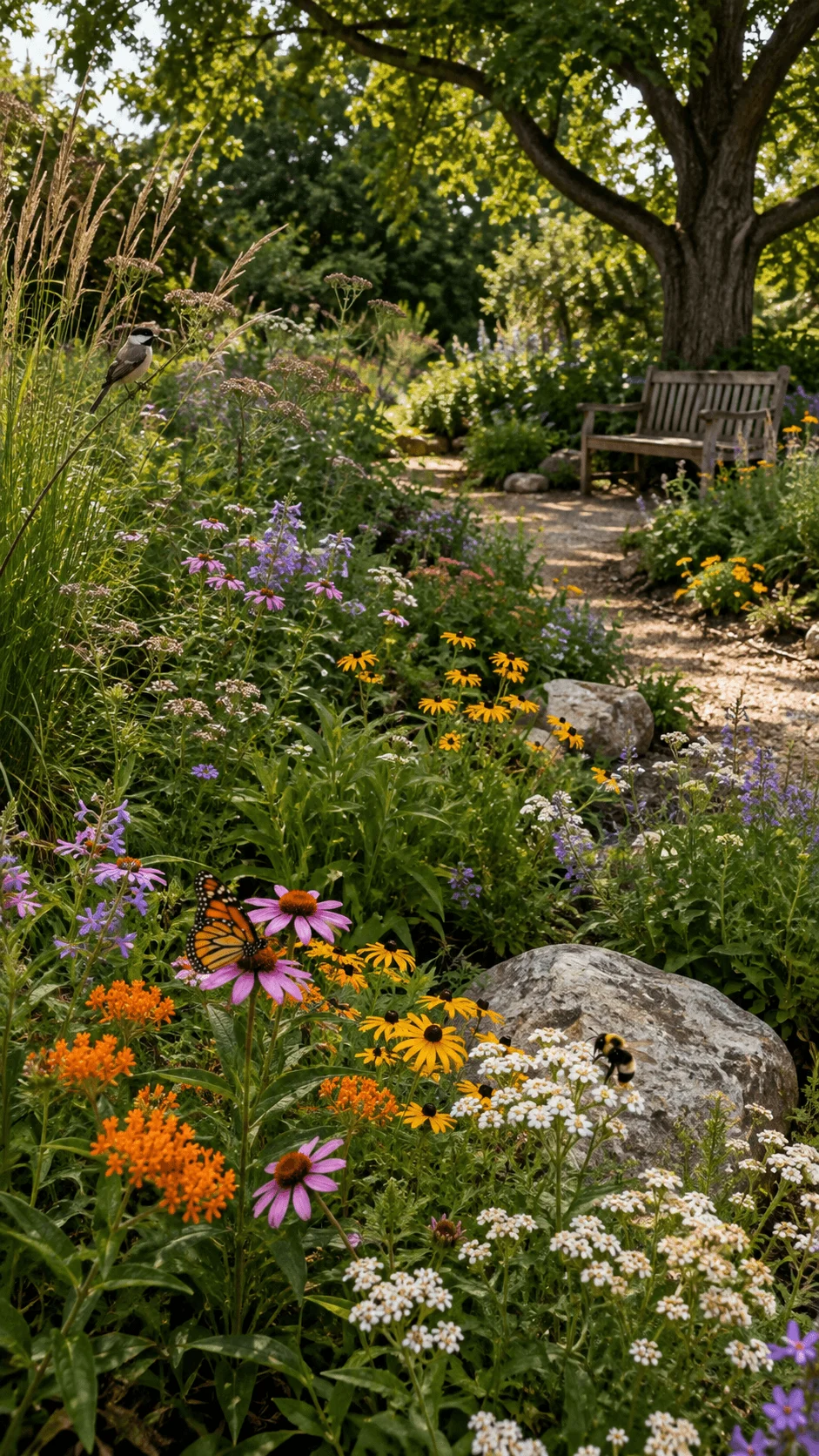
Think carefully about the background as well. A large tree, low shrubs, a wooden bench, and a winding garden path can create depth. You can make the path gradually become smaller as it moves toward the background, giving the drawing a stronger sense of distance.
The environmental message becomes stronger when you show the garden as a small ecosystem rather than simply a collection of flowers. Every part of the picture can appear connected. Plants provide food for insects, trees provide shelter for birds, and fallen leaves return organic matter to the soil.
This type of native plant garden drawing works particularly well when you want your artwork to communicate the idea that beauty and environmental responsibility can exist together.
2. Rainwater Harvesting Garden Drawing
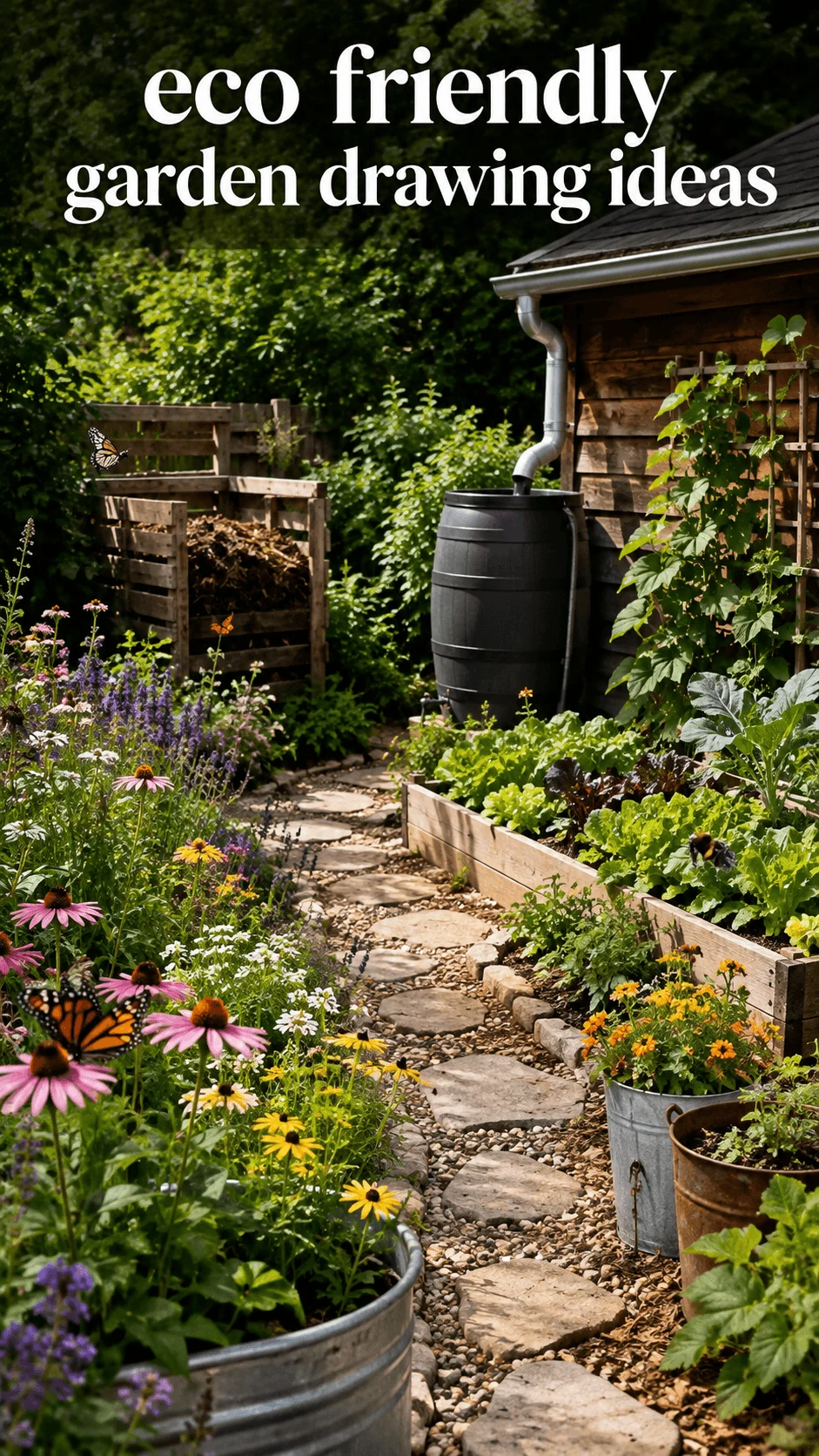
A rainwater harvesting garden gives you an opportunity to create a drawing with an obvious environmental story. Instead of showing only plants, you can illustrate how water travels from a building into a garden and becomes useful again.
Begin with a small house or garden shed on one side of the scene. Draw a roof with gutters that guide rainwater toward a collection barrel. You can show clouds above the building and falling rain to make the purpose of the system immediately understandable.
Place a large rain barrel beside the building. A pipe can connect the gutter to the barrel, while another simple connection can lead toward the garden. You can then draw a watering can or a small irrigation system using the collected water.
The garden itself can contain vegetables, flowers, herbs, and shrubs. This creates a visual connection between rainfall and healthy plant growth. You could even draw a small pond or shallow water feature nearby to make the scene more interesting.
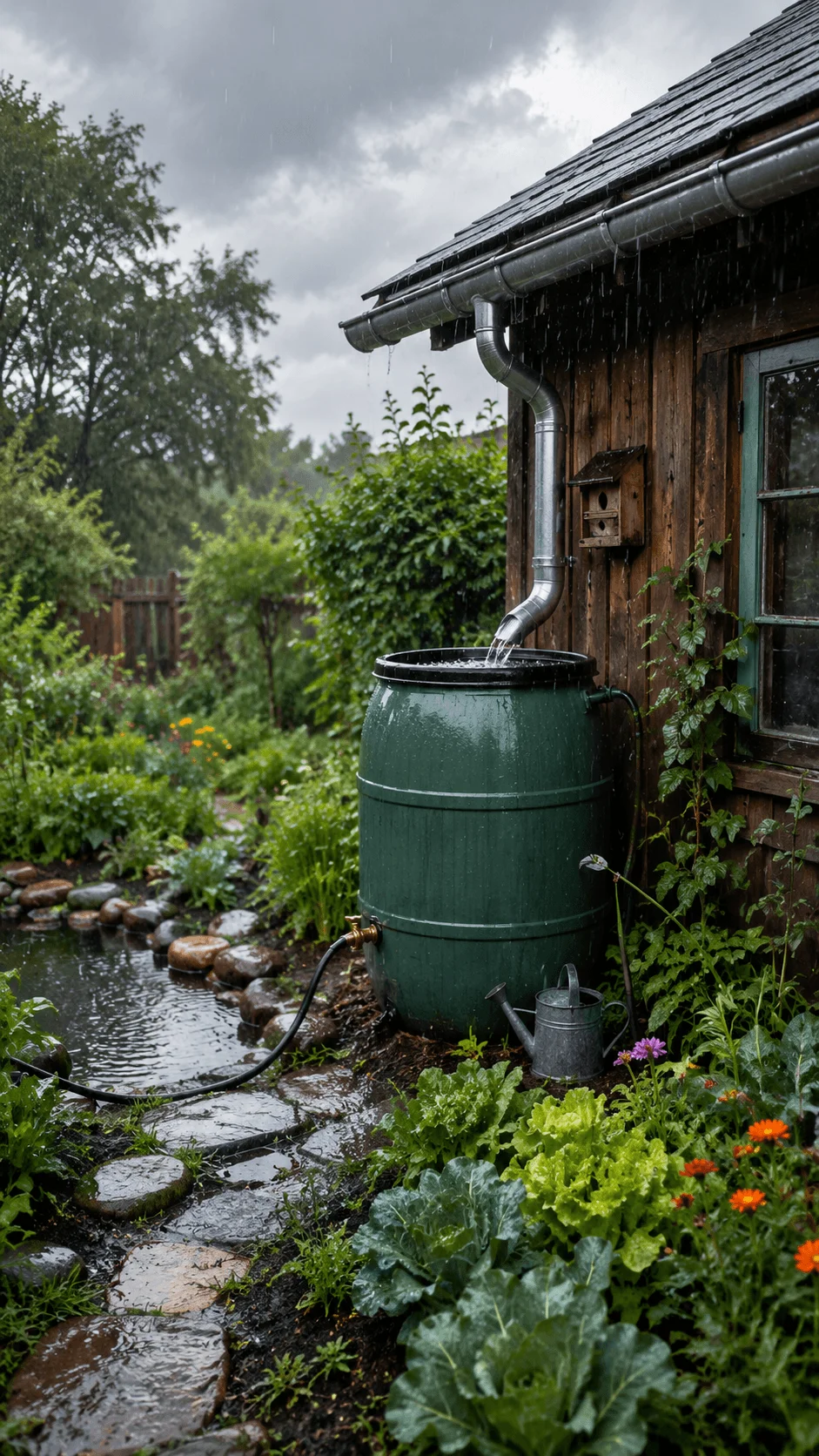
One creative approach is to divide the drawing into a subtle visual journey. Start with clouds at the top, move downward to the roof and gutters, continue into the collection barrel, and finally lead the viewer toward the plants. This makes the artwork easy to understand because the viewer naturally follows the movement of the water.
You can also add a few puddles or wet stones after the rain to make the scene feel realistic. Reflections on leaves can create attractive details without making the drawing overly complicated.
A rainwater harvesting garden drawing works especially well for environmental school projects because it shows a practical sustainability concept through a simple landscape.
3. Climate Resilient Garden Drawing
A climate resilient garden focuses on plants and landscape features that can continue to thrive during challenging weather conditions. This gives you a chance to create an artwork that looks both attractive and purposeful.
Start by imagining a garden during a warm, sunny day. Place a large shade tree toward one side of the scene. Beneath its branches, you can draw plants that benefit from protection from strong sunlight. Other areas can contain drought tolerant plants that require less water.
Mulch can become another interesting visual element. Instead of leaving the soil completely bare, draw a layer of leaves, wood pieces, or other organic material around plants. You can represent mulch with small irregular shapes and textures around the base of shrubs and flowers.
The garden path can use natural or permeable materials such as gravel or small stones. This gives the landscape a softer appearance than a large area of solid paving.
You can make the drawing more expressive by contrasting different areas of the garden. One part might receive strong sunlight while another sits under the shade of a mature tree. Plants in each location can have different shapes and textures.
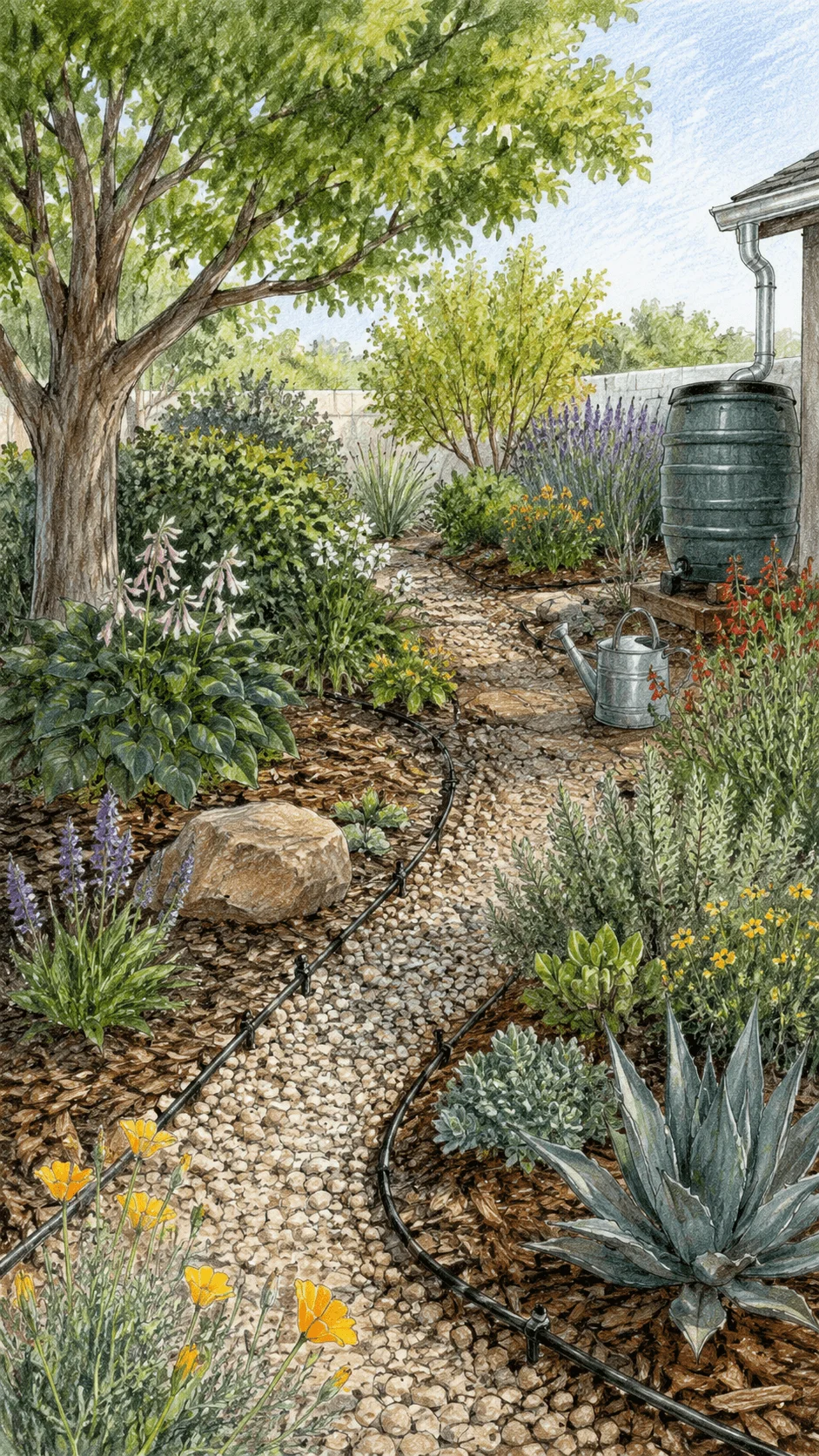
Adding a water saving feature can strengthen the sustainability theme. You could include a small rain barrel, a simple drip irrigation system, or a watering can placed beside the planting beds.
The most important part of this concept is showing that the garden works with its environment. Instead of drawing a landscape that requires constant attention and large amounts of water, create a garden that uses thoughtful plant selection, shade, healthy soil, and efficient water use.
This makes a climate resilient garden drawing both visually interesting and educational.
4. Wildlife Friendly Garden Drawing
A wildlife friendly garden can turn an ordinary garden scene into a miniature natural habitat. Rather than making plants the only focus, design the drawing around the animals and insects that depend on them.
Begin with flowering plants that attract pollinators. Create clusters of different flowers rather than repeating one type throughout the entire garden. Butterflies, bees, and other beneficial insects can appear around the flowers.
Birds can add another dimension to the scene. Draw a small birdhouse attached to a wooden post or tree. A shallow bird bath can sit nearby, surrounded by plants. You can also add a few birds resting on branches or searching for food.
For an even richer scene, include a small pond. It does not need to occupy much space. A curved pond surrounded by grasses, stones, and moisture loving plants can become a beautiful focal point.
An insect shelter can also appear in one corner of the garden. You could draw small pieces of wood, hollow stems, and natural materials arranged into a simple structure. This gives the artwork another sustainability detail without taking attention away from the main garden.
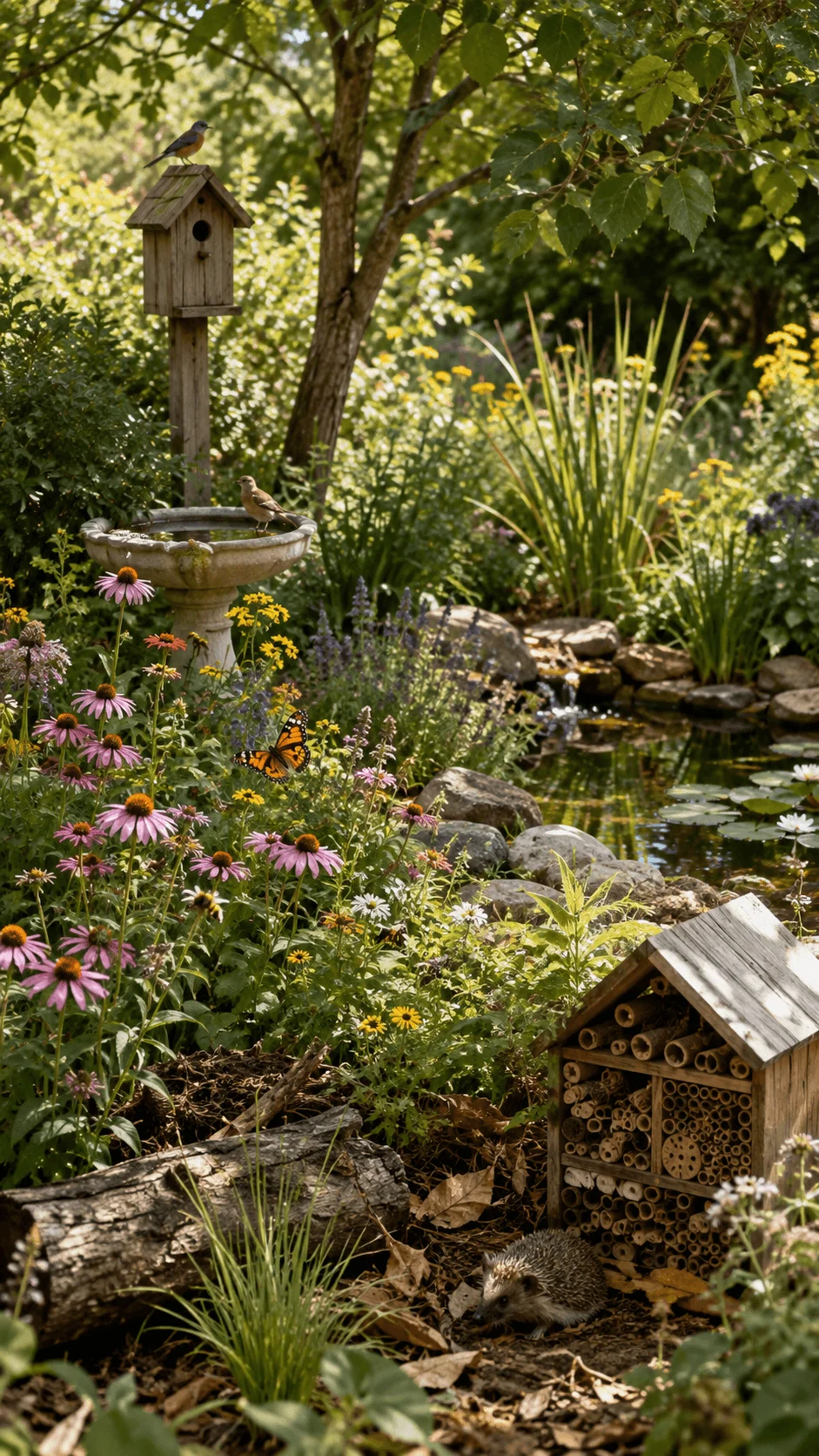
The composition should feel slightly wild rather than perfectly controlled. Allow some grasses to bend outward and let flowers appear at different heights. Natural curves can make the scene feel more authentic.
You can also add fallen leaves beneath trees and small logs near planting areas. These details help communicate the idea that wildlife needs more than flowers. Shelter, water, food, and natural spaces all contribute to a healthy habitat.
A wildlife friendly garden drawing is especially effective when you want your artwork to communicate biodiversity. Instead of simply saying that gardens can support nature, the drawing allows viewers to actually see that relationship.
5. Sustainable Vegetable Garden Drawing
A sustainable vegetable garden combines food growing with creative landscape design. It can also produce one of the most detailed drawings because you have many different plants, structures, and garden elements to work with.
Start with several vegetable beds arranged across the garden. Raised beds can create strong geometric shapes, while curved beds can give the scene a softer appearance. You can fill them with recognizable vegetables such as tomatoes, lettuce, carrots, peppers, beans, and leafy greens.
Herbs can grow along the edges of the beds. Small labels can identify different plants if the drawing is being used for an educational project. You can also include fruit trees toward the back of the garden to create height.
Healthy soil should play an important role in the concept. You can show a compost container nearby, along with fallen leaves and organic material. This visually connects the garden with natural nutrient recycling.
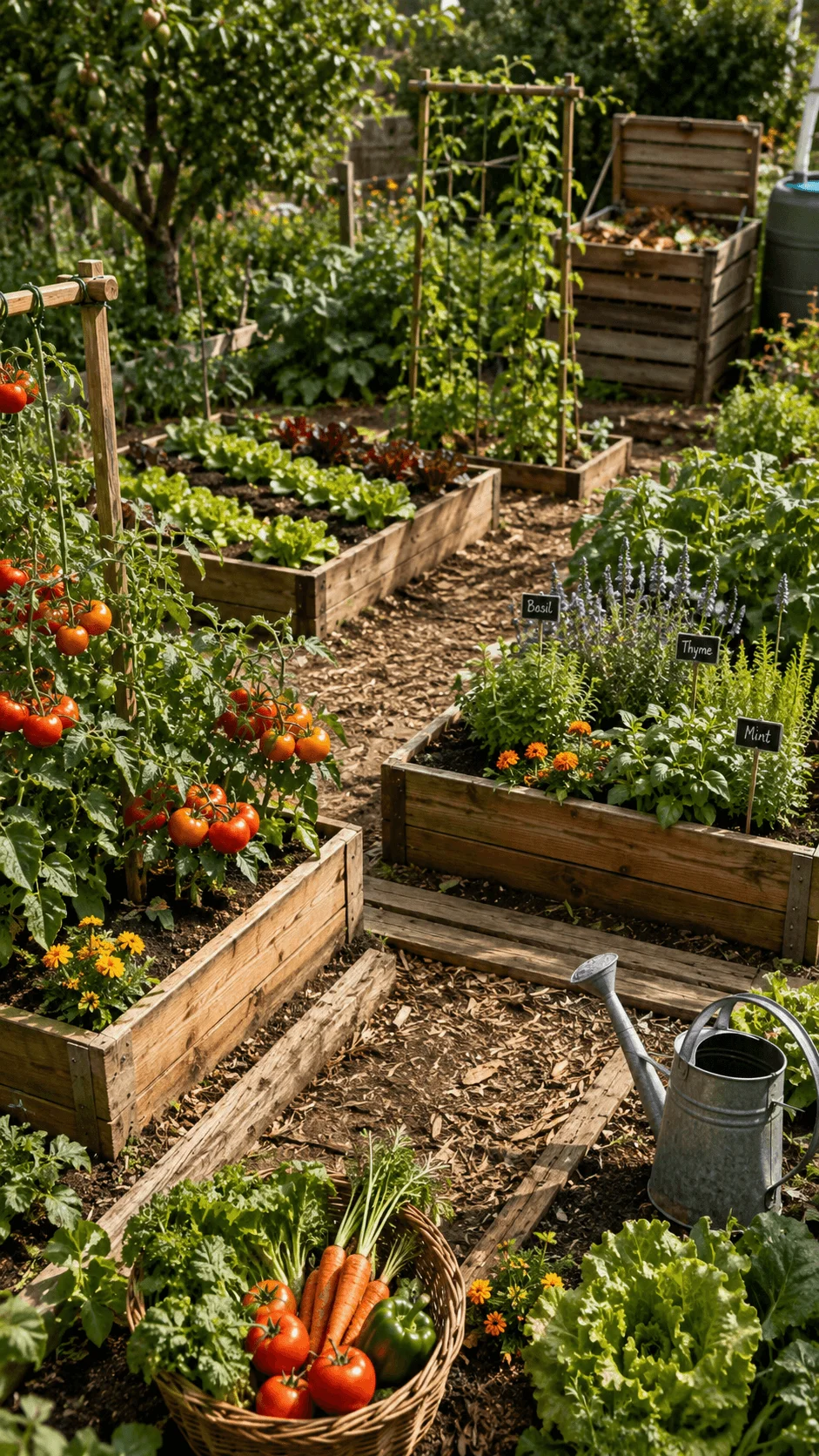
A simple wooden pathway can separate the beds. You can draw a watering can beside one bed and a basket of freshly harvested vegetables near another. These details make the garden feel active and lived in.
Try using different plant shapes to create variety. Tall tomato plants can contrast with low lettuce leaves, while climbing beans can rise along a simple wooden support.
You can also show beneficial insects around the garden. A few bees near flowering herbs or butterflies around nearby flowers can connect food growing with biodiversity.
The drawing can tell a complete story from soil preparation to plant growth and harvesting. That storytelling element makes a sustainable vegetable garden much more engaging than a simple collection of vegetables.
Most importantly, the scene should communicate that a productive garden can also support healthy soil, efficient water use, biodiversity, and responsible gardening practices.
6. Naturalistic Garden Drawing Ideas
Naturalistic garden drawing ideas are perfect for anyone who wants to move away from rigid rows and perfectly symmetrical landscapes. This style creates the impression that the garden has developed naturally while still having a thoughtful design.
Begin with a curved pathway that moves through the garden instead of traveling in a straight line. Let the path disappear partially behind taller plants before becoming visible again in the distance. This simple technique can create depth and make the viewer curious about what lies farther into the garden.
Use layers of planting to build the landscape. Taller grasses and shrubs can sit toward the back, medium sized plants can occupy the middle, and smaller flowers can fill the foreground.
Different textures are particularly important here. Soft grasses can sit beside broad leafy plants, delicate flowers, rough stones, and textured tree bark. These differences make the drawing visually rich even when you use a relatively simple color palette.
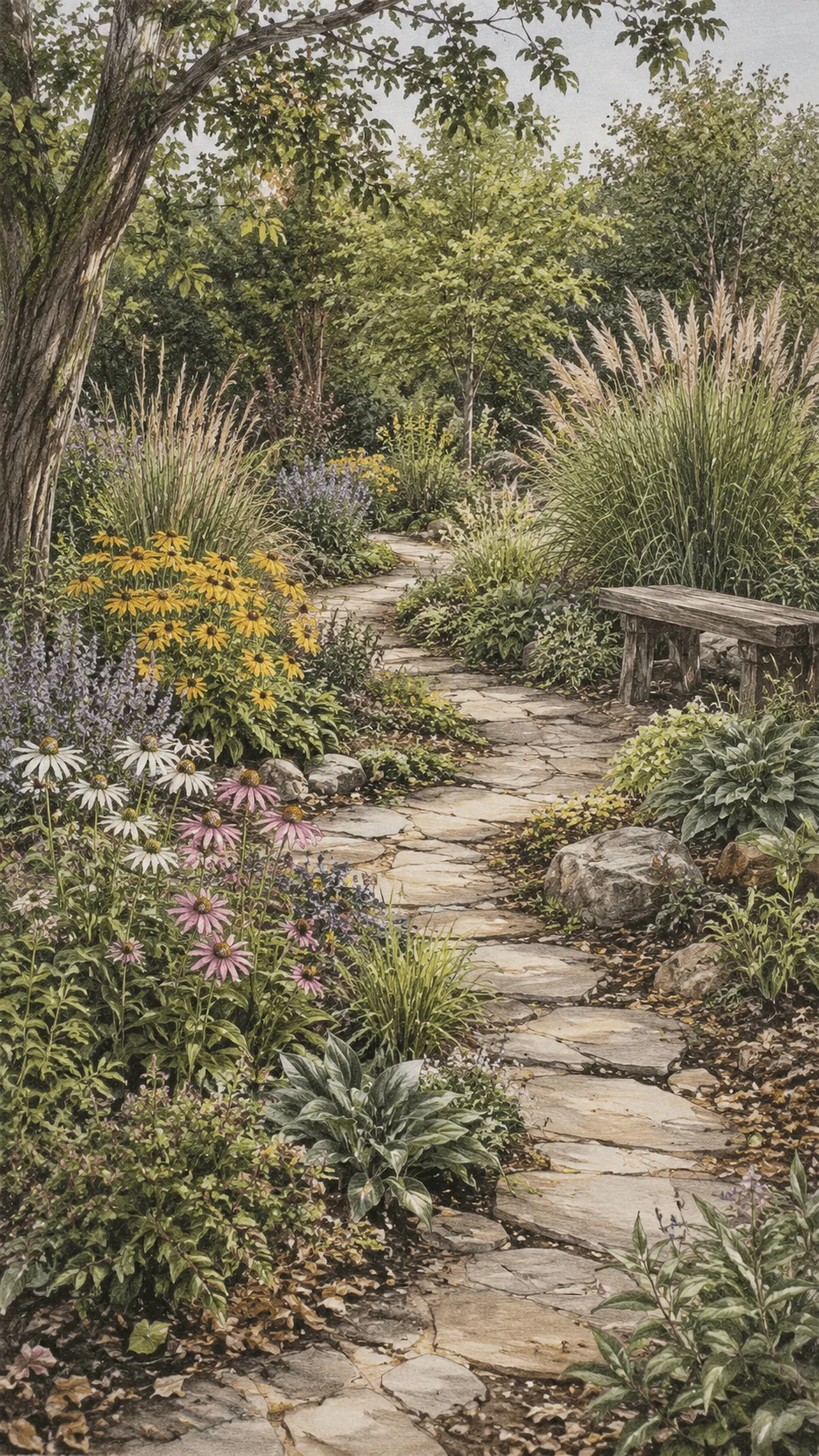
Avoid making every plant identical. Nature rarely creates perfect repetition, so slightly different plant shapes can make the scene feel more believable.
A few natural materials can strengthen the concept. Add stones along the path, fallen leaves beneath a tree, or a simple wooden seat surrounded by plants.
The goal is not to make the garden look abandoned. Instead, create a space where nature and thoughtful design appear to work together.
This approach gives you plenty of freedom because there is no single correct arrangement. You can experiment with curved shapes, irregular planting areas, different heights, and overlapping foliage.
A naturalistic garden drawing can therefore become both an environmentally conscious artwork and an opportunity to experiment with composition and perspective.
7. Green Garden Drawing With Foliage and Texture
A green focused garden can create a peaceful and sophisticated environmental drawing without depending on dozens of brightly colored flowers. This concept focuses on the different shades, shapes, and textures found in foliage. It works particularly well for artists who want to explore how much visual variety nature can provide through greenery alone.
Start by placing a large tree toward the back or side of the drawing. Its branches can extend across part of the scene and create a natural canopy. Beneath the tree, add several layers of plants. Ferns can fill darker areas, grasses can create movement, and leafy shrubs can occupy spaces between larger plants.
The key to this idea is variety. Not every green plant should look the same. Some leaves can be long and narrow, while others can be broad and rounded. You can draw vines climbing around a wooden structure or allow them to trail along the ground.
Different shades of green can help create depth. Darker foliage can appear in shaded areas, while lighter leaves can catch sunlight. You can also use texture to separate plants that have similar colors. A soft grassy surface can sit beside a plant with large detailed leaves, creating contrast without requiring bright colors.
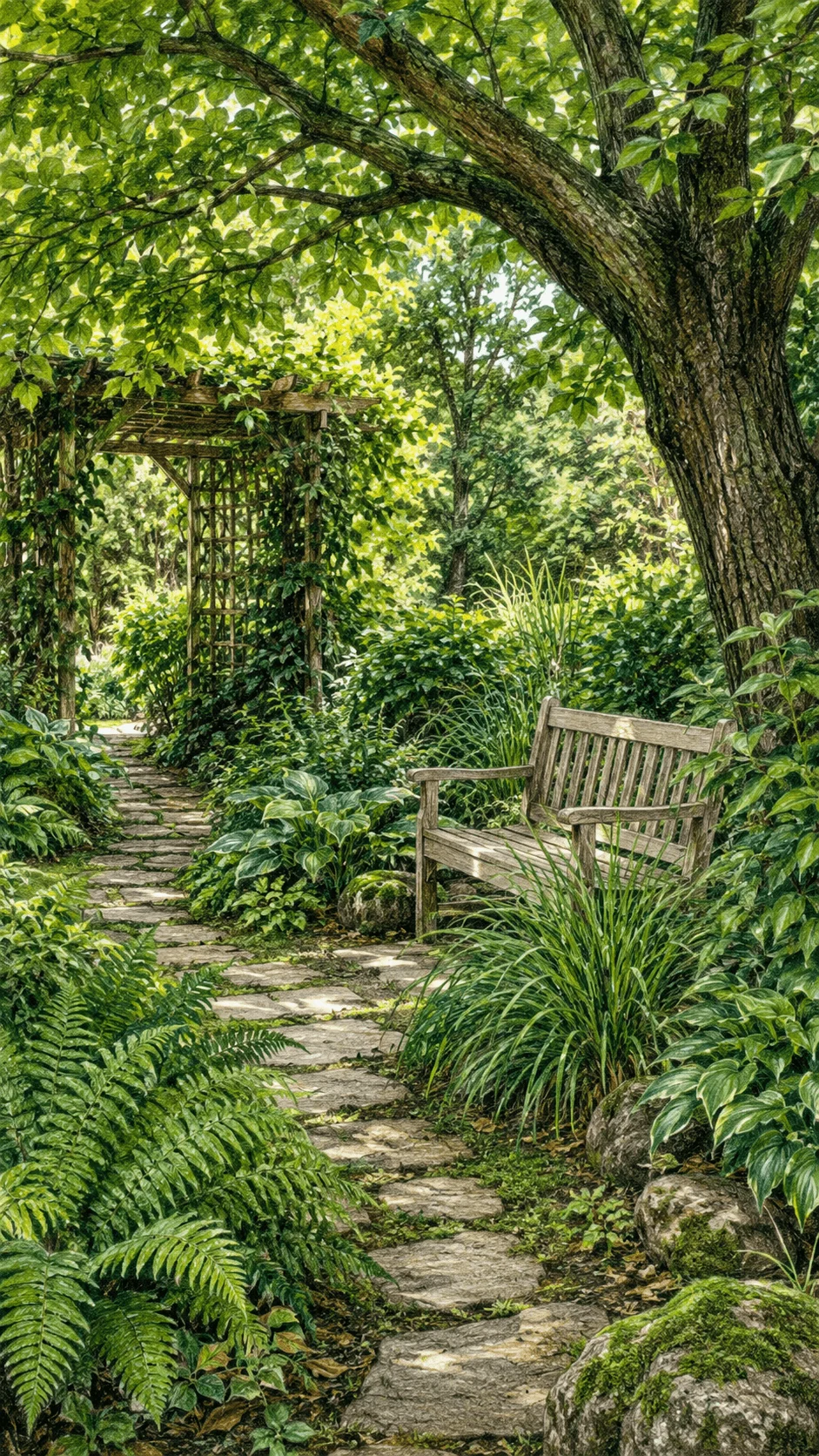
Small natural features can make the drawing even more interesting. Add moss around stones, fallen leaves beneath trees, or a narrow path passing through the foliage. A wooden bench can provide a resting place while also creating a contrast between natural greenery and a simple human made feature.
Sunlight can become an important part of the composition. Instead of coloring every area equally, imagine sunlight passing through the branches and reaching selected areas of the garden. Small patches of light can make the foliage appear more dimensional.
This type of garden represents an important environmental idea because it puts plants at the center of the landscape. Rather than treating greenery as decoration around buildings or paved areas, the drawing presents vegetation as the main feature.
A green garden drawing can also be adapted easily for beginners. You can start with simple leaf shapes and gradually add more detailed plants as your drawing skills develop. The result can remain attractive even when the individual plants have simple forms.
8. Eco Friendly Vertical Garden Drawing
An eco friendly vertical garden drawing is a great choice when you want to explore sustainability in a small space. Instead of spreading plants across a large yard, this concept uses walls, frames, shelves, and hanging containers to grow upward.
Imagine a small balcony, courtyard, patio, or narrow urban garden. Place a vertical wooden frame against one wall and fill it with plants. Some containers can hold herbs while other sections can contain leafy plants and flowers.
Climbing plants can grow upward along the structure and soften its edges. You can draw vines winding around wooden supports and allow a few leaves to extend beyond the main frame.
Reused containers can make the design even more creative. Old jars, simple containers, wooden boxes, or other repurposed objects can become planting spaces. You do not need to make every container identical. Different shapes can actually give the drawing more personality.
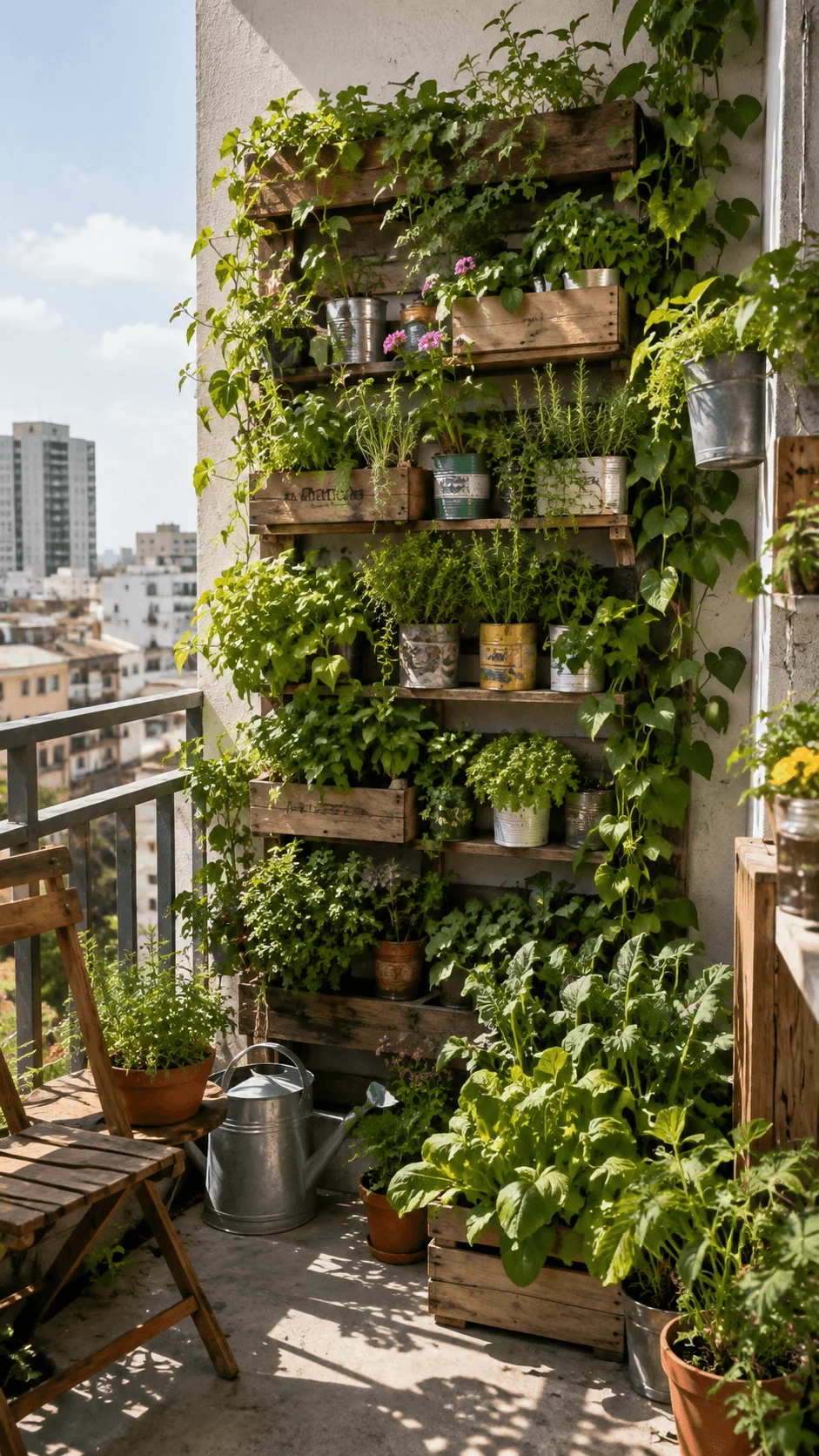
The surrounding environment matters too. You can add a small chair, watering can, narrow pathway, or balcony railing to establish the setting. If you want the drawing to feel more urban, place several buildings in the background while keeping the vertical garden as the main focal point.
Another interesting approach is to create a living wall filled almost entirely with foliage. Different plant shapes can create a textured green surface across the wall. A few flowers can provide small areas of contrast.
You can also show how the garden makes use of limited space. A compact arrangement of herbs and vegetables can demonstrate that sustainability does not always require a large backyard.
The drawing can communicate an important message about making better use of existing spaces. Empty walls, balconies, and small courtyards can become productive and attractive areas when plants grow vertically.
For children and students, this concept can also provide an opportunity to combine art with lessons about urban gardening, food production, recycling, and efficient use of space.
9. Upcycled Garden Drawing Ideas
Upcycled garden drawing ideas allow you to combine environmental creativity with unusual garden decorations. The central concept is simple: objects that might otherwise become waste receive a new purpose inside the garden.
You could draw an old wooden crate filled with flowers, a reused container holding herbs, or an old chair transformed into a creative planter. The possibilities are wide, which means you can make the scene highly personal.
Try creating one main upcycled feature as the focal point. For example, an old wooden ladder could stand against a wall with several plants growing from containers placed on its steps. Surround it with smaller flowers and greenery so that the recycled structure feels integrated into the garden.
Reclaimed wood can also appear as a garden border or pathway. Old materials can create interesting textures because they do not have the perfectly smooth appearance of new products.
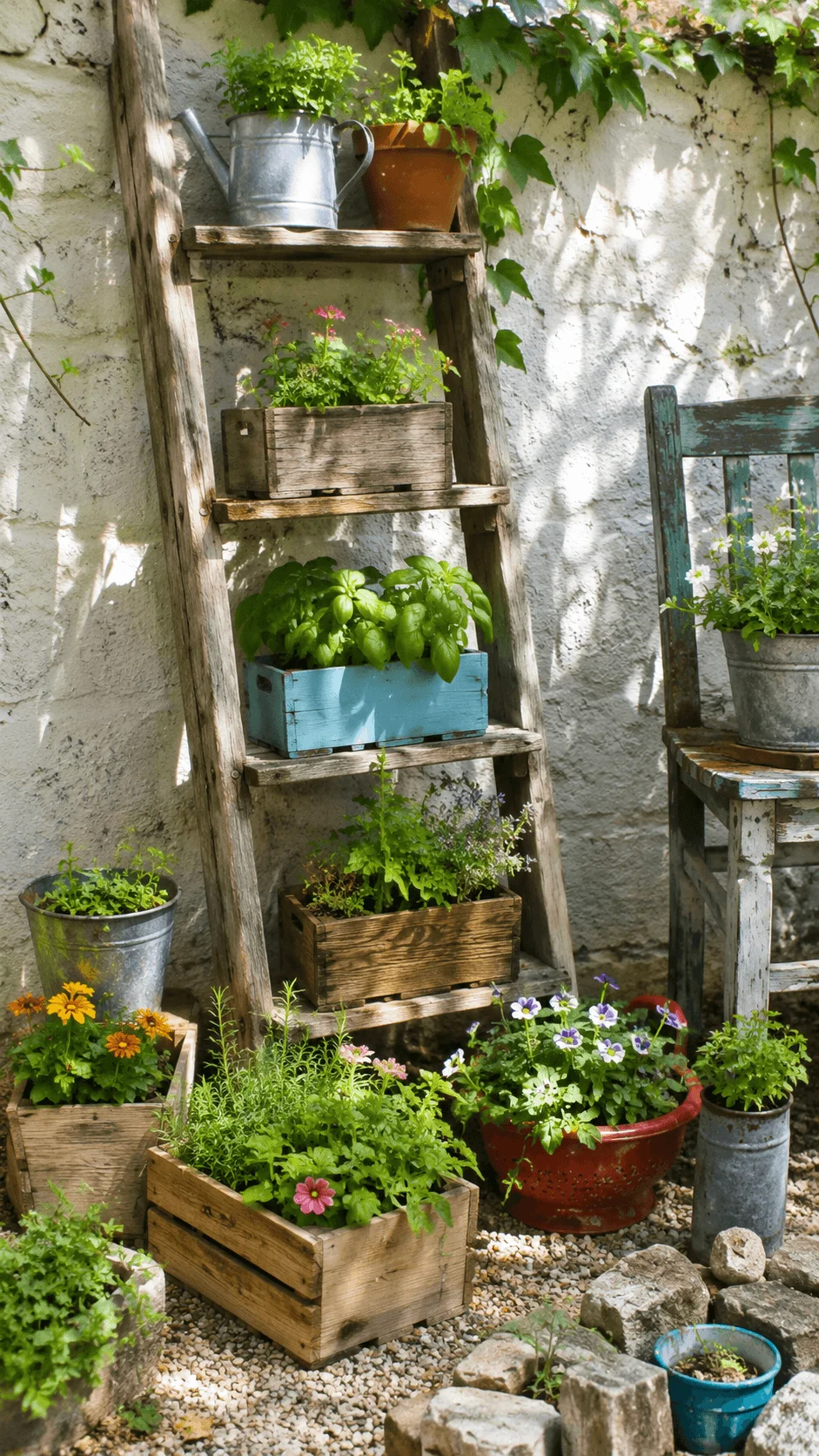
You can add several small reused objects throughout the scene, but avoid making the drawing look cluttered. The goal is to show thoughtful reuse rather than simply filling the garden with random objects.
Color can help distinguish reused materials from living elements. Natural brown wood can contrast with green foliage, while painted containers can introduce small areas of brighter color.
You can also make the drawing tell a story. An old object that once served another purpose now supports a growing plant. This transformation can become the central environmental message.
For example, you might show a simple wooden box that once stored household items but now contains herbs. Nearby, a reused container holds flowers that attract butterflies. Together, these details communicate the idea that useful materials do not always need to become waste after their original purpose ends.
This concept works particularly well for environmental art because viewers can immediately understand the connection between creativity and resource conservation.
10. Compost and No Dig Garden Drawing
A compost and no dig garden drawing focuses on something that often remains hidden beneath beautiful gardens: healthy soil. This gives your artwork a deeper environmental message because it shows that sustainability involves what happens below the plants as well as what appears above them.
Begin by drawing several productive planting beds. Surround the plants with a visible layer of mulch so viewers can understand that the soil receives protection rather than remaining completely exposed.
Place a compost container toward one side of the garden. You can show leaves, vegetable scraps, grass clippings, and other organic materials being collected inside it. Keep the compost area neat and integrated into the overall garden.
A small pile of fallen leaves can sit nearby. You could also include a simple garden tool beside the compost container to make the scene feel realistic.
The soil itself can become an interesting artistic feature. Use different textures to distinguish the rich planting soil from pathways made with gravel, stones, or wood. If the drawing has a cutaway style, you can even show roots extending beneath the surface.
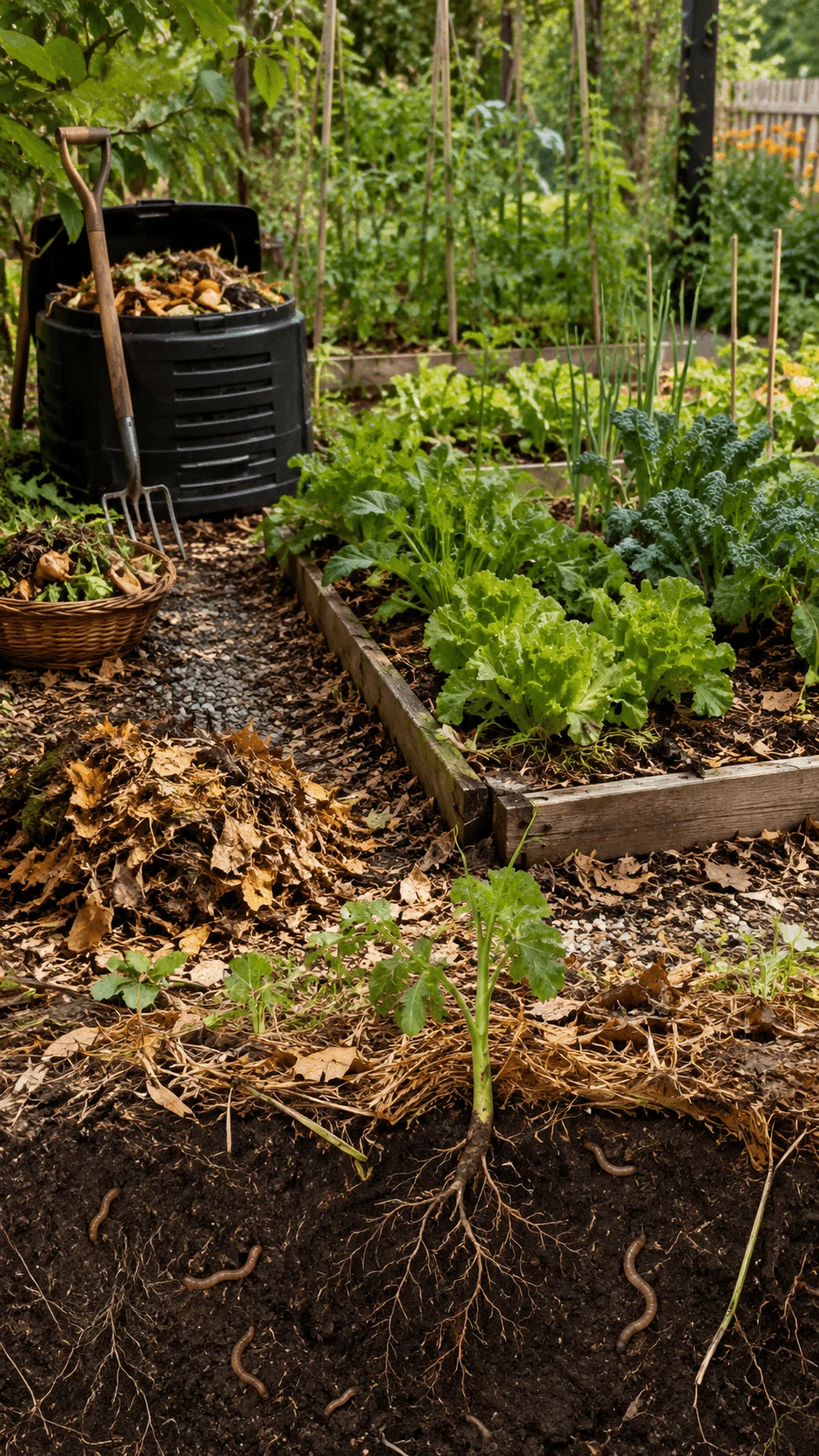
Small earthworms can add a playful detail, especially in a drawing designed for children or students. They can visually reinforce the idea of life within healthy soil.
The no dig concept can be represented through an established garden bed where plants grow through layers of organic material. You do not need to create a complicated technical diagram. A simple visual of mulch, healthy plants, compost, and living soil can communicate the main idea.
This drawing can teach viewers that sustainable gardening involves more than planting flowers. Soil health supports plant growth, and composting helps return organic matter to the garden.
It also provides a different visual subject from the colorful garden scenes commonly found in drawing collections. Instead of focusing only on flowers and scenery, this concept celebrates the foundation that allows a garden to thrive.
11. Drought Tolerant Mediterranean Garden Drawing
A drought tolerant Mediterranean garden can bring warmth, texture, and a relaxed atmosphere into your artwork. This concept combines water conservation with a visually distinctive landscape.
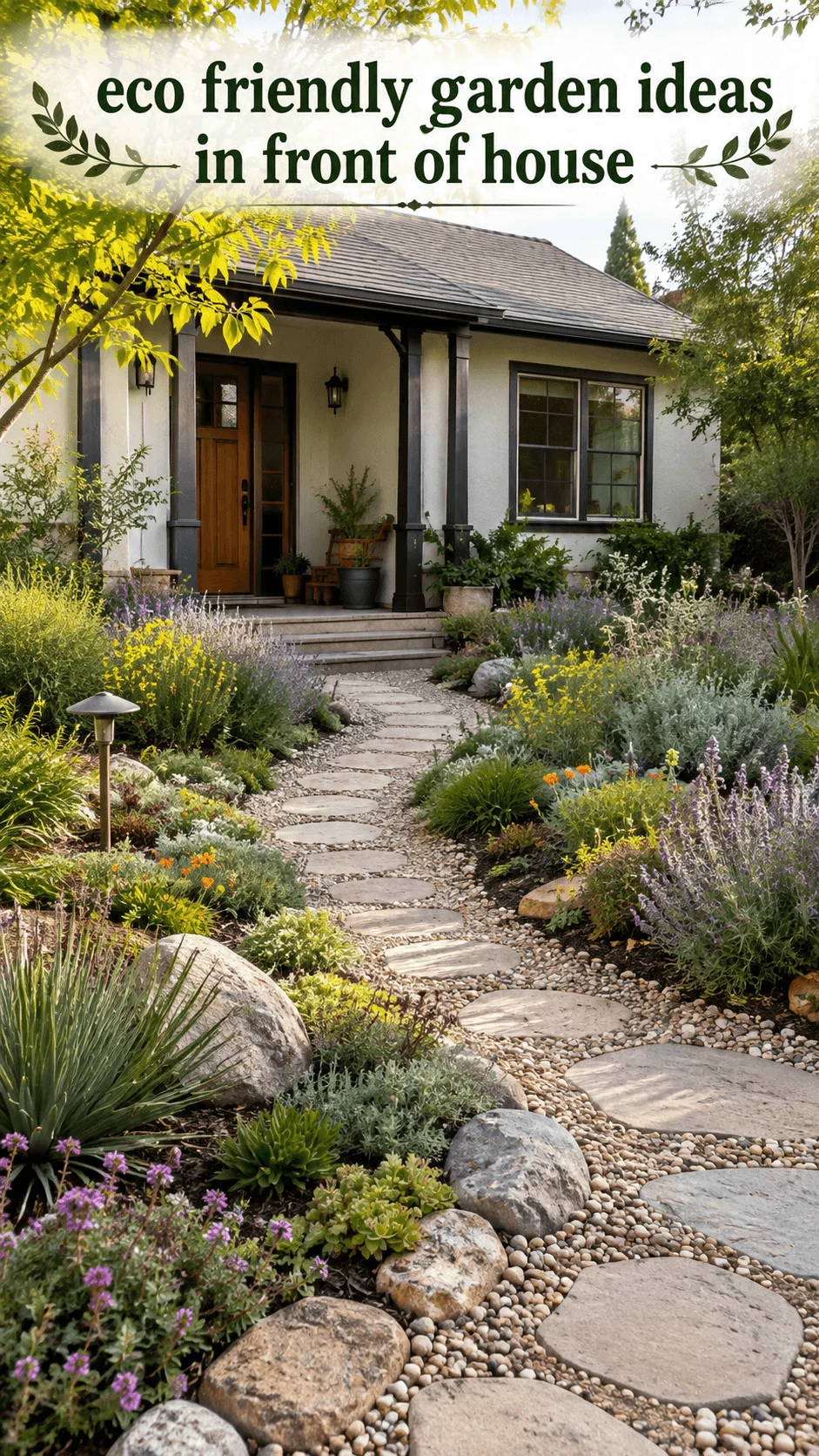
Begin with a pathway made from gravel or irregular stones. Let the path curve gently through the garden rather than dividing the scene into rigid sections.
Place drought tolerant plants around the pathway. You can include ornamental grasses, herbs, compact shrubs, and plants with interesting leaves. Their different shapes can create a strong contrast against the simple gravel surface.
Terracotta containers can add another visual feature. Place a few around a seating area or along the edge of the path. Their warm appearance can contrast beautifully with green foliage.
A small tree can provide height and shade. Beneath it, create a simple seating area using natural looking materials. The space should feel comfortable without requiring large lawns or extensive decorative structures.
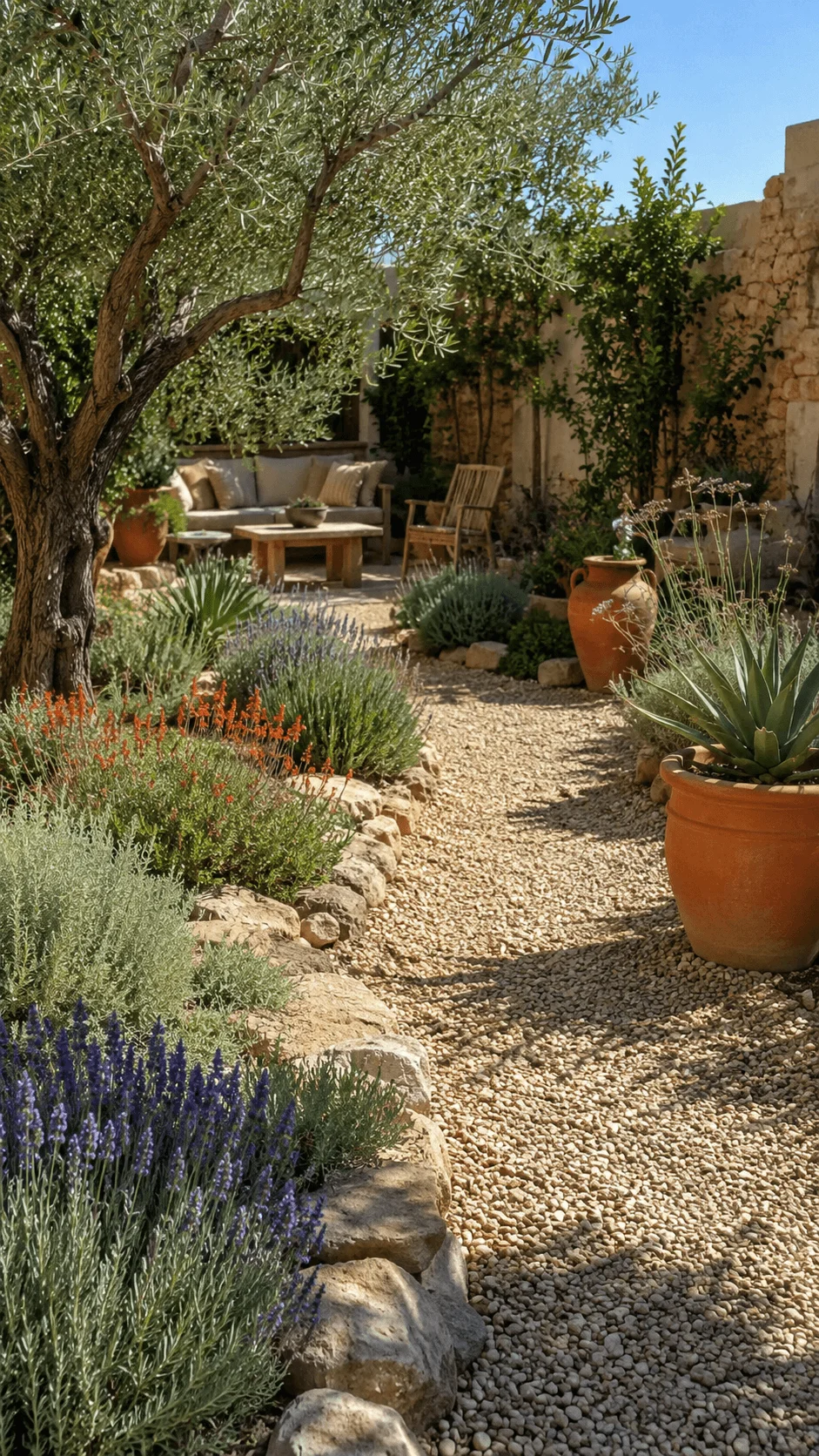
Stones can play an important role in the drawing. Use them around plants, along pathways, or as informal garden borders. Their irregular shapes can make the scene feel more natural.
You can emphasize the warm climate through sunlight and shadows. Imagine sunlight falling strongly across the gravel while certain plants remain partially shaded beneath trees or larger shrubs.
The environmental message comes from the way the garden works with limited water. Instead of presenting a landscape dominated by thirsty grass, the drawing focuses on plants and materials suited to dry conditions.
This idea can also help readers understand that an eco friendly garden does not have to look the same everywhere. Sustainable design depends on climate and local conditions. A water wise garden in a dry region can have a completely different appearance from a lush wildlife garden.
The combination of gravel, terracotta, greenery, stones, and sunlight gives this drawing a distinctive visual identity while keeping sustainability at its center.
12. Sustainable Community Garden Drawing
A sustainable community garden drawing brings people into the environmental story. Instead of showing sustainability as something that happens in an isolated backyard, this concept presents gardening as a shared activity.
Imagine a spacious community garden divided into several planting areas. People can work together around vegetable beds while others water plants, harvest vegetables, or care for flowers.
Create several garden sections rather than one large planting area. One section can contain vegetables, another can contain herbs, and another can feature flowering plants for pollinators.
A compost area can sit near the edge of the garden. You can also include a rainwater collection barrel beside a small shed. These details help connect the community space with sustainable practices.
Fruit trees can provide height and structure. Place them toward the back of the scene so they create a natural background while leaving the central area open for the community garden.
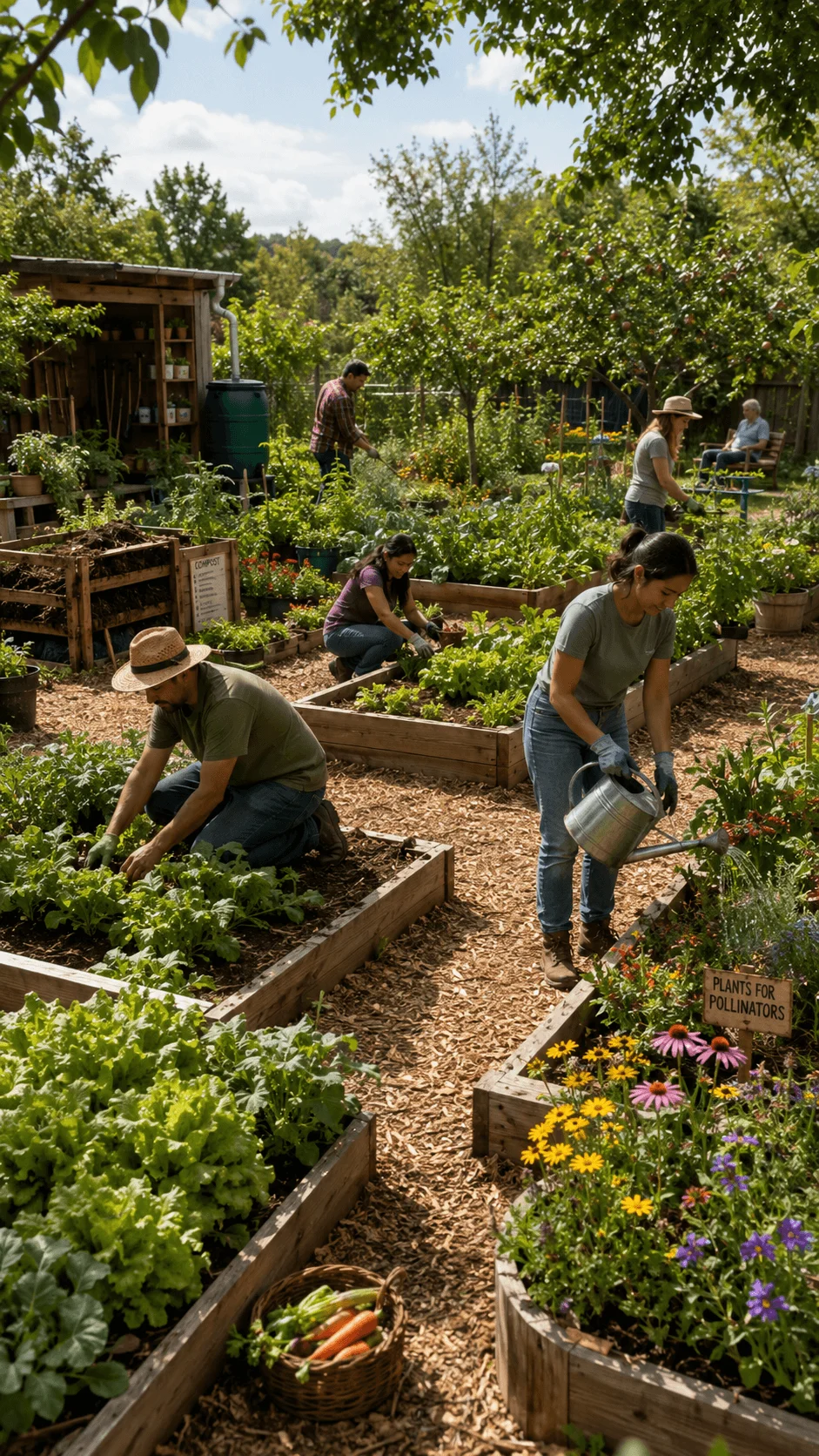
A seating area can make the space feel welcoming. A simple wooden bench beneath a tree can suggest that the garden serves as more than a place to grow food. It can also become a place where people meet, learn, and spend time outdoors.
Paths can connect the different sections. Curved paths can make the garden feel natural, while clearly defined planting beds can keep the composition organized.
The people in the drawing should appear to be part of the landscape rather than simply standing around it. Someone can carry a watering can, another person can harvest vegetables, and another can care for flowering plants.
This creates a visual story about cooperation. The garden becomes a place where environmental responsibility and community activity come together.
A sustainable community garden drawing can work especially well for school assignments because it allows you to communicate several ideas in one scene. You can show food production, composting, water conservation, biodiversity, outdoor activity, and cooperation without needing separate drawings for each topic.
It also provides an optimistic ending to the collection because the final image can show sustainability as something people can practice together.
Conclusion
The best eco friendly garden drawing ideas combine artistic creativity with meaningful environmental concepts. Instead of simply drawing a beautiful garden, you can create artwork that communicates ideas about biodiversity, water conservation, healthy soil, food production, recycling, climate resilience, and connection with nature.
A native plant garden can show how plants support local wildlife. A rainwater harvesting scene can explain responsible water use. A compost garden can reveal the importance of healthy soil, while an upcycled garden can demonstrate how creativity can give old materials a new purpose.
You can also experiment with different visual styles. Naturalistic planting can create a relaxed landscape, while a vertical garden can explore sustainability in small spaces. A drought tolerant garden can reflect the needs of a dry climate, while a community garden can show how people can work together toward a healthier environment.
What makes these eco friendly garden drawing ideas especially useful is their flexibility. You do not need to copy a particular garden exactly. Choose one concept, change the plants, experiment with the layout, add your own scenery, and create a design that reflects your imagination.
A successful sustainable garden drawing does not need to be complicated. Even a simple picture can communicate a powerful idea when every element has a purpose. With plants, natural materials, wildlife, water saving features, and thoughtful composition, you can turn an ordinary garden sketch into artwork that celebrates both creativity and the natural world.