12 Eco Friendly Garden Ideas in Front of House
Creating an attractive entrance does not mean covering your entire front yard with thirsty grass, decorative plants, and high maintenance landscaping. Today, eco friendly garden ideas in front of house designs are becoming a practical way to create beautiful curb appeal while using water wisely, supporting wildlife, improving soil, and reducing unnecessary maintenance. A sustainable front garden can look modern, colorful, natural, or minimalist depending on the style of your home and the plants that suit your local environment.
The best sustainable gardens work with nature instead of constantly fighting against it. Choosing plants that suit your climate, replacing unnecessary lawn, managing rainwater, and using natural materials can make a noticeable difference. You can also combine several approaches to create a front garden that feels personal and attractive while reducing its environmental impact.
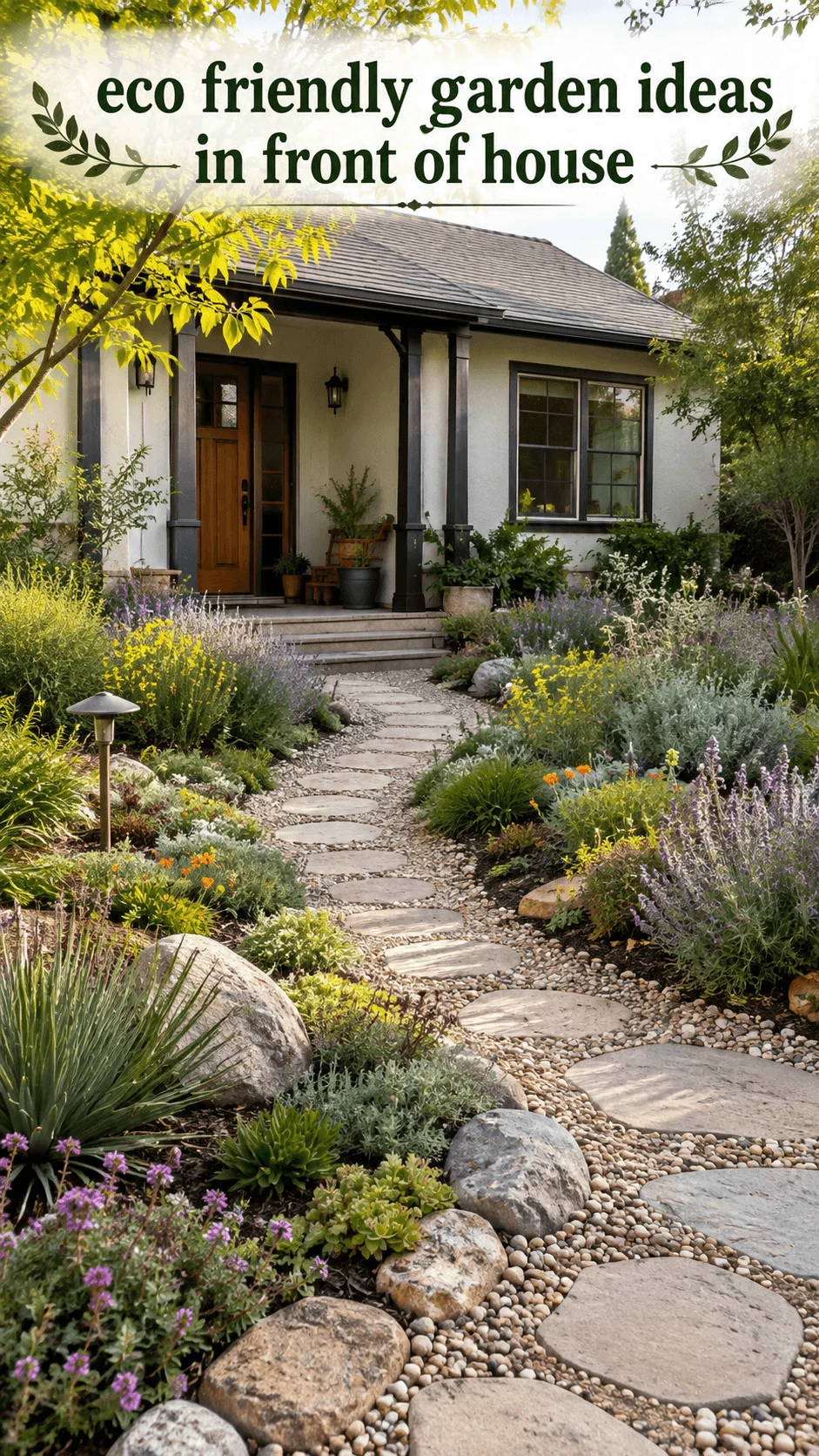
If you are planning a new landscape or simply want to make an existing yard more sustainable, there are plenty of creative possibilities. From native plant displays and pollinator gardens to rain gardens and water wise landscaping, these ideas can help you transform an ordinary entrance into a more environmentally responsible outdoor space.
12 Eco Friendly Front Garden Ideas for a Sustainable Home
A sustainable front garden does not have to look wild or overly rustic. Modern garden design gives you plenty of ways to combine environmental benefits with structure, color, texture, and curb appeal. The following ideas can work individually or together depending on your property’s size, climate, soil, and style.
1. Create a Native Plant Front Garden
One of the simplest ways to make your front yard more environmentally friendly is to build your planting scheme around native plants. These plants naturally occur in your region and have adapted to local conditions over time. That makes them a useful starting point when you want a garden that works with the environment rather than requiring constant adjustments.
Native plants can create an attractive landscape when you arrange them thoughtfully. Instead of placing individual plants randomly around the yard, consider creating groups of different heights. Taller plants can provide a backdrop near the house, medium sized shrubs can fill the middle layer, and shorter flowers or ground covers can create a softer edge near pathways.
You can also create seasonal interest by choosing plants that flower or change appearance at different times of the year. This approach keeps the garden visually interesting without requiring a large collection of unrelated ornamental plants.
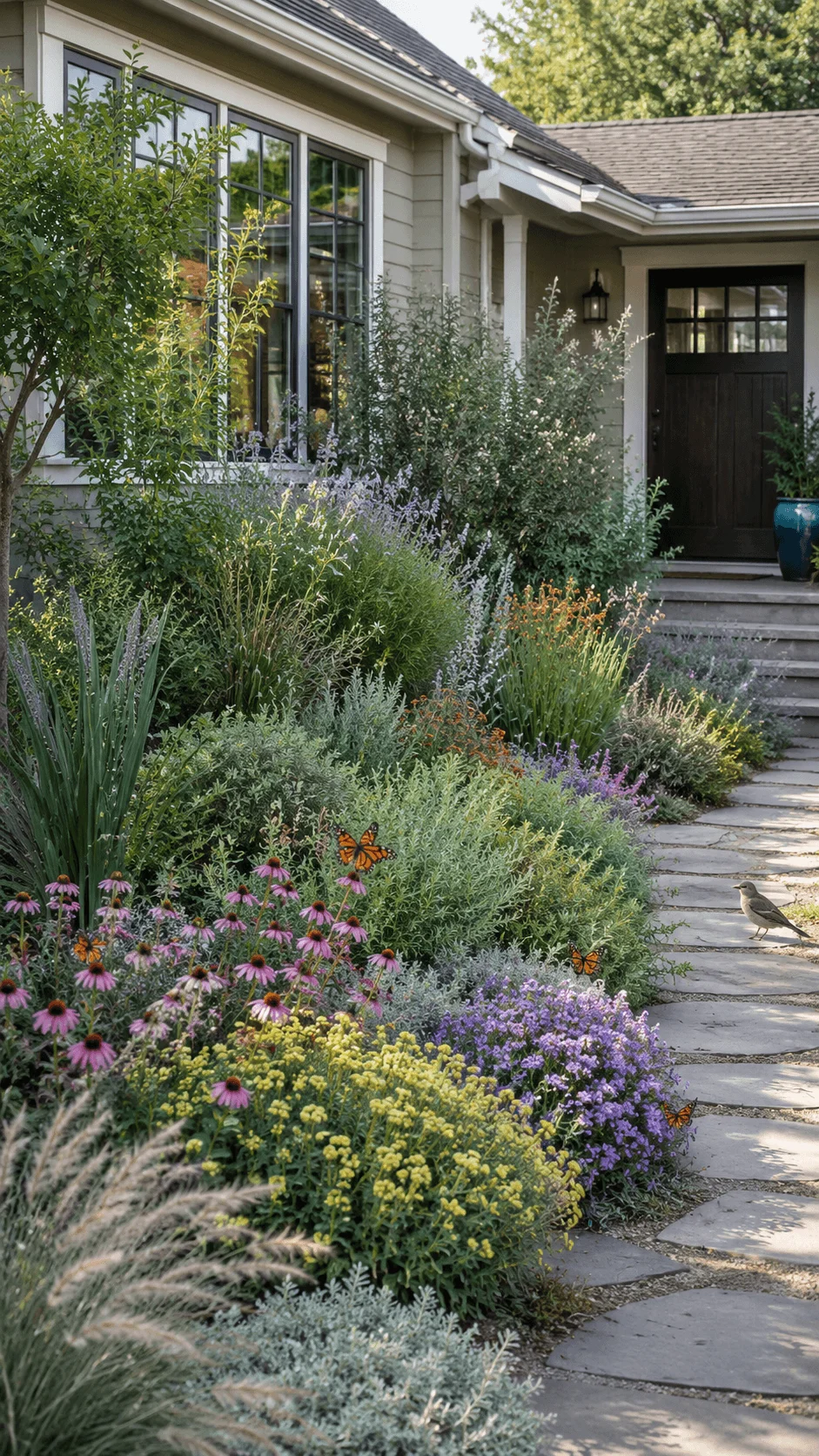
Another advantage of native planting involves wildlife. Local insects, birds, and other animals can benefit from plant species that form part of their natural environment. A native plant garden can therefore become more than decoration around your house. It can provide food, shelter, and habitat while contributing to local biodiversity.
Before choosing plants, research the species that naturally suit your region. Consider your soil type, sunlight, rainfall, temperature, and drainage. A plant that works beautifully in one location may struggle in another. Choosing the right plant for the right place is one of the most important principles behind sustainable front garden design.
2. Replace Part of the Lawn With Eco Friendly Ground Covers
A traditional lawn can create a neat appearance, but large areas of grass may demand regular mowing, watering, and maintenance. If parts of your front yard receive little use, replacing some of that lawn with suitable ground covers can create a more sustainable landscape while adding visual interest.
Clover, creeping thyme, native sedges, and other locally appropriate ground covers can provide alternatives to conventional turf. The best choice depends heavily on your climate and the conditions of your property, so homeowners should investigate which species perform well in their particular region.
You do not have to remove the entire lawn. Even replacing sections around trees, pathways, planting beds, or awkward corners can change the character of the garden. For example, you could create a narrow path through a low growing ground cover area and connect it to a small planting bed near the front entrance.
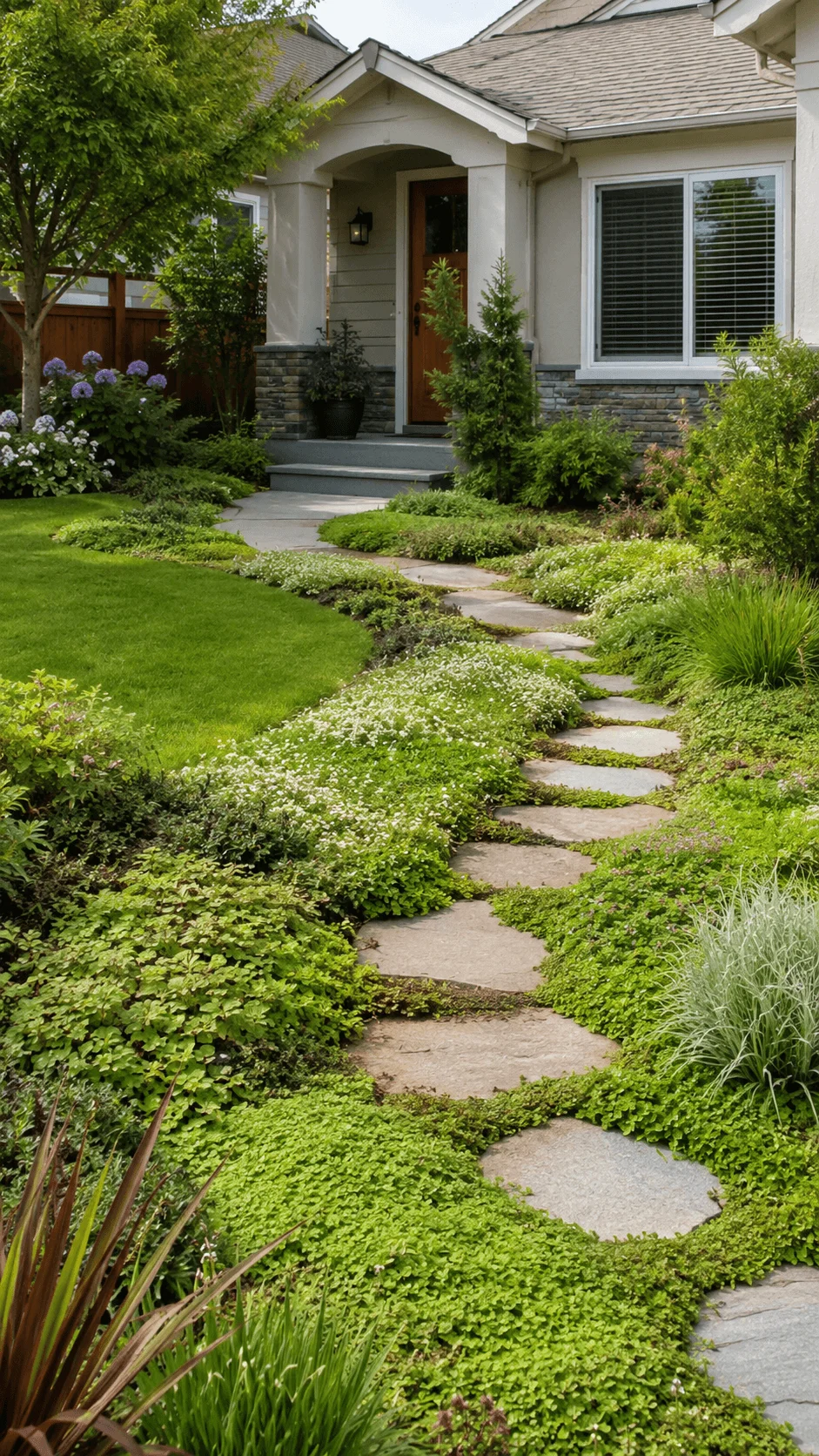
Ground covers can also soften hard landscaping. Stepping stones surrounded by low growing plants can create a natural transition between the driveway and front door. Similarly, ground covers can fill spaces between larger shrubs and flowering plants, helping the garden feel more connected.
This approach works especially well for homeowners searching for eco friendly front yard ideas without grass because it provides a way to reduce lawn without making the garden feel empty. The goal is not necessarily to eliminate every section of turf. Instead, think about whether each area of grass serves a genuine purpose and replace unnecessary sections with plants that suit the space.
3. Design a Modern Xeriscape Front Garden
Xeriscaping offers another attractive approach for homeowners who want to reduce unnecessary water use. Although people sometimes associate xeriscaping with bare gravel and a few desert plants, modern designs can look much more sophisticated.
A contemporary xeriscape garden can combine drought tolerant plants, ornamental grasses, native species, gravel, natural stone, and carefully shaped planting beds. The design can feel structured and intentional while still using considerably less water than a traditional landscape that depends heavily on thirsty plants.
Start by thinking about how water naturally moves across your property. Place plants with similar water requirements together so you do not need to water an entire garden simply because one small area contains a thirsty plant. Grouping plants according to their needs can make irrigation more efficient.
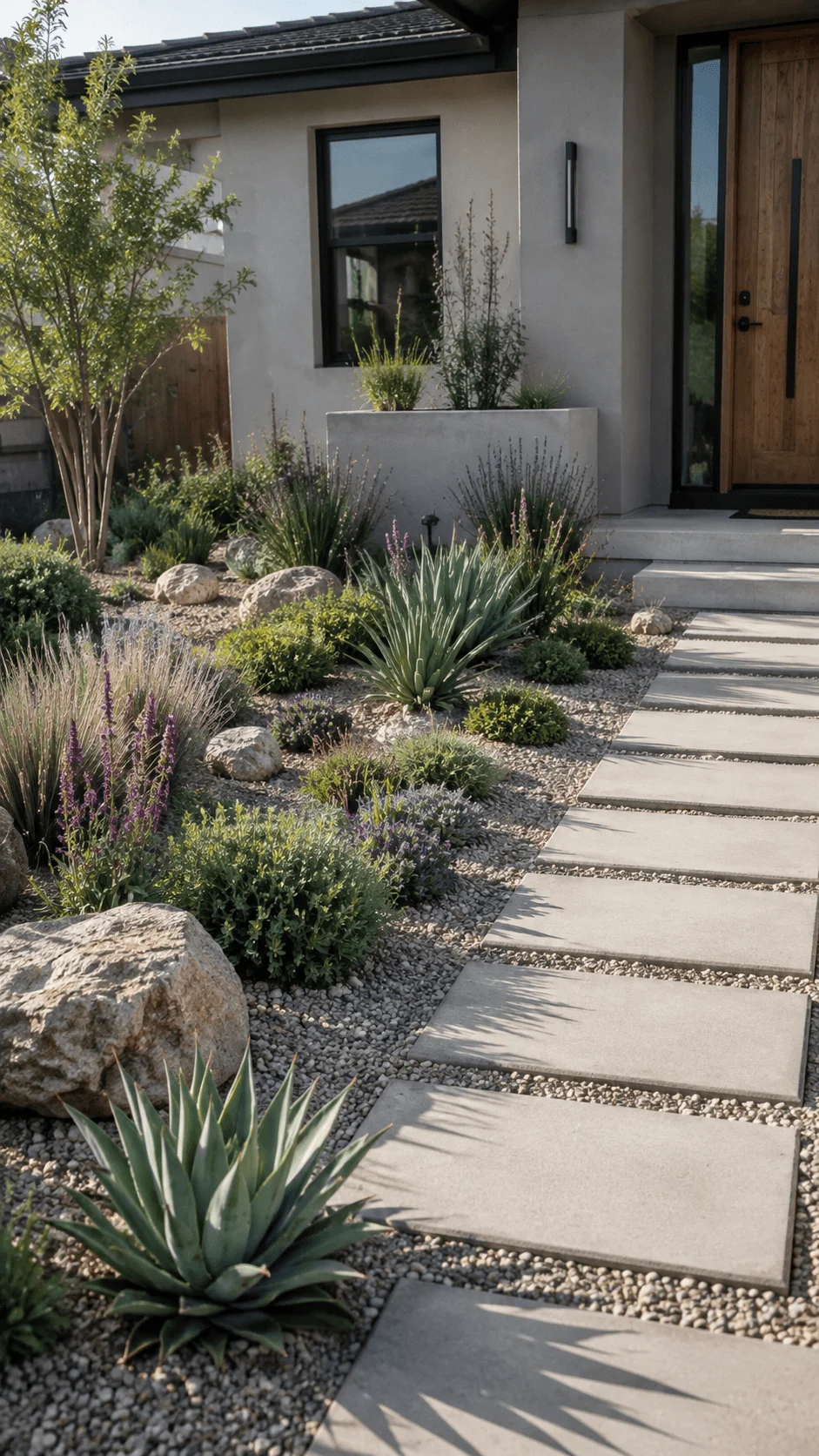
Texture also plays an important role. You might combine soft ornamental grasses with rounded shrubs, flowering perennials, decorative stones, and low ground covers. Different shapes can create interest even when the garden contains relatively few plant species.
A xeriscape front garden can also complement modern architecture particularly well. Gravel beds, clean pathways, natural stone, and carefully spaced plants can create a minimalist appearance around contemporary homes. For traditional properties, softer planting arrangements can create a more relaxed look.
When planning low water front garden ideas, remember that drought tolerance does not mean a plant can survive without any water. Newly planted vegetation usually needs appropriate establishment care, and even drought tolerant plants perform better when homeowners understand their specific growing requirements.
4. Create a Pollinator Friendly Front Garden
Your front yard can become an important little habitat for pollinators. Instead of selecting plants purely because they look attractive from the street, choose some species that provide useful food sources for bees, butterflies, and other beneficial insects.
A successful pollinator garden benefits from variety. Different flowers can provide nectar and pollen during different parts of the growing season, helping maintain interest for both wildlife and people. You can combine flowering perennials with shrubs, grasses, and other plants to create several layers.
The garden does not need to resemble an untidy meadow. Defined borders, curved planting beds, pathways, and repeated plant groupings can give the landscape a polished appearance. You can create a formal looking garden while still providing valuable resources for insects.
Flower color and shape can also contribute to the overall design. Instead of filling the entire yard with one type of flower, combine several complementary plants. Repeating certain species in different sections can make the landscape feel intentional and cohesive.
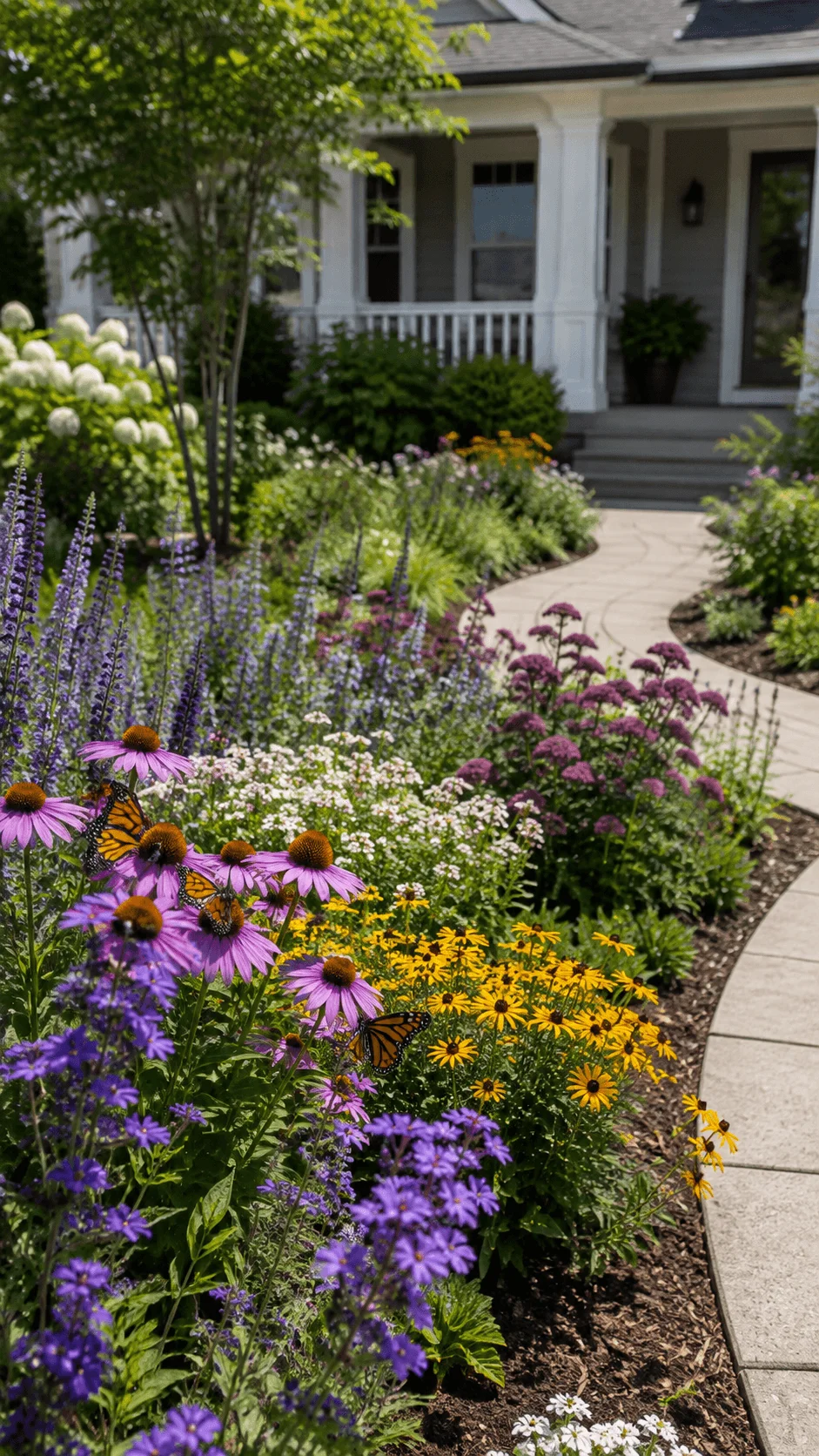
Think about shelter as well as flowers. Shrubs and dense vegetation can provide useful cover for small creatures. A diverse garden generally offers more opportunities for wildlife than a front yard dominated by a single type of plant.
Avoid unnecessary chemical treatments whenever possible and learn which pests actually require intervention before taking action. A healthy garden can contain insects without every insect representing a problem. Encouraging beneficial species can contribute to a more balanced outdoor environment.
For homeowners looking specifically for pollinator friendly front garden ideas, this approach combines environmental value with excellent visual potential. A carefully planned pollinator garden can provide changing color and texture throughout the year while making your front yard more welcoming to local wildlife.
5. Add a Modern Front Yard Rain Garden
A rain garden can turn an ordinary drainage problem into an attractive landscape feature. It uses a specially designed planting area to temporarily collect and absorb rainwater runoff, helping manage water that would otherwise move quickly across hard surfaces.
The location matters greatly. Before creating a rain garden, consider where water naturally flows across your property and investigate your soil and drainage conditions. The design should suit the site rather than simply copying a garden from another location.
Once you identify an appropriate area, you can make the garden visually appealing with native plants that tolerate the moisture conditions, natural stones, curved borders, and different plant heights. A shallow depression does not have to look like a drainage ditch. With thoughtful planting, it can become one of the most distinctive features of your front landscape.
Rain gardens also offer an opportunity to create a more naturalistic planting style. Plants can be arranged in groups rather than perfect rows, while stones and ground covers can help define the space.
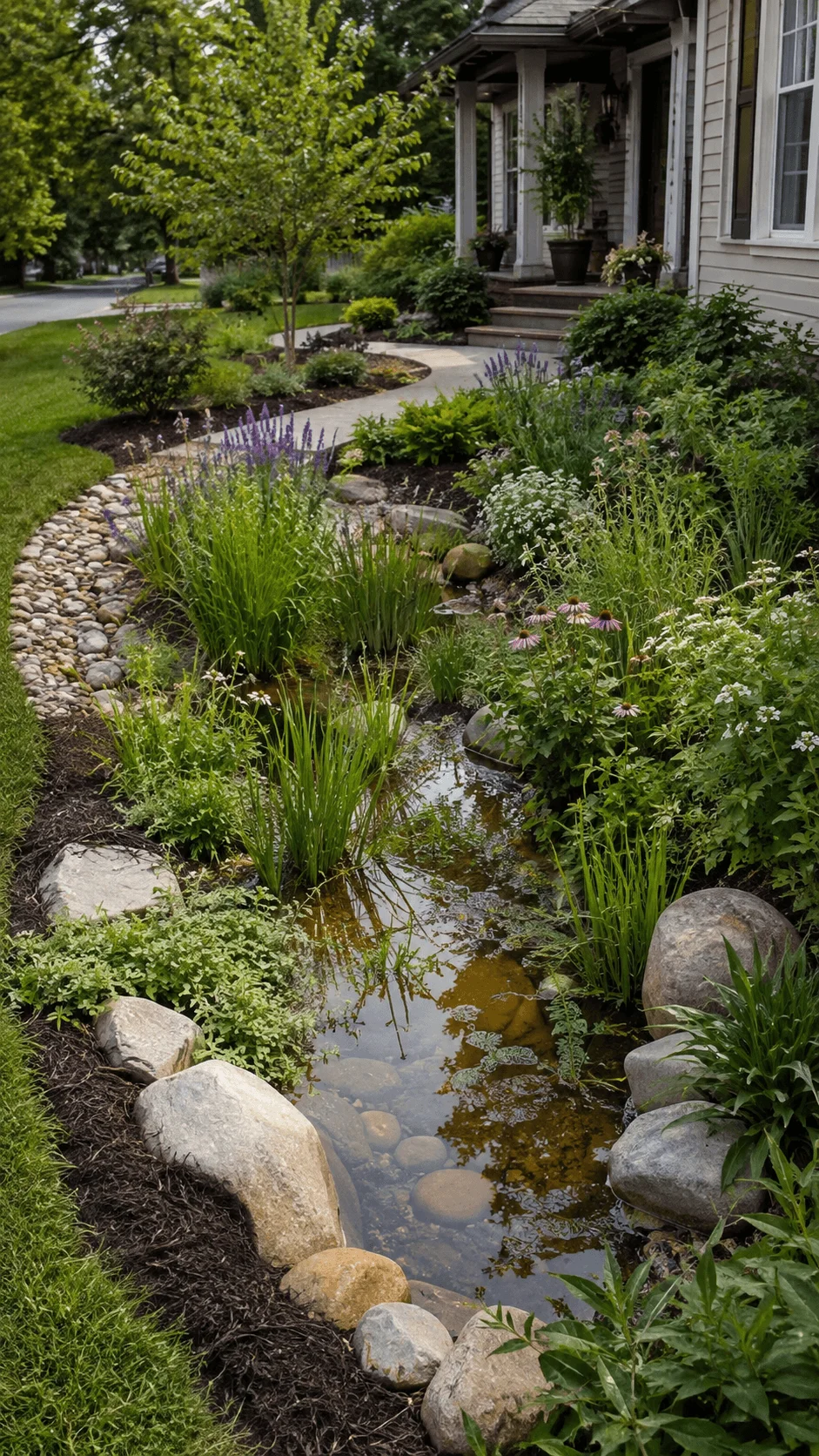
Consider the relationship between the rain garden and the rest of the front yard. A curved planting bed can lead visually toward the entrance, while a pathway can pass nearby without cutting through the main planting area. This makes the water management feature feel like part of the overall landscape rather than an isolated technical solution.
For homeowners researching front yard rain garden ideas, the most important consideration is suitability. Local rainfall, soil permeability, drainage, underground utilities, and property conditions all matter. If you are unsure whether a rain garden suits your property, seek advice from a qualified local landscaping or drainage professional.
6. Use Permeable Paths and Driveways
The materials covering your front yard can have just as much influence on sustainability as your plant choices. Large areas of conventional hard surfacing can reduce the amount of water that reaches the soil naturally. Permeable landscaping offers another way to approach paths, parking areas, and other frequently used spaces.
Permeable pavers, gravel, and appropriately designed stepping stone paths can allow water to move through or around the surface rather than immediately running across it. The exact performance depends on the material, installation method, soil, drainage, and local conditions, so homeowners should choose systems that suit their property.
You can also combine these materials with planting. Imagine a walkway made from individual natural stone or paver sections with suitable low growing plants around the edges. The result can feel softer and more connected to the garden than a solid concrete path.
Gravel can create another attractive option. A carefully edged gravel path surrounded by native plants, grasses, or flowering perennials can give a front yard a relaxed natural appearance. For a modern property, larger pavers combined with gravel can create a clean and contemporary entrance.
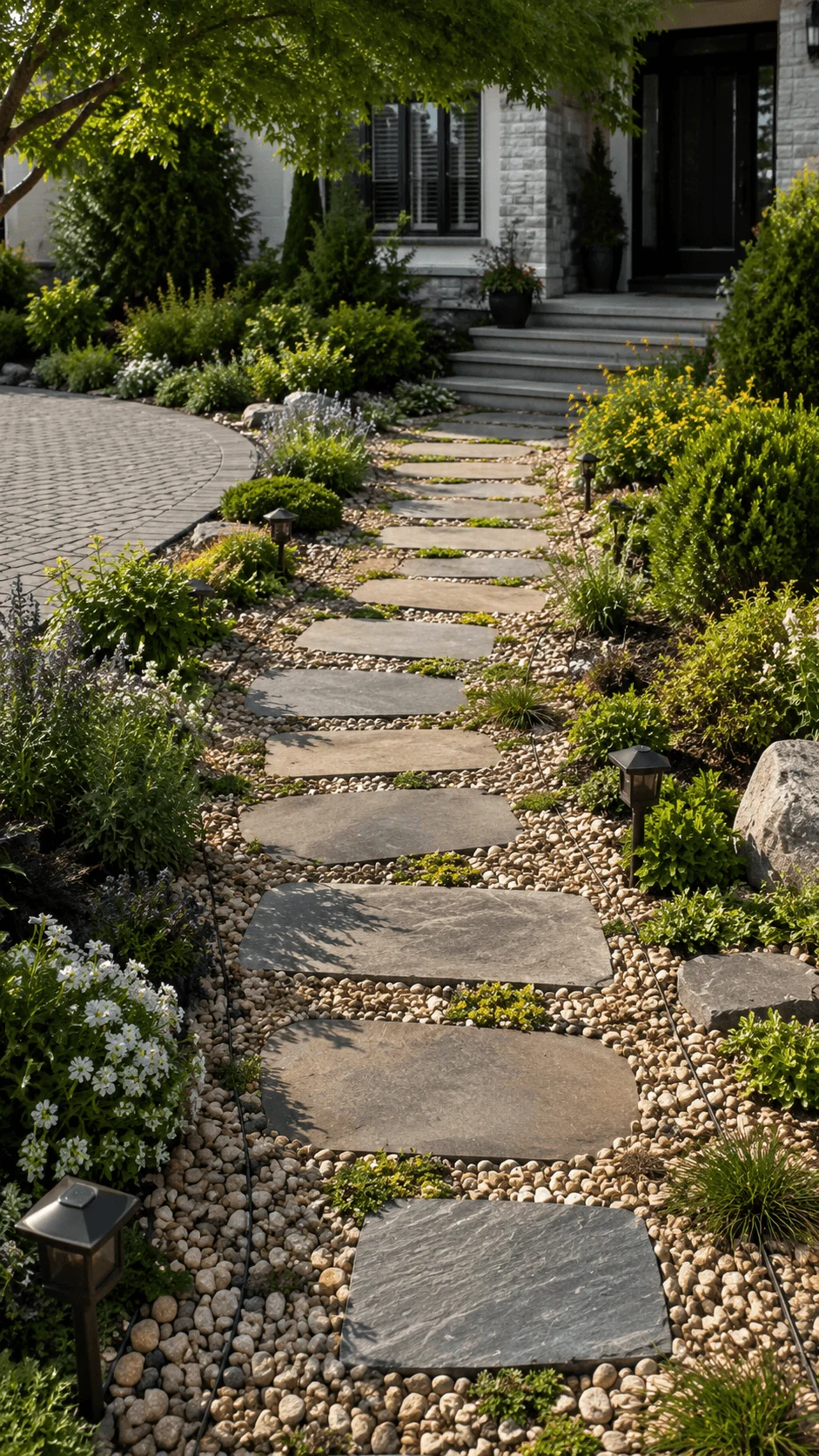
Think carefully about accessibility and maintenance when selecting your materials. A beautiful path still needs to be safe and practical for everyone who uses the entrance.
Permeable landscaping works particularly well when combined with other sustainable front garden ideas. You could pair a permeable walkway with native planting, ground covers, rainwater management, and drought tolerant vegetation to create a front garden where different sustainable features support the overall design.
7. Create an Edible Front Garden
Your front garden does not have to serve only as a decorative space. One of the more interesting approaches to sustainable landscaping is to combine beauty with plants that can actually provide food. An edible front garden can include herbs, vegetables, berries, fruit trees, and even edible flowers while still maintaining attractive curb appeal.
The key is to avoid making the garden look like a conventional vegetable plot. Instead, incorporate edible plants into the overall landscape design. You could place colorful herbs along a pathway, grow leafy vegetables among flowering plants, or use compact fruit trees as focal points near the entrance. Raised beds can also add structure when their shape and materials complement the architecture of the home.
Herbs are particularly useful for smaller front gardens because many varieties can grow in containers, borders, or dedicated planting areas. Plants such as rosemary, thyme, sage, and other locally suitable herbs can add texture and fragrance while providing something useful for the household.
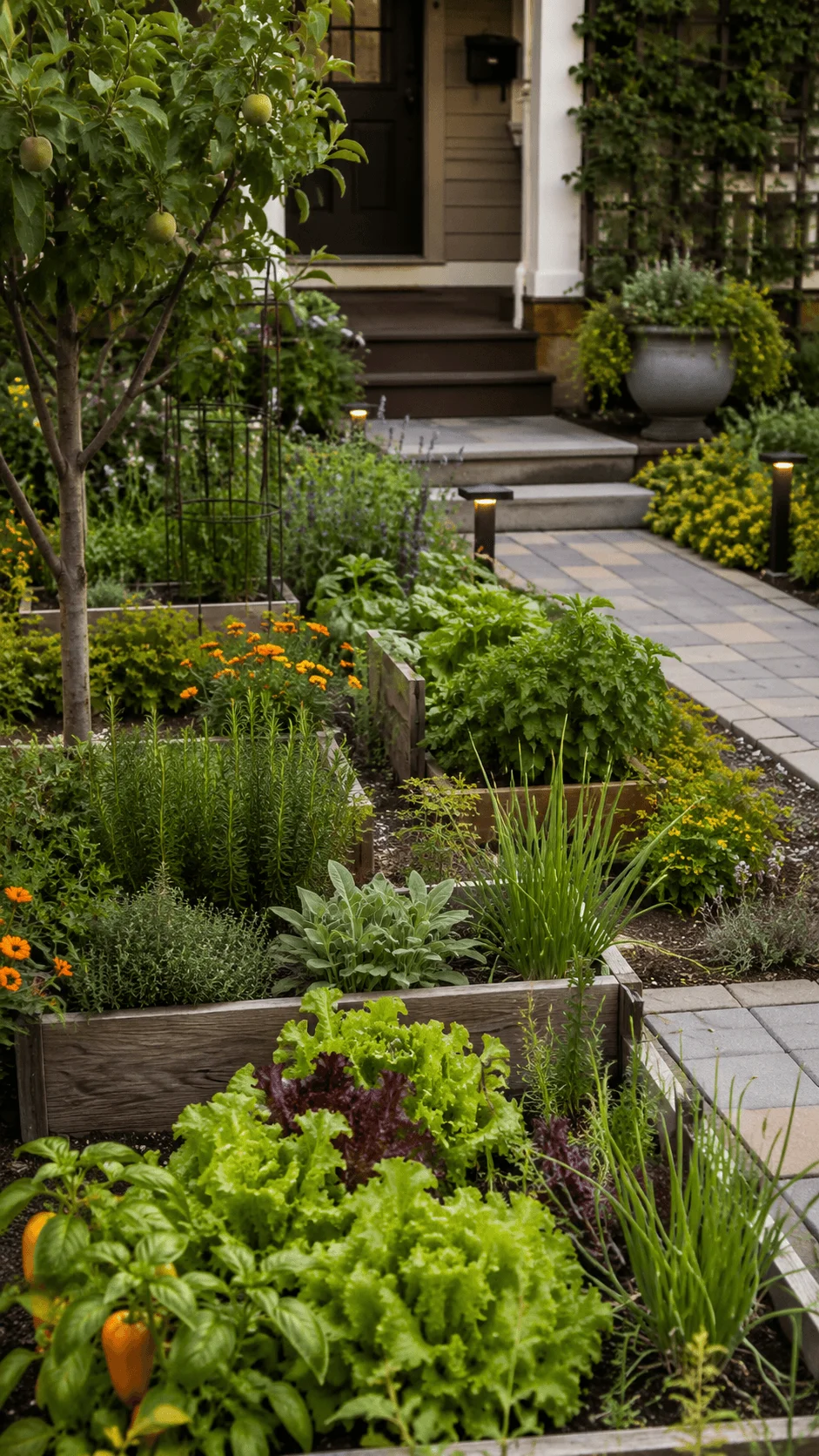
Fruit trees can also create an attractive focal point when the available space and local growing conditions allow them. A carefully positioned small tree can provide seasonal interest while eventually producing fruit. However, homeowners should consider the mature size of any tree before planting it close to the house, walkway, or utility lines.
Edible landscaping can also encourage people to pay more attention to their outdoor space. Instead of viewing the front yard as an area that simply needs mowing and trimming, you can turn it into a productive part of your property.
When planning edible front garden ideas, consider appearance as carefully as productivity. Repeated plant groupings, defined borders, attractive containers, natural materials, and clear pathways can help an edible garden look intentional and polished.
8. Try Layered Naturalistic Planting
A naturalistic front garden can create the feeling of a small ecosystem while maintaining enough structure to complement your home. Rather than planting everything at one height, use different layers of vegetation to create depth and visual interest.
You can begin with a small tree or several larger shrubs as the upper layer. Medium sized shrubs and ornamental grasses can fill the middle area, while flowering perennials and ground covers occupy the lower level. This creates a gradual transition from taller vegetation near the house toward shorter plants around pathways and garden edges.
Layered planting can make a relatively small garden feel more substantial. Different heights create depth, while contrasting foliage textures prevent the landscape from appearing flat. Plants with delicate leaves can sit beside broader foliage, while grasses can add movement when the wind passes through them.
This approach can also provide more opportunities for wildlife. Different plants can offer food, shelter, and cover at various levels of the garden. A diverse planting scheme can therefore provide more ecological value than a landscape dominated by a single plant type.
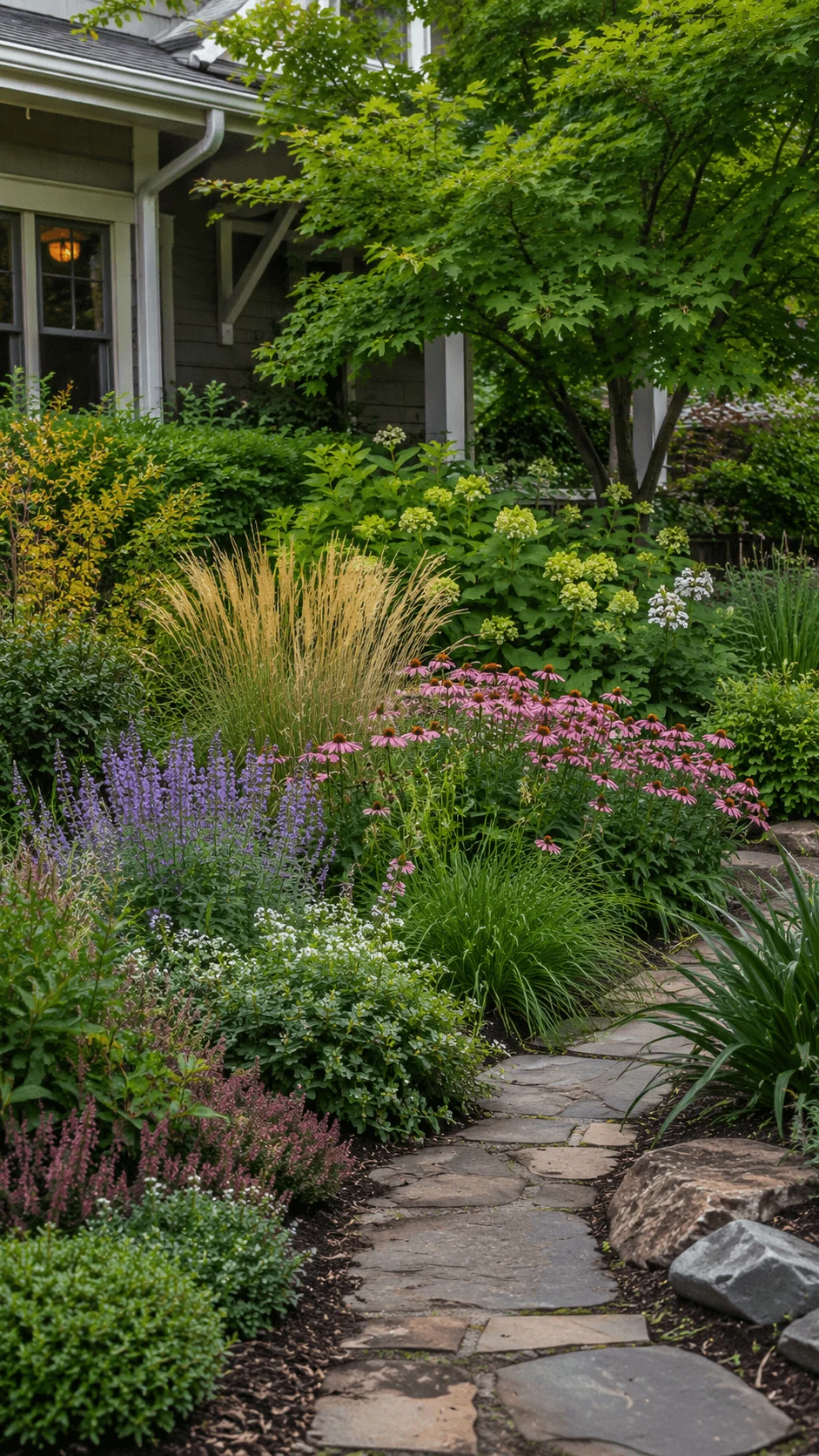
Naturalistic does not mean unplanned. You can still define the garden with clear edges and create deliberate pathways through the planting. Repeating certain plants throughout the yard can also give the landscape a cohesive appearance.
For example, you could use the same ornamental grass near the driveway, around a pathway, and beside the front entrance. Between those repeated plants, you can introduce flowering perennials and ground covers to create variety.
Layered planting can also reduce the visual dominance of hard surfaces. Instead of having a large expanse of driveway, walkway, and lawn surrounding the home, plants can soften those transitions.
This makes layered naturalistic planting one of the more versatile sustainable front garden ideas for homeowners who want an environmentally conscious landscape that still feels carefully designed.
9. Create a Green on Green Garden
Not every sustainable garden needs bright flowers to make an impression. A green on green garden uses different shades, textures, shapes, and heights of foliage to create a sophisticated appearance.
This approach can work especially well around modern homes because its restrained color palette creates a calm and contemporary atmosphere. Instead of relying on large numbers of flowering plants, you can create contrast through foliage.
For example, one section might contain fine textured ornamental grass while another contains a shrub with broad leaves. Low ground covers can provide a softer layer underneath taller plants, while evergreen species can maintain structure during seasons when other plants become less prominent.
Different shades of green can also create subtle contrast. Deep green foliage can stand beside lighter green plants, while silver green or blue green foliage can introduce another dimension without overwhelming the design.
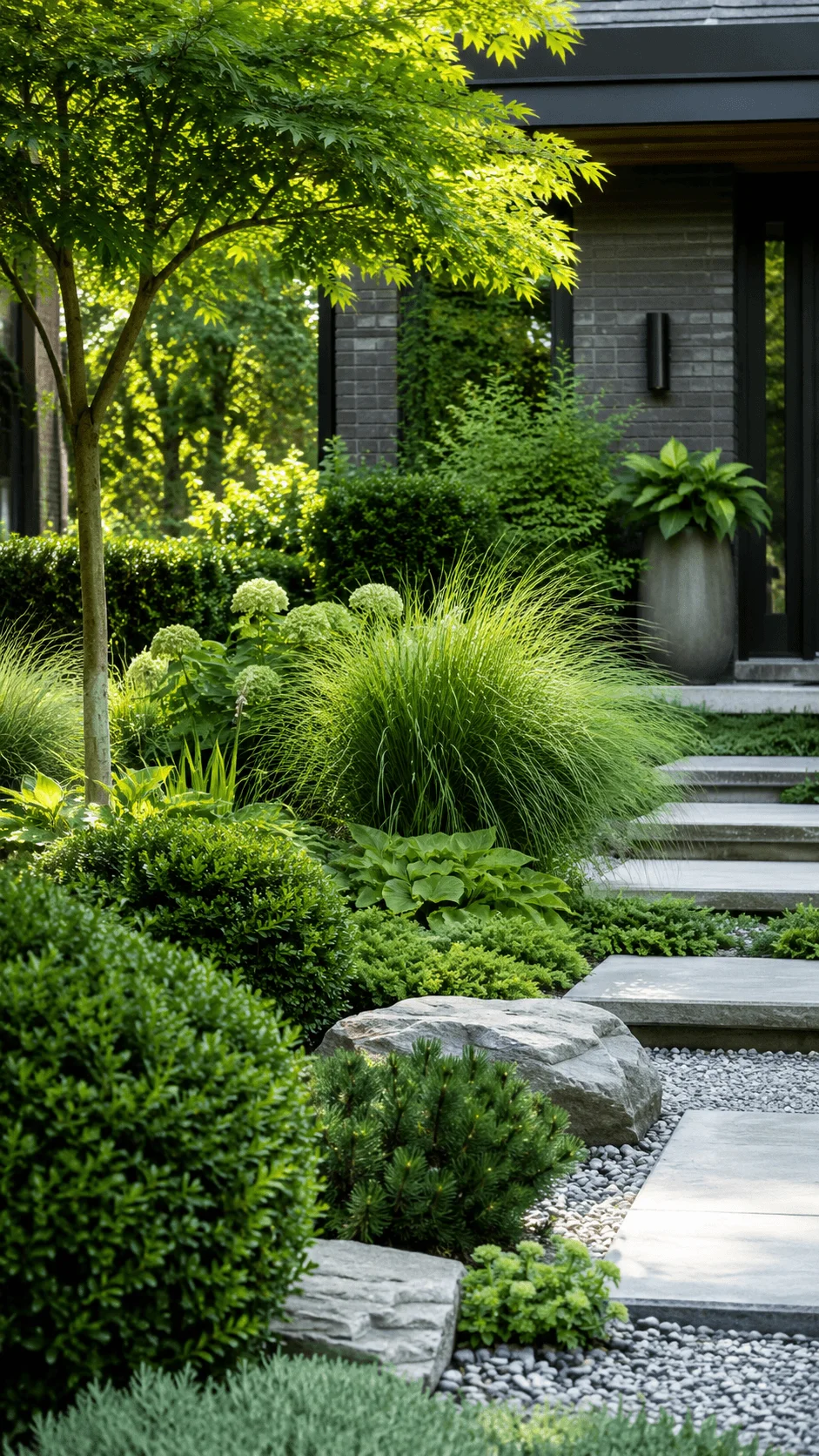
Natural stone and gravel can complement this style particularly well. A simple stone pathway surrounded by foliage can create a clean transition from the street toward the entrance. Wooden elements can provide another natural texture that works well with green planting.
The green on green approach also gives homeowners an opportunity to think more carefully about plant longevity. Instead of continually replacing seasonal displays, you can create the foundation of the garden with plants that provide reliable foliage and structure.
That does not mean avoiding flowers completely. Seasonal flowering plants can add occasional bursts of color while the foliage remains the main visual feature.
If you prefer simple landscaping, this can be one of the most attractive eco friendly front garden ideas because it can create a polished appearance without requiring a complicated collection of decorative elements.
10. Add a Stylish Rainwater Harvesting Feature
Water conservation is an important part of sustainable garden design, and rainwater harvesting can help homeowners make better use of rainfall where suitable systems and local regulations allow.
A simple rainwater collection system can capture water from an appropriate roof drainage point and store it for garden use. The exact setup depends on the property, local regulations, water quality considerations, and the intended use.
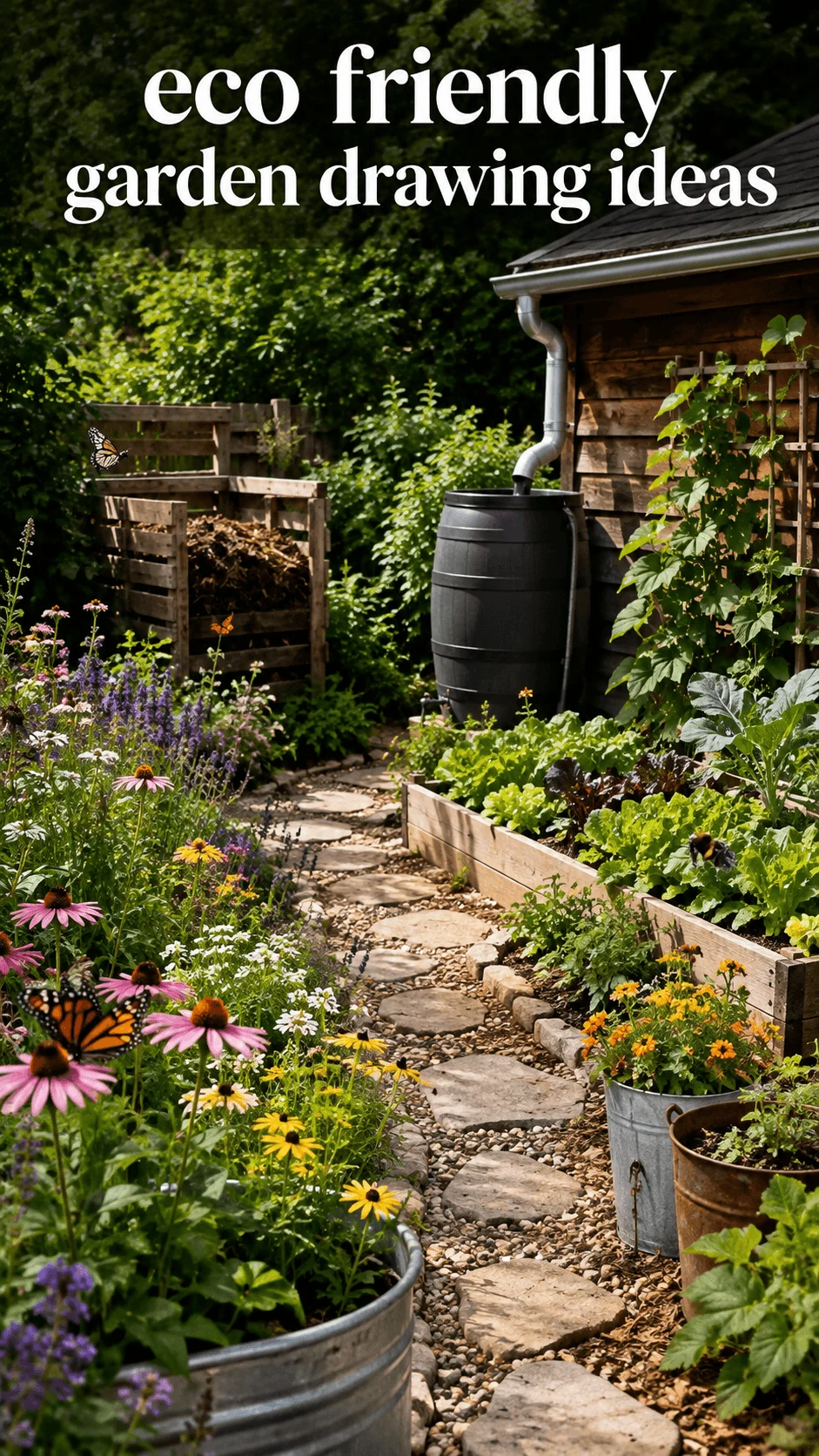
The sustainability feature does not have to look unattractive. Modern rain barrels and collection containers come in a variety of shapes and appearances, making it possible to incorporate them into a carefully designed garden.
You could position a collection container near an appropriate downspout and surround it with plants or natural materials so it becomes part of the overall landscape. A screen or carefully planned planting can also help integrate the feature without blocking necessary access for maintenance.
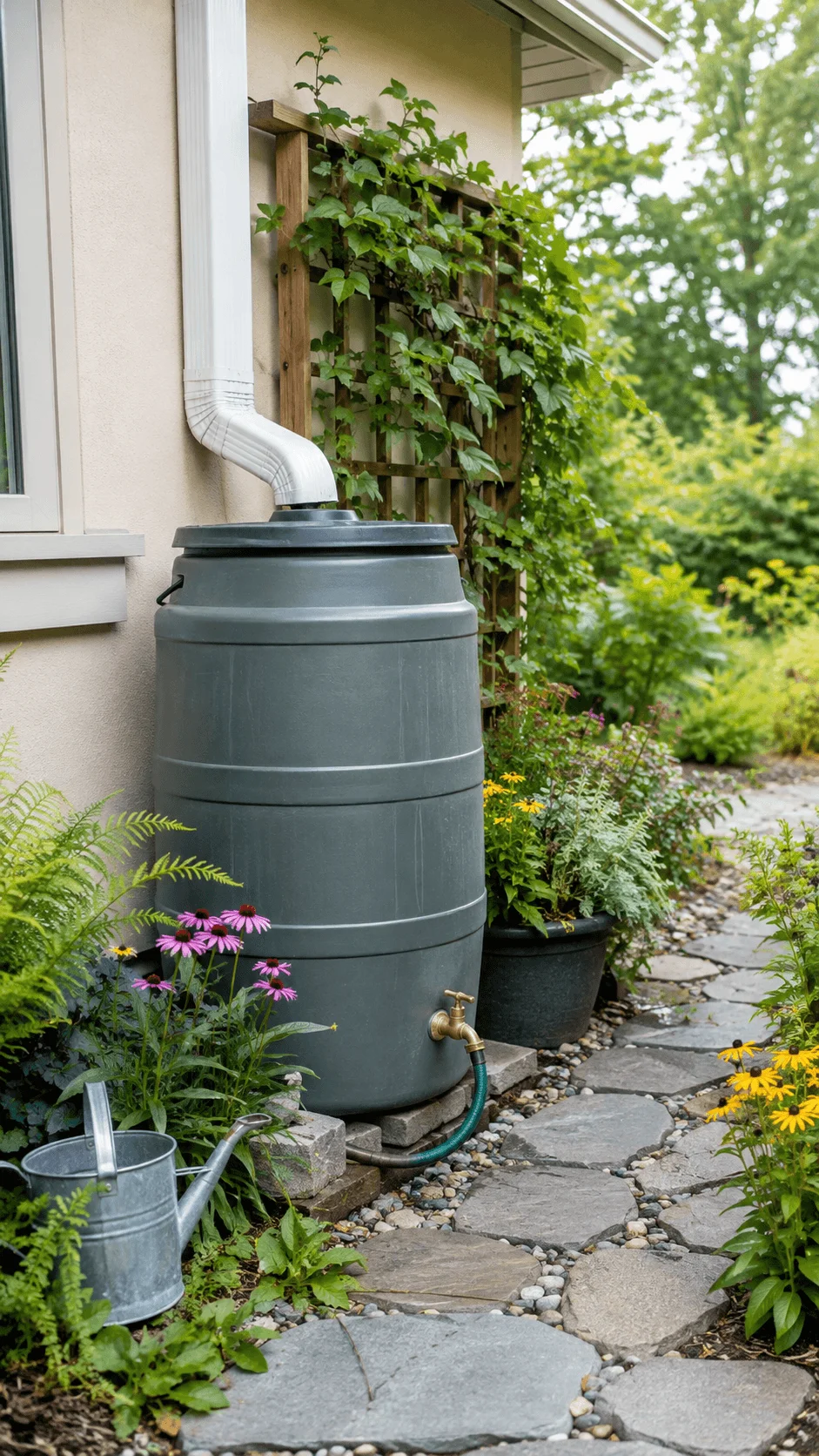
The area around the collection system can become another opportunity for creative design. You might use a small planting bed, decorative stones, or a trellis to create a visually cohesive feature.
However, homeowners should avoid treating rainwater collection as a universal solution for every watering need. Storage capacity, rainfall patterns, garden size, and local conditions all affect how useful a system will be.
It is also important to keep stored water systems maintained and follow local guidance concerning safe collection and garden use.
When combined with drought tolerant plants, appropriate ground covers, and efficient watering practices, rainwater harvesting can become one component of a broader water wise garden strategy.
11. Use Reclaimed and Natural Materials
Sustainability does not stop with plants. The materials you use for pathways, borders, containers, seating, and other garden structures also influence the overall environmental footprint of a landscape.
Reclaimed bricks, reused stone, recycled timber, salvaged containers, and other suitable materials can give a front garden character while reducing the need to purchase entirely new decorative elements.
Reclaimed brick can work particularly well around traditional homes. You can use it to create garden edging, small pathways, or defined planting areas. Its weathered appearance can make a new landscape feel established.
Natural stone offers another option. Large stones can create attractive borders around planting beds, while smaller stone can complement gravel pathways or water wise gardens. Because natural materials vary in color and texture, they can also add visual interest without relying on excessive decoration.
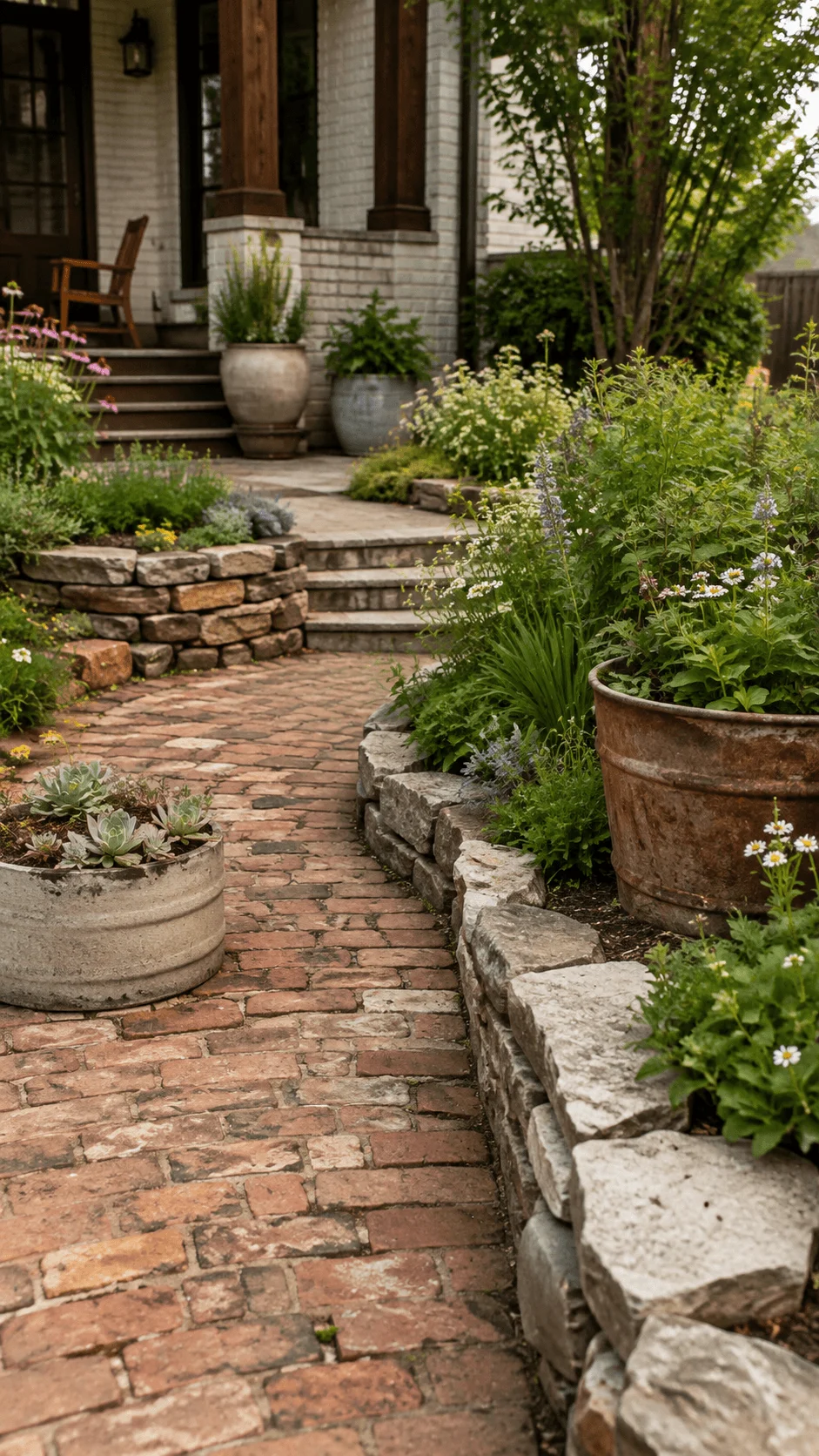
Reused containers can become planters for herbs, flowers, or compact vegetables. However, make sure the original container is suitable for its new purpose and does not contain materials that could create problems for plants or soil.
Recycled or reclaimed timber can work for raised beds and other garden structures when the material is appropriate for outdoor use. Always consider the condition and previous use of reclaimed materials before introducing them into a planting area.
The beauty of using natural and reclaimed materials comes from their ability to connect the garden with its surroundings. A simple combination of stone, wood, gravel, and vegetation can often look more harmonious than a landscape filled with unrelated decorative products.
For homeowners searching for eco friendly front yard landscaping ideas, material selection provides another way to make meaningful changes without completely redesigning the planting scheme.
12. Build a Climate Resilient Smart Garden
One of the most forward looking approaches to sustainable landscaping is to design the garden around the actual conditions of the property.
Instead of choosing plants first and then trying to make the environment suitable for them, start by understanding the site. Look at how much sunlight different areas receive, where water collects, how quickly the soil drains, and which parts of the yard experience intense heat or strong wind.
Climate resilience means choosing plants that can handle the conditions they will actually experience. A plant that naturally suits your local environment will often make more sense than one that requires constant intervention to survive.
Divide the garden into areas according to their conditions. A sunny, dry section might suit drought tolerant plants, while a naturally moist location may support different vegetation. Areas beneath trees can have different requirements from exposed spaces beside a driveway.
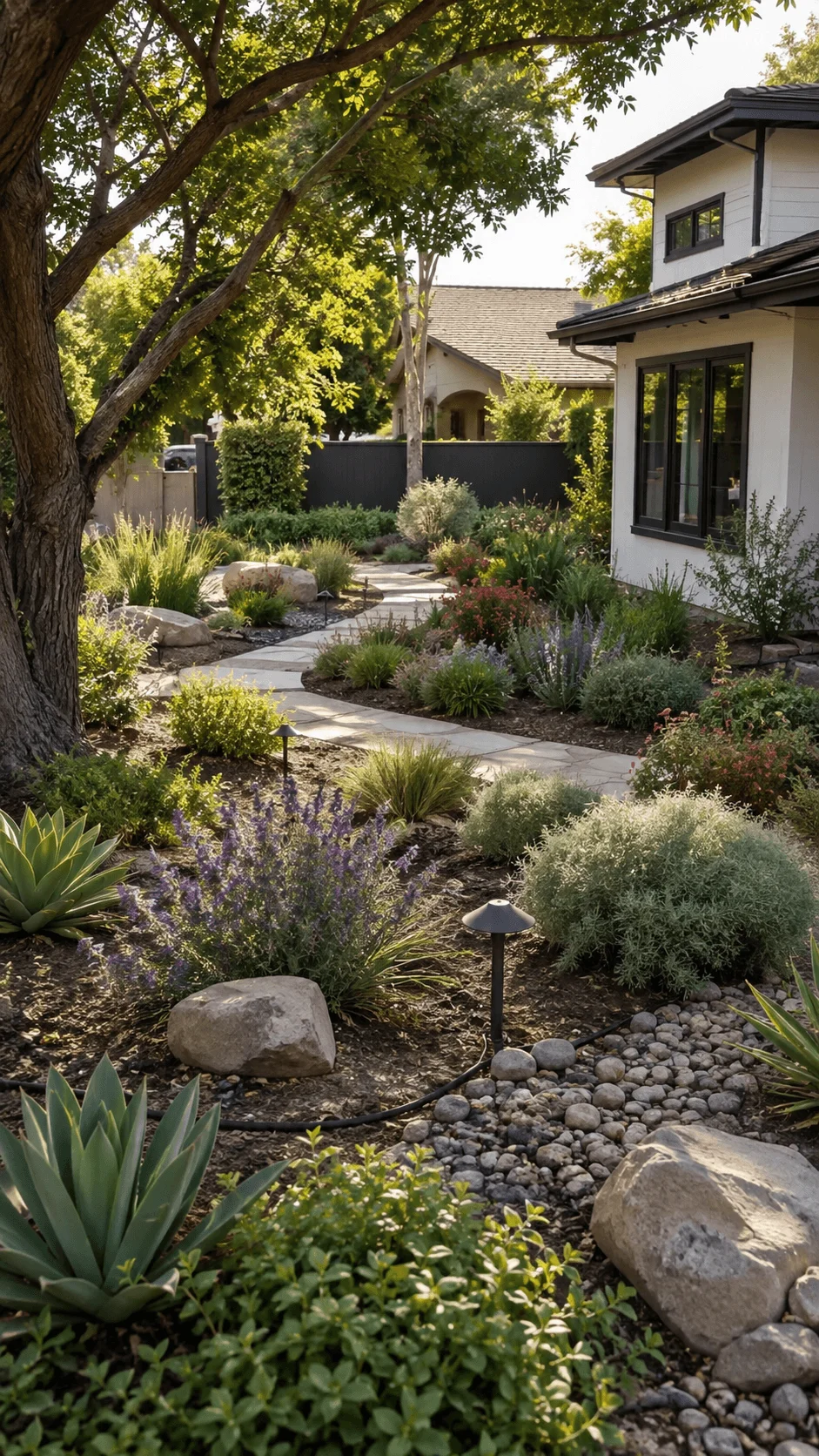
Soil also deserves attention. Improving soil structure with appropriate organic matter can support healthier plant growth and improve the garden’s ability to manage water. Mulching can also help protect soil and reduce moisture loss while giving planting beds a finished appearance.
Efficient irrigation can make the system even more practical. Instead of watering every part of the yard equally, direct water where plants actually need it. Smart irrigation equipment can help manage watering schedules, but homeowners should still understand the needs of their plants rather than relying entirely on technology.
A climate resilient garden also benefits from diversity. Avoid depending entirely on one plant species throughout the property. A broader selection of suitable plants can create a more varied landscape and reduce the risk of the entire garden becoming vulnerable to one particular pest or environmental problem.
These climate resilient front garden ideas represent a broader change in how people approach landscaping. The goal is not simply to make a garden look good on installation day. The goal is to create a landscape that can continue looking attractive as conditions change.
How to Choose the Right Eco Friendly Front Garden Design
There is no single sustainable garden design that works perfectly for every home. The best approach depends on the conditions of your property and the amount of time and money you want to invest.
Start with your climate. Temperature, rainfall, humidity, seasonal changes, and periods of drought can all influence which plants will perform well. Local plant recommendations can provide a much better starting point than choosing plants simply because they look attractive in photographs.
Next, examine sunlight. Some areas may receive direct sunlight for most of the day, while spaces beside the house may remain shaded. Match your plants to these conditions instead of forcing one planting style across the entire yard.
Soil is another important consideration. Different plants prefer different soil conditions, and drainage can vary dramatically across one property. If water regularly collects in a particular area, investigate the reason before choosing plants.
Garden size should also influence your design. A small front yard does not need a dozen separate features. A carefully selected native tree, attractive ground cover, a small pollinator bed, and a permeable pathway can create a complete design without overcrowding the space.
Think about maintenance too. A garden is only sustainable for you if you can realistically maintain it. Choose plants and features that match the amount of time you can give them.
You can also combine several ideas from this guide. For example, a front yard could include native plants, ground covers, a permeable pathway, a small pollinator bed, and a rainwater management feature. These elements can work together rather than competing with one another.
How to Make Your Front Garden More Sustainable
Small improvements can make a noticeable difference without requiring a complete landscape renovation. Start by looking at the areas of your garden that require the most resources. If a large lawn needs frequent mowing and watering but nobody uses it, consider replacing part of it with suitable ground covers or planting beds.
Plant selection is equally important. Choose species that suit your local conditions rather than selecting plants purely because they appear in popular garden photographs. Appropriate plants can reduce the need for constant intervention and make the garden easier to manage.
Healthy soil also provides an important foundation. Improve soil according to its actual needs and avoid adding materials without understanding the conditions of your garden. Mulch can help protect exposed soil, retain moisture, and create a neat appearance around plants when applied appropriately.
Water your garden thoughtfully. Plants often need different amounts of water depending on their species, location, age, and weather conditions. Watering according to actual needs can help prevent waste.
Biodiversity should remain another priority. A mixture of native plants, flowering species, shrubs, trees, and ground covers can provide a wider range of resources for wildlife than a highly uniform landscape.
Consider materials whenever you add a new feature. Reclaimed brick, natural stone, suitable recycled materials, and durable products can all contribute to a more responsible design.
Finally, avoid treating every insect, fallen leaf, or patch of natural growth as a problem. A healthy garden will contain insects and organic material. Learning to distinguish genuine problems from normal garden activity can help you create a more balanced environment.
Conclusion
Creating a sustainable front yard does not mean sacrificing beauty or curb appeal. The best eco friendly garden ideas in front of house design both environmental responsibility and attractive landscaping, allowing homeowners to create outdoor spaces that look inviting while working more naturally with their surroundings.
Native plants can support local biodiversity, ground covers can reduce unnecessary lawn, and xeriscaping can create a beautiful water wise landscape. Pollinator gardens can welcome beneficial insects, while rain gardens can help manage suitable rainwater runoff. Permeable pathways, edible planting, naturalistic layers, reclaimed materials, and thoughtful water management can add even more value.
You do not need to introduce all twelve ideas at once. Start by identifying the part of your front yard that needs the most improvement and choose an approach that suits your climate, soil, available space, and lifestyle. Even replacing a small section of lawn, adding native plants, or improving water management can move your garden in a more sustainable direction.
With thoughtful planning, your front garden can become more than a decorative entrance. It can become a beautiful, useful, wildlife friendly, and resilient part of your home that looks good today and remains practical for years to come.