Eco Friendly Outdoor Christmas Decorations Using Natural Materials
Eco Friendly Outdoor Christmas Decorations Using Natural Materials can make a porch, patio or garden feel welcoming without relying on plastic ornaments that are used once and discarded. Evergreen cuttings, fallen pinecones, reclaimed branches and dried botanicals create familiar holiday colors while giving your home a warm, handcrafted character. The best approach begins with materials you already own and decorations that suit your local winter weather.
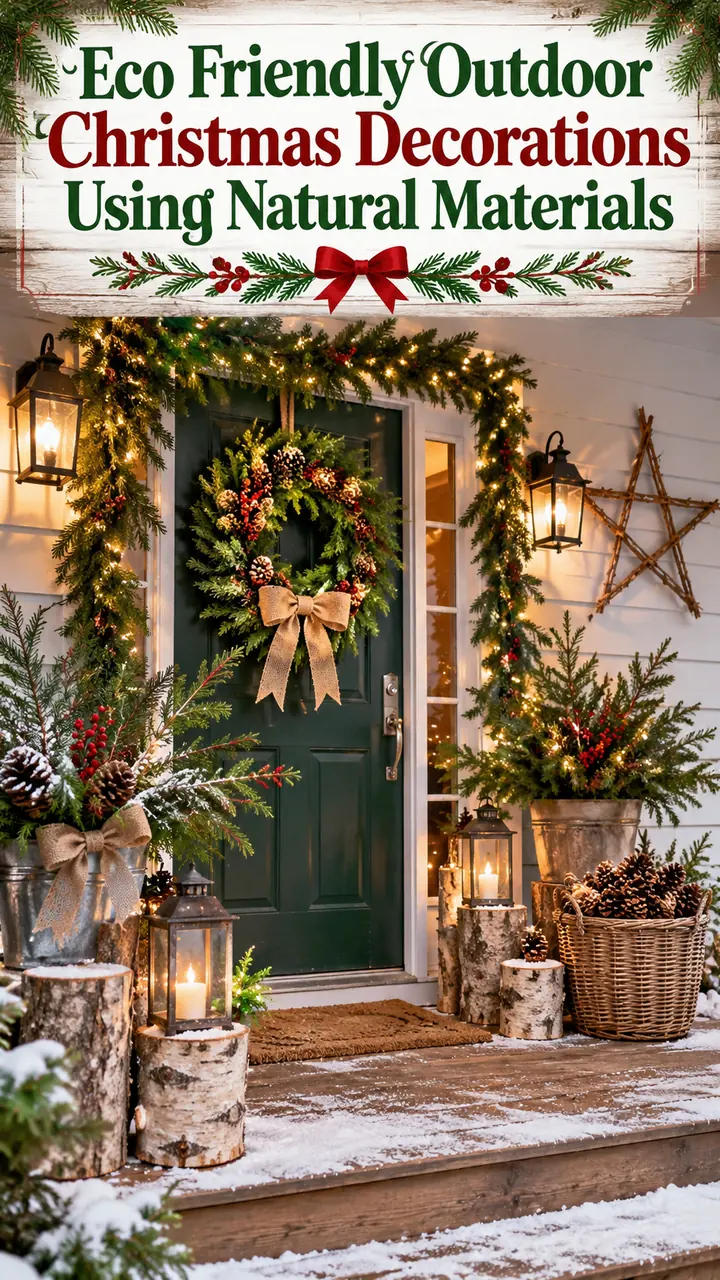
From compact balcony accents to full front door arrangements, these twelve projects offer practical ways to decorate thoughtfully. Each idea explains where it works best, how to make it last and what to do with the materials after Christmas. You can start with one small display and build a coordinated look using the same natural textures throughout your outdoor space.
Evergreen Wreaths on Reusable Twig Frames
An evergreen wreath makes the front door welcoming without relying on plastic foliage or disposable foam. Start with flexible willow, grapevine or other pruned twigs, bending them into a circle and securing overlapping ends with natural twine. If you already own a sturdy wreath frame, reuse it instead of making another. Tuck short pieces of fir, pine or cedar around the ring, overlapping each bunch to hide its stems. A few pinecones bring contrast without requiring glitter or paint.
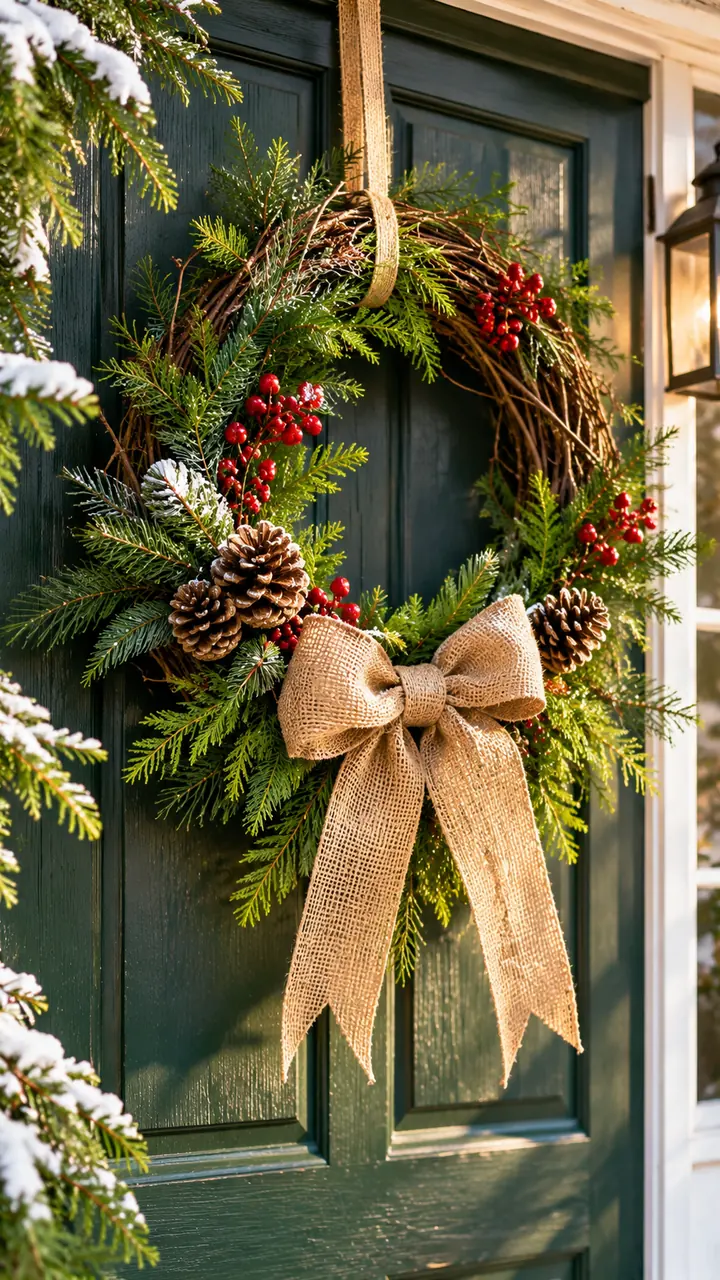
For a relaxed woodland look, leave the greenery slightly uneven rather than trimming it into a perfect circle. Dried seed heads or a small bundle of cinnamon sticks add another texture, although fragrant spices are best under a covered porch. Hang the wreath on a reusable door hook, away from direct heat and strong winds. Its shape can last for several seasons if you remove tired foliage and store the twig base somewhere dry.
Pinecone Garlands for Porch Railings
Pinecones provide an easy way to decorate railings, porch posts and sheltered fences. Collect fallen cones from a permitted area, shake away loose debris and let them dry fully. Cut a long length of natural jute or cotton twine, leaving extra at both ends for tying. Attach each cone with a secure knot around its base, spacing the cones evenly enough that the garland can bend around corners.
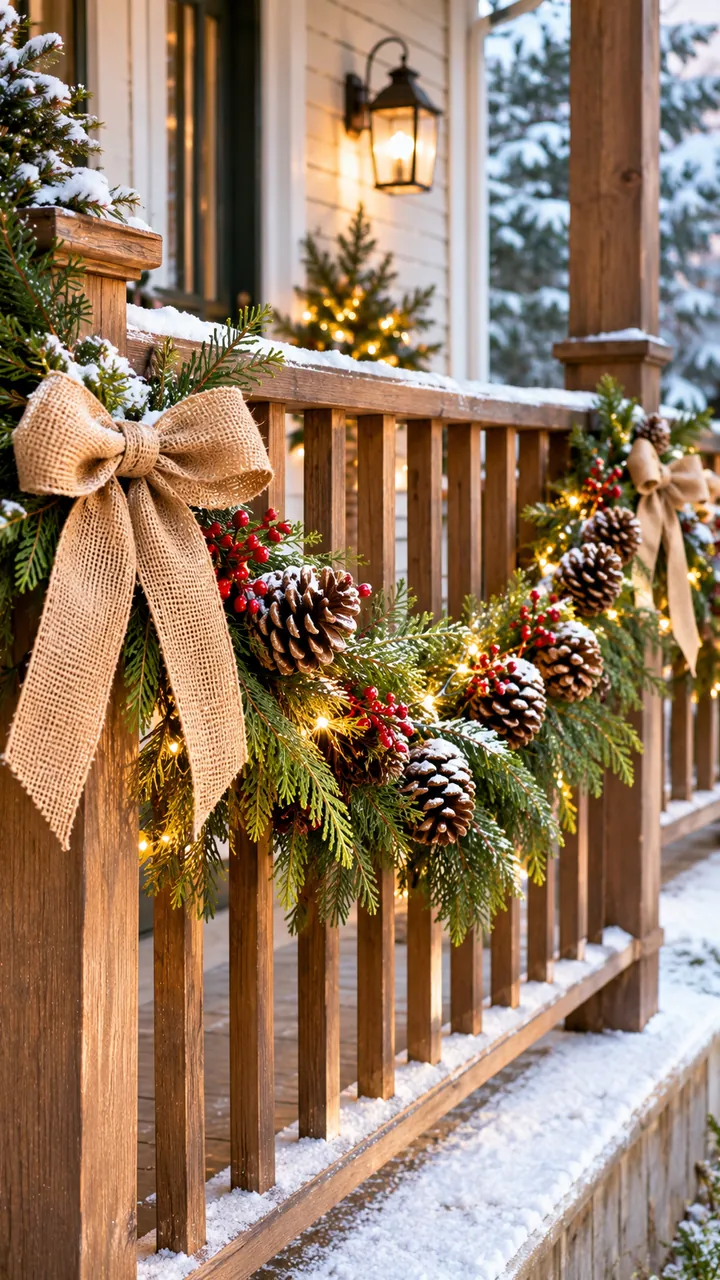
Create a fuller display by tying in small evergreen sprigs or reusable wooden beads between groups of cones. Keep the colors natural for a subtle rustic effect, or weave the garland loosely around an existing green railing swag. For a narrow front porch, one short garland across a handrail often looks more thoughtful than covering every surface. A repeated pattern gives the decoration a cohesive finish.
Dried Orange and Evergreen Door Swags
A door swag offers a simple alternative when you do not want a full wreath. Gather a handful of evergreen branches with stems pointing in the same direction. Arrange the longest branches behind shorter ones, then bind the stems firmly with cotton twine. Tie on a cluster of completely dried orange slices to introduce warm color against the green needles. A simple strip of fabric left over from another project can conceal the binding.
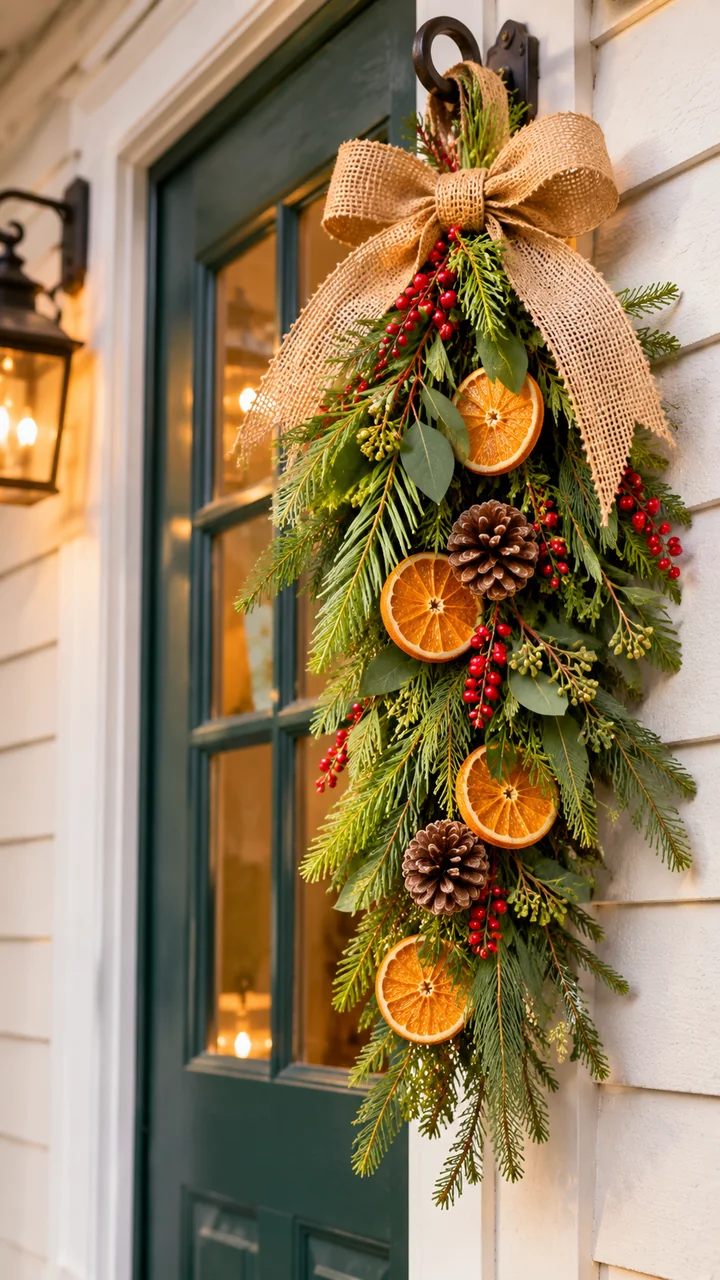
Dried citrus works best on a covered entrance where moisture is limited. Slice oranges thinly and dry them thoroughly with a food dehydrator or a low oven using appropriate kitchen supervision. The slices should feel dry rather than tacky before they go outside. Add pinecones or dried apple slices for visual variety, but keep the total weight light so that the display does not sag.
Rustic Branch Stars for Exterior Walls
Stars made from fallen branches can decorate an outdoor wall, gate or sheltered porch without introducing another plastic ornament. Select five reasonably straight sticks of similar thickness. Lay them into a five pointed outline on a flat surface and tie the intersections securely with natural cord. Slight differences in the lengths give the finished star a handmade appearance that suits cottage and farmhouse exteriors.
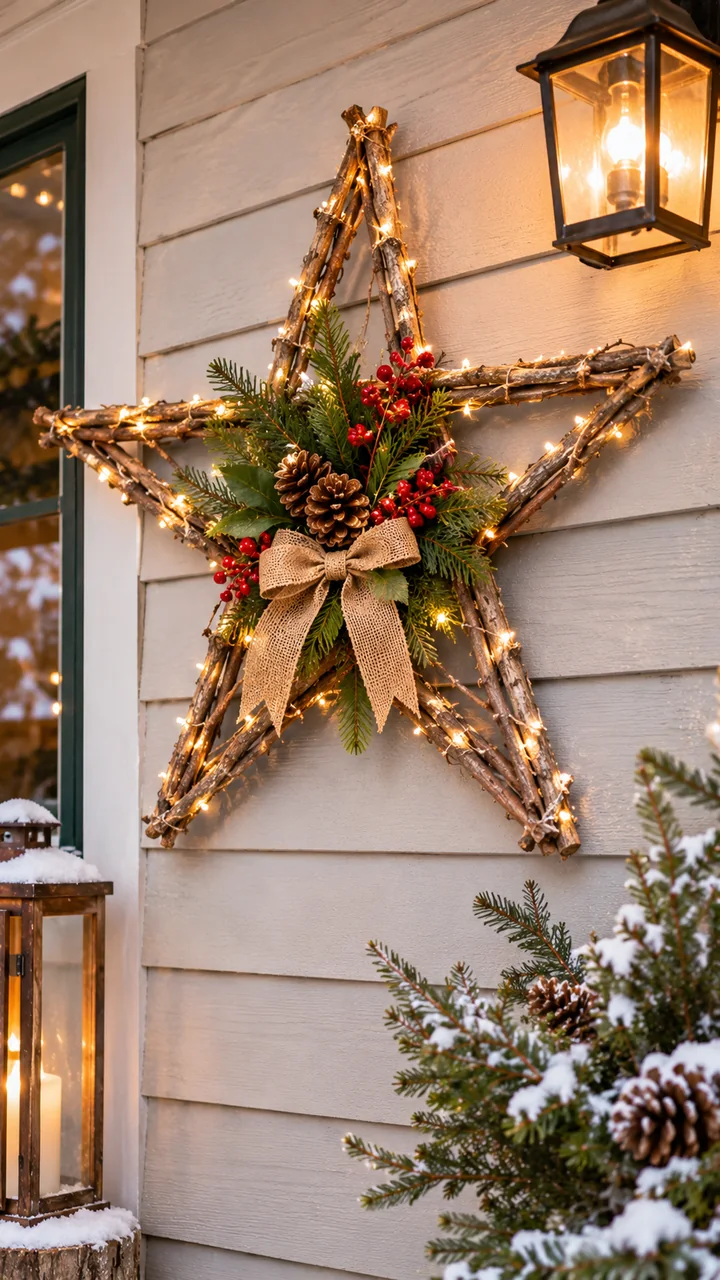
For extra interest, fasten a short evergreen sprig to one corner or suspend a small pinecone from the lower point. Use several sizes together on a fence panel, or place one large star above a porch bench. Avoid cutting healthy branches solely for decorations when garden prunings or fallen sticks will do the job. Smooth rough edges if the star will hang close to a walkway.
Potted Mini Evergreens Beside the Front Door
Living evergreens can provide festive color while continuing to grow after the holiday. Set two appropriately sized potted conifers on either side of the entrance, using existing containers whenever possible. Choose a species suited to your local climate and an outdoor container large enough for healthy roots. This approach offers an alternative to buying artificial topiary that may be discarded when its style changes.
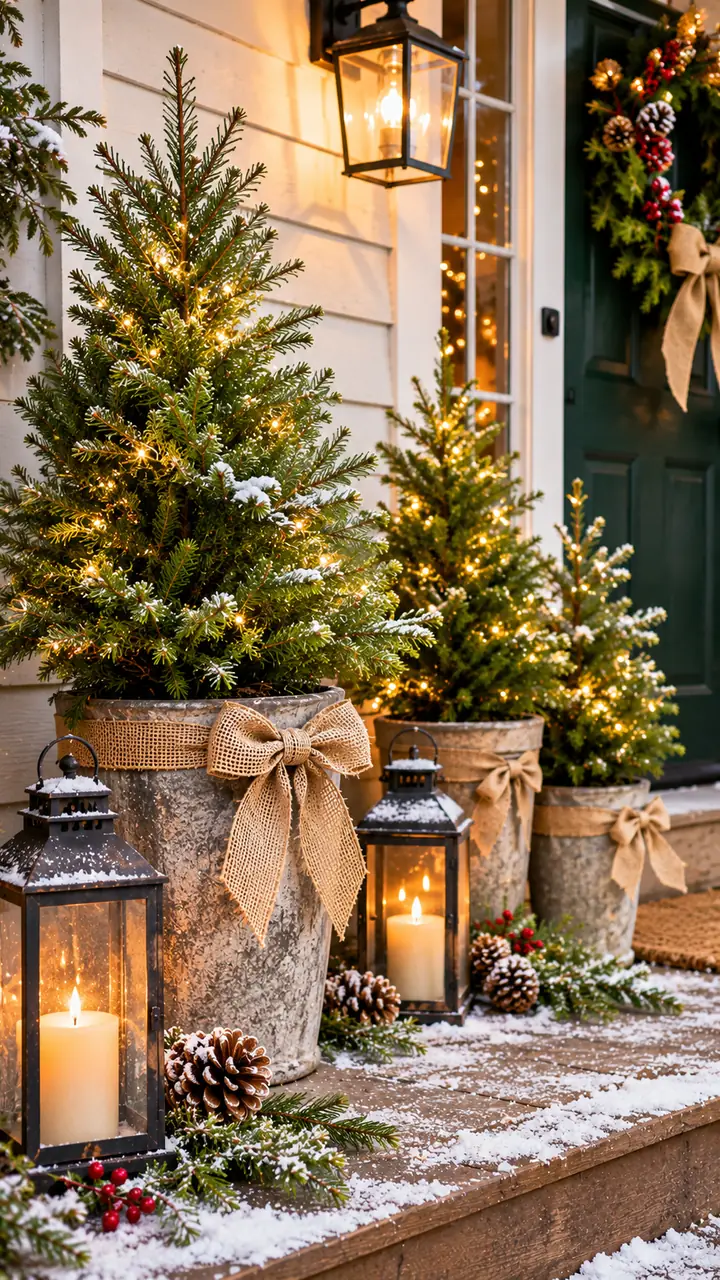
Decorate the pots with a removable band of burlap or cotton fabric and a few pinecones resting on the soil surface, without covering the plant crown. A simple twig star on a stake adds a Christmas touch. If you have only one pot, place it beside a bench or doorstep rather than buying another merely for symmetry. Water as needed and follow the plant’s winter care requirements instead of treating it as a disposable ornament.
Natural Birch Log and Greenery Porch Arrangements
A cluster of fallen logs can create a winter scene beside a sheltered entry. Use short sections from existing prunings, stacking them neatly in a stable basket or standing them upright inside a heavy outdoor planter. Tuck small evergreen clippings among the gaps for contrast. White birch bark looks especially striking, but locally available wood is usually the more sensible choice than buying decorative logs shipped from far away.
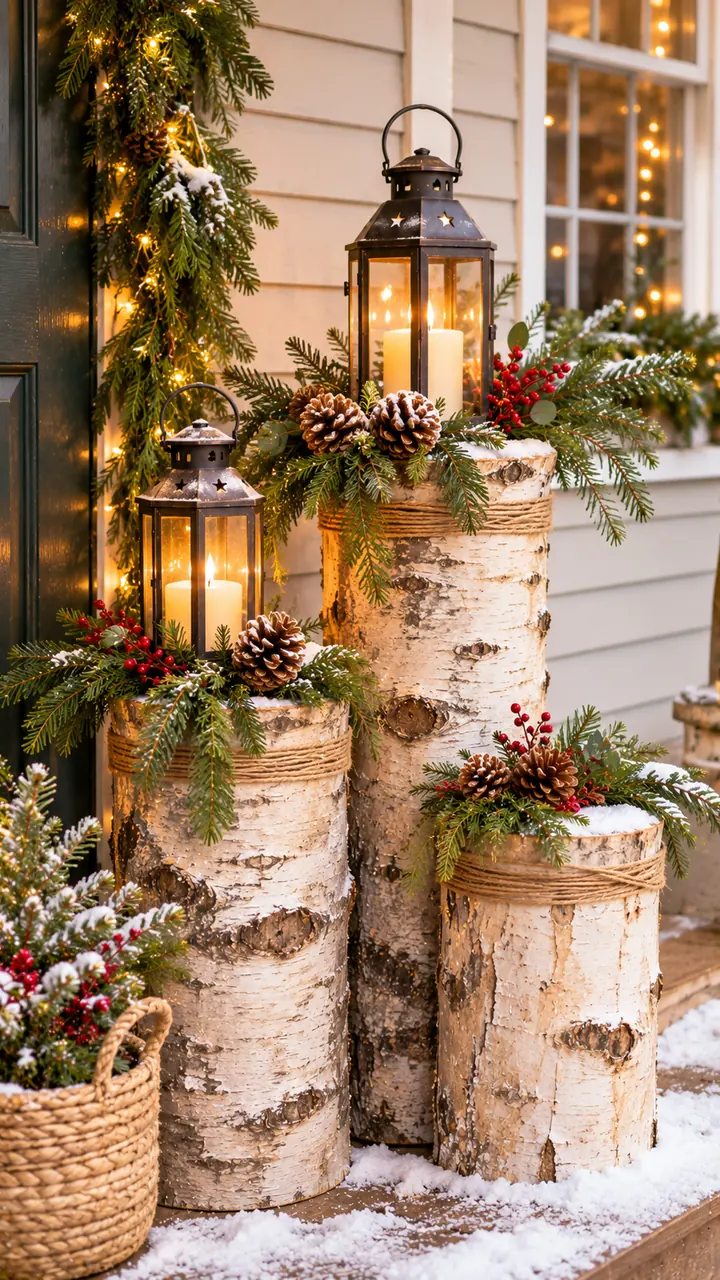
To avoid damaging trees, never peel bark from living trunks. Select pieces that are already down and free from signs of pests, and follow local rules about moving firewood or untreated wood. A few pinecones at the base complete the arrangement. Consider keeping this display low so it does not block a porch light, door or window.
Twig Christmas Trees for Small Patios
A tree silhouette made from twigs brings Christmas character to a patio without needing a full sized tree. Arrange several clean, fallen branches horizontally from longest at the bottom to shortest at the top. Connect their ends with two lengths of strong reusable cord, creating a hanging triangular shape. A small branch star can become the topper. This is especially useful for apartments with a compact outdoor wall or balcony.
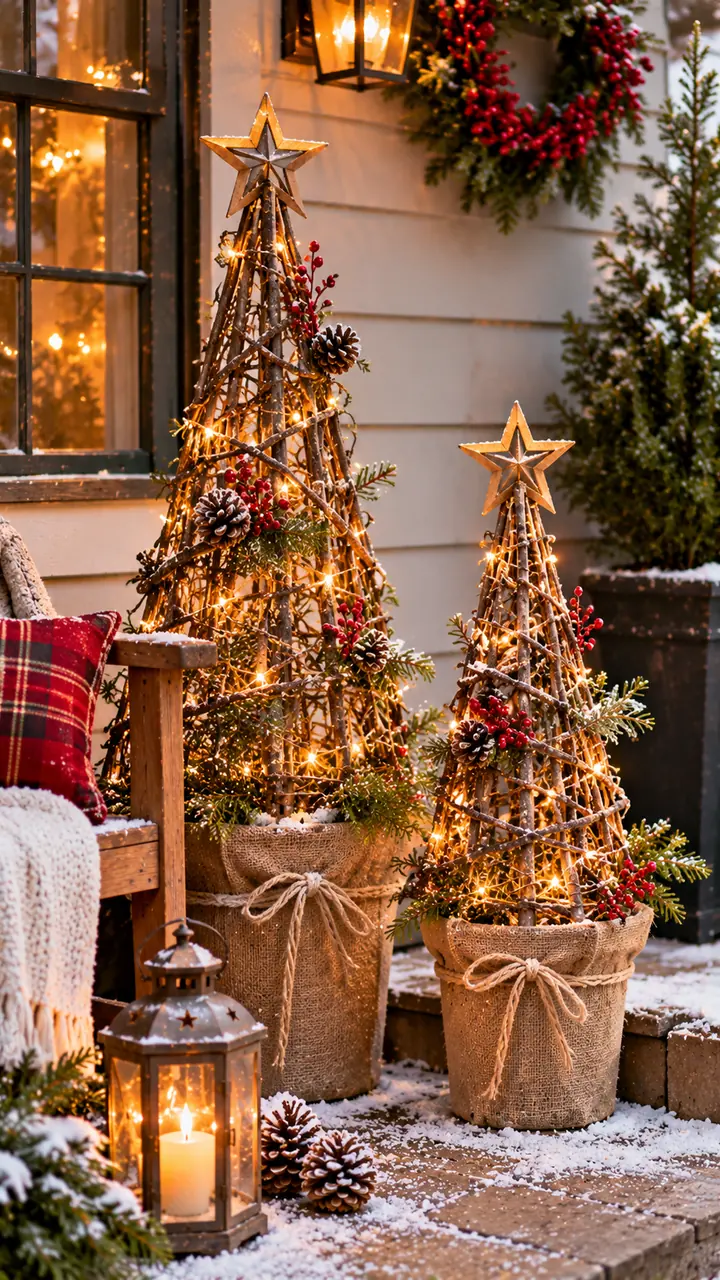
Keep the structure light and attach it to a secure hook that is approved for the surface. For an additional natural touch, tie a few pinecones or dried seed pods onto the branches. Leave space between ornaments so the silhouette remains visible. If the branches are rough or uneven, that variation often makes the project more appealing than a perfectly measured design.
Grapevine and Seed Pod Hanging Ornaments
Grapevine hoops and dried seed pods can become lightweight ornaments for an outdoor pergola or covered porch. Use a small circle of trimmed grapevine or another flexible garden cutting, then tie an attractive seed head or pinecone at its center. Milkweed pods, hydrangea heads or other dried materials may look beautiful, but choose only plants that are legal and suitable to collect in your area.
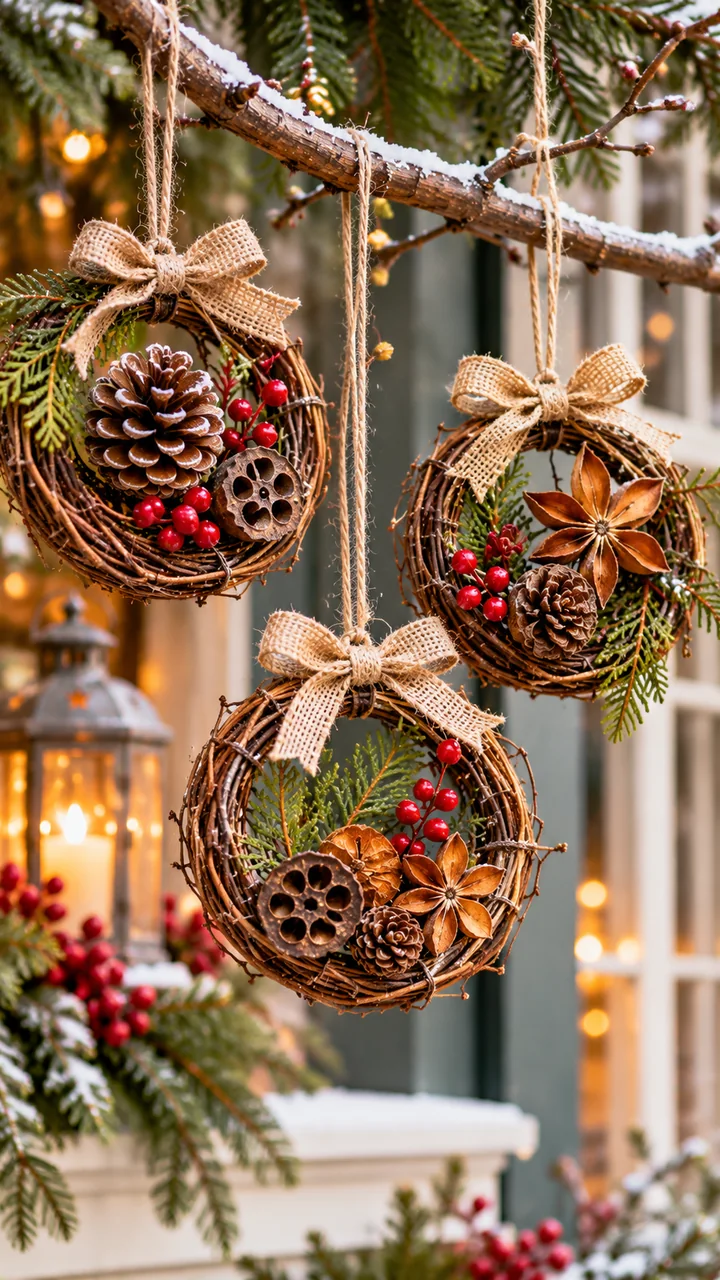
Group ornaments at slightly different heights along a sheltered beam. Keeping their sizes and colors related makes the arrangement look planned even when every ornament is unique. Natural materials work well beside reclaimed wooden furniture or unpainted planters. Avoid loose feathers, glitter and tiny plastic embellishments that could become outdoor litter.
Secure each ornament so that it cannot swing against glass or lights. Inspect any dried plants for shedding and remove them if they begin to break apart. Many hoops can be used again with fresh natural centers next year, reducing the need for entirely new supplies.
Evergreen Window Box Displays
Window boxes are useful decorating spaces because they already sit outside and need no extra mounting hardware. Start with the existing soil or planting medium and add cut evergreen branches of different heights. Stand taller pine or cedar stems toward the back, then angle shorter pieces outward to create a full shape. Add a few larger pinecones for structure and leave room for any winter plants that are already growing.
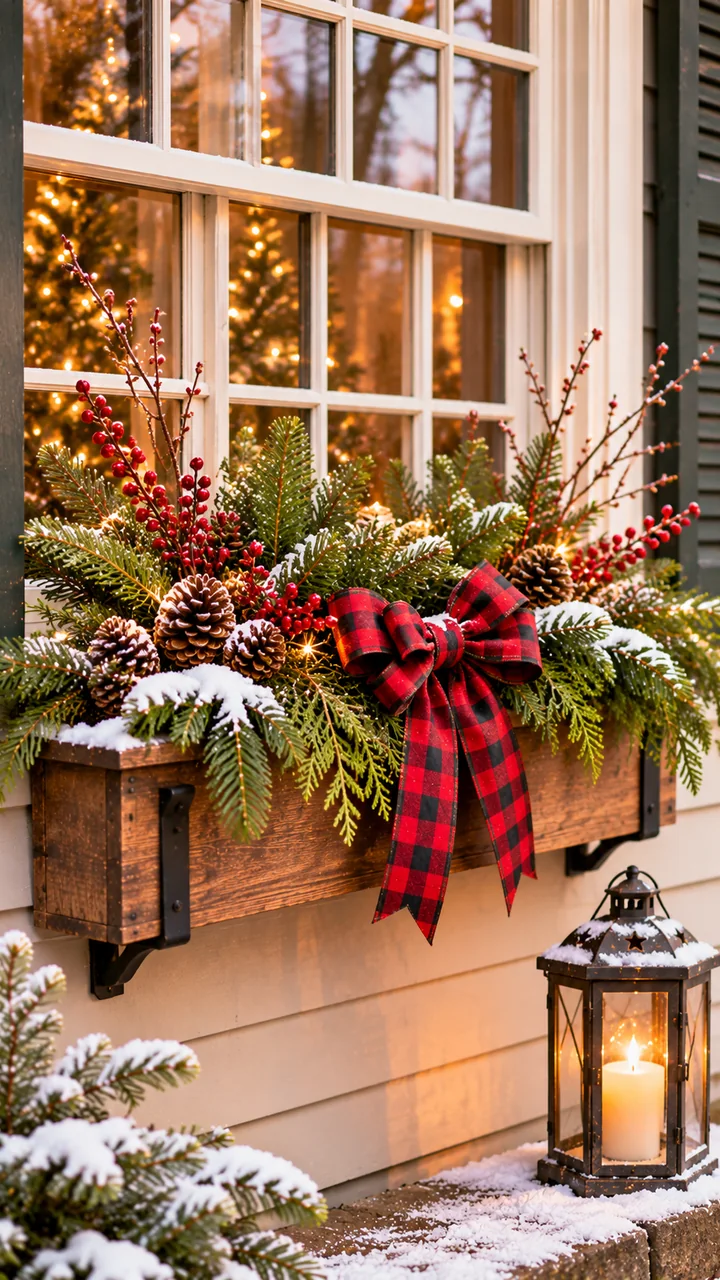
If the container sits directly below a window, keep the center low enough to preserve the view and avoid obstructing ventilation. Small clusters of dried seed heads or bare red dogwood stems provide color without synthetic picks. A thoughtful mix of foliage and branch textures can look festive even without lights or ribbons.
Use only branches that your container can hold securely in wind. Check drainage so that thawing snow and rain do not create a soggy mess. When the season ends, remove the cut stems and return the window box to its usual planting purpose. This is one of the most space efficient ways to decorate an exterior naturally.
Wooden Slice Ornaments for Porch Trees
Thin slices of wood from an existing pruning project can become simple ornaments for a small porch tree. Choose properly dried pieces that are smooth enough to handle, and use existing holes or a securely installed hanging point for cotton cord. Leave the wood plain to show its grain, or use a small amount of water based craft paint on pieces that you intend to keep and reuse rather than compost.
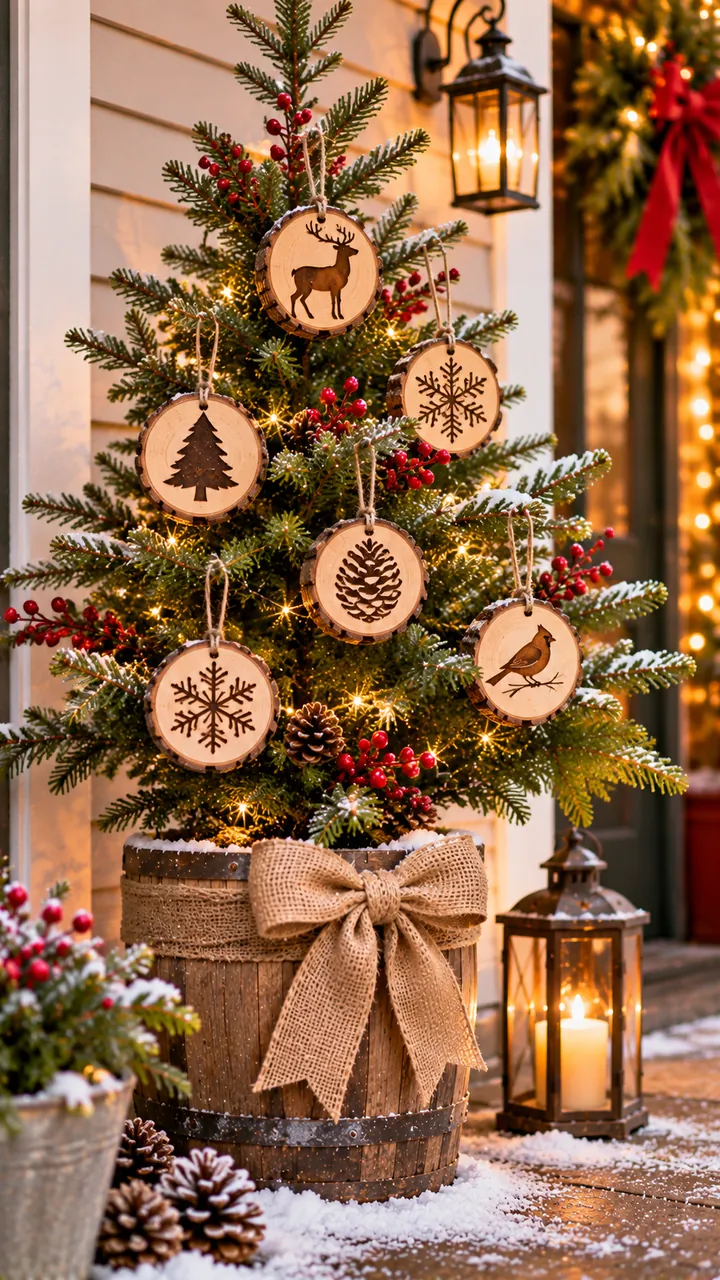
An arrangement of different sizes looks attractive on a potted evergreen or a sturdy bare branch displayed in a planter. For a coordinated effect, repeat the same cord color throughout the tree. The decorations are particularly useful for families who prefer subdued colors and a traditional homemade style.
Wood can crack when it repeatedly becomes wet and dry, so a covered porch is the most suitable setting. Keep the pieces out of areas where they might strike windows in high wind. At the end of the season, allow everything to dry before packing it away, and reuse the ornament set in future years.
Natural Winter Baskets with Pinecones and Seed Heads
A large basket or reused outdoor planter can hold an abundant Christmas display without needing an elaborate structure. Fill the container with stable, weather appropriate support material you already own, then arrange pinecones, evergreen boughs, twigs and dried seed heads. Vary the heights so the design rises naturally from one side rather than forming a rigid dome.
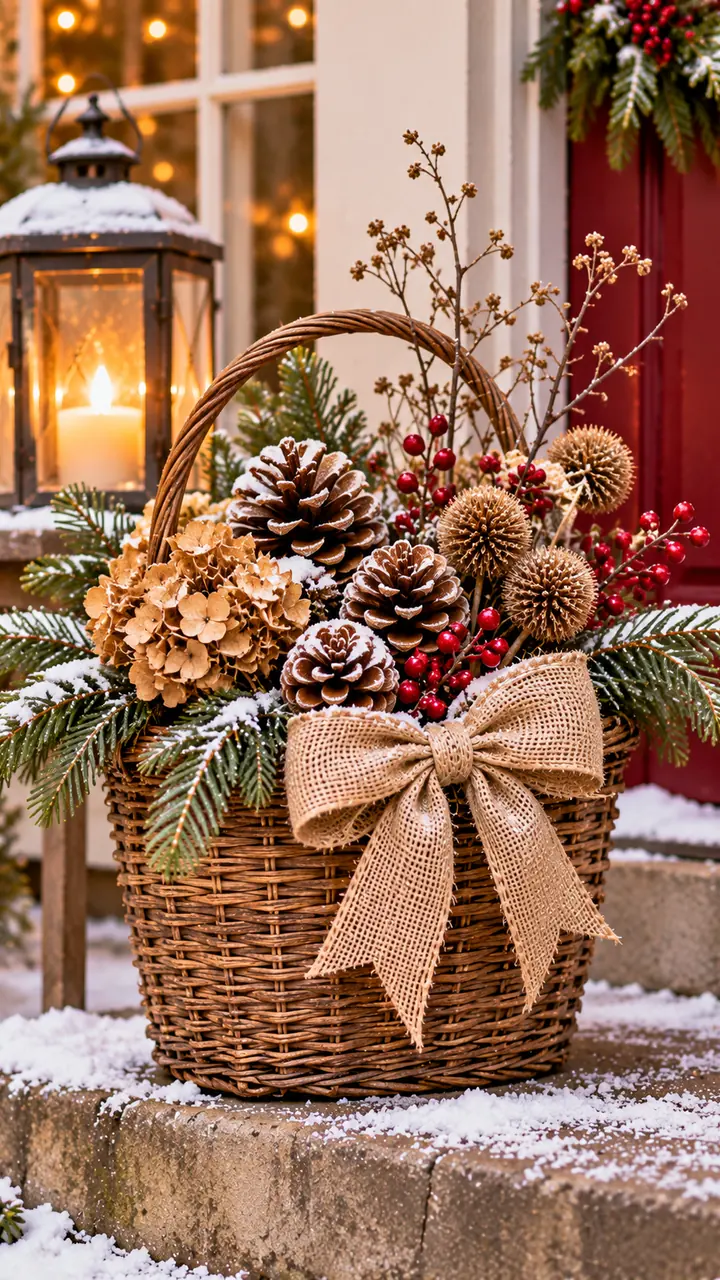
Set the basket beside a doorway or on a wide porch, where visitors can enjoy its textures up close. You might repeat the same greenery featured in your door wreath for a unified entrance. Choose a sturdy container that will not tip when the wind picks up. If rain can soak the basket, switch to a weather resistant pot and keep delicate dried materials beneath cover.
Natural decorations do not require spray glitter, fake snow or disposable floral foam to look complete. Once the display has finished its seasonal role, save durable pieces for next year and separate the rest according to local green waste guidance. This prevents reusable containers from becoming part of the holiday waste pile.
Wildlife Conscious Winter Garden Decorations
A winter garden can look festive while still providing room for birds and other wildlife. Instead of covering every shrub, decorate a few sturdy branches with plain pinecones, natural twig shapes or a restrained evergreen swag. Keep most berry bearing plants untouched so wildlife can use their natural food sources. A neat arrangement near the home often creates more impact than placing ornaments throughout the entire yard.
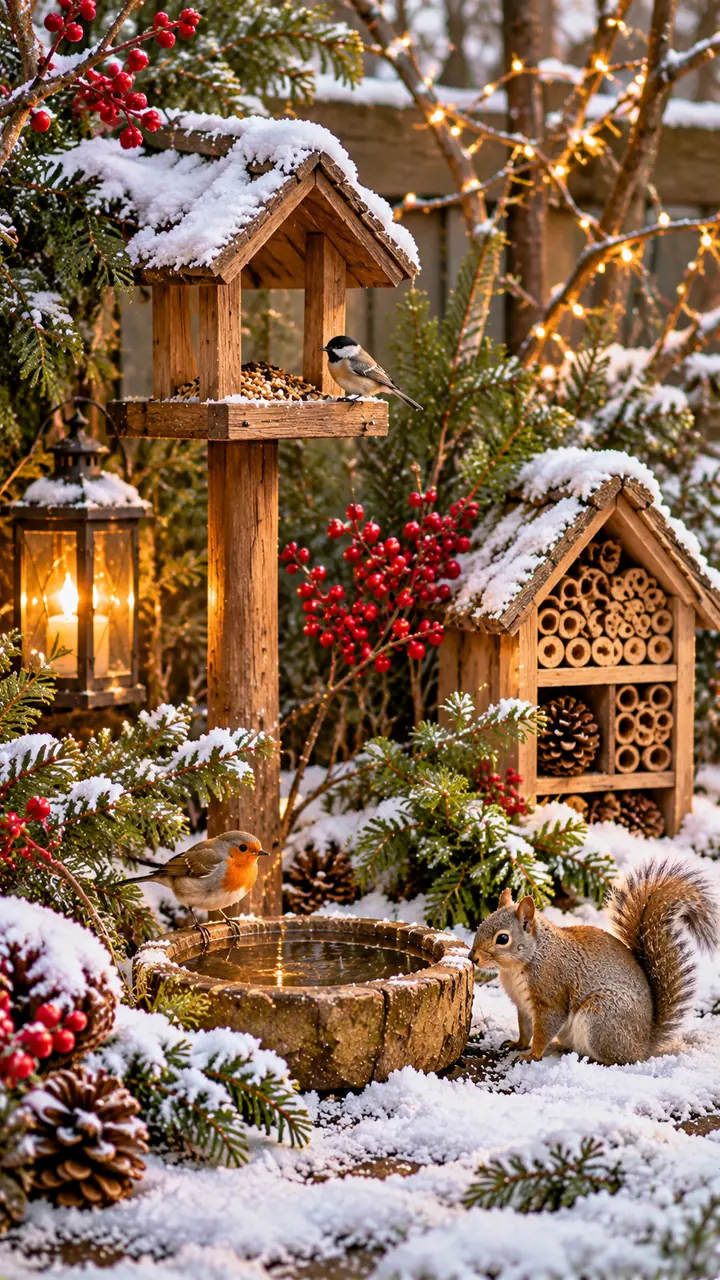
If you want to support birds, use a properly maintained feeder with food suited to local species rather than attaching improvised food decorations that may spoil, attract pests or contain unsafe ingredients. Keep string, mesh and dangling loops away from feeding areas because animals can become tangled. Avoid artificial snow, tinsel and glitter that may scatter into the soil.
Choose warm, minimal lighting only if you already have suitable outdoor rated equipment, and turn it off overnight to reduce unnecessary disturbance. The strongest nature inspired display works with the garden rather than trying to transform it into an artificial scene. It can be beautiful in daylight, too.
How to Choose and Prepare Natural Outdoor Materials
The best materials often come from pruning already planned for your garden, fallen pinecones on your own property, or leftover branches from a local Christmas tree seller. Ask permission before collecting anywhere else. Protected sites may prohibit gathering, and taking large amounts of berries, seed heads or nesting material can reduce food and shelter for wildlife. Choose recognizable, nontoxic plants and avoid unknown berries, irritating sap and invasive species.
Dry pinecones and plant materials before assembling decorations, and remove anything already moldy. Citrus slices need complete drying, especially if they will sit in a damp climate. Keep delicate elements underneath a roof, while sturdier branches and planters can handle more exposure. When choosing cord, reuse what you have first; natural cotton or jute can suit the design, but not every treated or dyed string is suitable for composting.
Keeping Natural Christmas Displays Secure Through Winter
Outdoor durability depends more on placement than on the number of ornaments. A covered front porch protects fruit slices and fragile seed heads, while open gardens require fewer, sturdier decorations. Secure swags, wreaths and hanging ornaments against winter wind, and keep stairs, handrails, exits and mailboxes unobstructed. Check pieces after storms and remove anything loose before it falls or becomes litter.
Treat electrical lights as a separate safety decision. Use equipment specifically rated for outdoors, follow its instructions and keep cords away from puddles and walking routes. Never place open flames beside dry greenery, twigs or wooden displays. If you decorate with children, reserve cutting tools and higher mounting work for a responsible adult.
Reusing and Disposing of Decorations Responsibly
Before clearing the porch, separate decorations into items to store, materials that can return to your garden where suitable, and waste that needs another route. Dry wooden ornaments, twig frames, reusable hooks and clean pinecones thoroughly before storage. A labeled box will make next year’s setup simpler and reduce impulse purchases.
Fresh branches and untreated plant matter may be accepted by your local yard waste or composting program, but rules vary. Remove wire, tape, synthetic ribbon and string first. Do not compost painted, glued or chemically treated pieces unless your local program specifically permits them. The most sustainable decoration is often the one you can maintain and enjoy for several Christmas seasons.
Conclusion
Creating Eco Friendly Outdoor Christmas Decorations Using Natural Materials is less about buying a matching collection and more about using familiar seasonal materials with care. A twig wreath, a few evergreen planters or a carefully hung pinecone garland can make a home feel festive without filling storage boxes with short lived plastic decorations. Choose projects that fit your climate, secure them for winter conditions and protect nearby wildlife. Save sturdy components, refresh greenery when needed and enjoy a holiday display that feels personal year after year.