Best Sustainable Activities for Kids in 2026
Sustainable activities for kids can turn environmental learning into something practical, enjoyable, and easy to understand. Instead of only telling children to protect the planet, parents and teachers can involve them in activities that explore nature, waste, water, energy, food, technology, and responsible consumption. These experiences help children connect everyday choices with the environment while developing curiosity, confidence, creativity, and problem solving skills.
Children often understand complex ideas more easily when they can see, touch, test, compare, and discuss them. A lesson about biodiversity becomes more meaningful when a child observes birds in a garden. A conversation about waste becomes easier to understand when a family repairs a toy or reviews lunch packaging. Practical environmental activities for children also encourage them to ask questions and find realistic solutions.
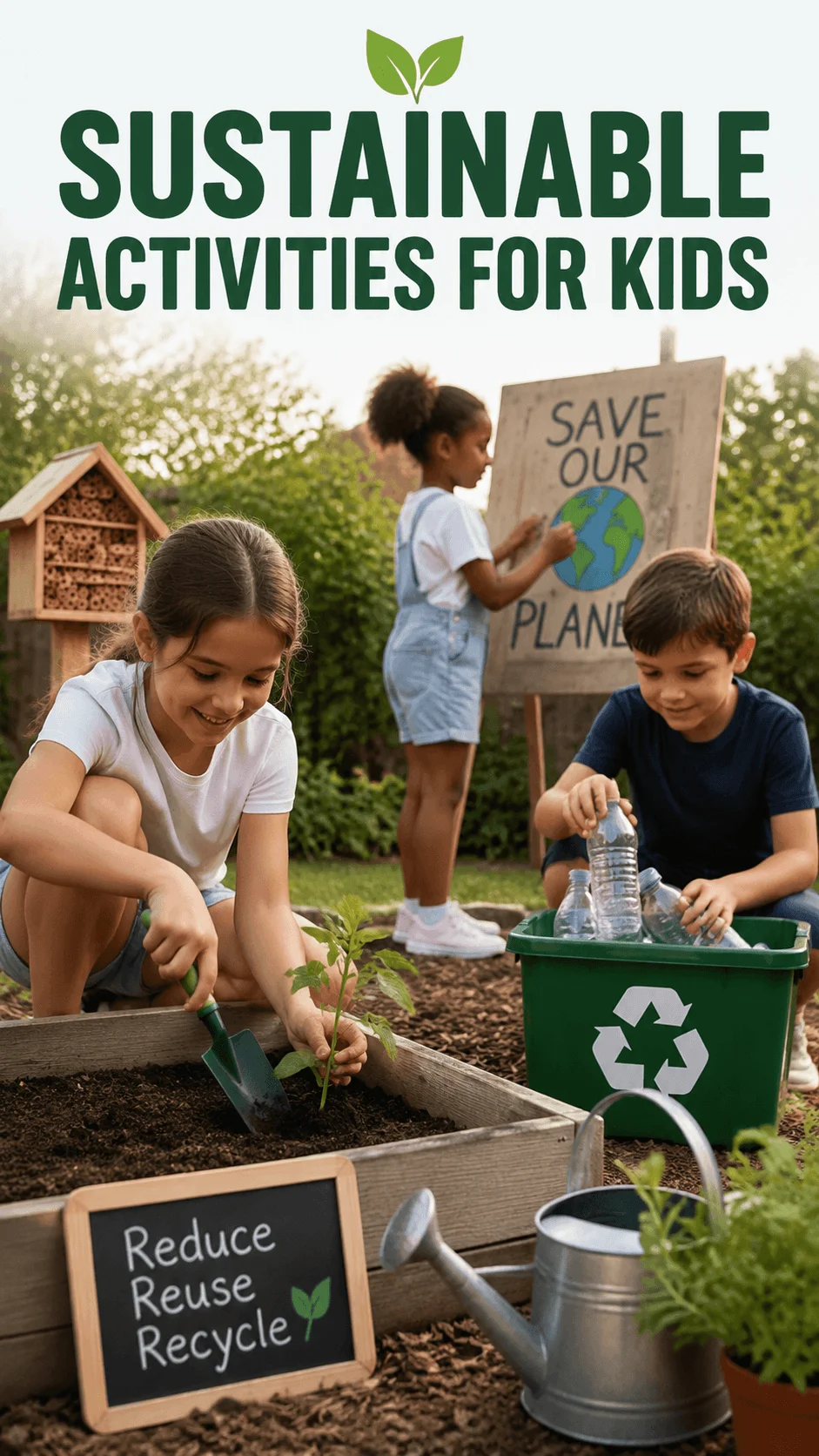
The goal does not involve making children responsible for climate change or expecting every family to follow a perfect green lifestyle. Adults should present sustainability as a shared learning process. Families, schools, businesses, communities, and governments all have different responsibilities. Children can still develop useful habits and environmental awareness through safe, inclusive, and age appropriate projects.
The following sustainable activities for kids move beyond basic recycling crafts. They include biodiversity research, family challenges, digital responsibility, citizen science, circular economy learning, climate resilience, and screen free exploration. Parents and teachers can adapt each idea according to age, location, available materials, ability, budget, and local conditions.
Why Environmental Activities for Children Matter
Environmental activities for children help young people understand how natural systems and human choices connect. Children may hear words such as sustainability, climate, pollution, biodiversity, or conservation without fully understanding what they mean. A practical activity gives these ideas a clear purpose.
For example, a child who observes pollinators can see how insects support plants. A child who tracks wasted lunch food can understand how planning and portion sizes affect waste. A child who helps repair a book can learn that an item does not always need replacement when it becomes damaged.
These experiences also support wider learning. Children practise observation, communication, measurement, design, research, teamwork, and decision making. Sustainable learning activities can connect with science, geography, mathematics, art, technology, writing, and personal development.
Adults should keep the experience positive. Fear based messages may overwhelm younger children or make them believe that small mistakes cause major environmental problems. A better approach helps children understand challenges while showing them that thoughtful action, cooperation, and creativity can create improvement.
Sustainable Activities for Kids Through Biodiversity Exploration
A backyard biodiversity detective activity encourages children to observe the living world around them. They can look for birds, insects, spiders, flowers, grasses, trees, fungi, and signs of animal activity. The activity can take place in a garden, schoolyard, park, balcony, community space, or even near a window.
Children can create a simple biodiversity record using drawings, photographs, symbols, written notes, or supervised digital tools. Younger children may record colours, shapes, sounds, and movement. Older children can compare species, observe seasonal differences, research habitats, and create a map of where they found each living thing.
The purpose does not involve collecting animals or disturbing habitats. Children should observe wildlife from a safe distance. They should not touch unknown insects, remove plants, disturb nests, lift heavy rocks, or enter unsafe areas. An adult can explain how responsible observation protects both the child and the environment.
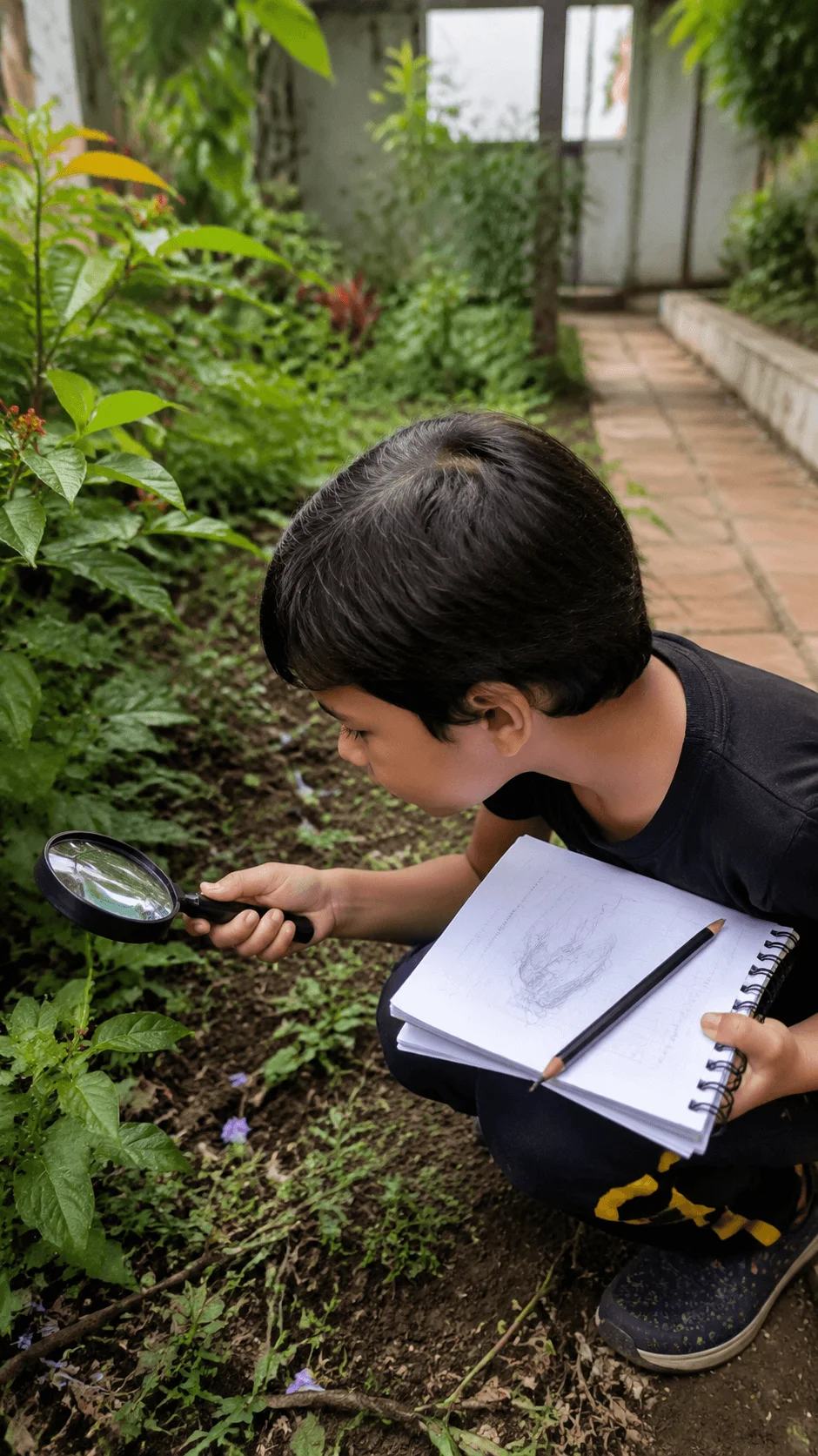
Families can repeat the activity at different times of the year. Children may notice that certain flowers attract bees in spring, birds visit during cooler hours, or insects become more active after rain. These comparisons can introduce ideas such as migration, pollination, food chains, shelter, weather, and habitat change.
Biodiversity activities for kids work well because they require very few materials. A notebook and pencil may provide everything a child needs. The activity also helps children recognise that nature exists beyond forests and wildlife reserves. Cities, gardens, roadsides, school grounds, and balconies can all support living organisms.
A Family Sustainability Challenge at Home
A family carbon footprint treasure hunt helps children investigate energy, water, food, transport, and consumption habits around the home. Adults can present the activity as a search for opportunities rather than a hunt for mistakes.
Children may notice empty rooms with lights on, taps that drip, devices that remain connected after charging, food that often goes uneaten, or doors left open while heating or cooling equipment runs. They can also examine how the family stores food, washes clothes, uses water, travels, and purchases household items.
Parents should avoid turning the activity into criticism. Children do not control many household decisions, and families face different financial, housing, health, transport, and work conditions. The activity should encourage discussion, not blame.
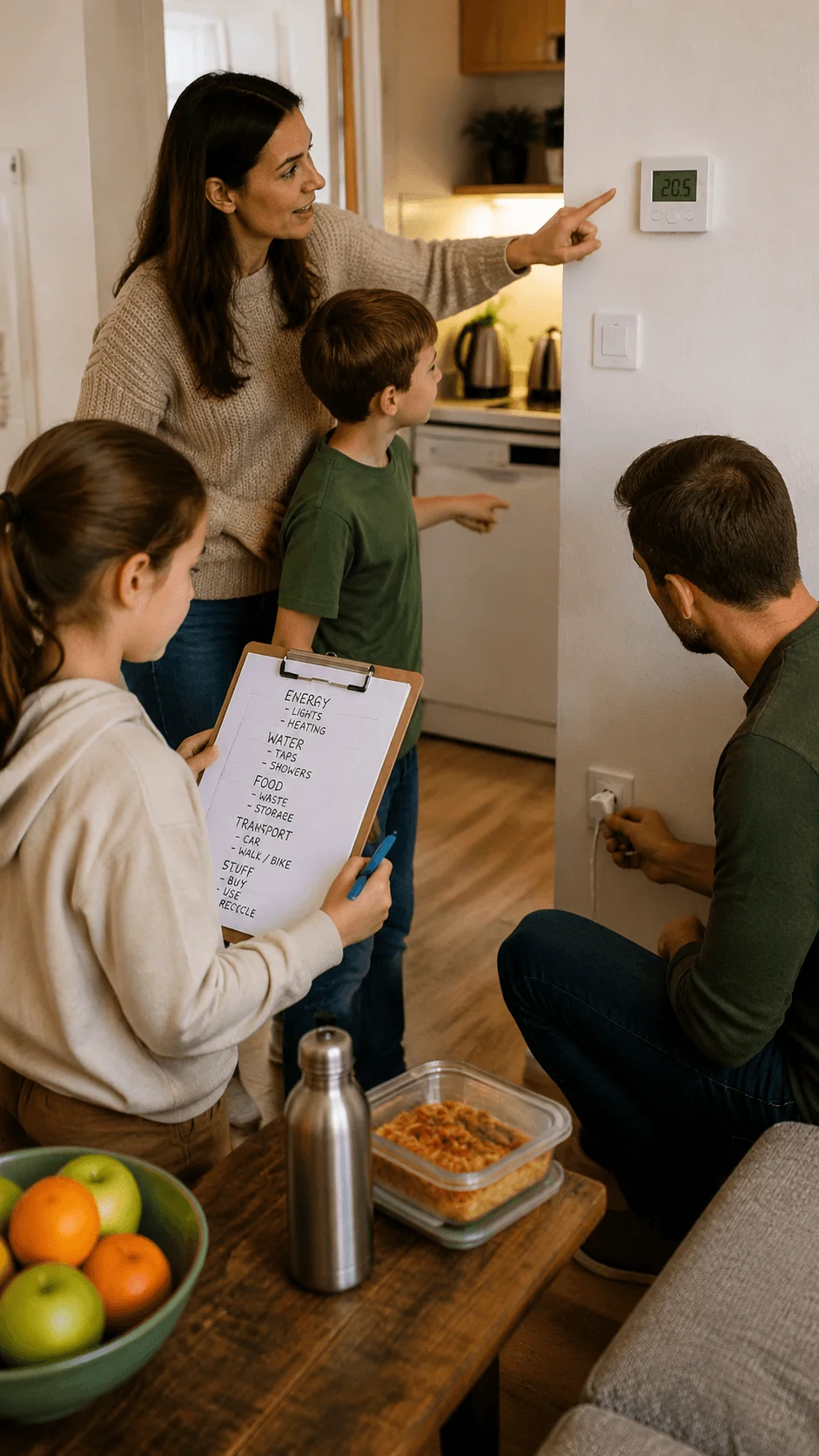
After the search, the family can choose one realistic change. They might create a reminder near a light switch, plan meals more carefully, use leftover food safely, report a leaking tap, or charge devices only when needed. A small experiment allows children to observe whether a change works.
Sustainability games for kids become more valuable when adults connect them with real decisions. A child may suggest an idea that sounds simple but proves difficult because of work schedules, rental rules, cost, or accessibility. Adults can explain these limits honestly and help the child develop another solution.
This project teaches observation, cooperation, communication, and practical responsibility. It also shows that sustainability depends on systems and circumstances, not only individual choices.
Eco Friendly Activities for Kids Using Rainwater
A rainwater discovery garden helps children explore rainfall, soil, plants, evaporation, and water conservation. Where local rules and conditions allow, children can help collect a small amount of rainwater for suitable outdoor plants.
Adults should supervise the setup carefully. Containers need secure covers or regular emptying to prevent mosquitoes and other safety problems. Families should keep collected water away from drinking supplies, food preparation, and indoor play. Children should never drink untreated rainwater.
The activity can begin with simple observation. Children can watch how rain moves from a roof, balcony edge, tree leaf, or paved surface. They can compare areas where water collects with places where it quickly enters the soil. Older children may measure rainfall or compare soil moisture before and after rain.
A small garden area can help children test how plants respond to different watering routines. They can learn that plants have different needs and that excessive watering may also cause problems. Parents and teachers can discuss drought, drainage, evaporation, and the importance of healthy soil.
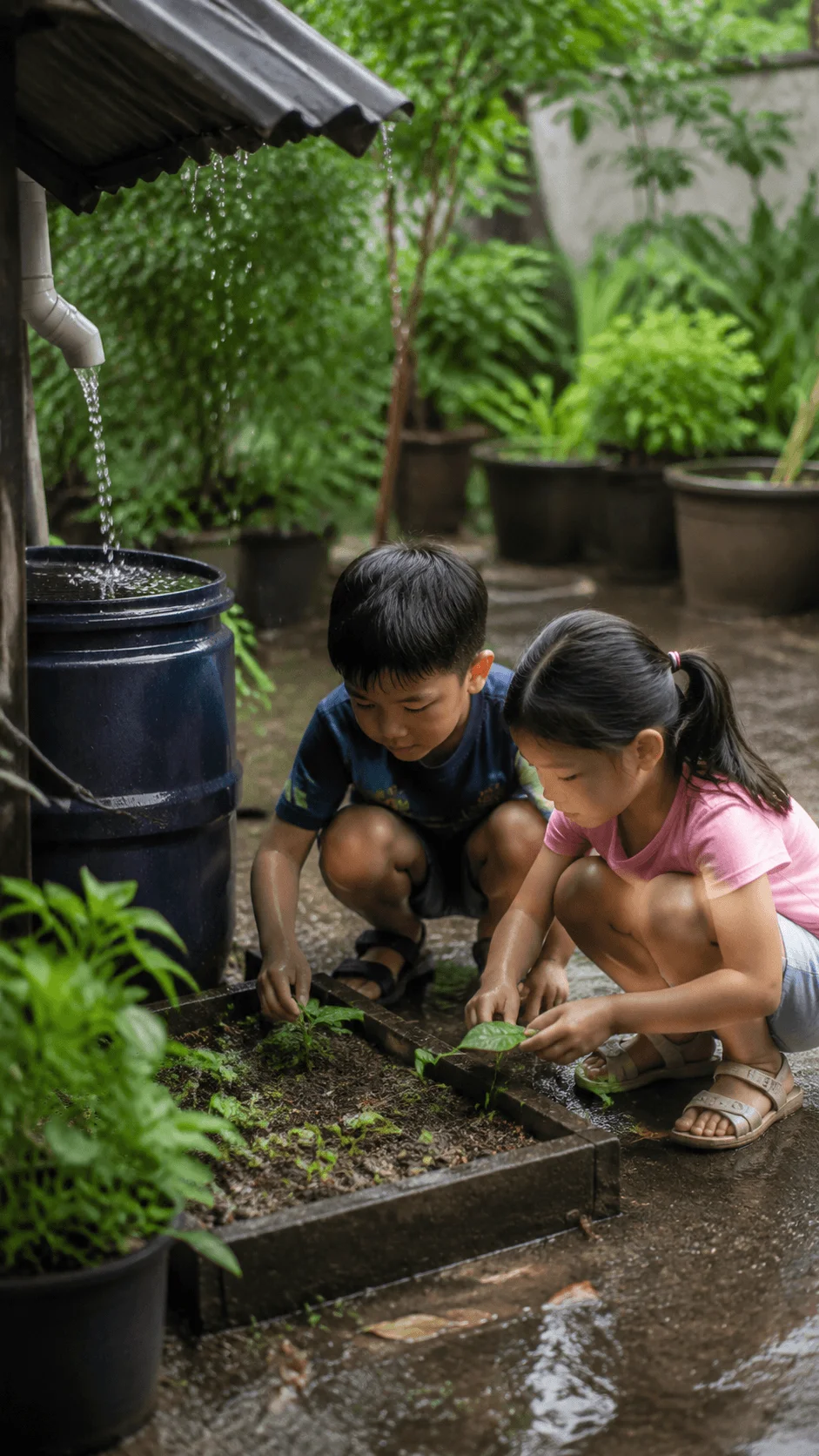
Families without a garden can adapt the project. Children can observe rain through a window, care for suitable container plants, study puddles, or draw a simple diagram of where water travels around their home or school.
These eco friendly activities for kids help explain the water cycle through direct experience. They also encourage children to value water without suggesting that households alone can solve large water management challenges.
Digital Sustainability Activities for Children
Digital sustainability rarely appears in traditional green activities for children, yet technology now plays a major role in family and school life. A digital clean up day can help children organise files, protect devices, and develop more responsible technology habits.
With adult supervision, children can remove duplicate photographs, organise school documents, delete unnecessary downloads, review unused applications, and unsubscribe from unwanted messages. They should never delete important files, family photographs, school records, or account information without permission.
The activity should not make exaggerated claims about deleting a few files. Digital sustainability involves much more than an empty inbox. The stronger lesson concerns responsible storage, device care, safe charging, security, software maintenance, and avoiding unnecessary replacement.
Children can clean device covers, organise charging cables, update passwords with adult guidance, review screen settings, and learn how to store devices safely. Older children can discuss why phones, tablets, laptops, cloud services, and data centres require energy and physical resources.
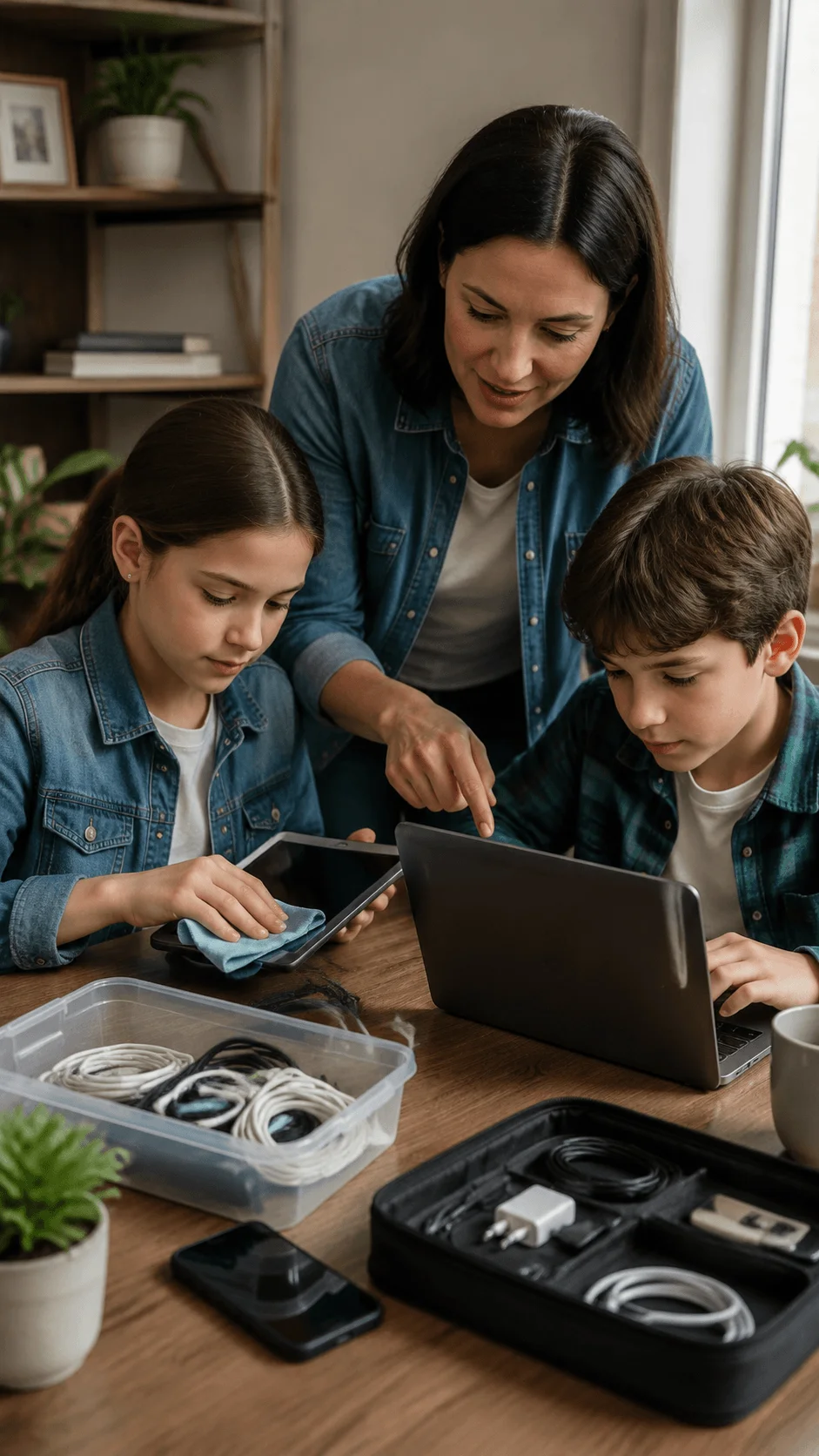
Families should also protect privacy. Children should not share passwords, personal photographs, addresses, school details, or location information. Adults can use the activity to explain safe digital habits and responsible file management.
Sustainable activities for kids should reflect modern life, and digital responsibility now forms part of that learning. Extending the useful life of a device through careful handling may create more practical value than symbolic online actions.
Pollinator Garden Activities for Outdoor Learning
A pollinator cafe project invites children to create a small area that supports bees, butterflies, moths, and other pollinating animals. The project can use a garden bed, window box, balcony pot, school planter, or suitable community space.
Adults should research native plants that suit the local climate, soil, sunlight, and available space. Native flowers often support local wildlife more effectively than decorative plants that offer little food or shelter. Families should also avoid harmful garden chemicals.
Children can help choose plants, prepare containers, water flowers, and record pollinator visits. Younger children may draw the colours and shapes they see. Older children can compare which plants attract different insects and study how weather affects activity.
Parents should check allergies, plant safety, and local conditions before beginning. Children should not handle bees or try to capture butterflies. The goal involves creating habitat and observing respectfully.
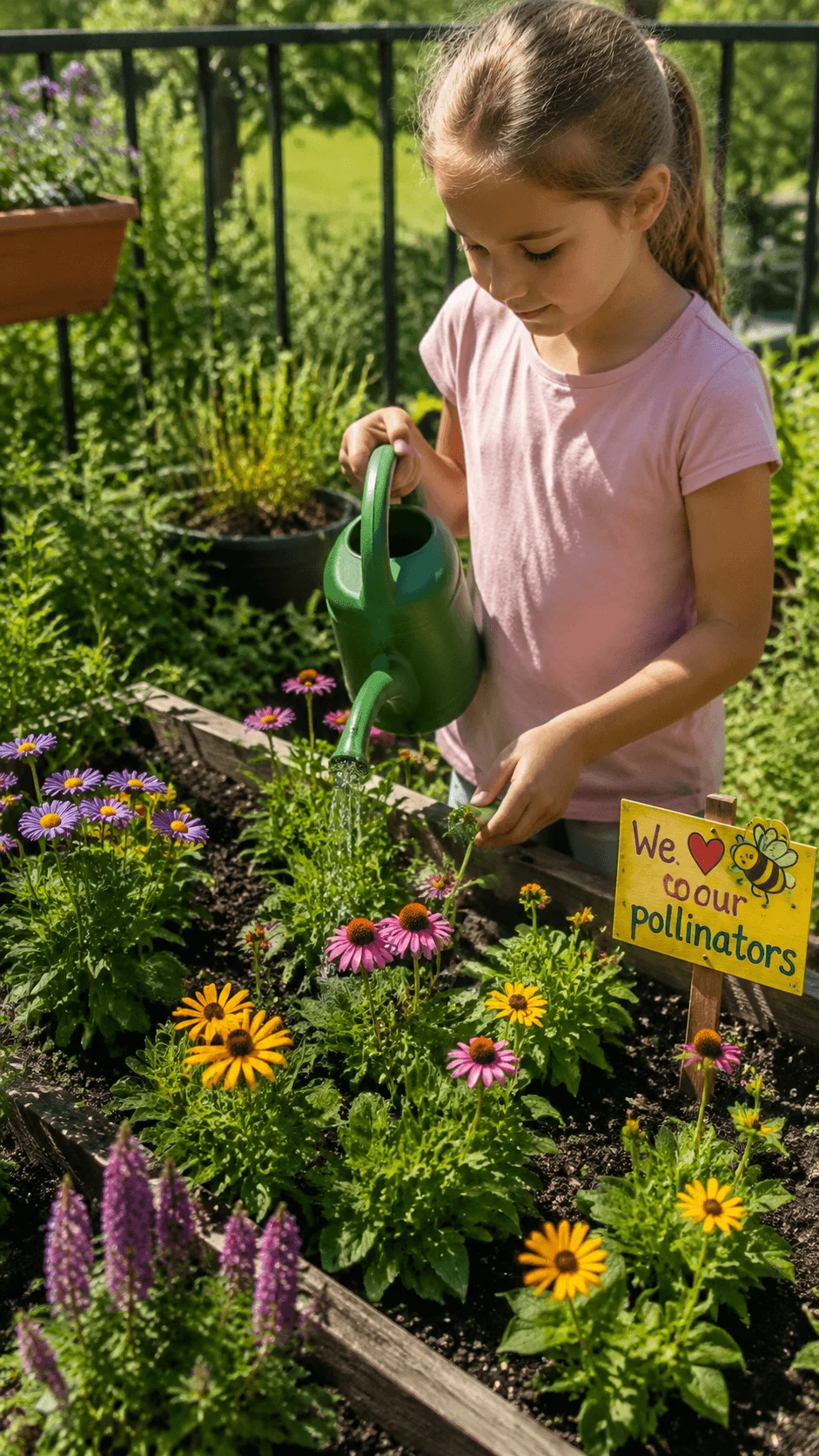
This project can introduce pollination, plant reproduction, food production, seasonal change, and habitat loss. It also shows children that a small space can support biodiversity, although a few flowers cannot replace the protection of larger ecosystems.
Pollinator garden activities combine science, patience, care, and outdoor sustainability learning. They can continue for weeks or months, allowing children to see how environmental projects develop over time.
Nature Sound Mapping as a Sustainable STEM Activity
Nature sound mapping helps children study an environment through listening. They can sit quietly in a safe outdoor location and record the sounds they hear around them.
Children may notice birds, insects, leaves, wind, water, footsteps, traffic, construction, voices, or aircraft. They can draw a symbol for each sound and place it on a simple map according to direction and distance.
Younger children may focus on identifying loud, quiet, natural, and human made sounds. Older children can repeat the activity at different times of day and compare the results. They might notice more birds in the morning, heavier traffic in the afternoon, or different insect sounds after rain.
The activity develops concentration, scientific observation, spatial awareness, and environmental sensitivity. It can also introduce noise pollution and help children understand how constant human sound may affect people and wildlife.
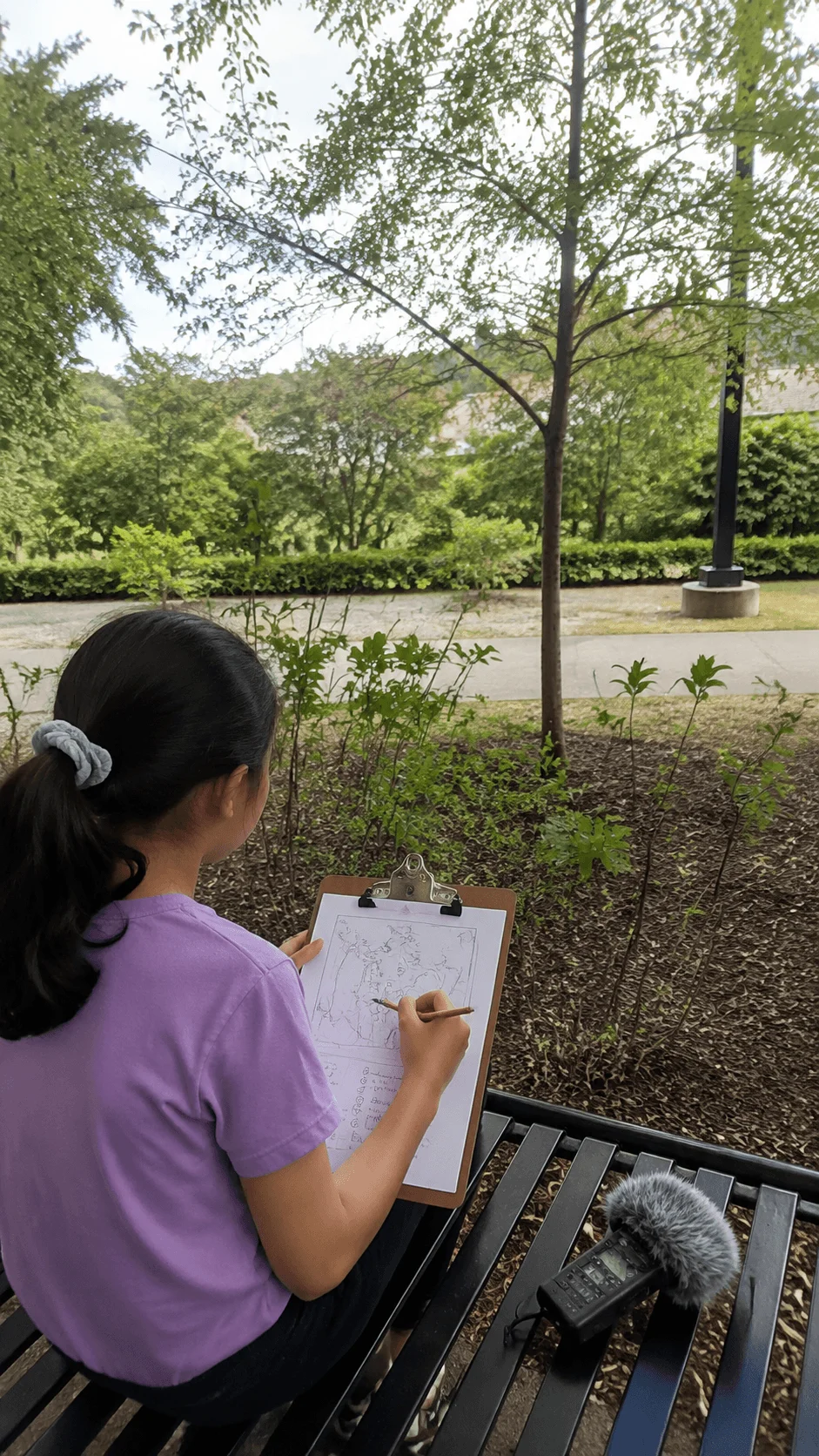
Adults should select a safe and accessible location. Children do not need to sit on the ground or travel to a remote natural area. They can complete the activity from a bench, balcony, open window, school entrance, or sheltered outdoor space.
Supervised audio recording can support the project, but children should avoid recording private conversations. A paper map often provides a simpler and safer method.
As a sustainable STEM activity, sound mapping encourages careful attention without requiring expensive equipment. It helps children experience an environment in a way that visual observation alone may miss.
Repair Activities for Kids and the Circular Economy
A repair before replace workshop teaches children that damaged items do not always need to enter the rubbish bin. With adult help, children can repair suitable books, toys, clothes, bags, bicycles, storage boxes, and school supplies.
The activity should begin with a safe item and a realistic repair. A child might tape a torn page, sew a loose button with supervision, clean a toy, replace a missing game label, glue a cardboard box, or help tighten a suitable bicycle part.
Adults must control sharp tools, electrical equipment, broken glass, batteries, chemicals, and damaged electronics. Some repairs require professional knowledge. Children should never open electrical devices or handle hazardous materials.
Younger children can sort materials, clean surfaces, match parts, choose fabric, or decorate a repaired item. Older children may learn basic sewing, tool safety, simple maintenance, and how to follow instructions.
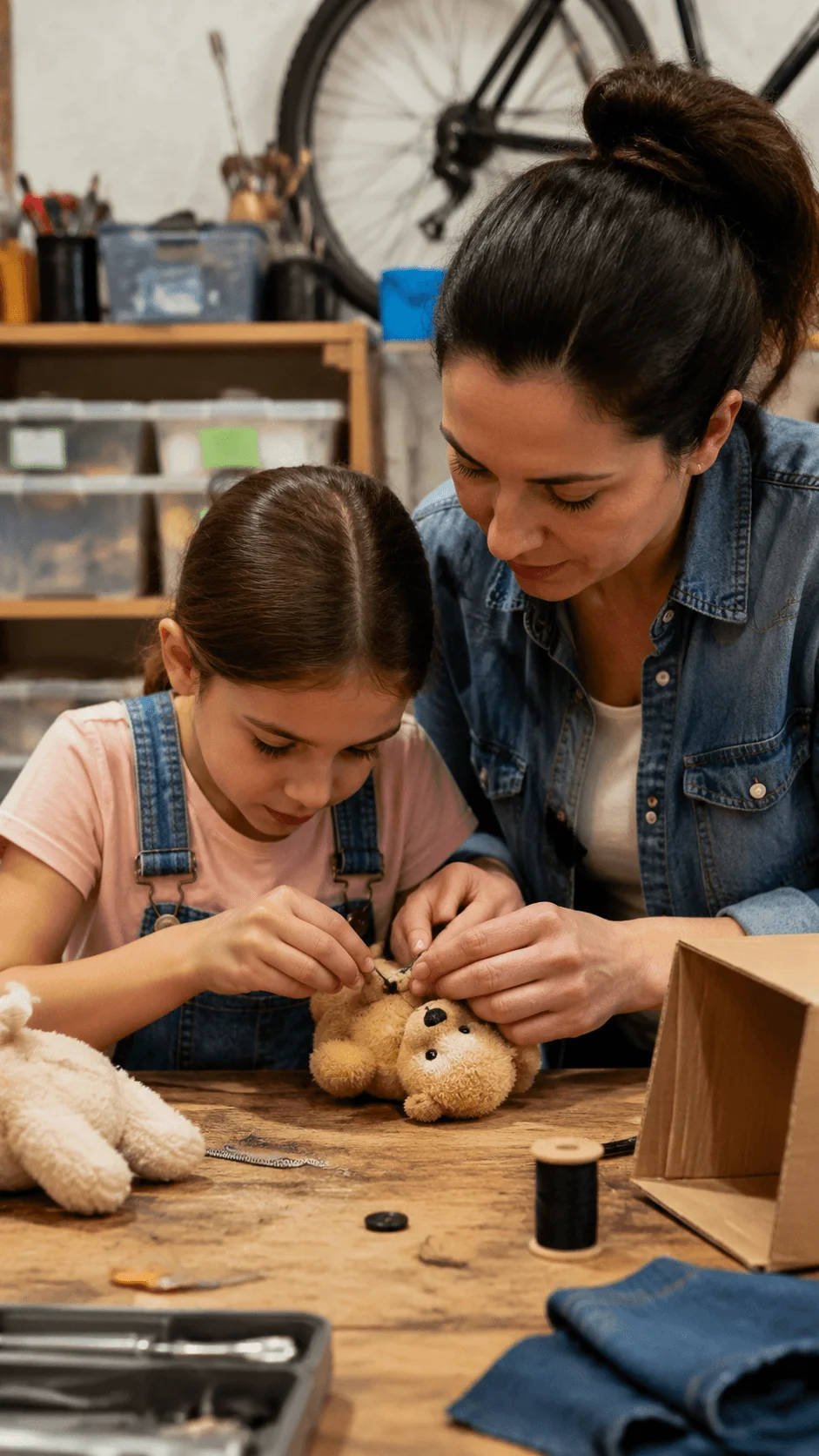
Repair activities for kids support patience, creativity, confidence, and practical life skills. They also introduce the circular economy, which aims to keep products and materials useful for longer.
The activity can include discussion about why some products break quickly, why replacement parts matter, and how design affects durability. Children may begin to notice the difference between an item that needs repair and one that has become unsafe.
Sustainable activities for kids gain greater meaning when children can see a clear result. A repaired book, toy, or bag provides visible proof that care and skill can extend an item’s life.
A Sustainable Lunch Box Challenge for Children
A sustainable lunch box challenge helps children examine food waste, packaging, portions, storage, and reusable containers. It should focus on observation and improvement rather than judging what families eat.
Children can look at what remains after lunch and ask why. A portion may have been too large, the food may have become warm, a container may have leaked, or the child may not have liked the meal. This information can help families plan more effectively.
The activity should respect allergies, cultural practices, sensory needs, medical requirements, budgets, school rules, and food availability. Adults should never pressure children to eat unwanted or unsafe food simply to avoid waste.
Families can choose one practical change. They may adjust a portion, use a suitable reusable container, improve food storage, choose an item that travels well, or replace a frequently wasted food with an accepted alternative.
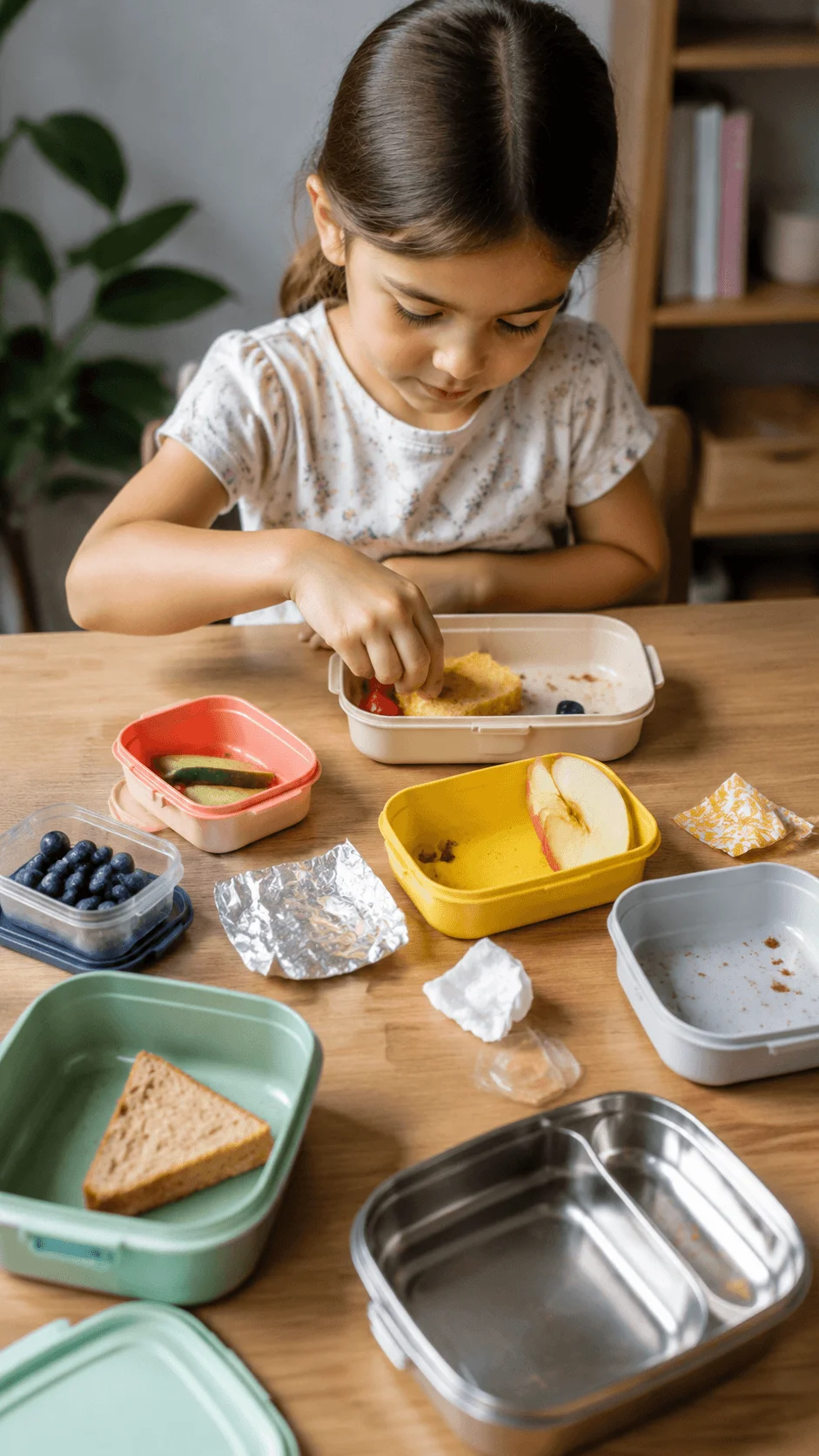
Children can also compare packaging. They may notice that some lunch items create several wrappers while others use one reusable container. However, adults should recognise that convenience, hygiene, cost, disability, and time affect family choices.
Zero waste activities for kids should remain realistic. A completely waste free lunch may not suit every child or household. The stronger goal involves reducing avoidable waste while maintaining nutrition, safety, and comfort.
This project teaches planning, responsibility, food awareness, and practical decision making. It also helps children understand that sustainability must work alongside health and individual needs.
Citizen Science Activities for Kids
Citizen science wildlife observation allows children to contribute to larger research or community projects with adult supervision. They may record birds, insects, plants, weather, seasonal changes, water conditions, or local habitats.
Children can use a notebook, printed form, classroom chart, or suitable digital platform. Adults should review any online service before allowing a child to create an account, upload photographs, or share a location.
The activity teaches accurate observation. Children learn to record what they actually see rather than what they expect to find. They can include the date, time, weather, location type, and number of organisms observed.
Younger children may draw an animal or match it with a picture guide. Older children can research species, compare observations, and discuss why reliable data matters.
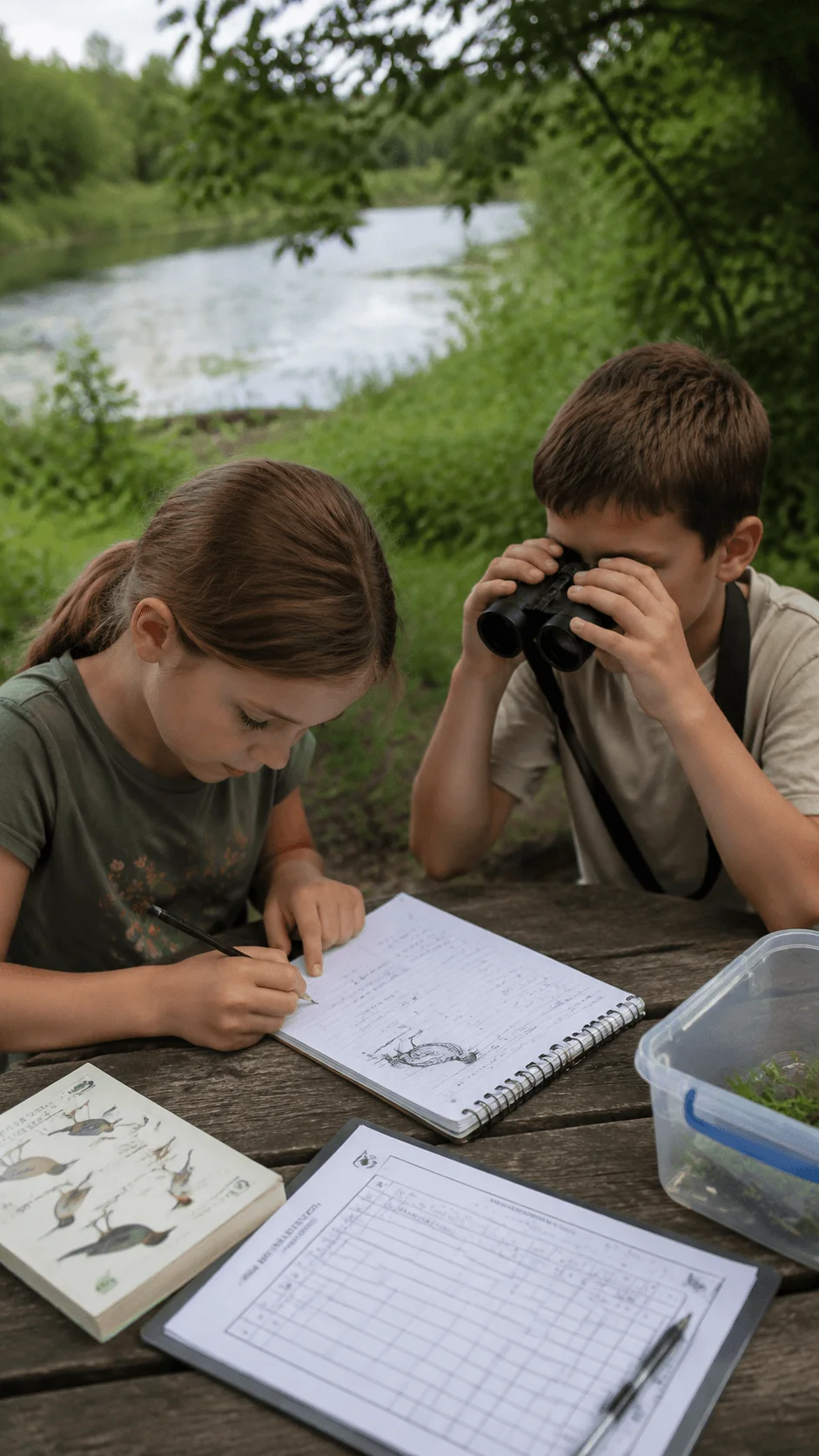
Children should not enter dangerous areas, approach wildlife, reveal private addresses, or share photographs of other people without permission. Adults can reduce privacy risks by using general location information rather than an exact home address.
Citizen science activities for kids connect personal observation with wider environmental learning. Children can see that many small records may help researchers understand migration, habitat change, weather patterns, or species distribution.
Even when families do not submit observations to an official project, they can use citizen science methods at home. Careful recording, repeated observation, and honest reporting still provide valuable learning.
Climate Resilience Activities Through Playground Design
A climate friendly playground design challenge asks children to imagine a play space that remains safe, comfortable, accessible, and supportive of nature.
Children can draw a plan or build a model from reused cardboard, paper, fabric, and other safe materials. They may include shade trees, covered seating, water refill points, native plants, rain gardens, permeable surfaces, bicycle parking, accessible paths, and wildlife areas.
The activity helps children think about heat, rainfall, drainage, mobility, transport, play, and community needs. They learn that a good environmental design must also work for real people.
A child may propose many trees but forget that roots need space. Another may add a pond without considering safety. Adults can ask questions that encourage improvement rather than rejecting the idea immediately.
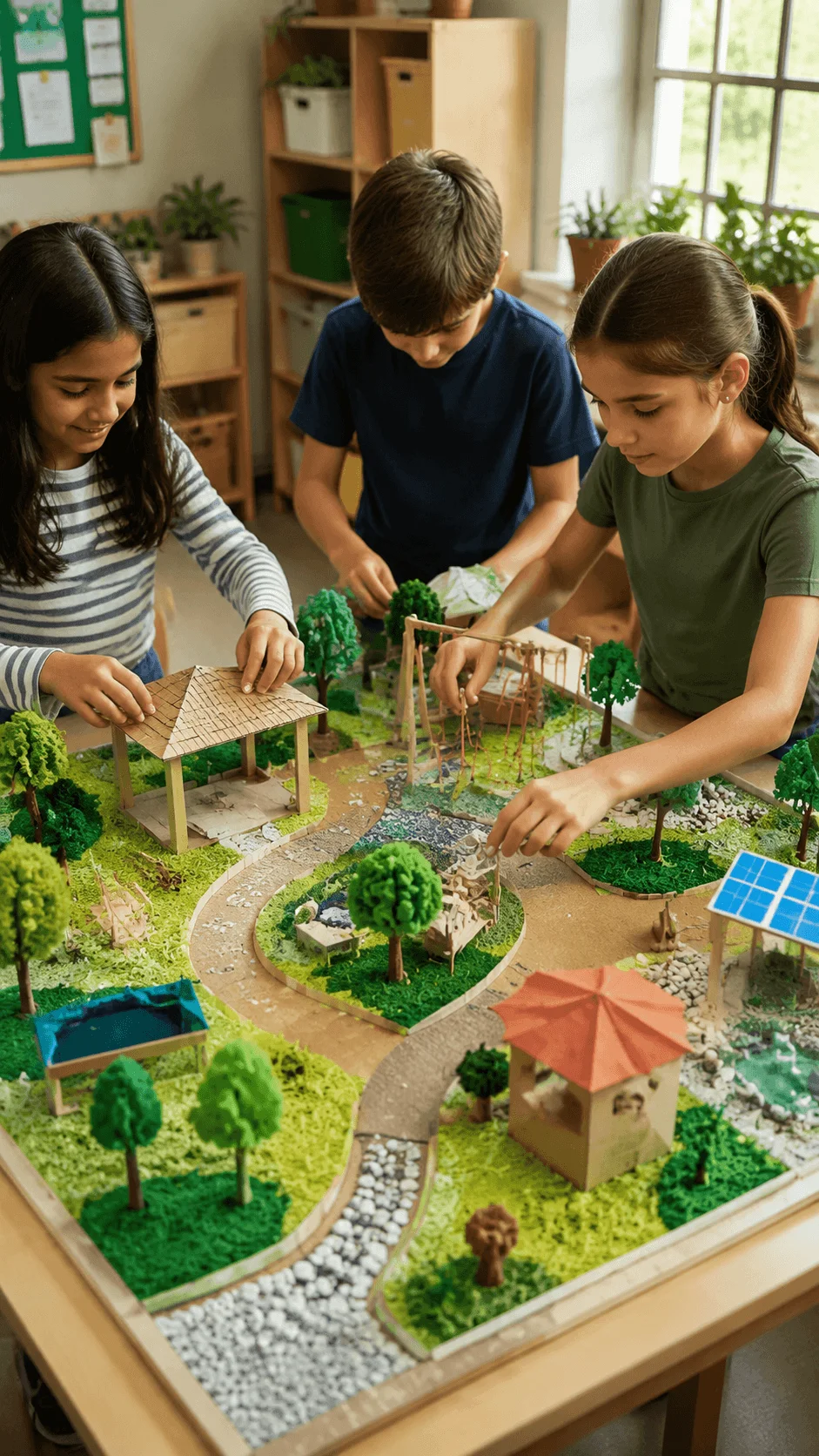
Older children can compare materials and explain why they chose them. They may study which surfaces become hot, where water collects after rain, or how different people use a playground.
Accessibility should remain part of the discussion. A sustainable playground should welcome children with different physical, sensory, and communication needs. Shade, seating, clear paths, quiet areas, and suitable equipment can support inclusion.
Climate resilience activities help children understand that sustainability involves planning for changing conditions. The challenge also combines design, science, art, communication, and problem solving.
Circular Economy Activities for Children
A mini circular economy store allows children to exchange books, toys, puzzles, games, clothes, school supplies, or art materials instead of purchasing new items.
Families or classrooms can create a small exchange area where each item receives a condition check. Children can organise objects, create simple labels, and discuss fair exchange rules.
Adults should ensure that every item remains clean, safe, complete, and suitable for the age group. Broken toys, recalled products, damaged electrical items, unsafe clothing, or objects with missing safety parts should not enter the exchange.
Children should also receive permission before giving anything away. Adults must respect emotional attachment. A child should never feel forced to exchange a valued toy or personal item.
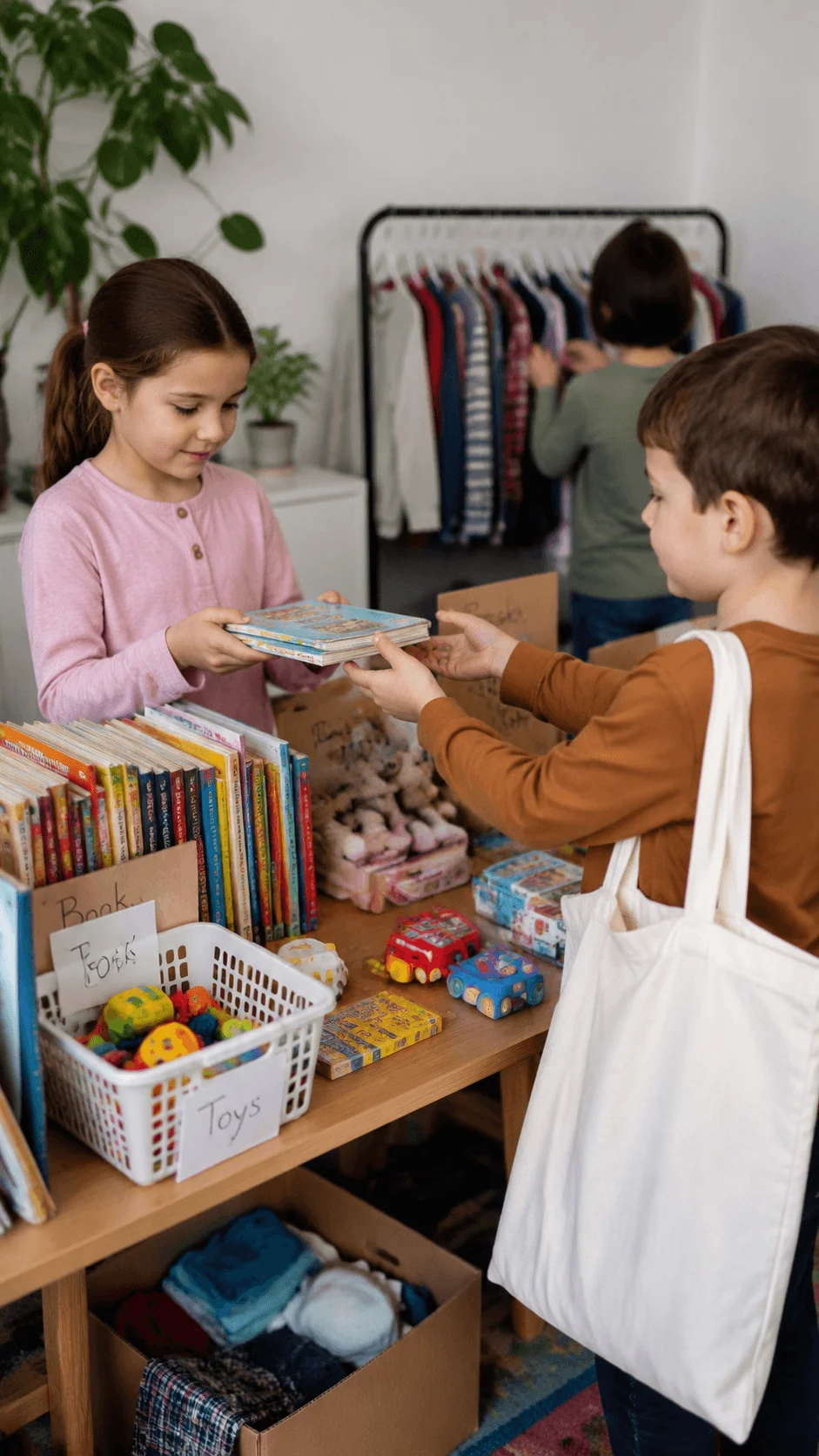
The activity introduces sharing, reuse, product care, value, fairness, and responsible consumption. Children can discuss how an item may remain useful even after the first owner no longer needs it.
A classroom may exchange reading books or art supplies. A family group may organise a seasonal clothing swap. Children may also create a pretend store using items that remain in the home.
Circular economy activities for children show that value does not disappear when ownership changes. They also help children understand that buying something new represents only one possible choice.
Screen Free Environmental Activities for Families
A no screen eco adventure day encourages families to spend time learning, exploring, creating, and completing practical tasks without relying on entertainment screens.
The day does not need to present technology as harmful. Digital tools support education, communication, accessibility, and work. The goal involves creating balance and making space for direct experience.
Families can choose several connected activities. They might take a nature walk, observe wildlife, repair an item, prepare a lower waste meal, care for plants, visit a local park, or complete a household sustainability challenge.
Parents should design the day around the needs of their family. Weather, transport, disability, location, safety, work schedules, and available outdoor space can affect participation. Indoor alternatives may include repairing books, sorting reusable art materials, planting herbs, creating a climate friendly building model, or cooking with suitable leftovers.
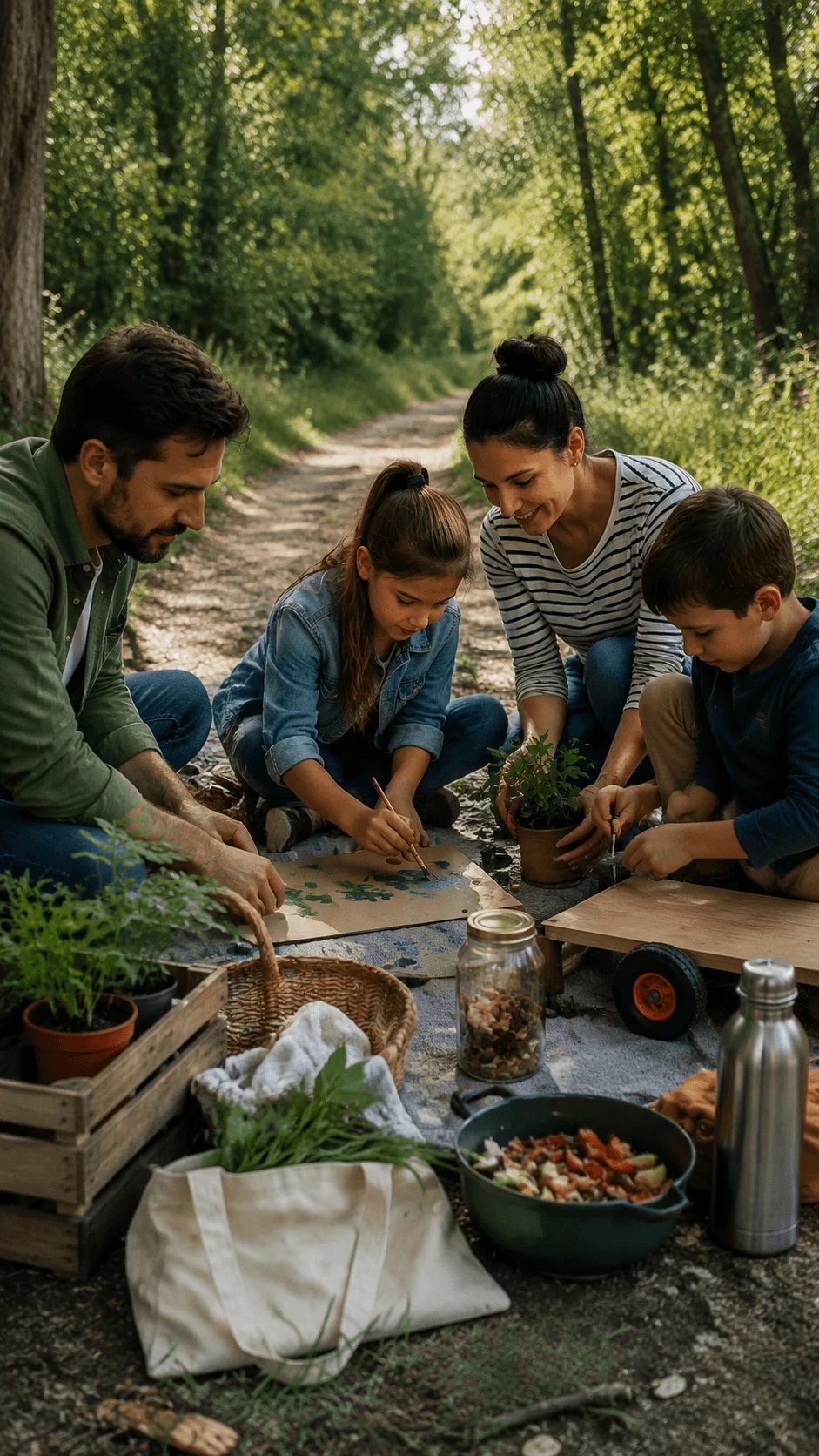
Children can help plan the experience. Giving them a choice may increase interest and reduce the feeling that adults have simply removed screens.
Screen free environmental activities also support conversation and shared problem solving. Families can discuss what they noticed, what proved difficult, and what they might repeat in the future.
Sustainable activities for kids become more memorable when children help shape them. A flexible family adventure can combine nature, creativity, movement, practical skills, and environmental responsibility.
How Adults Can Support Sustainable Learning Activities
Adults play an important role in making these experiences safe, respectful, and meaningful. Parents and teachers should provide guidance without controlling every decision. Children need space to observe, suggest ideas, make small mistakes, and revise their plans.
The activity should suit the child’s age, ability, attention span, and interests. A younger child may enjoy drawing insects, while an older child may prefer recording data or designing a model. Children with mobility, sensory, communication, or learning needs may require different materials, locations, or methods of participation.
Adults should also avoid presenting sustainability as a competition between families. Not every household can afford reusable products, gardening materials, travel to nature reserves, or new energy equipment. Many meaningful projects require only observation, conversation, reused materials, or practical care.
Safety must remain more important than completing an activity. Adults should supervise tools, water, wildlife, online platforms, food preparation, outdoor travel, and unfamiliar plants. They should stop any project that creates an avoidable risk.
Sustainable activities for kids should encourage honest learning. Sometimes an idea will not work. A plant may fail to grow, a repaired item may still need replacement, or a family may discover that a suggested change does not fit its routine. These outcomes still provide useful lessons.
The strongest projects connect with everyday life. Children learn more when they see adults discussing choices, admitting limitations, and making realistic improvements together.
Conclusion
Sustainable activities for kids can transform environmental ideas into practical experiences that children understand and remember. Biodiversity observation, rainwater learning, digital organisation, repair, citizen science, lunch planning, playground design, and family challenges all connect sustainability with real life.
These activities can help children develop curiosity, creativity, patience, confidence, teamwork, observation, communication, and problem solving skills. They can also introduce important ideas about nature, waste, water, food, technology, climate resilience, and responsible consumption.
Families and schools do not need expensive equipment or perfect environmental knowledge to begin. A notebook, a reused box, a safe outdoor space, or a damaged book may provide enough material for a meaningful project. Adults can adapt each idea according to local conditions, available resources, and individual needs.
Small projects do not replace the wider action required from governments, industries, communities, and institutions. However, they can help children understand how systems work and why thoughtful decisions matter.
The most useful sustainable activities for kids remain safe, inclusive, affordable, realistic, and enjoyable. Adults can begin by choosing one suitable idea, involving children in the planning, and focusing on consistent learning rather than perfection.