12 Sustainable Activities for Students in 2026
Sustainable activities for students create the strongest learning experience when they solve visible problems instead of only discussing environmental issues in class. Students can study cafeteria waste, inspect school energy use, repair damaged products, map biodiversity, test renewable energy, and recommend practical improvements. These experiences make sustainability easier to understand because learners can see how their choices affect resources, costs, and the local environment.
In 2026, schools can connect environmental education with artificial intelligence, citizen science, circular economy thinking, climate adaptation, engineering, and student leadership. These themes help students move beyond basic recycling drives and awareness posters. They also connect naturally with science, mathematics, geography, technology, business studies, art, and communication.
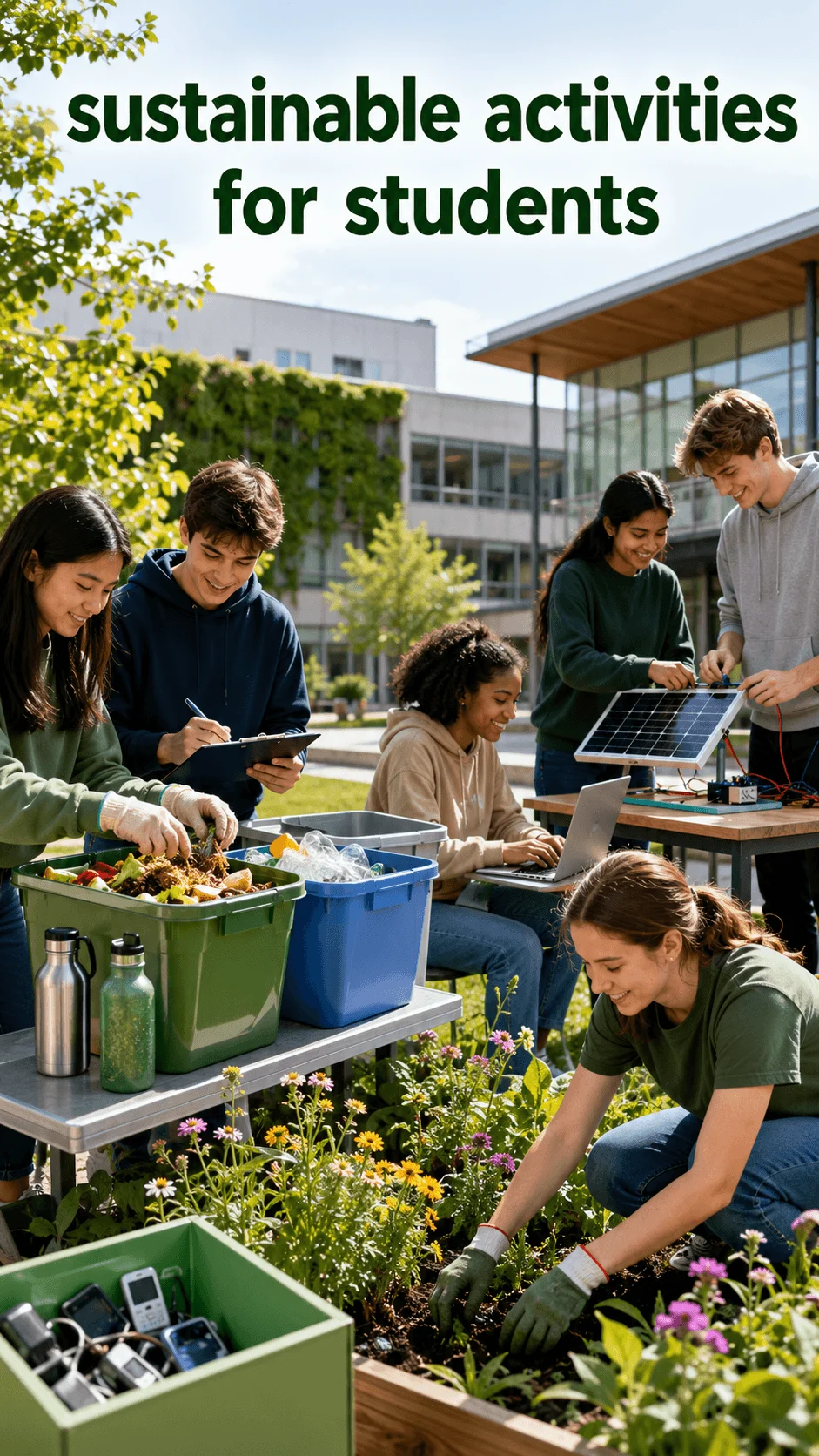
The following sustainable activities for students suit different ages, budgets, and learning goals. Each idea gives students a real task, encourages teamwork, and produces results that schools can record. Teachers can simplify the activities for younger learners or add research, calculations, and digital tools for high school and college students.
Why Student Sustainability Activities Matter
Practical environmental work gives students a reason to observe carefully, ask questions, test ideas, and evaluate results. A food waste audit develops data skills. A repair event builds patience and problem solving. A solar challenge introduces engineering. A climate assembly strengthens research and public speaking.
These projects also show the difference between awareness and action. An awareness campaign explains a problem. An action project attempts to change something, such as reducing waste, saving electricity, repairing products, or improving habitat. Both approaches have value, but action based sustainability projects for students often create deeper learning because participants can compare conditions before and after the activity.
Schools should give students real responsibility while teachers manage safety and permissions. Learners can collect evidence, design solutions, communicate with staff, and present their findings. When students help shape the project, they become active problem solvers rather than passive participants.
AI Powered School Food Waste Audit
An AI powered food waste audit helps students discover what the school cafeteria throws away and why. Students can separate leftovers into categories such as untouched food, partly eaten meals, fruit, bread, and packaging. They can weigh each category after lunch and record the menu, date, attendance, and total waste in a spreadsheet.
Older students can photograph returned trays with permission and use image sorting tools to identify common patterns. A simple system may reveal that certain portions seem too large, one side dish regularly remains uneaten, or waste increases on particular days.
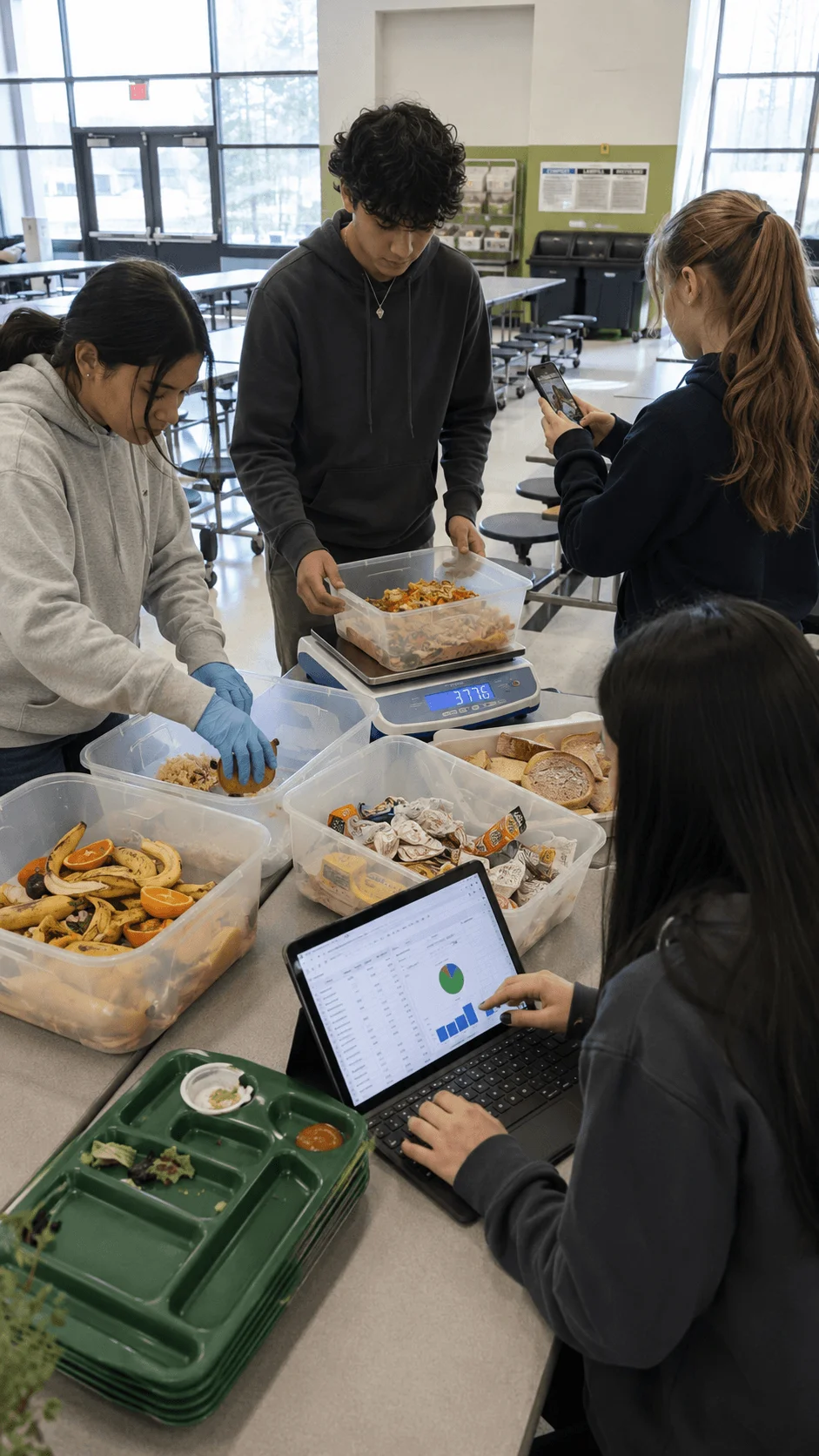
Students can present practical recommendations to cafeteria staff. These may include smaller first servings, optional side dishes, clearer menu descriptions, safe food sharing, or composting for unavoidable scraps. The school can then repeat the audit and compare the new results with the starting data.
This activity suits middle school, high school, and college students. Younger students can help with supervised counting. Schools need containers, labels, gloves, a scale, and a spreadsheet. The project remains affordable and teaches data collection, teamwork, food systems, and responsible decision making.
Students also learn that food waste involves more than discarded meals. Every wasted portion represents land, water, energy, transport, labour, and money that produced no benefit. This wider understanding can encourage students to think carefully about how food moves from farms to kitchens and finally to their plates.
Student Repair Cafe
A student repair cafe gives damaged products a second life. Students, teachers, parents, and local volunteers can repair clothes, bags, bicycles, toys, headphones, and simple household items during a monthly or seasonal event.
The school should create separate stations for sewing, bicycle repairs, simple mechanical work, and supervised electronics. Teachers must approve tools and items before work begins. Students should never open dangerous electrical equipment without a qualified adult.
This project teaches circular economy thinking because students learn to maintain and repair products before replacing them. They also gain practical skills such as sewing, tightening parts, identifying faults, using tools, and explaining a problem clearly.
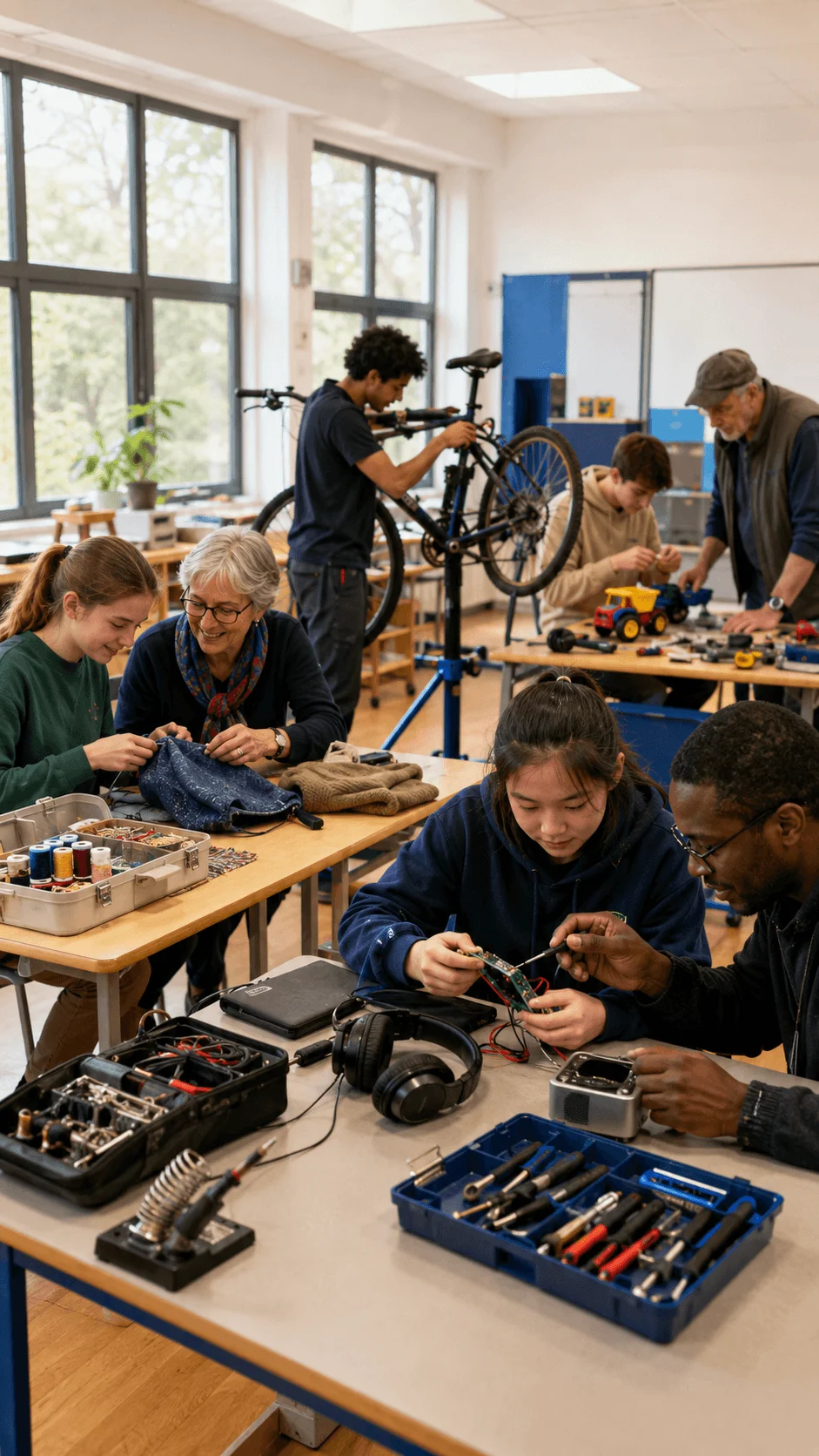
Students can register every item and record whether the team repaired it, partly repaired it, or referred it to a professional. They can then calculate the number of products kept in use and estimate the waste and household spending avoided.
A repair cafe works well for middle school, high school, and college groups. Community volunteers can reduce costs and provide valuable skills. This makes it one of the most useful sustainable activities for students who enjoy practical problem solving.
The event can also change how students view broken products. Instead of treating damage as the end of an item, learners begin to see repair as a normal stage in responsible ownership. That mindset can influence future purchasing decisions and reduce unnecessary consumption.
E Waste Mapping and Collection Challenge
Many families store old chargers, phones, batteries, cables, keyboards, and earphones because they do not know where to take them. Students can solve this problem by researching authorised collection centres and creating a local electronic waste map.
The class should verify which items each centre accepts and how people should handle batteries or damaged devices. Students can publish the map on a school website, share a printed version, or create a simple searchable page for the community.
After completing the map, the school can run a collection week. Staff should prepare secure containers, publish clear rules, and confirm the recycling partner before accepting materials. Students can also explain data privacy and remind donors to remove personal information from devices.
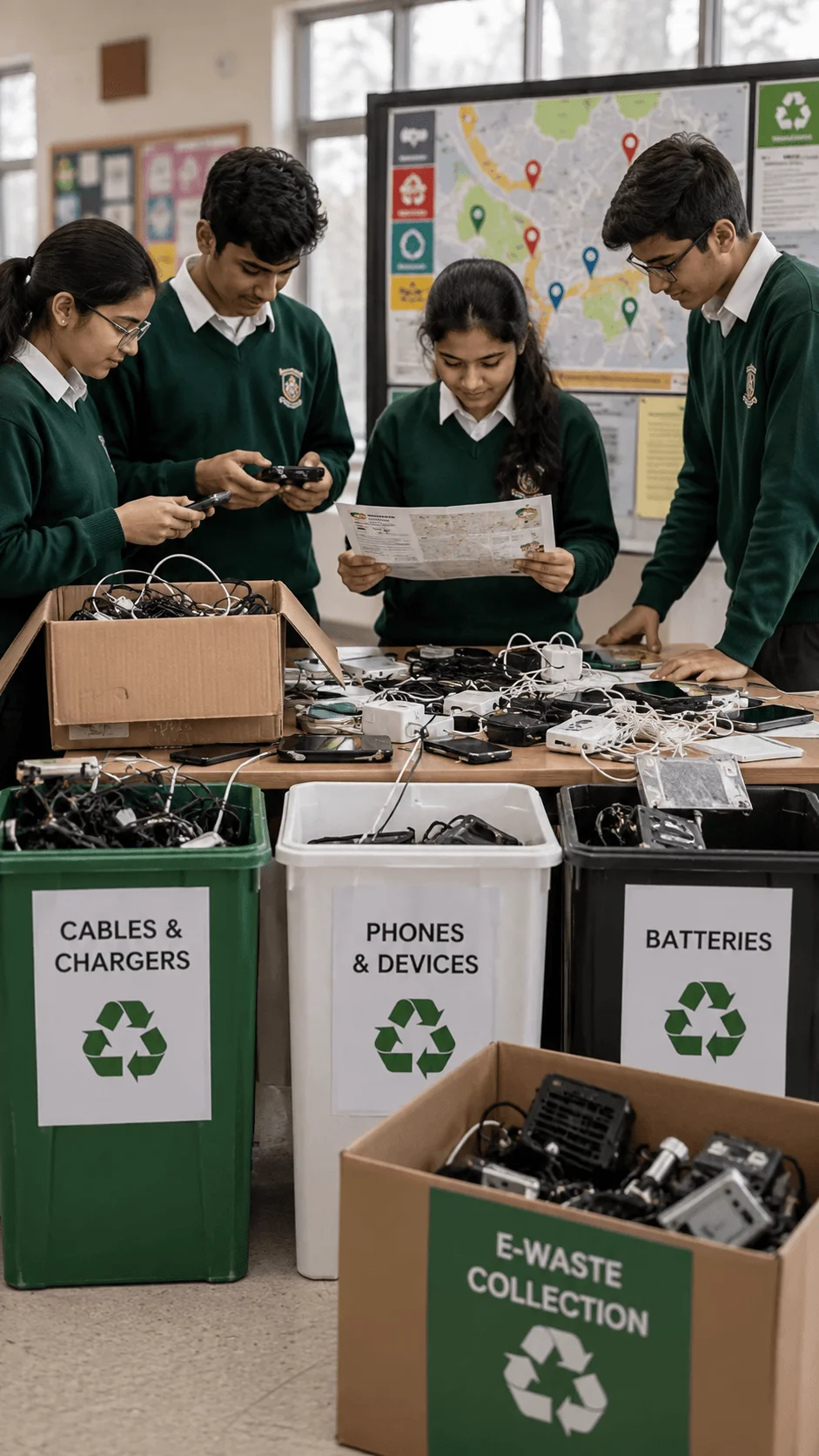
This project develops research, digital mapping, communication, and responsible waste management skills. Students can measure the total number and weight of collected items and record where the recycler took them.
Middle school students can support research and communication, while older learners can build digital maps or simple application prototypes. The project costs little when schools use free mapping tools and donated boxes.
The activity becomes more meaningful when students follow the collected devices through the complete process. They should confirm that the items reached an authorised recycler rather than simply disappearing after collection. This teaches accountability and prevents the project from becoming an empty publicity exercise.
Gamified Carbon Saving Classroom Competition
A classroom competition can make sustainable habits more visible and engaging. Teams can earn points for switching off unused lights, reducing disposable packaging, carrying reusable bottles, avoiding food waste, and following agreed energy saving routines.
Teachers should create fair rules. Students should not lose points because they live far from school or cannot buy special products. The challenge should reward actions that every participant can complete at school.
A four week program can focus on a different theme each week. The class may begin with energy, continue with food waste, move to reusable items, and finish with long term habits. Students can use observation sheets, photographs, waste counts, or teacher checks as evidence.
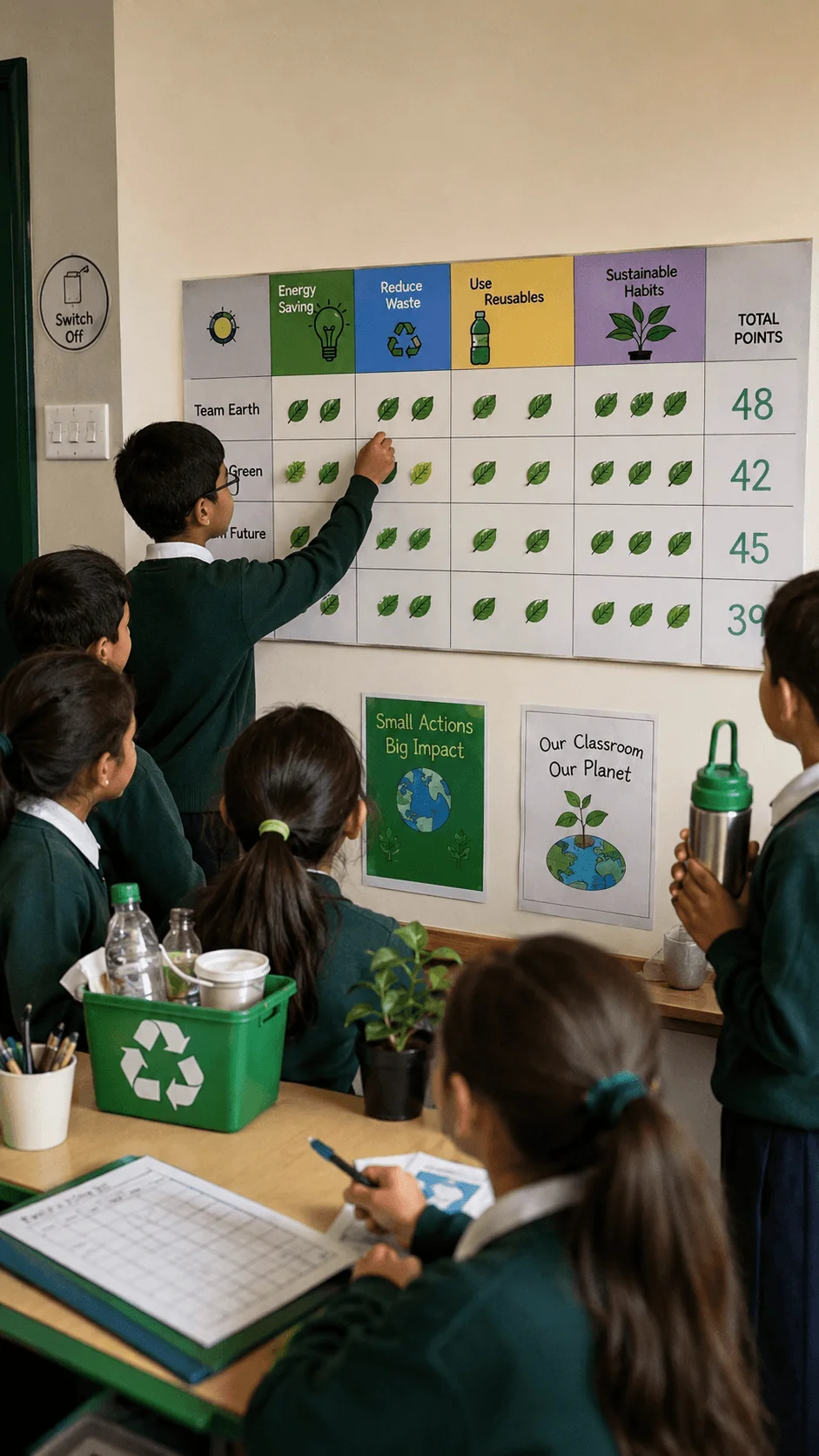
This activity suits primary, middle, and high school students. It needs little more than a clear scorecard and consistent supervision. At the end, students should compare classroom waste, participation, or energy behaviour with the starting week.
These eco friendly student activities work best when the competition leads to lasting routines rather than a temporary race for points. Teachers should spend time discussing which habits students can continue after the challenge ends.
The class can also reward thoughtful ideas instead of only completed actions. A student who develops a better classroom shutdown routine or suggests a realistic way to reduce packaging should receive recognition for problem solving.
Student Led School Energy Audit
A student led school energy audit examines where the school may use electricity unnecessarily. Students inspect classrooms, hallways, computer rooms, offices, and libraries. They look for lights left on, unused devices running, chargers connected without purpose, poor use of daylight, and cooling systems operating while doors or windows remain open.
Students can visit each area at different times and record observations without blaming staff. Older learners may review meter readings or electricity bills with permission. They can compare similar periods and note changes in weather, attendance, or school activities.
The class can then prepare realistic recommendations. These may include shutdown routines, reminders near switches, better use of daylight, adjusted cooling settings, or responsibility teams for shared areas.
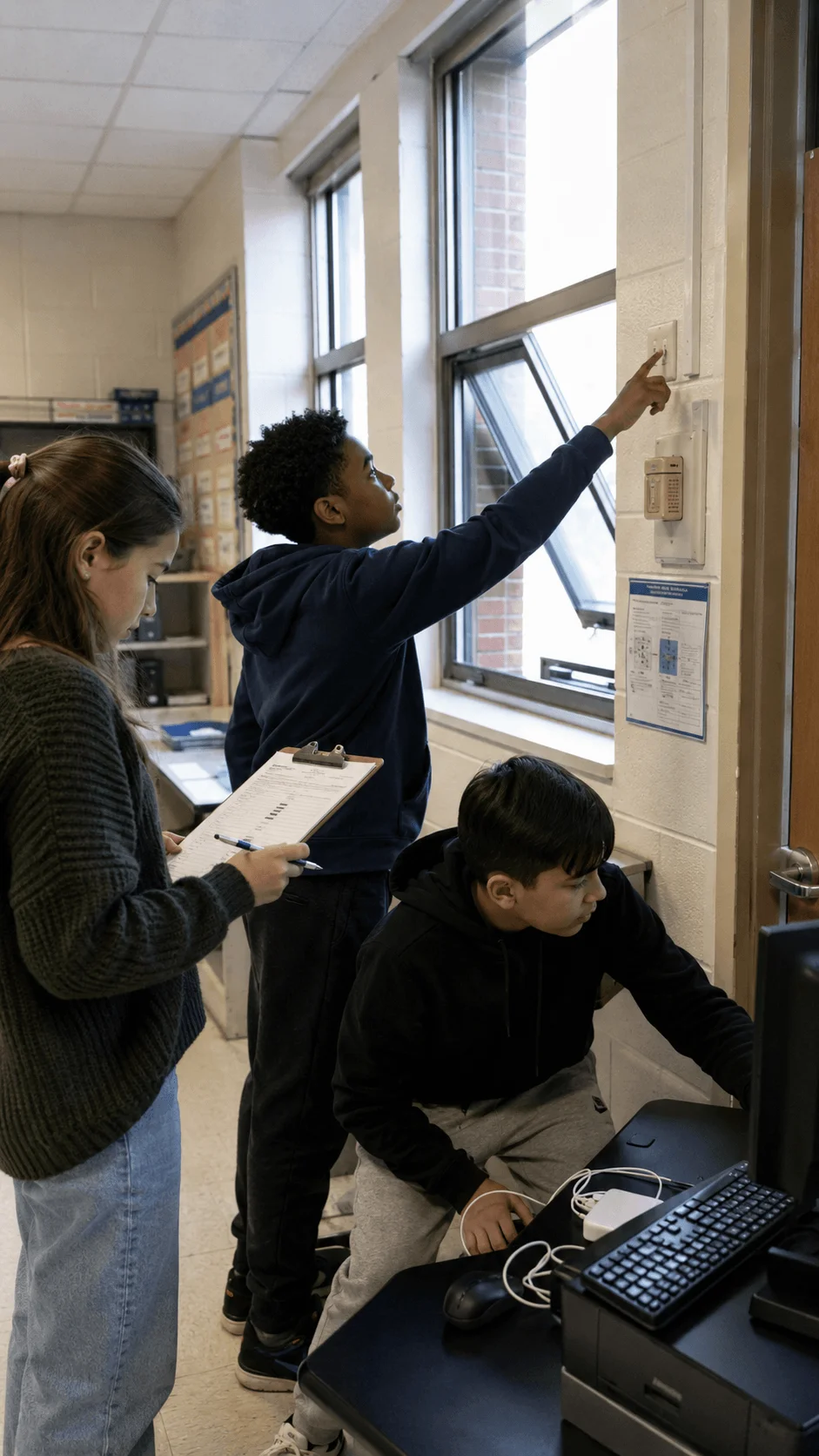
This project suits middle school, high school, and college learners. It requires observation sheets, school permission, and basic measuring tools where available. Students can measure success through repeated inspections, meter readings, or electricity costs.
Among sustainable activities for students, an energy audit offers strong links with mathematics, physics, behaviour, and school management.
The project also shows students that environmental improvement does not always require new equipment. Better routines, clearer responsibilities, and thoughtful use of existing systems can sometimes create meaningful savings without a large investment.
Solar Powered Device Design Challenge
A solar powered device challenge asks students to use sunlight to complete a useful task. Younger learners can build a model house with a solar light or test a small fan. Older students can design a charger, irrigation device, emergency light, model vehicle, or environmental sensor.
Students begin by choosing a problem and sketching a solution. They list the parts, build a prototype, and test it under different conditions. They can compare panel angle, sunlight strength, charging time, battery performance, and operating time.
The activity supports science, technology, engineering, and mathematics while encouraging creativity. Students must balance cost, size, reliability, and function. They should record failed tests because each failure can guide a better design.
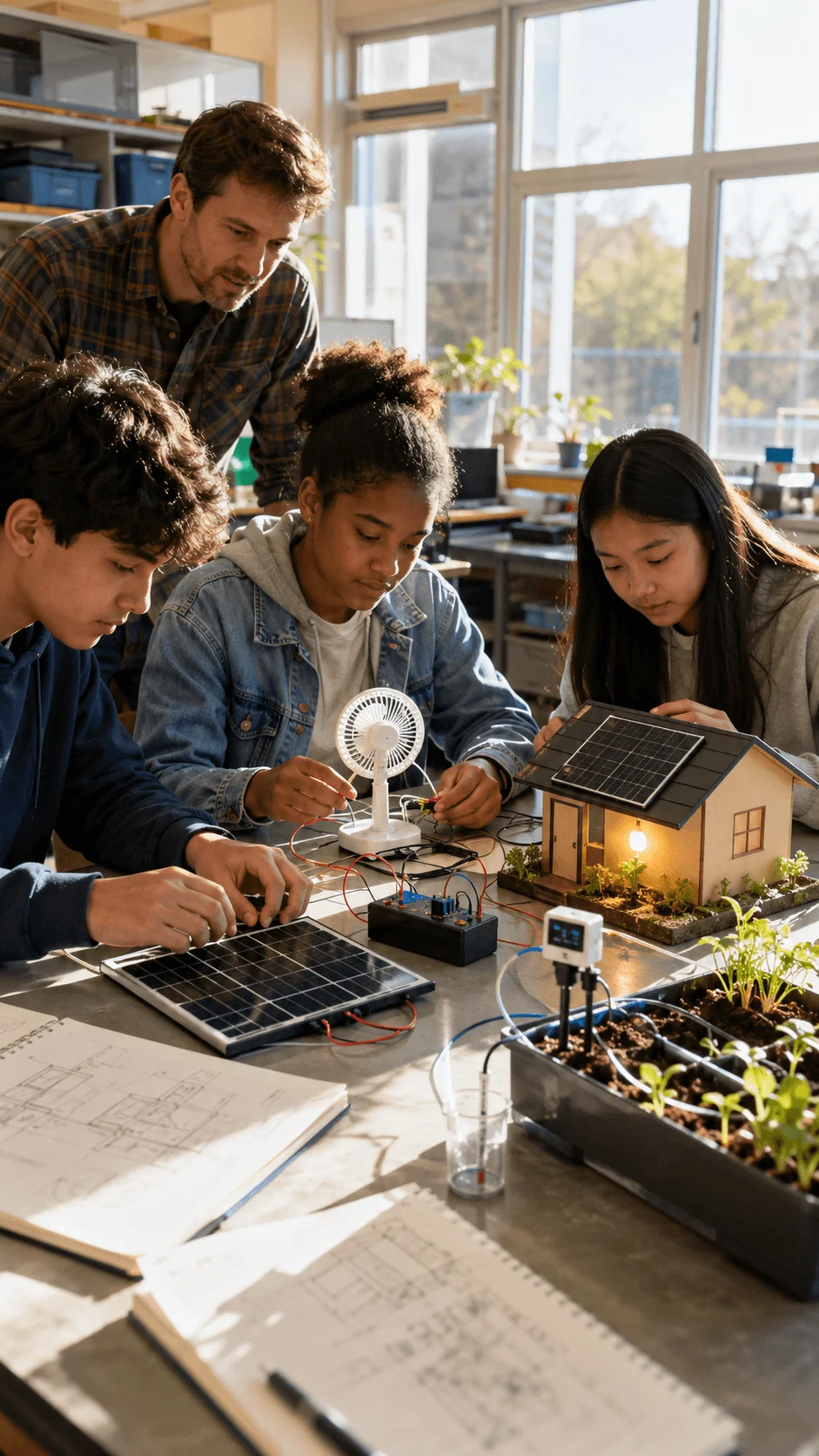
Schools can use small educational solar kits or shared components to control costs. Teachers should supervise batteries, wiring, and tools.
Students can measure voltage, charging speed, operating time, or task performance. This makes the challenge one of the strongest sustainable STEM activities for students who enjoy invention and experimentation.
A strong project should solve a specific problem rather than produce a device with no clear purpose. For example, students may design a solar light for an emergency kit or a small irrigation system for a school garden. A practical goal makes the engineering process more focused.
Campus Biodiversity Mapping With Citizen Science
Campus biodiversity mapping turns school grounds into a research site. Students record birds, insects, plants, trees, fungi, and other organisms, then mark where they observed each species.
The class can divide the campus into zones such as gardens, sports fields, shaded corners, walls, and water points. Students visit each area at different times and use notebooks, cameras, maps, field guides, or approved citizen science applications.
Students should observe responsibly. They must avoid damaging plants, disturbing nests, or handling unknown organisms. They should verify species through reliable guides, teachers, local experts, or trusted applications.
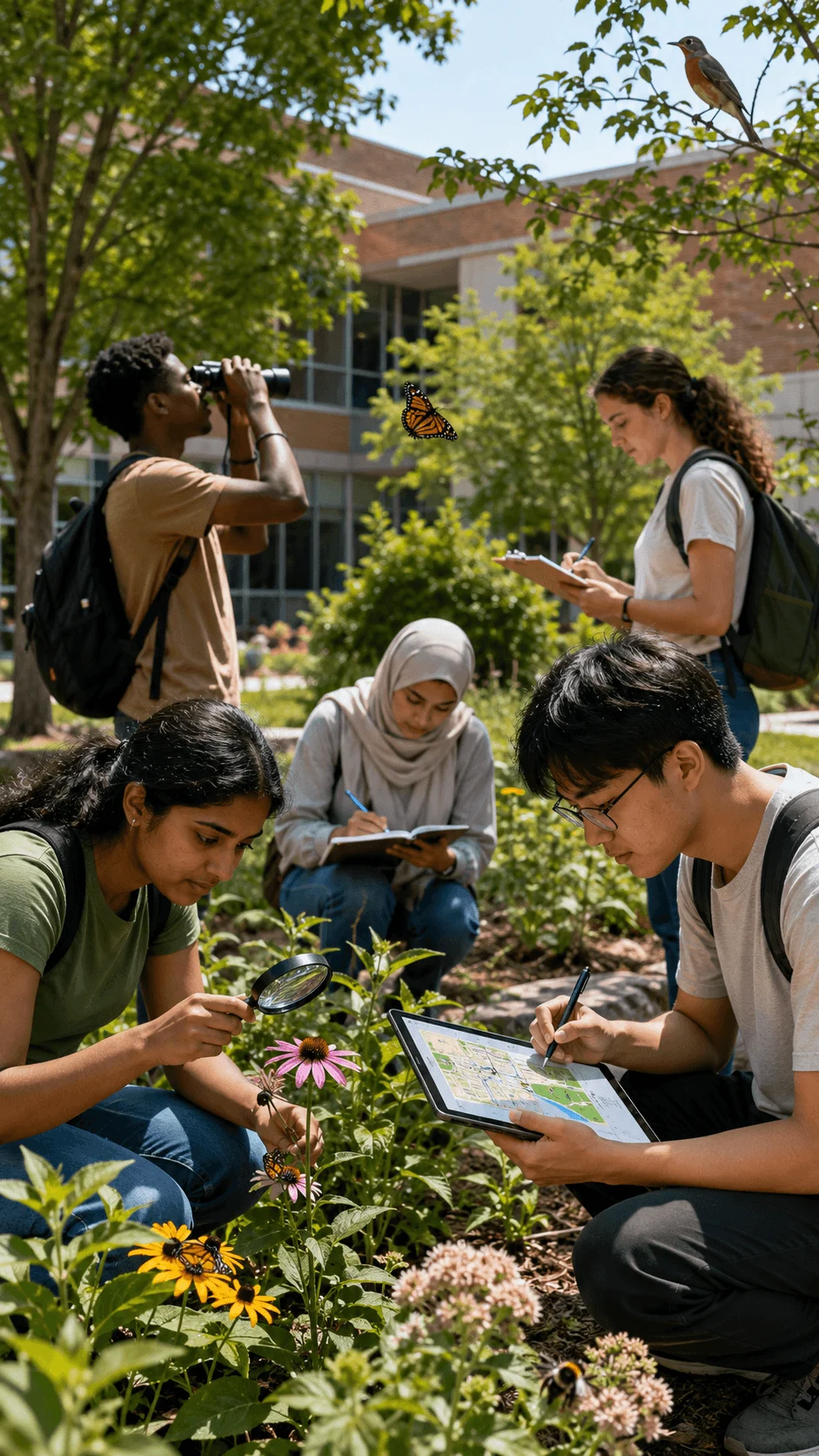
After several visits, students can create a visual biodiversity map. The results may show where pollinators gather, which places support the most plant life, and where the campus lacks native vegetation or shelter.
This activity suits all ages. Younger students can count broad groups, while older learners can verify species and compare seasons. Students can measure progress through verified observations and changes after habitat improvements.
The project can continue throughout the academic year. Repeated observations allow students to notice seasonal changes, migration patterns, flowering periods, and the effects of weather. Long term data can help the school make better planting and maintenance decisions.
Pollinator Micro Habitat Project
A pollinator micro habitat creates a small safe area for bees, butterflies, and other helpful insects. Students can build it in a garden, courtyard, balcony, rooftop container, or unused corner.
They should first study the site, including sunlight, water access, soil, wind, and existing insect activity. Next, they can choose native flowering plants that bloom at different times. The habitat may also include shallow water with landing stones, simple nesting materials, and shelter.
Students should avoid pesticides and create a maintenance schedule. Before planting, they can record pollinator visits during a fixed observation period. Once the plants become established, they can repeat the same method and compare the results.
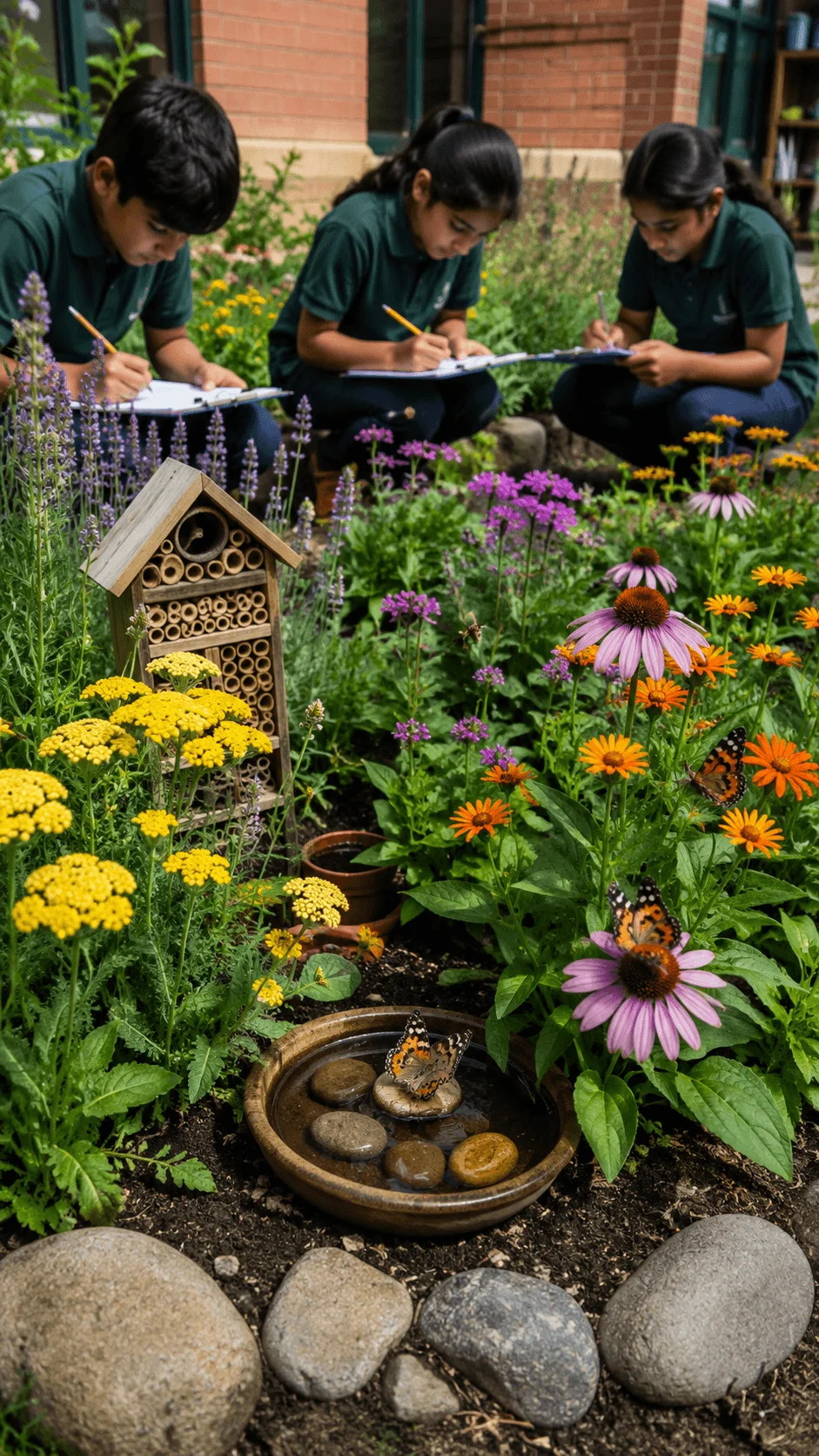
Primary students can help with planting and counting. Older learners can research plant choices, manage observation schedules, and analyse patterns. Donated containers and local plants can keep costs low.
This project gives school sustainability activities a visible, long term outcome. Students learn plant care, patience, seasonal change, and the relationship between pollinators and food production.
Teachers should explain that the goal involves supporting a healthy habitat rather than attracting the greatest possible number of insects immediately. Plants need time to grow, and pollinator populations may change with seasons and weather.
School Climate Adaptation Walk
A school climate adaptation walk helps students identify local risks from heat, flooding, water shortages, poor drainage, and overheated buildings. Climate adaptation focuses on preparing for environmental pressures that a community may already face.
Students walk around the campus or nearby area with maps, cameras, thermometers, and observation sheets. They look for places with little shade, paths that collect water, blocked drains, damaged soil, exposed seating, and rooms with poor ventilation.
The class then studies possible solutions. These may include shade trees, covered seating, reflective surfaces, rain gardens, improved drainage, water storage, or better airflow. Students should consider safety, maintenance, cost, and local climate conditions before making recommendations.
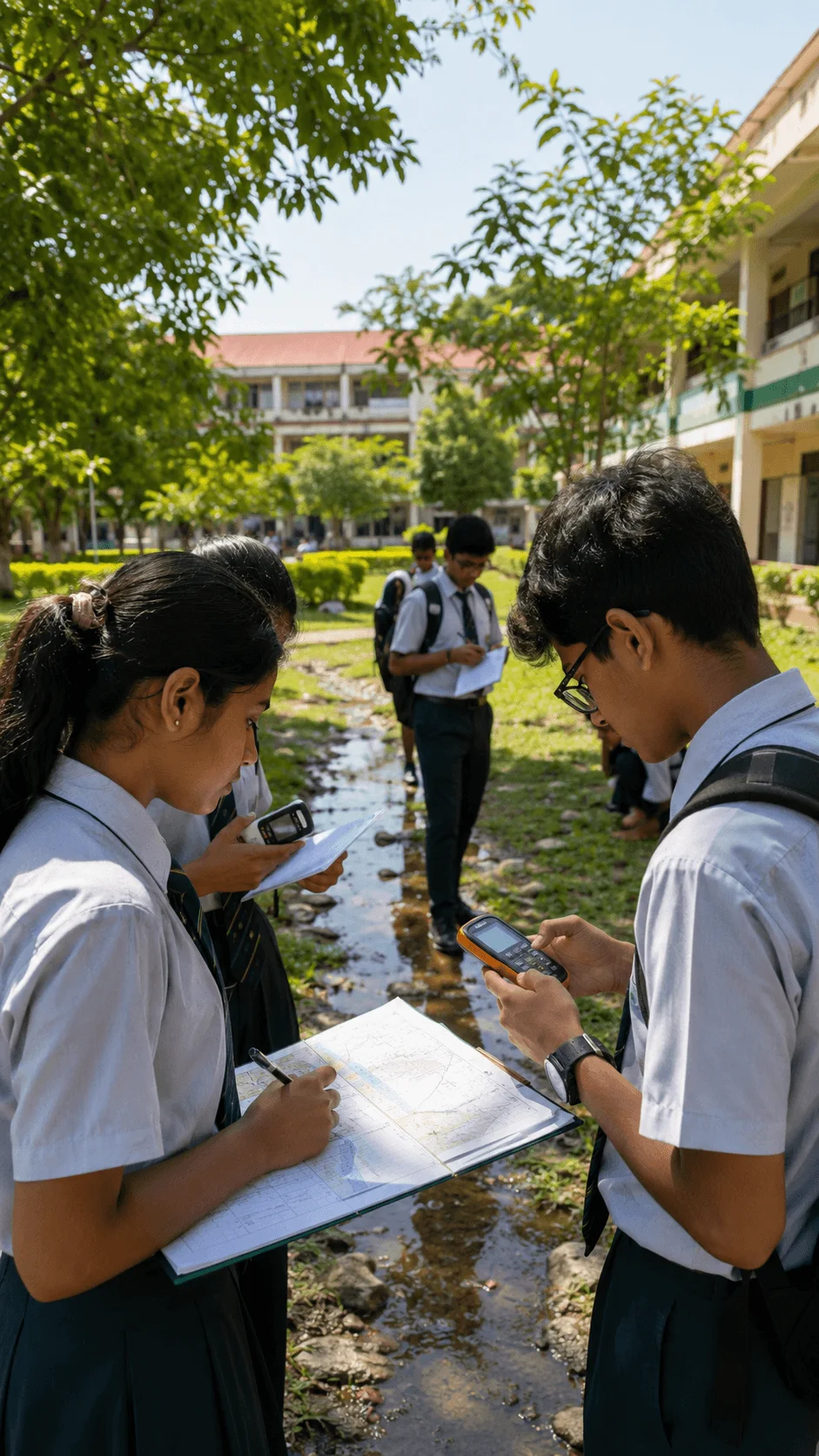
Older students can compare temperatures in shaded and unshaded areas or record how long water remains after rain. They can present a climate risk map to school leaders and suggest priority actions.
This is one of the most relevant climate action projects for students because it connects global environmental change with practical local planning.
The school may not have enough money to complete every recommendation. Students can therefore rank solutions according to urgency, cost, expected benefit, and ease of maintenance. This adds budgeting and decision making to the environmental learning process.
Circular Fashion Swap and Upcycling Lab
A circular fashion swap helps students reuse clothing, uniforms, bags, books, and school supplies. The event can also include a workshop where students repair or redesign damaged items through patchwork, embroidery, button replacement, and simple sewing.
Organisers should create rules for cleanliness, condition, and fair exchange. Families can submit items before the event so students can sort them by type and size. A token system can keep the process organised.
The school should arrange a responsible destination for items that remain after the swap. Good quality products can go to a suitable community organisation. Unusable materials should not become someone else’s waste.
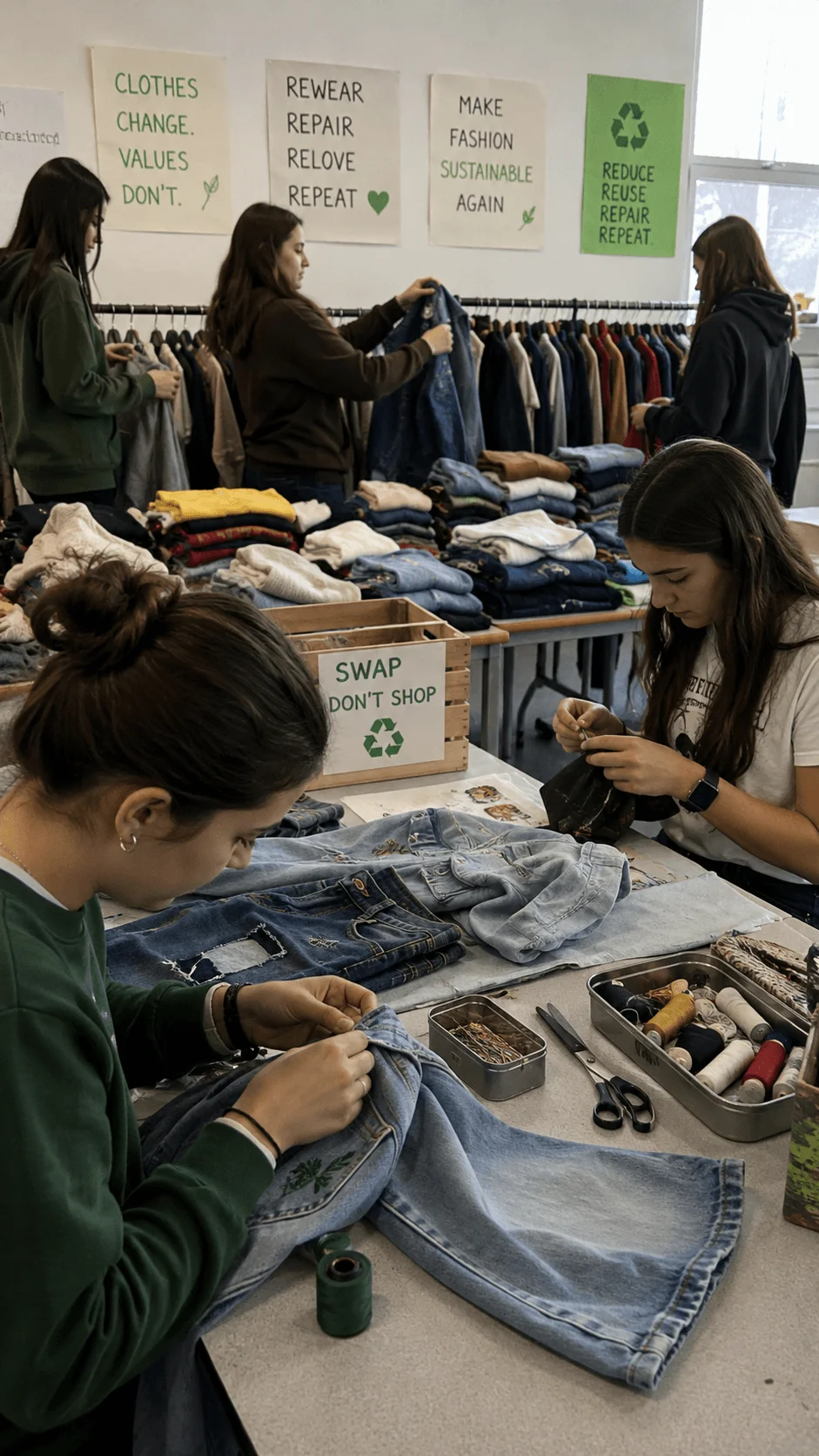
Students can measure the number of items exchanged, repaired, redesigned, and donated. They can also estimate family savings.
This project suits middle school, high school, and college students, although younger learners can join with adult support. Circular economy activities for students become especially meaningful when learners see how repair and reuse meet practical needs while reducing waste.
Students can also study why people replace clothing and how advertising, trends, quality, and convenience affect purchasing decisions. This discussion helps them understand that clothing waste involves both production systems and consumer behaviour.
Sustainable Dining Rewards Program
A sustainable dining rewards program encourages students to reduce cafeteria waste through simple positive recognition. Participants can receive stamps, points, or digital badges for using reusable containers, refusing unnecessary cutlery, choosing less packaging, and taking portions they can finish.
The rewards should not create additional waste. Certificates, class privileges, public recognition, or access to a special school activity often work better than physical prizes.
Students should design the program with cafeteria staff. They need to understand lunch routines, decide how staff will verify actions, and make sure the process does not slow service. A small pilot group can test the system before the school expands it.
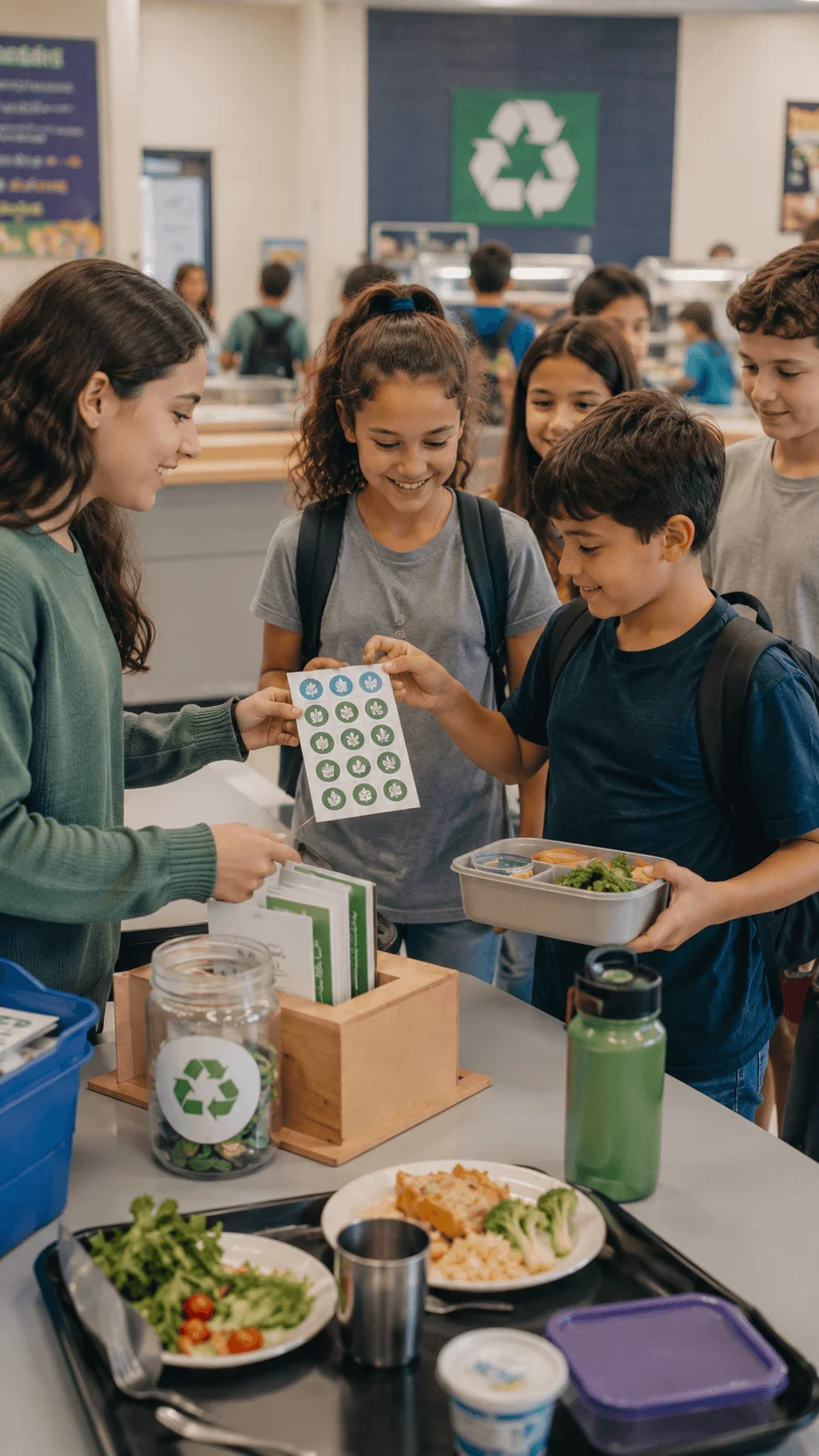
The project can run for one month. Students should track participation, disposable packaging, and food waste before and after the launch. They can also collect feedback about fairness and convenience.
This activity combines communication, behaviour design, data collection, and project management. It helps sustainable activities for students produce measurable changes in everyday school routines.
Students should review the results honestly. A large number of collected points does not automatically prove environmental improvement. The team should check whether packaging use or food waste actually decreased.
Student Climate Assembly or Model COP
A student climate assembly or Model COP gives learners a structured way to explore environmental decisions and competing priorities. Students can represent countries, industries, local communities, businesses, farmers, or environmental organisations.
Each group researches its role, needs, responsibilities, and limits. Students then discuss renewable energy, transport, food systems, biodiversity, water, climate finance, and climate justice. Teachers should set clear rules for evidence, speaking time, respectful disagreement, and decision making.
The activity should end with a shared agreement or action plan. Students should explain who will act, what resources the plan needs, and how the group will measure progress.
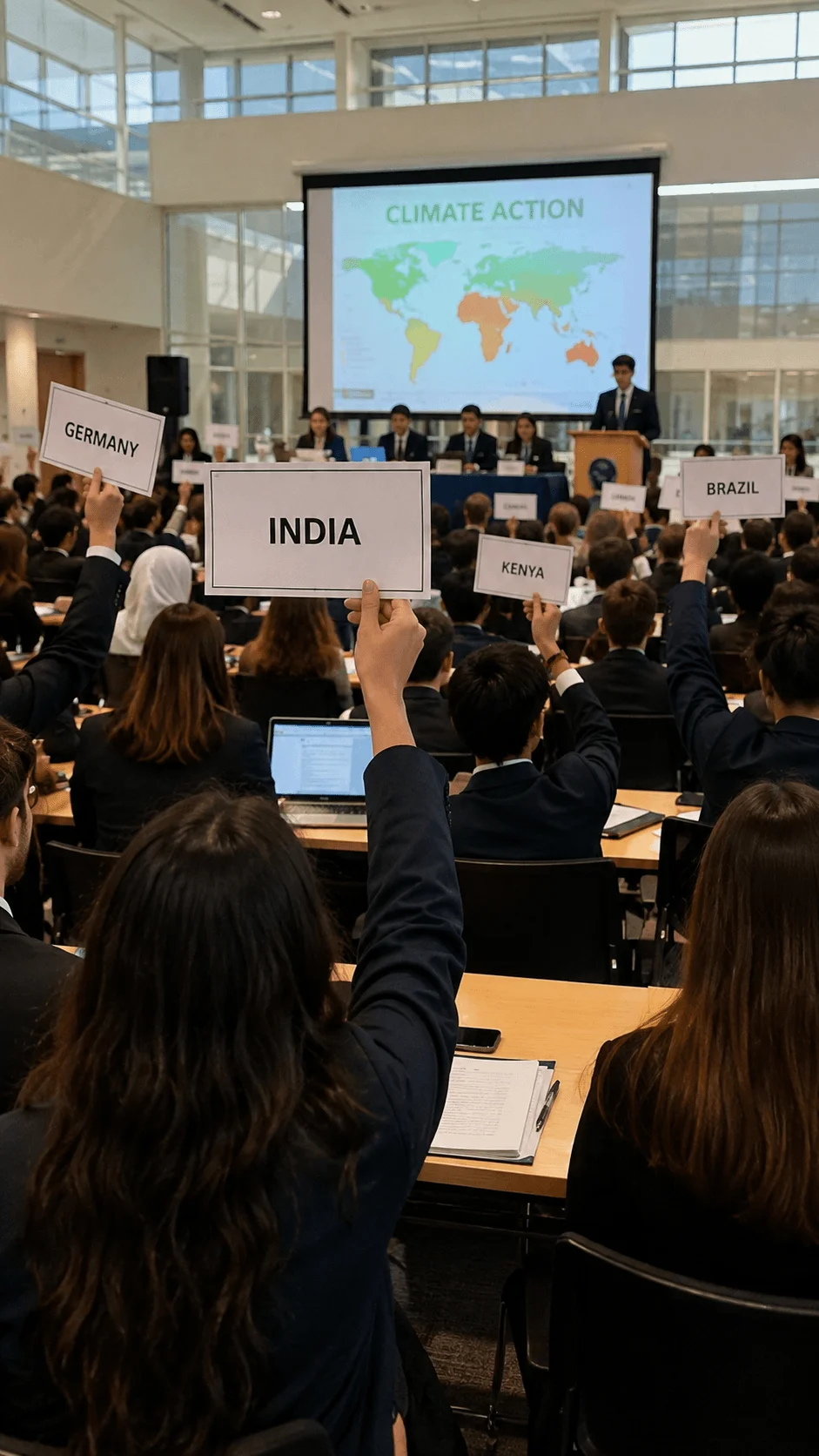
This project suits high school and college students, although teachers can simplify it for younger classes. It requires research time and careful organisation but little equipment.
Among innovative sustainability activities for students, a climate assembly develops some of the broadest skills. Learners practise research, negotiation, public speaking, compromise, and policy thinking while discovering why environmental decisions require cooperation.
Teachers can make the experience more practical by asking students to include one action that their own school could implement. This connects international discussion with local responsibility.
Low Cost Green Activities for Students
Schools can run meaningful green activities for students without a large budget. Food waste tracking, biodiversity mapping, energy inspections, climate walks, and classroom competitions depend more on careful planning than expensive equipment.
Schools can use donated containers, reused materials, free digital tools, existing spaces, and community volunteers. Parents may lend repair tools. Local gardeners may offer seeds. Recycling companies may support electronic waste collection. College volunteers may help with data or solar projects.
The best low cost sustainability projects for schools begin with one clear problem and one measurable goal. Schools should not buy technology simply because it appears modern. A basic method that students understand and repeat often creates better learning than an expensive system that no one can maintain.
Students should also take part in budgeting. They can compare the cost of different materials, identify what the school already owns, and decide which purchases offer real value. This helps them understand that sustainable planning includes financial responsibility.
Sustainable Activities for Different Student Ages
Teachers should adjust sustainable activities for students according to age, safety, independence, and subject knowledge.
Primary school students benefit from short and visual activities. They can count food waste, observe insects, care for pollinator plants, and join a simple classroom challenge. Teachers should use clear instructions and close supervision.
Middle school students can collect data, create electronic waste maps, support repair events, and compare results. Teachers can connect these projects with science and geography.
High school students can complete energy audits, climate adaptation maps, solar prototypes, and climate assemblies. They can analyse data, write reports, and present recommendations.
College students can manage advanced artificial intelligence projects, community partnerships, renewable energy designs, and policy discussions. They can connect their work with research, entrepreneurship, or local government.
Students often produce stronger results when adults give them genuine responsibility within clear safety boundaries. Teachers should adjust the complexity without removing the student’s role in decision making.
How to Measure Student Environmental Projects
Measurement helps students decide whether a project created change. They should collect a starting result, introduce the activity, and repeat the same measurement afterward.
A food project can track kilograms of waste. An energy audit can compare meter readings or the number of devices left on. A repair cafe can count repaired products. A clothing swap can record reused items. A biodiversity project can compare verified species or pollinator visits.
Students should use the same method each time. They should weigh waste at the same point in the day, observe wildlife for the same number of minutes, and compare similar school periods. The numbers do not need to be perfect, but the process should remain consistent.
A simple impact table can record the project name, starting result, final result, difference, and lesson learned. Sustainability projects with measurable results gain stronger support because students can show school leaders and families what changed.
Students should also record unexpected results. A project may fail to meet its original target but still reveal useful information. Honest evaluation helps learners improve the next version instead of hiding problems.
How Schools Can Make Sustainability Projects Successful
Schools should begin with a realistic goal. One completed project with clear results creates more value than an ambitious plan that loses momentum.
Teachers should give students leadership roles while managing safety, permission, and external agreements. Students can handle research, communication, design, data collection, and presentations.
Community partnerships can strengthen the work. Repair professionals can guide a repair cafe. Recycling organisations can support electronic waste collection. Local gardeners can help select native plants. Universities or businesses may provide advice for technical projects.
Students should share outcomes through assemblies, exhibitions, newsletters, websites, or meetings. Public communication gives the work a clear purpose and encourages wider participation.
The most successful sustainable activities for students continue beyond one event. Schools can repeat audits, maintain habitats, run repair days, and update climate plans throughout the year. Consistent action helps sustainability become part of school culture.
School leaders should also recognise student effort. Recognition does not need to involve prizes. Giving students time to present their results, lead the next stage, or train another class can provide meaningful motivation.
Conclusion
Sustainable activities for students turn environmental education into practical action. When learners measure food waste, repair products, study local species, test solar energy, or map climate risks, they develop knowledge that reaches beyond a textbook. They also build teamwork, confidence, research skills, and a stronger understanding of how daily systems affect the environment.
Schools do not need to launch every idea at once. They can choose one project that matches the students’ ages, available time, budget, and local needs. A simple biodiversity map can lead to habitat improvements. A repair cafe can grow into a community service. A food waste audit can influence cafeteria decisions. A climate assembly can inspire a school action plan.
The key is to give students a clear problem, useful guidance, and enough responsibility to shape the solution. Schools should also help learners measure what changed. Visible results make sustainability feel achievable rather than distant.
Small student led projects can create better habits, stronger communities, and more thoughtful decisions. One practical activity can become the beginning of lasting environmental change.