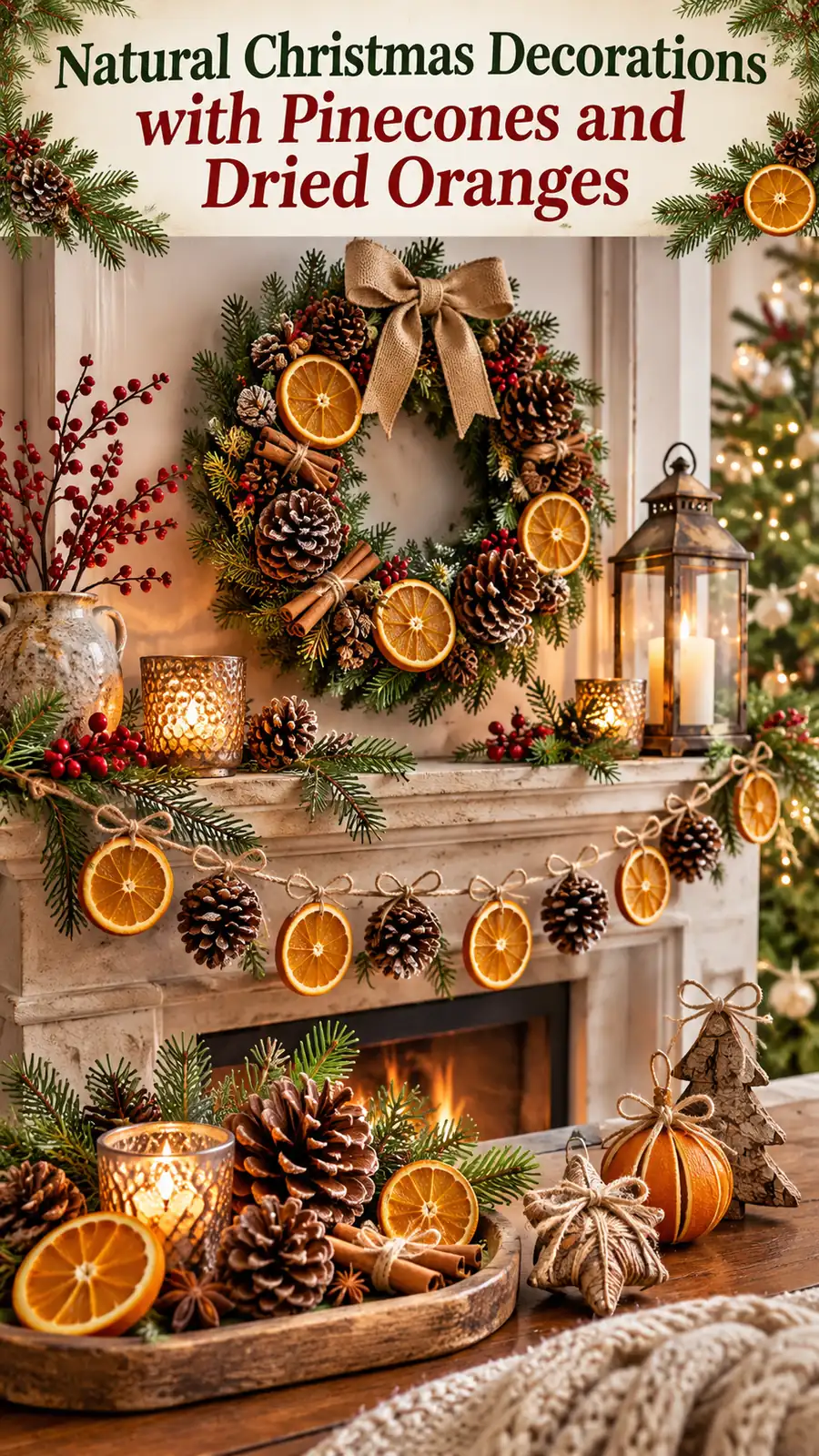
Sustainable Christmas Gift Wrapping Ideas Without Plastic
Christmas presents can look magical without glossy plastic ribbons or rolls of disposable wrap. These Sustainable Christmas Gift Wrapping Ideas Without Plastic bring together charming paper alternatives, useful textiles and containers that deserve another life. Each option balances a festive presentation with realistic materials that families can often find at home.
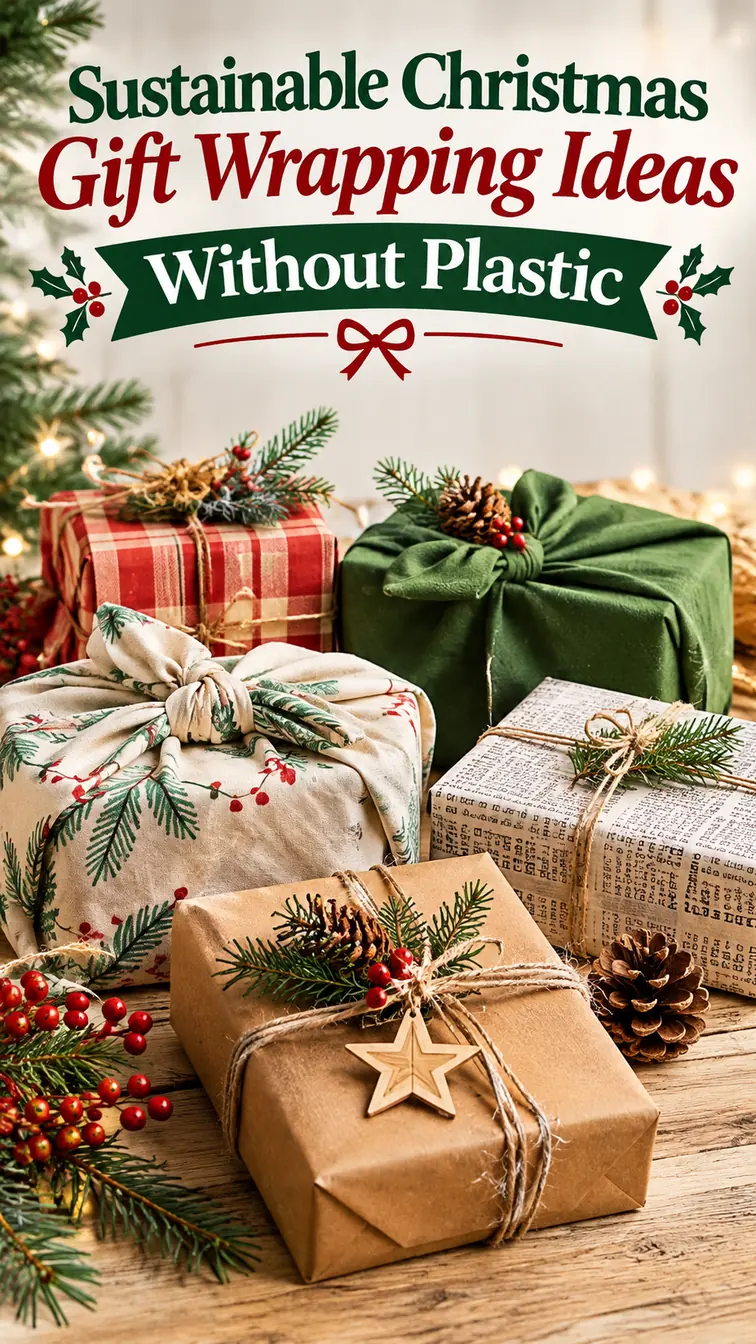
Whether you are wrapping a single thoughtful present or preparing gifts for an entire household, the goal is to waste less without creating extra work. The following twelve ideas include simple techniques for boxes, unusual shapes and small homemade gifts. You will also find advice on choosing materials, skipping plastic tape and putting leftovers away for next year.
Reusable Furoshiki Fabric Wraps
A square of fabric turns an ordinary present into something that feels carefully chosen. Furoshiki is a Japanese wrapping tradition that uses folding and knots instead of disposable paper or adhesive tape. It works particularly well for books, boxed gifts, candles and small collections of items. A scarf, cotton remnant or clean piece of linen can provide a beautiful starting point without requiring a new purchase.
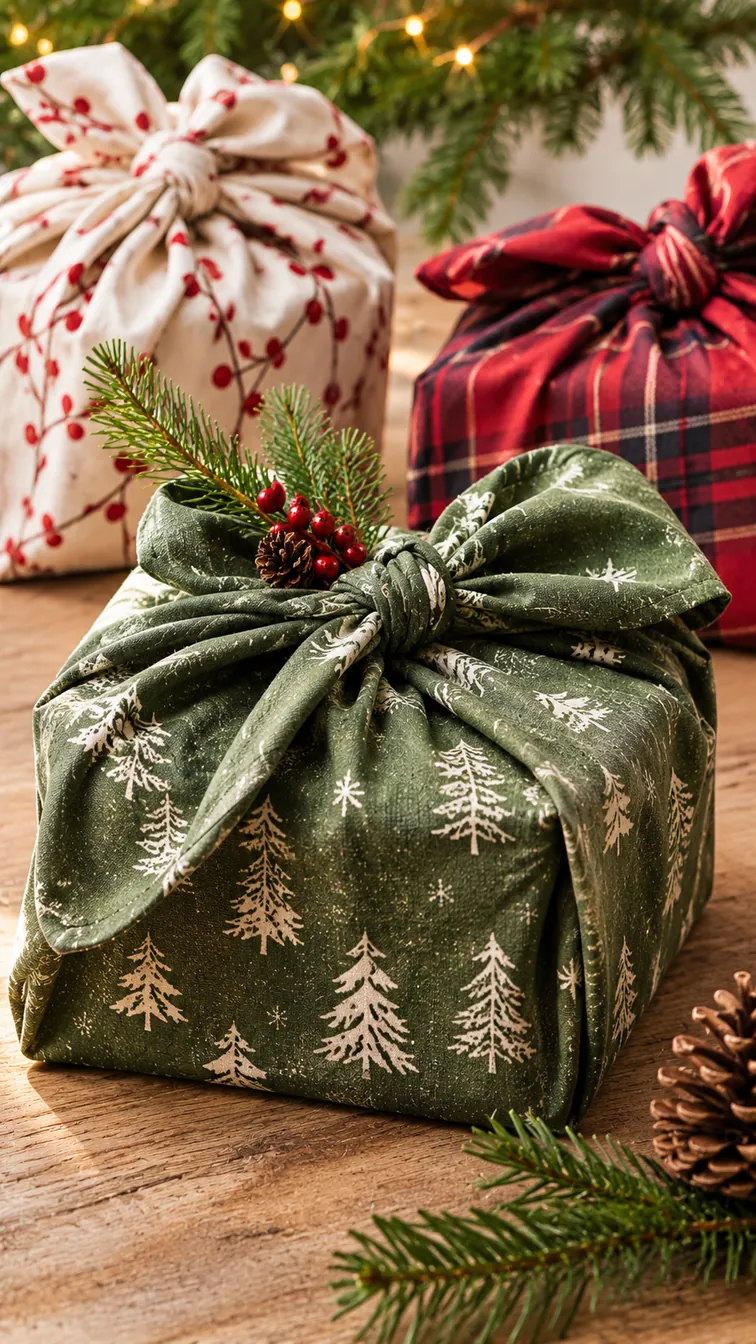
Lay the fabric diagonally, place the gift in the center and pull opposite corners over it. Tie the remaining corners securely, adjusting the folds until the gift sits comfortably inside. A larger square gives you more room for awkward shapes. Choose fabric that is sturdy enough to hold its knot without slipping.
For a festive finish, tuck a handwritten card beneath the knot. Explain that the recipient can reuse the fabric for another present, as a scarf or as household cloth. The wrapping becomes useful instead of disposable.
Tea Towels That Double as Gifts
A tea towel is a clever wrapping choice when you are gifting something for the kitchen. It can surround a cookbook, jars of homemade treats or a small baking set while adding a useful extra item. Pick a towel the recipient will enjoy using rather than a novelty design that might spend the year in a drawer.
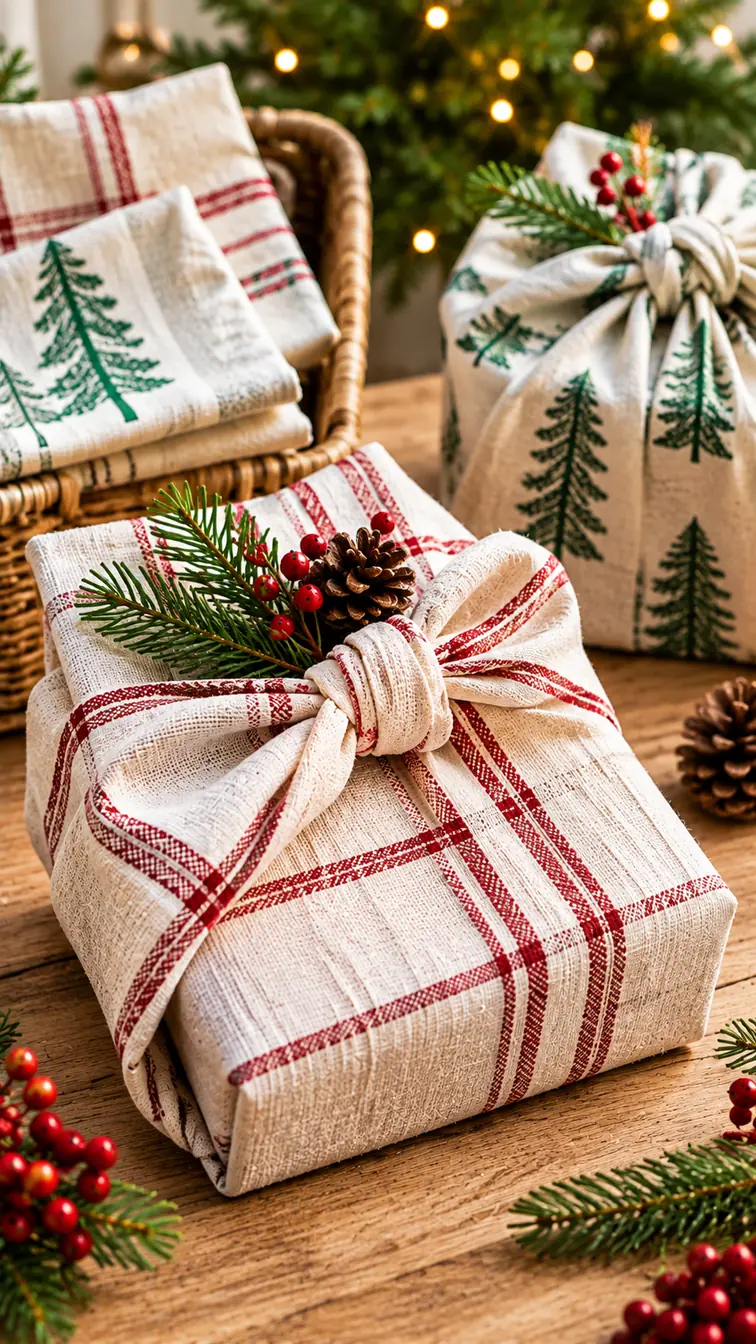
Spread the towel flat and arrange the gift in the middle. Bring the ends together, fold away any loose corners and secure the bundle with cotton string. If the object has sharp edges, cushion them with an extra fold of fabric before tying. You can also wrap two small items together so the package feels balanced.
Try a simple holiday color combination such as cream with forest green string or natural linen with red embroidery. After Christmas, the recipient can wash and use the towel. This makes the entire presentation practical, especially for someone who enjoys cooking or hosting.
Reused Kraft Paper With Hand Drawn Details
Plain brown paper has a quiet charm that looks especially inviting beneath a Christmas tree. Before buying a roll, check whether you have clean packing paper saved from parcels. Smooth the sheet under a book if necessary, then trim it to fit the gift with as little excess as possible.

Instead of plastic stickers, use pencils, rubber stamps or simple hand drawn decorations. Little fir trees, stars, snowflakes and the recipient’s name make even a modest box feel special. A potato stamp can create a repeating pattern, although allowing enough drying time prevents smudges. Use only a light application of paint if you want the paper to remain easy to handle.
Fold the paper tightly along the box edges and secure it with reusable string or an appropriate paper tape. Clean, uncoated kraft paper may be recyclable where local collection rules allow. Remove nonpaper decorations first, and remember that reusing a sheet again is usually preferable to discarding it immediately.
Vintage Newspaper and Comic Page Wrapping
Old newspaper provides texture, personality and a wonderful sense of nostalgia. The comic pages bring cheerful color, while black and white sections look elegant with a thin cotton cord. Search through papers you already own rather than buying fresh newsprint specifically for wrapping.
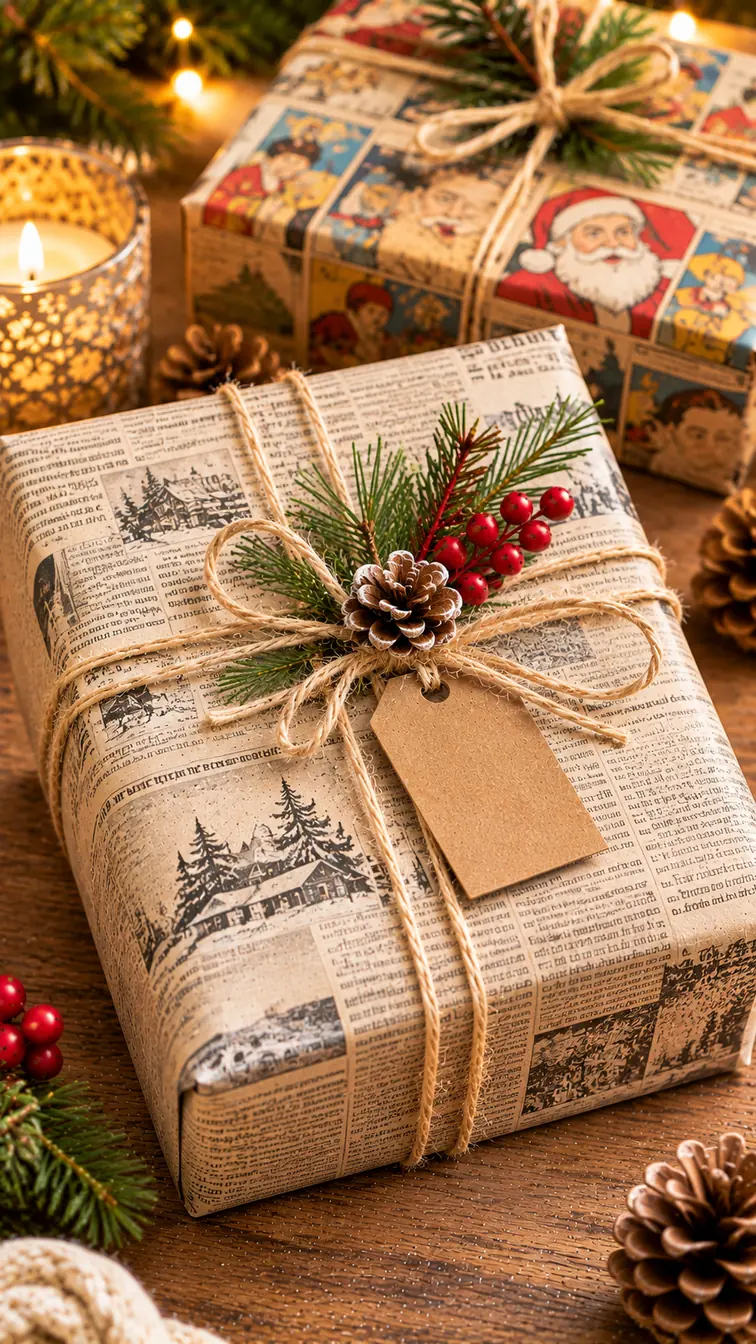
Choose pages without upsetting headlines or unsuitable images, especially for gifts intended for children. Overlap sheets for larger boxes and make crisp folds to reduce tearing. Newspaper is delicate, so a sturdy box underneath makes wrapping easier. If a corner splits, layer another small piece beneath the fold rather than reaching for plastic tape.
Add a handwritten name on a scrap of cardboard or tuck a greeting under the string. You can even choose a page connected to the recipient’s interests, such as gardening or travel. Once the gift has been opened, clean newspaper can often enter paper recycling, depending on local rules. This approach uses a material already on its way out of the house.
Old Maps and Calendar Pages
A retired road map or last year’s calendar can look far more memorable than store bought holiday wrap. Maps suit travel lovers, while calendar photographs bring landscapes, wildlife and seasonal colors into the presentation. The best option is material you no longer need, not a useful map or a collectible book.
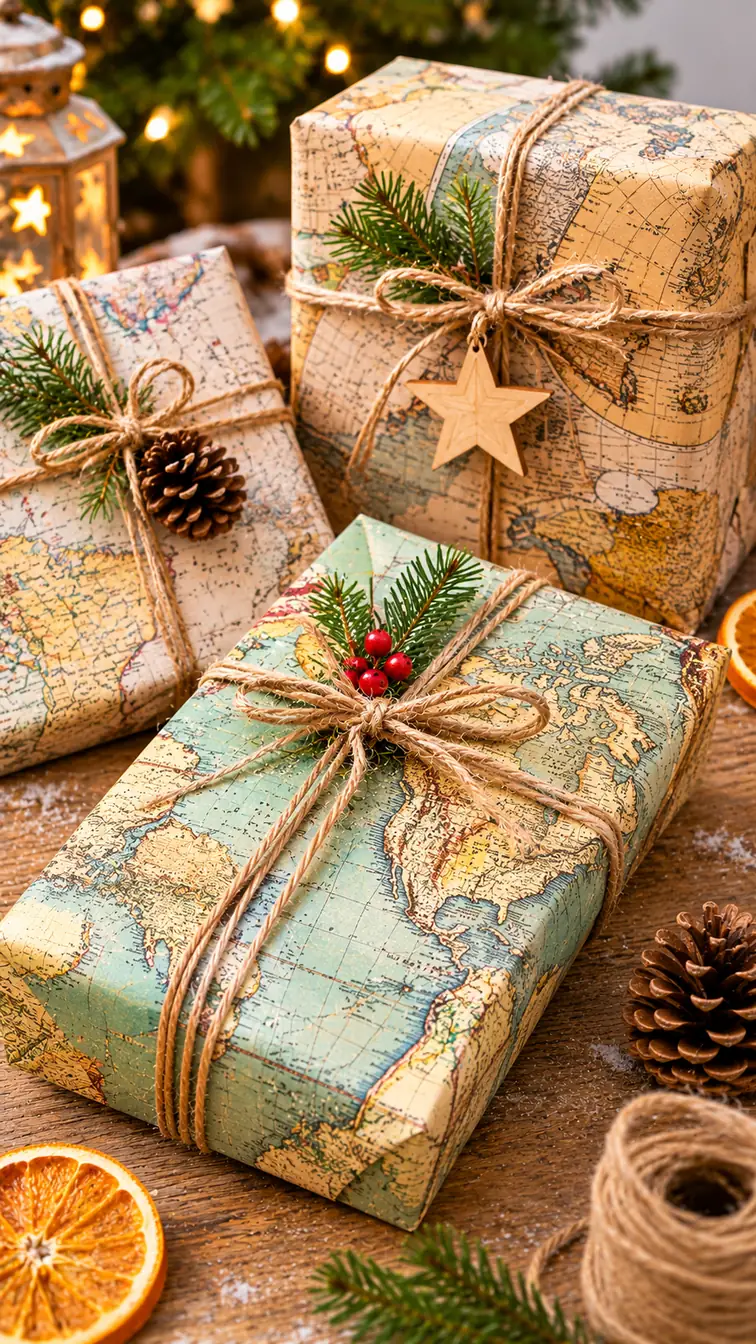
Look for sections large enough to cover a small box without seams. For calendar pages, flatten the fold and position the image so the main subject stays on top. Thick glossy sheets can resist crisp corners, so use them for shallow packages rather than bulky gifts. Tuck the ends beneath cotton ribbon or reuse a gift box to hold the paper in place.
Reusable Cotton Drawstring Gift Bags
Drawstring bags are useful when several presents need wrapping quickly. They work for toys, socks, small accessories and gifts that have irregular shapes. A sturdy cotton bag can travel between households for years, provided the recipient knows it is meant to be kept and used again.
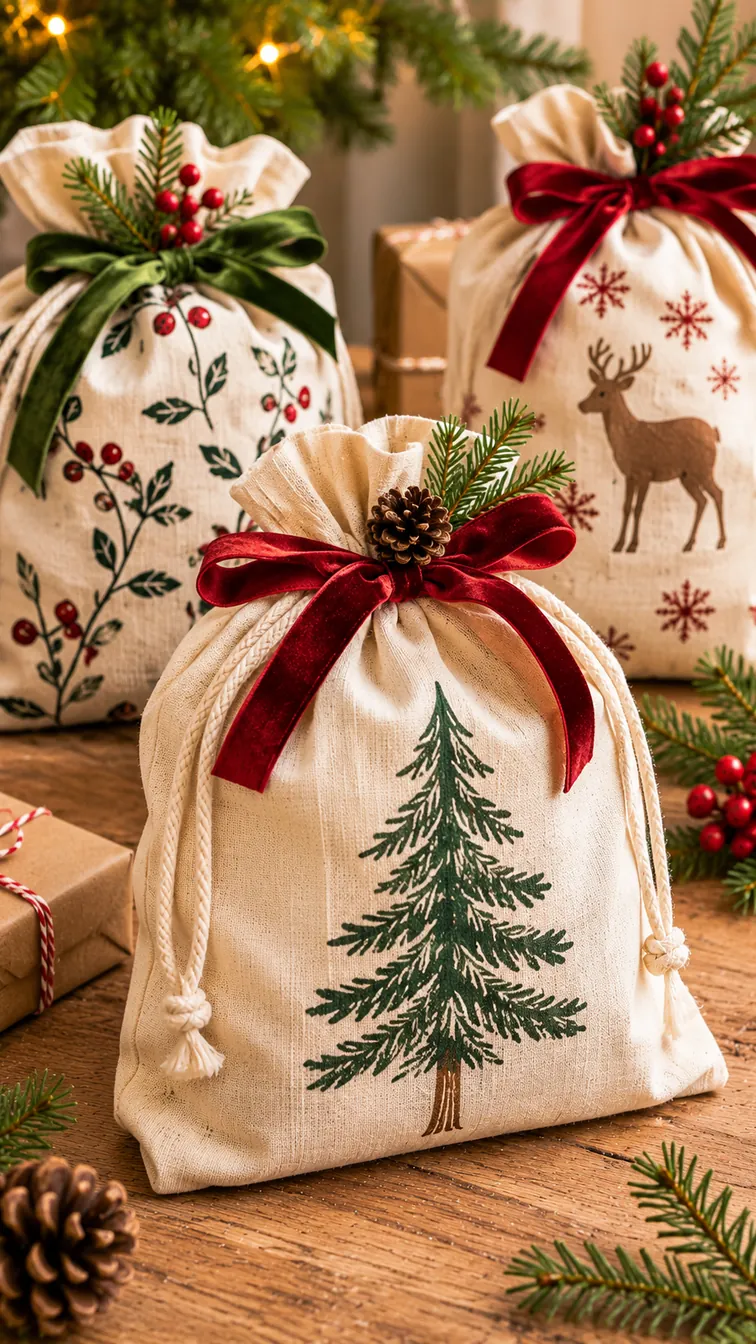
If you already have a fabric pouch, turn it into Christmas packaging with a small reusable tag. Sewing a new bag is also straightforward for someone who has spare fabric and basic sewing experience. Fold a rectangle of cloth, stitch the sides and leave a channel at the top for cotton cord. The drawstring should glide smoothly rather than snag.
Choose different sizes for different gifts, instead of using an oversized bag for every item. To make the presentation feel festive, tie a small fabric bow onto the cord. Avoid loose tiny decorations on gifts for very young children. After unwrapping, these pouches can store accessories, craft supplies or another Christmas present.
Scarf Wrapping for Cozy Winter Presents
A scarf adds both warmth and color to a Christmas gift before the recipient even sees what is inside. It is especially well suited to a sweater, a paperback book or a box of winter accessories. A preowned scarf in good condition is ideal if its color and texture suit the person receiving it.
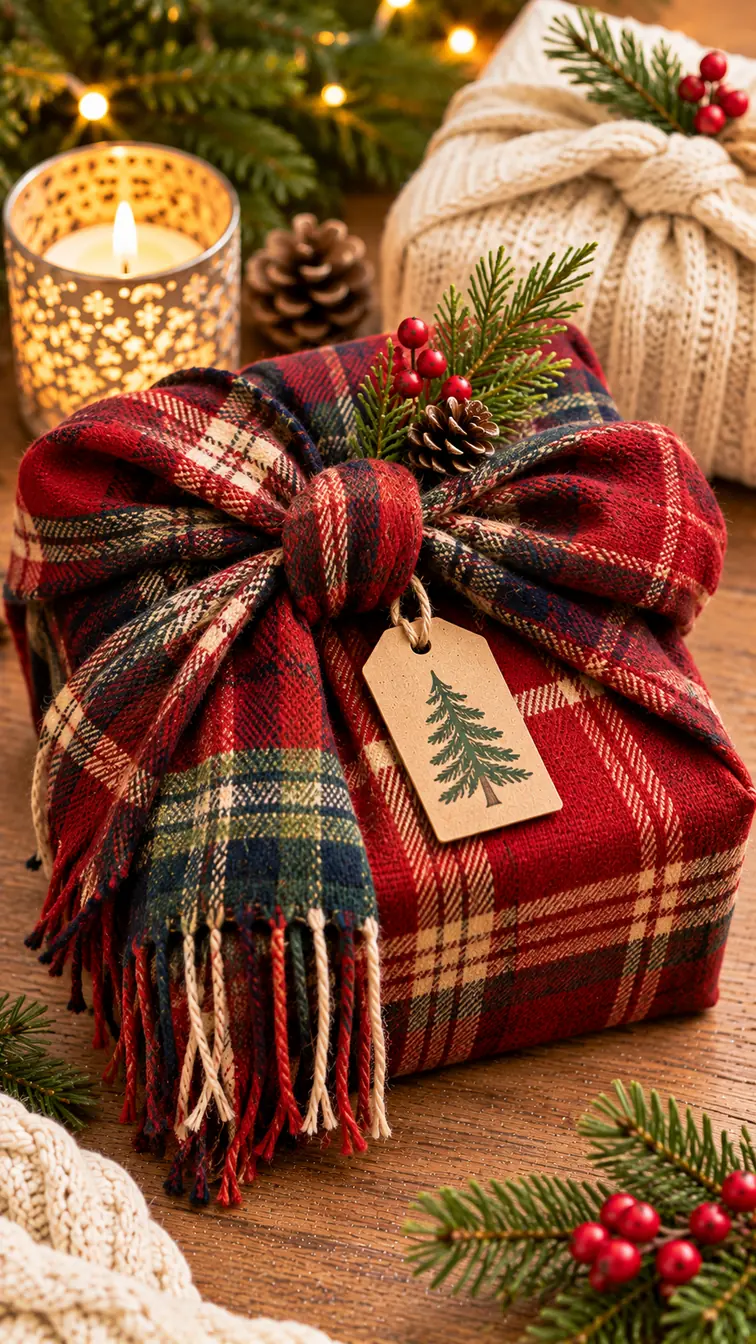
Place the gift near the center and fold the scarf around the object, keeping the decorative side visible. Bring the ends together in a loose knot rather than pulling delicate fabric tightly. For a long scarf, wrap it around the parcel once before finishing with a bow. This helps the package hold its shape without adhesive.
Repurposed Cardboard Boxes With Natural Twine
A sturdy box protects fragile gifts and creates a polished look without glossy wrapping paper. Save attractive shoe boxes, delivery boxes and small product cartons throughout the year. Remove old shipping labels and any personal information before giving a box a second life.

For a neat finish, fold the lid closed and secure the entire box with cotton or jute twine. Cross the cord underneath and over the top so the knot sits in the center. If the original branding is distracting, cover only the lid with a reused paper offcut or decorate it with a simple drawing. Keeping the box plain is often the easiest option.
A firm box is particularly useful for homemade ornaments, mugs and sets of small gifts. Add protective padding made from clean reused paper when needed. Tell the recipient that they can keep the box for storage or future gifting. If the cardboard finally wears out, remove string, tape and other nonpaper parts before recycling according to local guidelines.
Children’s Artwork as One of a Kind Wrapping
Drawings that have been sitting in a folder can become joyful Christmas wrapping. This gives older artwork a meaningful second use while making gifts from children feel personal. Large paintings or sketches work especially well around books, puzzles and small rectangular boxes.
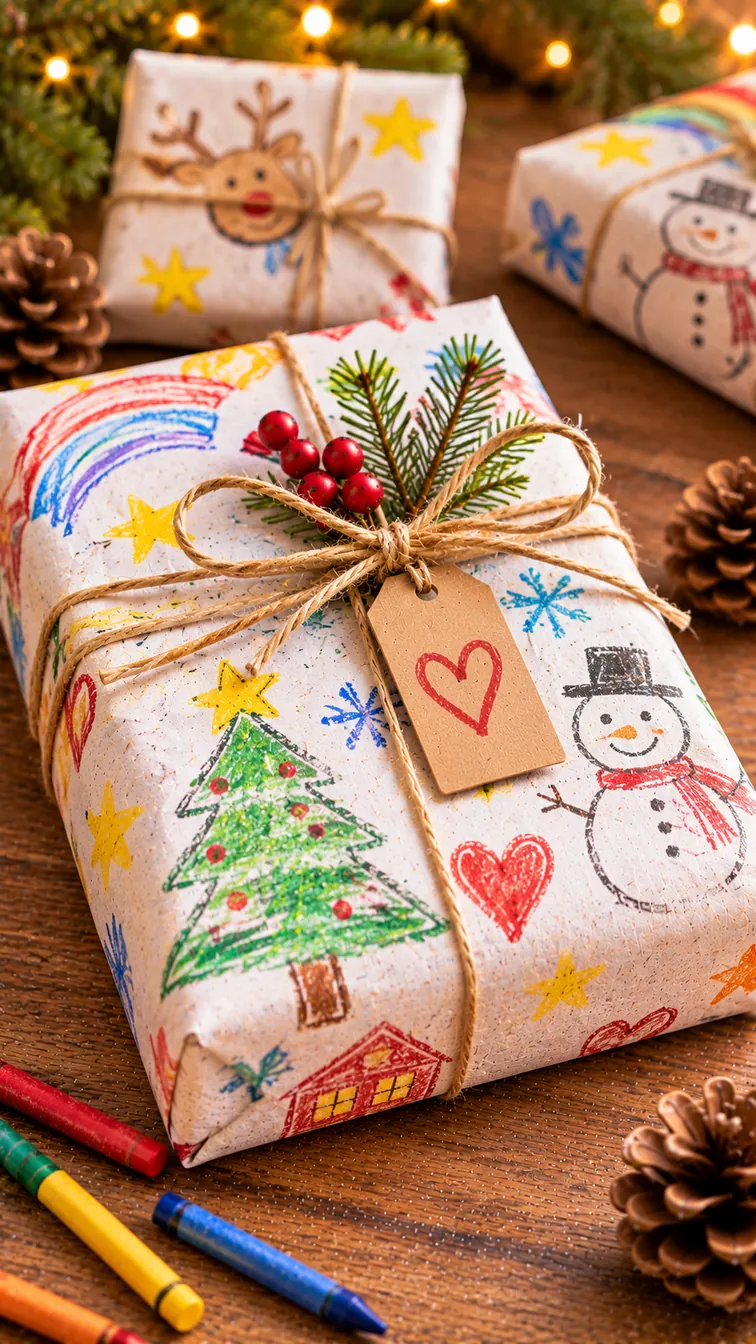
Invite children to select which drawings they are happy to reuse. Some pieces may be treasured keepsakes, so never turn them into wrapping without permission. Place the artwork face down, position the present on top and fold the edges carefully. If the sheet is too small, use a clean paper bag or box as the main package and attach the artwork as a decorative sleeve.
A name, date or short greeting on the back makes the finished gift particularly memorable for grandparents and relatives. Keep paint and ink completely dry before wrapping. This is also a helpful way to reduce the need for newly purchased patterned paper while celebrating a child’s creativity.
Cloth Napkins for Small Elegant Gifts
Cloth napkins create a refined package for small gifts and dinner party exchanges. They are especially appropriate for a jar of preserves, a candle in a box or a set of handmade treats. Reuse a clean napkin from your linen cupboard or choose a secondhand set that will remain useful after Christmas.
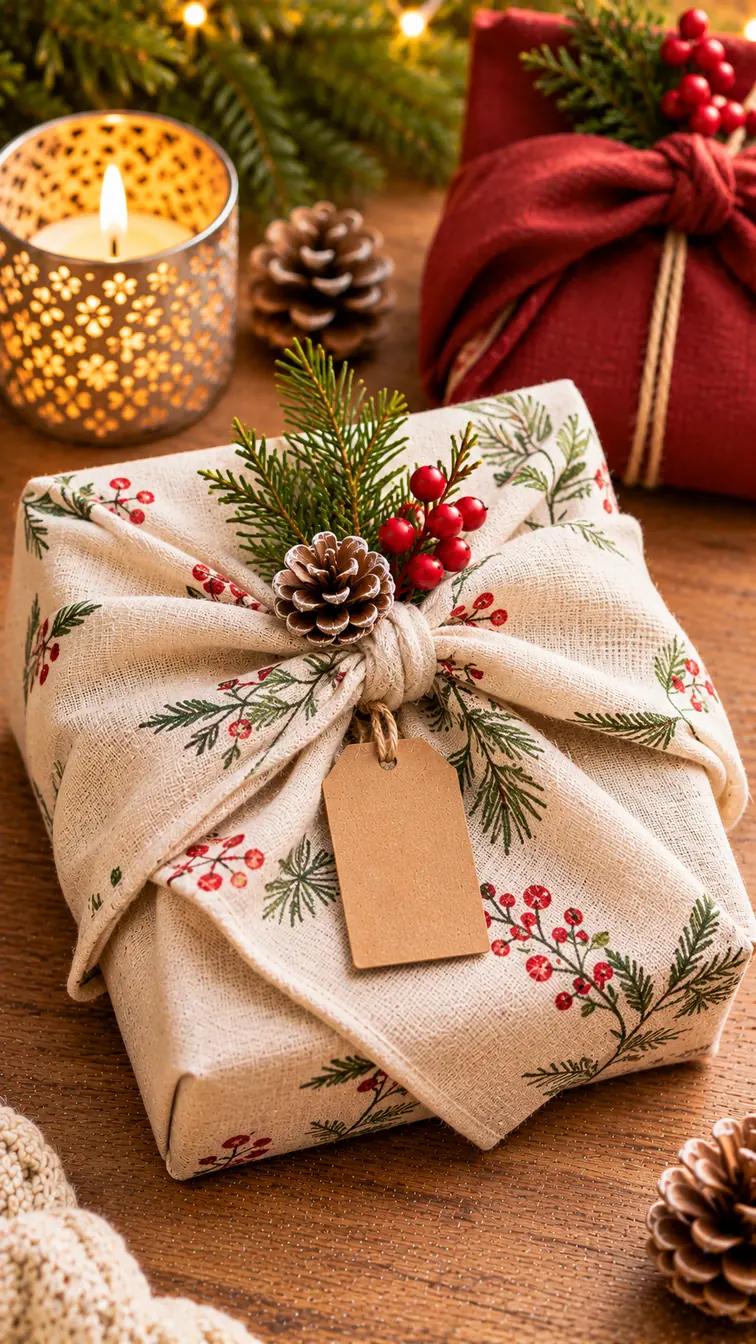
Center the item on the napkin and draw the corners up around it. Tie with cotton cord, or knot two corners together if the fabric is large enough. A napkin with a woven border often looks particularly attractive because its edges stay visible near the knot. For a square box, fold the cloth around the sides for a more tailored effect.
Reusable Tins and Glass Jars
Not every present needs to be wrapped in a sheet of material. A clean biscuit tin or sturdy glass jar can act as both the packaging and a useful container afterward. Tins are ideal for baked treats, handmade cards and small craft supplies. Jars work best for dry, lightweight items that fit easily through the opening.
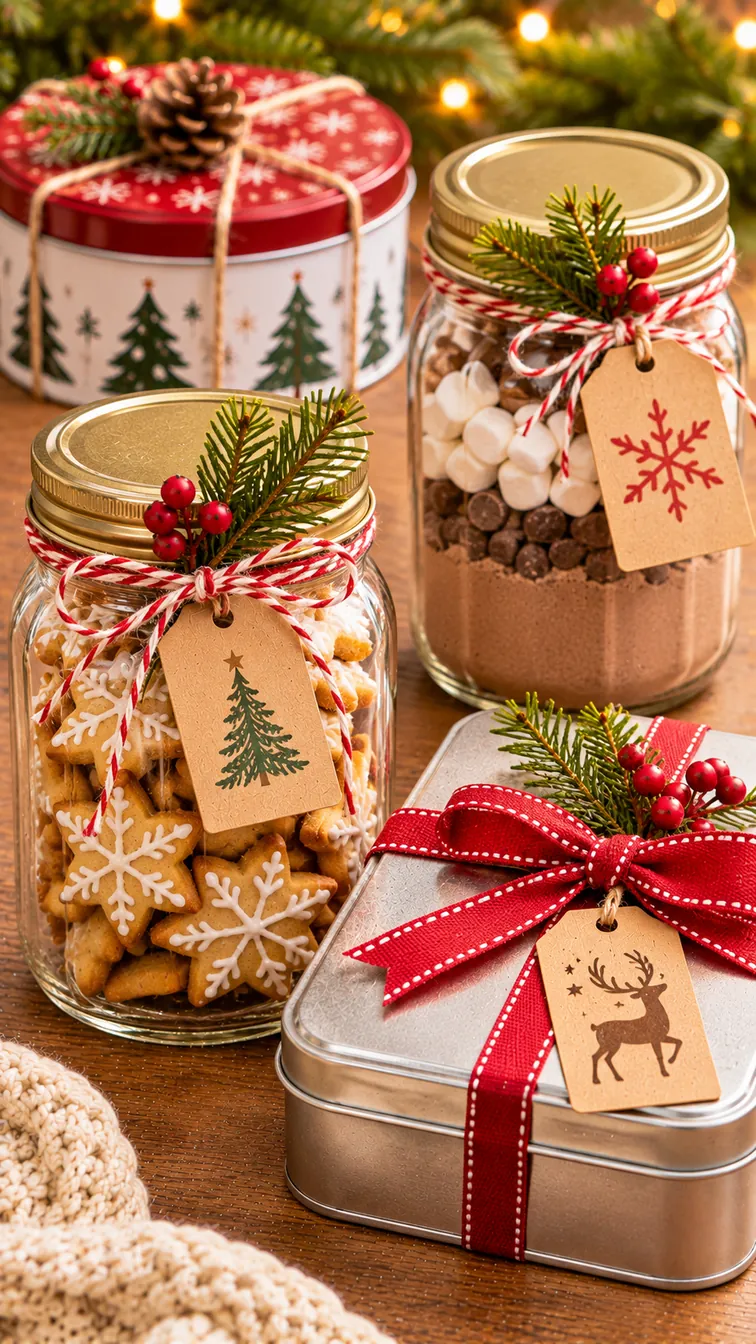
Check each container for sharp edges, cracks or damaged lids before using it. Wash and dry it thoroughly, particularly if you plan to package edible gifts. Place food only in containers suitable for food contact. A small paper label tied around the neck or handle identifies the recipient without leaving adhesive residue.
Decorate sparingly so the container remains easy to clean. An old tin may already have a lovely pattern, while a plain jar looks charming with a fabric circle over its lid. The recipient can use these containers for storage, return them for another gift exchange or pass them along when they are no longer needed.
Reusable Gift Baskets and Tote Bags
For gifts with several components, a basket or tote bag removes the need for individual layers of plastic coated wrapping. A basket can hold a cozy reading set, baking ingredients or self care items, while a tote bag works for books, clothing and everyday essentials. Begin with a container the recipient will actually use.

Arrange heavier objects at the bottom and smaller items where they will remain visible. Instead of plastic filler, use a folded tea towel or clean reused paper to cushion the contents. A strip of cotton fabric tied around the handle brings the arrangement together without a disposable bow. For privacy or surprise, drape a scarf over the top before presenting the gift.
How to Choose Truly Plastic Free Wrapping Materials
The most sustainable choice is usually the clean, serviceable material you already own. Check cupboards for fabric, gift bags, saved boxes, paper and ribbon before shopping. If you need something new, favor items that serve another purpose or can withstand repeated use. Sustainability depends on how an item is made, how often it is used and what happens after Christmas, not simply whether its packaging calls it green.
Paper that looks natural is not automatically free of coatings. Glitter, metallic foil, plastic laminates and some glossy finishes can complicate recycling. Paper tape can also vary in its adhesive and backing, so check the manufacturer’s description rather than assuming every brown tape is plastic free. Cotton or jute string can often replace tape altogether. Reuse string until it wears out instead of treating it as disposable.
Recycling programs differ among municipalities in the United States, United Kingdom and Canada. Local guidance should determine whether a particular sheet, card or bag can enter the paper stream. When in doubt, keep reusable materials for another occasion rather than relying on an uncertain recycling claim.
Simple Ways to Finish Gifts Without Plastic Tape
Good folding makes wrapping look intentional and reduces the need for adhesives. Use a box with straight edges where possible, crease the corners firmly and trim excess paper before making the final fold. Cotton string can be crossed around the package and tied in a bow that the recipient can easily undo. For fabric, a secure knot provides its own closure.
Gift tags can come from leftover cardstock or the clean backs of old greeting cards. Write directly onto uncoated paper if you prefer to skip tags completely. Dry orange slices, small pinecones and clipped greenery can add seasonal texture, but they are optional and should not make the package harder to reuse. Avoid delicate, loose decorations when children or pets may handle the gifts.
Keep a small box for string, reusable tags and ribbons after the presents are opened. One organized collection makes the next birthday or holiday easier and stops perfectly good supplies from getting lost.
Planning a Budget Friendly Wrapping Station
Start by grouping your gifts by size and shape. Put small presents near the bags, jars and napkins, and reserve larger fabric pieces and boxes for bulkier items. This prevents cutting useful materials into pieces that are too small for future use. You may find that a single large scarf can wrap several small gifts separately across different occasions.
Gather paper scraps, fabric, twine, writing supplies and a few clean boxes in one place. Check that reused materials are dry and in good condition. Make labels before wrapping so each present reaches the right person. If you are working with children, keep the activity simple and supervise any tasks involving sharp craft tools.
When Christmas is over, fold usable wrapping paper, wash fabric if needed and coil string loosely. Store the materials somewhere easy to find. Good organization keeps supplies useful for next year.
Conclusion
Sustainable Christmas Gift Wrapping Ideas Without Plastic can make your celebrations feel more personal without sacrificing the excitement of opening a present. From furoshiki fabric and tea towels to old calendars, reusable tins and sturdy baskets, the most appealing choices combine thoughtful presentation with a useful second life.
Begin with what you already have, choose methods that suit each gift and keep decorations simple. The result can be festive, affordable and easier to reuse next year. A beautiful Christmas package does not need a layer of plastic to feel special.