Upcycled Christmas Decorations from Old Fabric Scraps
Upcycled Christmas Decorations from Old Fabric Scraps can make your holiday home feel personal without filling another shopping bag. That old plaid shirt, worn sweater, or forgotten collection of sewing leftovers may hold everything you need for charming ornaments, cheerful garlands, and warm handmade accents. Instead of chasing a perfectly matching set, you can let familiar fabrics tell their own stories through the decorations you display.
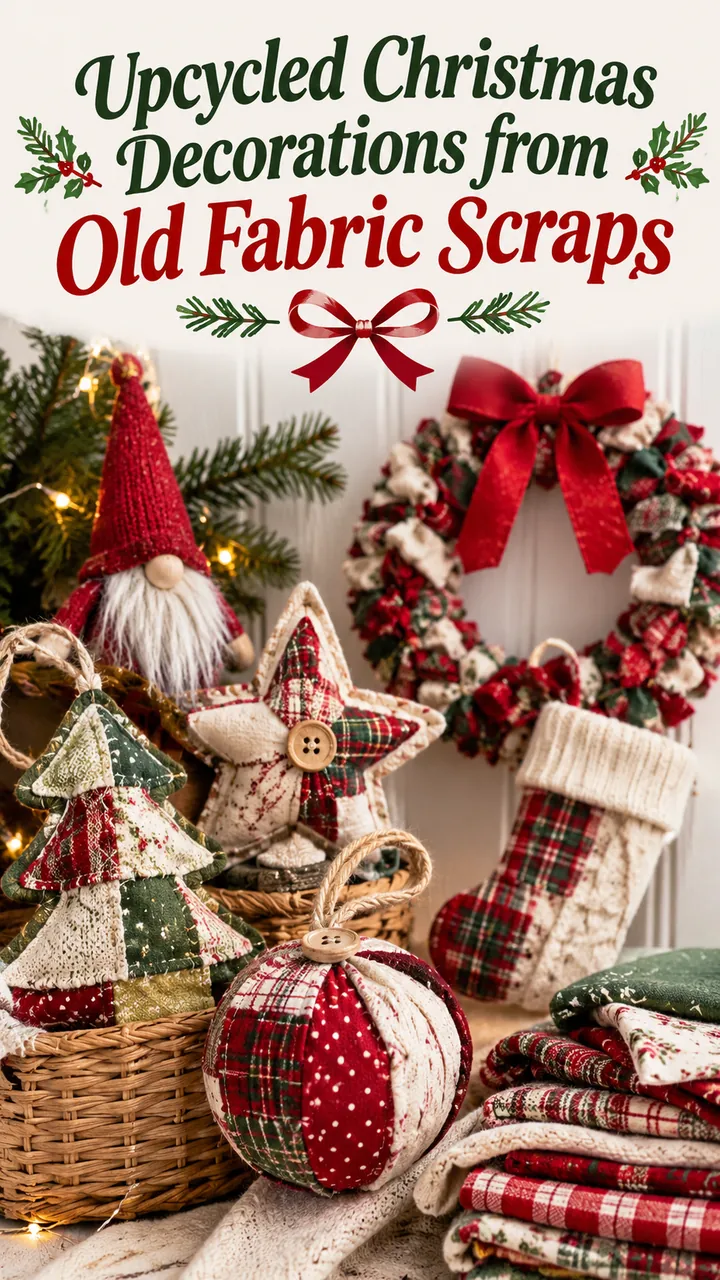
The best part is the flexibility. Some projects need only basic cutting and tying, while others are satisfying little sewing activities for a quiet afternoon. These twelve ideas show how to turn different sizes and textures of leftover fabric into decorations you can enjoy, repair, and bring back every December.
Patchwork Fabric Christmas Tree Ornaments
Patchwork tree ornaments give even the smallest pieces of patterned cotton a place to shine. Collect squares from retired shirts, worn pillowcases, or leftover sewing projects. Arrange contrasting colors into a simple four square design, then join the pieces with a small seam allowance. Cut the finished patchwork into a tree silhouette and attach a plain fabric backing. A narrow ribbon loop makes the ornament ready to hang.
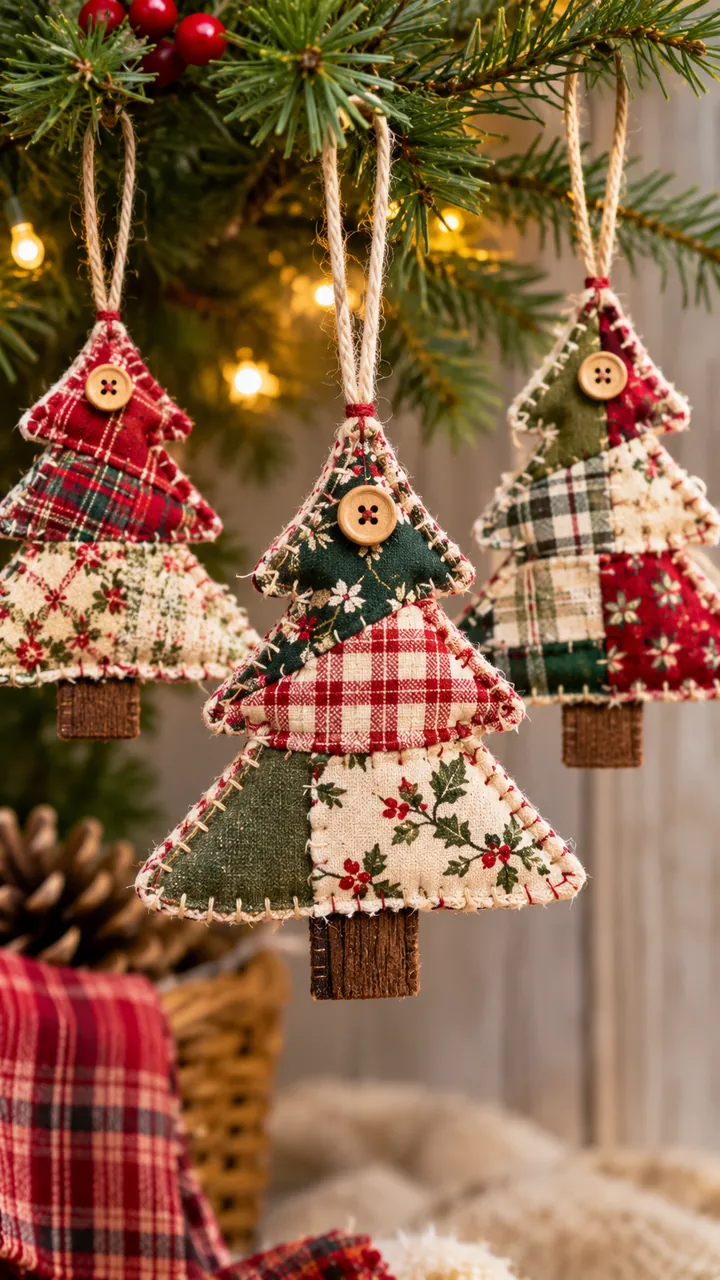
For a softer shape, stitch the two sides together and add a little clean fabric offcut stuffing before closing the opening. Use green plaid for a traditional look or combine cream, red, and faded floral prints for a cottage style tree. A small button can serve as the trunk, although stitching that detail is better for homes with young children. Make several trees in different sizes to give the branches a coordinated collection without buying matching fabric.
Rustic Braided Fabric Scrap Garland
A braided garland makes excellent use of long uneven strips that would otherwise be difficult to sew. Cut old cotton shirts, flannel pajamas, or table linens into strips of similar width. Secure three strands at one end and braid them loosely, joining fresh strips as each one ends. The resulting length can wrap around a Christmas tree, trail across a mantel, or frame a doorway.

Choose a limited palette if your home has a calm holiday look. Red and cream create a classic combination, while soft green and natural linen make the garland feel understated. Secure both ends with neat stitches or firmly tied cotton cord. Avoid stretching the braid too tightly because a relaxed texture looks more inviting and is easier to store. When the season ends, coil it gently rather than folding it into sharp creases.
Fabric Wrapped Christmas Baubles
Old baubles can look completely different with a fabric covering, especially when their original color no longer matches your decorations. Cut a clean square of lightweight material large enough to gather around a sturdy ornament. Place the bauble in the middle, pull the cloth upward, and tie it neatly around the hanging neck with reused ribbon or string. Trim bulky excess at the top without blocking the hanger.
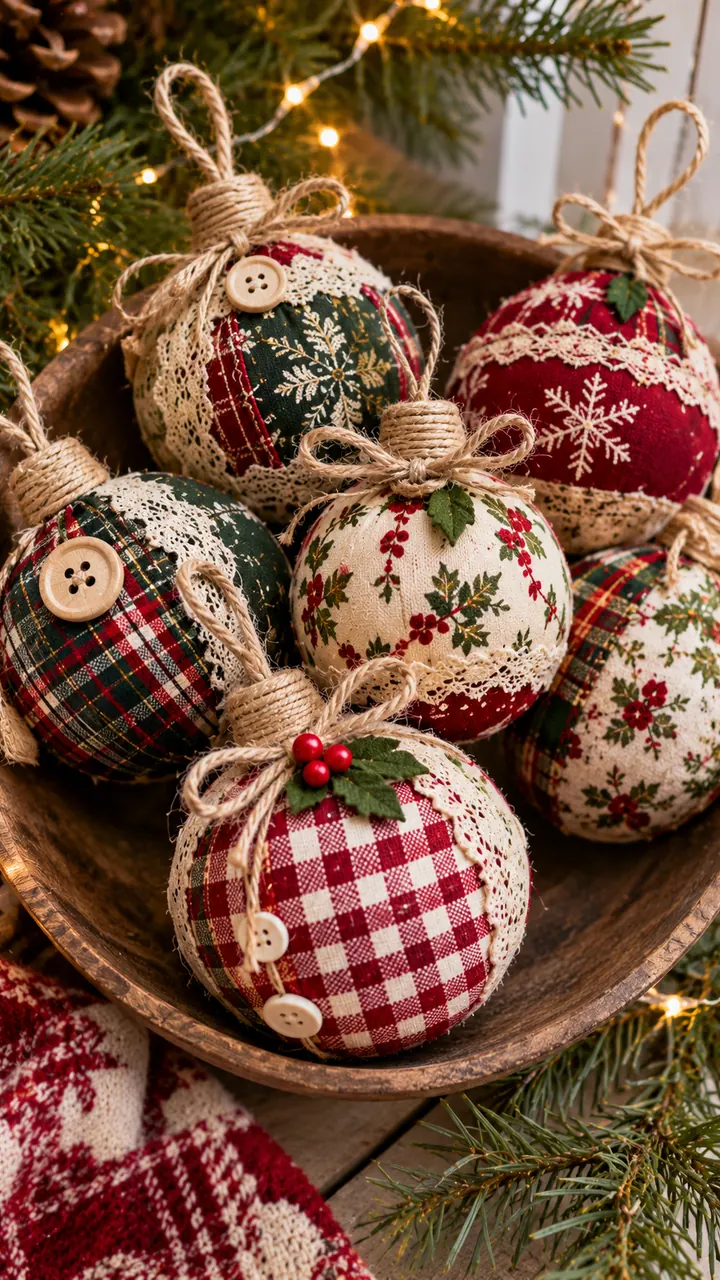
Thin cotton works particularly well because it follows a round shape without creating heavy folds. Try a mix of vintage florals, tiny checks, and solid velvet scraps to create varied texture. If the ornament is fragile glass, handle it carefully and favor an unbreakable alternative in busy family spaces. The removable fabric covering also makes future changes easy. Simply untie it and reuse both the material and the ornament next year.
Cozy Knotted Fabric Scrap Wreath
A knotted wreath transforms lots of short strips into a full decoration with surprising texture. Start with an existing reusable wreath frame or a sturdy ring saved from old packaging. Cut cotton pieces into strips, then tie them around the frame until the surface looks evenly filled. Push the knots together as you work so no large gaps remain visible from the front.
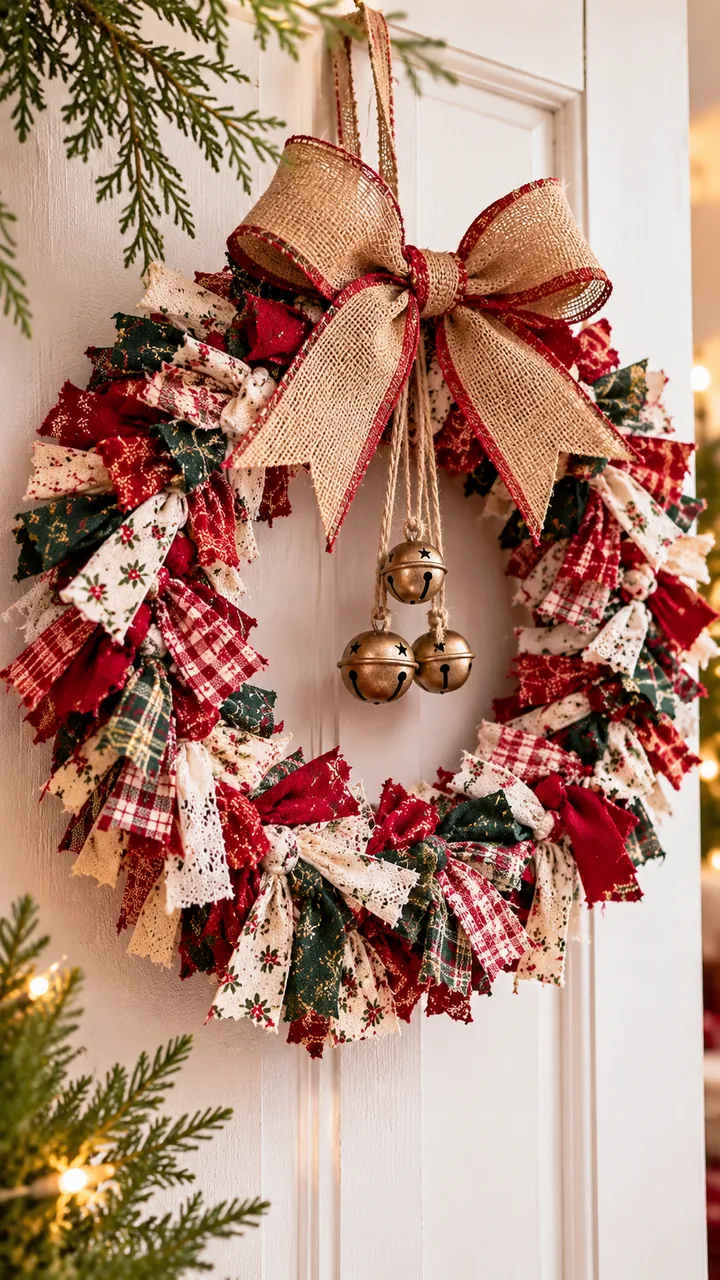
A mix of flannel and cotton creates a soft country style, while a wreath made from mostly white fabric can look like a snowy holiday accent. Add one large bow from an old shirt cuff or a wide scrap of curtain fabric. Hang the finished wreath inside a sheltered entrance or on an interior door, since damp weather may damage untreated textiles. Shake away dust before storing it in a dry breathable bag.
Mini Stockings from Worn Sweaters
A sweater with damaged elbows or an outdated fit can still provide enough good fabric for miniature holiday stockings. Draw a small stocking shape onto paper and use it to cut two matching pieces from the sweater. Stitch around the sides and toe, leaving the top open. Turn it right side out if the knit allows, then add a small loop made from leftover yarn.

Keep the decorative ribbed edge of the sweater for the stocking cuff whenever possible. Cable knit sections look particularly cozy against evergreen branches or wooden shelving. Small stockings can hold a written holiday wish or a tiny reusable decoration, but heavy treats may stretch the material. Use a gentle hand stitch to reinforce the loop. This project also preserves a meaningful sweater as a sentimental holiday keepsake rather than discarding it.
Soft Fabric Star Tree Toppers
A fabric star offers a lightweight alternative to a heavy tree topper. Cut two large matching star shapes from a firm textile, such as an old canvas tote or sturdy cotton curtain. Sew them together around the edges and add a little filling from clean leftover cloth. Leave a neat opening at the bottom so the star can slide over the upper tree branch.
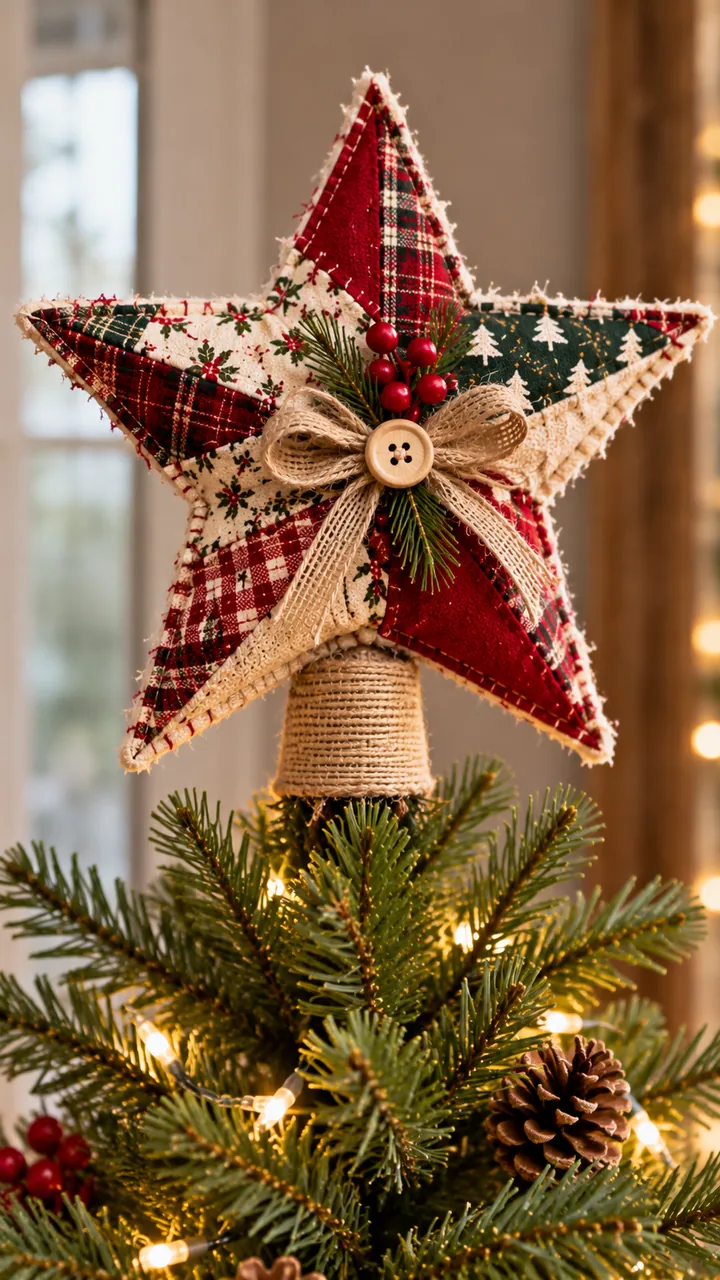
For a smaller tabletop tree, make a simple flat star instead of a padded one. Embroider a few rays with thread already in your craft box, or layer one smaller contrasting star over the front. Avoid adding too many decorations, as the fabric pattern should remain visible. Test the topper before finishing the bottom opening so it sits securely. A soft star is also easy to pack flat and can be refreshed with different stitching later.
Reusable Fabric Christmas Chain Links
Fabric chain links bring the familiar look of paper chains to a decoration you can use repeatedly. Cut fairly sturdy leftover material into uniform strips. Fold each strip into a loop and stitch the ends together, passing the next strip through before closing it. Repeat until the chain is long enough for the intended space. Small hand stitches keep the project accessible even without a sewing machine.
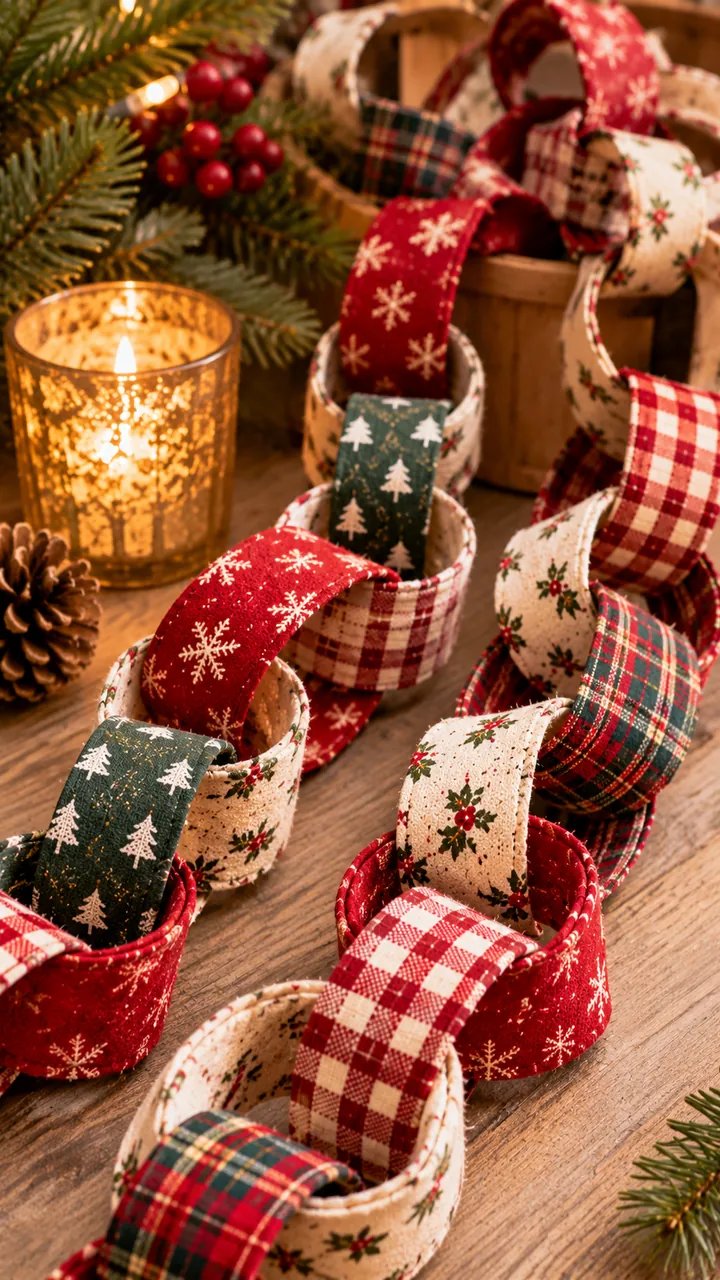
Alternate red checks with cream linen for an old fashioned Christmas look, or group several shades of green for a modern version. Make short lengths for shelves and longer ones for the tree. Press the fabric before cutting to keep each link tidy. Unlike paper chains, fabric versions are less prone to tearing during ordinary handling, although they still need gentle storage. Place them loosely in a box so the links do not become tangled.
Fabric Candy Decorations for a Playful Garland
Turn bright printed scraps into wrapped candy shapes without using edible treats. Place a small ball of clean fabric offcuts in the middle of a rectangle, roll the rectangle around it, and tie both ends with pieces of cotton thread. The gathered ends create a cheerful candy silhouette. Make several in coordinating colors, then attach them securely to a length of reusable twine.
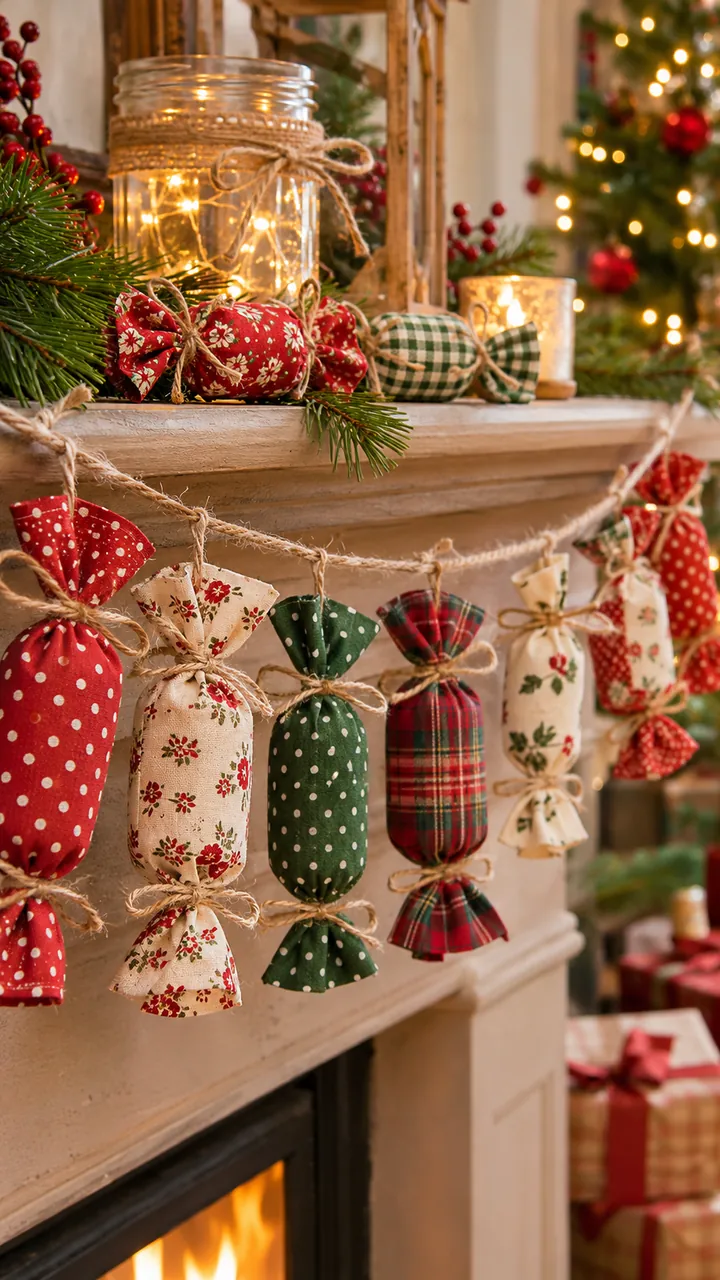
Hang this garland across a mantel or use individual fabric candies as package toppers. Stripes, gingham, and tiny dots give the strongest candy effect, especially when mixed in balanced proportions. Use fabric filling rather than disposable plastic stuffing if you want to use up more of your scrap pile. Keep small loose parts away from children who might mistake the decorations for real sweets. Store the finished pieces in a labeled box for the next holiday season.
Scrap Fabric Christmas Tree Wall Hanging
A wall hanging is an excellent option when floor space is limited. Cut triangular pieces from old curtains, shirts, and other flat fabrics, then arrange them in stacked rows to form a Christmas tree silhouette. Sew or attach the triangles onto a reused cloth backing and add a narrow fabric strip for the trunk. A hanging sleeve at the top lets the piece slide onto a wooden dowel.
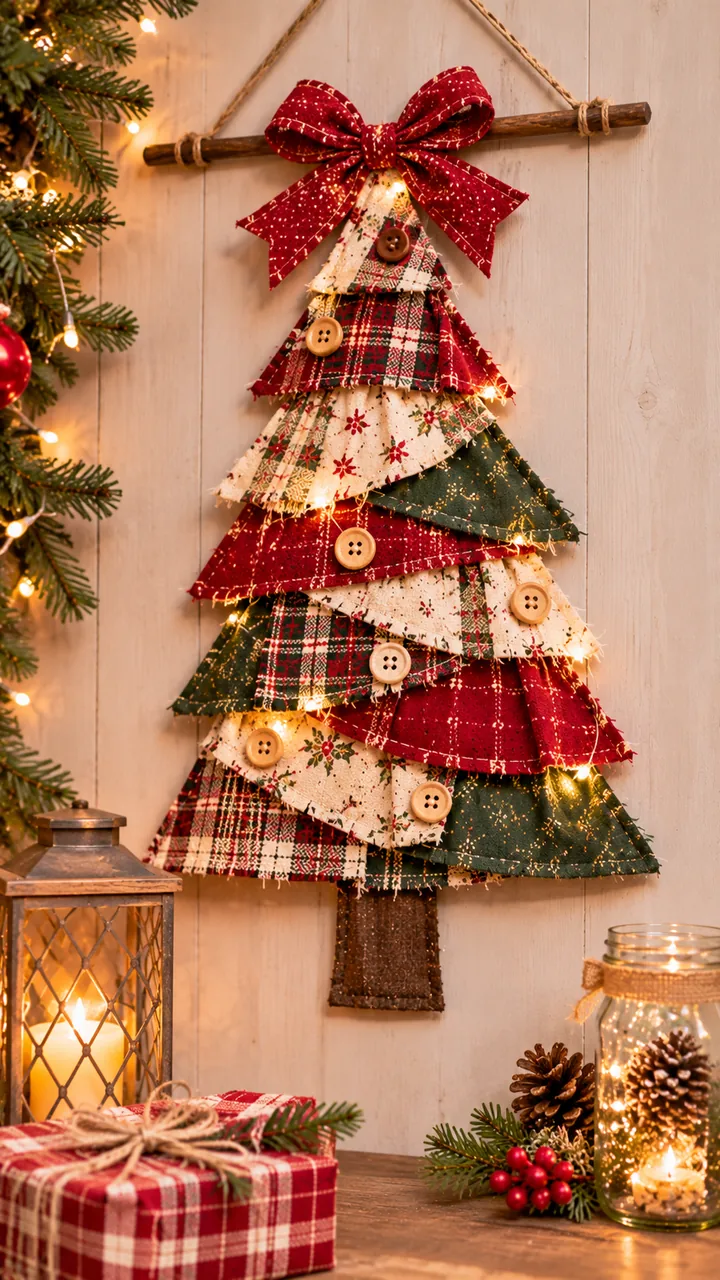
You can keep the design orderly with symmetrical rows or make it more playful by mixing pieces of different sizes. Neutral backgrounds help colorful scraps stand out, while vintage prints give the project a collected feel. Keep embellishments light so the finished hanging stays flat against the wall. It works well in an apartment, classroom, or craft room where a full tree would be inconvenient. Roll the hanging around its dowel for storage to minimize wrinkles.
Handmade Fabric Bow Garland and Tree Accents
Fabric bows are simple enough for beginners yet versatile across the whole house. Cut long rectangles from old blouses, dress shirts, or holiday tablecloths. Fold in the raw edges and press them if needed, then tie each piece into a bow around reusable cord. Space the bows evenly for a garland or make individual pieces with loops to hang from branches.
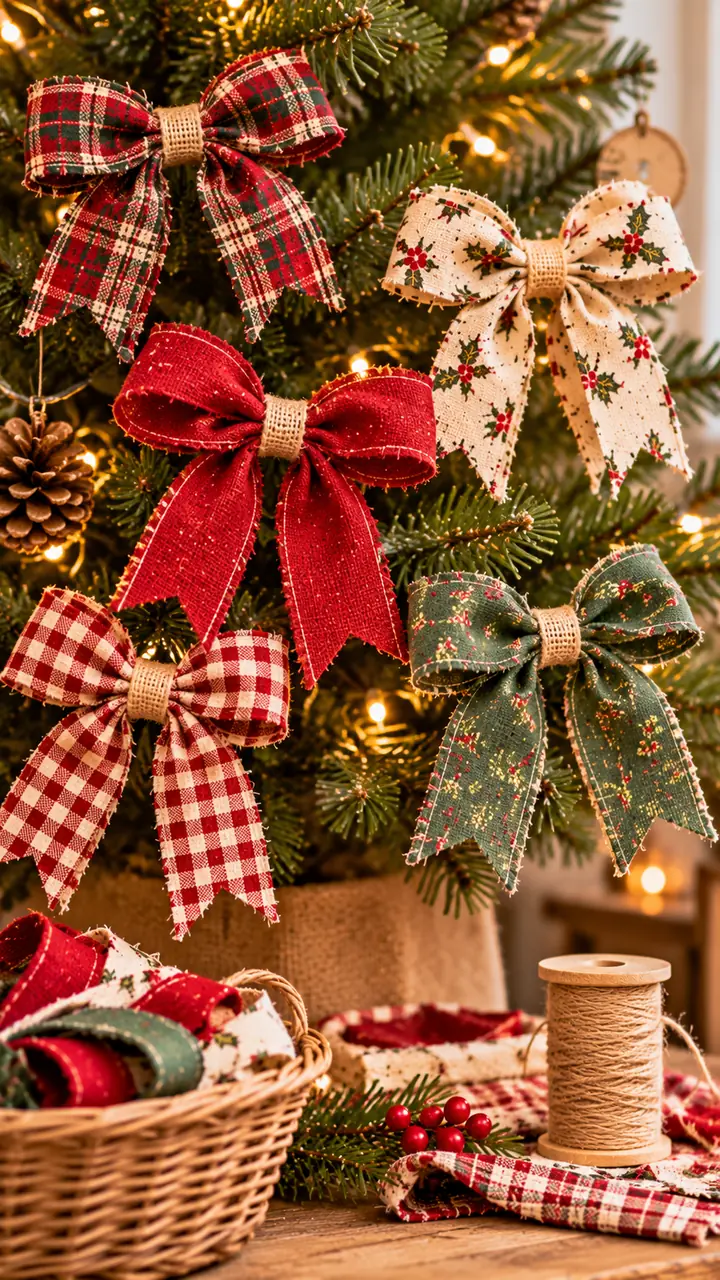
For a more polished result, use fabric that holds a crease and keep the bow tails fairly short. Velvet scraps make rich looking accents, while faded cotton checks suit a relaxed farmhouse style. A bow can also decorate a gift basket or replace a disposable package topper. Making them removable means they can serve a new purpose after Christmas. When you pack them away, loosen any tight knots that might leave permanent marks in delicate fabric.
Quilted Fabric Scrap Holiday Table Runner
A Christmas table runner can bring together leftover textiles that seem unrelated at first. Choose larger pieces from old napkins, shirts, or quilting projects and arrange them into a long strip. Join the sections by machine or hand, then attach a reused cotton backing. A simple folded edge keeps the runner tidy without requiring elaborate binding.
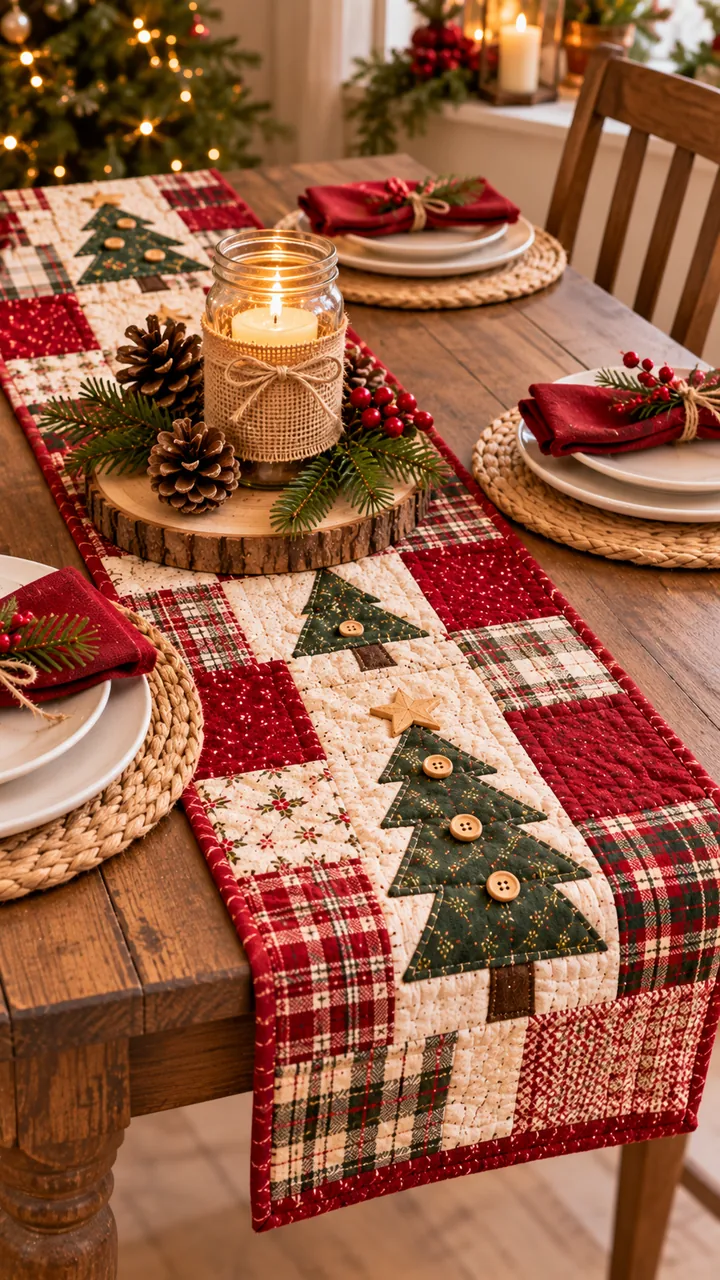
Try alternating plain fabric with patterned sections to avoid a busy result. For a cozy dining table, use soft plaids and muted greens; for a brighter gathering, mix red prints with small floral details. Measure your table before cutting and leave enough room at the ends for a comfortable drape. Wash the fabrics first if they have different shrinkage histories. Keep the runner away from open candle flames and use washable materials so it remains useful through many holiday meals.
Fabric Scrap Gift Tags and Hanging Keepsakes
The smallest fabric scraps can become decorations that double as reusable gift tags. Cut two simple shapes such as hearts, bells, or stars from tightly woven cloth. Add a backing layer to give each piece strength, then stitch the edges together. Leave a small loop at the top and attach a paper name card with string when the tag is used on a wrapped present.
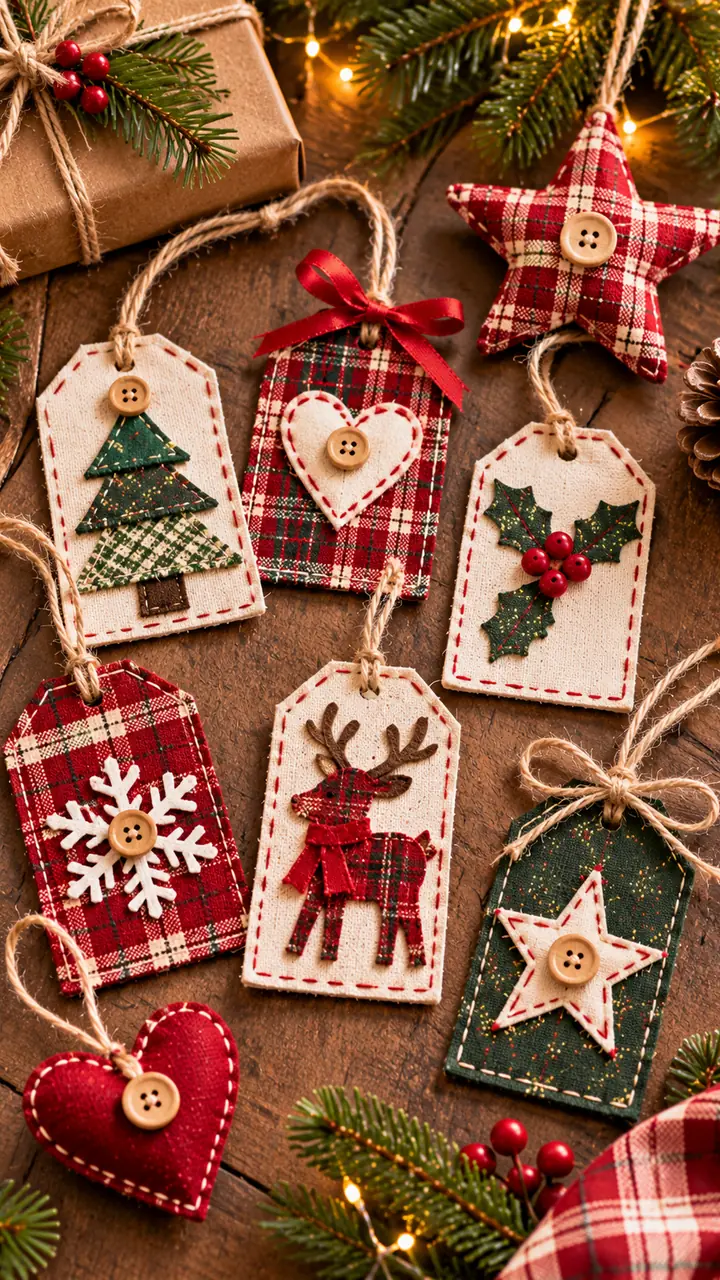
After the gift is opened, the recipient can hang the fabric shape on a tree or save it as a keepsake. Write a year on a small removable paper card instead of permanently marking the cloth, allowing the same tag to work again. Pieces from a favorite old garment make especially meaningful ornaments. Keep details straightforward and avoid easily detached decorations if the tags will be handled by young children. A handful of these little shapes can finish several presents while using practically every usable offcut.
How to Prepare Old Fabric for Christmas Crafts
Before you start, separate scraps by weight, color, and condition. Wash used garments and household textiles when the material allows, then dry them fully. Check for stains, weak areas, and loose embellishments. Cotton and linen are easy to cut and stitch, while stretchy knits need a little more patience. Save the largest pieces for table accents or wall hangings, medium pieces for ornaments, and narrow strips for garlands. Very small clean offcuts can provide filling for soft decorations.
Work with a simple set of tools you already own, such as fabric scissors, a needle, thread, and a ruler. If you use a hot iron, sewing machine, or heated glue tool, follow the manufacturer instructions and ask an experienced adult for help where needed. You do not need to buy matching embellishments to make a cohesive collection. Choosing two or three recurring colors often brings mismatched fabrics together more effectively than adding extra materials.
Making Your Decorations Last for Many Christmases
Think about storage before you begin crafting. Choose sturdy stitches for pieces that will be handled frequently, and reinforce hanging loops so ornaments do not fall. Keep washable textile decorations separate from fragile ornaments and avoid placing fabric close to open flames, heaters, or hot bulbs. Battery operated LED accents can create a festive glow without bringing fabric into contact with an exposed flame.
Once Christmas is over, remove dust, let every fabric item dry completely, and pack pieces by type. Lay flat ornaments between sheets of reused clean paper, coil garlands loosely, and protect padded items from crushing. A labeled box makes it easier to bring them out next year. If a seam opens or a bow loses its shape, a quick repair can extend the decoration’s life rather than sending it to the trash.
Conclusion
Upcycled Christmas Decorations from Old Fabric Scraps prove that a memorable holiday look can begin with materials already tucked away at home. From a soft patchwork tree ornament to a braided garland or a practical table runner, each project offers another chance to use the textiles you already have. Start with one simple decoration, choose colors that make you happy, and save the finished pieces carefully. Over time, a collection of handmade fabric Christmas decorations can become a familiar and meaningful part of your seasonal traditions.