Sustainability Activities for High School Students
Sustainability activities for high school students give teenagers practical ways to explore environmental problems, collect evidence, test solutions, and measure real results. These activities move beyond simple awareness campaigns because they encourage students to study how schools use energy, water, food, technology, materials, transport, and outdoor spaces. High school students can use science, mathematics, geography, engineering, business studies, computer science, media studies, and communication skills while working on meaningful environmental projects.
Teenagers are preparing to enter universities, workplaces, businesses, and communities where sustainability will influence many future decisions. They may need to understand climate risk, responsible technology use, resource conservation, circular design, renewable energy, biodiversity, and environmental communication. Practical school projects can introduce these subjects in ways that feel relevant to everyday life.
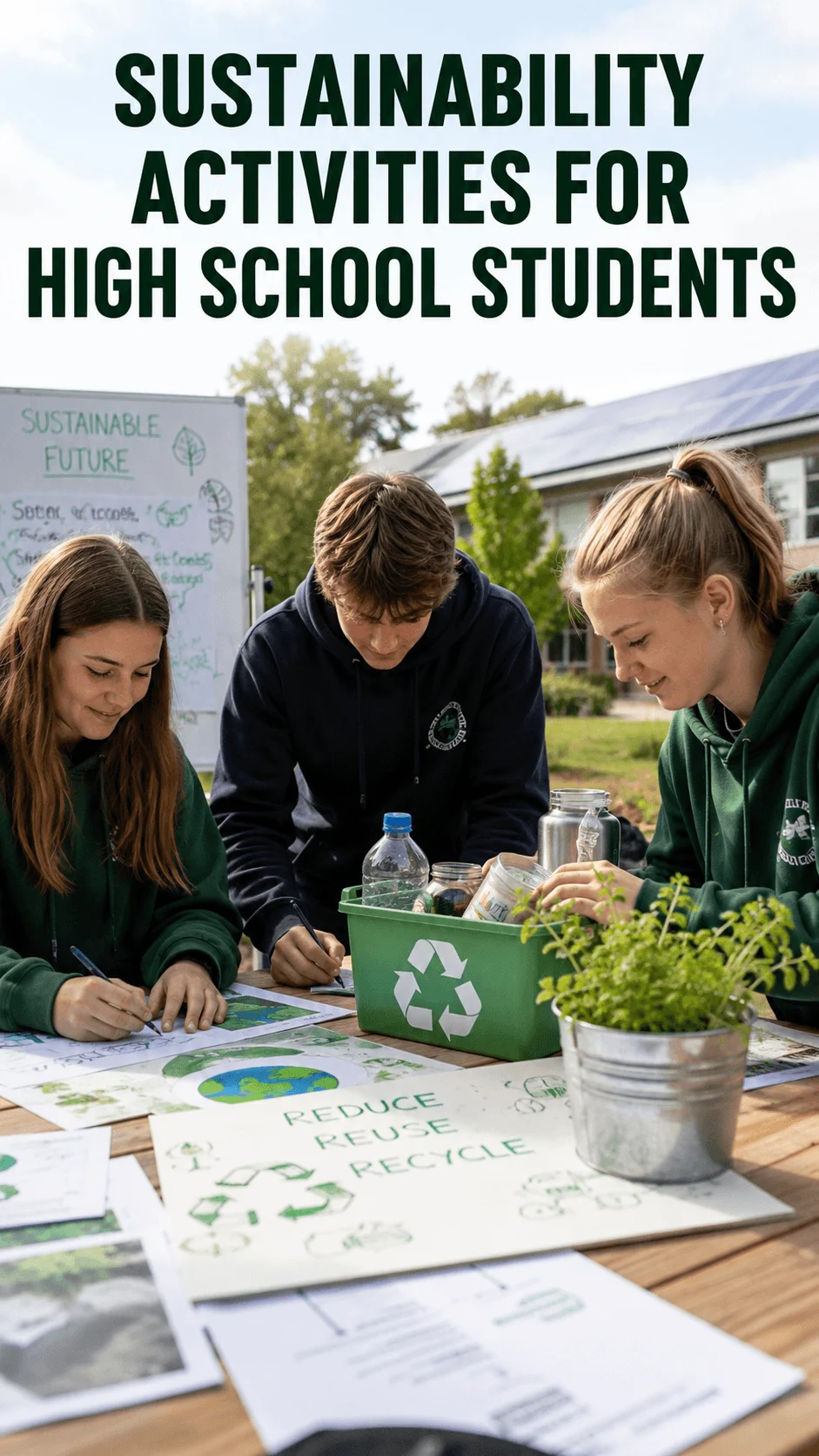
Modern sustainability projects for high school students should allow learners to investigate a real issue rather than simply follow instructions. Students can identify a problem, collect baseline information, design a realistic response, test the idea, and review what changed. This process helps them understand that environmental improvement requires careful thinking, teamwork, and evidence.
Schools do not need expensive equipment or large outdoor areas to run useful projects. Teachers can adapt each activity for small classrooms, limited budgets, urban campuses, rural schools, and different student abilities. A simple survey, paper map, borrowed measuring tool, classroom discussion, or small experiment can still create valuable learning.
Why Student Led Sustainability Projects Need Measurable Results
Many school environmental activities create excitement for one day but do not show whether anything improved. Students may design posters, attend an assembly, or complete a clean up event without measuring the effect. These activities can raise awareness, but stronger projects also help students evaluate results.
Before making a change, students should collect baseline data. Baseline data shows what happens before the project begins. A class may record how much food students throw away, how many damaged items the school replaces, how hot different parts of the campus become, or how many people travel by car.
After collecting this information, students can choose one realistic improvement. They may introduce clearer cafeteria waste stations, repair a group of damaged supplies, add shade to a small area, or create a responsible digital use guide. The class can then repeat the original measurement.
Comparing the two sets of results helps students understand whether the idea worked. They can calculate percentages, prepare charts, compare photographs, review survey responses, or estimate financial savings. They may discover that the improvement created a clear benefit, produced only a small change, or failed to solve the problem.
An unsuccessful project still provides useful learning. Students can examine why the plan failed, whether the project lasted long enough, whether people understood the instructions, or whether another solution would work better. This approach teaches students that sustainability requires testing, reflection, and adjustment.
Sustainability activities for high school students become more meaningful when learners can explain what they measured, what changed, and what they recommend next.
1. School Climate Risk Mapping for High School Students
A school climate risk map helps students investigate how extreme heat, heavy rainfall, flooding, limited shade, water shortages, and strong winds may affect their campus. This activity connects climate science with geography, observation, design, and local problem solving.
Students can begin by walking through approved areas of the school. They can identify hot playgrounds, exposed classrooms, blocked drains, dry gardens, leaking roofs, areas without shade, and places where rainwater collects. They can record each observation on a printed map, a large sheet of paper, a spreadsheet, or a simple digital mapping tool.
Different groups can study different risks. One team may focus on heat while another studies drainage. A third group may investigate water access during dry weather. Students can interview teachers, sports staff, maintenance workers, and classmates to understand which areas create the most difficulty.
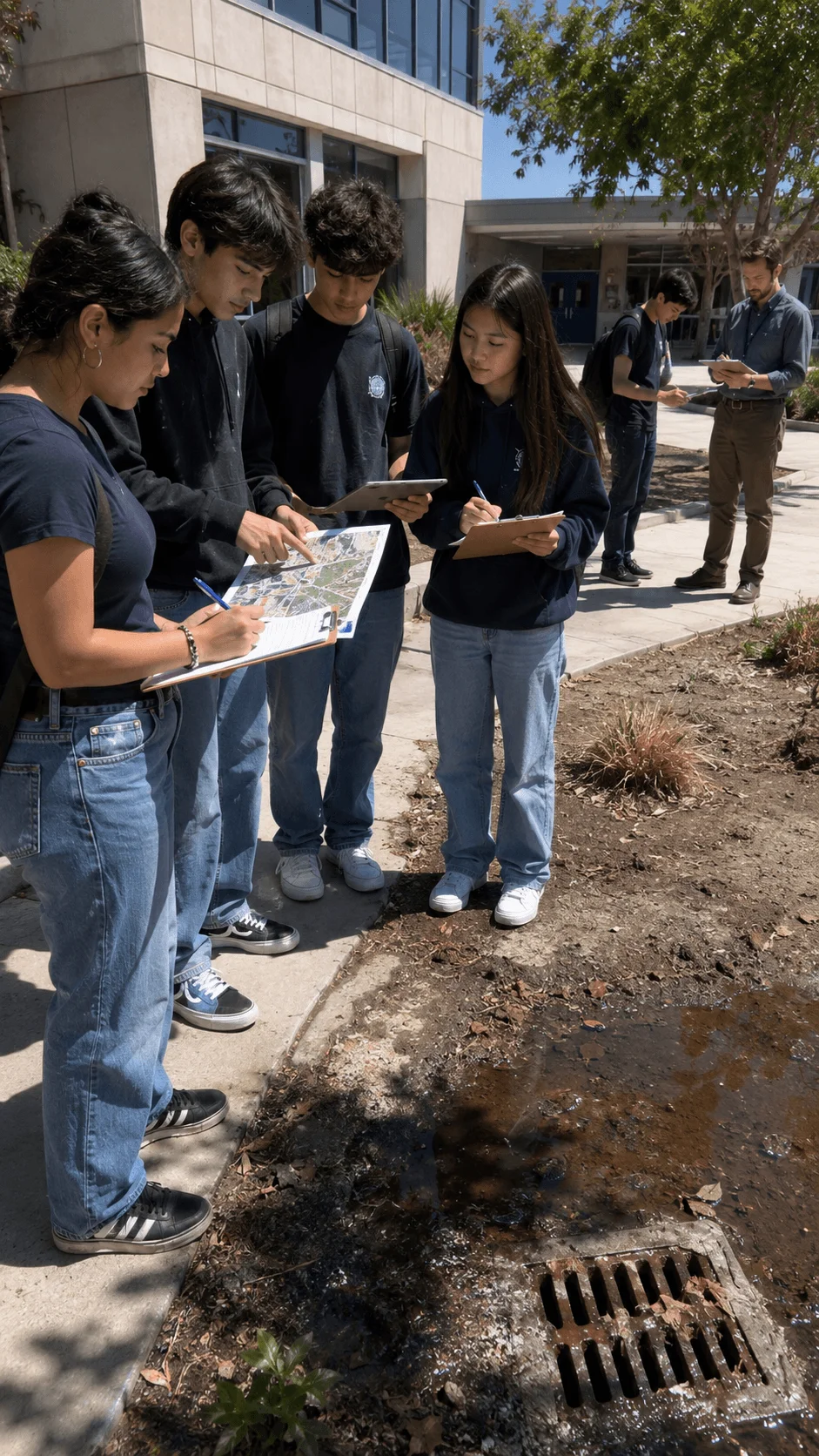
The project should move from observation to action. Students can recommend suitable shade, more vegetation, improved drainage, reflective surfaces, rain gardens, better outdoor schedules, or safer walking routes during extreme weather. They should explain which proposal seems realistic for the school and why.
Teachers must keep students away from roofs, electrical systems, deep drains, unstable structures, and restricted areas. Students should not enter standing water or inspect damaged buildings.
The class can measure results by comparing temperatures, photographing water accumulation, recording shaded areas, or checking whether a small improvement reduced a specific problem.
2. Artificial Intelligence Energy Investigation
Artificial intelligence has become part of study, communication, design, and research. However, AI systems depend on data centres, electricity, cooling equipment, cloud storage, and physical hardware. This activity helps students examine the environmental side of digital technology without presenting technology as completely harmful.
Students can survey how often classmates use generative AI, online gaming, video streaming, cloud storage, image generation, and high resolution media. The survey should remain anonymous and should not shame students for using technology.
The class can separate necessary use from repeated or unnecessary use. Students may notice that people generate the same image many times, save duplicate files, leave devices running, stream videos at a higher quality than needed, or replace working devices too quickly.
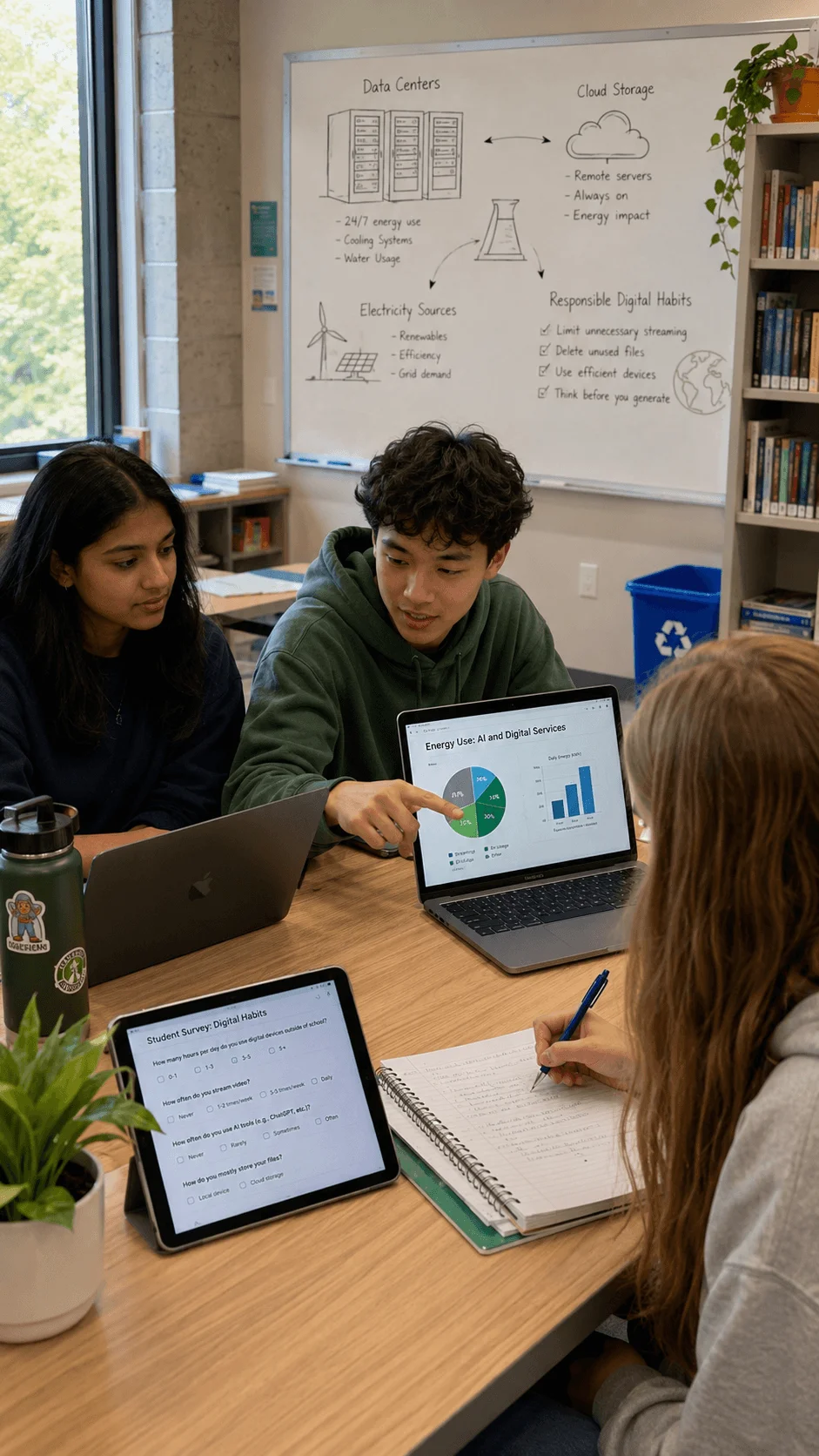
They can research responsible digital habits and create a school guide. The guide may encourage clearer prompts, fewer repeated generations, organised cloud storage, longer device use, reduced duplicate files, and responsible equipment shutdown.
Students should avoid making exact energy claims unless reliable evidence supports them. Digital energy use can vary according to the service, device, location, data centre, and task. The activity should teach students to separate verified information from assumptions.
This project connects computer science, mathematics, environmental science, media literacy, and ethics. It also gives sustainability activities for high school students a modern technology focus that many traditional environmental projects lack.
3. Circular Economy Repair Challenge
The circular economy aims to keep products, components, and materials useful for as long as possible. A repair challenge helps students understand that recycling should not always be the first response to a damaged object.
Students can collect suitable broken or unwanted school items, such as bags, books, folders, chairs, sports equipment, headphones, cables, pencil cases, uniforms, or storage boxes. Teachers should approve every item before students begin.
Teams can inspect why the object failed. A backpack may have weak stitching. A folder may have a damaged fastener. Headphones may stop working because one cable connection becomes loose. Students can record the failure point and discuss whether the manufacturer could have designed the item for easier repair.
Students may repair safe objects under supervision. They can also redesign one feature to improve durability, reuse, repair, or material recovery. A group may add stronger stitching, replace a damaged cover, create a reusable part, or suggest a modular design.
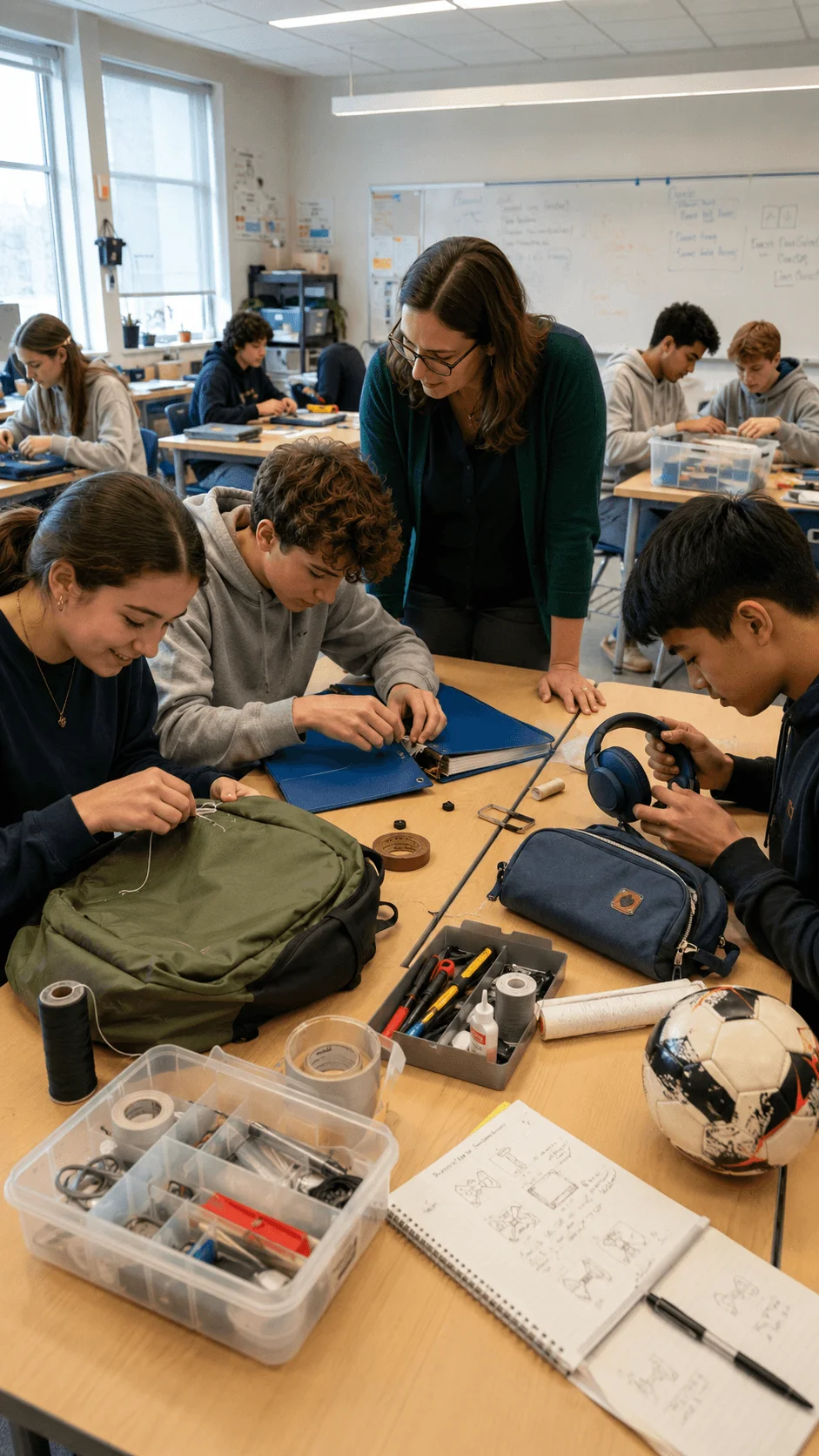
The class can compare repair costs with replacement costs. Students may calculate how much money and waste the school could save if it repaired a certain number of items each year.
Teachers should prohibit work involving damaged batteries, broken glass, unsafe chemicals, exposed electrical parts, or dangerous tools unless trained adults manage the task.
Circular economy activities for high school students develop design thinking, patience, budgeting, practical skills, and responsible consumption.
4. Cafeteria Food Waste Data Lab
A cafeteria food waste project allows students to investigate why edible food enters the waste stream. The activity should focus on understanding the system rather than blaming students, families, kitchen workers, or food providers.
Students can separate lunch waste into categories such as untouched food, partially eaten food, fruit and vegetable scraps, packaging, and liquids. They can weigh or estimate each category over several lunch periods.
The class can also collect anonymous feedback about portion sizes, meal preferences, lunch duration, food appearance, packaging, dietary needs, and access to storage. These responses may reveal that students throw food away because portions feel too large, lunch periods feel too short, or menu information remains unclear.
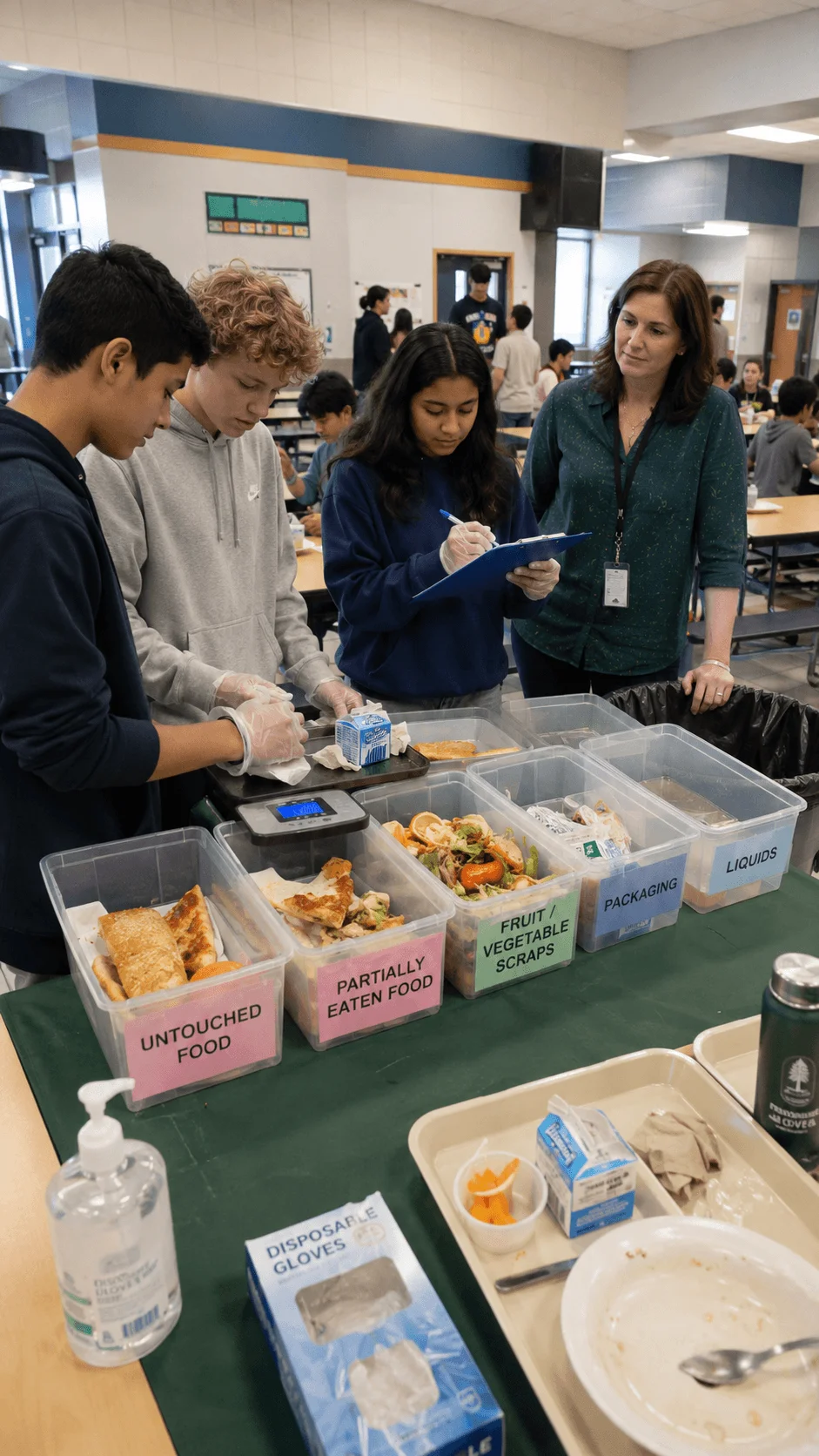
Students can test one improvement. They may introduce smaller optional portions, clearer waste stations, better menu feedback, a safe share table for unopened food, or improved communication about meal choices.
After the test period, students can repeat the original measurement. They can calculate how much waste decreased or increased and discuss why.
Teachers must manage hygiene, allergies, gloves, hand washing, supervision, and local food safety rules. Students should never handle spoiled food, sharp packaging, or unsafe waste.
Composting can manage unavoidable scraps, but students should remember that preventing waste usually creates a greater benefit than managing waste after it appears.
5. Campus Biodiversity Mapping With Citizen Science
Biodiversity activities for high school students can help learners understand how plants, insects, birds, fungi, and other organisms share a school environment. A campus biodiversity map turns simple observation into a structured investigation.
Students can divide the campus into zones such as grass, trees, gardens, paved areas, shaded corners, planted containers, water edges, and busy walkways. They can record what they observe through notebooks, photographs, reusable sheets, or an approved citizen science application.
The class can compare areas dominated by concrete with areas that contain more plants, shade, water, or natural material. Students may investigate how mowing, noise, pesticides, flowering plants, human movement, and water access influence the number of species observed.
After collecting data, students can recommend one habitat improvement. They may suggest native plants, pollinator flowers, bird safe window markers, reduced mowing in a small area, shallow water stations, or pesticide free zones.
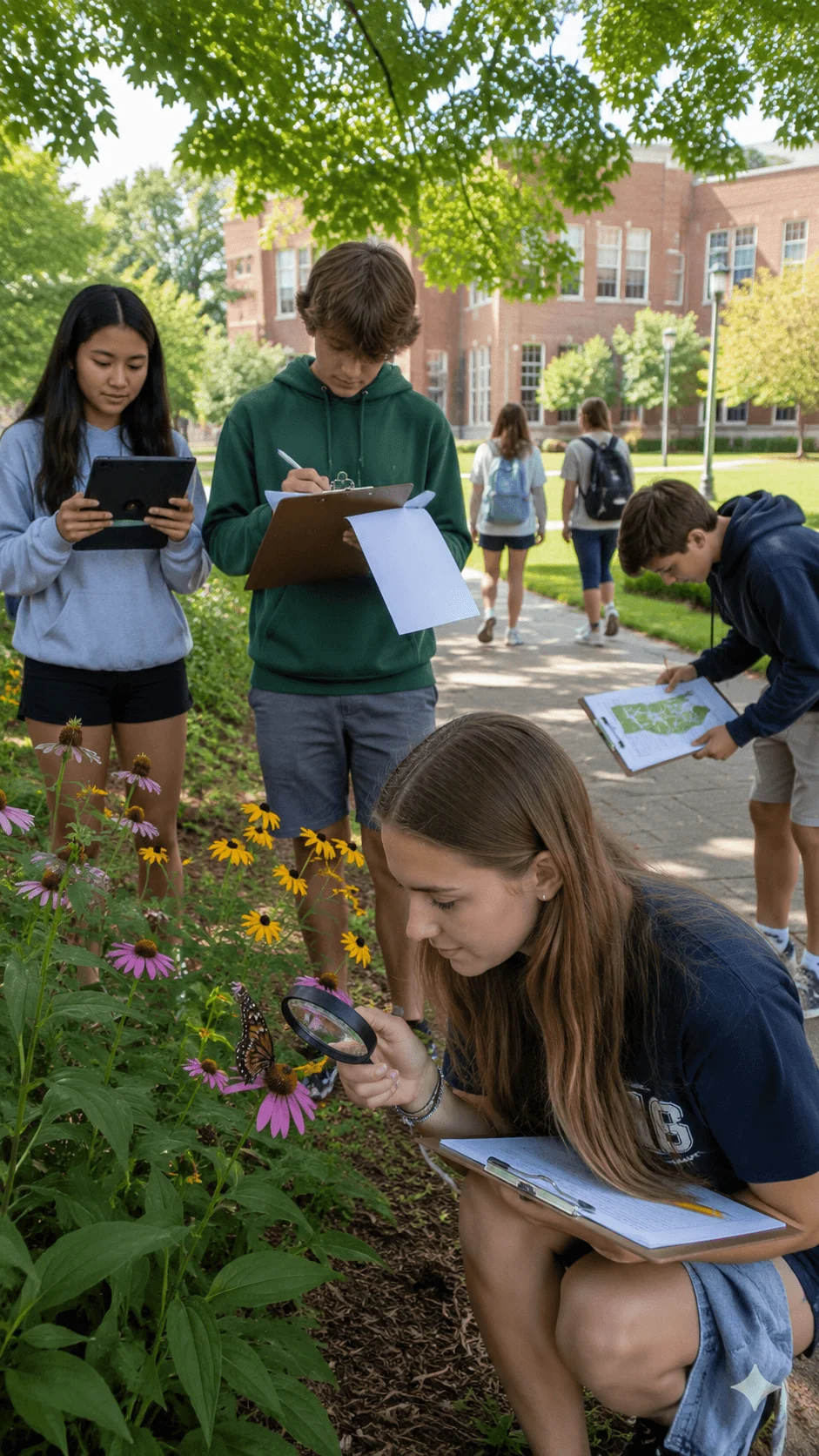
Students should observe wildlife without capturing animals, disturbing nests, removing plants, or entering unsafe areas. Teachers should also explain that one day of observations cannot reveal every species that lives on the campus.
Seasonal comparison can make the project more useful. Students can repeat the survey during another month and examine how weather, flowering, migration, or school activity changed the results.
6. Sustainable Transport Mapping Challenge
A sustainable transport project helps students study how people travel to school and why they make those choices. This activity connects environmental learning with geography, mathematics, planning, accessibility, and social responsibility.
Students can create an anonymous survey that asks whether people walk, cycle, use a school bus, take public transport, share a car, or travel in a private vehicle. The survey can also ask about distance, travel time, safety, cost, weather, disability access, road conditions, and public transport availability.
The project should never shame families who rely on private vehicles. Some students live far from school, care for siblings, have mobility needs, or lack safe public transport.
Students can map common travel routes without collecting home addresses. They may identify places where bicycle parking, safer crossings, bus information, or organised travel groups could help.
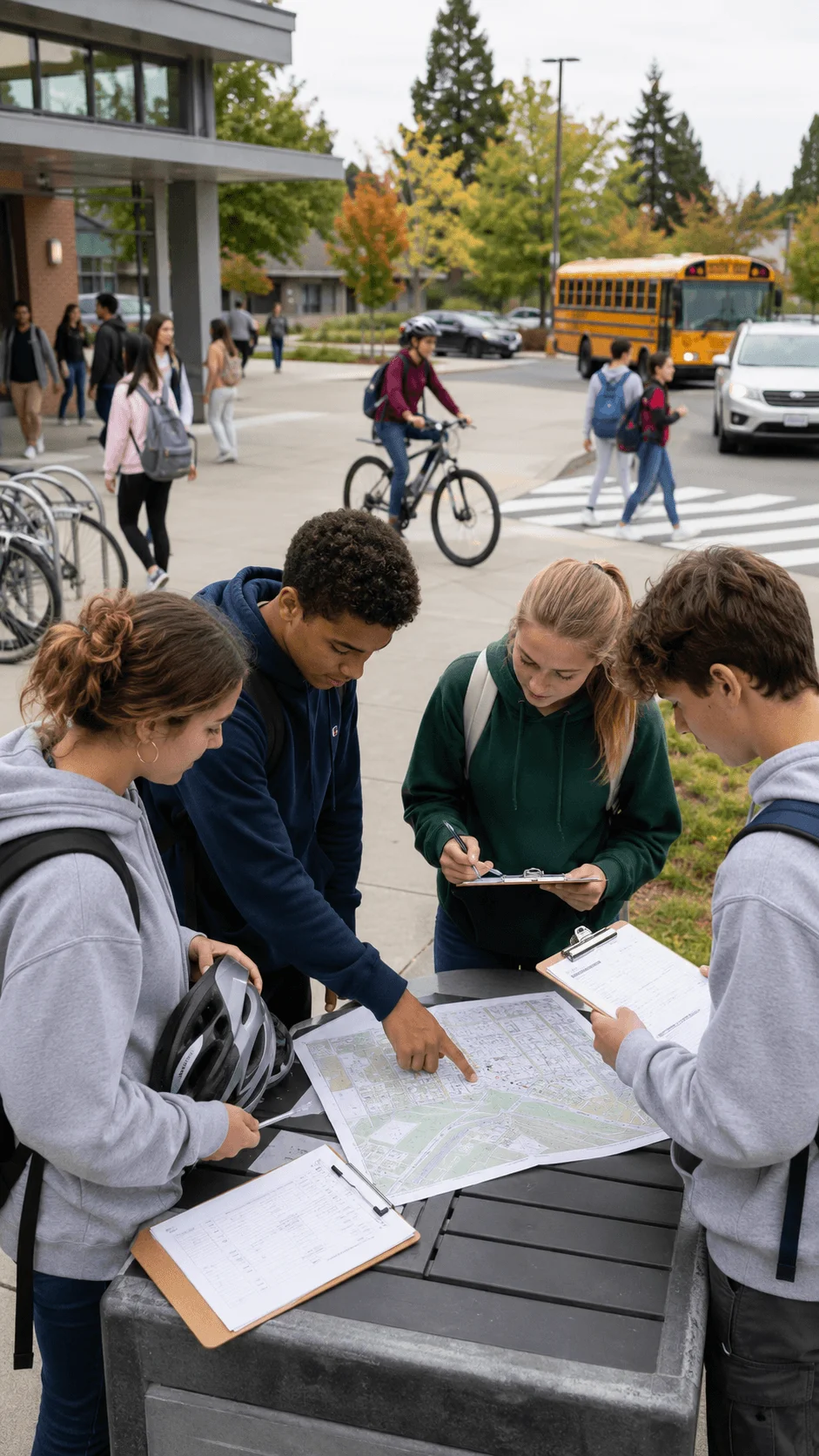
The class can estimate the possible effect of one realistic change. For example, students may study whether one shared travel day each week could reduce the number of cars near the school entrance.
They can also examine congestion, road safety, air quality concerns, and arrival delays. The final proposal should consider practicality, fairness, cost, and local conditions.
This activity helps environmental activities for high school students address real community systems instead of focusing only on individual habits.
7. School Heat Island Measurement Project
Buildings, roads, dark roofs, car parks, and paved playgrounds can absorb heat and make some school areas hotter than others. A heat island measurement project helps students observe this difference directly.
Students can record temperatures on grass, soil, concrete, shaded walls, sunny walls, planted areas, car parks, sports surfaces, and indoor rooms. They should collect readings at similar times under similar weather conditions.
The class may use thermometers, supervised infrared tools, weather records, or digital sensors. Schools without specialised equipment can still compare air temperatures in shaded and exposed locations.
Students can place their results on a campus map. The map may reveal that paved areas become much hotter than planted or shaded spaces. It may also show that some classrooms trap heat during certain times of the day.
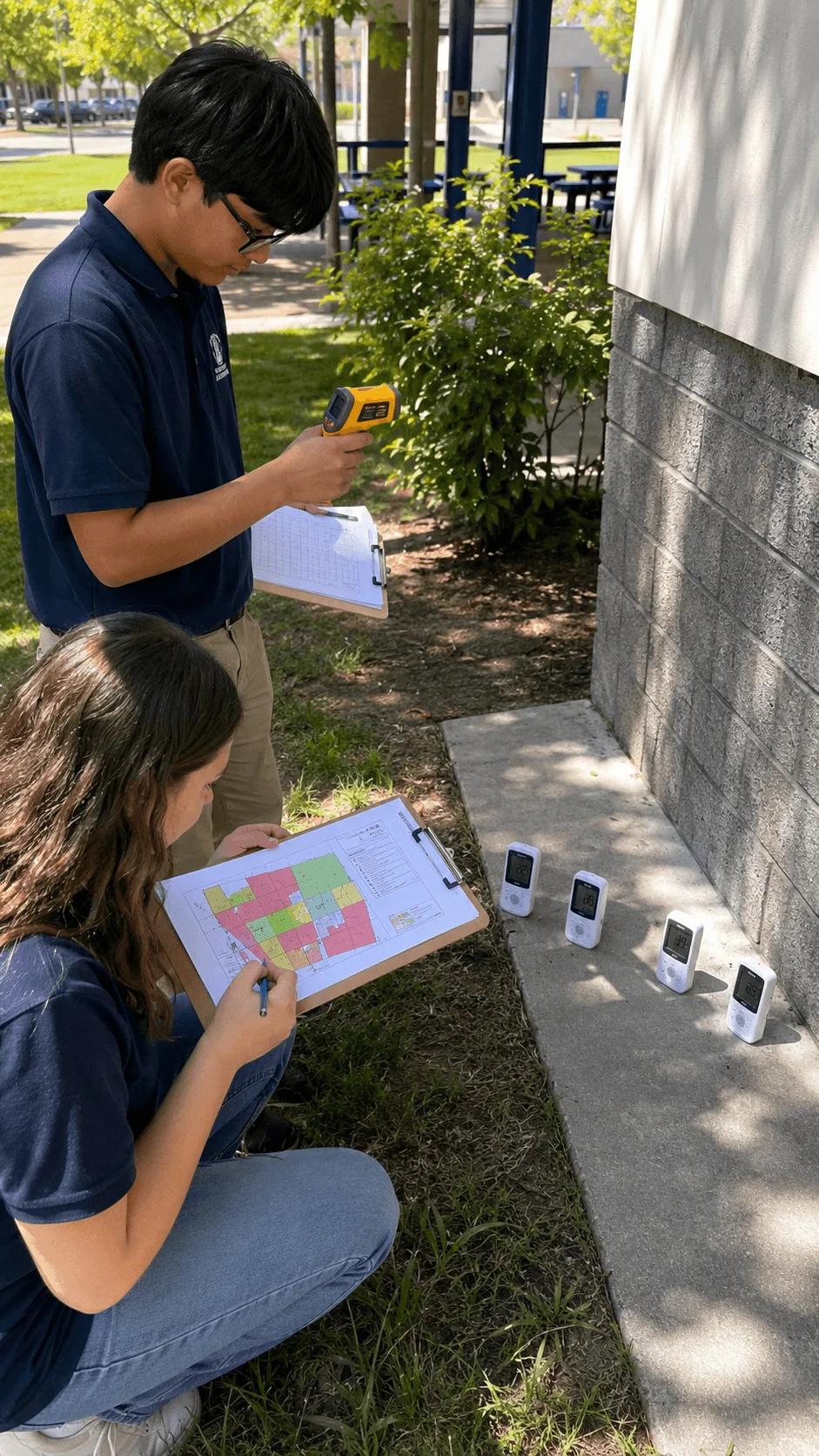
Students can recommend trees, shade structures, reflective materials, vegetation, improved ventilation, roof changes, or adjustments to outdoor schedules.
Teachers should discuss the limitations of the experiment. Clouds, wind, time, device accuracy, and surface moisture can affect results. Students should repeat measurements before making strong conclusions.
Safety must remain a priority. Students need hydration, sun protection, safe footwear, and adult supervision. They should avoid traffic areas, hot metal, rooftops, and extreme weather.
8. Solar Powered Design and Engineering Challenge
Renewable energy projects for high school students can combine sustainability with physics, engineering, mathematics, design, and teamwork. A solar design challenge asks students to create a product or system that responds to a real need.
Teams can design a model vehicle, small fan, garden light, charging concept, ventilation system, irrigation model, water pump, or emergency lighting solution.
Students should begin by identifying the problem. They can then estimate energy needs, select materials, draw the design, build a model, and test performance.
The class should consider sunlight availability, panel position, weather, battery storage, cost, efficiency, durability, and maintenance. Students may discover that a solar solution works well in one location but poorly in another.
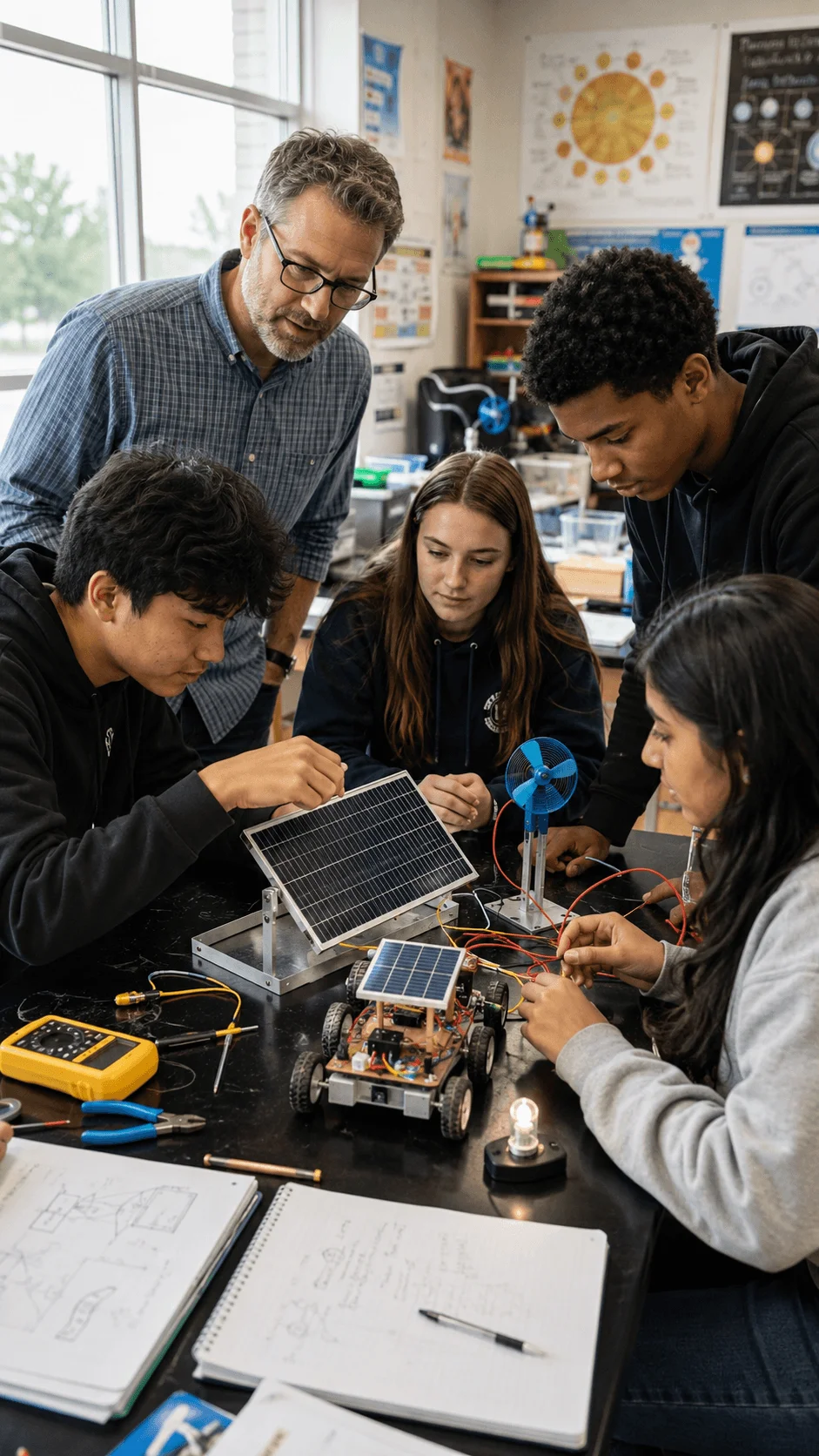
Schools without working solar panels can complete the challenge as a design and calculation project. Students can compare panel sizes, expected sunlight, energy demand, and estimated cost.
Teachers must manage electrical safety, tools, soldering equipment, batteries, outdoor testing, and adult supervision.
The project should not present solar power as a perfect solution for every situation. Instead, students should examine benefits, limitations, installation conditions, and long term maintenance.
9. Water Audit and Rainwater Resilience Plan
Water conservation activities for high school students can help learners understand how schools use water and where waste may occur. A water audit turns everyday observations into a resource management project.
Students can inspect approved areas that contain taps, toilets, drinking stations, kitchens, gardens, sports facilities, and cleaning equipment. They can record dripping taps, unnecessary flow, overwatering, runoff, and visible leaks.
Students should not open plumbing systems or enter restricted maintenance spaces. They can report problems to trained school staff.
The class may estimate how much water a dripping tap wastes by collecting the water for a short period and calculating a longer estimate. They can also examine garden watering schedules, rainfall patterns, and areas where rainwater could support plants.
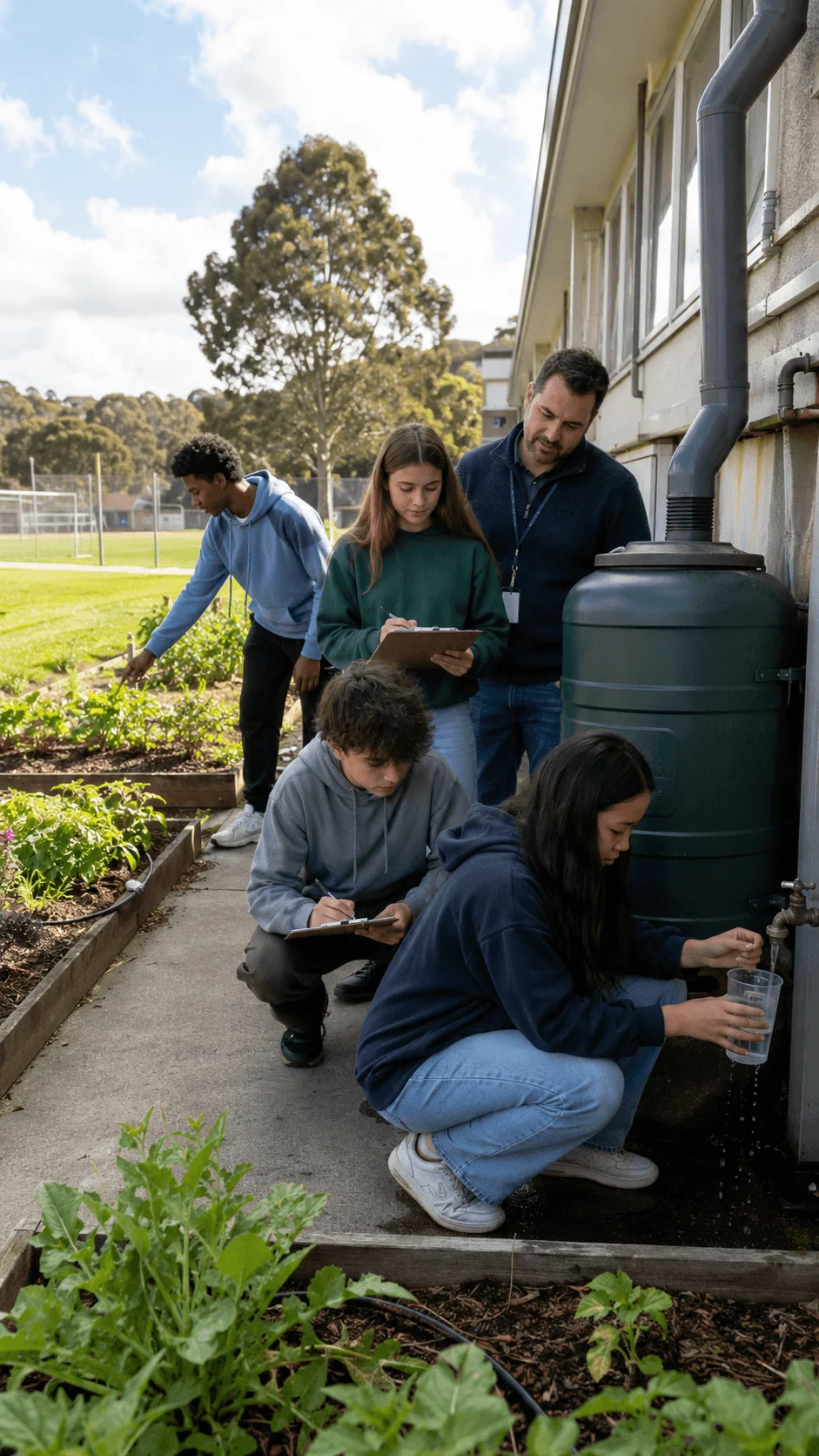
Students can design a plan that includes leak reporting, controlled irrigation, drought tolerant plants, rain barrels, rain gardens, or clearer water use signs.
Teachers must explain that collected rainwater may not be safe for drinking. Schools should follow local rules before collecting, storing, or using it.
This activity connects mathematics, geography, engineering, environmental science, and responsible resource use.
10. Sustainable Product Life Cycle Investigation
Everyday products create environmental effects before, during, and after use. A product life cycle investigation helps students examine the complete journey of one object.
Students can choose a smartphone, notebook, cotton shirt, water bottle, laptop, school bag, sports shoe, or packaged snack. They can investigate where its raw materials come from, how manufacturers process them, how the product travels, how long people use it, and what happens after disposal.
A smartphone may require mining, manufacturing, transport, packaging, electricity, software support, and eventual recycling. A cotton shirt may require land, water, chemicals, labour, transport, washing, and disposal.
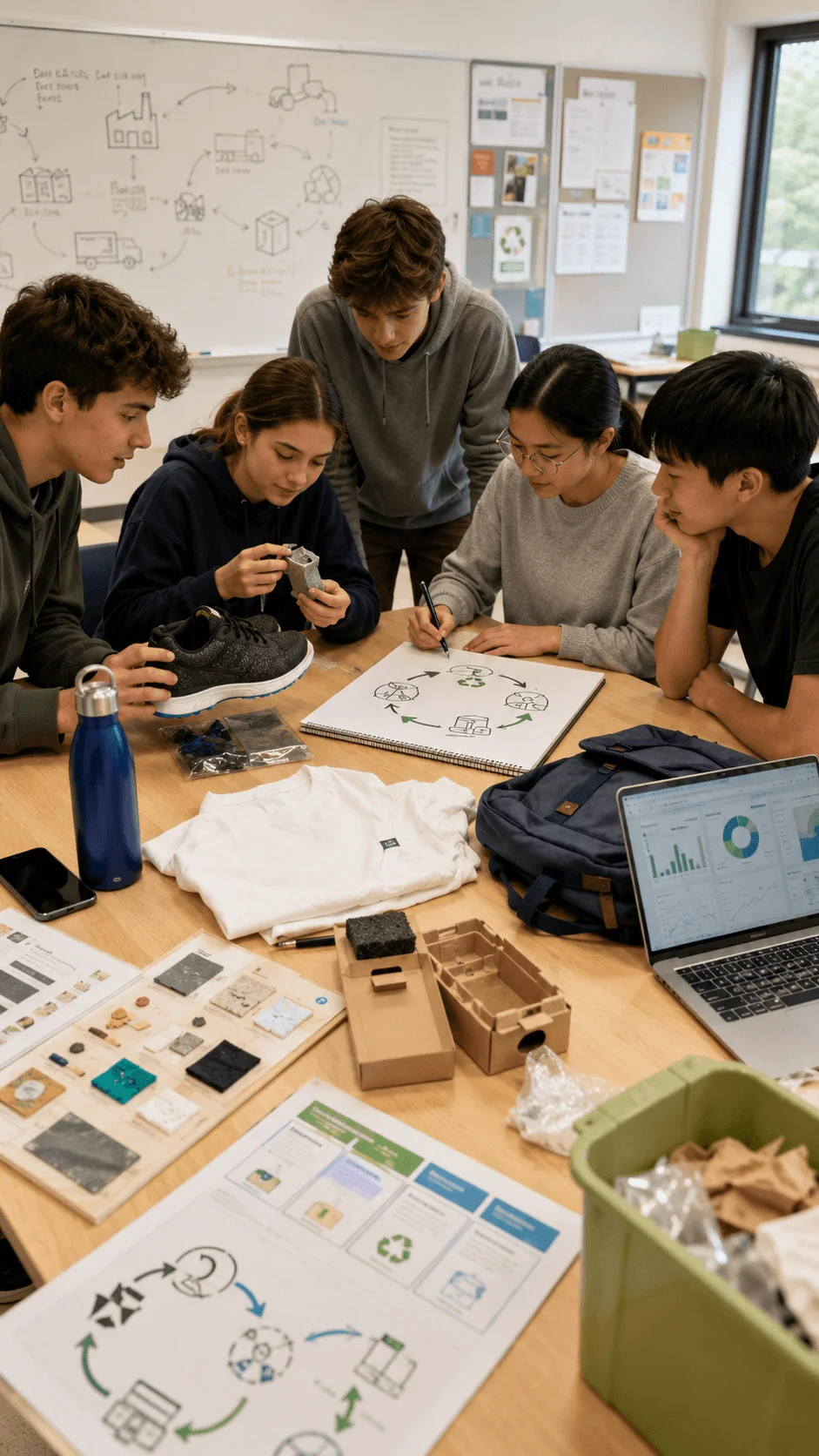
Students can create a visual life cycle and identify the stage where an improvement may create the greatest benefit. They may recommend longer lasting materials, replaceable parts, refill systems, reduced packaging, recycled content, repair services, or take back programmes.
The activity should teach students not to assume that one material always performs better than another. They need to consider durability, transport, reuse, energy, maintenance, and disposal.
Sustainability activities for high school students become more analytical when learners examine complete systems rather than focusing only on the final waste stage.
11. Green Business Pitch Competition
A green business pitch asks students to create a product or service that solves a genuine sustainability problem. The goal should not involve placing environmental language on an unnecessary product.
Students can develop ideas such as a uniform exchange, textbook sharing system, bicycle repair service, refill station, reusable event supply service, electronic repair club, food surplus system, or school material recovery programme.
Each team should define the problem, identify possible users, explain the solution, estimate costs, calculate possible income, and describe the environmental benefit.
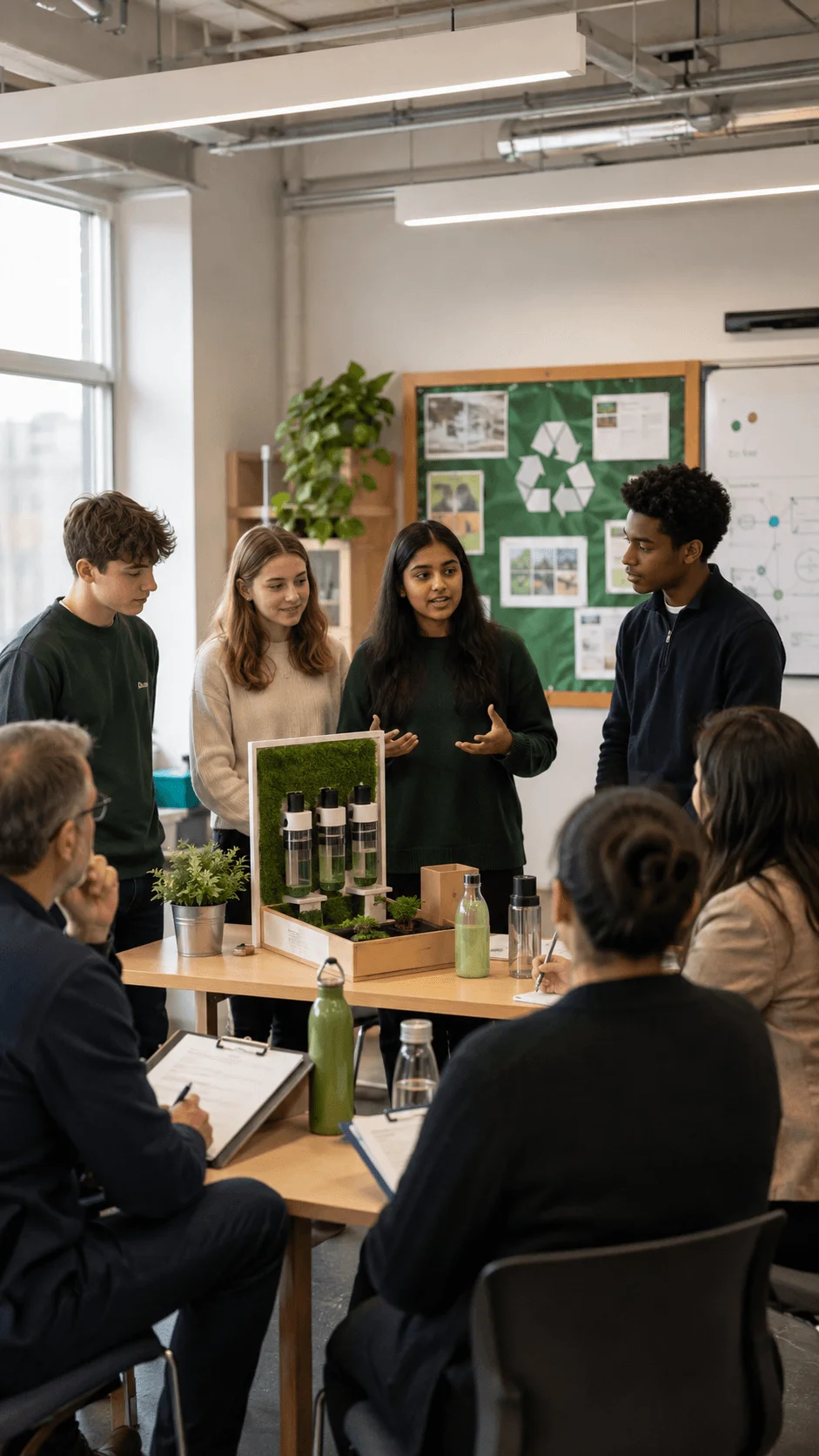
Students can prepare a written proposal, visual model, advertisement, presentation, or short spoken pitch. They should explain how the idea will operate over time and who will manage it.
Teachers can invite school leaders, parents, local businesses, or community representatives to review the proposals. Judges may consider affordability, practicality, originality, environmental value, social benefit, and long term operation.
The activity connects business studies, economics, design, communication, budgeting, and teamwork. It also shows students that sustainability can support useful services and responsible entrepreneurship.
12. Student Sustainability Newsroom
A student sustainability newsroom helps teenagers investigate environmental claims in advertising, packaging, company announcements, school campaigns, and social media.
Students can examine words such as natural, recyclable, responsible, green, clean, carbon neutral, and environmentally friendly. They should ask what evidence supports the claim and whether the message explains the full picture.
A product may contain recyclable material but use packaging that local facilities cannot process. A company may discuss one environmental improvement while ignoring other major impacts. Students can learn to recognise incomplete information without making careless accusations.
Teams can produce news articles, videos, podcasts, interviews, posters, or digital reports. They should use reliable sources, explain uncertainty, and distinguish fact from opinion.
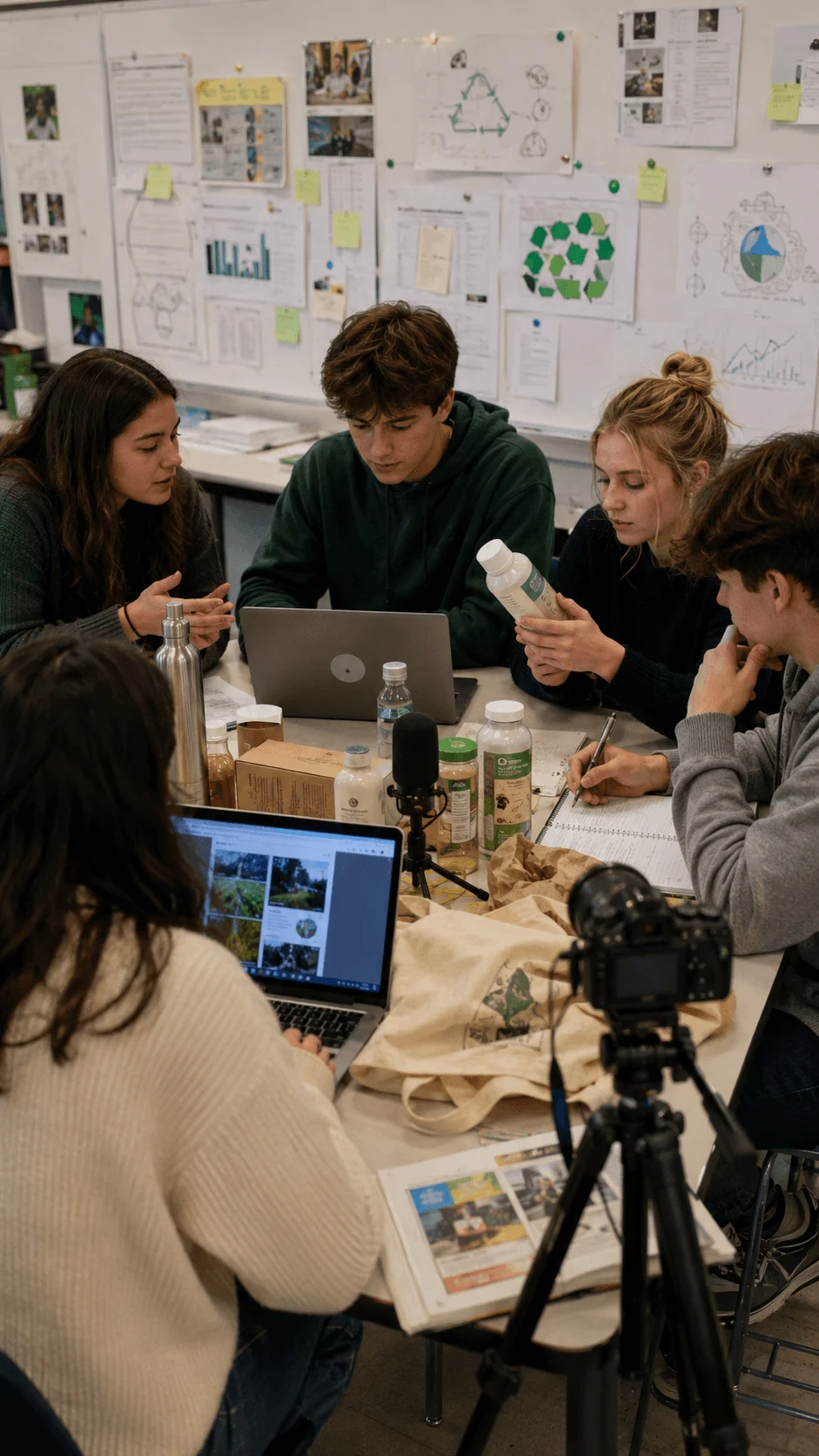
Teachers should discuss respectful communication. Students should avoid accusing a person or organisation of dishonesty unless strong evidence supports the claim.
This project develops research, writing, speaking, fact checking, media literacy, teamwork, and environmental communication. It also gives sustainability activities for high school students an important information literacy focus.
Keeping Environmental Activities Safe, Inclusive, and Affordable
Teachers should adapt every project to student age, ability, local climate, available space, school rules, and community conditions. A project that works well in one school may require changes in another.
Physical safety should guide planning. Teachers need to consider roads, electrical equipment, tools, food hygiene, allergies, water, insects, damaged products, weather, and restricted areas.
Students with disabilities should receive accessible roles and suitable materials. One student may record data while another takes photographs, creates charts, interviews participants, prepares maps, or presents findings.
Sustainability education should never blame students for circumstances they cannot control. Family income, transport access, food needs, disability, culture, and location can affect environmental choices.
Low cost sustainability projects for schools can use paper maps, borrowed thermometers, reusable containers, free spreadsheets, classroom surveys, and small test areas. Schools can focus on one hallway, one lunch period, one garden bed, or one classroom instead of the entire campus.
Teachers should also avoid presenting sustainability as perfection. The goal involves understanding a problem and making a realistic improvement.
How to Measure School Sustainability Projects
Good measurement starts with a clear question. Students should decide what they want to learn before collecting information.
A food waste team may ask how much edible food students discard during lunch. A heat team may compare paved and planted areas. A repair group may calculate how many items the school saves from replacement.
Students should use the same method before and after testing an improvement. Changing the measurement method can make the comparison unreliable.
They can record waste weights, temperature readings, biodiversity counts, water measurements, repair totals, transport responses, survey results, and photographs.
Simple percentages can make the results easier to understand. Students may calculate the reduction in food waste, the difference between shaded and unshaded temperatures, or the percentage of damaged items repaired.
Charts, maps, presentations, videos, and reports can help students communicate their findings. They may present results to classmates, teachers, maintenance staff, or school leaders.
Students should also explain limitations. A small survey, short observation period, changing weather, unavailable records, or inaccurate tools can affect the findings.
Strong student led sustainability projects should finish with a recommendation. Students can explain what worked, what did not work, and what the school could test next.
Conclusion
Sustainability activities for high school students can turn environmental education into practical investigation, problem solving, and measurable action. Teenagers can study climate risks, digital energy use, food waste, biodiversity, transport, heat, solar power, water use, product design, entrepreneurship, and environmental communication.
These projects help students develop research, teamwork, leadership, engineering, business, data analysis, media literacy, and presentation skills. They also show that environmental decisions often involve cost, access, safety, technology, and community needs.
Schools do not need expensive equipment or large campuses to make these activities useful. A small experiment, simple survey, repair event, or classroom investigation can still produce meaningful learning.
The strongest sustainability projects for high school students allow learners to identify a real issue, collect evidence, test a practical improvement, measure the result, and communicate what they discovered. Through this process, students gain the confidence and knowledge to contribute to more responsible schools and communities.