12 Eco Friendly Garden Ideas for High School Students
Creating an environmentally responsible garden at school can turn an ordinary outdoor area into a living classroom. These eco friendly garden ideas for high school students can help young people explore sustainability through practical activities involving plants, water, soil, biodiversity, recycling, and food production. Instead of simply learning about environmental problems from textbooks, students can participate in projects that allow them to observe natural systems and understand how their choices affect the environment.
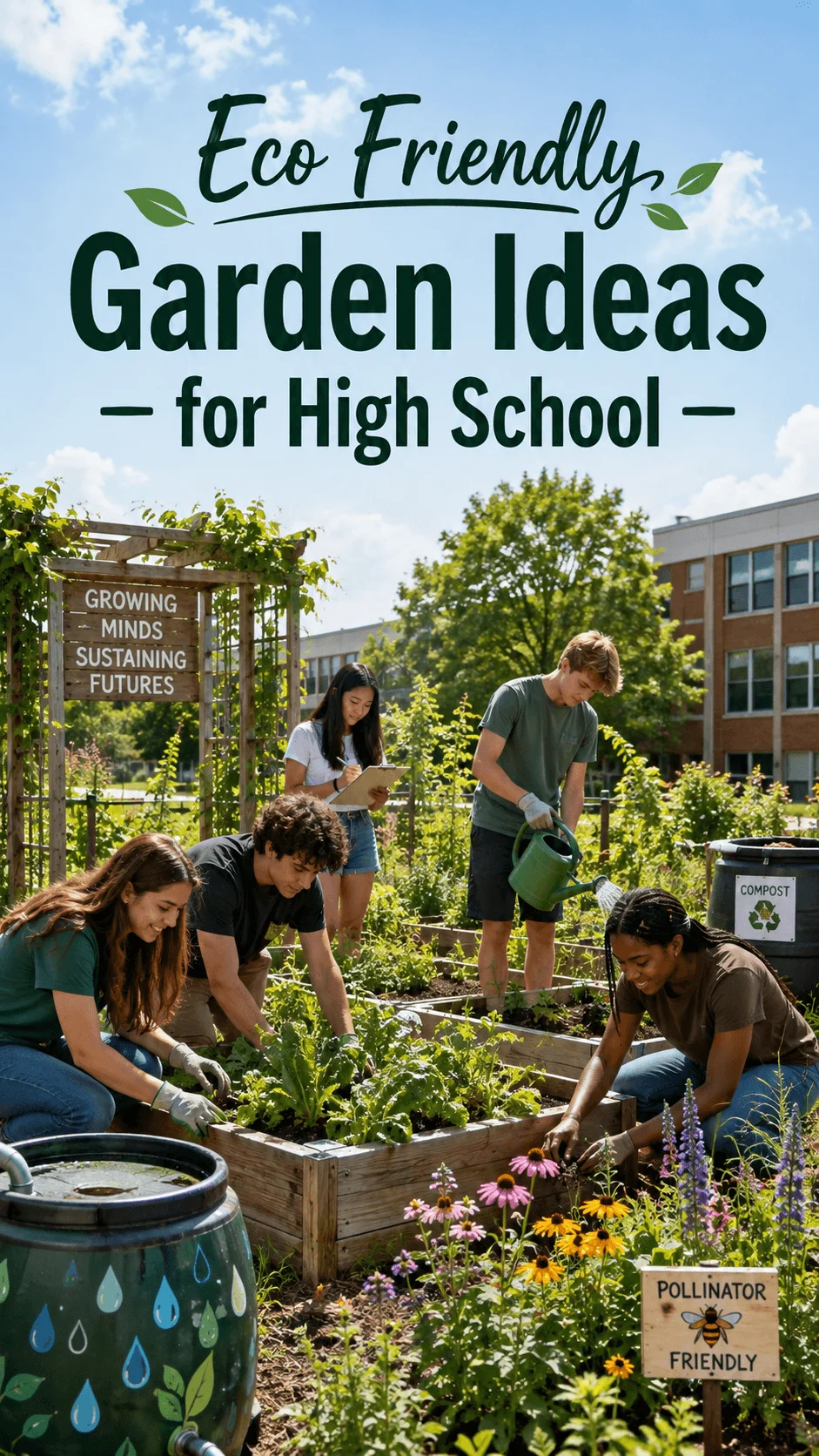
A sustainable school garden can also become a place for creativity, teamwork, scientific investigation, and community involvement. Students can design planting areas, monitor wildlife, study water use, create compost, and experiment with different growing methods. The best projects do not need to be complicated or expensive. Even a small unused section of the school grounds can become a valuable environmental learning space when students plan it carefully.
Why Eco Friendly School Gardens Matter for High School Students
A school garden offers something that a traditional classroom cannot always provide: direct contact with living systems. Students can see how plants respond to sunlight and water, observe insects interacting with flowers, study how organic matter changes into compost, and understand how soil supports plant growth.
Sustainable gardens also encourage students to think about resource conservation. A garden can demonstrate how rainwater can support plants, how food scraps can return nutrients to soil, and how native vegetation can provide habitat for local wildlife.
For high school students, these projects can become much more than gardening activities. They can connect with biology, environmental science, geography, mathematics, design, technology, and even art. Students can collect observations, analyze results, create presentations, and suggest improvements based on what they discover.
The following sustainable garden projects offer practical ways to make a school garden more environmentally responsible while giving students meaningful opportunities to learn.
1. Climate Resilient Native Plant Garden
A climate resilient native plant garden is an excellent starting point for a sustainable school landscape. Instead of choosing plants only because they look attractive, students can research species that naturally suit their local environment and growing conditions.
Students can begin by examining the area where the garden will grow. They can observe how much sunlight reaches the site, investigate the soil, consider local rainfall patterns, and identify whether the area remains wet or becomes dry during different seasons. They can then research plants that are appropriate for those conditions.
Native plants can be particularly valuable because they have developed alongside local ecosystems. Depending on the region, they may provide food or shelter for insects, birds, and other wildlife. Choosing plants that suit local conditions can also help students understand why sustainable landscaping should work with the environment rather than constantly trying to overcome it.
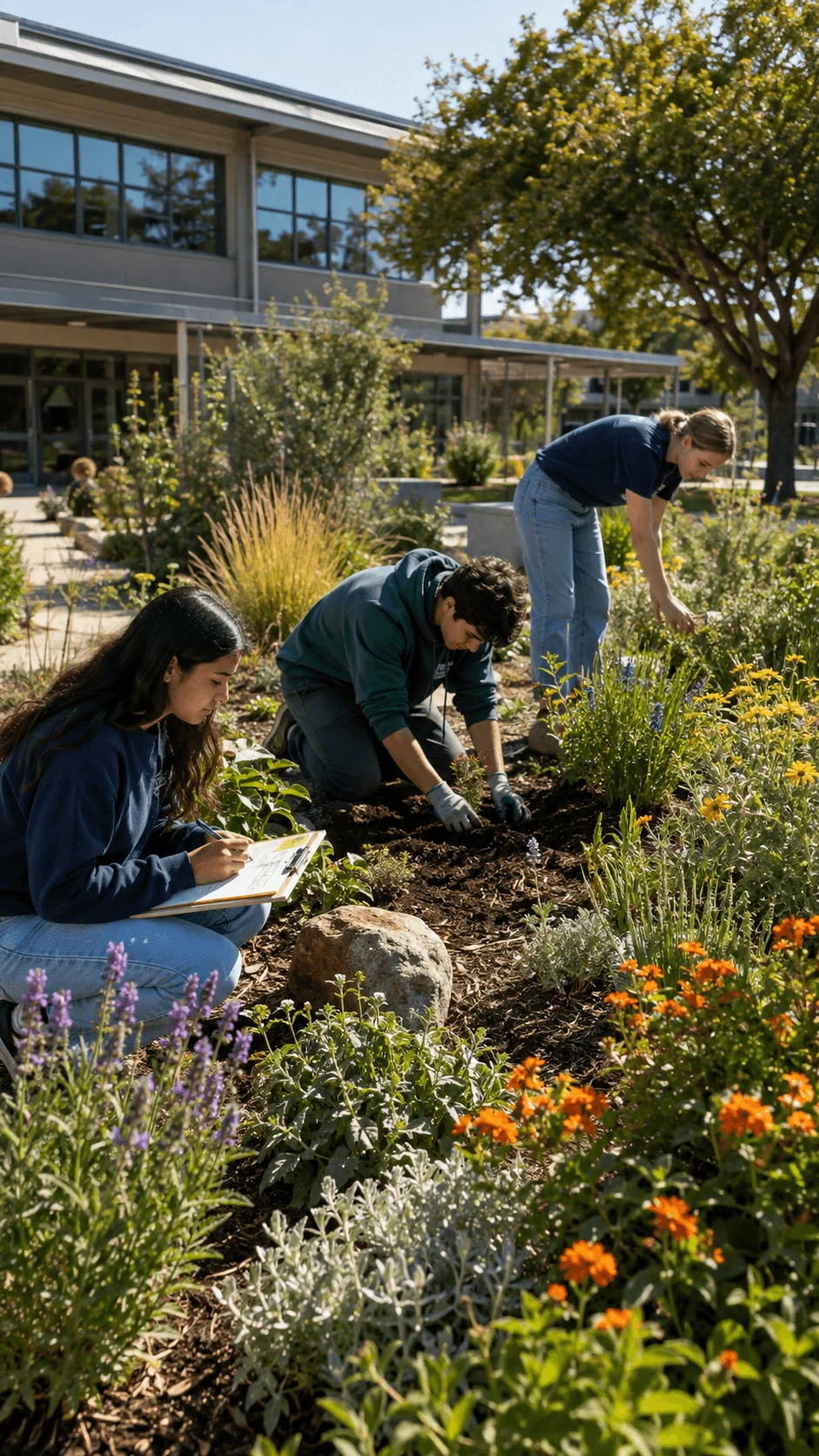
The project can become a research activity. Students can create a garden plan, document their plant choices, monitor growth, and observe which species attract wildlife. They can also compare how different plants respond to weather changes throughout the year.
This type of garden gives students a practical way to explore climate resilience, biodiversity, habitat creation, soil health, and water conservation. It also encourages them to think carefully before planting rather than treating gardening as simply placing plants in the ground.
2. Student Designed Rain Garden
A rain garden can transform an area affected by water runoff into a useful planted space. It is particularly interesting for high school students because the project combines gardening with observation, design, soil science, and water management.
Students can begin by walking around the school grounds during or after rainfall, where appropriate and safe, and observing where water naturally moves. They can identify areas where runoff collects and examine whether certain sections of the schoolyard become unusually wet.
After identifying a potential location, students can investigate the soil and drainage characteristics of the site. They can research plants that can tolerate the moisture conditions expected in the garden and develop a simple planting design.
The garden can contain plants selected for their ability to handle periods of increased moisture while also contributing to habitat and visual interest. Students can then observe how the garden performs after rainfall.
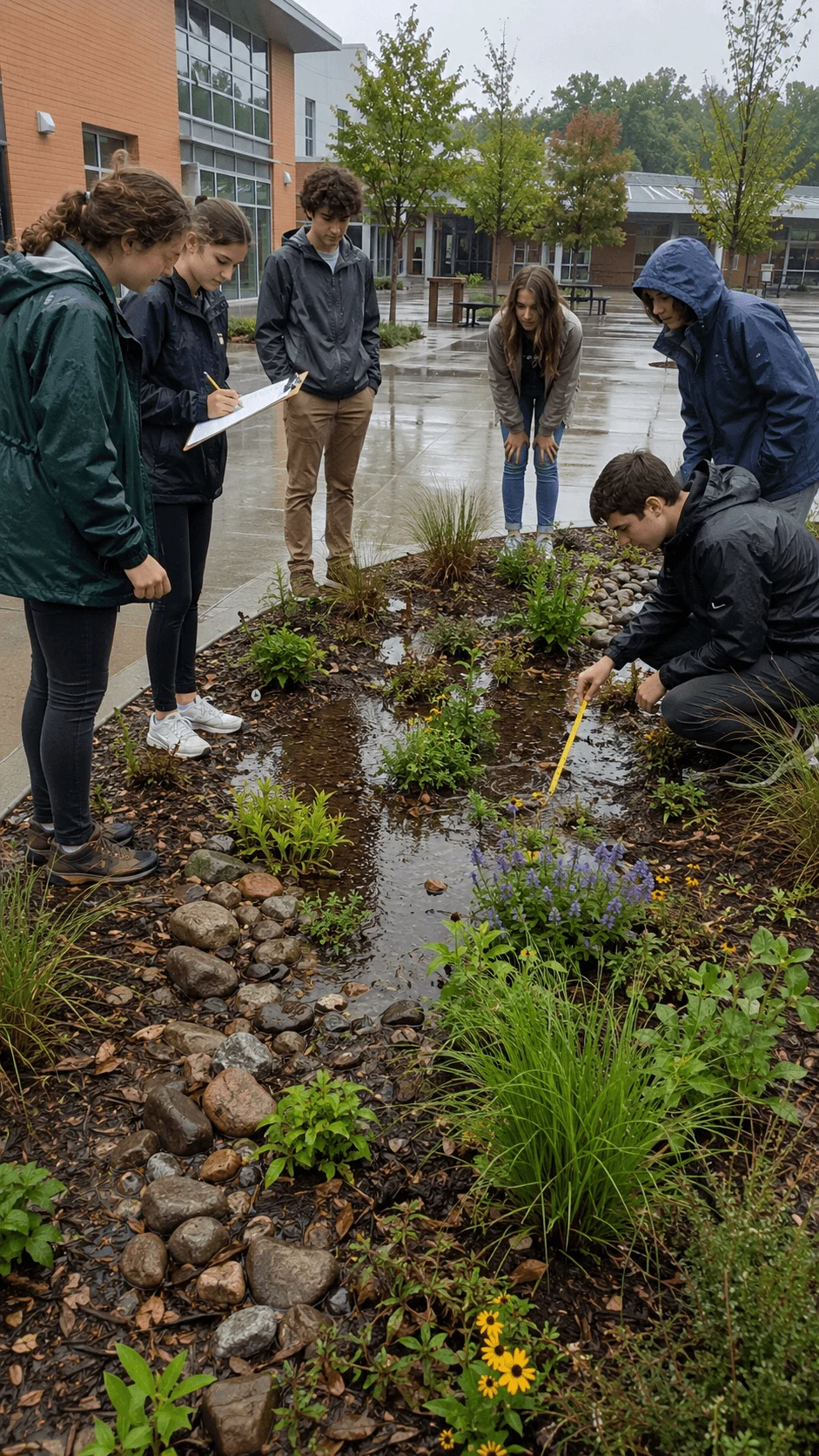
A rain garden project for high school students can become an excellent environmental science investigation. Students can document rainfall events, observe water movement, measure the garden area, and compare conditions before and after the garden is established.
The project can also teach an important lesson about stormwater. Instead of viewing rain as something that must immediately disappear from the school grounds, students can explore ways to manage water more thoughtfully within the landscape.
3. Mini School Food Forest
A mini food forest offers a very different approach to conventional school gardening. Instead of creating rows of similar vegetables, students can design a layered growing system using suitable edible trees, shrubs, herbs, groundcovers, and other plants.
The concept is based on creating a diverse planting system in which different types of plants occupy different spaces. Taller plants can provide structure and shade while smaller plants occupy lower layers. Depending on the local climate and available space, a school might include suitable fruiting plants, perennial herbs, edible shrubs, and other useful vegetation.
Students can research which plants can grow together and how their requirements differ. They can investigate sunlight, soil conditions, mature plant size, seasonal growth, and maintenance requirements before developing their plan.
A food forest also gives students an opportunity to think about long term sustainability. Annual vegetable gardens often require repeated planting, while many perennial plants can remain in place for years when properly maintained.
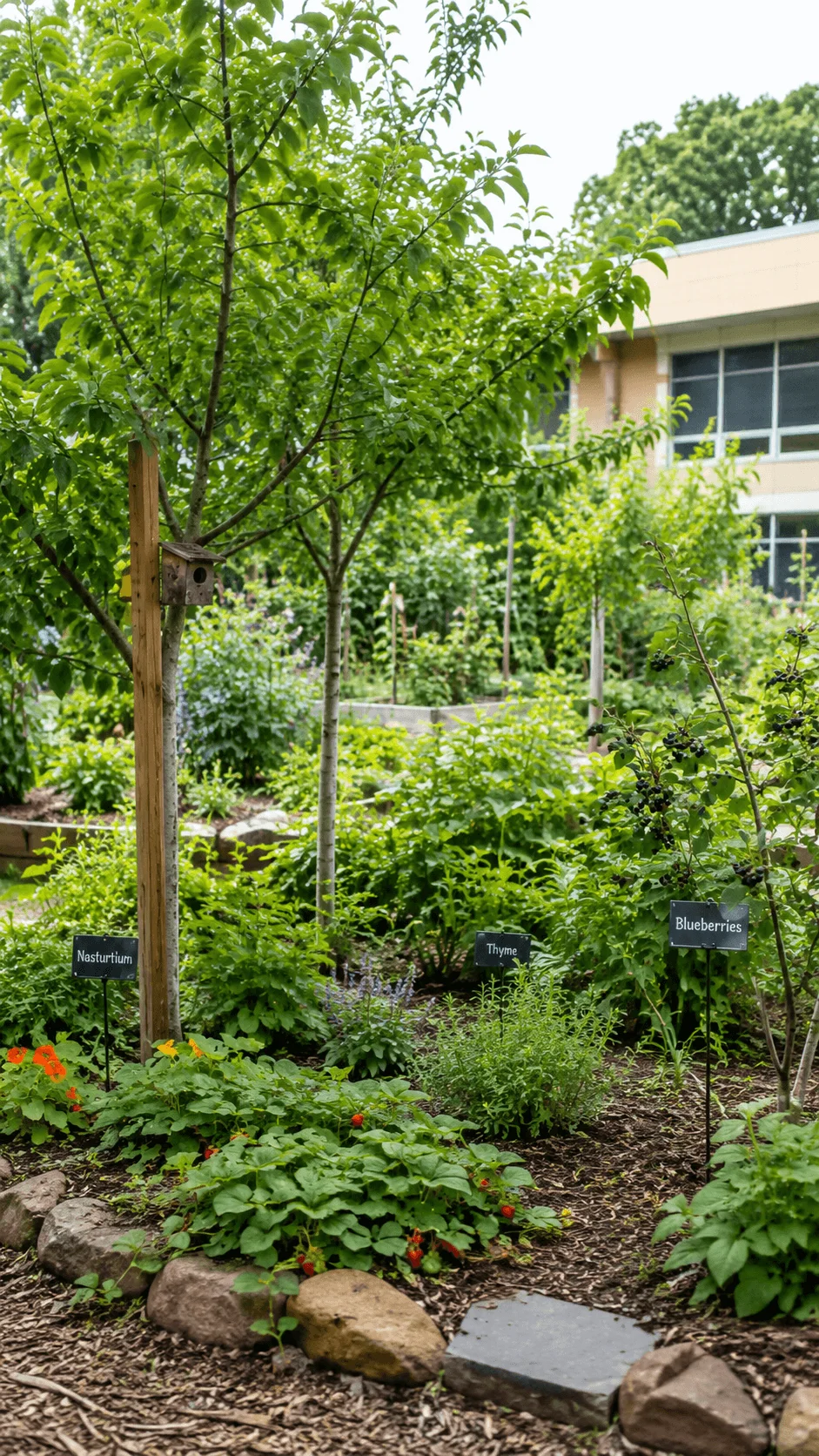
Students can observe seasonal changes, document plant growth, monitor wildlife, and learn how a diverse planting system can provide multiple benefits at once. The garden can produce food while also creating habitat and encouraging students to think about how natural ecosystems organize themselves.
School food forest ideas are especially useful for students who want a project that combines food production with biodiversity and environmental education.
4. Pollinator Pocket Garden
A pollinator pocket garden can turn even a small unused area into a habitat for insects and other wildlife. The basic idea is simple: students create a compact planting area with suitable flowering plants that provide resources for pollinators.
Students can research which flowering plants are appropriate for their local climate and which species bloom during different parts of the growing season. This can help create a garden that offers resources across a longer period rather than producing flowers for only a few weeks.
The project can also become an observation exercise. Students can spend short periods observing the garden and recording the different types of pollinators they notice. They can compare activity at different times of day or during different seasons.
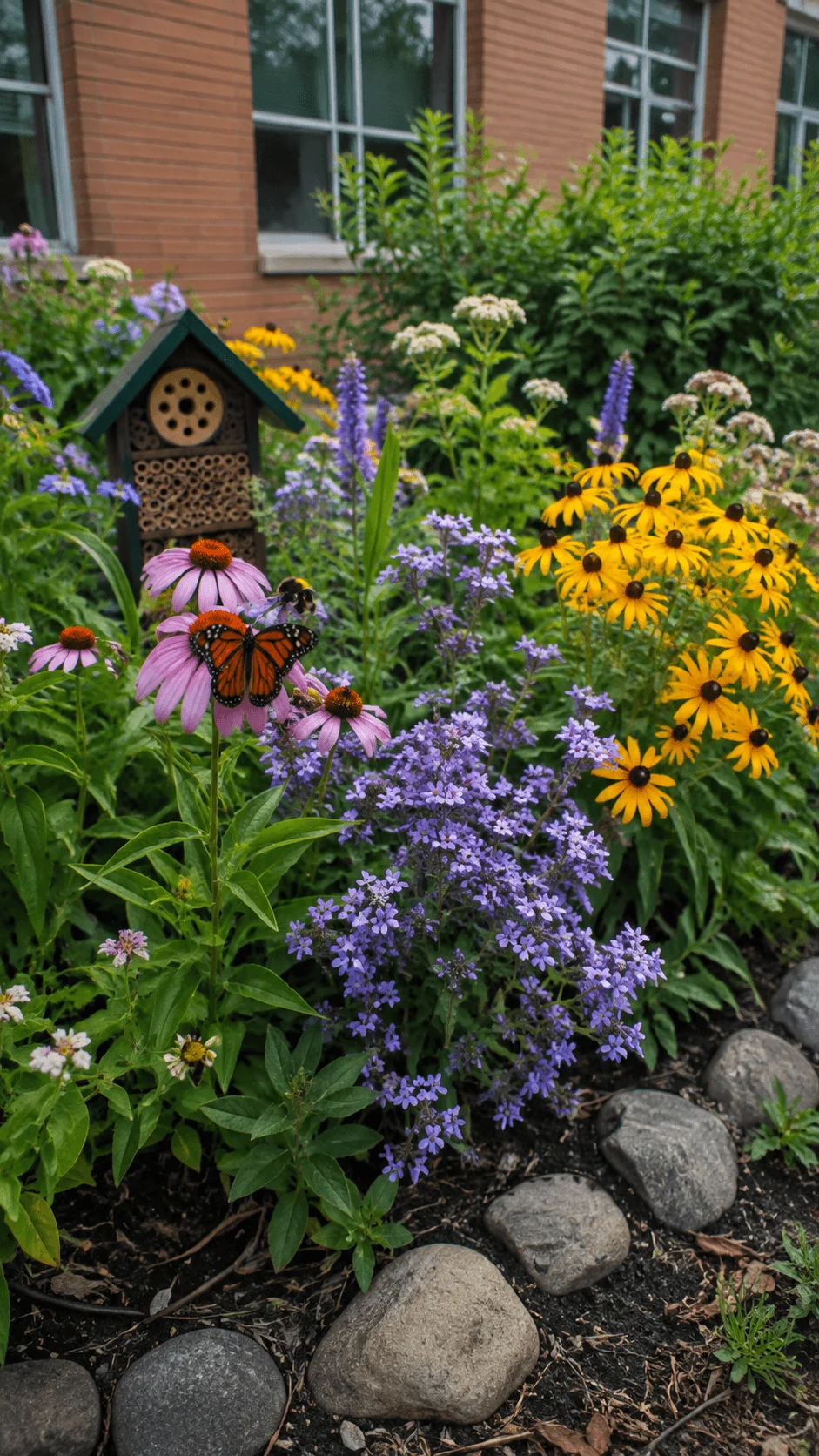
Rather than disturbing insects, students should observe them responsibly from a distance. Their observations can become part of a biology project, with students documenting patterns and considering why certain plants attract more visitors than others.
A pollinator garden also demonstrates an important principle of sustainable landscaping: a garden does not have to benefit humans alone. Thoughtful planting can create space for other organisms and make a school landscape more ecologically valuable.
5. Upcycled Bottle Greenhouse
An upcycled bottle greenhouse can combine gardening with waste reduction and creative construction. Students can explore how materials that might otherwise become waste can be reused for a practical purpose.
The project can begin with students researching greenhouse design and considering what materials are suitable for their school. Reused plastic bottles may become part of the structure, while other recovered materials can potentially be incorporated when they are safe and appropriate.
Students can work together to plan the structure, calculate dimensions, consider sunlight, and determine how plants will be grown inside. The construction process can provide lessons in measurement, design, teamwork, and responsible material use.
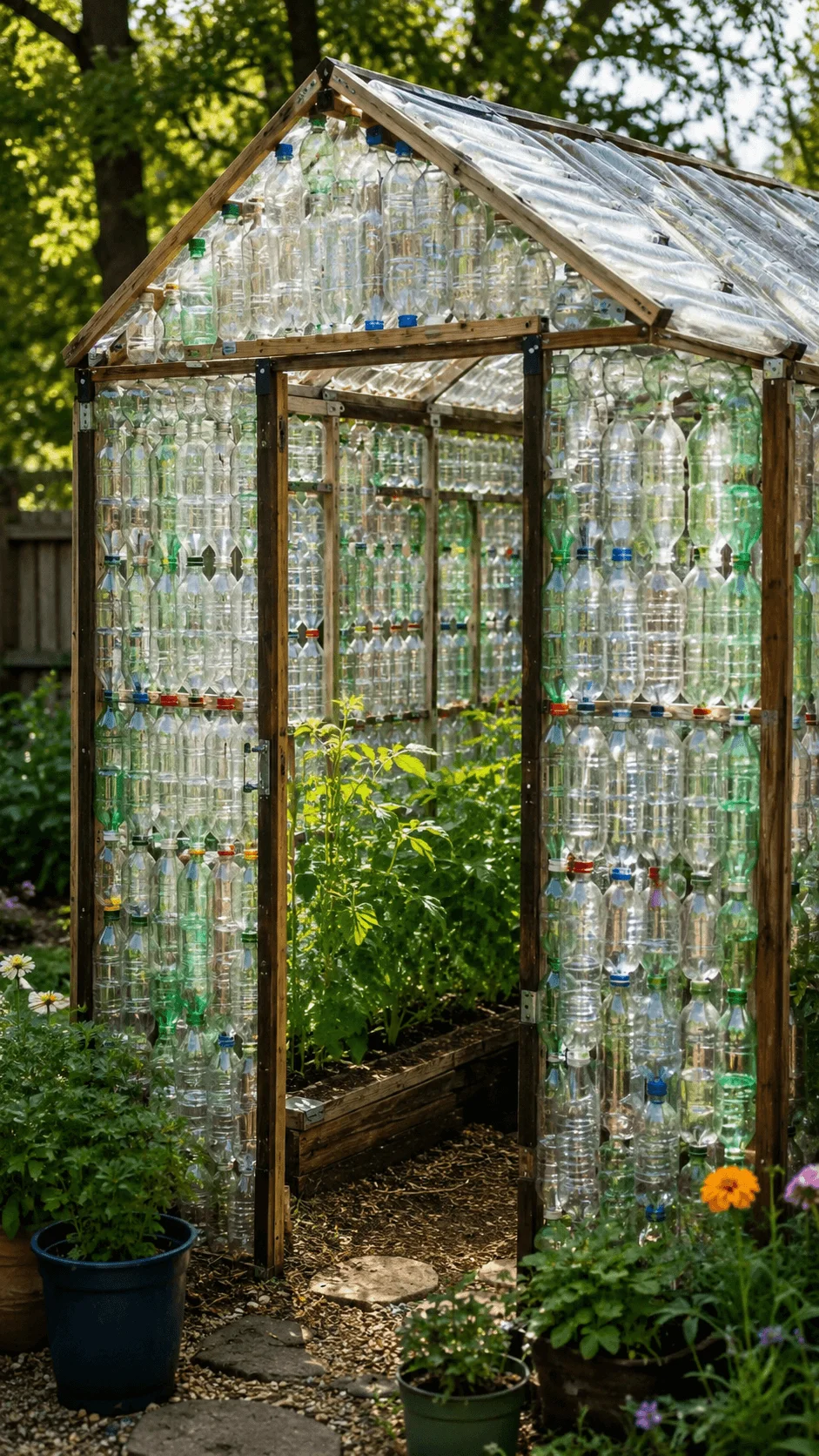
Once the greenhouse is ready, students can compare growing conditions inside and outside the structure. They might observe differences in temperature, sunlight, humidity, or plant development.
The most valuable part of this project is the connection between waste and resource conservation. Students can see that sustainability does not always mean buying new environmentally marketed products. Sometimes it means finding a useful second life for materials that already exist.
Any construction project should follow school safety requirements and receive appropriate adult supervision.
6. Food Waste Compost Garden
A food waste compost garden creates a connection between what happens in the school cafeteria and what happens in the garden. Instead of viewing suitable organic scraps simply as waste, students can study how organic material can return nutrients to the soil through composting.
Students can learn about the different materials that can enter an appropriate compost system and why a balanced mixture is important. They can observe how organic material changes over time as microorganisms break it down.
The composting process provides a simple way to introduce concepts such as decomposition, microorganisms, nutrient cycling, organic matter, and soil health. Students can document changes in the compost and observe how its appearance and texture develop.
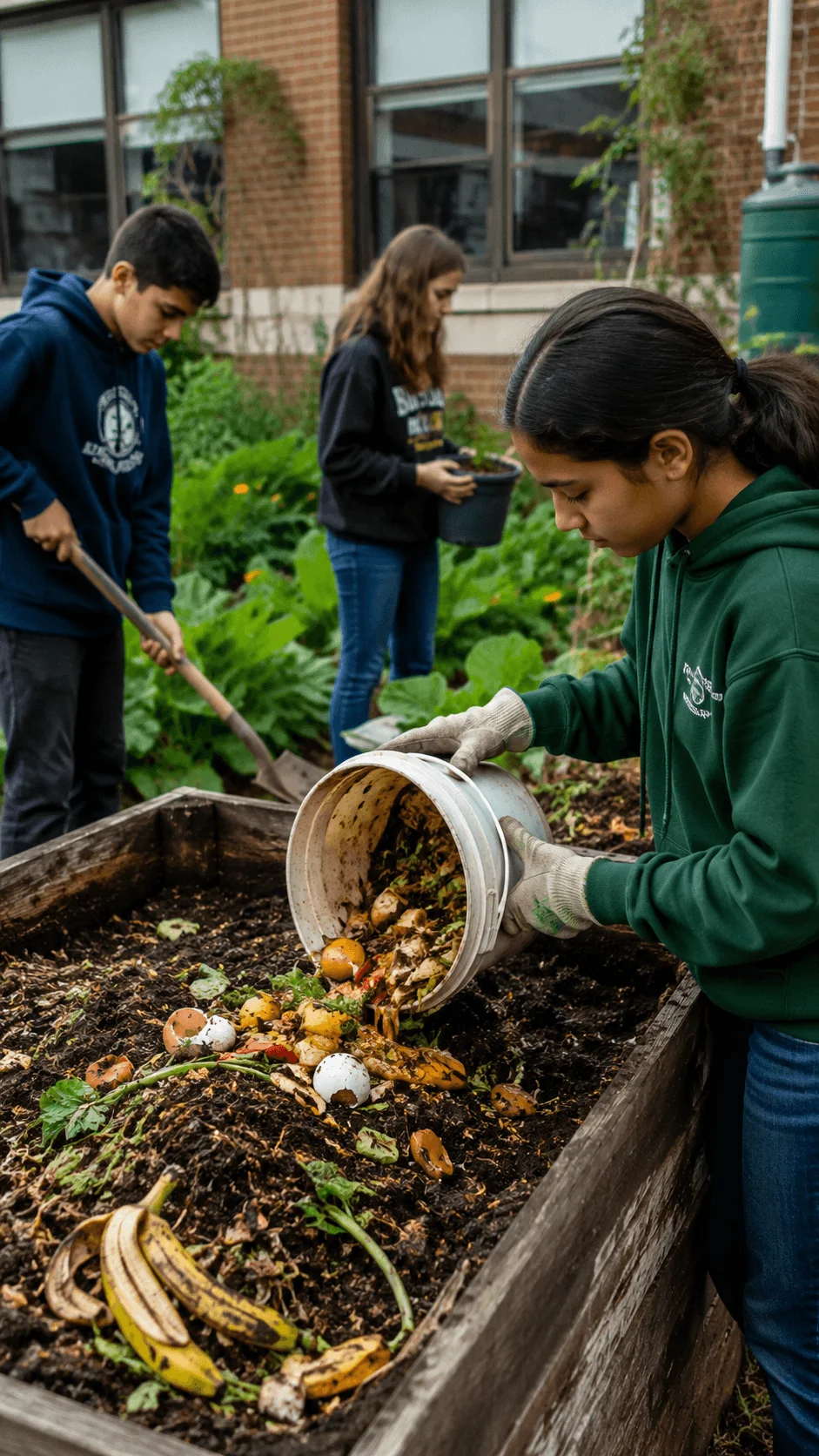
Once mature compost becomes available, the school can use it appropriately in garden soil according to local guidance and school policies. Students can then observe how improving soil organic matter supports the wider garden.
This approach creates a useful sustainability cycle. Suitable organic material from the school can become a resource for the garden, while the garden can produce plants, herbs, or vegetables that support further learning.
7. Worm Composting Garden
Worm composting takes the composting concept in another direction and gives students an opportunity to study decomposition more closely. A suitable vermicomposting system can process certain organic materials with the help of worms and microorganisms.
For high school students, the system can become a small living laboratory. They can observe changes in the material, learn about decomposition, and investigate the role of organisms in breaking down organic matter.
Students can maintain observation records and study how environmental conditions influence the process. They can also explore how the resulting material can contribute to soil improvement when handled appropriately.
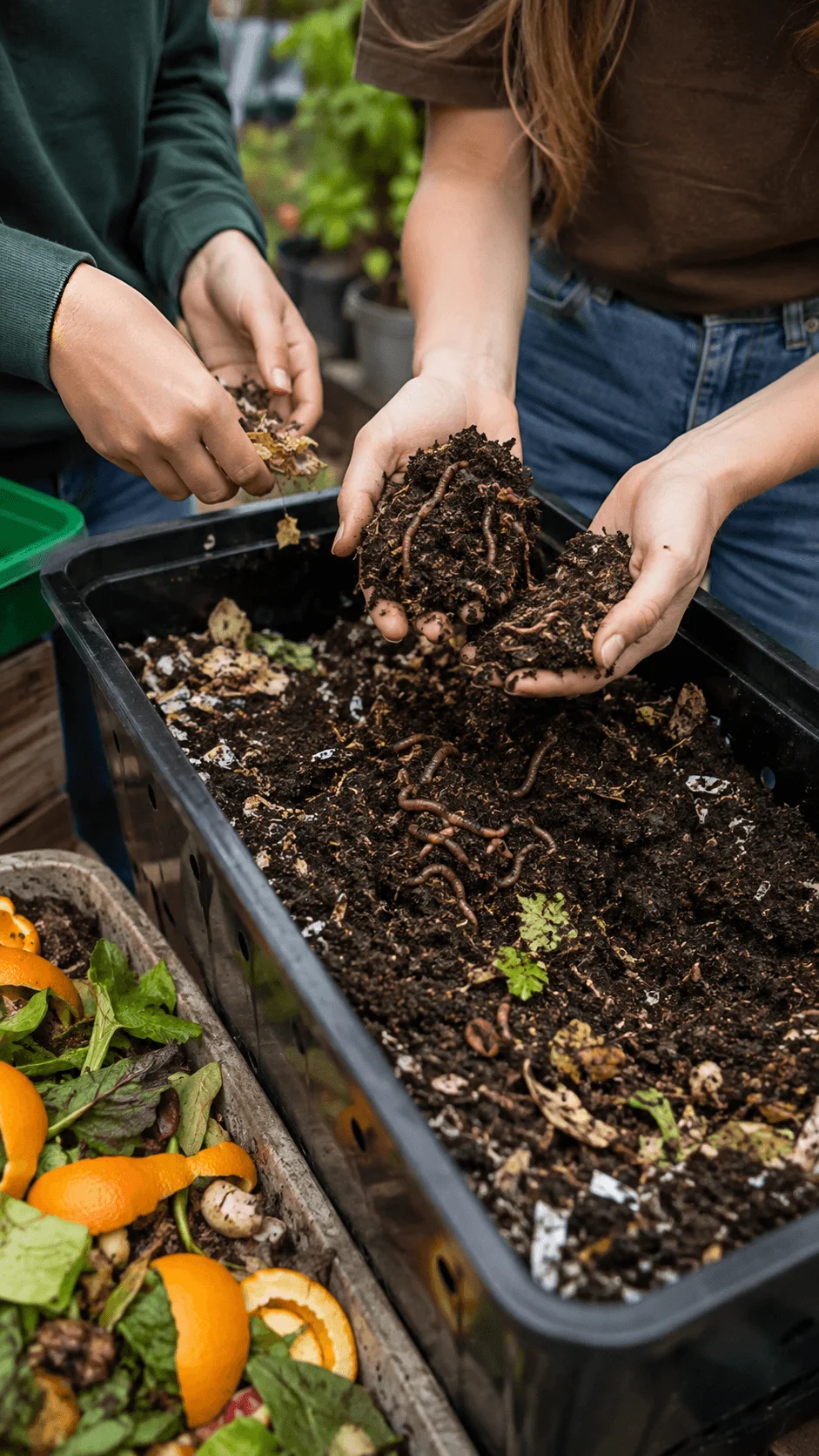
Worm composting is particularly useful because it makes an invisible natural process easier to understand. Students can see that healthy soil depends on countless biological interactions and that organic material does not simply disappear when people throw it away.
The project can connect directly with a school garden by demonstrating how waste management, soil health, and plant growth form part of the same environmental cycle.
8. Rainwater Harvesting Garden
Rainwater harvesting is one of the most practical eco friendly garden ideas for high school students because it allows students to connect gardening with water conservation. Instead of relying entirely on treated water for plants, schools can explore ways to collect rainfall and use it appropriately for garden activities where local rules, school policies, and safe water practices allow it.
Students can begin by studying the school building and identifying suitable areas where rainwater naturally flows from roofs or other surfaces. They can learn how rainfall moves through gutters and collection systems and investigate how much water could potentially be collected during different weather conditions.
The project can also involve mathematics. Students can record rainfall amounts and compare them with the size of a collection surface. They can then estimate how much water might be available for the garden. These calculations give students an opportunity to apply classroom concepts to a real environmental problem.
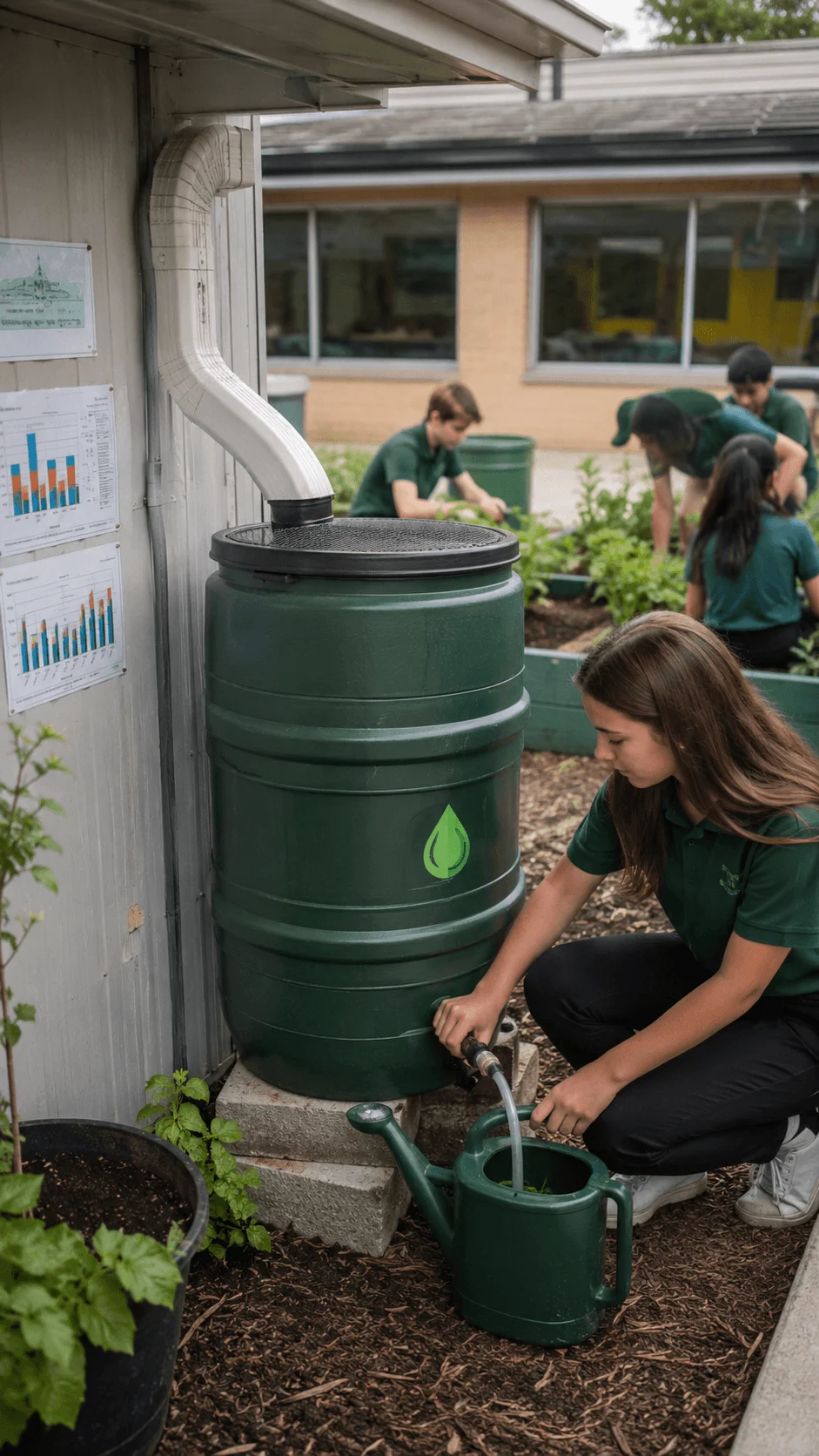
A rainwater harvesting garden can also include a simple monitoring system. Students can record how much collected water the garden uses and compare that amount with the school’s normal garden water requirements. Over time, they can identify periods when rainfall provides more water and periods when the garden requires additional irrigation.
The educational value goes beyond water collection. Students can learn about rainfall patterns, water conservation, responsible resource management, and the relationship between weather and plant growth.
Schools should use appropriate collection systems and follow local regulations and safety guidance. The goal is to teach students how thoughtful water management can become part of a sustainable garden design.
9. Biodiversity Observation Garden
A biodiversity observation garden focuses on creating a space where students can study the variety of living organisms found around them. Instead of designing a garden only for appearance or food production, students can intentionally create different conditions that support a wider range of plants and wildlife.
Students can include a mixture of suitable flowering plants, shrubs, groundcovers, and other vegetation. They can also create variation through sunny and shaded areas where space and site conditions allow. Different types of vegetation can provide different resources and shelter for organisms.
Once the garden develops, students can begin observing what lives there. They might notice different insects visiting flowers, birds using vegetation for shelter, or changes in plant communities throughout the seasons. Students can maintain observation journals and record their findings.
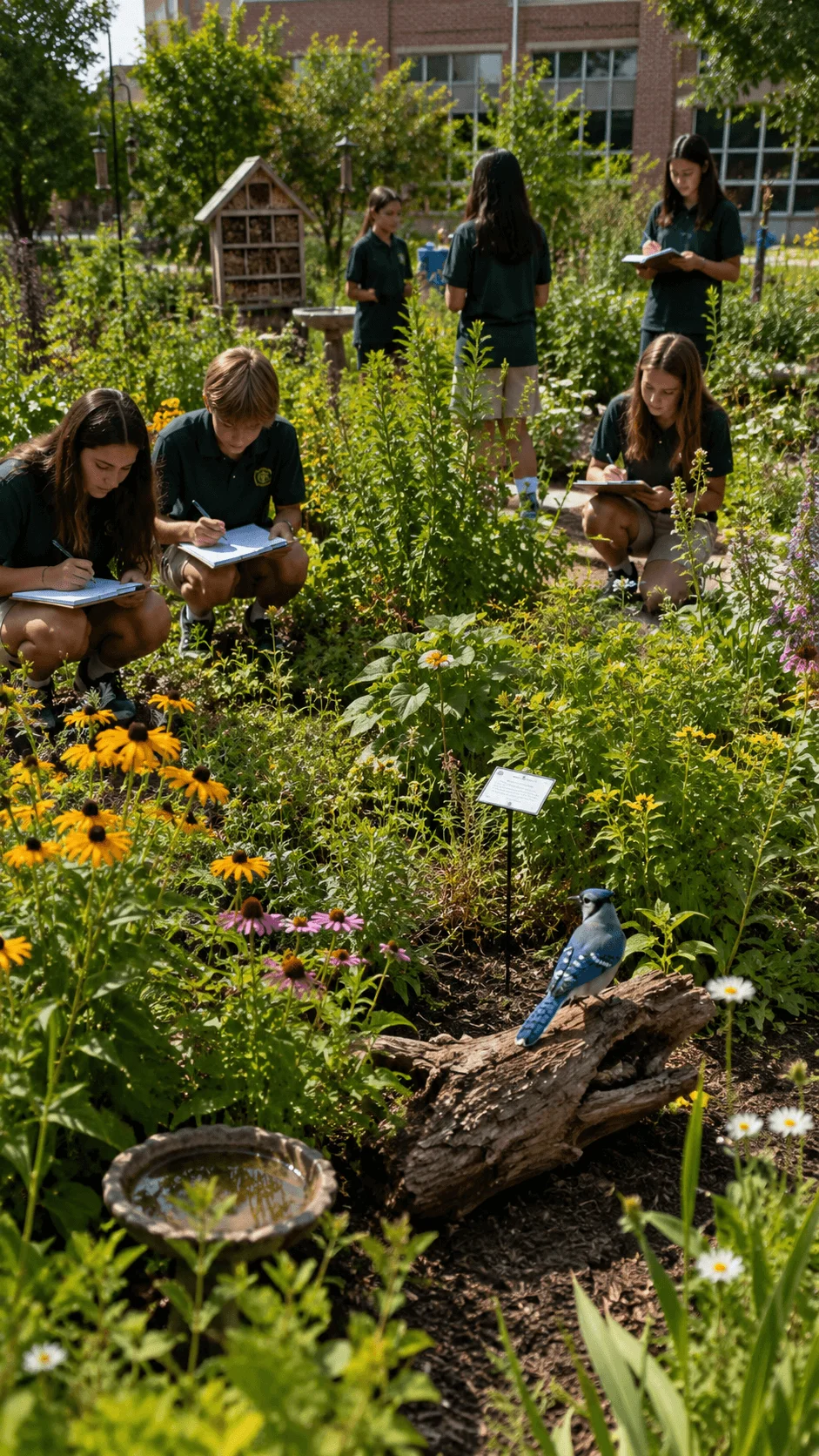
This makes biodiversity garden projects for students particularly useful for biology classes. Students can compare the organisms they find in the garden with those found in less vegetated areas of the school grounds. They can ask questions about why certain organisms appear in one location but not another.
Students can also investigate seasonal changes. A garden that looks quiet during one period might become much more active during another season. Recording these changes can help students understand that ecosystems constantly change rather than remaining the same throughout the year.
The garden should be managed responsibly so students observe wildlife without unnecessarily disturbing it. This project can teach an important lesson about biodiversity while giving students a direct way to study ecological relationships.
10. Low Water Xeriscape Garden
A low water garden can demonstrate how thoughtful plant selection and landscape planning can reduce unnecessary water use. Xeriscaping focuses on designing landscapes around water efficiency, making it a useful concept for schools located in areas where water conservation matters.
Students can begin by researching plants that naturally suit their local climate. Instead of choosing plants that require frequent irrigation, they can look for appropriate species that can handle the conditions of the site.
Garden design also matters. Students can investigate how grouping plants with similar water requirements can make maintenance easier. They can study how mulch helps protect soil from drying quickly and how thoughtful watering practices can reduce waste.
This project can also encourage students to question common assumptions about attractive gardens. A sustainable garden does not need to contain large areas of thirsty plants or require constant watering to remain interesting. Careful design can create a visually appealing space while using resources responsibly.
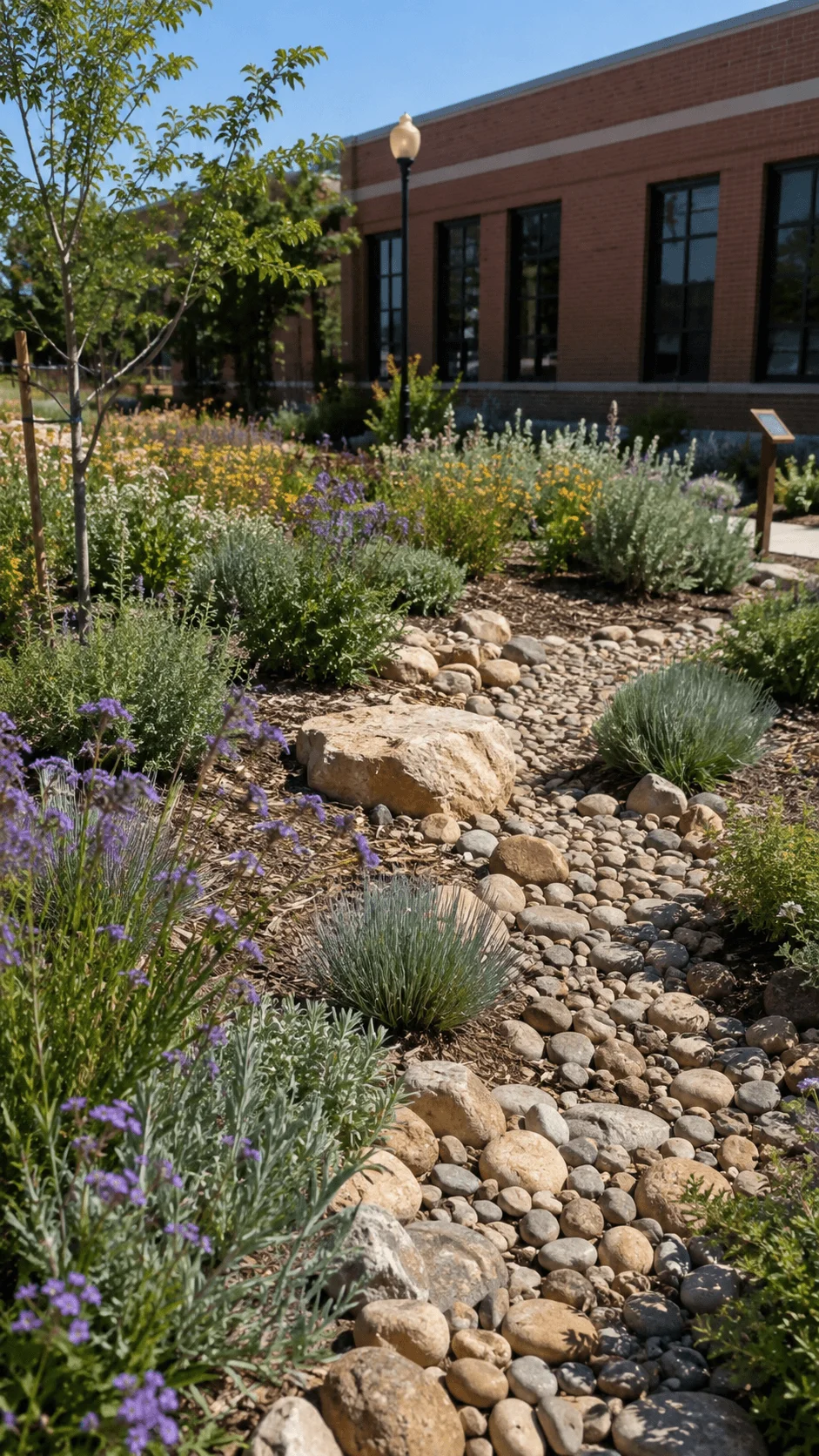
Students can turn the garden into a practical experiment by comparing water requirements between different planting areas. They can monitor soil moisture and observe how different plants respond to changes in weather.
These water saving school garden ideas can be especially valuable because they teach students that sustainability often begins with working according to local environmental conditions rather than trying to force a landscape to behave differently.
11. Student Sustainability Data Garden
A student sustainability data garden can transform an ordinary school garden into a living environmental science laboratory. This is one of the most flexible ideas because students can collect information about several aspects of the garden and use their findings to understand how sustainable practices work.
Students might monitor plant growth over time and compare plants growing in different conditions. They can record rainfall, soil moisture, water use, pollinator activity, compost production, or harvest amounts when appropriate.
The purpose is not simply to collect numbers. Students can look for patterns and ask questions about what those patterns mean.
For example, students might investigate whether plants in mulched areas maintain soil moisture for longer than plants in uncovered soil. They could observe whether pollinator visits change when different plants are flowering. They might also compare water requirements between a conventional planting area and a low water garden.
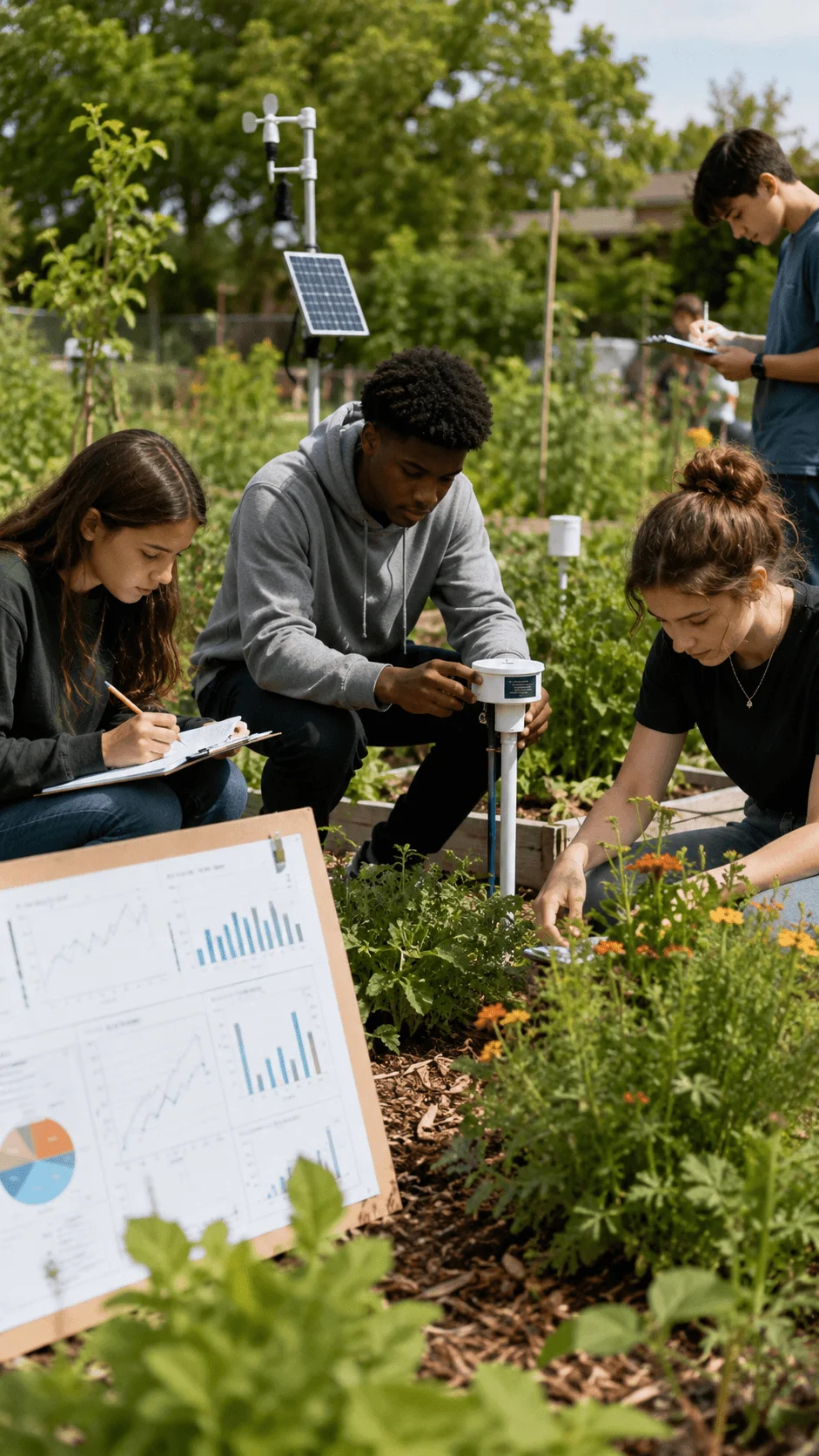
This approach allows the garden to become a practical research environment. Students can create tables, charts, reports, presentations, and recommendations based on their observations.
The project can involve several subjects at once. Biology students can study plant and insect interactions. Environmental science students can investigate resource conservation. Mathematics students can analyze measurements and trends. Technology students can explore digital data collection and presentation.
The biggest advantage is that students are not simply being told that a particular gardening method is sustainable. They can investigate the garden themselves and use evidence to understand what works.
This makes a sustainability data garden particularly valuable among environmental garden projects for high school students because it encourages curiosity, critical thinking, research, and evidence based decision making.
12. Student Led Green Schoolyard
A student led green schoolyard puts students at the center of the planning process. Instead of teachers or administrators making every decision, students can investigate the school grounds, identify opportunities for improvement, and participate in designing sustainable outdoor spaces.
The project can begin with an assessment of the existing schoolyard. Students can observe areas that receive too much sunlight, locations where water collects, unused spaces, areas with limited vegetation, and places that could provide better habitat.
Students can then research possible solutions and develop garden concepts. One group might focus on native plants, while another studies water management. Other students could research composting, food production, biodiversity, or outdoor learning spaces.
The students can combine their findings into a larger proposal. They might create drawings, written plans, planting concepts, or presentations explaining why particular changes could benefit the school.
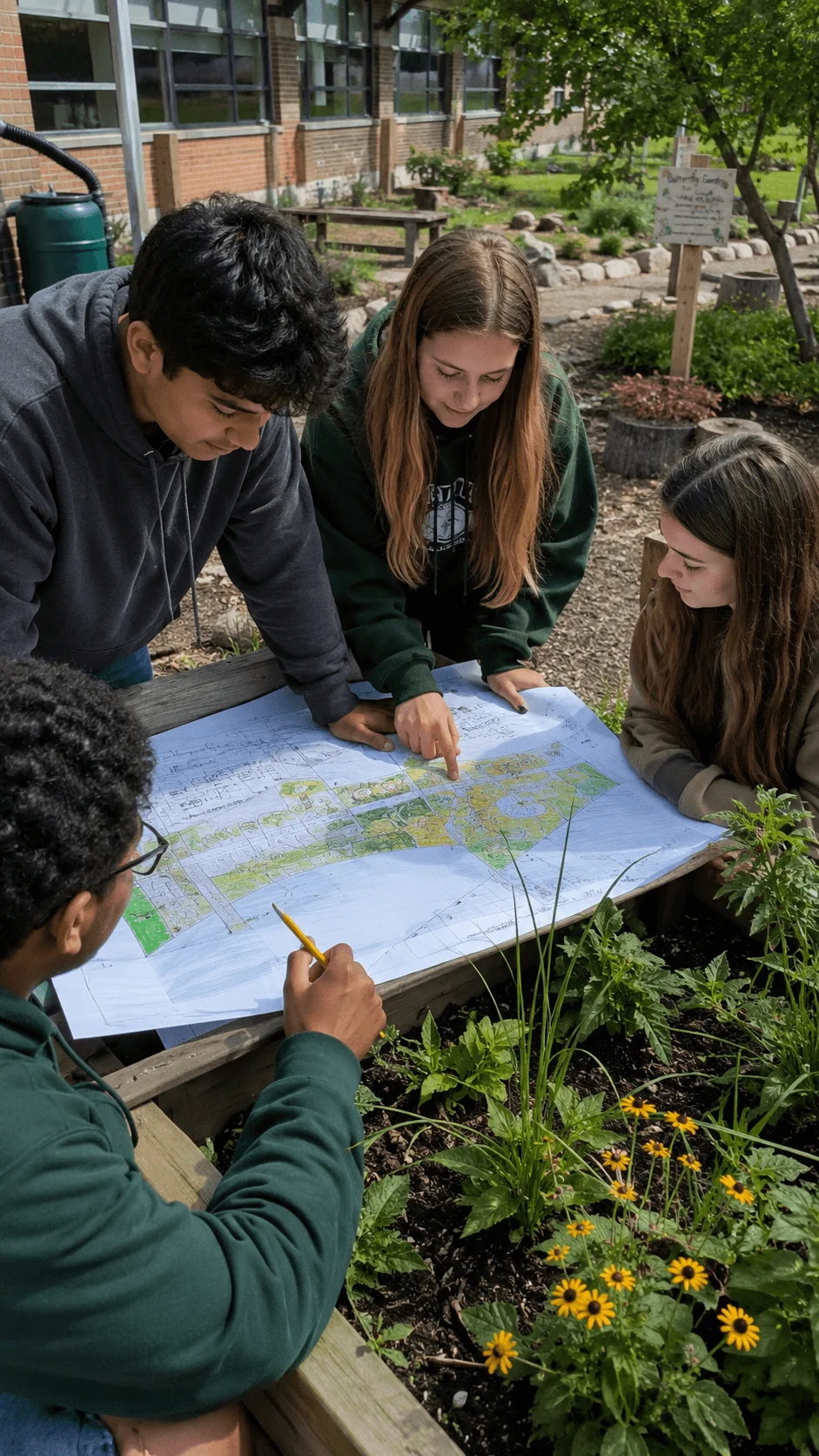
This process gives students meaningful experience with planning and communication. They learn that environmental improvement involves more than identifying a problem. People must research solutions, consider limitations, communicate ideas, and work with others to turn plans into reality.
A student led green schoolyard can also create a stronger sense of ownership. When students participate in designing the space, they may feel more connected to its development and long term care.
This approach can bring together many of the other sustainable school garden ideas in one larger project. A schoolyard might eventually include a native plant area, rain garden, food forest, compost system, pollinator habitat, and water efficient planting zones.
How to Turn Sustainable Garden Ideas Into High School Projects
The best school gardens become more valuable when students treat them as ongoing projects rather than one day activities. A class or gardening group can begin by selecting one manageable idea and developing a clear research question around it.
Students can investigate the environmental conditions of the school grounds before deciding what to build. They can research local plants, study soil, observe sunlight, investigate rainfall, and consider how people currently use the space.
After the planning stage, students can participate in implementation where school policies and appropriate supervision allow. They can document the process through photographs, written observations, measurements, and project notes.
The garden can then become an ongoing source of information. Students can return to the project throughout the school year to monitor growth, observe wildlife, measure water use, or document seasonal changes.
Different subjects can contribute to the same project. Biology classes can investigate ecosystems and plant growth. Environmental science classes can study sustainability and resource conservation. Mathematics classes can work with measurements and data. Art and design students can create signs or garden layouts. Technology students can help organize and present information.
This interdisciplinary approach makes sustainable garden projects for students more meaningful because students can see how different areas of knowledge connect when solving real environmental problems.
How to Make an Eco Friendly School Garden More Sustainable
Creating a garden is only the beginning. Long term sustainability depends on how the space is managed after the initial project finishes.
Schools can prioritize plants that suit the local environment and avoid creating gardens that require excessive resources. Students can monitor plant health and identify problems before they become serious.
Water management should also remain an important consideration. Schools can investigate efficient watering practices, appropriate mulching, rainwater collection where suitable, and planting choices that match local conditions.
Healthy soil is another foundation of a sustainable garden. Compost and other appropriate organic materials can contribute to soil health when managed correctly. Students can study how soil changes over time and learn why healthy soil supports productive and resilient plants.
Biodiversity should also remain part of the garden’s long term goals. A sustainable school garden does not need to focus on only one type of plant or one purpose. Combining food production, habitat, native vegetation, and educational spaces can create a more diverse environment.
Schools can also think about maintenance before starting a project. A garden that requires more care than students and staff can realistically provide may become difficult to maintain. Choosing practical designs and manageable planting areas can make the project more successful over time.
Most importantly, sustainability should become part of the garden’s culture. Students can continue researching, observing, improving, and sharing what they learn with other members of the school community.
Conclusion
The best eco friendly garden ideas for high school students do much more than create attractive outdoor spaces. They give students an opportunity to explore environmental issues through direct experience and meaningful projects.
A native plant garden can introduce students to local ecosystems and climate resilience. A rain garden can demonstrate responsible stormwater management. A food forest can connect food production with biodiversity, while a pollinator garden can help students observe relationships between plants and wildlife.
Composting, worm composting, rainwater harvesting, and water efficient gardening can help students understand how resources move through natural and human systems. Meanwhile, biodiversity observation and sustainability data projects can turn the garden into a practical research environment.
Perhaps most importantly, student led garden projects give young people a chance to participate in environmental decision making. They can research problems, develop solutions, collect evidence, and see the results of their work.
A school does not need a huge budget or a large piece of land to begin. A small garden can provide a starting point, and students can gradually expand the project as their knowledge and experience grow. With thoughtful planning and continued student involvement, an eco friendly school garden can become a living classroom that supports sustainability education for years to come.