Best Eco Friendly Activities for Kids at Home
Teaching children about caring for the planet does not have to involve complicated lessons or expensive materials. Some of the best eco friendly activities for kids at home can happen with things families already have around them. When children participate in simple challenges, gardening projects, nature observations and creative reuse, they can begin to understand sustainability through real experiences.
The goal is not to make children responsible for solving environmental problems. Instead, these activities give them opportunities to become curious about the world around them and understand how everyday choices affect nature. A cardboard box can become an invention, a kitchen scrap can become a growing experiment, and an ordinary container can become a tiny habitat for pollinators.
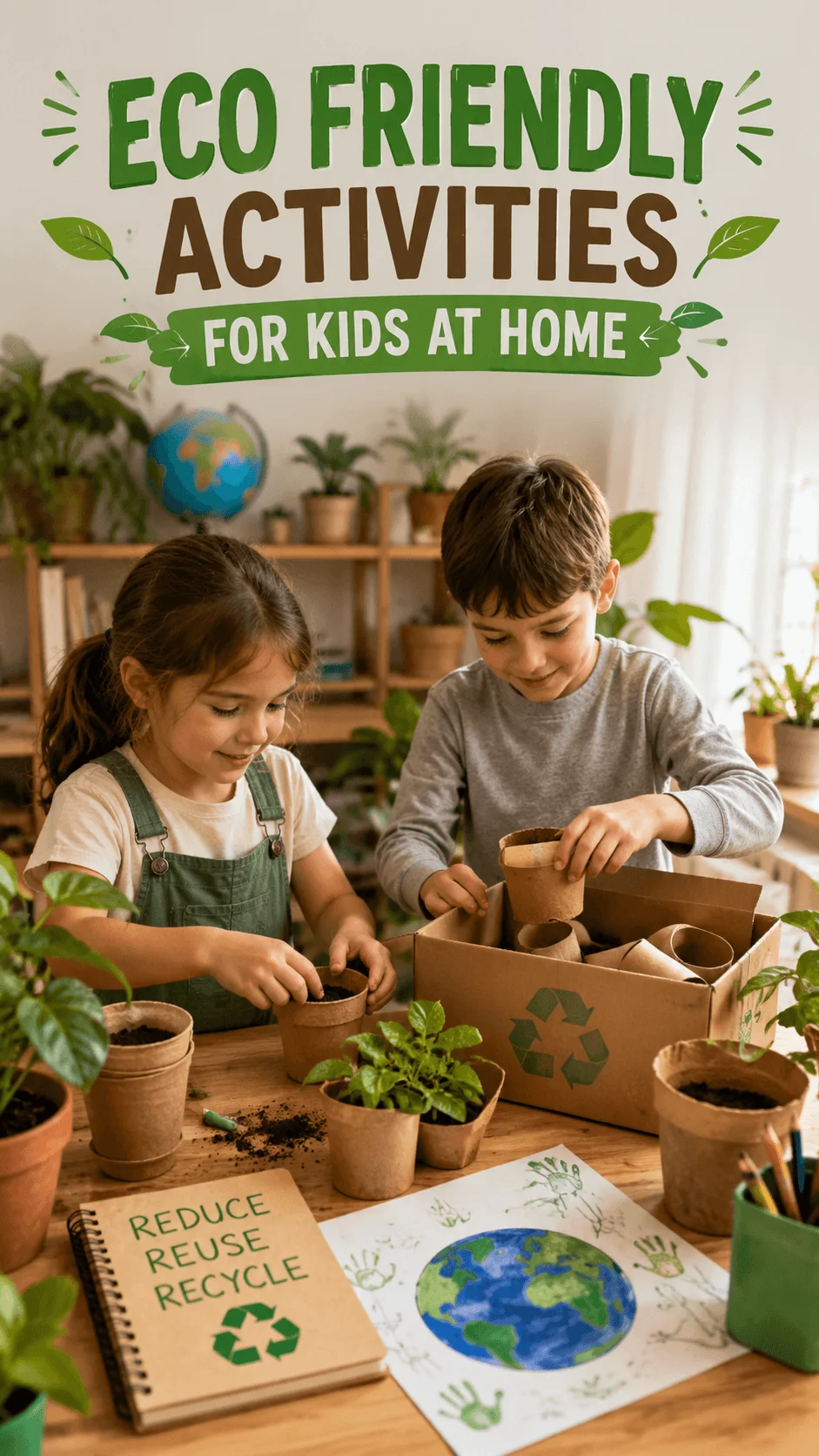
The following ideas combine creativity, science, nature and practical household habits. They can also help parents turn ordinary moments at home into meaningful learning experiences without making sustainability feel like schoolwork.
Easy Eco Friendly Activities for Kids at Home
1. Start a Seven Day Family Eco Challenge
A family eco challenge can turn sustainability into something children actively participate in rather than something adults simply explain to them. Instead of introducing many environmental habits at once, choose one small theme for each day and allow children to discover what they can do.
One day might focus on water awareness. Another could focus on reusing something that would normally go into the trash. A different day could encourage the family to look for ways to reduce food waste. Children could also spend a day caring for plants or observing wildlife around the home.
The most valuable part of this activity is the discussion that happens along the way. Ask children what they noticed, what surprised them and what they think the family could change. Their suggestions may be simple, but allowing them to participate in decisions helps them understand that sustainability involves everyday choices.
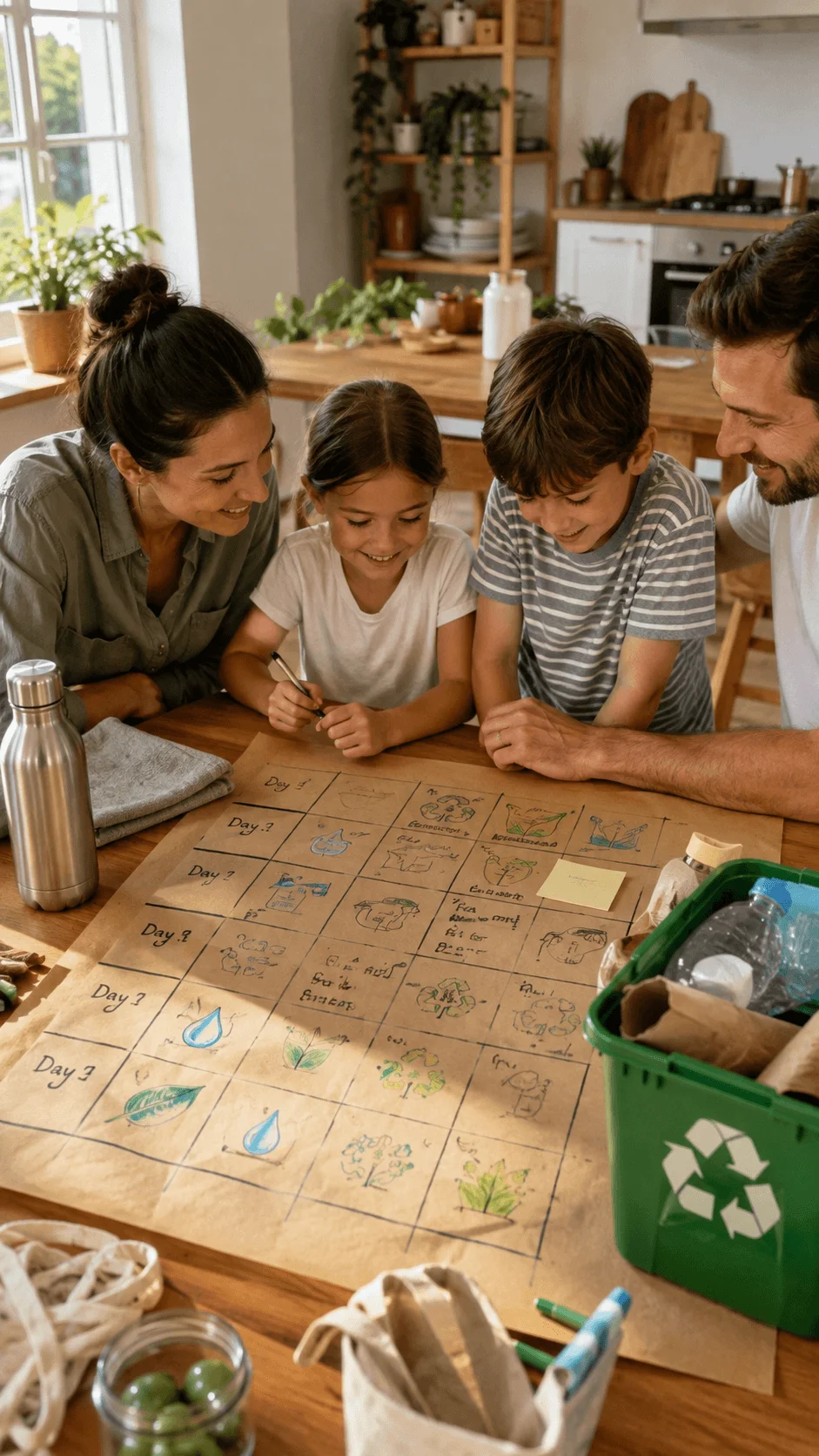
Parents can also create a small calendar where children record what they discovered each day. Younger children might draw pictures, while older children can write a few sentences about their experience.
The challenge does not need to become a competition. Its purpose is to help children notice environmental habits that normally happen without much thought. After seven days, the family can discuss which activities they enjoyed and which habits they would like to continue.
2. Create a Mini Compost Observation Project
Composting can seem like a household waste management task to adults, but children can approach it as a fascinating natural science experiment. A mini compost observation project allows them to learn what happens to suitable organic materials as they break down.
Parents can introduce the basic idea of decomposition using simple language. Explain that natural organisms gradually break down organic material and return nutrients to the environment. Children can then observe changes over time rather than simply hearing an explanation.
The observation itself can become the main activity. Children can look for changes in appearance, texture and moisture and record what they notice. They may discover that different materials change at different rates, which creates an opportunity to talk about natural decomposition.
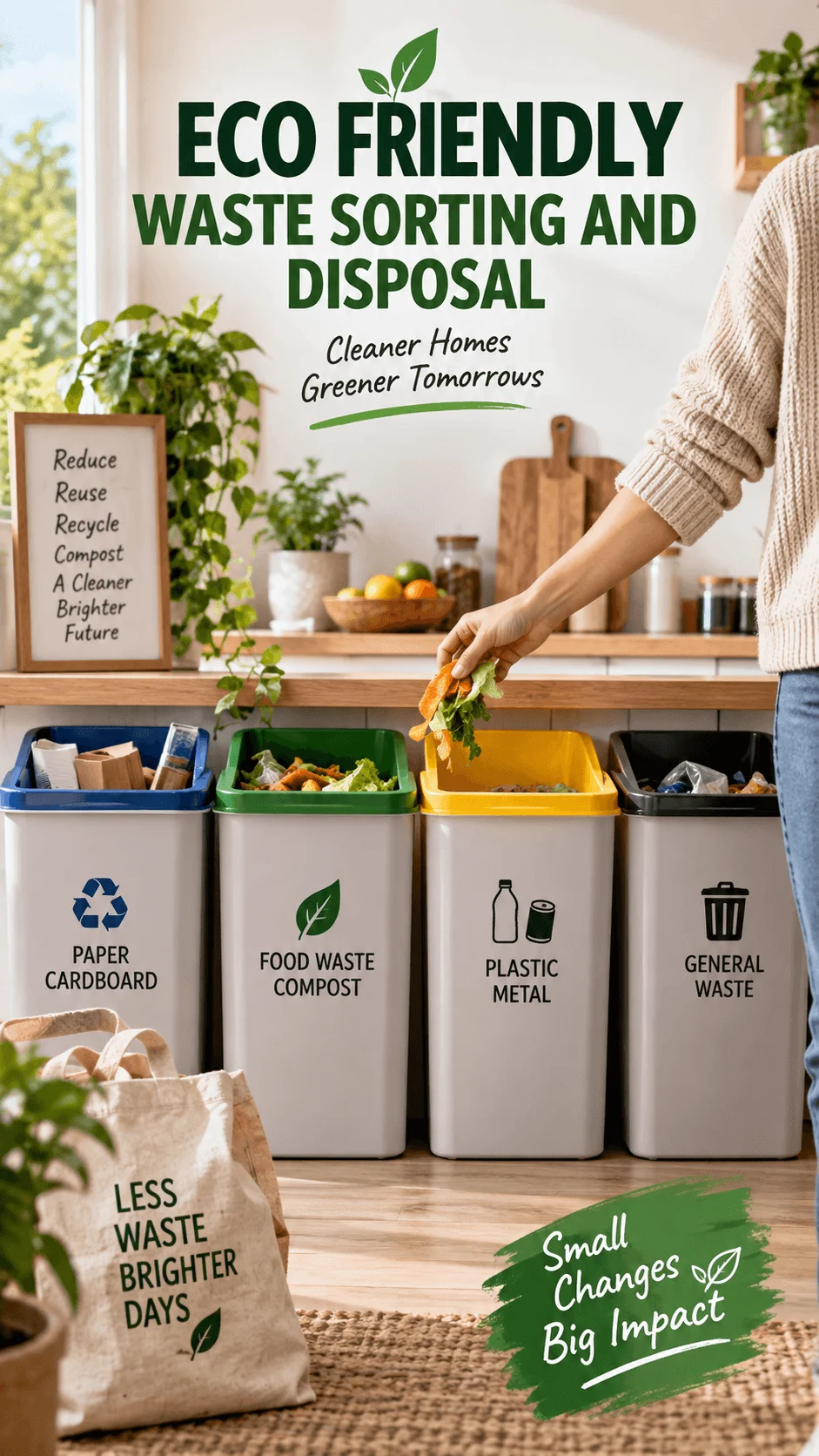
This project also connects directly with food waste. Children often see food scraps disappear into a trash bin without thinking about what happens afterward. Composting gives them another perspective by showing that some organic material can become part of a useful natural cycle.
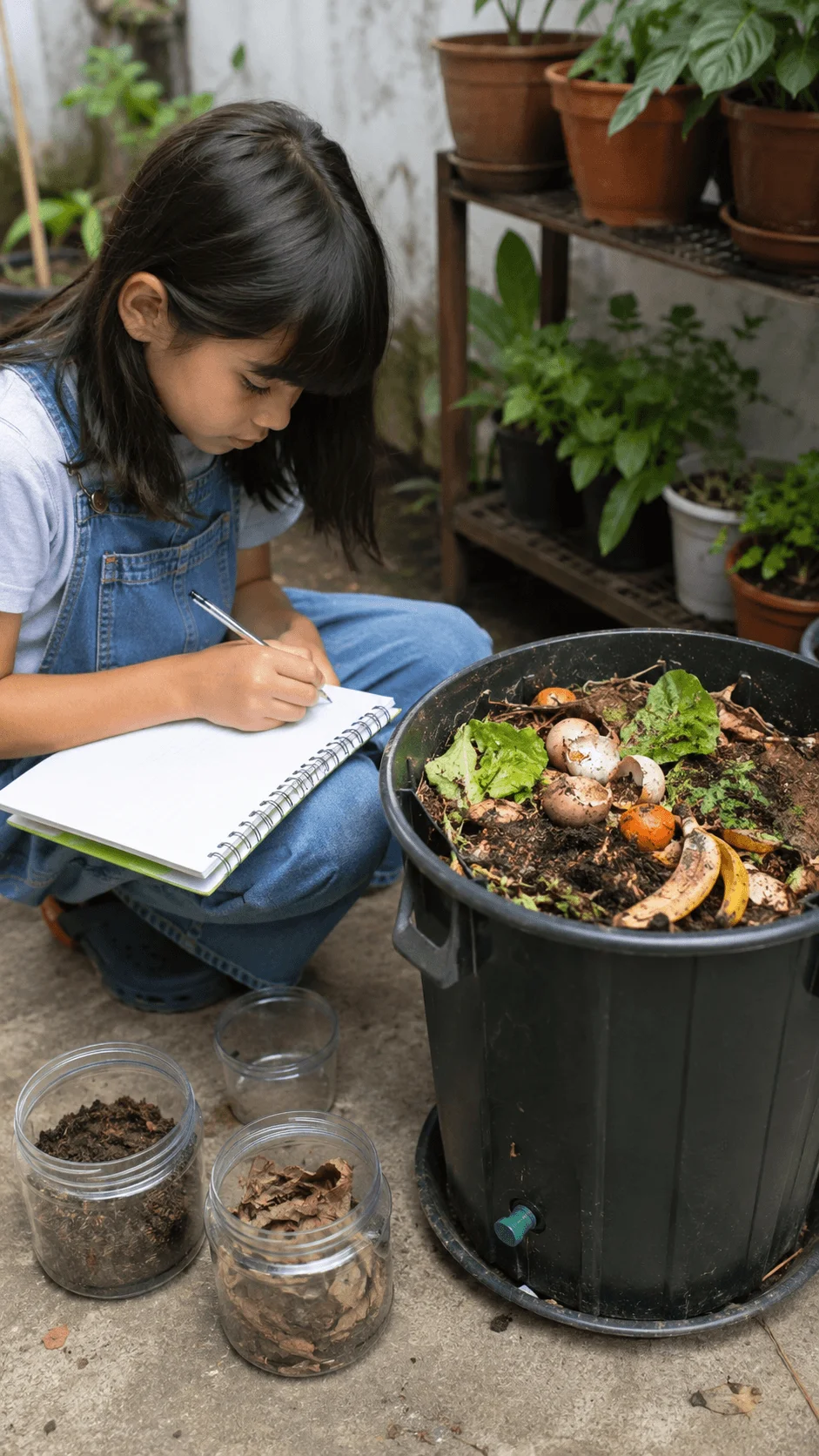
Parents should choose appropriate materials and supervise the project, especially with younger children. The focus should remain on observation and learning rather than expecting children to manage compost independently.
Over time, the activity can lead to conversations about healthy soil, plants and how organic material supports growing systems. It turns a simple household practice into a hands on lesson about nature.
3. Grow a Kitchen Scrap Regrow Garden
A kitchen scrap regrow garden is another creative way to show children that food can have a life beyond the dinner table. Suitable vegetable scraps can sometimes produce new growth when given the right conditions, allowing children to observe plant development at home.
The real appeal comes from watching something that might normally be discarded begin to grow again. Children can observe roots forming, leaves appearing and the plant changing over time.
Parents can provide a small container and help children choose appropriate kitchen scraps for the experiment. The growing area does not need to take up much space. A sunny windowsill or another suitable location can become a tiny learning garden.
Encourage children to observe their plants regularly. They can draw what they see or keep a simple growth journal. Instead of focusing only on whether the plant grows successfully, ask questions about what it needs. Why does it need light? What happens when it receives water? Why does the new growth look different from the original scrap?
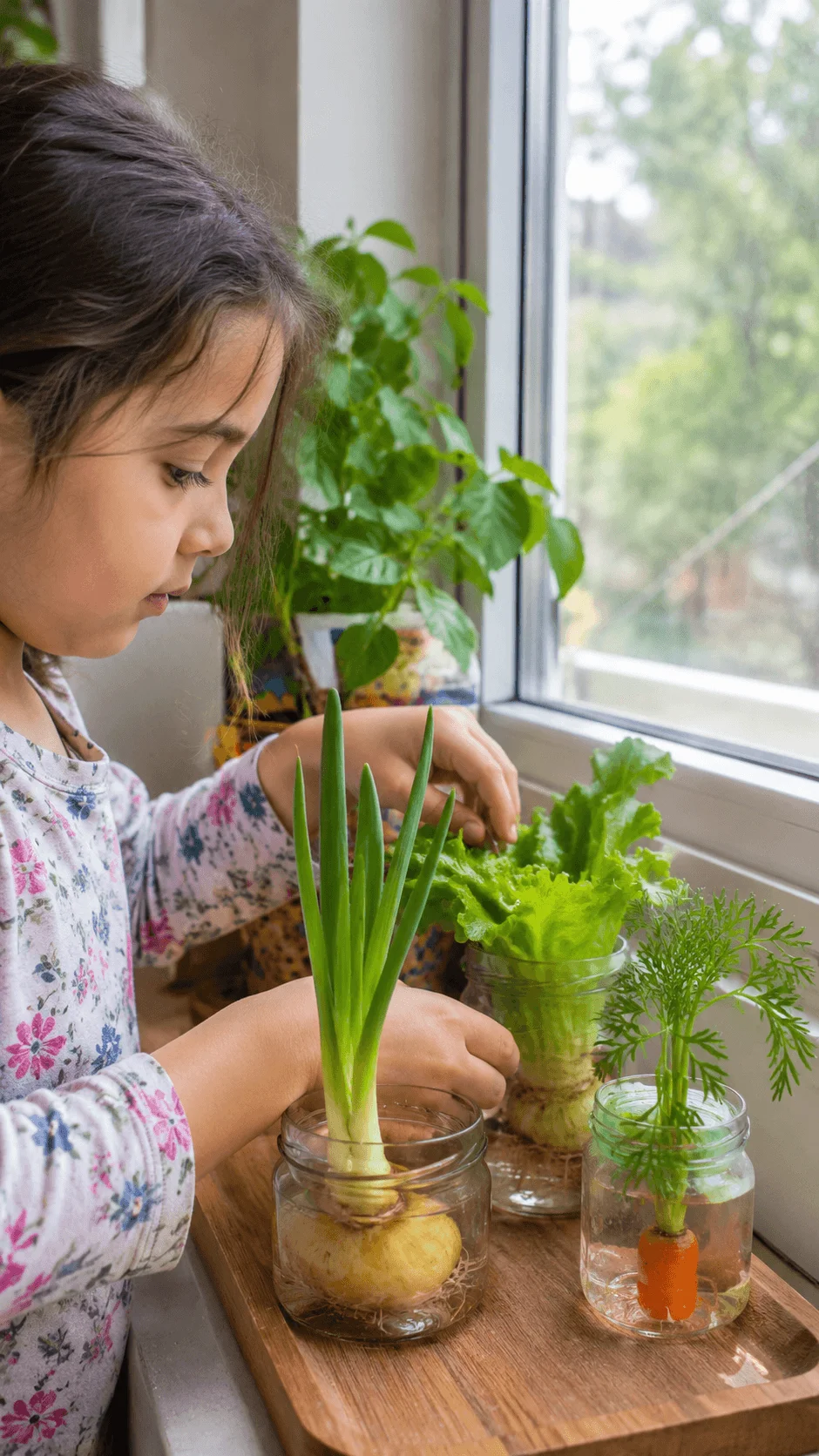
These questions transform the activity into a small science investigation.
The project also introduces the concept of resourcefulness. Children begin to see that some things that look like waste may still have another use. This does not mean every kitchen scrap can grow into a new plant, but the experiment can help children become more curious about food, plants and waste.
4. Create a Container Pollinator Garden
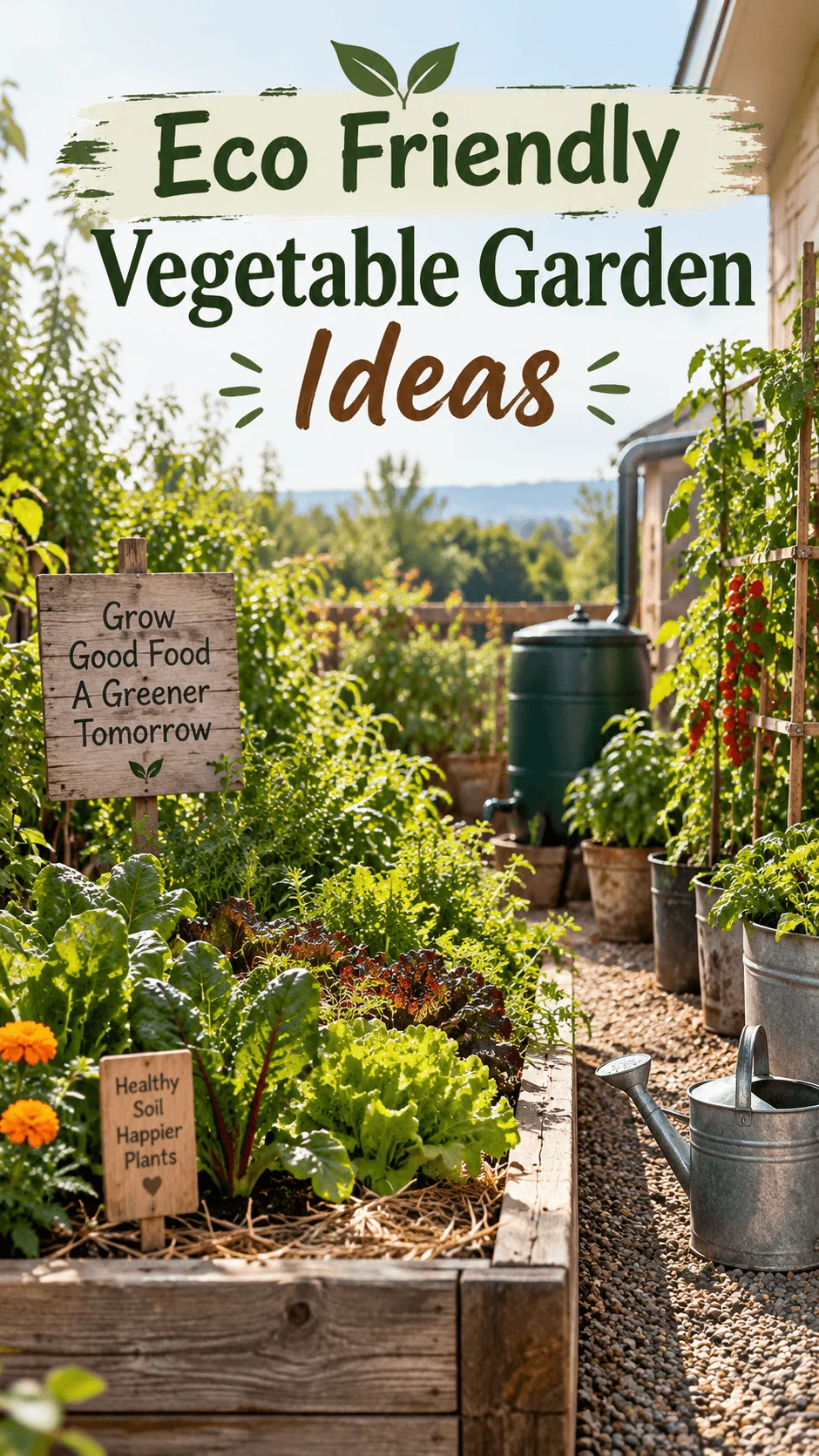
Children do not need a large backyard to explore the relationship between plants and pollinators. A small container garden can create an accessible opportunity to observe flowers and the insects that visit them.
Choose plants that are appropriate for your local climate and that can support pollinators. Children can help prepare the container, care for the plants and observe what happens when the flowers begin to bloom.
The observation stage can become more interesting than the gardening itself. Encourage children to sit nearby and watch quietly for a few minutes. They might notice different insects visiting the flowers at different times of day.
This can introduce an important idea about biodiversity. A garden is not simply a collection of plants. It can become a small environment where plants, insects and other organisms interact.
Children can keep a nature journal where they record the insects they see. They can draw the flowers and note when they observe visitors. Older children might compare observations from different days and consider why certain insects appear more frequently.
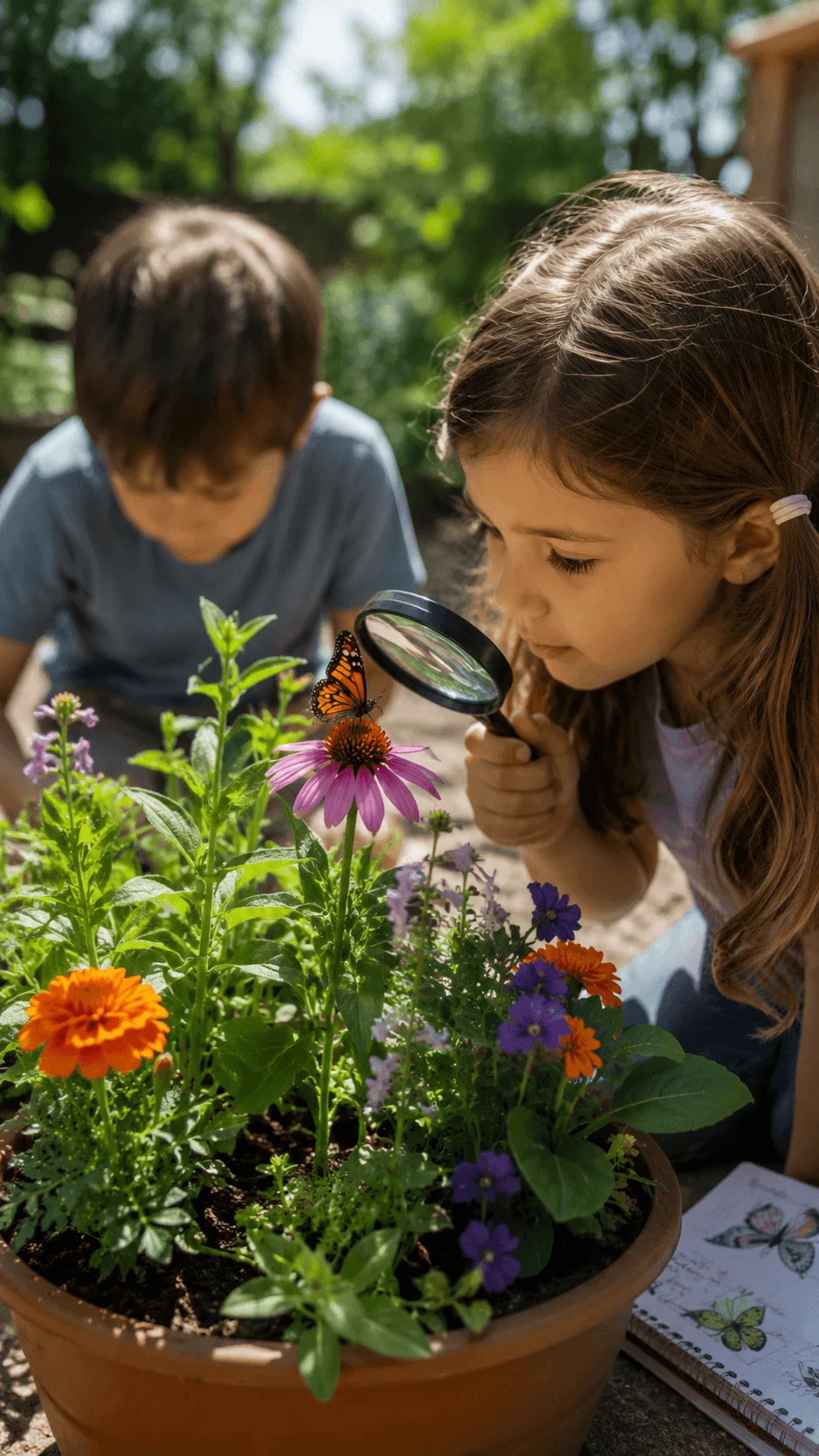
The activity also teaches patience. Plants require time and consistent care, while wildlife does not always appear when children expect it. That waiting period can help children develop a stronger appreciation for natural processes.
A container pollinator garden can therefore become more than a gardening project. It can provide an ongoing environmental activity that children revisit throughout the growing season.
5. Build a DIY Bug Hotel
A bug hotel gives children another way to explore biodiversity close to home. It provides a small habitat structure where certain insects and other tiny creatures may find suitable spaces.
The construction process can become a creative reuse project. Children can help arrange appropriate natural materials and clean reused household materials to create different spaces within the structure.
The important lesson is not simply how to build the habitat. It is understanding that small creatures need places to live too. Children often notice large animals first, but a bug hotel can encourage them to pay attention to organisms they might otherwise ignore.
Once the habitat is in place, children can observe it without constantly touching or disturbing it. They can look for signs of insect activity and record what they notice.
Parents can use this opportunity to explain that different creatures have different needs. Some prefer sheltered spaces, while others look for particular plants or environmental conditions.
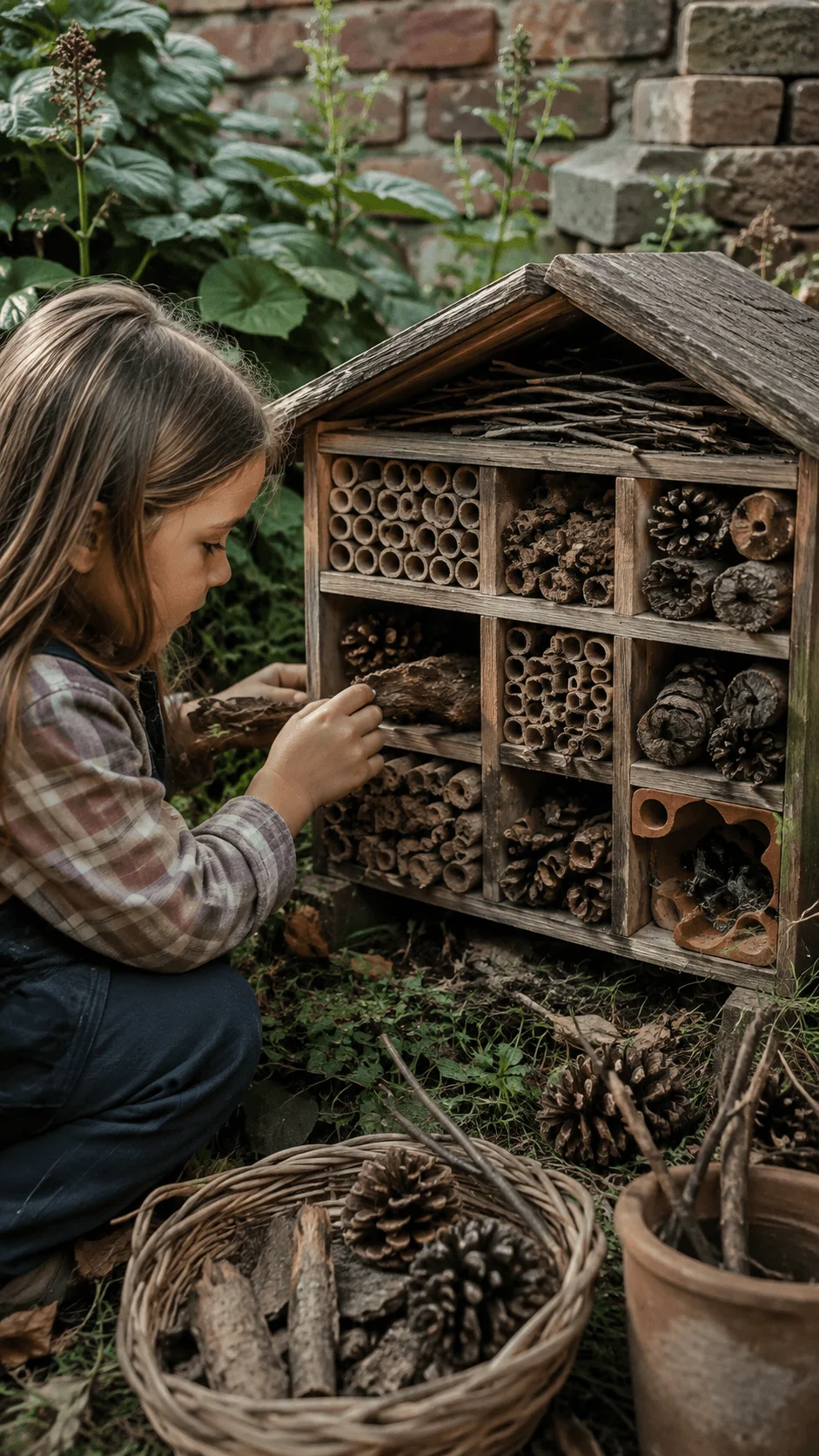
The activity also encourages respectful observation. Children can learn that studying nature does not require catching or handling every creature they find. Sometimes watching quietly provides a better learning experience.
A bug hotel can remain in place for an extended period, making it different from a craft project that ends as soon as the child finishes making it. It can become part of an ongoing nature observation routine.
6. Become Water Detectives Around the Home
Water conservation becomes much more meaningful when children discover the issue themselves. A water detective challenge encourages them to look around their home and think about how water moves through everyday routines.
Rather than simply telling children to save water, ask them to observe where the household uses it. They can think about activities such as washing hands, brushing teeth, watering plants and cleaning.
The purpose is not to make children responsible for household water management. Instead, parents can use their observations to introduce the idea that clean water is a valuable resource.
Ask questions such as, “Where do you think we use the most water?” or “Can you think of a way we could avoid wasting water?” Questions like these encourage children to think instead of simply memorizing instructions.
You can also turn the activity into a small family investigation. After children share their observations, the family can choose one practical habit to improve.
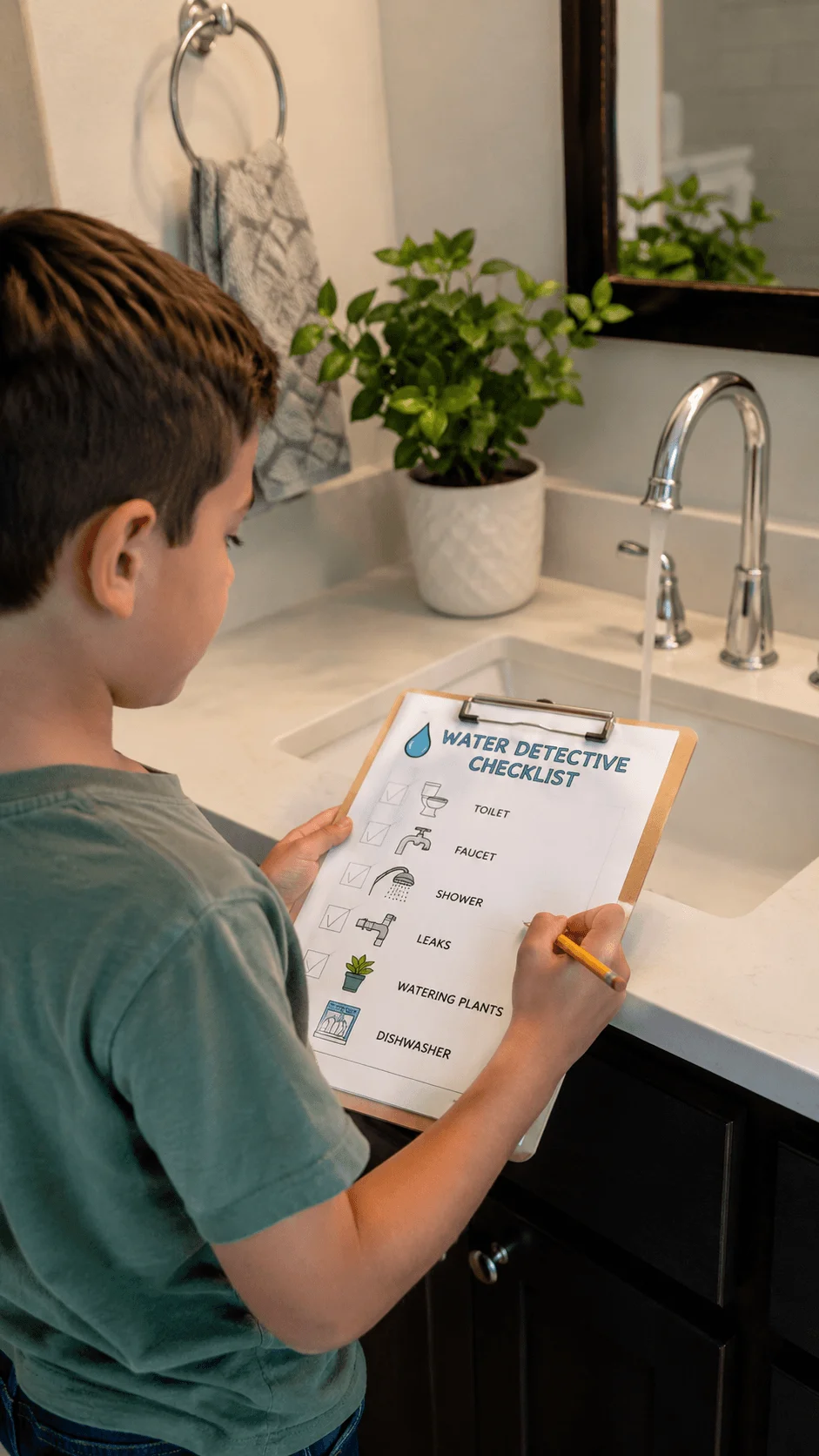
Younger children might enjoy drawing pictures showing good water saving habits. Older children can write down their observations and explain why they think a particular change could help.
The activity also teaches an important sustainability lesson: environmental responsibility often starts with paying attention. Before people can change a habit, they first need to notice what is happening.
That makes a water detective challenge one of the more practical environmental activities for kids because it connects a large environmental topic with something children encounter every day.
7. Turn Recycled Packaging Into an Inventor Lab
Children often see empty boxes, paper tubes and packaging as things that belong in the trash or recycling bin. A recycled packaging inventor lab encourages them to look at these materials differently. Instead of immediately throwing something away, they can ask whether it could become part of something useful or creative.
Collect clean and safe packaging from around the house and place it in a workspace. Rather than giving children a specific craft to copy, give them the freedom to invent. They might create a desk organizer, a miniature building, a board game, a toy or an entirely new invention.
This approach makes the activity more meaningful because children have to solve a problem themselves. They need to decide what they want to make, which materials could work and how different pieces might fit together.
Parents can make the experience more interesting by introducing a simple design challenge. Ask children to create something that solves a small household problem or something that another family member could use.
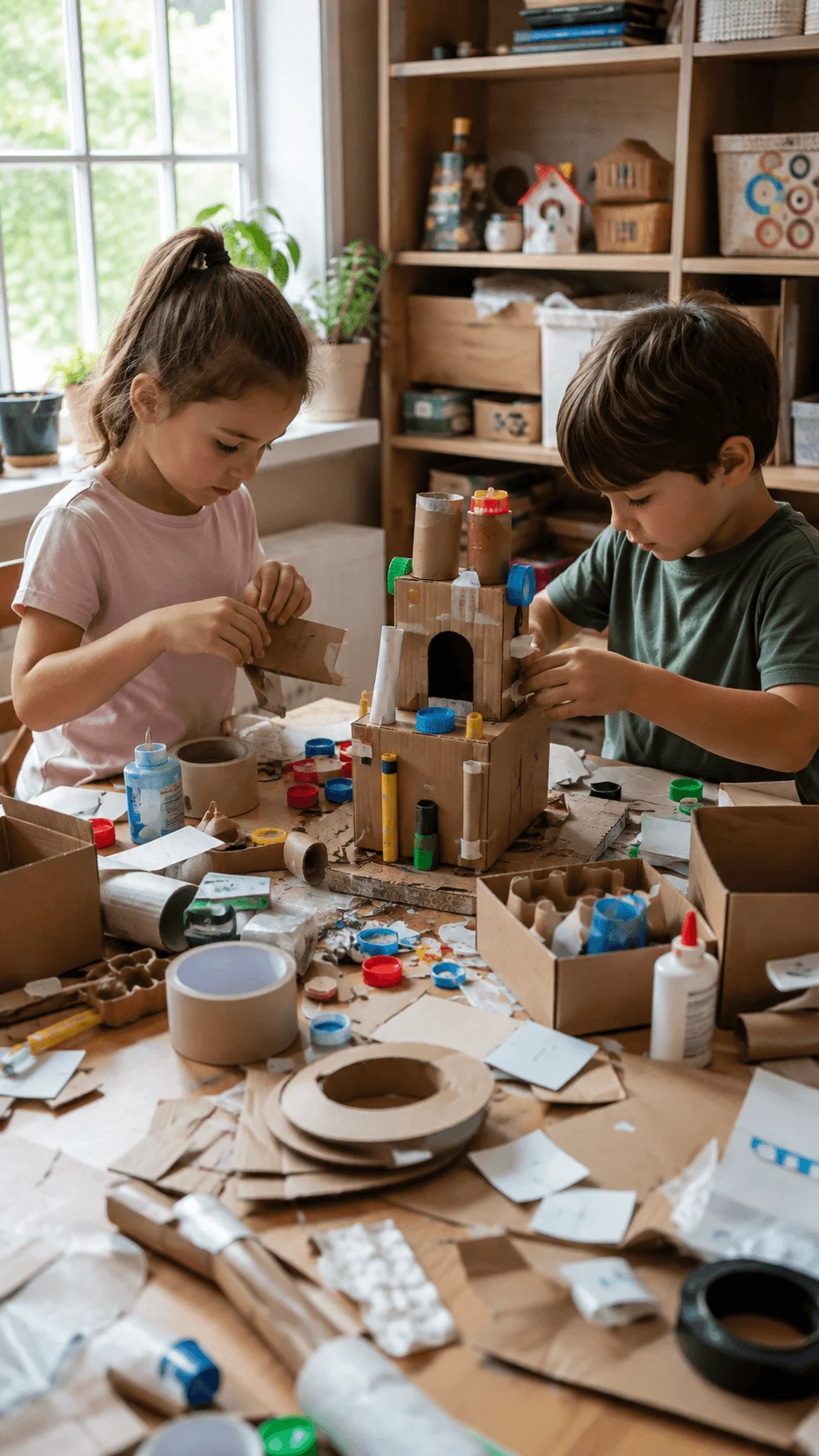
The environmental lesson comes from changing the way children think about materials. A package does not necessarily have to become waste immediately after its original purpose ends. Reusing suitable materials can extend their usefulness and reduce the need for new resources.
This is also one of the most enjoyable upcycling activities for kids at home because there is no single correct result. Every child can approach the challenge differently.
The activity can become even more educational when parents ask children to explain their invention. What problem does it solve? Why did they choose those materials? Could they improve the design?
Those questions encourage creativity while quietly reinforcing the principles of reuse and resourcefulness.
8. Create a Family Food Waste Detective Board
Food waste is something children may notice without fully understanding. A family food waste detective board can help them become more aware of what happens to food that does not get eaten.
For several days, the family can observe which foods regularly remain uneaten or get discarded. The goal should never be to make children feel guilty about food. Instead, treat the activity as a simple investigation into household habits.
Children can help identify patterns. Perhaps certain leftovers frequently remain in the refrigerator, or perhaps some foods are regularly prepared in quantities larger than the family needs.
Parents can then discuss possible solutions with the children. Maybe suitable leftovers could become part of another meal, certain foods could be stored differently or the family could prepare smaller portions when appropriate.
This activity introduces a much bigger environmental idea through an everyday experience. Food requires land, water, energy and other resources before it reaches a family kitchen. When usable food gets wasted, the resources involved in producing and transporting it also go unused.
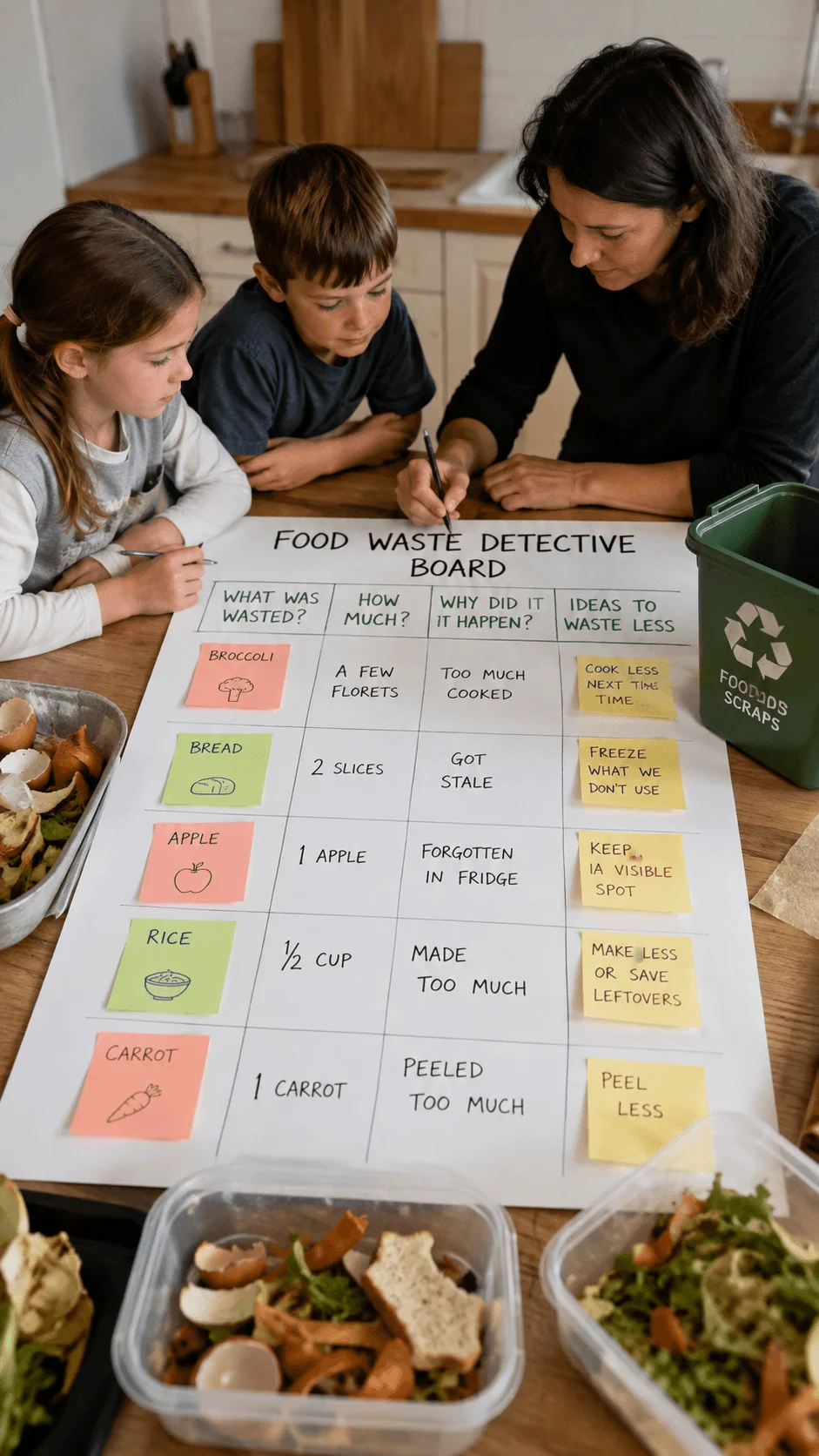
Children do not need to understand every part of the food system to appreciate this connection. A simple conversation can help them realize that food has value beyond what appears on their plate.
Older children can take the activity further by creating categories for different types of food waste and discussing possible solutions. Younger children can simply help identify foods that the family commonly has left over.
The activity also teaches an important problem solving skill. Instead of seeing waste as something inevitable, children can learn to ask why it happens and whether there is a practical way to reduce it.
That makes food waste investigations particularly useful among sustainable activities for kids, because the lesson connects directly with everyday family life.
9. Go on a Nature Sound Hunt
A nature sound hunt offers a different way for children to explore their surroundings. Instead of focusing on what they can see, encourage them to stop, become quiet and listen carefully.
The activity can work in a garden, balcony, courtyard or even beside an open window. Children can listen for birds, insects, moving leaves, rain, wind and other sounds around them.
At first, children may think there is not much to hear. Give them a few quiet minutes and encourage them to pay attention to sounds that they normally ignore.
They can describe the sounds in a notebook, draw pictures of what they think produced them or create their own nature sound record. Older children might compare sounds they hear at different times of day.
The activity teaches children that observing nature involves more than looking at plants and animals. Environmental awareness can involve all the senses.
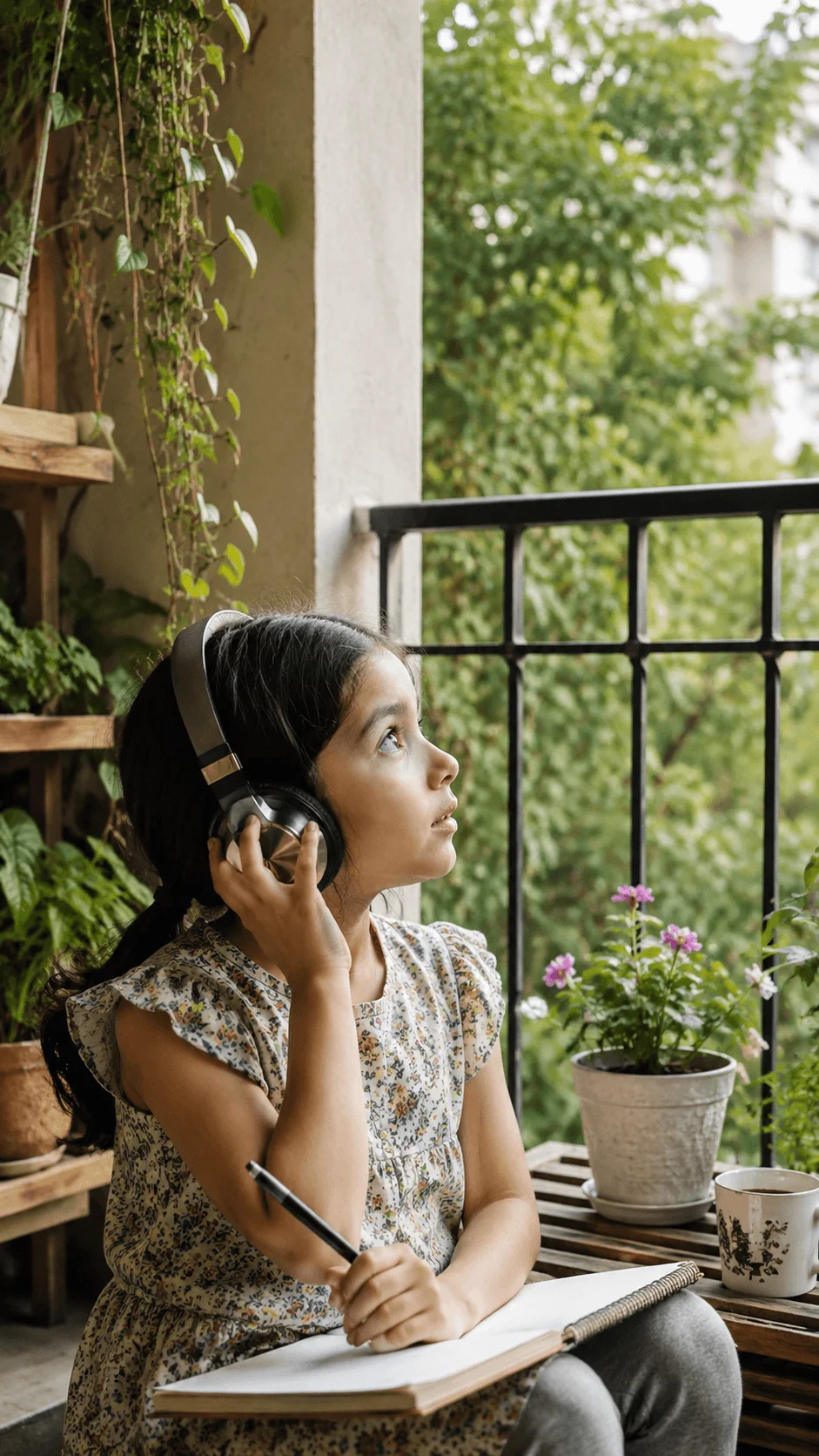
It also encourages children to slow down. Modern family life can be busy, and children often move quickly from one activity to another. A quiet listening exercise gives them an opportunity to notice their surroundings without needing complicated equipment.
Parents can turn the experience into a conversation about local wildlife. If a child hears a bird but cannot see it, they can wonder what type of bird might have made the sound. They can later learn more about common birds in their area.
This makes the activity both creative and educational. It does not require expensive supplies, and families can repeat it throughout different seasons.
A nature sound hunt is therefore an excellent addition to nature activities for kids at home, particularly for families looking for something quieter than traditional outdoor games.
10. Have a Soil Discovery Day
Soil often receives less attention than plants and animals, yet it plays a major role in healthy ecosystems. A soil discovery day gives children an opportunity to investigate something they usually walk across without thinking much about it.
Children can examine suitable samples of garden soil, compost and sand and compare what they notice. They can look at differences in texture, moisture, appearance and the way each material behaves.
Parents do not need to turn this into a complicated science experiment. Simple observation can create plenty of questions.
Why does one sample feel rough while another feels soft? Why does wet soil behave differently from dry soil? Why does compost look different from ordinary soil?
These questions can lead to a discussion about what plants need and how healthy soil supports plant growth.
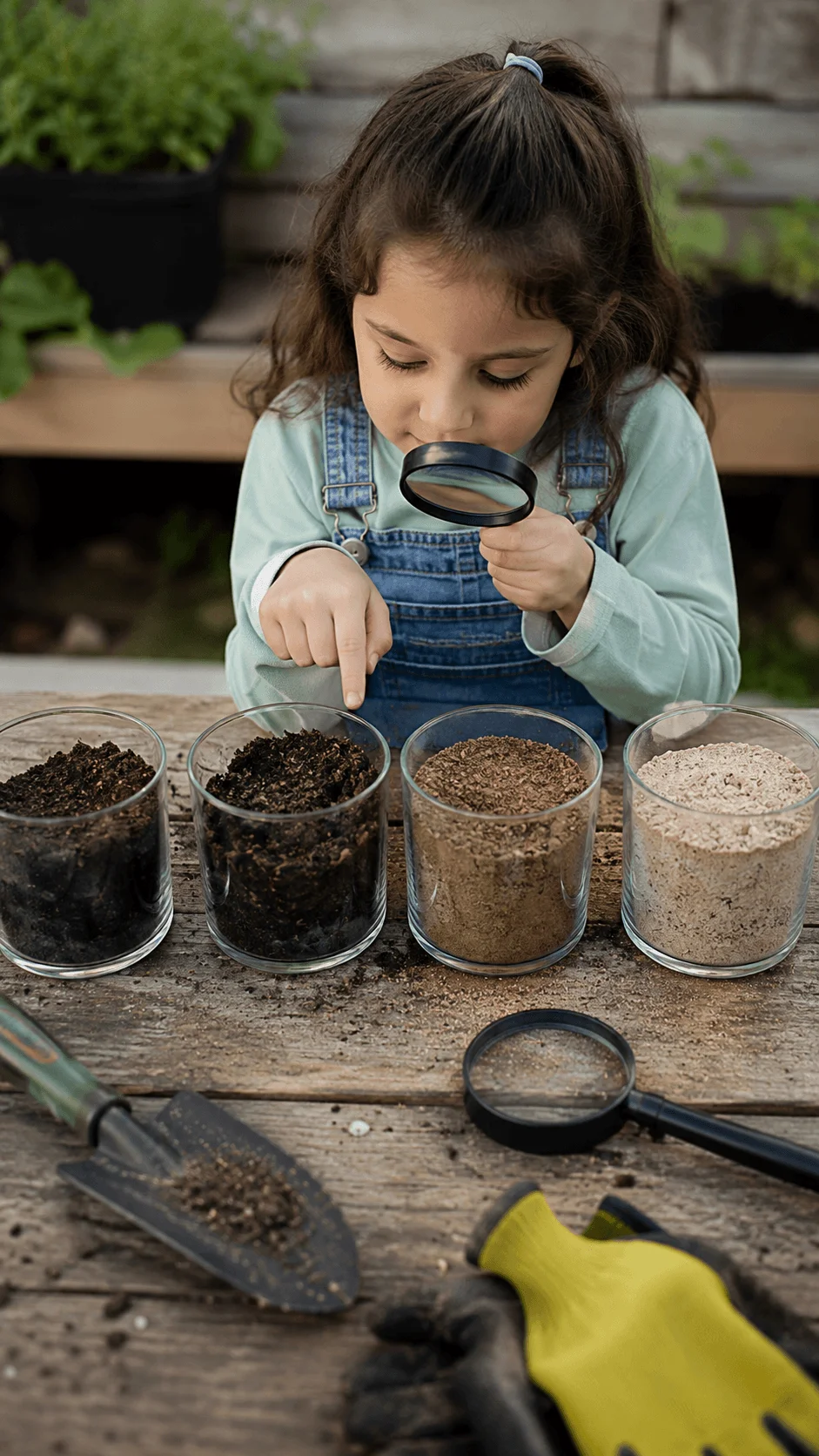
Children can also learn that soil is not simply dirt. It contains minerals, organic matter, water and living organisms that contribute to a functioning ecosystem.
The activity connects naturally with other sustainability projects. After learning about compost, children can understand how organic material can contribute to soil. After growing plants, they can better appreciate why plants depend on the ground around their roots.
A soil discovery project can also encourage children to become more observant gardeners. Instead of simply watering a plant because an adult tells them to, they can begin thinking about the conditions plants need to grow.
For older children, parents can encourage deeper questions about erosion, soil health and how farming depends on productive soil. Younger children can focus on basic sensory observations.
This makes soil exploration one of the more interesting sustainability activities for kids at home because it introduces an important environmental subject that many simple activity lists overlook.
11. Make DIY Seed Paper
Making seed paper combines creativity with an introduction to reuse and plant growth. Children can transform suitable used paper into handmade paper that contains seeds and can later be planted under appropriate conditions.
The activity begins with an important idea: materials can sometimes have another purpose after their first use. Instead of immediately treating used paper as useless, children can transform it into something connected with new plant growth.
Parents can help children prepare the paper material safely and choose suitable seeds. Children can enjoy shaping the paper into simple forms such as small cards, tags or decorative pieces.
The most exciting part comes later. Once the paper has dried, children can plant it and observe what happens.
This creates a connection between two ideas that children can easily understand. The paper came from an existing resource, while the seed represents new growth. The project therefore demonstrates reuse and natural cycles in a very tangible way.
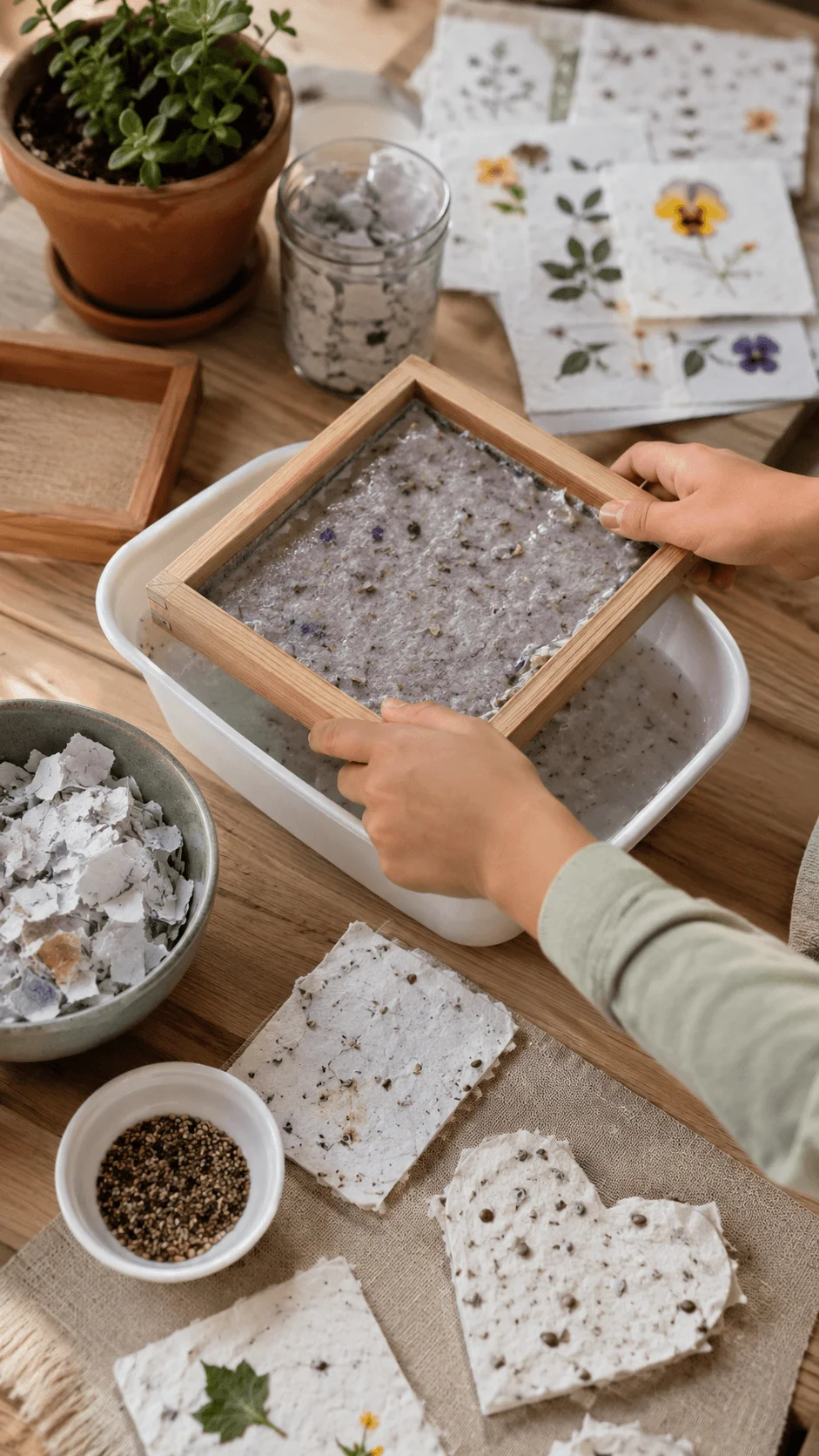
Parents can also explain why reducing unnecessary paper use matters. Paper comes from trees and its production involves resources and energy. Reusing suitable paper can help children understand why materials should not always become waste after a single use.
The project works especially well for children who enjoy art because they get to create something visually interesting while learning about sustainability.
It can also become a thoughtful family activity. Children could create handmade seed paper pieces as gifts for relatives or use them for small notes.
The important lesson is not that one sheet of recycled paper will solve a major environmental problem. The value lies in helping children understand that resources have value and that creative reuse can be part of responsible everyday living.
12. Try a Trash to Treasure Design Challenge
A trash to treasure design challenge takes the idea of reuse one step further. Instead of following instructions to make a particular craft, children become designers and decide what they want to create.
Give them a collection of clean and safe materials that are no longer needed for their original purpose. Cardboard, paper packaging and other suitable household items can become the starting point for the challenge.
Then give children a simple goal. They might need to create something useful, something entertaining or something that solves a small problem.
The freedom to choose the final result is what makes this activity different from a traditional craft. Children have to imagine possibilities before they start building.
One child might see an old box as a storage container, while another might imagine a miniature house. Someone else might turn several pieces into a game.
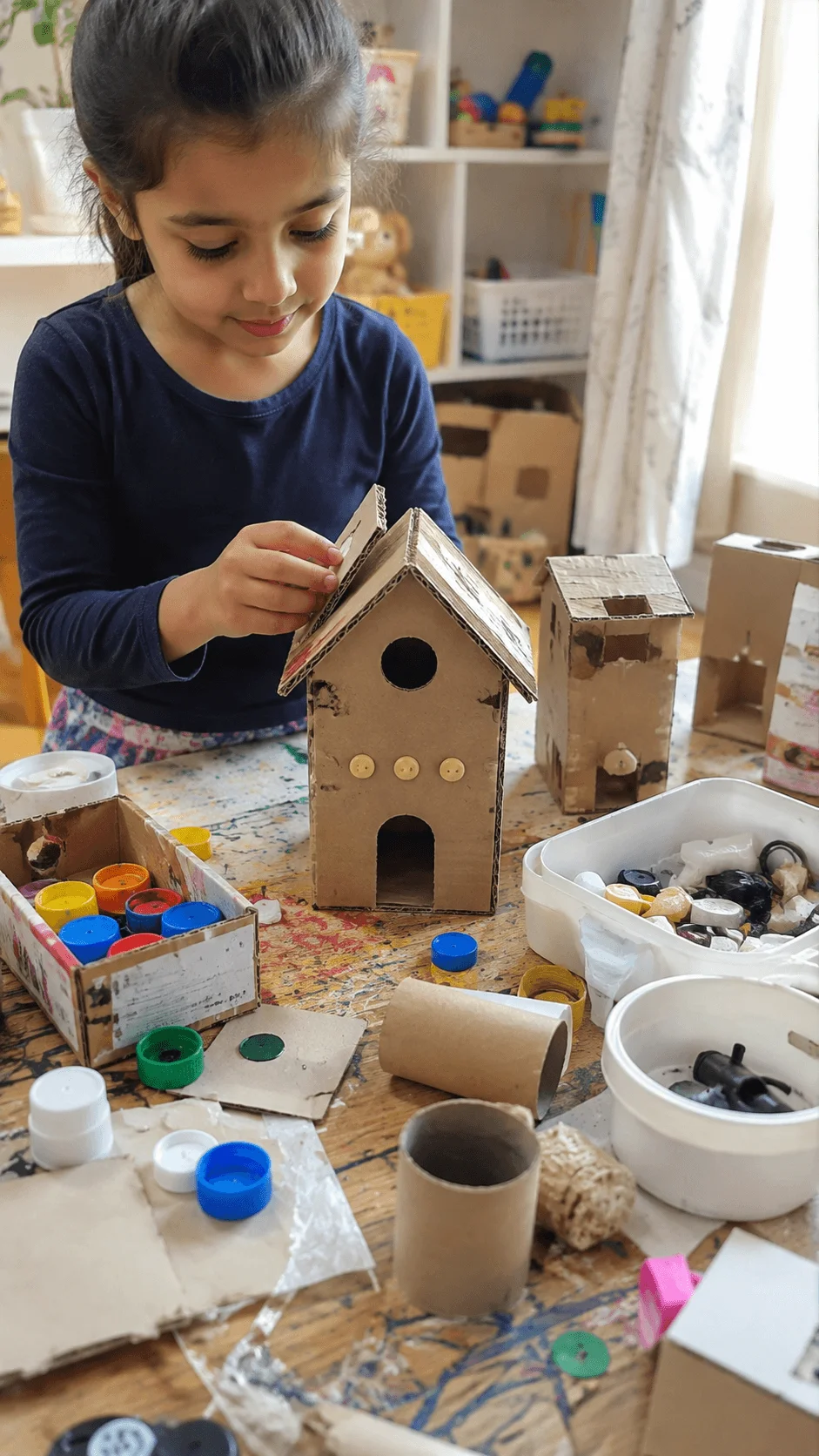
Parents can encourage the process without taking over. Ask questions instead of providing every answer. What could this material become? How could you make it stronger? What could you change if the first idea does not work?
Those questions encourage experimentation and help children understand that creative projects do not always work perfectly on the first attempt.
The sustainability lesson develops naturally throughout the process. Children begin to see that an object’s value does not necessarily end when its original purpose is finished.
The activity also teaches resourcefulness. Children learn that they can create and solve problems using materials they already have instead of assuming that every project requires something new from a store.
This makes the design challenge one of the most flexible eco friendly kids activities for families because the same idea can be repeated with different materials and different challenges.
Making Sustainability Part of Everyday Family Life
The most valuable part of eco friendly activities for kids at home is not necessarily the finished craft, plant or experiment. The deeper value comes from the habits of curiosity that these experiences can develop.
A child who observes compost breaking down may become more curious about where food waste goes. A child who watches insects visit flowers may start noticing biodiversity in other places. A child who turns packaging into an invention may begin asking whether other household materials can be reused.
Parents do not need to turn every environmental topic into a formal lesson. Simple conversations can be enough.
When children ask questions, give them opportunities to investigate. When something gets thrown away, talk about whether it had another possible use. When plants grow, encourage children to notice what helped them grow.
These small moments can gradually make sustainability feel like a normal part of family life rather than a separate subject.
Conclusion
The best eco friendly activities for kids at home do more than keep children busy. They give children opportunities to explore how people, resources and nature are connected.
A family eco challenge can make sustainable habits feel engaging. Compost observation can introduce natural decomposition. A kitchen scrap garden can demonstrate plant growth and resourcefulness. A pollinator garden and bug hotel can help children notice biodiversity, while water and food waste challenges can connect sustainability with everyday household choices.
Creative activities such as recycled packaging inventions, seed paper and trash to treasure challenges add another important dimension. They show children that sustainability can involve imagination and problem solving rather than simply following rules.
You do not need to complete all twelve activities at once. Start with one that matches your child’s interests and the materials you already have at home. Over time, these small experiences can help children become more observant, curious and thoughtful about the resources and natural world around them.
When sustainability becomes something children can see, touch, create and investigate, environmental learning becomes much more memorable. Even a simple activity at home can plant the idea that caring for the environment is something everyone can participate in through everyday choices.