12 Eco Friendly Garden Ideas With Flowers for 2026
Creating a beautiful garden no longer has to mean choosing between appearance and sustainability. The best eco friendly garden ideas with flowers combine color, texture, seasonal interest, and thoughtful planting choices in the same outdoor space. In 2026, flower gardens are moving toward naturalistic planting, climate resilient plants, wildlife habitat, smarter water use, and designs that work with local growing conditions rather than constantly fighting them.
A sustainable flower garden can still feel polished and carefully designed. You might create sweeping groups of native flowers, grow blooms through gravel, turn a wet corner into a rain garden, or fill a small patio with flowering containers. The goal is not to make every garden look wild. Instead, gardeners can choose methods that suit their style while reducing unnecessary inputs and creating more useful spaces for wildlife.
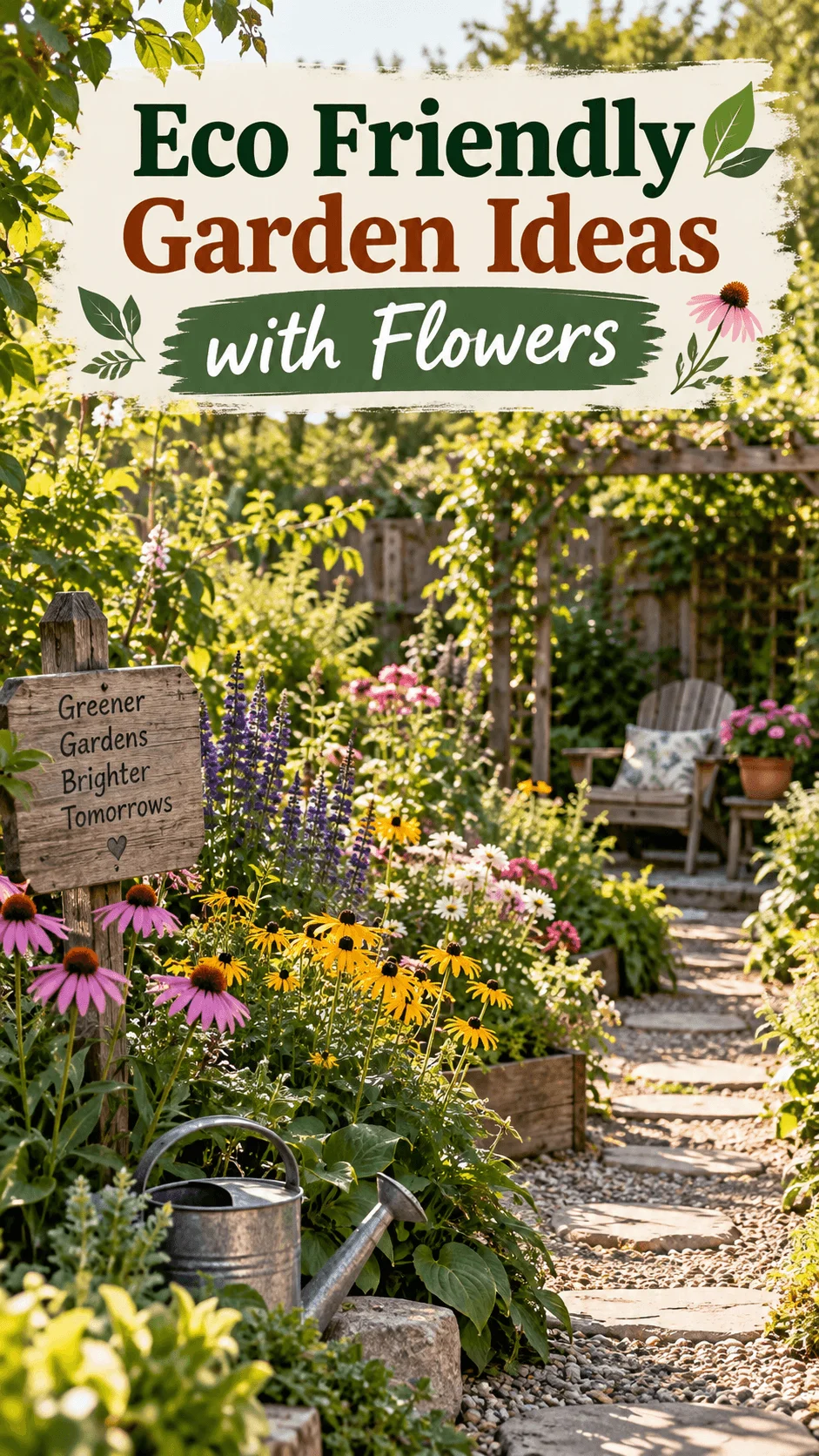
The following eco friendly garden ideas with flowers explore twelve different approaches. Some work well in large backyards, while others can transform a small courtyard, front garden, or balcony. Since growing conditions vary widely, always select flowers according to your climate, soil, sunlight, rainfall, and local ecosystem.
Create an Eco Friendly Keystone Native Flower Garden
A keystone native flower garden takes native planting a step further. Instead of choosing native flowers only because they originate in your region, this approach focuses on locally appropriate plants that can make particularly valuable contributions to local food webs and wildlife relationships.
The finished garden does not need to resemble an unmanaged patch of vegetation. You can create a structured design by repeating selected flowers throughout the bed. Taller flowering plants can form the background, medium height plants can fill the center, and shorter species can soften the front edge. Repeating similar colors and flower shapes helps connect these layers visually.
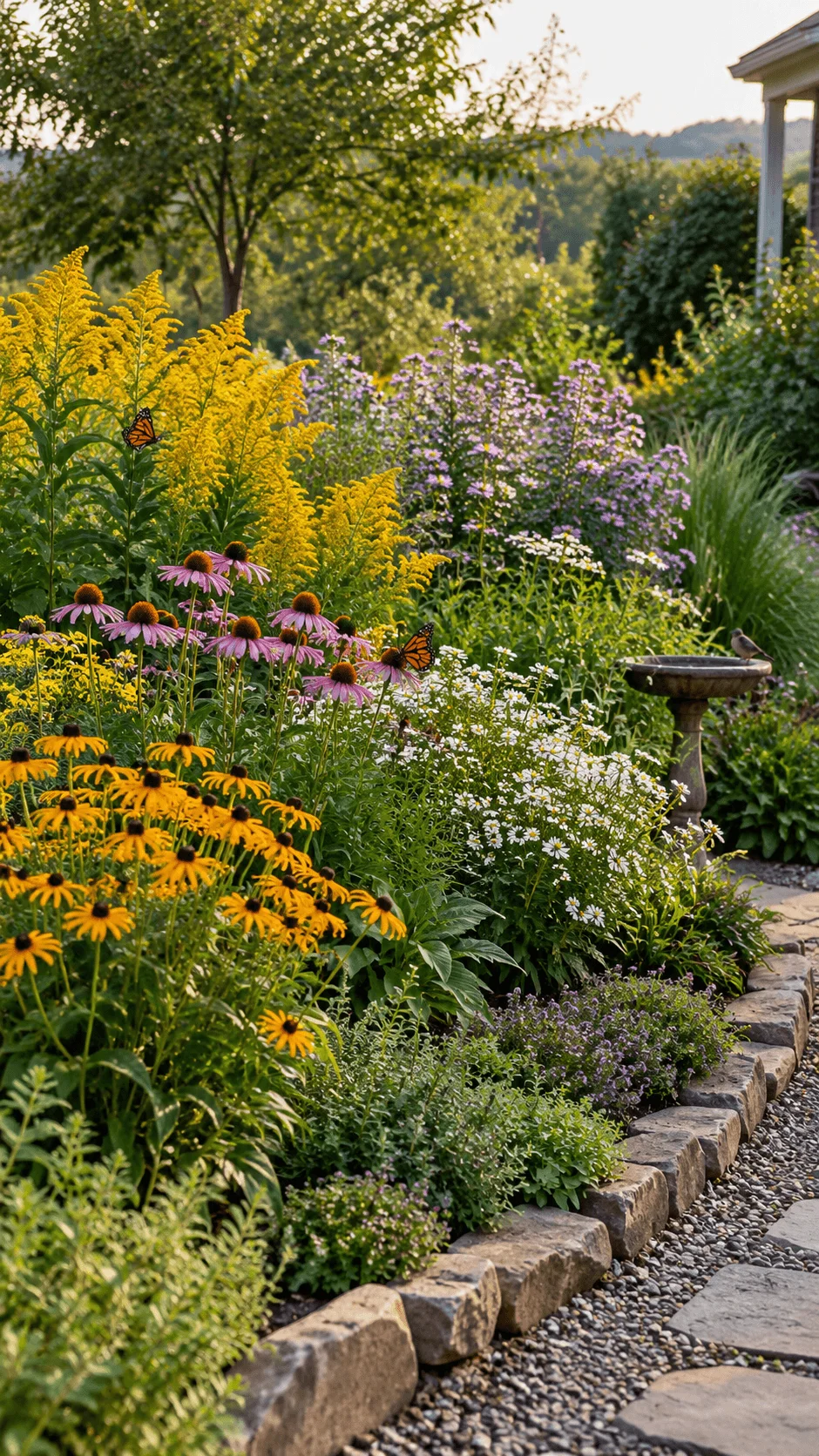
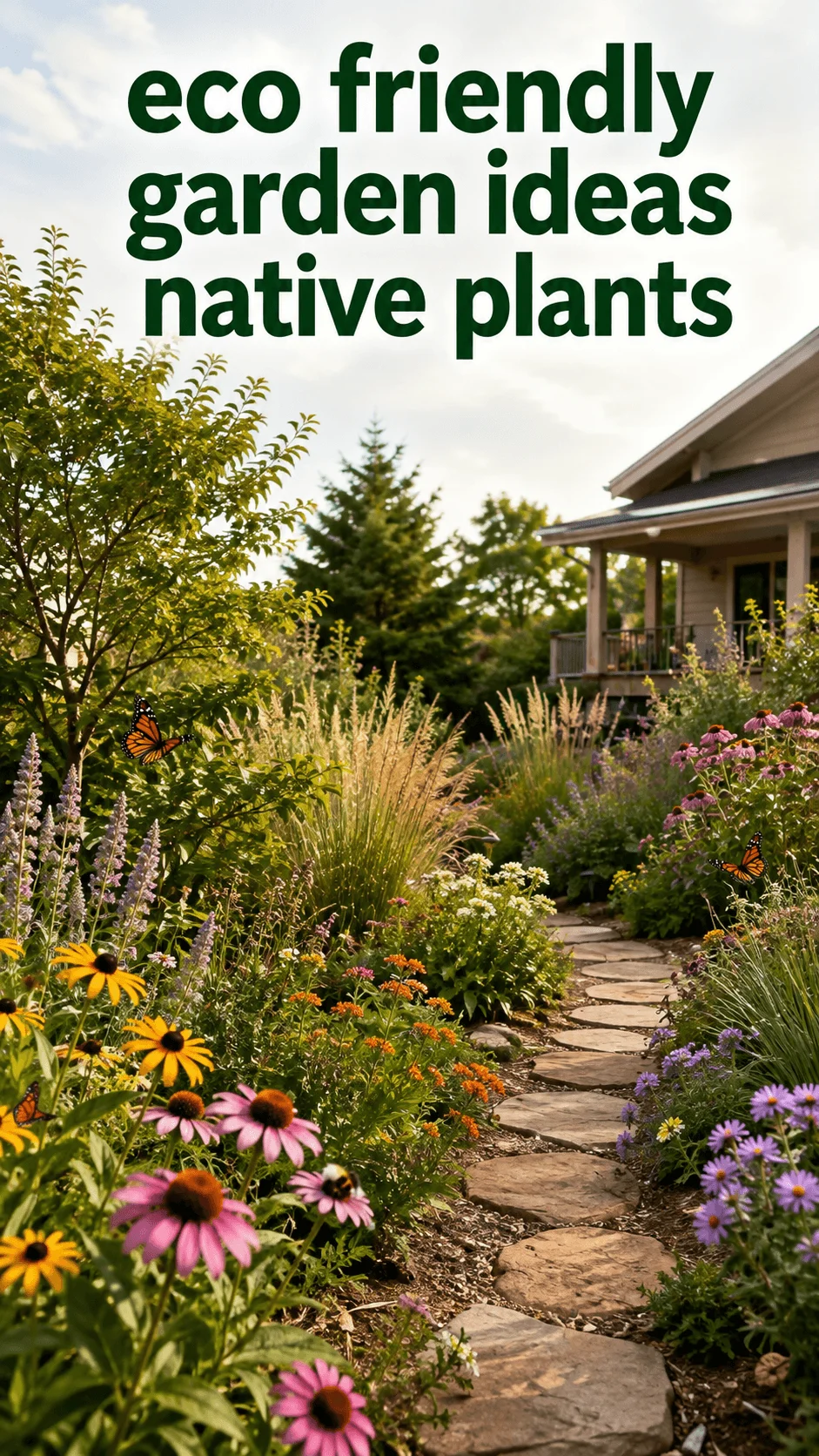
In parts of North America, locally native asters, goldenrods, sunflowers, and other flowering plants may fit this concept, but gardeners should research which plants provide similar value in their own region. Native status and ecological relationships differ significantly between locations.
This is one of the most interesting eco friendly garden ideas with flowers because the design can combine ecological purpose with traditional garden beauty. Defined paths, neat edges, natural stone, and carefully repeated plant groups can give the space a deliberate appearance while the flowers provide a richer living environment.
Plant a Climate Resilient Pollinator Flower Border
Traditional flower borders can require considerable watering when gardeners select plants poorly suited to local conditions. A climate resilient border takes a different approach by starting with flowers that can handle the site’s typical heat, rainfall, sunlight, and seasonal changes.
Begin by thinking about structure rather than individual flowers. A successful border usually looks more convincing when plants occupy several heights. Taller flowers can create rhythm toward the back, medium height perennials can provide much of the color, and compact plants can soften the edge beside a lawn or path.
A pollinator friendly flower garden also benefits from variation in flower form and flowering time. Instead of producing one dramatic display for a few weeks, combine suitable plants that reach their peak at different times. This keeps the border visually interesting for longer and can extend opportunities for visiting insects.
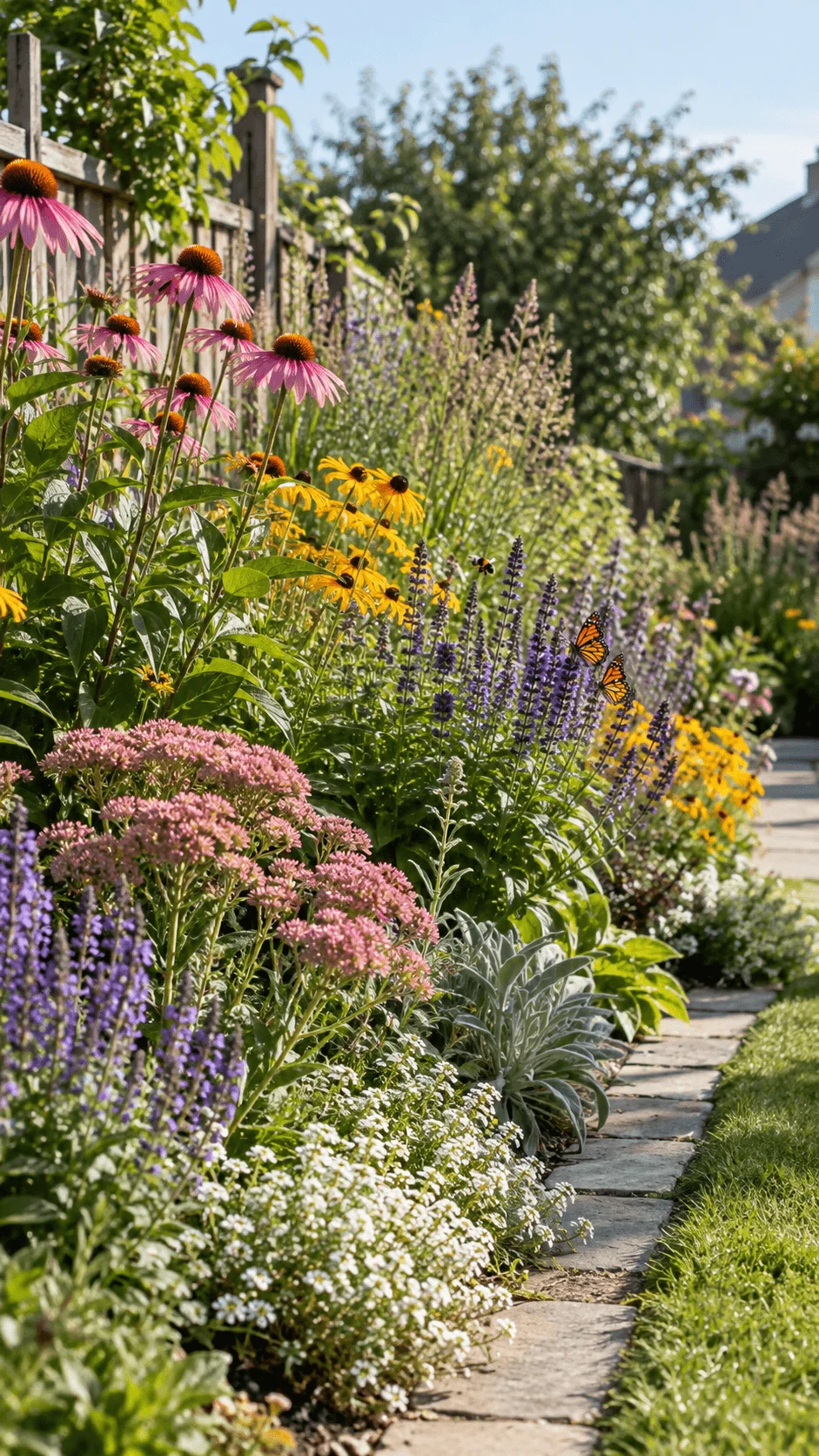
Climate resilience does not mean that a new garden never needs watering. Young plants often require regular attention while their roots establish. Once established, however, appropriately chosen plants may cope better with normal local conditions than thirsty species planted outside their preferred environment.
Among the most practical eco friendly garden ideas with flowers, this concept works beside fences, paths, patios, driveways, and lawns without requiring an entirely new landscape.
Create a Naturalistic Sustainable Flower Garden
Naturalistic planting has become an important influence on contemporary garden design. Instead of positioning every plant as an isolated specimen, this style allows flowers and grasses to intermingle in repeated groups.
Imagine airy flower stems rising between soft grasses while several varieties appear repeatedly across the bed. Wind creates movement, flowering periods change the dominant colors, and seed heads continue providing texture after some blooms fade. The result can feel relaxed without looking accidental.
The secret lies in creating visible structure. Defined edges can separate planting from paths or lawns. Repeating a limited number of important plants across the space establishes continuity. Taller structural plants can provide recognizable forms even when smaller flowers change through the seasons.
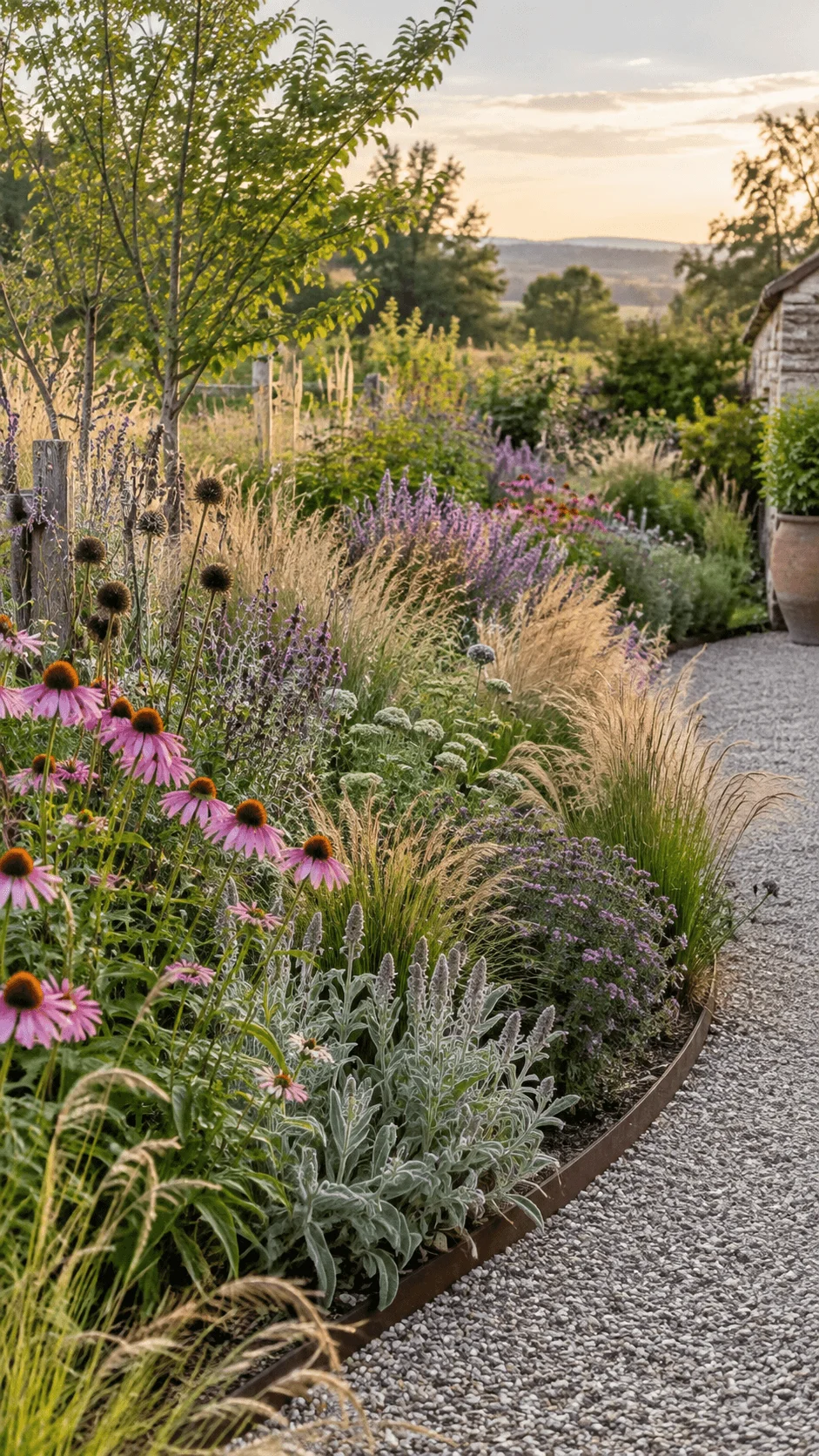
A naturalistic flower garden also encourages gardeners to appreciate more than perfect blooms. Seed heads, dried stems, grasses, changing foliage, and emerging spring growth can all contribute to the design.
These sustainable flower garden ideas work especially well for gardeners who enjoy softer landscapes but still want a clear sense of design. Choose plants that suit your local conditions rather than copying a planting combination developed for a completely different climate.
Design a Four Season Pollinator Friendly Flower Garden
Many flower beds reach their peak in early or midsummer and then lose much of their interest. A garden designed around succession aims for a longer sequence of flowers and seasonal features.
Start by considering the garden as a calendar. Early flowering plants can introduce color when the growing season begins. Other flowers can take over during warmer months, while later flowering species can extend the display toward the end of the season. The exact schedule will depend heavily on your climate.
The planting should also remain balanced as these changes occur. If every early flower grows in one corner, that area may look empty later. Instead, repeat plants with different flowering periods throughout the bed. Foliage can also hide gaps after individual flowers finish.
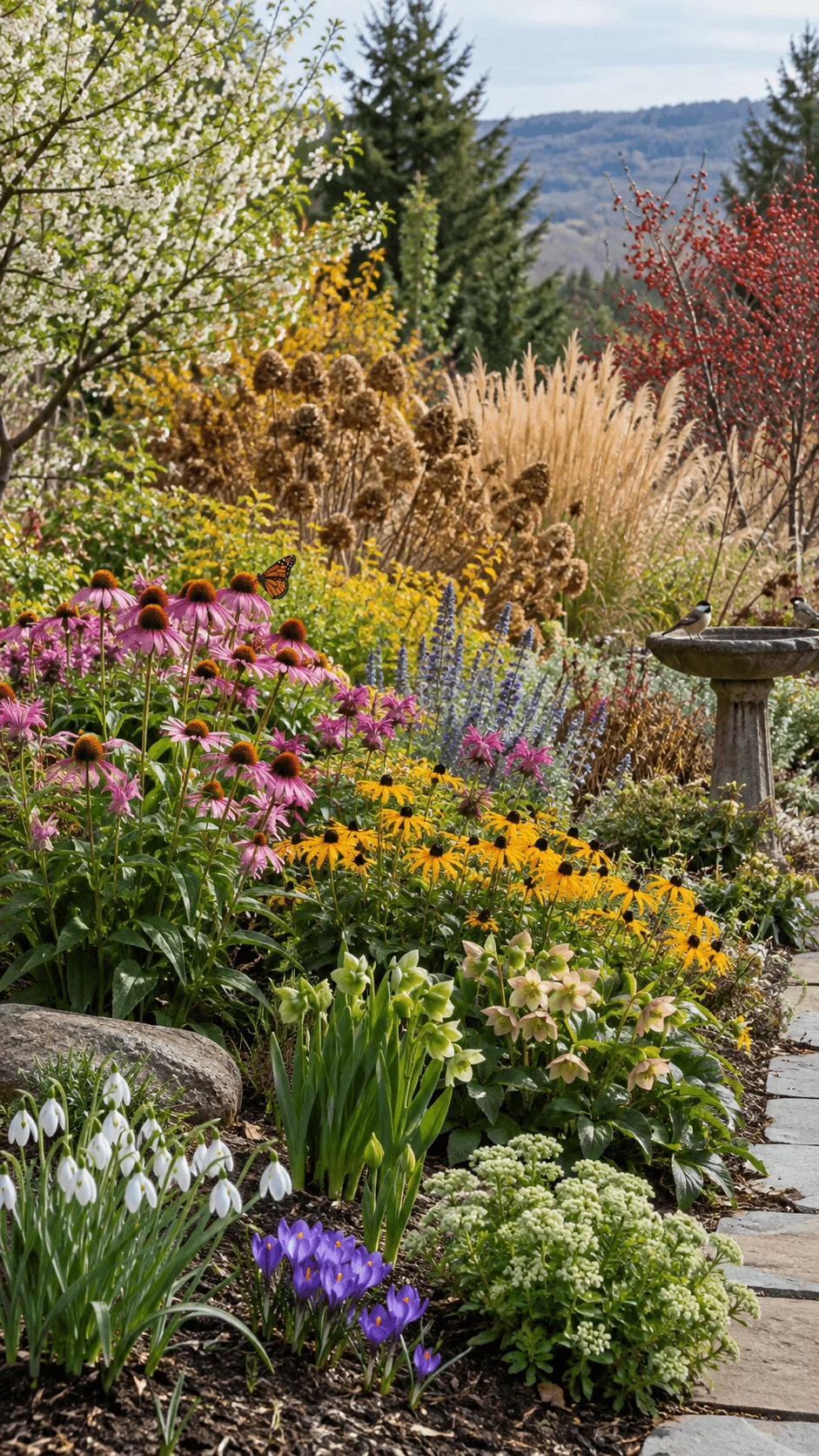
A four season approach does not mean that every plant must flower throughout the year. In colder climates, winter interest may come from grasses, seed heads, evergreen foliage, bark, or garden structure.
This approach makes eco friendly garden ideas with flowers more dynamic because the garden develops rather than producing one short display. It can also provide a longer sequence of floral resources for locally active pollinators.
Grow a Self Seeding Eco Friendly Flower Garden
A self seeding garden embraces a certain amount of change. Suitable flowers complete their lifecycle, produce seed, and allow new plants to emerge when conditions support germination.
This does not mean giving up control. The most attractive self seeding gardens usually combine freedom with editing. Gardeners can keep seedlings growing in useful locations and remove those appearing in paths or crowded areas. Clear borders and permanent structural plants can make spontaneous flowers look intentional.
Leaving selected seed heads also changes the character of the garden later in the season. Instead of immediately removing every faded flower, gardeners can allow some plants to mature naturally. Their forms can add texture while providing the seeds that create future generations.
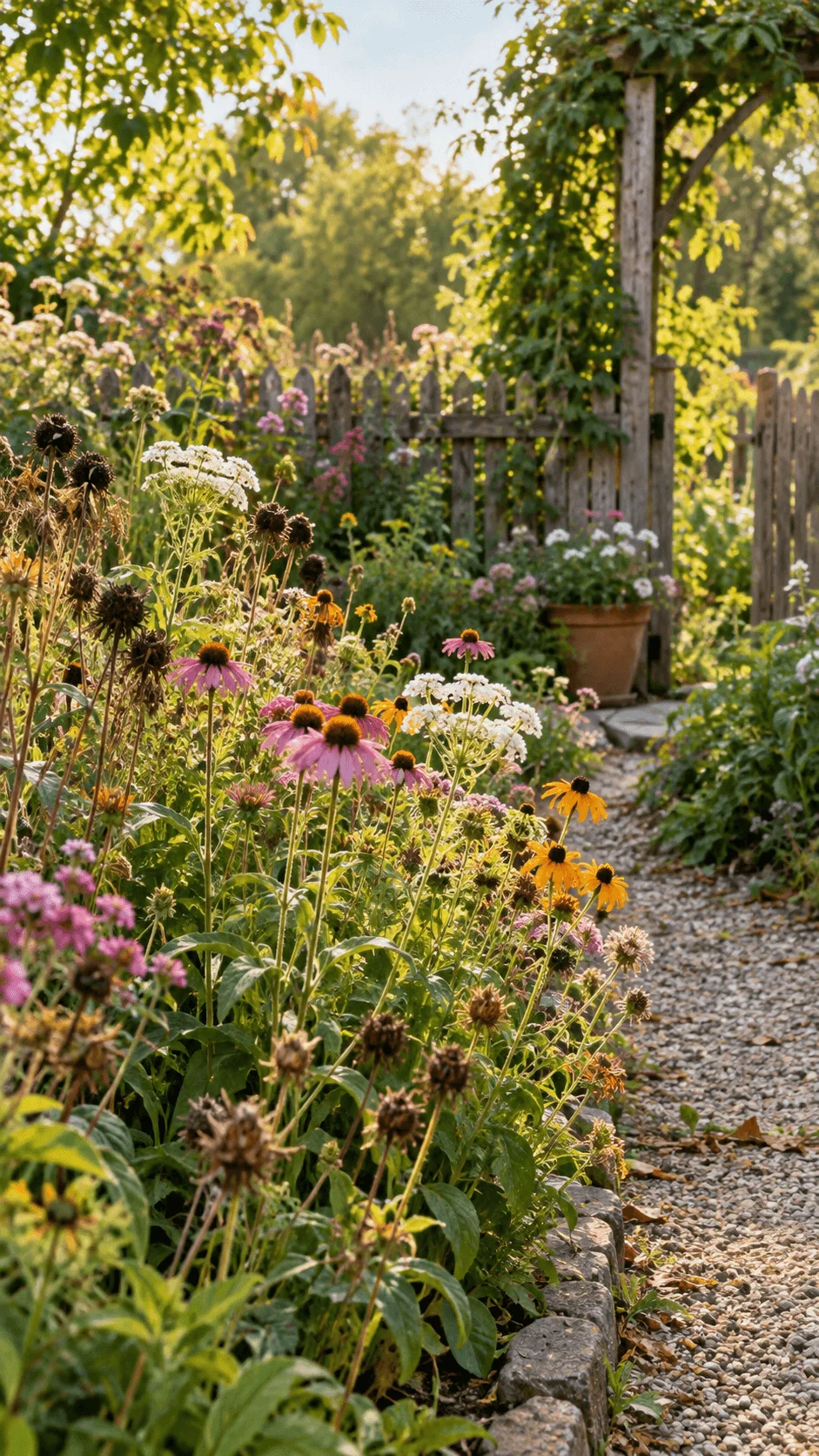
A self seeding flower garden can gradually develop its own personality as plants find favorable locations. Some may move slightly from their original positions, creating combinations that the gardener never deliberately planned.
This is one of the more flexible eco friendly garden ideas with flowers because it can reduce dependence on replacing large quantities of seasonal bedding plants. However, gardeners should research plants carefully and avoid species that spread aggressively or create ecological problems locally.
Create a Sustainable Flower Filled Rain Garden
A rain garden can turn water management into an attractive landscape feature. Instead of treating runoff purely as something to remove, a properly located rain garden can temporarily receive suitable rainwater while supporting plants adapted to changing moisture levels.
The design usually works best as a shallow planted depression rather than a permanently wet hole. Its exact construction depends on soil, drainage, rainfall, slope, local regulations, and the source of runoff.
Flowers can make this practical feature look intentional. Moisture tolerant flowering plants can mix with grasses and foliage to create layers. Natural stones may help connect the area visually with surrounding paths or beds, while curved planting shapes can make the rain garden feel integrated into the landscape.
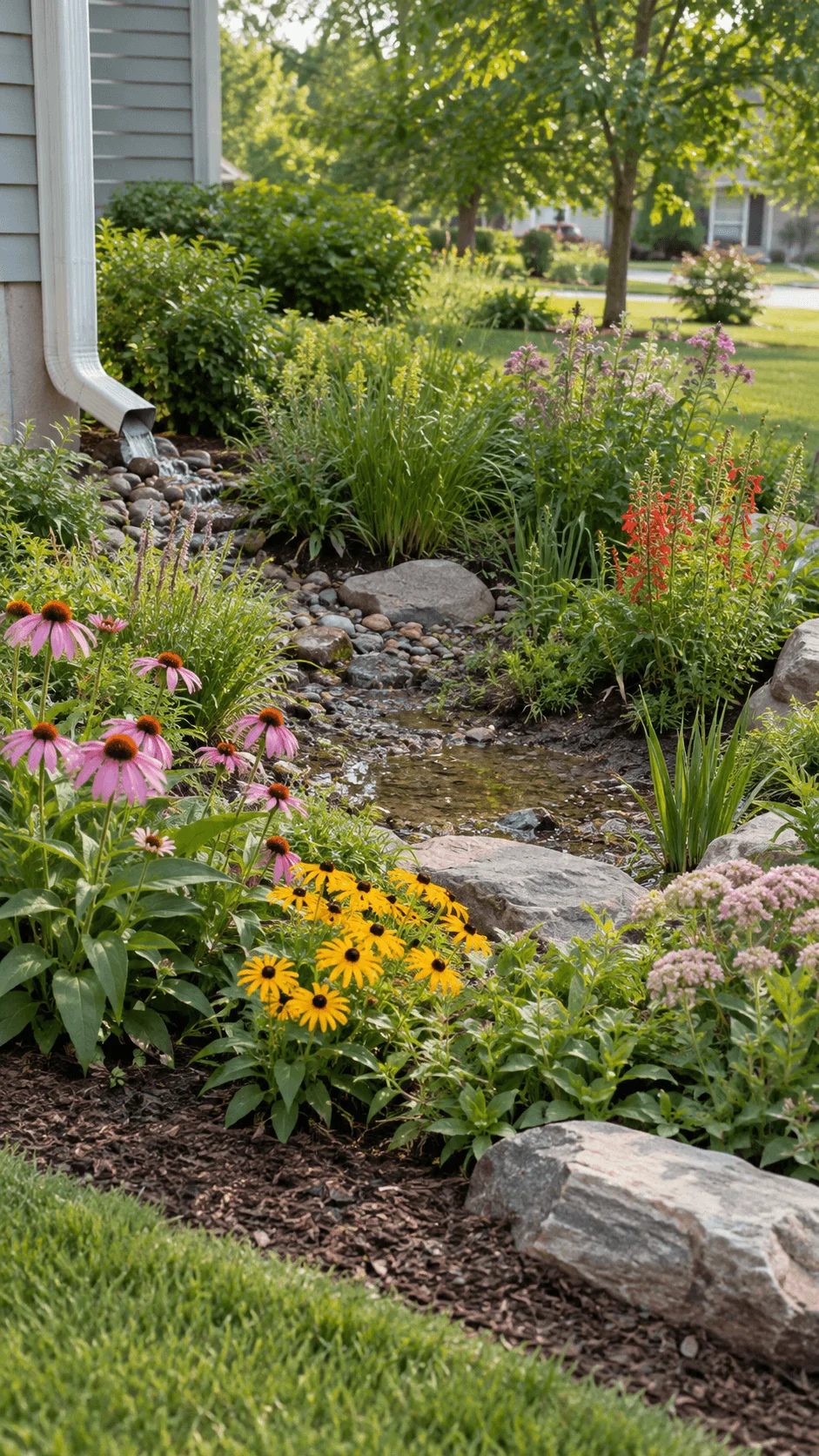
When choosing rain garden flowers, consider both temporary moisture and the potentially drier periods between storms. A plant that enjoys permanently saturated soil may not suit a rain garden that drains relatively quickly.
For homeowners dealing with an appropriate runoff location, this is one of the most functional eco friendly garden ideas with flowers because beauty and water conscious landscape design occupy the same space.
Build a Drought Tolerant Flower and Gravel Garden
A gravel flower garden can provide a completely different appearance from a traditional densely mulched border. Gravel creates a simple mineral background while carefully positioned flowers and foliage rise through the surface.
This contrast can make individual plants particularly noticeable. Silver foliage, fine grasses, upright flower stems, rounded plants, and low spreading forms can create visual variety even before everything begins blooming.
A drought tolerant flower garden works best when plant selection matches the site. A sunny, free draining area may suit this approach particularly well, while a damp shaded location requires a completely different planting strategy.
Good preparation matters. Gardeners should understand their existing soil and drainage rather than simply covering poor conditions with gravel. New plants also require appropriate watering while they establish, even when mature specimens can tolerate relatively dry conditions.
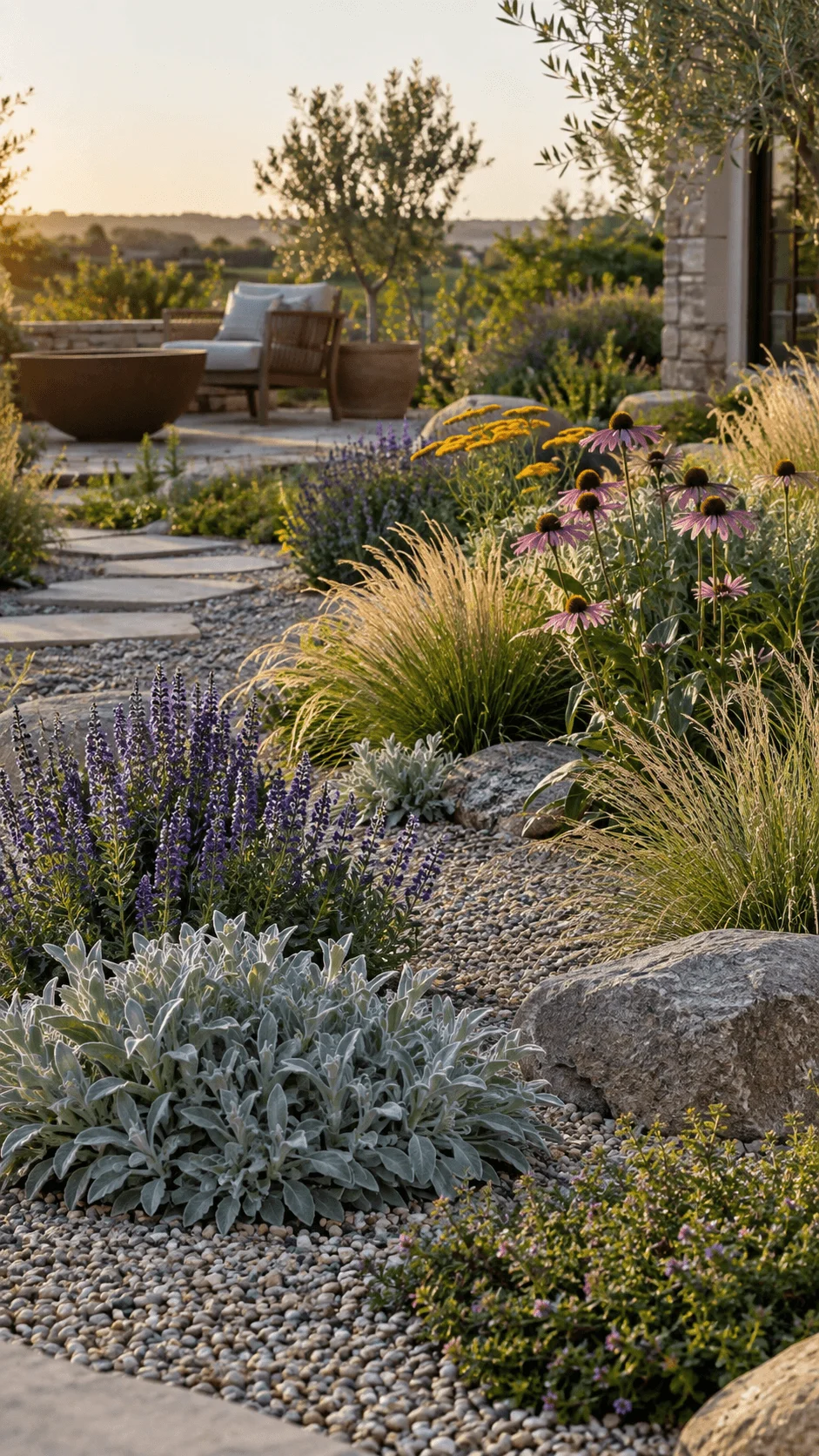
Use gravel thoughtfully around stepping areas, seating spaces, and planted zones to create visual continuity. Flowers can soften the transition between hard surfaces and surrounding vegetation.
Among modern eco friendly garden ideas with flowers, gravel planting offers a useful combination of strong design, texture, seasonal color, and potential water efficiency where local conditions support it.
Create a Small Eco Friendly Pollinator Pocket Garden
You do not need a large backyard to create a meaningful flower display. A narrow strip beside a pathway, sunny entrance, compact patio, courtyard corner, or collection of containers can become a concentrated pocket of flowers.
In small spaces, grouping plants often creates more impact than scattering them. Several compatible flowers planted together can form a noticeable block of color and texture. Repeating one or two varieties elsewhere can make the tiny garden feel coordinated.
Vertical layering also helps. Taller flowers can occupy the rear of a narrow bed, compact plants can fill the middle, and lower growth can soften the edge. On a patio, containers of different heights can produce a similar effect without permanent planting.
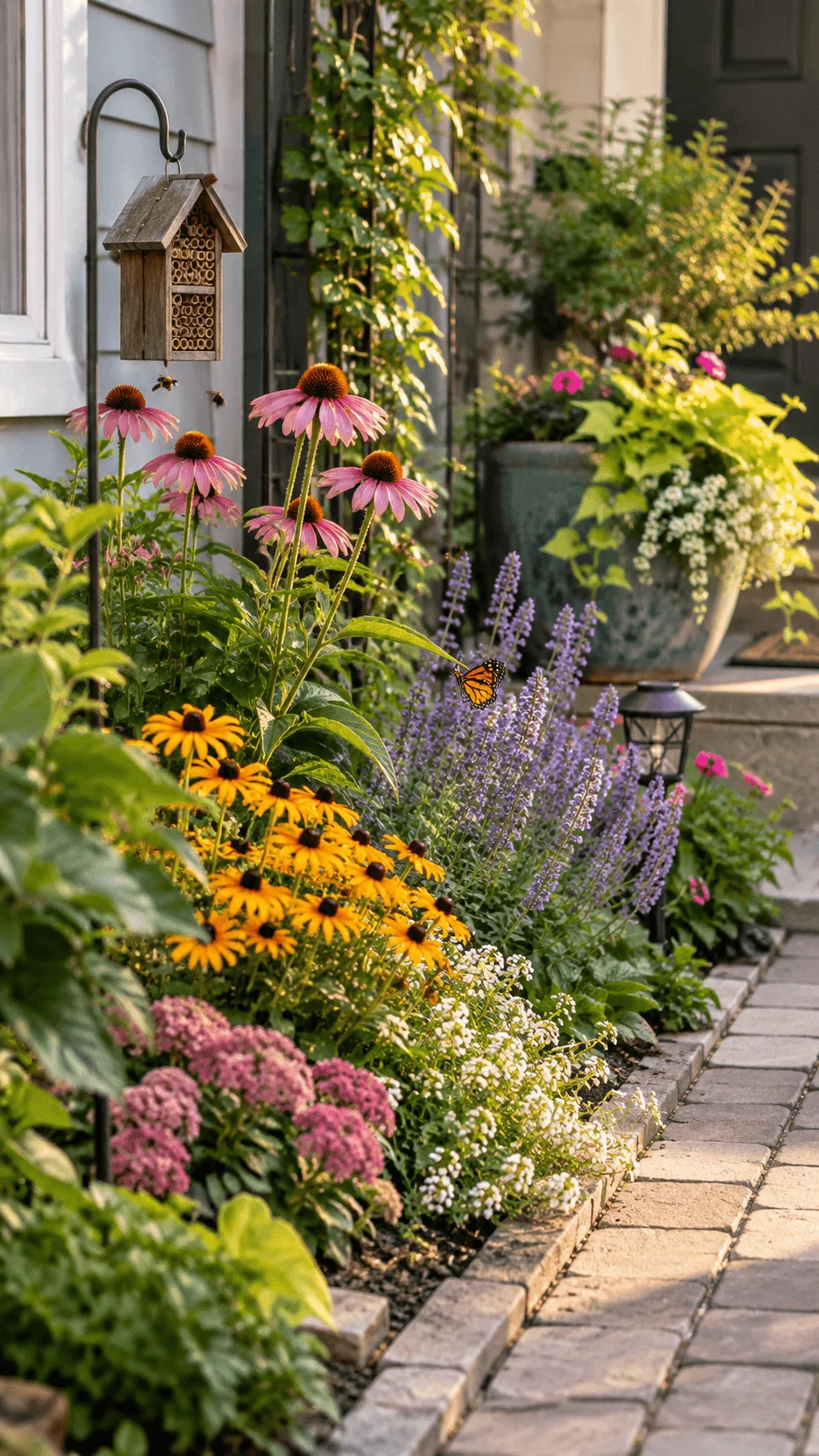
For a small eco friendly flower garden, every plant needs to earn its space. Consider flowering duration, mature size, foliage, local suitability, and whether the plant contributes something beyond a brief bloom.
This is one of the easiest eco friendly garden ideas with flowers to adapt gradually. Even a small unused area can become colorful without requiring a complete backyard renovation.
Grow an Eco Friendly Cutting Flower Garden
A cutting garden gives flowers two roles. They create an attractive outdoor display while providing blooms that gardeners can bring indoors.
Rather than treating the area purely as a production bed, integrate cutting flowers into an appealing garden layout. Repeated groups can create rhythm, while pathways provide access for harvesting. Mixing plants with different heights and flowering periods helps maintain visual interest after some stems have been cut.
An eco friendly cutting flower garden should also consider what remains outdoors. Avoid harvesting every open flower at once. Leaving plenty of blooms in the garden preserves its appearance and maintains floral resources for visiting insects where appropriate.
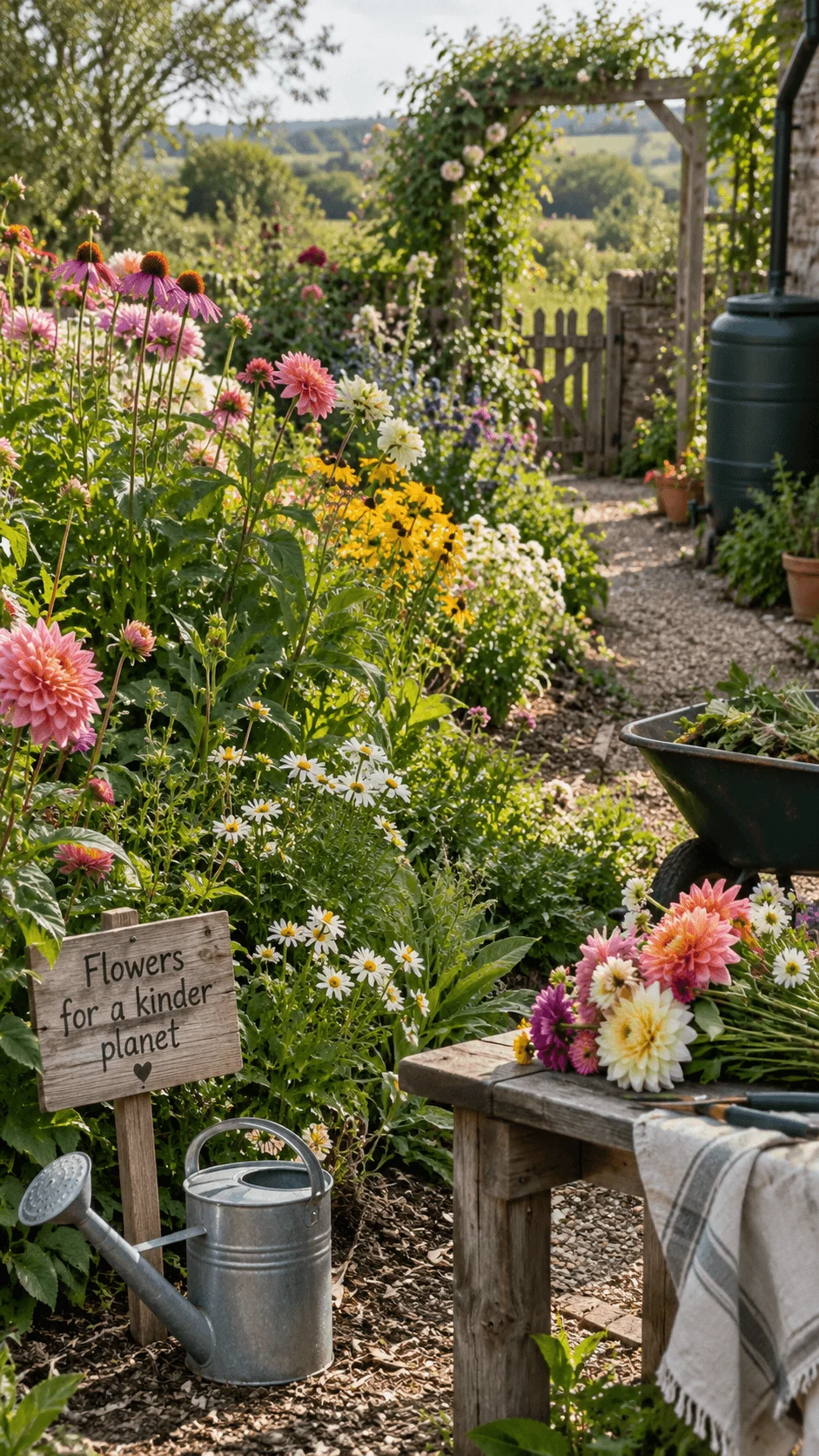
Gardeners can also use homemade compost when suitable, collect rainwater where practical, and choose flowers adapted to their growing conditions. Some annual flowers may offer a long harvest, while suitable perennials can return for multiple seasons.
Allowing selected flowers to mature into seed heads adds another dimension. The garden can therefore move naturally from fresh flowers to seed production rather than ending as soon as bouquet season finishes.
Create a Wildlife Friendly Flower Garden With Host Plants
Flowers can provide nectar and pollen, but a wildlife garden becomes more interesting when gardeners think beyond feeding adult insects.
Some butterflies and other insects depend on particular plants during earlier life stages. This means a garden containing attractive nectar flowers may provide only part of what certain species need.
A wildlife friendly flower garden can combine locally suitable flowering plants with appropriate host plants and supporting vegetation. Instead of isolating every flower in open soil, allow plants to form layers and connections. Taller stems, lower foliage, grasses, shrubs where space allows, and flowering plants can create a richer garden structure.
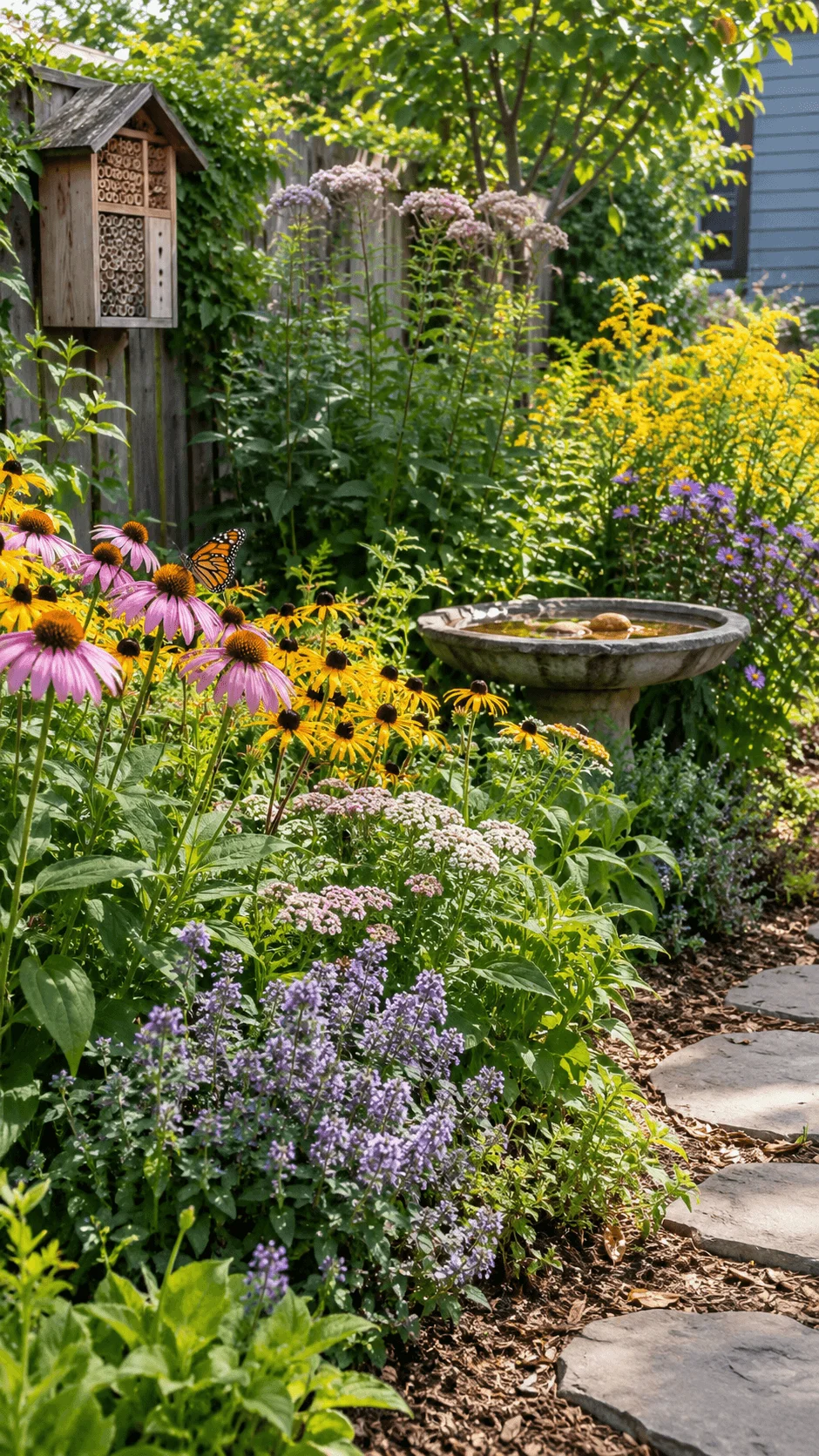
Avoid assuming that a famous host plant from another country will provide the same value locally. Research butterflies and other wildlife native to your region, then identify suitable plant relationships.
This approach can still look polished. Repeat key flowers, maintain pathways, define important edges, and position taller habitat plants where they complement the overall composition.
By thinking about complete lifecycles, eco friendly garden ideas with flowers can move beyond simply attracting occasional visitors and become part of a more connected garden habitat.
Create an Eco Friendly Container Flower Garden
Containers allow gardeners to create flower filled spaces on balconies, patios, terraces, courtyards, and other areas without traditional planting beds.
Instead of placing isolated pots randomly, arrange several containers as one composition. A few larger pots often create a stronger garden feeling than many tiny containers scattered across the floor.
Think about layers within each arrangement. Taller flowers or foliage can provide height, medium plants can create volume, and compact or trailing growth can soften container edges. Repeating one flower color across several pots connects the entire display.
An eco friendly container flower garden also requires careful water management because pots can dry faster than garden soil. Choose container sizes and plants appropriate for your climate, provide drainage, and group plants with similar moisture requirements.
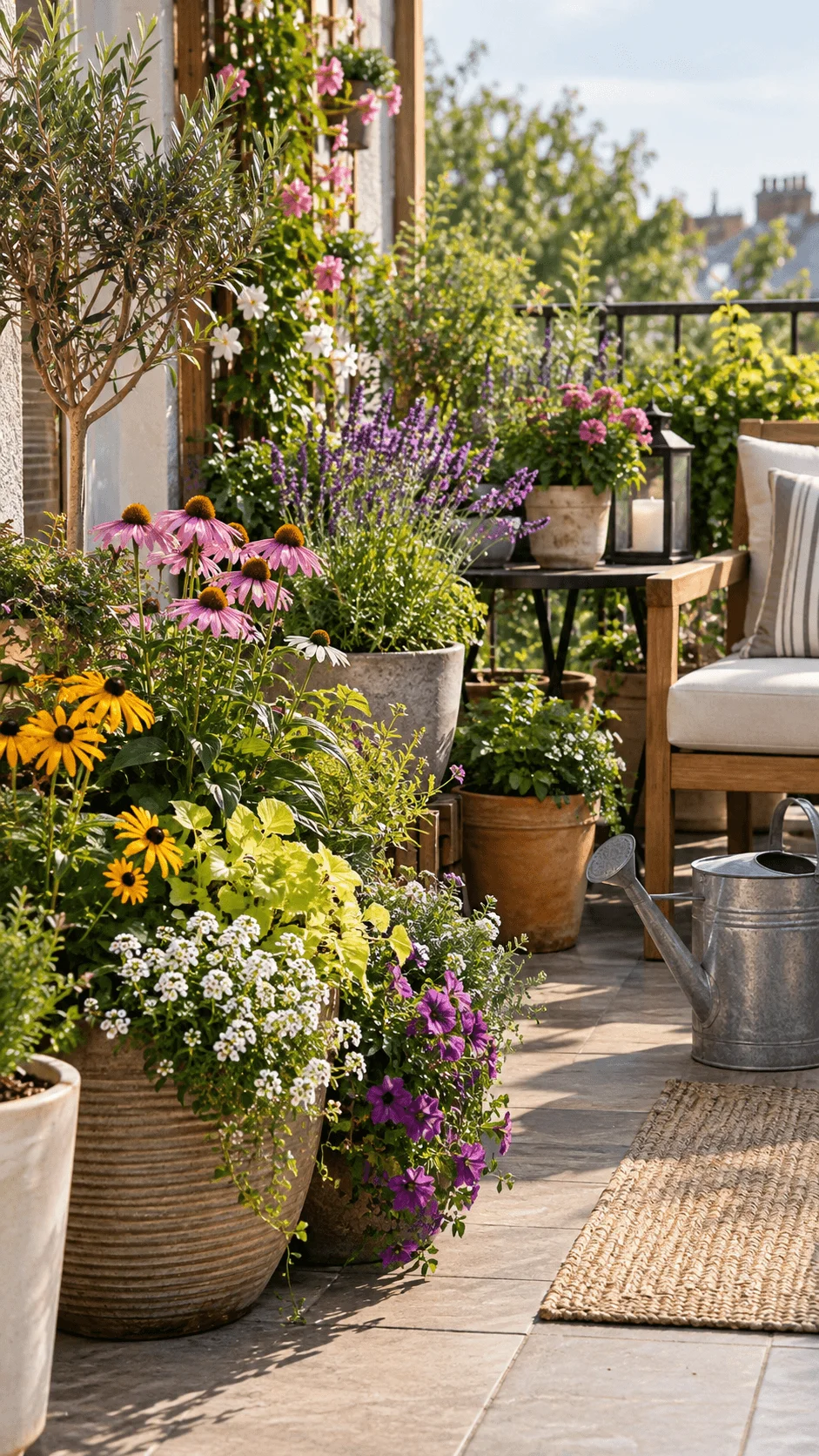
Durable containers can serve for many seasons, while suitable reused containers may also work if they are safe, stable, and provide adequate drainage. Gardeners can consider responsible growing media and locally available peat free alternatives where appropriate.
For renters and small space gardeners, container planting makes eco friendly garden ideas with flowers possible without permanently altering the property.
Design a Green on Green Sustainable Garden With Natural Flowers
A flower garden does not need intense color in every corner. Green on green planting uses foliage as the dominant visual element while flowers appear as carefully placed accents.
Start with different shades and textures of green. Fine grasses can sit beside broad leaves, upright foliage can contrast with rounded forms, and darker greens can create depth behind lighter growth. Flowers then emerge through this framework rather than covering it.
Soft purple, blue, pink, cream, and pale yellow blooms can create gentle highlights among the foliage. Repeating these colors across the garden keeps the design cohesive.
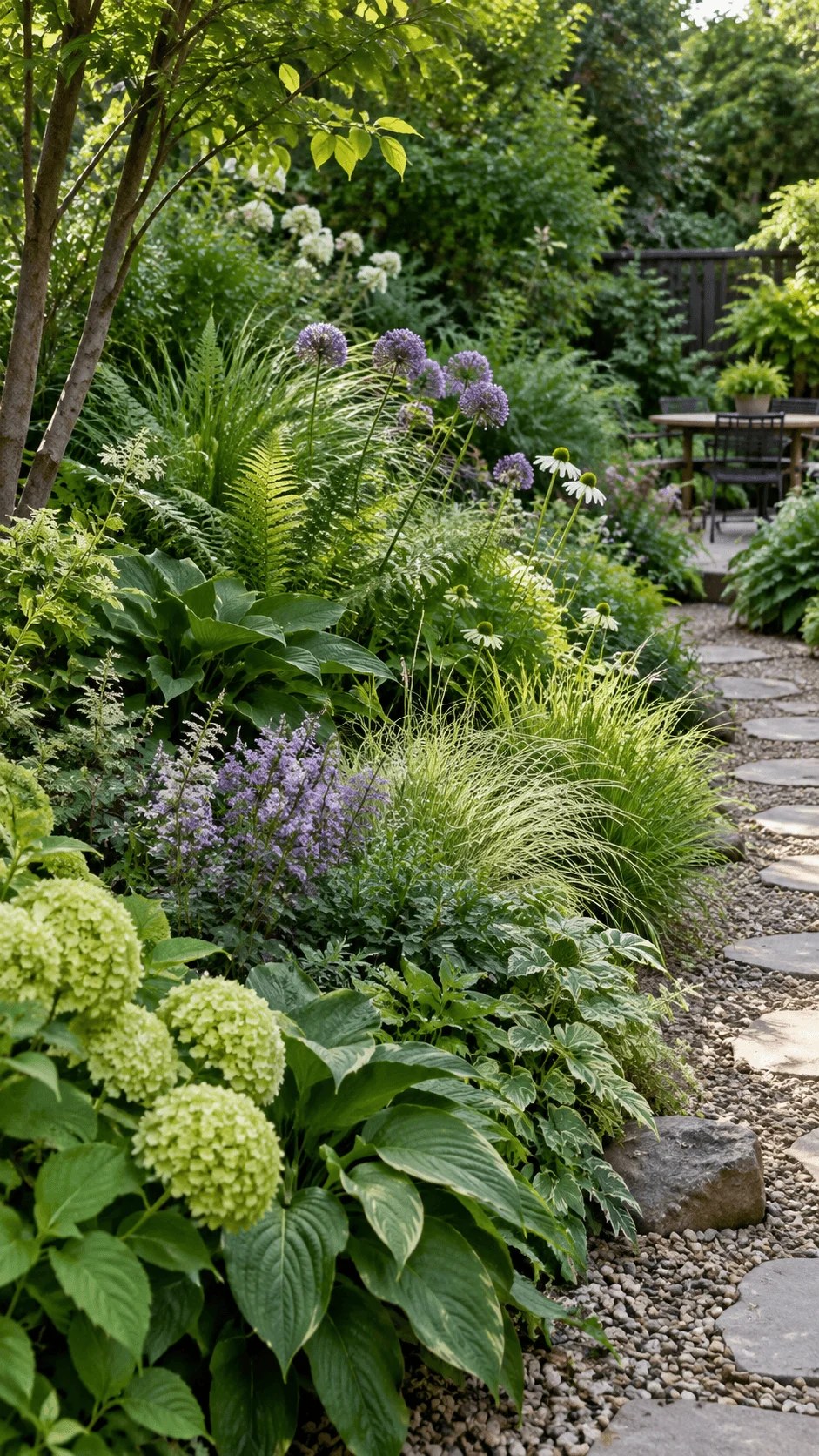
Movement also matters. Grasses and fine flower stems can respond to wind, while stronger foliage provides visual stability. As individual flowers fade, the underlying foliage keeps the garden looking substantial.
These sustainable flower garden ideas suit homeowners who prefer calm, natural landscapes over highly formal bedding displays. They can also encourage gardeners to choose plants for their complete appearance rather than judging them only by flower color.
Conclusion
The most successful eco friendly garden ideas with flowers do more than add color to an outdoor space. They consider how plants interact with local growing conditions, how water moves through the landscape, how the garden changes across seasons, and how planting choices can provide useful habitat while remaining attractive.
You do not need to transform the entire property at once. A small pollinator pocket can brighten an unused corner. A climate resilient border can replace demanding plants. Self seeding flowers can introduce a more natural character, while a carefully planned rain garden can turn suitable runoff into part of the landscape.
The right approach depends on your available space, climate, soil, sunlight, rainfall, and personal garden style. Rather than copying a planting scheme exactly, use these ideas as starting points and choose flowers that make sense for your region.
Ultimately, eco friendly garden ideas with flowers work best when sustainability becomes part of the design rather than an addition to it. By combining thoughtful plant selection, seasonal beauty, responsible water use, and habitat conscious gardening, you can create an outdoor space that looks beautiful today while becoming more resilient and rewarding over time.