Eco Friendly Activities for Students in School
Schools can do much more than teach students about environmental problems. They can give young people opportunities to investigate real issues, create practical solutions, and develop habits that support a healthier planet. Eco friendly activities for students in school can turn ordinary classrooms, gardens, playgrounds, and school grounds into places where students learn through direct experience. From studying energy use to mapping biodiversity, these activities help students understand that sustainability is not only a topic in a textbook. It is something they can practice every day.
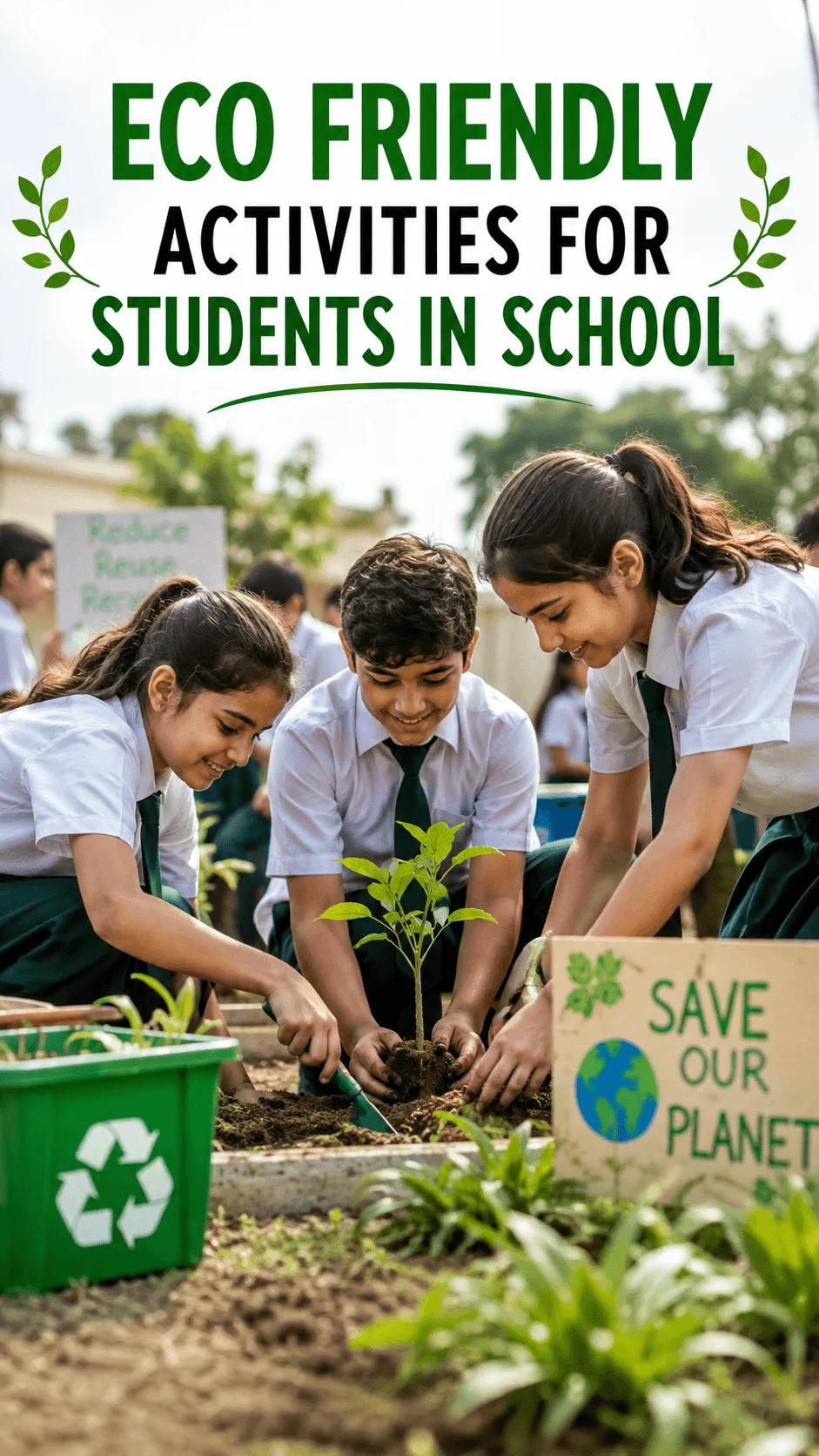
In 2026, schools are increasingly looking for meaningful ways to connect environmental education with student participation. The most valuable projects allow students to observe what happens around them, collect information, work with classmates, and think about possible improvements. This approach makes sustainability more interesting while helping students develop creativity, teamwork, leadership, communication, and problem solving skills.
Why Eco Friendly School Activities Matter for Students
Environmental education becomes much more memorable when students can participate instead of simply listening to a lesson. A discussion about water conservation may teach students why freshwater matters, but investigating water use around their own school gives them an opportunity to see the issue directly.
Practical sustainability activities can also help students understand the connection between everyday decisions and natural resources. Turning off unnecessary lights, reducing food waste, caring for plants, protecting insects, and using resources responsibly may seem like small actions individually. When an entire school community participates, however, these habits can become part of the school culture.
Another advantage comes from student ownership. When students help identify a problem and contribute to the solution, they are more likely to see themselves as capable of creating positive change. This makes environmental education more personal and can encourage students to carry sustainable habits beyond school.
The following ideas focus on participation, investigation, creativity, and long term learning rather than simple one day activities.
Student Energy Detective Challenge
One of the most engaging sustainability activities for students is turning them into energy detectives. Instead of simply telling students to conserve electricity, teachers can give them the responsibility of investigating how energy is used throughout the school.
Students can work in small groups and observe classrooms, hallways, computer rooms, libraries, and other suitable areas. They can look for situations where lights, fans, air conditioning, computers, projectors, or other electrical equipment may remain switched on when nobody needs them.
The important part of this activity involves observation rather than touching electrical equipment. Students should record what they notice and discuss their findings with their teacher. They can create simple charts showing which areas appear to use energy unnecessarily and think about practical ways the school could improve its habits.
For younger students, the activity can become a simple observation exercise. They can look for lights that remain on in empty rooms and discuss why switching them off can conserve electricity. Older students can take the project further by organizing observations into categories and preparing a short presentation for school staff.
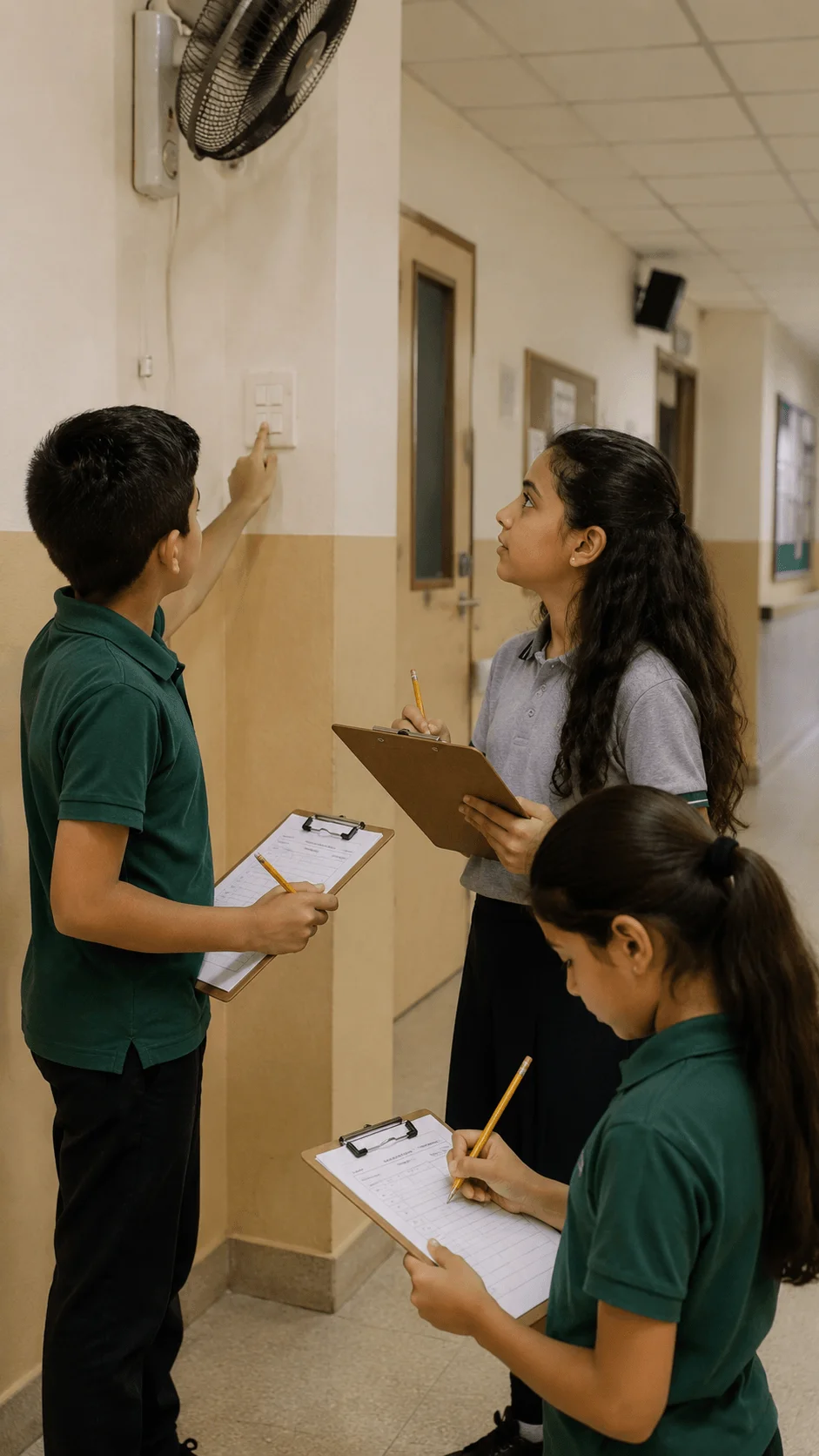
This type of student energy audit can also introduce students to data collection. They learn that environmental problems can be investigated rather than simply discussed. Their observations can become the starting point for a wider conversation about responsible energy use.
The activity can continue after the initial investigation. Students might revisit the same areas after several weeks and compare their observations. This gives them an opportunity to see whether awareness efforts have influenced everyday behavior.
School Waste Audit
A school waste audit can transform an ordinary waste problem into a valuable learning experience. Instead of simply placing recycling bins around the school and telling students to use them, students investigate what types of waste their school actually produces.
Teachers can explain different waste categories and establish appropriate safety rules before the activity begins. Students should not handle unsafe or unknown waste. With suitable supervision, they can study clean and safe samples or use observation records to identify common waste types.
Students might discover that their school produces large amounts of paper, food packaging, disposable containers, or other everyday materials. They can then discuss why these materials appear so frequently and consider whether the school could reduce some of them.
The real strength of a school waste audit comes from asking students to think about the reasons behind waste. If students notice large amounts of unused paper, they can discuss whether printing habits contribute to the problem. If lunch areas contain significant food waste, they can investigate possible reasons without blaming individual students.
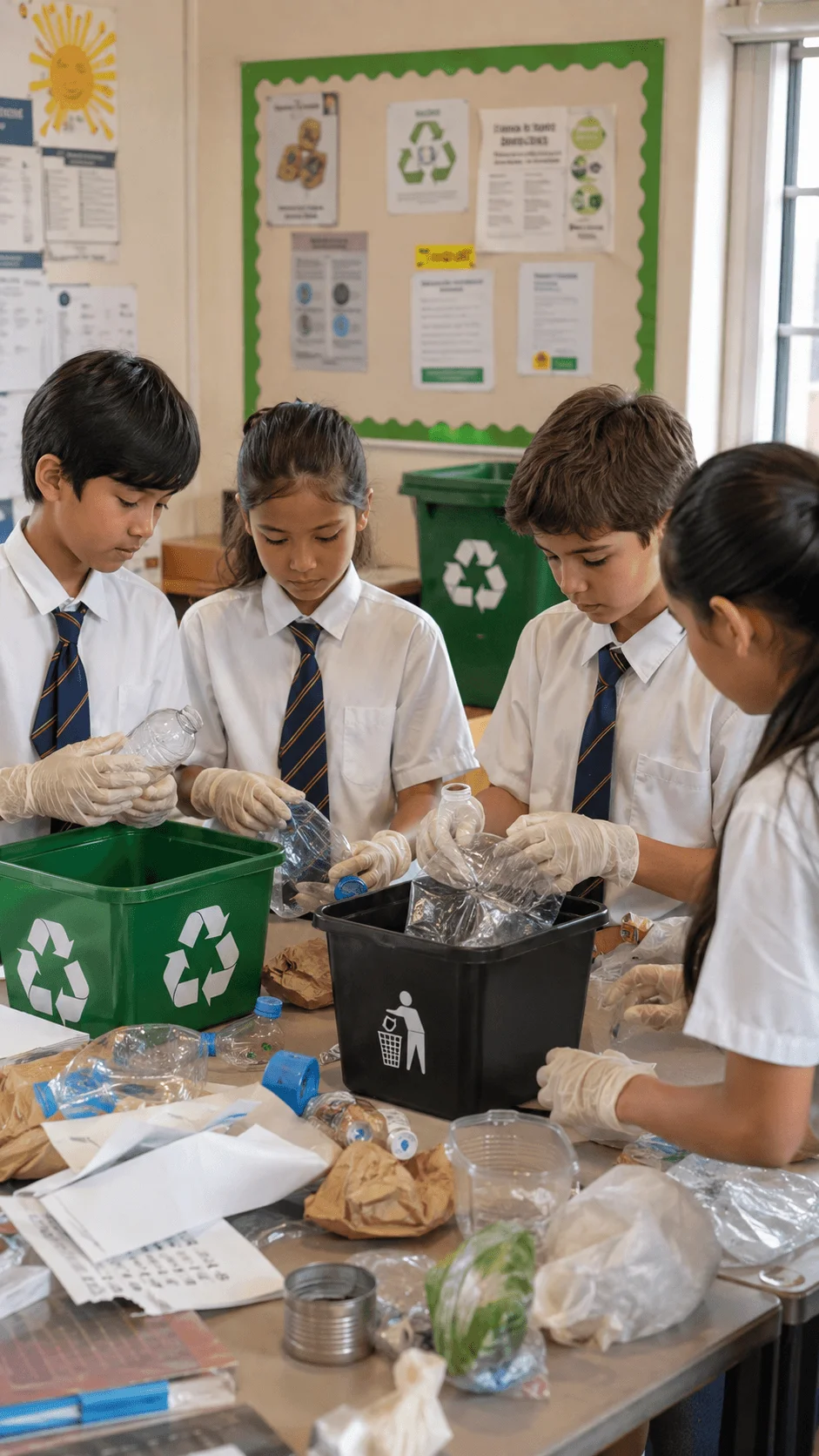
Older students can organize their observations into a simple school waste report. They can explain what they found, identify areas that need attention, and suggest practical changes. Younger students can participate by sorting safe examples into appropriate categories and learning why different materials require different forms of disposal.
This activity also introduces the concept of waste prevention. Recycling is useful, but reducing unnecessary consumption can prevent waste before it appears. Students begin to understand the complete journey of everyday materials rather than seeing a recycling bin as the only environmental solution.
Student Climate Action Committee
A student climate action committee can give sustainability activities a lasting structure within a school. Rather than organizing isolated environmental events, the school can create a group of students who regularly discuss environmental concerns and help develop practical projects.
The committee can include students from different classes or age groups. Teachers can provide guidance while allowing students to contribute ideas and take appropriate responsibility.
The committee might begin by asking a simple question: What environmental improvements could our school make?
Students could discuss energy use, waste, water conservation, biodiversity, school gardens, transportation, or environmental awareness. They can then decide which issues deserve attention first.
This approach develops leadership skills because students have to listen to different opinions, organize ideas, communicate with others, and work toward realistic goals. It also teaches them that meaningful sustainability work often involves planning and cooperation.
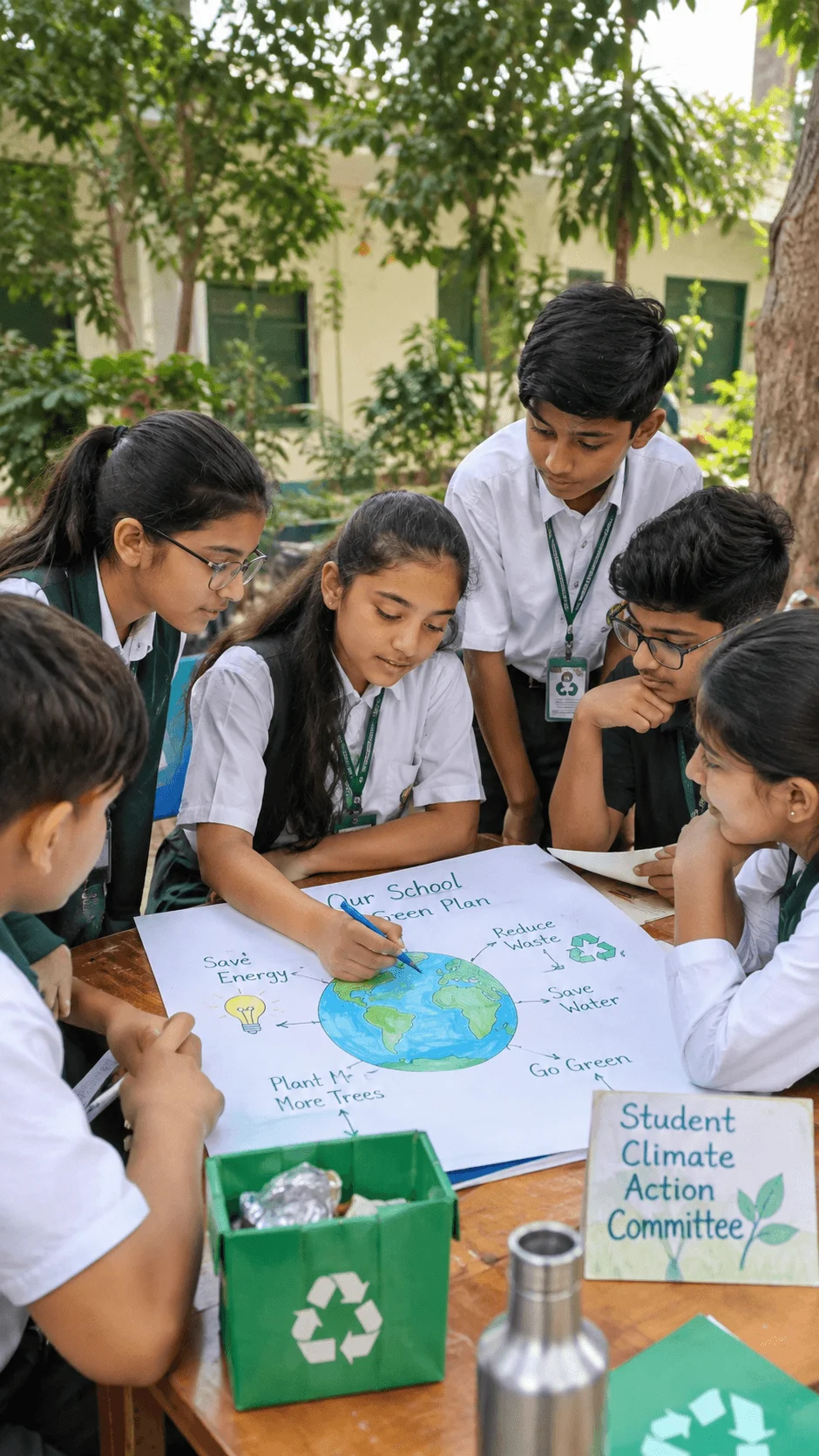
A committee could organize several of the other projects in this article. For example, students might begin with a waste audit, study the results, and then create an awareness campaign. They could later organize biodiversity observations or help maintain a school garden.
The committee should not become a group where students simply receive instructions from adults. Its value comes from meaningful participation. Teachers can provide boundaries and support while giving students room to suggest ideas and help make decisions.
Pollinator or Butterfly Garden
A pollinator or butterfly garden can turn a small area of school grounds into an outdoor learning environment. Students can learn about biodiversity while helping create a space that provides suitable food and habitat for pollinators.
The project can begin with research. Students can learn about butterflies, bees, and other pollinating insects found in their region. They can investigate which plants are suitable for the local climate and which species can provide useful resources for insects.
Students can participate in planning, planting, observation, and maintenance under appropriate adult supervision. They can keep observation journals and record which insects they notice visiting the garden.
Younger students can draw pictures of insects and plants they observe. Older students can create a more detailed school biodiversity project by recording observations over several weeks and comparing what they find at different times.
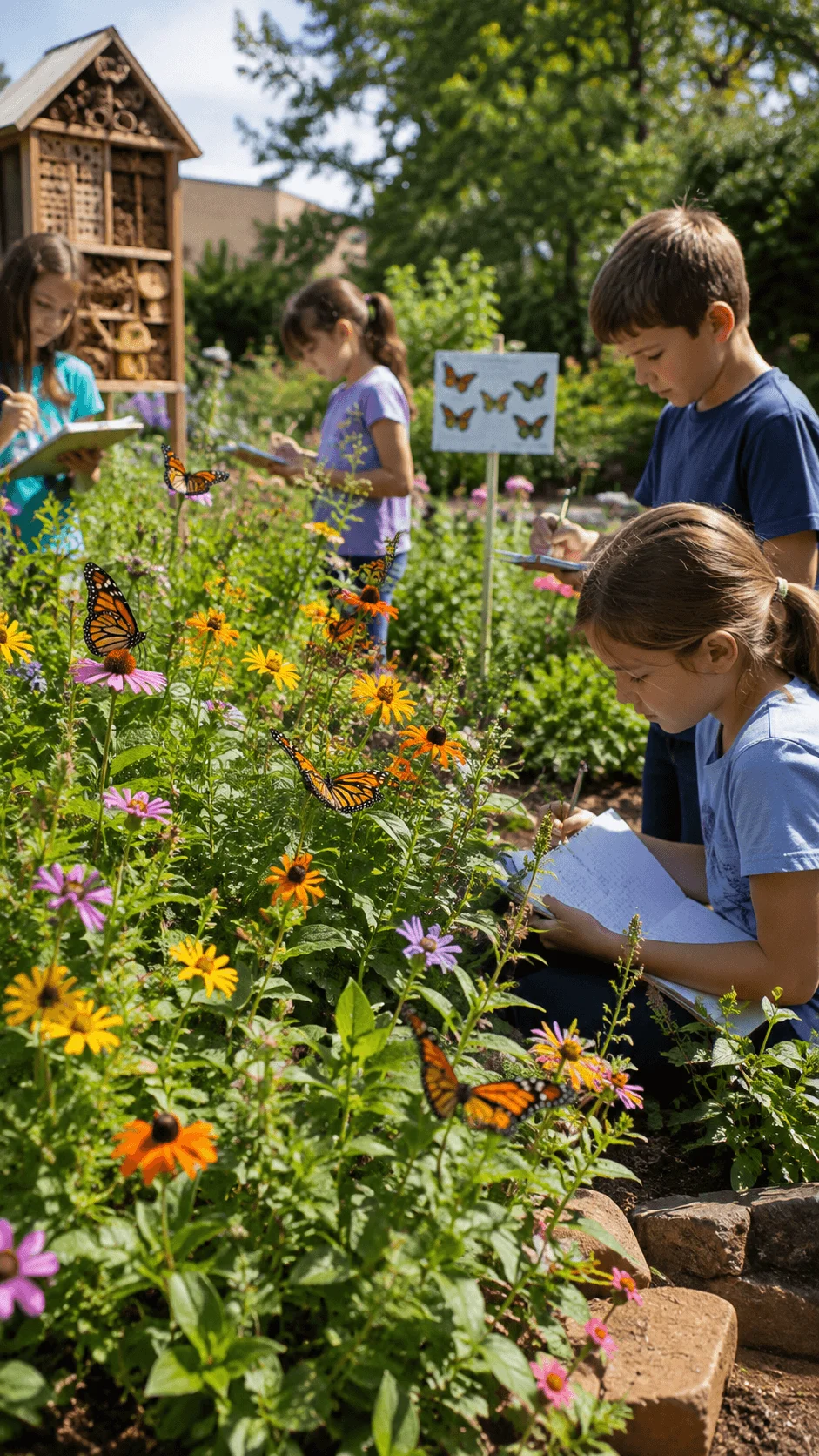
The garden also creates opportunities for science learning. Students can discuss food chains, plant reproduction, habitats, seasonal changes, and the relationships between plants and insects.
The project does not need to occupy a large area. Even a small suitable space can become a valuable learning resource when students understand its purpose and care for it responsibly.
E Waste Awareness and Collection Project
Electronic waste provides a modern sustainability topic that many students can easily connect with because electronic devices are part of everyday life. Old phones, computers, cables, accessories, and other electronic products can eventually become unwanted items.
An e waste awareness project can teach students why responsible disposal matters and why electronic products should not simply become ordinary household or school waste.
Students can research the life cycle of electronic products and learn that many devices contain useful materials that can potentially return to production systems through responsible recycling. They can also discuss how buying, maintaining, repairing, reusing, and responsibly recycling products can reduce unnecessary resource consumption.
The awareness side of the project can include posters, classroom presentations, educational displays, or student created information campaigns.
If a school wants to organize an actual collection drive, responsible adults should manage the process and work with appropriate recycling or waste management organizations. Students should not handle unknown electronic waste or attempt to dismantle devices.
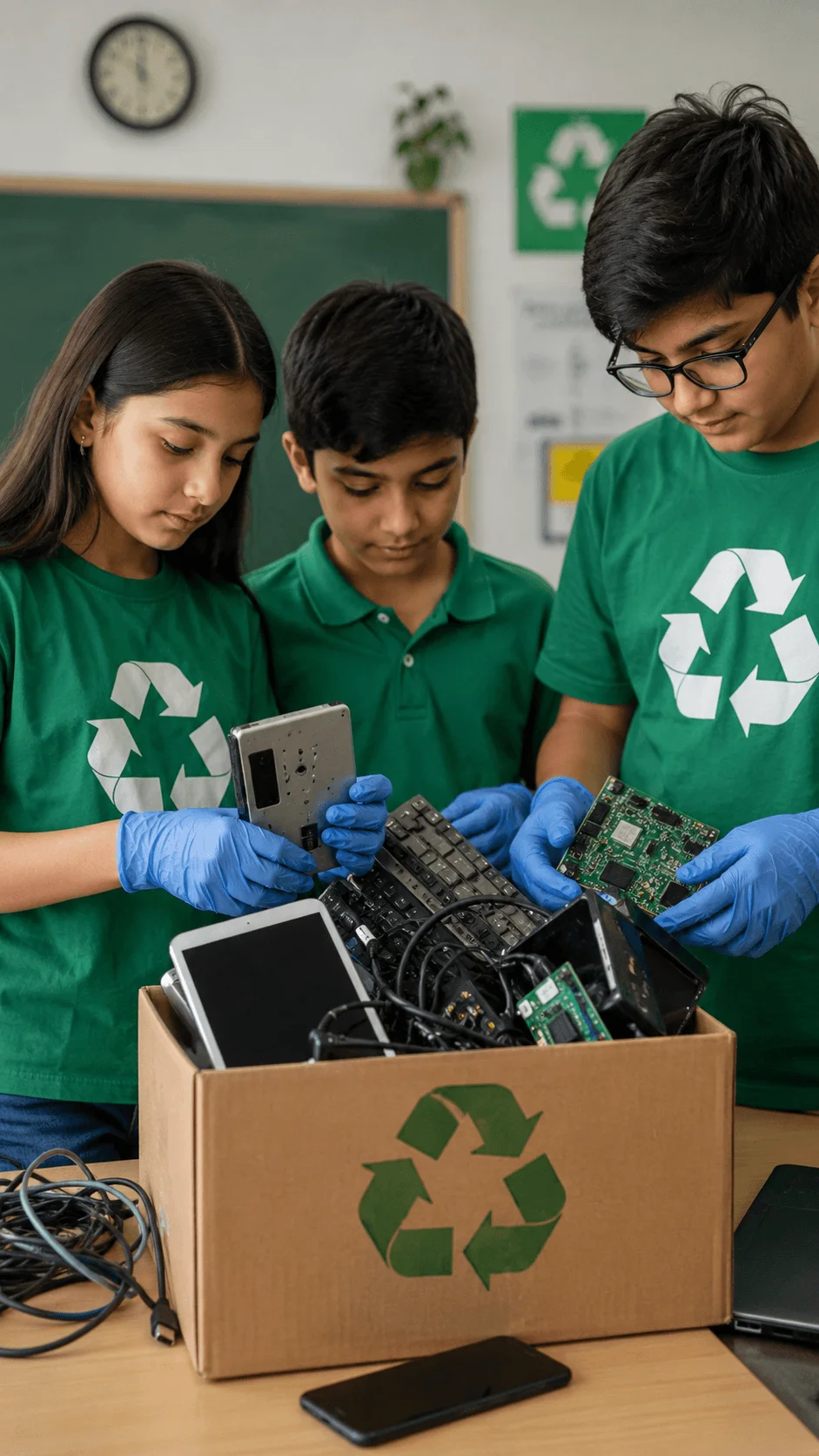
Older students can research the broader idea of the circular economy and explain how materials can remain useful for longer rather than following a simple pattern of buying, using, and throwing away.
This makes e waste education especially relevant to modern environmental learning because students can connect sustainability with technology and everyday consumption.
School Food Waste Tracking Challenge
Food waste can be difficult for students to understand until they see how much food is being discarded around them. A food waste tracking challenge allows students to investigate the issue and think about practical solutions.
The project can begin with observation. Students can work with teachers and school staff to understand where food waste occurs and what patterns appear during lunch or break times.
Rather than focusing on individual students, the goal should be to understand the broader situation. Students can discuss questions such as whether portion sizes, unfamiliar foods, packaging, storage, or lack of awareness may contribute to unnecessary waste.
Students can then brainstorm realistic ways to reduce waste. Ideas might include better awareness about taking only suitable amounts of food, encouraging responsible use of leftovers where appropriate, or improving communication about food waste.
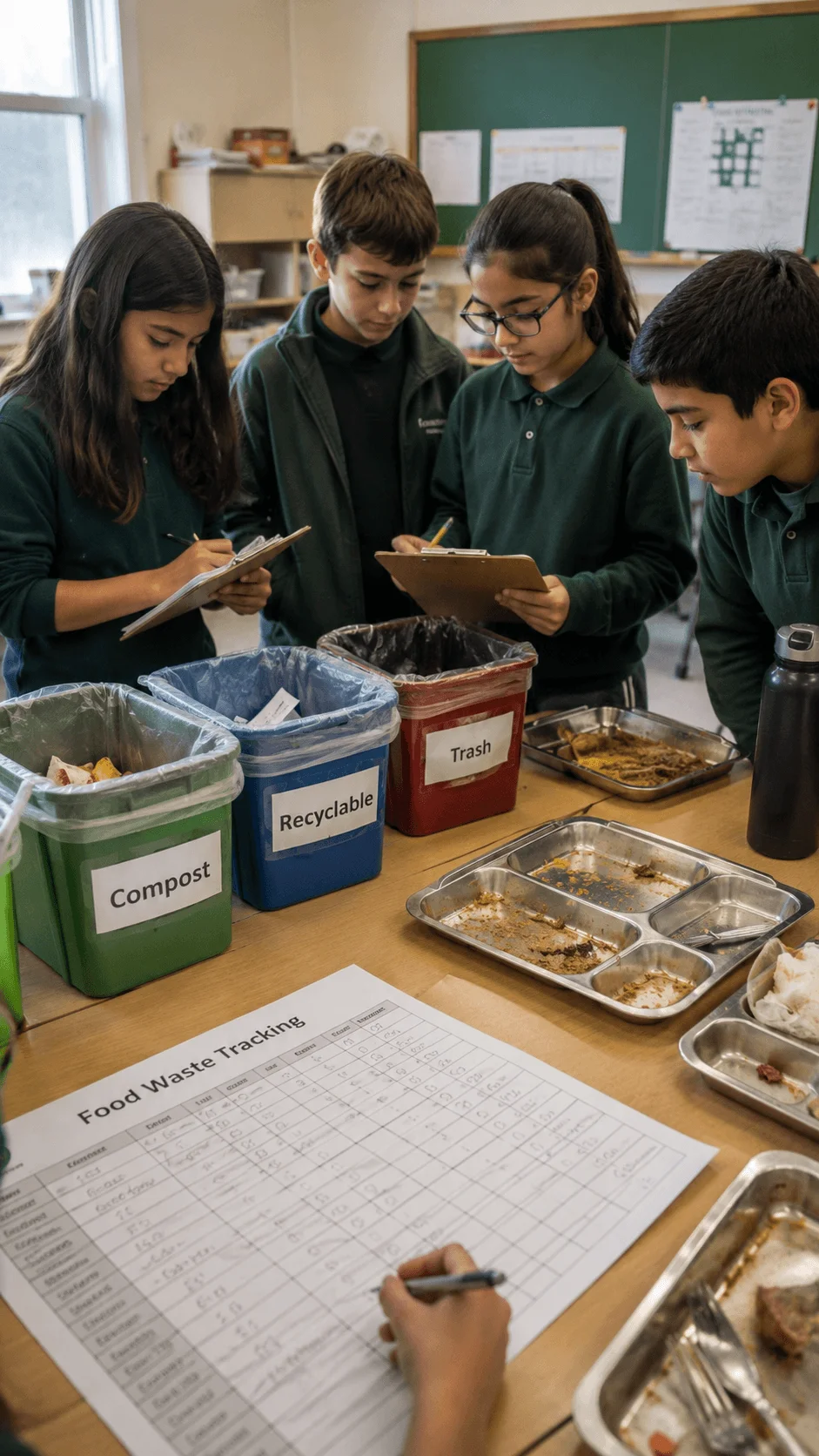
Younger students can discuss why wasting food also means wasting the resources used to produce it. Older students can investigate the wider connections between food, water, energy, farming, transportation, packaging, and waste.
The activity becomes even more valuable when students revisit the issue later and compare their observations. This teaches them that environmental projects should not always end when the first activity finishes.
Climate Smart School Garden
A climate smart school garden takes the familiar idea of gardening and expands it into a broader sustainability project. Students can learn about soil, water, plants, biodiversity, composting, and responsible resource use through one living project.
The garden can include plants suited to the local environment and can become a place where students observe changes over time. Teachers can connect garden activities with science lessons by discussing plant growth, soil conditions, insects, weather, and ecosystems.
Students can also explore ways to use water responsibly. Rather than treating gardening as simply planting and watering, they can think about how soil, plant selection, weather, and watering practices influence resource use.
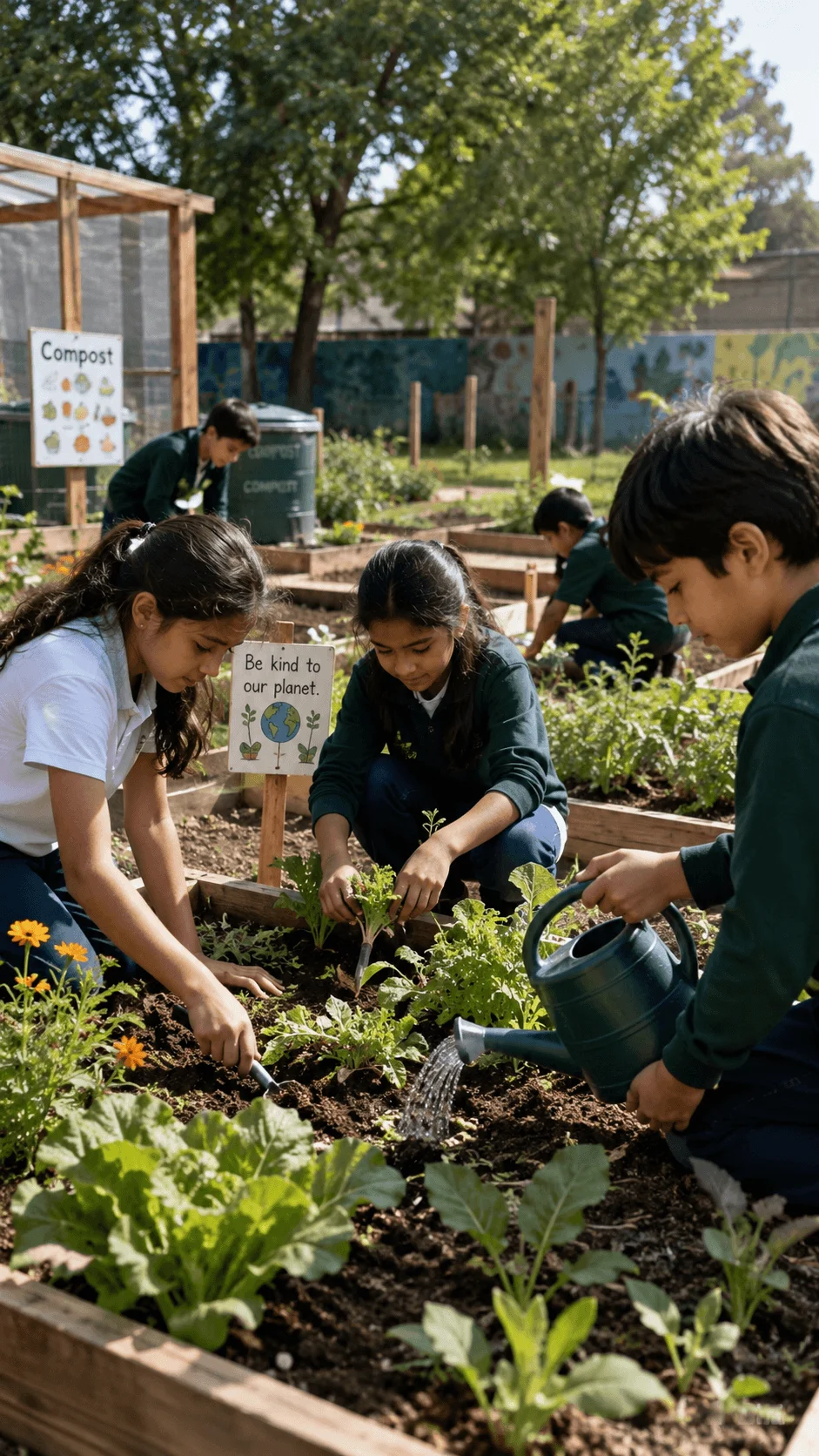
Composting can also become part of the educational experience where appropriate facilities and adult supervision exist. Students can learn how organic material can return nutrients to the soil rather than becoming unnecessary waste.
A school garden also provides an opportunity for teamwork. Different classes can take responsibility for observation, planting, maintenance, or educational displays according to their age and abilities.
The greatest value comes when students understand that a garden is not simply decoration. It is a living system that can demonstrate many sustainability concepts at the same time.
Water Detective Day
Water is one of the most important resources that students encounter every day, yet they may not always notice how much their school depends on it. A Water Detective Day can turn water conservation into an investigation where students examine how water is used around their school and identify opportunities for improvement.
Students can work with teachers to observe suitable areas such as gardens, washrooms, cafeterias, and outdoor spaces. They can look for situations that may indicate unnecessary water use, such as taps left running or watering practices that could use resources more efficiently. Students should not attempt to repair plumbing or interfere with school equipment. Their role should focus on observation, recording, discussion, and suggesting solutions.
For younger students, teachers can make the activity simple by asking them to identify good and poor water saving habits. Older students can create observation sheets and compare water use practices across different areas of the school.
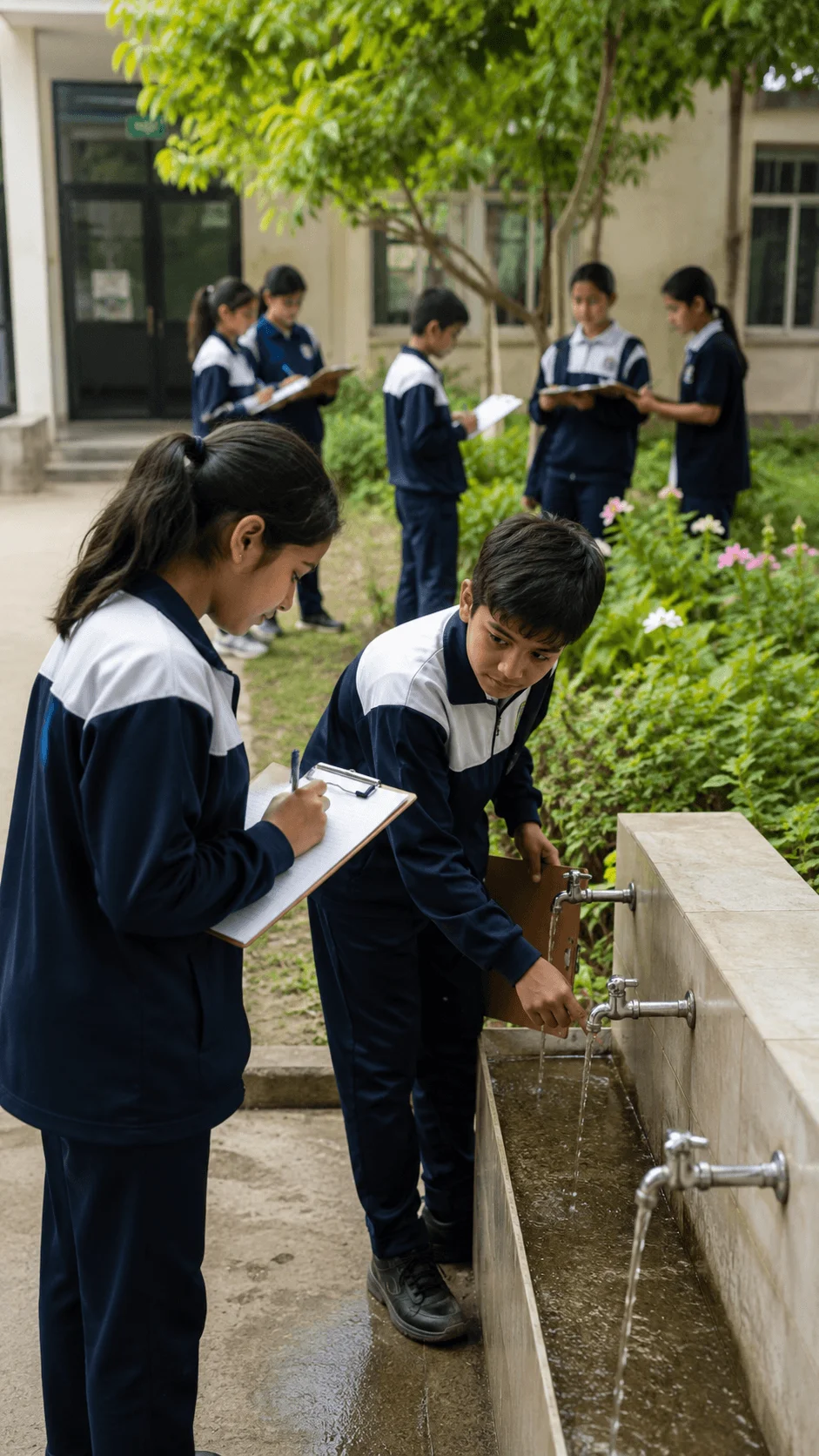
The project can also connect naturally with science lessons. Students can learn about freshwater, the water cycle, water scarcity, ecosystems, and the importance of responsible resource management.
One of the most useful parts of this activity is allowing students to present their observations. A class could create a short water conservation report explaining what they noticed and suggesting practical changes. This gives students a sense that their observations can contribute to real improvements.
Waste to Art School Project
Environmental education does not have to focus entirely on science and data. Creativity can also provide a powerful way for students to think about waste. A waste to art school project allows students to transform clean and safe discarded materials into a meaningful collaborative artwork.
Instead of asking students to make individual crafts, teachers can introduce the idea of creating one larger installation for a classroom, hallway, library, or other suitable school space.
Students can first choose an environmental message. They might focus on reducing unnecessary consumption, protecting wildlife, conserving resources, or keeping school grounds clean. Once they have selected a theme, they can brainstorm how discarded materials could communicate that message.
Students can then plan the artwork together. This planning stage is important because it encourages communication and teamwork. Different students can contribute sketches, ideas, written messages, or design concepts.
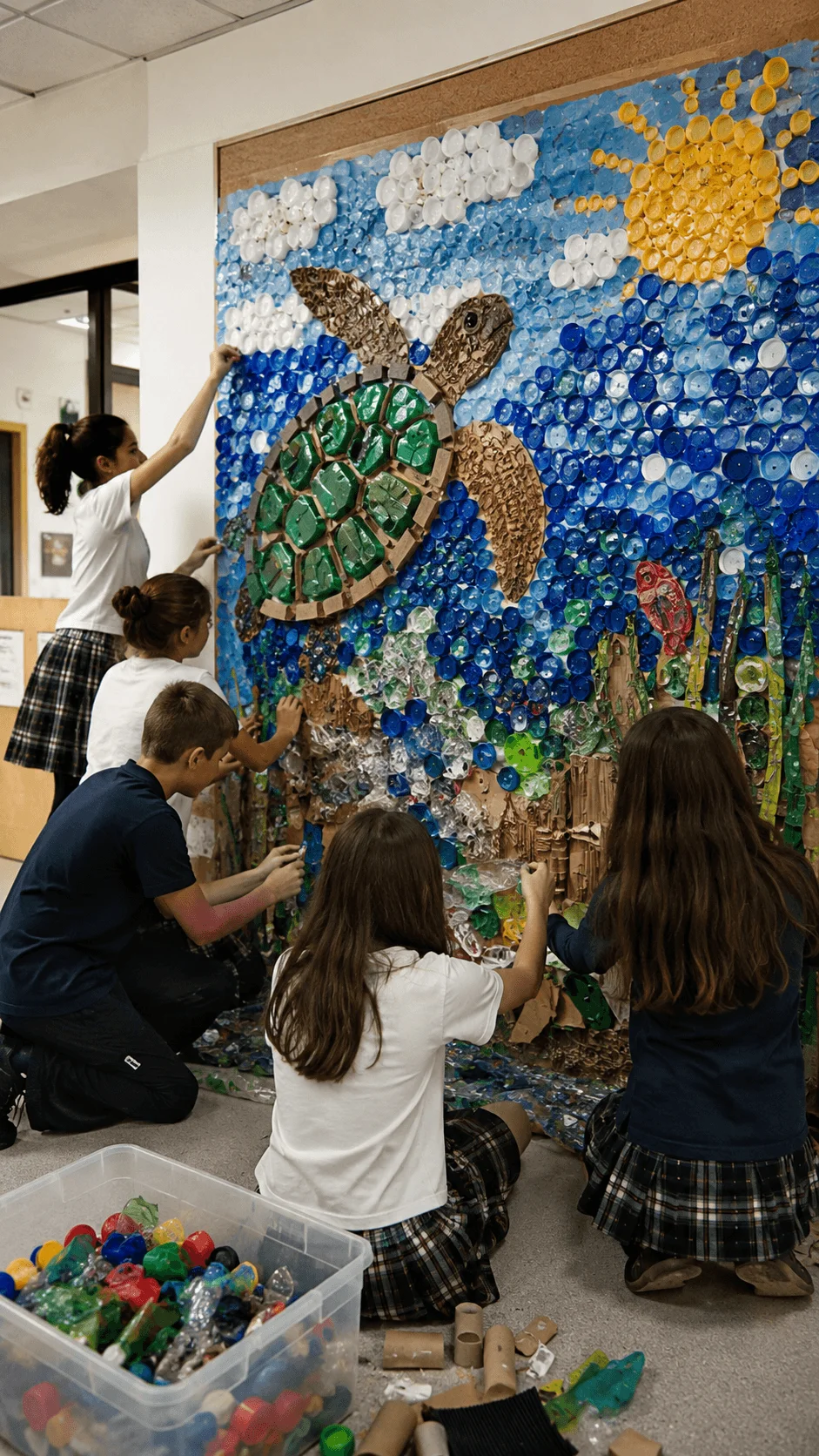
Teachers should make sure that only clean, safe, and suitable materials enter the project. Students should never handle sharp, hazardous, contaminated, or unknown waste.
The finished installation can become an educational display. Students can explain what materials they used and why they chose the particular environmental message.
This type of waste to art school project combines environmental education with creativity. It also changes the way students think about discarded materials. Instead of automatically seeing every unwanted object as useless, they begin to consider whether some materials can be reused before they become waste.
Student Eco Pledge Wall
A student eco pledge wall provides a simple way to make sustainability visible throughout a school. Students can write realistic commitments related to environmental responsibility and display them in a shared space.
The key is to make the pledges specific and achievable. Instead of asking students to promise that they will “save the planet,” teachers can encourage practical commitments that fit everyday school life.
A student might decide to avoid unnecessary paper use, switch off lights when leaving an appropriate space, use a reusable water bottle, care for the school garden, or help keep shared areas clean.
Teachers can use the activity to discuss the difference between a good intention and an achievable habit. Students can think about what they can realistically change and why their chosen action matters.
The wall can also become a reflection activity. After several weeks, students can revisit their commitments and discuss what worked well and what proved difficult.
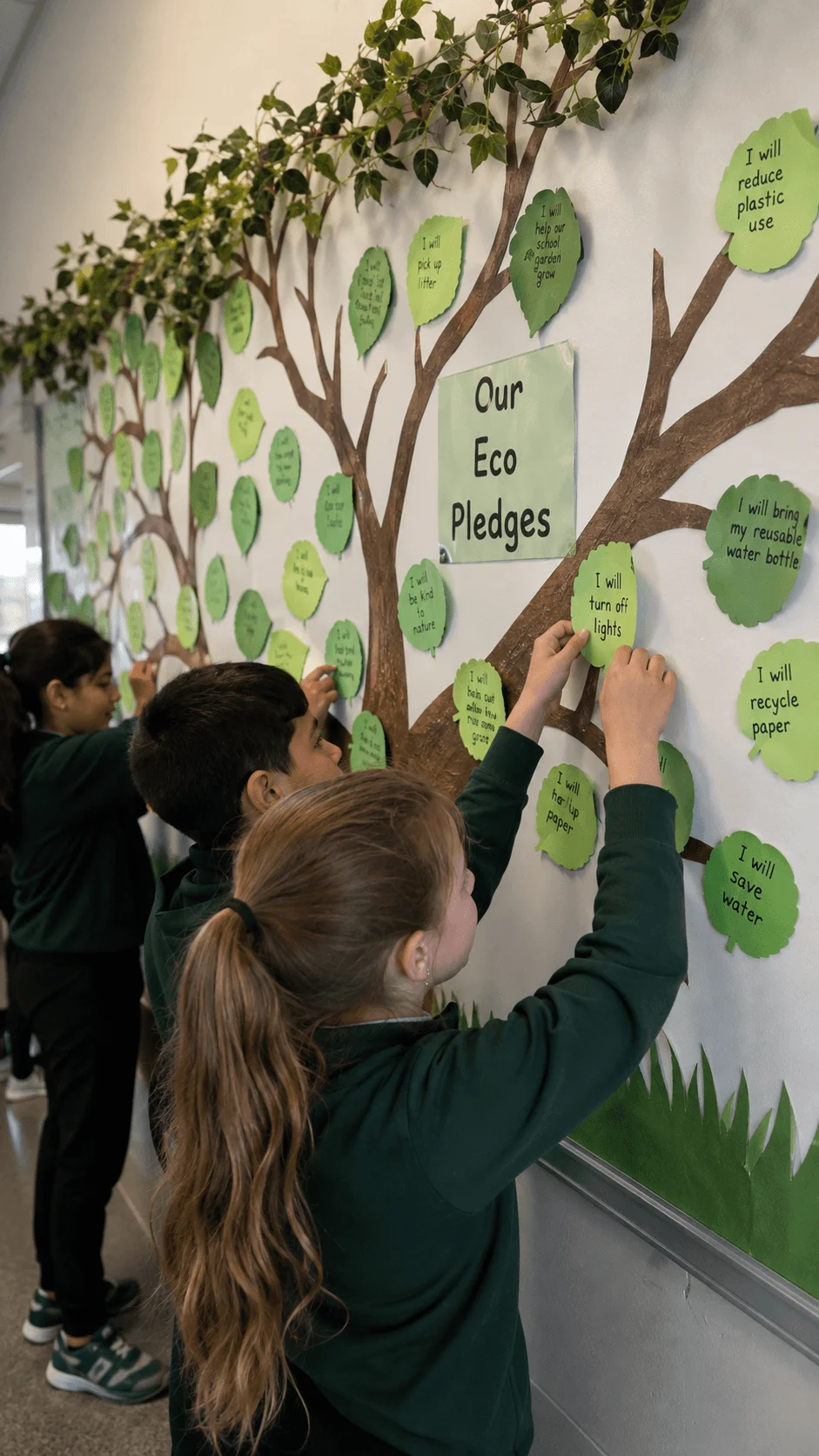
This makes the project more meaningful than simply creating an attractive display. It gives students an opportunity to think about their own behavior and consider how small habits can contribute to a wider school culture.
Older students can take responsibility for designing the display and explaining the project to younger classes. This can turn the eco pledge wall into another opportunity for student leadership.
Peer to Peer Sustainability Teaching
Students do not always need to learn about sustainability directly from teachers. Peer to peer teaching can make environmental education more interactive while giving students opportunities to develop communication and leadership skills.
In this approach, older students or students with particular knowledge can prepare short lessons or activities for younger classes. They might explain biodiversity, demonstrate how to sort suitable recyclable materials, discuss water conservation, or teach younger students about responsible energy use.
Teachers should provide guidance so that the information remains accurate and appropriate for the audience. Students can then decide how they want to present it.
Some students may prefer a short presentation, while others might create a demonstration, story, experiment, classroom game, or interactive discussion.
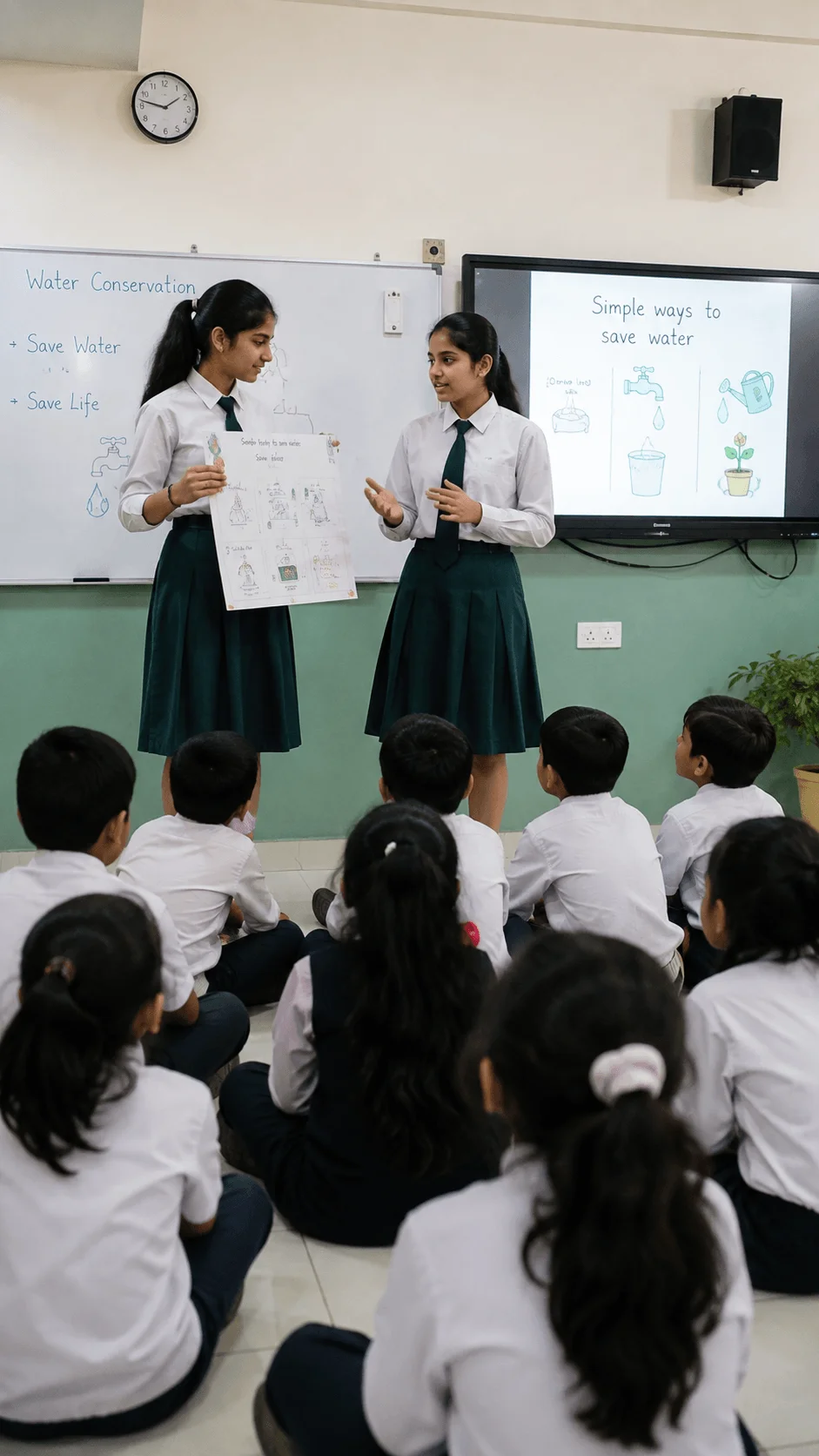
The younger students benefit because they receive information from people closer to their own age. The older students benefit because preparing an activity requires them to understand the topic well enough to explain it clearly.
This makes peer education one of the more valuable sustainability activities for students because it combines environmental learning with communication, confidence, creativity, and leadership.
The activity can become a recurring school program. For example, older students could visit younger classrooms once each term and introduce a different environmental topic.
School Biodiversity Mapping
School grounds can contain far more life than students initially realize. A biodiversity mapping project encourages students to look closely at the plants, insects, birds, and other organisms around their school.
Students can explore suitable outdoor areas with teachers and record what they observe. They might identify different plant types, notice insects visiting flowers, observe birds, or document other signs of local wildlife.
Students should avoid disturbing animals, nests, plants, or habitats. The goal is observation rather than collecting specimens.
The information can become a simple biodiversity map of the school. Students can mark areas where they found different plants or observed particular types of wildlife.
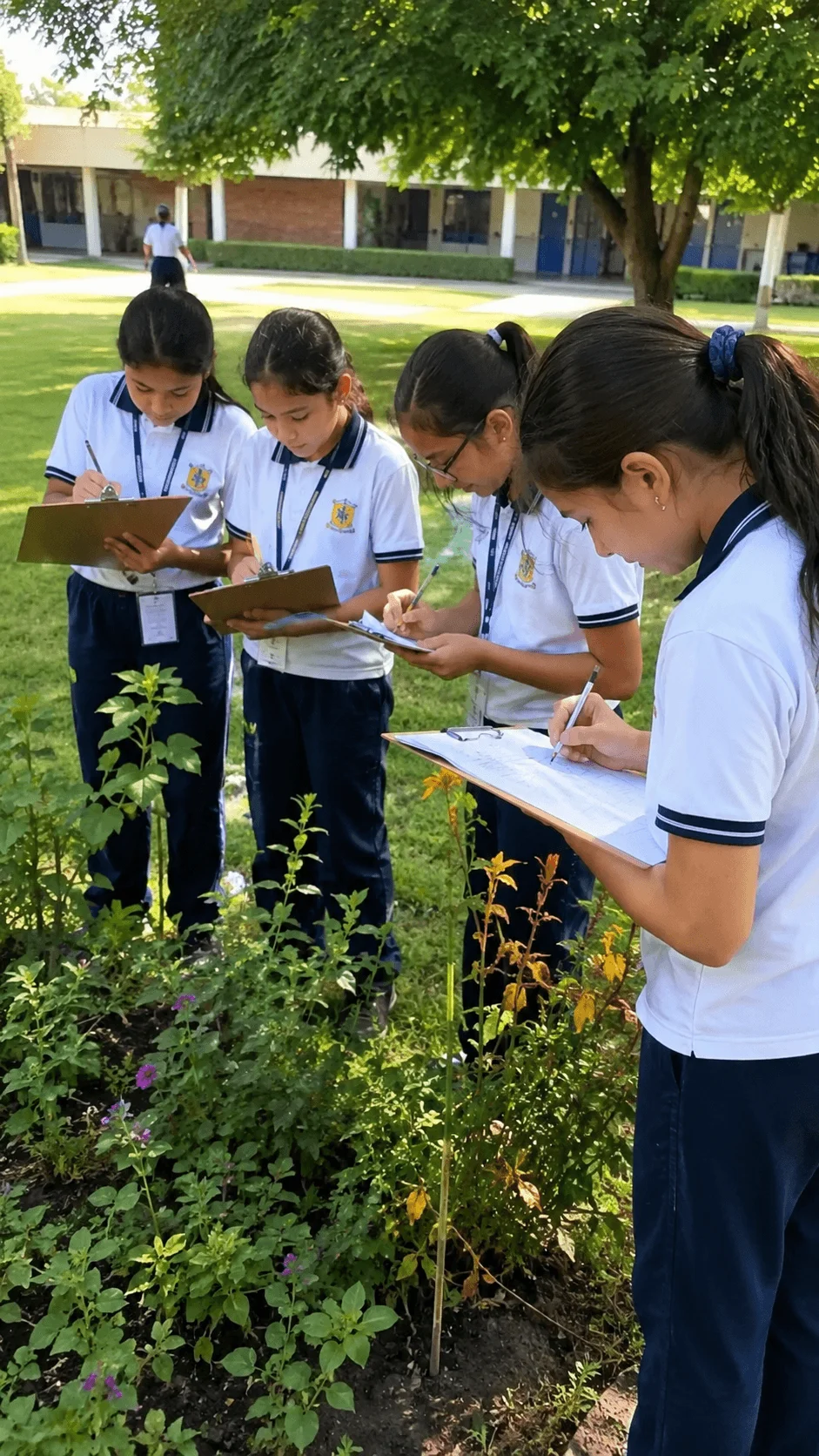
Younger students can draw pictures of what they see and create a simple classroom display. Older students can keep more detailed observation records and compare findings from different areas or seasons.
This project can also encourage students to think about how school grounds affect local biodiversity. A garden with different plants may provide more opportunities for wildlife than an area containing only one type of vegetation.
A school biodiversity project therefore becomes more than a nature walk. It gives students a chance to observe their surroundings scientifically and understand that even a school environment can form part of a wider ecosystem.
Conclusion
The best eco friendly activities for students in school do more than keep students busy with environmental themed tasks. They help young people investigate real problems, understand natural resources, work with others, and recognize their ability to contribute to positive change.
Activities such as energy investigations, school waste audits, climate action committees, pollinator gardens, food waste tracking, biodiversity mapping, and water conservation projects give students opportunities to learn through experience. Creative projects such as waste to art installations and eco pledge walls can make sustainability visible, while peer teaching can help students develop communication and leadership skills.
Schools do not need to introduce all twelve ideas at once. Starting with one manageable project can be enough to begin building environmental awareness. As students gain experience, they can take greater responsibility and help develop additional sustainability projects.
The most important part is student participation. When young people can observe their surroundings, identify challenges, develop ideas, and see the results of their efforts, sustainability becomes something they experience rather than simply something they study.
By making eco friendly activities for students in school a regular part of learning, schools can create an environment where responsible resource use, biodiversity, conservation, creativity, and environmental leadership become part of everyday school life.