Eco Friendly Waste Sorting Bag Alternatives
Finding practical eco friendly waste sorting bag alternatives can help households organize recycling while reducing their dependence on disposable plastic liners and sorting sacks. Conventional bags offer convenience, but households often discard them after only one use, creating another item that enters the waste stream. A more thoughtful sorting system can use washable bags, reusable containers, existing household materials, compostable options where appropriate, and even completely bagless solutions. The goal is not simply to replace plastic with another disposable material. It is to create a convenient system that supports reduction, reuse, correct separation, and responsible disposal.
No single alternative works equally well for every type of household waste. A cardboard box may work perfectly for clean paper but fail quickly when exposed to food residue or moisture. A washable container can handle materials that require regular cleaning, while a certified compostable liner may make sense only when the local organic waste collection system accepts it. Understanding these differences helps households choose solutions based on their actual needs instead of assuming that one product can solve every waste problem.
1. Washable Reusable Waste Sorting Bags
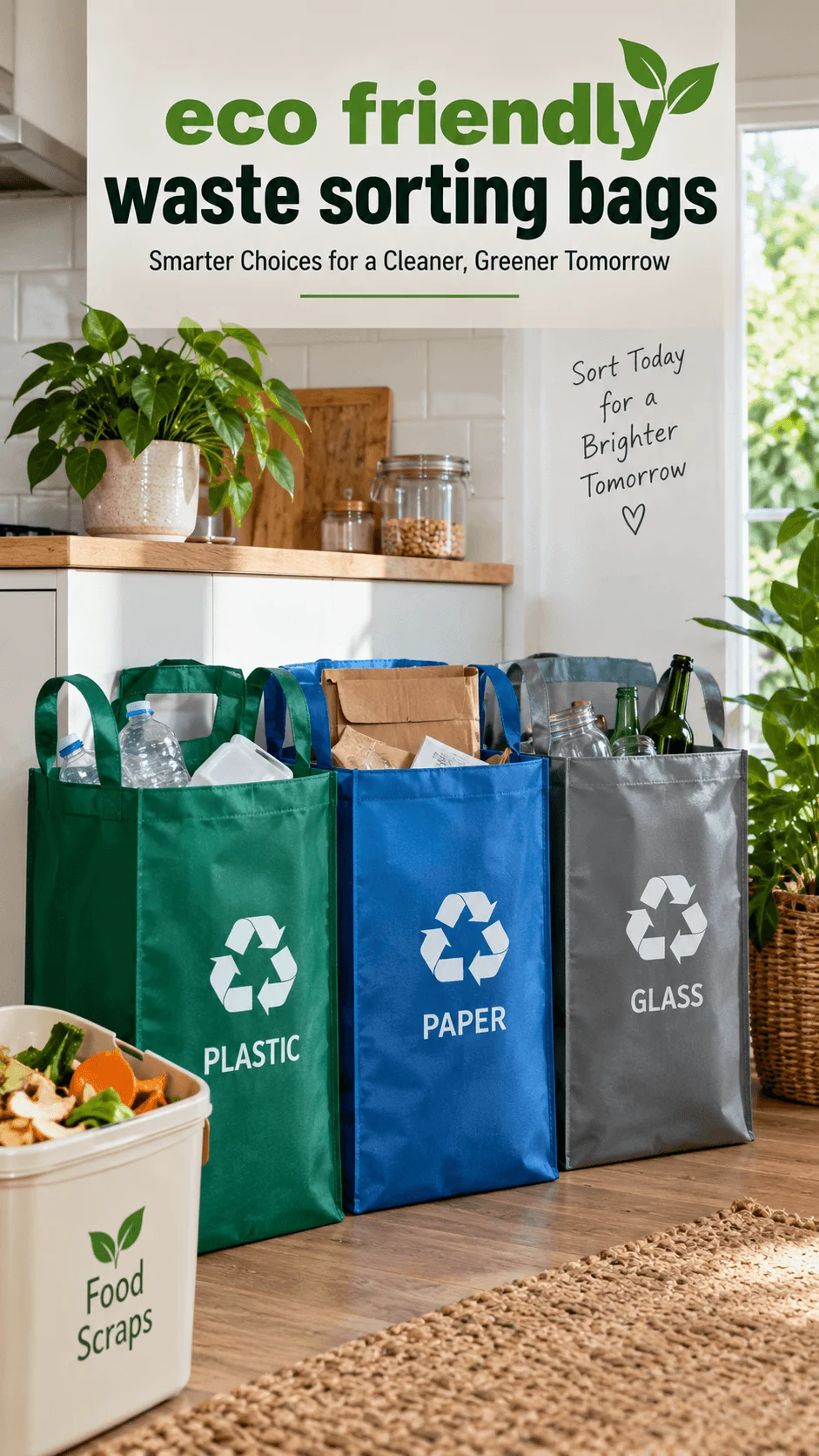
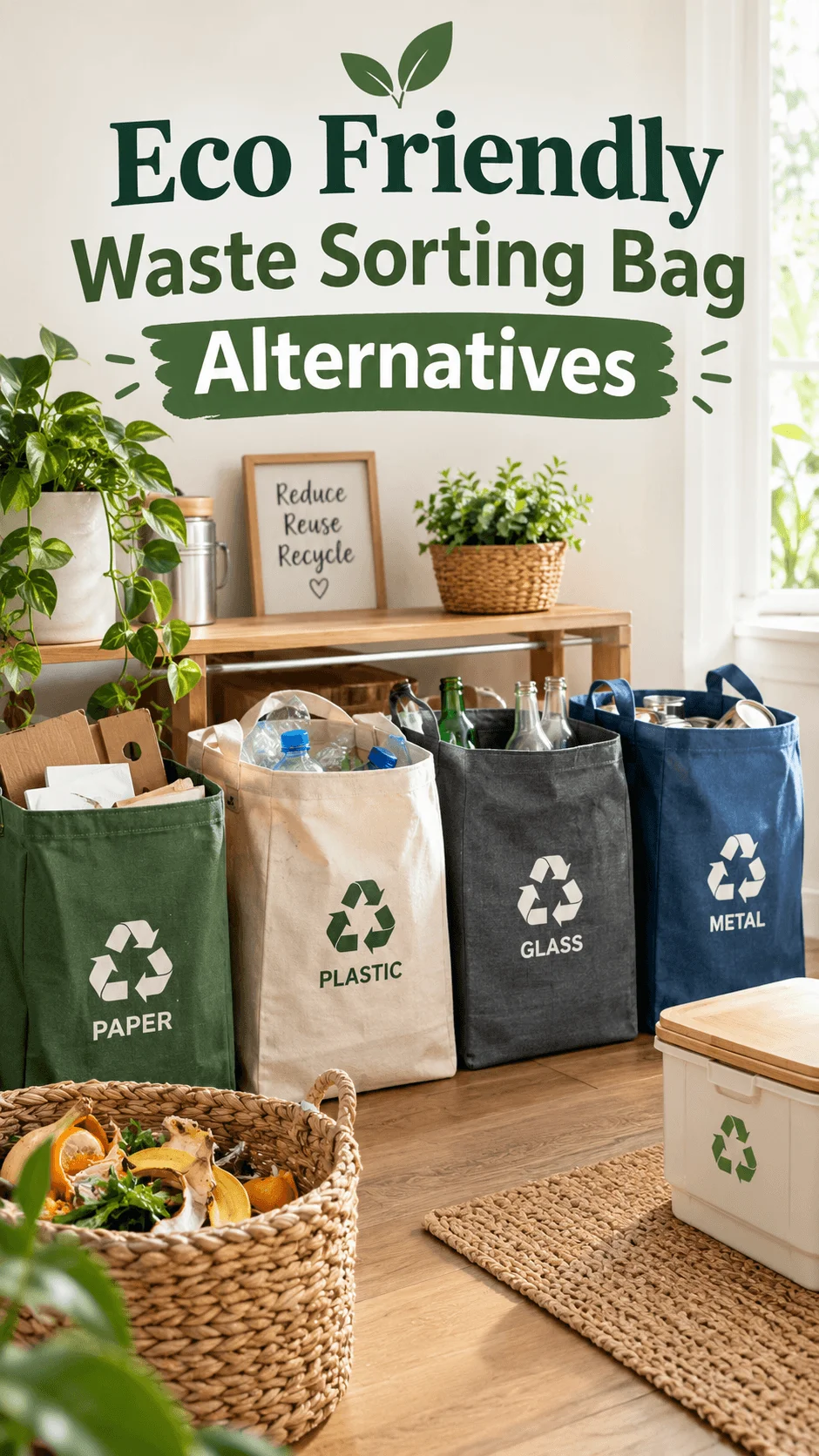
Washable reusable bags offer one of the most straightforward eco friendly waste sorting bag alternatives for households that regularly separate dry recyclable materials. Instead of using a new disposable sack whenever recycling leaves the home, people can empty a durable bag and return it to the sorting area for another collection cycle.
These bags work particularly well for clean bottles, cans, cardboard, paper, and suitable packaging. A household can dedicate one bag to paper, another to containers, and additional bags to other locally accepted materials. This arrangement keeps different streams organized without requiring a large permanent recycling station.
Construction quality matters. Strong handles make it easier to transport heavy bottles and cans, while reinforced seams reduce the risk of a bag splitting during use. A foldable design also allows households to store unused containers without sacrificing valuable floor space.
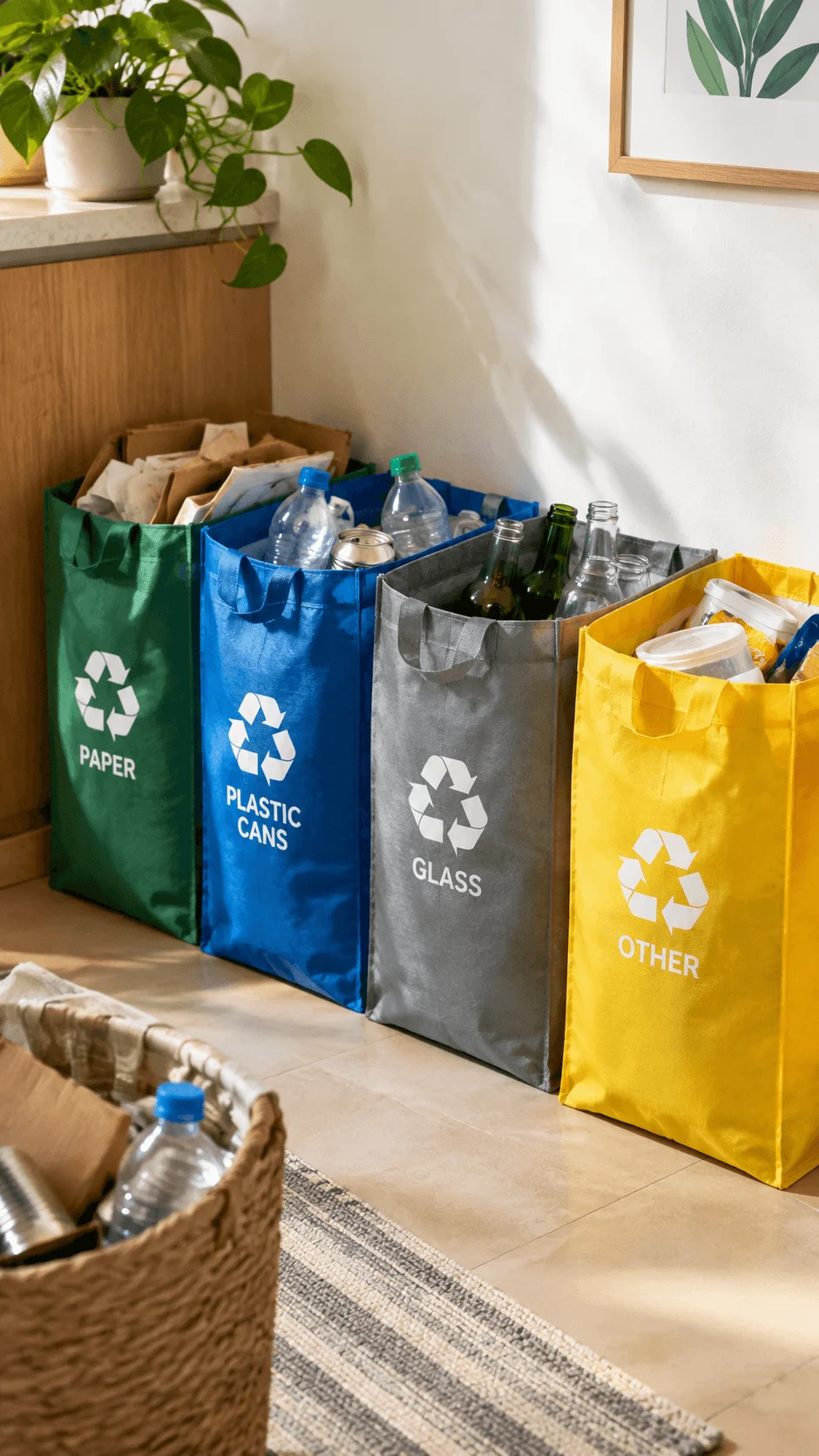
Cleaning deserves attention too. A bag used exclusively for paper may require little maintenance, while one that holds cans or food packaging may collect residue. Households can rinse containers before sorting them where local guidance recommends doing so and periodically clean the reusable bag.
The environmental value of reusable waste sorting bags depends partly on how long people actually use them. Choosing a durable design and continuing to use it for years makes more sense than frequently replacing poorly constructed reusable products.
2. Bagless Recycling System With Removable Buckets
One of the simplest ways to avoid disposable sorting bags involves removing the bag entirely. A bagless recycling system uses rigid containers that household members empty directly into an outdoor bin, communal collection container, or other appropriate destination.
Removable inner buckets make this approach particularly convenient. A person can lift out the entire container, carry it to the collection point, empty the contents, and return it to the sorting station.
Dry materials usually suit this approach best. Paper, cardboard, clean cans, bottles, and similar recyclables rarely require a disposable liner when the container has an easy to clean surface.
A smooth interior makes cleaning easier because dirt has fewer places to accumulate. Removable containers also allow users to wash one compartment without dismantling the complete station.
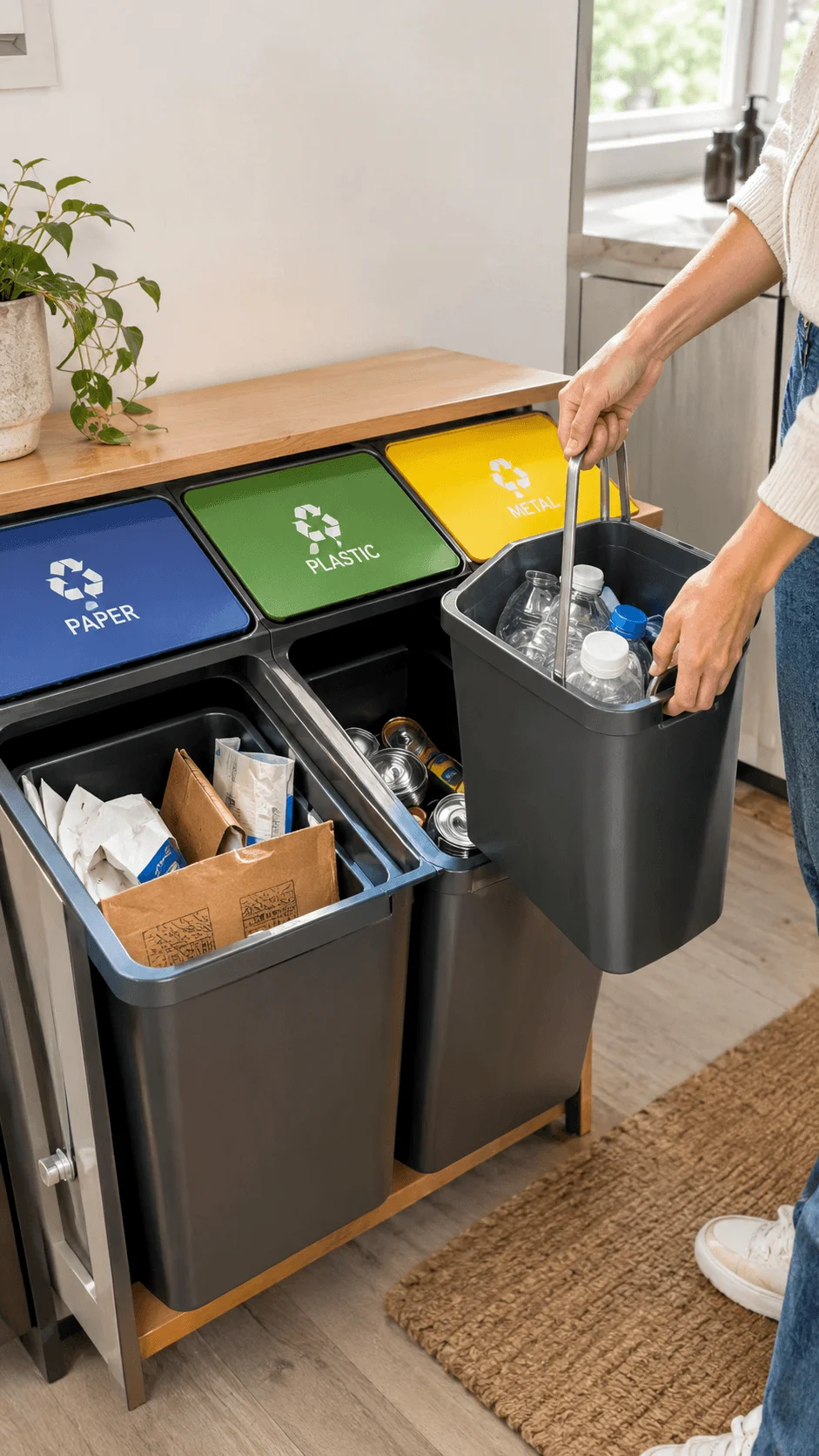
Wet or messy materials require more thought. Food residue can produce odors and make frequent cleaning necessary. A household that wants a home waste sorting system without plastic bags should therefore match each container with the waste it receives instead of automatically removing liners from every stream.
Bagless sorting also makes discarded material more visible. Seeing exactly what fills each container can encourage household members to notice consumption patterns that disappear when everything goes into opaque bags.
3. Recycled Cardboard Boxes for Plastic Free Waste Sorting
Households receive a steady supply of cardboard through deliveries, groceries, appliances, and other purchases. Instead of immediately recycling every sturdy box, people can give suitable packaging another useful purpose as a temporary sorting container.
This approach makes plastic free waste sorting particularly accessible because it does not necessarily require purchasing anything new. A strong delivery box can collect paper, magazines, flattened packaging, or other clean and dry recyclables.
Different box sizes also allow households to customize their system. Someone who receives many deliveries may need a larger cardboard collection box, while a smaller container might work for paper generated in a home office.
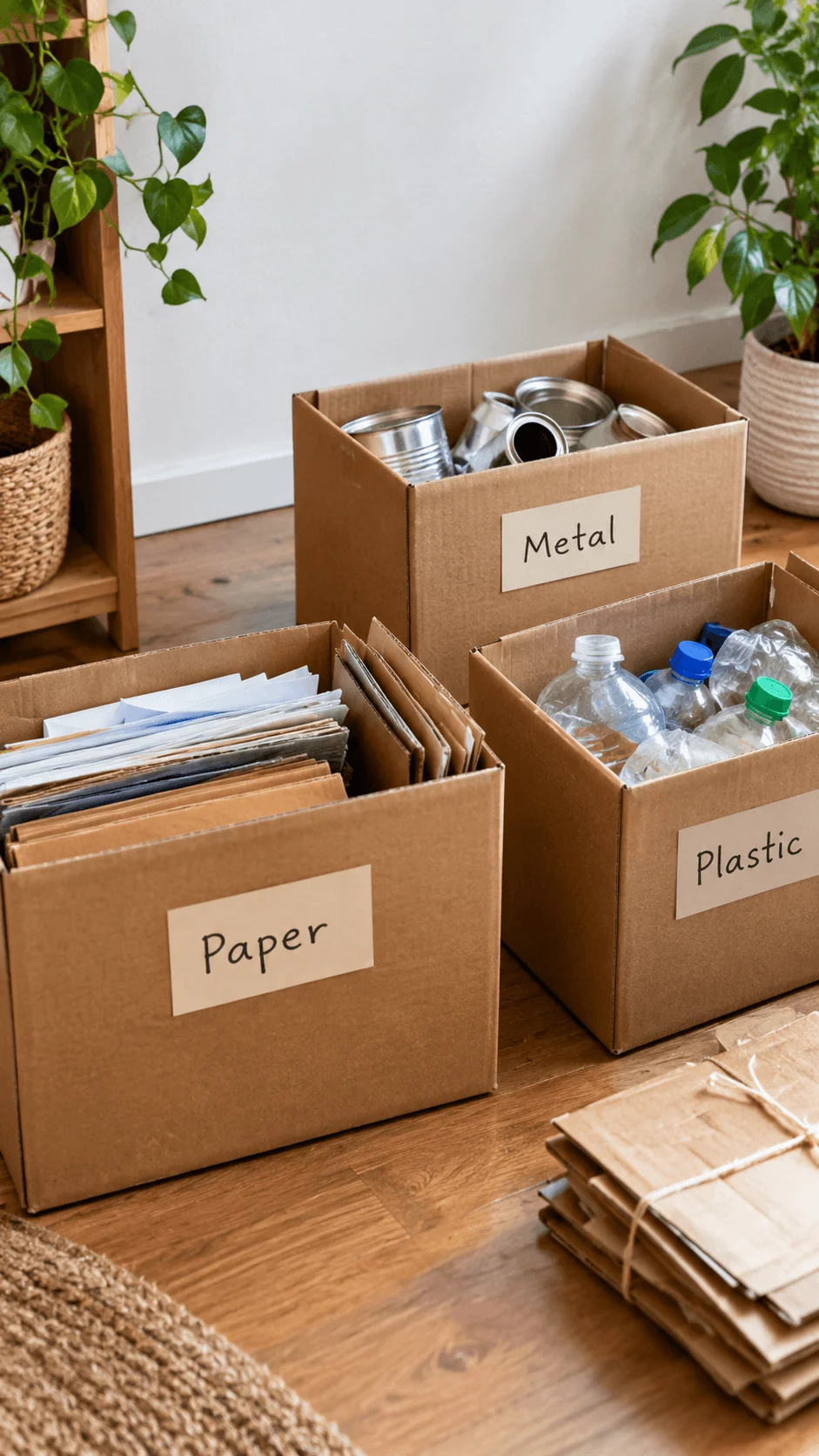
Cardboard has clear limitations. Moisture weakens it, food residue creates hygiene problems, and heavy materials can damage the base. Households should therefore avoid using ordinary cardboard for wet waste, liquids, or extremely heavy recyclables.
The strongest sustainability argument behind this idea comes from reuse. The household extends the useful life of packaging it already possesses before sending that material into the recycling stream.
4. Reused Paper Grocery Bags as Recycling Containers
Paper shopping bags can also become simple waste sorting bag alternatives after serving their original purpose. Their upright shape makes many of them suitable for storing clean paper, lightweight packaging, and selected dry recyclables.
Handles can make transportation easier, particularly when the collection point sits away from the kitchen. Empty bags also fold relatively flat, allowing households to keep several without requiring much storage space.
Using an existing paper bag differs from buying disposable paper bags specifically for waste. The environmental benefit becomes more convincing when a household extends the life of something it already owns rather than increasing consumption in the name of sustainability.
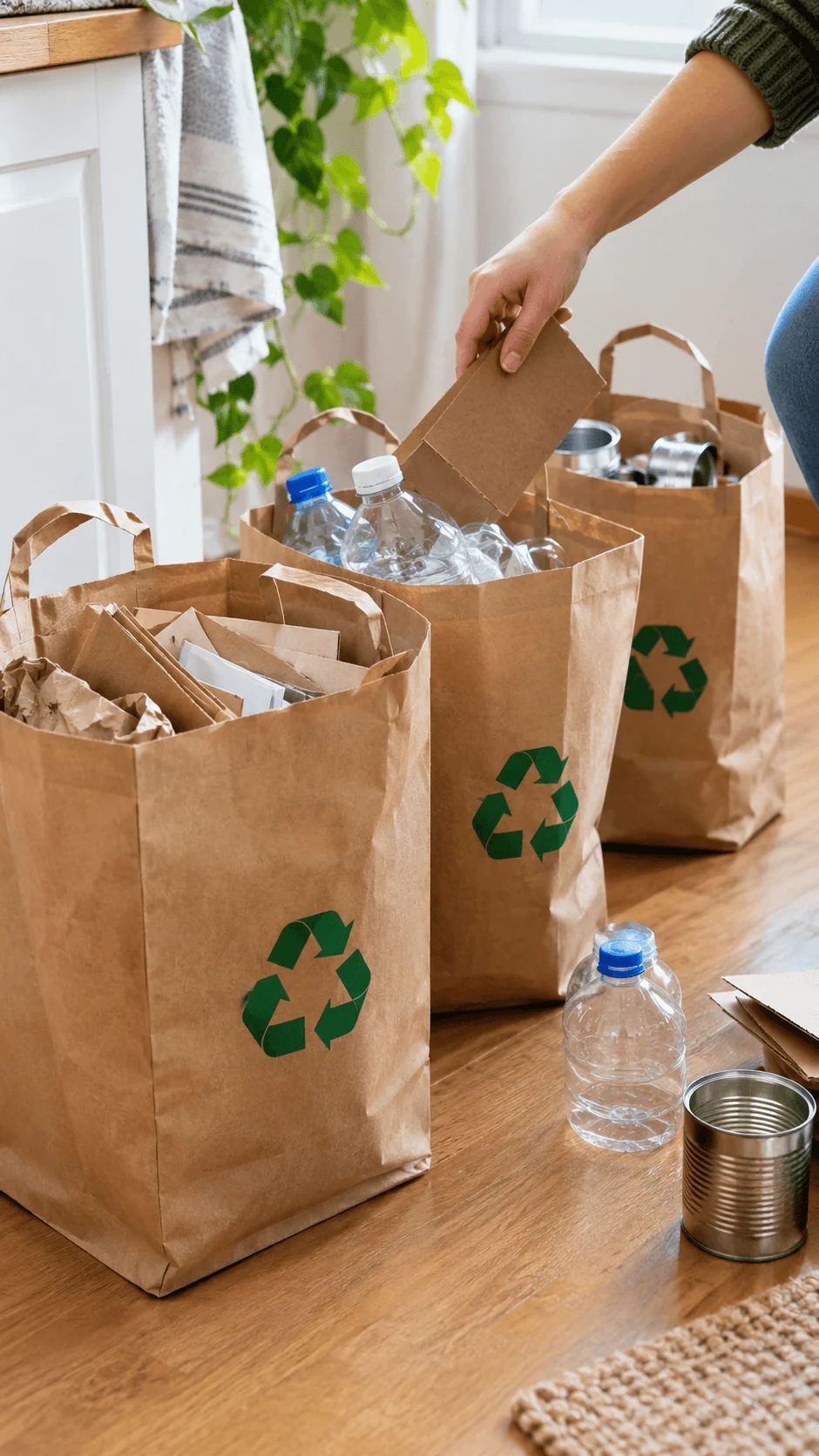
Paper still has practical weaknesses. Moist bottles can soften the material, sharp objects can tear it, and heavy items may break the handles or bottom. For these reasons, paper bags make the most sense for clean and relatively lightweight materials.
When the bag becomes damaged, households should follow local recycling guidance to determine whether they can recycle it.
5. Newspaper Bin Liners for Food Waste
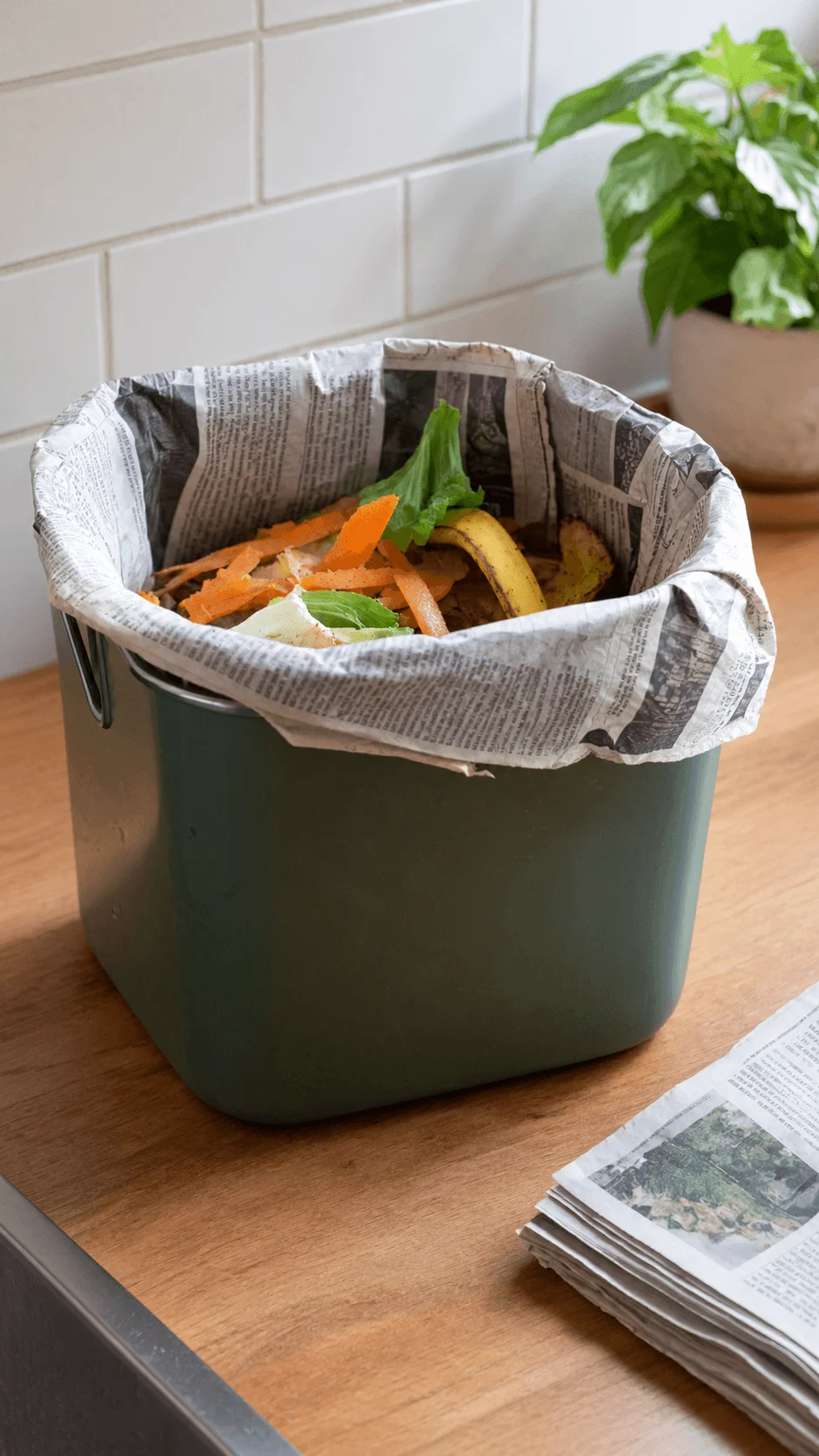
Old newspaper can sometimes provide a simple zero waste bin liner alternative for small food waste caddies where local collection or composting rules permit paper.
Several layers can help keep food residue away from the container surface while absorbing a limited amount of moisture. This solution works particularly well when households empty small caddies frequently instead of allowing scraps to remain indoors for long periods.
Newspaper cannot behave like a waterproof liner. Very wet scraps can soak through it, liquids can weaken it quickly, and excessive moisture can create additional cleaning work. Households should still wash their food caddies regularly.
Local requirements matter even more. Organic waste programs use different processing methods and acceptance rules. A material that one collection service accepts may create problems for another.
The broader value of this idea comes from repurposing an existing material. Rather than purchasing another product solely to contain waste, households can sometimes use paper that has already completed its original function.
6. Certified Compostable Food Waste Liners
Certified compostable liners provide another option among eco friendly waste sorting bag alternatives, particularly for food scraps. However, households should understand what compostable actually means before assuming these liners provide a universal solution.
Compostable and biodegradable do not automatically mean the same thing. A vague biodegradable claim may tell consumers little about the conditions or time required for decomposition. Recognized compostability standards provide more useful information about the conditions under which a material should break down.
Industrial composting facilities can maintain controlled conditions that ordinary backyard compost piles may never reach. A liner designed for industrial processing may therefore behave very differently in a home composting system.
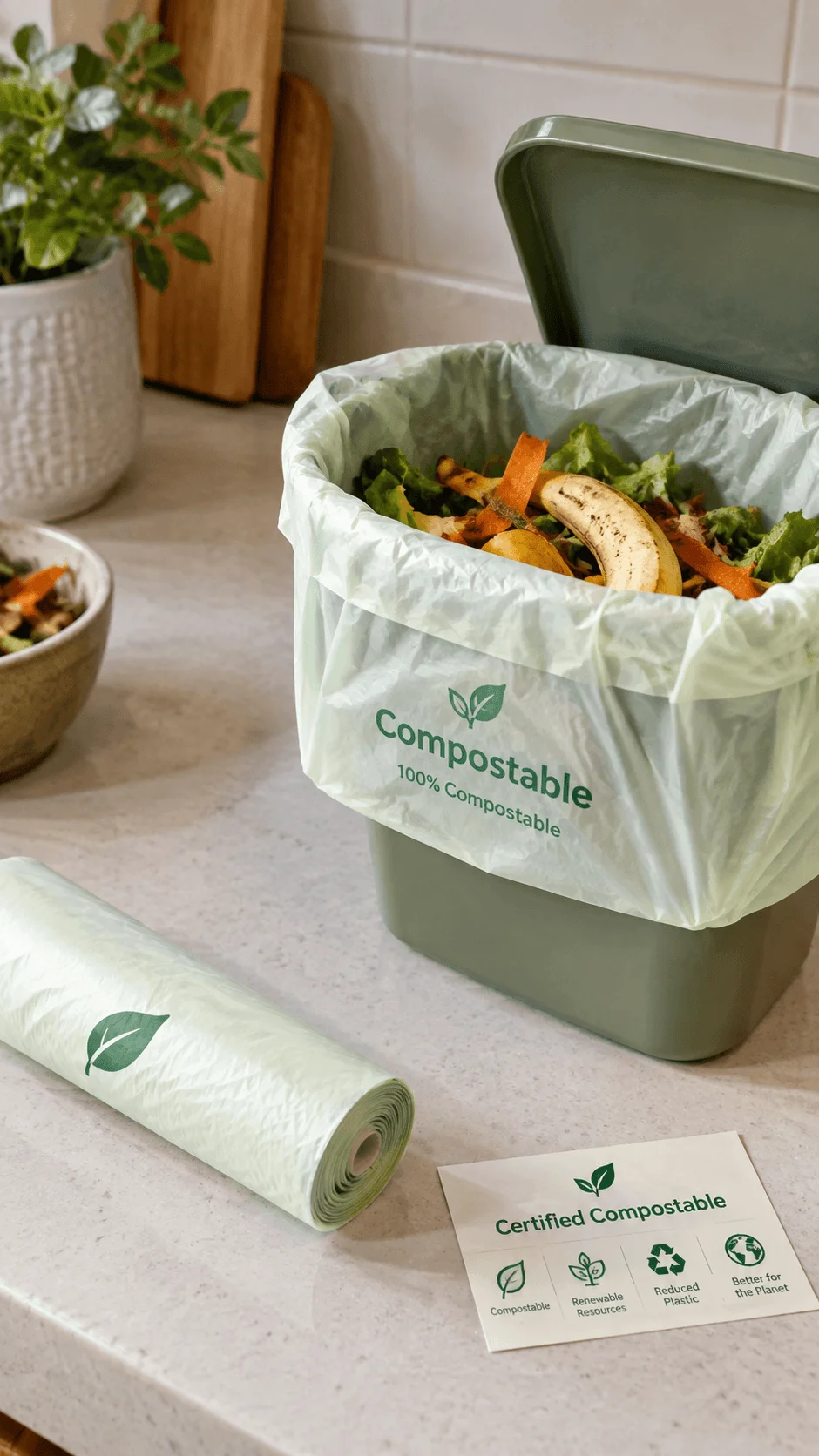
Local collection rules should guide the decision. If a municipal food waste service accepts specific certified liners, they can provide a convenient way to contain scraps. If the facility does not accept them, using such liners can undermine correct sorting.
Households should also consider strength, moisture resistance, storage conditions, and shelf life. Compostable materials should perform their intended job without encouraging unnecessary consumption. Where a washable caddy works comfortably without a liner, going bagless may remain the simpler option.
7. Reusable Woven Recycling Bags and Baskets
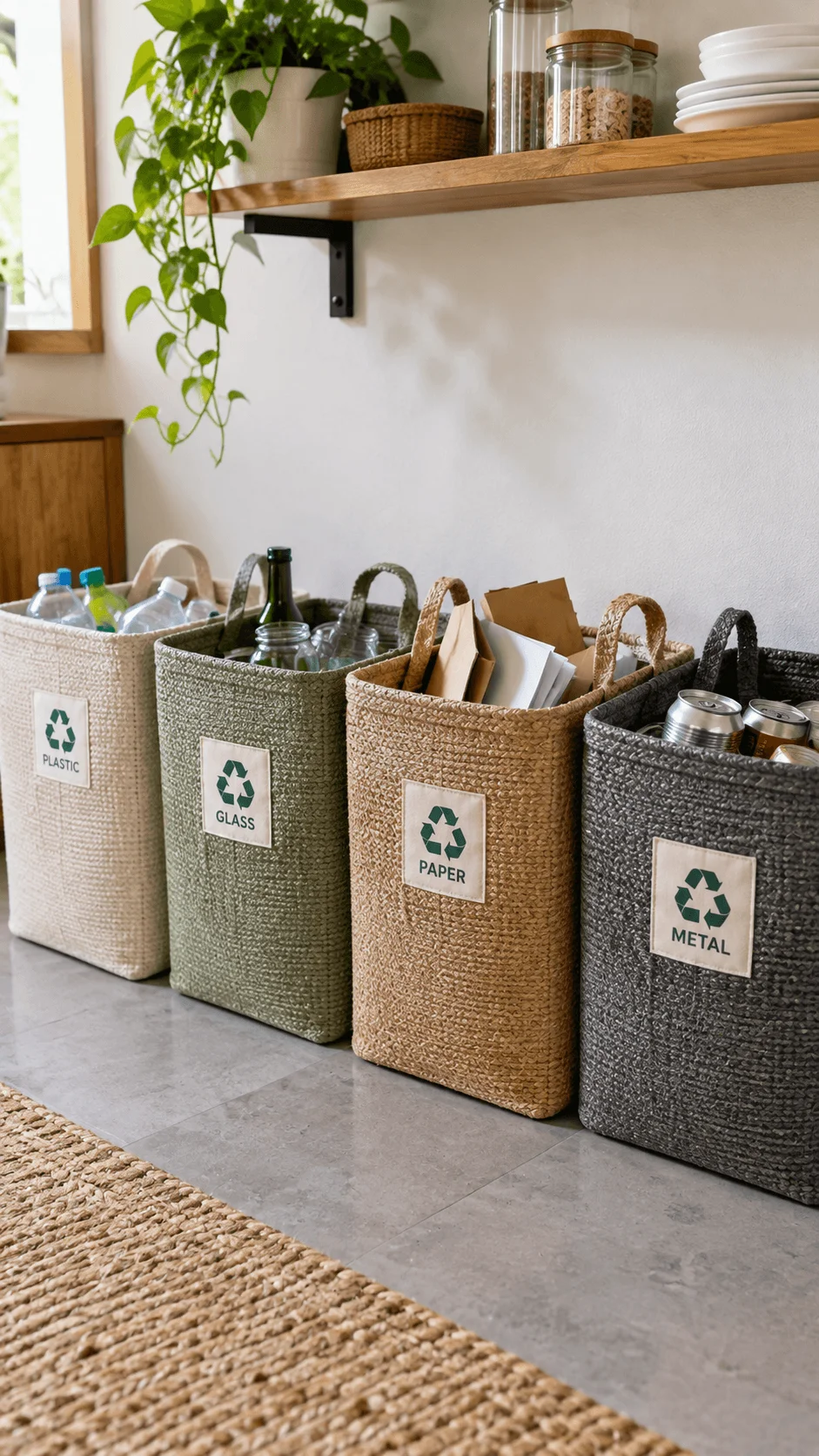
Structured woven bags and baskets can transform recycling from a collection of disposable sacks into a more permanent household system. These sustainable waste sorting bags work particularly well for dry materials that household members need to carry from the home to another collection point.
Semi rigid sides help containers maintain their shape, making it easier to place bottles, cans, paper, and packaging inside. Strong handles improve portability, while foldable designs can save storage space when household members do not need every compartment.
A household might position several matching baskets in a utility room, pantry, kitchen, or garage. Clear visual labels can help family members understand what belongs in each container.
Longevity remains important. Buyers should look beyond an attractive appearance and consider handles, seams, washable surfaces, and construction quality. Repairing a minor damaged section may also extend the useful life of a basket.
A well designed container that remains useful for years supports a different consumption pattern from disposable bags that households constantly replace.
8. Stackable Recycling Boxes for Small Spaces
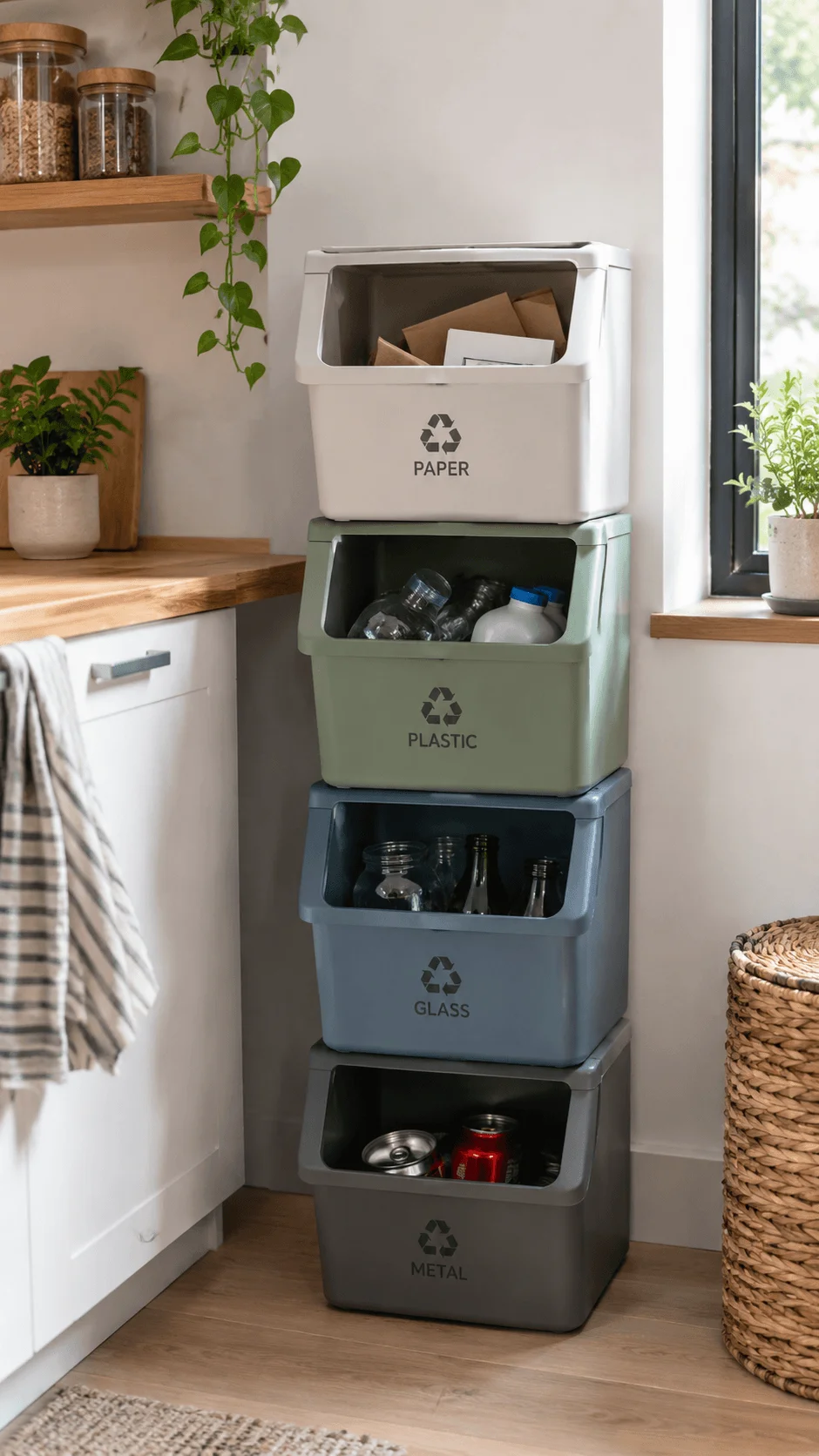
Limited floor space often makes waste separation difficult. Several wide containers placed side by side can overwhelm a small kitchen or apartment. Stackable recycling boxes address this problem by using vertical space.
These stackable recycling boxes for small spaces can dedicate separate compartments to locally accepted materials while occupying a relatively small footprint. Front access openings can allow users to add materials without removing every container from the stack.
The most frequently used categories should remain within comfortable reach. A household may place lightweight paper higher while keeping a heavier container for bottles at a more accessible level.
Stability matters as the system grows taller. Containers should remain secure when users open, remove, or fill individual compartments. Extremely small boxes can also become inconvenient if household members need to empty them constantly.
The best system balances capacity with available space. A carefully planned vertical station can make sorting easier without turning a compact kitchen into a storage area for waste.
9. Repurposed Shopping Bags as Sustainable Waste Sorters
Many households already own more reusable shopping bags than they regularly need. Turning those bags into recycling containers provides one of the least complicated eco friendly waste sorting bag alternatives because it avoids purchasing another product.
Different bags can serve different purposes. One might collect cans, another could hold plastic packaging accepted locally, and a larger tote could store textiles or suitable objects awaiting donation.
Handles provide an important advantage. The same bag can collect materials in the home, transport them to the appropriate destination, return empty, and start another sorting cycle.
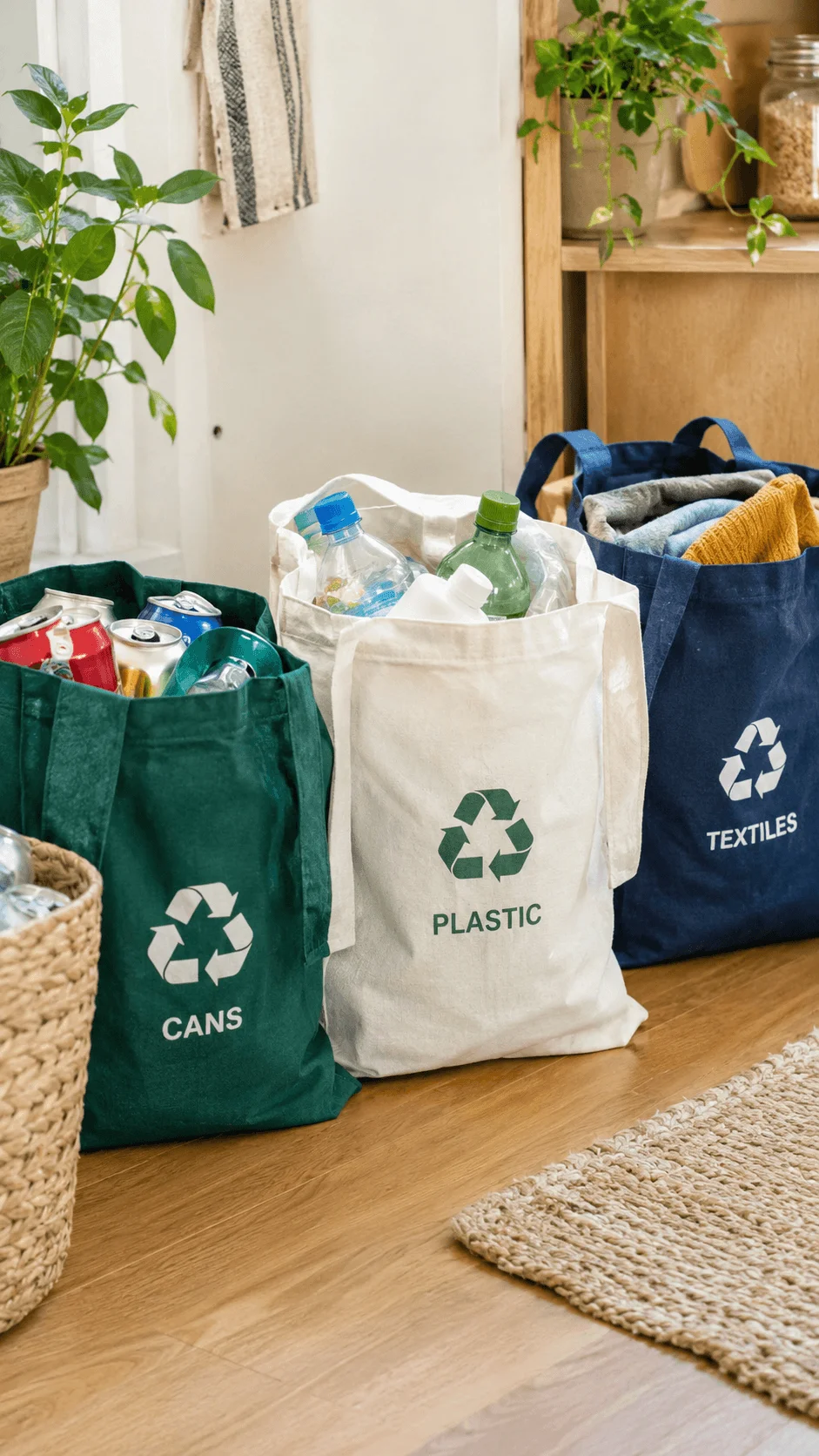
Households should inspect bags before assigning them to heavy recyclables. Weak seams and damaged handles can fail under the weight of glass bottles or cans. Bags that collect packaging may also need occasional washing.
This idea illustrates an important sustainability principle. A new product made from an environmentally preferable material still requires resources to manufacture and transport. Reusing something already available at home can avoid that additional purchase entirely.
10. Recycled Plastic Long Life Sorting Bags
Avoiding single use plastic does not always require eliminating plastic from every reusable household object. Durable bags containing recycled plastic can sometimes offer a practical middle ground.
The key distinction involves lifespan. A disposable liner serves briefly before becoming waste. A strong recycled plastic sorting bag can complete hundreds of collection cycles when households maintain it properly.
Water resistance can make these reusable recycling bags for home particularly useful for bottles, cans, and packaging that may retain small amounts of moisture. Smooth surfaces can also simplify cleaning.
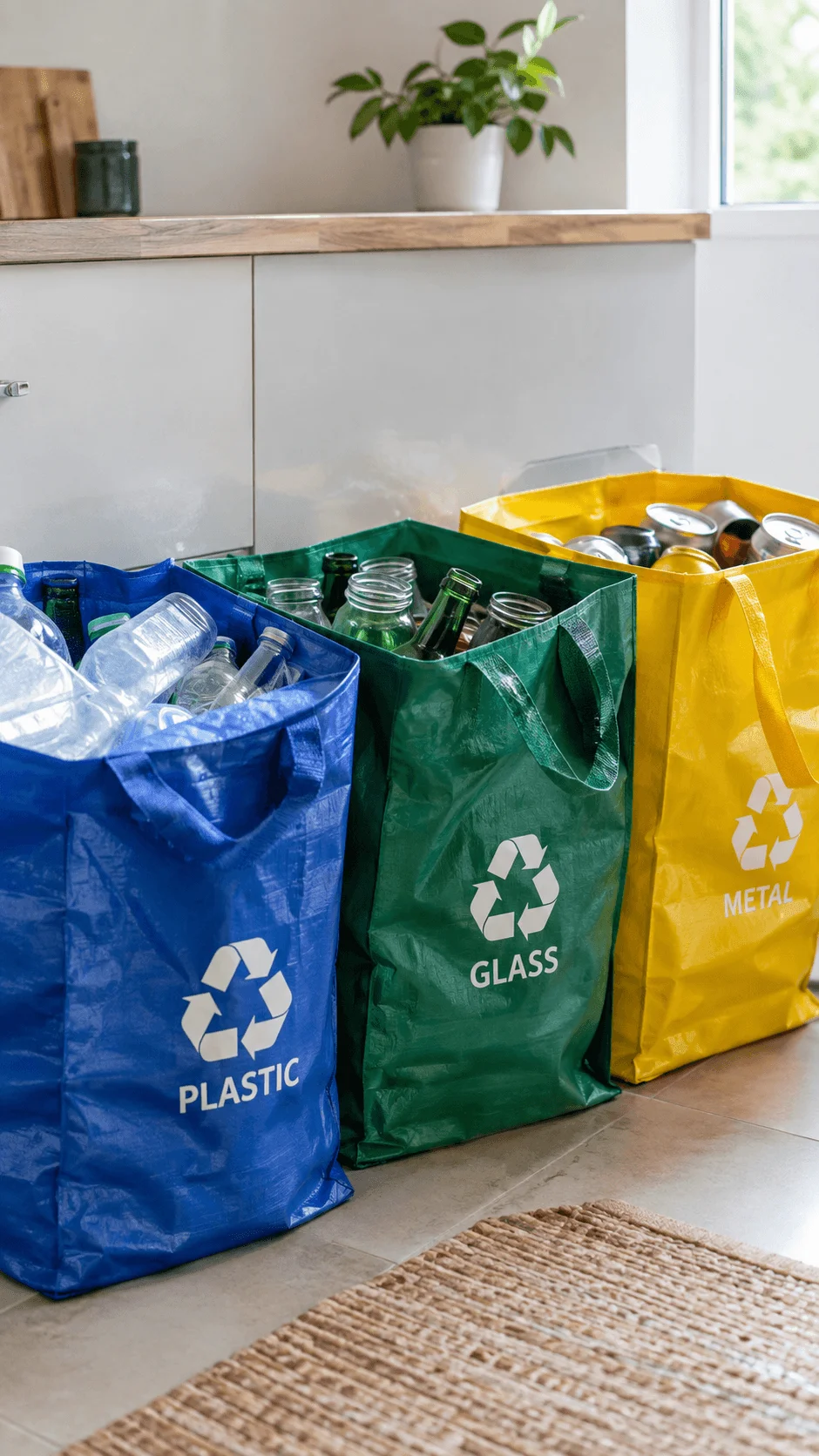
Recycled content alone does not guarantee sustainability. Consumers should consider construction quality, expected lifespan, replaceable components where applicable, and what happens when the bag eventually reaches the end of its useful life.
This section highlights why material choice should form only one part of the decision. Keeping recovered materials useful for a long period can sometimes provide more practical value than choosing an alternative that needs frequent replacement.
11. Washable Liners as Zero Waste Bin Liner Alternatives
Some households prefer using a liner because it makes emptying a container easier. Washable liners attempt to preserve that convenience without requiring a new disposable bag every time.
Users remove the liner, empty its contents, wash it when necessary, allow it to dry, and place it back inside the container.
Water resistant materials can help manage limited moisture, while strong seams and secure closures improve durability. The liner must also fit the container properly. An oversized liner can become awkward, while one that fits too tightly may prove difficult to remove when full.
Cleaning represents the main tradeoff. A washable liner used for messy waste may require frequent laundering, which adds water, energy, and effort to the routine. For clean dry recycling, maintenance can remain relatively simple.
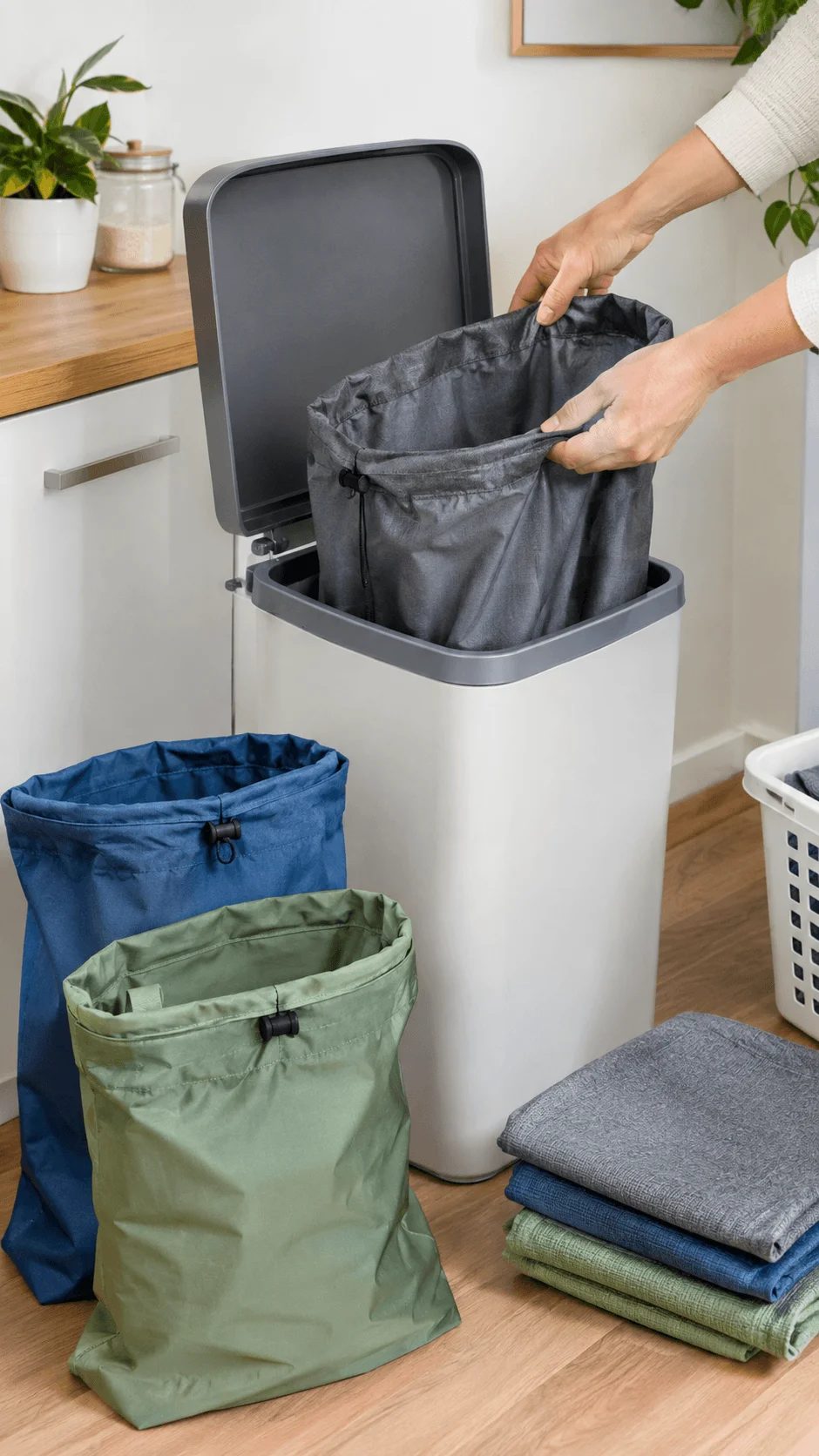
When evaluating washable recycling bags for home, households should compare them with rigid bagless containers. A removable bucket may offer similar waste reduction benefits with easier cleaning in some situations.
The most sustainable option is often the one that household members can maintain consistently for a long time.
12. Modular Zero Waste Recycling Station
A modular sorting station takes the concept of eco friendly waste sorting bag alternatives beyond simply replacing one bag material with another. Instead, it redesigns how a household manages discarded materials from the beginning.
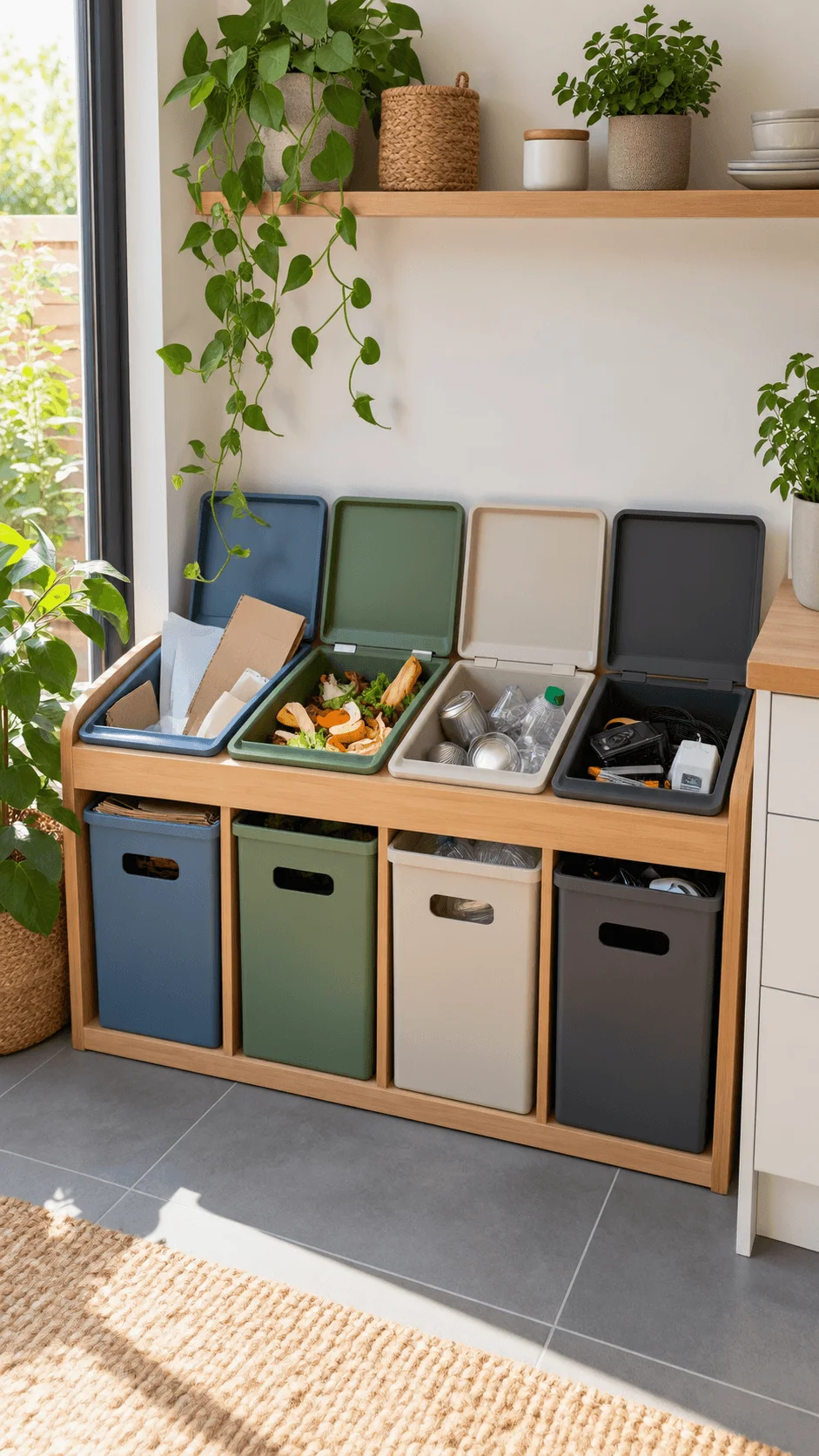
Individual removable compartments can accommodate different locally accepted streams. Paper may require a large dry container, while food scraps may need a smaller washable caddy that household members empty frequently. Electronic items might need only a compact temporary storage box because they accumulate more slowly.
Choosing Eco Friendly Waste Sorting Bag Alternatives for Your Home
The most practical eco friendly waste sorting bag alternatives depend on household habits rather than a universal definition of the perfect sustainable container. Families that generate substantial dry recycling may find washable reusable bags convenient. Apartment residents may benefit more from stackable containers. Households with suitable organic collection services may need a dedicated food waste caddy, while people who already own sturdy boxes and reusable shopping bags may not need to purchase anything.
Start by considering the waste streams that actually exist in the home. Look at what fills the current containers most frequently and where that waste originates. Then choose storage methods that make correct separation convenient.
Local recycling rules should always influence the final setup. Packaging that belongs in one community’s recycling stream may not belong in another. Composting programs also differ significantly in the materials they accept.
Convenience matters because even an environmentally promising system provides limited practical value when household members find it too complicated to use. Containers should remain accessible, understandable, easy to empty, and reasonably easy to clean.
The same principle applies to buying new sustainable products. Before purchasing a new sorting system, households can examine cardboard boxes, paper bags, reusable shopping bags, buckets, baskets, and containers they already own. Existing materials may solve much of the problem without requiring additional consumption.
Conclusion
The most useful eco friendly waste sorting bag alternatives do more than exchange conventional plastic for another disposable material. Washable bags, bagless buckets, reused cardboard, paper bags, newspaper liners, appropriate compostable liners, woven baskets, stackable containers, repurposed shopping bags, recycled plastic bags, washable liners, and modular stations offer different approaches for different household needs.
The right choice depends on the waste stream, available space, cleaning requirements, local collection services, and materials already present in the home. A paper solution may work well for dry recycling but poorly for wet waste. A reusable liner may provide convenience for one household while another finds a washable bucket easier.
Ultimately, exploring eco friendly waste sorting bag alternatives should encourage households to look beyond the container itself. A practical system can make correct separation easier, but the larger opportunity involves understanding what enters those containers in the first place. Reducing unnecessary purchases, reusing existing materials, repairing useful objects, donating unwanted items, preventing avoidable food waste, and recycling correctly can work together to create a more thoughtful household waste routine. The strongest system is one that remains simple enough to use every day while helping people produce less unnecessary waste over time.