12 Eco Friendly Waste Sorting and Recycling Ideas for 2026
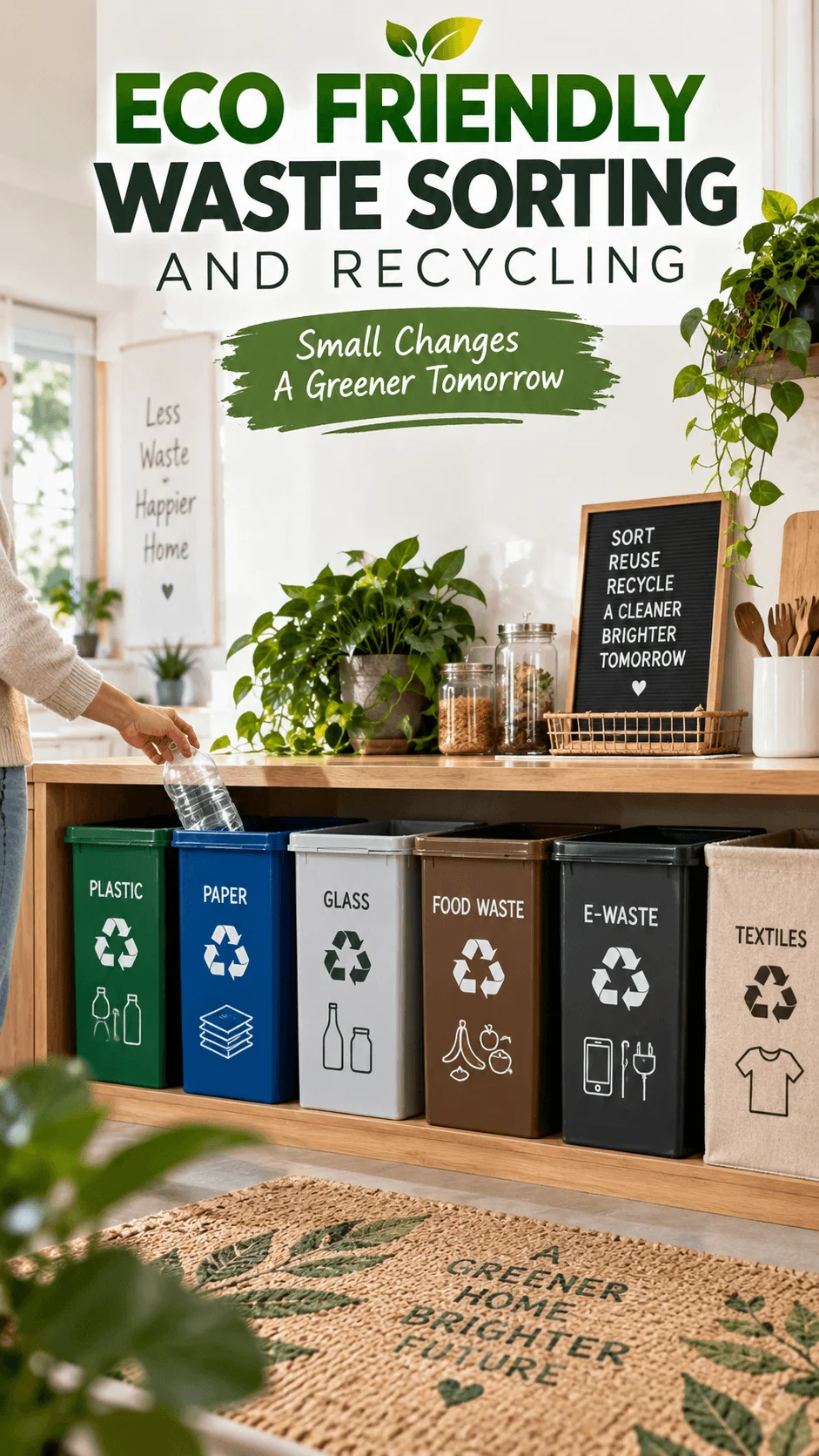
Eco friendly waste sorting and recycling has become an important part of creating a more sustainable home in 2026. Recycling is no longer simply about placing paper, plastic, and glass into different containers. A thoughtful household system can help people identify reusable materials, prevent recycling contamination, separate food scraps, manage unwanted electronics, organize textiles, and decide whether an object should be repaired or reused before it becomes waste. With better organization and emerging technology, households can make responsible waste management easier to follow every day.
The most effective system does not need to look complicated. In fact, convenience often determines whether household waste sorting works consistently. Containers that sit close to where waste appears, labels that people understand immediately, and clearly defined spaces for unusual materials can make a significant difference.
Local recycling rules also matter. Collection programs differ between cities and regions, so an item accepted in one location may not belong in recycling somewhere else. A sustainable system should therefore combine good organization with accurate local information.
The following ideas explore how household recycling can become smarter, cleaner, more practical, and more circular in 2026.
Smart Waste Sorting With an AI Assisted Recycling Station
Smart waste technology is creating an interesting new direction for eco friendly waste sorting and recycling. Computer vision and artificial intelligence can help machines recognize objects and identify different types of materials. As this technology develops, smart waste stations could provide guidance when someone does not know where an item belongs.
Imagine approaching a household recycling station with an empty container. A camera or sensor could examine the object and provide information about its likely material. More advanced systems could eventually combine recognition technology with local recycling information to guide users toward an appropriate waste stream.
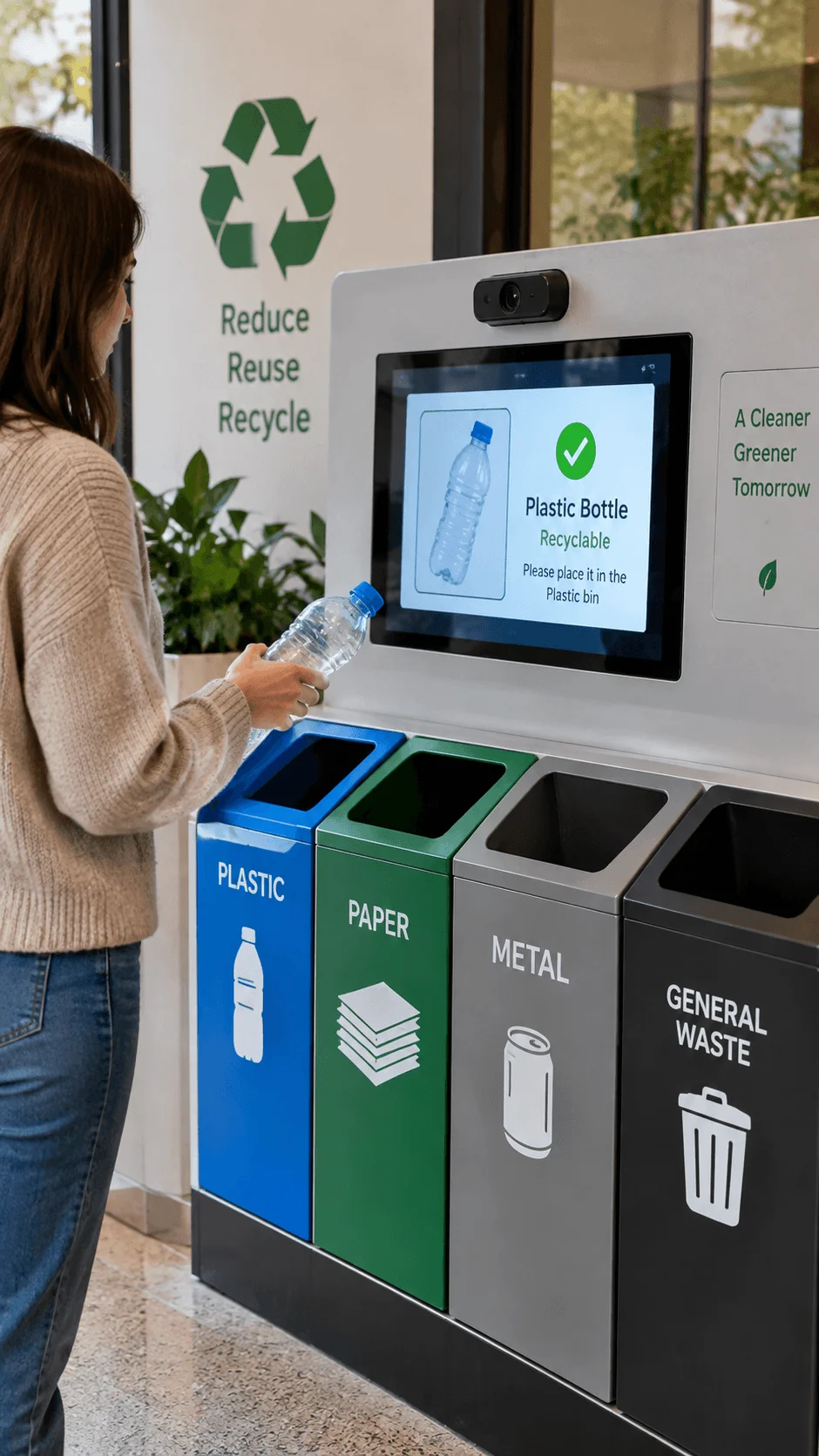
Homeowners do not need sophisticated equipment to benefit from the basic principle behind this trend. A simple smart waste sorting station can focus on making decisions easier. Clearly labeled containers, an accessible local recycling guide, and a temporary space for uncertain materials can create a practical version of intelligent sorting.
Technology should support good recycling habits rather than make the process unnecessarily complicated. Local collection requirements should always determine the final destination of an item.
Reduce Recycling Contamination With Smarter Waste Sorting
Recycling contamination remains an important issue because putting an unsuitable object into recycling does not automatically make that object recyclable. Wishcycling happens when people place questionable materials into recycling because they hope the recycling facility will find a use for them.
A contamination aware station provides another option. Instead of immediately throwing an uncertain object into a recycling container, household members can place it in a small checking area. They can then confirm local instructions before deciding what to do with it.
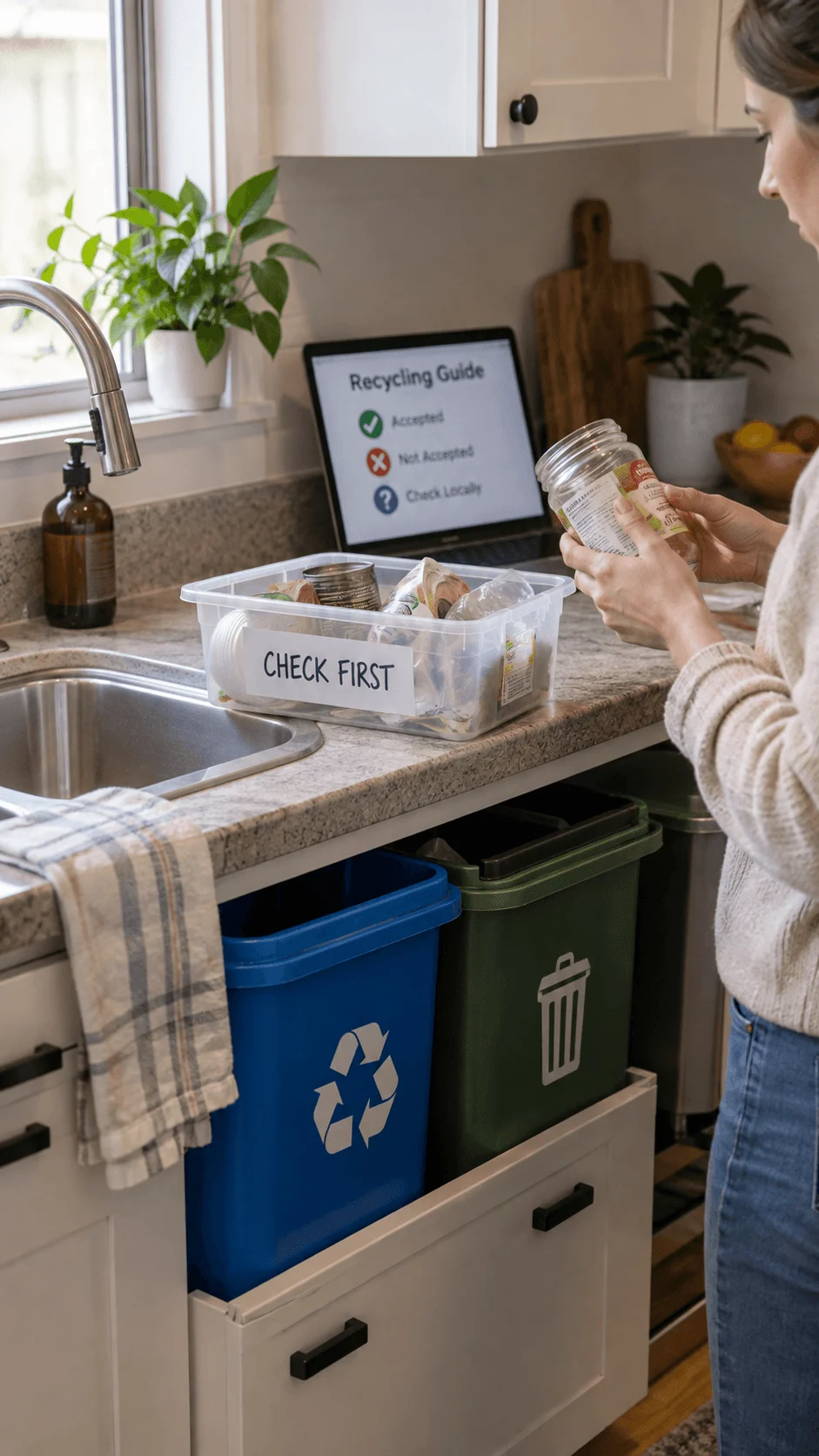
Positioning this area close to the kitchen sink can also help with containers that require emptying or appropriate preparation according to local guidance. The goal is not to create another large collection of waste. The checking area should remain small enough to encourage regular decisions.
Cleanliness matters as well. Dirty packaging and leftover food can make a recycling area unpleasant, especially when materials remain indoors for several days.
This approach makes eco friendly waste sorting and recycling more deliberate. People begin thinking about whether an item actually belongs in a particular collection rather than automatically choosing the container that seems closest.
Create a QR Code Home Recycling Guide
A QR code can turn an ordinary home recycling station into a simple information center. Place the code somewhere visible so household members can scan it when unfamiliar packaging or another confusing object appears.
The code could direct users to official local recycling information or another reliable sorting resource. This can help households respond when collection requirements change without replacing every physical label around the recycling station.
A shared home could also create a simple digital guide explaining how its particular system works. Someone who has recently moved into the property could quickly understand where common materials belong and which items require special handling.
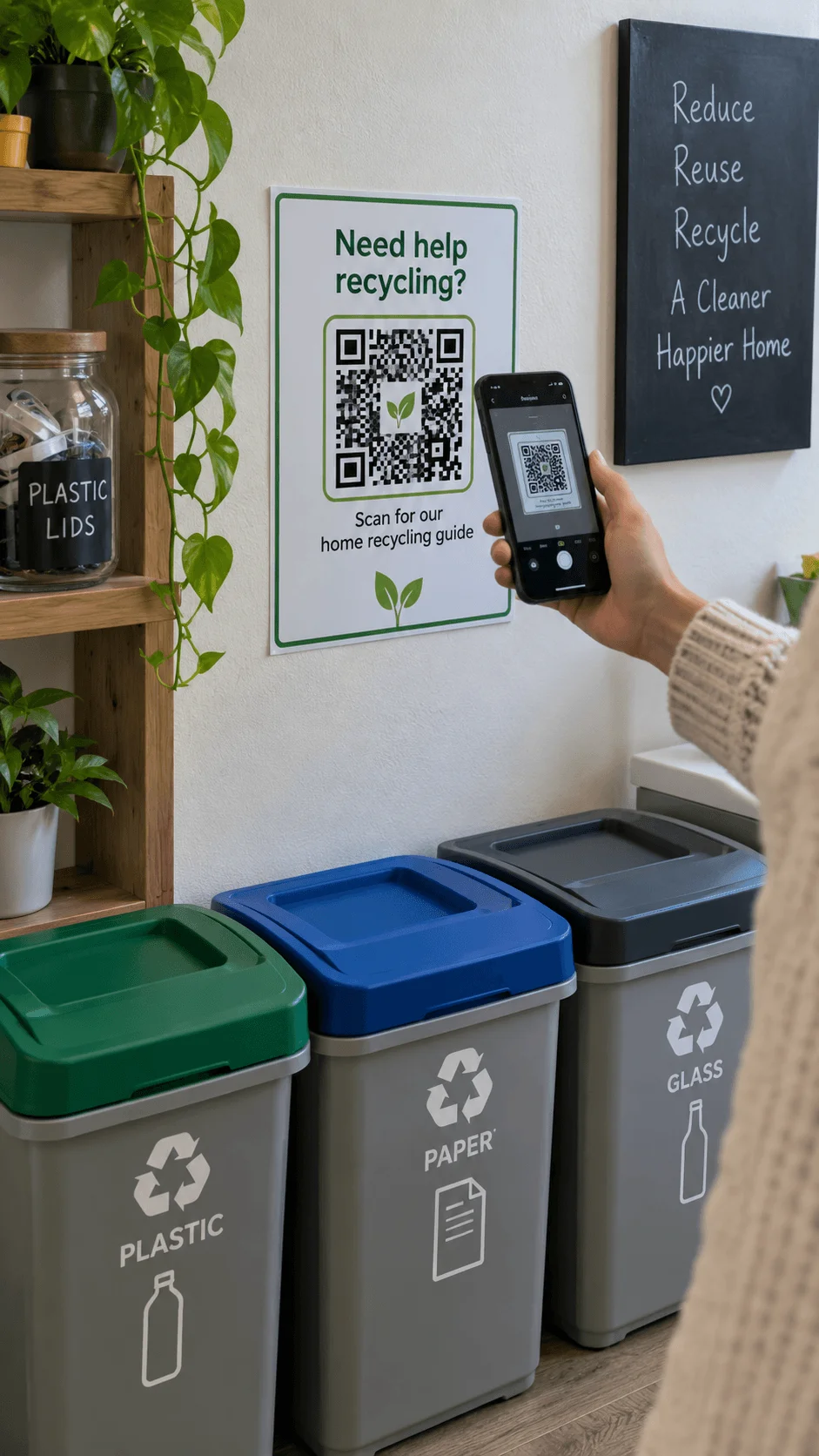
Physical labels should still remain part of the design. People should not need a phone every time they discard something familiar. The QR code works best as an additional resource for unusual or confusing objects.
This combination of physical organization and digital information makes the concept particularly suitable for modern household recycling organization.
Save Space With a Vertical Recycling Station
Waste sorting ideas for home often assume that plenty of floor space is available. That can make recycling difficult in apartments, compact kitchens, utility rooms, and other small areas.
A vertical recycling station offers another approach. Instead of spreading several containers across the floor, households can use suitable storage at different heights. The exact number of compartments should reflect local recycling categories rather than an arbitrary universal system.
A family that regularly receives deliveries may need substantial cardboard storage. Someone who rarely uses glass containers may require very little space for them. Customizing capacity prevents one container from overflowing while another remains nearly empty.
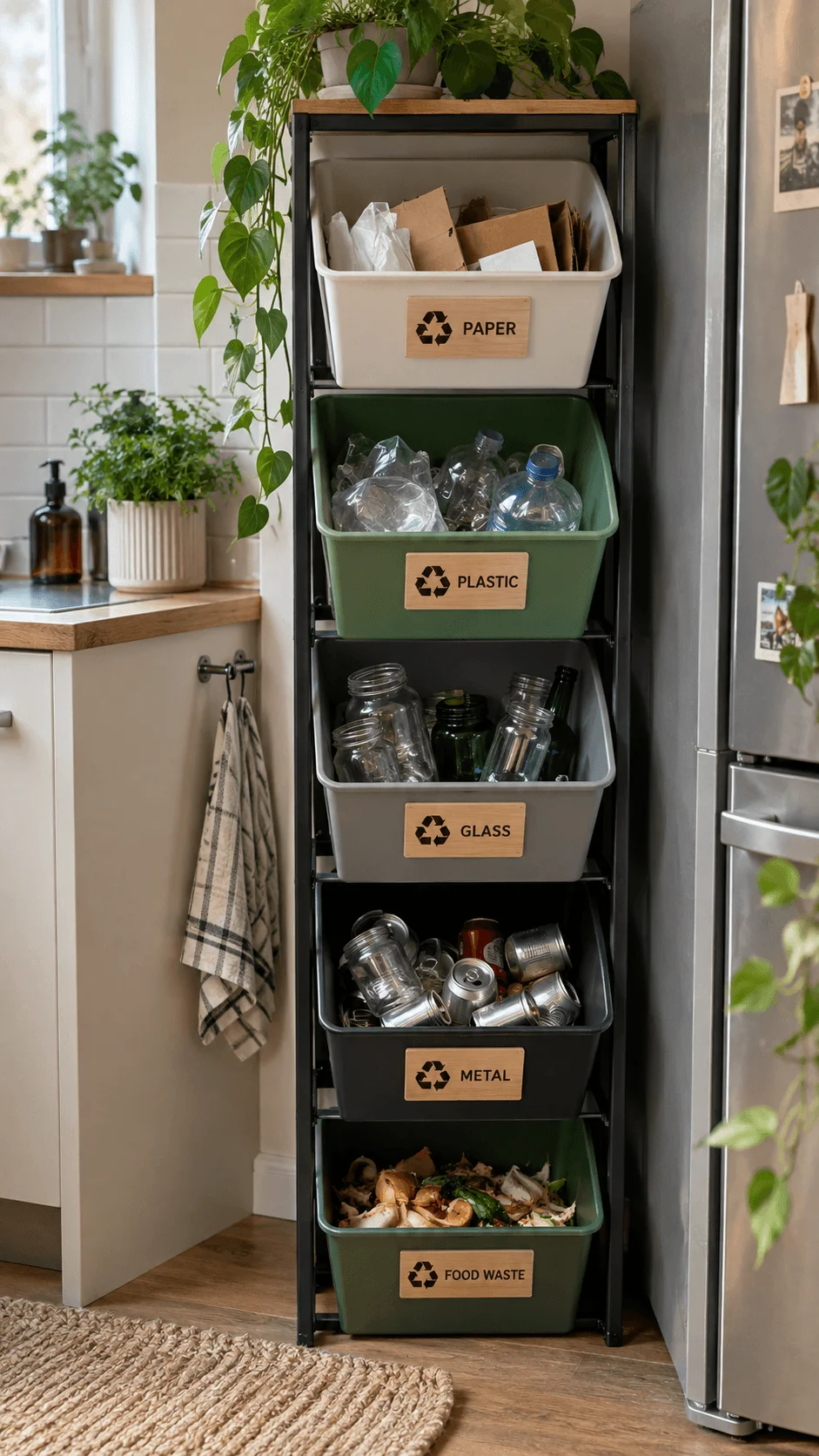
Removable compartments can make the system easier to clean and carry. Clear labels can also prevent a visually attractive design from becoming confusing.
Location deserves careful thought. Frequently used compartments should remain easy to reach. A recycling wall hidden in an inconvenient corner may save space but discourage regular use.
The best vertical recycling station ideas combine compact storage with everyday convenience.
Make Food Waste Sorting Part of Sustainable Waste Management
Food scraps can require a different approach from dry household recycling. A dedicated food waste system can help households separate suitable organic material according to the options available in their area.
A small kitchen caddy can make food waste sorting at home convenient because it sits close to the place where people prepare meals. The container should remain easy to empty and clean. Choosing an appropriate capacity also helps prevent scraps from sitting indoors longer than necessary.
What happens next depends on the household and local services. Some people may have suitable outdoor composting systems. Others may have access to separate municipal food waste collection.
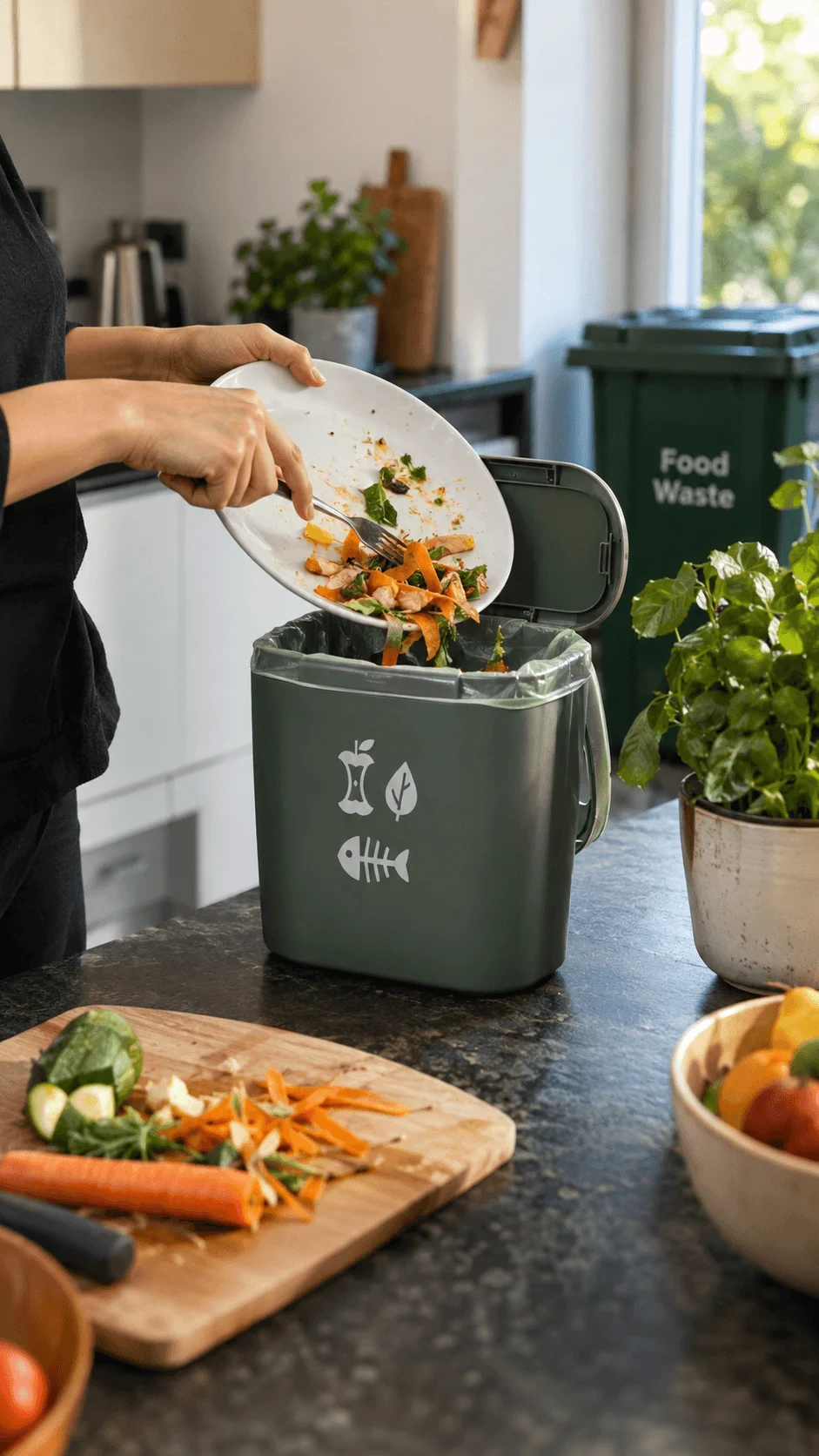
These systems do not necessarily accept the same materials. Readers should check relevant local guidance rather than assuming that anything described as biodegradable or compostable belongs in their chosen system.
Placement, cleaning, moisture, and regular emptying all influence whether the idea works comfortably.
By separating suitable food scraps from other materials, households can create a more organized home waste sorting system while giving each waste stream appropriate attention.
Create a Textile Sorting and Clothing Recycling Zone
Clothing deserves a place within modern sustainable waste sorting. A shirt that someone no longer wants does not automatically need to become rubbish, and recycling may not always represent its best next use.
Create a temporary textile zone where unwanted clothing can be evaluated according to its actual condition. Wearable garments might remain useful through continued use, resale, donation, or appropriate redistribution. Clothing with a small problem may only need a simple repair.
A textile sorting area does not require an entire room. A designated basket, section of a wardrobe, or suitable container in a laundry area may provide enough space.
The important part is making decisions regularly. Allowing unwanted clothes to accumulate for years simply moves clutter from one location to another.
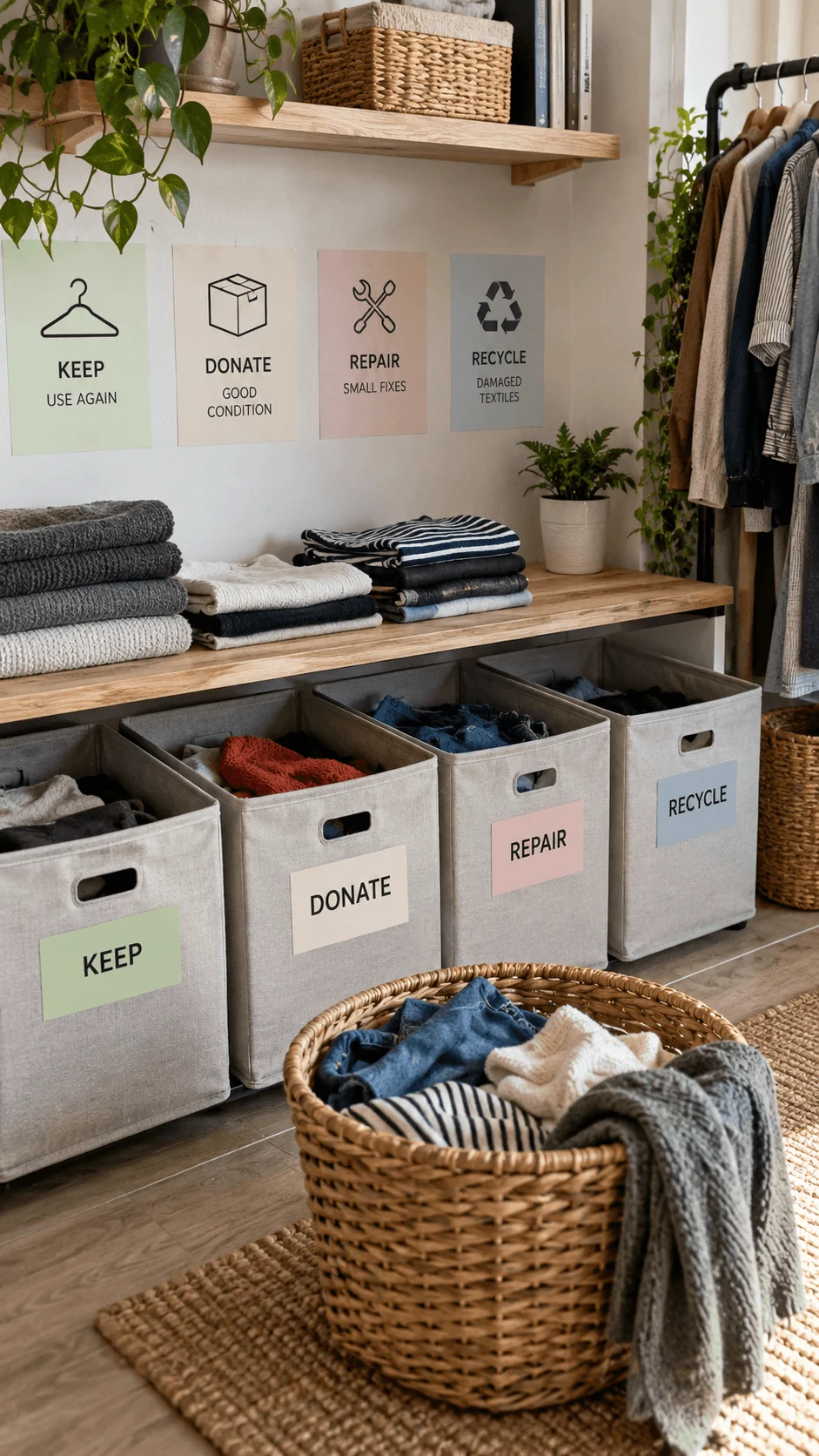
Damaged textiles may have specialized recycling options in some areas. Check what local programs actually accept before treating textile recycling as a universal solution.
This idea connects household organization with the growing circular approach to fashion, where extending useful product life becomes an important part of reducing waste.
Organize Electronic Waste With a Dedicated Sorting Drawer
Small electronics have a habit of disappearing into cupboards and forgotten drawers. Old phones, chargers, cables, accessories, and broken devices may remain in homes simply because people do not know what to do with them.
A dedicated electronic waste area solves the organizational problem. Choose a drawer, cabinet, or suitable container where unwanted electronics can wait until the household can take them to an appropriate collection point.
This approach keeps electronic items separate from ordinary household recycling and general rubbish while making accumulated devices easier to notice.
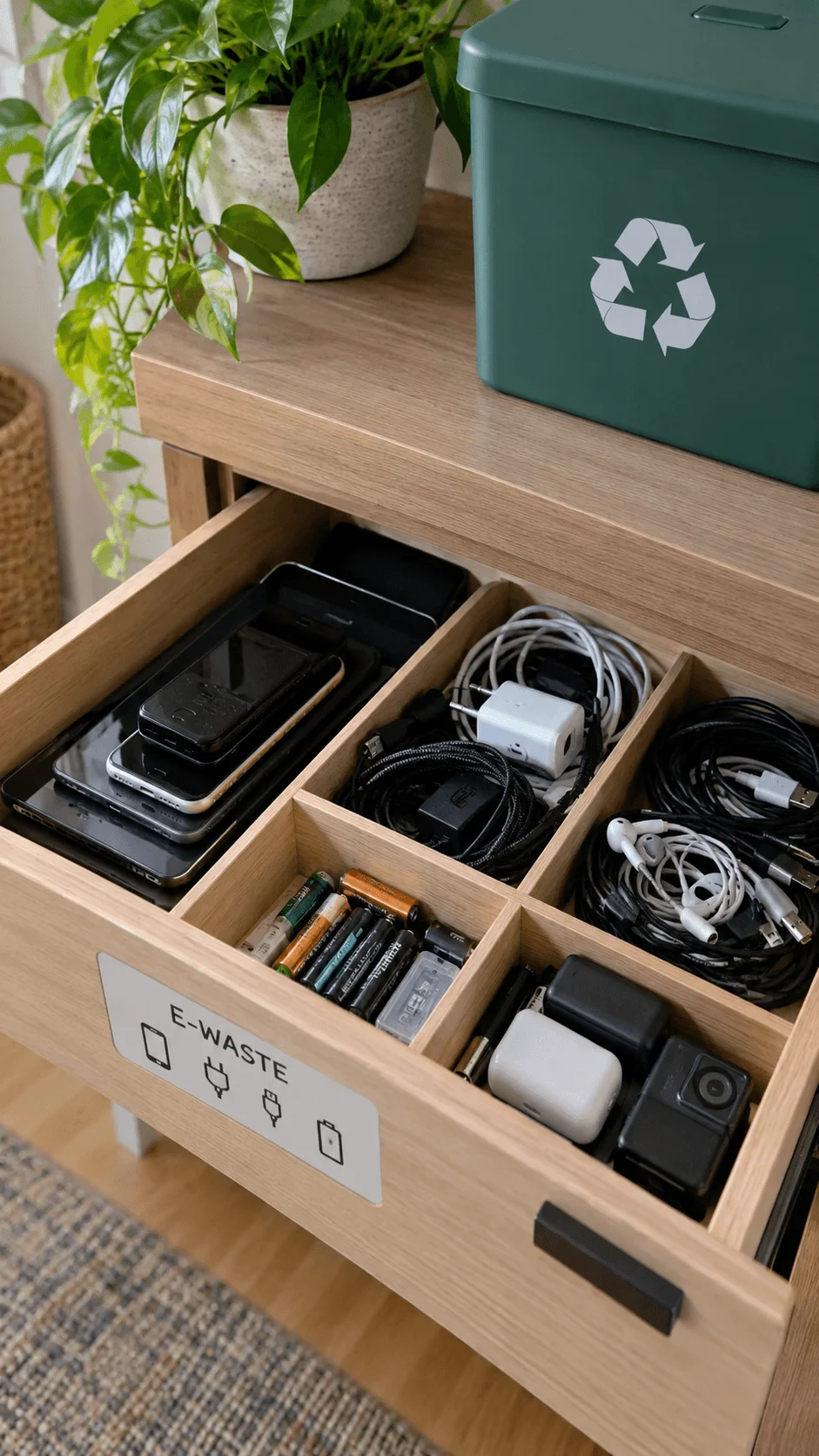
Batteries deserve particular care. Different battery types can require specific storage, handling, and collection practices, so people should follow relevant local safety instructions rather than casually mixing them with other electronic items.
Depending on location, options for electronic waste may include specialized collection facilities, retailer programs, community collections, or manufacturer take back schemes.
Adding an electronic waste area to eco friendly waste sorting and recycling creates a more complete system because it addresses materials that conventional kitchen recycling bins often ignore.
Build a Repair Reuse and Recycle Decision Station
A circular household should ask another question before deciding where an object belongs: does this actually need to become waste?
A repair, reuse, and recycle decision station gives useful objects a short waiting period. It could occupy a small shelf, basket, cabinet, or storage area where household members evaluate items before discarding them.
Consider an unwanted storage container. It may already have everything necessary to organize a cupboard. A small appliance might need a straightforward repair. Furniture could remain useful to someone else. A good quality jar might solve an existing storage need.
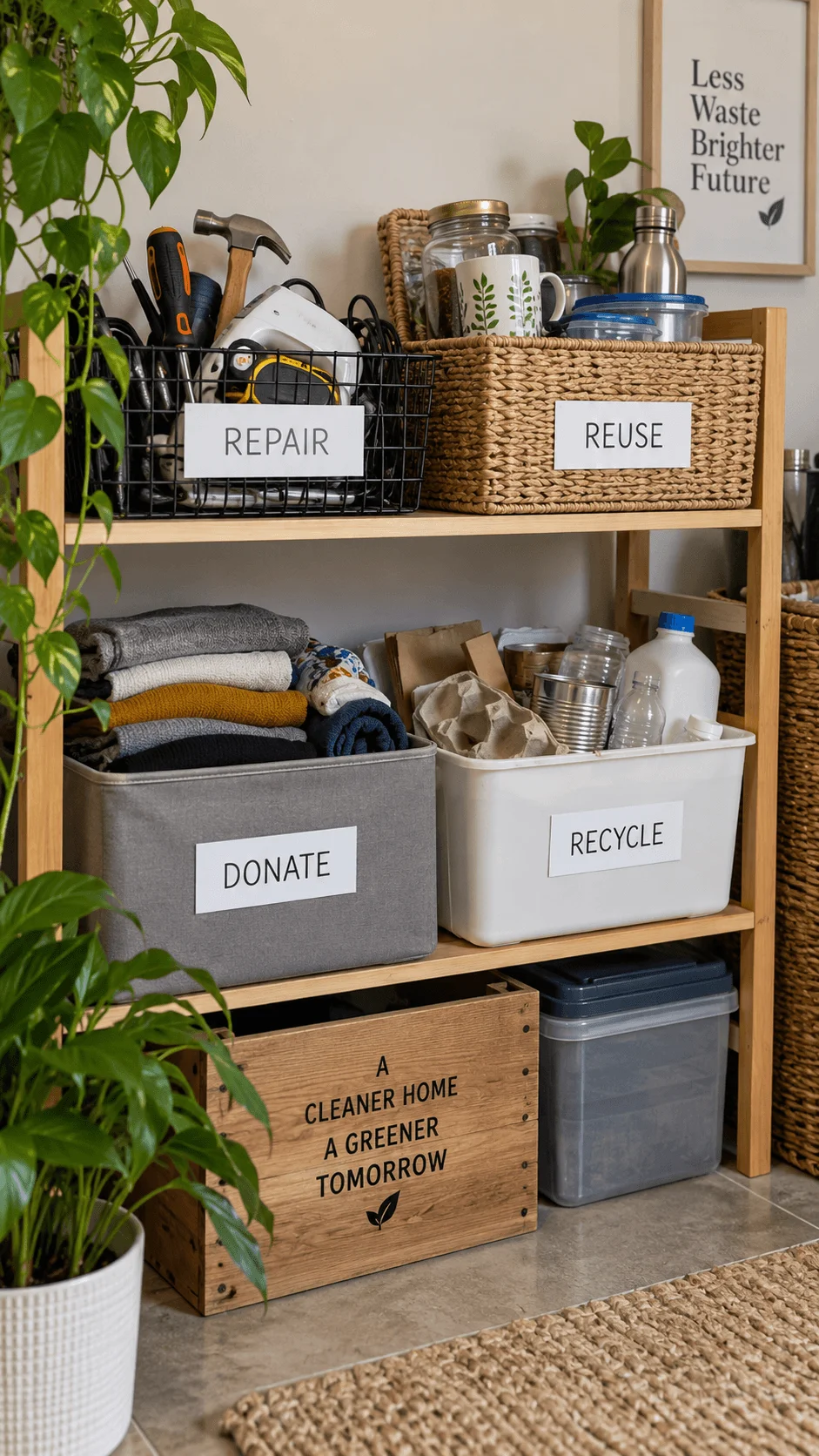
The key is purposeful reuse. Keeping every container and broken object indefinitely does not create a sustainable home. It creates clutter.
Set reasonable limits on the amount of material that can remain in the decision area. Objects without a realistic future use should move to an appropriate recycling, donation, specialized collection, or disposal option.
This simple habit moves sustainable recycling ideas closer to circular waste management because it focuses on preserving usefulness before processing materials as waste.
Add a Deposit Return Bottle and Can Station
Where deposit return programs operate, eligible beverage containers can benefit from dedicated household storage.
A narrow container, reusable crate, cabinet, or other easy to carry storage solution can keep returnable bottles and cans together until the next trip to a collection location.
Convenience should guide the design. Someone who normally returns containers while shopping might keep the station near a garage or exit. Another household may find a pantry or utility room more practical.
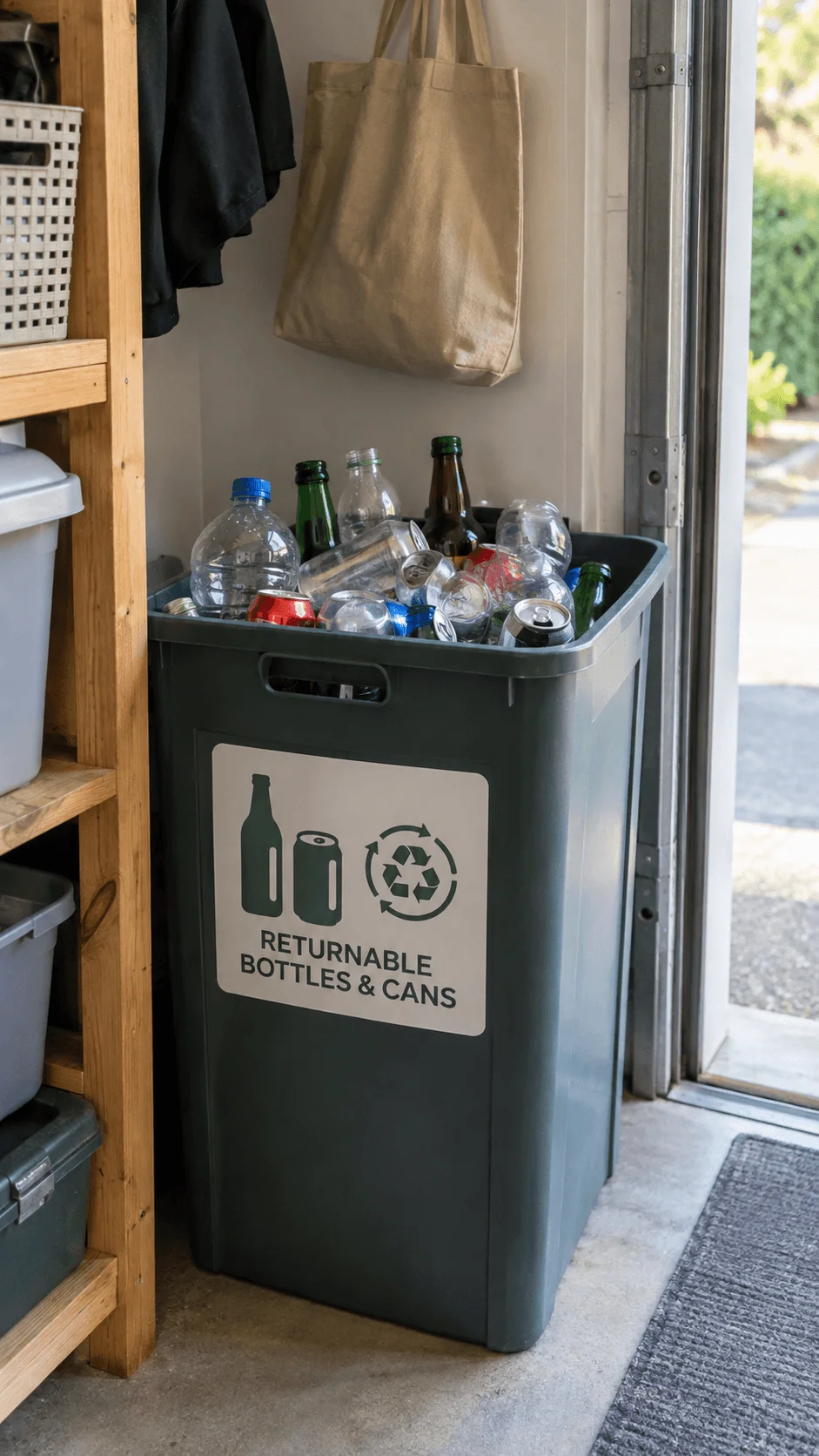
The container should also make transportation easy. A complicated storage arrangement that requires transferring everything into another bag before every trip adds unnecessary effort.
Deposit return programs vary considerably by location. Households should check which containers qualify and where they can return them.
Where available, a dedicated return station adds another useful stream to eco friendly waste sorting and recycling while connecting household organization with circular packaging systems.
Improve Household Waste Sorting With Accessible Visual Labels
A recycling station should communicate its purpose quickly. Color can help distinguish containers, but color alone may not provide enough information.
Combining readable words with recognizable pictures and symbols can make household waste sorting ideas easier to understand. A label might show examples of locally accepted materials rather than relying on a vague word such as recycling.
Physical design can provide additional clues. Different openings may help distinguish certain streams where appropriate, although the design should always reflect the materials accepted locally.
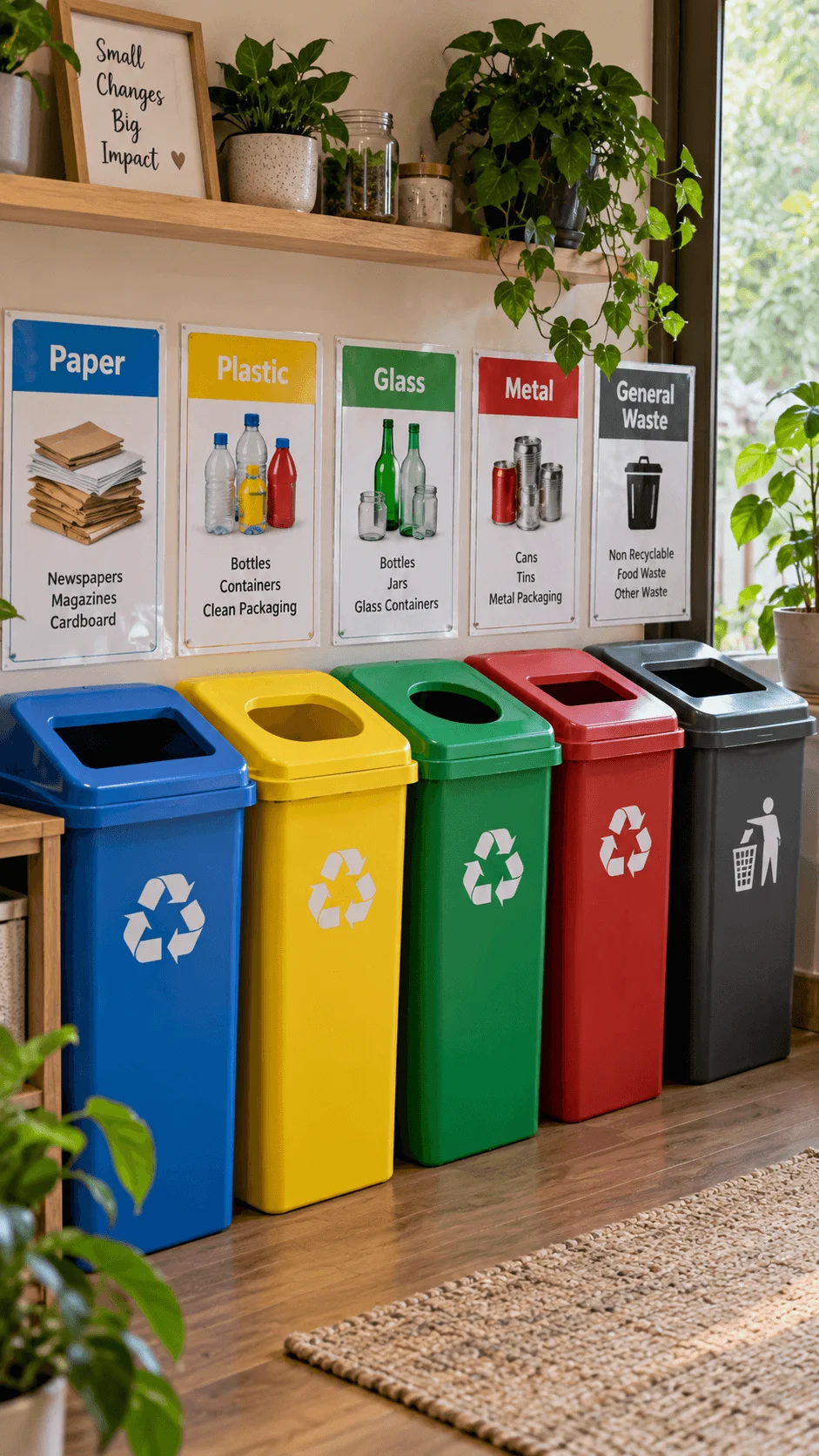
Placement also matters. Labels should remain visible when someone approaches the station with an object in hand. Good lighting and readable text can improve usability.
This approach can work particularly well in family homes, schools, shared accommodation, offices, and spaces where many people use the same containers.
A successful recycling station removes as much uncertainty as possible. When users can understand the system quickly, correct sorting becomes easier to incorporate into everyday routines.
Use a Household Waste Audit to Improve Recycling
Before creating an elaborate recycling station, study what the household actually throws away.
A simple waste audit can reveal patterns that generic recycling advice cannot. Observe common household waste for about a week and notice which materials occupy the most space and which items regularly cause confusion.
A household receiving frequent deliveries might discover that cardboard creates its biggest storage problem. Creating a convenient area for flattening and holding boxes could therefore provide more value than adding several small recycling containers.
Another household may discover that food waste dominates its rubbish and decide to investigate suitable composting or local collection options.
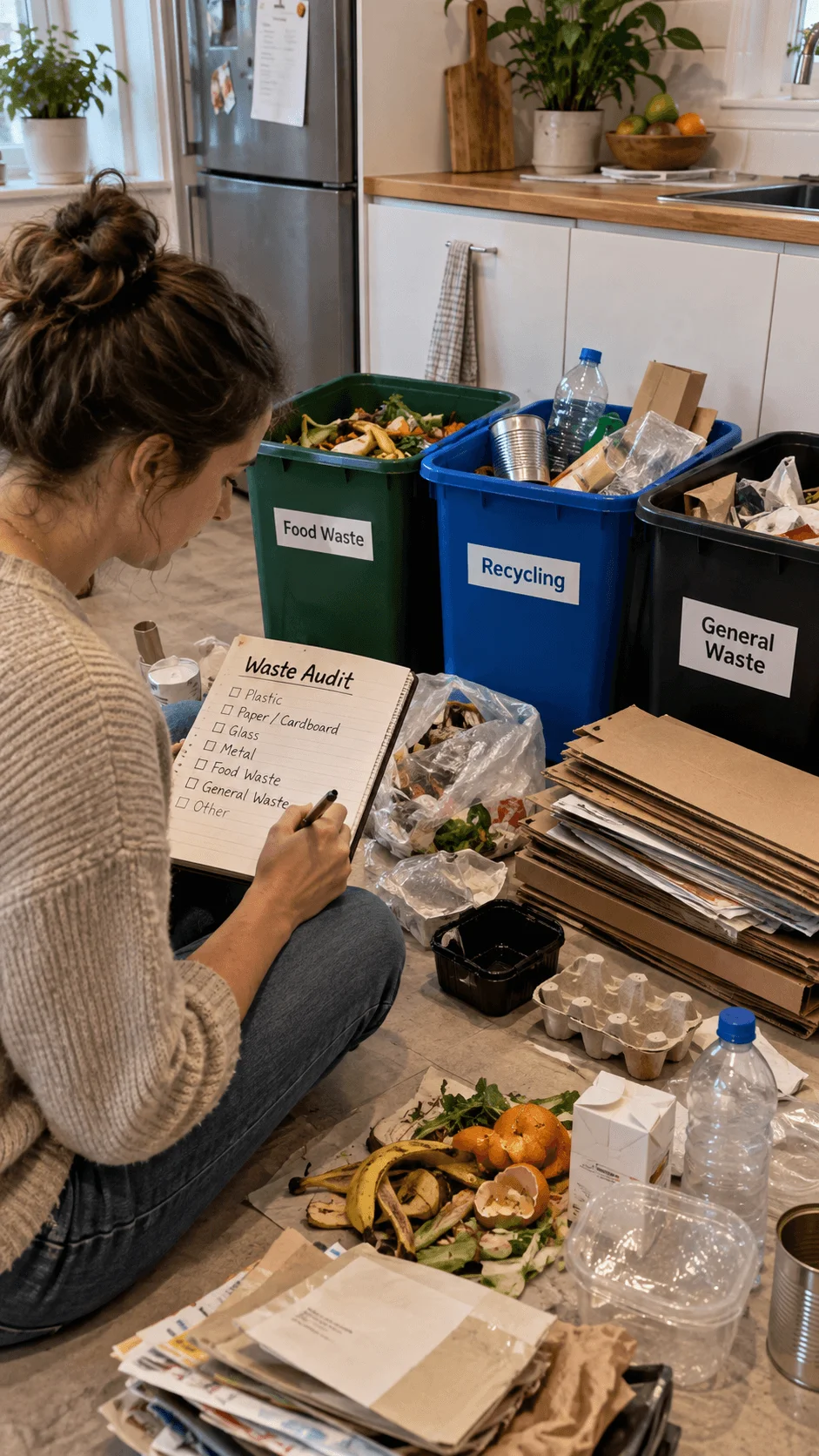
The audit can also reveal materials that could have remained in use longer. Frequent disposal of certain household products may encourage more thoughtful purchasing or reusable alternatives.
Readers who enjoy tracking progress can keep a simple written or digital record, but complicated measurements are unnecessary.
This approach makes eco friendly waste sorting and recycling personal. Instead of copying somebody else’s system, households design one around their own habits.
Create a Circular Recycling and Upcycling Station
A small reuse station can provide a temporary home for clean materials with an obvious second purpose.
Useful jars may become storage containers. Suitable cardboard could support craft or organization projects. Boxes may serve as drawer organizers or packaging. Certain containers may find practical uses in gardening or household storage.
The important word is useful.
Upcycling should solve a genuine need rather than provide an excuse to save every piece of packaging. A container that sits untouched for months has probably not become a valuable resource simply because someone placed it in an upcycling box.
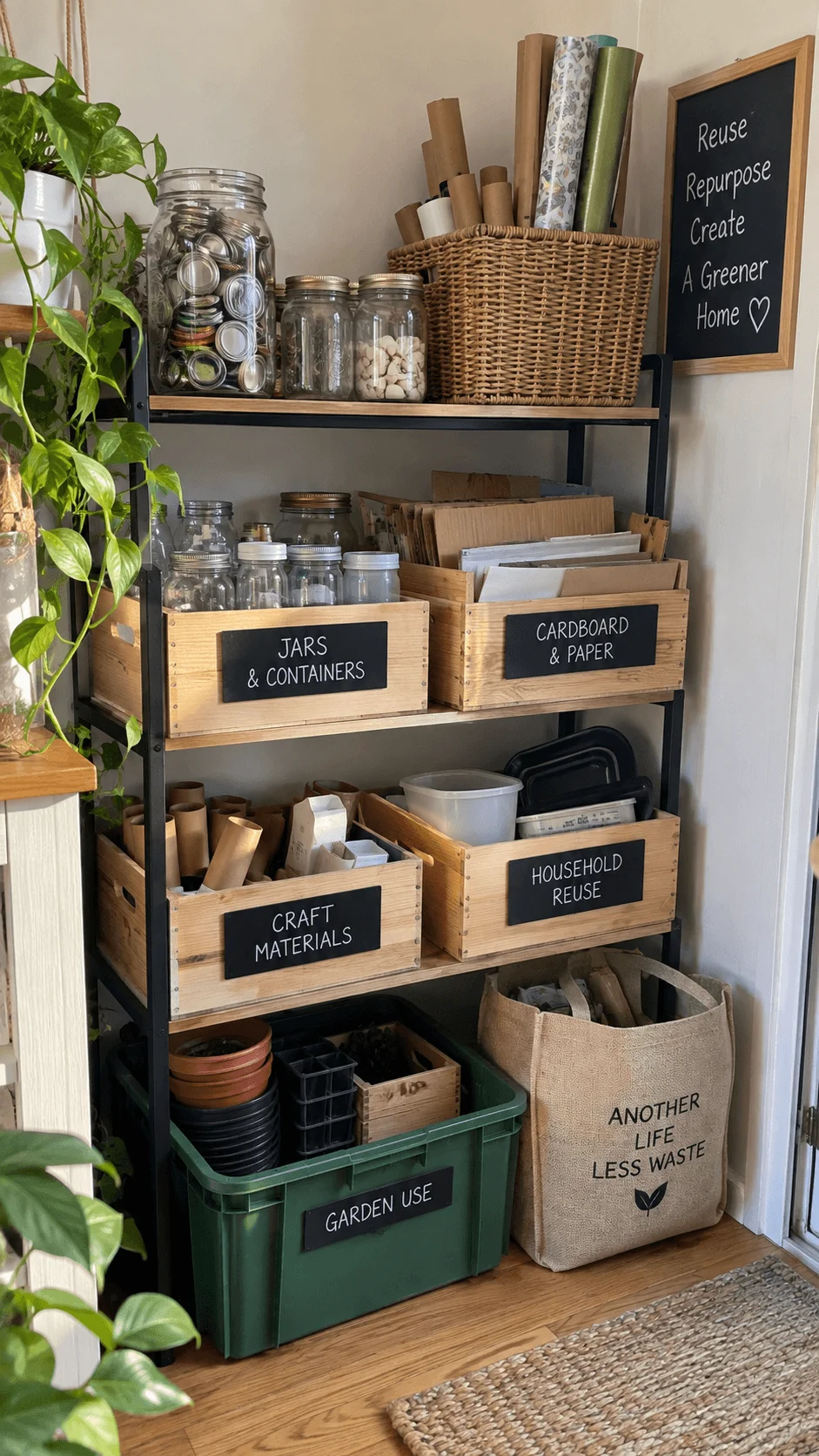
Limit the physical size of the station. When it becomes full, review the contents and decide what has a realistic purpose.
This approach brings zero waste sorting station principles into an ordinary home without demanding perfection. It encourages people to notice potential value while maintaining a practical boundary between reusable resources and unnecessary clutter.
How to Design an Eco Friendly Home Waste Sorting System
The best eco friendly waste sorting and recycling system will look different in every household. Available space, household size, local services, lifestyle, accessibility, and purchasing habits all influence what works.
A small apartment may benefit most from vertical storage, compact containers, clear labels, and a dedicated drawer for unusual materials. A larger household might have enough room to create a more extensive station inside a garage or utility area.
Convenience should guide placement. Materials generated frequently need accessible containers. Cardboard storage may work close to the entrance where deliveries arrive, while food waste collection belongs closer to food preparation areas.
Cleaning deserves equal attention. Containers should remain easy to empty and maintain. Complicated storage that looks beautiful but becomes difficult to clean may not work well over time.
There is also no requirement to purchase an expensive matching set of containers. Existing household storage or suitable reclaimed containers may work perfectly well when they remain safe, clean, practical, and clearly labeled.
Most importantly, design the system around local recycling requirements. Organization should make correct behavior easier rather than create its own rules about what counts as recyclable.
Move From Household Recycling Toward Circular Waste Management
Modern sustainable living requires more than improving the recycling bin. Circular waste management at home starts with decisions made before an object becomes waste.
Buying durable products can reduce replacement. Repair can extend the useful life of household objects. Refill systems can reduce some forms of disposable packaging. Donation and resale can keep useful products circulating. Suitable organic material may enter an appropriate composting system, while recyclable materials can move into locally accepted collection streams.
Responsible disposal still has a place. Some objects cannot safely or practically enter reuse, composting, or recycling systems. Trying to force every material into recycling can contribute to contamination.
This wider perspective changes the purpose of sustainable waste sorting at home. The goal becomes managing resources thoughtfully rather than simply filling a recycling container.
Small routine changes can support that goal. A better label can prevent sorting mistakes. A repair basket can save useful objects. A food waste caddy can create a separate stream. A dedicated electronics drawer can prevent devices from disappearing into general household clutter.
Together, these changes can make responsible waste management more convenient and understandable.
Conclusion:
Eco friendly waste sorting and recycling in 2026 can move far beyond a basic collection of colored bins. Smart sorting concepts, contamination checks, QR guides, vertical storage, food waste separation, textile organization, electronic waste collection, visual labels, waste audits, and reuse stations can all contribute to a more thoughtful household system.
The strongest approach does not require every idea in this article. A household can start by identifying its biggest waste challenges and checking local recycling requirements. From there, better labels, convenient containers, specialized storage, and simple reuse habits can gradually improve the system.
Technology may continue to make smart waste sorting more sophisticated, but successful recycling still depends on everyday decisions. People need clear information, convenient organization, and realistic ways to separate materials correctly.
Ultimately, eco friendly waste sorting and recycling works best when it forms part of a wider circular mindset. Reducing unnecessary waste, keeping useful products in circulation, repairing what still has value, separating materials carefully, and recycling according to local requirements can turn household waste management into a more organized and responsible daily habit.