Eco Friendly Waste Sorting Bowls: 12 Practical Ideas for a Greener Kitchen
Eco friendly waste sorting bowls offer a simple way to separate food scraps and other household waste directly where it appears. During everyday meal preparation, a kitchen can quickly fill with vegetable peels, fruit skins, eggshells, coffee grounds, packaging, cans, jars, and other unwanted materials. When every type of waste goes into one nearby bin, useful organic and recyclable materials can easily become mixed with general rubbish. A small reusable sorting bowl placed beside the preparation area can make separation easier without requiring a large or complicated waste system.
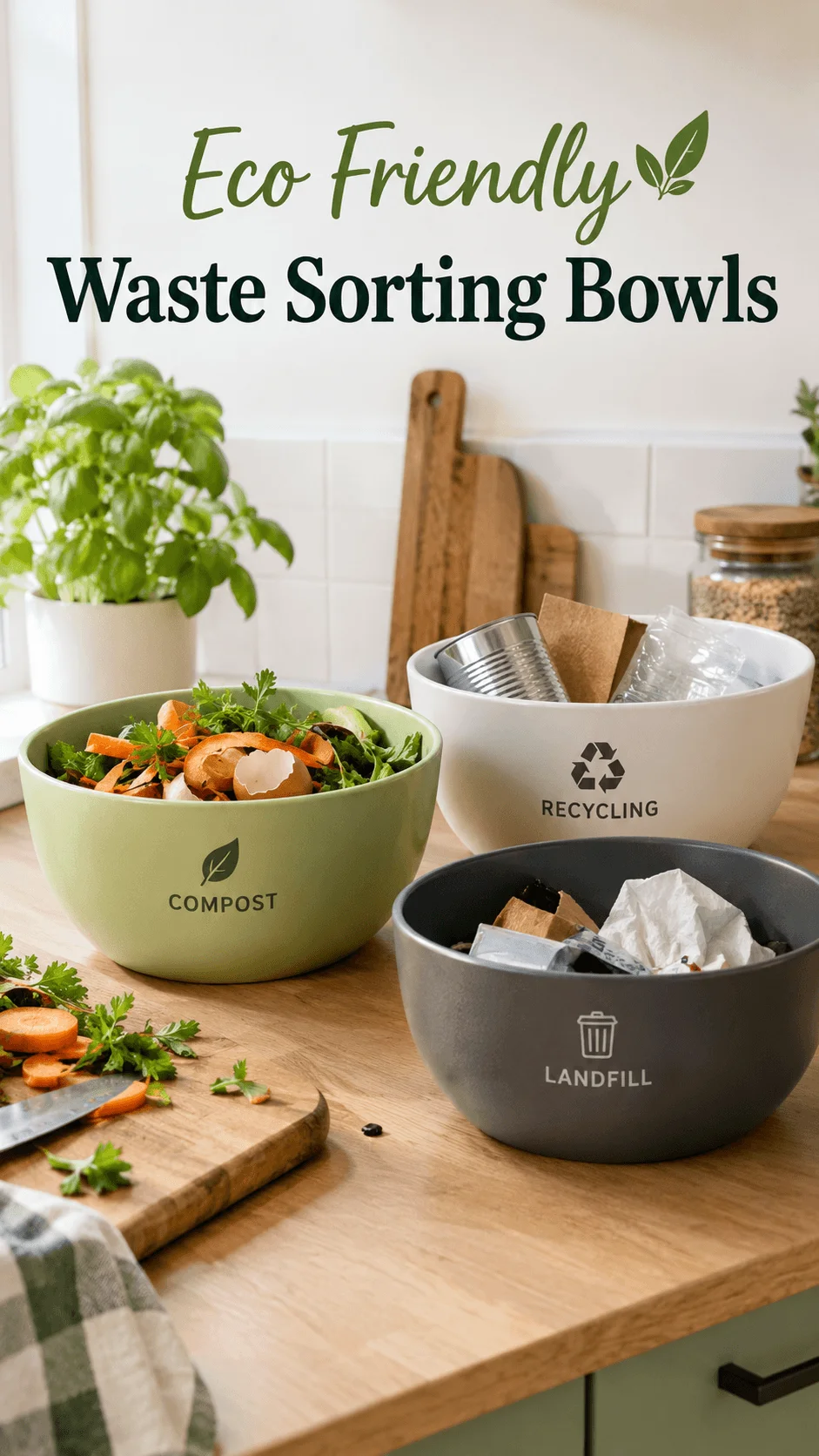
The idea is surprisingly straightforward. Instead of walking to several different bins while cooking, you temporarily collect different materials in reusable bowls and transfer them to the correct household waste containers afterward. The bowls do not compost or recycle anything themselves. Their purpose is to make source separation more convenient.
This approach also shows that sustainable kitchen improvements do not always require purchasing new products. An existing stainless steel, ceramic, or other suitable reusable bowl may already perform the job effectively.
Why Eco Friendly Waste Sorting Bowls Make Sense in Modern Kitchens
Convenience plays an important role in household waste sorting. Someone may understand exactly where vegetable scraps, cardboard, cans, and residual waste belong, but a complicated system can make correct sorting inconvenient during a busy cooking session.
Eco friendly waste sorting bowls bring the collection point closer to the source of the waste. A bowl beside the cutting board can receive suitable food scraps immediately. Another container can temporarily hold recyclable packaging. After cooking, the user transfers each category into the appropriate main collection container.
This approach can also help keep different waste streams separate. Wet food scraps can contaminate materials intended for recycling, while inappropriate packaging can contaminate an organic waste stream. Separating materials from the beginning makes the overall process easier.
Small sorting bowls can be particularly useful in apartments and compact kitchens. They occupy much less permanent space than several large bins and can often return to a cupboard after use.
Countertop Food Scrap Bowl for Everyday Kitchen Sorting
A countertop food scrap bowl represents the simplest version of this system. Place a suitable reusable bowl beside the cutting board before preparing a meal and use it for accepted organic scraps.
Imagine preparing a vegetable soup. Onion skins, carrot ends, potato peelings, herb stems, and other scraps can go directly into the bowl rather than accumulating across the counter. When preparation ends, the contents can move to the household compost system or municipal organic waste container where local rules allow.
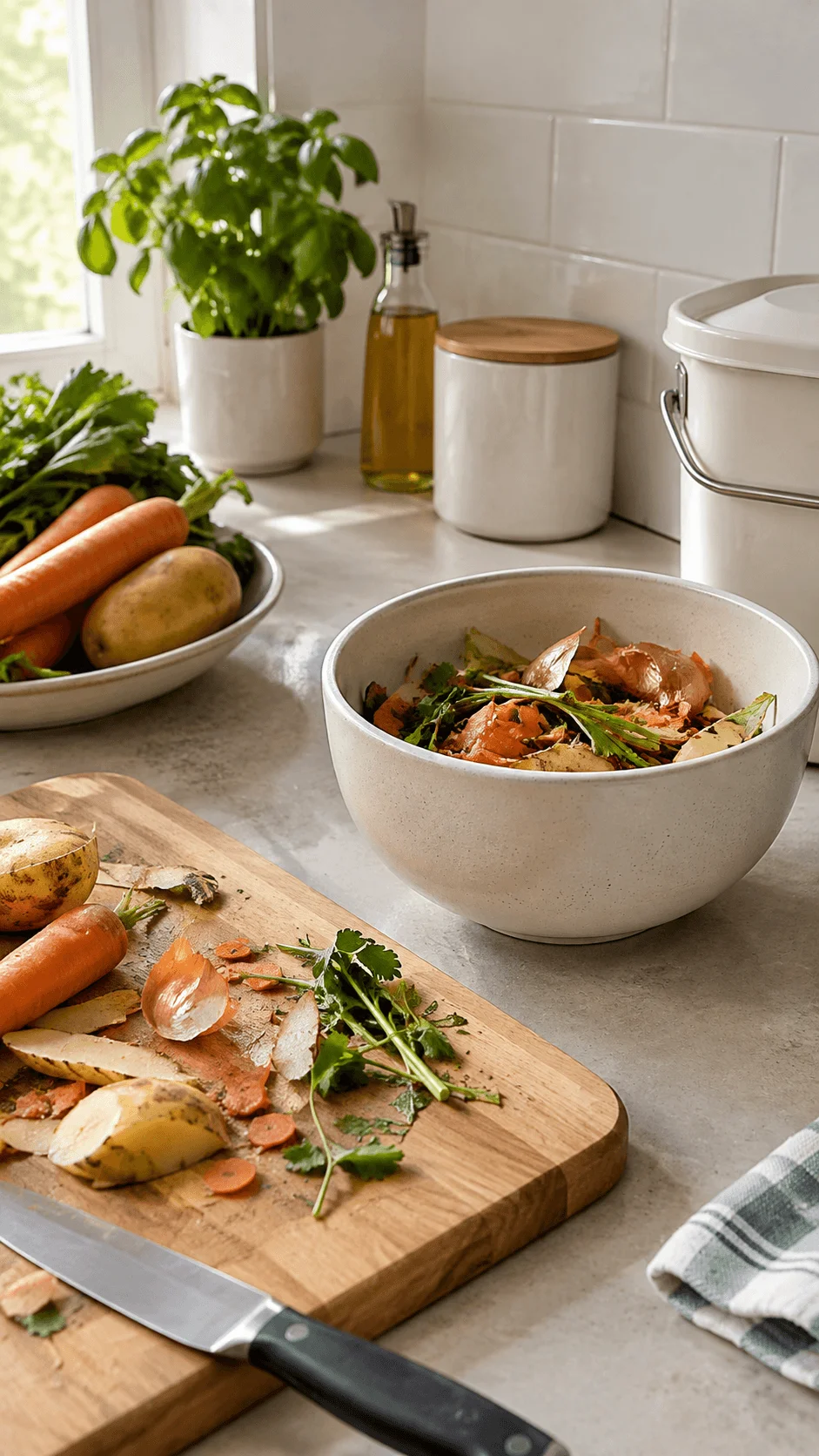
This simple arrangement reduces repeated trips across the kitchen. It can also keep the preparation surface more organized because scraps have an immediate destination.
Choose a bowl that matches normal cooking habits. A very small bowl may overflow during batch cooking, while an unnecessarily large container can consume valuable counter space. Regular emptying also matters because an open bowl will not control odors or insects for extended periods.
Stainless Steel Eco Friendly Waste Sorting Bowl
Stainless steel provides a durable option for households that expect frequent use. A smooth stainless steel bowl can tolerate regular washing and usually offers a straightforward surface to clean after handling food scraps.
However, the strongest sustainability argument may involve something even simpler than material choice. If a household already owns a suitable stainless steel mixing bowl, giving it another purpose can eliminate the need to purchase a specialized container.
An existing bowl can come out during food preparation, collect scraps, get emptied afterward, and return to normal storage after cleaning. Some households may prefer to dedicate one older bowl entirely to waste collection.
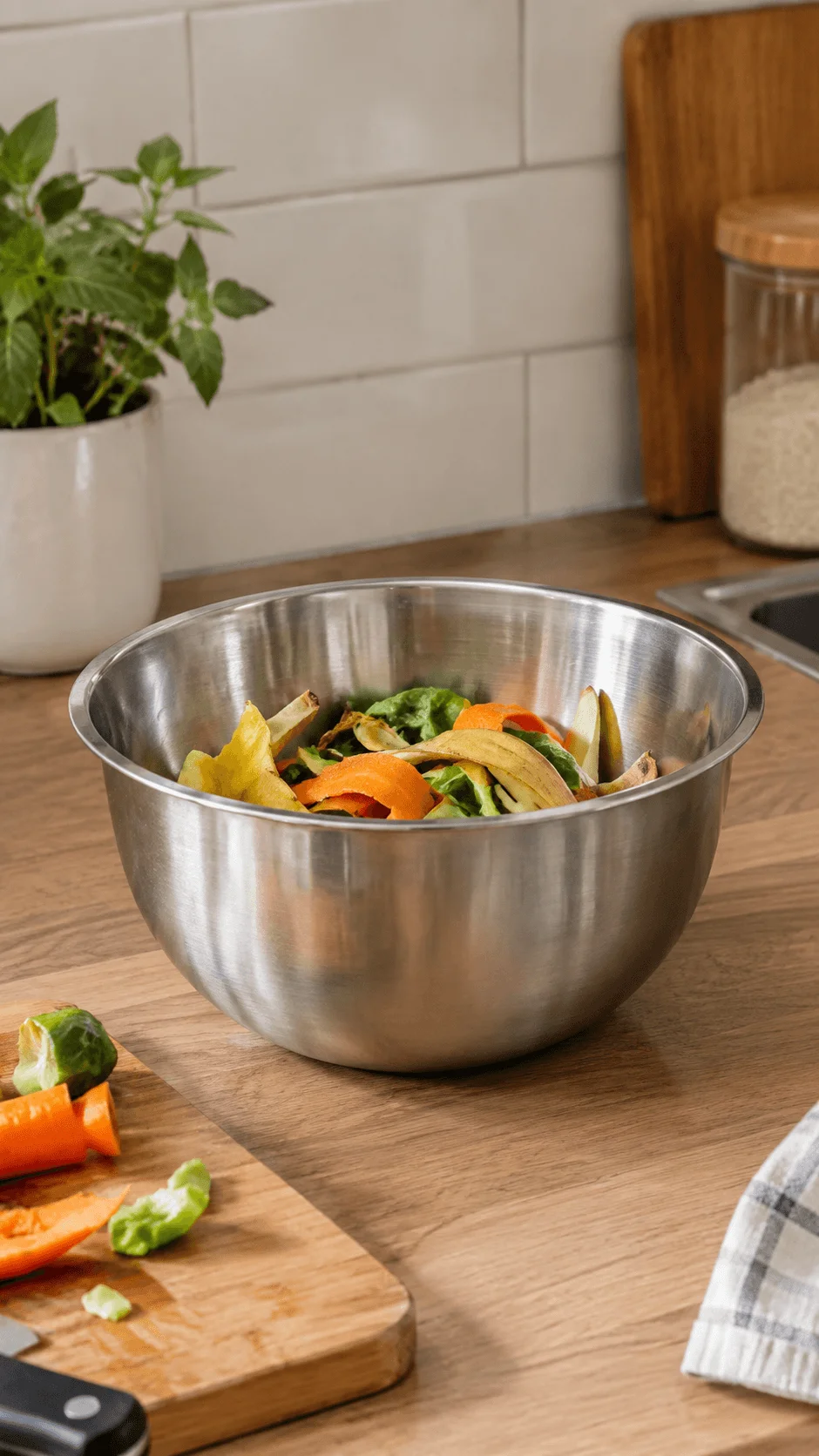
Stainless steel does not eliminate every problem. An uncovered metal bowl can still develop unpleasant odors when scraps remain inside for too long. Eco friendly waste sorting bowls work best when good materials combine with sensible routines rather than relying on the material alone.
Reclaimed Ceramic Bowl for Kitchen Food Waste
An unused ceramic bowl can become an attractive food waste sorting bowl without requiring another new kitchen product.
Many homes contain serving bowls that rarely leave the cupboard. Giving one of these items a regular function can extend its useful life. This approach supports a valuable sustainability principle: consider what you already own before buying a replacement marketed as environmentally friendly.
Ceramic also has an aesthetic advantage. A simple ceramic bowl can blend naturally with plates, dishes, and other kitchenware, making the waste collection system feel less intrusive on the countertop.
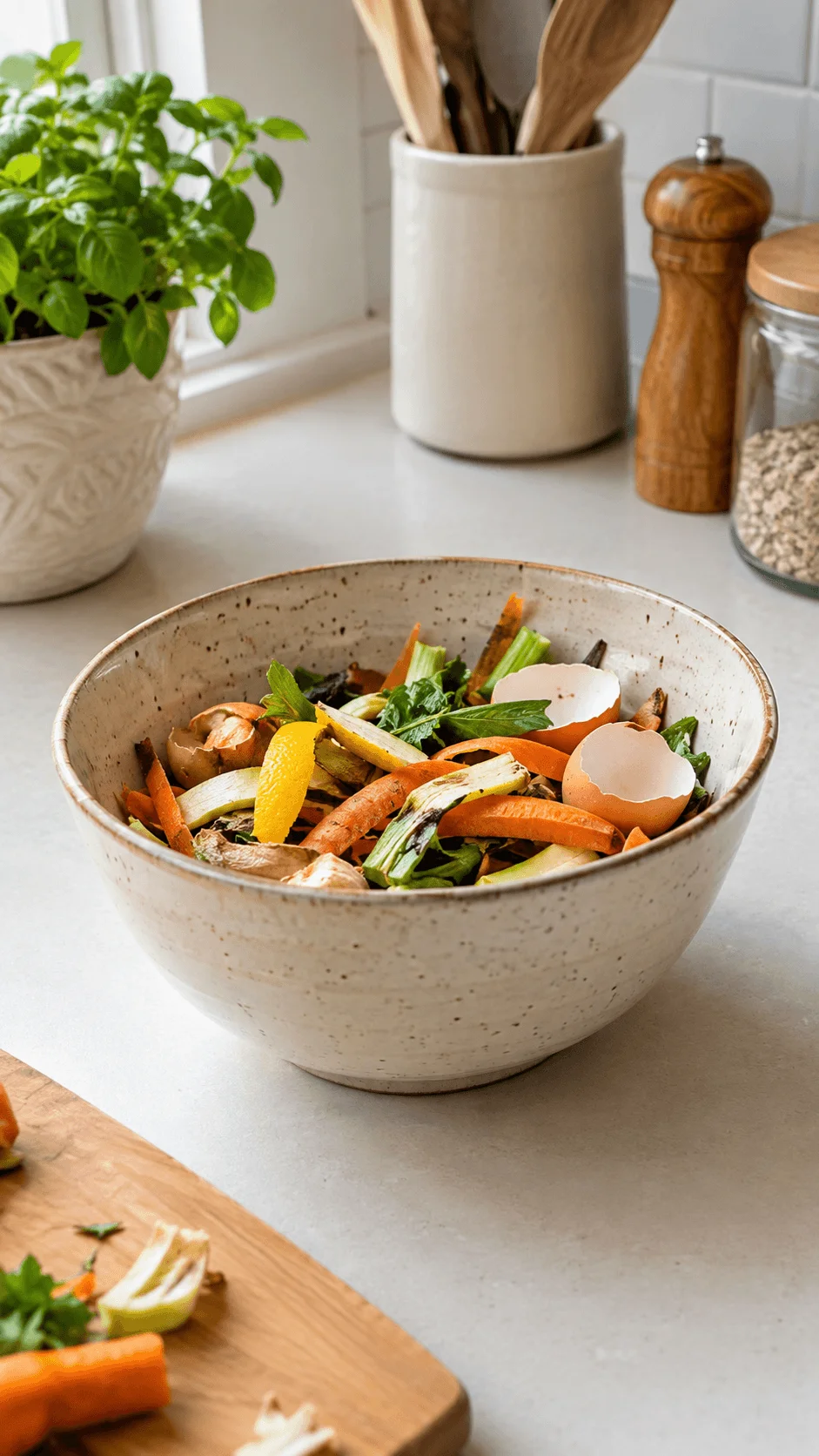
Users should still consider condition and practicality. A badly cracked or unstable bowl may not suit frequent handling. Ceramic can also break if dropped, and large designs can become heavy when full.
The goal is not to prove that ceramic is environmentally superior to every alternative. The value comes primarily from finding a practical second use for an existing item.
Food Waste Sorting Bowl With a Lid
An open scrap bowl works well when someone empties it soon after cooking. A fitted lid becomes more useful when scraps need to remain indoors for longer.
A covered food waste sorting bowl can reduce direct exposure to scraps and make the container less visually noticeable. The lid may also help households manage some odor and insect problems.
This design can suit apartments where the main organic collection container sits outside or in a shared waste area. Instead of making several trips during the day, residents can temporarily collect appropriate scraps in the kitchen and transfer them later.
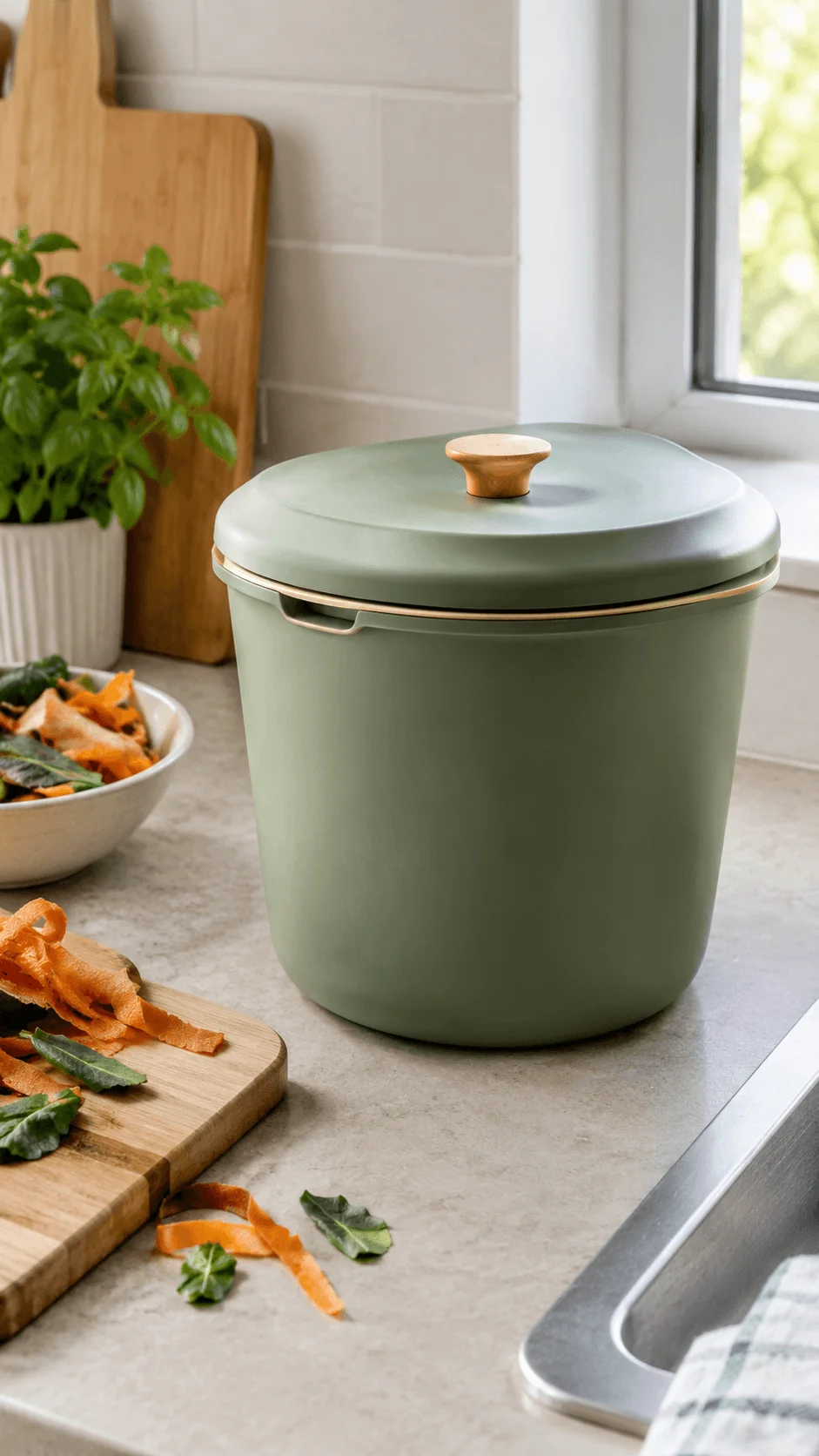
The lid needs attention during cleaning. Moisture and food residue can collect around rims and seals, so simple designs often make maintenance easier.
A lid should never become an excuse to leave decomposing scraps indoors indefinitely. Regular emptying remains an essential part of keeping eco friendly waste sorting bowls practical and pleasant to use.
Freezer Food Scrap Collection Bowl
Cold storage offers another approach for households concerned about smells and insects. A suitable reusable container can temporarily hold scraps in the refrigerator or freezer until they can move to the correct collection or composting system.
This method can become particularly useful during warmer weather. Instead of allowing scraps to sit on a countertop for several days, a household can keep them cold while waiting for collection day.
Freezer storage can also suit people who generate relatively small quantities of scraps. They can gradually collect suitable material without maintaining a permanent open food waste container on the counter.
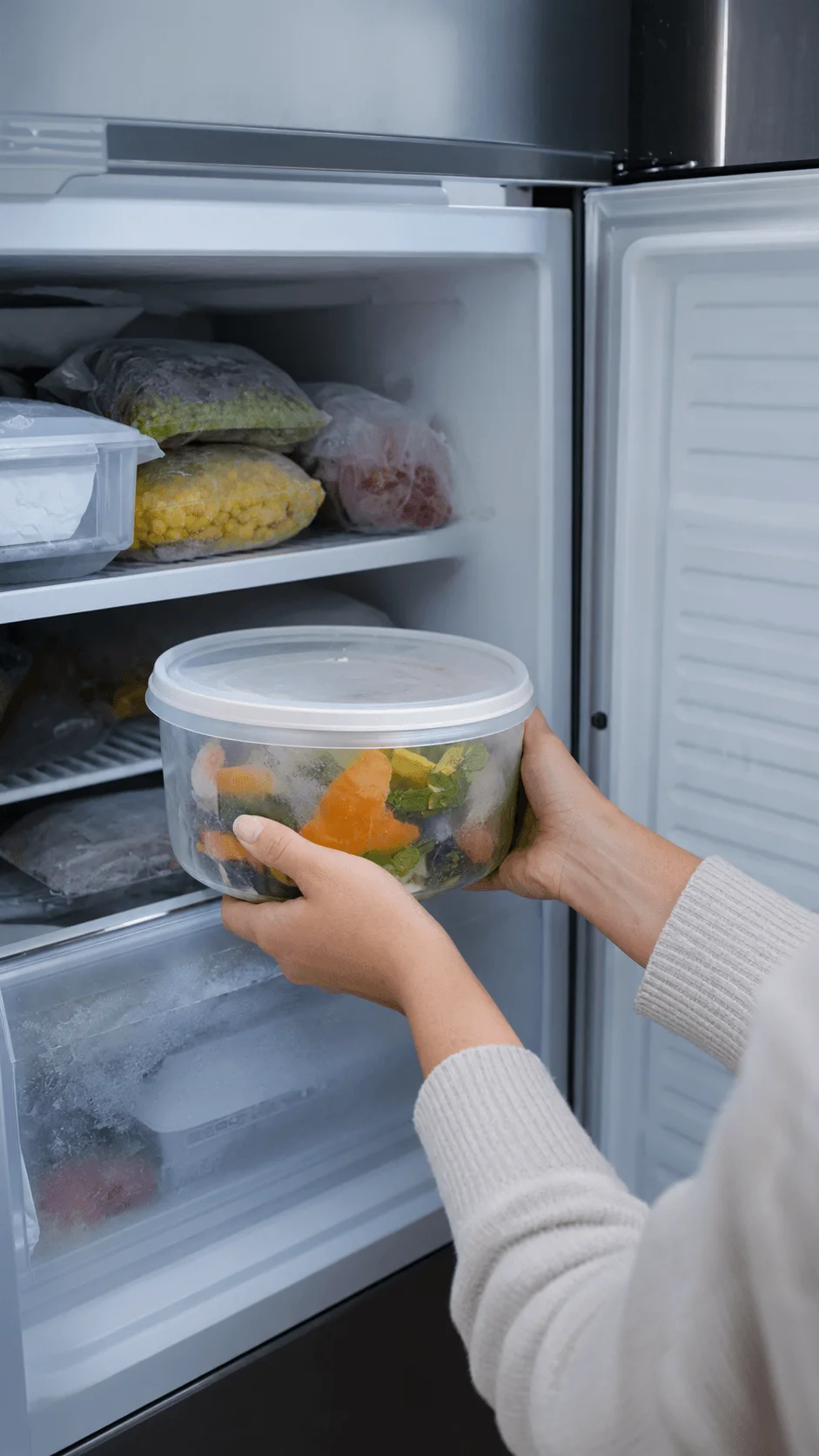
Space creates the obvious limitation. A small freezer may not have enough room for a large waste container. Users also need to choose a container suitable for low temperatures and clearly distinguish it from containers holding food intended for consumption.
Not every bowl belongs in a freezer, so material suitability should always influence the choice.
Dual Bowl Kitchen Waste Sorting Station
Meal preparation rarely produces only one type of waste. Opening ingredients can create organic scraps and recyclable packaging within seconds of each other.
A dual bowl station addresses this problem with two temporary collection points. One bowl can receive accepted organic scraps while another collects suitable recyclable materials.
Consider preparing a pasta dinner. Vegetable trimmings may belong in the organic stream, while a clean metal can or suitable cardboard package may belong in recycling. Keeping separate containers within reach makes immediate sorting much easier.
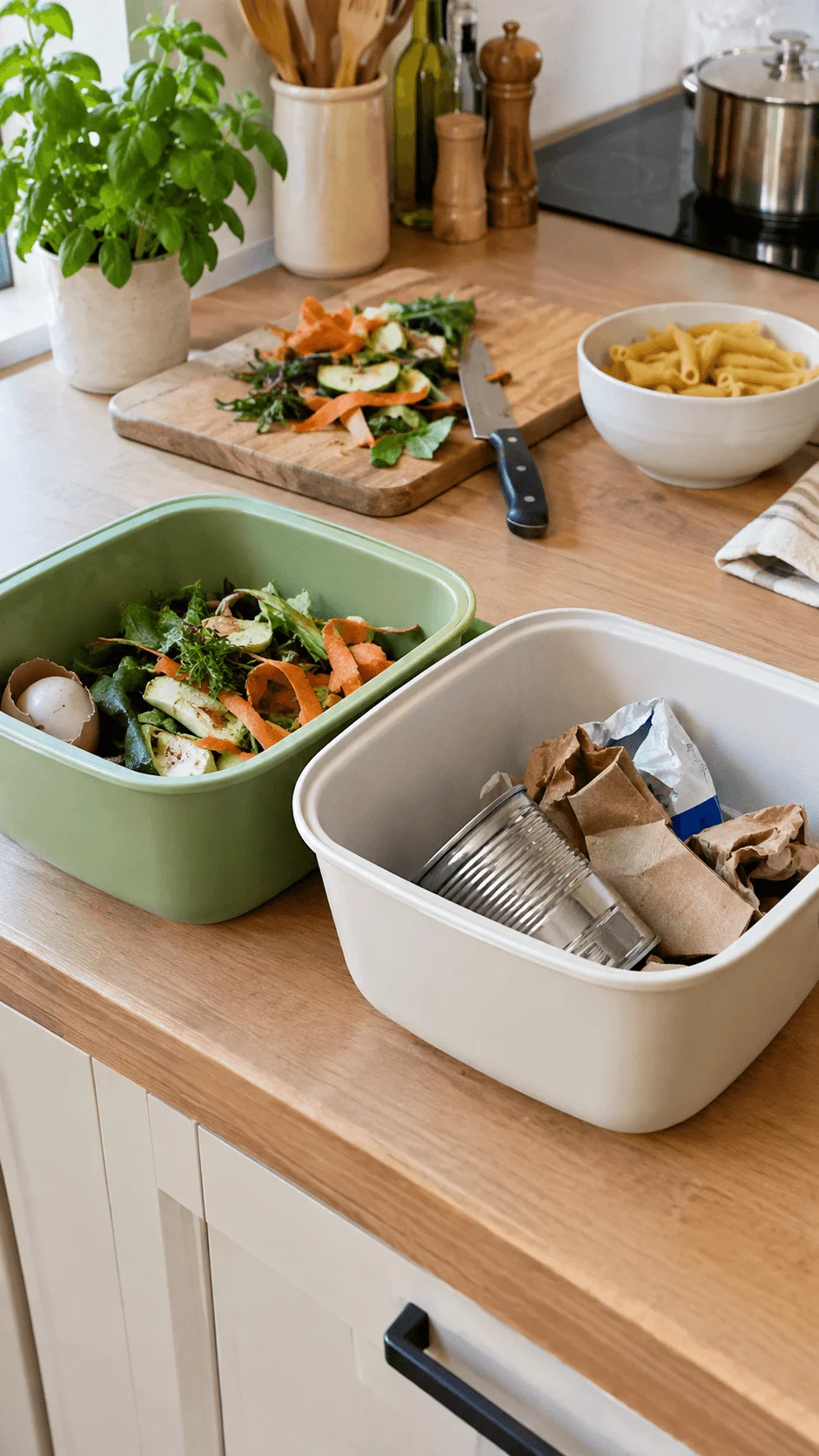
This approach can also reduce contamination. Wet vegetable scraps should not end up pressed against clean paper or cardboard intended for recycling.
After the meal, both bowls can be transferred to the appropriate larger containers and cleaned. This gives eco friendly waste sorting bowls some of the functionality of a larger sorting station without permanently sacrificing kitchen floor space.
Color Coded Waste Separation Bowls
Visual cues can simplify waste sorting in households where several people use the kitchen.
Different bowls can represent different waste categories, while clear labels can reinforce what each container accepts. This approach can help family members, children, guests, or housemates understand the system without repeatedly asking where something belongs.
Color should not act as the only cue. Some people have difficulty distinguishing particular colors, so combining visual differences with clear words or simple symbols can improve accessibility.
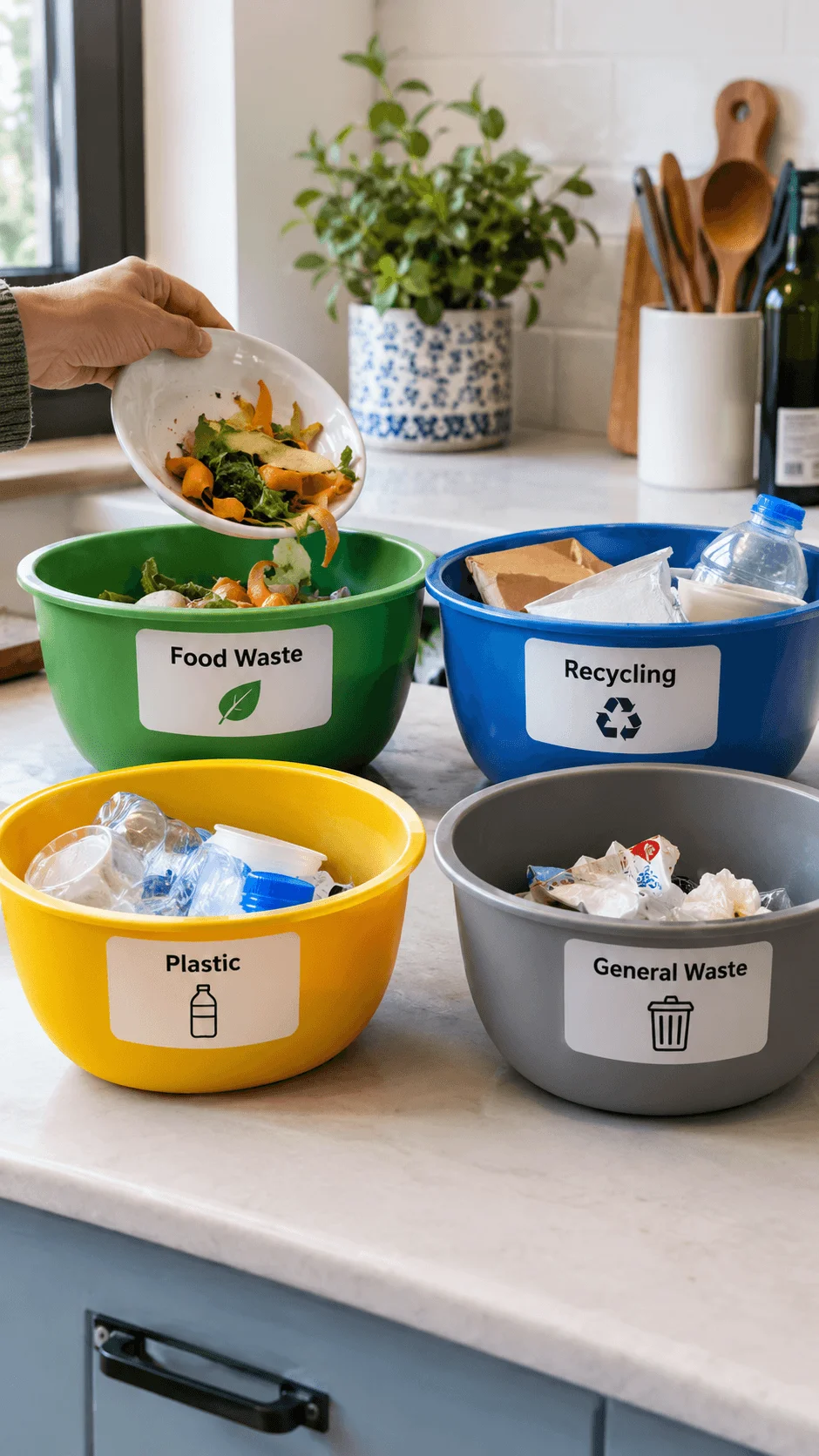
Local rules also matter. A color associated with organic waste in one location may represent a completely different waste stream somewhere else.
Households should therefore create their system around local collection guidance rather than copying a universal color scheme from the internet.
The best visual system is one everyone in the home can understand quickly.
Stackable Eco Friendly Waste Sorting Bowls for Small Kitchens
Limited storage often makes traditional multi bin systems difficult in apartments and compact kitchens. Stackable bowls provide a flexible alternative.
Several nesting containers can remain together in a cupboard when nobody needs them. During meal preparation, the household can separate them and assign each one to a relevant waste category. After cooking, users empty, wash, dry, and stack the containers again.
This arrangement provides temporary sorting capacity without permanently filling the countertop.
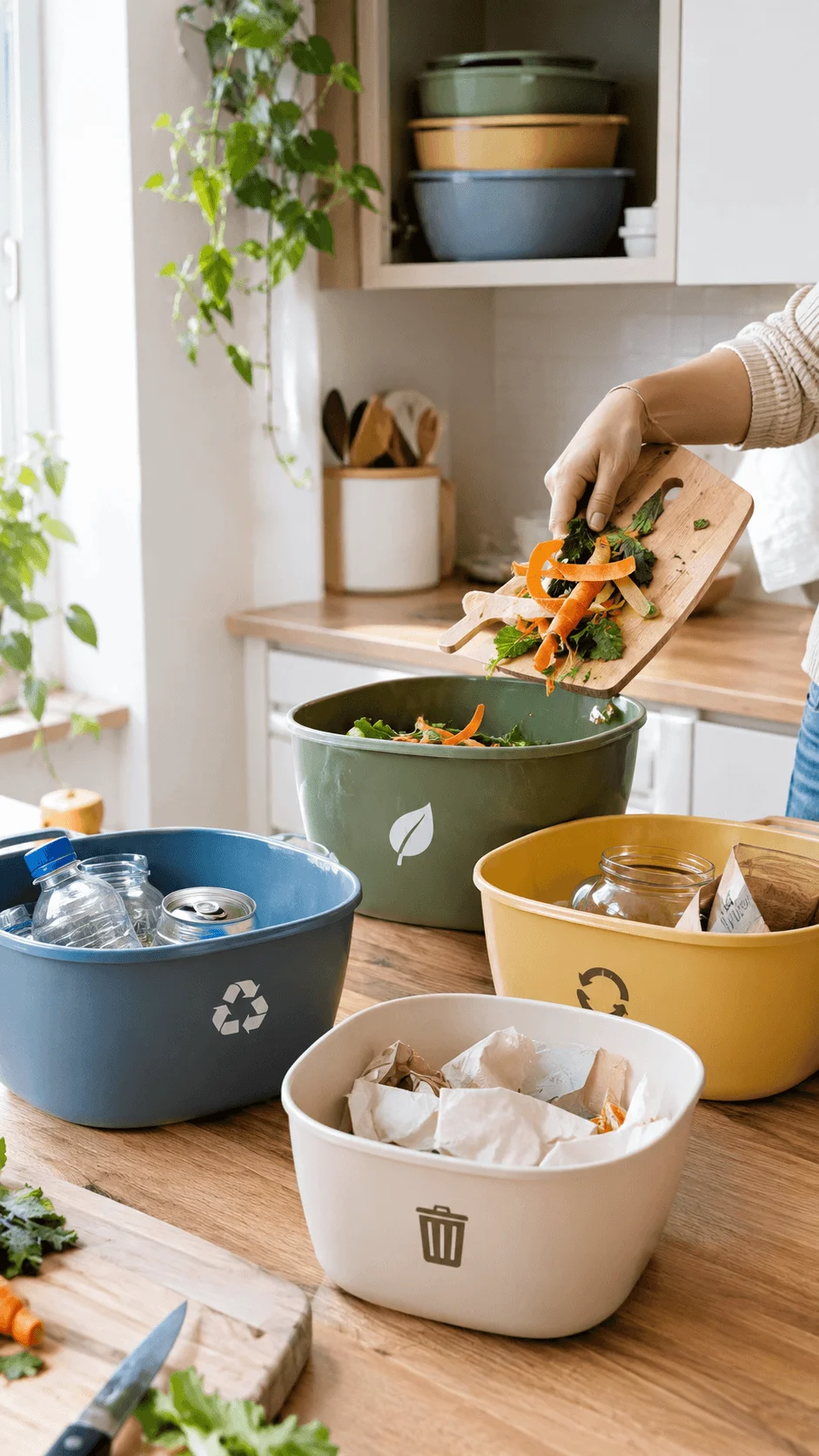
A household might use separate bowls for accepted organic scraps, recyclable materials, items intended for reuse, and residual waste. However, adding more categories does not automatically improve the system.
An overly complicated arrangement can make people less willing to use it. Eco friendly waste sorting bowls should simplify everyday behavior rather than turn preparing dinner into a waste management exercise.
Choose only the categories that genuinely help with the household’s local collection system.
Hanging Food Waste Bowl for Convenient Scrap Collection
A hanging food scrap bowl brings the collection point even closer to the preparation surface.
Some compact containers can sit beside a cabinet or attach near a counter so users can transfer peelings directly from the cutting board. This design keeps valuable countertop space available while still providing an accessible place for scraps.
Placement makes this concept particularly useful. When a container sits directly beneath the area where someone chops vegetables, disposing of scraps requires almost no additional movement.
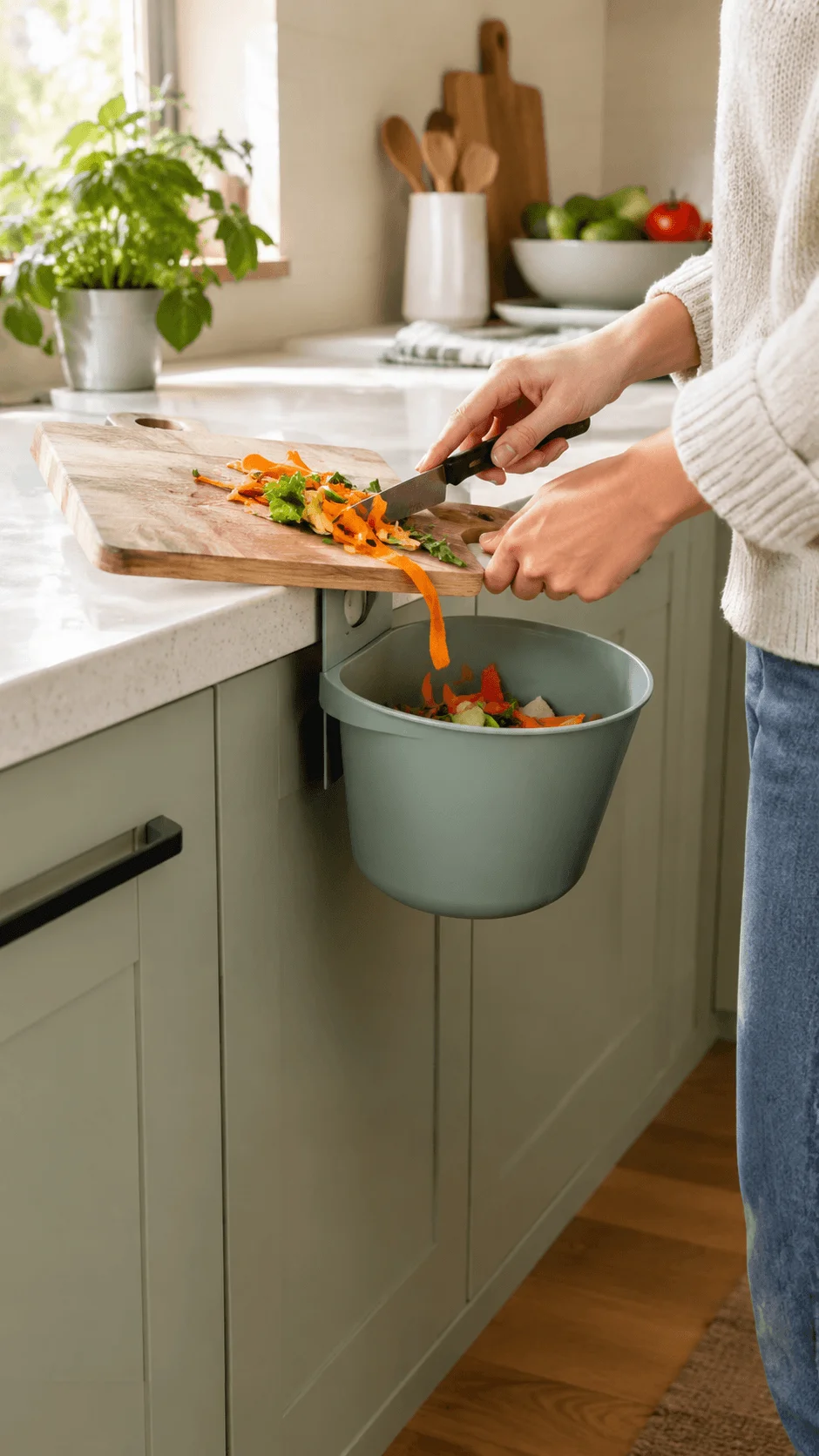
Practical design matters, however. The attachment needs enough stability to support the expected contents. An overloaded container should not pull loose or interfere with cabinet doors and drawers.
The bowl should also detach easily enough for emptying and cleaning.
This idea demonstrates an important principle of sustainable design. The most effective solution often makes the desired behavior easier rather than asking people to perform extra steps.
Odor Control Bowl for Organic Kitchen Waste
Some households need to keep food scraps indoors longer than others. An odor control container can make temporary storage more manageable.
A fitted lid combined with activated carbon or charcoal based odor management can help address smells inside the kitchen. This approach may suit households that cannot transfer organic scraps outside immediately.
However, additional features introduce additional responsibilities. Filters eventually require replacement, and moisture or residue can collect around lids and seals. The container still requires frequent cleaning.
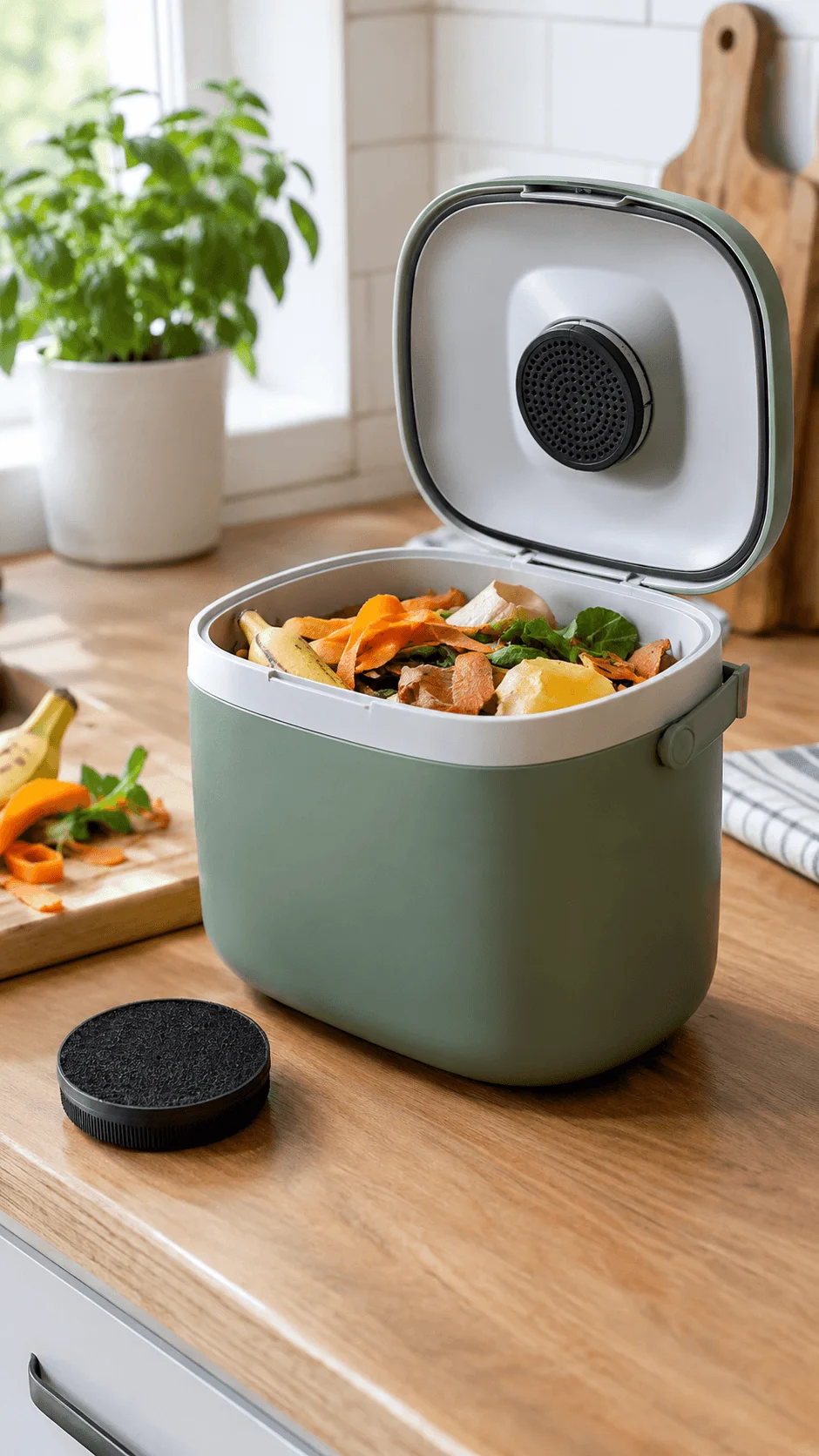
Households should therefore consider whether they genuinely need filtration. Someone who empties a scrap bowl after every meal may gain little from an elaborate odor control system.
A simpler approach may work equally well. Frequent emptying or cold storage can address the same problem without replacement filters.
The best eco friendly waste sorting bowls solve an actual household challenge rather than adding features simply because they sound innovative.
Dishwasher Safe Reusable Food Scrap Bowl
A washable daily scrap bowl focuses on routine rather than technology.
The process begins when cooking starts. A reusable bowl sits beside the preparation area and receives suitable scraps. When cooking finishes, the user empties the contents into the appropriate collection system, cleans the bowl thoroughly, dries it, and returns it for future use.
A simple shape can make this routine easier. Complicated corners, narrow openings, or difficult seals can trap residue and turn cleaning into an unnecessary chore.
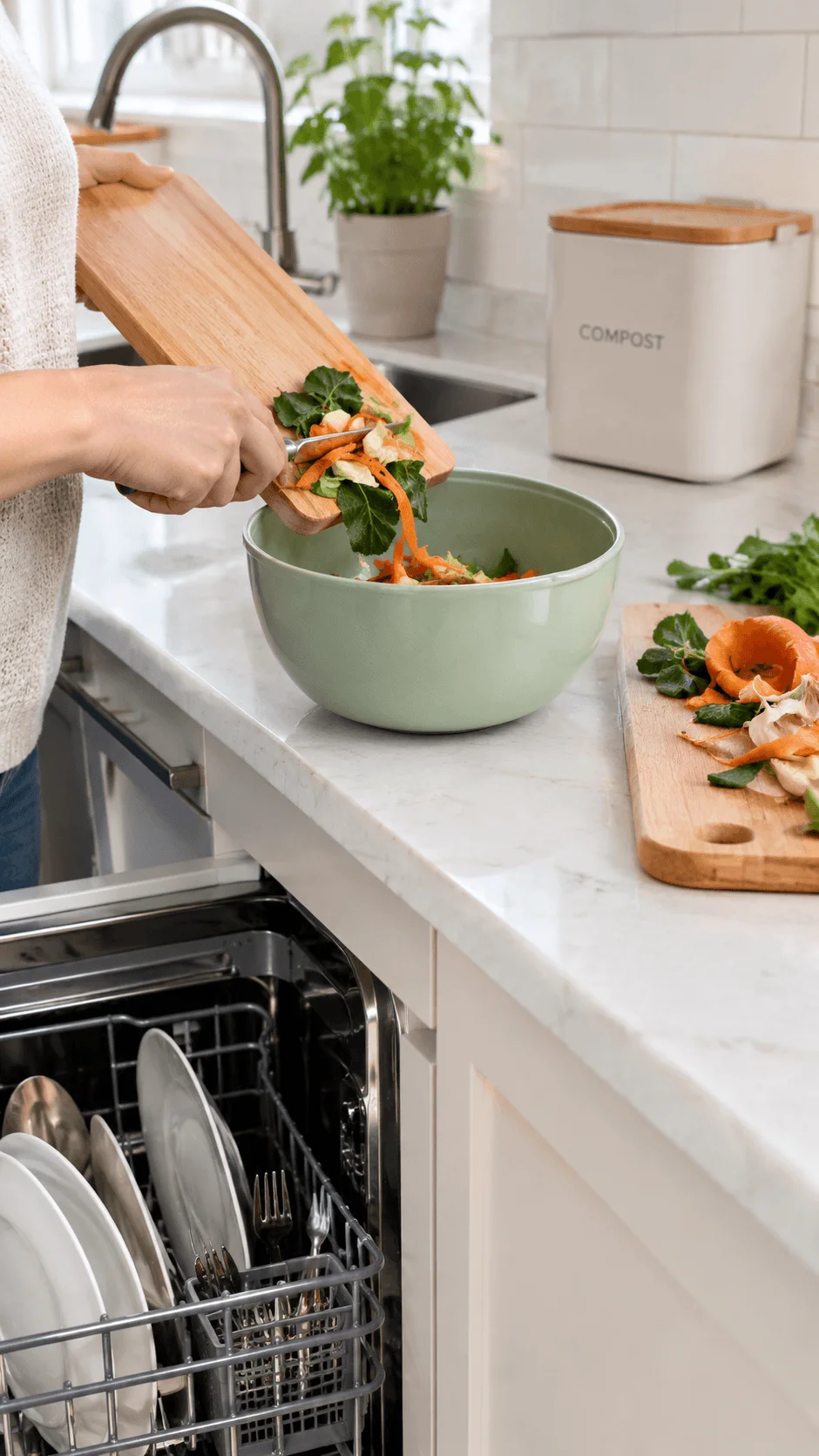
Where appropriate, a dishwasher compatible container can further simplify maintenance. Users should still follow the care instructions for the specific material.
This idea also challenges the assumption that sustainable living always requires specialized products. A basic reusable bowl used consistently for years may prove more practical than an expensive kitchen gadget that eventually sits unused in a cupboard.
Smart Eco Friendly Waste Sorting Bowl Station
Technology could take the basic sorting bowl concept in a very different direction.
A future focused countertop station could combine physical containers with QR based instructions, digital waste guides, weight sensors, or phone based identification. Instead of guessing where an unfamiliar item belongs, a user could consult local digital guidance before sorting it.
Tracking could provide another useful function. A household might measure how much food it discards each week and identify recurring patterns. If large quantities of bread, vegetables, or prepared meals repeatedly become waste, that information could encourage better shopping, storage, meal planning, and portion decisions.
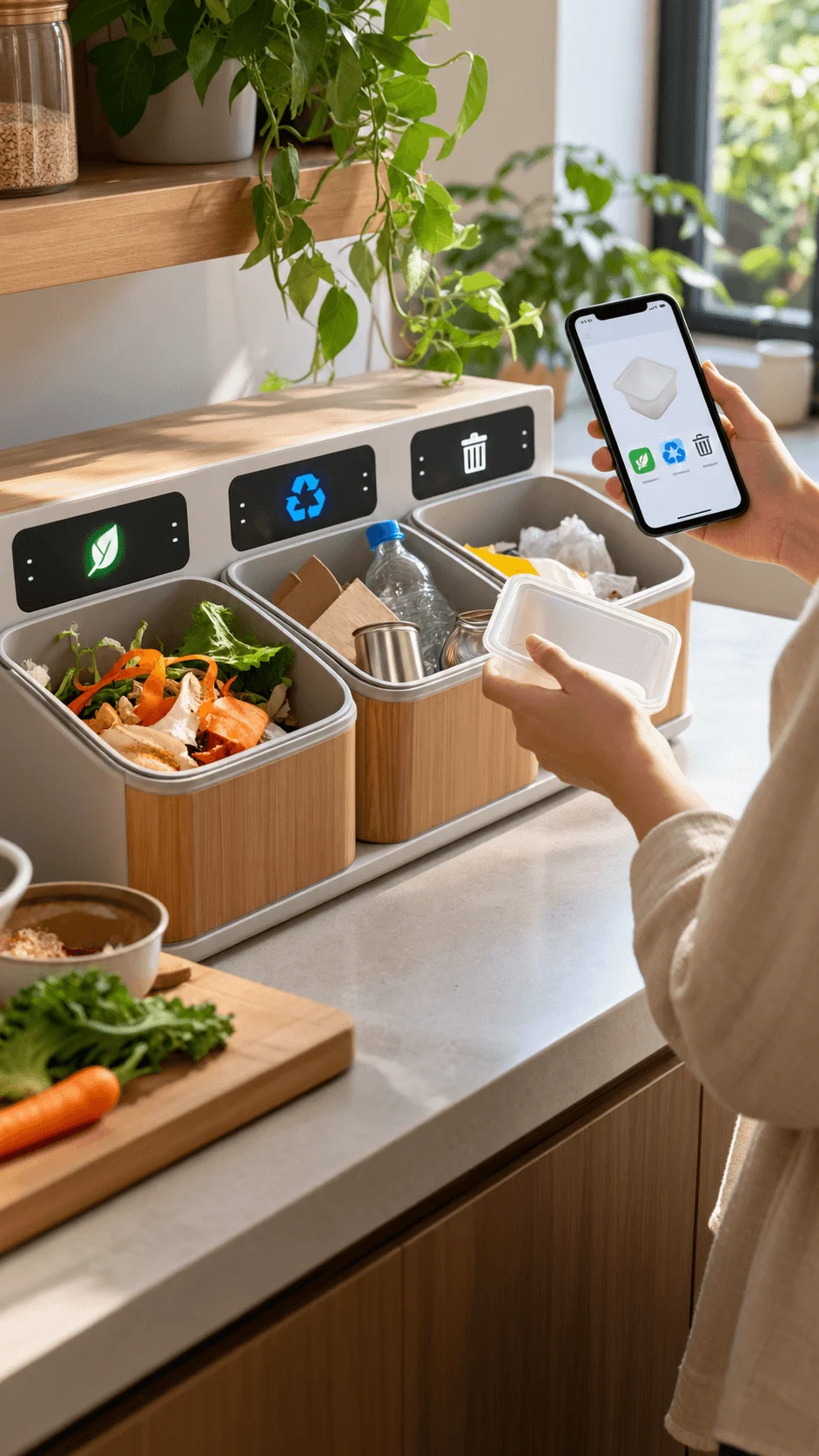
Technology also creates environmental tradeoffs. Sensors and electronic components require materials and energy, increase costs, and can eventually become electronic waste themselves.
For that reason, a smart station should solve a genuine problem. Technology can support eco friendly waste sorting bowls, but households do not need electronics to create an effective sorting routine.
How to Choose Eco Friendly Waste Sorting Bowls
Choosing a suitable bowl starts with understanding the household rather than selecting the product with the strongest environmental marketing.
Consider how much waste normal meal preparation creates and where the container will sit. A compact bowl may suit someone preparing small meals, while a larger household may need greater capacity.
Material also affects everyday use. Stainless steel provides durability and easy handling. Ceramic can offer an attractive way to repurpose existing kitchenware. Glass may allow users to see the contents easily, although weight and breakability deserve consideration.
Cleaning should influence the decision as well. A container that takes several minutes to scrub after every use may eventually discourage regular sorting.
Before purchasing anything, look through existing kitchen cupboards. An underused bowl may already provide everything the household needs.
The environmental value of a reusable product depends on far more than its material. Manufacturing, transportation, durability, cleaning, lifespan, frequency of use, and eventual disposal all contribute to its overall impact.
Conclusion
Eco friendly waste sorting bowls show how a very ordinary kitchen item can support a more organized approach to household waste. By positioning a reusable container close to the place where scraps and packaging appear, households can make source separation easier without installing a large or expensive waste system.
The right approach will vary from one kitchen to another. Some households may need nothing more than an existing stainless steel or ceramic bowl beside the cutting board. Others may benefit from a lid, freezer storage, two separate containers, stackable bowls, visual labels, a hanging design, or additional odor management. Digital guidance and smart tracking may offer useful possibilities for people who want more information about their waste habits.
No individual bowl becomes sustainable simply because of its material or environmental label. Long term usefulness matters. Reusing something already available, choosing durable products when new purchases become necessary, cleaning them properly, and sorting according to local requirements can make the system more meaningful.
Ultimately, the most effective eco friendly waste sorting bowls are the ones people actually use. A simple, durable, conveniently positioned bowl can turn waste separation from an extra household chore into a natural part of preparing food. When that habit works alongside reducing food waste, reusing existing products, composting appropriately, and recycling correctly, even a small change in the kitchen can support a more thoughtful approach to everyday waste.