Science Exhibition Projects Sustainable Agriculture
Science Exhibition Projects Sustainable Agriculture have become one of the most exciting themes for school science fairs because they combine creativity, environmental awareness, and modern technology. As the world faces challenges such as climate change, shrinking farmland, water shortages, and rising food demand, students have an opportunity to explore innovative farming solutions through engaging science projects. Instead of focusing only on traditional farming methods, today’s science exhibitions encourage ideas that use artificial intelligence, renewable energy, smart sensors, and sustainable practices to improve agricultural productivity while protecting natural resources.
Sustainable agriculture focuses on growing food in ways that protect the environment, conserve water, improve soil health, and support future generations. It promotes farming techniques that reduce pollution, minimize waste, and maintain healthy ecosystems. By building modern science exhibition models, students can better understand how science and technology are transforming agriculture and solving real world problems.
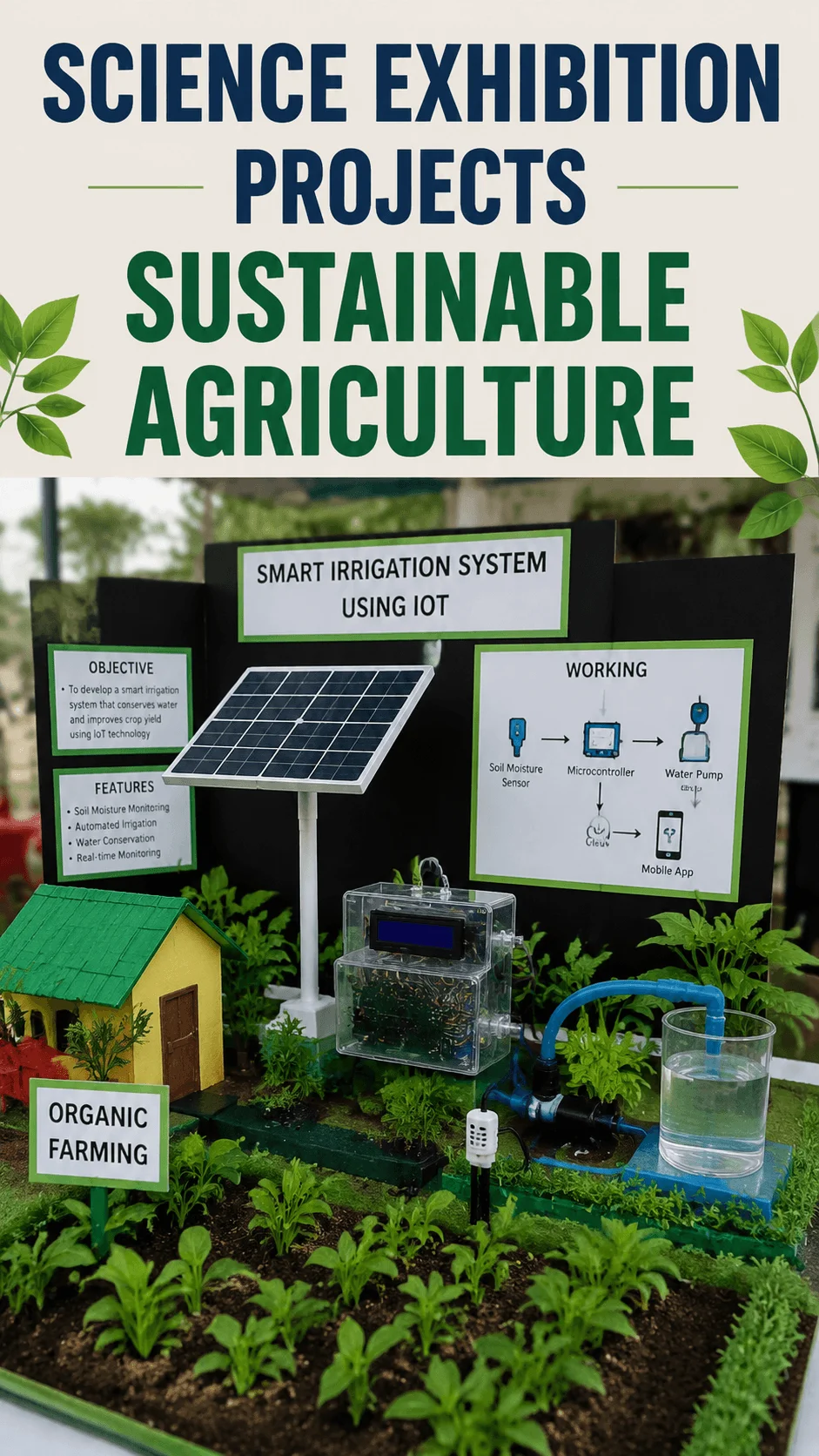
Many schools now encourage learners to create projects that demonstrate practical solutions rather than simple displays. A well designed sustainable agriculture project not only explains scientific concepts but also inspires visitors to think about how innovation can improve farming. These projects introduce students to emerging technologies that are already helping farmers increase crop production while reducing environmental impact.
This guide explores some of the latest sustainable agriculture science exhibition ideas that reflect current farming trends. Each project explains an important scientific concept and shows how sustainable practices can create a healthier and more productive future for agriculture.
Why Sustainable Agriculture Matters Today
Agriculture provides food, clothing, and many of the raw materials people use every day. However, traditional farming methods often consume large amounts of water, rely heavily on chemical fertilizers and pesticides, and contribute to soil degradation. As the global population continues to grow, farmers must produce more food without placing additional pressure on natural resources. This challenge has made sustainable agriculture one of the most important fields of scientific research.
Climate change has increased the frequency of droughts, floods, and unpredictable weather patterns. These changes directly affect crop production and make farming more difficult in many regions. Sustainable farming methods help farmers adapt by improving soil quality, conserving water, and introducing technologies that respond quickly to changing environmental conditions. Students who explore agriculture science exhibition project ideas based on these concepts gain a deeper understanding of how science can solve global challenges.
Water conservation plays a major role in sustainable agriculture. Fresh water supplies are becoming increasingly limited, making efficient irrigation systems more important than ever. Modern farms now use sensors, automated irrigation systems, and weather monitoring technologies to provide crops with the right amount of water at the right time. These innovations reduce waste while maintaining healthy plant growth.
Healthy soil is another essential part of sustainable farming. Rich soil supports stronger plants, stores more water, and contains beneficial microorganisms that naturally improve crop growth. Sustainable farming practices encourage composting, crop rotation, natural fertilizers, and reduced chemical use to preserve soil fertility for future generations.
Renewable energy has also transformed modern agriculture. Solar panels, wind turbines, and energy efficient equipment reduce dependence on fossil fuels while lowering farming costs. Many farms now combine clean energy with advanced irrigation systems, creating environmentally friendly farming operations that produce both food and renewable electricity.
Biodiversity is equally important because healthy ecosystems support pollinators, beneficial insects, and natural pest control. Sustainable farming encourages the protection of wildlife habitats while reducing harmful chemical applications. This balanced approach creates healthier farms and protects surrounding ecosystems.
Science exhibitions provide students with an excellent opportunity to explore these ideas through practical models. Instead of simply learning about sustainability in textbooks, students can demonstrate real technologies that farmers already use around the world. This hands on learning experience encourages creativity, critical thinking, and scientific curiosity while promoting environmental responsibility.
Modern Science Exhibition Projects Sustainable Agriculture Ideas
AI Powered Smart Irrigation System
An AI farming science project based on smart irrigation demonstrates how artificial intelligence can make farming more efficient by delivering water only when crops actually need it. Traditional irrigation systems often operate on fixed schedules without considering weather conditions or soil moisture levels. This approach can waste large amounts of water and reduce farming efficiency. Artificial intelligence changes this process by analyzing data collected from soil moisture sensors, weather forecasts, and temperature readings before deciding when irrigation should begin.
For a smart irrigation science exhibition, students can create a model farm using small plant beds, moisture sensors, a miniature water pump, and a microcontroller that represents the intelligent control system. The model can show how sensors continuously monitor soil conditions and automatically activate irrigation only when the soil becomes dry. This simple demonstration helps visitors understand how technology improves decision making in agriculture.
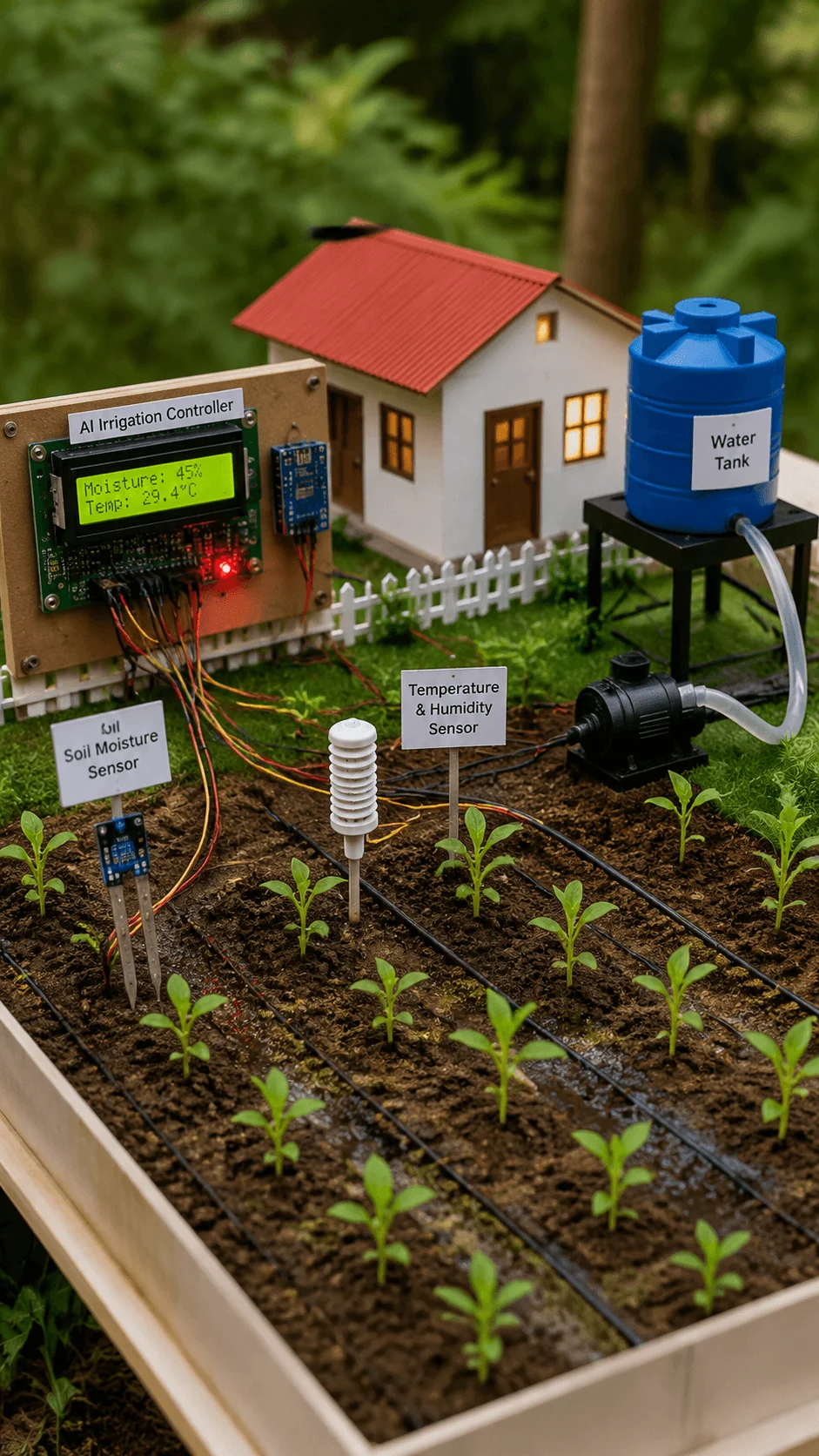
The scientific principle behind this project combines environmental sensing, data analysis, and automation. Artificial intelligence recognizes patterns in environmental data and makes decisions without requiring constant human supervision. Modern farms already use similar systems to reduce water waste while maintaining healthy crop growth.
This technology has become increasingly popular because fresh water supplies continue to decline in many agricultural regions. Farmers who use intelligent irrigation systems often reduce water consumption while maintaining or even increasing crop yields. Lower water usage also reduces energy costs because irrigation pumps operate only when necessary.
Visitors immediately recognize the practical value of this project because water conservation affects every community. Students also learn how computer science, engineering, and environmental science work together to create sustainable farming solutions. Among modern science exhibition projects sustainable agriculture, this idea represents one of the strongest examples of how artificial intelligence supports environmental conservation.
Agrivoltaics Farm Model
The agrivoltaics project introduces students to one of the newest developments in sustainable farming by demonstrating how agriculture and renewable energy can share the same land. Instead of choosing between growing crops or producing electricity, agrivoltaics allows farmers to accomplish both objectives simultaneously. Solar panels are installed above farmland at carefully planned heights, creating partial shade while generating clean energy.
Students can build a working model using cardboard fields, miniature solar panels, small plants, and supporting structures that represent elevated solar installations. The model demonstrates how sunlight reaches both the crops and the solar panels, allowing each system to function effectively. Visitors quickly understand that farmland can produce food and electricity without requiring additional land.
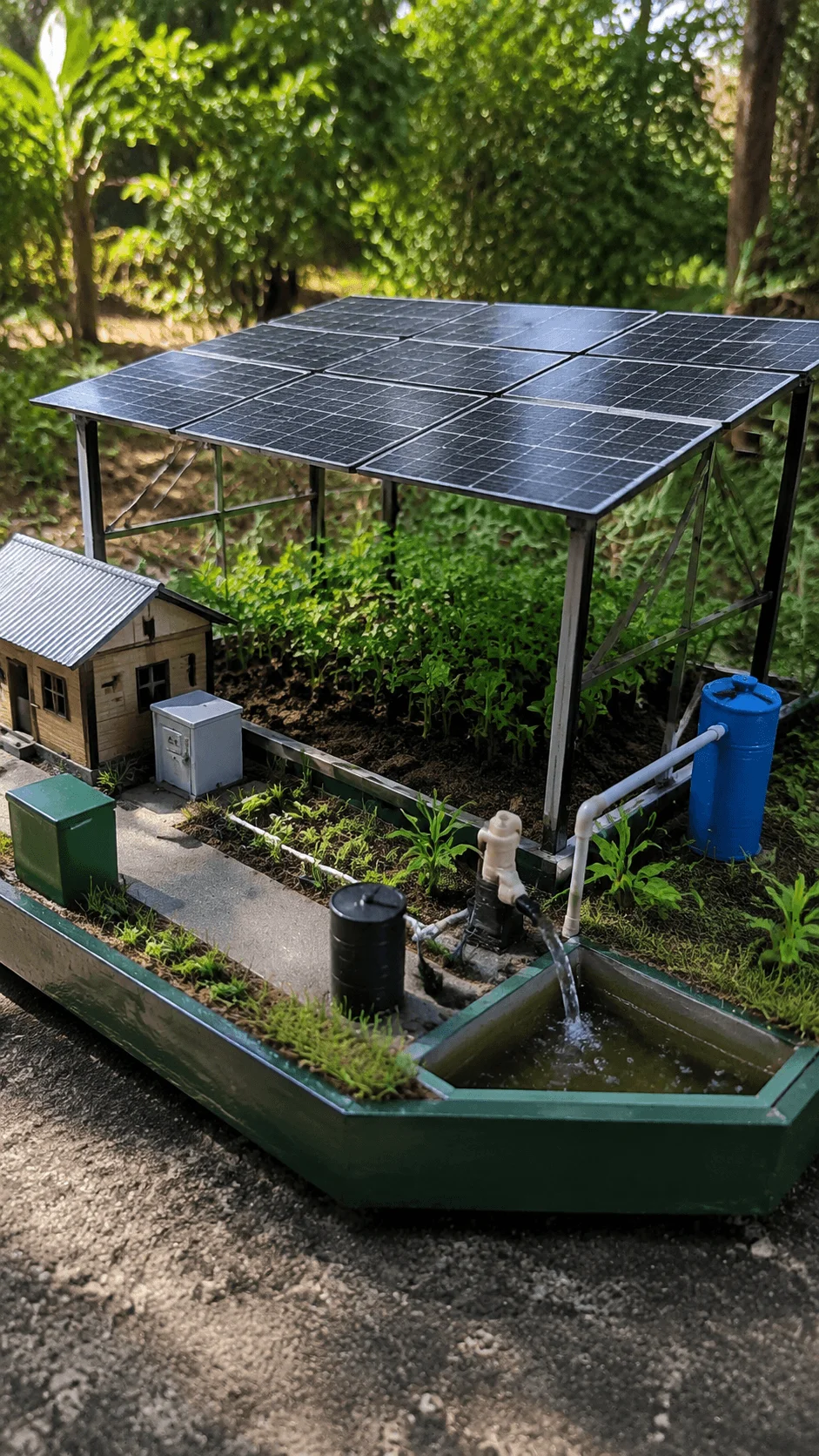
The scientific concept combines renewable energy production with plant biology. Certain crops actually benefit from partial shade because lower temperatures reduce water evaporation and help retain soil moisture. Scientists continue studying which crops perform best beneath solar panels, making agrivoltaics one of the fastest growing fields in agricultural research.
This technology helps farmers reduce electricity expenses while creating additional income through renewable energy generation. Solar powered farms also decrease greenhouse gas emissions and improve long term sustainability. In regions with high temperatures, shaded crops often require less irrigation because soil remains cooler throughout the day.
Students who create this model demonstrate an innovative solution that addresses both energy production and food security. It encourages visitors to think differently about land use and highlights how scientific innovation can solve multiple environmental challenges at the same time. As a sustainable farming exhibition model, agrivoltaics represents the future of efficient agricultural land management.
Vertical Farming With LED Lighting
A vertical farming school project demonstrates how food can be grown upward instead of outward by arranging crops in multiple stacked layers. This modern farming method allows people to produce fresh vegetables inside buildings, warehouses, and even apartments where traditional farmland is unavailable. As cities continue expanding, vertical farming offers an effective solution for increasing food production while using much less land.
Students can create a model using recycled plastic bottles, shelves, LED lights, and small plants to represent different growing levels. The LED lighting replaces natural sunlight by providing plants with carefully controlled light wavelengths that support photosynthesis. Visitors can easily observe how crops continue growing even inside enclosed environments.
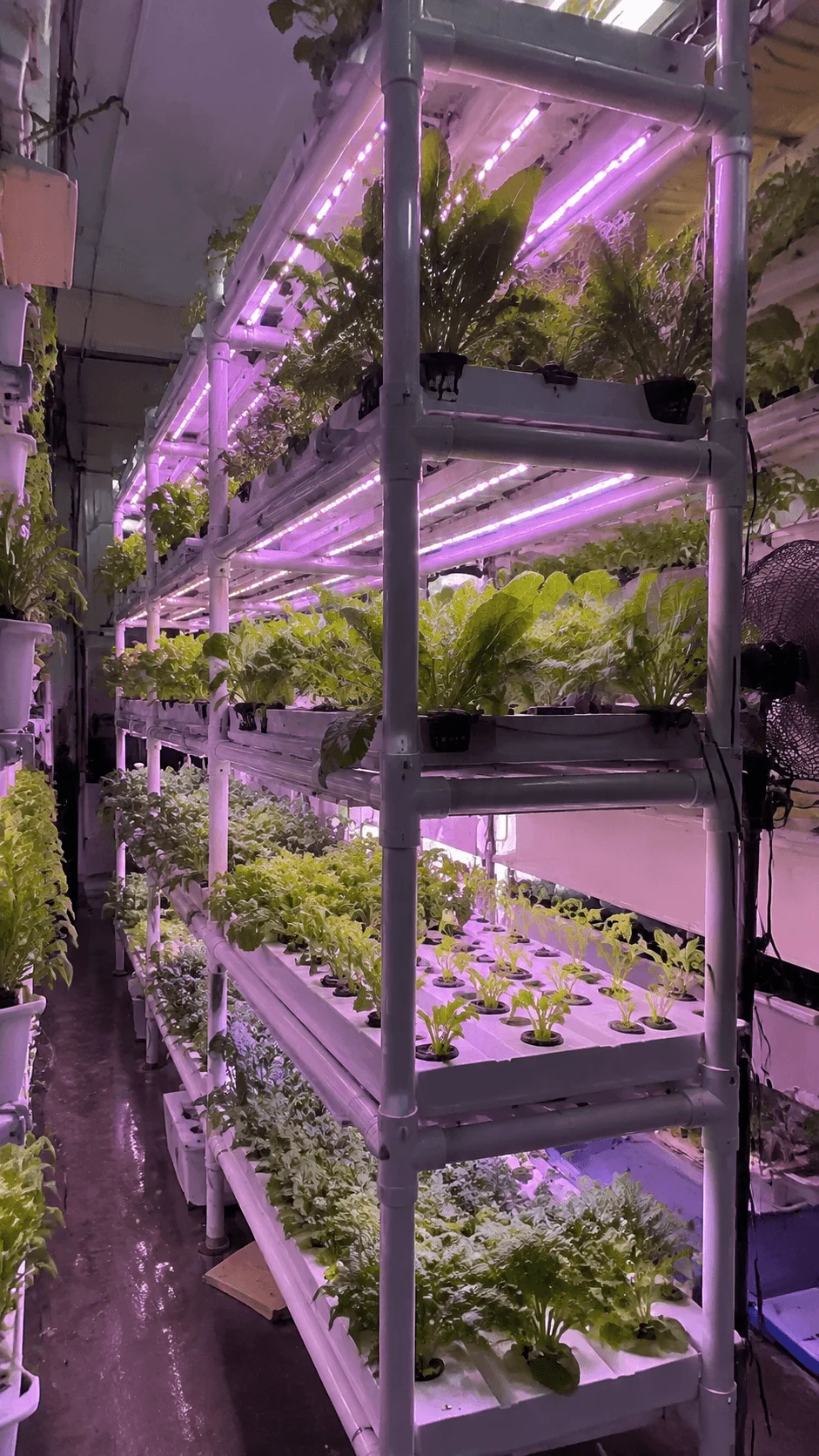
The science behind vertical farming combines plant biology, controlled environmental conditions, and efficient resource management. Temperature, humidity, light intensity, and nutrient delivery remain carefully regulated to maximize plant growth throughout the year. Because every growing condition remains under control, crops often grow faster and experience fewer pest problems than traditional outdoor farms.
Vertical farming significantly reduces water consumption because irrigation systems recycle unused water instead of allowing it to escape into surrounding soil. It also minimizes transportation costs by bringing food production closer to cities where consumers live. These advantages make vertical farming an increasingly important solution for future food security.
Students presenting this project explain how modern agriculture adapts to limited land availability while reducing environmental impact. The project also introduces visitors to innovative farming technologies that support sustainable urban development and demonstrate how agriculture continues evolving through scientific advancement.
Hydroponics Science Exhibition Project
A hydroponics science exhibition project teaches students that plants can grow successfully without soil when they receive the correct balance of water, nutrients, and oxygen. Instead of obtaining minerals from soil, plant roots absorb carefully prepared nutrient solutions that contain everything needed for healthy development. This method has gained worldwide attention because it produces crops efficiently while conserving valuable natural resources.
Students can design a simple hydroponic model using plastic containers, water reservoirs, growing cups, nutrient solution, and small leafy vegetables. Transparent containers allow visitors to observe root development beneath the plants, making the scientific process much easier to understand. The demonstration clearly shows that healthy plant growth depends more on nutrients than on soil itself.
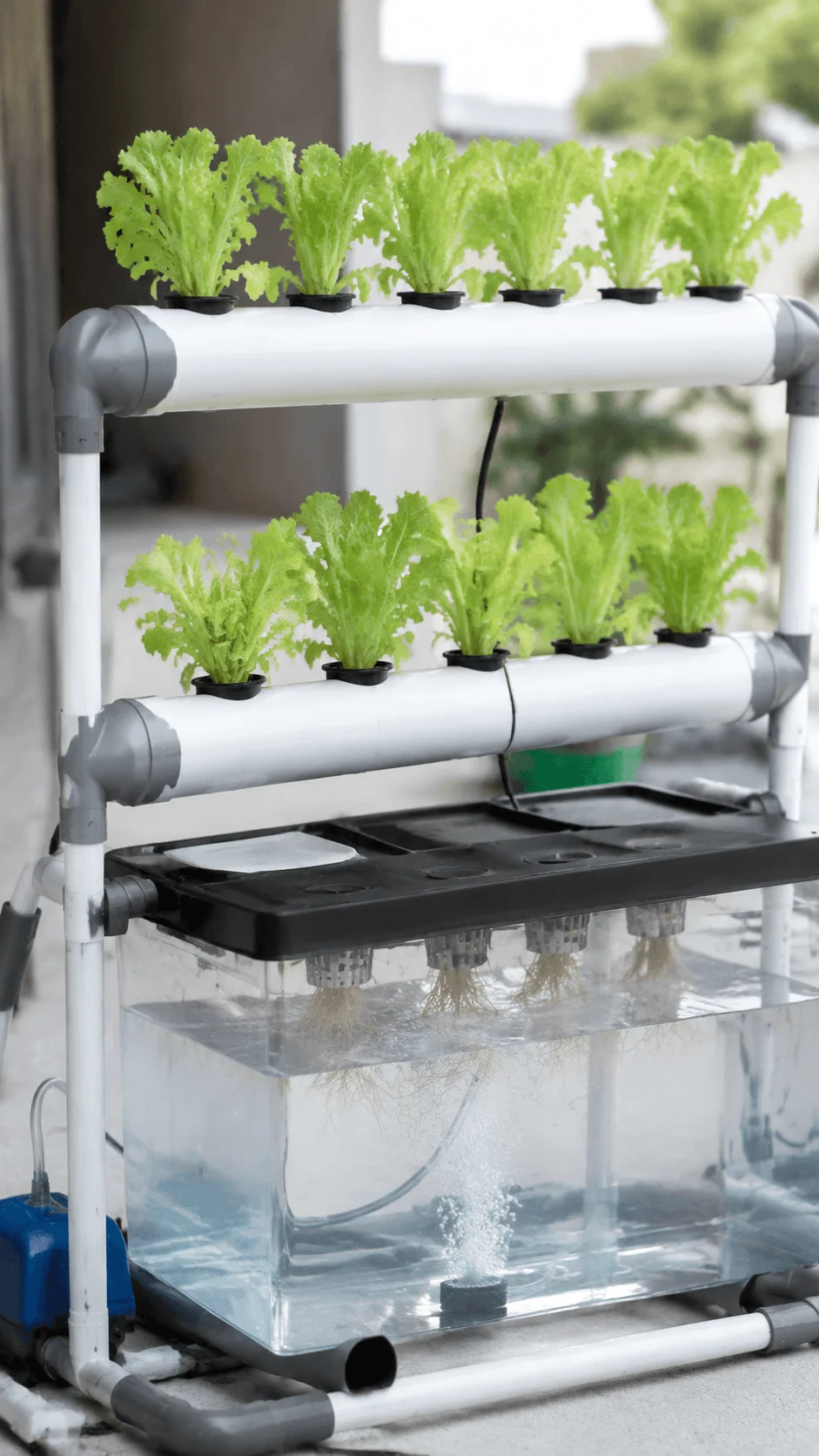
Hydroponic farming reduces water usage because the nutrient solution circulates continuously through the system rather than soaking into surrounding ground. The controlled environment also decreases weed growth and minimizes many common plant diseases. Farmers can produce vegetables throughout the year regardless of changing weather conditions.
Hydroponics has become increasingly popular in urban agriculture because it requires very little space while producing high quality crops. Restaurants, supermarkets, and indoor farms now use hydroponic systems to supply fresh vegetables close to consumers.
This project encourages students to explore plant science, chemistry, and environmental conservation while demonstrating one of the most important innovations in modern agriculture. It clearly shows how scientific knowledge can improve food production while protecting limited natural resources.
Climate Smart Greenhouse
A climate smart agriculture project based on a greenhouse demonstrates how farmers create ideal growing conditions regardless of outside weather. Unlike traditional greenhouses, climate smart systems use technology to automatically regulate temperature, humidity, ventilation, and irrigation. This controlled environment protects crops from extreme weather while improving productivity throughout the year.
Students can build a miniature greenhouse using transparent plastic sheets, simple sensors, small fans, LED lights, and irrigation components. The model can illustrate how environmental sensors monitor changing conditions and activate cooling, ventilation, or watering systems whenever necessary. This interactive approach makes the project highly engaging for science exhibition visitors.
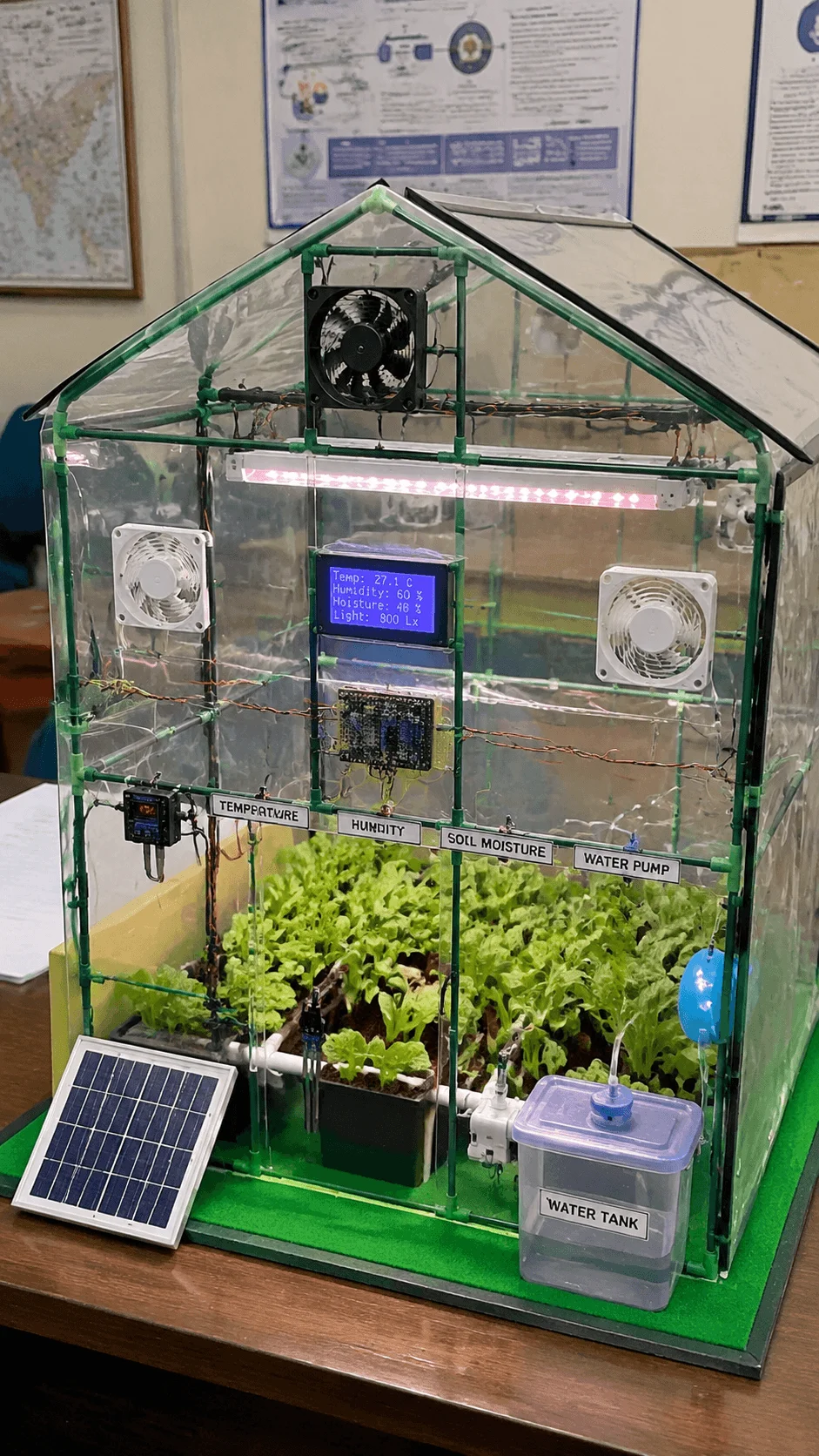
The scientific concept combines environmental monitoring, automation, and plant biology. Crops grow best within specific temperature and humidity ranges. By maintaining these ideal conditions, climate smart greenhouses help plants develop faster while reducing stress caused by sudden weather changes.
Many farmers now invest in climate controlled greenhouses because unpredictable weather continues affecting traditional agriculture. Controlled environments reduce crop losses, improve food quality, and use water more efficiently than open field farming. Renewable energy sources such as solar panels can further improve sustainability by powering greenhouse equipment.
Students who present this project demonstrate how technology helps agriculture adapt to climate change while protecting valuable food supplies. It encourages discussions about innovation, environmental responsibility, and the future of sustainable farming.
Smart Pest Detection Using AI Camera
A precision agriculture project based on artificial intelligence demonstrates how farmers can identify pests early without applying unnecessary pesticides across entire fields. Traditional pest control often depends on routine chemical spraying, even when only small sections of farmland require treatment. Artificial intelligence changes this approach by analyzing images captured by cameras and detecting signs of insects or plant diseases before major damage occurs.
Students can build a model that includes miniature crop fields, small cameras, printed images representing crop monitoring, and a computer display showing how artificial intelligence identifies unhealthy plants. Although the system may remain a demonstration model, it clearly explains how image recognition technology supports sustainable agriculture.
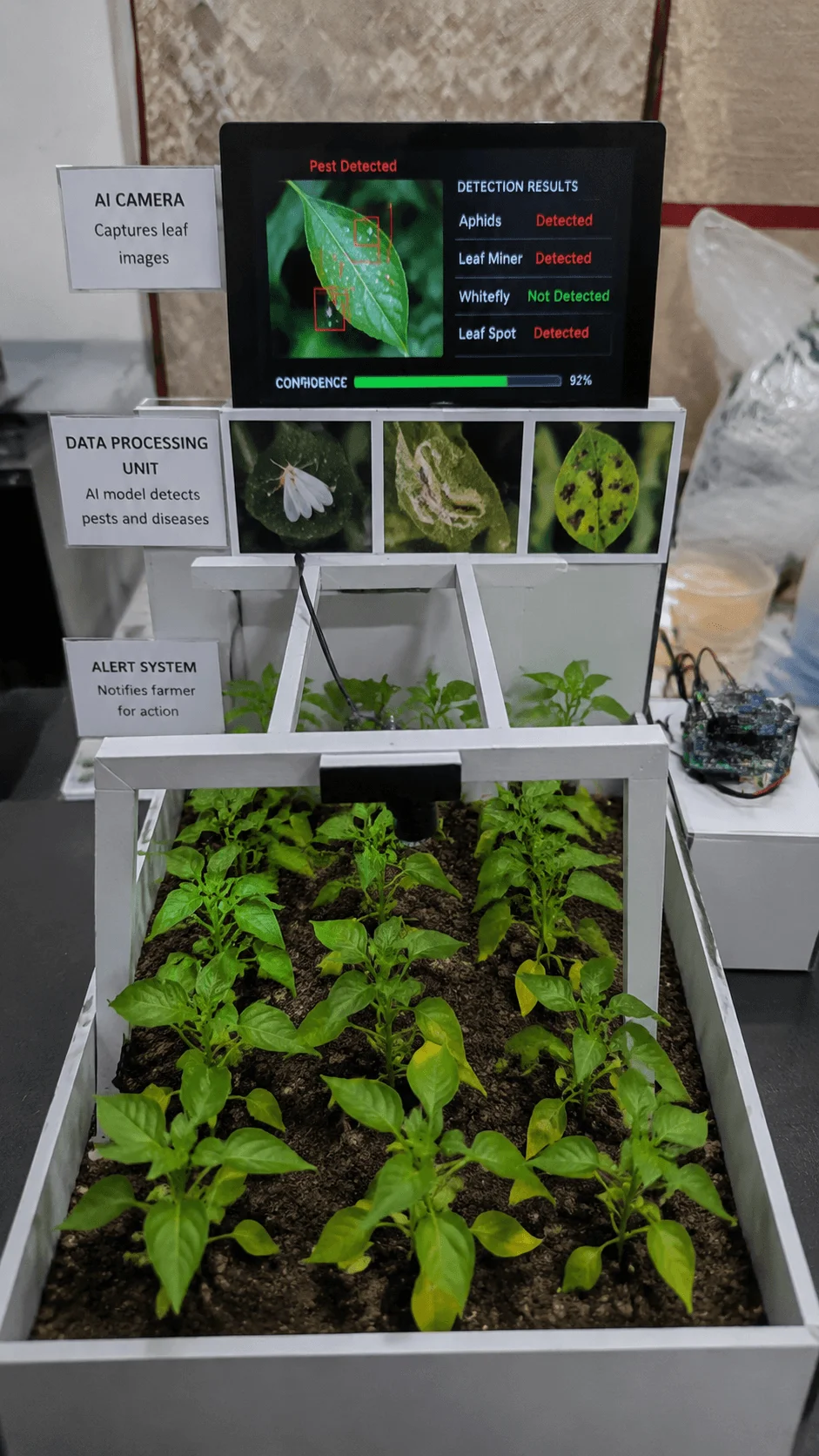
The scientific principle combines computer vision, machine learning, and agricultural science. Artificial intelligence compares thousands of plant images to recognize disease symptoms and insect damage with remarkable accuracy. Farmers receive early warnings and treat only the affected areas, reducing chemical use and protecting beneficial insects.
This technology improves crop health while lowering production costs and reducing environmental pollution. Consumers also benefit because crops receive fewer unnecessary pesticide applications.
As one of the newest agriculture innovation project ideas, smart pest detection introduces students to advanced technology that is rapidly transforming agriculture. It demonstrates how artificial intelligence helps create healthier farms while supporting sustainable food production for the future.
Carbon Farming Project
A carbon farming project introduces students to one of the newest approaches in sustainable agriculture by demonstrating how farms can remove carbon dioxide from the atmosphere and store it safely in the soil. Most people think of farms only as places where food is produced, but healthy farmland can also play an important role in reducing climate change. Farmers achieve this by growing cover crops, planting trees around fields, reducing unnecessary soil disturbance, and adding natural organic matter that improves soil quality over time.
Students can create a model showing two sections of farmland. One section can represent conventional farming, while the other illustrates carbon farming techniques with cover crops, compost, and tree planting. This comparison helps visitors understand how different farming practices affect soil health and carbon storage.
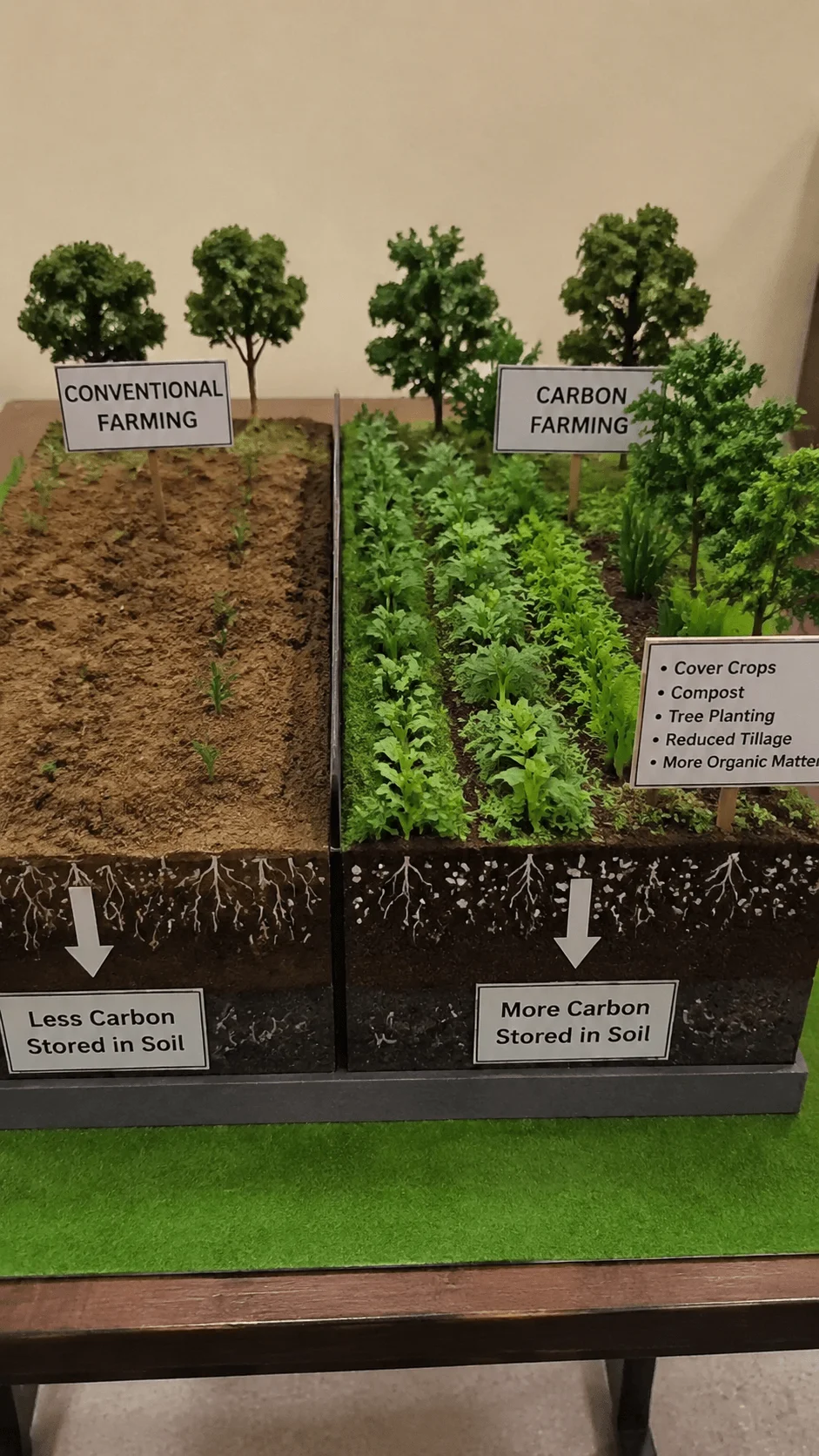
The scientific concept focuses on the natural carbon cycle. Plants absorb carbon dioxide during photosynthesis and transfer part of that carbon into their roots and the surrounding soil. Healthy soils rich in organic matter can store carbon for many years while supporting stronger plant growth. Scientists consider this one of the most promising ways agriculture can contribute to climate action.
Carbon farming also improves water retention, reduces soil erosion, increases biodiversity, and supports long term productivity. Farmers benefit from healthier fields that remain productive even during difficult weather conditions.
This project helps students understand that sustainable agriculture is not only about growing food but also about protecting the environment. It demonstrates how simple farming practices can create long lasting environmental benefits while supporting future food production.
Biochar Project for Students
A biochar project for students explains how agricultural waste can become a valuable resource instead of being discarded. Farmers often produce leftover crop materials after harvesting. Instead of burning this waste, which releases pollution into the atmosphere, it can be converted into biochar through a controlled heating process with very little oxygen. The resulting material becomes a natural soil conditioner that improves fertility and stores carbon.
Students can build a model showing agricultural waste entering a small biochar production unit before being mixed into farmland. The display can also compare ordinary soil with biochar enriched soil to illustrate improvements in plant growth and water retention.
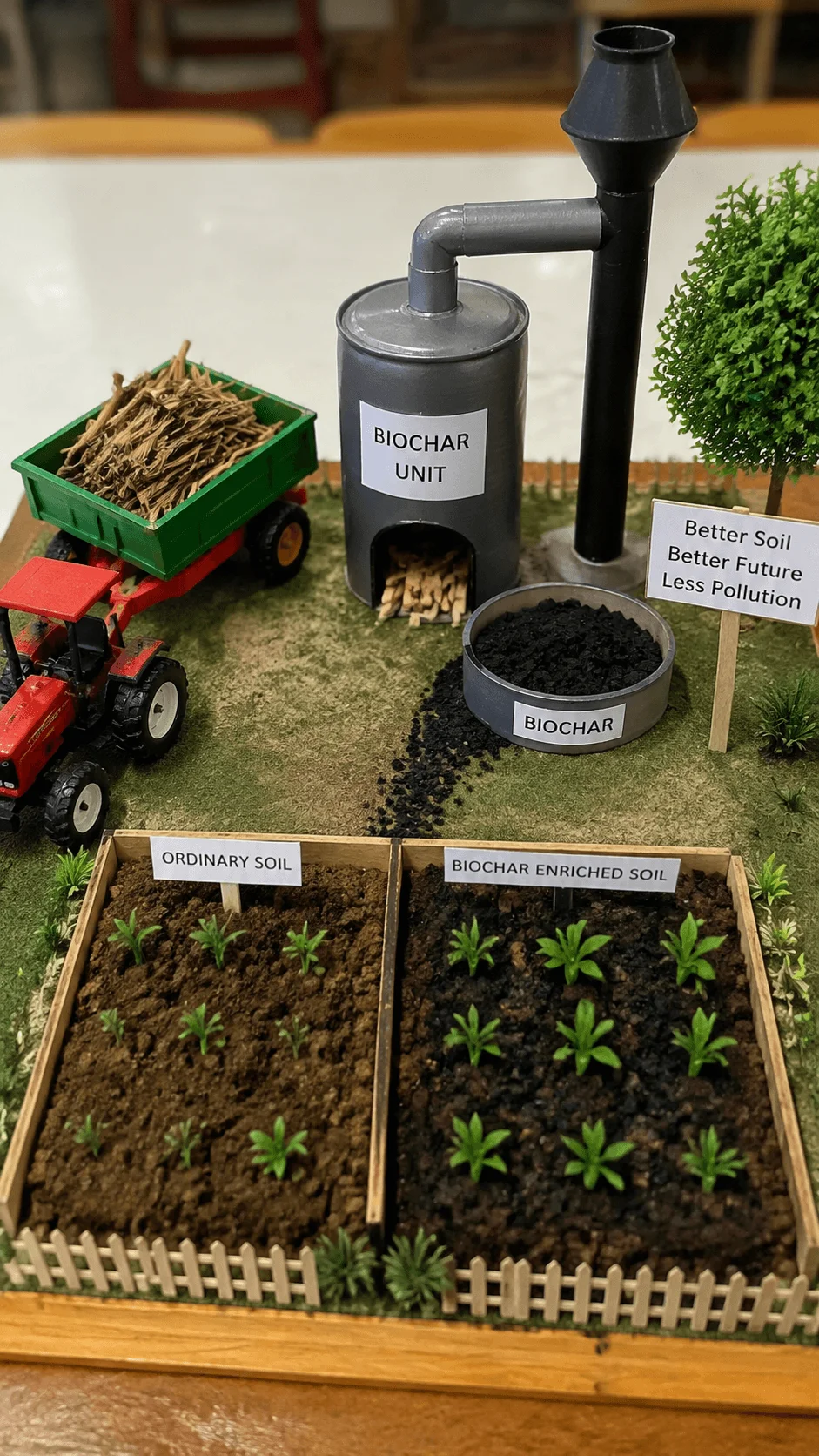
The science behind biochar combines chemistry, environmental science, and soil biology. Biochar contains tiny pores that hold water, nutrients, and beneficial microorganisms. These properties improve soil structure and help plants absorb nutrients more efficiently.
Many researchers believe biochar will become increasingly important as farmers search for sustainable alternatives to chemical fertilizers. It also supports waste management by transforming unused agricultural materials into a useful product instead of creating pollution.
Visitors learn that scientific innovation often involves finding better uses for resources that would otherwise become waste. This project highlights the importance of recycling natural materials while improving soil health and supporting environmentally friendly farming practices.
Circular Agriculture Model
A sustainable farming exhibition model based on circular agriculture demonstrates how every resource on a farm can serve multiple purposes instead of becoming waste. Traditional farming often follows a simple pattern where resources enter the farm and waste leaves the system. Circular agriculture creates a continuous cycle in which leftover materials become valuable inputs for other farming activities.
Students can design a model that connects crops, livestock, composting, rainwater collection, and renewable energy into one integrated system. Crop residues become compost, compost nourishes the soil, healthy soil produces better crops, animal waste generates biogas, and renewable energy powers irrigation equipment. Every part of the model works together to reduce waste while improving efficiency.
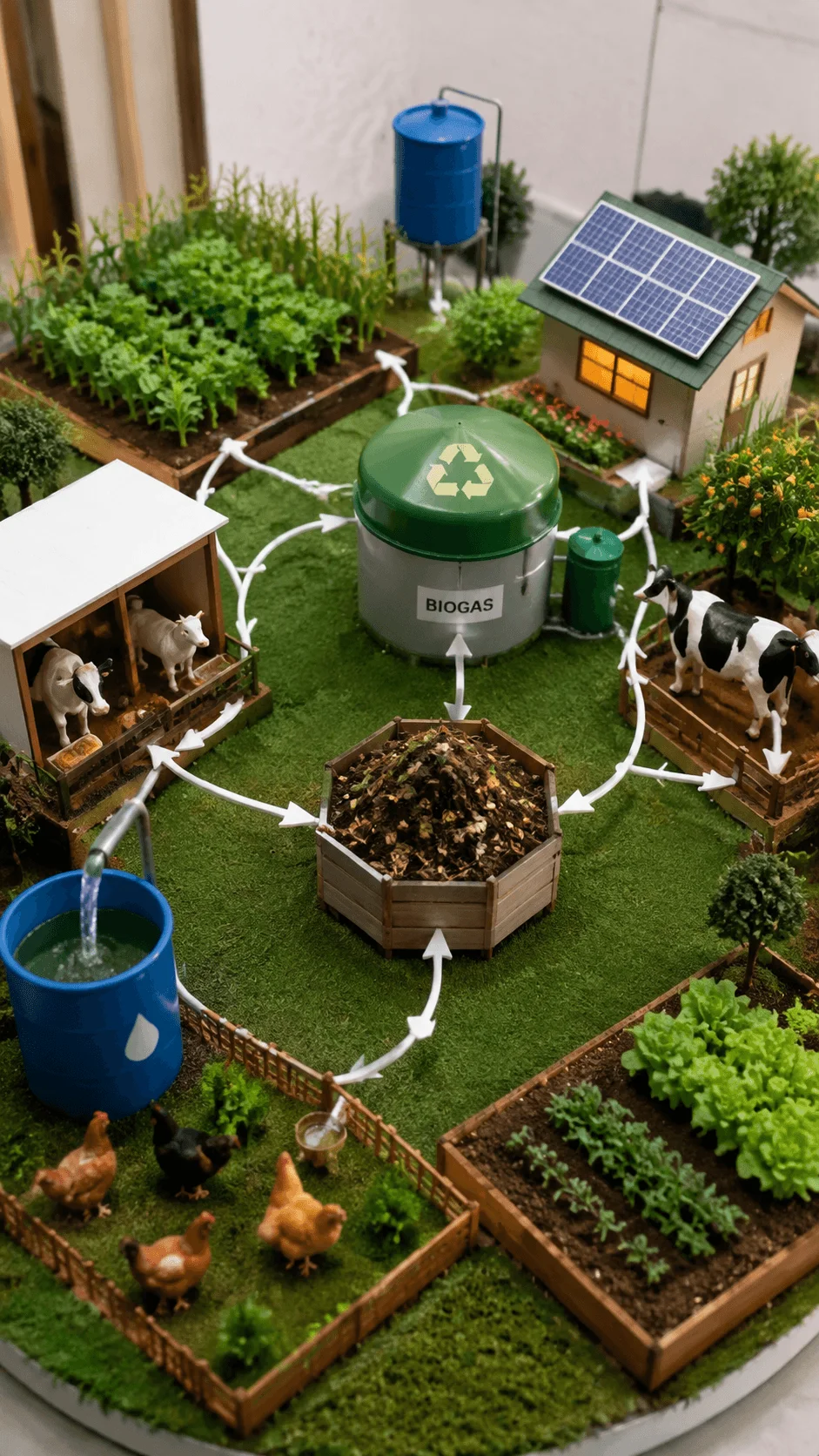
The scientific principle focuses on nutrient cycling and resource conservation. Natural ecosystems rarely waste resources because materials constantly move through different biological processes. Circular agriculture applies the same principle to farming by keeping nutrients and energy within the agricultural system.
This approach reduces pollution, lowers production costs, conserves natural resources, and creates healthier farming environments. Farmers become less dependent on expensive external inputs because many valuable resources already exist within their own farms.
Students presenting this model demonstrate that sustainability involves designing systems where every component supports another. Visitors leave with a better understanding of how thoughtful planning can create productive farms that protect the environment while producing healthy food.
Precision Agriculture Using Drones
A precision agriculture project featuring drones introduces students to one of the fastest growing technologies in modern farming. Drones equipped with cameras and sensors allow farmers to observe large fields from above, collect detailed information, and make better management decisions without walking through every part of the farm.
Students can create a model using a miniature drone suspended above a small farm layout. Different field sections can represent healthy crops, dry areas, or pest affected plants. Information collected by the drone can be displayed on a printed map to show how farmers identify problems quickly.
The scientific concept combines aerial imaging, remote sensing, geographic mapping, and data analysis. Special cameras detect differences in plant health that may not be visible to the human eye. Farmers use this information to apply water, fertilizers, or pest treatments only where they are actually needed.
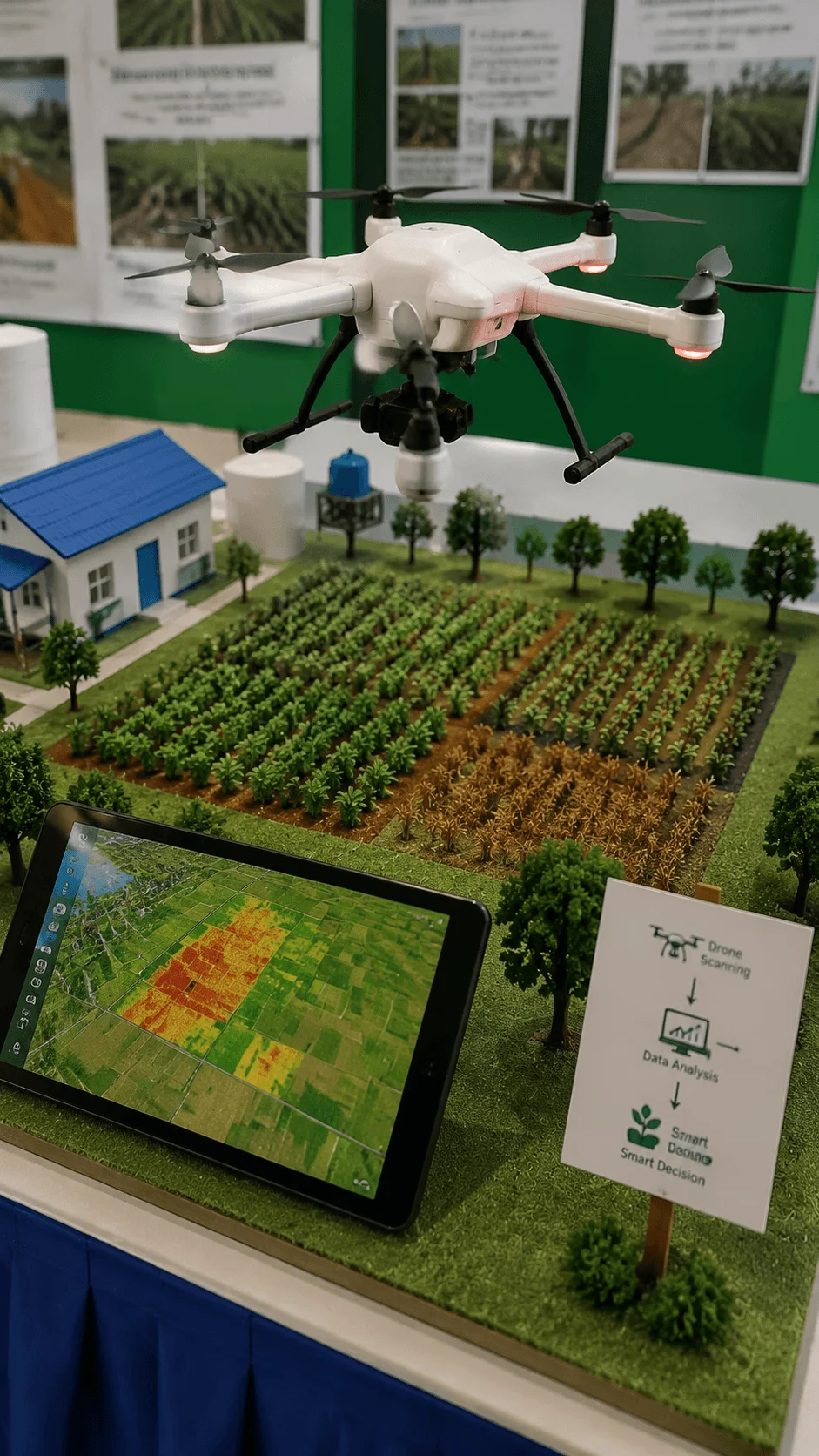
Precision agriculture saves time, reduces unnecessary chemical use, lowers operating costs, and improves crop production. It also protects nearby ecosystems by preventing excessive fertilizer and pesticide applications.
This project demonstrates how technology helps farmers make accurate decisions based on scientific data instead of guesswork. It gives students an opportunity to explore engineering, environmental science, and agriculture while showcasing one of the most advanced farming innovations available today.
Renewable Energy Smart Farm
A renewable energy agriculture project shows how clean energy can power modern farms while reducing dependence on fossil fuels. Agriculture requires electricity for irrigation pumps, lighting, ventilation systems, storage facilities, and many other operations. Renewable energy provides a sustainable solution by generating electricity directly on the farm.
Students can build a model that combines solar panels, small wind turbines, irrigation systems, battery storage, and crop fields. The display can demonstrate how renewable energy powers water pumps during the day and stores excess electricity for later use.
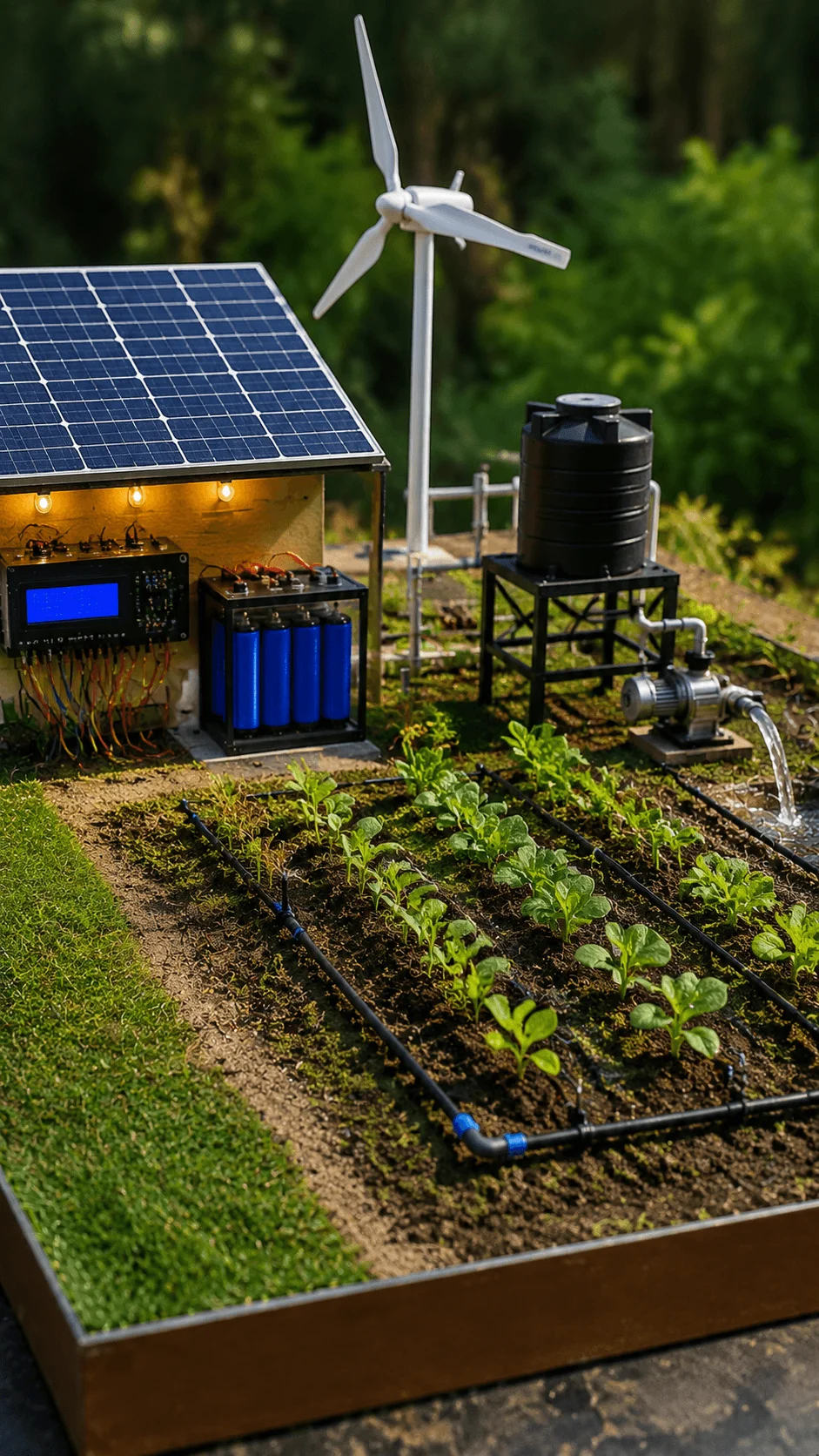
The scientific principle involves converting natural energy sources into usable electricity. Solar panels capture sunlight while wind turbines convert moving air into electrical energy. Together they create a reliable energy system that reduces greenhouse gas emissions and operating expenses.
Renewable energy has become increasingly important because it lowers long term farming costs while helping countries reduce carbon emissions. Many farms around the world now combine clean energy with automated irrigation and climate monitoring systems to improve overall efficiency.
Visitors quickly understand how renewable energy supports both agriculture and environmental conservation. This project highlights the growing connection between sustainable farming and clean energy technologies while encouraging students to think creatively about future agricultural solutions.
Regenerative Agriculture Model
A regenerative agriculture model demonstrates how farming can actively improve the environment instead of simply reducing environmental damage. While sustainable agriculture focuses on protecting existing resources, regenerative agriculture goes one step further by restoring soil health, increasing biodiversity, and rebuilding natural ecosystems through carefully planned farming practices.
Students can prepare a comparison model showing two farms. One side represents land that has experienced years of intensive farming, while the other illustrates regenerative practices such as compost application, crop rotation, cover crops, and tree planting. This visual comparison allows visitors to observe healthier soil, stronger plants, and more diverse ecosystems.
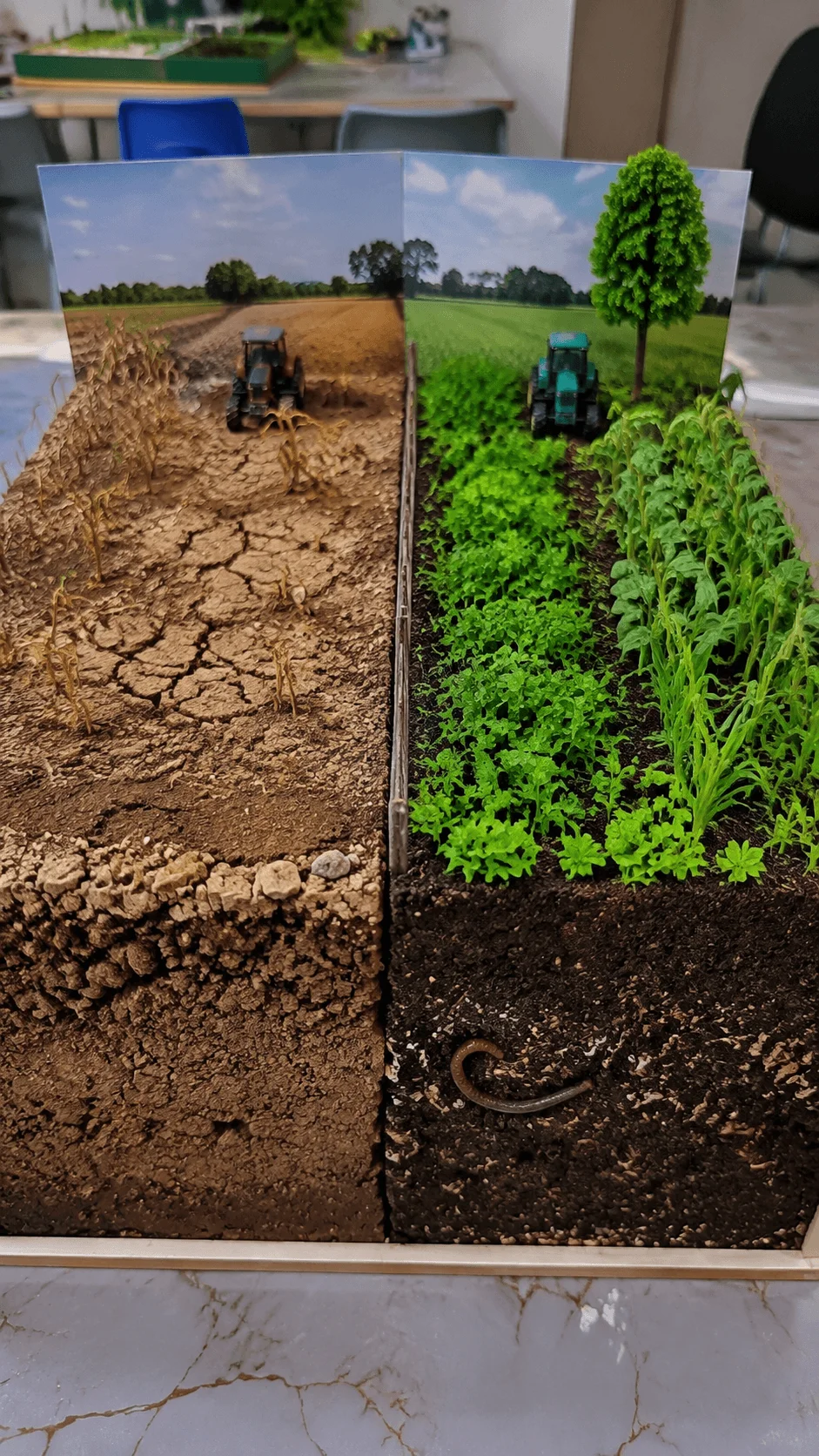
The scientific concept emphasizes soil biology and ecosystem restoration. Healthy soils contain billions of microorganisms that recycle nutrients, improve water retention, and support vigorous plant growth. Regenerative farming encourages these natural biological processes rather than depending heavily on synthetic chemicals.
Farmers adopting regenerative methods often experience improved soil fertility, reduced erosion, greater resistance to drought, and healthier crop production over time. Wildlife also benefits because farms become more balanced ecosystems that support insects, birds, and beneficial organisms.
This project inspires students to think about agriculture as a partnership with nature rather than a system that only extracts resources. It demonstrates how scientific knowledge can restore damaged environments while ensuring reliable food production for future generations.
How to Choose the Best Sustainable Agriculture Science Exhibition Project
Choosing the right science exhibition projects sustainable agriculture topic depends on several important factors. Students should first consider their grade level and select a project that matches their scientific understanding. A simple working model can be just as effective as a complex design when it clearly explains an important concept and demonstrates careful planning.
Available materials and budget also play an important role. Many excellent sustainable agriculture working model ideas can be created using recycled cardboard, plastic bottles, small motors, sensors, or inexpensive electronic components. Creativity often makes a stronger impression than expensive materials because judges appreciate original thinking and practical problem solving.
Students should also choose a topic that genuinely interests them. Working on an exciting idea makes research, model building, and presentation much more enjoyable. Whether someone enjoys renewable energy, artificial intelligence, plant science, or environmental conservation, there is a sustainable farming project for school that matches those interests.
Presentation quality is another important factor. A successful exhibition project does more than display a model. Students should clearly explain the scientific principles, describe the real world applications, and show how their project contributes to sustainable agriculture. Speaking confidently and answering questions thoughtfully often leaves a lasting impression on judges and visitors.
Finally, students should focus on innovation. Modern sustainable agriculture science exhibition ideas that address real environmental challenges often stand out because they demonstrate how science can improve farming and protect natural resources at the same time.
Conclusion
Science Exhibition Projects Sustainable Agriculture give students an opportunity to explore how science, technology, and environmental responsibility can work together to solve some of the world’s biggest agricultural challenges. From artificial intelligence and precision farming to renewable energy and regenerative agriculture, these innovative projects demonstrate that the future of farming depends on smart solutions that increase food production while protecting water, soil, biodiversity, and the climate.
Each project discussed in this article introduces a modern agricultural technology that is already making a difference in many parts of the world. Beyond creating attractive exhibition models, students develop problem solving skills, scientific curiosity, and a deeper understanding of how innovation supports sustainable development. They also learn that agriculture continues to evolve through research, engineering, and creative thinking.
As schools place greater emphasis on environmental education and practical learning, science exhibition projects sustainable agriculture will continue to inspire young innovators to think beyond traditional farming methods. Every model, experiment, and presentation represents an opportunity to explore ideas that can shape a healthier planet and a more secure food system. By choosing meaningful projects and presenting them with confidence, students not only create impressive science exhibition displays but also contribute to a future where agriculture becomes more productive, resilient, and environmentally sustainable.