Sustainability Activities for Kids Printable Worksheets for Fun Eco Learning
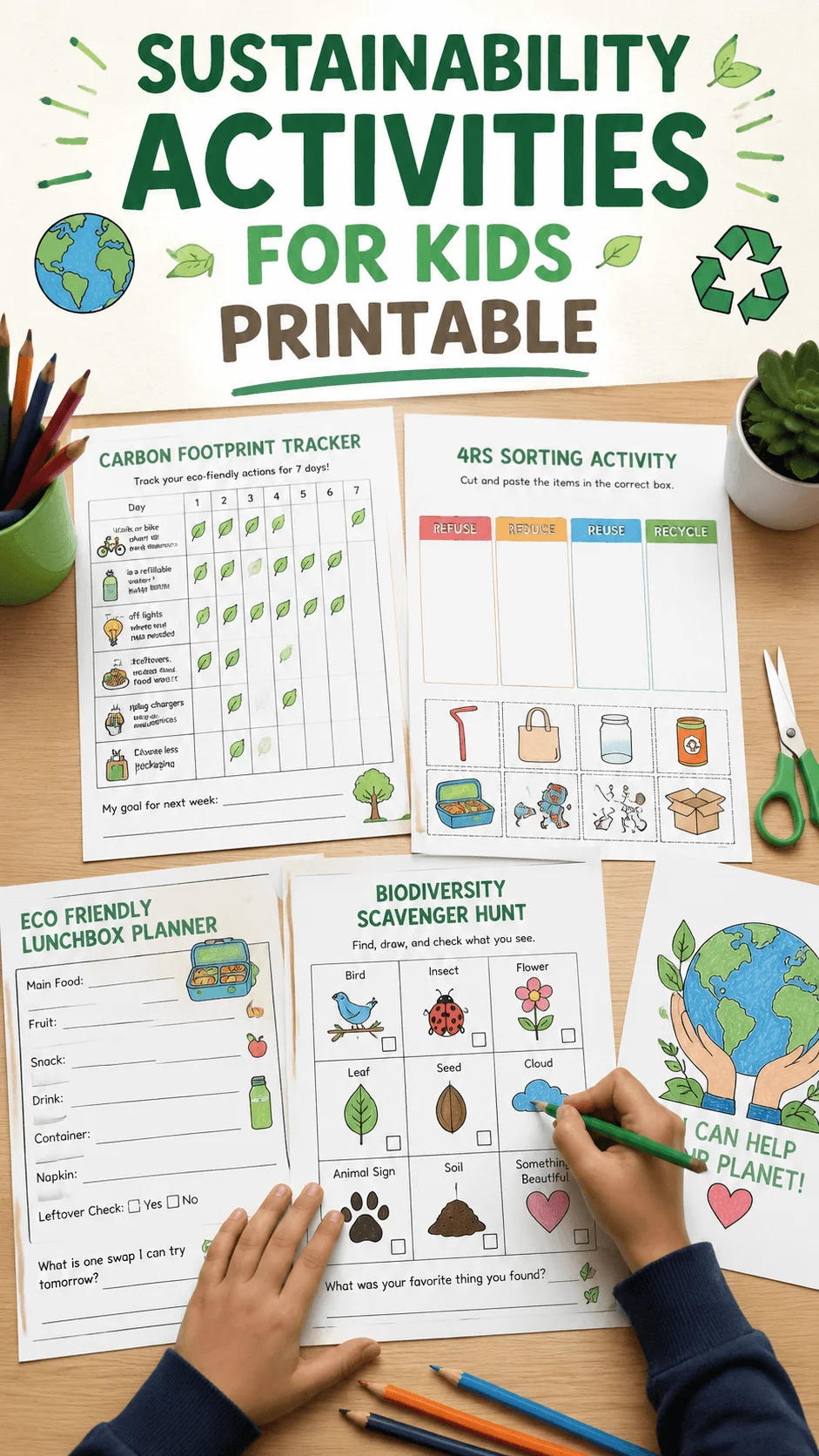
Sustainability activities for kids printable resources help children learn green habits through simple pages they can color, track, sort, draw, and complete. Parents, teachers, and homeschoolers can use these printables to explain recycling, saving water, reducing plastic, composting, and protecting nature clearly. Instead of only telling children to care for the planet, printable activities invite them to take action and see progress.
Why Sustainability Activities for Kids Printable Pages Work
Sustainability activities for kids printable pages work well because children learn faster when they do something with their hands. A worksheet can turn a big topic into a simple task. A child can tick a box after switching off a light, circle better lunchbox choices, draw insects found in the garden, or sort waste into the right group. These actions make eco learning visible.
Printable sustainability activities for kids also help adults teach with less stress. A teacher can use one page during a science lesson. A parent can place a tracker on the fridge. A homeschooler can build a nature unit with worksheets, coloring pages, and reflection prompts. Good printables also create discussion about rubbish, water, food waste, and reuse.
Carbon Footprint Worksheet for Kids Printable Tracker
A carbon footprint tracker is one of the strongest ideas for a sustainability activities for kids printable collection because climate awareness now appears in many classrooms. Children may hear the phrase carbon footprint, but they need a simple way to understand it. A printable tracker can show how daily actions affect energy use, waste, and travel choices.
The page can include a seven day chart with boxes for walking short distances, using a refillable bottle, turning off lights, eating leftovers, unplugging chargers, and choosing less packaging. Younger children can color a leaf for every action. Older children can count points and write one goal for the next week.
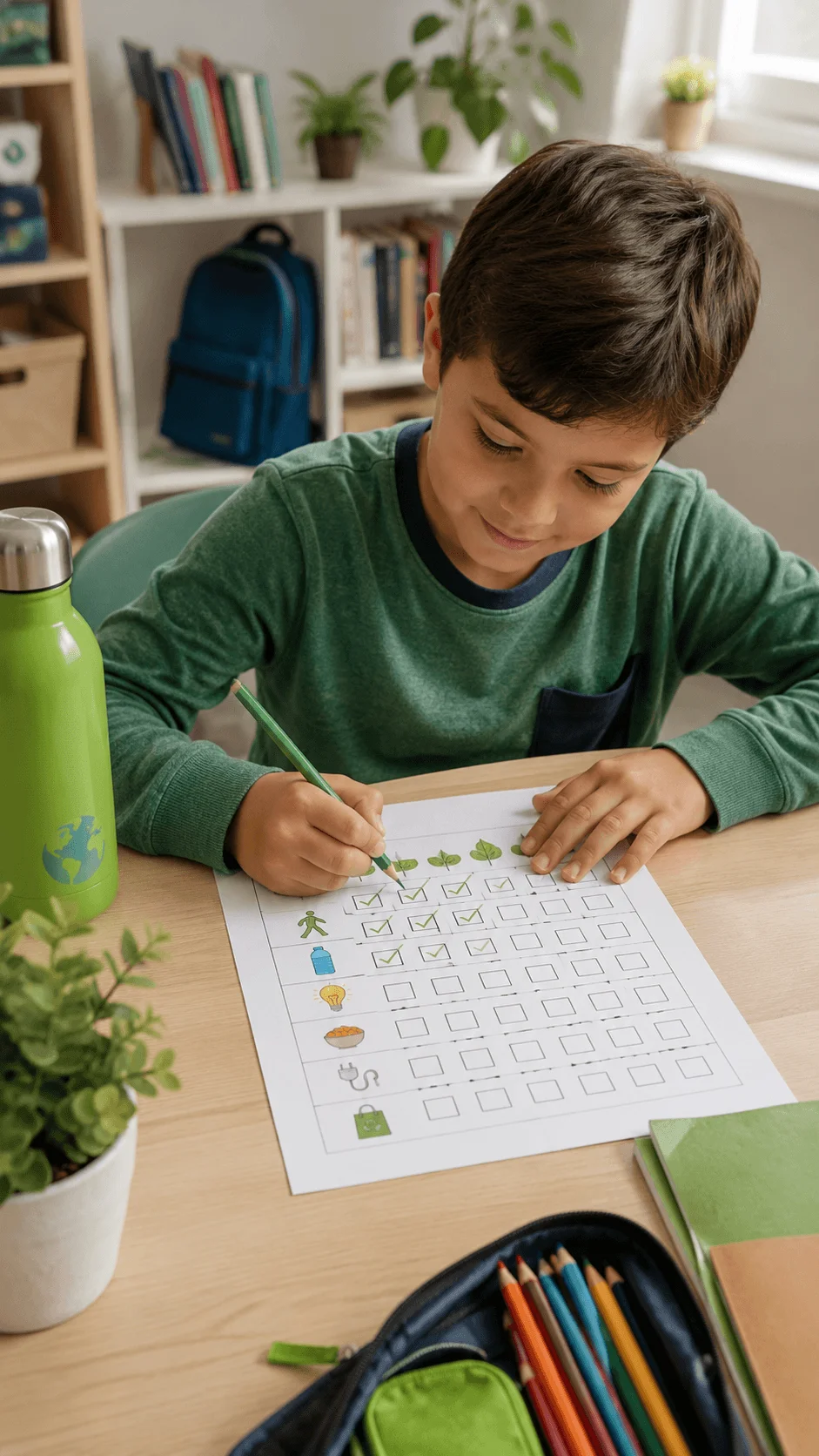
This activity suits children from age seven and above. Teachers can use it as a weekly classroom challenge, while parents can use it as an evening check in. The lesson is encouraging. Children learn to build better habits one choice at a time.
4Rs Sorting Worksheet for Eco Friendly Printable Activities for Kids
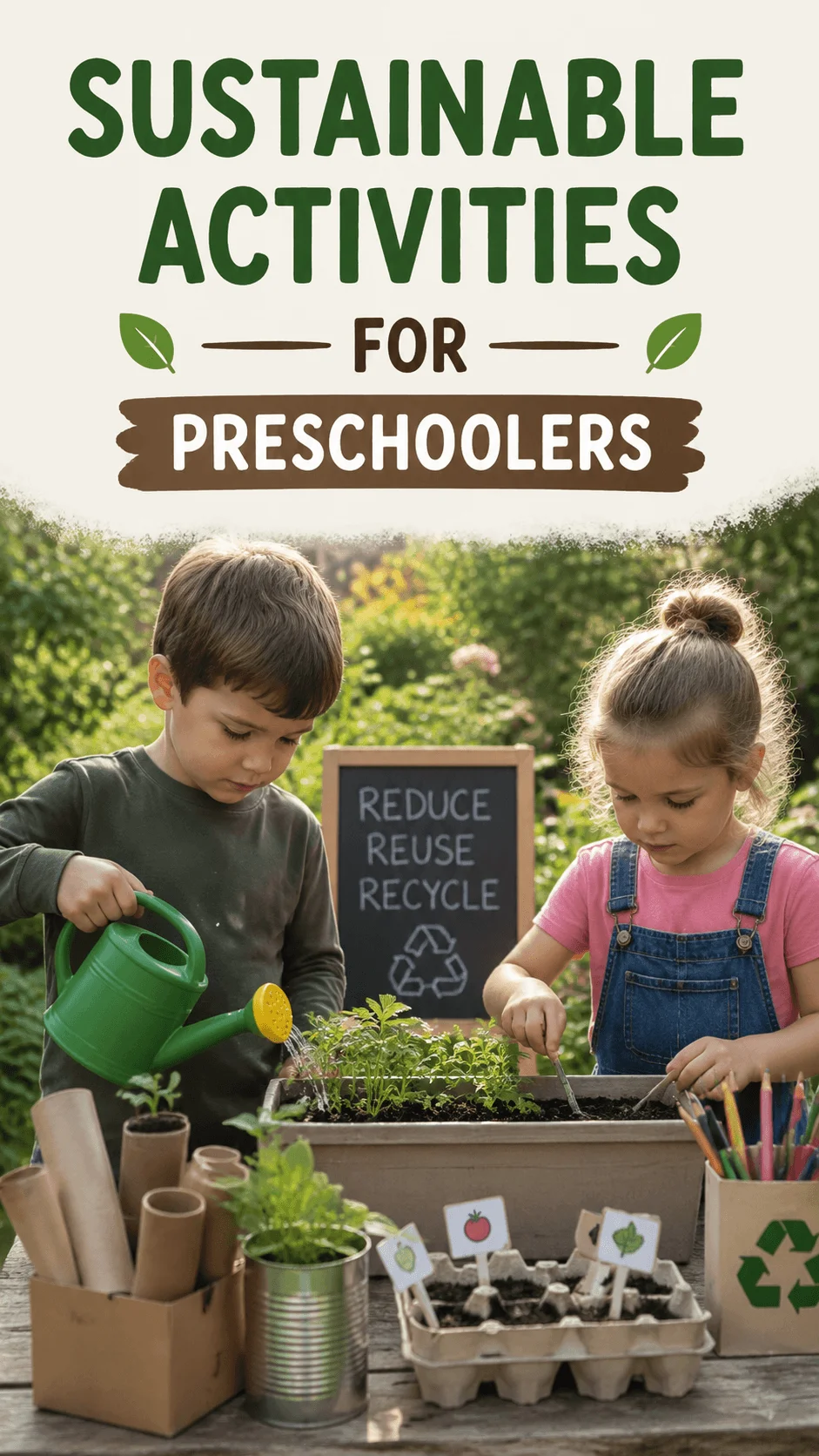
A 4Rs sorting worksheet updates the common recycling lesson by adding refuse to reduce, reuse, and recycle. Refuse means saying no to things we do not need, such as plastic straws, extra bags, and too much packaging. This idea helps children understand that the best waste choice often happens before an item becomes waste.
The printable page can show four large boxes with the words refuse, reduce, reuse, and recycle. Children can cut out pictures and place them in the correct space. The pictures can show a cloth bag, a broken toy being fixed, a reused jar, a recycled can, a plastic straw, and a lunch packed in a reusable box.
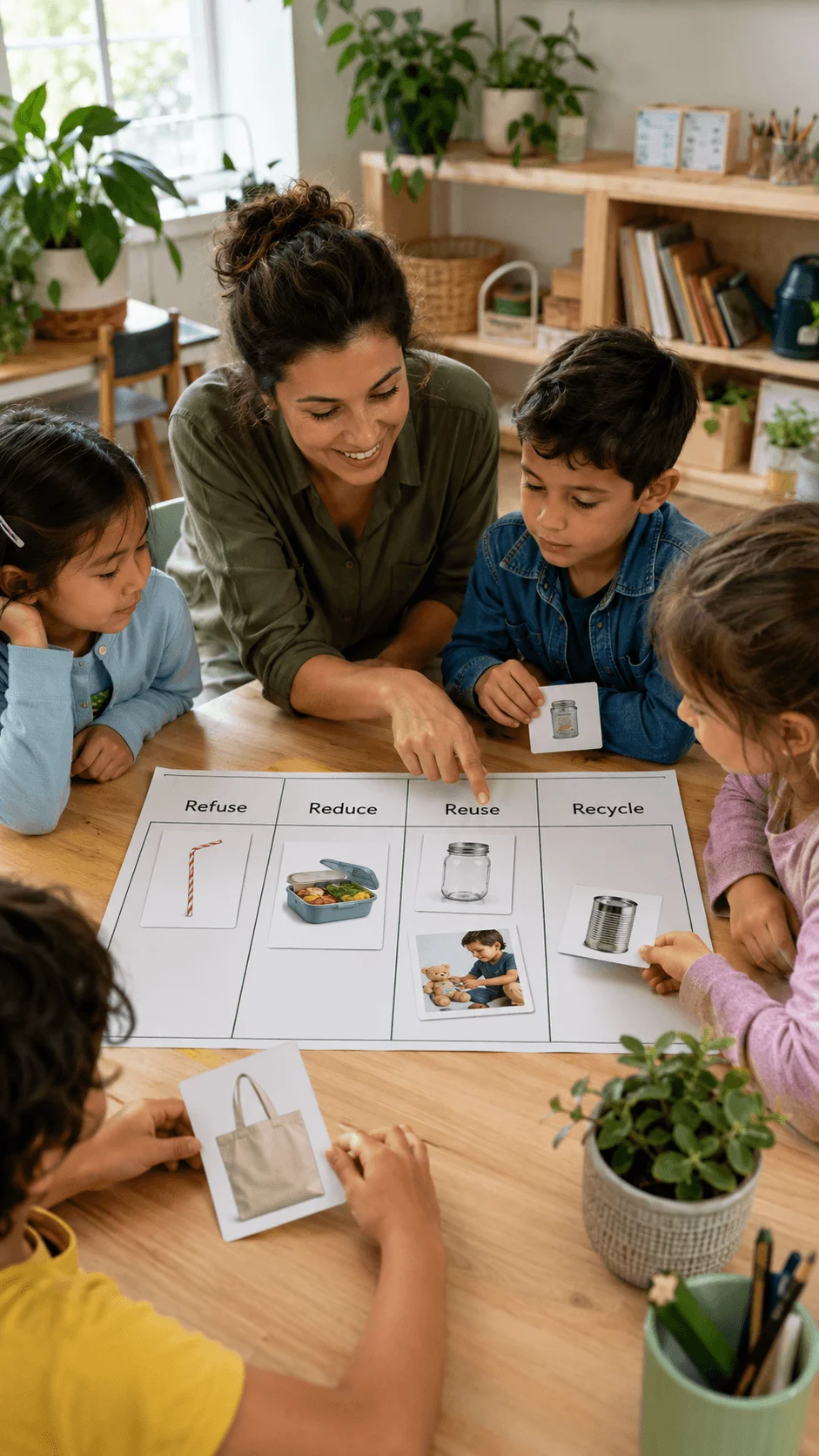
Sustainability activities for kids printable worksheets like this help elementary students think before they throw. Teachers can ask children to explain each choice. Parents can walk around the house and find real examples. The lesson shows that recycling matters, but avoiding waste matters even more.
Eco Friendly Lunchbox Planner Printable
An eco friendly lunchbox planner helps children connect sustainability with school life. Lunch often creates wrappers, plastic bottles, disposable spoons, food scraps, and packaging waste. A printable planner gives kids control over these choices in a friendly way.
The page can include spaces for main food, fruit, snack, drink, container, napkin, and leftover check. Children can plan lunches with reusable containers, refillable bottles, fresh fruit, and fewer single use wrappers. A small reflection question can ask what swap they can try tomorrow.
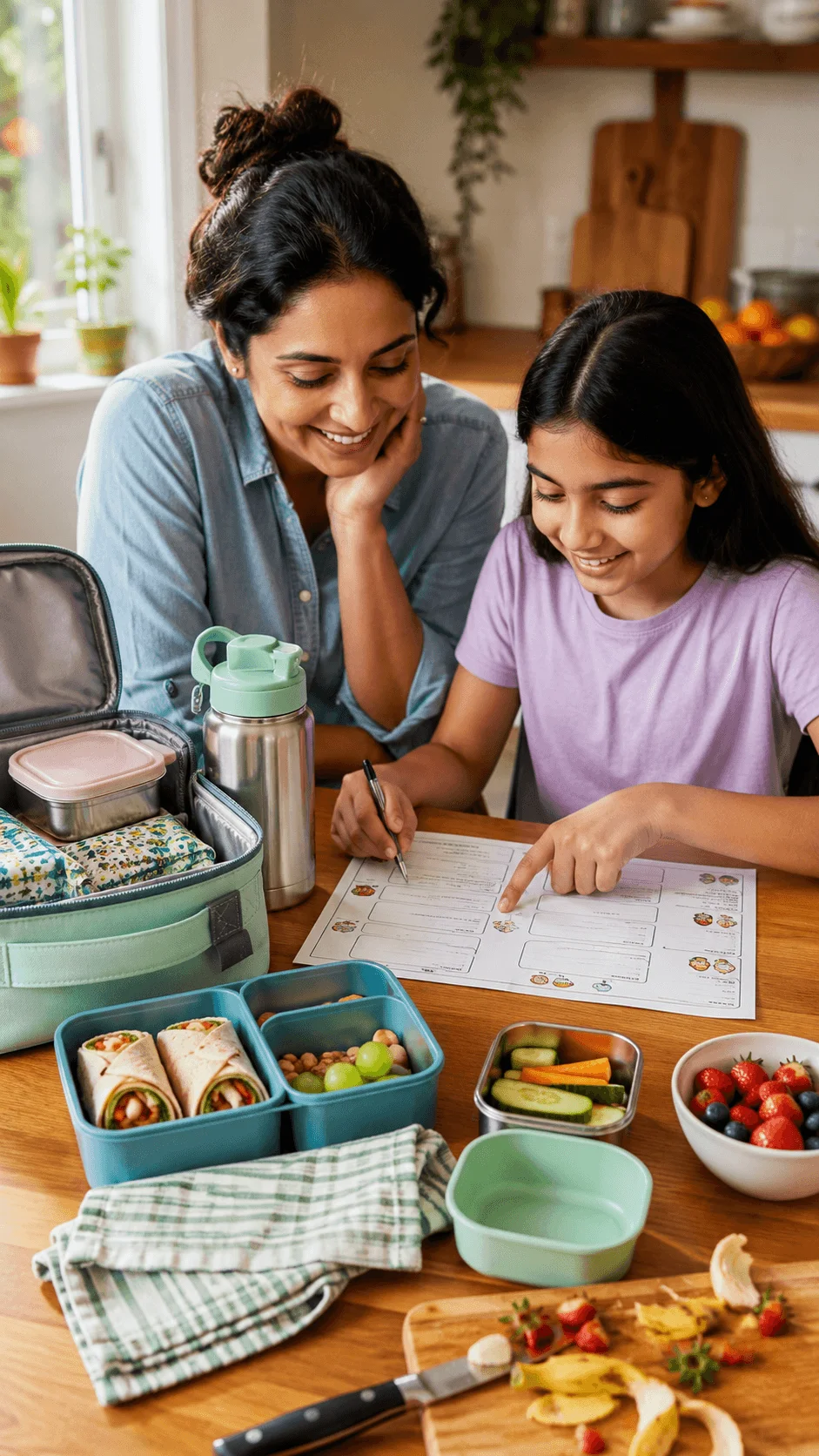
This printable works well for ages six to twelve. Teachers can use it before a waste free lunch day. Parents can use it while preparing school meals. The activity shows that sustainability also starts inside their lunchbox.
Biodiversity Scavenger Hunt Printable for Outdoor Learning
A biodiversity scavenger hunt printable brings children outside and helps them notice the living world. Many children spend too much time indoors, so nature observation feels fresh and exciting. This activity asks them to look closely at birds, insects, flowers, leaves, seeds, soil, clouds, and animal signs.
The printable can include picture boxes, check marks, drawing spaces, and simple questions. Children can draw one leaf, count insects, describe a flower color, or write what sound a bird made. Older children can answer why each living thing matters.
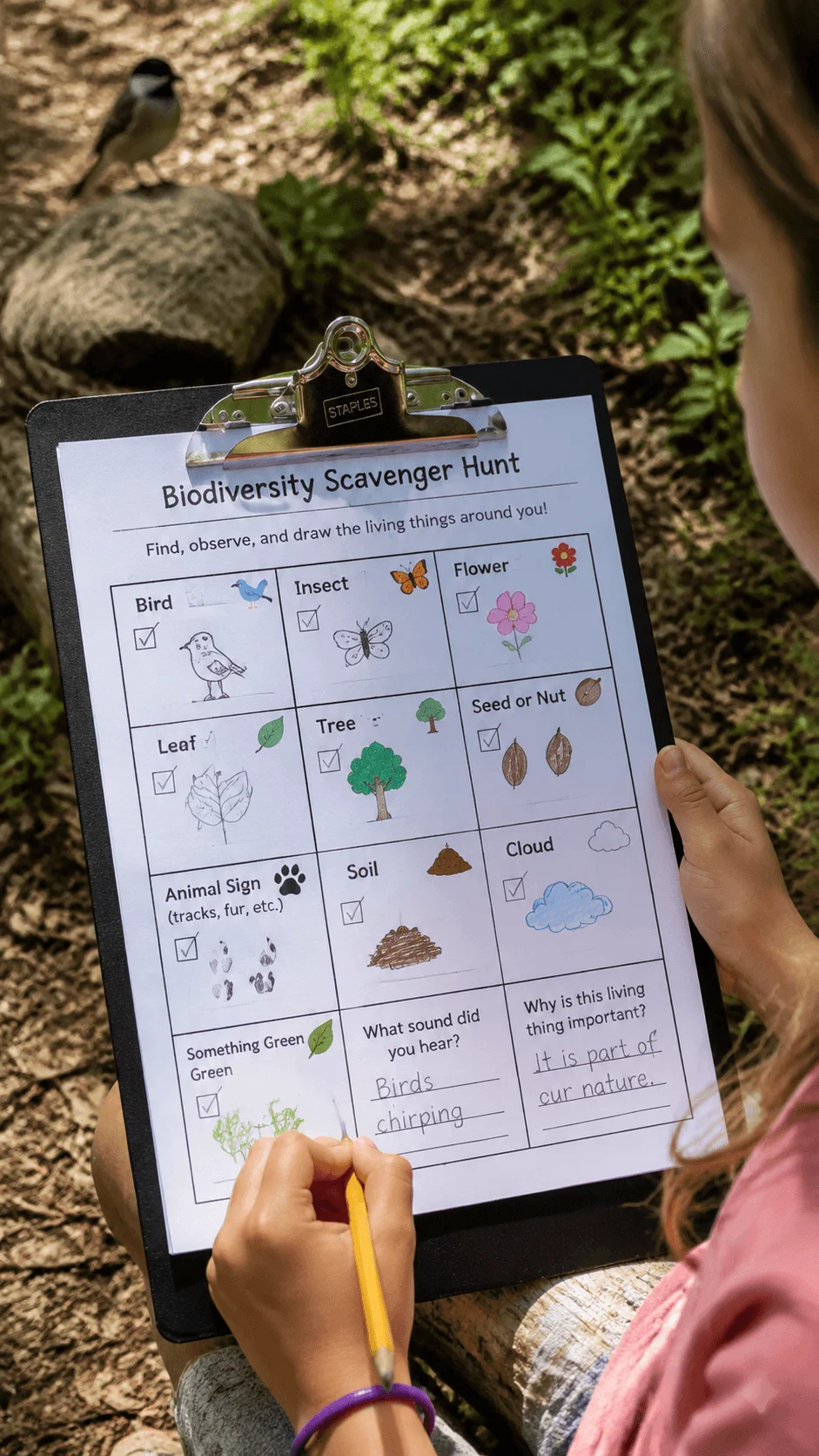
Sustainability activities for kids printable pages with outdoor tasks help children build care for nature. They can use this worksheet in a garden, park, schoolyard, or yard. The main lesson is connection. Children see that plants, insects, soil, birds, and people share one environment.
Recycled Material Design Challenge Worksheet
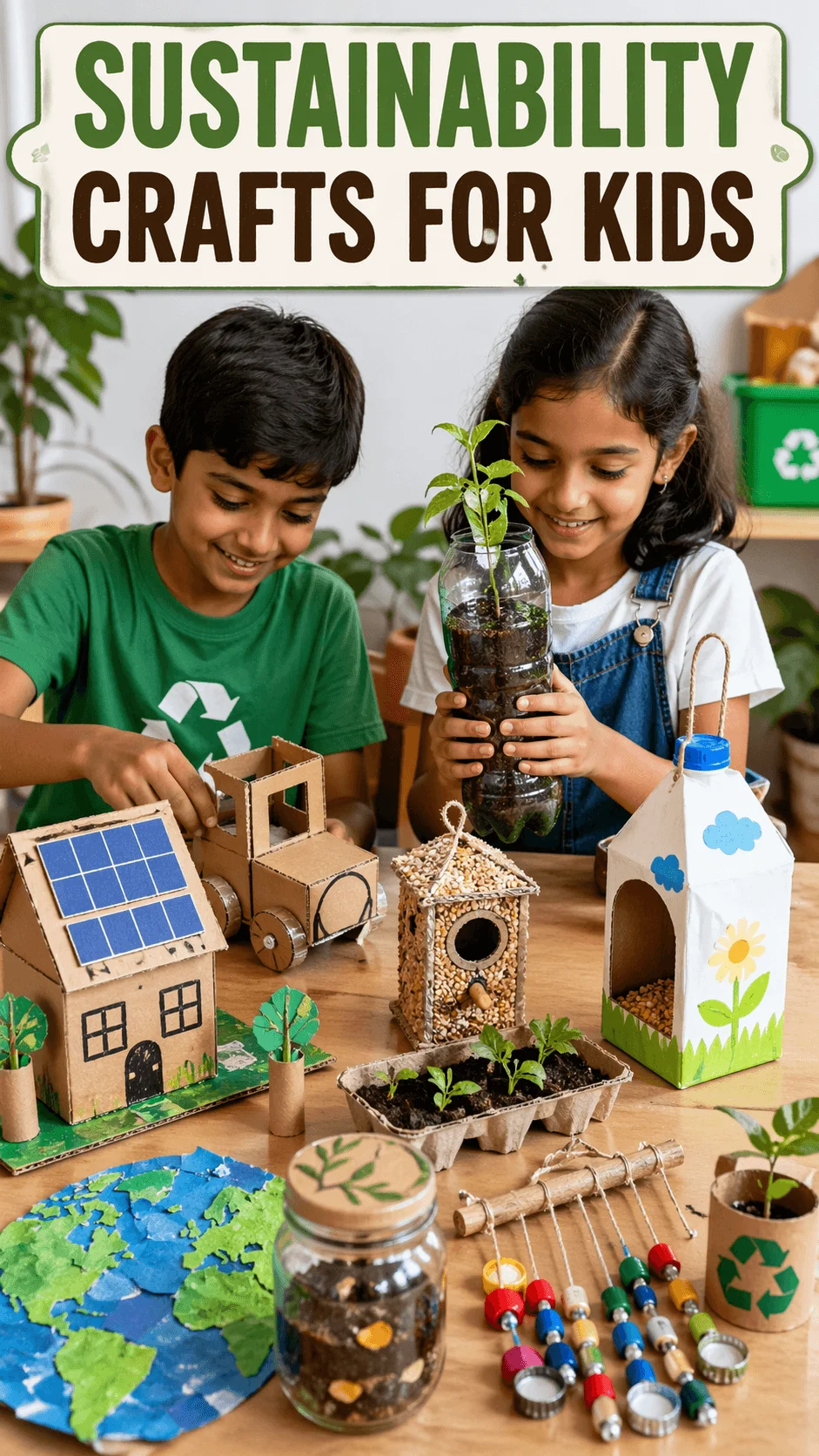
A recycled material design challenge turns waste into creative problem solving. Instead of only telling kids to recycle, this activity asks them to design something useful from old materials. They can make a pencil holder from a jar, a bird feeder from a carton, a toy robot from boxes, or a plant pot from a container.
The printable page can include a problem box, materials list, sketch area, building steps, testing notes, and final reflection. Children can write what they used, what they changed, and how their design reduces waste. The sketch area helps them plan before they build.
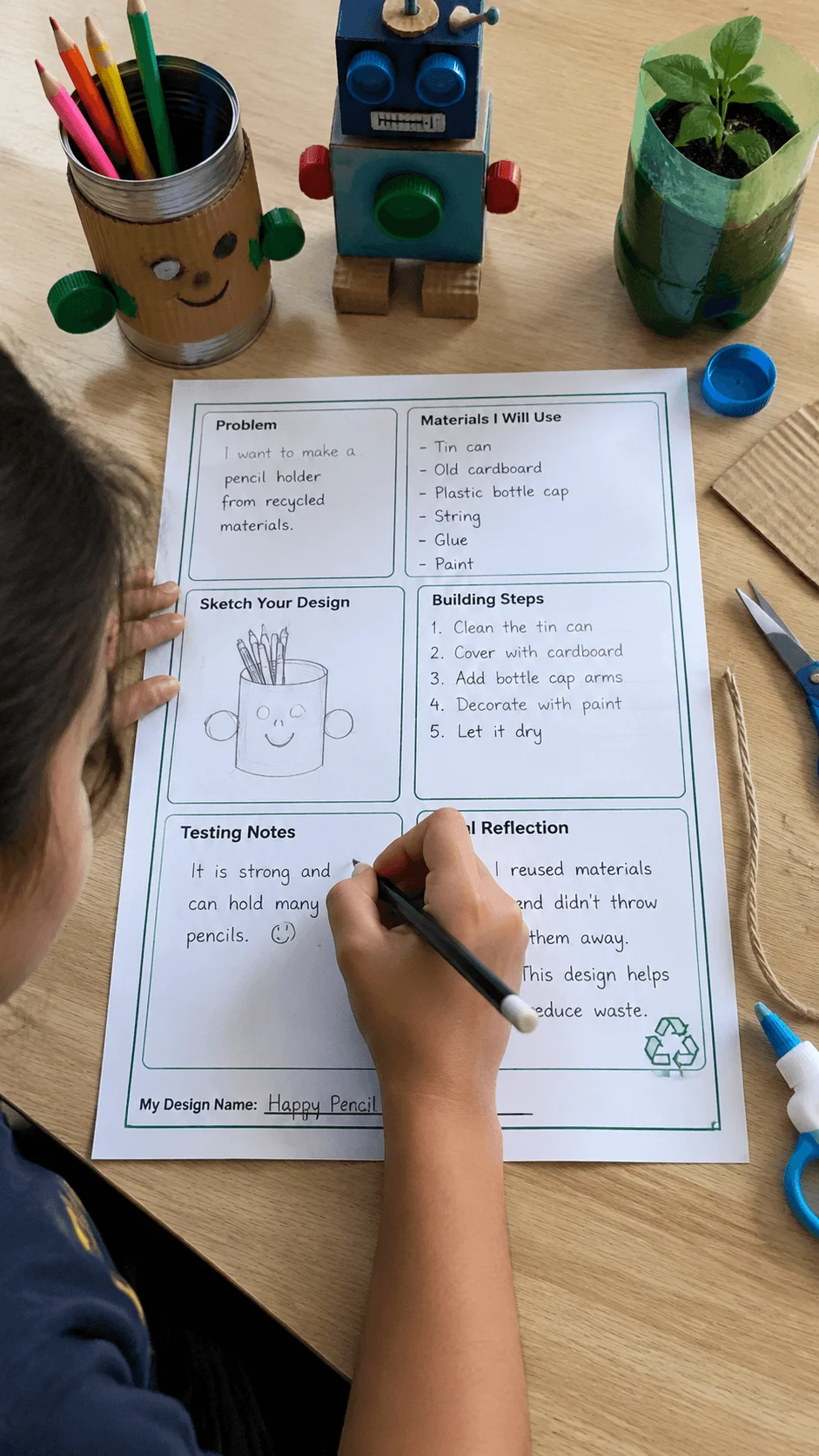
This idea suits ages seven to fourteen. Teachers can use it for STEM, art, or science lessons. Parents can use it for weekend craft time. This design sheet teaches reuse, creativity, patience, and responsible consumption.
Water Saving Worksheet for Kids Detective Mission
A water saving worksheet for kids becomes more exciting when children become water detectives. They can inspect the home or classroom and look for waste. This mission helps them understand that clean water deserves care.
The printable can include a checklist for dripping taps, running taps while brushing, long showers, half full bottles, and garden watering habits. It can also include a space for three water saving promises. A badge area at the bottom can say that the child completed the water detective mission.
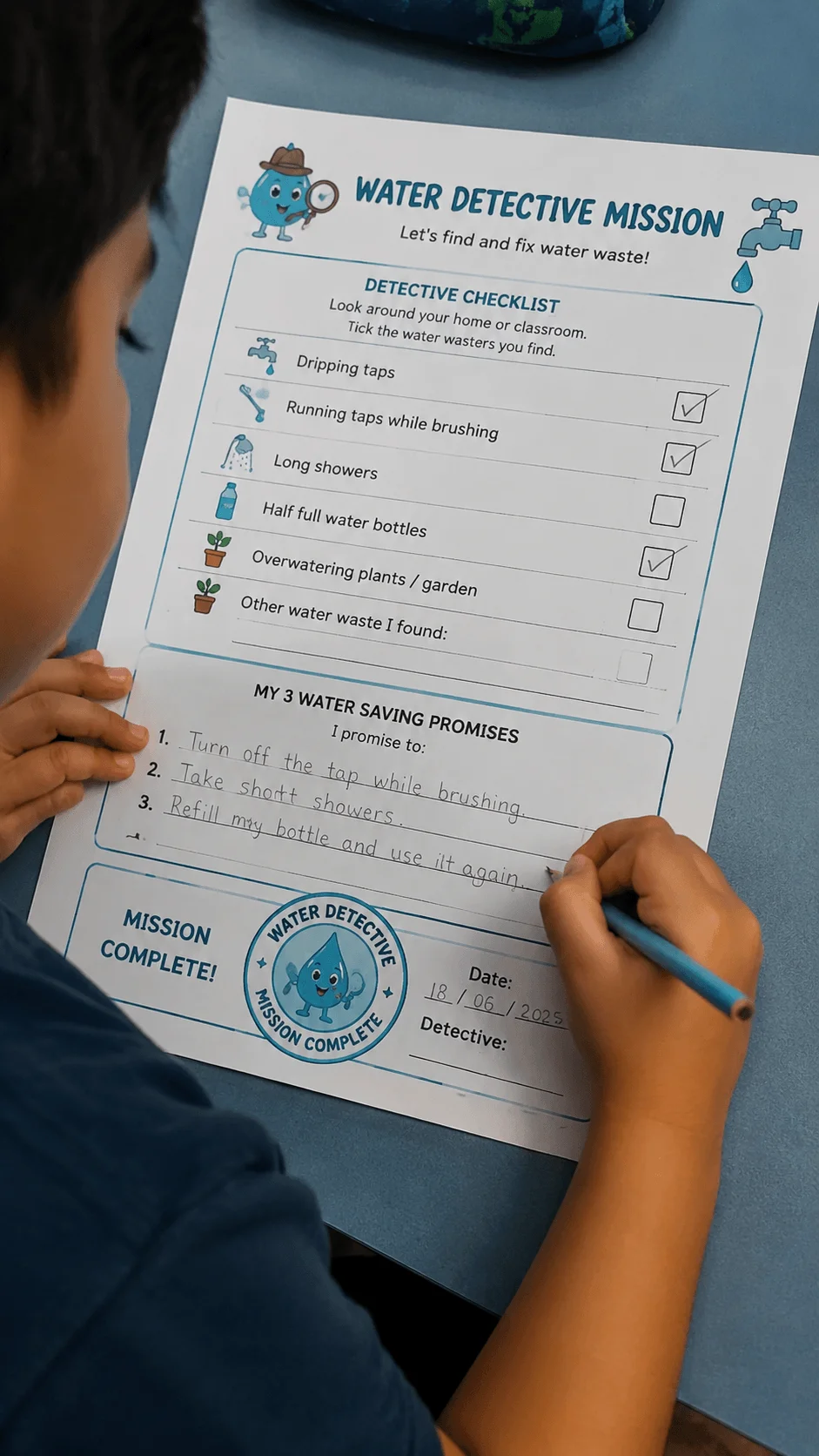
Younger children can complete the page with an adult, while older children can create a short family or classroom action plan. This sustainability activities for kids printable idea teaches observation and responsibility. It also helps children see that saving water can start with closing taps, using bottles wisely, and reminding others with kindness.
Energy Saving Room Audit Worksheet
An energy saving room audit worksheet helps children find hidden energy waste. Kids can walk around a room and check lights, fans, chargers, screens, air conditioners, and lamps. The activity feels practical because it connects energy conservation to objects children use every day.
The printable page can include a room name, a check table, a section for energy wasters, and a section for better habits. Children can write actions such as switch off lights, unplug chargers, close curtains on hot days, or use daylight when possible. A weekly score box can help them repeat the habit.
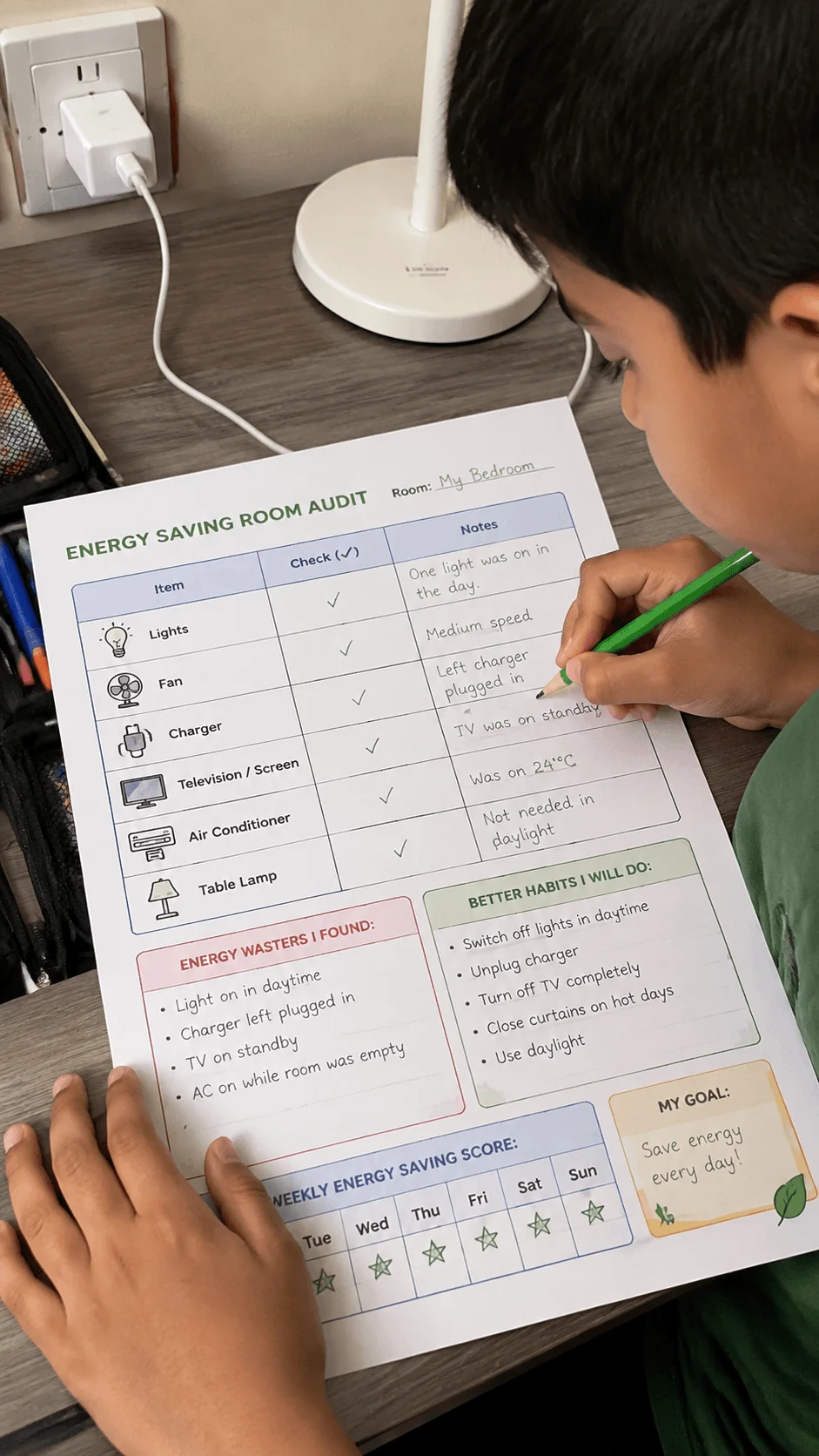
This worksheet helps children understand that power comes from resources. When they save energy, they protect those resources. Teachers can divide the class into teams and assign rooms. Parents can use the sheet in bedrooms and living areas.
Food Waste Worksheet for Kids With a Simple Diary
A food waste diary helps children notice what food they throw away and why it happens. This activity connects sustainability with meals, portions, shopping, and gratitude. Children do not need complex data. They only need to observe what remains on their plate.
The printable page can include rows for breakfast, lunch, dinner, and snacks. Children can write the wasted food, the reason for waste, and one better choice for next time. The worksheet can also include a drawing space for a no waste meal idea.
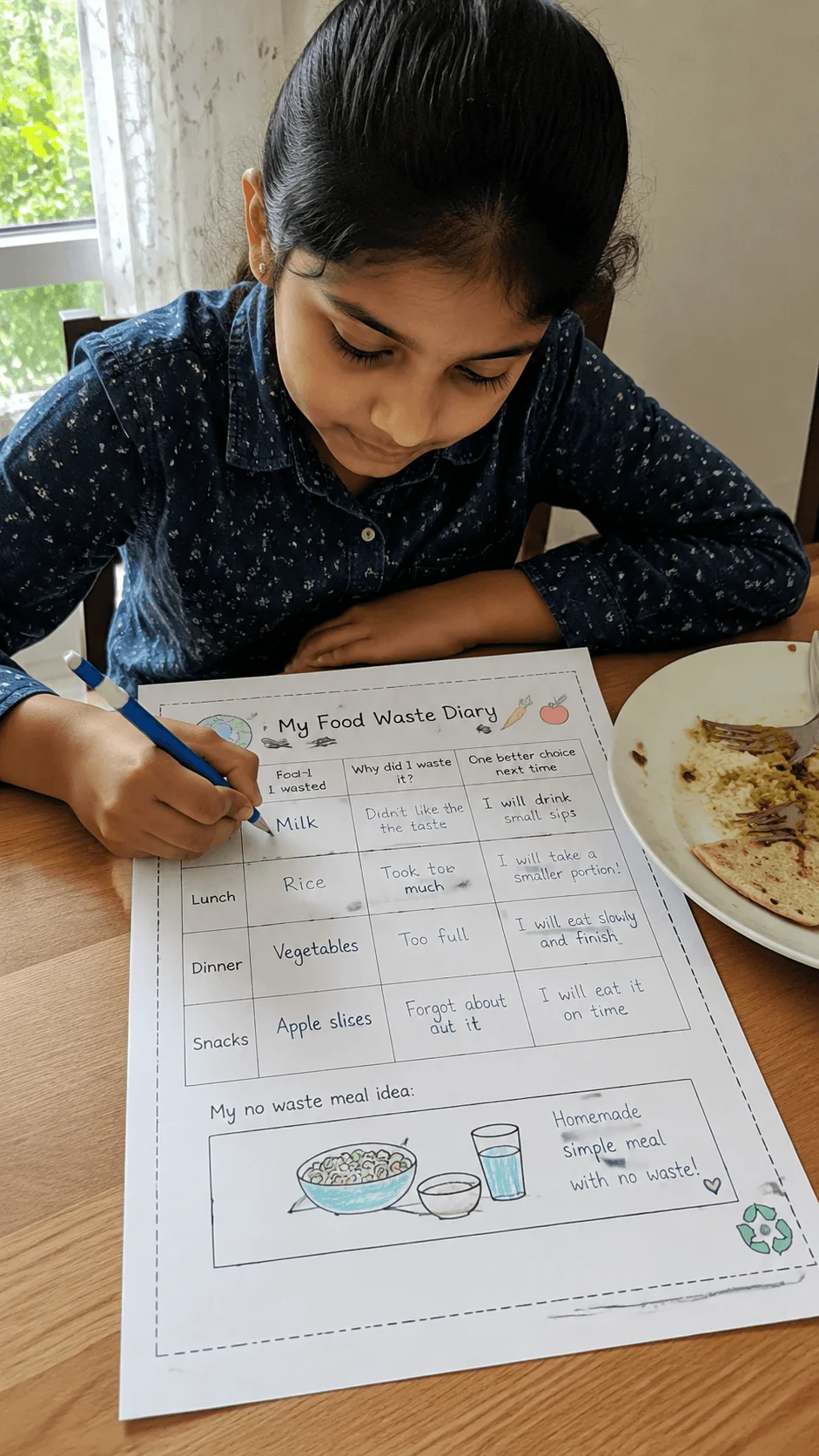
This activity works well at home and in school. Teachers can connect it to lessons about farms, transport, water, and soil. Parents can use it to encourage smaller portions and leftover use. The lesson is gentle but powerful. Wasting food also wastes the water, energy, land, and effort used to produce it.
Composting Worksheet for Kids Printable Cycle Activity
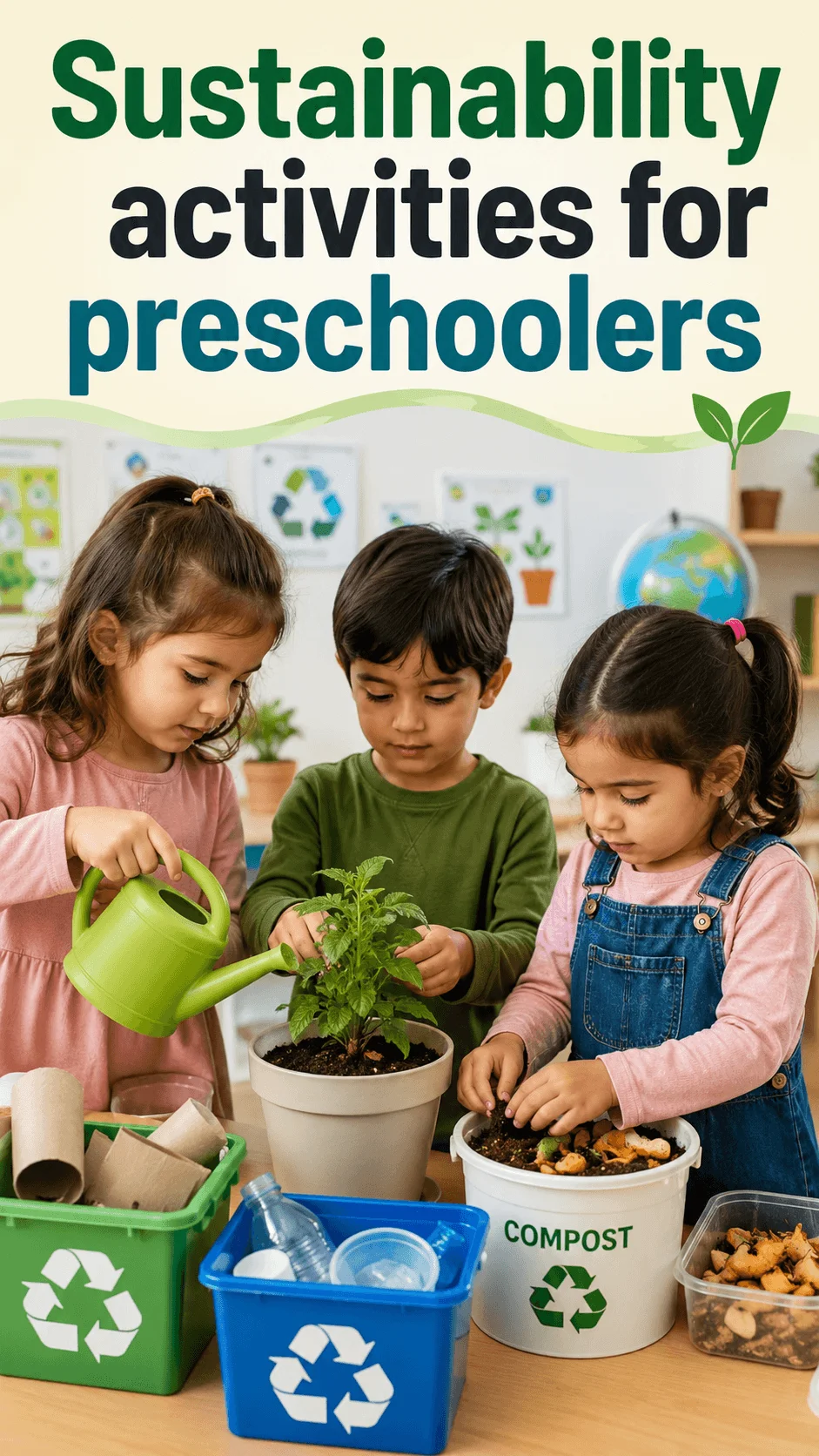
A composting worksheet for kids printable page helps children understand that some waste can return to the soil. Children often see fruit peels and vegetable scraps as rubbish, but composting shows them a natural cycle. This activity works especially well with coloring and sequencing.
The printable can include cycle cards for food scraps, compost bin, worms, rich soil, plant growth, and new food. Children can color the cards, cut them out, and place them in the correct order. Older children can add labels that explain each step.
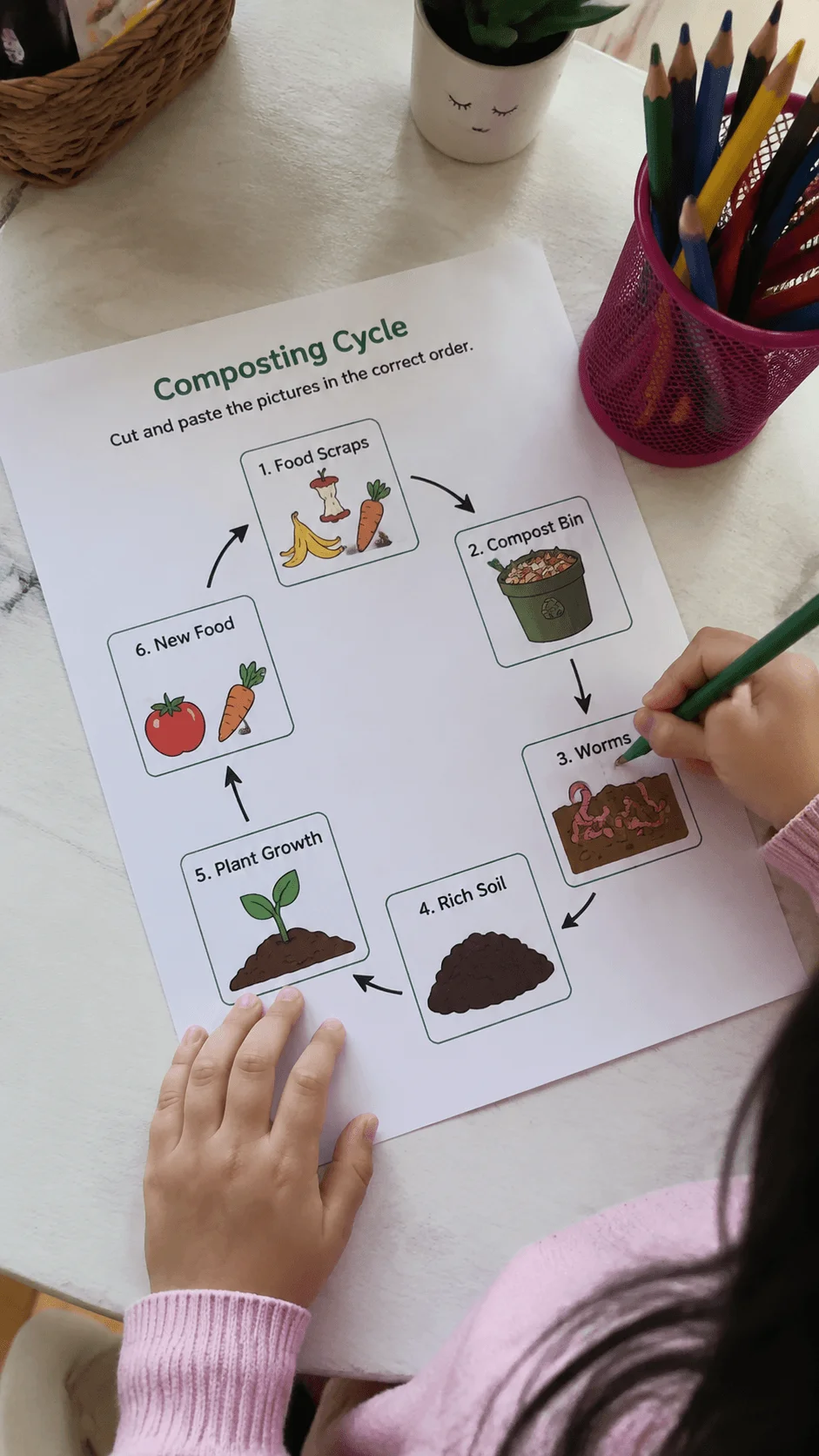
This sustainability activities for kids printable compost page suits preschool, kindergarten, and elementary students. Teachers can pair the worksheet with a garden lesson. Parents can use it before starting a small compost bin. Children learn that nature wastes little and scraps can support new life.
Plastic Free Challenge Printable for Kids
A plastic free challenge printable for kids helps families and classrooms reduce single use plastic in a positive way. Children can track how often they avoid plastic bottles, wrappers, straws, disposable bags, and plastic cutlery. The goal should feel encouraging rather than strict.
The printable page can show a seven day calendar with one plastic saving action each day. It can include swaps such as using a refillable bottle, carrying a cloth bag, choosing unpackaged fruit, reusing a container, or saying no to a straw. A reflection box can ask which swap felt easiest.
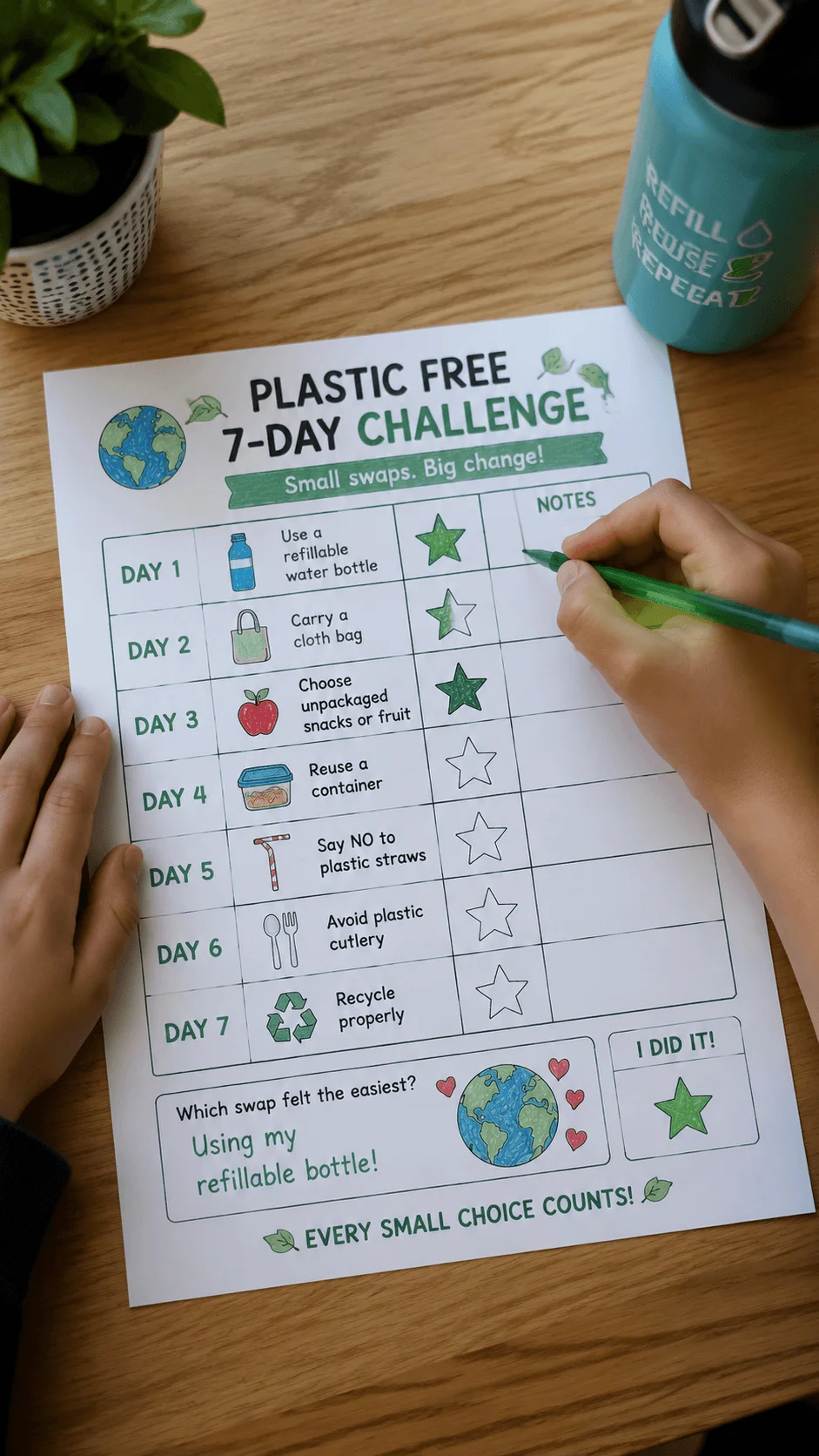
This challenge works because children enjoy completing calendars and seeing progress. Teachers can turn it into a class goal. Parents can join their children and make it a family challenge. The lesson teaches that plastic pollution begins with daily habits, and those habits can change.
Climate Feelings and Action Worksheet
Children may hear worrying news about the environment, so they need a calm way to express feelings and choose helpful actions. A climate feelings and action worksheet gives them space to think, draw, and write without fear.
The printable page can include prompts such as how I feel about the Earth, one thing I want to protect, one action I can take, and one action my family or class can take. Younger children can draw their answers. Older children can write short reflections.
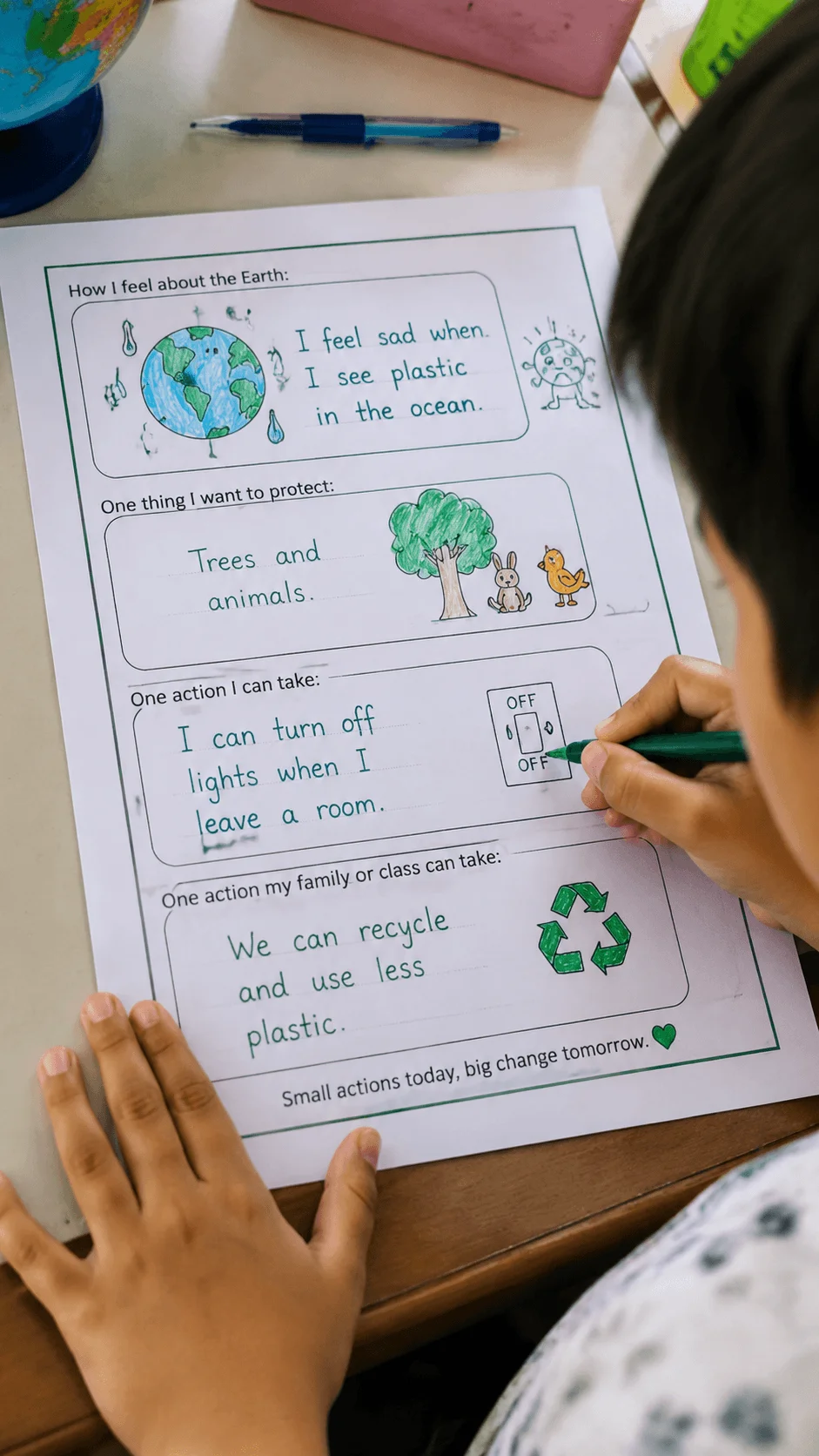
This page turns concern into hope and action. Teachers can use it after an Earth Day lesson. Parents can use it when a child asks questions about pollution or climate change. The activity reminds children that caring for the planet can feel serious, but it can also feel empowering.
Eco Badge and Certificate Printable Pack
An eco badge and certificate pack adds motivation to sustainability learning. Children enjoy recognition, and badges help them remember their eco roles. A printable pack can include water saver, recycling helper, energy hero, compost champion, lunchbox planner, and nature protector badges.
The page can include badge shapes for coloring, name spaces, and a completion certificate. Teachers can award badges after each activity. Parents can place certificates on a wall or fridge. Children can also design their own badge and explain what it means.
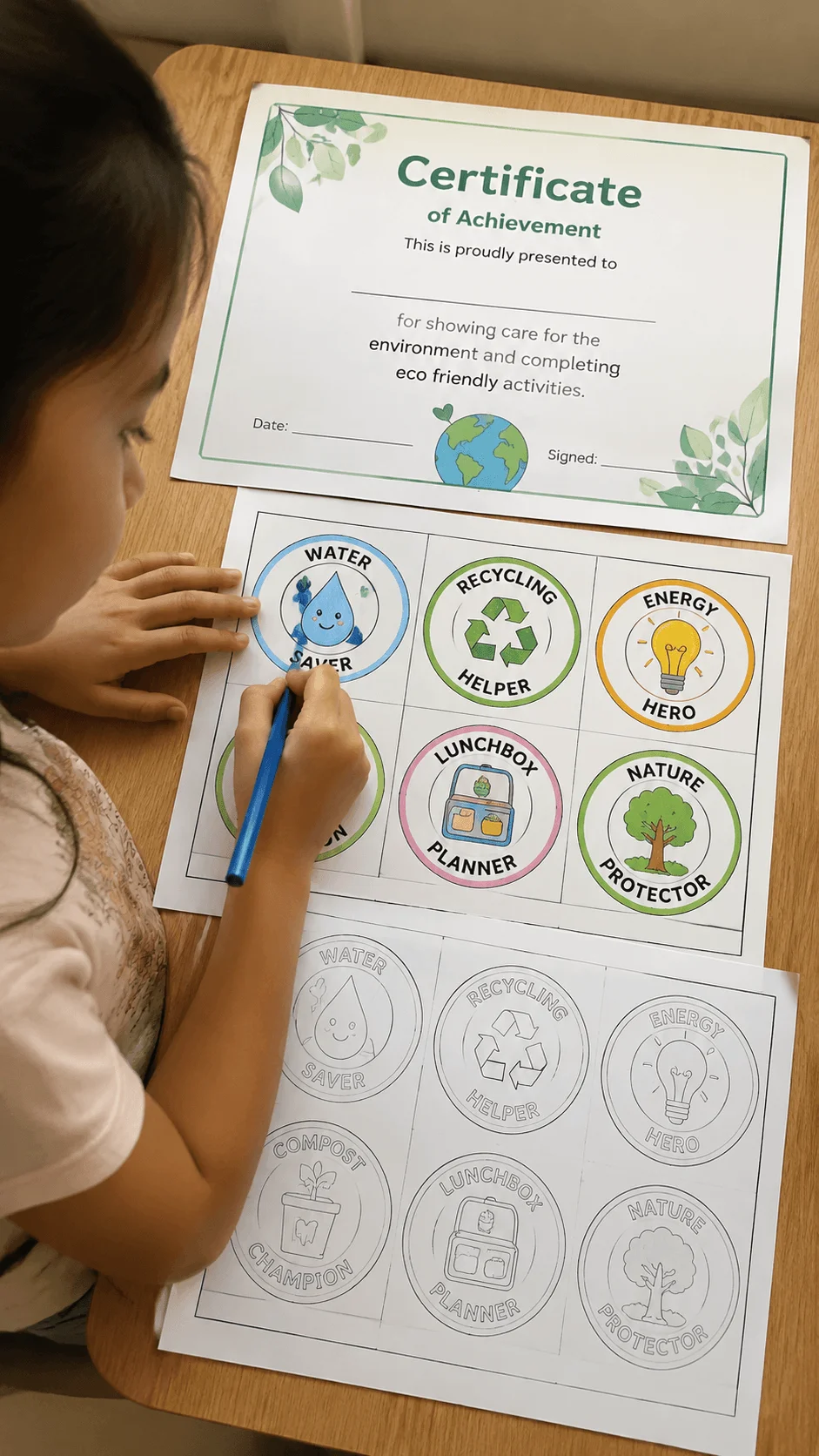
This sustainability activities for kids printable idea gives a strong ending to an activity pack. Children feel proud when adults notice their effort. The badges remind them that sustainability is not a one day lesson. It is a habit they can practice again and again.
How to Use Free Sustainability Worksheets for Kids
Free sustainability worksheets for kids work best when adults connect them to real life. After a water checklist, the family can fix a dripping tap or set a shorter shower goal. After a lunchbox planner, children can help pack a lower waste lunch. After a biodiversity hunt, the class can plant flowers or create a small nature corner.
Parents can use one printable each week and build a simple routine. Teachers can use these pages in science, social studies, art, English, and morning work. Homeschoolers can combine several worksheets into a full sustainability unit. The most important step is conversation. Children should explain what they noticed, what surprised them, and what they want to try next.
Conclusion
Sustainability activities for kids printable worksheets make eco learning simple, creative, and useful. They help children move from big environmental ideas to clear daily actions such as saving water, reducing plastic, tracking food waste, composting scraps, reusing materials, observing nature, and switching off lights. These printables give children a way to practice care for the planet in small but meaningful steps.
The best printable sustainability activities for kids give children active roles. They become detectives, planners, designers, observers, helpers, and eco champions. Parents and teachers do not need expensive supplies or complicated lessons. They need clear pages, thoughtful guidance, and real examples from daily life.
By using sustainability activities for kids printable resources at home or in class, adults can help children build habits that last. Every checklist, drawing, chart, badge, and promise can teach children that caring for the Earth starts with simple actions they can do today.