Sustainable Christmas Tree Alternatives for Small Spaces
Sustainable Christmas Tree Alternatives for Small Spaces can make a compact home feel warm and festive without squeezing a traditional evergreen into an already crowded room. A small apartment, dorm, studio or narrow living room may have barely enough room for everyday furniture, but it can still have a meaningful holiday centerpiece. The best ideas use walls, shelves and familiar household objects instead of demanding a large section of floor.

A thoughtful alternative can also reduce unnecessary purchases and holiday waste. Reclaimed wood, reused cardboard, working string lights and healthy houseplants offer many possibilities when you choose materials carefully and plan to use them again. These twelve ideas cover simple craft projects, practical displays and more natural options, along with advice for safe setup, easy storage and a style that suits your home.
A Wall Tree Made From Reclaimed Branches
A branch wall tree creates the familiar triangular silhouette without sacrificing a single square foot of usable floor. Gather fallen branches only from places where collection is allowed, then select several dry, sound pieces in progressively shorter lengths. Brush away dirt and let the wood dry completely before bringing it indoors. Arrange the longest piece at the bottom and the shortest at the top. Connect the ends with sturdy reusable twine so the arrangement hangs as one lightweight decoration.

Hang the finished tree from secure hooks rated for its weight rather than relying on tape. Small wooden ornaments, fabric scraps and dried orange slices bring texture without overwhelming the branches. A simple star made from leftover cardboard finishes the outline. Keep ornaments light, inspect the twine before hanging and position the display away from heat sources. After Christmas, wrap the branches together and store them flat. The same natural materials can work for several seasons, making this a particularly charming choice for renters with a suitable hanging point.
A Reusable Fabric Christmas Tree Wall Hanging
A fabric tree suits narrow hallways, studio apartments and rooms where furniture already fills every corner. Start with a piece of leftover cotton, canvas or felt large enough to make a visible tree shape. You can sew together scraps from old clothes, cut a simple silhouette from a damaged tablecloth or decorate an existing textile instead of buying new fabric. A wooden dowel at the top helps the hanging stay straight.
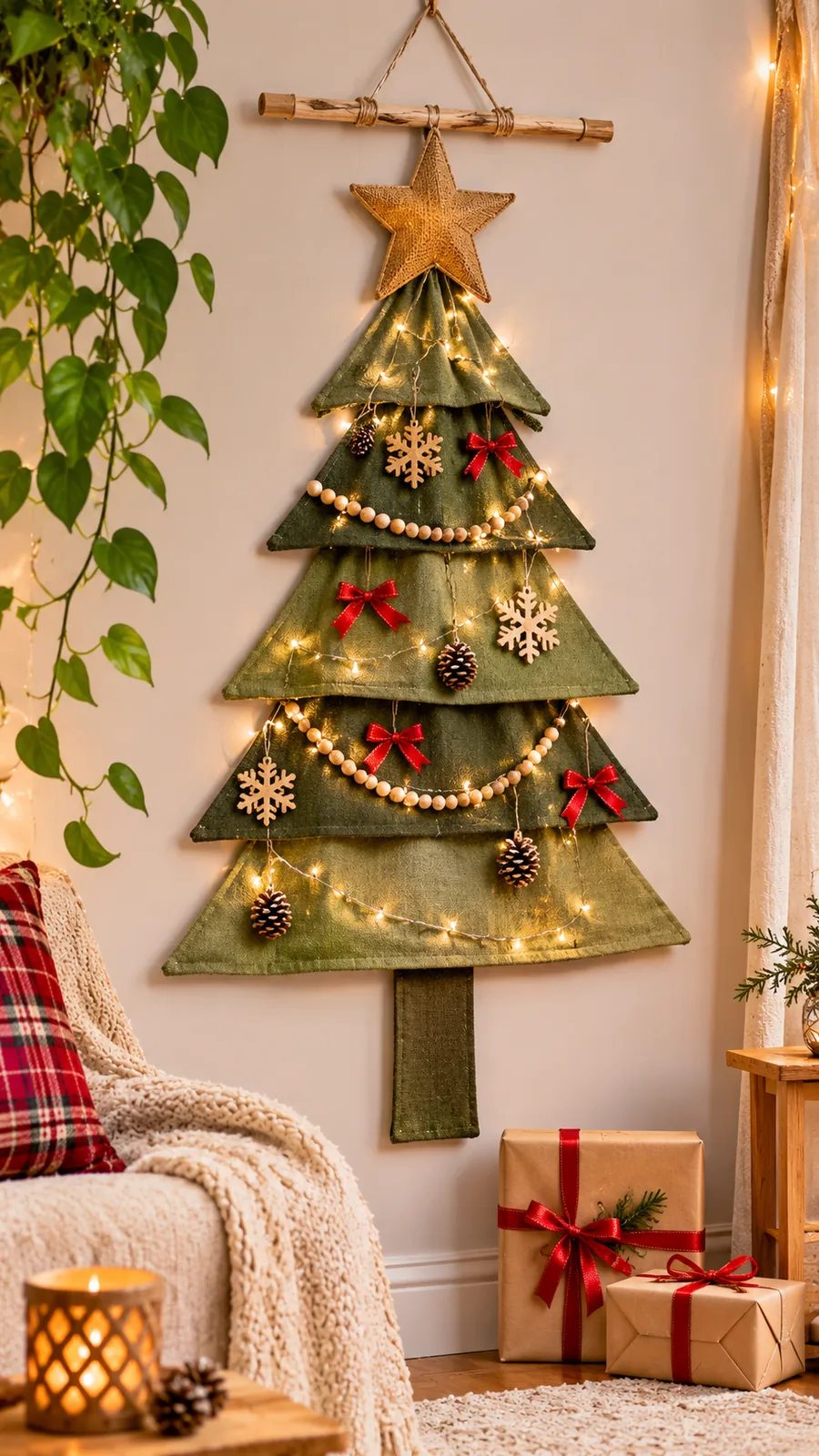
Stitch small loops onto the surface for ornaments, or use removable fabric ties for decorations that change each year. Embroidered stars, buttons rescued from worn clothing and fabric bows add personality while keeping the design soft and easy to store. Avoid attaching heavy decorations that could pull the textile down. This option also works well when you want a festive focal point without electrical lights. Once the season ends, roll the fabric rather than folding it sharply. It takes very little storage room and can become a family tradition that grows with each Christmas.
A Decorated Houseplant Instead of a Fir Tree
An existing houseplant may be the most resourceful alternative because it requires no new tree at all. A healthy rubber plant, small palm or sturdy indoor shrub can serve as the centerpiece, especially when you decorate it with a restrained collection of lightweight ornaments. Select a plant that already thrives in your home rather than purchasing one that needs unfamiliar conditions. Set it near its usual window and maintain its regular watering schedule.
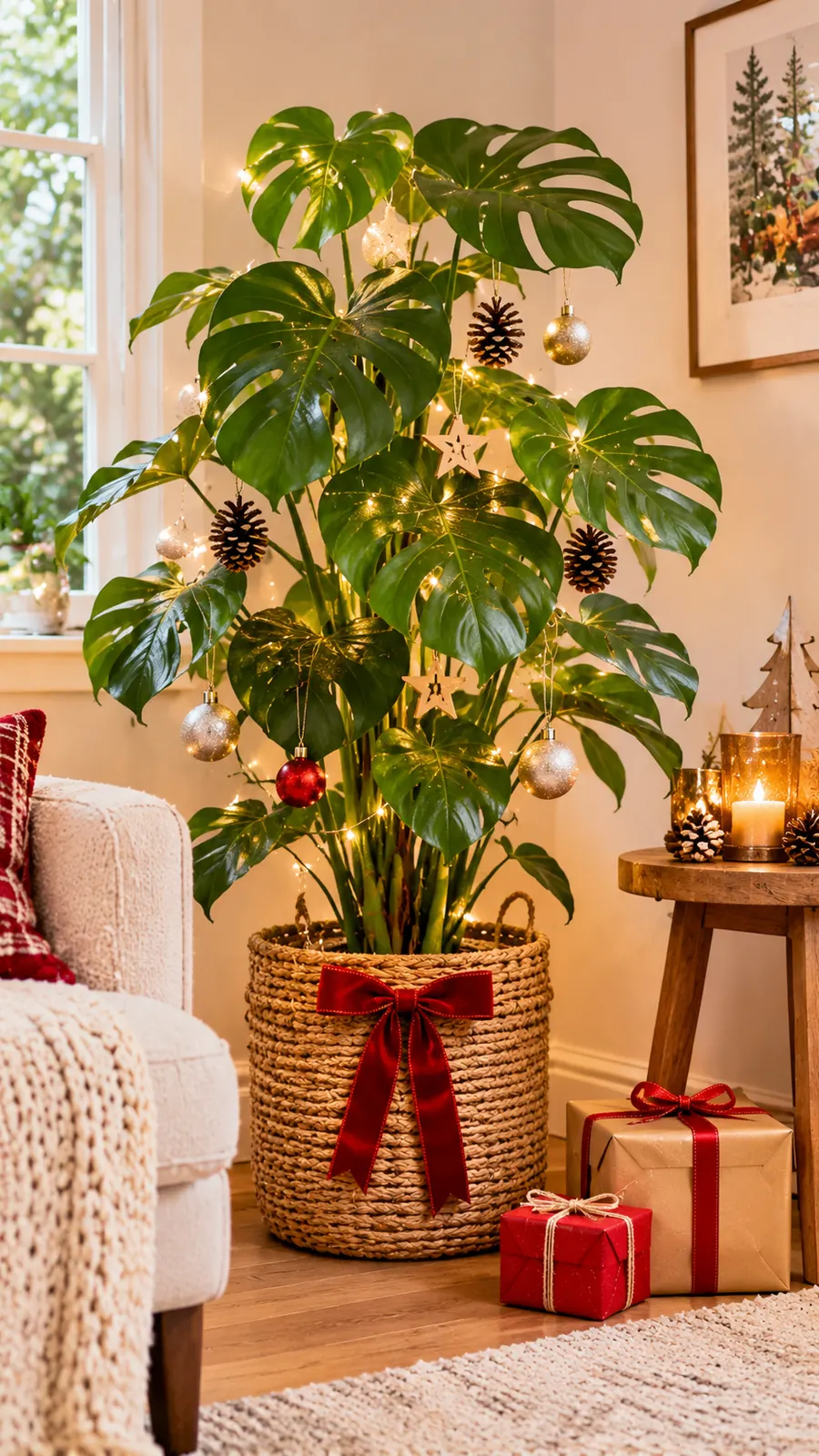
Use soft ribbon loops that do not tighten around stems. Heavy baubles can bend branches, and tightly wrapped lights may stress tender foliage. If you want a glow, position a separate low heat LED decoration nearby rather than winding it through delicate leaves. Choose ornaments made from paper, fabric or wood you already own. A plant with an interesting silhouette often looks more intentional than a miniature plastic tree. After the holidays, remove the decorations and let the plant continue growing as part of your everyday home.
A Compact Potted Rosemary Tree
Rosemary offers a pleasant herbal scent and a distinctive evergreen shape on a kitchen counter or sunny windowsill. Rather than treating it as disposable holiday greenery, choose a healthy plant only if you can provide the bright light and drainage it needs afterward. A simple reused ceramic pot or a decorative basket surrounding its nursery container makes the arrangement feel festive without extra plastic decorations.
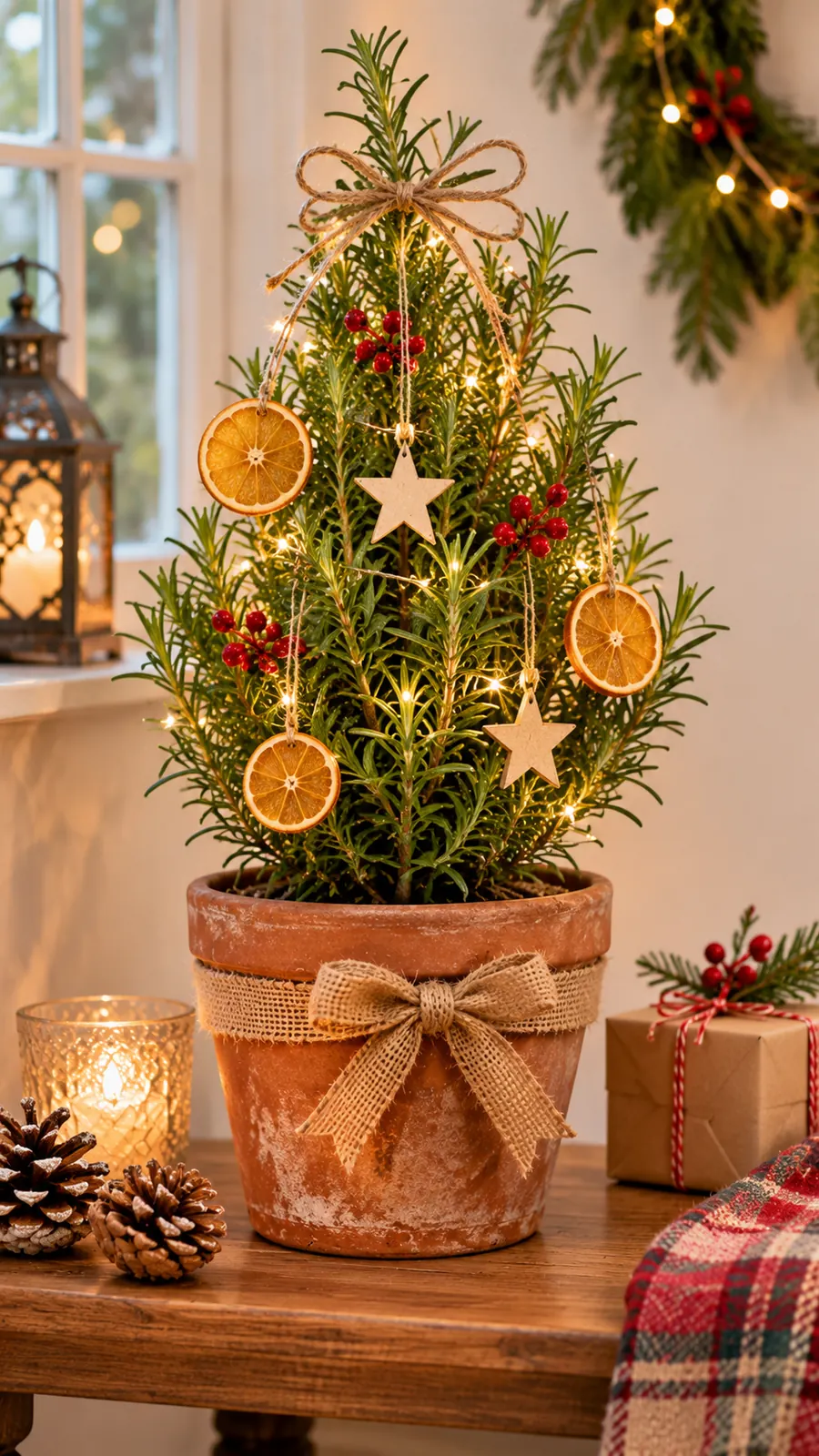
Dress the rosemary lightly with tiny paper stars or a narrow fabric ribbon. Keep ornaments off the most flexible tips and avoid coating the foliage with glitter or artificial snow. Rosemary prefers conditions that may differ from those in a warm, dim living room, so check the soil and the plant’s needs instead of leaving it in a dark corner for weeks. If it thrives, you can enjoy its leaves in cooking during the rest of the year. Its ongoing usefulness makes it more sustainable than a plant bought only for a few December photographs.
A Foldable Christmas Tree From Reused Cardboard
Clean shipping boxes can become an eye catching Christmas tree for almost no money. For a compact tabletop version, sketch two matching tree silhouettes on sturdy cardboard and cut them with age appropriate tools and care. Make a slot from the top of one piece toward the center and a matching slot from the bottom of the other. Slide the pieces together to form a standing tree with four visible sides. Check that the base sits evenly before adding decorations.
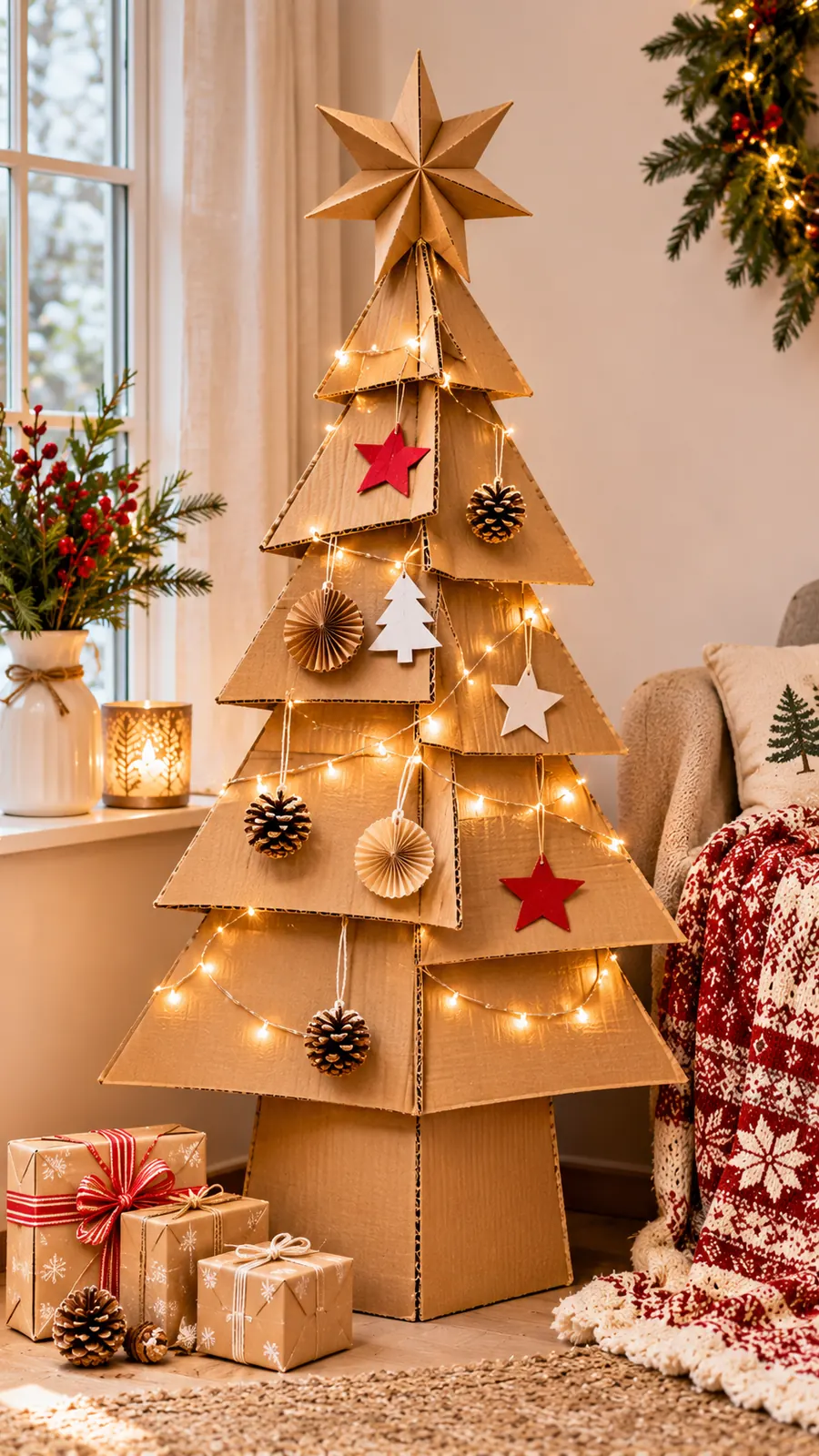
Paint the cardboard with leftover water based craft paint, or leave the brown surface exposed for a natural look. Recycled wrapping paper and saved ribbon can create a colorful finish without purchasing a new ornament set. Keep the tree away from candles, heaters and moisture. This design folds apart at the end of the season, taking up very little closet space. If it becomes worn out, remove nonpaper embellishments and follow your local recycling rules for the remaining clean cardboard.
A Wooden Ladder With Reused Ornaments
A small wooden ladder can form a striking tree silhouette while keeping the decoration light and airy. The sustainable approach is to repurpose a stable ladder you already have or find one secondhand, not to purchase a brand new ladder for a few weeks of use. Set it on level ground where it will not obstruct a doorway or walking route. If it is a leaning ladder, make sure it is secured against tipping.
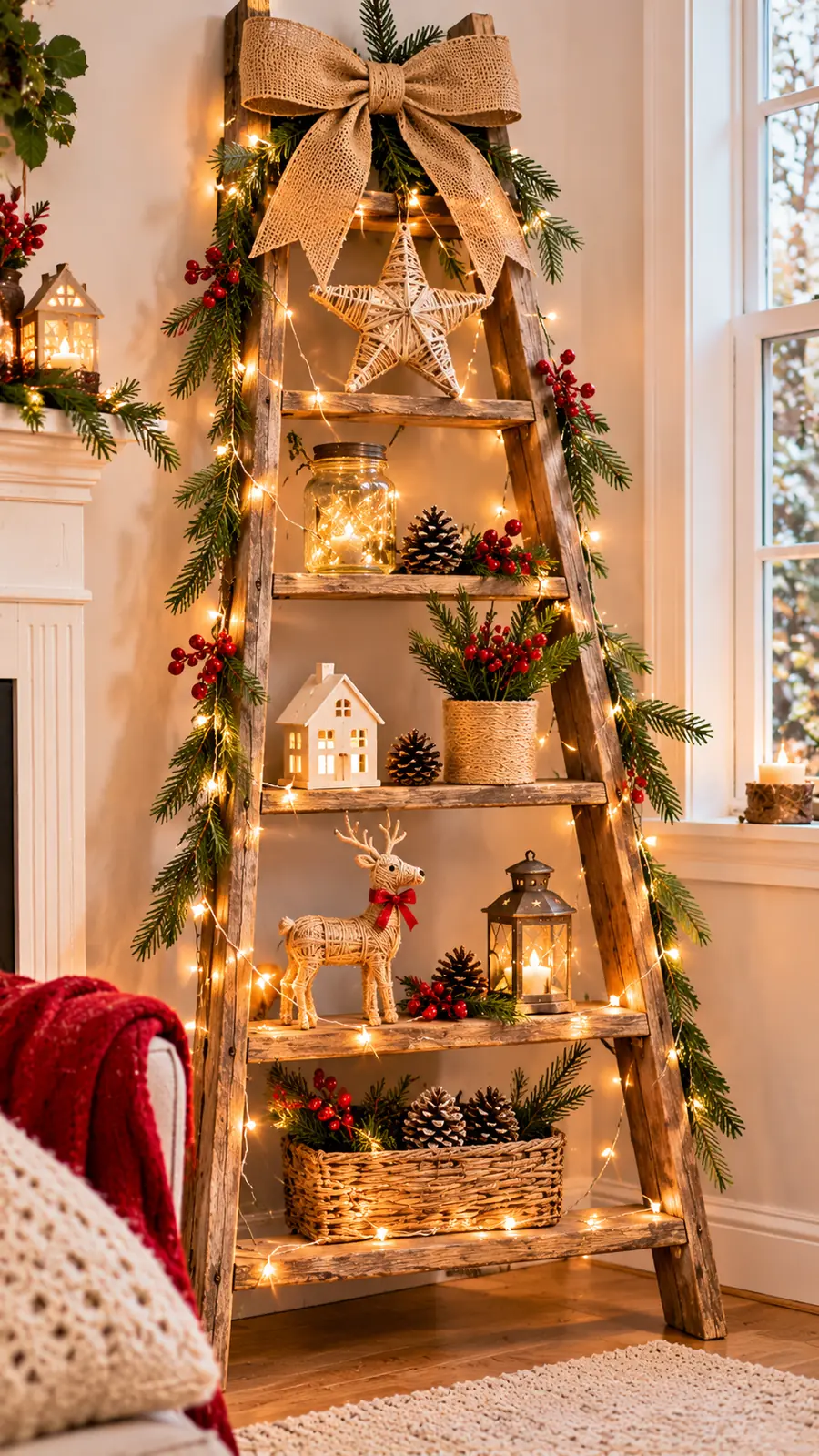
Hang existing ornaments from its rungs using fabric loops. Short lengths of greenery, paper chains and a handmade star give it a recognizable Christmas look. Place a few lightweight gift boxes near the base if space allows, but do not crowd a narrow passage. Never allow anyone to climb the ladder while it is decorated. A ladder tree works especially well beside a bookshelf because the open frame prevents the room from feeling visually crowded. When the holidays end, remove the decorations and return the ladder to its normal purpose.
A Christmas Tree Shape Made With Books
A book tree turns an everyday collection into seasonal decor. If you have a small shelf, arrange books in progressively shorter horizontal stacks to suggest a triangular outline. On a tabletop, build a low, stable arrangement using sturdy books at the bottom and smaller ones above. Add a paper star to the top and a few saved ornaments around the display rather than covering every book.

This is a practical solution for students, readers and families who lack storage space for a separate tree. It can also become a fun way to feature favorite winter stories or books with green, red and cream covers. Protect book jackets from adhesive tape, wax and glitter. Keep the arrangement low enough that it cannot topple and avoid blocking access to books you need regularly. At the end of the holidays, all the materials return to the shelf. No extra seasonal object has to be stored or discarded.
A Minimalist Tree Made From Reclaimed Wood Slats
Offcuts from a previous home project can become a durable wooden tree that fits a small wall or entryway. Choose smooth, sound pieces and arrange them horizontally, with the longest at the bottom and gradually shorter ones above. A simple vertical backing piece can hold the shape together. If cutting, drilling or sanding is necessary, have a capable adult or experienced maker handle the tools and check that every edge is smooth.
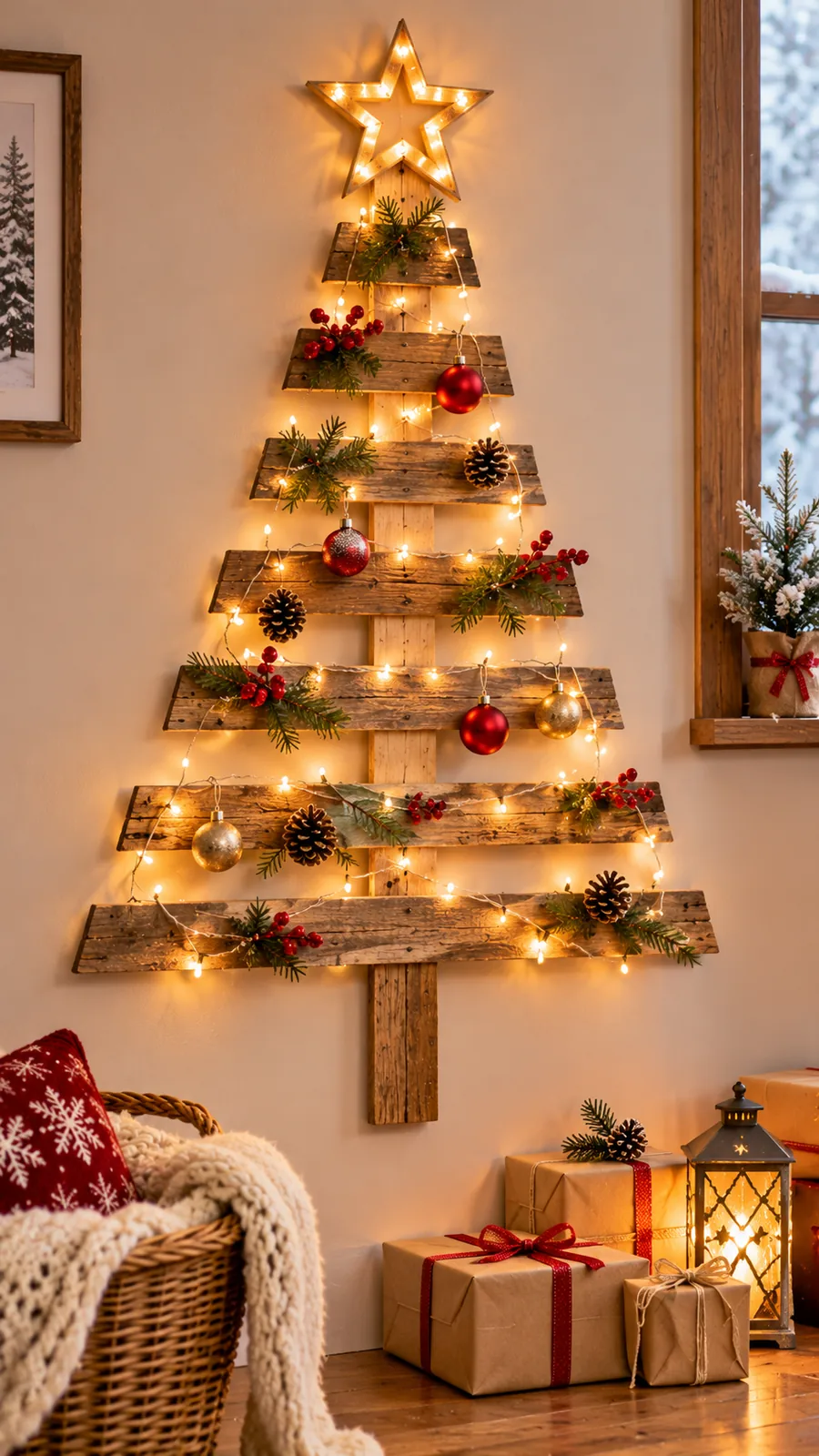
Leave the wood unfinished if it is clean and safe, or apply a finish already available at home. Small hooks can hold the same ornaments each year. The result feels modern without requiring artificial foliage that may become damaged over time. A flat wall version is particularly efficient because it can be stored behind a cabinet after December. Avoid using painted or treated salvaged wood of unknown origin, especially pieces that may contain unsafe coatings. Reclaimed wood only offers a sensible benefit when it is appropriate for indoor use and the design remains sturdy for repeated reuse.
A Paper Honeycomb or Accordion Christmas Tree
Folded paper trees bring gentle texture to a mantel, desk or narrow windowsill. Reuse clean pages from damaged books that cannot be repaired, leftover craft paper or unneeded packaging sheets. Fold equal sections carefully into an accordion, then open and shape them into a miniature standing tree. Another approach uses paper circles or fan shapes layered from largest to smallest on a stable cardboard base.
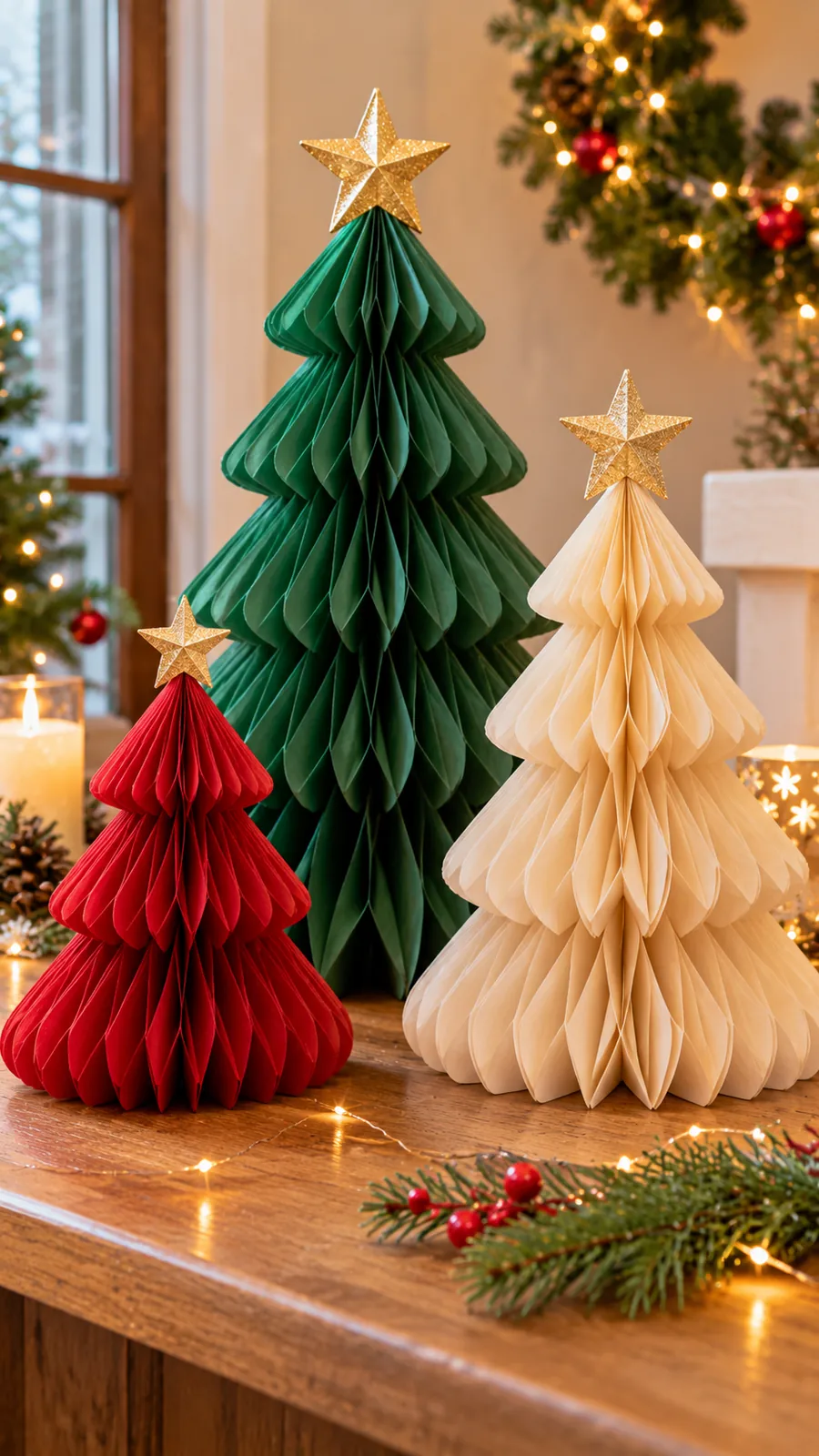
The appeal lies in repetition and shadow rather than elaborate embellishment. A few paper trees in different heights can create an entire festive scene without a conventional tree. Choose reusable paper decorations when possible and store them flattened in an envelope between seasons. Avoid glitter, plastic laminates and excessive glue if you hope to recycle the pieces eventually. Because paper is combustible, place these decorations away from candles and hot lamps. For a small apartment, this is an affordable way to create a strong seasonal atmosphere without adding bulky objects to your storage closet.
A Reusable String Light Tree on the Wall
A string light outline creates the glow of Christmas while leaving the floor open for daily life. First decide where the triangular display will sit so it does not cross a doorway, window latch or frequently used shelf. Reuse a working LED strand from previous holidays, and plan the tree shape with a paper sketch before attaching anything to the wall. Follow the light manufacturer’s instructions and use suitable removable supports or approved hooks for your wall surface.

Warm white lighting creates a calm minimalist effect, while a few paper decorations bring color. Keep the cable free of tight bends, inspect it for damage and avoid pinching it under furniture or doors. Use only indoor rated lights indoors, and turn them off when unattended according to product guidance. Do not fasten electrical wires with staples. Because the design needs little beyond a set of lights you already own, it is particularly useful for short holiday stays or very small rental rooms. Remove everything carefully and coil the strand for future celebrations.
A Reused Garland Tree for an Empty Corner
An old garland can have a second life as a slim Christmas tree. Instead of purchasing a full artificial tree, arrange an existing garland in a gentle zigzag on the wall or over a secure, narrow frame. Start with a wide lower section and gradually narrow the shape toward the top. A small star, handmade bows and a few familiar ornaments will make it recognizable even if the greenery is sparse.
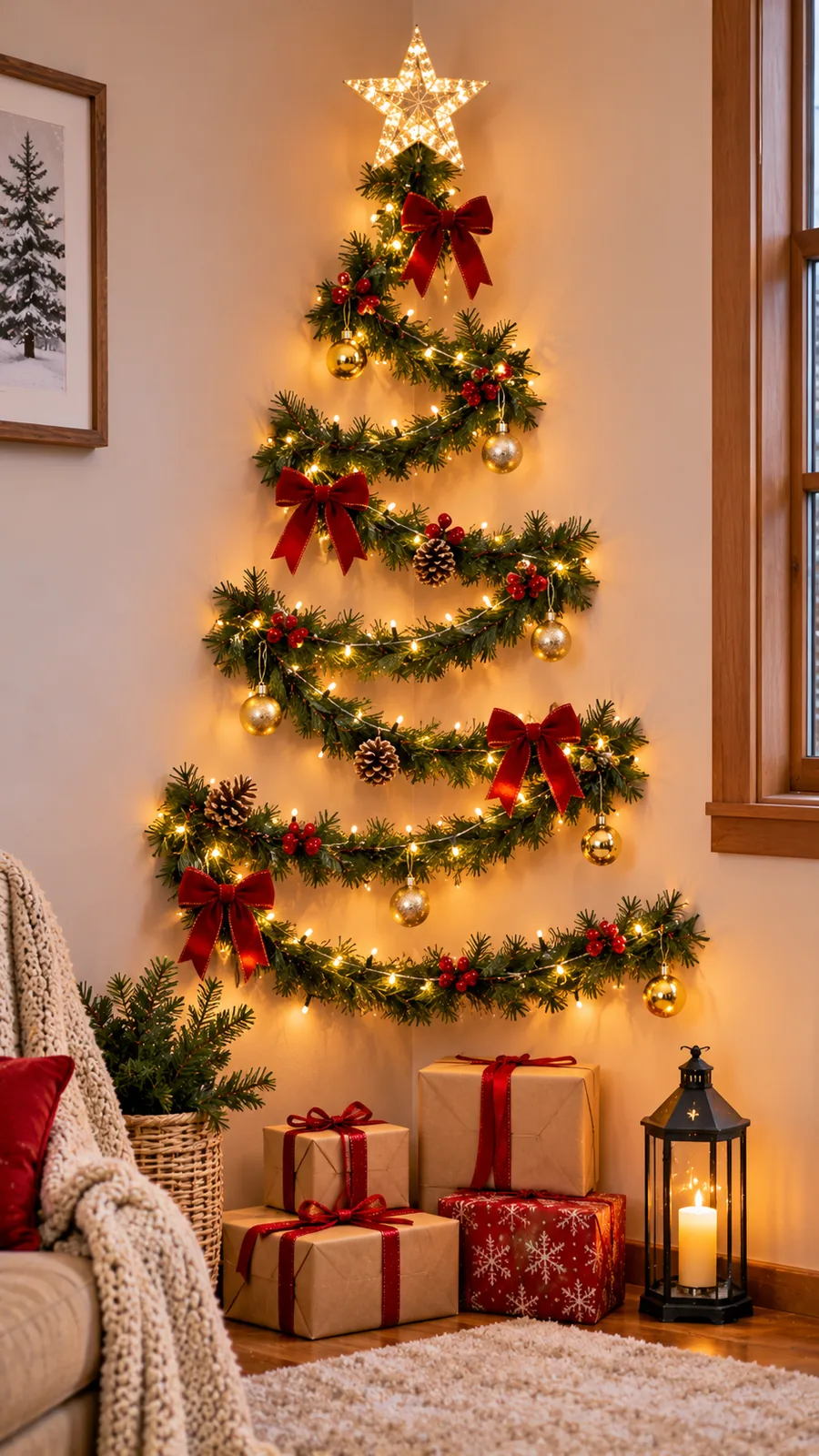
This approach works beautifully above a console, in an unused alcove or beside a desk. Reusing an older garland also saves the effort of storing a much larger seasonal decoration. Inspect artificial greenery for shedding pieces, damaged wire or broken plastic before using it again. Keep loose decorative strands out of reach of small children and pets. If your garland is made from natural material, allow for drying and follow local green waste guidance after it has finished its usable life. A flexible garland tree proves that an existing decoration can be rearranged into something fresh without creating another purchase.
A Christmas Tree From a Reused Cork Board
A cork board or fabric pinboard can serve as a playful Christmas tree without adding another piece of furniture. Place an existing board on a desk or hang it securely where you already display reminders. Arrange saved cards, paper stars and lightweight ornaments in the outline of a tree. The widest row sits near the bottom, with progressively shorter rows creating the shape. A reused paper star can become the topper.
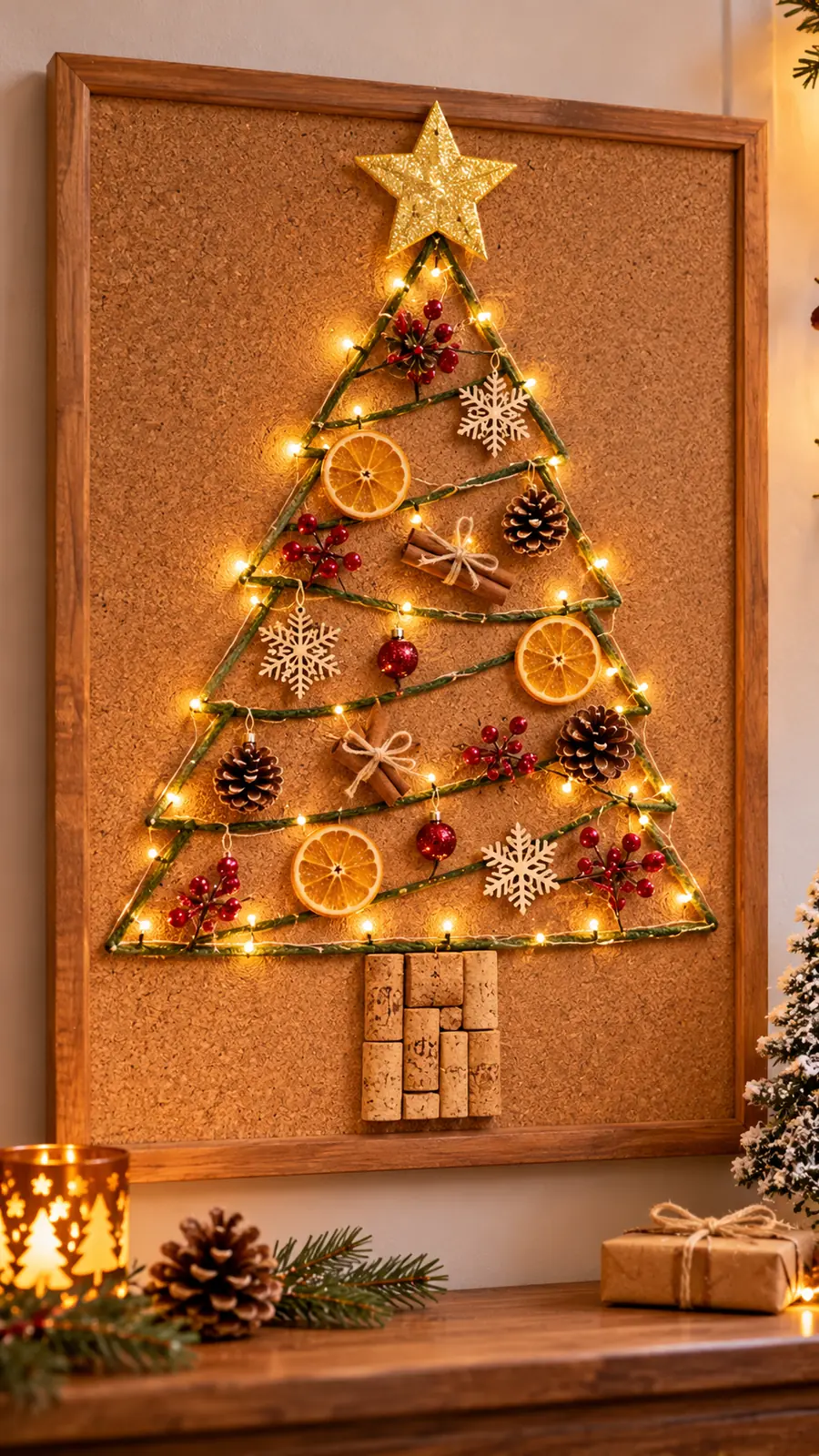
This is especially effective in dorm rooms, home offices and shared apartments where a conventional tree would get in the way. Choose reusable pins or clips and protect the board from overloaded fasteners. Holiday notes, handmade greetings and family photographs add personal meaning without buying decorations. When January arrives, move the keepsakes into an envelope and return the board to its usual purpose. Using an object that already belongs in your room minimizes both seasonal waste and the storage problem that comes with owning a separate tree.
How to Choose the Best Tree Alternative for Your Room
Before choosing a design, measure the available wall, table or corner space and leave comfortable clearance for walking, doors and furniture. A flat wall display usually works best in the narrowest rooms, while a tabletop idea suits homes with an unused shelf or sturdy console. Think about natural light, nearby outlets and whether the area is accessible to children or pets.
Start with objects you own. A houseplant, ladder, book collection or garland can become festive without another purchase. If you need materials, choose safe, durable secondhand options. Consider what happens after the holidays. A design that packs flat or returns to everyday use may outperform a novelty item.
Keep Your Christmas Display Safe and Reusable
An alternative tree should remain stable throughout a busy holiday season. Choose secure hooks that suit the wall and the decoration’s weight. Keep tall or narrow arrangements away from traffic, and avoid balancing heavy ornaments on branches or books. Check electrical decorations for damage and follow the manufacturer’s instructions. Battery lights and LEDs still need safe handling and should not be placed against hot surfaces.
Sustainability also depends on care. Repair loose ties, save reusable ribbons and pack ornaments in boxes you already have. Store paper flat in a dry place, keep wooden pieces clean and coil lights loosely to reduce damage. If a material cannot be reused, check local recycling and collection requirements rather than assuming every natural or paper based item belongs in the same bin.
What Actually Makes a Christmas Tree Alternative Sustainable
A decoration is not automatically environmentally friendly just because it uses wood, paper or a small amount of material. New production, shipping, finishes, replacement frequency and disposal also matter. The simplest improvement is often using what is already in your home and avoiding items that will be discarded after one season.
Conclusion
You do not need a large tree to create a welcoming Christmas atmosphere. The most useful sustainable Christmas tree alternatives for small spaces work with the room you actually have and the materials you already own. A branch wall hanging adds a natural touch, a book arrangement makes use of a favorite collection and a decorated houseplant can keep growing after the season.
Choose a design that fits your daily routine, can be displayed securely and will not become unwanted clutter in January. Save the pieces you can reuse, look after living greenery and recycle worn materials correctly. A smaller, more intentional centerpiece can carry just as much holiday meaning as a full size tree.