12 Eco Friendly Club Activities for Students
Eco Friendly Club Activities for Students can turn environmental education into something practical, creative, and exciting. Instead of only learning about climate change, pollution, waste, and conservation from textbooks, students can investigate real problems around their school and community. Modern eco clubs are becoming more focused on hands on projects that help students understand sustainability while working together to create positive change.
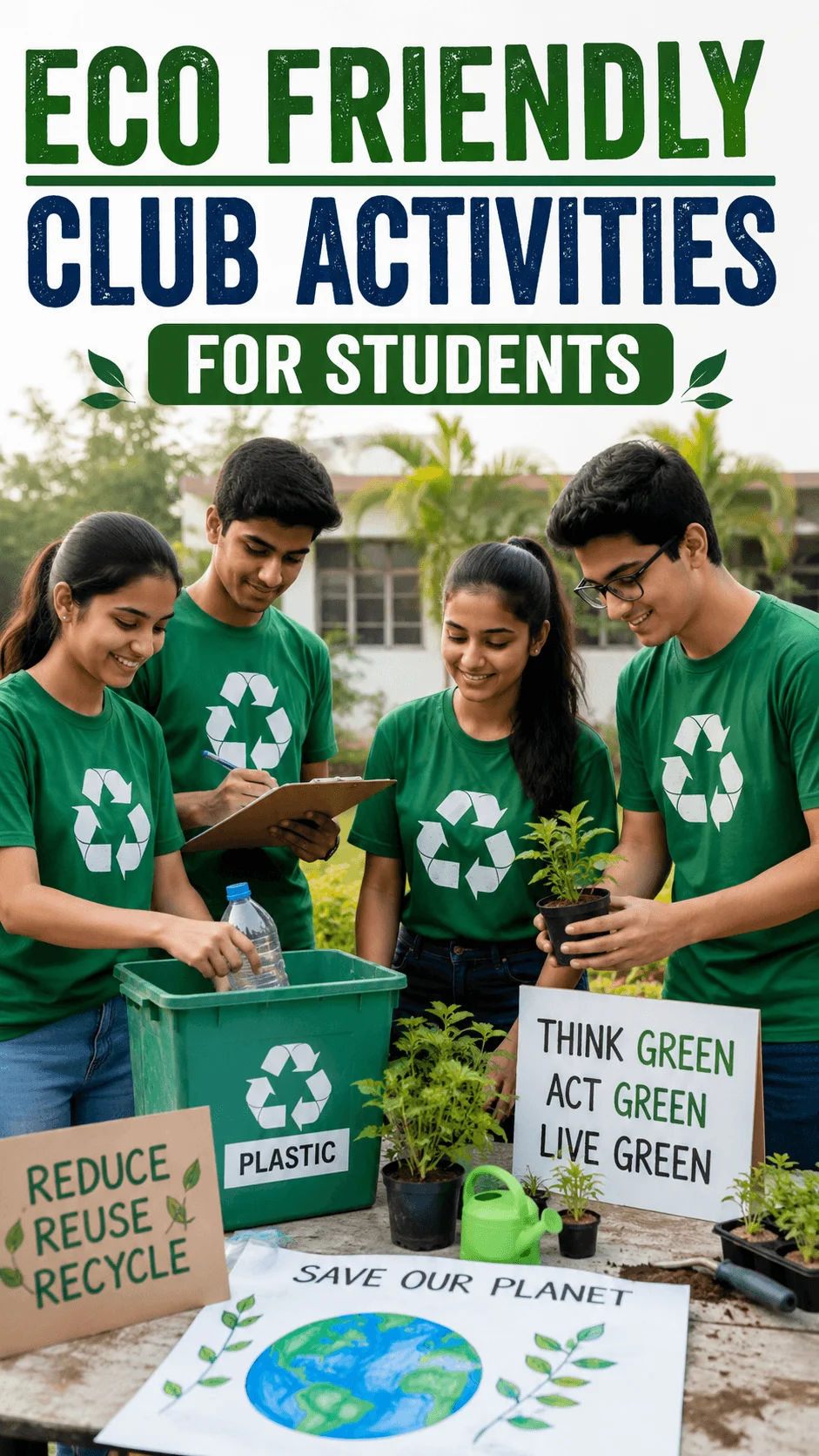
Environmental clubs give students an opportunity to become active participants in protecting their surroundings. They can investigate energy use, explore biodiversity, reduce food waste, study plastic pollution, create sustainable gardens, and develop creative solutions to everyday environmental problems. In 2026, these activities are becoming even more relevant because schools are looking for practical ways to connect sustainability education with student participation.
Why Eco Friendly Club Activities for Students Matter in 2026
Environmental challenges can sometimes feel too large for students to influence. Climate change, plastic pollution, water shortages, biodiversity loss, and growing waste problems are global issues, but students can still make meaningful contributions by starting with their own surroundings.
A school eco club provides a natural place for this kind of action. Students can identify problems, research possible solutions, test ideas, and share what they learn with other members of their school community.
The most effective projects do not simply tell students to “be green.” They allow students to discover why an environmental problem exists and what they can do about it.
For example, an energy project can teach students about electricity consumption while a biodiversity project can help them recognize the wildlife living around their school. A food waste project can show students how much edible food gets discarded, while an e waste campaign can introduce them to the environmental challenges connected with discarded electronics.
This practical approach makes sustainability more memorable. Students learn through observation, teamwork, creativity, and problem solving rather than only through classroom discussions.
12 Eco Friendly Club Activities for Students
1. School Energy Detective Challenge
The School Energy Detective Challenge turns students into investigators who examine how their school uses electricity.
Instead of simply telling students to switch off lights, fans, computers, or other equipment when they are not needed, the club can encourage them to investigate energy habits across the school.
Students can observe classrooms and common areas and identify situations where electricity may be used unnecessarily. They might notice lights operating in empty rooms, computers remaining on after lessons, or cooling equipment running when spaces are not occupied.
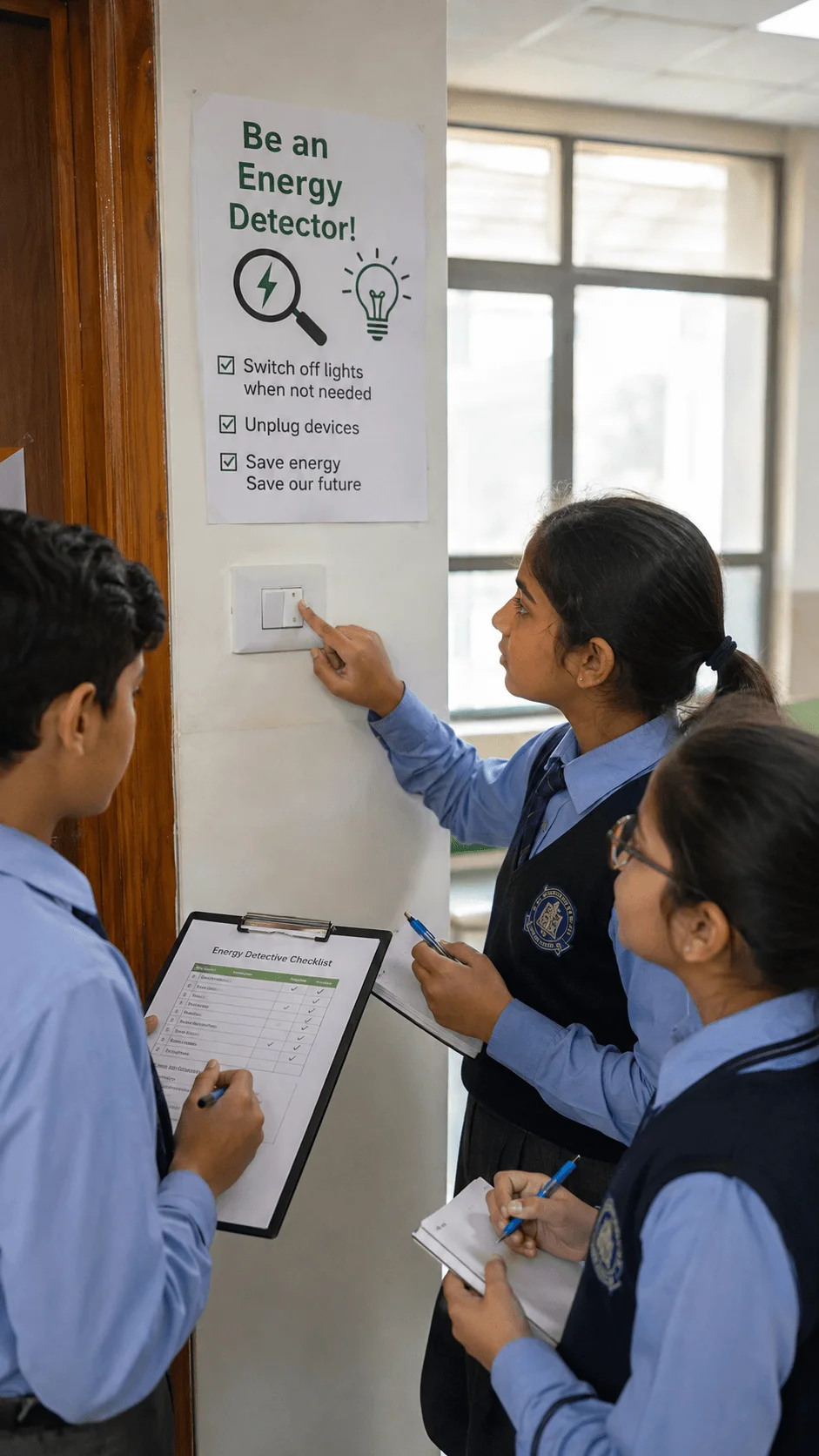
The interesting part of this activity comes from treating the project like a real investigation. Students can record their observations and look for patterns. They can then discuss practical ways to improve energy habits without disrupting normal school activities.
The club could create an energy awareness campaign based on its findings. Students might design classroom reminders, speak during school assemblies, or encourage teachers and classmates to participate in an energy saving challenge.
This activity also introduces students to the idea that environmental improvement often begins with understanding how resources are used.
2. Campus Biodiversity Mapping
Campus Biodiversity Mapping is one of the most engaging environmental activities for students who enjoy nature, science, photography, or outdoor exploration.
Many students walk through their school grounds every day without noticing how much plant and animal life exists around them. A biodiversity mapping project changes that by encouraging students to observe their surroundings carefully.
Eco club members can explore different areas of the campus and document plants, trees, birds, butterflies, insects, and other visible wildlife. They can record their observations in a nature journal or create a visual map showing where different species appear.
The project can become more interesting when students compare different parts of the campus. Perhaps one area attracts more insects because it contains flowering plants. Another location might have more birds because it provides shelter or food.
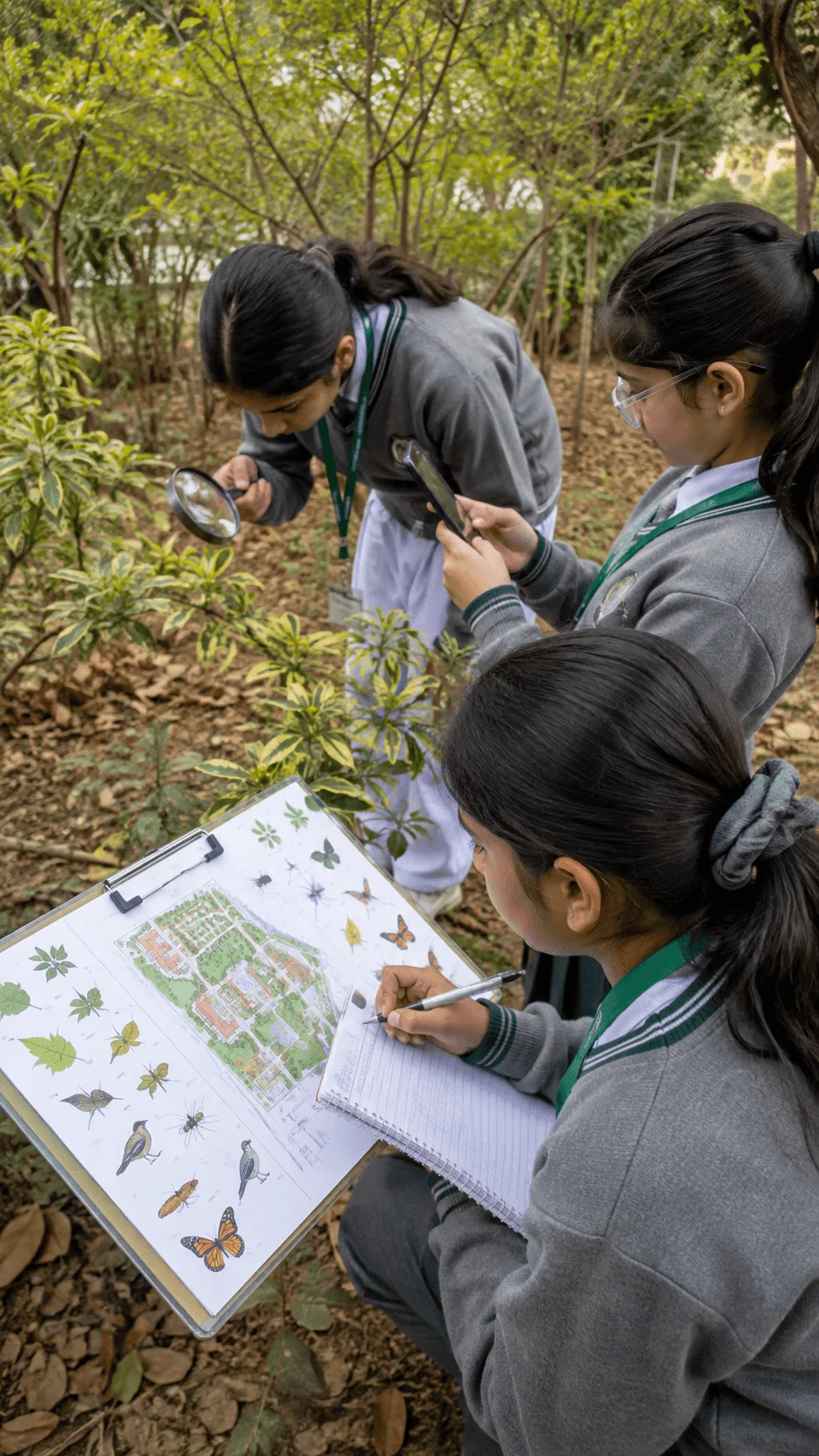
This gives students a basic understanding of habitats and ecosystems.
The project can also reveal opportunities for improvement. If students discover that certain areas contain very little plant diversity, they could research whether native plants or pollinator friendly species could improve the space.
Biodiversity activities for students work especially well because they combine outdoor learning with scientific observation. Students are not simply hearing about ecosystems. They are discovering one around them.
3. Food Waste Audit and Rescue Week
Food waste provides an excellent opportunity for an eco club because students can investigate a problem that they see every day.
During a Food Waste Audit, students examine how much food gets discarded at school and try to understand why it happens. The goal is not to blame students or staff. Instead, the club should treat food waste as a problem that requires investigation.
Students can observe what types of food commonly remain uneaten and consider possible reasons. Perhaps students receive portions that are too large, bring food they do not enjoy, or have limited opportunities to save appropriate leftovers.
After identifying possible causes, the club can develop a Food Waste Rescue Week focused on reducing unnecessary waste.
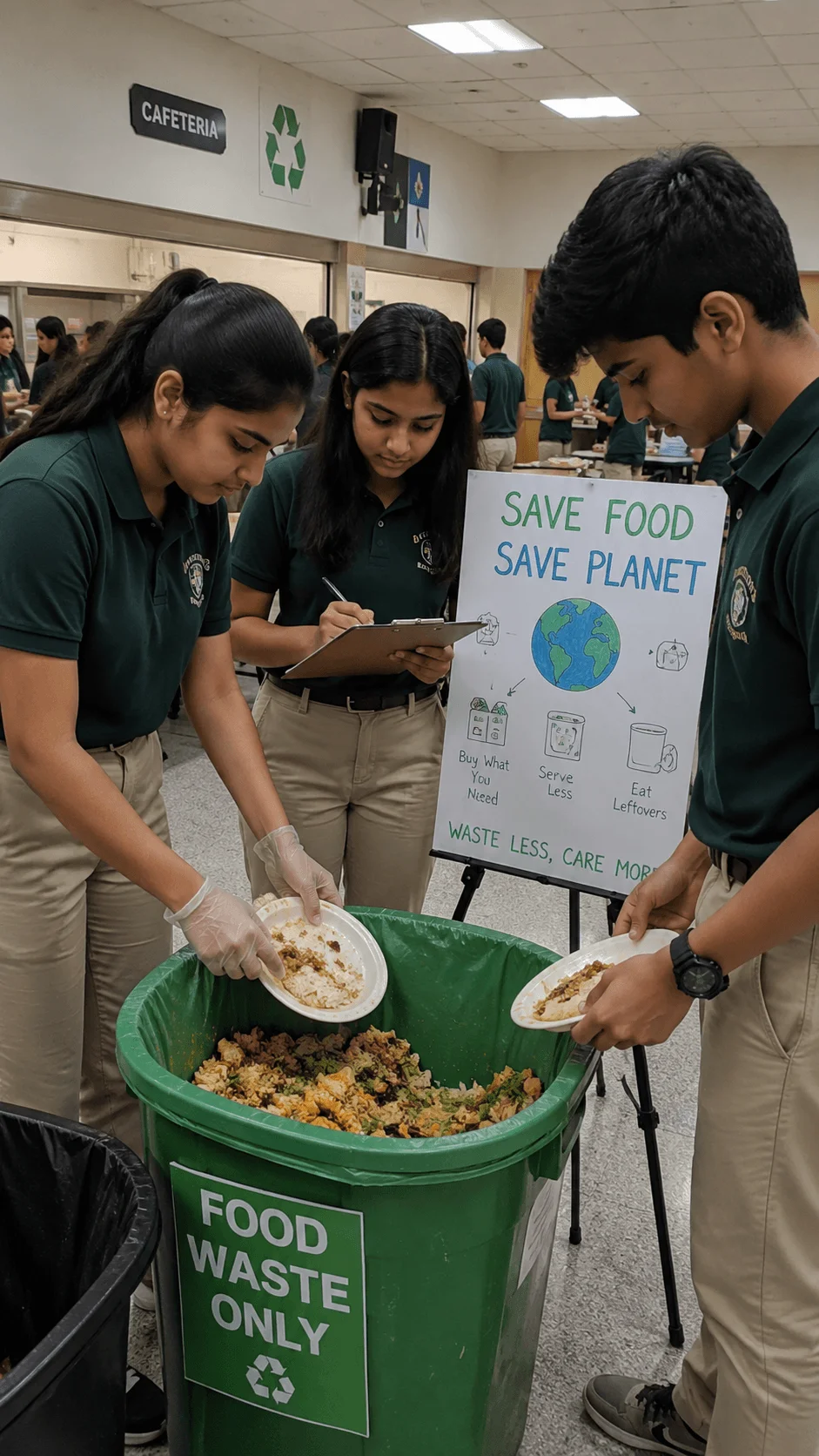
Students could create educational displays explaining food waste, encourage better planning, or organize discussions about responsible food consumption. The club could also work with school staff to identify appropriate ways to reduce waste while following food safety rules.
The activity teaches students an important lesson about resources. Food requires land, water, energy, transportation, packaging, and human effort before it reaches a plate. When food goes unused, all those resources also go to waste.
Food waste activities for students can therefore connect everyday habits with much larger environmental issues.
4. E Waste Collection and Awareness Drive
Electronic waste is another modern topic that can give a school eco club a more contemporary focus.
Old phones, chargers, cables, headphones, computers, batteries, and other unwanted electronic products can create waste management challenges. Many students have electronic items at home that they no longer use but may not know how to dispose of responsibly.
An E Waste Collection and Awareness Drive can begin with education.
Students can research why electronic waste matters and explain the importance of responsible disposal. They can create educational materials that show how electronic products contain valuable materials that may be recovered through appropriate recycling programs.
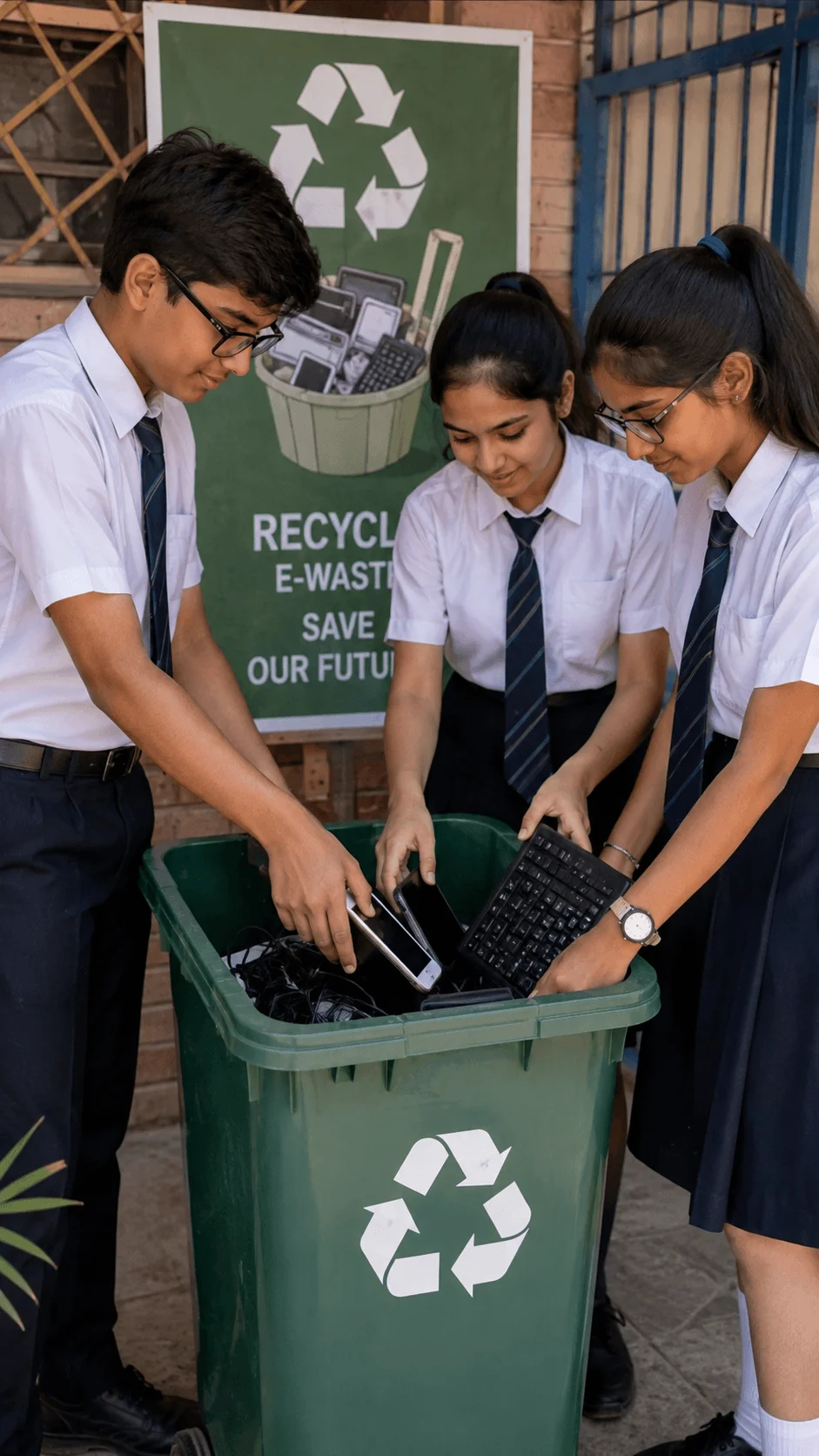
The club should work with teachers and school administrators before collecting any electronic items. Any collection should follow local rules and use an appropriate authorized recycling or collection service.
The most valuable part of the project is not simply collecting old electronics. Students should understand why responsible disposal matters and how purchasing, repairing, reusing, and recycling electronics can reduce unnecessary waste.
E waste activities for students also provide an opportunity to discuss the relationship between technology and sustainability.
5. Clothing Swap and Upcycling Lab
Fashion provides a creative way to introduce students to sustainable consumption.
A Clothing Swap allows students to exchange suitable unwanted clothing instead of automatically purchasing something new. The concept encourages reuse and gives existing items another opportunity to be worn.
The eco club can make the activity more interesting by combining the swap with an Upcycling Lab.
Students can explore how old clothing or fabric might receive a new purpose. They could transform suitable fabric into useful items or experiment with creative designs under appropriate adult supervision.
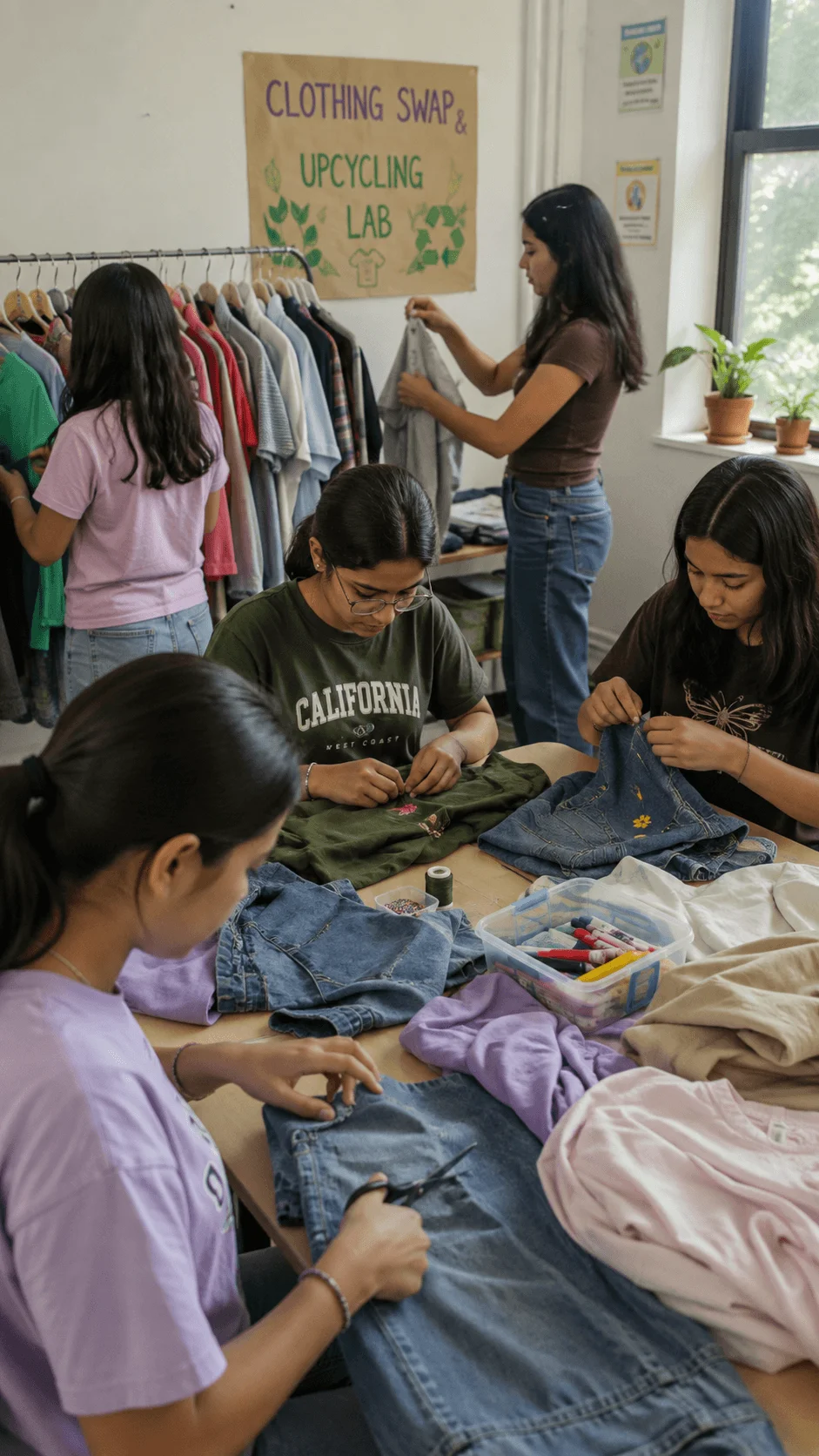
The deeper idea behind this activity is the circular use of resources. Instead of viewing an unwanted item as something that immediately becomes waste, students begin thinking about whether someone else can use it or whether the material can serve another purpose.
This also gives students an opportunity to discuss responsible consumption. Buying fewer unnecessary items, caring for belongings, repairing suitable products, and reusing existing materials can all contribute to a more sustainable lifestyle.
Sustainable fashion activities for students can therefore combine creativity with environmental education.
6. Climate Detective Project
The Climate Detective Project gives students the opportunity to investigate an environmental question instead of simply reading about climate change.
Students can choose a local topic that interests them. They might investigate changes in weather patterns, heat around school buildings, local environmental concerns, water availability, or another climate related issue suitable for their age and location.
The goal should be investigation rather than speculation.
Students can research reliable information, observe their surroundings, collect appropriate observations, and organize what they discover. They can then create presentations explaining the issue and discussing possible solutions.
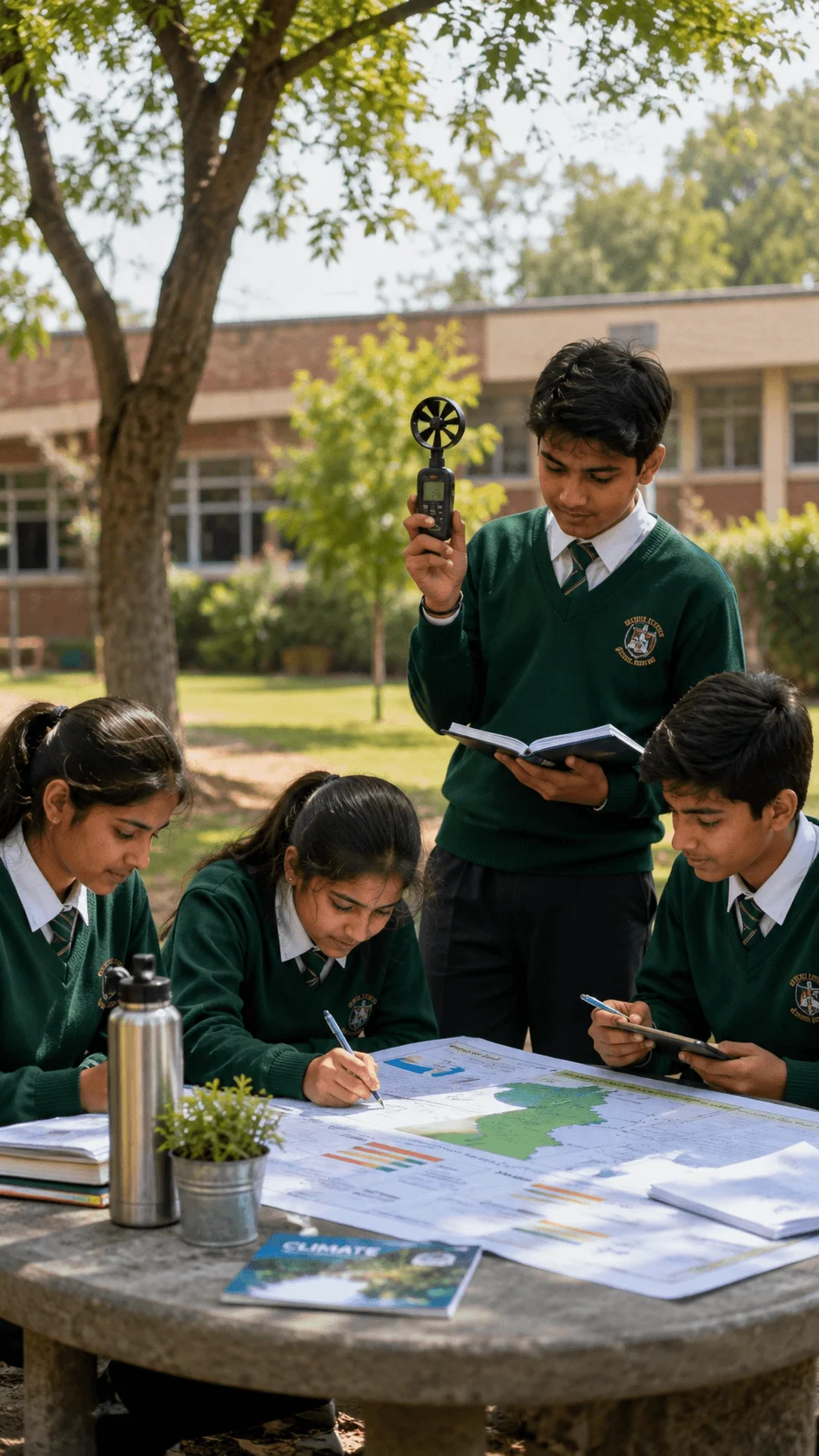
For example, students could investigate why some parts of a school campus feel hotter than others. They could consider shade, surfaces, vegetation, and building design and then discuss possible ways to improve comfort and reduce heat.
Climate action activities for students become more meaningful when students can connect global environmental topics with things they can actually see around them.
The project also teaches students how evidence can support environmental decisions.
Microplastics Investigation
Plastic pollution has become a major environmental topic, and students can explore this issue through a Microplastics Investigation. This activity gives an eco club a chance to look beyond visible plastic waste and understand what happens when larger plastic items gradually break into much smaller pieces.
Students can begin by researching what microplastics are, where they come from, and why researchers study their presence in different environments. They can investigate common sources such as the breakdown of larger plastic products and the release of tiny plastic particles from everyday materials.
The activity works particularly well as a research project because students can investigate the topic without needing complicated equipment. Club members can study trustworthy educational resources, create information displays, compare different sources of plastic pollution, and explain how plastic waste can move through waterways and ecosystems.
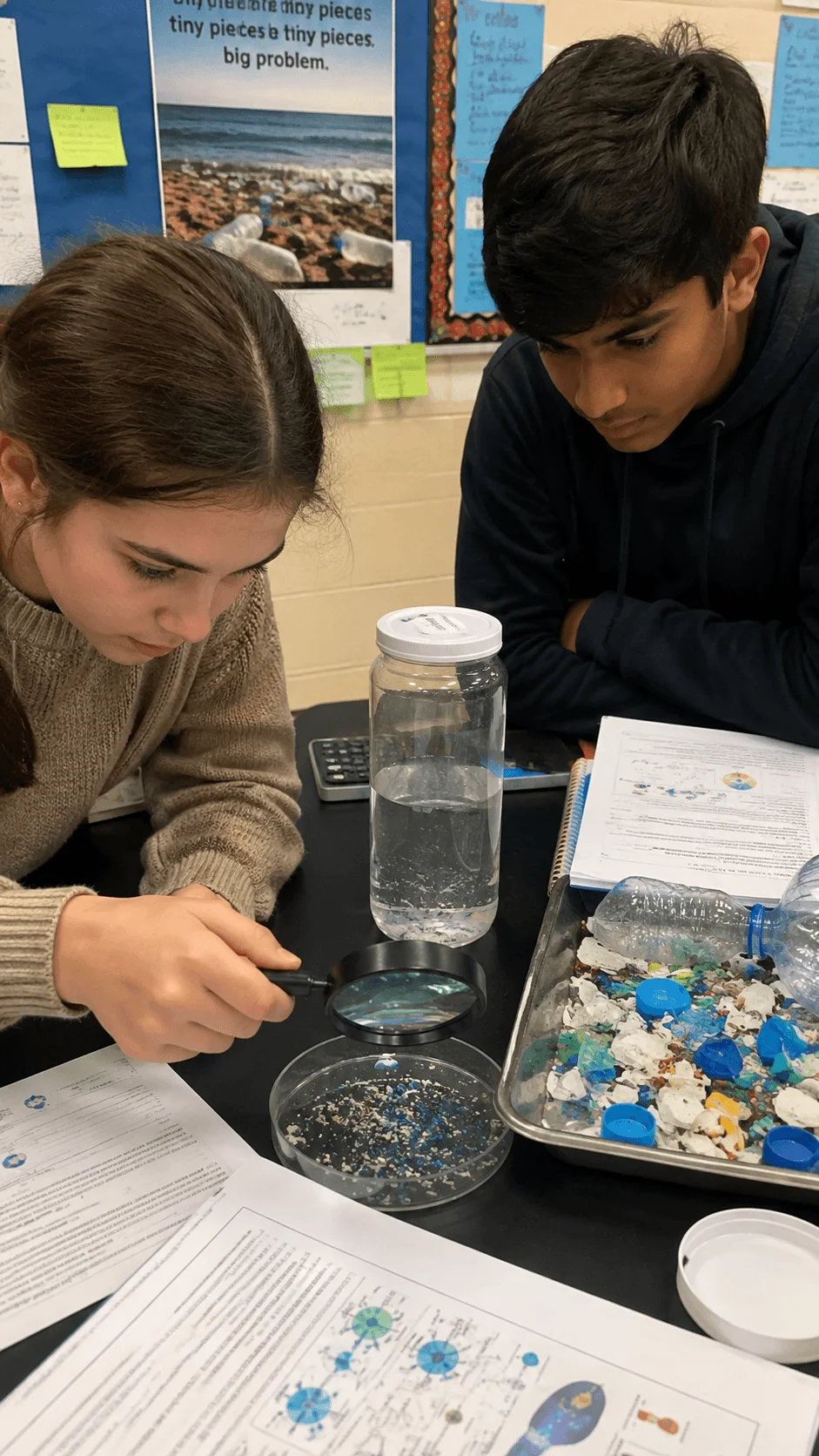
Students can also examine their own school’s relationship with plastic. They might identify commonly used disposable items and discuss which products could have reusable alternatives. This can lead to a broader conversation about consumption, waste prevention, and responsible product choices.
The biggest strength of this project is its ability to make an invisible environmental issue easier to understand. Students may see a plastic bottle or food wrapper as an ordinary piece of rubbish, but researching what happens to plastic over time can change the way they think about waste.
Microplastic activities for students can also connect environmental science with research and communication skills. Students can prepare presentations, create educational displays, or share what they learn with other classes.
The project should remain educational and safe. Students should not collect or handle potentially contaminated materials or conduct experiments involving unknown substances. Research, observation, and supervised educational activities can provide plenty of opportunities to explore the topic.
Native Pollinator Garden Project
A Native Pollinator Garden Project can transform an ordinary part of a school campus into a living learning space.
Pollinators such as butterflies, bees, and other insects play important roles in many ecosystems. Students can learn about these relationships while helping create a suitable habitat around their school.
The project should begin with research. Students can investigate which plants are native or well suited to their local environment and which species can provide useful habitat for local pollinators. Working with teachers, gardeners, or other knowledgeable adults can help the club make suitable choices.
Once students understand the needs of the garden, they can develop a simple design for the space. They can think about plant placement, sunlight, water requirements, maintenance, and how the area will fit into the existing school grounds.
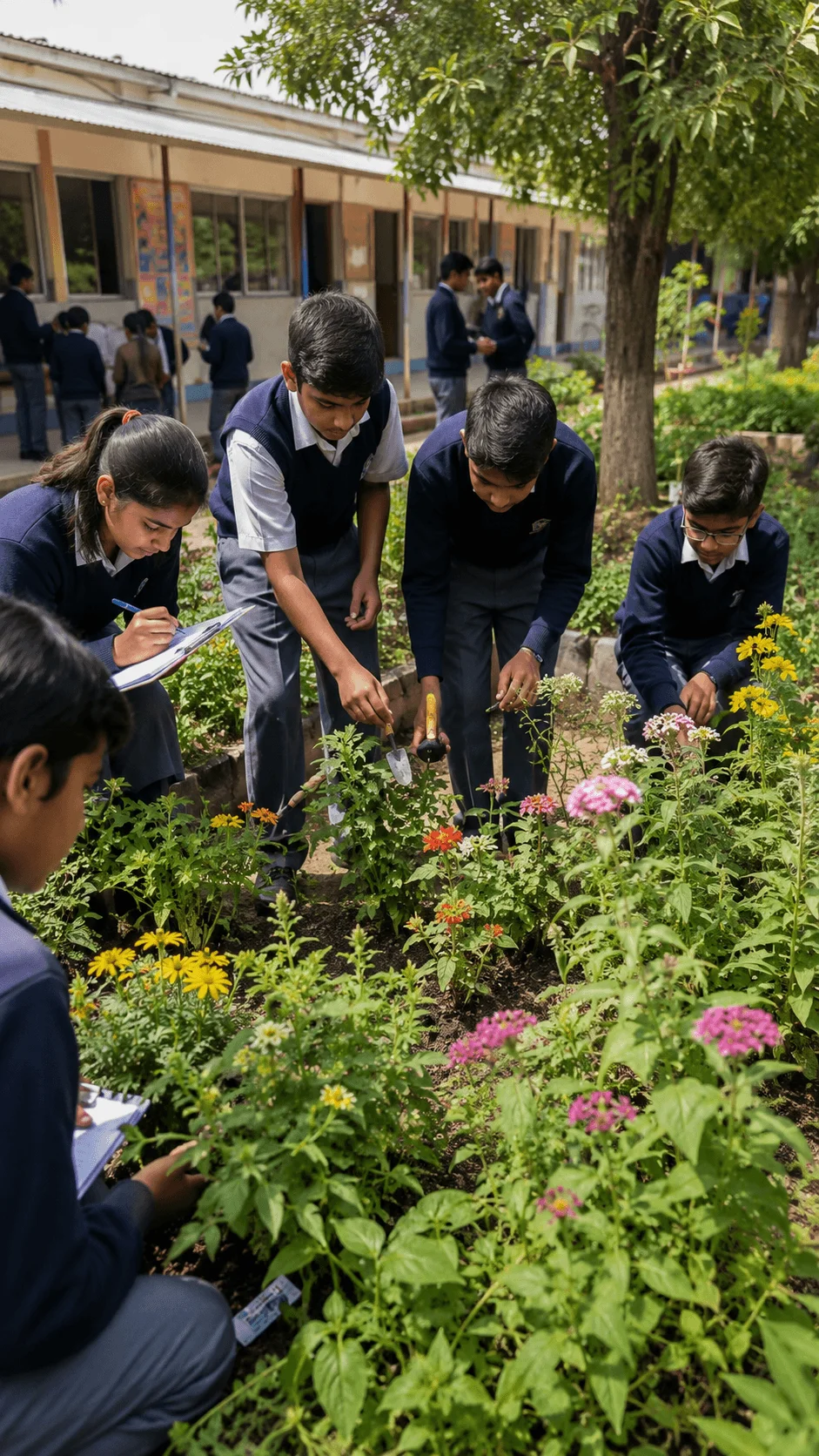
The educational value continues after planting. Students can regularly observe the garden and record which insects or other wildlife appear. Over time, the club can create a nature journal showing how the garden changes throughout different seasons.
This makes the project different from a one day planting event. Students can continue learning from the same space for months or even years.
Biodiversity activities for students become particularly meaningful when students can see the results of their work. A small garden can provide opportunities to study plant growth, insects, habitats, seasonal changes, and relationships between living organisms.
The project can also become a shared responsibility. Different groups of students can help with observation, documentation, education, and appropriate maintenance under adult guidance.
Water Saving Detective Challenge
Water Saving Detective Challenge gives students an opportunity to investigate how their school uses one of its most important natural resources.
Rather than simply telling students to save water, the eco club can ask them to look for possible sources of unnecessary water use around the campus.
Students can examine areas such as bathrooms, gardens, drinking areas, outdoor spaces, and other locations where water is regularly used. They can observe whether taps appear to leak, whether water runs longer than necessary, or whether landscaping practices could use water more efficiently.
Students should not attempt to repair plumbing or equipment themselves. Instead, they can document observations and share appropriate concerns with teachers or school maintenance staff.
The investigation can then become a school water awareness project.
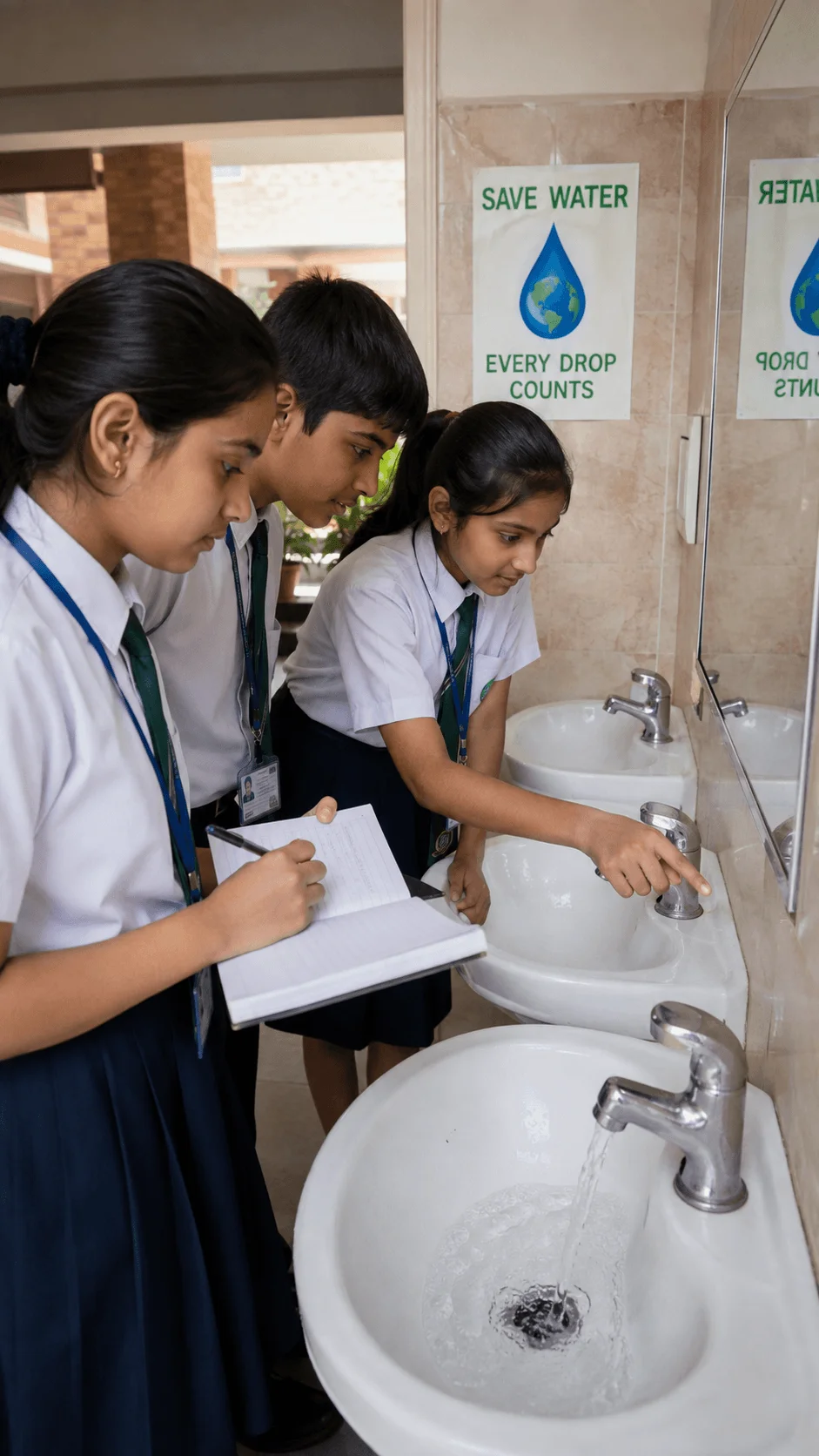
Students can create educational displays explaining why water conservation matters. They can also develop reminders that encourage responsible water habits.
The club could introduce a water saving challenge where students and staff focus on practical habits for a specific period. The important part is to connect the challenge with observation and learning rather than treating it as a simple competition.
This activity can also help students understand that water conservation depends on both individual behavior and larger systems.
For example, turning off a tap promptly can prevent unnecessary waste, but school landscaping, plumbing systems, and maintenance practices can also influence water consumption.
Water conservation activities therefore provide an excellent opportunity for students to think about environmental problems from several perspectives.
Trash to Treasure Innovation Challenge
The Trash to Treasure Innovation Challenge turns waste materials into a creative problem solving opportunity.
Instead of simply asking students to recycle something, the eco club can challenge teams to think about whether discarded materials could receive another useful purpose.
Students can work with safe and clean materials that the school has approved for creative projects. They can brainstorm possible uses, sketch ideas, create prototypes, and explain how their designs reduce the need for new materials.
The activity becomes more interesting when the club treats it as an innovation challenge rather than a basic craft session.
Students can ask themselves questions such as what problem their creation solves, why the chosen material would otherwise become waste, and how their idea could be improved.
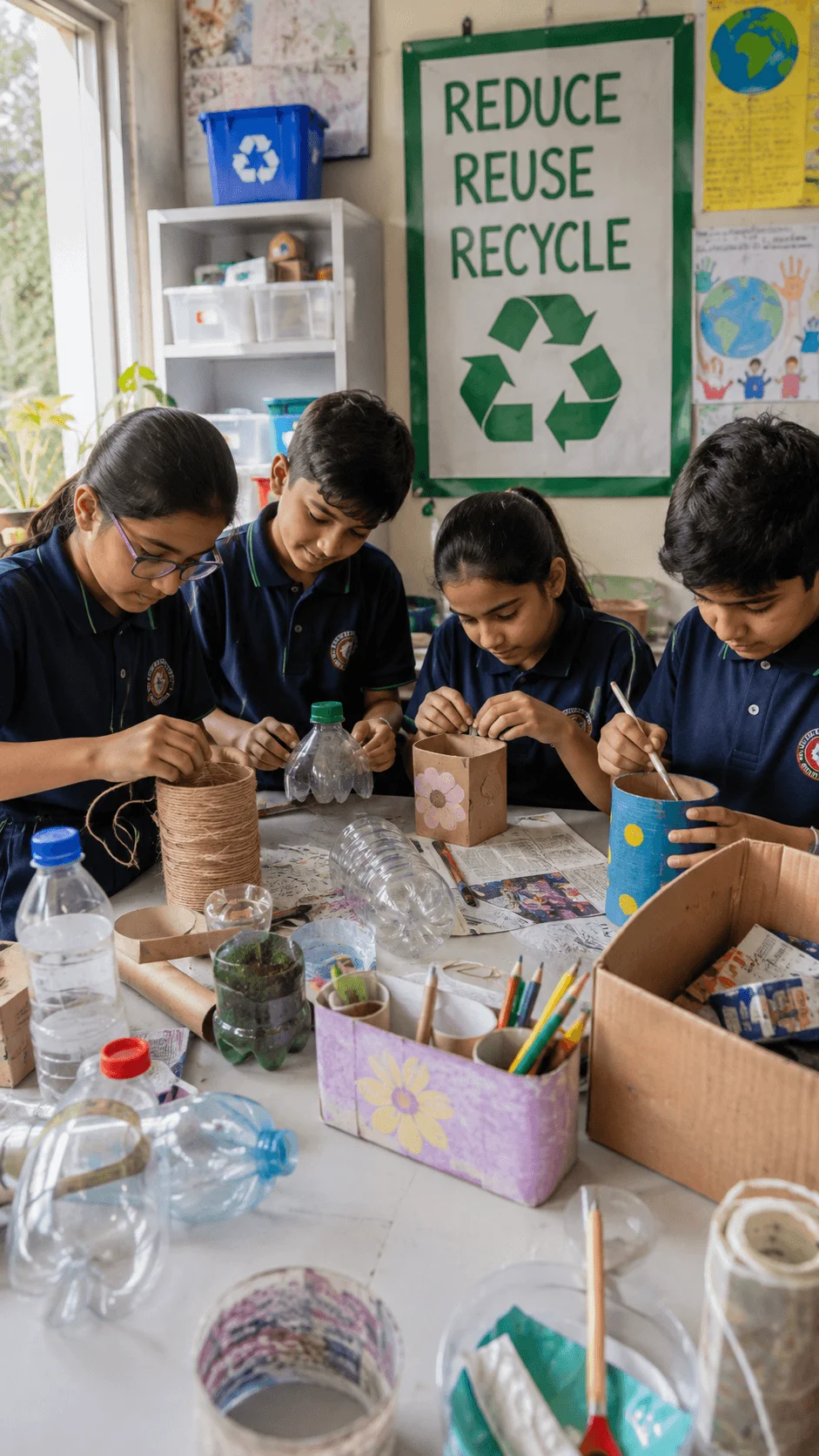
One team might create a useful classroom organizer from suitable discarded materials. Another might design a storage solution or educational display. The specific creation matters less than the thinking process behind it.
The activity introduces students to the idea of extending the useful life of materials. It also demonstrates that sustainability can involve creativity and innovation rather than only conservation.
Students can present their creations to the school community and explain the environmental thinking behind each design.
This can encourage other students to look at everyday waste differently. Instead of seeing every unwanted object as useless, they may begin asking whether it can be repaired, reused, repurposed, or passed on.
Green club activities for students become more memorable when they allow students to make something themselves while learning about resource conservation.
Sustainable Food Lab
A Sustainable Food Lab can introduce students to the connection between food and environmental sustainability.
Food production involves many resources, including land, water, energy, transportation, and packaging. Students can explore these connections through research and creative activities.
The club might investigate where common foods come from and how transportation, packaging, seasonal availability, and food waste can influence environmental impact.
Students can also explore the idea of using food more responsibly. For example, they can discuss ways to reduce unnecessary packaging, avoid wasting suitable food, support local food systems where appropriate, and make thoughtful choices about resources.
The activity can include educational displays, research presentations, food waste awareness campaigns, or low waste food ideas developed with appropriate adult supervision.
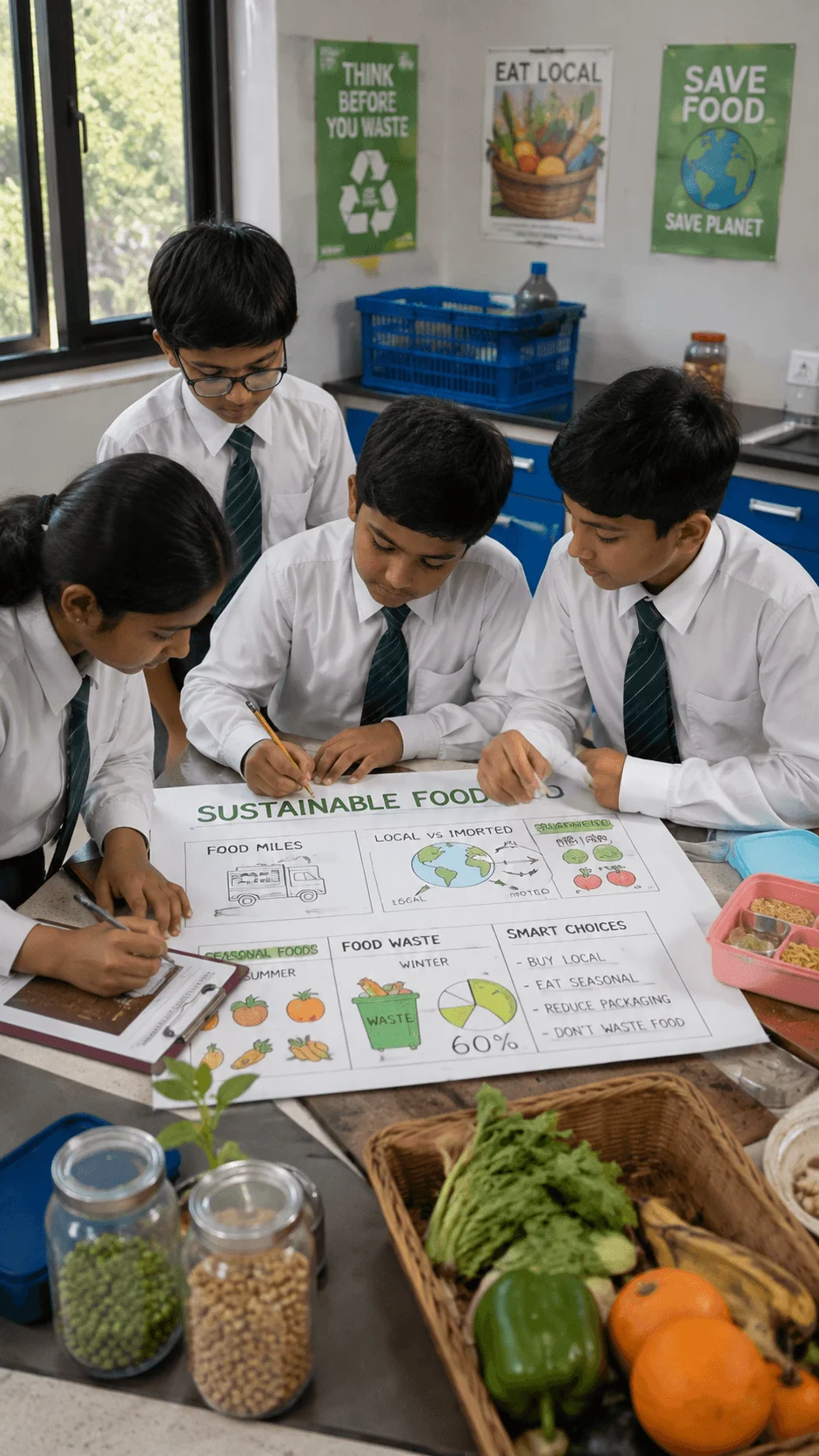
The purpose should not be to tell students what they should or should not eat. Instead, the project should help students understand how food systems work and how everyday choices connect with environmental resources.
This makes the Sustainable Food Lab particularly useful for schools that already have gardening programs, cafeterias, cooking activities, or food waste initiatives.
Students can also connect this project with the Food Waste Audit from earlier in the article. After identifying common sources of food waste, the club can research practical ways to prevent it.
Sustainability club activities for students become stronger when different projects connect with one another. One investigation can provide information that helps students design another project.
Student Sustainability Living Lab
The Student Sustainability Living Lab is one of the most advanced ideas an eco club can introduce because it gives students the opportunity to investigate a real problem and develop a solution.
Instead of starting with a predetermined activity, students begin by asking what environmental problem exists in their school.
They might notice that recycling bins contain incorrectly sorted waste. They might discover that classrooms use unnecessary electricity. They might identify food waste during lunch or notice that the school has limited habitat for local wildlife.
Once students identify a problem, they can research possible solutions and choose one approach to test.
For example, if students discover problems with waste sorting, they could develop a clearer waste education campaign and observe whether sorting improves afterward.
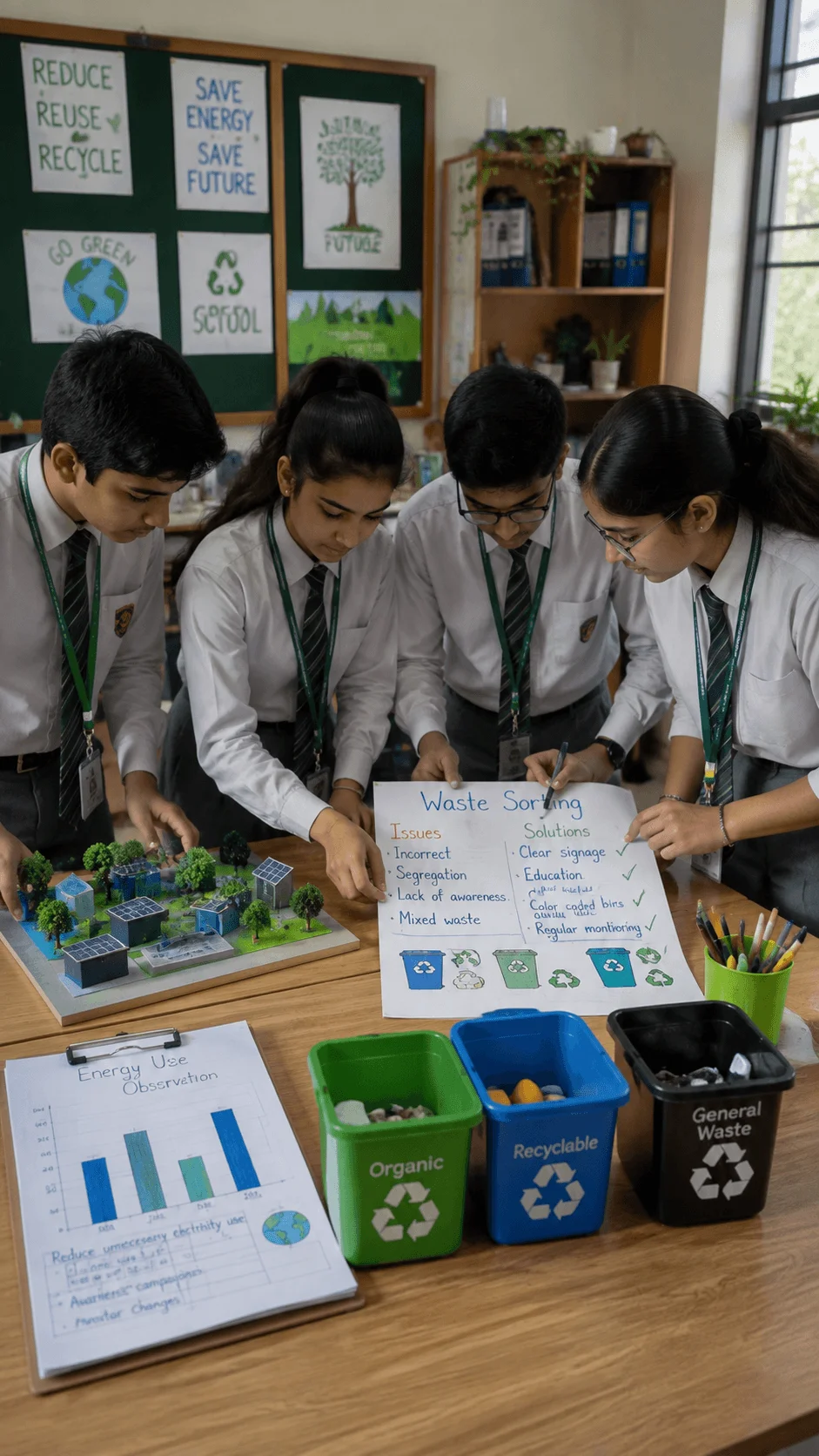
If energy use becomes the focus, students could develop an awareness campaign and monitor changes in energy related behavior.
The important part is the process. Students identify a problem, investigate it, develop an idea, put the idea into practice, observe what happens, and reflect on the results.
This approach gives students a practical introduction to problem solving and project management.
It also teaches an important lesson about sustainability. Environmental improvement does not always happen immediately. Sometimes the first solution does not work as expected. Students can learn from those results and improve their approach.
A Student Sustainability Living Lab can eventually become a long term feature of the school eco club. Each group of students can build on the work completed by previous members.
How to Start an Eco Friendly Club Activity at School
Starting Eco Friendly Club Activities for Students does not require a large project from the beginning.
The club can start by identifying one environmental issue that students notice around the school.
Members can discuss the problem, research it, and decide whether it is realistic to address. A teacher or school coordinator can then help students understand any rules, permissions, safety considerations, or resources required.
After choosing an activity, the club can create a simple plan. Students can decide who will research the topic, who will communicate with other students, who will document the project, and who will help measure the results.
The project should have a clear purpose.
Instead of saying that the club wants to “help the environment,” students could set a more specific goal such as improving waste sorting, increasing biodiversity observations, reducing unnecessary food waste, or encouraging better energy habits.
Once the project finishes, students should review the results and discuss the next step.
If the activity worked well, the club can expand it. If the results were disappointing, students can identify what they learned and try a different approach.
This process gives students a sense of ownership and helps the club become stronger over time.
Conclusion
Eco Friendly Club Activities for Students can turn environmental education into meaningful action. The most effective activities do more than tell students to protect nature. They allow students to investigate problems, explore solutions, work together, and see how their decisions can influence their school environment.
The 12 ideas discussed in this article show how modern eco clubs can move beyond traditional activities. Energy investigations, biodiversity mapping, food waste audits, e waste awareness, clothing swaps, climate research, microplastic education, pollinator gardens, water challenges, creative reuse, sustainable food projects, and student led living labs all give students different ways to participate.
The best project does not have to be the biggest one. A small group can begin by investigating one problem and finding one practical solution. Students can then measure their progress, share what they learn, and use that experience to plan their next project.
When students take responsibility for environmental projects, sustainability becomes more than a school topic. It becomes an opportunity to develop leadership, creativity, research skills, teamwork, and problem solving while contributing to a healthier environment.
With the right approach, an eco club can become a place where students do not simply learn about sustainability. They actively practice it and inspire others to do the same.