Eco Friendly Aesthetic Photography Equipment Ideas
Eco friendly aesthetic photography equipment is becoming an increasingly interesting choice for photographers who want beautiful images without creating an unnecessarily wasteful setup. In 2026, sustainable photography is moving beyond simple ideas such as buying products made from recycled materials. Photographers are paying more attention to durability, repairability, second hand equipment, reusable accessories, energy efficiency and the ability to use the same equipment for many years.
Aesthetic photography also gives sustainability an interesting creative dimension. Instead of filling a studio with disposable props and constantly replacing accessories, photographers can create distinctive visual styles using vintage equipment, natural materials, reclaimed surfaces and versatile tools. These choices can give photographs more character while also encouraging a more thoughtful approach to equipment.
The best sustainable photography setup does not necessarily require replacing everything you already own. In many cases, the most responsible approach is to keep useful equipment for longer, repair it when possible and carefully add items that offer genuine long term value. The following ideas explore how photographers can combine sustainability with beautiful and creative photography equipment choices in 2026.
Recycled Material Camera Bags for a Sustainable Photography Setup
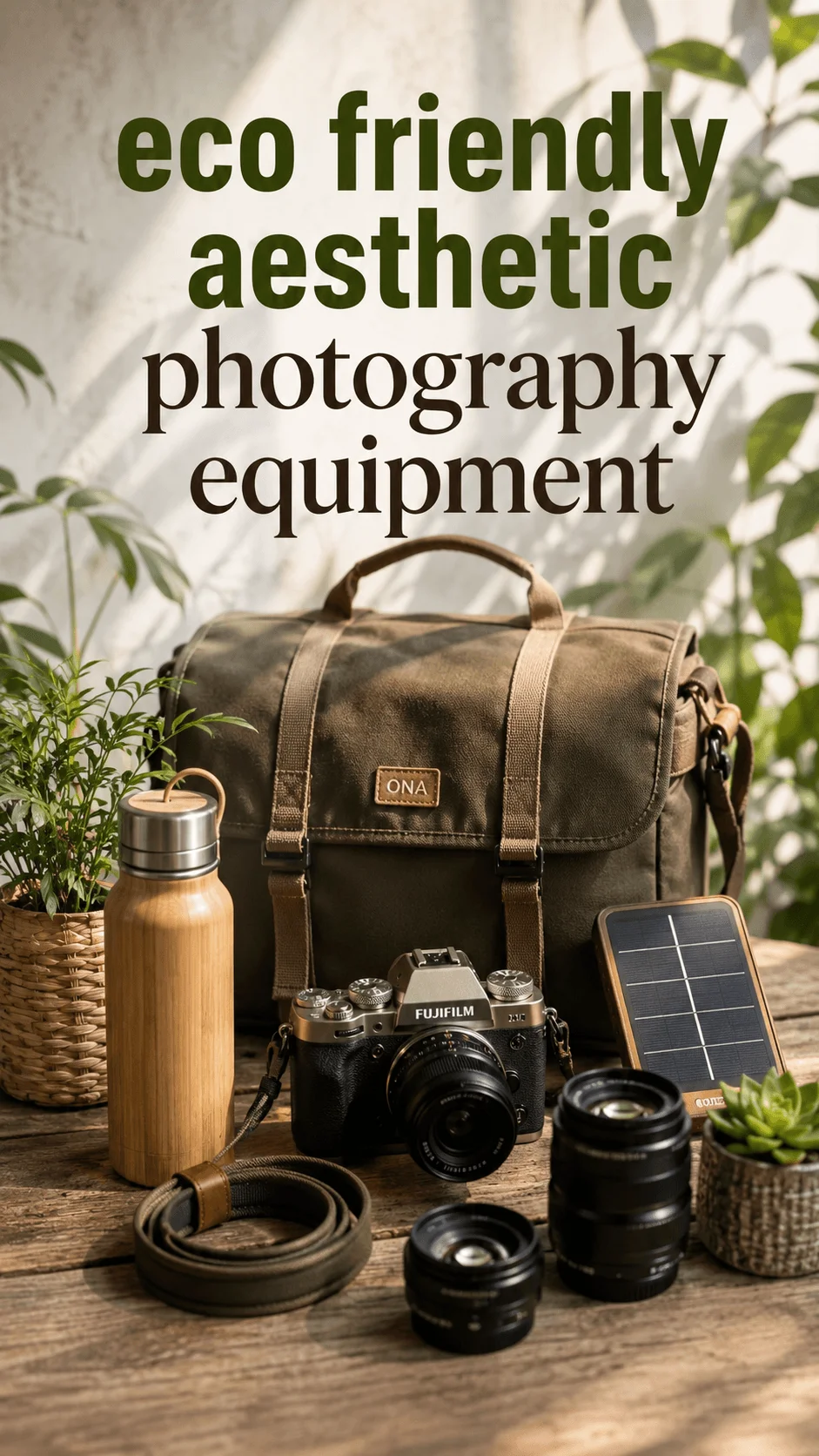
A camera bag is one of the most practical pieces of photography equipment, but it can also become an important part of an aesthetic setup. Recycled material camera bags are gaining attention because they can combine everyday functionality with more responsible material choices.
Many modern camera bags use recycled polyester or recycled nylon. These materials can come from previously used plastic materials that manufacturers process into fibers and fabrics. The sustainability value depends on how the material is sourced, manufactured and used, but recycled fabrics can provide an alternative to relying entirely on newly produced synthetic materials.
For aesthetic photographers, the appearance of the bag can matter almost as much as its storage capacity. Minimal shapes, neutral colors, natural textures and simple designs work especially well with lifestyle and travel photography. A photographer carrying a clean canvas style bag or a simple recycled fabric backpack can create a more understated visual identity than someone using a large professional looking equipment case.
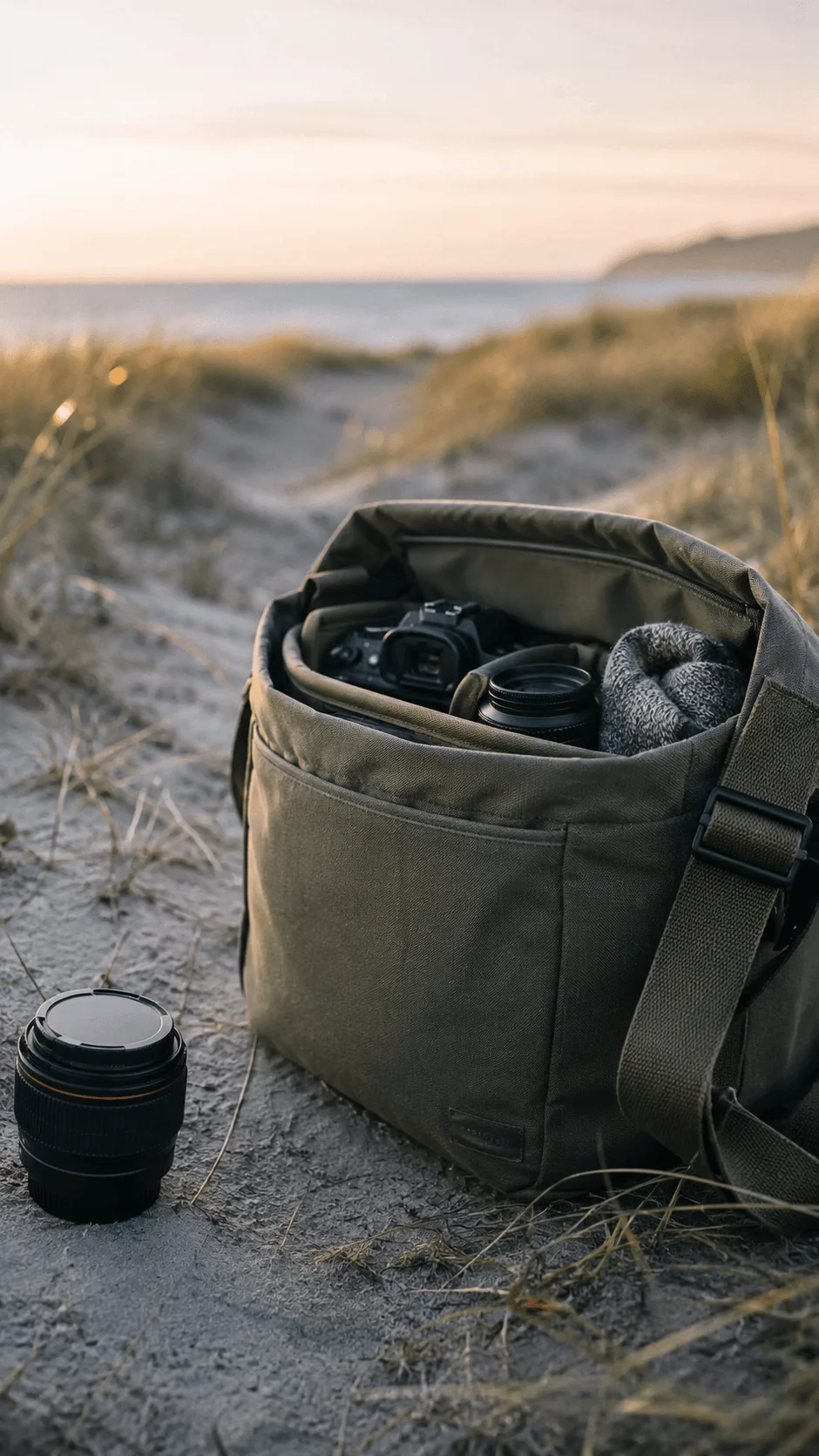
Durability should remain the most important consideration. A camera bag that looks sustainable but quickly loses its shape or protection may require replacement sooner than a well made conventional bag. Look for strong stitching, reliable closures, protective compartments and materials that can handle regular use.
Another advantage comes from choosing a bag that can serve several purposes. A versatile bag can carry a camera, lenses, batteries, memory cards and personal items without requiring separate bags for different photography situations. This approach supports a simpler photography setup and can reduce unnecessary purchases over time.
The aesthetic value also extends to photography itself. A well designed camera bag can become part of travel photographs, behind the scenes content and creator lifestyle images. Natural textures and understated colors can complement outdoor, minimalist and editorial photography particularly well.
Refurbished Photography Equipment and Second Hand Cameras
Refurbished photography equipment represents one of the most meaningful sustainability choices available to photographers. Instead of focusing only on newly manufactured products marketed as environmentally friendly, photographers can extend the life of equipment that already exists.
Cameras often remain useful for many years. A model that is no longer considered the newest option can still produce excellent photographs when its features match the photographer’s needs. Buying a reliable used camera can therefore be a practical way to enter photography without automatically contributing to demand for another newly manufactured device.
Professionally refurbished equipment offers another option. Refurbishment can involve inspection, cleaning, testing and replacement of certain components. The exact process varies between sellers, so buyers should always investigate the condition and history of the equipment before making a purchase.
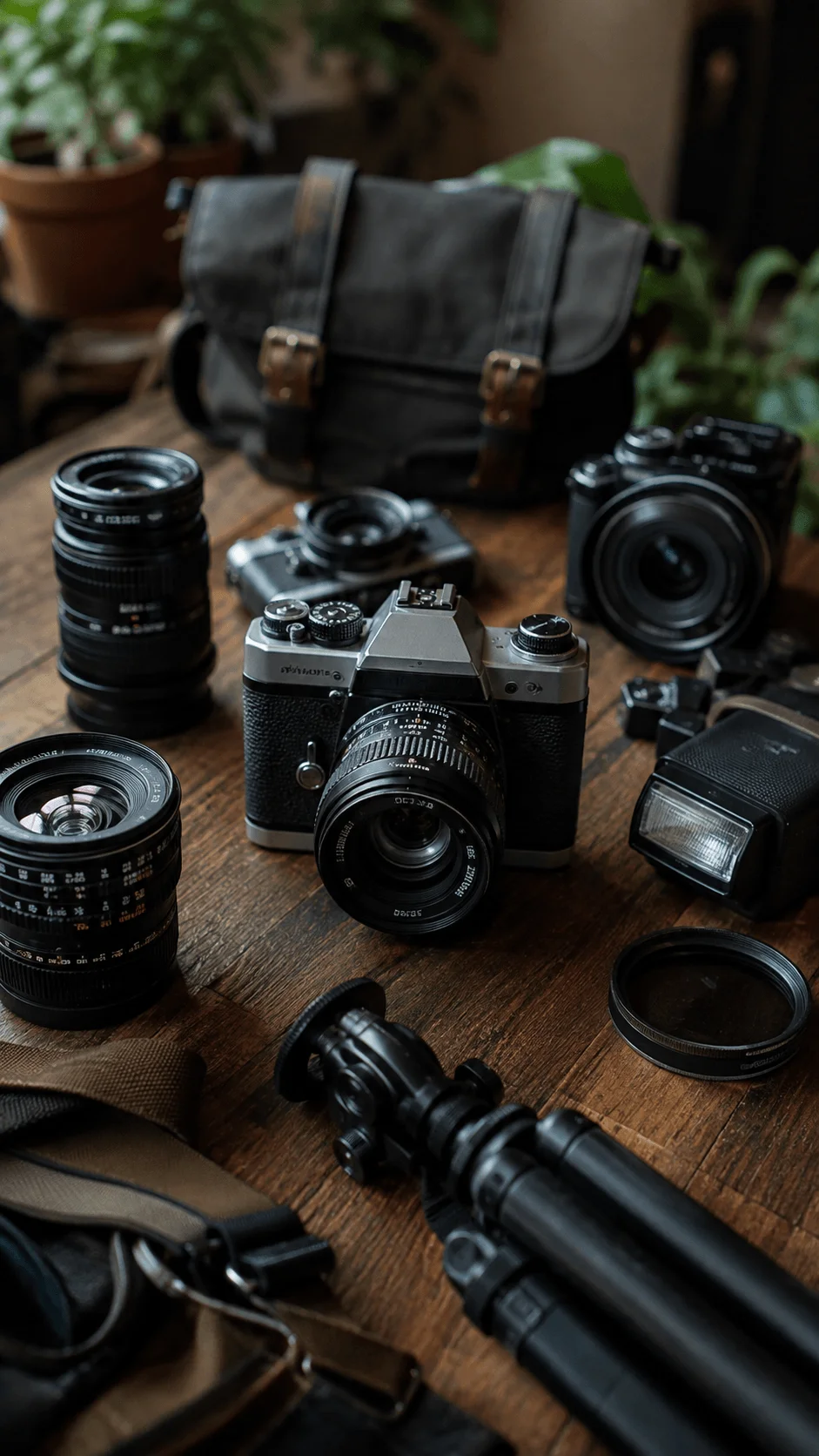
Second hand cameras can also contribute to an aesthetic photography style. Older digital cameras sometimes produce images with characteristics that differ from modern systems. Some photographers enjoy the colors, contrast or limitations of older cameras because they can create a distinctive visual character. Older cameras can also work particularly well for photographers interested in nostalgic, documentary or vintage inspired imagery.
The same principle applies to accessories. Used tripods, flashes, camera bags, filters and other equipment can sometimes remain perfectly functional long after their original owners stop using them.
However, buying used equipment requires careful evaluation. Check the physical condition, controls, ports, battery compartment, lens mount and general operation. For lenses, inspect the glass and focusing mechanism. Also consider whether batteries and replacement parts remain available.
The goal is not simply to buy the oldest equipment possible. The better approach is to find equipment that remains reliable and useful for a long period. A durable second hand camera that serves you for years can make more sense than repeatedly replacing inexpensive new equipment.
This makes refurbished photography equipment especially relevant to the wider idea of sustainable photography gear. The most sustainable product can sometimes be the one that already exists and still has plenty of useful life remaining.
Vintage Lenses for Sustainable Aesthetic Photography
Vintage lenses occupy an interesting space between photography equipment and creative tools. They allow photographers to experiment with distinctive image characteristics while giving older equipment another useful life.
Modern cameras can produce extremely sharp and technically precise images. However, not every photographer wants clinical sharpness in every situation. Vintage lenses can introduce a different visual character through their optical design, manual focusing and rendering.
Some older lenses create softer images, unusual highlights or distinctive flare. Others produce interesting background blur or color characteristics. These qualities can work particularly well for portraits, still life photography, fashion images, creative product photography and lifestyle content.
For photographers interested in eco friendly aesthetic photography equipment, vintage lenses can offer an appealing combination of reuse and creativity. Instead of purchasing a completely new lens for every desired visual effect, photographers can explore older lenses that already exist.
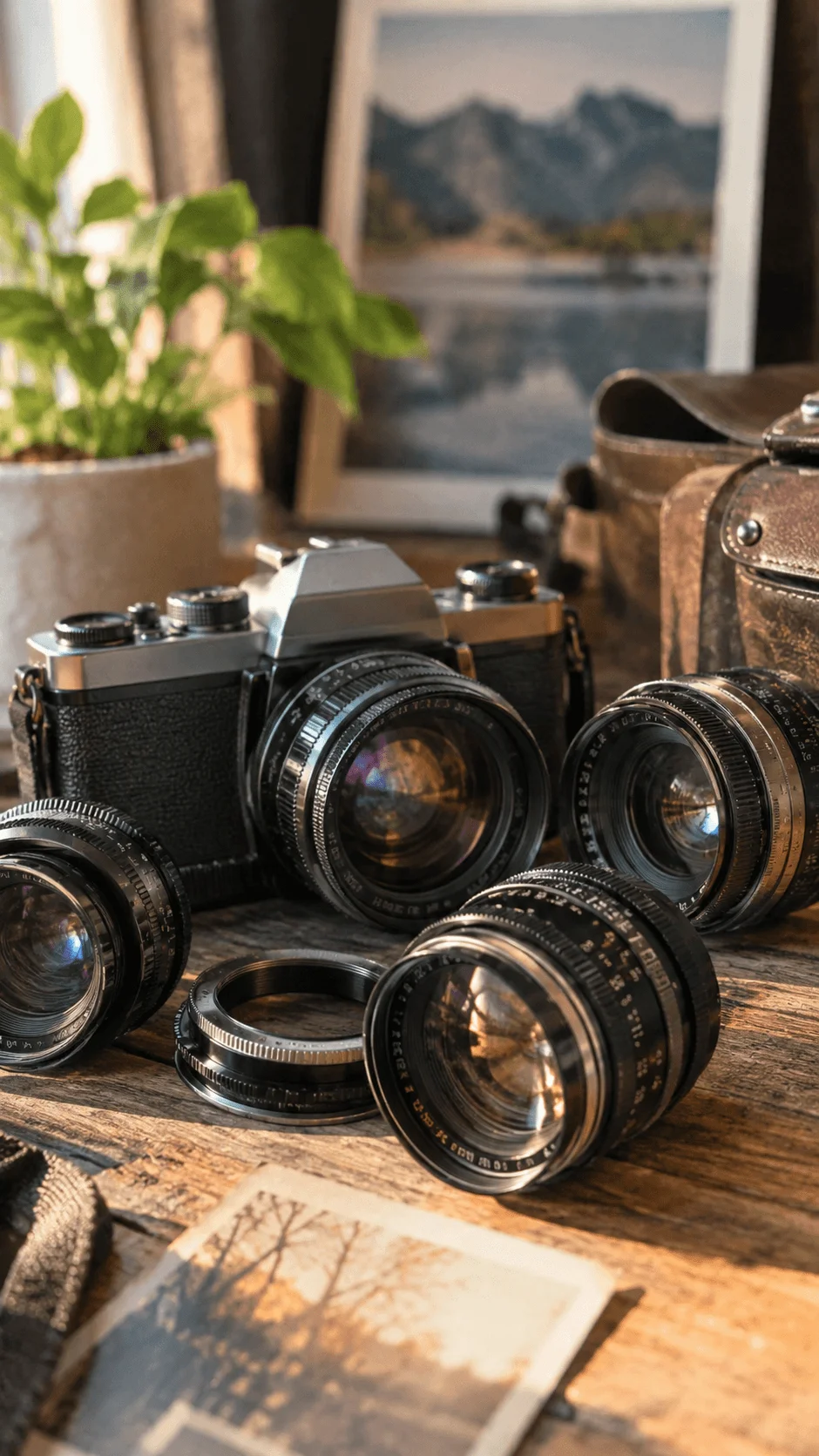
Many vintage lenses can work with newer cameras through appropriate adapters. Compatibility remains important, however. Photographers should check the lens mount, camera compatibility and any limitations introduced by the adapter before purchasing.
Manual focusing can also change the photography experience. Rather than relying entirely on automatic focusing, the photographer becomes more involved in positioning the focus. This can encourage slower and more intentional photography.
Vintage lenses can also become part of the aesthetic identity of a photographer. Their physical appearance often has a classic mechanical design that looks attractive in studio photographs and behind the scenes content. A collection of older lenses can therefore contribute visually to a creative workspace.
However, vintage does not automatically mean sustainable. A damaged lens that requires difficult repairs may not be a sensible choice. Photographers should consider condition, expected lifespan, compatibility and whether replacement parts are available.
The strongest approach is to choose vintage equipment because it is useful and durable while also appreciating the creative character it provides.
Modular and Repairable Sustainable Camera Accessories
The photography industry contains many small accessories that photographers replace without thinking much about their lifespan. Modular and repairable equipment offers a different approach by allowing individual components to remain useful even when one part needs attention.
A modular photography accessory may contain several separate components that can be adjusted, replaced or upgraded. Camera rigs, mounting systems, handles, plates and other accessories can sometimes benefit from this approach.
The main advantage is simple. If one component becomes damaged, the photographer may only need to replace that component instead of throwing away the entire accessory.
Repairability also encourages photographers to think about equipment as a long term investment. Before purchasing an accessory, it can be useful to consider whether the manufacturer provides replacement parts or whether the product can be repaired locally.
This idea fits naturally with minimalist photography. A photographer does not necessarily need dozens of specialized accessories. A small number of versatile components can create different configurations for portraits, product photography, video and studio work.
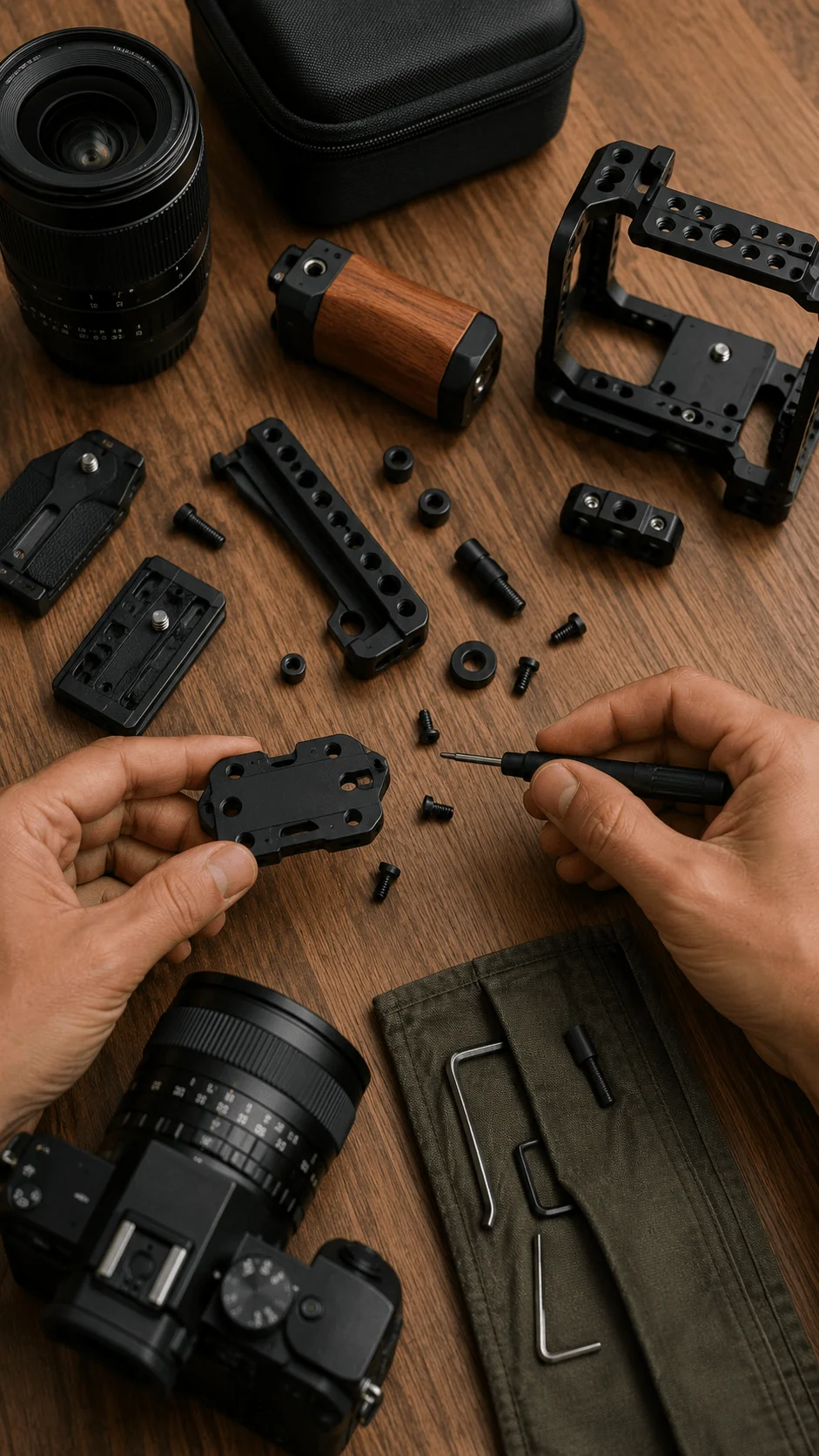
Modular equipment can also create a cleaner visual workspace. Instead of accumulating equipment for every possible situation, photographers can build a flexible system that changes according to the project.
The sustainability benefits depend on actual product quality. A modular product is not automatically environmentally responsible simply because it contains replaceable parts. The materials, manufacturing process, durability and expected lifespan still matter.
Nevertheless, repairability is becoming an important consideration for people who want sustainable camera accessories that remain useful rather than disposable.
Solar Powered Photography Accessories for Outdoor Creators
Outdoor photographers often face a simple problem: cameras, lights, phones and other creative devices require electricity, but remote locations may not provide convenient access to a power outlet. Solar powered photography accessories can offer one possible solution.
Portable solar chargers and solar power systems can help photographers recharge compatible devices when they spend long periods outdoors. This can be useful for nature photography, travel photography, camping trips and outdoor content creation.
Solar charging works particularly well as part of a broader energy conscious photography setup. Instead of depending entirely on traditional electrical sources while working away from home, photographers can use sunlight as one available energy source.
However, solar equipment has practical limitations. Charging performance depends on sunlight, weather conditions, panel size and the device being charged. A small portable panel may be convenient to carry but may charge equipment more slowly than a larger system.
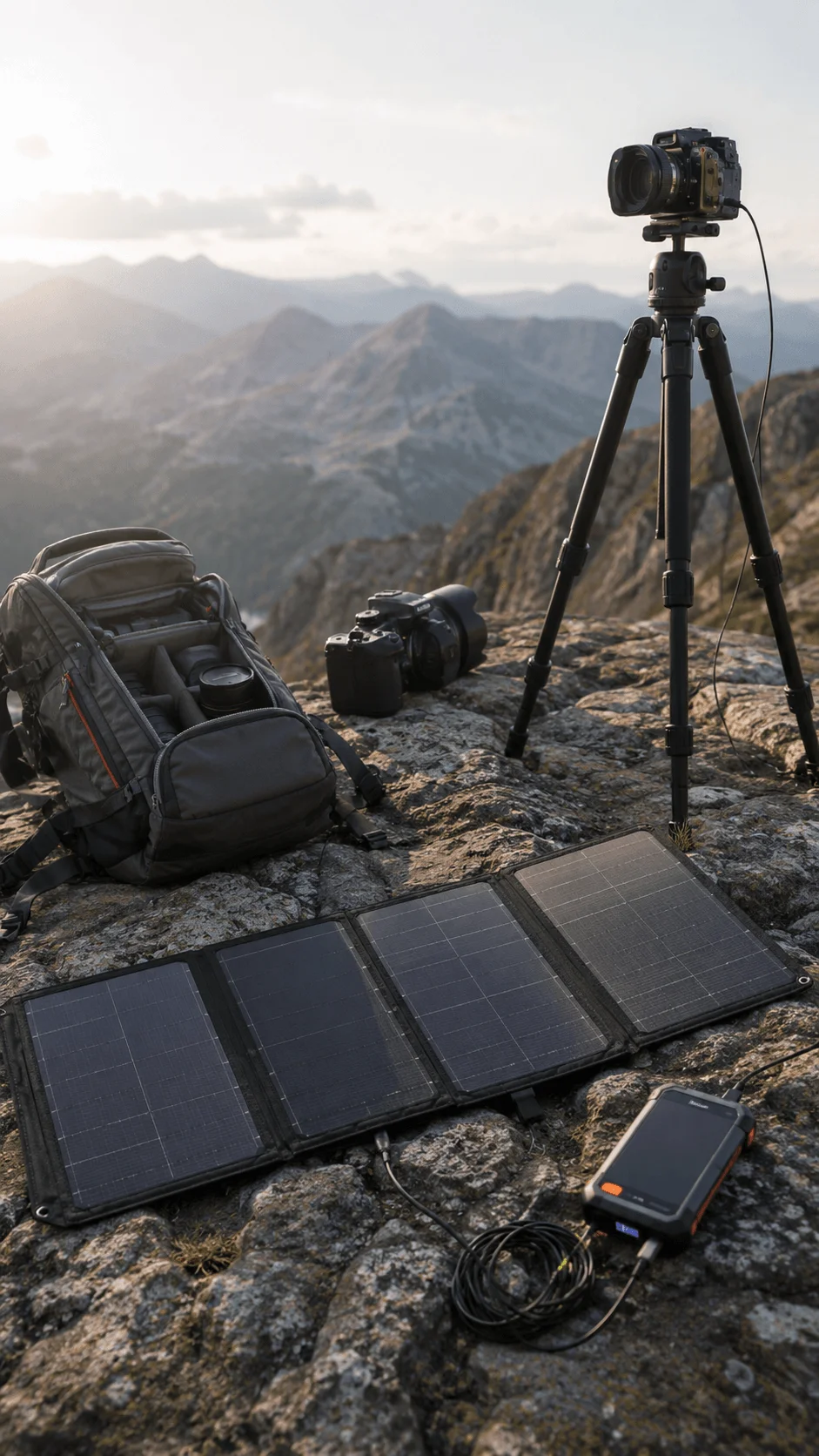
Portability therefore becomes an important part of the decision. Outdoor photographers should consider how much equipment they can realistically carry and whether the charging system provides enough power for their typical shooting sessions.
The aesthetic appeal of solar accessories is also becoming more interesting. Compact modern designs can fit naturally into travel and outdoor photography kits without adding excessive bulk.
Rather than treating solar equipment as a replacement for every other charging method, photographers can view it as one component of a flexible sustainable photography setup. When used appropriately, it can provide useful independence during outdoor projects while supporting more conscious energy use.
Rechargeable Batteries for Eco Friendly Camera Gear
Batteries are easy to overlook when discussing photography sustainability, yet photographers can use them repeatedly across cameras, flashes, LED lights, microphones and other accessories.
Rechargeable batteries offer an alternative to repeatedly purchasing disposable batteries for compatible equipment. Their usefulness becomes especially noticeable for photographers who regularly use battery powered accessories.
A good rechargeable battery setup also requires organization. Photographers can keep charged batteries separate from depleted ones and establish a consistent charging routine. This reduces the temptation to purchase replacements simply because existing batteries are difficult to track.
Battery lifespan matters too. A rechargeable battery that loses capacity quickly may provide less value than a reliable option designed for repeated use. Photographers should consider compatibility, charging requirements and expected longevity rather than choosing based only on price.
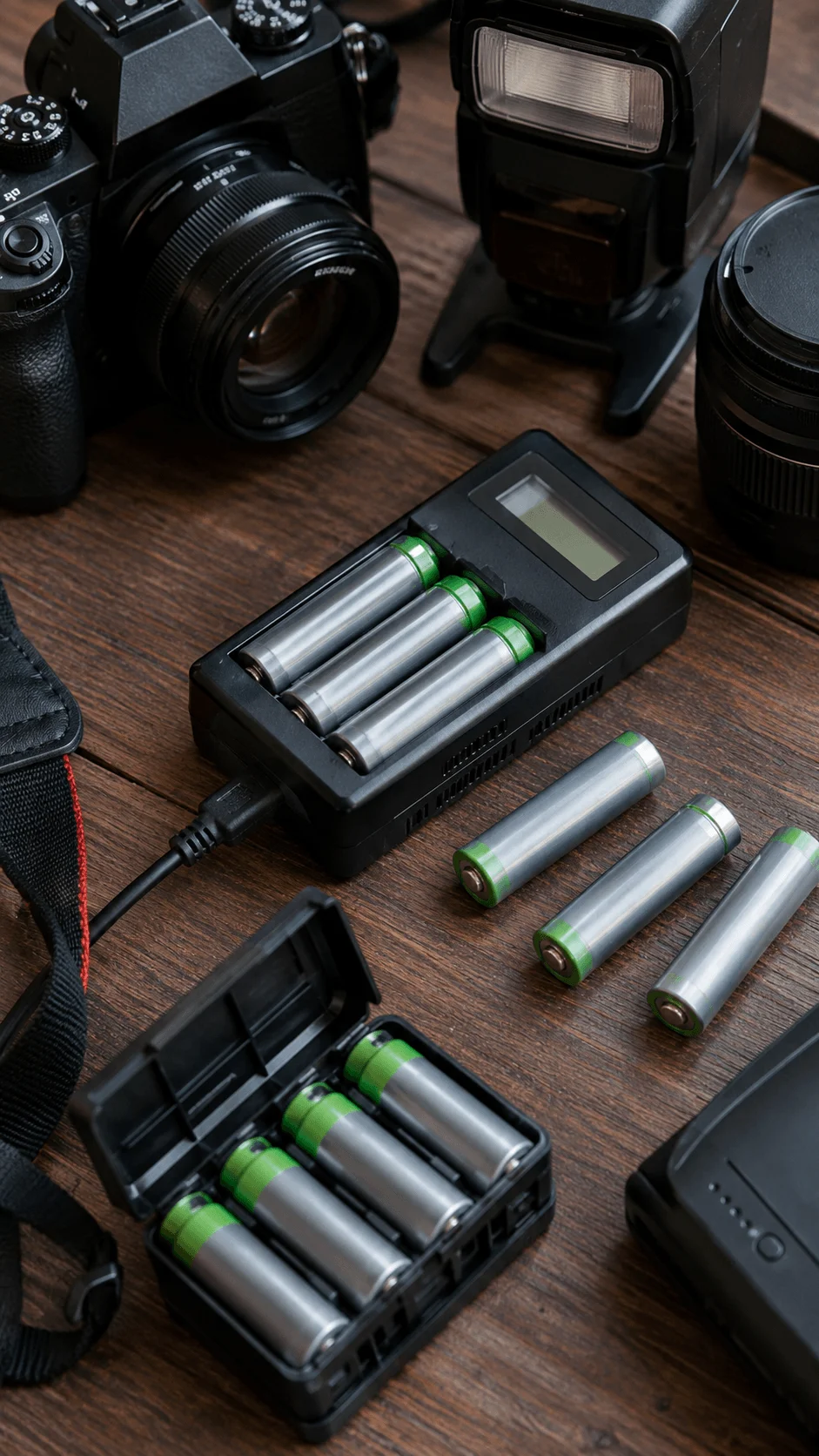
Responsible disposal also remains important. Rechargeable batteries should not simply be thrown into ordinary household waste when they reach the end of their useful life. Appropriate recycling or collection programs can help ensure that battery materials receive proper handling.
For photographers building eco friendly camera gear collections, rechargeable batteries represent a small change that can become significant when used consistently over many years.
Energy Efficient LED Photography Lighting
Lighting has a major influence on photographic aesthetics, and LED technology gives photographers considerable creative flexibility. Modern LED lights can provide adjustable brightness, different color temperatures and compact designs suitable for studios and portable setups.
For photographers interested in sustainable photography equipment, energy efficiency can be an important consideration. LED lighting can provide useful illumination while supporting more controlled energy use than some older lighting technologies.
The creative possibilities are equally important. A small LED panel can create soft illumination for portraits, product photographs or social media content. Multiple compact lights can create different moods without requiring a large studio arrangement.
Warm lighting can produce a cozy and natural atmosphere, while cooler settings can create a cleaner editorial appearance. Photographers can also position LED lights close to subjects and combine them with reflective surfaces or diffusers to shape the light.
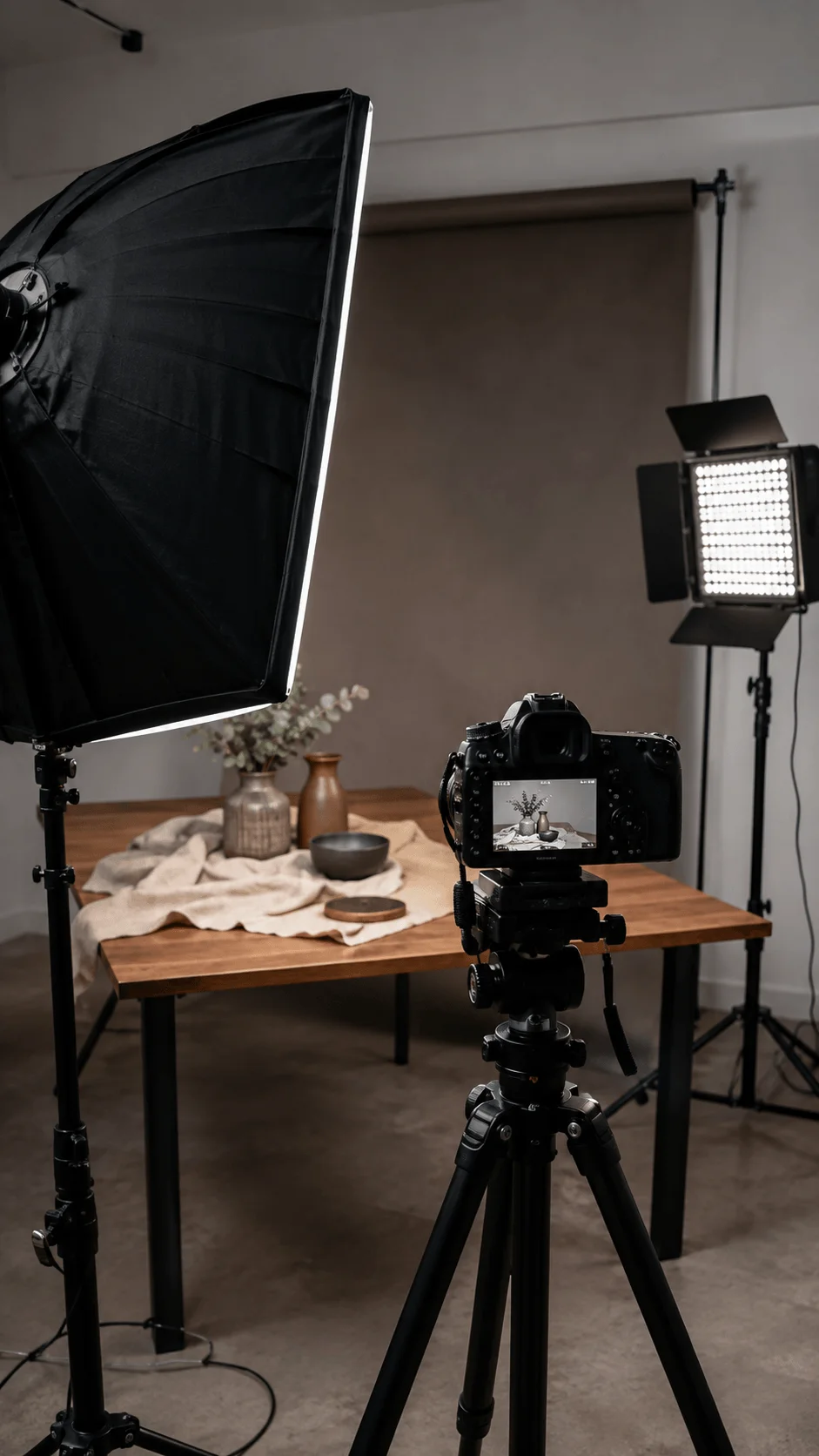
This makes LED equipment particularly useful for aesthetic photography. The photographer can create intentional lighting rather than depending entirely on whatever light happens to be available.
Long term durability should remain a priority. A light that continues working reliably for years offers more value than one that requires frequent replacement. When choosing lighting equipment, photographers should consider construction quality, controls, battery options and whether the device can meet several different creative needs.
A compact LED light that works for portraits, product photography, video and tabletop scenes can be more useful than purchasing separate lights for every type of project.
Bamboo and Wooden Sustainable Photography Equipment
Natural materials are becoming increasingly attractive in aesthetic photography because they bring warmth, texture and an organic character to creative spaces. Bamboo and wooden photography equipment can fit particularly well into photography setups that focus on earthy, rustic, minimalist or nature inspired aesthetics. These materials can appear in tripods, display stands, photography surfaces, storage accessories, frames and decorative studio elements.
Bamboo is particularly interesting because it grows relatively quickly compared with many traditional timber sources. However, photographers should avoid assuming that every bamboo product automatically has a lower environmental impact. The way bamboo is cultivated, processed, transported and finished can influence its overall sustainability. A product that lasts for many years can provide more value than an inexpensive item that needs frequent replacement.
Wood can also bring a distinctive visual quality to a photography workspace. A wooden tripod or reclaimed wooden surface can create a warmer atmosphere than an entirely synthetic setup. This can be especially useful for photographers who create product photography involving skincare, handmade products, food, jewelry, crafts or natural lifestyle products.
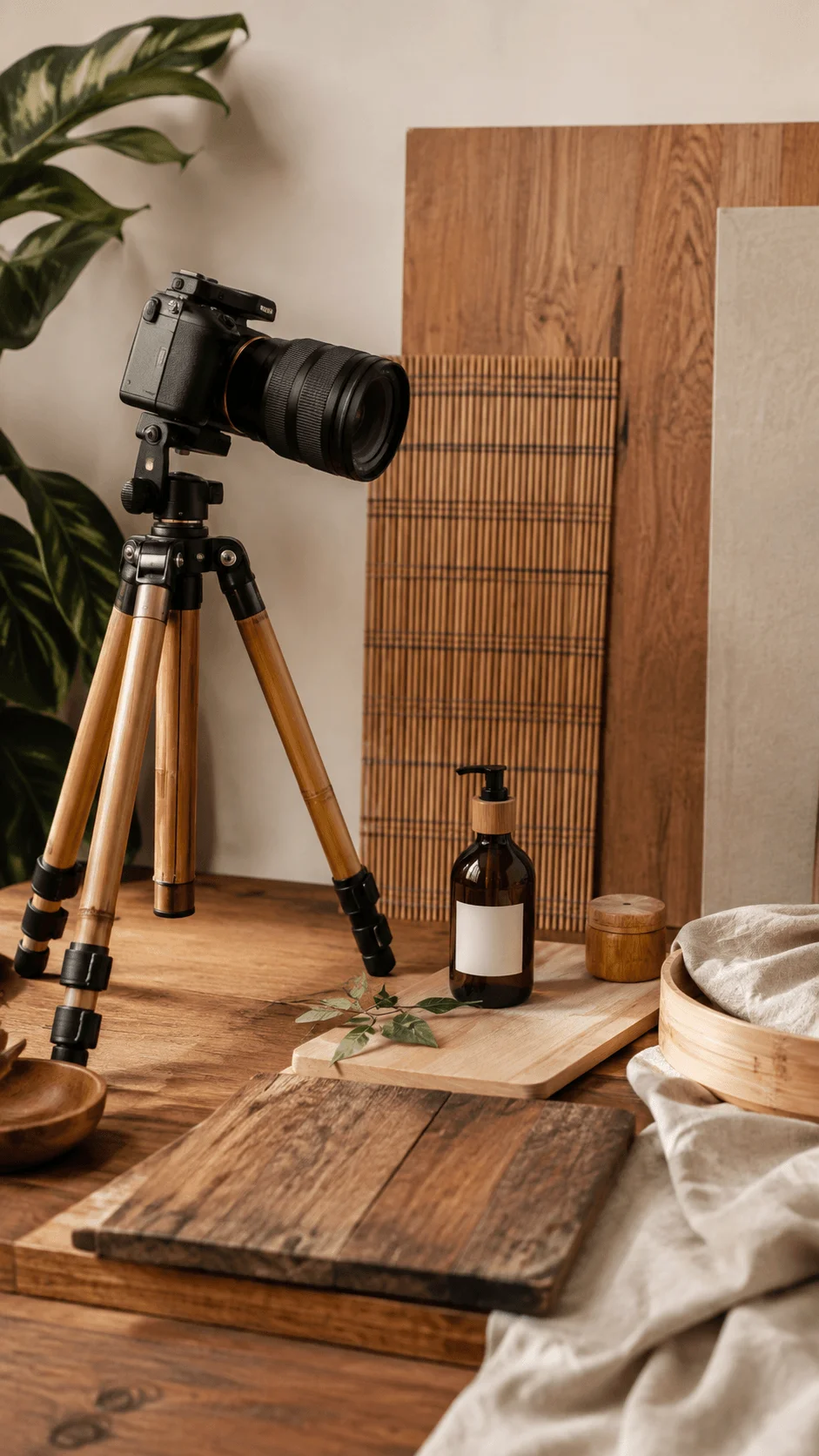
The aesthetic possibilities extend beyond equipment itself. Wooden boards can become photography surfaces, backgrounds or tabletop platforms. Different types of wood provide different grain patterns, tones and textures. A weathered wooden board can create a rustic appearance, while a smooth light colored surface can complement minimalist product photography.
Bamboo surfaces can also work well as backgrounds. Their natural lines can introduce subtle visual interest without overwhelming the subject. Photographers can combine these surfaces with natural fabrics, plants, ceramic objects and soft lighting to create cohesive compositions.
Another advantage is versatility. A single wooden board can serve as a background for product photography, a tabletop for still life images or a platform for creating elevated compositions. This reduces the need to purchase separate surfaces for every project.
The most important consideration remains durability. Choose natural material equipment that can withstand regular use and remain useful for a long time. Sustainable photography is not simply about selecting natural materials. It is about making thoughtful choices that combine useful design, longevity and responsible sourcing.
Hemp and Recycled Camera Straps for Aesthetic Photography
Camera straps are small accessories, but photographers use them constantly. That makes them an interesting place to introduce more sustainable materials into a photography setup. Hemp, recycled fibers and other durable materials can provide alternatives to conventional straps while adding a distinctive visual character.
Hemp has a natural texture that can work particularly well with earthy and minimalist photography styles. Its appearance can complement neutral clothing, wooden accessories, natural backgrounds and outdoor photography environments.
Recycled fabric straps can provide another option for photographers who prefer modern designs. Recycled fibers can be incorporated into simple black, gray, brown or neutral colored straps that fit professional photography setups without appearing overly decorative.
The material is only one part of the decision. A camera strap must also provide reliable support and remain comfortable during extended use. Photographers should pay attention to the attachment system, stitching, width and overall construction.
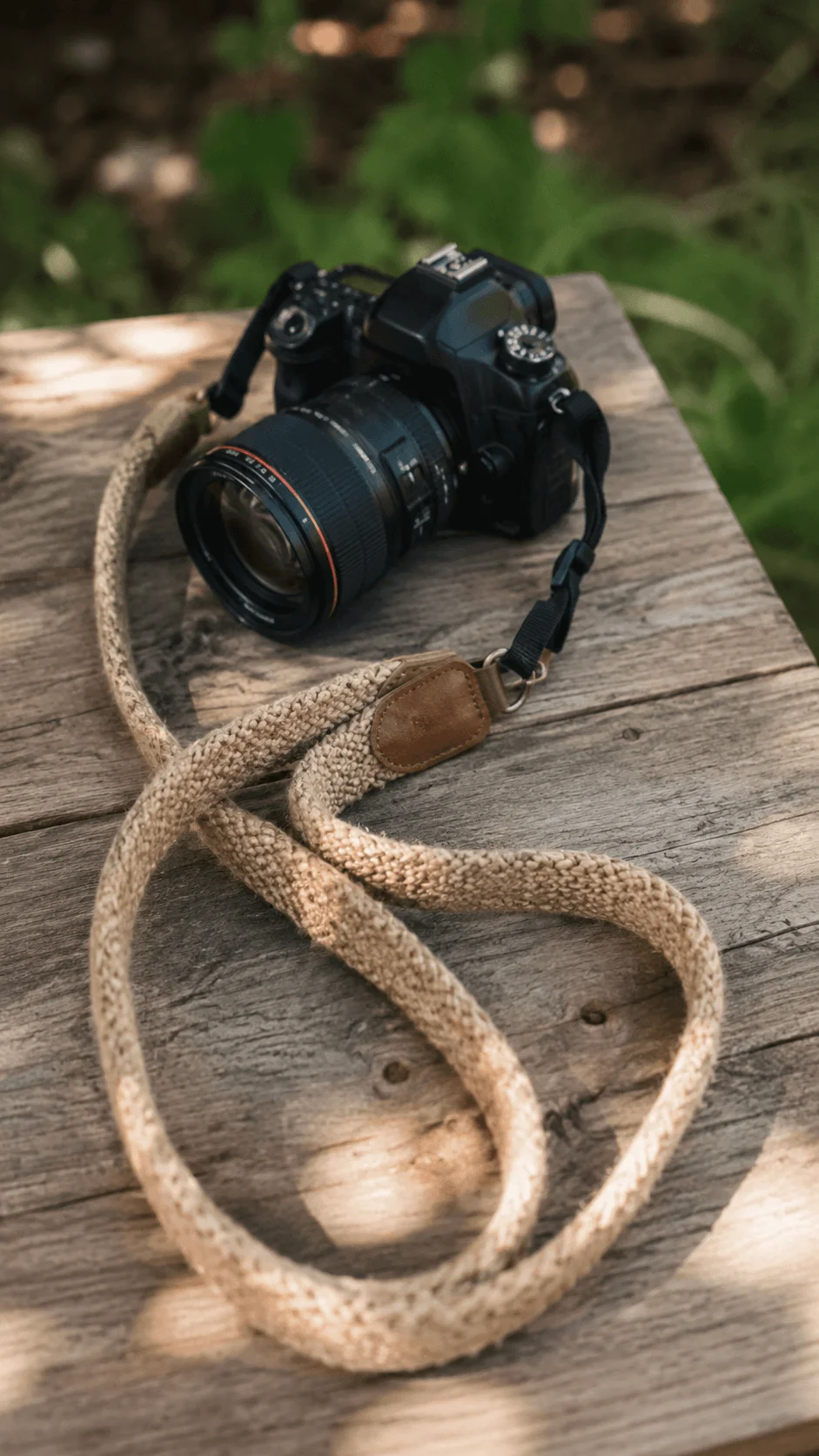
A beautiful strap has little value if it becomes uncomfortable or unreliable during a photography session. For that reason, durability and functionality should always come before appearance.
Camera straps can also become part of a photographer’s personal visual identity. A handmade looking hemp strap may suit a documentary photographer who prefers an organic aesthetic, while a recycled fabric strap with a simple design may suit a minimalist creator.
For photographers interested in eco friendly aesthetic photography equipment, this is a relatively easy area to explore because replacing an old worn strap with a durable alternative does not require changing the entire camera system.
It can also be useful to choose one versatile strap instead of collecting several options for different outfits or photography situations. A durable accessory that works across multiple environments can support a simpler equipment collection.
Reusable and Biodegradable Camera Cleaning Accessories
Camera cleaning equipment is another part of photography gear that deserves more attention when discussing sustainability. Photographers regularly need to remove dust, fingerprints and other unwanted particles from equipment, which can lead to repeated purchases of disposable cleaning products.
Reusable cleaning cloths can help reduce this type of waste. A properly maintained cloth can be used repeatedly instead of being discarded after a single session. Durable cleaning tools can also remain useful for longer periods when photographers store and maintain them properly.
Biodegradable materials may provide another option for certain accessories, but photographers should examine the product carefully rather than assuming that biodegradable automatically means environmentally superior. The actual conditions required for decomposition, the manufacturing process and the product’s useful lifespan all matter.
Camera cleaning also requires care because photography equipment can contain delicate surfaces. Photographers should use cleaning products that are specifically appropriate for the equipment they own and follow the manufacturer’s recommendations.
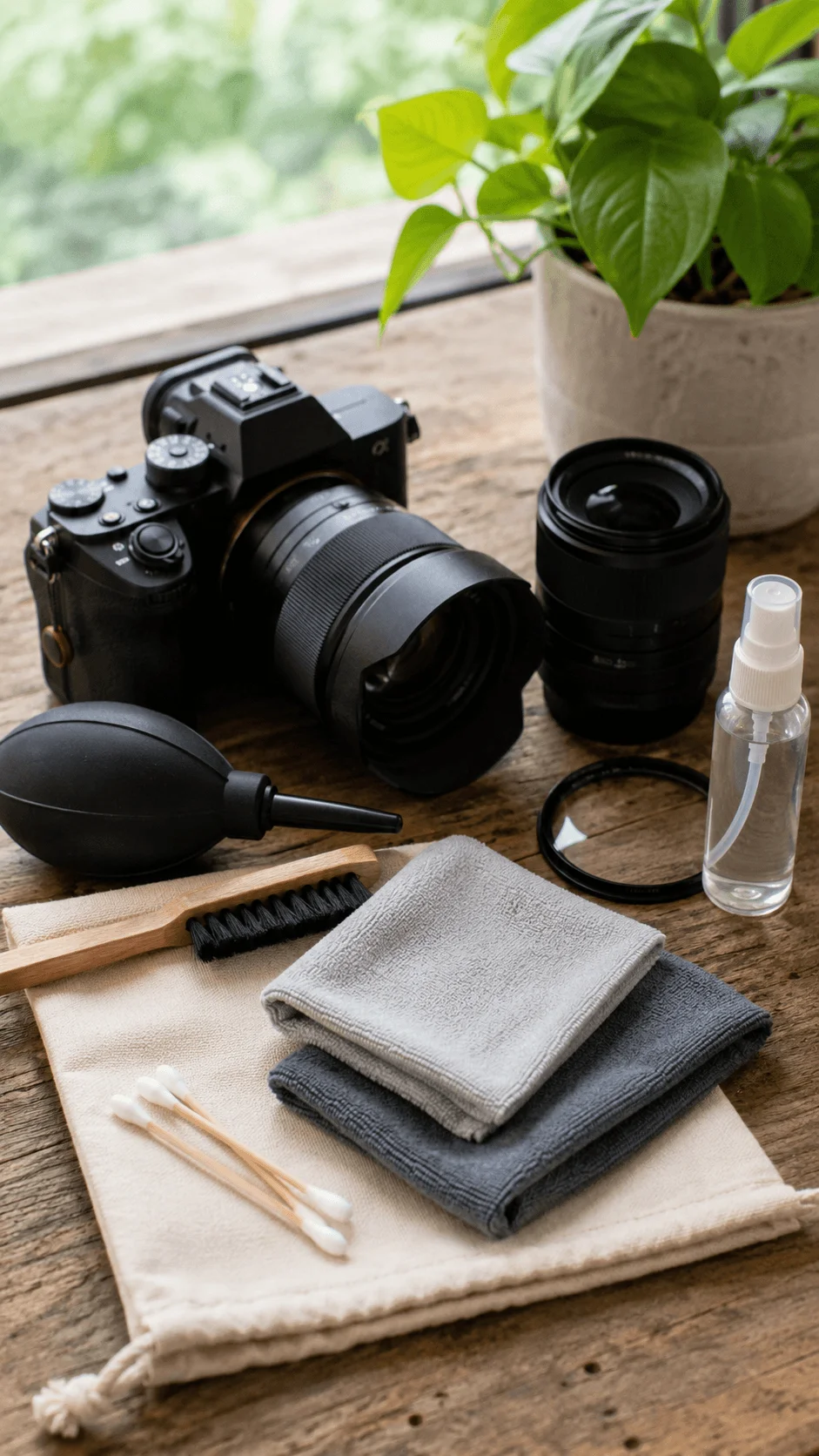
A sustainable cleaning setup should therefore focus on reducing unnecessary waste while protecting expensive equipment. There is little benefit in choosing a supposedly environmentally friendly cleaning accessory if it damages a camera or lens and forces the photographer to replace that equipment.
Reusable accessories can also fit neatly into a minimalist photography bag. Instead of carrying numerous disposable items, photographers can keep a small selection of durable cleaning tools that they actually need.
This approach demonstrates an important principle behind sustainable photography equipment. Sustainability does not always require a completely new invention. Sometimes it simply means using existing resources more carefully and avoiding unnecessary consumption.
Sustainable Photography Backdrops for Aesthetic Images
Photography backdrops can have one of the strongest connections between sustainability and aesthetics. They directly influence how an image looks, while reusable and reclaimed materials can provide photographers with creative alternatives to repeatedly purchasing new backgrounds.
Fabric is one useful option because it can be reused across many photography sessions. Neutral fabrics can work for portraits, product photography and lifestyle content. Textured fabrics can add depth to still life scenes, while darker materials can create dramatic compositions.
Reclaimed wood offers another interesting possibility. Old wooden boards can create beautiful surfaces for food photography, handmade products, jewelry and natural lifestyle images. The marks, grain and imperfections in reclaimed wood can give photographs a character that manufactured backgrounds sometimes struggle to reproduce.
Photographers can also repurpose materials they already have. Old furniture panels, fabric pieces, cardboard surfaces and unused decorative materials can become temporary photography backgrounds. This approach can turn existing objects into creative resources instead of sending them to waste.
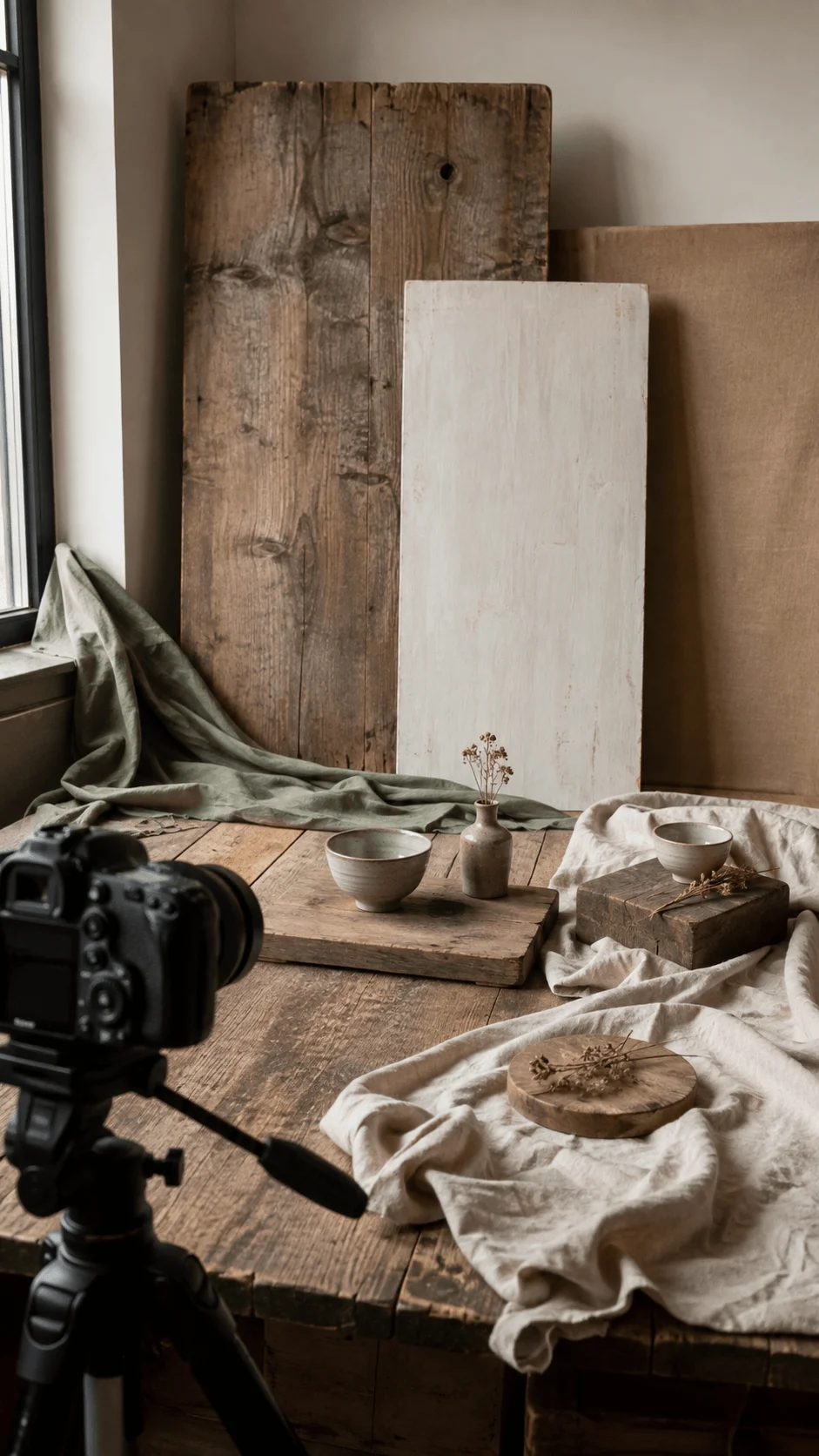
The visual benefit can be significant. A backdrop with natural imperfections can make a photograph feel more authentic. Slight variations in texture can create shadows and depth that give the subject greater dimension.
For product photographers, reusable backgrounds can also make a visual collection more consistent. A small collection of versatile surfaces can provide enough variety for numerous projects without requiring a new background for every shoot.
Color selection matters as well. Earthy beige, warm brown, muted green, cream and natural wood tones can support organic photography aesthetics. Cleaner white, gray and soft neutral surfaces can work better for minimalist compositions.
Lighting should also influence backdrop selection. A highly textured surface can create strong shadows under directional light, while a smoother background can produce a cleaner appearance with soft illumination.
The most interesting approach is to think of the backdrop as both a sustainable resource and a creative element. Instead of asking which new backdrop should be purchased, photographers can ask which existing materials could create the visual effect they want.
This approach can make eco friendly photography equipment feel less restrictive. Sustainable choices can actually encourage more experimentation because photographers start looking at everyday materials as potential creative tools.
Circular Photography Gear and Long Lasting Equipment
One of the most important developments in sustainable photography is the growing focus on equipment lifespan. Circular photography encourages photographers to keep useful equipment in circulation for as long as possible rather than constantly replacing products because newer versions have appeared.
This idea changes the way photographers think about sustainable equipment. Instead of asking only whether a camera bag contains recycled material, they can also ask how long the bag will last, whether it can be repaired and whether another photographer could use it after they no longer need it.
The same principle applies to cameras and lenses. A camera does not suddenly become useless when a newer model arrives. If it continues to meet the photographer’s needs, keeping it in use can be a sensible decision.
Repair is another important part of this approach. Small problems should not automatically mean that an accessory or piece of equipment needs to be discarded. Where practical, photographers can investigate repairs or replacement components.
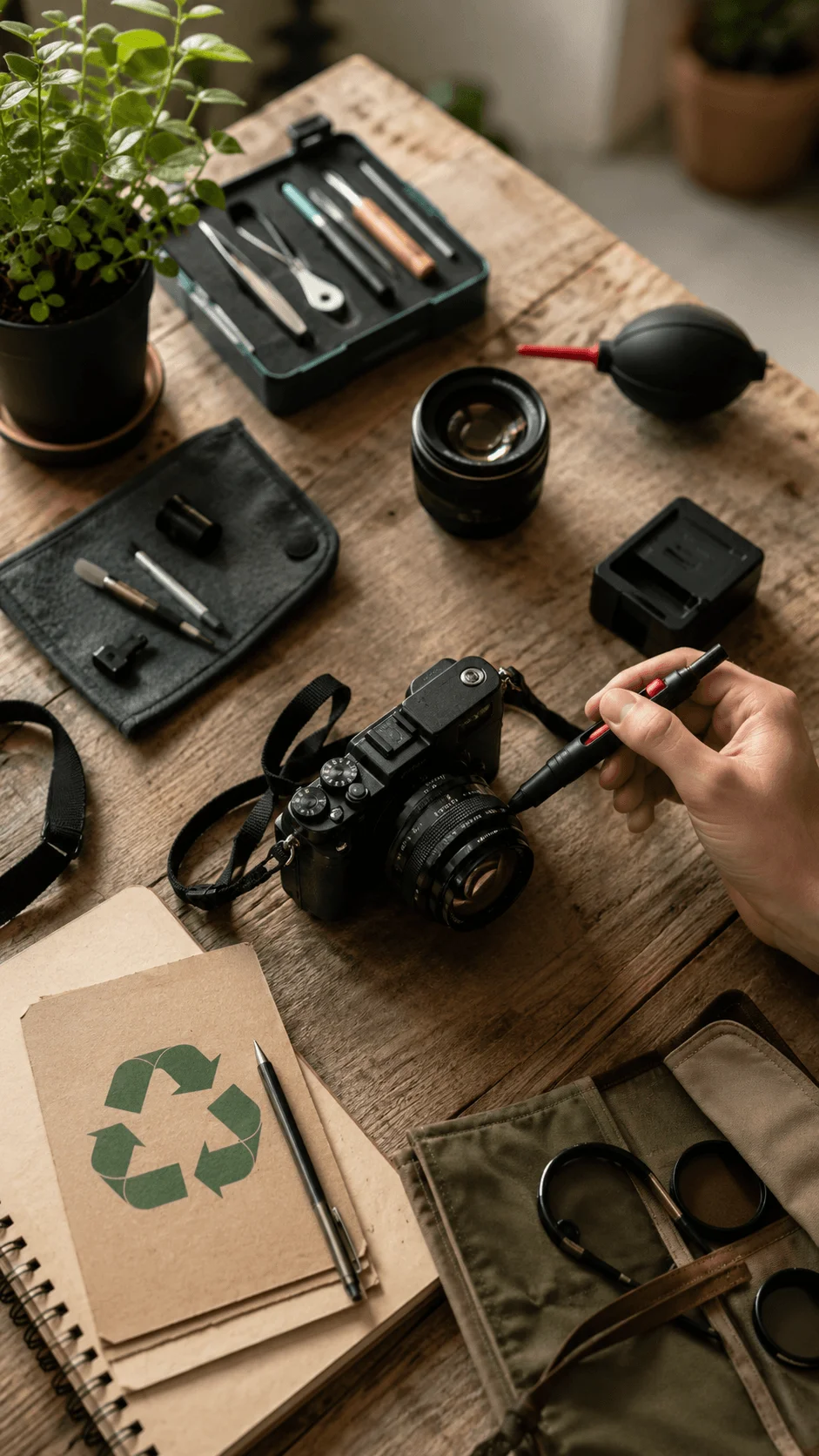
Selling or donating usable equipment can also extend its life. A camera that no longer fits one photographer’s needs may still be extremely useful to someone learning photography.
This creates a cycle in which equipment remains useful for longer instead of moving quickly from purchase to disposal.
Versatility also matters. When choosing new equipment, photographers can consider whether a product can serve several purposes. A versatile LED light, for example, may work for portraits, product photography, video and tabletop scenes.
This philosophy can also improve the aesthetic quality of a photography setup. Constantly buying equipment can create clutter, while a carefully selected collection can create a more organized and intentional workspace.
A long lasting setup encourages photographers to understand their equipment deeply. Instead of constantly learning new systems, they can become highly familiar with a smaller collection of cameras, lenses and accessories.
That familiarity can improve creativity because the photographer spends less time thinking about equipment and more time thinking about composition, lighting and storytelling.
How to Build an Eco Friendly Photography Setup
Building an eco friendly photography setup does not mean throwing away existing equipment and replacing everything with products marketed as sustainable. In fact, replacing perfectly functional equipment simply to create a new green setup can defeat the purpose.
A better approach begins with an evaluation of what you already own. Identify the cameras, lenses, lights, bags and accessories that still work well. Keep useful equipment and determine which gaps genuinely affect your photography.
If you need additional equipment, consider refurbished or second hand options first. A reliable used camera or lens can provide excellent value while giving existing equipment another useful life.
You can then add sustainable accessories gradually. A recycled material camera bag can replace a worn out bag. Rechargeable batteries can replace repeated purchases of disposable batteries. A reusable backdrop can replace several temporary backgrounds.
Lighting can also remain simple. One versatile LED light may provide enough flexibility for portraits, products and creative content. Additional lights can be added only when your photography actually requires them.
Natural materials can introduce aesthetic character without creating a large collection of specialized props. A wooden board, natural fabric and a few existing household objects can provide numerous possibilities for still life and product photography.
Vintage lenses can add another creative dimension. Instead of buying multiple modern lenses simply because they are popular, photographers can experiment with older lenses that offer distinctive visual characteristics.
The same principle applies to camera bags and straps. Choose durable accessories that can support your equipment comfortably and remain useful across different types of photography.
A sustainable photography setup should also reflect your personal style. Someone interested in minimalist photography may prefer neutral colors, simple shapes and a small equipment collection. A photographer who loves rustic imagery may prefer reclaimed wood, hemp materials and vintage accessories.
There is no single perfect sustainable setup. The best setup is one that matches your actual photography needs while reducing unnecessary purchases and waste.
Why Longevity Matters More Than the Eco Friendly Label
It is easy to assume that a product is sustainable simply because its packaging uses green colors or describes the material as natural or recycled. However, sustainability involves much more than marketing language.
A durable product that remains useful for ten years can provide a very different environmental outcome from a product that uses a recycled material but needs replacement after a short period.
This is why photographers should consider durability, repairability, versatility and expected lifespan when choosing equipment.
Material sourcing also matters. Natural materials can require processing and transportation, while recycled materials still require manufacturing and energy. No single material automatically makes an item environmentally responsible.
The most useful question is often whether the equipment will genuinely remain in use.
This principle makes eco friendly aesthetic photography equipment less about following a particular product trend and more about developing a thoughtful relationship with photography gear.
Conclusion
Eco friendly aesthetic photography equipment gives photographers an opportunity to combine creative visual styles with more thoughtful equipment choices. In 2026, sustainable photography is becoming less focused on simply purchasing products labeled as green and more focused on durability, reuse, repairability, refurbishment, responsible materials and long term value.
Recycled camera bags, refurbished cameras, vintage lenses, modular accessories, solar charging equipment and rechargeable batteries can all contribute to a more conscious photography setup. Natural materials such as bamboo and wood can introduce warmth and texture, while hemp and recycled camera straps can combine practical functionality with distinctive aesthetics.
Reusable cleaning accessories and photography backdrops can also reduce unnecessary consumption while creating new creative possibilities. Reclaimed wood, natural fabrics and existing household materials can become beautiful photographic surfaces instead of disposable purchases.
The most important idea is that sustainability does not require perfection. Photographers can begin with small changes, keep useful equipment for longer and make careful decisions whenever they need something new.
A thoughtful photography setup can actually become more creative because it encourages photographers to experiment with existing materials, vintage equipment, natural textures and versatile accessories. By focusing on usefulness and longevity, photographers can create beautiful images while making more responsible choices.
Ultimately, eco friendly aesthetic photography equipment is not simply about owning greener products. It is about creating a photography setup that is beautiful, functional, durable and intentionally chosen.