12 Eco Friendly Garden Ideas With Bricks for 2026
Eco friendly garden ideas with bricks offer a creative way to reuse existing materials while building a greener and more useful outdoor space. Old bricks can become paths, planters, wildlife features, seating areas, herb gardens, pond surrounds, and attractive garden structures. The key is to use them thoughtfully. A sustainable brick garden should not simply replace soil and planting with more hard surfaces. Instead, bricks should support planting, improve functionality, reduce unnecessary waste, and help create a garden that works with water, wildlife, and the surrounding environment.
Bricks often remain after home renovations, damaged walls, old patios, or previous landscaping projects. When they remain in good condition, many can serve another purpose instead of becoming waste. Their weathered colors and uneven textures can also add character that new landscaping materials sometimes lack. Gardeners can combine reclaimed bricks with flowers, native plants, herbs, gravel, water, groundcovers, and natural materials to create spaces that feel established rather than newly constructed.
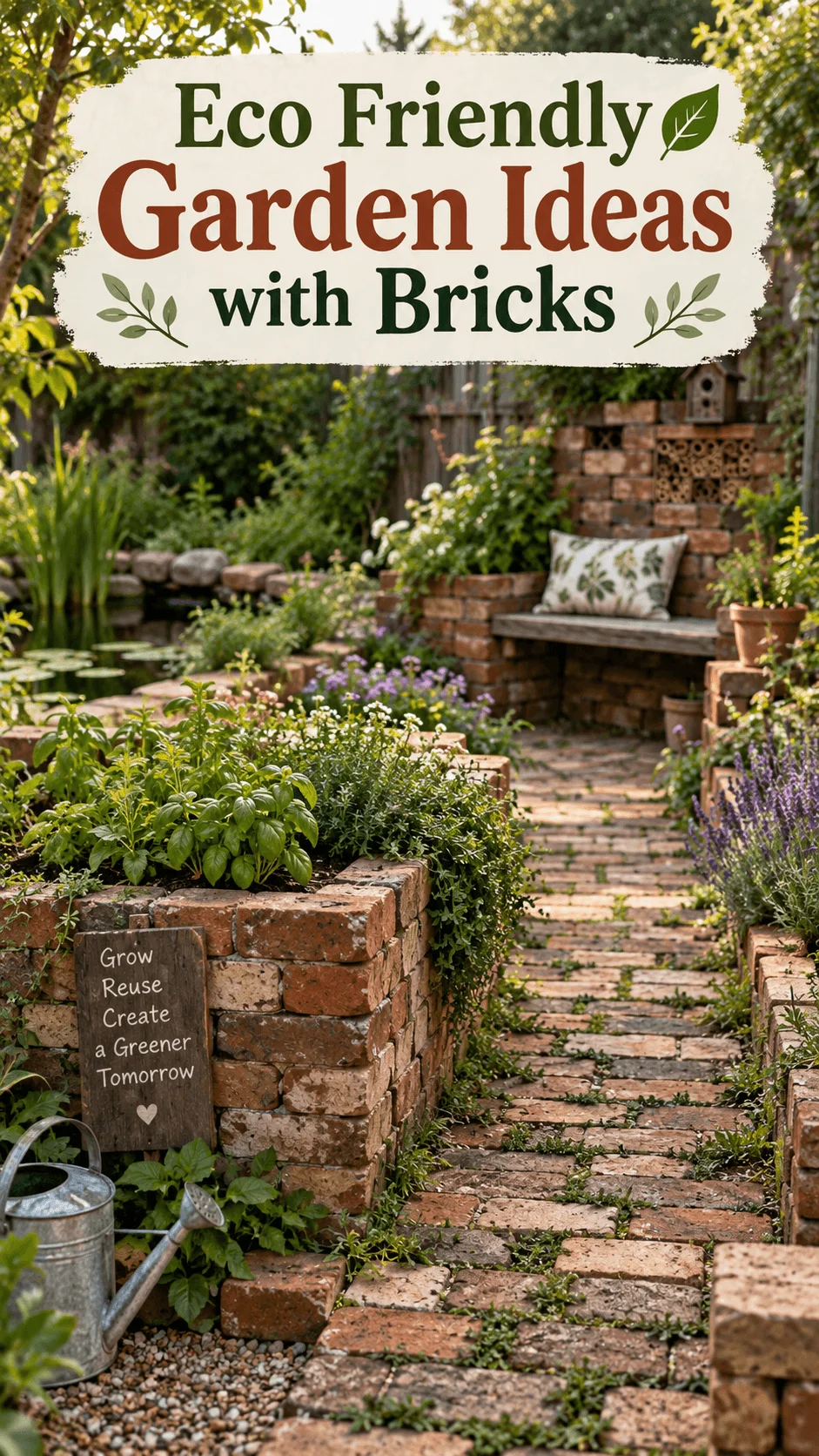
The most effective eco friendly garden ideas with bricks focus on the entire landscape. Plants, soil, drainage, water movement, wildlife, durability, and material reuse all matter. These twelve ideas show how bricks can become part of a more thoughtful garden instead of dominating it.
Why Reclaimed Bricks Work in Sustainable Garden Design
Reclaimed bricks can support sustainable garden design because they extend the useful life of materials that already exist. Reusing suitable bricks may reduce the need to purchase additional landscaping products, especially when a homeowner already has bricks available from another project.
Their appearance also works beautifully in planted gardens. Aged red, brown, cream, and weathered bricks often sit naturally beside foliage and flowers. Small variations in size and color can make a path or planting bed feel less formal and more connected to the landscape.
However, eco friendly garden ideas with bricks work best when gardeners avoid covering large areas unnecessarily. Soil, plants, permeable surfaces, and living habitat should remain important parts of the garden. Brick can provide structure while vegetation creates softness, shade, flowers, habitat, and seasonal change.
Gardeners should inspect reclaimed bricks before reuse. Crumbling, heavily damaged, contaminated, or unsuitable bricks may not perform well outdoors. Decorative edging places far less pressure on a brick than steps, seating, retaining structures, or raised walls, so the intended use should guide material selection.
Reclaimed Brick Permeable Garden Path
A reclaimed brick path can create structure without making a garden feel dominated by paving. Paths guide movement, connect different garden areas, and help visitors experience the landscape gradually.
A gently curved brick route can lead from a patio toward a vegetable bed, seating area, pond, or flower border. A straight path can suit a more formal or modern garden. Weathered bricks often work particularly well in naturalistic gardens because their varied surfaces blend easily with plants.
For eco friendly garden ideas with bricks, permeability deserves attention. Bricks alone do not make a path permeable. Water movement depends on the installation method, base materials, joint spaces, surrounding soil, and drainage conditions.
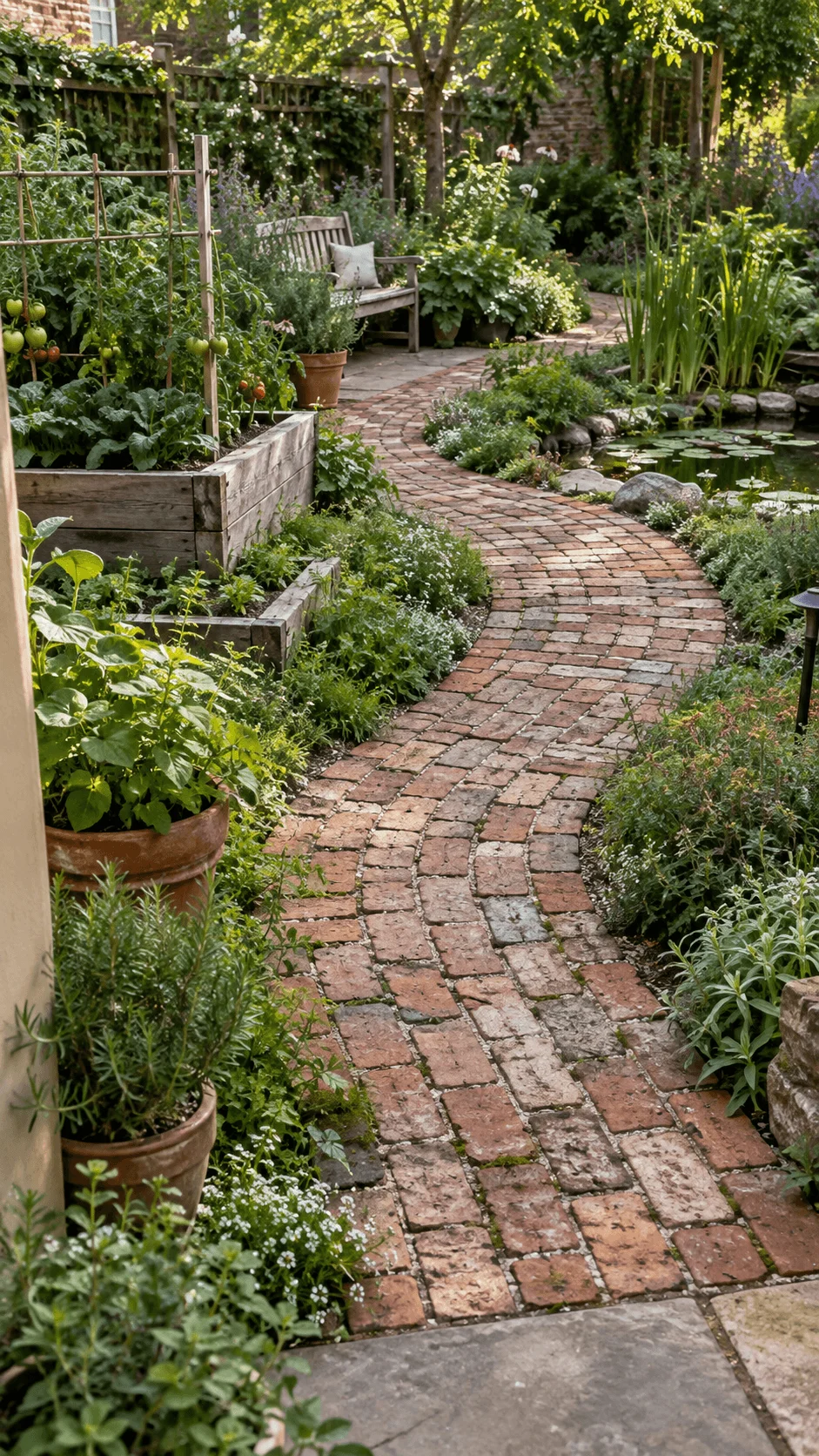
Gardeners can soften the path by allowing grasses, herbs, or groundcovers to grow close to the edges. This reduces the visual separation between planting and hard landscaping. A carefully designed path can feel like part of the garden rather than an isolated construction feature.
Living Brick Path With Creeping Thyme
A living brick path combines reclaimed materials with planting to create a softer and more organic surface. Instead of keeping every gap completely bare, gardeners can introduce suitable low growing plants between or beside the bricks.
Creeping thyme can work in sunny locations with suitable drainage and moderate foot traffic. Its small leaves, seasonal flowers, and fragrance can create an attractive contrast with old brick. Other low growing plants may suit different climates and conditions.
The idea works especially well in cottage gardens, herb gardens, small courtyards, and informal backyards. Plants can soften brick edges and create a gradual transition into nearby beds.
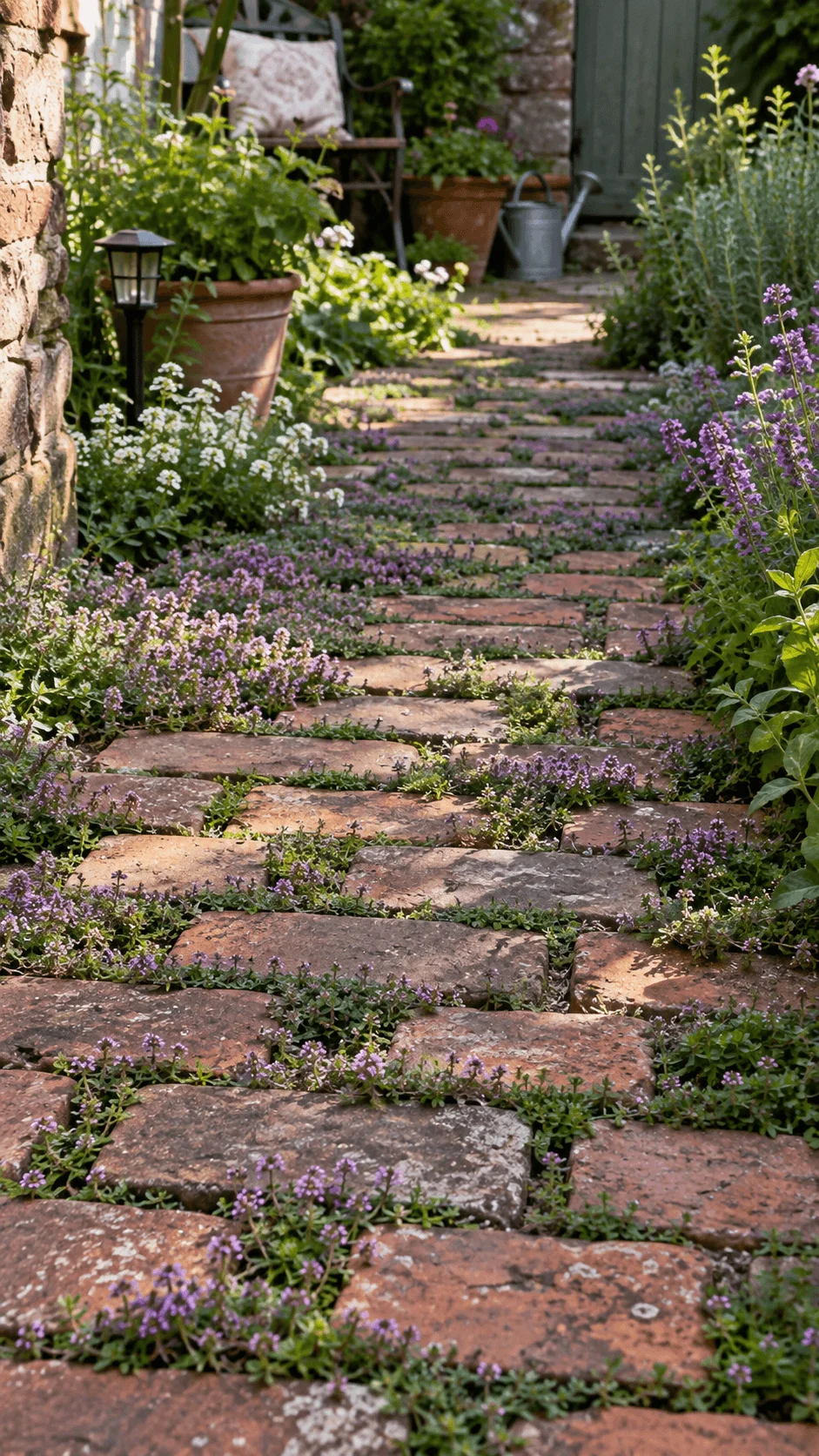
Gardeners should still consider maintenance. Young plants need time to establish, and some may require trimming or watering. Heavy foot traffic can also damage delicate growth. Where planting between bricks does not work, gardeners can achieve a similar look by growing plants densely along the path edges.
This approach gives eco friendly garden ideas with bricks a more living character because the hard surface becomes visually connected to vegetation.
Dry Stacked Reclaimed Brick Raised Beds
Raised beds built with reclaimed bricks can create organized planting areas without relying on completely new materials. They can support herbs, vegetables, flowers, native plants, or pollinator friendly planting.
Low brick borders can help define beds while allowing foliage to spill over the edges. This creates a softer appearance than a rigid wall. Weathered brick also provides warm color and texture that contrasts beautifully with green leaves.
Gardeners need to think about stability before building. A simple low decorative bed may require a different approach from a taller structure that holds large amounts of soil. Substantial structures need careful construction so they remain safe and durable.
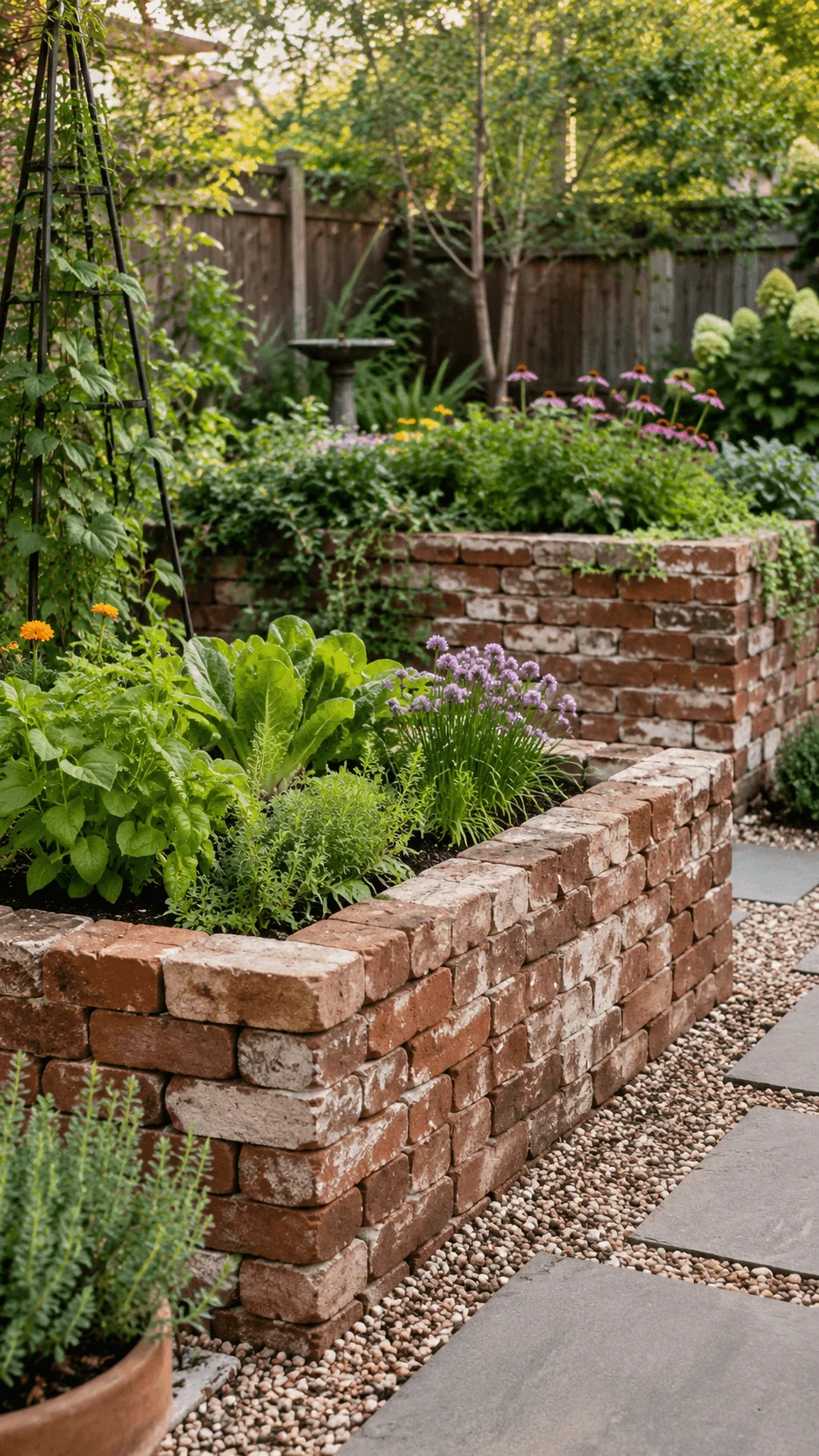
Drainage also matters. Raised beds should allow excess water to move away from plant roots. Soil depth should match the plants that will grow in the bed.
If gardeners plan to grow edible crops, they should also consider the history of reclaimed materials. Bricks with unknown coatings or previous exposure to unsuitable substances may not belong near food growing areas.
Recycled Brick Herb Spiral
A brick herb spiral can turn a compact part of the garden into a productive and attractive growing feature. The spiral shape creates height and allows gardeners to grow several herbs without using a large amount of ground space.
This idea suits smaller backyards, patios, edible gardens, and areas near outdoor kitchens. Positioning herbs near spaces people use regularly also makes harvesting more convenient.
A successful spiral should respond to sunlight, moisture, and drainage. Different parts of the structure may experience slightly different growing conditions, which can help gardeners place herbs more thoughtfully.
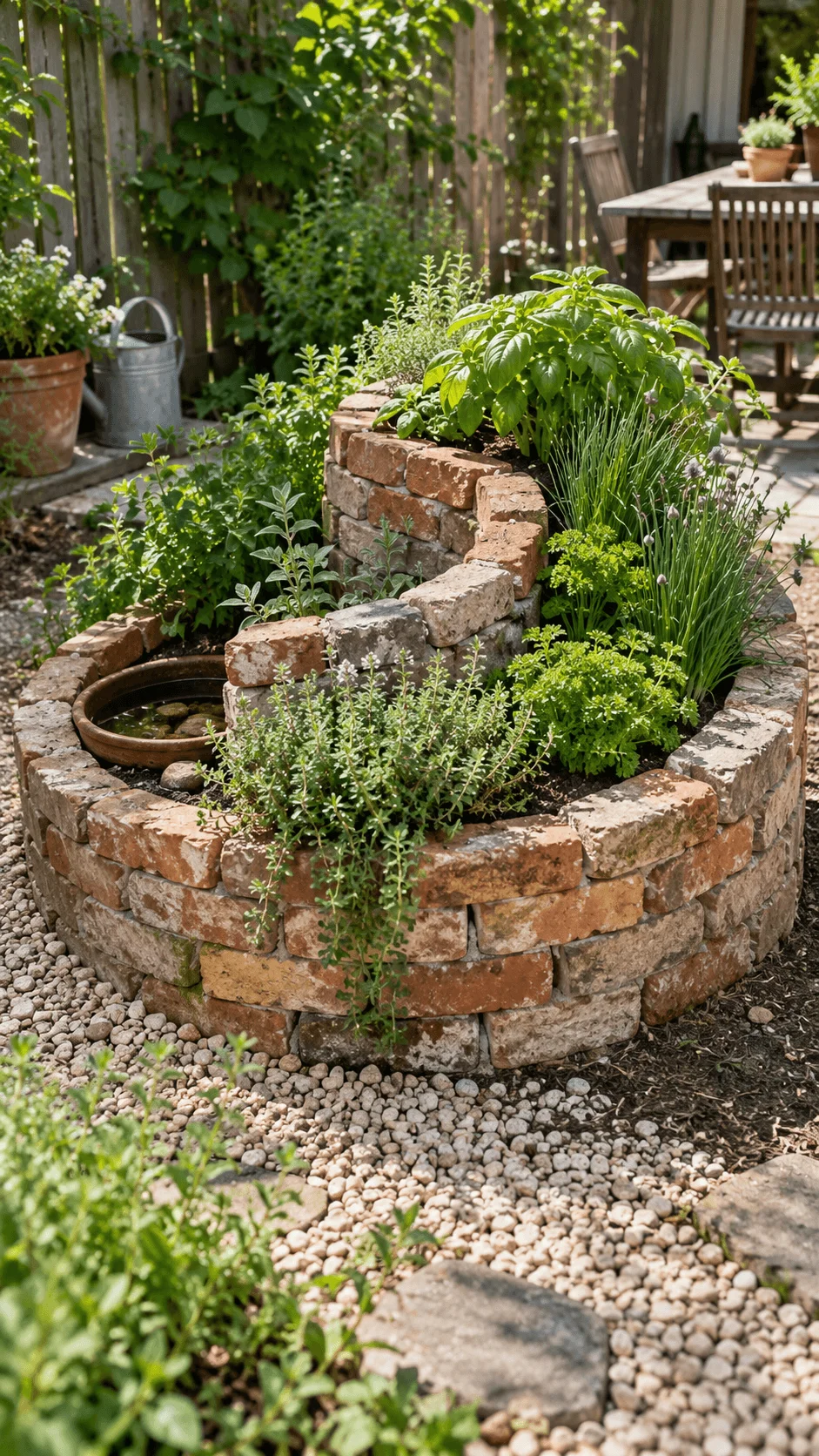
Thyme, oregano, parsley, chives, basil, and other herbs may work depending on local climate and conditions. Gardeners should choose plants according to the site rather than following one fixed planting formula.
Reclaimed bricks give the spiral an established appearance. The feature can become more attractive as herbs grow over the edges and soften the structure.
Reclaimed Brick Rain Garden Edge
Rain gardens have become increasingly relevant as gardeners look for better ways to work with rainfall. A rain garden creates a planted area where suitable runoff can temporarily collect and move into the soil.
Reclaimed bricks can help define selected edges without becoming the main drainage feature. They can visually connect the rain garden with nearby paths or other brick elements.
The planting should remain the focus. Grasses, flowering plants, and moisture tolerant species can create a layered and attractive area that changes through the seasons.
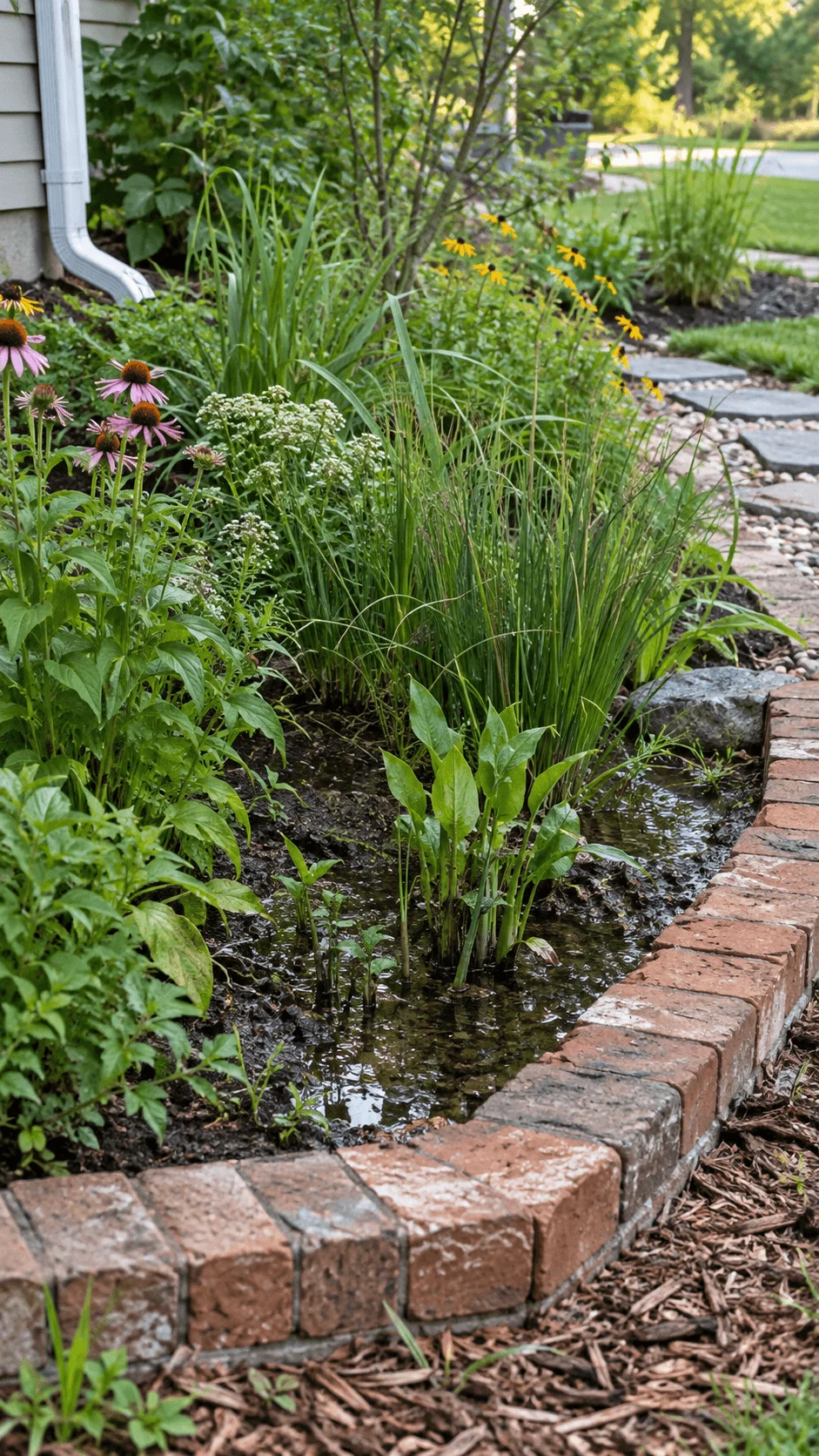
Gardeners need to understand how water already moves across the site. Bricks should never create barriers that prevent the rain garden from functioning properly.
Among eco friendly garden ideas with bricks, this concept stands out because it combines material reuse with water conscious landscaping. The brick supports the design, while soil and vegetation provide the more important environmental function.
Brick and Gravel Climate Resilient Garden
A brick and gravel garden can reduce the need for large areas of continuous paving while creating a clean and modern appearance.
Gardeners can use reclaimed bricks selectively for stepping areas, short paths, small patios, or visual borders. Gravel can fill surrounding zones where appropriate, while climate suitable plants add movement and color.
Ornamental grasses, flowering perennials, herbs, and locally suitable plants can break up the harder surfaces. The result can feel structured without becoming sterile.
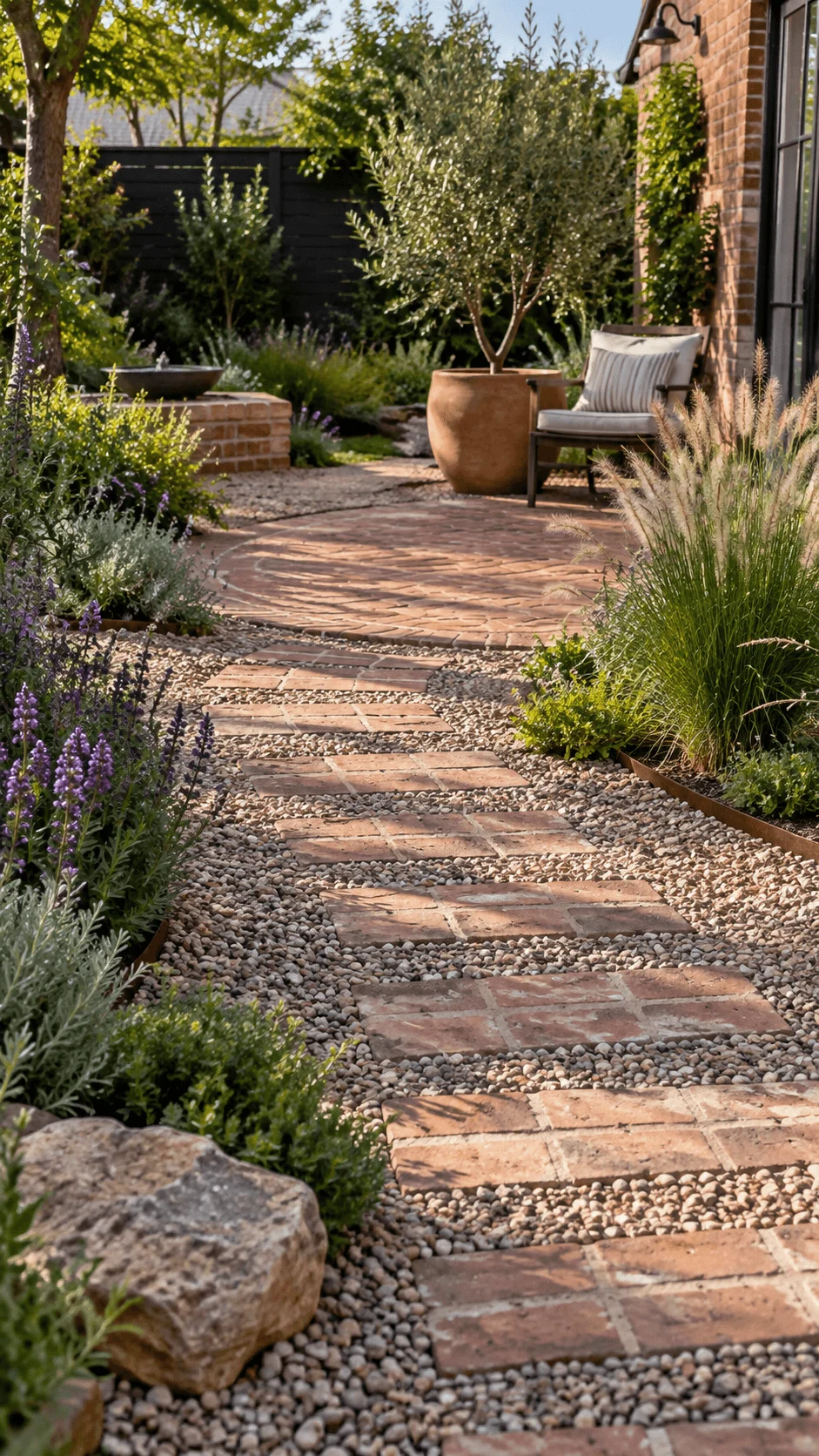
The planting palette should reflect local conditions. Climate resilient gardening does not mean planting the same drought tolerant species everywhere. Sunlight, rainfall, soil, temperature, and available water should guide plant choices.
This style can suit contemporary homes, rustic gardens, Mediterranean inspired spaces, and naturalistic landscapes. The final appearance depends on the brick pattern, gravel type, planting density, and overall layout.
Wildlife Friendly Reclaimed Brick Habitat Wall
Reclaimed bricks can become part of a broader wildlife feature when gardeners combine them with other suitable habitat materials.
Bricks with openings or cavities can add sheltered spaces to a garden structure. Gardeners can combine them with untreated wood, hollow stems, stones, leaves, and dense surrounding planting.
The goal should not be to build a decorative wall and assume wildlife will automatically use it. A healthy wildlife garden needs food, shelter, water, flowers, vegetation, and reduced disturbance.
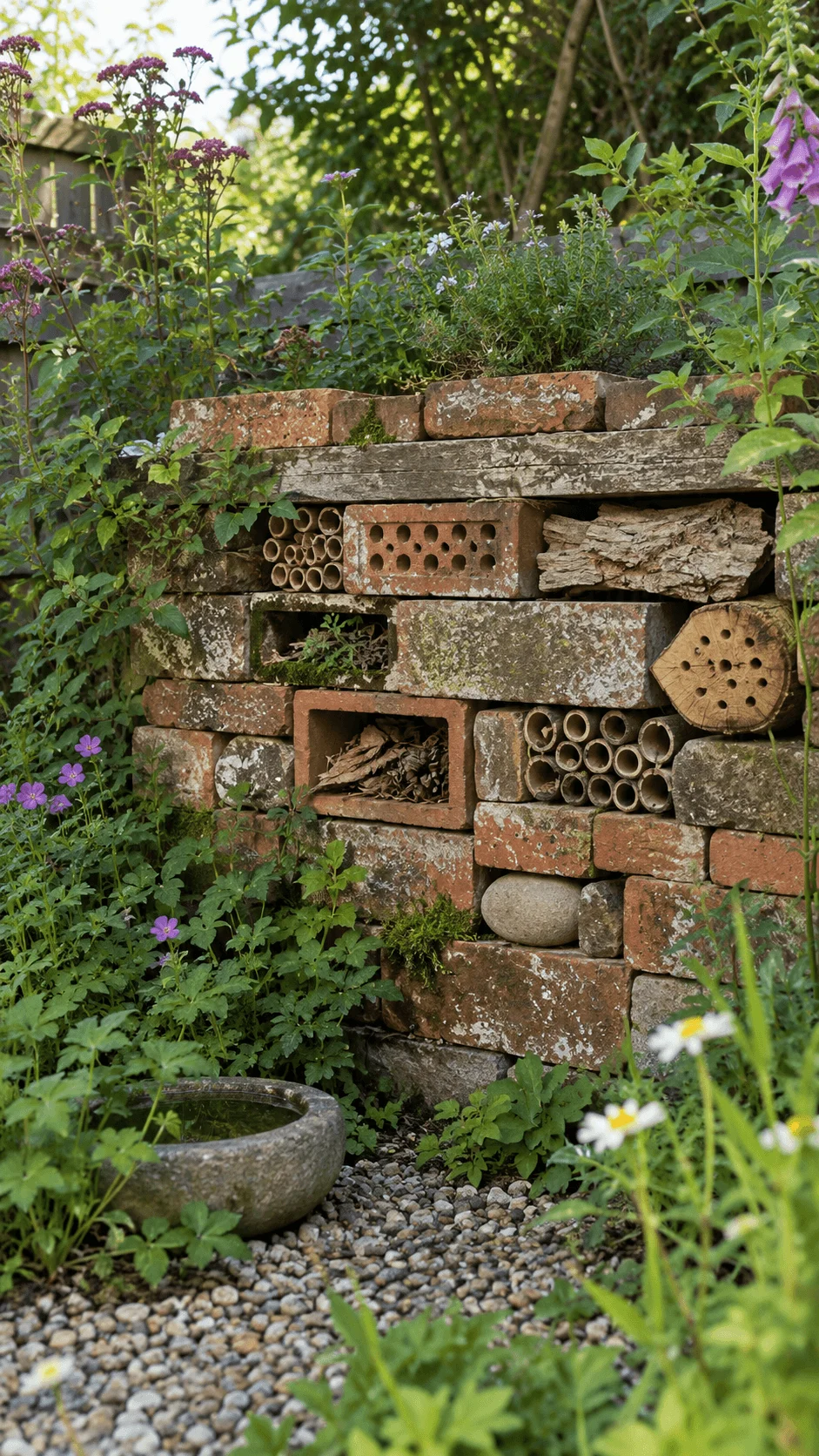
Native or locally appropriate plants can make the area more useful. Flowering plants can provide nectar and pollen, while shrubs and grasses can create cover.
Over time, foliage may grow around the brick feature and soften its appearance. This can make the structure feel naturally integrated into the landscape.
Reclaimed Brick Mini Wildlife Pond Surround
A small wildlife pond can become even more visually appealing when reclaimed bricks help connect it with the surrounding garden.
Bricks can form part of the edge or nearby landscape, especially when combined with stones, groundcovers, grasses, and moisture loving plants. The goal should be to create a gradual transition between water and vegetation.
An irregular arrangement can suit a naturalistic garden, while a more organized brick edge may fit a small courtyard.
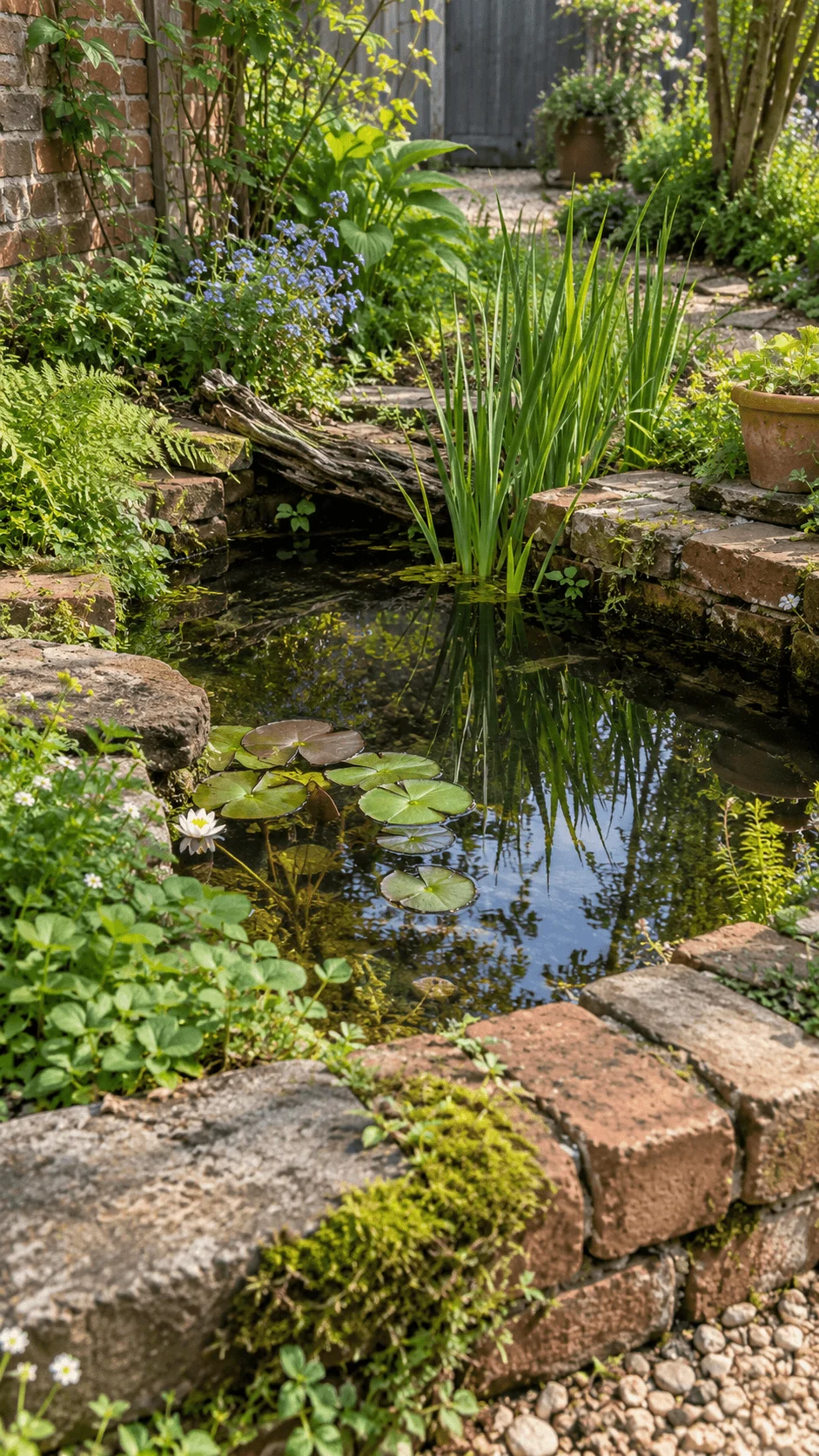
Wildlife accessibility matters. Gardeners should provide safe ways for small animals to enter or leave the water where appropriate. Stable edges and sensible water depth also matter.
Water reflects nearby plants and changes with light throughout the day. The contrast between reflective water, green foliage, and weathered brick can make this one of the most visually interesting eco friendly garden ideas with bricks.
Brick Raised Pollinator Garden
A reclaimed brick bed can become a dedicated pollinator garden instead of a simple decorative flower border.
The planting should provide interest across different seasons. Gardeners can combine locally appropriate plants that flower at different times so the space remains useful for longer periods.
Different flower shapes, plant heights, and foliage textures can create visual depth. Host plants may also support certain insects when they suit the local ecosystem.
Brick provides structure and helps define the bed, but plants should remain the main feature.
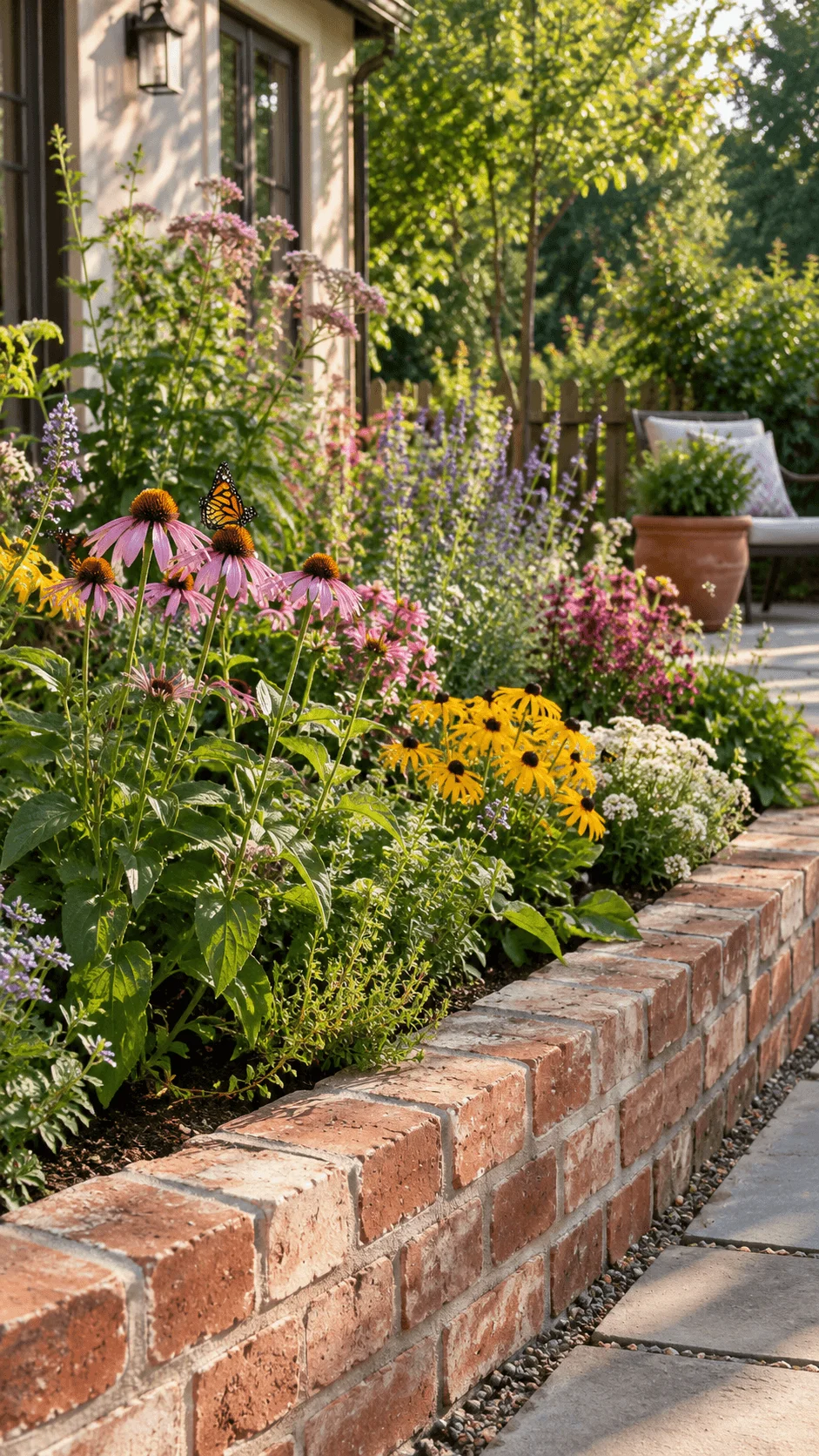
This type of garden can work near a patio, vegetable plot, entrance, path, or sunny backyard area. The brick edge may also make the planting appear more intentional while still allowing flowers to grow freely.
A pollinator garden does not need perfect tidiness. Leaving some stems, seed heads, and natural plant material can sometimes provide additional seasonal value.
Reclaimed Brick Garden Bench With Integrated Planters
Multifunctional garden features make particularly good sense in smaller outdoor spaces. A reclaimed brick bench can combine seating with nearby planting and help one area serve several purposes.
Gardeners can surround the bench with ornamental grasses, fragrant herbs, flowers, foliage plants, or climbers. The planting can make the seating area feel enclosed and peaceful.
Positioning matters. A bench may face a pond, flower border, evening sun, shaded corner, or wildlife area. The view can become as important as the bench itself.
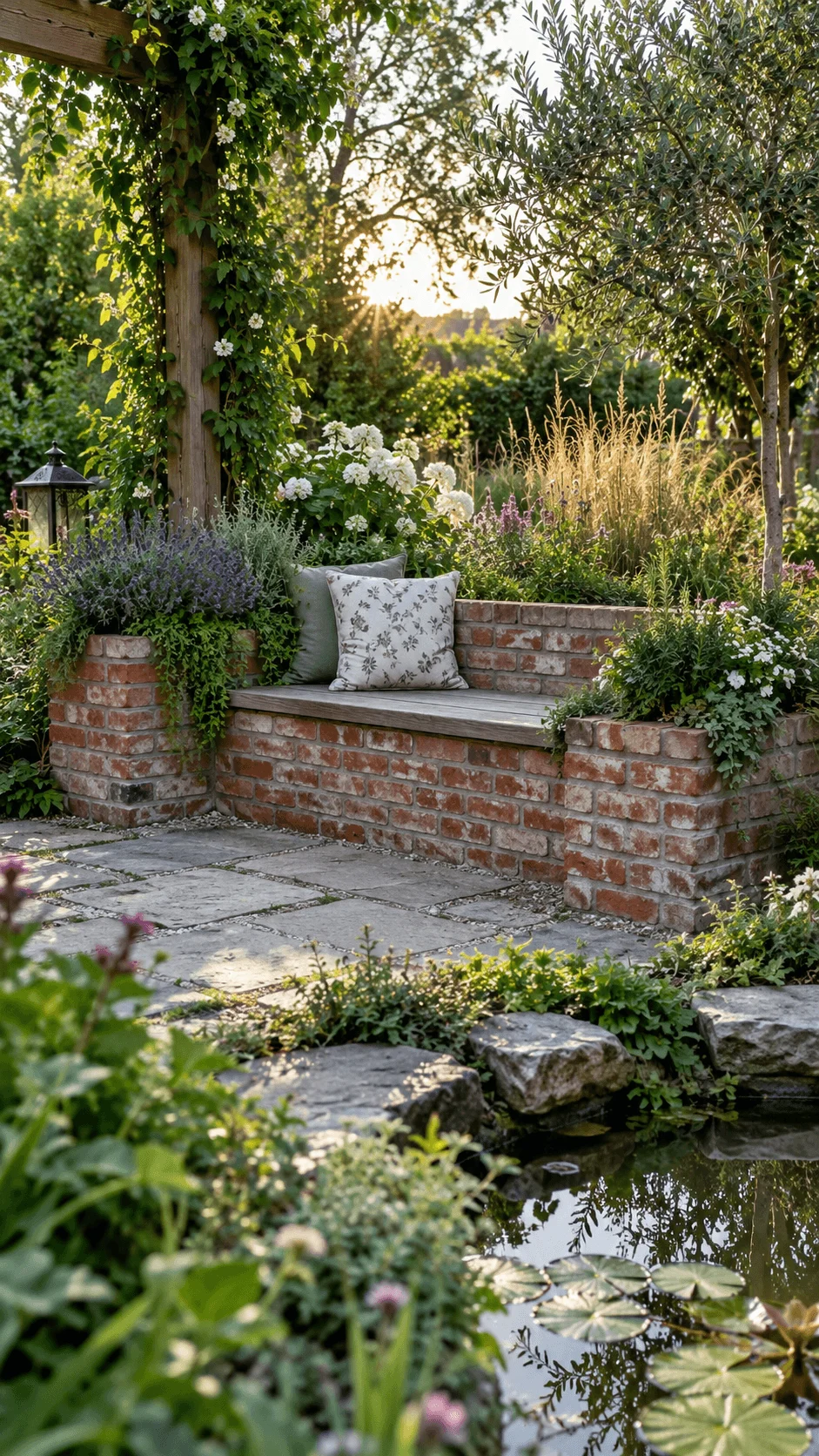
Comfort and structural safety deserve careful attention. A permanent brick seat needs appropriate height, stability, and construction. Gardeners should not treat substantial seating like a casual stack of bricks.
Integrated planters can help soften the hard material and create a stronger connection between the structure and the wider garden.
Old Brick Composting Corner
A composting area does not need to look disconnected from the rest of the garden. Old bricks can help define the space and make it feel more organized.
A composting corner supports a more circular approach to gardening because suitable organic material can eventually return to the soil as compost.
Bricks can create visual boundaries while nearby plants soften the area. Shrubs, grasses, herbs, or climbers may help screen the compost zone without making it difficult to access.
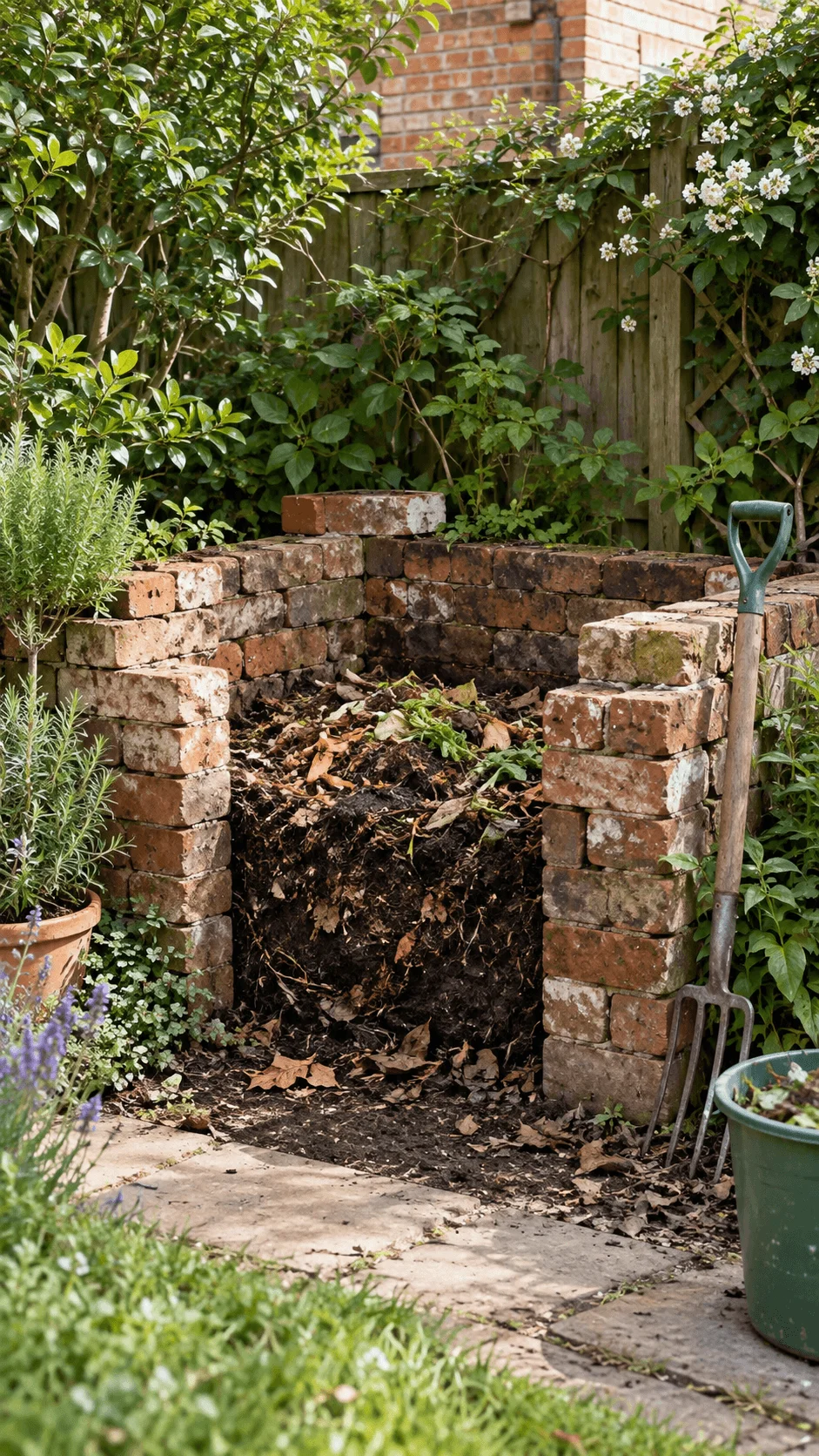
Airflow, drainage, moisture, and convenience all matter. Gardeners should place compost where they can use and manage it easily.
This idea connects two types of reuse. Old bricks gain another purpose, while suitable organic material stays within the garden system instead of becoming waste.
Green on Green Reclaimed Brick Courtyard
A heavily planted courtyard can transform an existing brick surface without removing all of its character.
Instead of allowing brick to dominate the entire space, gardeners can introduce planting pockets, containers, borders, climbers, grasses, ferns, and small trees where conditions allow.
Different shades of green can create depth and contrast against warm brick. Large leaves can make the space feel lush, while fine grasses and delicate climbers add movement.
Plants can soften corners, walls, edges, and transitions between surfaces. Containers can also introduce vegetation where permanent planting is difficult.
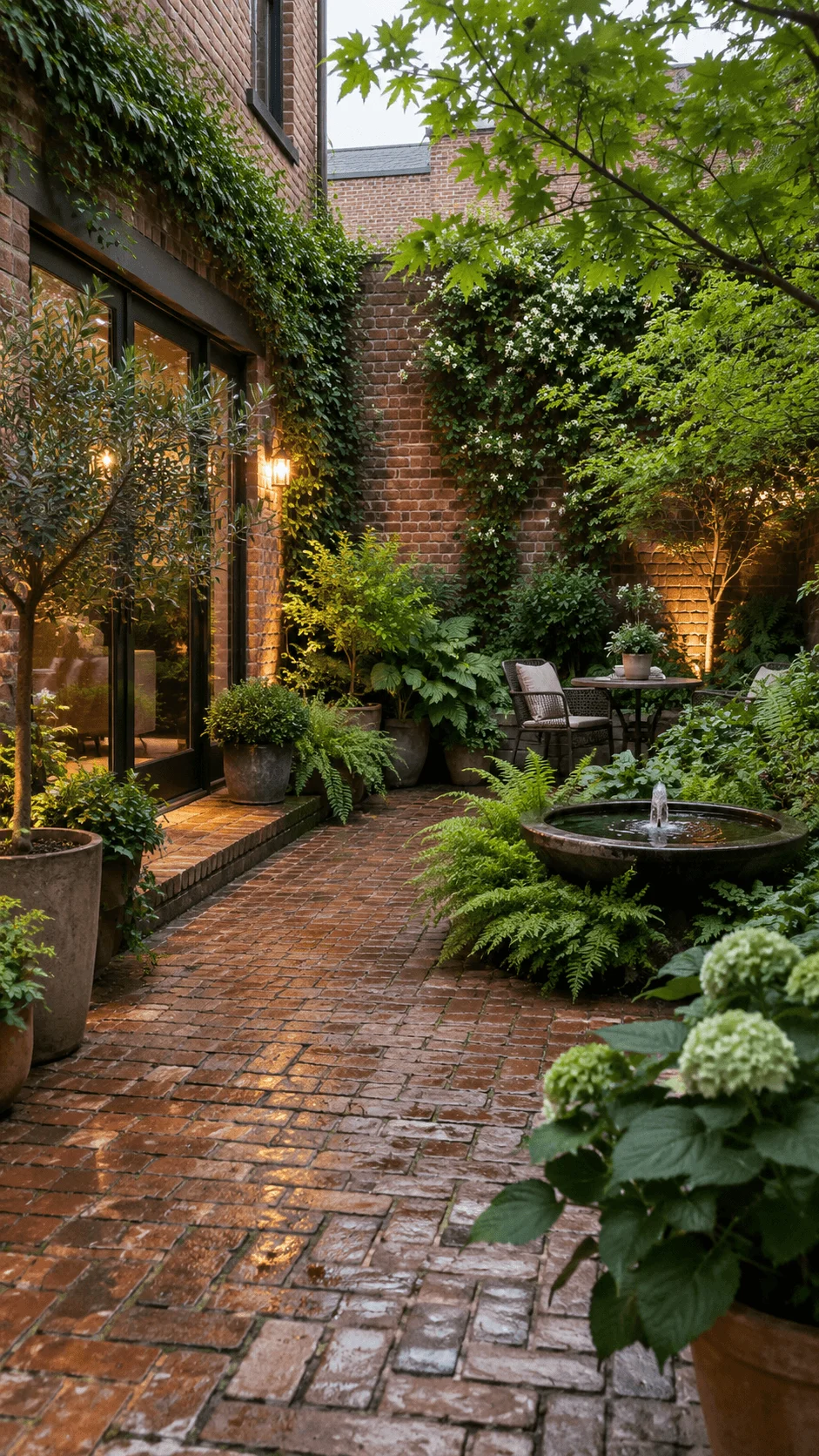
A small water feature or seating area can add another layer of interest.
This concept works well in urban gardens, terraced homes, enclosed courtyards, and older properties where brick already forms part of the landscape. It also shows how eco friendly garden ideas with bricks can improve existing spaces rather than always creating something completely new.
How to Make Sustainable Brick Garden Ideas Even Greener
The most successful eco friendly garden ideas with bricks consider the whole garden rather than focusing only on one material.
Gardeners can reuse materials they already own, source reclaimed bricks locally where practical, reduce unnecessary paving, preserve soil, improve permeability, add more plants, and manage rainwater carefully.
Plant diversity can strengthen the garden further. Flowers, grasses, shrubs, herbs, groundcovers, and small trees can provide different textures and habitat opportunities.
Soil also deserves attention. Healthy soil supports plants, absorbs water, and helps the garden function as a living system.
Durability matters too. A feature that lasts for many years and can be repaired may provide more value than a temporary decorative project that requires frequent replacement.
The goal should not be a paved garden with a few plants added afterward. Brick should support the landscape while vegetation, soil, water, and wildlife remain central to the design.
Conclusion
Eco friendly garden ideas with bricks can give leftover and reclaimed materials a useful second life while adding structure, character, and function to an outdoor space. The most successful projects do more than arrange old bricks decoratively. They connect reclaimed materials with planting, biodiversity, permeability, rainwater management, edible gardening, wildlife habitat, and long lasting design.
Gardeners can use bricks to guide movement, define growing spaces, support herbs, frame water features, create seating, organize composting areas, and bring character to heavily planted courtyards. Each project becomes more sustainable when the wider garden remains green, permeable, diverse, and useful.
Before buying new landscaping materials, it makes sense to consider whether suitable bricks already exist nearby. With careful planning, eco friendly garden ideas with bricks can turn ordinary leftover materials into thoughtful parts of a living landscape where old materials and new growth work naturally together.