12 Eco Friendly Waste Sorting Activity for 2026
A good eco friendly waste sorting activity can teach much more than which container should receive a plastic bottle or piece of cardboard. In 2026, waste education is becoming more connected with technology, circular economy thinking, food waste separation, reuse, repair, electronic waste, recycling contamination, and smarter ways to identify materials. This creates an opportunity for schools, families, environmental clubs, and community groups to turn ordinary waste sorting into something more practical and meaningful.
Traditional recycling games still have value, especially when children first learn the difference between paper, plastic, glass, organic waste, and general trash. However, real household waste often creates more complicated decisions. A takeaway container may contain several materials. A product marked compostable may require industrial composting. A broken electronic device may still have repair value. A plastic package may use a recyclable material but still not qualify for local collection.
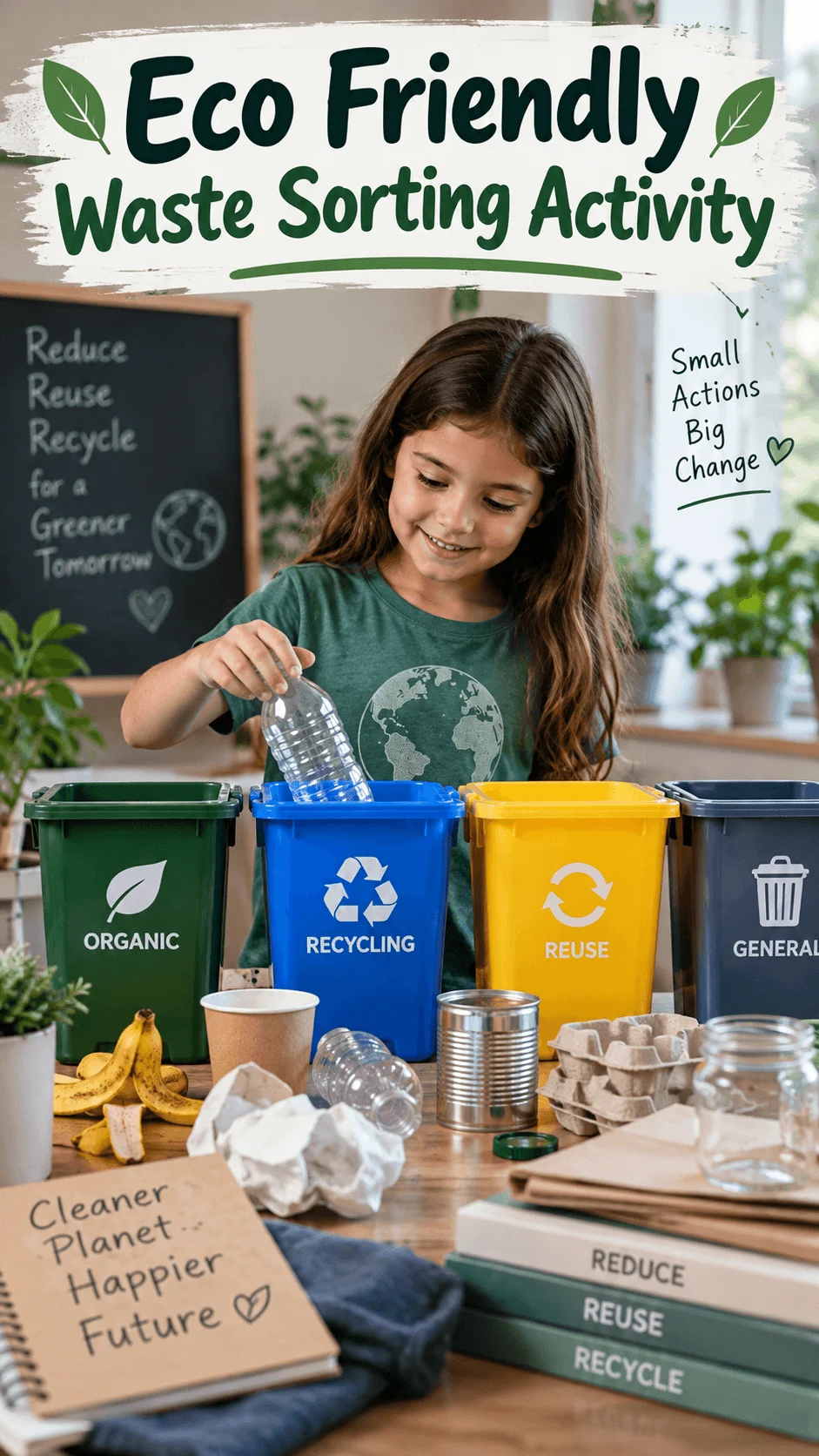
Modern eco friendly waste sorting activities can therefore focus on decision making instead of simple memorization. Participants can investigate whether an object should stay in use, receive a repair, go to another person, enter a return system, become compost, enter recycling, or require responsible disposal.
Technology adds another layer. Artificial intelligence can recognize objects, QR codes can connect products with information, and smart sorting systems can demonstrate how computer vision might support waste management. Recent research continues to explore artificial intelligence, sensors, computer vision, and smart bins for waste classification, while researchers also emphasize the challenges of applying these systems reliably in the real world.
The following activities combine those newer ideas with practical sustainability education.
1. Try an AI Waste Sorting Activity
An AI waste sorting activity can turn an ordinary collection of household objects into an investigation about materials, technology, and recycling decisions.
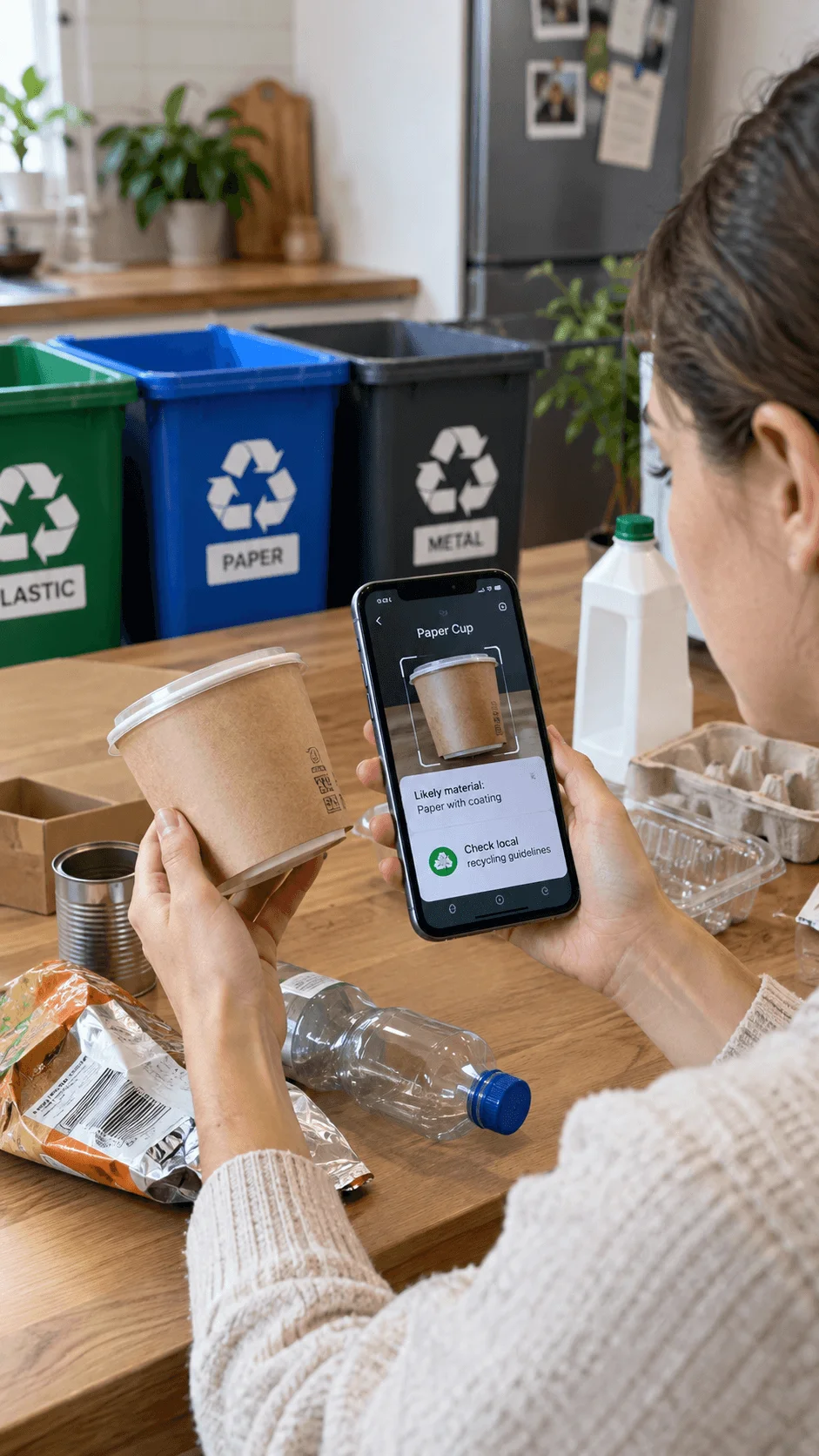
Imagine a participant holding an unfamiliar food container. It looks like paper, but the inside has a coating. Another package combines plastic film with foil. Instead of immediately choosing a bin, the participant first examines the object, predicts its material, and then uses an image recognition tool to gather more information.
This activity introduces an important distinction. Artificial intelligence may recognize a bottle, container, cup, or electronic accessory, but object recognition does not automatically determine the correct disposal method. Local recycling systems accept different materials and formats.
That distinction makes this eco friendly waste sorting activity especially useful. Participants learn to treat AI as an information tool rather than an unquestionable authority. After receiving an AI suggestion, they can compare it with official local recycling guidance.
Research published in 2026 continues to examine AI based waste classification and computer vision for sorting plastics and other waste. Researchers also identify limitations involving datasets, real world conditions, system integration, and scalability.
At home, families can use clean packaging from their normal household waste. Schools can turn the same concept into an environmental science and technology lesson without purchasing an expensive smart bin.
2. Turn Waste Sorting Into a Gamified Recycling Challenge
A gamified waste sorting activity can make participants think quickly while still requiring them to explain their decisions.
Instead of creating only two categories for recycling and trash, the game can include recycling, food waste, reuse, repair, donation, special collection, and general waste where those categories make sense locally.
Participants receive different objects and decide where each should go. Correct answers earn points, while incorrect sorting can represent contamination. More difficult objects can earn additional points because they require deeper thinking.
The strongest version of this activity asks participants to explain why they made each decision. Guessing correctly teaches less than understanding the reason behind the choice.
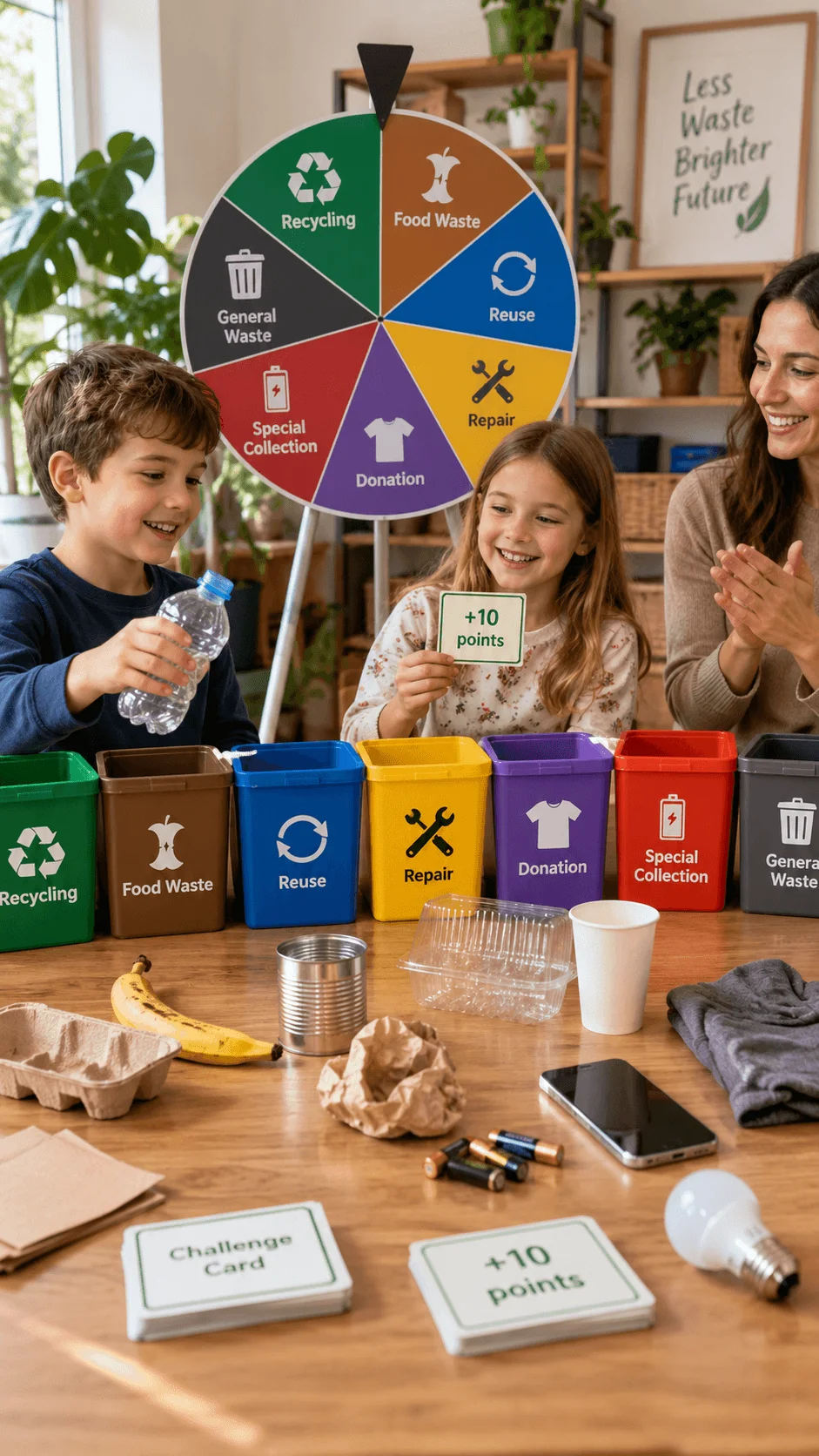
Younger children can work with obvious examples such as cardboard boxes, fruit scraps, and glass containers. Older students can investigate coated cups, mixed material packaging, batteries, electronic accessories, and compostable products.
Gamification has attracted research interest in waste education. A 2026 university Living Lab study used a gamified sorting intervention and found that it helped increase awareness and understanding, although results differed between waste streams. This provides a useful reminder that games can support learning without guaranteeing perfect long term behavior.
A well designed eco friendly waste sorting activity should therefore reward understanding, not simply speed.
3. Create a Deposit Return Recycling Activity
A deposit return recycling activity introduces participants to the idea that packaging can carry a financial incentive for return.
In a simple simulation, bottles and cans receive pretend deposit values. Participants examine the containers, decide which ones qualify for the fictional program, return them to a collection station, and calculate their refund.
The activity becomes more interesting when some containers do not qualify. Participants then have to read information carefully rather than assuming every bottle belongs in the same system.
Deposit return programs can support conversations about packaging responsibility, collection infrastructure, consumer behavior, and circular economy systems. They also show how financial incentives can influence decisions.
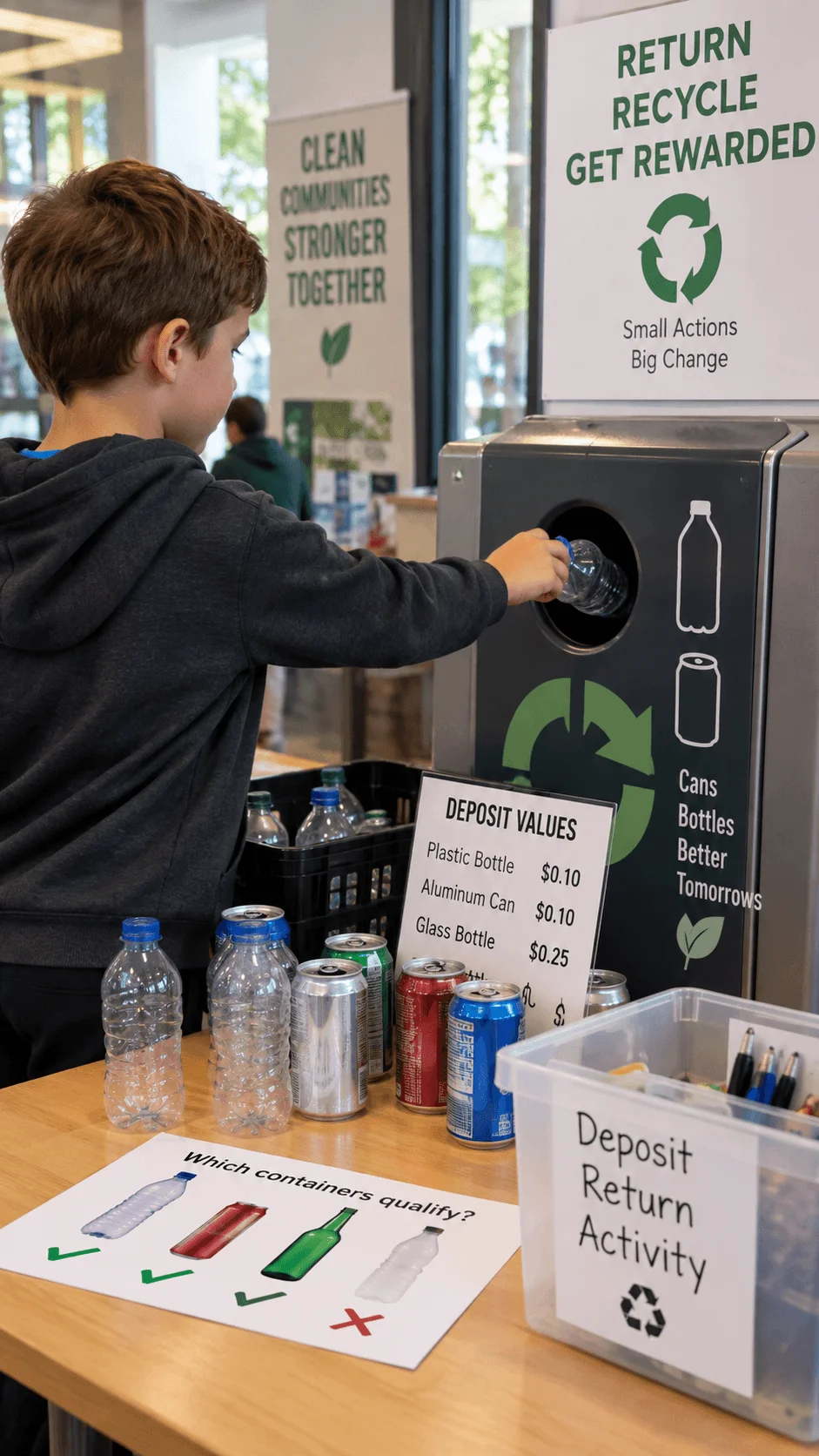
A 2026 study of deposit refund behavior found that financial benefits and perceived barriers can play important roles in actual container return behavior. The researchers also emphasized usability, user experience, and clear information.
Teachers can use these ideas to ask a broader question: would people treat packaging differently if throwing away a container also meant losing money?
Real deposit systems vary considerably between locations, so the activity should teach the concept rather than present one set of rules as universal.
4. Use QR Codes for an Interactive Waste Sorting Activity
A printed recycling symbol can communicate only a small amount of information. A QR code can connect an object with much more.
For this interactive waste sorting activity, a teacher or parent can attach QR codes to mock packages or clean household objects. After scanning a code, participants might discover the material type, opportunities for reuse, repair information, recycling guidance, or instructions for responsible disposal.
The idea becomes especially relevant when connected with Digital Product Passports. These systems aim to make reliable product information easier to access throughout a product’s life.
In July 2026, the European Commission announced that its Digital Product Passport Registry had gone live, with standards and testing resources supporting implementation ahead of initial regulatory deadlines.
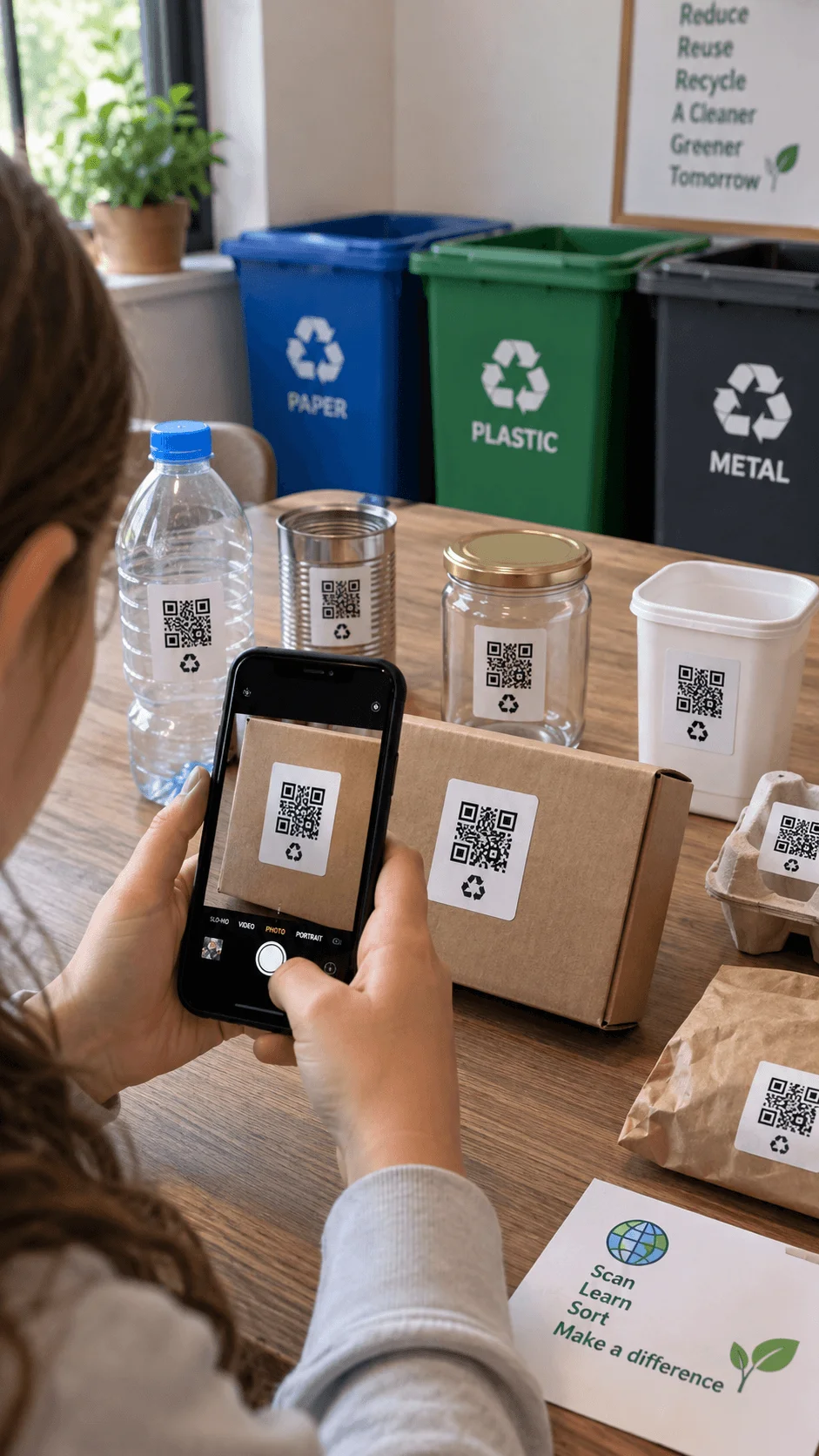
A classroom activity does not need to recreate this system. A simple QR code can open an educational page or official local recycling guide.
The important lesson is that future eco friendly waste sorting activities can teach participants to use better information before making disposal decisions instead of relying entirely on appearance.
5. Play a Food Waste Sorting Detective Activity
Food waste sorting becomes surprisingly complicated when participants move beyond obvious examples such as banana peels.
A food waste sorting activity can work like a detective challenge. Participants examine vegetable scraps, fruit peels, produce stickers, tea bags, leaves, food covered packaging, plastic wrappers, and products labeled compostable.
The challenge asks a more useful question than whether something contains food. Participants need to determine whether the material belongs in the organic waste or composting system available locally.
This opens an important discussion about home composting and industrial composting. A commercial composting facility may operate under very different conditions from a backyard compost pile. A product carrying compostable wording therefore does not automatically belong in every home compost system.
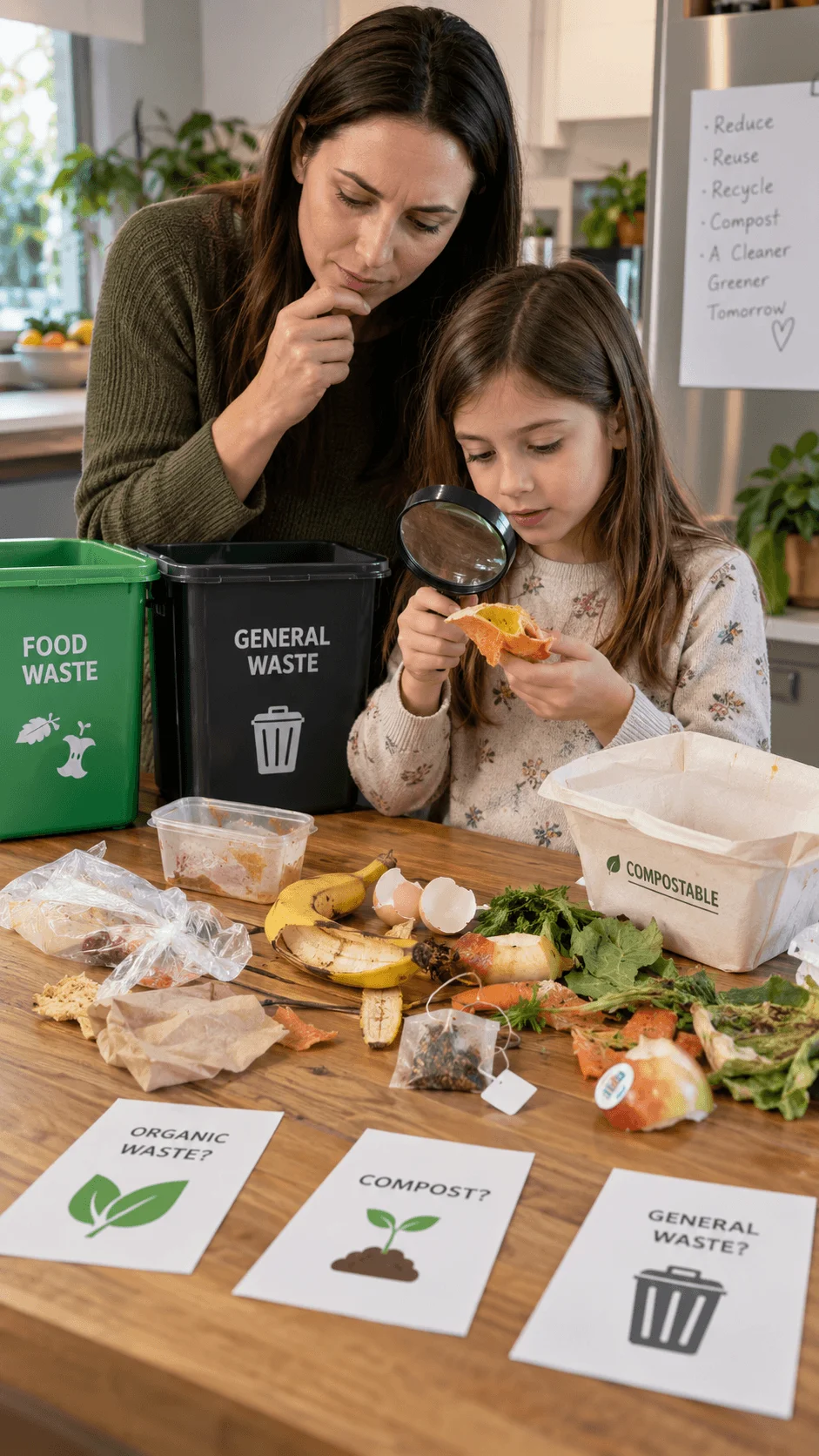
Participants also learn to look beyond marketing claims. Words such as biodegradable can sound environmentally reassuring without providing enough information about where an item should actually go.
Schools can adapt this eco friendly waste sorting activity around cafeteria waste, while families can use materials they regularly encounter in their kitchens. The goal is not to memorize one universal compost list but to develop the habit of checking the system that actually exists locally.
6. Build a Smart Waste Sorting STEM Activity
A smart waste sorting STEM activity connects environmental education with engineering and computer science.
Students can begin by examining what makes a waste bin smart. Cameras may help identify objects. Sensors can detect conditions or fill levels. Software can analyze information. More advanced systems can combine recognition technology with automated sorting.
A basic classroom model does not need sophisticated equipment. Students can create several compartments and design a manual recognition system using buttons or indicators. More advanced groups can explore cameras, LEDs, sensors, microcontrollers, or basic computer vision.
The most useful part of the project may come when the system makes mistakes.
Real waste rarely appears as clean and perfectly positioned objects. Containers become crushed. Labels change. Food covers surfaces. Similar materials can look almost identical.
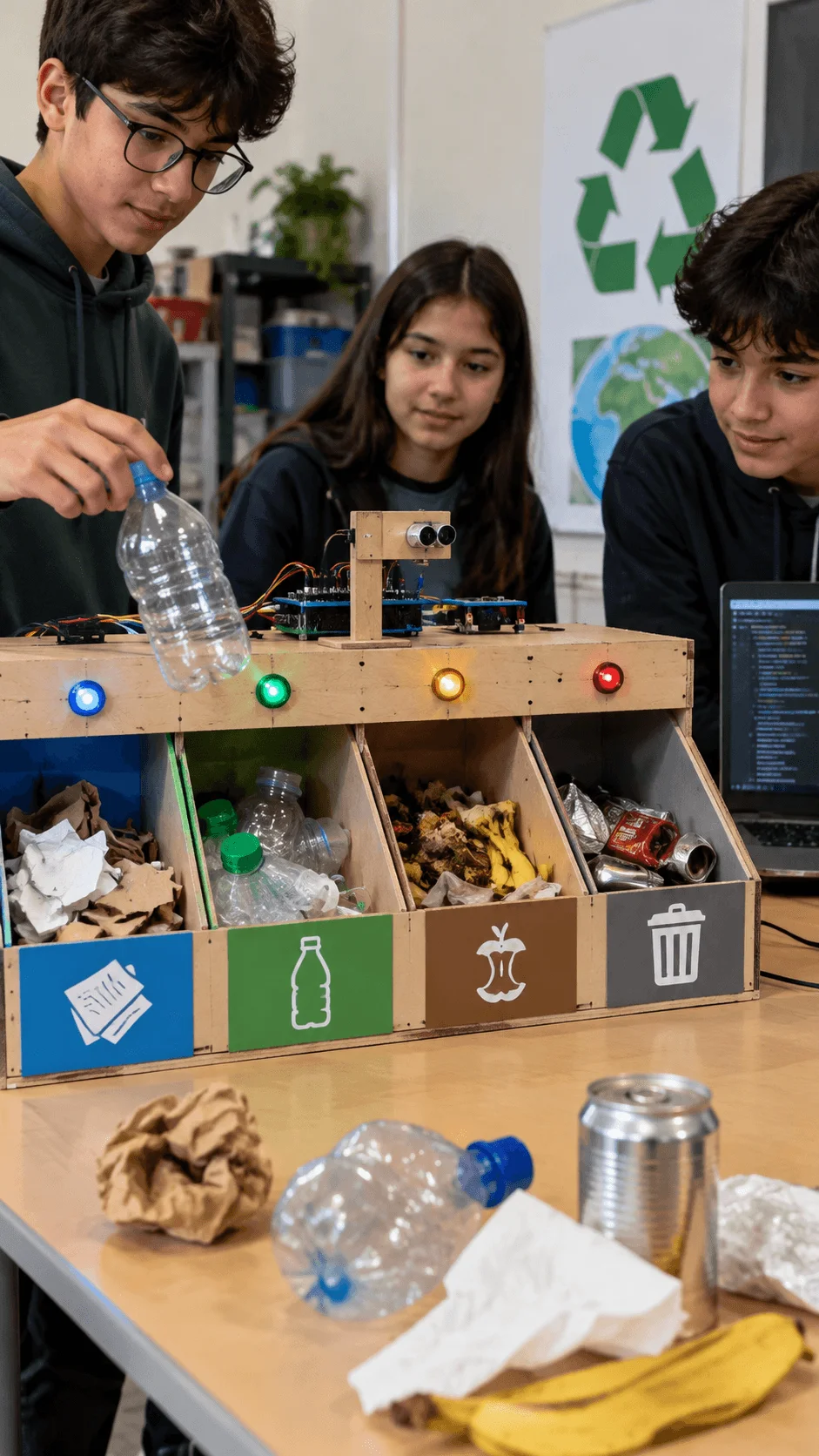
Research on smart bins and AI classification highlights both the possibilities and the technical challenges of automated material sorting.
This makes the project more than a technology demonstration. Students learn why real world waste management requires engineering, accurate data, human behavior, infrastructure, and appropriate local rules.
7. Create an E Waste Sorting Activity for Students
Electronic waste needs a different approach from ordinary packaging.
An e waste sorting activity for students can present old phones, chargers, headphones, cables, keyboards, batteries, and small devices as objects that require several possible decisions.
Instead of immediately choosing between recycling and garbage, participants first consider whether someone can continue using the device. Could it receive a repair? Could another person use it? Could refurbishment extend its life? If not, does an appropriate electronic waste collection program exist?
This approach introduces circular economy thinking because it encourages people to preserve useful products and materials for longer.
Research published in 2026 continues to examine how artificial intelligence and digital systems could support circular electronic waste management, while also identifying practical limitations involving data and real world deployment.
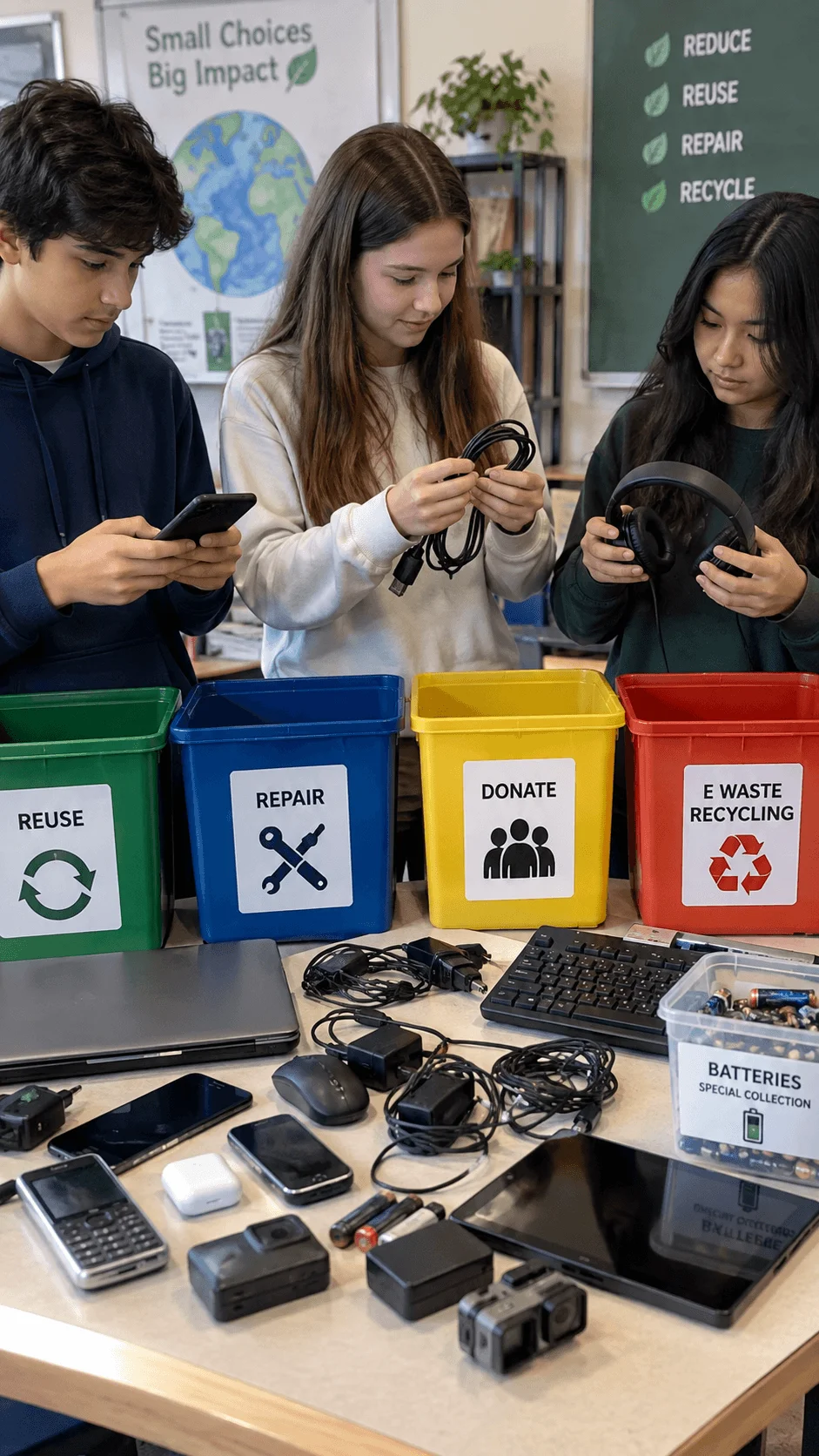
Batteries require special attention. Participants should never dismantle batteries or potentially hazardous electronics as part of the activity. They should instead investigate appropriate local collection options.
This eco friendly waste sorting activity changes the focus from throwing electronics away correctly to asking whether they need to become waste yet.
8. Run a Recycling Contamination Activity
People sometimes place questionable objects into recycling because they hope the recycling system will find a way to process them. This behavior is often called wishcycling.
A recycling contamination activity can demonstrate why checking matters more than guessing.
Create a mock recycling container containing clear recyclables alongside confusing objects. Participants inspect the contents and identify items that require more investigation.
Examples might include food covered cardboard, plastic film, coated paper, mixed material packaging, lids, and objects carrying recycling symbols.
The recycling symbol itself creates an important teaching opportunity. A product may use a technically recyclable material while the local collection system does not accept that particular object.
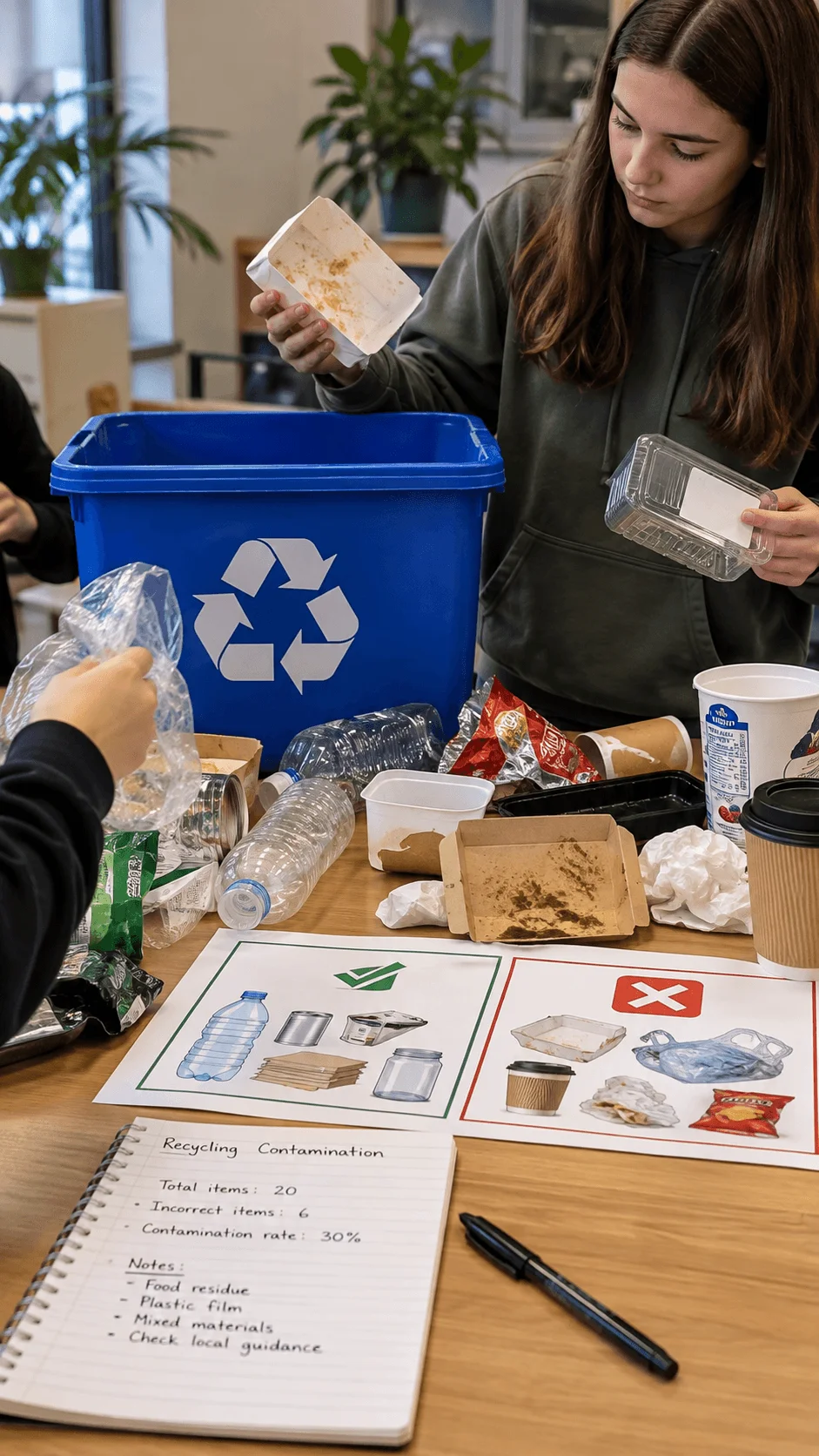
Participants can calculate a simple contamination rate by comparing incorrectly sorted objects with the total number they examined.
More importantly, they can research uncertain items using official guidance.
This kind of eco friendly waste sorting activity teaches accuracy rather than rewarding people simply for putting more material into recycling.
9. Try a Reuse and Recycling Sorting Activity
Recycling should not always become the first destination for an unwanted object.
A reuse and recycling sorting activity can challenge participants to think about the waste hierarchy before reaching for a recycling bin.
Give participants objects such as jars, books, clothing, toys, boxes, storage containers, furniture, or electronics. Before they choose recycling, they must consider whether the object could remain in use.
A glass jar might become storage. A book could go to another reader. A damaged piece of furniture might receive a repair. Clothing may still have value through continued use, donation, swapping, or creative reuse.
The activity teaches an important circular economy principle: keeping a useful product in circulation can sometimes prevent waste before recycling even becomes necessary.
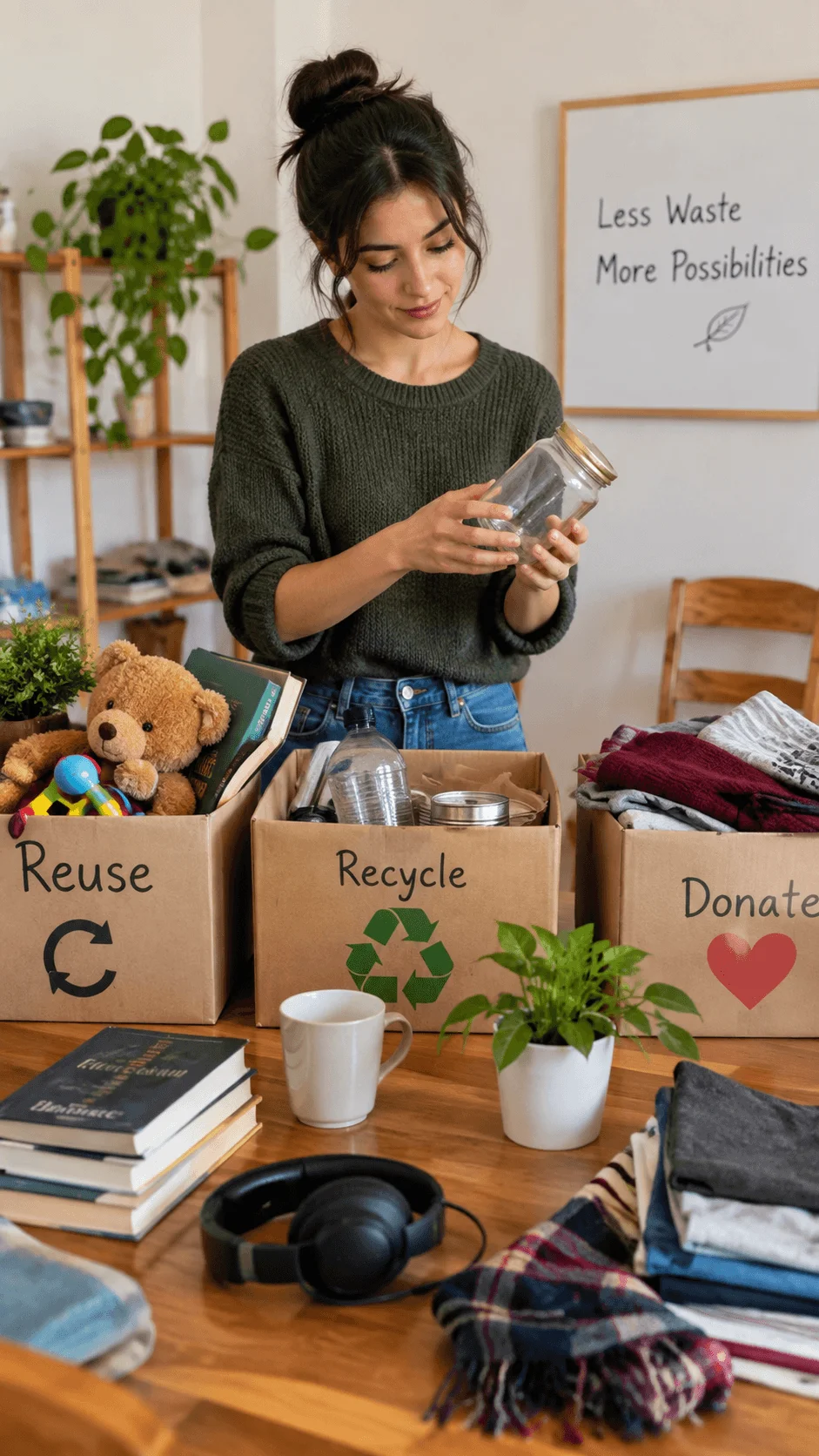
This changes the main question from “Which bin does this go into?” to “Does this need to become waste yet?”
That shift makes the eco friendly waste sorting activity more relevant to real sustainable consumption because it addresses the life of the product rather than only its final disposal.
10. Create a Textile Waste Sorting Activity
Old clothing does not fit neatly into a normal household recycling lesson.
A textile waste sorting activity can ask participants to examine the condition and potential future use of different garments and fabrics.
A wearable shirt might continue in use or go to another person. A damaged garment may still have repair potential. Fabric that no longer works as clothing could become material for an upcycling project. Other textiles may require a dedicated collection service if one exists locally.
The activity can also introduce students to sustainable fashion and product longevity.
Instead of treating every unwanted garment as waste, participants learn to evaluate quality, condition, repairability, and realistic reuse opportunities.
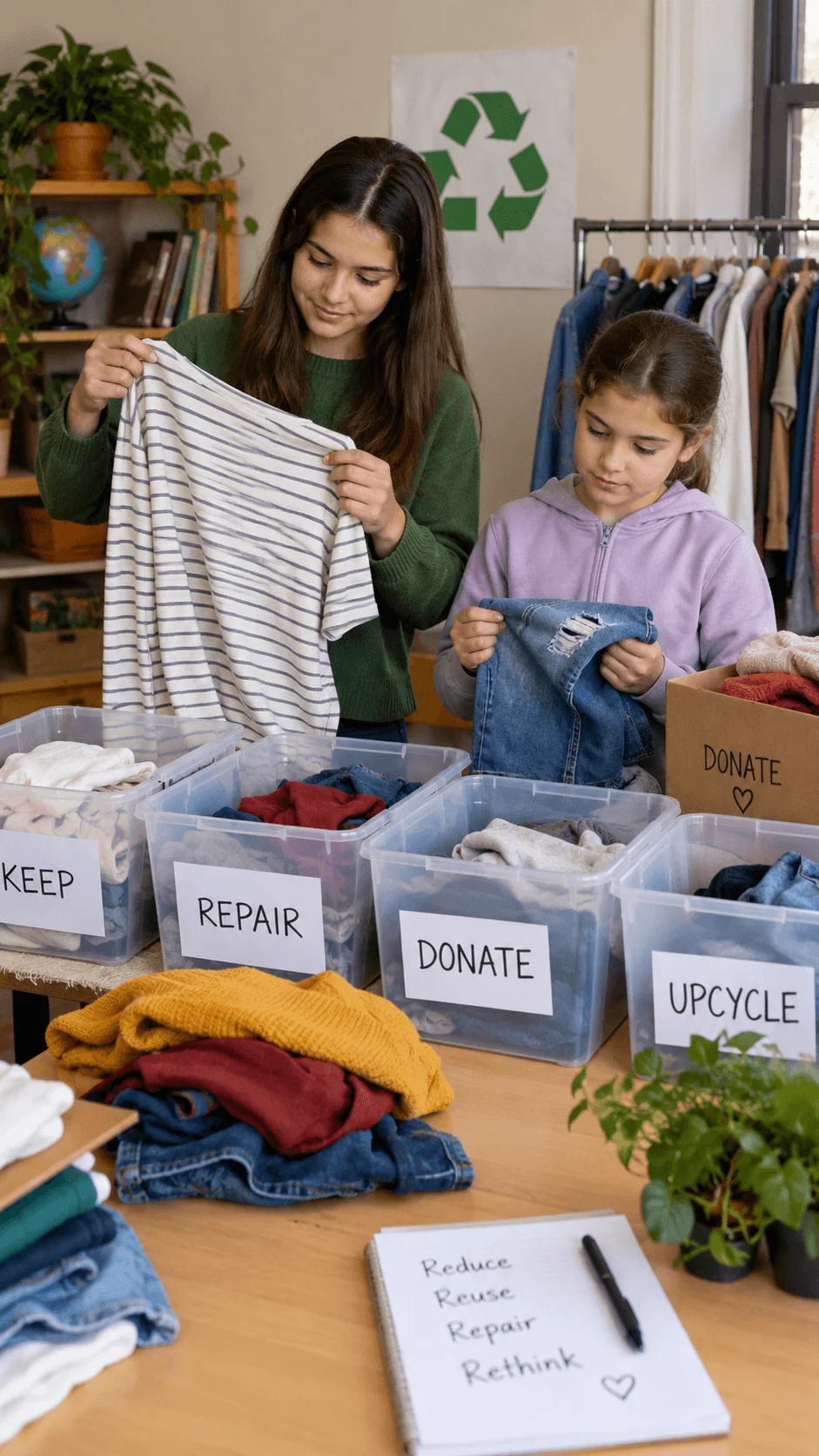
This section of waste education matters because textile collection systems vary considerably. People should not assume that ordinary recycling programs accept clothing simply because textiles contain potentially recoverable materials.
A thoughtful textile activity expands eco friendly waste sorting activities beyond bottles and boxes and helps participants think about the resources already invested in the products they own.
11. Set Up a Reusable Packaging Activity for Students
A reusable packaging activity for students can simulate a café, school canteen, takeaway shop, or community event.
Participants receive a reusable cup or container carrying a pretend deposit. After use, they return it to a collection point. The activity then follows the container through collection, cleaning, redistribution, and another cycle of use.
This simulation teaches something that a normal recycling game cannot. Reusable packaging works as a system, not simply as a stronger container.
A successful return model requires people to bring containers back. Someone must collect and wash them. The system must maintain hygiene and redistribute the packaging. Transportation and repeated use also influence the overall environmental outcome.
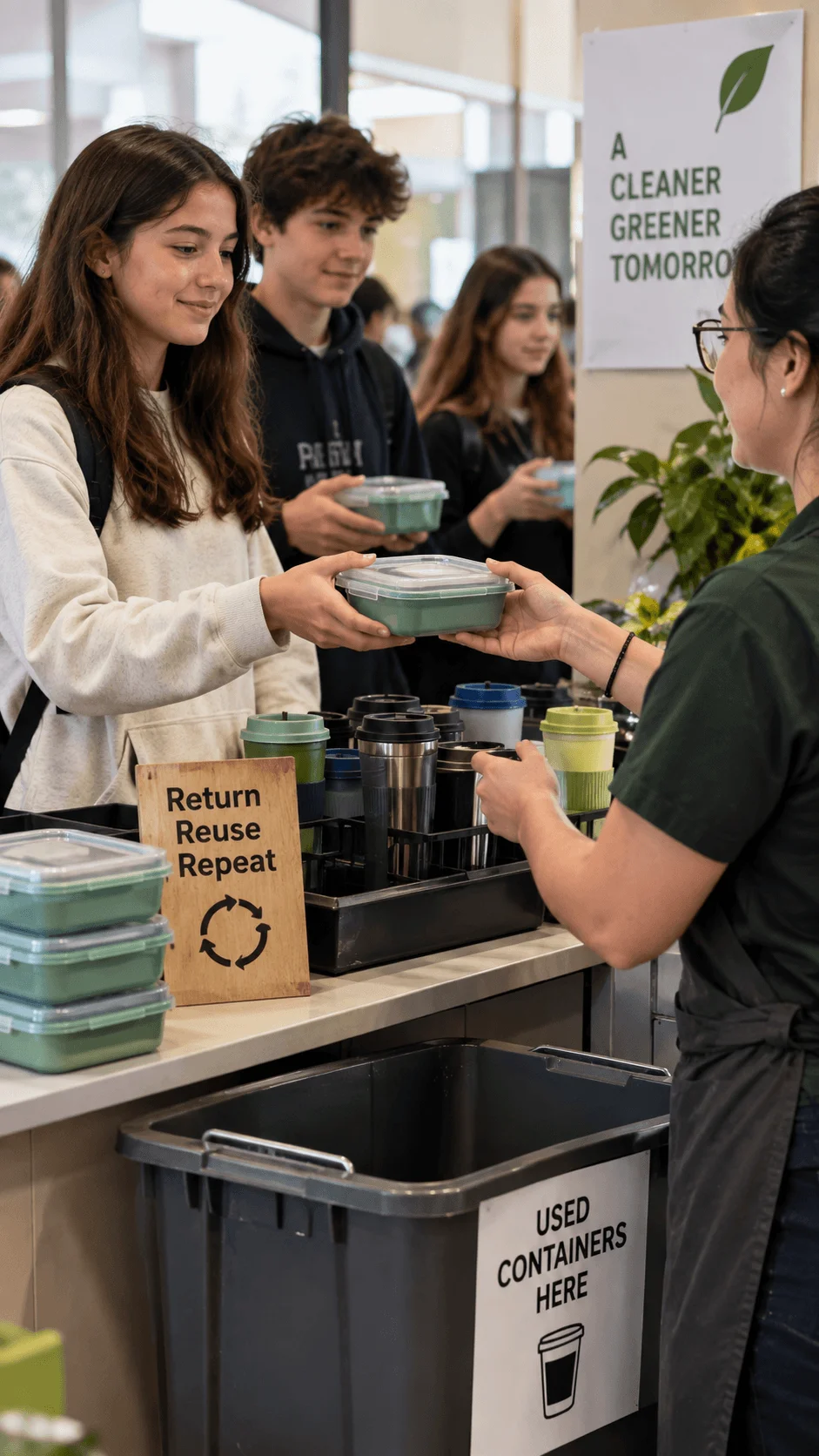
Students can compare this circular model with a linear system in which packaging moves from purchase to use and then disposal.
The lesson should remain balanced. Reusable packaging does not automatically outperform every single use option in every situation. Material choice, washing, transport, return behavior, and the number of times each item circulates all matter.
12. Create a Waste Sorting Reward Activity
A waste sorting reward activity introduces another important part of sustainability education: human motivation.
Participants can create a fictional community waste bank where correctly separated paper, cardboard, metal, glass, and locally accepted plastics receive points or pretend money.
The educational value comes from designing the reward carefully.
If the game rewards only quantity, participants may focus on collecting as much material as possible. A better system rewards correct separation and penalizes contamination.
Participants could also direct their fictional rewards toward a shared environmental goal rather than individual prizes. This introduces conversations about community participation and collective responsibility.
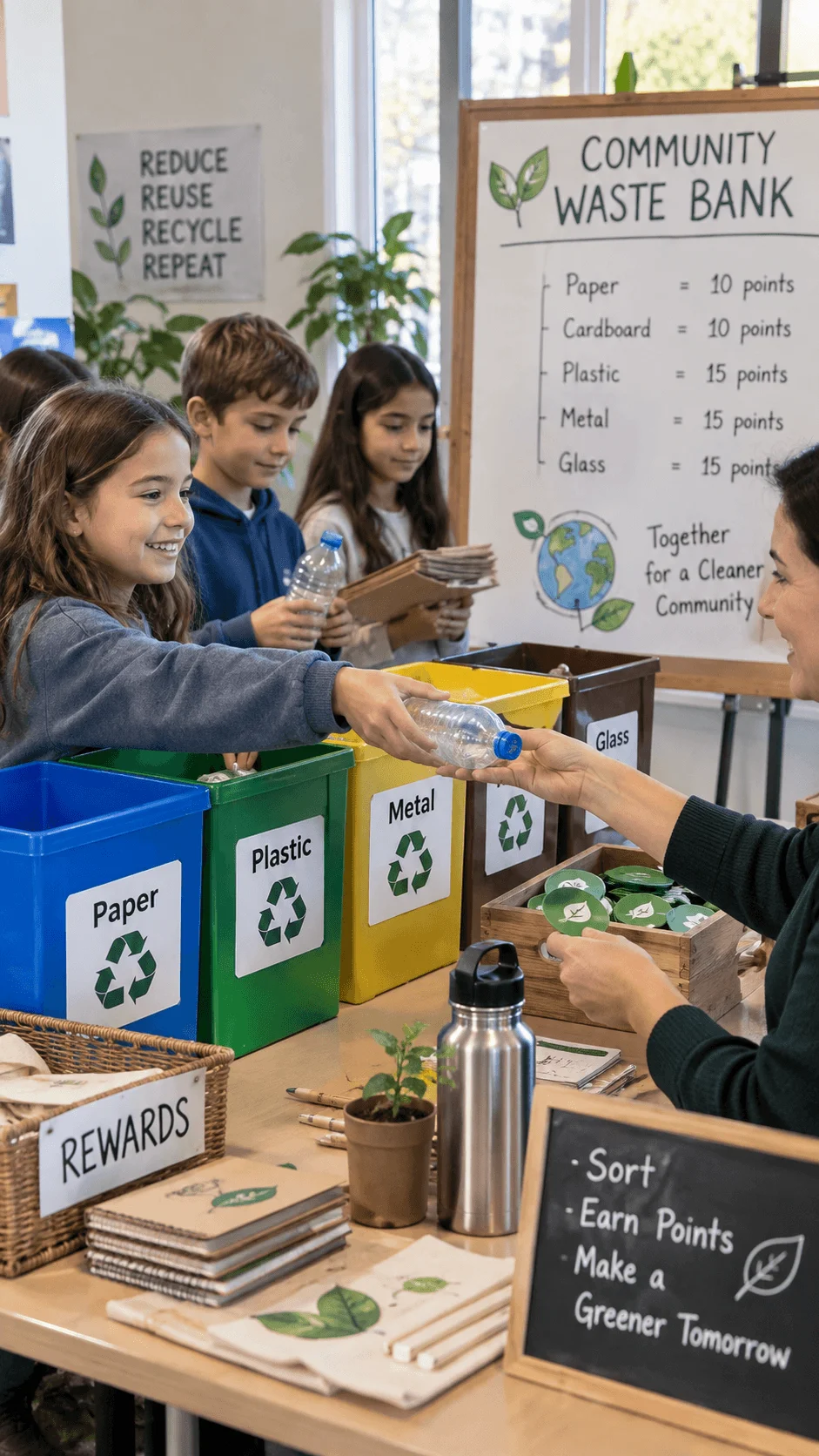
The idea connects naturally with deposit return programs and other systems that use incentives to influence behavior. Current research on deposit return behavior shows that financial benefits can matter, but convenience, information, and practical barriers also influence participation.
This final eco friendly waste sorting activity shows that successful waste systems depend on both infrastructure and human decisions.
Conclusion
The most useful eco friendly waste sorting activity does more than teach someone to recognize a recycling bin. It helps participants understand why an object belongs in a particular system and whether that object should become waste in the first place.
Modern waste education can begin earlier in the product journey. People can consider whether they still need an item, whether someone else can use it, whether repair can extend its life, whether a return system exists, whether organic material belongs in an appropriate composting system, and whether recycling is actually available locally.
That broader thinking reflects the circular economy more accurately than a simple sorting worksheet.
Technology can make these lessons even more interesting. Artificial intelligence can help identify objects, QR codes can connect products with information, and smart waste projects can introduce students to computer vision and engineering. Yet technology should support good decisions rather than replace them. An AI system cannot automatically know every local recycling rule, and a recycling symbol cannot guarantee that a nearby collection program accepts an object.
The strongest eco friendly waste sorting activities therefore combine curiosity with verification. They encourage participants to investigate materials, question assumptions, understand contamination, think about reuse, and follow reliable local guidance.
A family, teacher, school, or environmental club does not need to attempt all 12 ideas at once. Choosing one activity and adapting it to the waste people actually encounter can create a more realistic understanding of how responsible sorting works. The goal is not simply to become faster at choosing bins. It is to make better decisions about products and materials throughout their useful lives.