12 Eco Friendly Alternatives to Kitchen Sponges for 2026
Eco friendly alternatives to kitchen sponges are attracting more attention in 2026 as households look for practical ways to reduce disposable plastic in everyday cleaning routines. Conventional kitchen sponges can be convenient, but many contain synthetic foam and plastic based scrubbing materials that eventually enter household waste. Some synthetic cleaning materials can also shed small particles as they wear. Swedish dishcloths, loofah scrubbers, coconut fibers, wooden brushes, jute pads, and other reusable tools offer different ways to clean dishes and kitchen surfaces while reducing dependence on conventional disposable sponges.
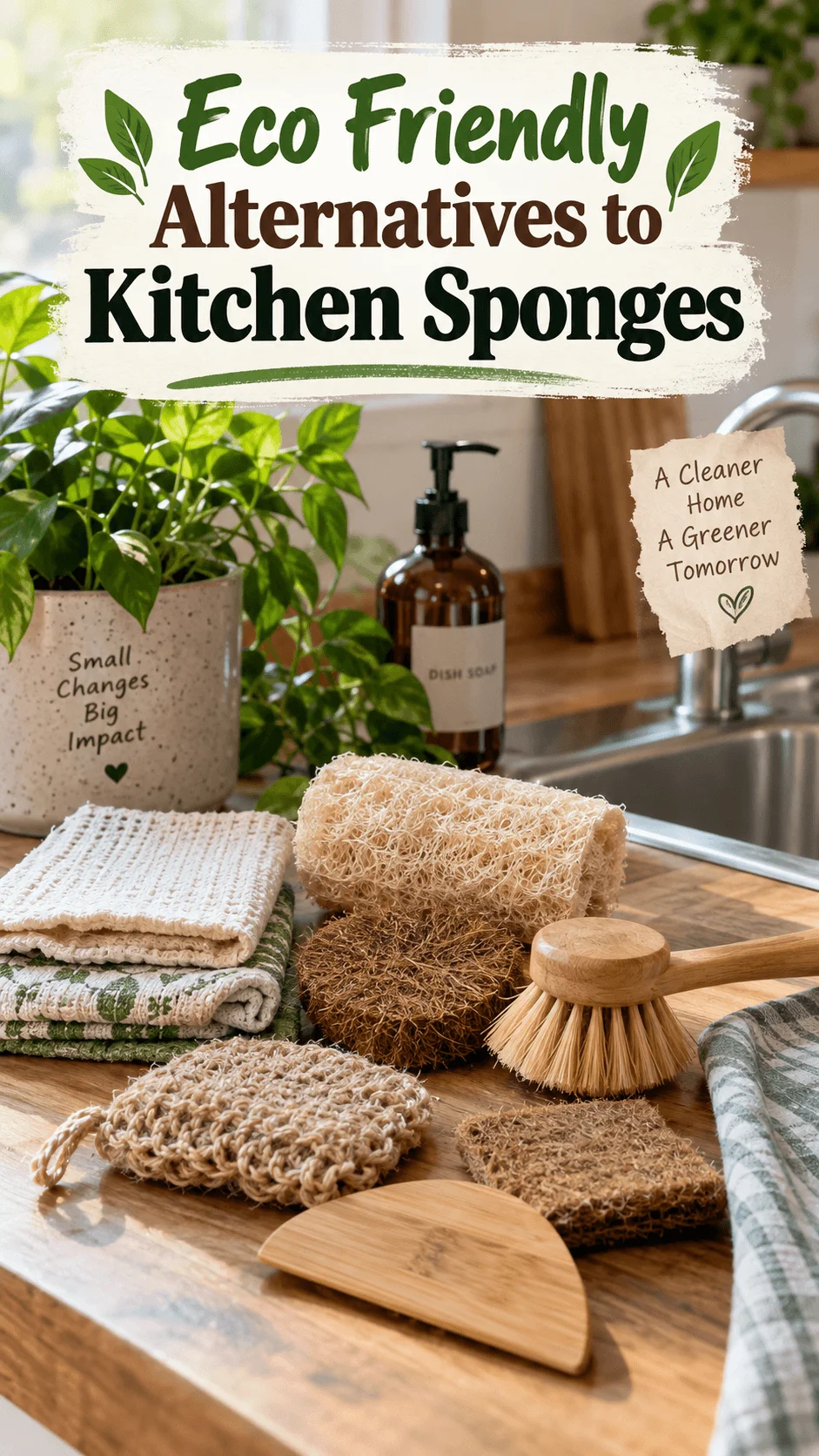
Choosing a replacement, however, involves more than finding something labeled green or natural. A reusable product may still contain plastic, while a plant based product may contain synthetic stitching, adhesives, or coatings. Compostable and biodegradable also describe different properties. A useful choice should balance materials, durability, cleaning performance, care requirements, and realistic disposal options.
Another important change involves how we think about cleaning. One object does not need to perform every job. A washable cloth can wipe counters, a brush can clean plates, and a tougher natural scrubber can tackle stubborn residue. This approach makes many eco friendly alternatives to kitchen sponges easier to incorporate into an ordinary kitchen.
1. Swedish Dishcloths as Eco Friendly Sponge Alternatives
Swedish dishcloths have become one of the most recognizable reusable cleaning options. Many versions combine cellulose with cotton to create a flexible and highly absorbent cloth. When wet, the material becomes soft enough for wiping counters, sinks, tables, and many other kitchen surfaces.
Their ability to absorb liquid makes them especially useful for spills. Instead of reaching for several sheets of disposable paper towel, someone can wipe up a spill with one cloth, rinse it, and use it again. Many Swedish dishcloths can also handle light dishwashing.
Drying is another practical advantage. Their relatively thin structure allows them to dry differently from a thick foam sponge when users store them correctly. Proper drying matters because continually leaving any cleaning tool damp and full of food residue creates an unpleasant environment.
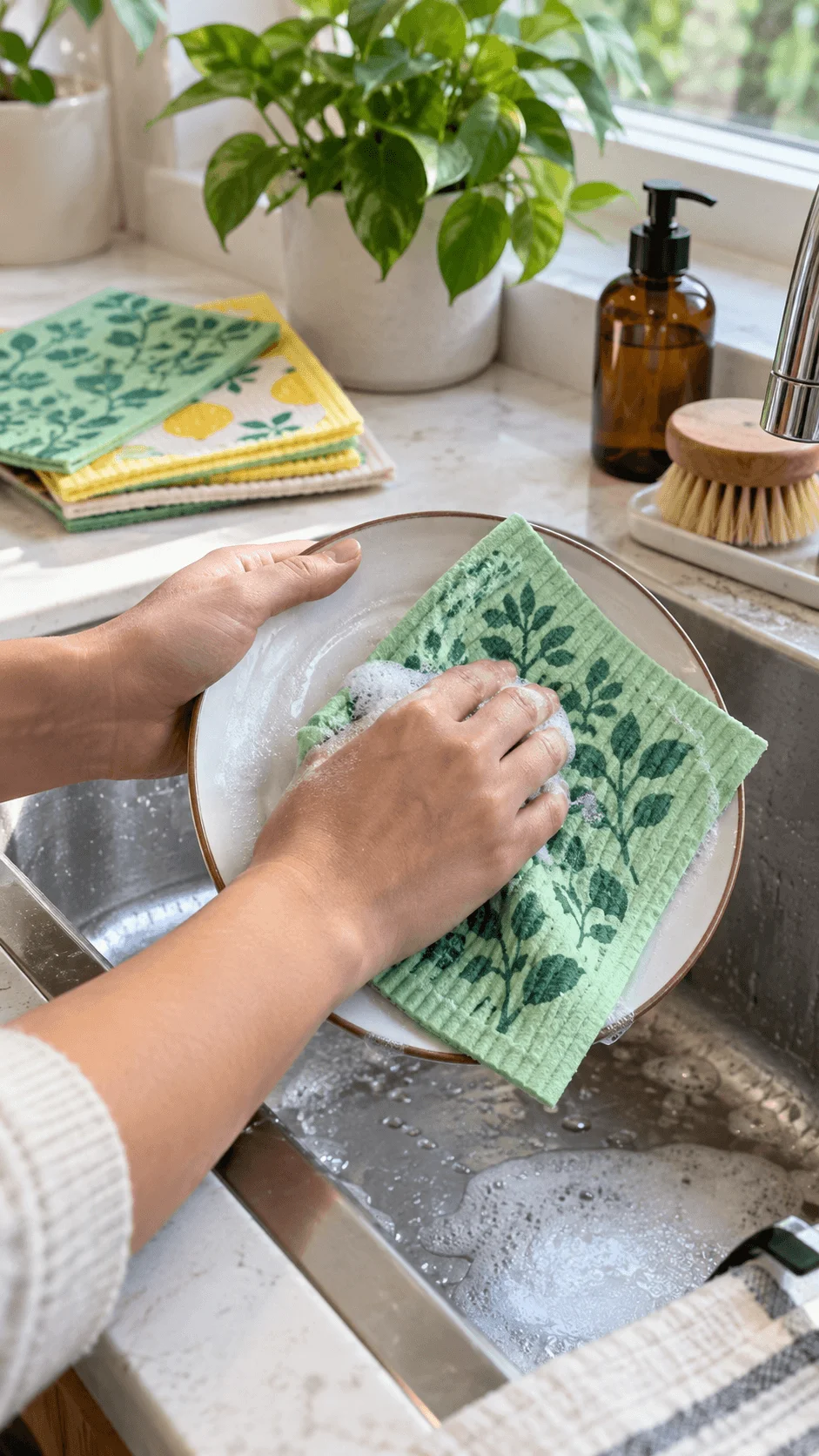
A Swedish dishcloth sponge alternative does have limitations. It may not provide enough abrasion for baked food or heavily soiled cookware. Pairing the cloth with a natural brush or separate scrubber can solve that problem.
Consumers should also examine product materials before assuming every Swedish dishcloth belongs in a home compost pile. Individual products can differ in composition, printing, dyes, treatments, and disposal instructions.
2. Natural Loofah as a Plastic Free Sponge Alternative
Natural loofah provides one of the most interesting eco friendly alternatives to kitchen sponges because it begins as a plant. Despite its sponge like appearance, loofah does not come from the sea. It grows as a member of the gourd family.
As mature fruits dry, they develop an interconnected fibrous interior. People can clean and cut this material into smaller pieces for household use. Its textured surface makes it useful for scrubbing dishes and removing some types of food residue.
Loofah also offers an interesting option for gardeners. In suitable climates, people can grow loofah plants and process mature gourds for household cleaning. This creates a very different relationship with a cleaning product because the household can potentially produce the raw material rather than continually buying replacements.
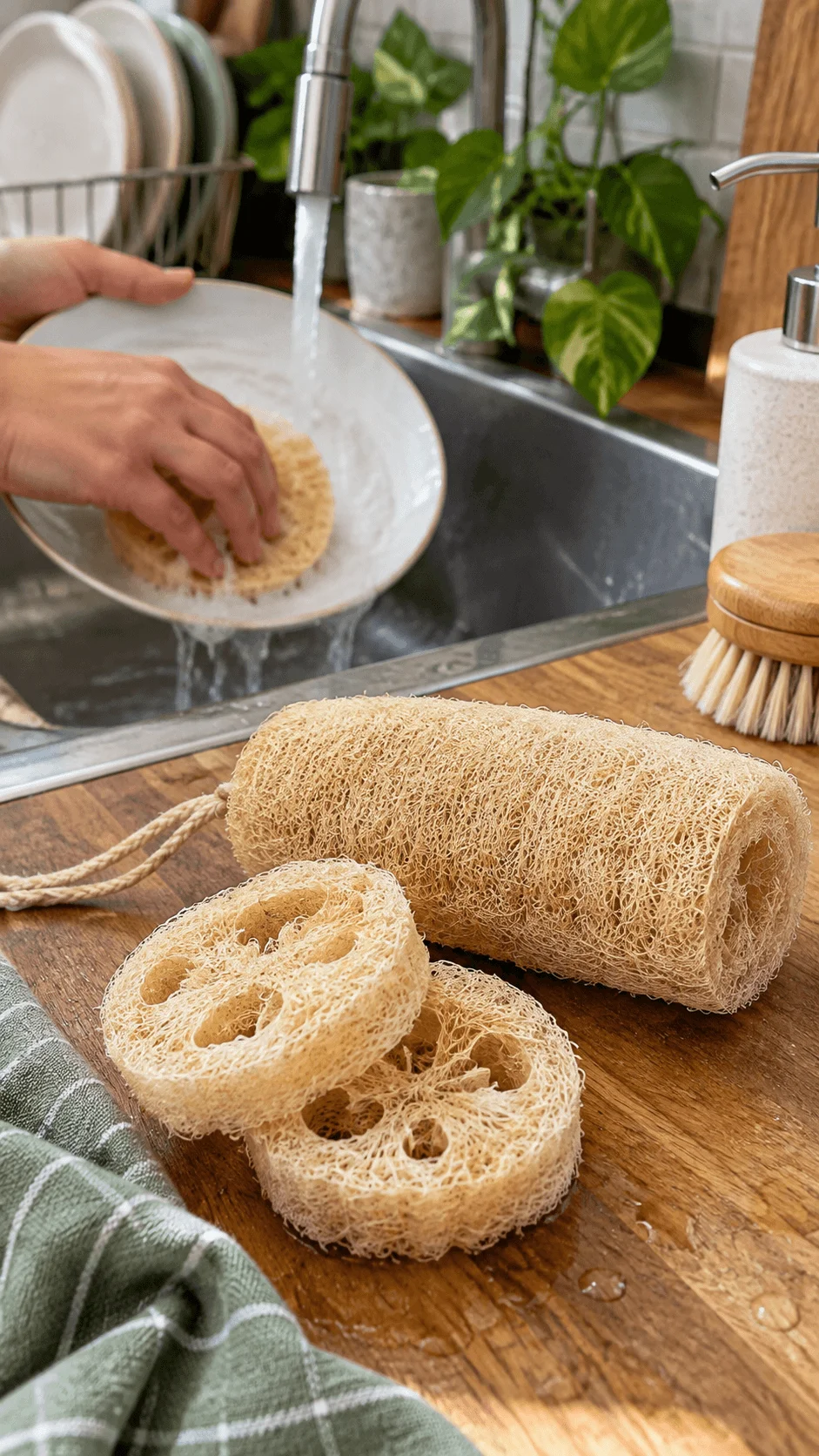
Care still matters. Users should rinse food particles from a loofah kitchen sponge alternative after use and place it somewhere that allows it to dry thoroughly. Natural does not mean maintenance free.
Its rough texture also means it may not suit every surface. Delicate cookware and finishes can require gentler cleaning methods, so owners should follow the manufacturer’s cleaning guidance.
3. Coconut Coir Dish Scrubbers for Sustainable Cleaning
Coconut coir comes from the fibrous material surrounding a coconut. Manufacturers can use these tough fibers to create brushes and scrubbing pads that provide an alternative to synthetic scouring materials.
The texture makes a coconut coir dish scrubber particularly interesting for jobs that need more friction than an ordinary cloth can provide. It can help loosen food residue on appropriate surfaces and complement a softer cleaning cloth.
Coconut fiber also demonstrates why eco friendly alternatives to kitchen sponges do not need to copy the shape and texture of a foam sponge. A household can reserve a tougher coconut scrubber for demanding jobs and use a cloth or brush for routine cleaning.
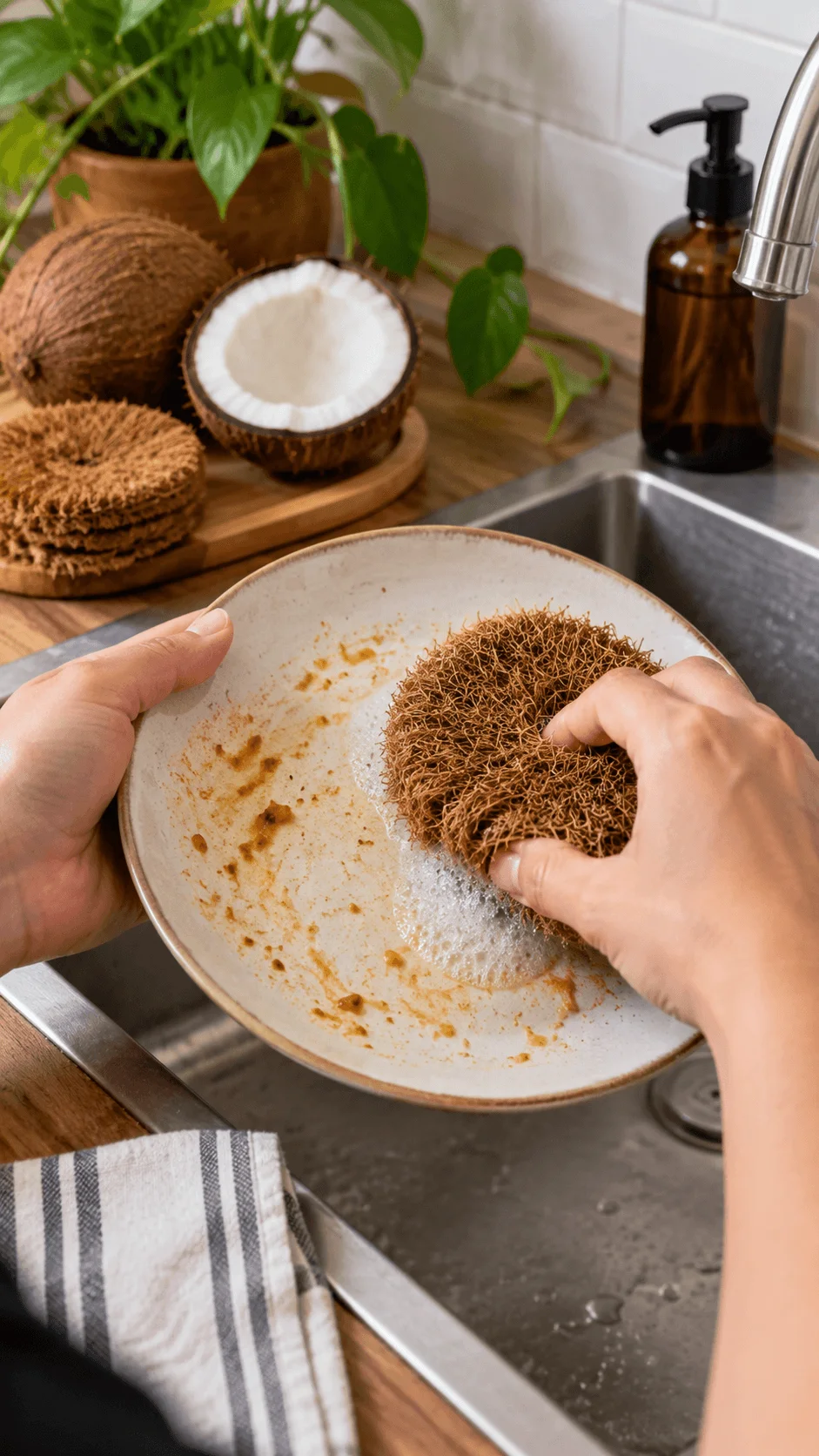
Users should rinse the scrubber carefully and let it dry after use. They should also consider surface compatibility because a rough tool may not suit delicate finishes.
Material transparency matters here too. A coconut fiber kitchen scrubber may contain handles, stitching, adhesives, backing, or other components. Coconut content alone does not guarantee that the finished product contains no plastic or that someone can compost the entire scrubber.
4. Cellulose and Coconut Plant Based Sponge Alternatives
Some people want to reduce synthetic sponge use without completely changing the familiar washing experience. Cellulose and coconut products can help bridge that gap.
Cellulose can form the softer and more absorbent part of a cleaning pad, while coconut fibers can create a more textured scrubbing surface. This combination can give users separate cleaning functions within one compact tool.
These plant based sponge alternatives can appeal to households that find brushes or loose cloths less convenient. They can fit comfortably in the hand and perform many jobs people normally associate with a conventional sponge.
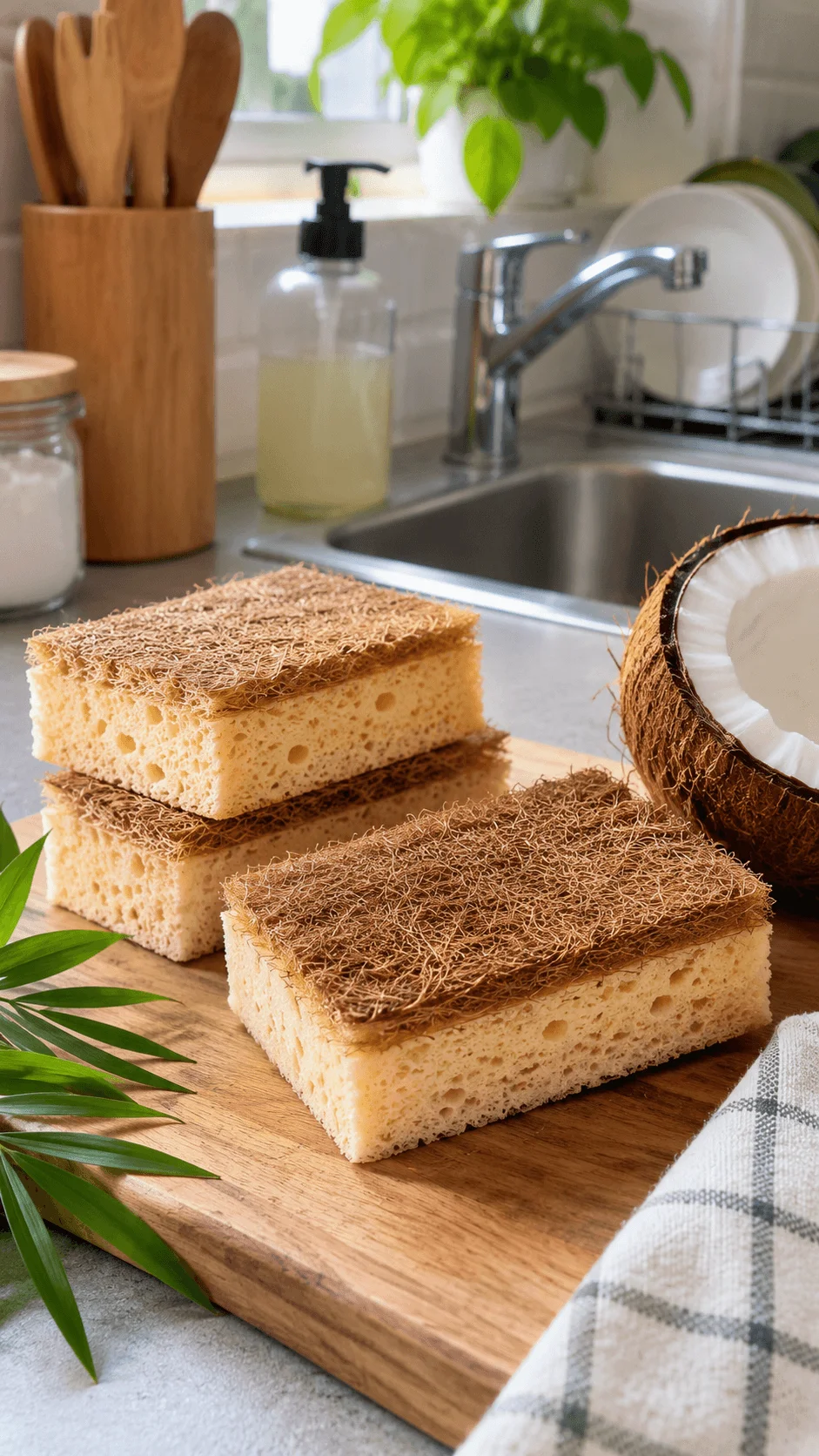
However, shoppers should read beyond the main marketing claim. A package may prominently advertise cellulose or coconut while saying much less about glue, stitching, coatings, backing, or other ingredients. These additional materials can affect disposal options.
Consumers should therefore judge the complete construction rather than a single attractive ingredient. They should also follow washing and drying instructions because reusable cleaning products last longer when people care for them correctly.
5. Wooden Dish Brushes for Sponge Free Dishwashing
A wooden dish brush offers a completely different approach to eco friendly alternatives to kitchen sponges. Instead of gripping a wet pad, users clean dishes with a handle and a bristled head.
A good handle can provide comfortable control while keeping hands farther from dirty dishwater. Bristles can reach across plates, bowls, containers, and suitable cookware. The relatively open structure can also allow water to drain when users store the brush properly.
Replaceable heads make this idea particularly interesting. When the bristles eventually wear out, some designs allow users to replace the head while keeping the main handle. This approach can reduce the amount of material discarded during each replacement.
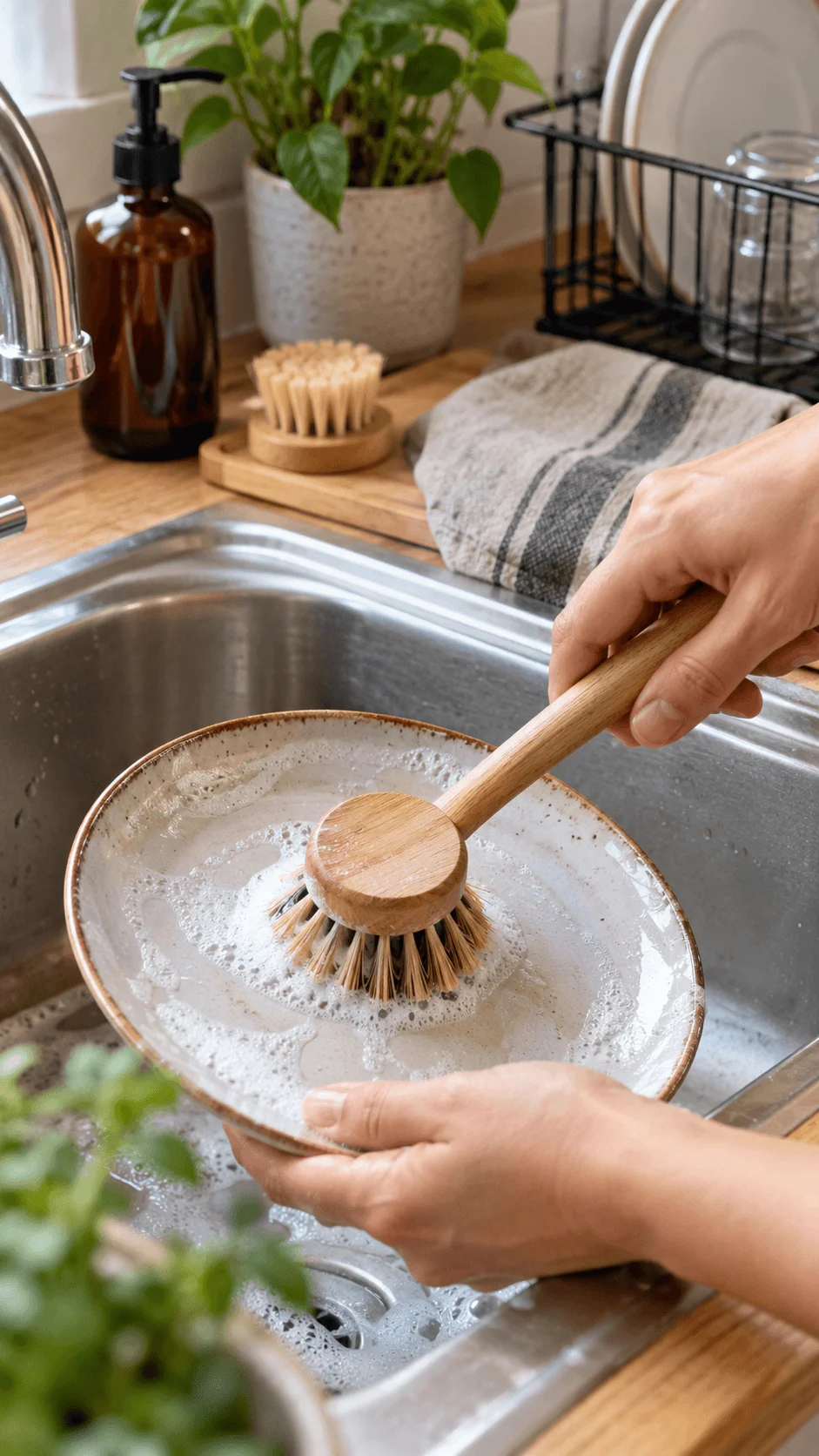
Shoppers who want plastic free dishwashing should inspect the whole brush. A wooden handle does not guarantee that the bristles or connecting parts contain no synthetic materials.
Brushes also have limitations. A large head may struggle with narrow containers or detailed corners. Different bristle textures suit different surfaces, so a household may still need another tool for delicate items or stubborn residue.
6. Sisal and Agave Natural Dish Brushes
Sisal comes from an agave plant and produces strong fibers that manufacturers can use for many practical products. Its stiffness also makes it useful for certain cleaning brushes.
A natural sisal dish brush can provide enough texture for everyday scrubbing without relying on common synthetic bristles. Manufacturers can combine sisal fibers with a wooden handle or brush head to create a simple kitchen cleaning tool.
This option works particularly well as part of a broader sustainable kitchen system. Users can clean ordinary dishes with the brush while keeping an absorbent cloth nearby for spills and a stronger scrubber for difficult residue.
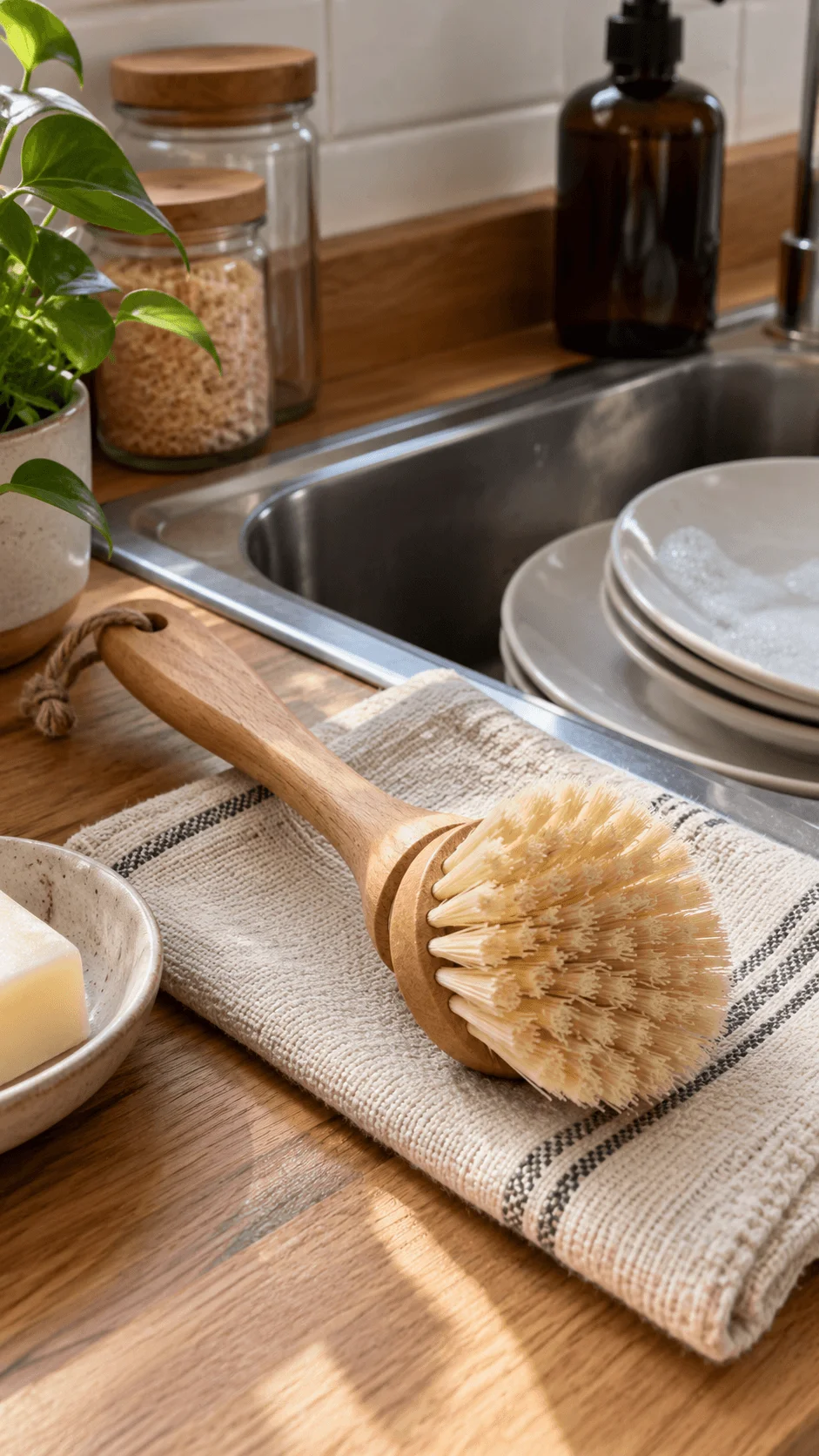
Care can influence lifespan. Users should rinse trapped food from the bristles and allow the brush to dry between uses. Leaving wooden components continually wet can shorten their useful life.
Anyone shopping specifically for a plastic free sisal dish brush should check every component. Natural bristles do not automatically make the entire brush plastic free.
7. Tawashi Scrubbers as Traditional Natural Sponge Alternatives
Traditional cleaning ideas can offer useful lessons for modern sustainable kitchens. Tawashi style scrubbers provide a good example.
These Japanese inspired scrubbers typically use a firm fibrous structure rather than soft synthetic foam. Their textured construction makes them useful for scrubbing appropriate dishes, cookware, and other kitchen items.
A tawashi dish scrubber also shows that modern households do not always need a newly invented product to reduce reliance on disposable cleaning materials. Traditional tools can sometimes perform simple tasks effectively without complicated designs.
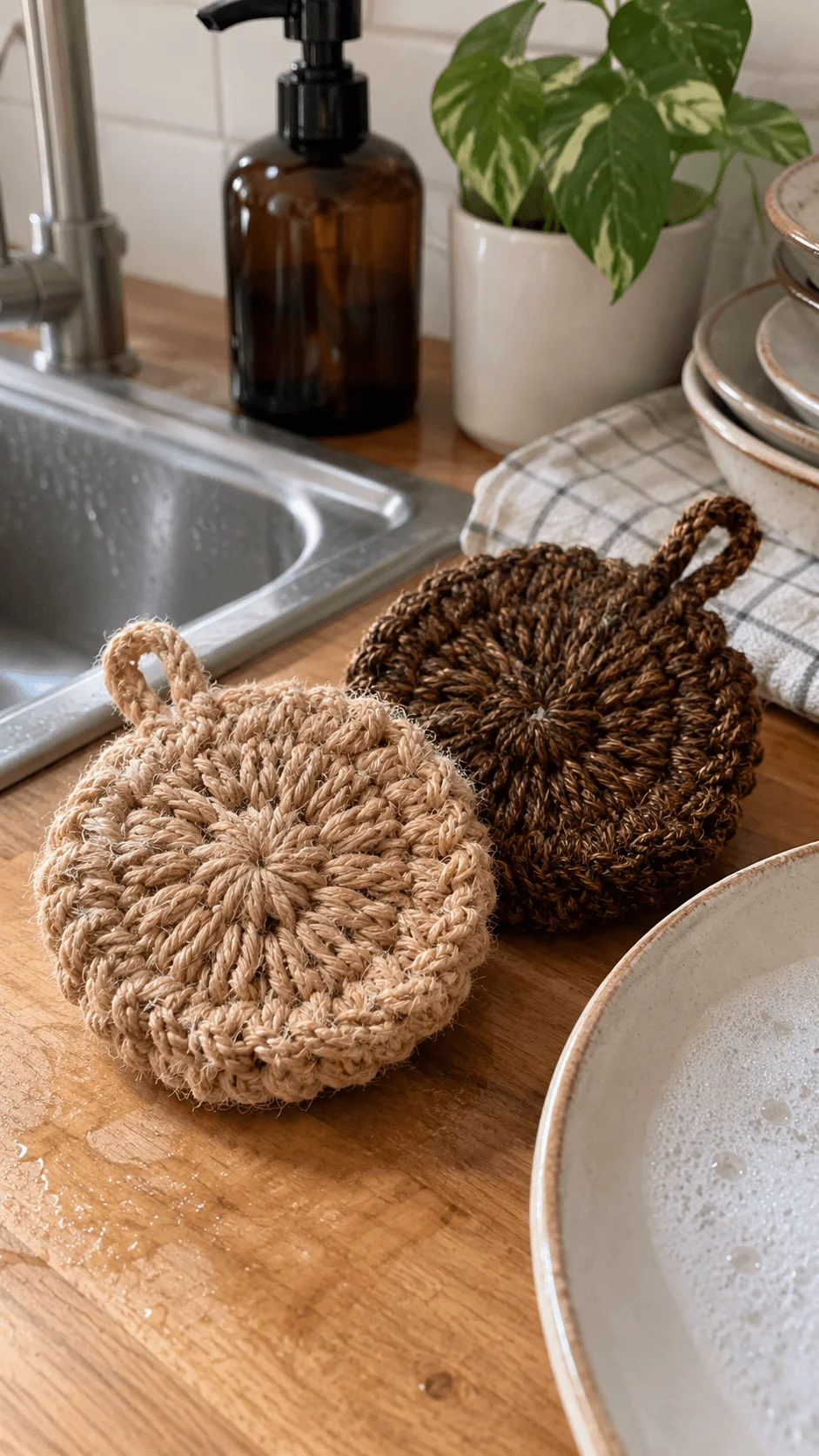
Texture remains important. A firm tawashi sponge alternative may work well where stronger scrubbing action helps, but delicate surfaces can require a softer option. Users should match the cleaning tool to the surface rather than using the same scrubber everywhere.
Regular rinsing, effective drainage, and proper drying can help maintain the tool. Buyers should also check the exact fiber composition because modern products sold under the same general style can use different materials.
8. Reusable Jute Dish Scrubbers
Jute deserves more attention in discussions about eco friendly alternatives to kitchen sponges. The plant produces long natural fibers that manufacturers can weave into textured cleaning materials.
A reusable jute dish scrubber can sit between a soft cotton cloth and a harsh synthetic scouring pad in terms of cleaning style. Its woven texture can create useful friction for routine dishwashing and suitable food residue.
Jute also gives consumers another option beyond the cellulose, coconut, and loofah products that dominate many sustainable cleaning discussions. That variety matters because different households value different textures, shapes, and cleaning methods.
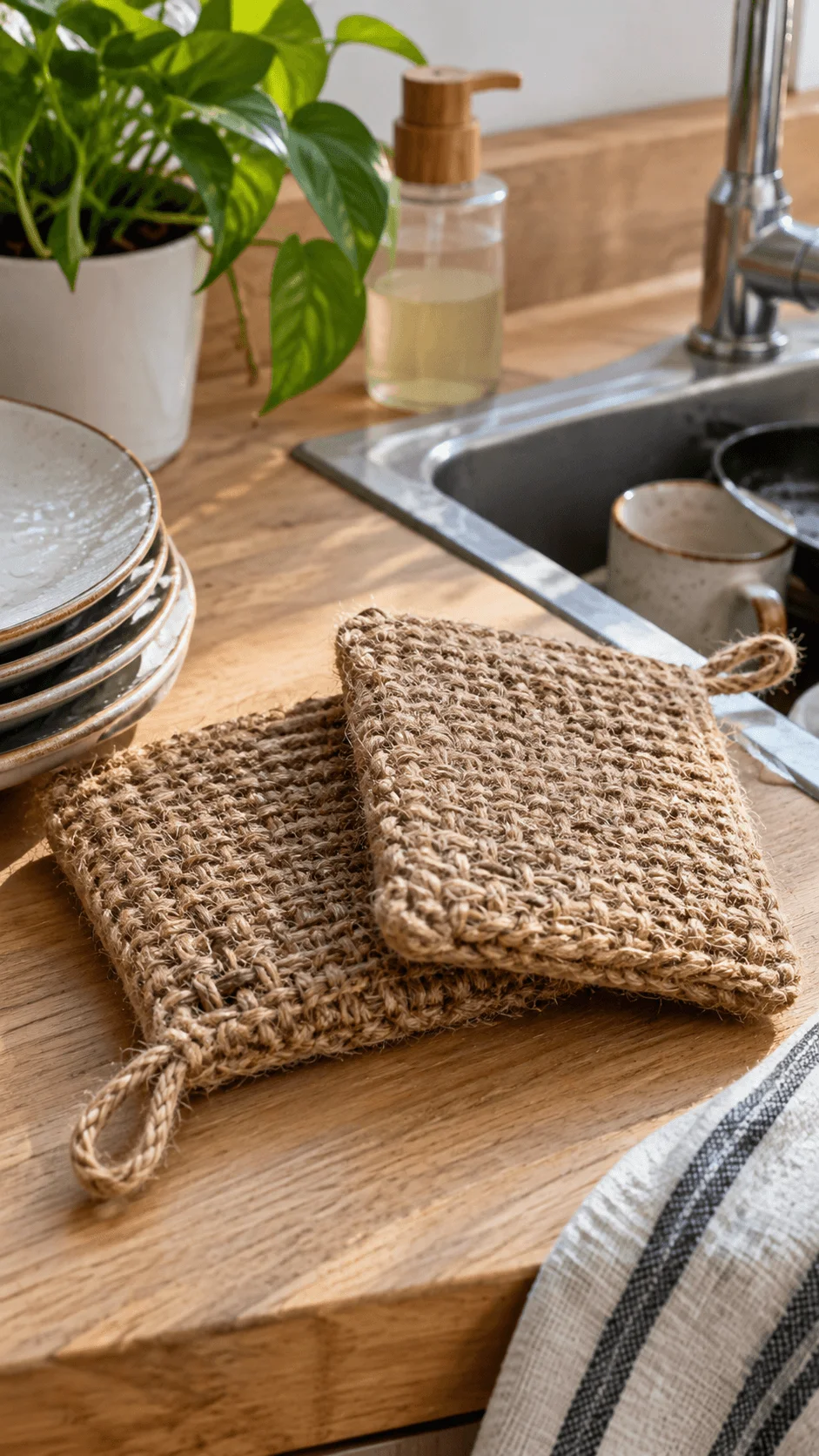
Construction determines how a jute scrubber performs. A tightly woven pad can behave differently from a loosely woven cloth. Added backing, filling, thread, or other fibers can also change its durability and disposal options.
Users should wash the product according to its care instructions and let it dry thoroughly. Consumers who care about eventual composting should examine the entire material list rather than assuming that every product containing jute can go into home compost.
9. Hemp Scrubbers for Sustainable Kitchen Cleaning
Hemp provides another natural fiber that can appear in reusable household textiles and cleaning products. A hemp dish scrubber can offer an interesting option for people who want to move away from disposable foam sponges.
The performance depends heavily on construction. A soft hemp cloth may work better for wiping and washing, while a thicker woven scrubber may provide additional texture for food residue. Blended materials can change absorbency, strength, drying behavior, and disposal options.
Durability deserves attention when comparing eco friendly alternatives to kitchen sponges. A reusable cleaning tool provides more practical value when it performs effectively over many uses. Poor care can shorten that lifespan regardless of the material.
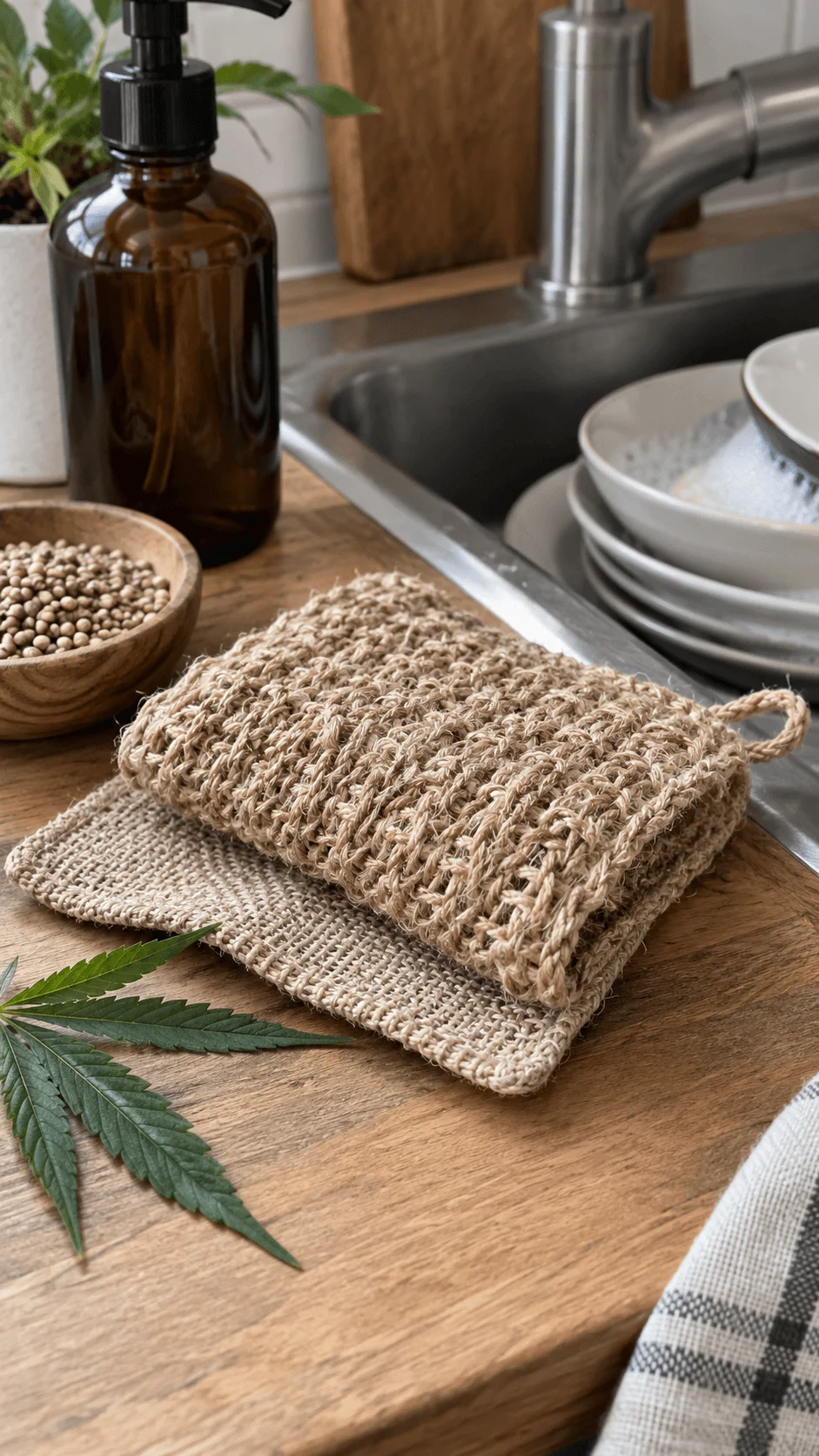
Users should rinse a natural hemp kitchen scrubber after use, wash it according to its instructions, and give it enough airflow to dry.
Hemp also illustrates an important sustainability principle. Consumers should evaluate the finished product rather than assuming one natural ingredient automatically makes an item environmentally preferable in every respect.
10. Upcycled Cotton Cloths as Zero Waste Sponge Alternatives
One of the most affordable alternatives may already exist inside the home. Suitable old cotton towels, washcloths, and T shirts can sometimes continue their useful lives as cleaning cloths instead of immediately becoming waste.
A cotton cloth works particularly well for wiping countertops, absorbing spills, cleaning tables, and handling light washing tasks. Households can cut larger pieces of suitable fabric into manageable cleaning cloths.
This approach also challenges a common contradiction in sustainable shopping. People sometimes discard usable materials and then buy new products marketed as environmentally friendly. Reusing an existing textile can delay disposal while reducing the immediate need for another purchase.
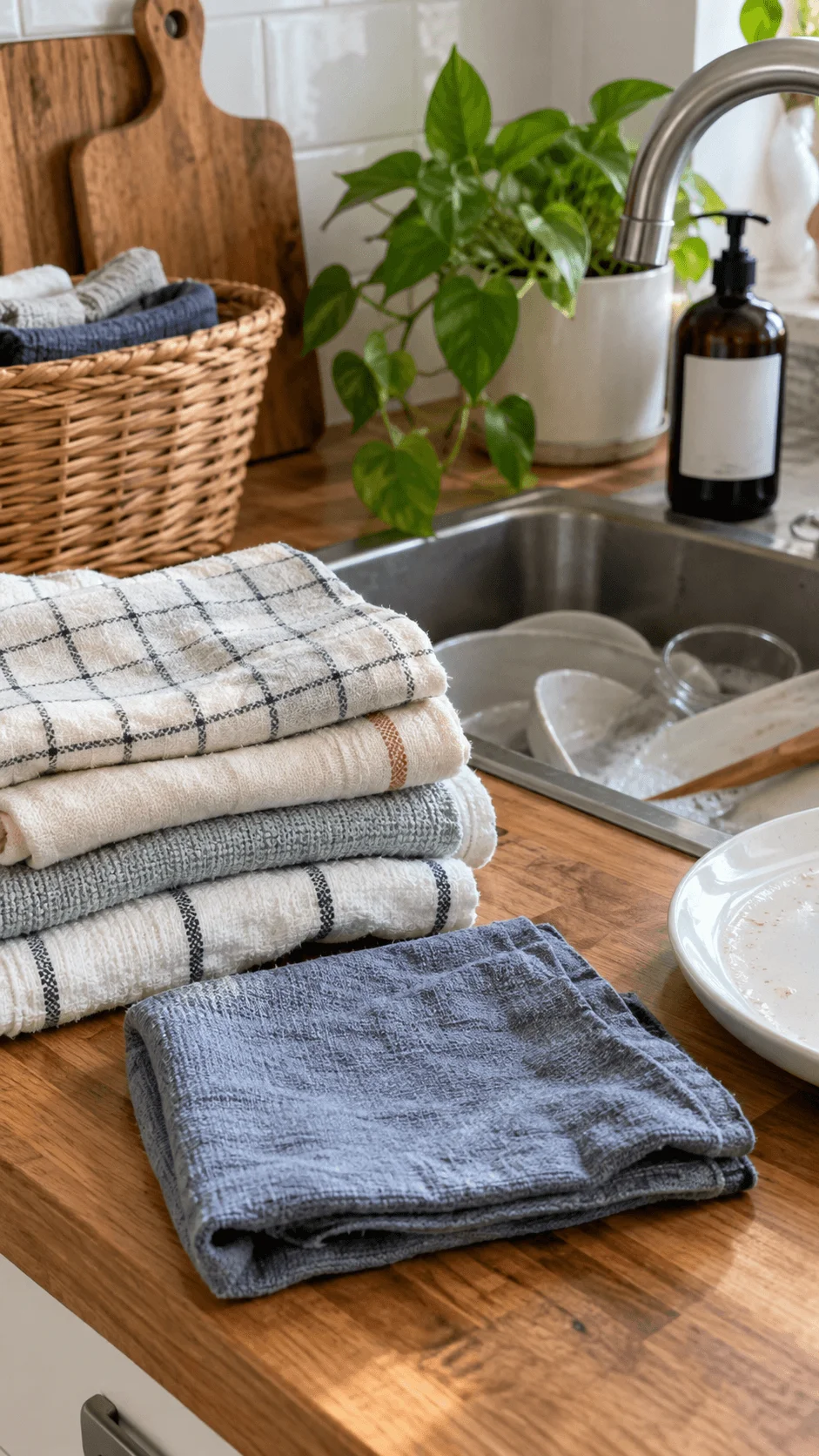
Cotton cloths need proper care. Households should wash them regularly and let them dry completely. Using separate cloths for different cleaning tasks can also create a more organized routine.
Cotton will not replace every sponge function. It may struggle with baked residue or difficult deposits. Pairing it with a brush, coconut scrubber, or suitable scraper can create a more versatile system.
11. Bamboo and Wooden Pot Scrapers for Plastic Free Cleaning
Some of the best eco friendly alternatives to kitchen sponges change the cleaning method instead of copying the sponge itself. A wooden or bamboo pot scraper illustrates this approach.
Dried food often causes people to reach for a highly abrasive scouring sponge. A small scraper can loosen suitable residue before the main washing process begins. After removing the difficult material, a cloth or dish brush can finish the job.
This division of labor can reduce unnecessary heavy scrubbing with softer cleaning tools. It may also help those tools remain useful for longer because they do not need to handle every difficult cleaning task.
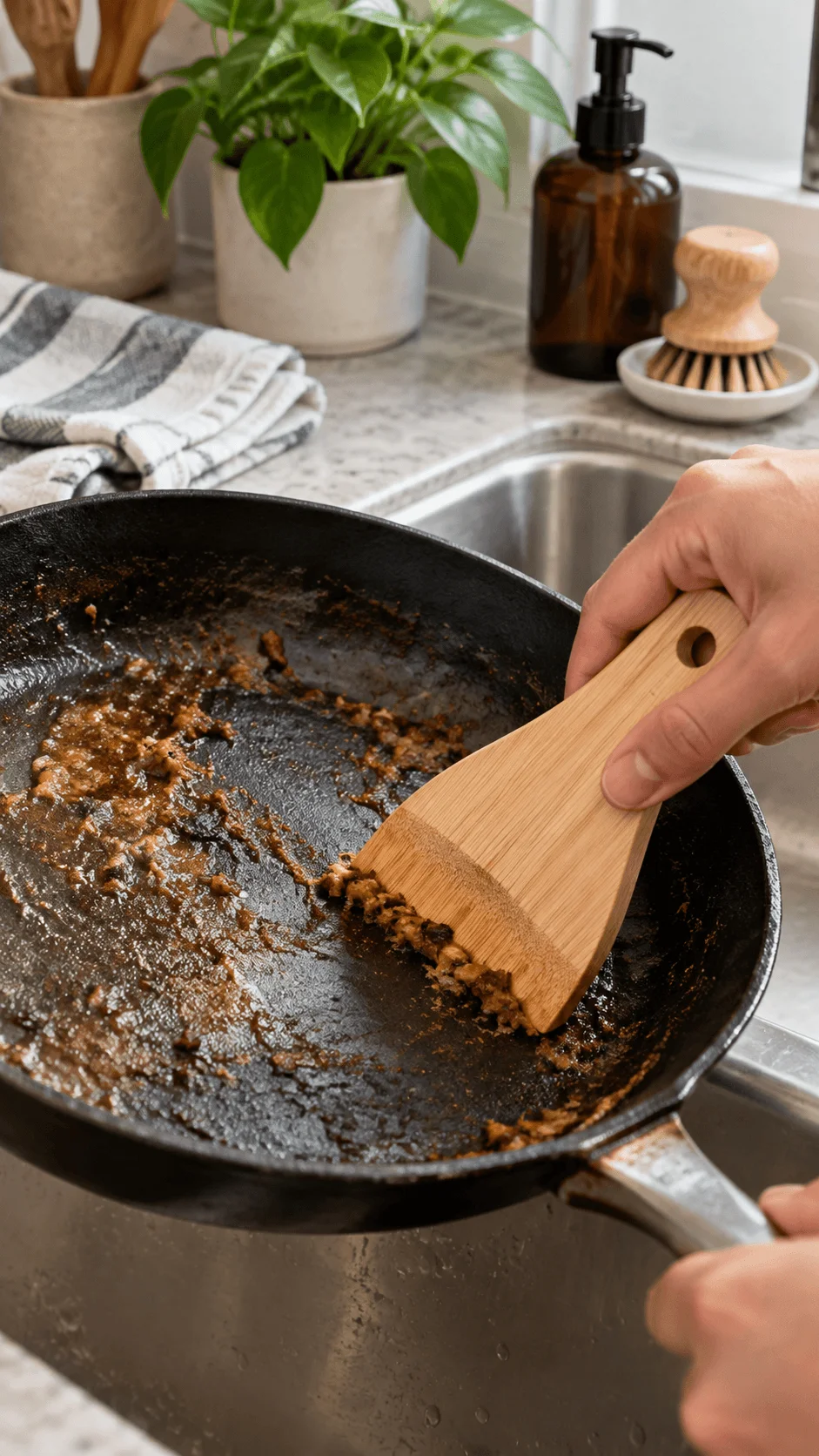
A bamboo pot scraper or wooden pan scraper requires basic care. Users should clean it after use and let it dry instead of leaving it submerged in water.
Surface compatibility remains essential. Cookware coatings and finishes differ considerably. People should follow the cookware manufacturer’s instructions and avoid any eco friendly pan scraper that could scratch or damage a particular surface.
12. Create a Complete Sponge Free Kitchen Cleaning System
The most practical solution may involve abandoning the idea that one item needs to replace a conventional sponge.
A sponge performs several jobs. It absorbs spills, wipes counters, holds dish soap, washes plates, and scrubs residue. Finding one natural material that performs every task equally well can prove difficult.
A sponge free kitchen cleaning system divides these tasks among specialized tools. A Swedish dishcloth or washable cotton cloth can handle spills and counters. A wooden or sisal brush can clean routine dishes. Loofah, coconut coir, jute, hemp, or tawashi can provide additional scrubbing where suitable. A wooden scraper can loosen stubborn dried food on compatible surfaces.
This approach can make eco friendly alternatives to kitchen sponges more practical because each tool performs the job that suits its design.
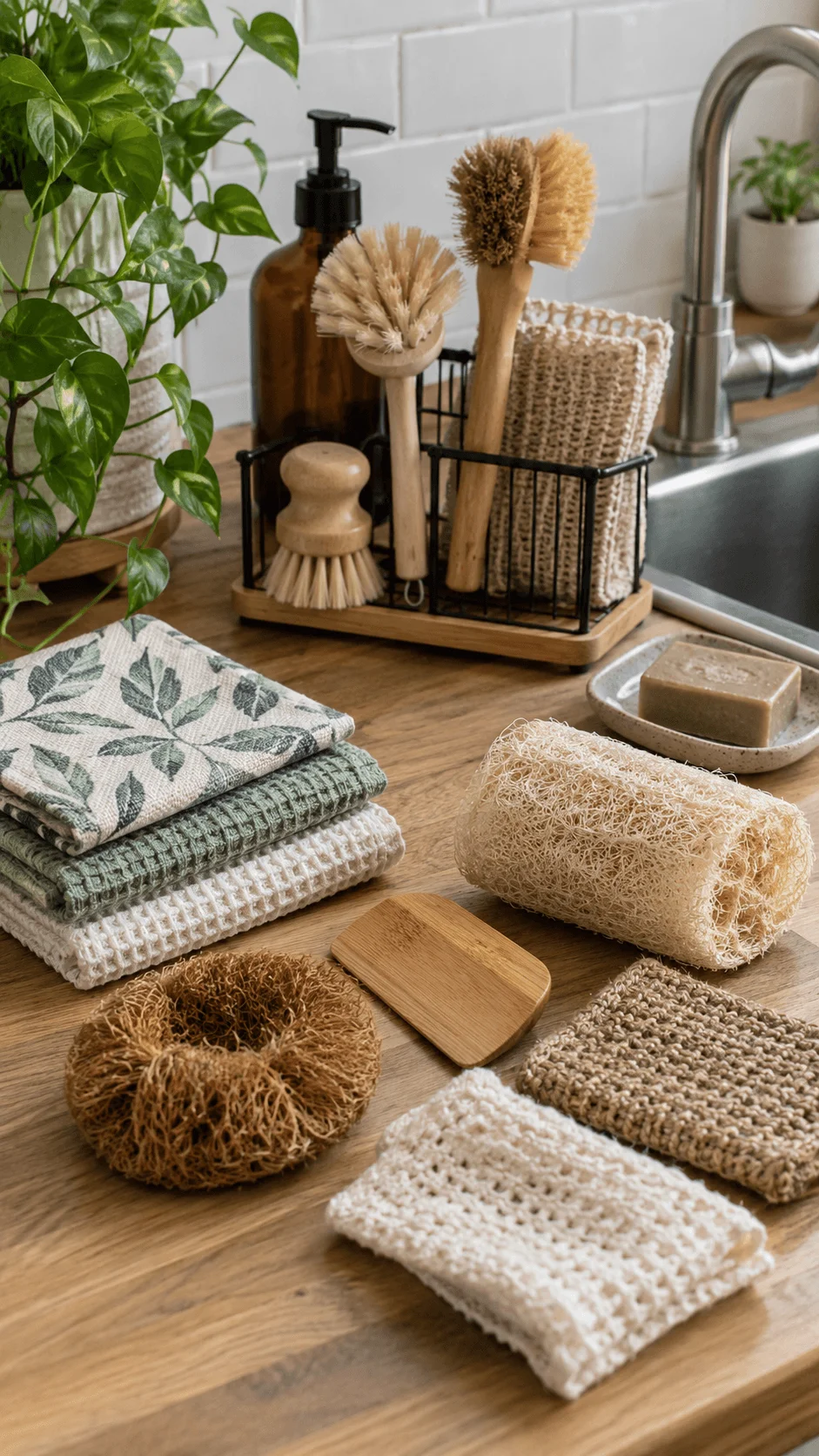
Storage should form part of the system. Reusable cloths, brushes, and scrubbers need places where they can drain and dry rather than remaining in a wet pile beside the sink.
Sponge free dishwashing therefore becomes less about buying one fashionable zero waste dish scrubber and more about designing a cleaning routine that works efficiently.
How to Choose Natural and Plastic Free Sponge Alternatives
Environmental marketing can make choosing a cleaning product unnecessarily confusing. Words such as natural, reusable, biodegradable, compostable, plant based, and plastic free can describe different characteristics.
Start with the complete material composition. A scrubber may use coconut, jute, or sisal as its main material while also containing synthetic thread, glue, backing, or plastic components.
Durability matters too. A reusable item that quickly falls apart may require frequent replacement. Strong construction and appropriate care can extend useful life.
Replaceable components can also reduce waste. A dish brush that allows someone to retain the handle and change only a worn head provides a different replacement pattern from a completely disposable brush.
End of life claims deserve careful attention. Plant based does not automatically mean compostable. Biodegradable does not necessarily mean suitable for a backyard compost pile. Some compostable materials require specific conditions that ordinary home compost systems may not provide.
People searching for eco friendly alternatives to kitchen sponges should therefore look beyond attractive packaging and examine materials, care instructions, durability, and disposal guidance.
Are Natural Sponge Alternatives More Hygienic?
Natural materials do not automatically create cleaner kitchen tools. Daily habits play an important role.
Food particles and moisture can remain in cloths, brushes, and scrubbers after cleaning. Users should remove visible residue, rinse tools properly, follow relevant washing instructions, and provide enough airflow for drying.
Storage matters for the same reason. Leaving a reusable scrubber compressed at the bottom of a wet sink does not take advantage of its ability to dry. A suitable rack or holder can improve drainage and airflow.
Households should also inspect their cleaning tools regularly. Excessive wear, persistent odors, damaged fibers, or material that can no longer be cleaned effectively can indicate that replacement makes sense.
The goal should not be to find a material that supposedly eliminates hygiene concerns. A better approach combines an appropriate cleaning tool with sensible rinsing, washing, drying, storage, and replacement habits.
How to Make Reusable Sponge Alternatives Last Longer
Good maintenance can improve the practical value of eco friendly alternatives to kitchen sponges. Reusable does not mean indestructible, and careless storage can shorten the life of otherwise durable materials.
Remove trapped food soon after cleaning instead of allowing residue to dry inside fibers or bristles. Rinse appropriate tools thoroughly and place them where air can circulate.
Wash reusable cloths according to their care instructions. Avoid leaving wooden brushes and scrapers continuously submerged in water because prolonged moisture can affect natural materials.
Using different tools for different jobs can also reduce wear. A soft cloth does not need to fight stubborn baked residue when a suitable scraper or tougher scrubber can handle that task first.
This approach turns product care into part of waste reduction. Extending the useful life of something already in the kitchen can reduce the need for frequent replacements.
Conclusion
Eco friendly alternatives to kitchen sponges give households more choices than simply replacing one disposable sponge with another. Swedish dishcloths, loofah, coconut coir, cellulose, wooden brushes, sisal, tawashi, jute, hemp, upcycled cotton, and wooden scrapers each approach kitchen cleaning differently.
The most effective choice does not need to follow a trend. It should fit the household’s actual cleaning needs, cookware, budget, storage space, and willingness to care for reusable tools. People should also examine complete material lists instead of relying on words such as natural, green, or plant based.
A combination of tools may offer the most practical solution. An absorbent cloth can handle spills, a durable brush can wash dishes, and a textured scrubber or suitable scraper can tackle tougher residue. This system removes the pressure to find one perfect replacement for every sponge function.
Ultimately, choosing eco friendly alternatives to kitchen sponges works best when sustainability and practicality support each other. Using what you already own, selecting durable materials, caring for tools properly, and considering their eventual disposal can help create a kitchen cleaning routine that produces less unnecessary waste while still making everyday cleaning simple and effective.