Eco Friendly Apartment Garden Ideas for Small Spaces
Living in an apartment does not mean giving up the joy of gardening. With the right approach, even a small balcony, patio, terrace, windowsill, or sunny corner can become a productive green space. These eco friendly apartment garden ideas focus on practical ways to grow plants while reducing waste, conserving water, supporting biodiversity, and making better use of limited space.
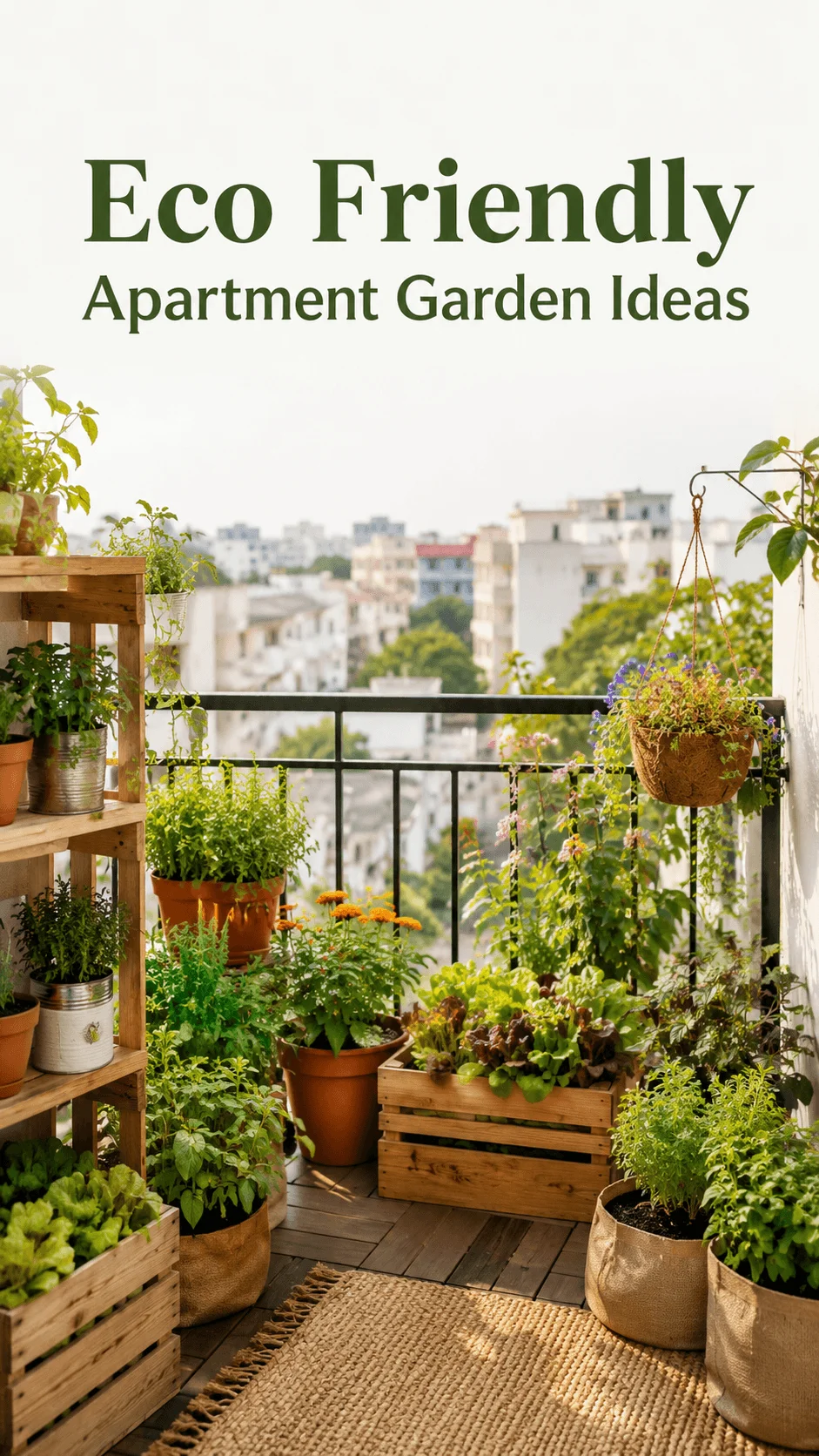
Sustainable apartment gardening is also becoming more creative. Instead of filling a balcony with ordinary plastic pots, gardeners are exploring reused containers, vertical growing systems, self watering planters, pollinator friendly plants, and compact edible gardens. The goal is not to create a huge garden. It is to make thoughtful choices that work with the space, climate, sunlight, and resources available to you.
Upcycled Container Garden Ideas for Sustainable Apartments
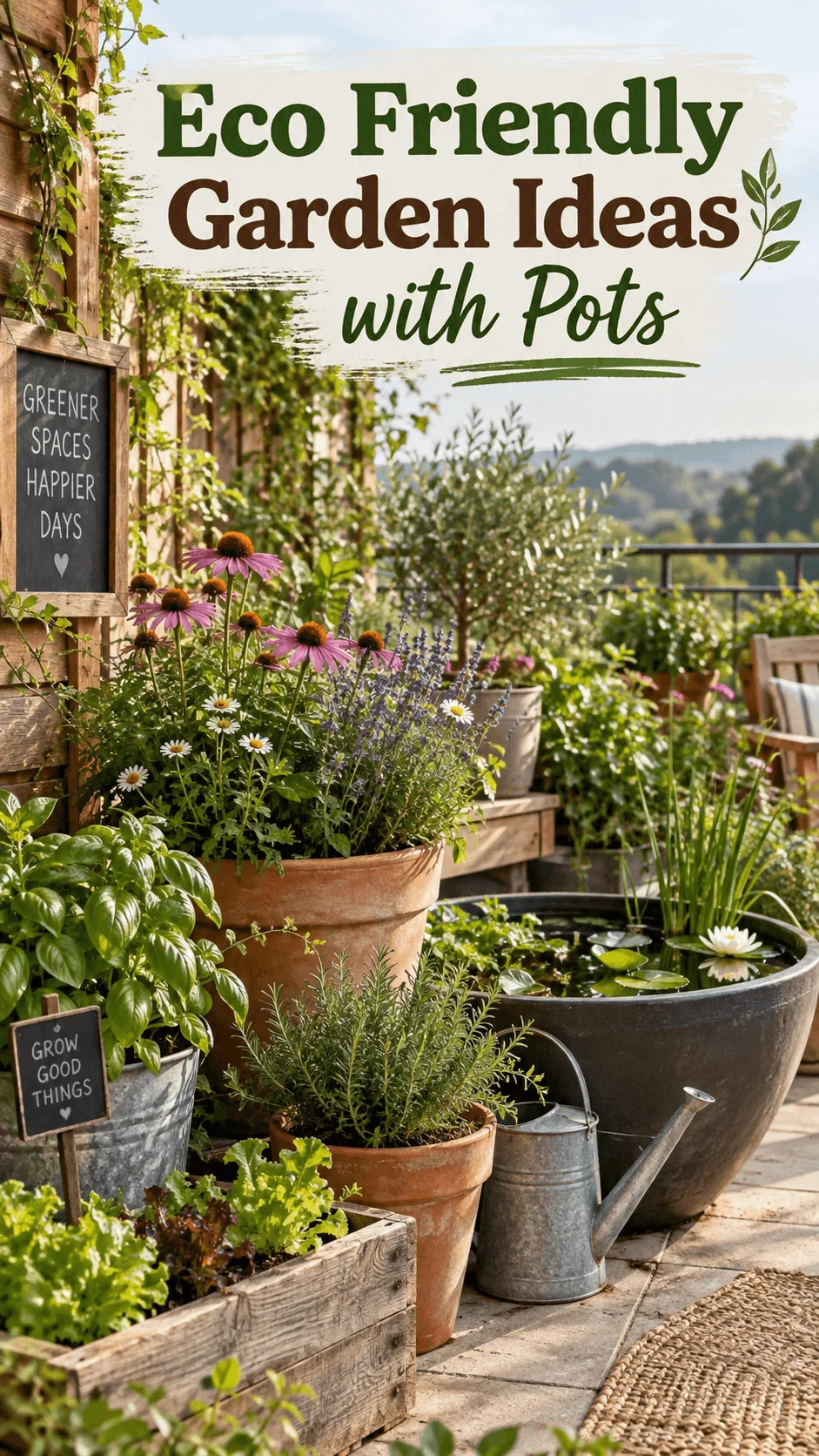
One of the easiest ways to make an apartment garden more sustainable is to reuse containers you already have. An upcycled container garden can turn everyday items that might otherwise sit unused into attractive homes for herbs, flowers, vegetables, and other plants.
Old wooden crates can work especially well for apartment gardens when you line and prepare them properly. Unused ceramic containers, suitable household containers, reclaimed wooden boxes, and other sturdy items can also become planters. Before using anything, make sure the material is clean, safe for plants, and strong enough to hold moist growing media.
Drainage deserves particular attention. Excess water needs a way to escape so that plant roots do not remain constantly saturated. If you use a container that does not have drainage, consider whether you can safely modify it without damaging the material. You should also place a tray beneath containers when necessary to protect floors and balconies from water.
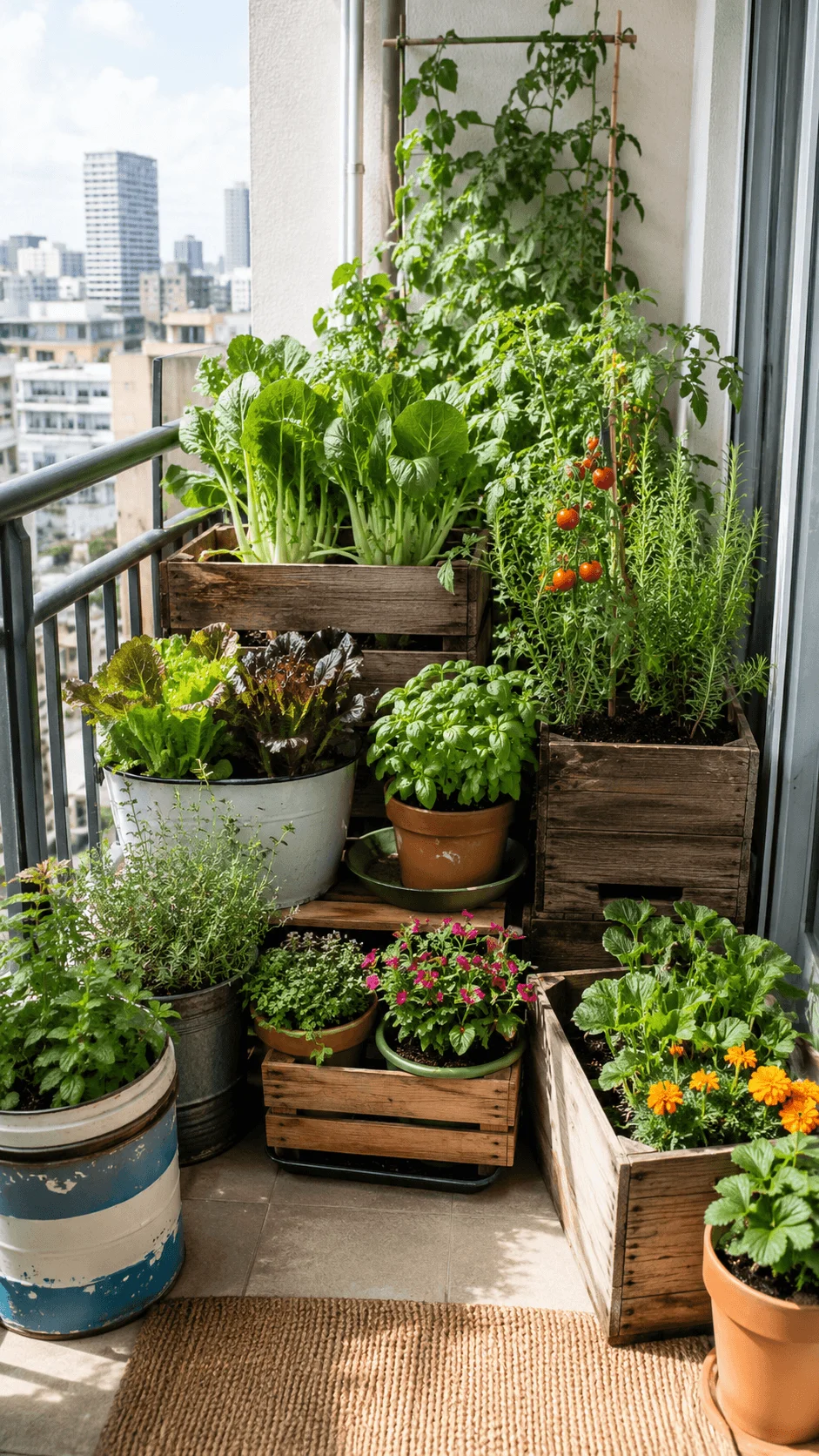
The size of the container should match the plant. Small herbs can grow comfortably in relatively compact containers, while vegetables with deeper roots need more growing space. Using the right size helps plants develop properly and prevents you from wasting soil and water on unsuitable arrangements.
You can also make the garden visually appealing by grouping containers according to height. Place taller plants toward the back and smaller herbs or flowers where they remain easy to reach. This creates a layered appearance without requiring additional furniture or decorative products.
Upcycling also gives you an opportunity to create a garden with personality. Instead of purchasing identical containers, you can combine different textures and materials while keeping the overall arrangement organized. The result can look intentional rather than improvised.
Eco Friendly Vertical Garden Ideas for Apartments
Floor space often becomes the biggest limitation in an apartment garden. A vertical garden solves part of this problem by encouraging plants to grow upward instead of spreading across the floor.
An eco friendly vertical garden for an apartment can use shelves, freestanding frames, suitable railing systems, hanging containers, or reclaimed materials. The exact arrangement depends on your balcony rules and the structure available in your space.
A simple reclaimed wooden frame can provide several levels for small containers. You can also use a sturdy freestanding shelf to create multiple planting levels. These approaches allow you to grow several herbs or flowers while keeping the walking area relatively open.
Herbs are particularly useful for vertical arrangements because many remain compact. Basil, mint, parsley, thyme, oregano, and similar plants can work well when their sunlight and watering requirements match the location. Compact flowering plants can also add color between edible plants.
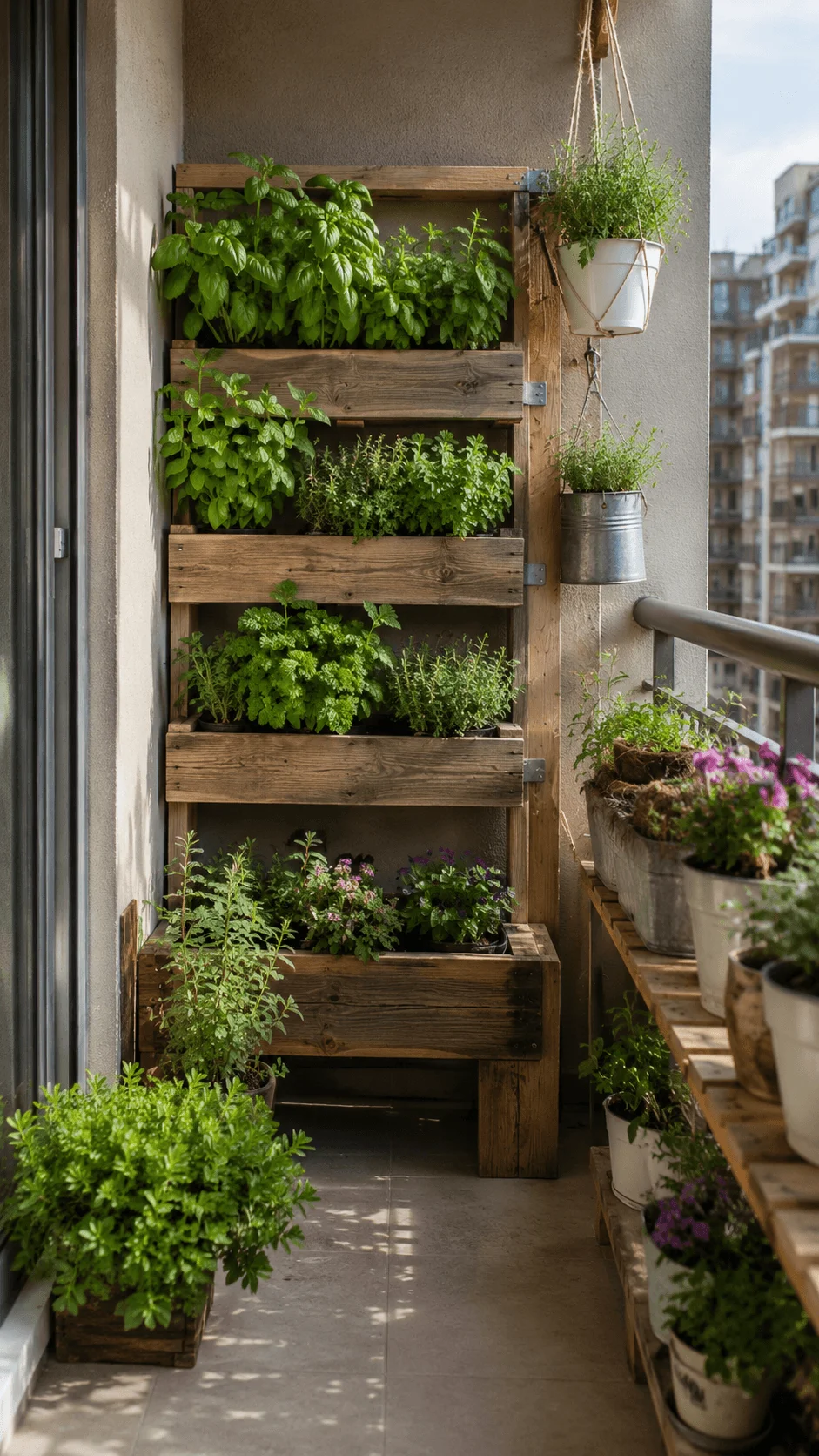
Sunlight becomes more complicated when you garden vertically. Plants positioned at the top may receive more direct sunlight than those underneath. Observe your balcony during different parts of the day before deciding where each plant should go.
Watering also requires planning. Water from an upper container can sometimes reach plants below, but you should not rely on this as a watering system. Each plant needs attention according to its own moisture requirements. Make sure your arrangement does not allow water to damage walls, flooring, furniture, or neighboring spaces.
Vertical gardening also makes harvesting easier when you organize plants at comfortable heights. Frequently used herbs should remain within easy reach, while less frequently handled plants can occupy higher positions.
The most sustainable approach is to build the vertical system around materials you already own or can reuse safely. You do not need an elaborate installation to create a productive vertical garden. A thoughtfully arranged shelf with several containers can provide many of the same space saving benefits.
Sustainable Apartment Gardening With Self Watering Planters
Water management becomes especially important when plants grow in containers. Small containers can lose moisture quickly, particularly when a balcony receives strong sunlight or regular wind. Self watering planters offer one way to make watering more consistent.
These containers typically include a reservoir beneath the growing area. The growing medium draws moisture upward as needed, depending on the design and conditions. This can help reduce the need for frequent manual watering, although the actual results depend on the container, plant, weather, and watering habits.
Self watering systems can be useful for people who occasionally forget to check their plants. They can also help maintain more consistent moisture for plants that dislike repeated cycles of becoming extremely dry and then receiving large amounts of water.
However, not every plant needs the same moisture level. Some herbs and drought tolerant plants prefer conditions that dry somewhat between watering sessions. Using a self watering container for a plant that prefers drier conditions can create unnecessary problems.
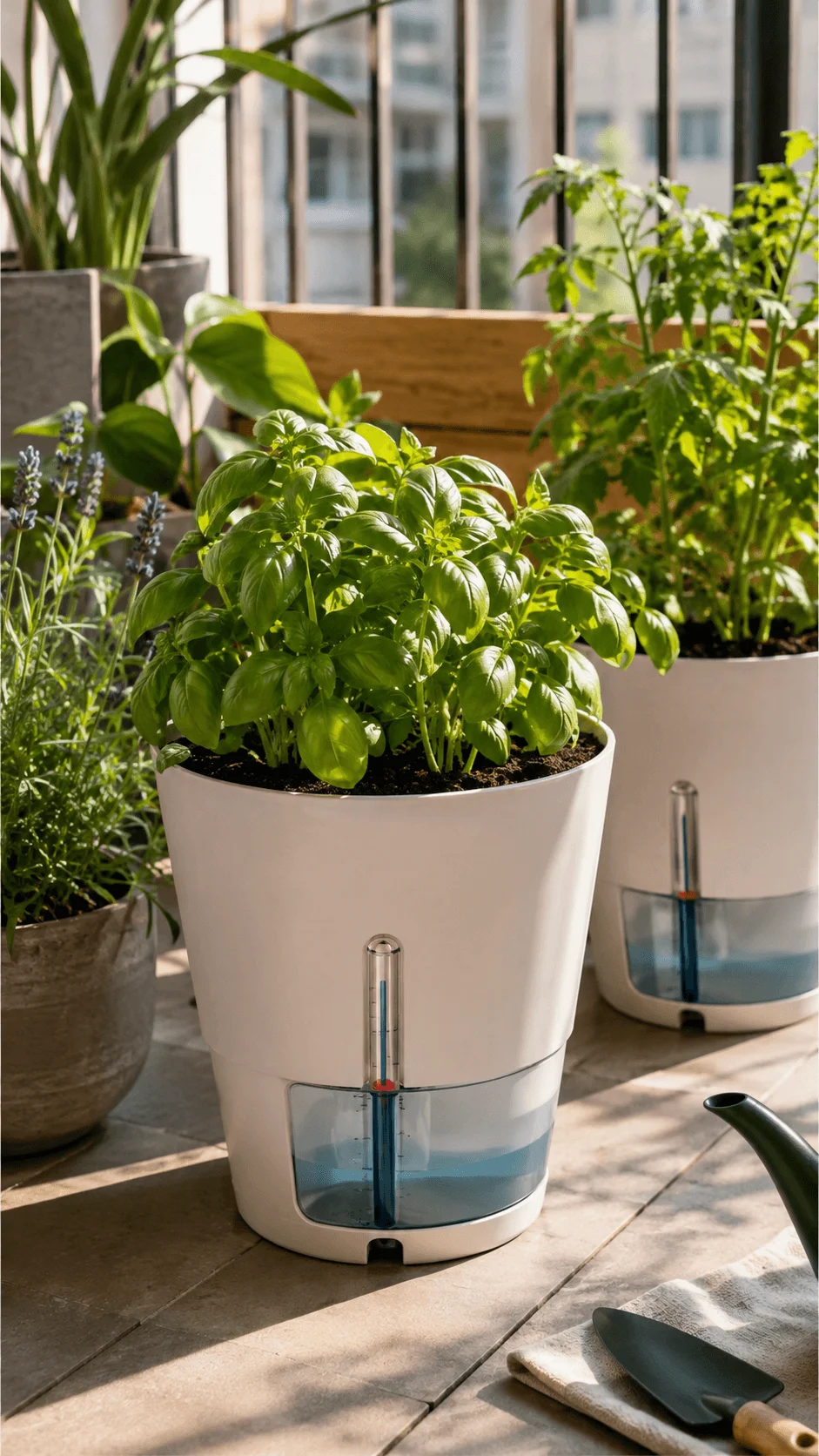
The growing medium also matters. A container needs an appropriate balance between moisture retention and drainage. Avoid treating a self watering planter as a reason to ignore the plant. Check the reservoir, inspect the leaves and growing medium, and pay attention to changes in weather.
You can make this approach more sustainable by combining water conscious containers with sensible plant choices. Group plants with similar watering needs together so that you do not have to maintain completely different watering routines across a small garden.
Positioning matters as well. A container exposed to intense afternoon sunlight may behave very differently from one placed in partial shade. If a plant consistently dries out too quickly, moving it to a more suitable position may solve the problem more effectively than simply adding more water.
Eco Friendly Balcony Garden Ideas for Pollinators
An apartment balcony may be small, but it can still become part of a larger urban ecosystem. Creating a pollinator friendly garden gives you an opportunity to grow attractive flowers while providing useful resources for visiting insects.
The strongest approach involves choosing native or locally appropriate plants whenever possible. Plants that naturally suit your region’s climate can often handle local growing conditions more effectively than plants chosen only because they look attractive in photographs.
Think about creating a mixture rather than filling every container with the same flowering plant. Different flower shapes and blooming periods can make the garden more useful throughout the growing season.
You can combine flowering plants with herbs that produce flowers when allowed to mature. This can give an edible garden an additional ecological purpose. Instead of harvesting every herb before it blooms, consider allowing some plants to flower when appropriate.
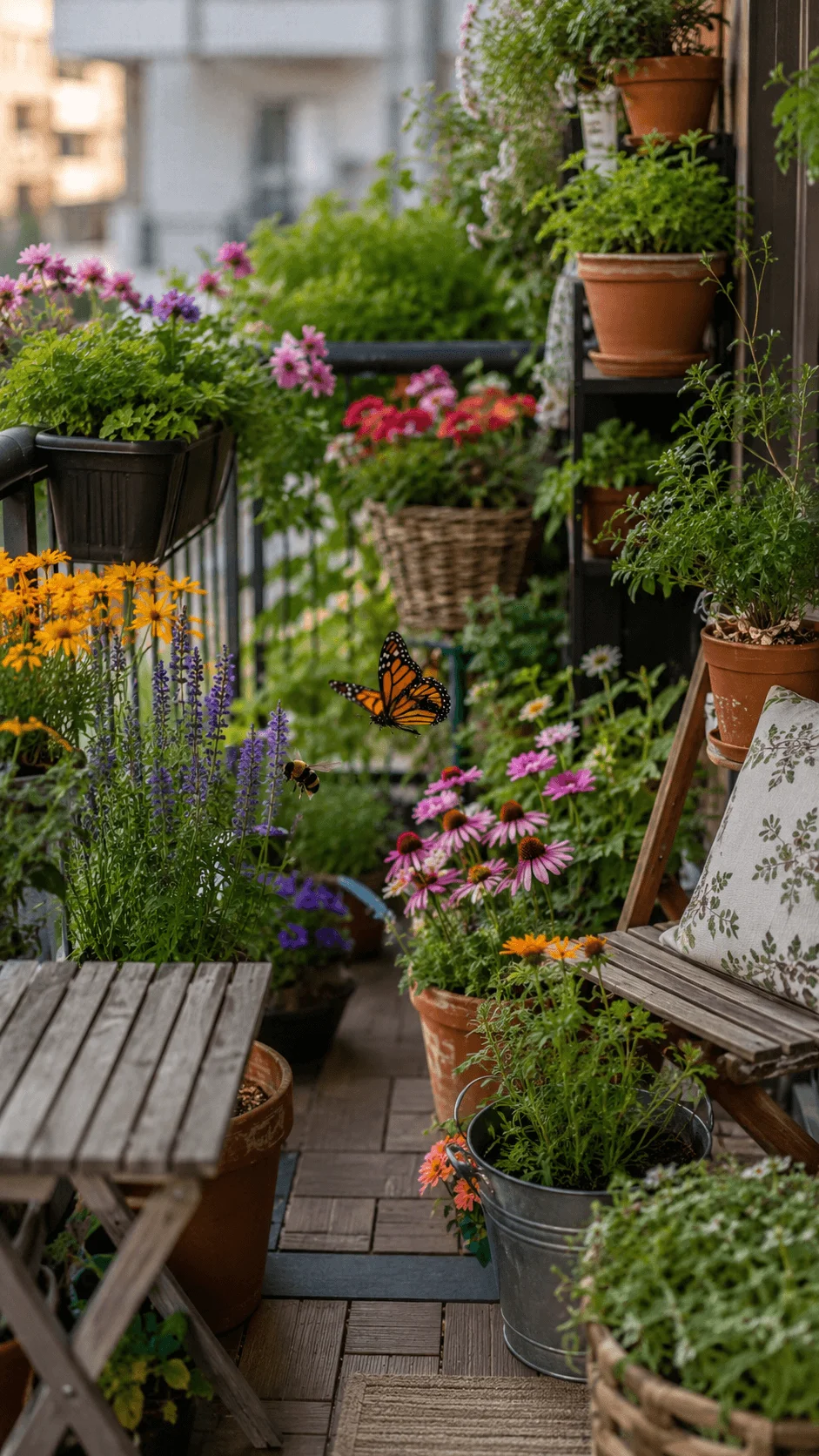
Container placement also matters. Give flowering plants enough sunlight for healthy growth and position them where you can observe them easily. A small balcony garden can become an enjoyable place to watch seasonal changes and visiting pollinators.
Avoid treating pollinator gardening as purely decorative. The plants you select, the timing of flowering, and the way you maintain the containers all influence the value of the space.
A small pollinator garden also fits naturally into sustainable balcony garden design because it focuses on making existing urban space more useful. You do not need dozens of plants. A carefully selected collection of suitable flowering plants can provide a meaningful addition to your balcony.
Apartment Composting Garden Ideas With Vermicomposting
Composting can be challenging in an apartment, but a compact vermicomposting system can provide an alternative for people who want to reuse suitable organic kitchen scraps.
Vermicomposting uses worms to break down appropriate organic materials and produce worm castings. These castings can become a valuable addition to growing media when used appropriately.
The main advantage for an apartment gardener is that the system can remain relatively compact. You do not need a traditional outdoor compost pile. A properly maintained container can fit into a suitable area such as a balcony or other appropriate location.
Good management matters. A vermicomposting system needs suitable moisture, airflow, and a balanced supply of appropriate food materials. Adding too much food at once can create unpleasant conditions, so beginners should start gradually and learn how the system responds.
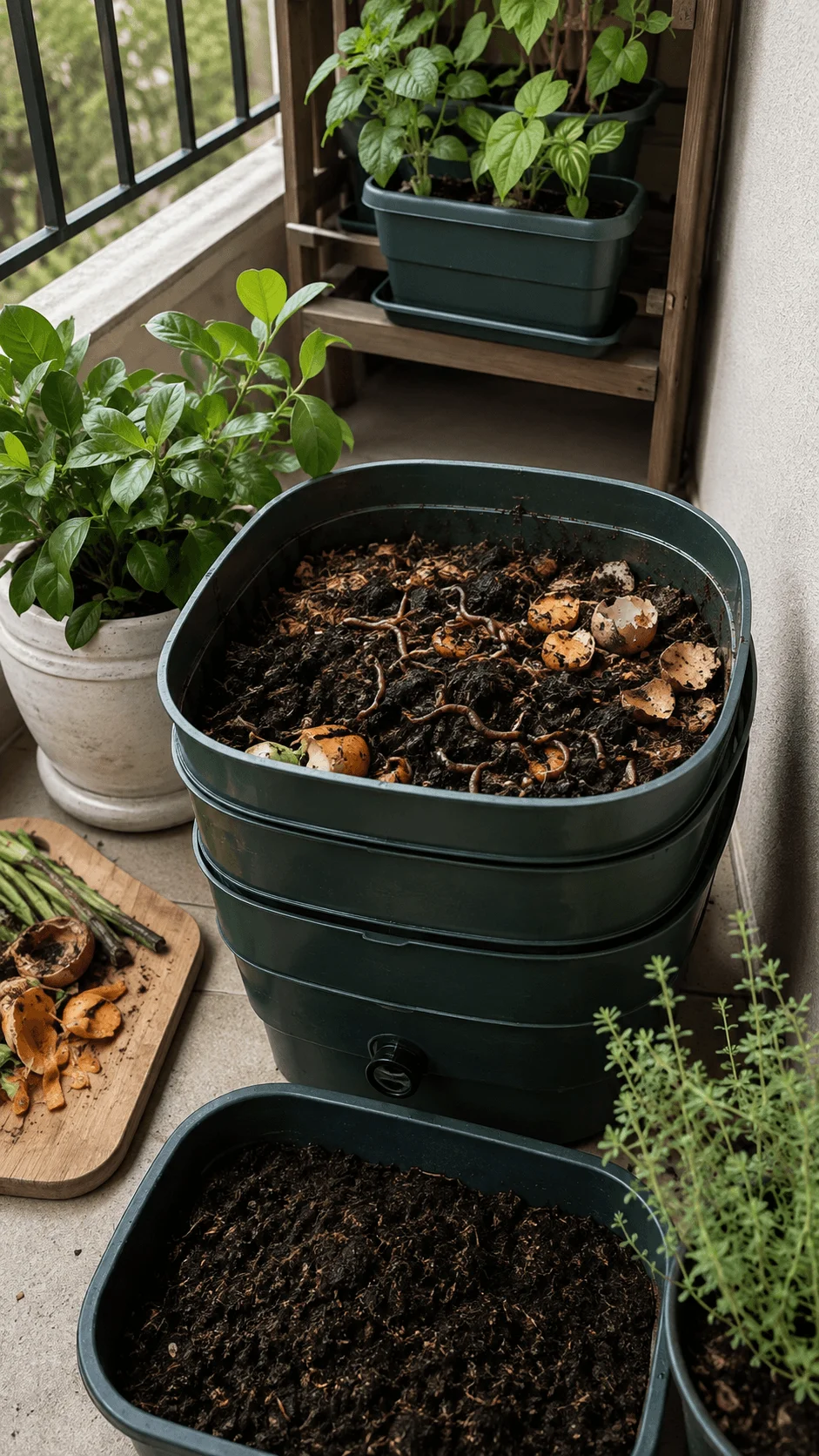
Placement also matters. Avoid locations that experience extreme heat or direct harsh sunlight for long periods. Temperature changes can affect the organisms responsible for decomposition, so a stable environment generally makes management easier.
Composting can connect your kitchen and garden in a practical way. Instead of treating every suitable organic scrap as waste, you can return some of that material to the growing cycle.
However, apartment composting does require responsibility. A poorly maintained system can create odors or attract unwanted pests. Keep the container clean, follow appropriate composting practices, and only add materials suitable for the system you are using.
For someone interested in apartment composting garden ideas, the goal should be simplicity rather than creating a complicated setup. A manageable system that you can maintain consistently is more useful than an ambitious system that becomes difficult to handle.
Lightweight Grow Bags for Small Sustainable Balcony Gardens
Weight is an important consideration when creating a balcony garden. Soil becomes considerably heavier when it absorbs water, and a collection of large containers can add substantial weight to a small outdoor space.
Fabric grow bags provide one option for gardeners who want movable growing containers. They are generally easier to store and relocate than many rigid containers, making them useful when you need to change your garden layout.
Grow bags can work particularly well for herbs, leafy greens, compact vegetables, and other plants that suit container cultivation. Their flexibility also allows you to organize several plants without committing to permanent structures.
One advantage is portability. If a plant needs more sunlight, you can move the container when practical. If your balcony becomes too exposed to strong weather, you may also be able to relocate smaller grow bags to a more sheltered area.
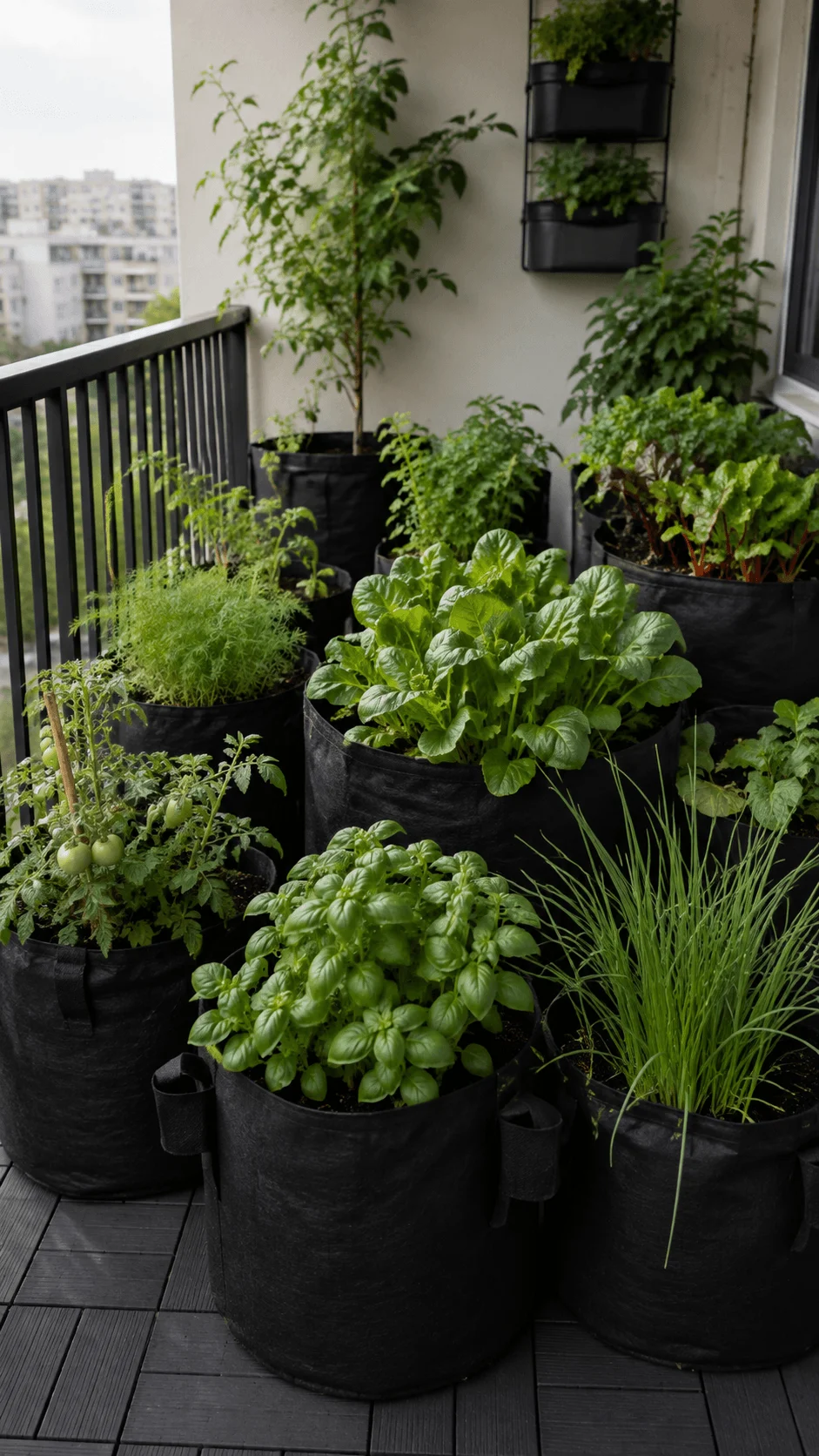
Drainage is another useful feature. Excess moisture can move through the fabric, although you still need to choose suitable growing media and monitor watering carefully. A container that drains efficiently may require more frequent attention during hot or windy weather.
Grow bags also make seasonal gardening easier. You can grow one group of plants during a particular season, store or rearrange the bags when appropriate, and use the available space differently later.
Before adding any substantial amount of soil and containers to a balcony, always follow your building’s rules and seek appropriate guidance about load limits. Never assume that a balcony can safely support an unlimited amount of gardening equipment.
The best small sustainable balcony garden is not necessarily the one with the most plants. It is the one that uses available space thoughtfully, remains manageable, and allows you to care for plants without wasting resources.
Renter Friendly Eco Friendly Balcony Garden Ideas
Renting an apartment does not mean you have to give up the idea of creating a beautiful garden. In fact, a renter friendly balcony garden can become one of the simplest ways to add greenery without making permanent changes to the property. The key is to choose portable solutions that you can move, reuse, and take with you when you change homes.
Freestanding shelves are particularly useful because they do not require drilling into walls. You can place several small containers on different levels and create a vertical arrangement while keeping the balcony floor relatively open. Choose sturdy shelves that can handle outdoor conditions and the weight of containers filled with moist growing media.
Portable plant stands provide another useful option. You can move them when you need to clean the balcony, rearrange your garden, or adjust plants according to changing sunlight. This flexibility makes them especially valuable for renters who cannot permanently modify their outdoor space.
Railing planters can also work well where building rules allow them. Before attaching anything to a railing, check your lease and building regulations. A garden should never interfere with shared spaces, drainage, access routes, or the safety of people below.
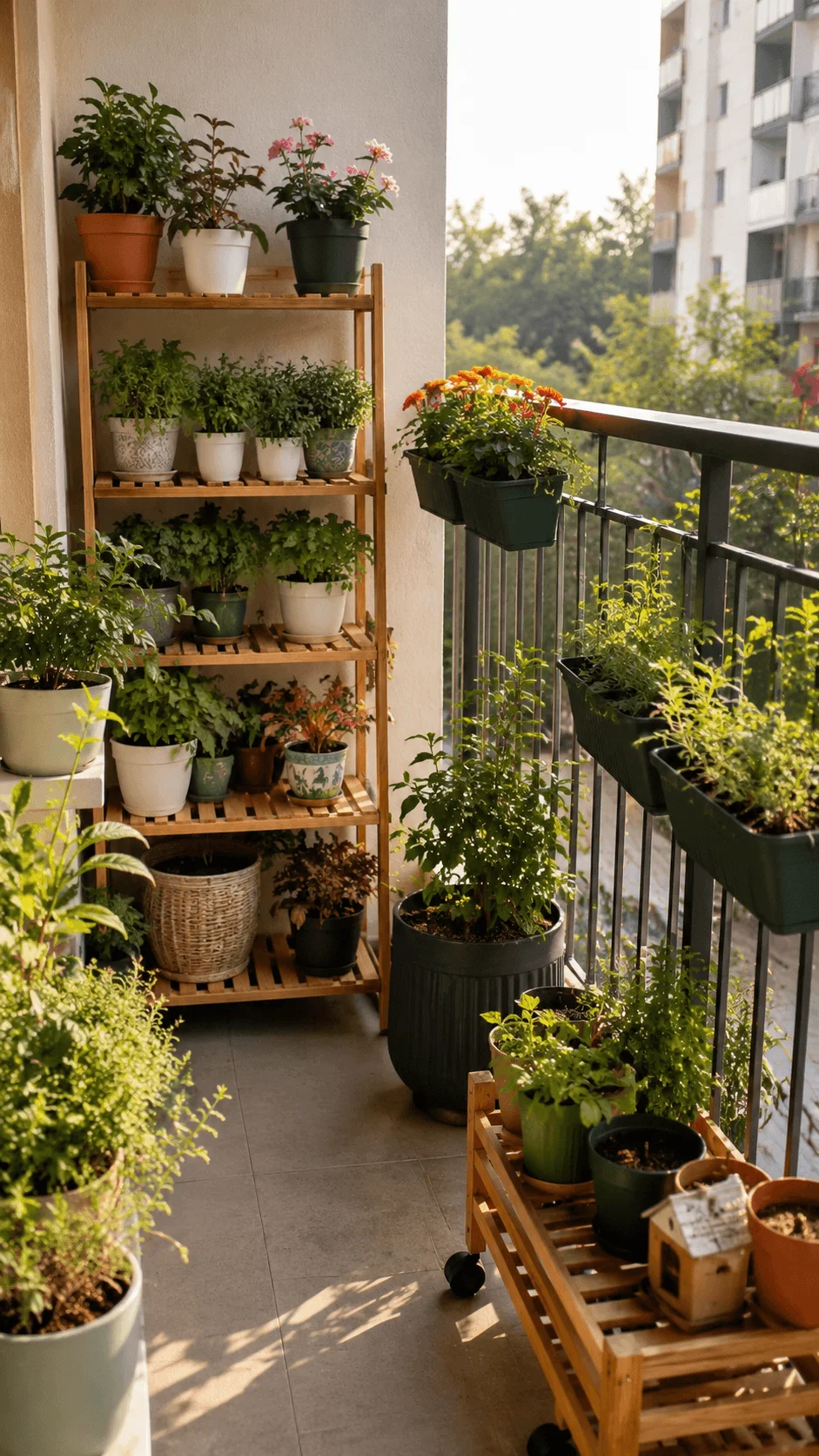
You can make the arrangement more sustainable by choosing containers that you can reuse for several seasons. Instead of purchasing new planters whenever you move, select durable options that can travel with you. Lightweight containers also make relocation easier.
Another useful approach involves using a small rolling plant stand. You can move several plants together instead of carrying individual containers. This can help when you need to protect plants from severe weather or move them toward a brighter location.
The design does not have to look temporary simply because it is renter friendly. Choose a consistent container style, arrange plants at different heights, and leave enough open space for comfortable movement. A carefully planned renter friendly garden can look just as intentional as a permanent garden.
For people searching for eco friendly apartment garden ideas, renter friendly solutions offer an important advantage because they focus on reducing unnecessary construction and making garden elements reusable. You can create a green space today without creating a project that becomes difficult to remove later.
Eco Friendly Edible Apartment Garden Ideas
An edible garden can make a small apartment space much more useful. Instead of growing plants only for decoration, you can dedicate part of your available space to herbs, leafy greens, strawberries, compact vegetables, and other plants that suit container gardening.
Herbs are an excellent starting point because many varieties do not require large containers. Basil, parsley, thyme, oregano, chives, and similar herbs can provide fresh ingredients while adding greenery to the garden.
Leafy greens can also work well in containers. Depending on the climate and available sunlight, gardeners can explore options such as lettuce, spinach, arugula, and other compact greens. These plants can provide repeated harvests when you pick leaves carefully instead of removing the entire plant at once.
The most important step involves matching plants with the conditions available. A balcony that receives several hours of direct sunlight can support different crops from a shaded balcony. Before buying seeds or plants, observe where sunlight reaches your space and how that changes throughout the day.
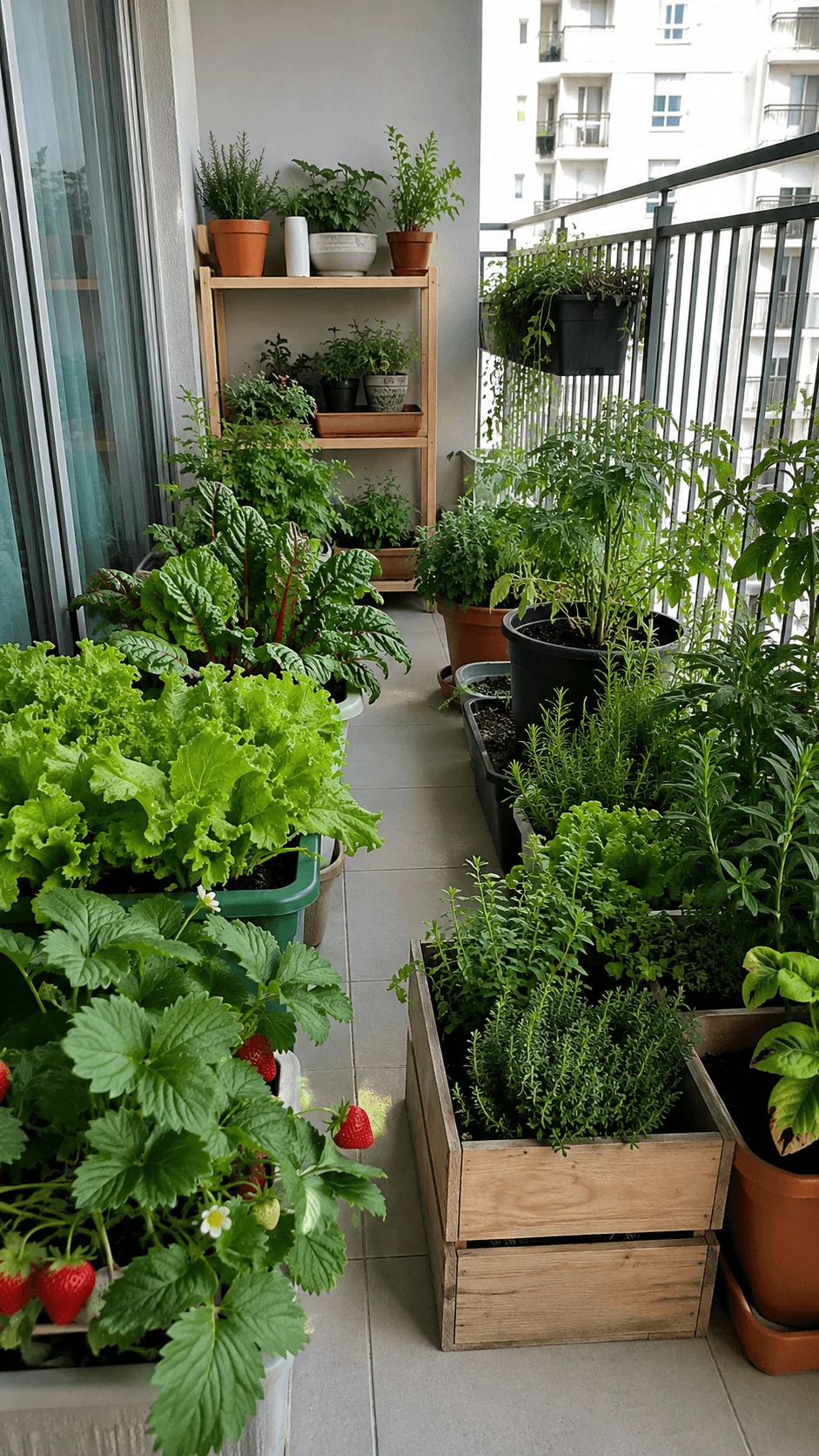
Container depth also matters. Some herbs and greens can grow in relatively shallow containers, while vegetables with larger root systems need more space. Choosing plants according to the containers you already have can help you avoid wasting soil, water, and money.
An edible garden can also encourage more responsible consumption. When you grow a small amount of an herb you regularly use, you can harvest what you need instead of purchasing a large bunch that may go unused. The benefit depends on what you grow and how often you actually use it, so focus on plants that fit your lifestyle.
You can make your eco friendly edible balcony garden even more useful by combining edible plants with flowers. For example, flowering herbs can add visual interest and may provide resources for pollinators. This creates a garden that serves more than one purpose.
Succession planting can help you make better use of limited space. When one crop finishes, you can replace it with another suitable plant instead of leaving the container unused for long periods.
Harvesting also becomes part of sustainable gardening. Pick leaves and herbs carefully, remove damaged growth, and keep plants productive when possible. Regular harvesting can encourage certain plants to continue producing.
The best apartment food garden does not need to produce a huge amount of food. Its value comes from making a small space productive while giving you the satisfaction of growing something you can actually use.
Drought Tolerant Apartment Garden Ideas
Water conservation is an important part of sustainable gardening, particularly in containers. Pots and grow bags can dry quickly because they contain a limited amount of growing media, and balconies can experience strong sunlight and wind.
Choosing plants that tolerate periods of lower moisture can make maintenance easier. However, drought tolerance does not mean that a plant never needs water. Every plant needs appropriate care while it establishes itself and during periods of extreme heat or dryness.
Start by choosing plants that suit your local climate. A plant that performs well in a dry region may not be the best choice for a humid environment, while a plant suited to cool conditions may struggle during intense summer heat.
Grouping plants according to their water requirements can also improve your garden routine. Place plants with similar moisture needs together so you do not accidentally overwater plants that prefer drier conditions.
Container selection can make a difference as well. Very small containers generally dry out faster than larger containers because they hold less growing media. Choosing an appropriate container size can help create a more stable growing environment.
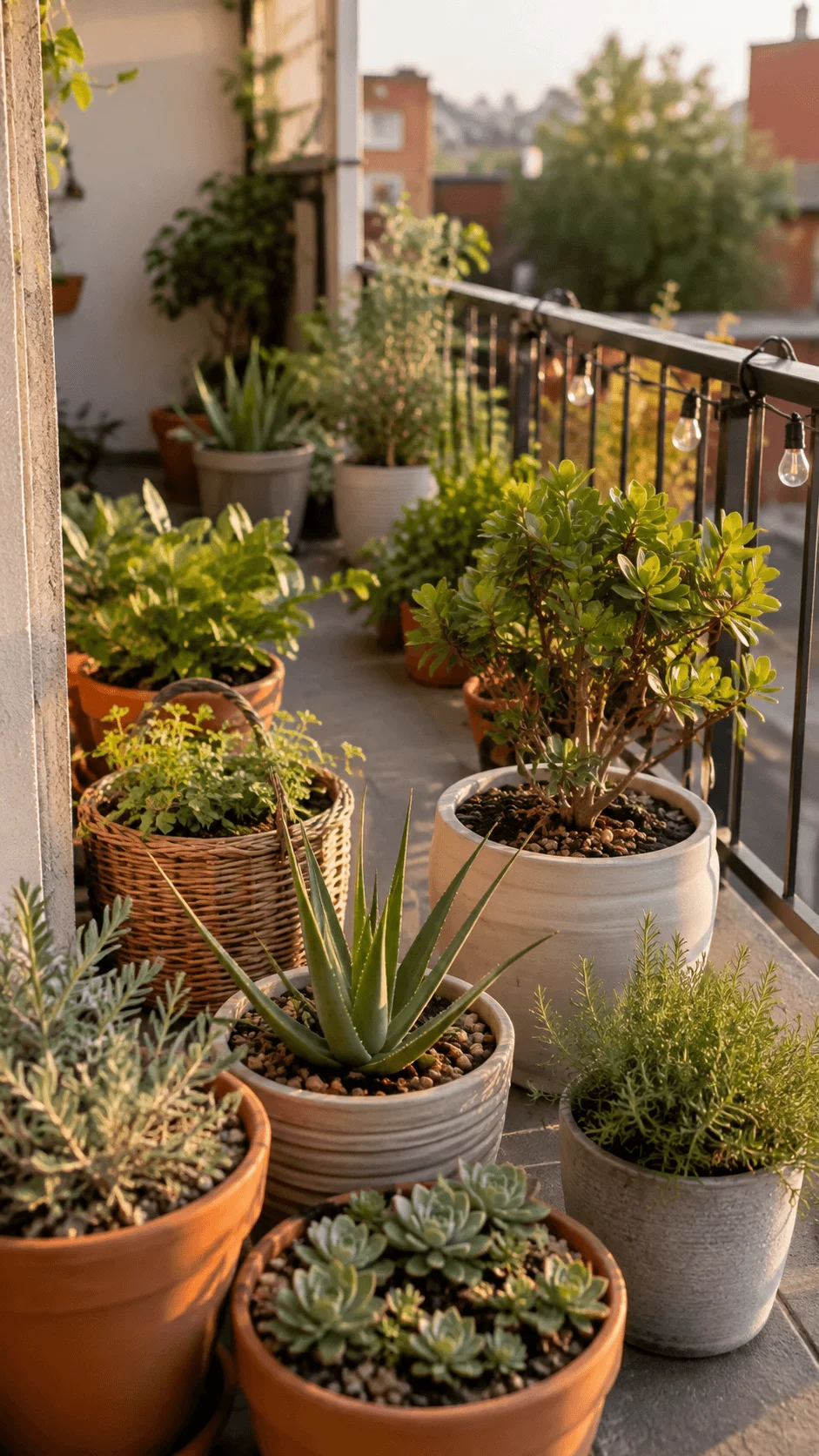
You should also pay attention to where you place containers. A plant sitting in intense afternoon sunlight may lose moisture much faster than one receiving gentler morning light. Moving containers to more suitable positions can sometimes make a greater difference than simply increasing watering.
Water plants according to their actual needs rather than following a rigid schedule. Check the growing media and observe the plant. Weather conditions can change quickly, especially during hot periods, so your watering routine may need adjustment.
Mulching can also help reduce moisture loss in suitable containers. A suitable layer of organic material can slow evaporation and help maintain more stable moisture conditions. Avoid creating conditions that keep plants excessively wet.
These water saving apartment garden ideas work best when combined rather than treated as a single solution. Appropriate plants, suitable containers, thoughtful placement, and careful watering can create a garden that needs less intervention.
Tiny French Courtyard Inspired Apartment Garden
French courtyard gardens offer an interesting source of inspiration for apartment residents who want a more elegant garden style. You do not need an actual courtyard to borrow elements of the design. A small balcony can capture the atmosphere through thoughtful plant selection, containers, symmetry, and natural textures.
Herbs can play an important role in this style. Rosemary, thyme, lavender, and other suitable plants can provide fragrance as well as greenery. Their suitability will depend on your climate and the amount of sunlight your balcony receives.
Container arrangement can create the impression of a more organized garden. Instead of placing every plant randomly, consider creating visual balance by using similar containers or repeating particular plants in different areas.
Terracotta style containers can provide a warm natural appearance, although you do not necessarily need to purchase new containers. Existing suitable pots can be reused, painted where appropriate, or combined with reclaimed materials to create a similar feeling.
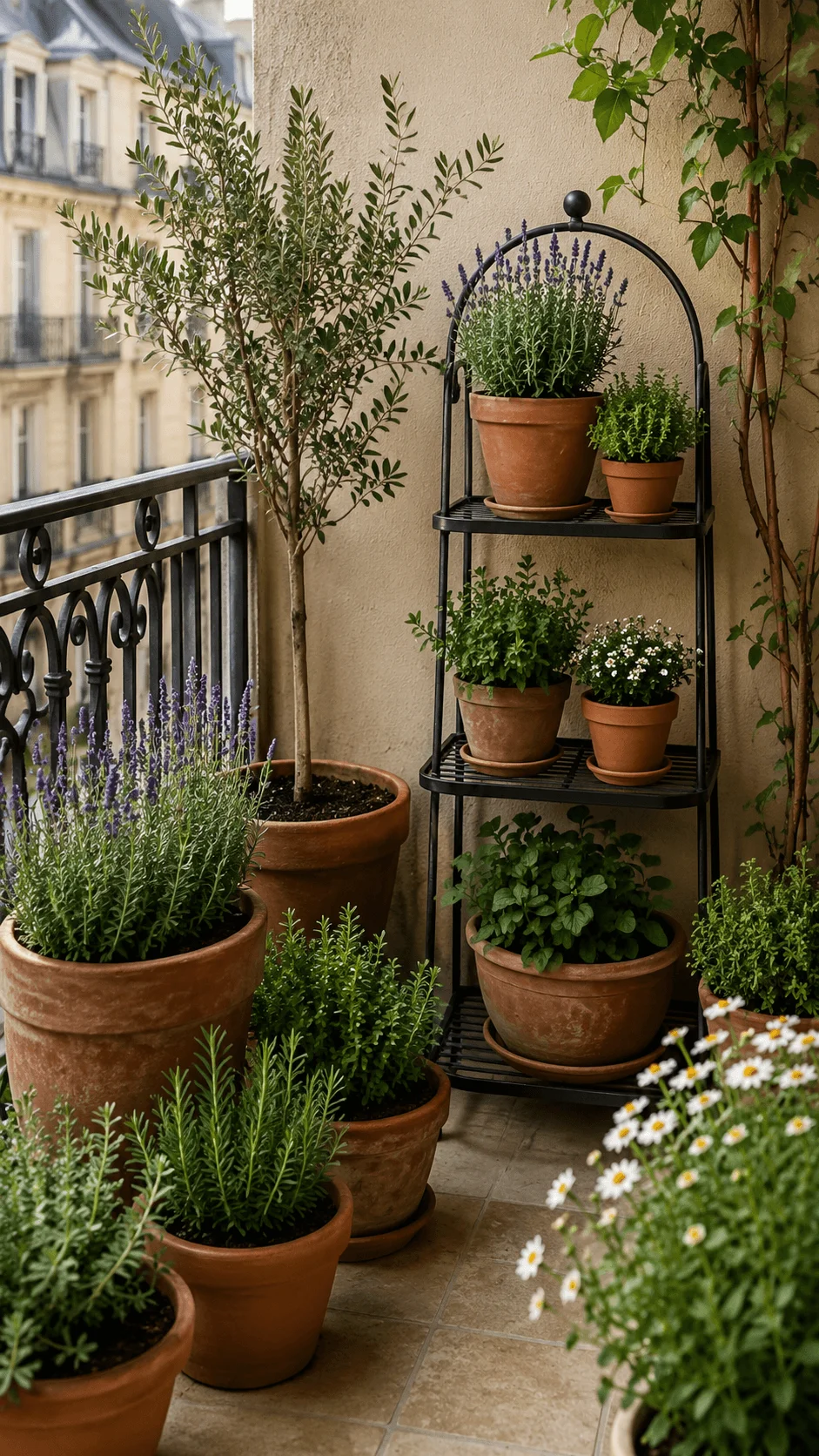
You can also introduce simple vertical elements. A narrow plant stand or freestanding structure can give the balcony more depth without consuming too much floor space.
The French inspired approach works particularly well when you keep the design restrained. Too many different containers, colors, and plant varieties can make a tiny balcony feel crowded.
Sustainability should remain part of the design. Reuse containers where possible, select plants suited to your environment, avoid buying unnecessary decorative items, and choose durable materials that can remain useful for years.
This approach allows you to combine current garden design inspiration with sustainable apartment garden ideas without sacrificing practicality.
Small Tropical Apartment Garden Ideas
A tropical inspired garden can make a small balcony feel lush and relaxing. Large leaves, layered greenery, interesting textures, and dense planting can create a dramatic appearance even when the available space is limited.
However, the tropical look does not mean that every gardener should grow plants from tropical climates. Your first priority should always be choosing plants that can actually survive in your local conditions.
If your climate supports suitable tropical or tropical looking container plants, consider combining different heights and leaf shapes. A taller foliage plant can form a backdrop while smaller plants occupy the front of the arrangement.
Containers can also help create layers. Place larger plants toward the back and smaller ones where they remain visible. Hanging containers can add another level if they are safely installed and permitted.
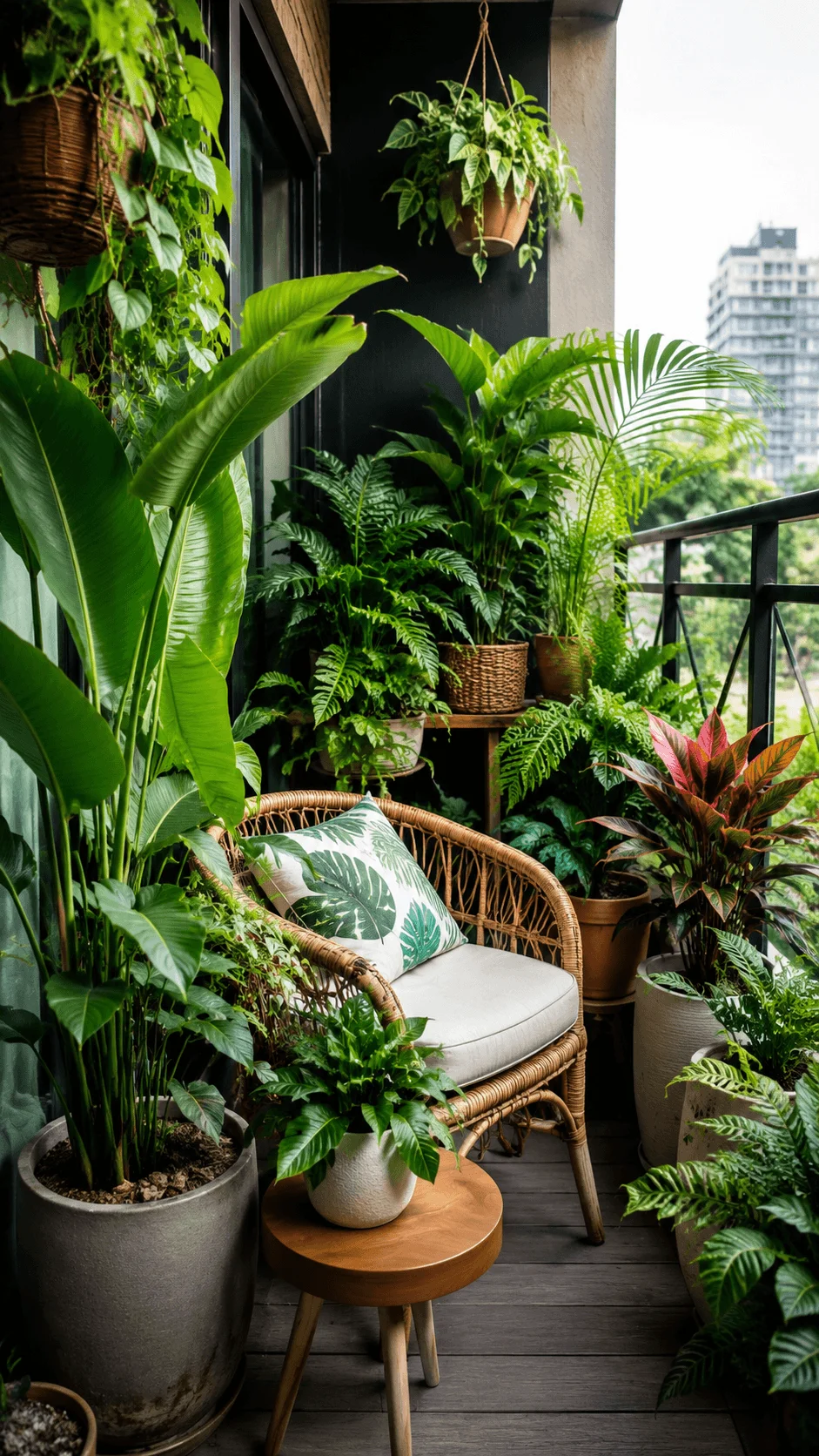
Humidity and sunlight require attention. Some plants associated with tropical environments prefer bright filtered light rather than intense direct sunlight. Others need substantial sunlight for healthy growth. Research the specific requirements of each plant rather than assuming that all tropical plants need identical conditions.
Watering also requires balance. A lush appearance can encourage gardeners to water frequently, but excessive moisture can damage roots. Check the growing media and follow the needs of the individual plant.
You can achieve a tropical atmosphere through foliage rather than filling the balcony with a large number of plants. A few carefully selected plants with dramatic leaves can create a stronger design than dozens of small containers.
For an eco friendly small space garden, consider using existing containers and choosing plants that remain manageable at maturity. This prevents the garden from becoming overcrowded and reduces the need to replace plants simply because they have outgrown the space.
A tropical inspired balcony can also become a relaxing retreat. Add natural textures through existing wooden furniture, reused containers, or simple materials you already own. The goal is to create a comfortable environment without purchasing unnecessary decorations.
Multi Purpose Eco Friendly Balcony Garden
A small balcony does not need to serve only as a place for plants. One of the most useful eco friendly apartment garden ideas involves combining gardening with other activities so that the same small area becomes more functional.
You might create a compact seating area beside a collection of edible plants. Another section could contain vertical herbs, while a small shelf holds flowering plants. This creates several functions without requiring a large amount of floor space.
Think about how you actually use your balcony before deciding what to grow. If you enjoy drinking tea outdoors, place herbs or fragrant plants nearby. If you like reading, leave enough room for a comfortable chair. If growing food matters most to you, give more space to edible containers.
Movable furniture and containers make this arrangement easier to change. You can move plants when sunlight changes or rearrange the balcony when you want more seating space.
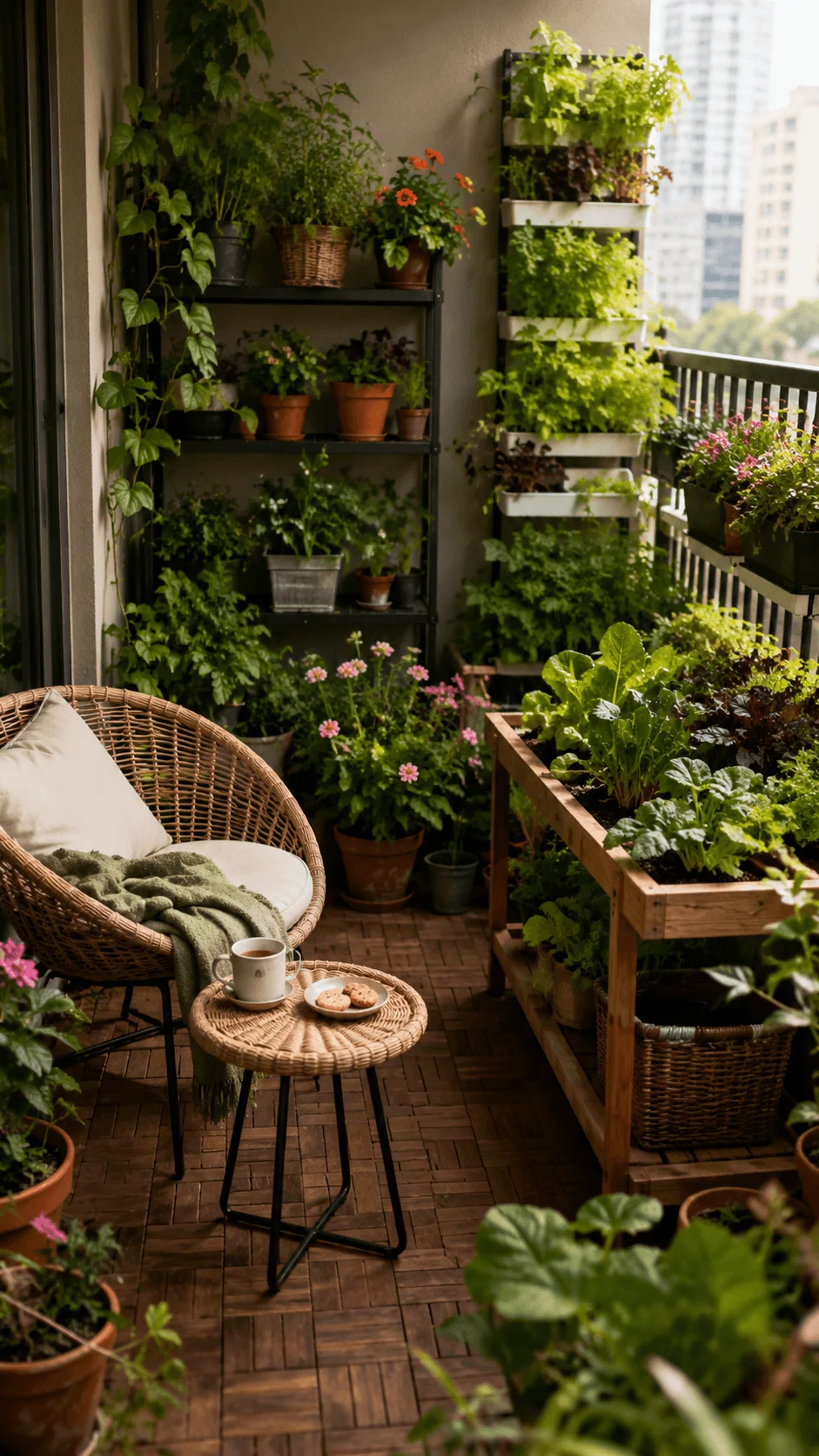
Vertical gardening can also help create separation between different areas. A plant shelf can visually distinguish a seating corner from an edible garden without requiring a permanent wall.
Choose materials carefully. Durable furniture and reusable containers can remain useful for many years, which reduces the need for frequent replacement. You can also use existing household items whenever they are safe and suitable for outdoor conditions.
Avoid filling every available area. Leaving some open space makes the balcony easier to clean and more comfortable to use. Plants also need room for maintenance, harvesting, pruning, and inspection.
A multifunctional balcony demonstrates that sustainability does not have to mean giving up comfort. Instead, it means making better use of the resources and space you already have.
How to Plan Eco Friendly Apartment Garden Ideas for Your Space
Before buying plants or containers, spend some time studying your available space. Look at how much sunlight reaches the balcony, where shade appears, how strong the wind becomes, and where you can safely place containers.
Sunlight should influence your plant choices from the beginning. A sunny balcony gives you more options for sun loving plants, while a shaded space requires plants that tolerate lower light.
Consider your available floor space as well. If the balcony is narrow, prioritize vertical structures, shelves, and compact containers. If you have more floor space, you can combine containers with a small seating area.
Think about water access too. Carrying heavy watering cans through an apartment can become inconvenient. A garden that looks attractive but requires excessive daily effort may become difficult to maintain.
Building rules also matter. Check your lease or building regulations before attaching anything to walls or railings. Never place heavy structures where they could create a safety problem.
Start with a small number of plants. Once you understand how sunlight, wind, watering, and maintenance affect your space, you can gradually expand the garden.
Conclusion
Creating a sustainable garden in an apartment does not require a large balcony, expensive equipment, or dozens of plants. The most effective approach starts with understanding the space you have and making thoughtful decisions about plants, containers, water, materials, and maintenance.
The eco friendly apartment garden ideas discussed here show how small spaces can become productive and attractive without relying on unnecessary purchases. Upcycled containers can give old materials another purpose, while vertical gardens can make better use of limited floor space. Self watering systems can help manage moisture, and suitable flowering plants can support urban biodiversity.
Edible gardens can turn a balcony into a useful source of herbs and greens. Drought tolerant planting can reduce watering demands, while renter friendly arrangements allow people to garden without making permanent changes to their homes. Design ideas inspired by French courtyards and tropical gardens can also bring personality to a small space when gardeners adapt them to local growing conditions.
The best approach is to start small. Choose a few plants that match your sunlight and climate, use containers that fit your available space, and develop sustainable habits gradually. As you learn what works, you can expand your garden without overwhelming yourself.
A small apartment garden may occupy only a few square meters, but careful planning can make that space productive, beautiful, and environmentally thoughtful. With the right choices, your balcony or small outdoor area can become a meaningful green part of your everyday home.