12 Eco Friendly Waste Sorting Bathroom Swaps for 2026
Bathrooms may look like small spaces, but they can produce a surprisingly complicated mix of household waste. Eco friendly waste sorting bathroom swaps can help households reduce disposable products while creating a clearer system for the packaging and materials that remain. Shampoo bottles, toothpaste tubes, razors, cosmetic containers, cleaning products, cotton rounds and sanitary products do not necessarily belong in the same waste stream. When everything goes into one bathroom bin, people can easily lose opportunities to reuse containers, reduce packaging or separate materials according to local collection rules.
A more sustainable bathroom does not require replacing every product with something new. In many cases, using an existing item until it reaches the end of its useful life makes more sense than discarding it simply to purchase an alternative marketed as green. The most practical approach combines waste prevention with durability, refilling, reuse and responsible sorting. The following eco friendly waste sorting bathroom swaps explore how ordinary bathroom routines can gradually create less waste without making daily life unnecessarily complicated.
1. Refillable Bathroom Products and Low Waste Refill Stations
Refillable products can change the way households think about everyday bathroom packaging. Shampoo, conditioner, body wash and hand soap often come in containers that people replace every few weeks or months. A refill system allows a household to keep suitable containers and replenish the products inside them.
A practical refill station does not need rows of matching decorative bottles. Existing containers can continue serving their original purpose when they remain clean, functional and appropriate for the product. This approach avoids creating additional waste simply for the appearance of sustainability.
Households may find refills through bulk stores, concentrated products, refill pouches or manufacturer refill systems. Availability varies considerably, so people should choose a system they can realistically continue using.
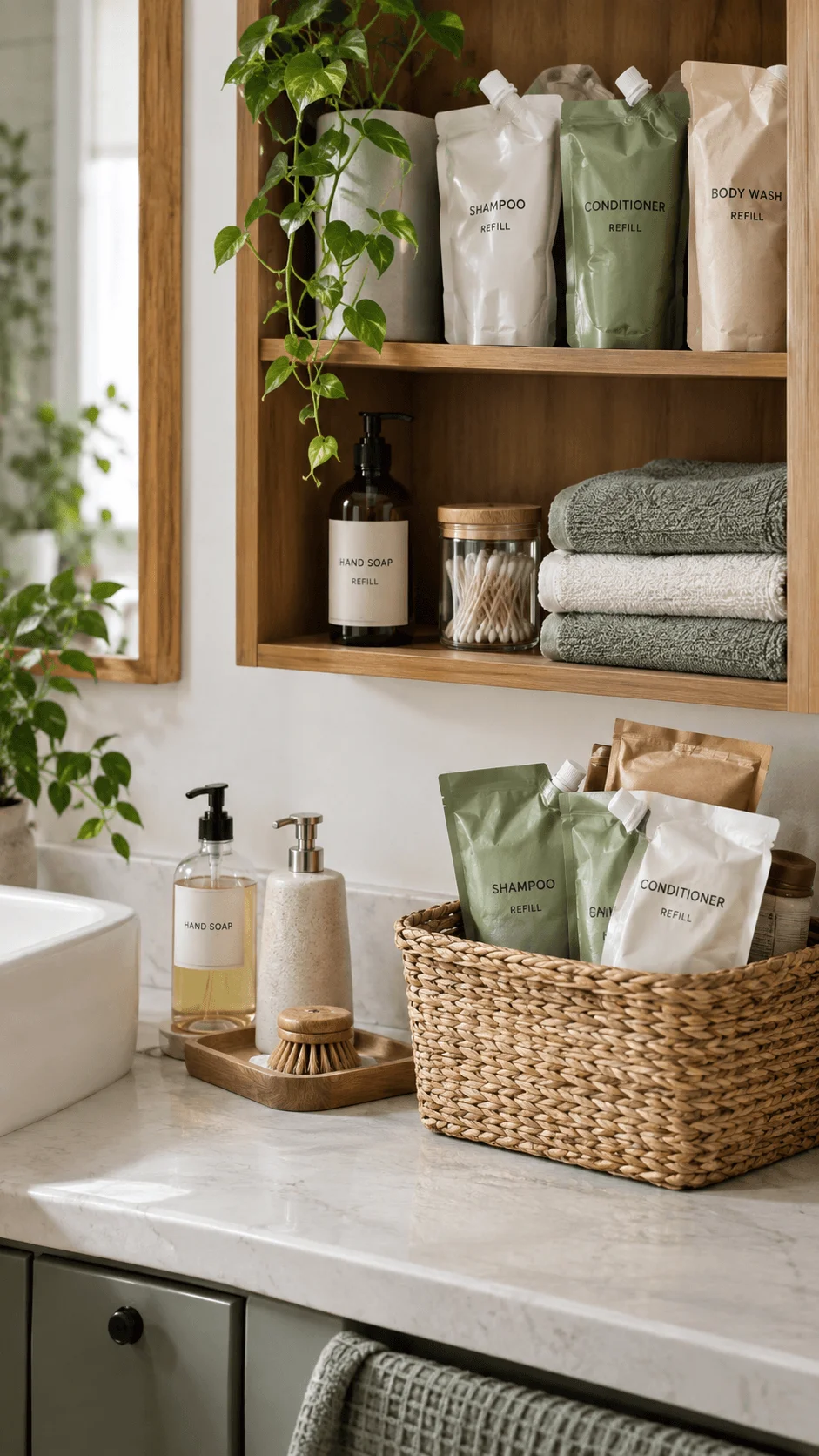
These eco friendly waste sorting bathroom swaps also require attention to the packaging that refills create. A refill pouch, for example, may use less material than several rigid bottles but can still require disposal. People should check local instructions instead of assuming that flexible packaging belongs in household recycling.
A small cabinet, shelf or storage basket can keep refill supplies organized. The best refill station makes repeated use convenient while preventing households from accumulating unnecessary containers.
2. Plastic Free Bathroom Swaps With Shampoo and Conditioner Bars
Shampoo and conditioner bars remain popular sustainable bathroom swaps because they can reduce reliance on conventional liquid product bottles. Instead of storing the product inside a large container, manufacturers can offer a concentrated solid bar with relatively little packaging.
The transition works best when people finish the products they already own first. Throwing away half a bottle of shampoo because a solid bar appears more environmentally attractive would create avoidable waste.
Storage also affects whether this swap works well. Solid bars generally need an opportunity to dry between uses. A suitable draining dish or holder can prevent the bar from sitting in water and disappearing faster than necessary.
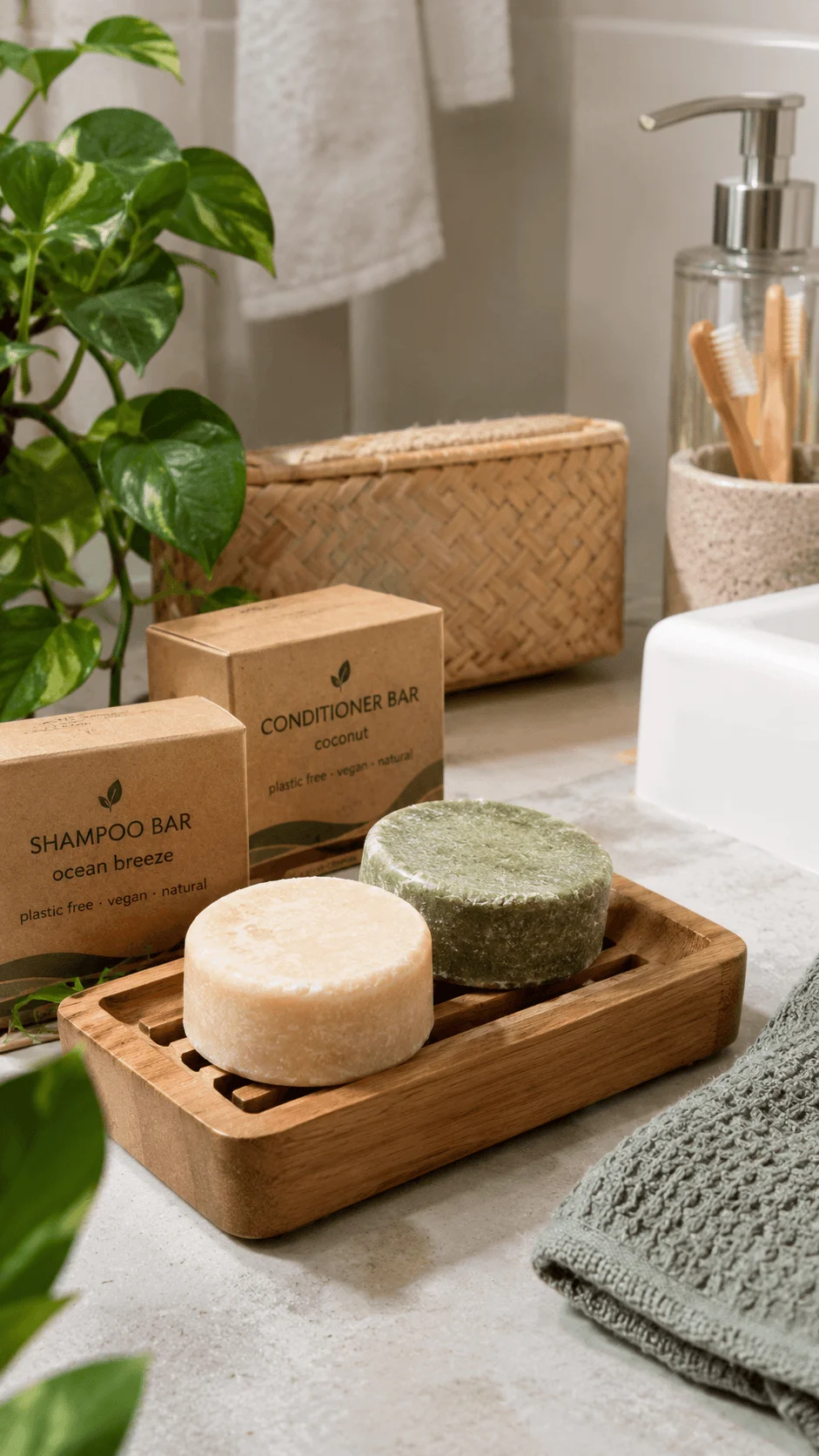
Packaging deserves attention too. A solid product can still arrive inside paper, plastic or multiple layers of packaging. Shoppers can examine the complete product rather than treating the word solid as proof of sustainability.
Empty bottles from previous products should enter the appropriate local waste stream. Some collection systems accept certain clean personal care bottles while others apply different requirements. Checking those rules makes these eco friendly waste sorting bathroom swaps more meaningful than simply replacing one product format with another.
3. Oral Care Recycling With Toothpaste Tablets and a Sorting Box
Oral care creates some of the most confusing bathroom waste. Toothpaste tubes, toothbrushes, floss containers, replacement brush heads and other small products can contain several materials or components.
Toothpaste tablets offer one possible way to reduce dependence on conventional toothpaste tubes. Depending on the product, tablets may come in refillable containers or simpler packaging. They will not suit every household, but they demonstrate how product format can influence the waste left behind.
A dedicated oral care collection box adds a waste sorting element to the swap. Instead of automatically placing old toothbrushes, tubes and brush heads into general waste or household recycling, residents can temporarily collect difficult items while checking available disposal options.
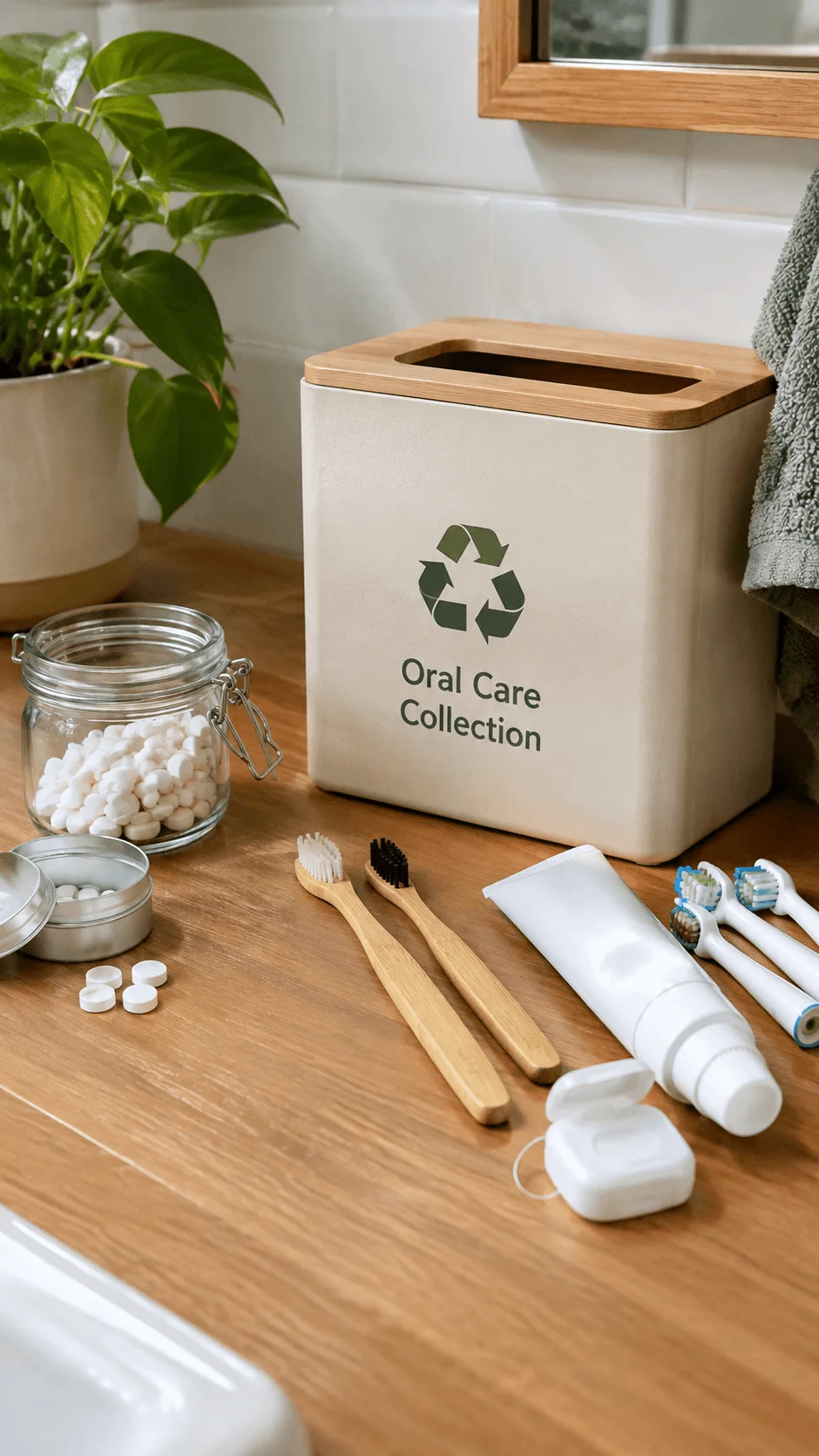
Specialist recycling and take back programs may accept certain oral care products in some locations. Acceptance varies, so people need to verify exactly what a program collects.
This approach makes eco friendly waste sorting bathroom swaps more practical because it separates waste prevention from recycling. The first goal is to reduce unnecessary packaging where practical. The second is to manage unavoidable materials correctly instead of placing questionable objects in recycling and hoping someone can process them.
4. Sustainable Bathroom Swaps With a Safety Razor and Blade Container
Disposable razors and replaceable cartridge systems can create a regular stream of mixed material waste. A durable safety razor offers a different model because the main handle can remain in use while the user replaces only the blade.
Durability matters more than simply purchasing an object labelled reusable. A well maintained razor that stays functional for years can reduce repeated replacement. Users can extend its useful life by rinsing it appropriately, allowing it to dry and storing it where excessive moisture will not encourage deterioration.
Used blades require careful handling. People should never place loose blades directly into a recycling container. A secure blade collection container can keep sharp objects contained until the user follows the disposal requirements available in their area.
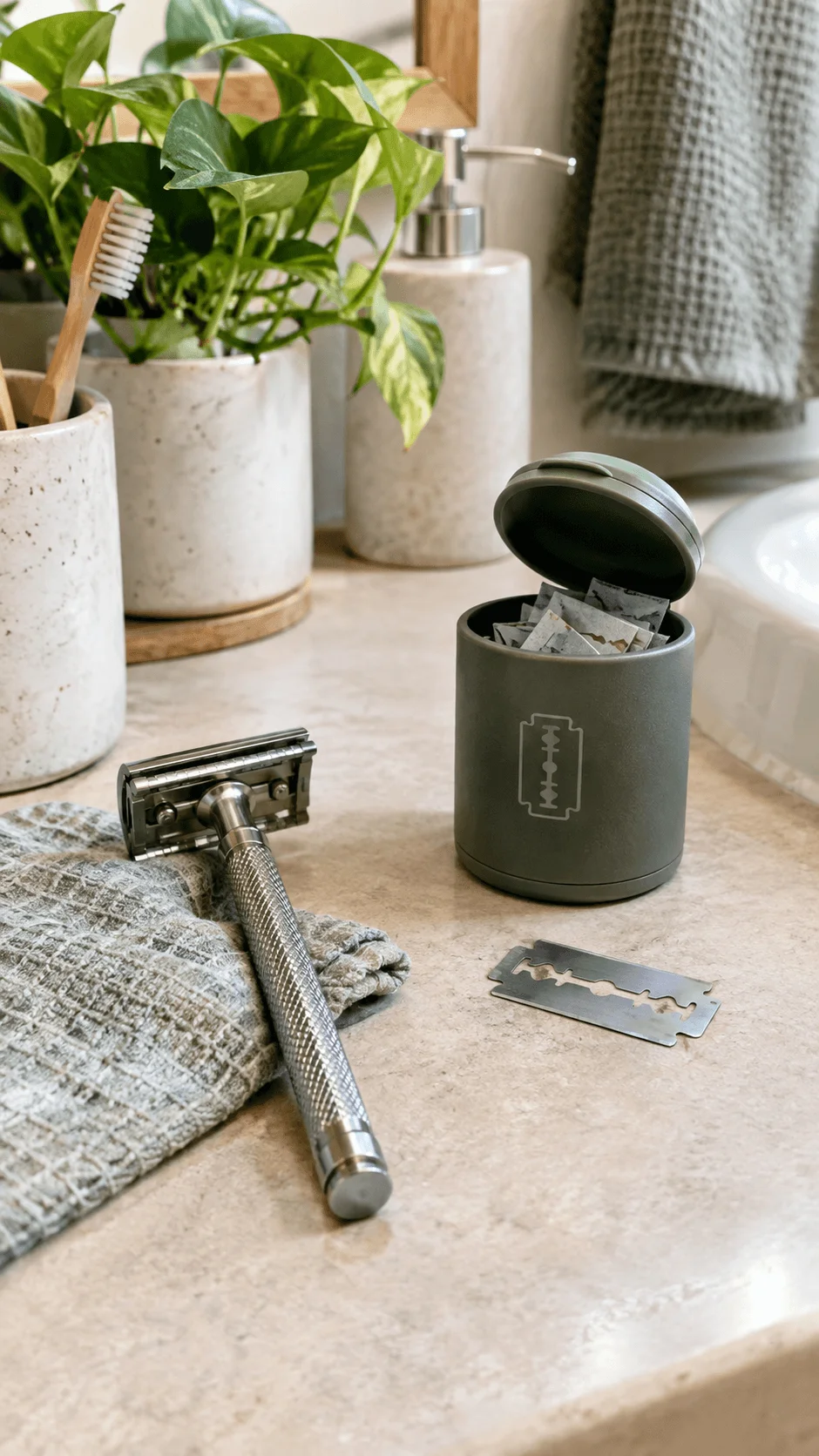
Households with children should give particular attention to safe storage and accessibility.
This is an important example of why eco friendly waste sorting bathroom swaps need to address the complete life of a product. Replacing a disposable item is only part of the process. A useful sustainable swap should also provide a realistic plan for maintaining the reusable item and safely managing the smaller waste stream that remains.
5. Low Waste Bathroom Swaps With Reusable Cotton Rounds
Disposable cotton rounds, facial wipes and similar products can become an almost invisible source of repeated waste because each individual item seems insignificant. Regular use, however, means they continually enter the bathroom bin.
Washable cotton rounds and reusable makeup cloths offer a simple alternative for suitable routines. Users can wash them and return them to the bathroom rather than reaching for a new disposable item each time.
A small washable bag or basket can make the system easier to maintain. Used cloths go into the collection area and then move into the household laundry routine.
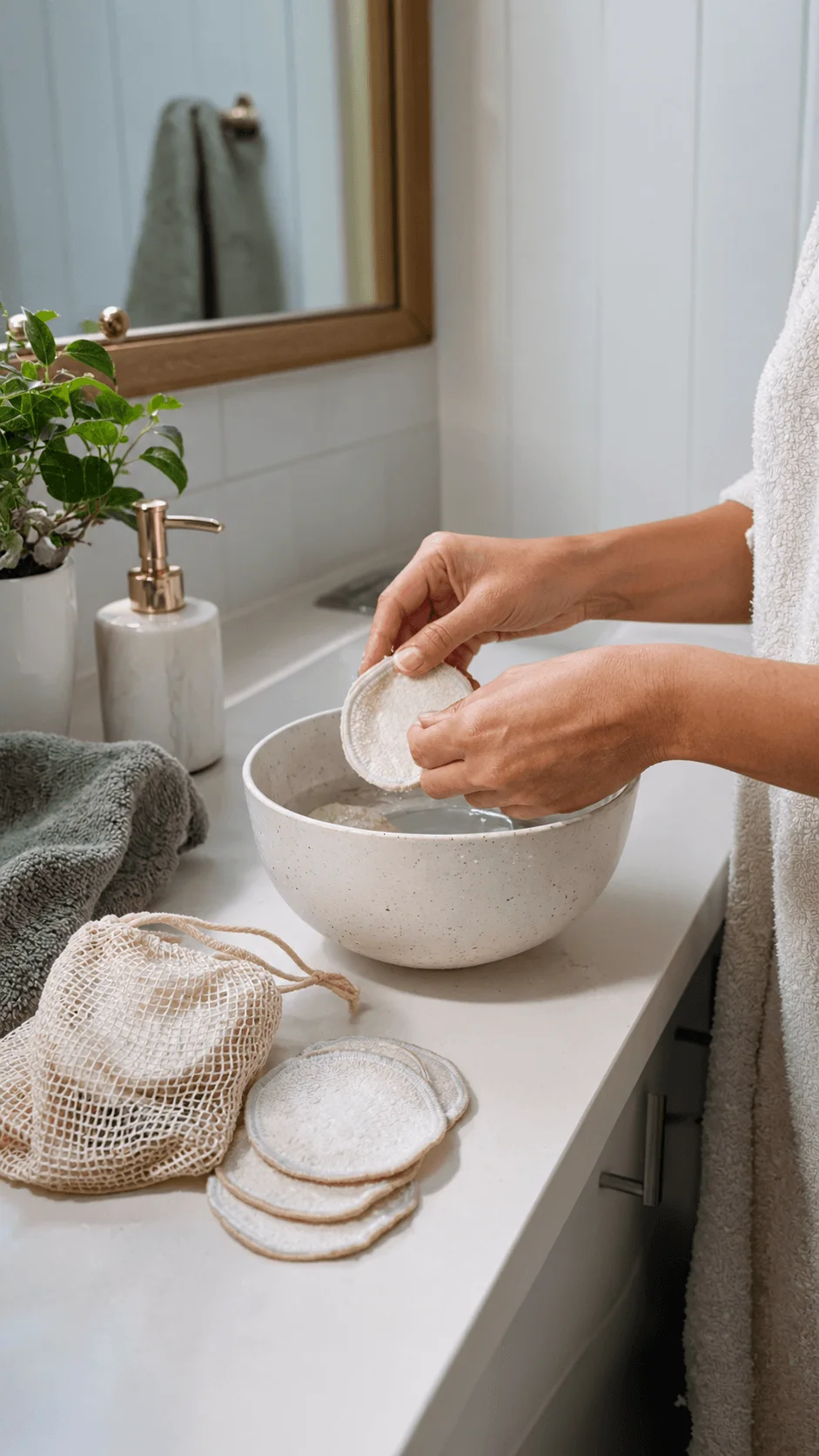
People do not necessarily need to buy a brand new set. Clean, suitable textiles already available at home may sometimes perform the same function. Repurposing what already exists can prevent another purchase.
Hygiene remains important. Users should wash and dry reusable items appropriately and follow relevant care instructions.
Among eco friendly waste sorting bathroom swaps, this idea demonstrates that waste sorting can include creating a clear reuse stream. Not everything leaving a bathroom activity needs to travel toward a rubbish or recycling bin. Some items simply need a convenient route back into use.
6. Refillable Bathroom Products for Deodorant Waste Reduction
Conventional deodorant sticks can combine several components in one package, and households may discard the entire container whenever the product runs out. Refillable deodorant systems try to change that pattern by retaining a durable outer case and replacing a smaller internal refill.
The idea works best when users genuinely keep the main case for a long period. Frequently replacing a reusable case because of fashion, damage or changing product systems can undermine the purpose of choosing a refillable design.
Refill availability also deserves consideration before purchase. A beautifully designed container offers little practical advantage if compatible refills become expensive or difficult to find.
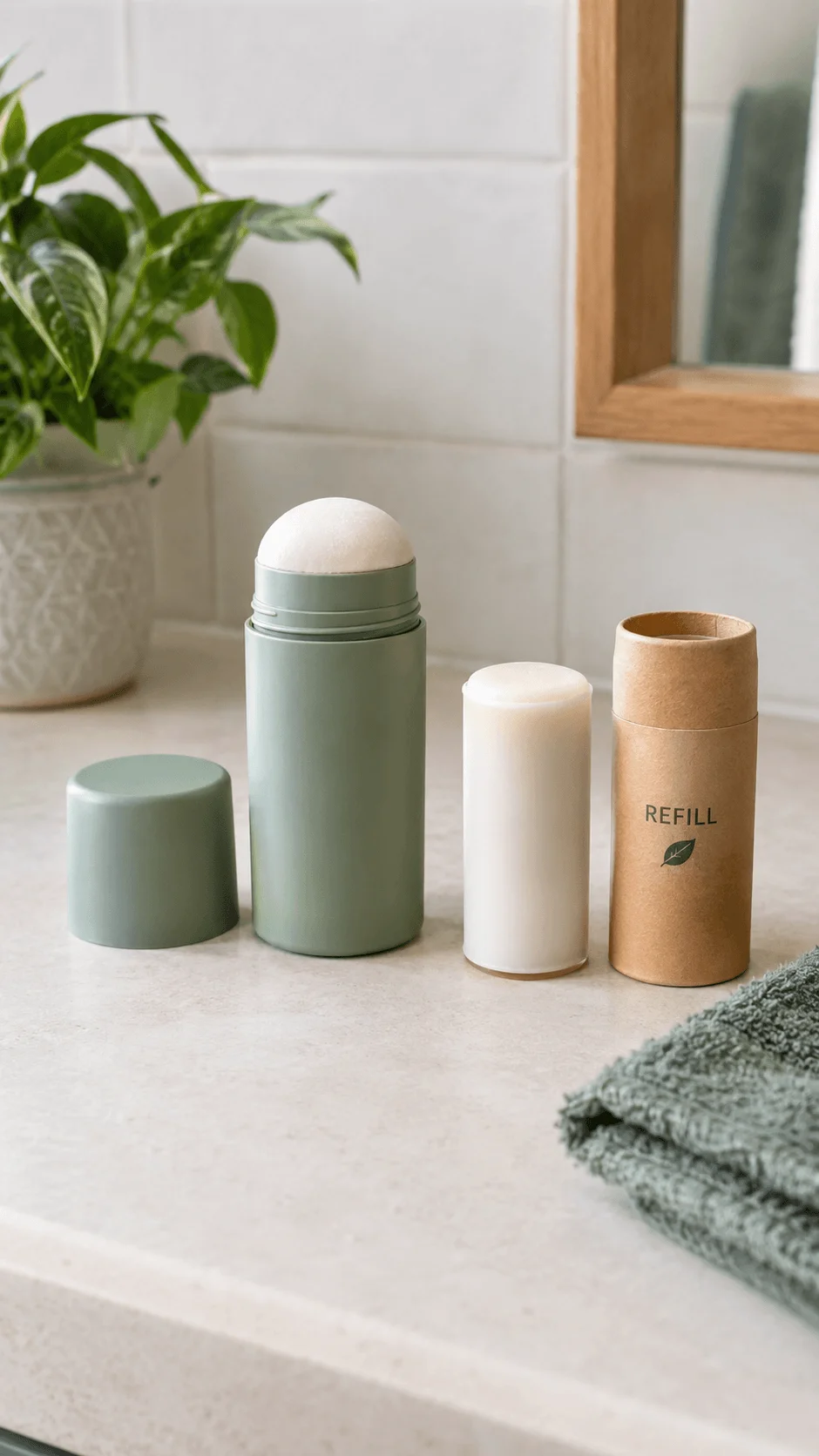
Consumers can examine the refill packaging as well. A refill system may reduce material without eliminating packaging completely. Any remaining wrapper, cartridge or container still requires appropriate disposal.
For that reason, eco friendly waste sorting bathroom swaps should consider the whole system rather than focusing on a single reusable component. Durability, convenient refills, reasonable packaging and long term use all contribute to whether a refillable deodorant becomes a practical bathroom change.
7. Eco Friendly Bathroom Alternatives to Plastic Shower Puffs
Synthetic shower puffs eventually wear out and become another difficult bathroom item to discard. Washable cloths and suitable natural loofahs provide alternatives for people who want to reduce reliance on disposable synthetic shower accessories.
An existing washcloth may offer the simplest solution. If something already performs the required job, purchasing a new product simply because it carries sustainable branding adds little value.
Whatever option a household chooses, moisture management matters. Bathroom accessories should dry properly between uses, and users should clean reusable items according to their material and care instructions.
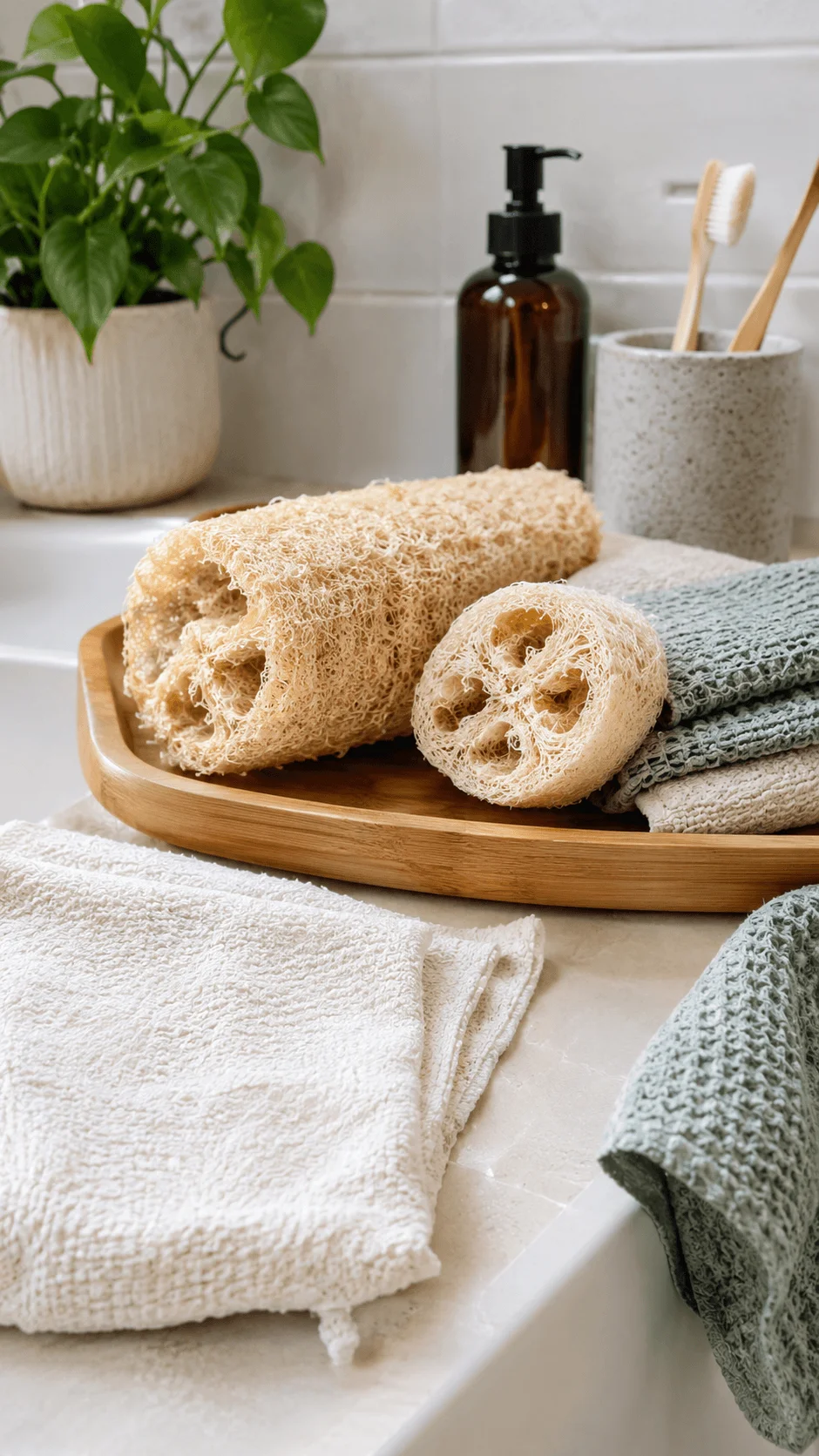
Natural materials also require careful disposal decisions. The word natural does not guarantee that the finished product belongs in home compost. A loofah product could include synthetic thread, adhesive, coatings or other components.
Good eco friendly waste sorting bathroom swaps encourage readers to examine the complete item. Material composition, lifespan, cleaning requirements and eventual disposal matter alongside the initial product description.
8. Zero Waste Bathroom Ideas With Concentrated Cleaning Refills
Bathroom cleaning supplies create their own packaging stream. Spray cleaners and other liquid products often arrive in complete bottles even when the previous bottle could potentially have remained useful.
Concentrated cleaning refills and tablets offer another model. Some products allow users to retain a suitable bottle and prepare the next quantity according to the manufacturer’s directions.
The strongest part of this concept is repeated container use. A durable spray bottle does not need replacement merely because its contents run out.
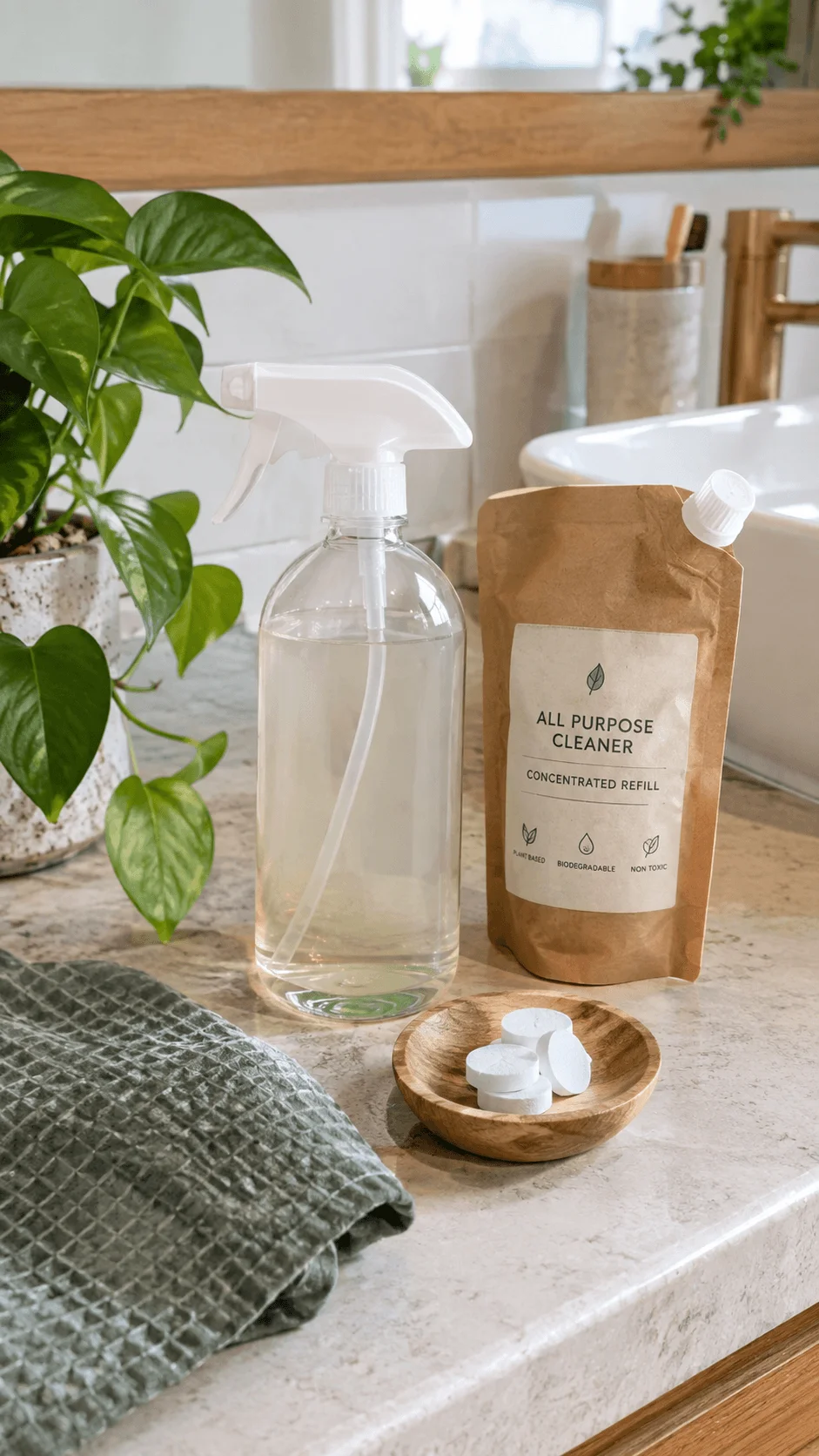
Safety should remain central. Users need to follow dilution and storage instructions carefully. They should not combine cleaning chemicals or experiment with mixtures that the manufacturer has not recommended.
Concentrated products also create packaging, even when that packaging is much smaller. Consumers can examine what the refill arrives in and determine how their local waste system handles the remaining material.
These eco friendly waste sorting bathroom swaps work best when households focus on reducing unnecessary replacement rather than chasing the appearance of having a completely waste free bathroom.
9. Bathroom Recycling Station for Better Waste Sorting
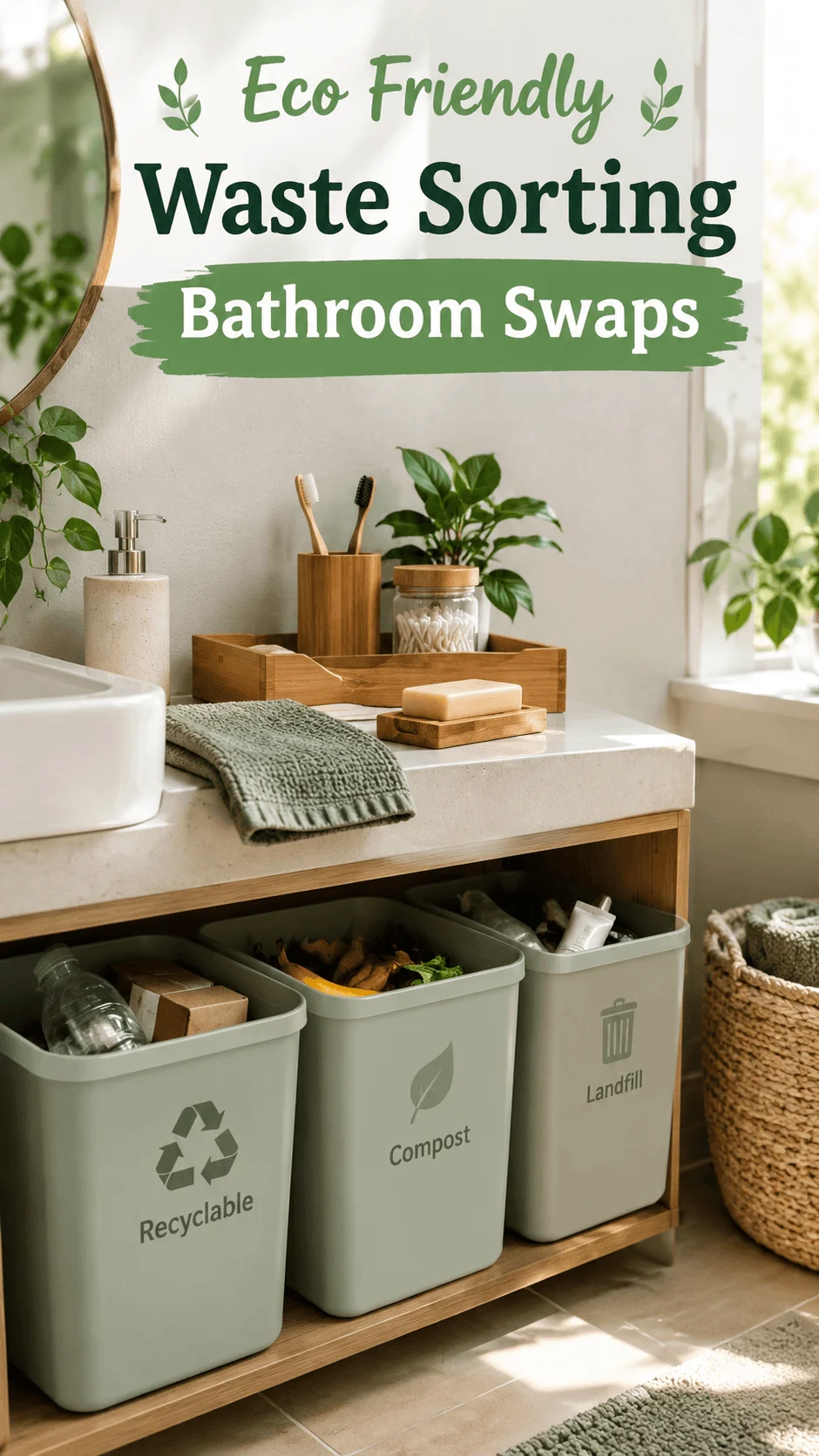
A bathroom recycling station can solve a basic problem that many sustainable product swaps overlook. If a bathroom contains only one general waste bin, residents may throw every empty container into it simply because no convenient alternative exists nearby.
A compact bathroom waste sorting system brings separation closer to where waste originates. Households can design the station around the materials they actually generate and the services available locally.
For example, locally accepted personal care packaging may need a different destination from residual bathroom waste. Difficult beauty packaging could remain in a temporary collection container while residents investigate specialist programs. Refillable containers stay in circulation rather than entering either stream.
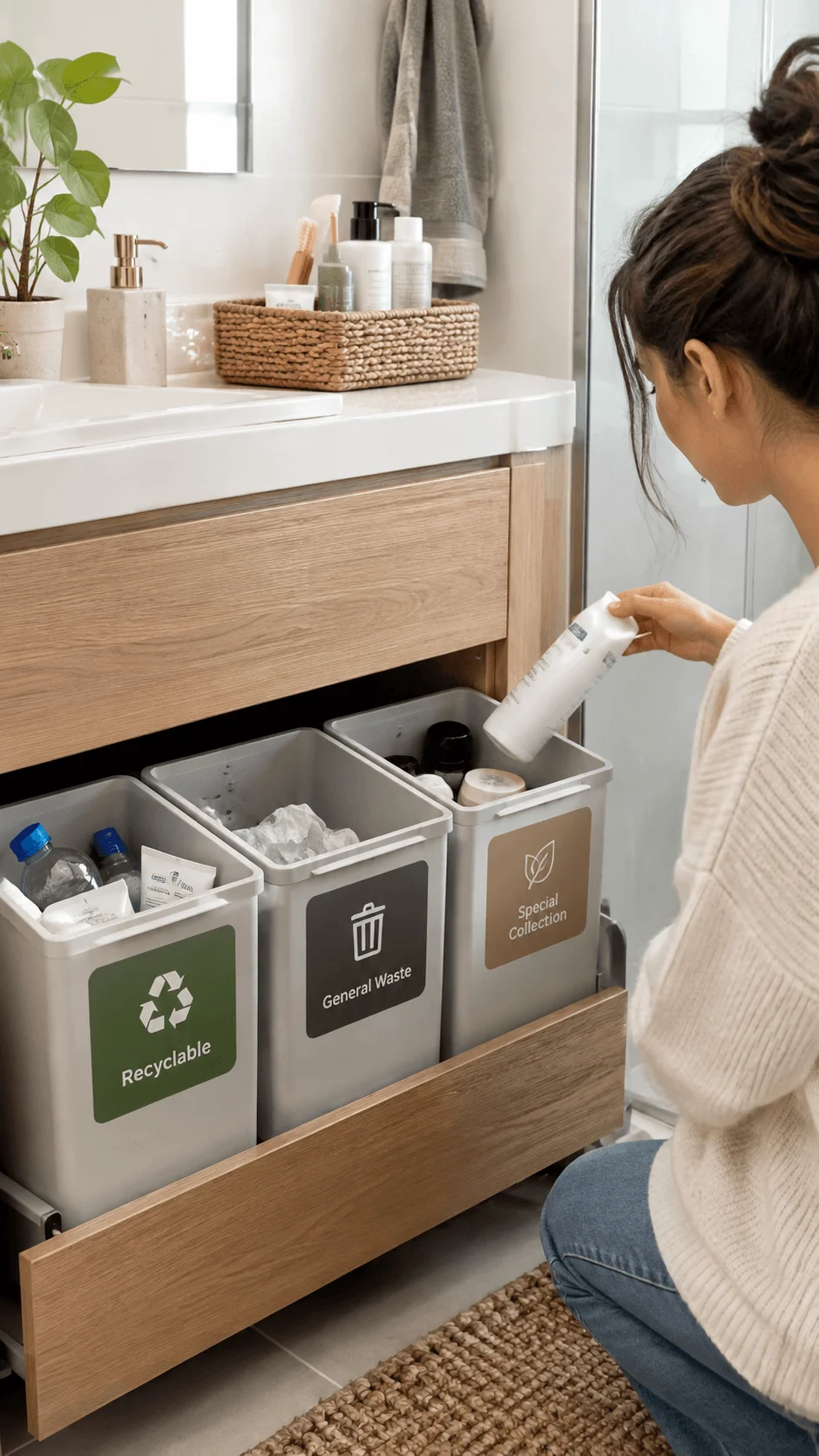
Small bathrooms do not require several large bins. A divided container, compact removable boxes, vertical storage or a discreet cabinet arrangement can provide separation without consuming excessive floor space.
Clear labels also matter. Family members and visitors should understand the system quickly. A complicated station with too many categories can discourage correct sorting.
The purpose of eco friendly waste sorting bathroom swaps is not to create a miniature recycling facility beside the sink. The goal is to make the correct action convenient. Households should build categories around actual local collection rules and update them when those requirements change.
10. Beauty Empties Recycling for Hard to Recycle Bathroom Waste
Beauty empties can include finished cosmetic and personal care containers such as tubes, pumps, jars and other small packages. Their appearance can make them seem recyclable even when mixed materials or small components make conventional processing difficult.
A beauty empties box provides a temporary place for uncertain items. Instead of guessing at the bathroom bin, users can collect suitable containers and later check whether local recycling, retailer take back services or specialist programs accept them.
This system requires regular attention. A collection box should not become permanent storage for years of empty packaging. Residents can review it periodically and determine the appropriate destination for each category.
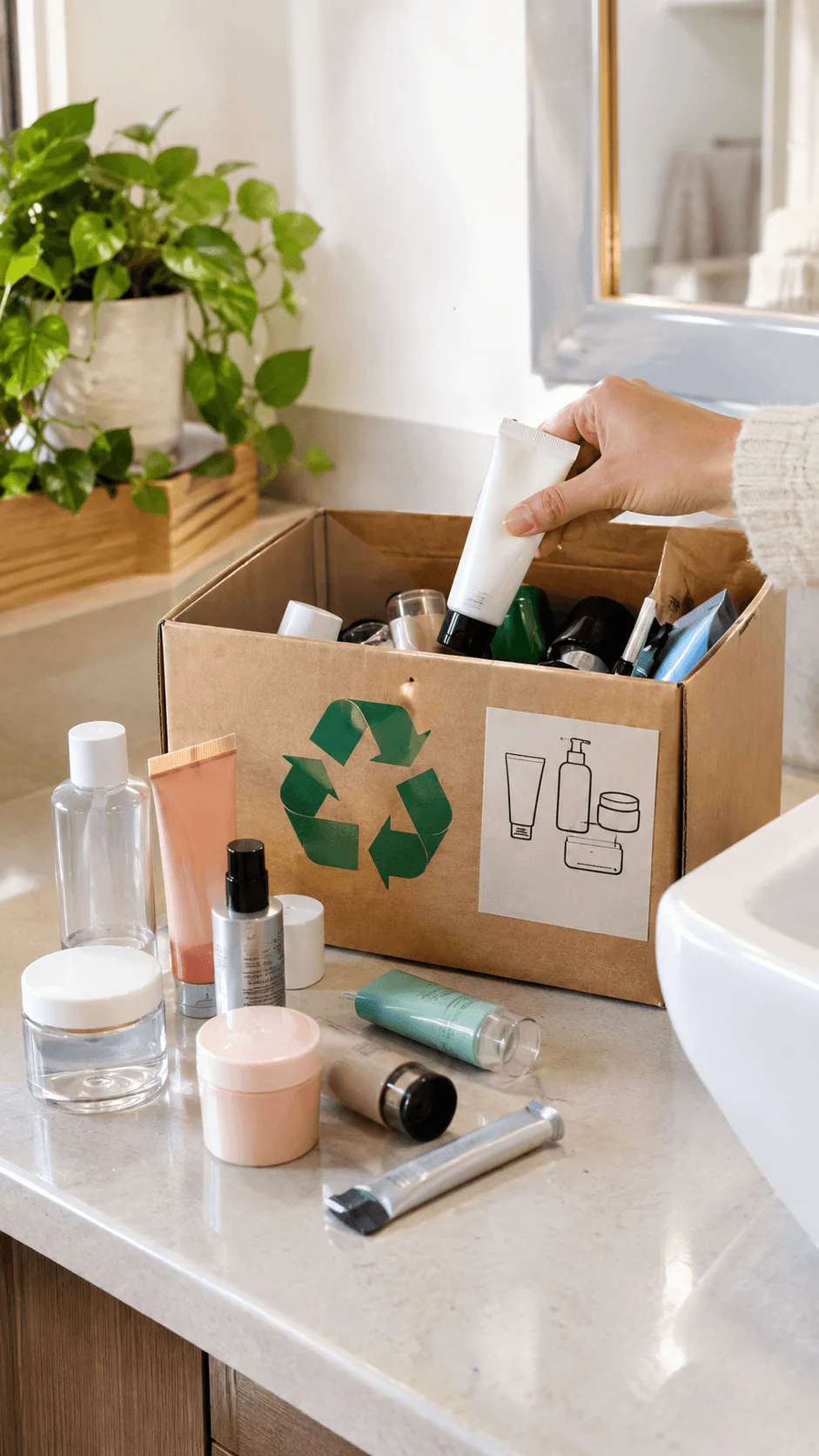
Specialist programs also have their own rules. The existence of a collection service does not mean it accepts every cosmetic product or every component.
This makes beauty empties recycling particularly relevant to eco friendly waste sorting bathroom swaps. Good sorting depends on accurate information, not optimistic assumptions. Separating uncertain packaging gives people time to make a better decision while keeping those materials away from recycling streams that may not accept them.
11. Bathroom Waste Reduction Ideas With Reusable Period Products
Disposable sanitary products form another recurring bathroom waste stream. Reusable menstrual cups, washable pads and period underwear can reduce repeated disposable product use for people who find these alternatives suitable.
Individual needs should guide the decision. Comfort, accessibility, cost, care requirements and personal preference all influence whether a reusable product becomes a realistic long term option.
Reusable products also need appropriate cleaning, storage and maintenance. Users should follow the instructions provided for the specific product rather than relying on generic assumptions.
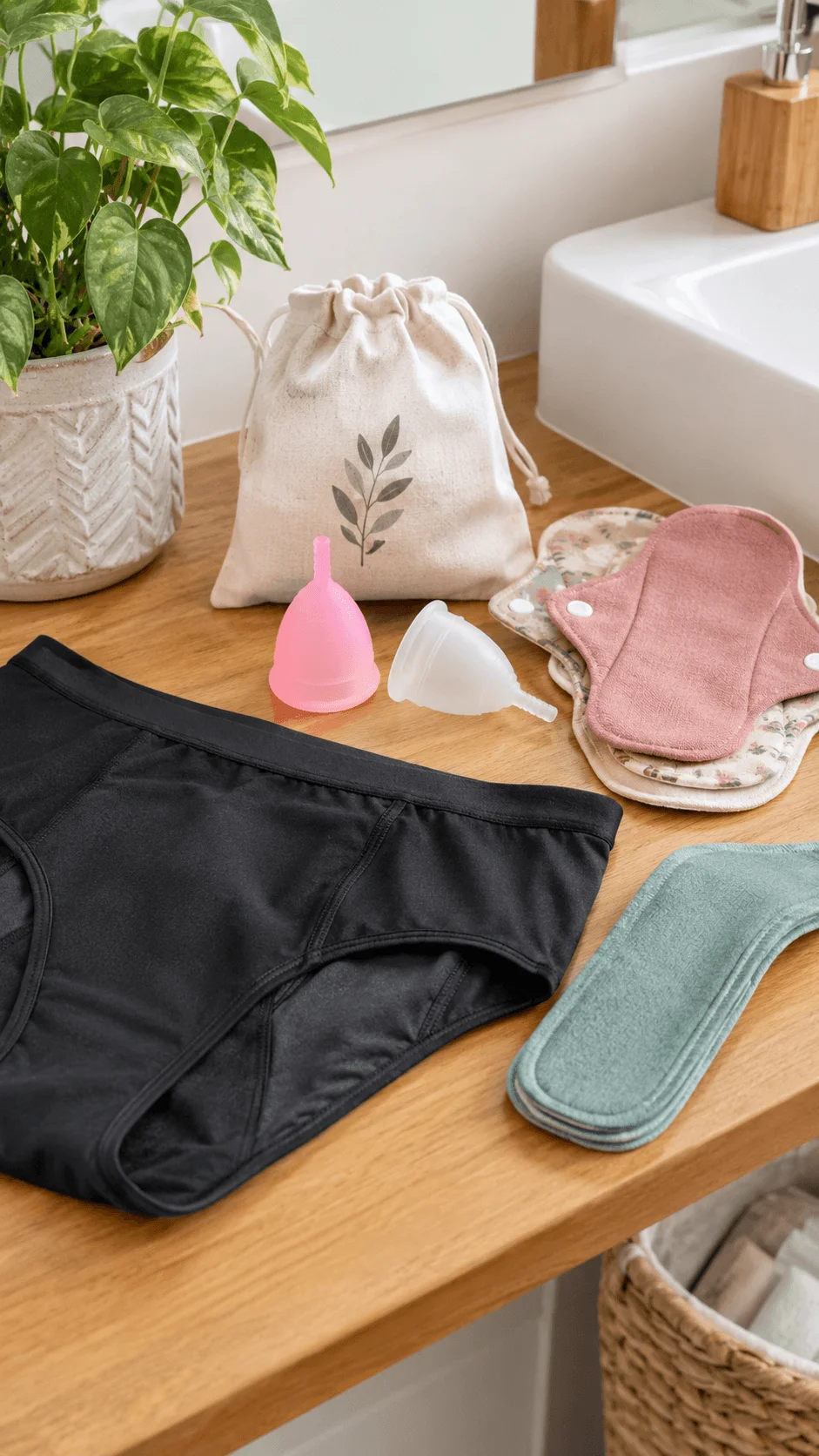
Waste sorting remains important even when someone continues using disposable sanitary products. These items should not simply enter recycling or organic waste streams. Users need to follow appropriate local disposal requirements.
This section illustrates an important principle behind eco friendly waste sorting bathroom swaps. Sustainability does not require every person to make identical purchasing decisions. A useful system helps people reduce waste where practical and manage the unavoidable waste that remains safely and responsibly.
12. Smart Bathroom Waste Sorting With QR Code Labels
QR code labels can add a modern information layer to a bathroom sorting system without requiring complicated smart bins or electronic equipment.
A household could place a code near a collection container and connect it to current instructions for confusing bathroom materials. Someone unsure about an oral care product, cosmetic package or personal care container could scan the code before choosing a waste stream.
This concept could work particularly well in shared households, where several people may use the same bathroom but have different levels of familiarity with the sorting system.
Digital information can also change without requiring households to replace physical labels or containers. If local collection requirements change, residents can update the information behind the code.
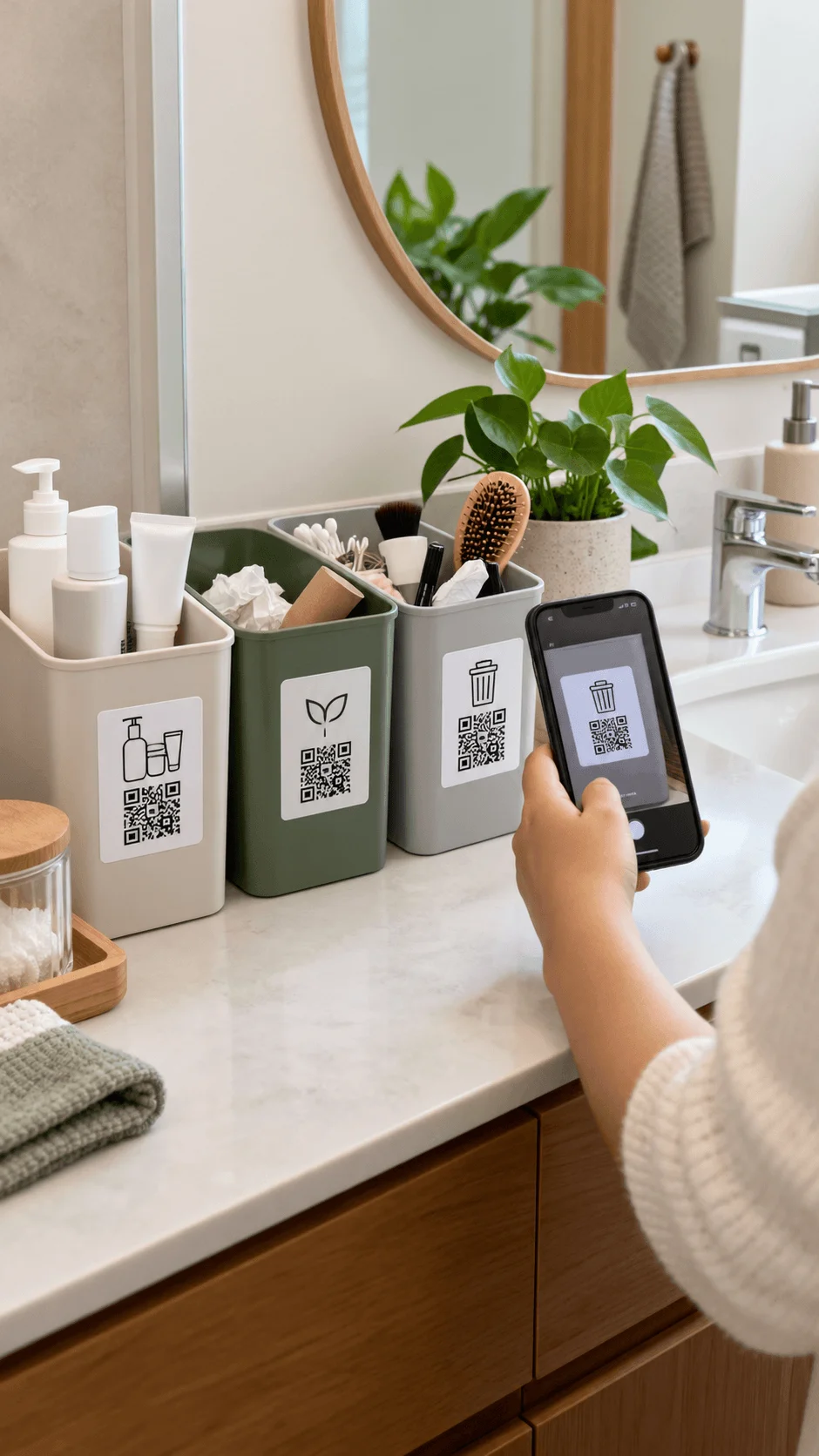
Technology should remain useful rather than decorative. Ordinary visual labels may work perfectly for simple categories. QR guidance makes more sense for materials that regularly cause uncertainty.
As one of the more modern eco friendly waste sorting bathroom swaps, this approach demonstrates how better information can complement waste reduction. The technology does not make an item recyclable. It simply helps people make more informed decisions about the waste they already generate.
How to Make Eco Friendly Waste Sorting Bathroom Swaps Work at Home
Successful bathroom waste reduction usually starts with observation rather than shopping. Before purchasing reusable products or new sorting containers, households can look at what regularly enters their existing bathroom bin.
One home may discard many shampoo and body wash bottles. Another may generate more cosmetic packaging, disposable cotton products or oral care waste. Identifying the largest recurring streams helps people choose changes that address their actual habits.
The most practical eco friendly waste sorting bathroom swaps can then happen gradually. Someone might finish an existing shampoo bottle before trying a bar, keep a functional spray bottle for a refill system or introduce a small collection box for difficult beauty packaging.
Convenience strongly affects whether the system survives. If residents need to carry every empty container across the house before sorting it, they may eventually return to the nearest general waste bin. Keeping appropriate collection containers near the point of disposal can reduce that friction.
Durability deserves equal attention. A reusable product only provides repeated use when it remains functional and the household continues using it.
Residents should also review their system occasionally. Products change, household habits evolve and local collection requirements can change. A useful sorting system should adapt rather than remain fixed around outdated assumptions.
Common Mistakes With Sustainable Bathroom Swaps and Waste Sorting
One of the easiest mistakes is replacing functional products too quickly. Sustainable living can become another form of consumption when people discard perfectly usable bottles, razors, containers and accessories simply to purchase replacements with greener branding.
Another mistake involves judging products entirely by material. Bamboo, glass, metal, paper and recycled plastic can each have useful applications, but material alone does not determine whether a product makes sense. Durability, packaging, repairability, frequency of replacement and actual use all matter.
Incorrect recycling creates another problem. People sometimes place questionable objects into recycling because they hope the recycling facility can find a use for them. A better approach is to follow the instructions of the local collection system and investigate specialist options for unusual materials.
Similar caution applies to biodegradable and compostable claims. A finished product may contain several materials, so consumers should not assume it belongs in home compost based on one component.
Finally, households should avoid making their sorting systems unnecessarily complicated. The most effective eco friendly waste sorting bathroom swaps fit naturally into everyday routines. A simple system that residents use consistently offers more practical value than an elaborate arrangement that everyone eventually ignores.
Conclusion
Creating a lower waste bathroom does not require filling the room with newly purchased products carrying sustainable labels. Eco friendly waste sorting bathroom swaps work best when households first understand what they already use, what they regularly discard and which changes can realistically become permanent habits.
Using existing products until they reach the end of their useful life provides a sensible starting point. When replacement becomes necessary, households can consider durable razors, washable cloths, refillable containers, concentrated cleaners, solid personal care products and other alternatives that reduce repeated waste. A compact bathroom recycling station can then help residents separate the packaging and difficult materials that remain.
Correct sorting matters just as much as purchasing decisions. Recycling requirements differ between locations, while specialist programs may accept only particular products. Checking those requirements helps prevent uncertain bathroom waste from entering the wrong stream.
The strongest eco friendly waste sorting bathroom swaps combine prevention, reuse, refilling, durability and informed disposal. Starting with one or two recurring waste streams can make the transition manageable. Over time, those small changes can turn the bathroom from an overlooked source of mixed waste into a space where thoughtful waste reduction becomes part of the everyday routine.