Eco Friendly Garden Ideas Using Recycled Materials
Creating a beautiful garden does not always require buying new planters, decorations, or landscaping materials. With a little creativity, everyday items that might otherwise become waste can become useful and attractive features. These eco friendly garden ideas using recycled materials show how old wood, bottles, bricks, furniture, and other discarded items can find a second life outdoors. At the same time, these projects can help gardeners create more personal and interesting spaces without relying entirely on newly manufactured products.
Gardening trends in 2026 increasingly focus on sustainability, biodiversity, wildlife friendly spaces, edible gardening, water conscious practices, and natural looking landscapes. This makes recycled materials especially interesting for modern garden design. Instead of treating an old object as something that needs to be thrown away, you can consider how it might serve a new purpose in your outdoor space.
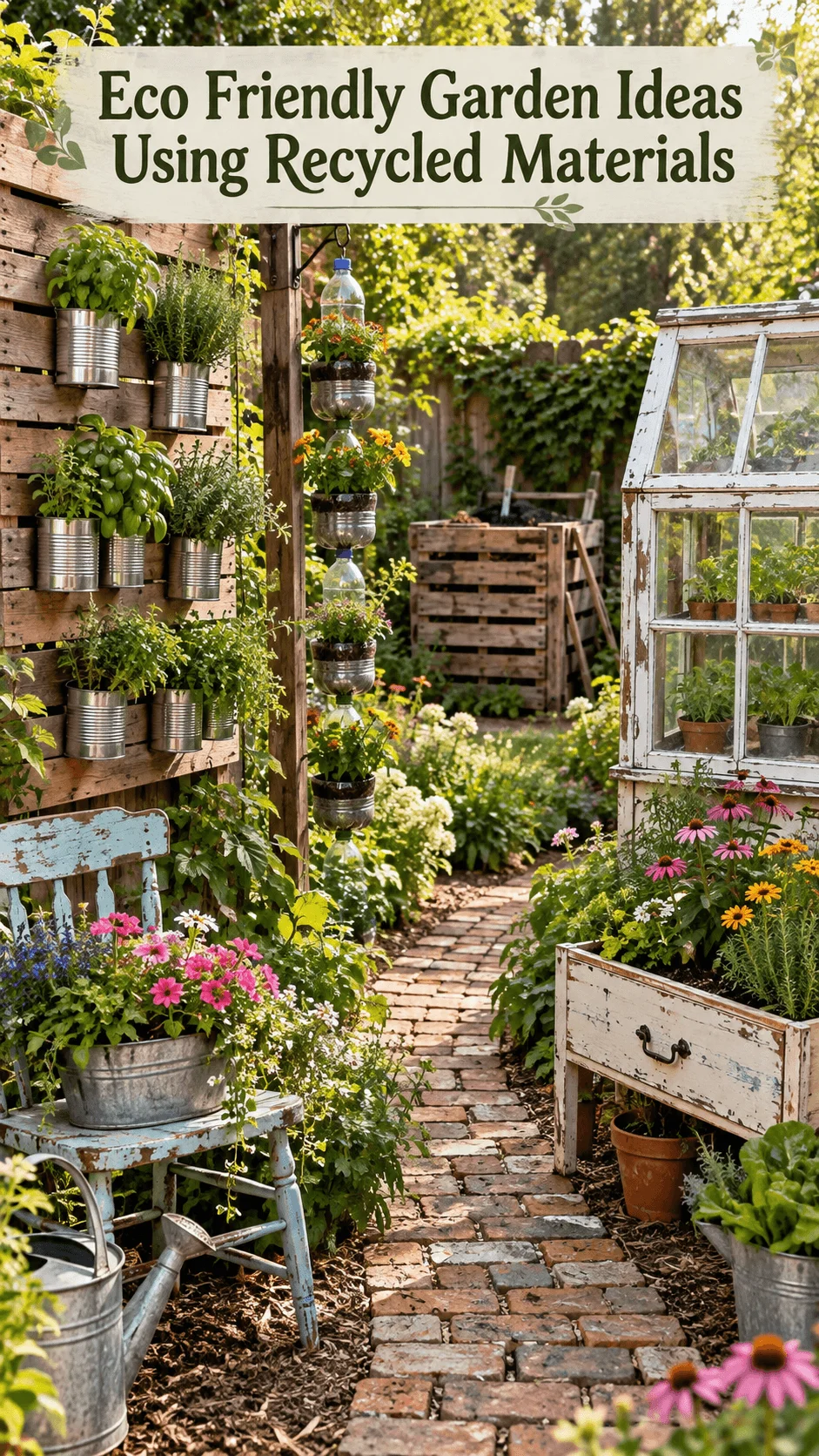
Recycling and upcycling also give gardens a character that mass produced products often cannot provide. An old window can become a charming mini greenhouse, reclaimed timber can turn into a vertical herb wall, and broken terracotta can become part of a wildlife friendly corner. The result can feel creative and intentional while making use of materials you may already have.
The best projects do not simply place random objects around the garden. They transform those materials into features that work with the plants, layout, and overall style of the space. Whether you have a large backyard, a compact patio, or a small balcony, there are plenty of ways to introduce sustainable garden design without sacrificing appearance or practicality.
Reclaimed Wood Vertical Herb Wall
A reclaimed wood vertical herb wall is one of the most useful garden ideas using recycled materials, particularly for gardeners who have limited ground space. Instead of spreading plants across a large bed, you can use an unused wall, fence, balcony railing, or other suitable vertical surface to create a compact growing area.
Old pallets, unused fence boards, reclaimed timber, and other suitable pieces of untreated wood can provide the basic structure. The goal is not simply to attach pots to a piece of old wood. A thoughtfully arranged vertical garden can become an attractive feature that combines greenery, texture, and practical food production.
Herbs work particularly well because many varieties remain relatively compact. Depending on the growing conditions, gardeners can consider plants such as mint, thyme, oregano, parsley, chives, basil, or rosemary. Choosing plants with similar light and watering requirements can make maintenance considerably easier.
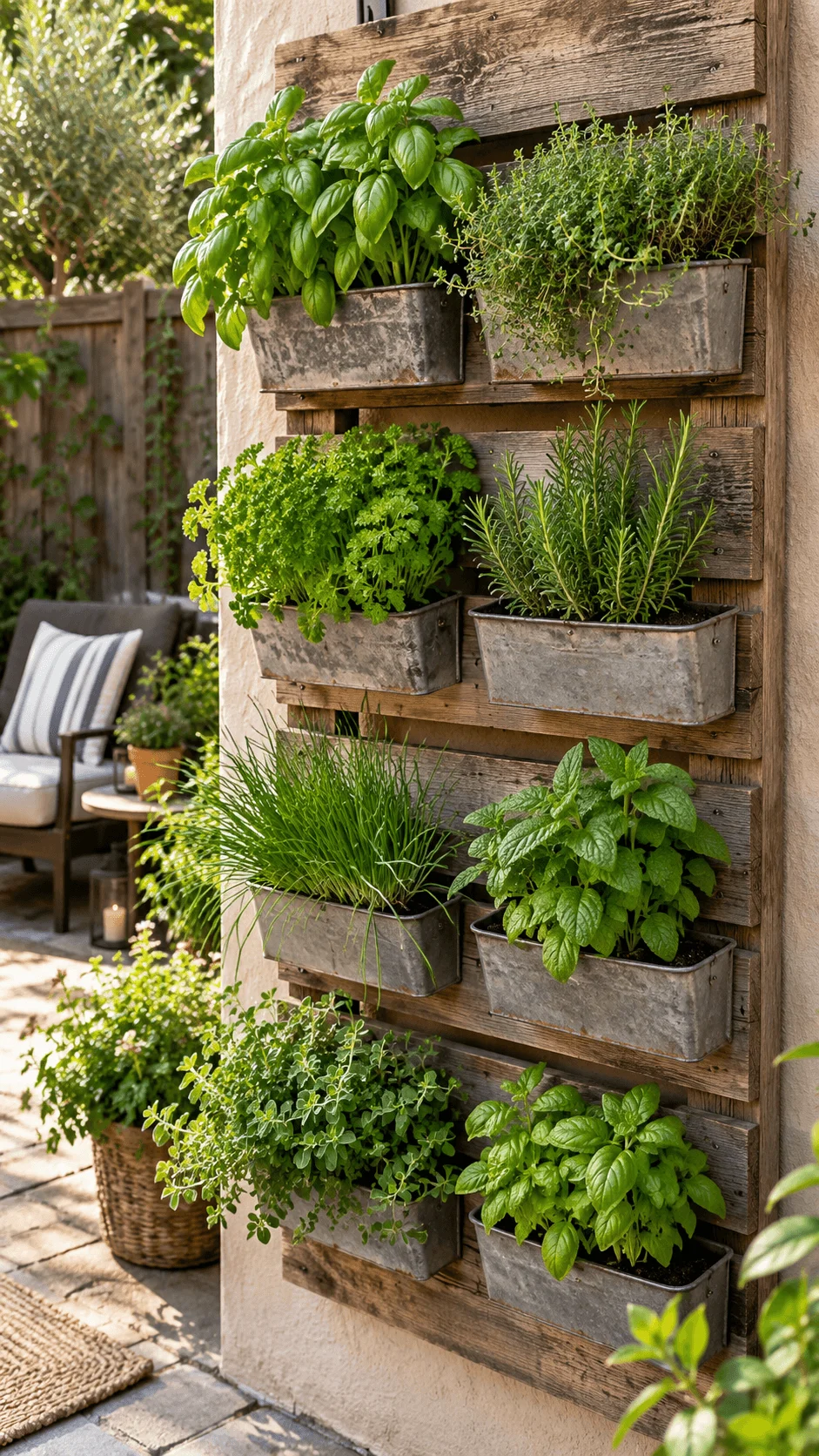
The location matters just as much as the recycled material. Most culinary herbs need plenty of sunlight, so a bright position can help them grow successfully. Before attaching the structure to a wall or fence, consider how much direct sunlight reaches the area during the day. You should also make sure the structure can safely support the containers and plants.
Drainage deserves particular attention. Containers that hold excess water can damage roots, while water draining directly onto a wall or wooden structure can contribute to moisture problems. Using suitable containers with drainage and allowing excess water to escape properly can help protect both the plants and the surrounding structure.
You can make a reclaimed wood herb wall look more polished by keeping the arrangement consistent. Matching containers, simple labels, or a carefully planned planting pattern can turn old timber into a deliberate garden feature. The wood does not need to look brand new. Its natural weathered appearance can actually complement greenery and create a warm, rustic atmosphere.
This type of project also demonstrates why sustainable garden ideas can be practical rather than purely decorative. Instead of purchasing a new vertical gardening system, you can potentially reuse materials that already exist. The finished feature provides growing space while giving reclaimed wood a useful purpose.
Broken Terracotta Wildlife Garden
Broken pots do not necessarily need to go into the trash. Pieces of terracotta can become part of a small wildlife friendly garden feature that adds texture and natural character to an outdoor space.
A broken terracotta pot can provide interesting shapes and sheltered spaces around plants. Several pieces can be arranged carefully around a planting area to create a small habitat feature. Rather than hiding the damaged material, you can incorporate it into the garden as part of the design.
This idea fits particularly well with the growing interest in biodiversity and wildlife friendly gardens. Modern gardeners are increasingly looking beyond flowers and ornamental plants and thinking about how their outdoor spaces can support a wider range of living things.
You can position terracotta pieces among plants with different heights and textures. Low growing plants can soften the edges, while taller plants can provide additional structure. The combination of weathered terracotta, foliage, and natural ground cover can create a garden corner that feels established rather than artificial.
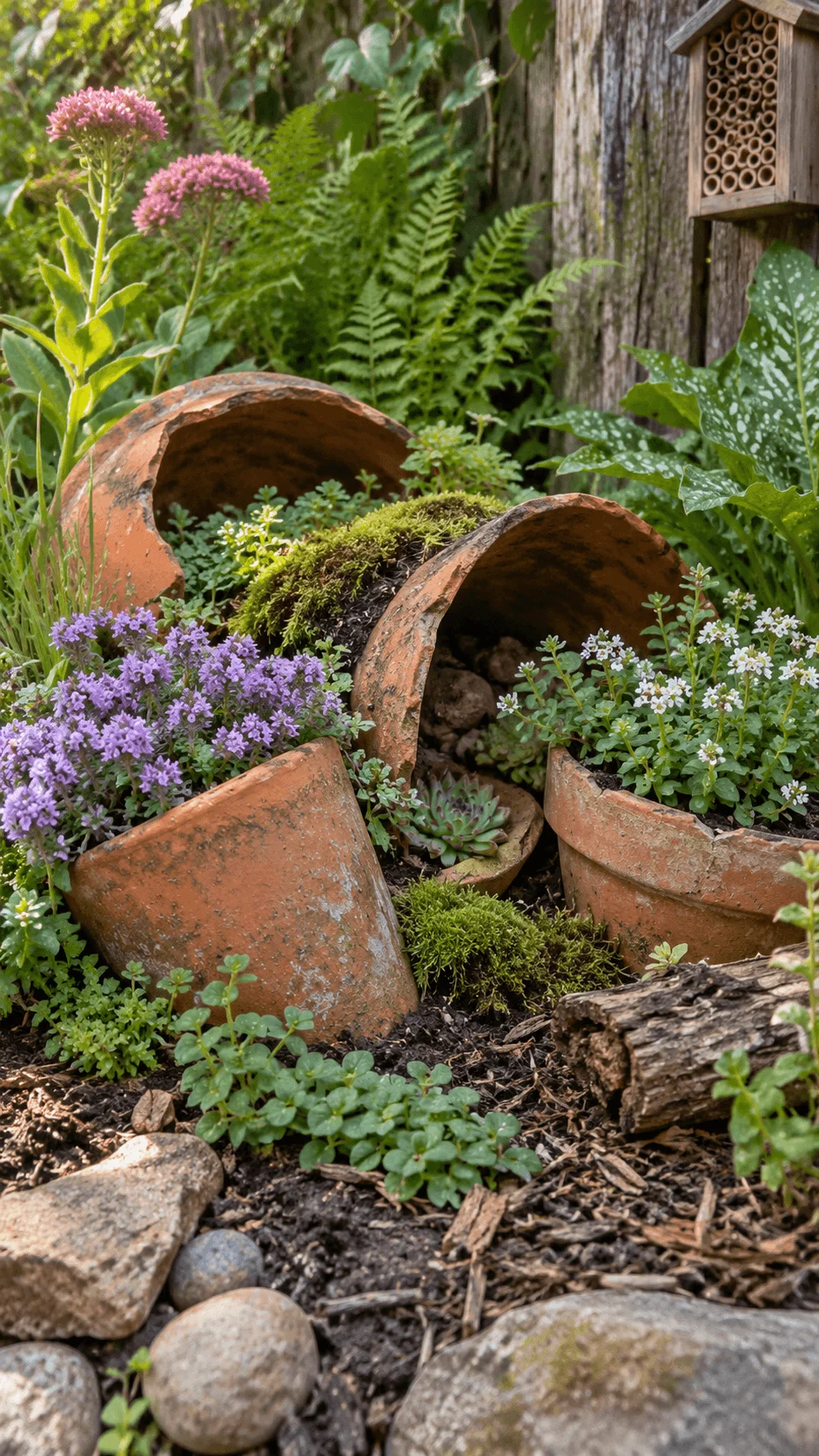
The arrangement should remain practical and safe. Sharp broken edges should not face areas where people frequently walk or work. Place pieces securely so they do not easily shift, and avoid creating unstable structures.
You can also use the broken pottery as a visual transition between different garden zones. For example, a small arrangement could separate a flower bed from a pathway or surround a wildlife friendly planting area. This makes the recycled material part of the landscape design rather than simply an object placed in the garden.
The beauty of this project comes from its simplicity. A damaged pot that once seemed useless can become part of a natural looking feature. It also demonstrates an important principle behind upcycled garden ideas: the original purpose of an object does not have to determine its final use.
Recycled Plastic Bottle Self Watering Planters
Plastic bottles are among the most common household containers, making them an accessible material for DIY recycled garden projects. Instead of immediately discarding suitable empty bottles, gardeners can explore ways to turn them into compact planting containers.
A self watering planter uses a water reservoir that allows plants to access moisture gradually. A recycled bottle can provide the basic structure for a small version of this concept. This can be particularly useful for people who want to experiment with container gardening without purchasing specialized equipment.
The idea works well in small spaces because bottles require very little room. You can place individual planters on a balcony, windowsill, patio, or other suitable growing area. Several containers can also be arranged together to create a small vertical display.
Smaller herbs and ornamental plants can work well depending on the size and shape of the container. The important consideration is matching the plant to the available root space. A plant that eventually needs a large container will not remain suitable for a very small bottle.
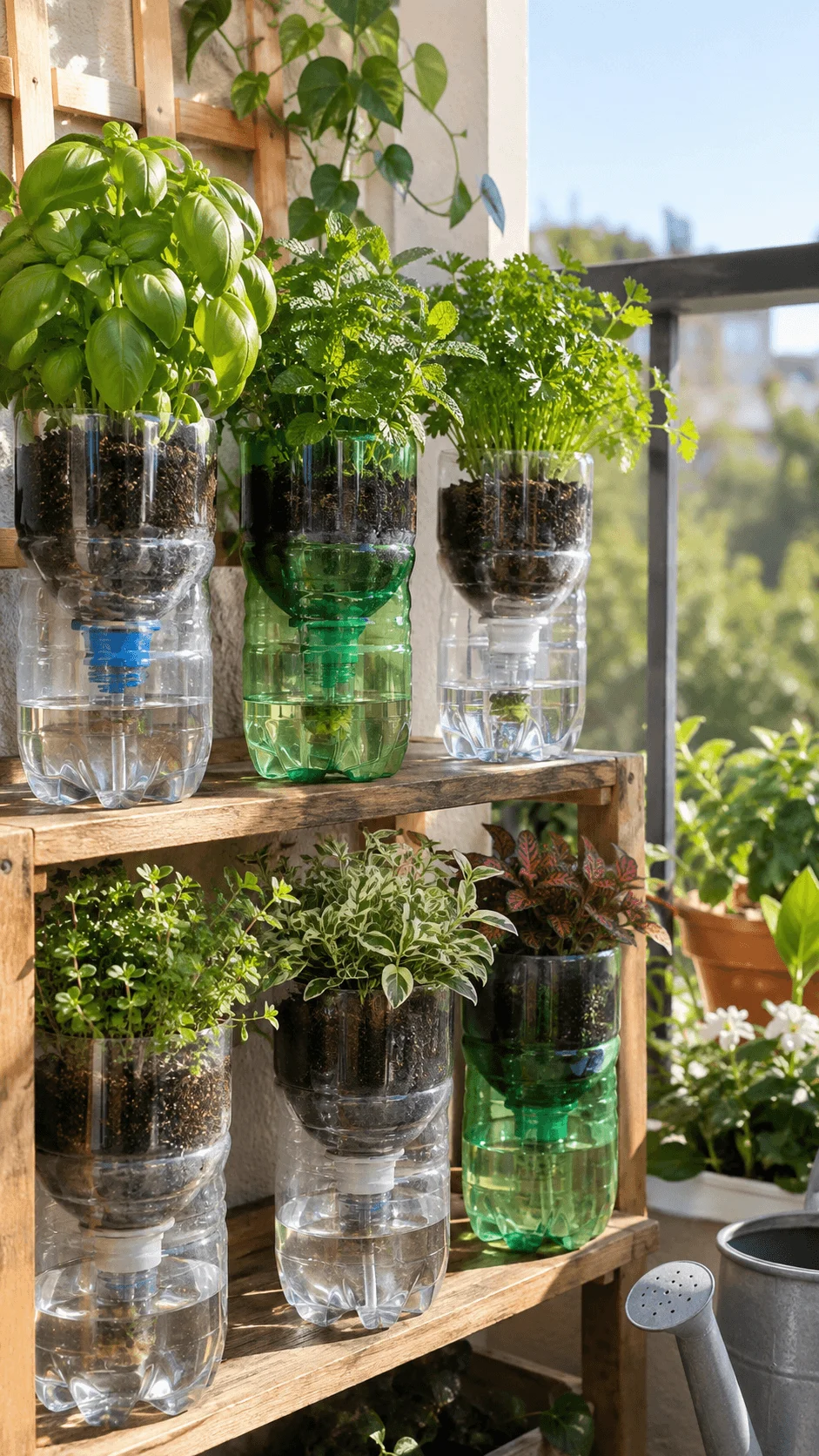
Sunlight also affects the success of the project. Before creating several planters, observe the available growing area and determine which sections receive sufficient light. This can help you choose plants that match the conditions rather than trying to force every type of plant into the same environment.
The appearance of recycled bottle planters can also be improved considerably. Instead of displaying containers in a random arrangement, you can group them at similar heights or create a consistent vertical pattern. This gives the project a more organized appearance.
The water management aspect makes this one of the more practical eco friendly garden DIY ideas. However, self watering does not mean the plants can be ignored. Gardeners still need to monitor moisture, especially during hot weather, and ensure the growing medium does not remain excessively wet.
The project also highlights an important approach to recycling. The goal is not simply to keep every plastic item forever. Suitable materials should be reused thoughtfully when they can serve a practical purpose, and damaged or unsuitable materials should be handled through appropriate recycling or disposal systems.
Old Window Mini Greenhouse
An old window can become one of the most visually distinctive features in a recycled garden. Instead of allowing a salvaged window frame to sit unused, gardeners can incorporate it into a small greenhouse or cold frame design.
The basic concept is simple. A transparent window allows sunlight to reach plants while helping create a more protected growing environment. When combined with a suitable frame or base, an old window can become part of a compact structure for plants that benefit from some protection.
This project works particularly well in gardens with a cottage, rustic, vintage, or natural design style. The aged appearance of a wooden window frame can provide character that would be difficult to reproduce with a completely new garden product.
Before using an old window, inspect its condition carefully. The frame should be stable enough for outdoor use, and any glass should remain secure. Damaged or unstable glass can create a safety risk, so repairs or replacement may be necessary before incorporating the window into a garden project.
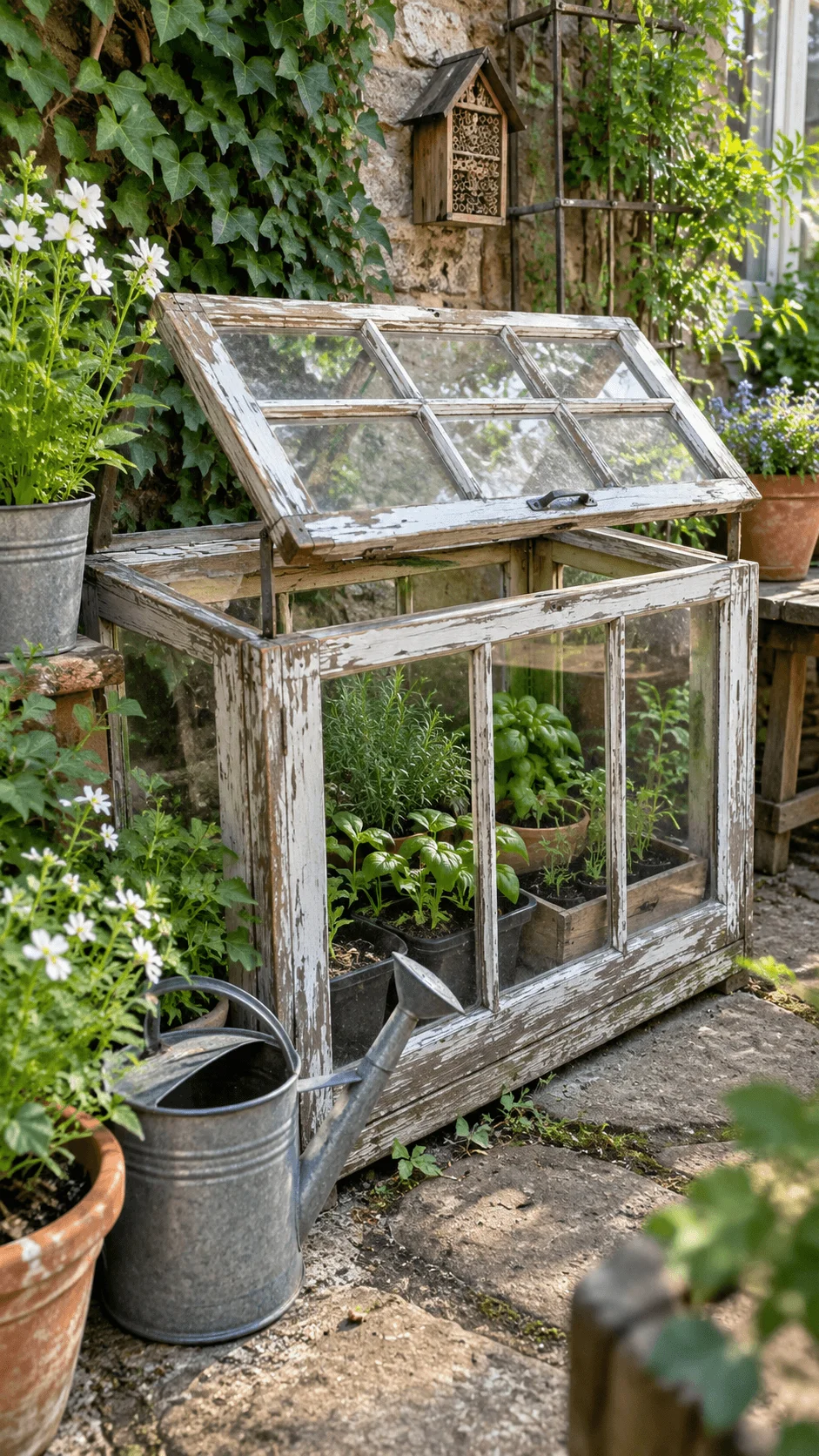
Ventilation is another important consideration. A small enclosed structure can become very warm when sunlight reaches it. Plants need appropriate airflow and temperature management, so the design should allow gardeners to open or adjust the window when necessary.
The plants you choose should match the conditions created by the structure. Some seedlings and tender plants may benefit from protection, while others may prefer an open growing environment. Think about the greenhouse as an extension of your existing garden rather than a universal solution for every plant.
An old window can also become a decorative focal point even when it is not used as a traditional greenhouse. For example, several windows can form part of a garden wall or frame a planting area. However, using them as functional growing structures gives the material a particularly valuable second purpose.
This is where recycled garden ideas for small spaces can become especially creative. A compact window greenhouse can provide useful growing space without requiring a large permanent structure. It can also turn an otherwise forgotten household object into one of the most memorable features in the garden.
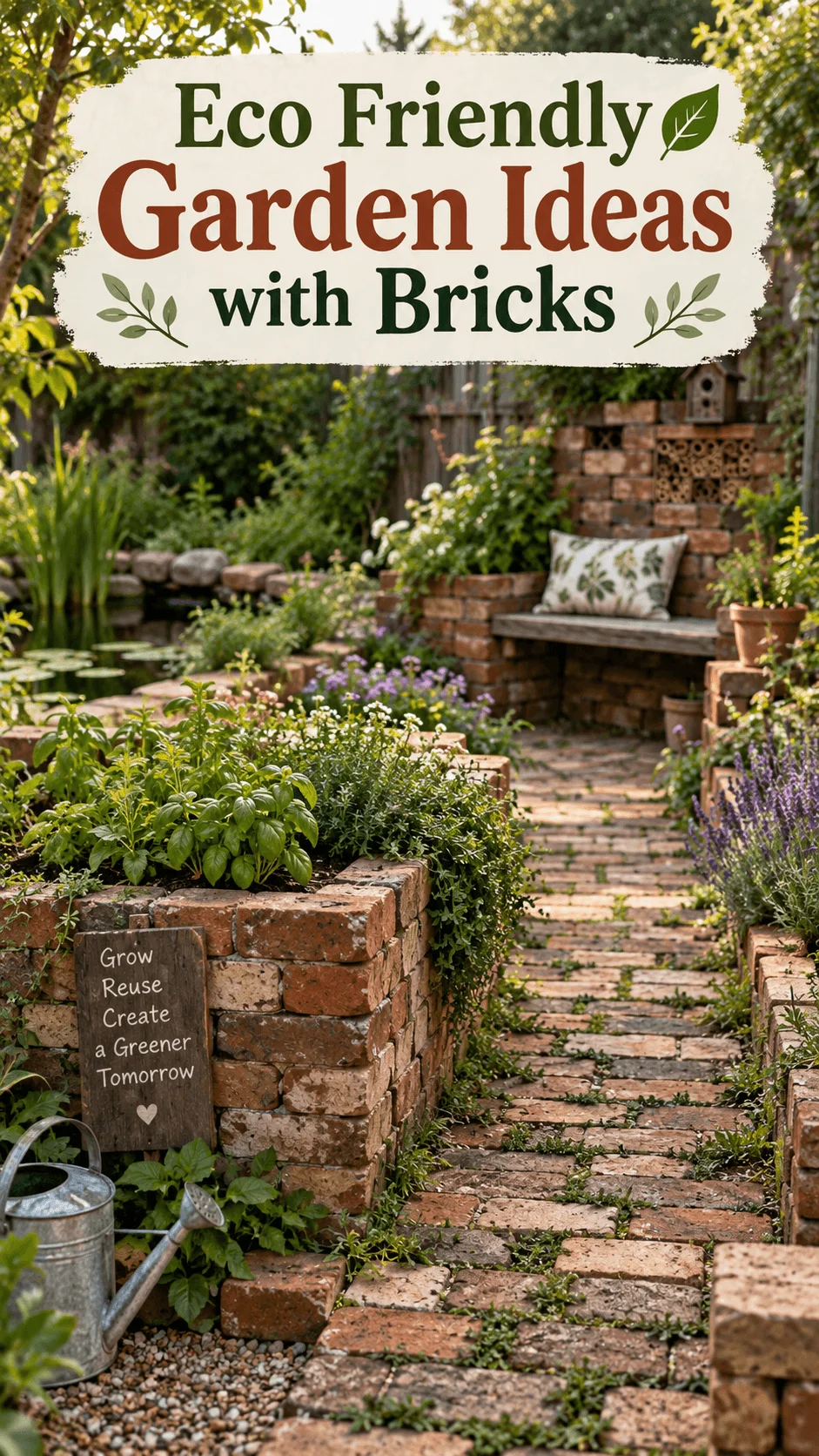
Reclaimed Brick Garden Path
Garden paths do more than provide a place to walk. They help organize an outdoor space, separate planting areas, guide movement, and create visual structure. Reclaimed bricks can perform all of these functions while giving a garden an established and characterful appearance.
Old bricks from renovation projects, previous landscaping, or unused building materials can sometimes be reused for garden paths. Their naturally weathered surfaces can complement plants particularly well and create a softer appearance than some modern manufactured paving products.
One advantage of reclaimed brick is the variety it can bring to the landscape. Slight differences in color, texture, and surface wear can make a path look more natural. Rather than creating a perfectly uniform surface, you can embrace these variations as part of the garden’s character.
The layout can also influence the overall feeling of the garden. A straight path can create a clean and organized appearance, while a gently curved route can make a larger garden feel more exploratory. Smaller brick sections can also define individual planting zones without requiring a complete pathway.
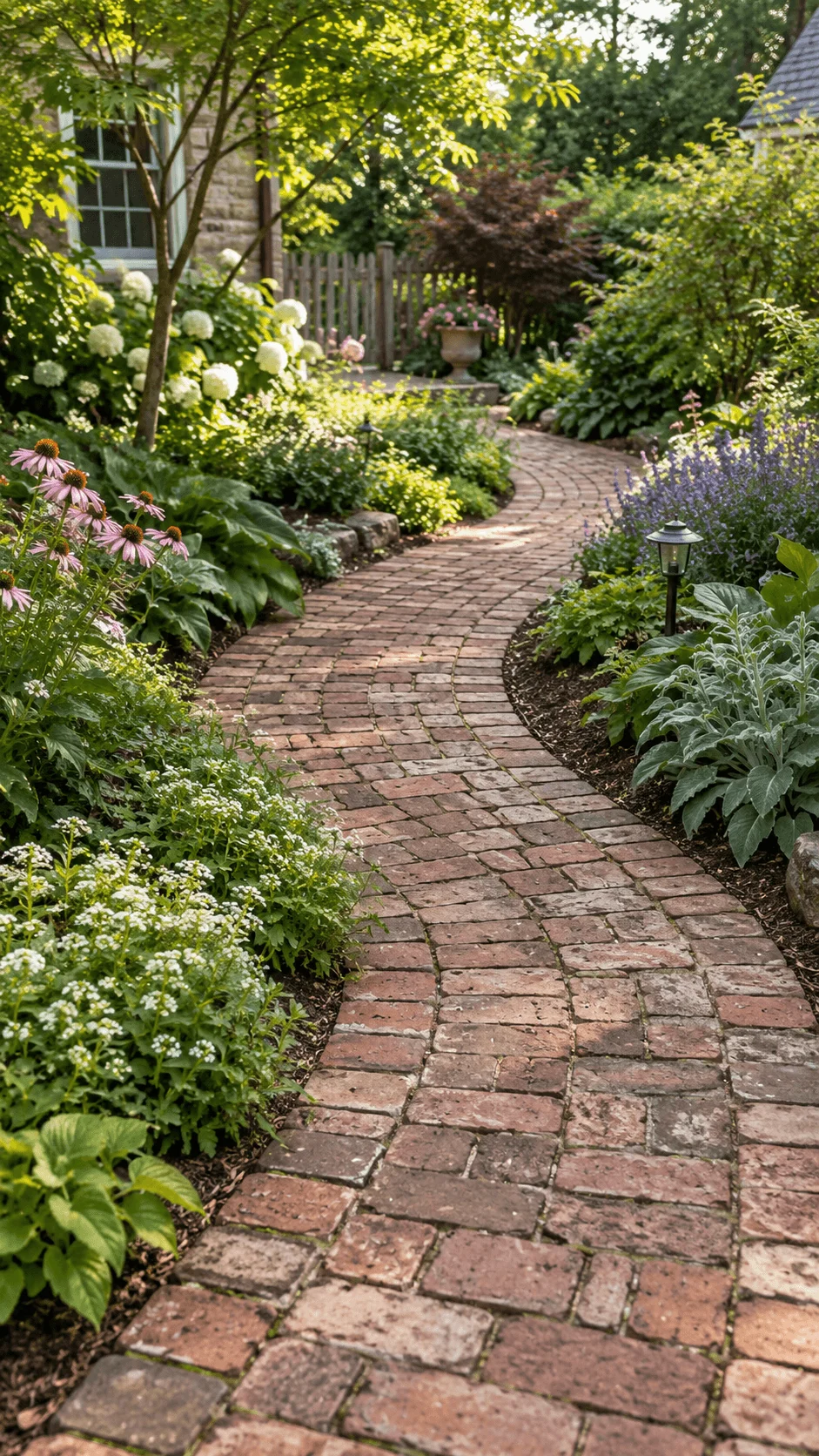
Good preparation is important. The ground should provide a reasonably stable base so the bricks do not move significantly when people walk across them. Drainage should also be considered because standing water can affect both the path and nearby plants.
Weeds can become an issue between individual bricks, particularly when gaps contain soil or organic debris. Regular maintenance can keep the path looking intentional. Gardeners can also think about how surrounding plants will interact with the bricks. Low growing plants around the edges can soften the hard surface without completely covering the walking area.
Reclaimed bricks are especially useful when you want your garden to have a mature appearance. Their weathered character can blend naturally with established plants, stone, timber, and other organic materials.
This approach expands the meaning of recycled garden landscaping ideas beyond containers and decorations. Recycled materials can also play an important role in the actual structure of a garden. Reusing suitable bricks gives an existing material a new function while helping create a pathway that feels unique.
Scrap Wood Pollinator Bug Hotel
A garden can become more interesting when it provides spaces for wildlife as well as people. A pollinator bug hotel made from suitable scrap wood is one way to combine recycled materials with biodiversity focused garden design.
Clean, untreated pieces of suitable wood can form the basic structure. The finished feature can contain small sheltered spaces and natural materials that create different textures and openings. Its purpose is to provide habitat opportunities rather than simply act as decoration.
Placement is important. A bug hotel can work well near flowering plants because the surrounding garden can provide a more complete habitat. Instead of placing the structure in an isolated corner with little vegetation, consider integrating it into an area containing diverse plants.
The structure should remain stable and protected from unnecessary disturbance. A sheltered position can help it withstand harsh weather, while a location that receives some appropriate sunlight can support a more suitable microenvironment.
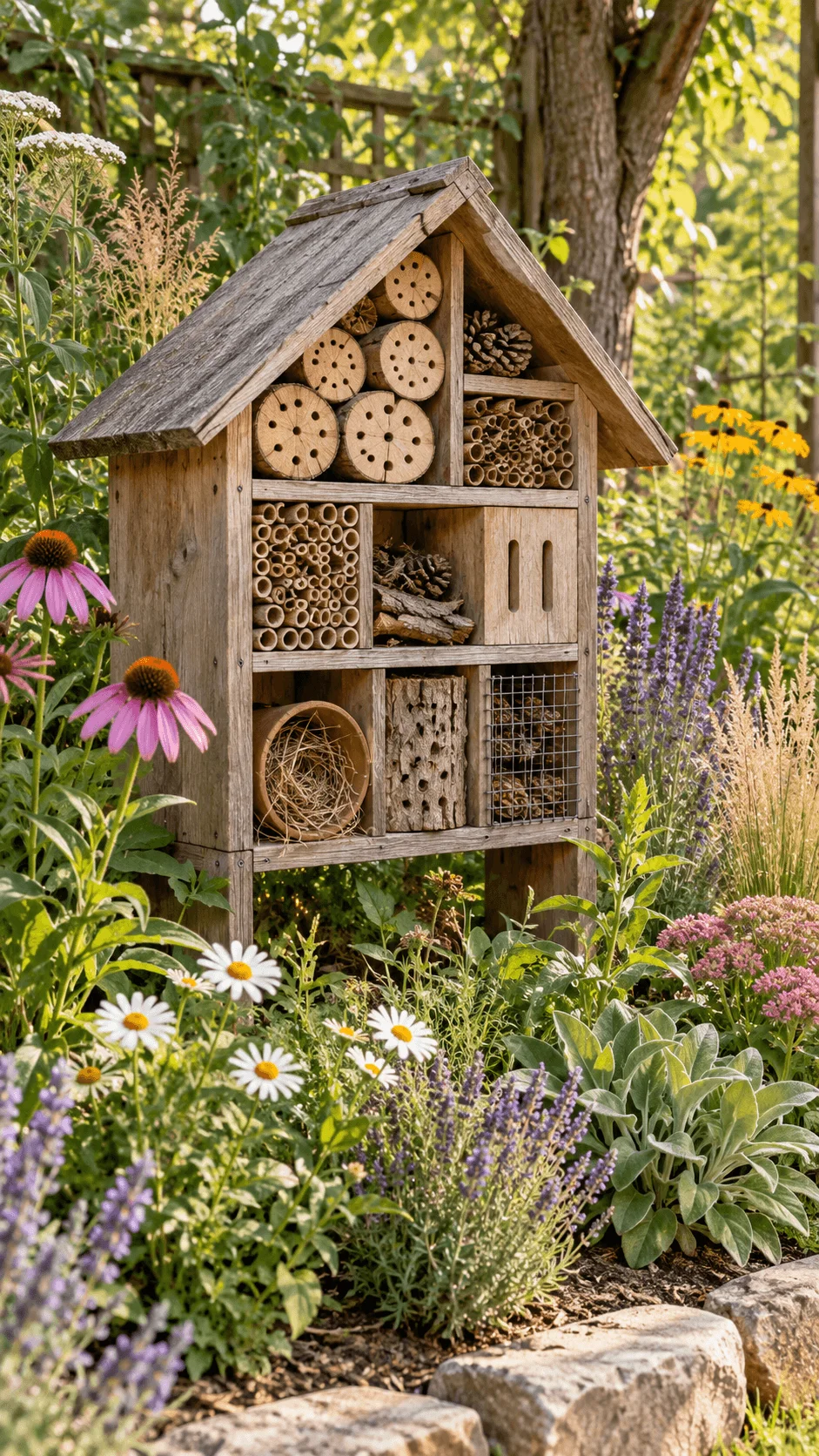
The surrounding plants matter just as much as the recycled structure. Flowering plants can add color while contributing to a broader wildlife friendly garden. Different plant shapes, heights, and flowering periods can create a more varied environment throughout the growing season.
The project is also an excellent example of how sustainable garden projects using recycled materials can serve a purpose beyond appearance. Instead of buying a decorative garden ornament, you can create something that becomes part of the ecological character of the space.
At the same time, expectations should remain realistic. A bug hotel does not guarantee that particular insects will move in. Its value comes from creating additional habitat opportunities within a garden that already supports wildlife through suitable plants, shelter, water, and reduced disturbance.
The natural appearance of scrap wood can make the structure blend easily into a garden. You can position it among flowers, grasses, shrubs, or other planting rather than treating it as a standalone decoration. Over time, weathering can help the recycled material become an integrated part of the landscape.
Upcycled Rain Gutter Herb Garden
Old rain gutters can become surprisingly useful planting containers when they are still suitable for safe outdoor use. Their long, narrow shape makes them particularly interesting for gardeners who want to grow plants vertically or make use of narrow spaces that would otherwise remain empty.
A recycled gutter can work along a suitable fence, balcony wall, shed, railing, or other sturdy structure. Several gutters can also be positioned at different heights to create a tiered planting arrangement. This makes the project especially appealing for people searching for recycled garden ideas for small spaces because it uses vertical space instead of taking up a large section of the ground.
Herbs are a natural choice for this type of garden because many varieties do not require extremely deep containers. Depending on the growing conditions, you could consider herbs such as thyme, chives, parsley, oregano, or certain varieties of basil. The most important consideration is choosing plants that match the available space and sunlight.
Before planting, make sure the gutter has suitable drainage. Without drainage, rain and irrigation water can collect inside the container and create unhealthy growing conditions. The growing medium should also remain suitable for the plants you choose.
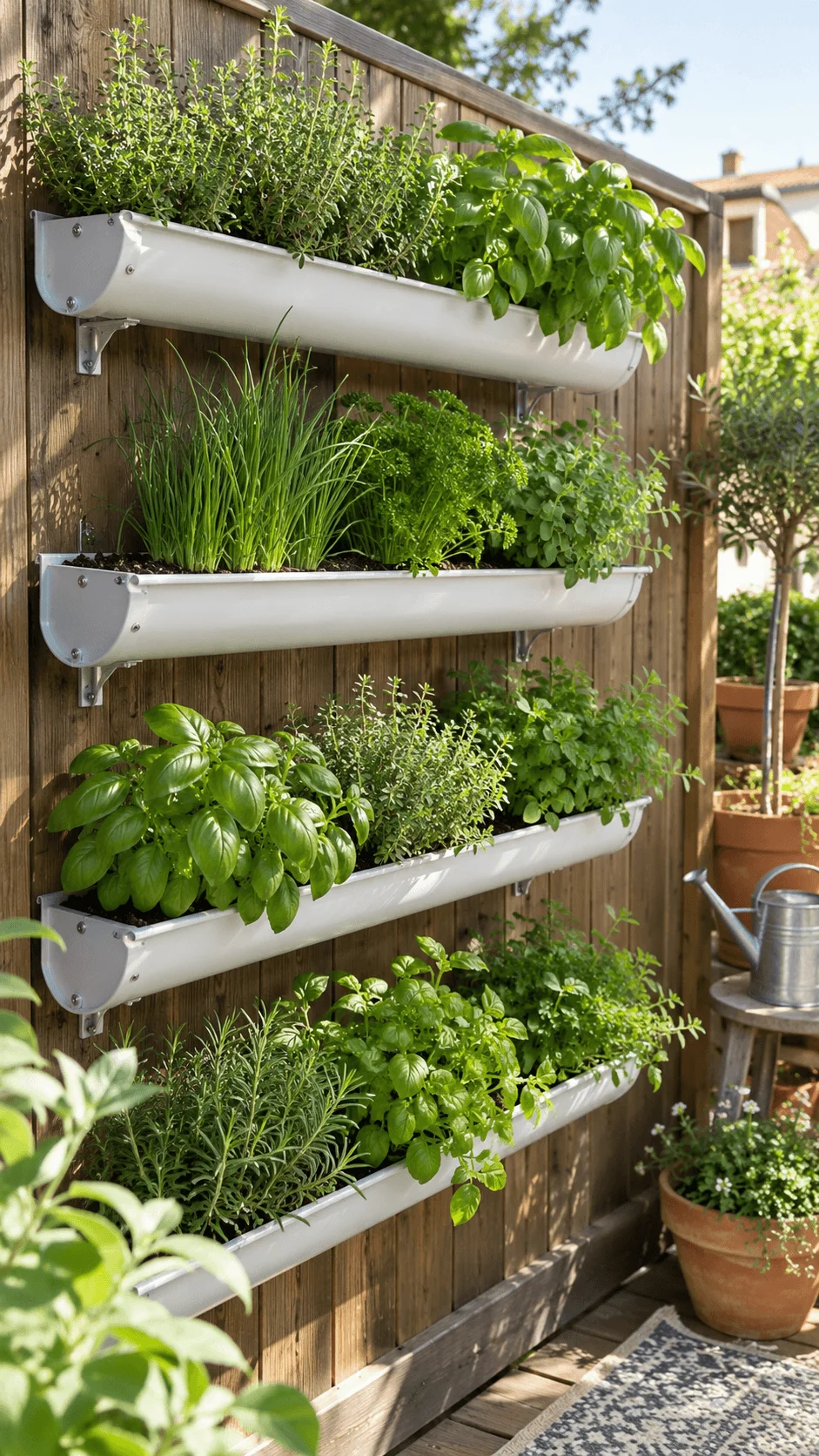
The position of the gutter garden can dramatically affect its success. A sunny wall may work well for many herbs, while a partially shaded location may require different plants. Observe the space before installing several containers so you can make decisions based on the actual conditions.
You can also turn the practical project into an attractive garden feature. Rather than installing gutters at random heights, create a consistent arrangement that complements the surrounding architecture. Matching plants or repeating the same type of container across several levels can make the garden feel organized.
Another advantage is accessibility. A raised herb garden can make harvesting easier because the plants are closer to eye level. This can encourage people to use fresh herbs more often while reducing the need to purchase new decorative containers.
However, inspect old gutters carefully before reusing them. Avoid materials that are badly deteriorated, contaminated, or unsuitable for growing plants. Choose clean and structurally sound materials, and make sure the supporting structure can safely carry the weight of the containers, growing medium, and water.
With thoughtful planning, an old gutter can become more than an unusual container. It can form part of a compact edible garden that combines sustainability with practical design.
Recycled Glass Bottle Garden Border
Glass bottles can create an eye catching garden border when used carefully and safely. Instead of allowing suitable empty bottles to become waste, gardeners can incorporate them into the edges of planting beds, pathways, or defined garden zones.
The reflective surface of glass can add visual interest, particularly when sunlight reaches the bottles. Different bottle shapes can create a varied appearance, while bottles with similar shapes can produce a cleaner and more consistent border.
The key to making this idea successful is thoughtful placement. A bottle border should help define the garden rather than overwhelm it. You might use it around a small flower bed, along the edge of a herb garden, or beside a pathway where it creates a clear transition between different areas.
Safety should always come first when working with glass. Only use bottles that remain intact and handle them carefully during installation. Broken glass can create hazards for people, pets, and wildlife, so damaged pieces should not become exposed garden edging.
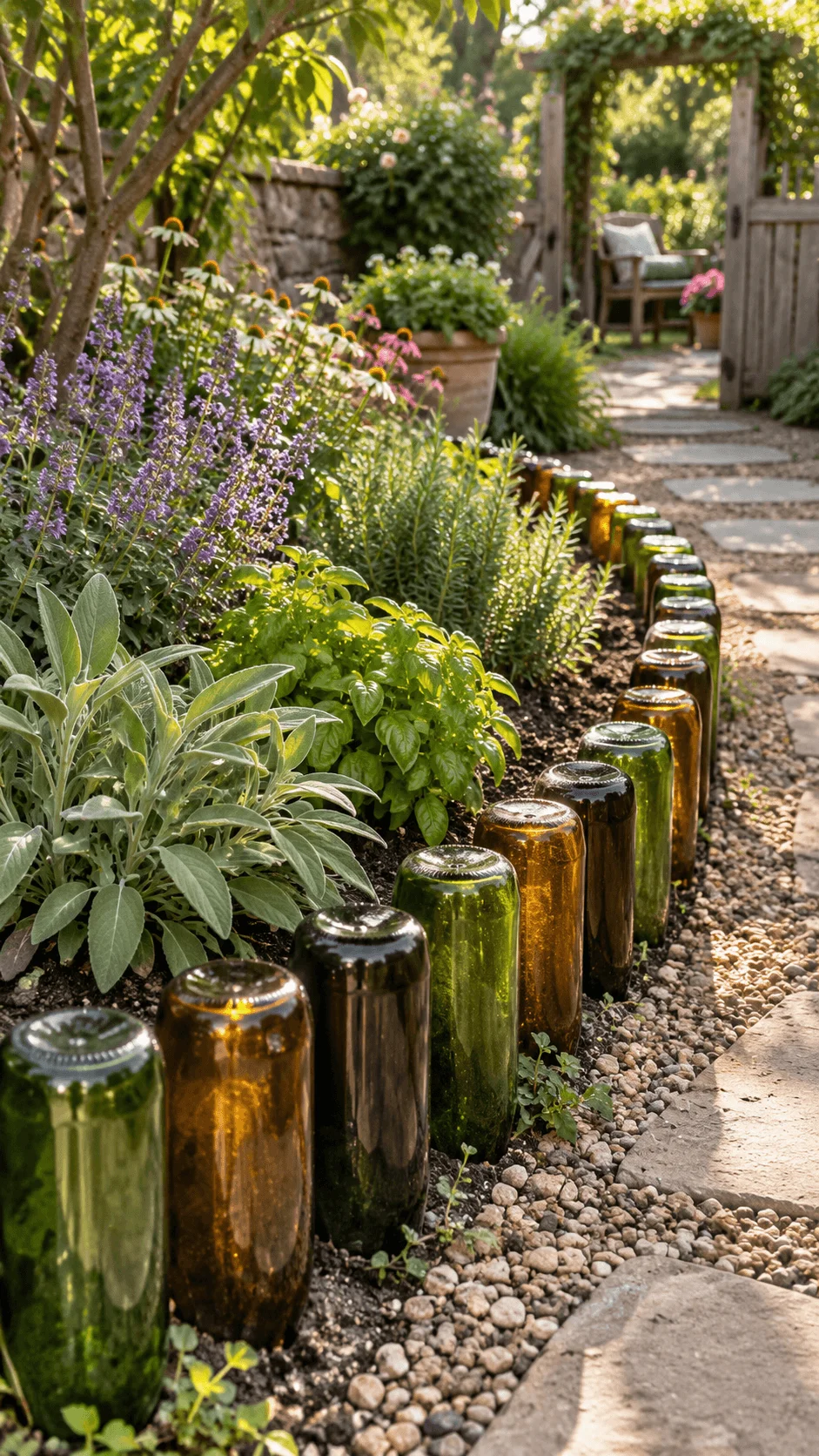
The surrounding plants can determine how attractive the finished border looks. Soft foliage and flowering plants can contrast with the smooth shape of the bottles, creating an interesting combination of natural and reused materials.
You can also use bottle colors to create a particular visual effect. A consistent color scheme can produce a more coordinated appearance, while carefully selected variations can create a playful garden feature. The important point is to make the design look intentional.
This is one of the more creative recycled garden landscaping ideas because the recycled material becomes part of the landscape structure itself. The bottles do not simply hold plants. They help define the garden’s shape and create a visual boundary.
Glass bottle edging can work particularly well in informal gardens where handmade details are welcome. It can complement reclaimed brick, natural stone, timber, and other reused materials.
However, consider the practical side before installing a large border. Gardeners need to be able to mow, trim, weed, and move around the planting area without constantly encountering obstacles. A beautiful feature should still allow the garden to remain easy to maintain.
When used responsibly, recycled glass can add personality to an outdoor space while giving an existing material a second purpose.
Vintage Furniture Garden Planters
Old furniture can become some of the most memorable features in a creative garden. Drawers, wooden chairs, small cabinets, tables, and other suitable pieces can be transformed into planters that combine gardening with upcycling and decorative design.
This idea works particularly well when you want your garden to have a cottage, vintage, rustic, or artistic character. An old wooden chair with a planter positioned in its seat can become a focal point, while a collection of drawers can create a tiered planting display.
The furniture itself becomes part of the design. Instead of purchasing an ordinary planter, you are using an object with its own shape, texture, and history. Weathered wood can create warmth, while an interesting piece of furniture can provide architectural structure among plants.
Before placing furniture outdoors, consider whether it can withstand moisture and changing weather. Some materials may deteriorate quickly when constantly exposed to rain. Suitable protection can help extend the useful life of the piece, although the finish should be appropriate for its intended outdoor use.
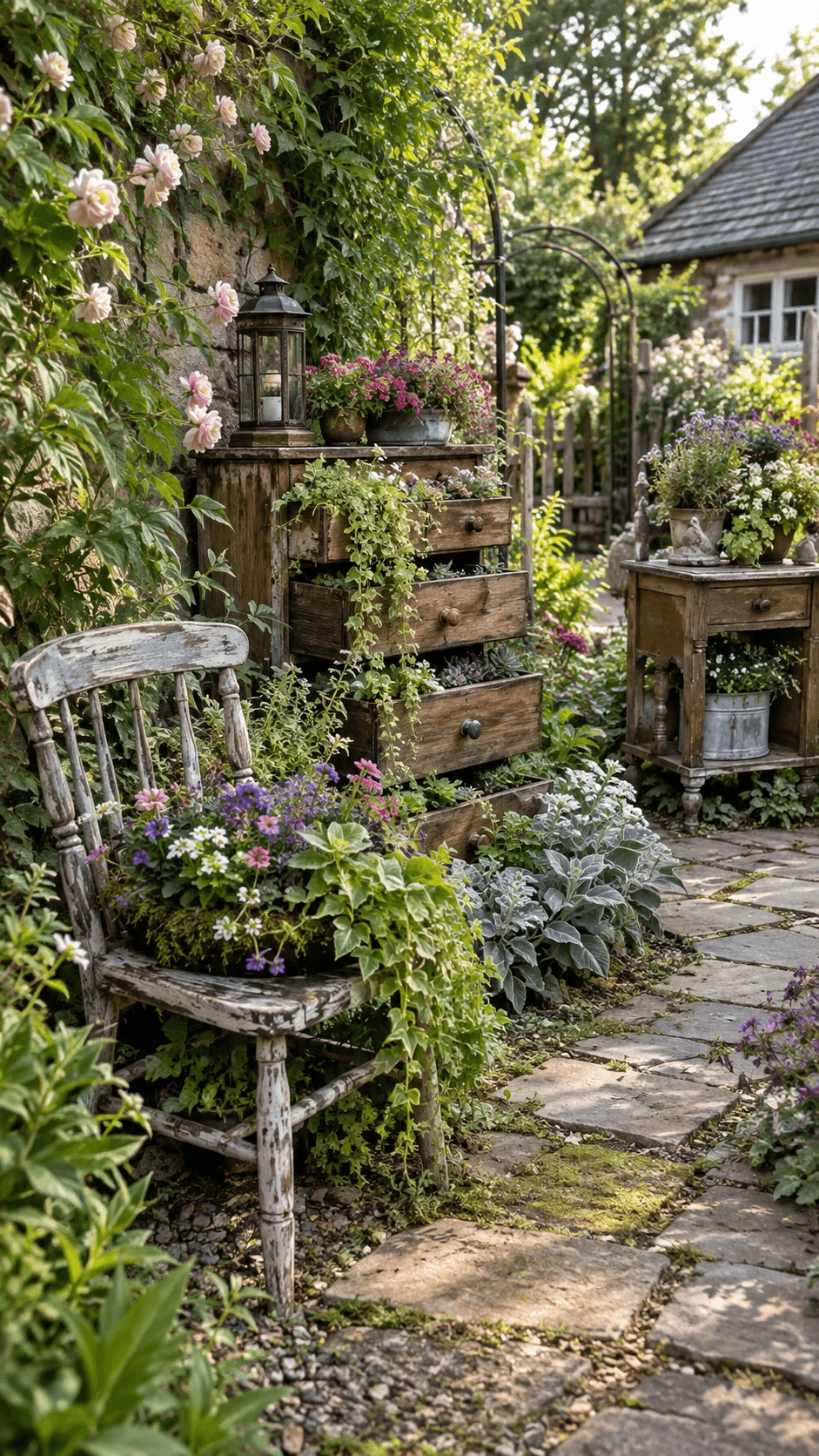
Drainage is also essential when furniture becomes a planter. Water should be able to escape rather than collecting inside drawers, cabinets, or other enclosed sections. You also need to consider the weight of the growing medium and plants before positioning the furniture.
Plant selection can change the entire appearance of the project. Trailing plants can soften the edges of a drawer or chair, while upright plants can create a more structured display. Flowers can provide seasonal color, while herbs can turn the furniture into a functional edible garden.
One of the biggest advantages of this project is its ability to make recycled materials feel intentional. A common criticism of some recycled garden projects is that they can look cluttered or improvised. A carefully chosen piece of furniture avoids that problem because its form naturally becomes part of the garden composition.
Think about the surrounding area before installing the planter. An old wooden cabinet may look excellent against a garden wall, while a chair planter could work beside a pathway or near an entrance. The placement should make the object feel like part of the landscape.
These upcycled garden ideas also encourage a different way of thinking about household possessions. Something that no longer works well indoors may still have decorative or functional value outdoors.
Recycled Tin Can Herb Wall
Empty food cans can become simple containers for an affordable herb wall. Because cans are small and easy to arrange, this project works especially well for balconies, patios, small courtyards, and other spaces where gardeners cannot dedicate much ground area to planting.
The concept is straightforward. Suitable clean cans become individual containers, and several containers can be arranged vertically on a stable support. The result can provide a useful growing area without requiring a large garden bed.
Herbs are particularly suitable because many remain relatively compact. A wall containing several different herbs can become both decorative and practical. You can position commonly used herbs together so harvesting remains convenient.
Drainage should be considered carefully. Water needs a way to leave the containers, and the containers need to be positioned so excess water does not create problems for walls, furniture, or lower plants.
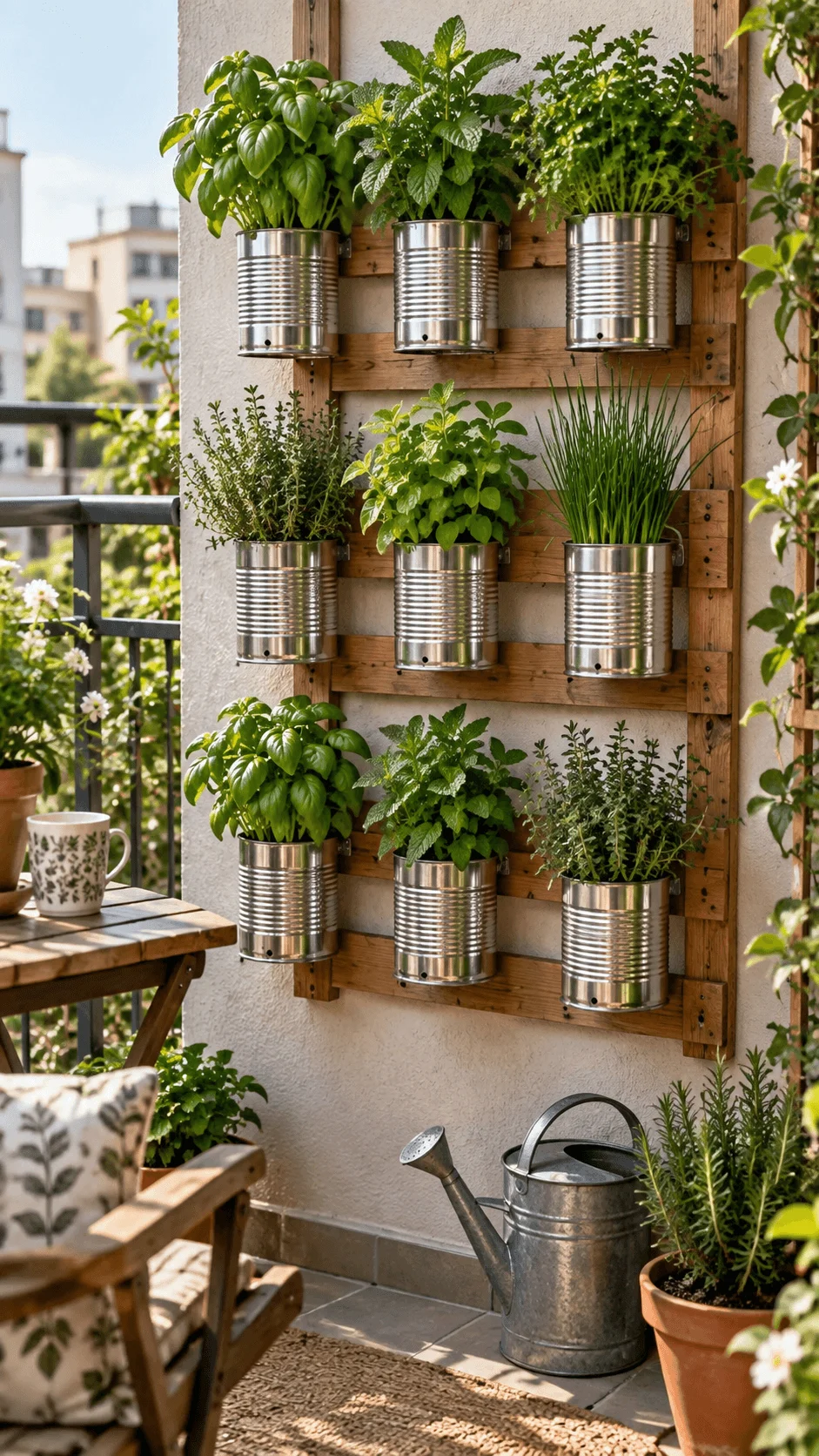
Sunlight is another major factor. Most herbs perform best when they receive appropriate light, so choose a location based on the plants you intend to grow. If a particular wall receives limited sunlight, choose plants that can tolerate those conditions rather than assuming every herb will thrive there.
The visual design can make a major difference. A collection of random cans may look temporary, while a coordinated arrangement can look like a deliberate garden installation. You can use containers of similar sizes, arrange them in rows, or create a simple geometric pattern.
You can also combine different plants to create contrast. Green herbs can provide a consistent base while flowering edible plants or other compact greenery can add visual variation.
This project is especially appealing to beginners because it does not require a large investment. It also demonstrates how DIY recycled garden ideas can be practical rather than purely decorative.
However, choose cans carefully and make sure they are clean and suitable for reuse. Avoid containers with severe rust or damage. The supporting system should also remain stable when the containers become heavier after watering.
A well designed tin can herb wall can turn an unused vertical surface into a productive little garden. It is a simple example of how sustainability and practical gardening can work together.
Broken Tile Mosaic Stepping Stones
Broken tiles and leftover ceramic pieces can become decorative elements in garden pathways and stepping stones. This idea is particularly interesting because it turns discarded materials into garden artwork rather than simply using them as containers.
Different tile colors, textures, and shapes can create patterns that reflect the personality of the gardener. You can create simple arrangements with a limited color palette or experiment with more artistic designs.
The stepping stones can provide a visual connection between different parts of the garden. For example, a mosaic pathway could lead from a patio toward a flower bed, vegetable garden, or seating area.
The surrounding landscape should influence the design. A colorful mosaic can become a focal point in a simple garden, while more subtle patterns can complement an already detailed planting scheme.
Safety remains important when working with broken ceramic pieces. Sharp edges should not remain exposed where people could touch or step directly on them. The finished surface needs to be stable and suitable for outdoor foot traffic.
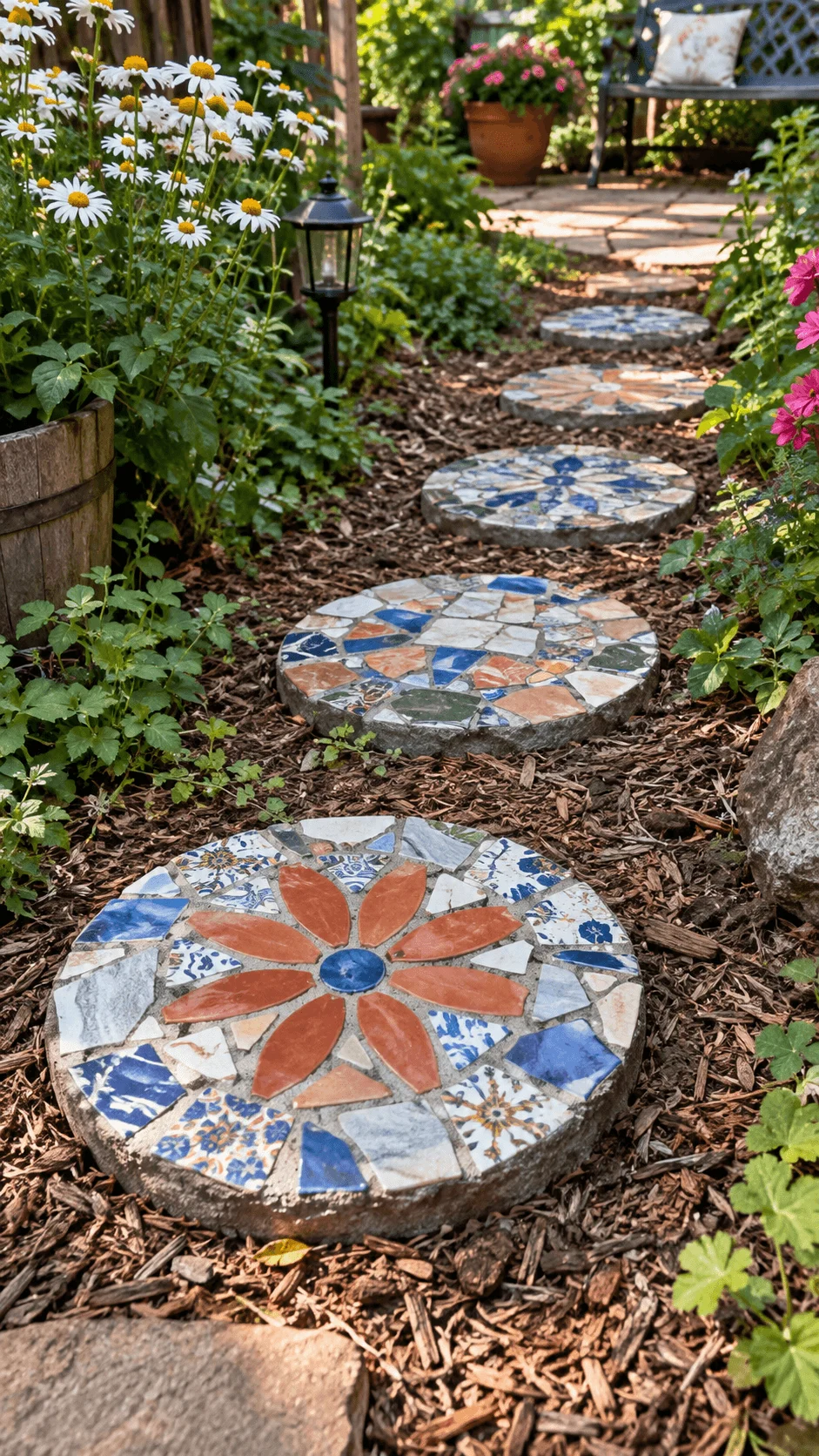
Placement also matters. A stepping stone should sit securely and provide a reasonably comfortable surface for walking. Avoid creating uneven areas that could make movement around the garden difficult.
This project provides a good opportunity to combine creativity with sustainability. Instead of purchasing decorative stepping stones, gardeners can give leftover materials a new role within the landscape.
The finished result can look surprisingly sophisticated when the colors and shapes complement each other. Natural stones, reclaimed bricks, timber, and plants can surround the mosaic to create a balanced combination of reused and natural materials.
For gardeners who enjoy handmade details, this can become one of the most personal sustainable garden projects. Every mosaic can have a different pattern, meaning the finished pathway becomes a unique feature rather than a mass produced garden accessory.
Reclaimed Pallet Compost Station
A compost station made from suitable reclaimed pallets can bring together several important principles of sustainable gardening. It gives old timber a practical purpose while creating a dedicated space for managing suitable organic garden waste.
Composting can become an important part of a garden system because suitable organic material can be managed and eventually returned to the garden as compost. Instead of treating every garden material as rubbish, gardeners can create a system that keeps useful organic matter within the growing environment.
Reclaimed pallets can provide a simple framework for a composting area. Their open construction can allow airflow, while their size can provide enough space for a manageable compost pile.
The location deserves careful consideration. A compost station should be convenient enough to use regularly but should not interfere with the main areas where people relax or entertain. A partially sheltered location may also make management easier.
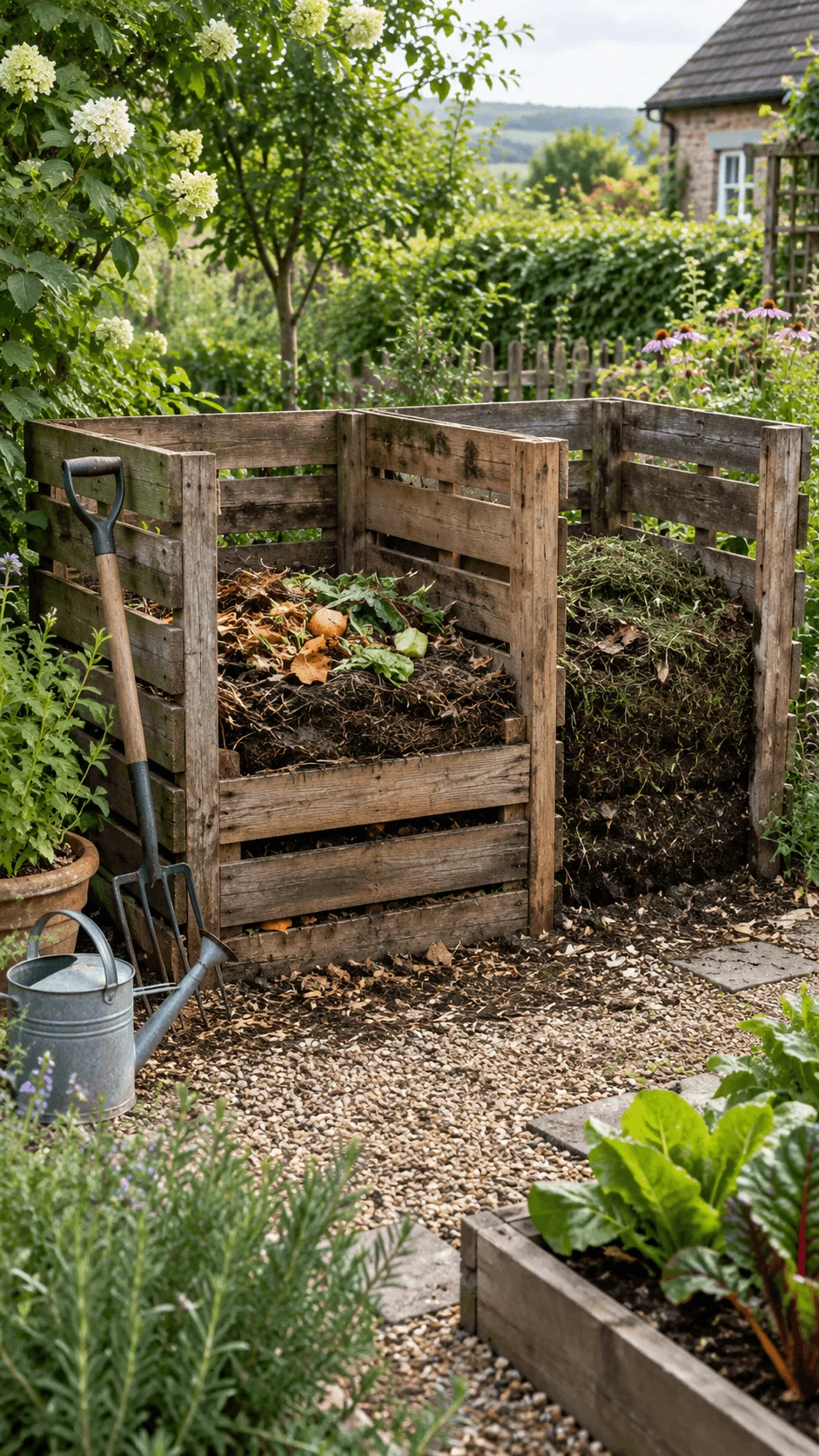
Airflow and moisture both matter. Composting materials need appropriate conditions to break down, so the pile should not become excessively wet or completely dry. Gardeners can adjust the mixture and conditions as needed rather than simply leaving everything unattended.
The structure can also be designed to look attractive. A reclaimed pallet station does not have to resemble a construction site. Positioning it behind suitable planting, using a neat layout, or integrating it with a garden storage area can help it blend into the landscape.
Only suitable materials should enter the composting system. Gardeners should understand what their particular composting setup can handle and avoid adding unsuitable materials.
This project also changes the way you think about eco friendly garden ideas using recycled materials. The goal is not only to reuse objects for decoration. Recycled materials can support systems that make the entire garden more resource conscious.
A pallet compost station can therefore become part of a wider approach that includes growing food, reducing suitable organic waste, caring for soil, and making better use of resources already available at home.
How to Make Recycled Materials Look Intentional
One of the most important lessons from these projects is that sustainability does not mean your garden needs to look unfinished. The best recycled garden designs use old materials in a deliberate way.
Choose a consistent visual theme throughout the garden. Reclaimed wood, old bricks, natural stone, and weathered terracotta can work together because they share an organic appearance. Similarly, carefully selected painted furniture and coordinated containers can create a more decorative style.
Avoid adding too many unrelated recycled objects simply because they are available. A smaller number of thoughtfully selected features can have a stronger visual effect than a garden filled with random materials.
Plants can also help unify recycled elements. Repeating similar foliage or using complementary flower colors can make different materials feel connected.
The purpose of the material should also influence where you place it. A planter should remain easy to water, a pathway should remain comfortable to walk on, and a wildlife feature should be positioned where it can function effectively.
When you approach recycled materials as design resources rather than unwanted objects, eco friendly garden ideas using recycled materials can become much more sophisticated.
Creating a More Sustainable Garden With Recycled Materials
A sustainable garden does not need to follow one particular style. It can be rustic, modern, colorful, minimalist, traditional, or completely personal. What matters is how thoughtfully you use the available resources and how well each feature serves the garden.
These projects demonstrate that old wood, bottles, bricks, gutters, furniture, cans, tiles, and pallets can all have useful second lives when they are suitable for reuse. Some can become planters, while others can support pathways, wildlife habitat, composting, or garden decoration.
The most successful approach is to start by looking at what you already have. Before buying another planter or decorative feature, consider whether a suitable unused material could perform the same function. This can encourage creativity while reducing unnecessary purchases.
It is also important to reuse materials responsibly. Not every discarded object belongs in a garden. Materials should be clean, structurally suitable, and appropriate for their intended use. Safety, drainage, plant health, and maintenance should always remain priorities.
When these considerations come together, eco friendly garden ideas using recycled materials can transform an ordinary outdoor space into something more creative and personal. From a reclaimed herb wall to a pallet compost station, each project can add practical value while giving old materials a new purpose.
The real beauty of recycled garden design comes from combining sustainability with thoughtful gardening. Instead of trying to make your garden look perfect by filling it with new products, you can create a space that reflects your creativity, makes use of existing resources, supports plants and wildlife, and feels genuinely connected to the people who use it.
Conclusion
Creating a beautiful outdoor space does not mean everything in the garden needs to be new. Old wood, bottles, bricks, furniture, gutters, tiles, cans, and pallets can all become valuable parts of a thoughtful garden when you give them a new purpose. These materials can add character while helping you create useful planting areas, pathways, wildlife features, and practical garden systems.
The best eco friendly garden ideas using recycled materials combine creativity with function. A reclaimed wood herb wall can provide growing space in a small garden, while an old window can become a charming mini greenhouse. Recycled bottles and cans can become compact planters, and reclaimed bricks can add structure to pathways. At the same time, projects such as pollinator habitats and compost stations can support a more sustainable approach to gardening.
Before purchasing new garden products, take a look around your home, garage, shed, or storage area. You may already have materials that can become something useful. Reusing suitable items can also give your garden a more personal appearance because every reclaimed material brings its own texture, history, and character.
However, responsible reuse is important. Always choose materials that are safe, clean, stable, and suitable for outdoor use. Think about drainage, plant requirements, weather exposure, and maintenance before turning an old object into a garden feature.
With a little imagination, eco friendly garden ideas using recycled materials can help you create an outdoor space that feels creative, practical, and connected to nature. Instead of seeing unwanted materials as waste, you can look at them as opportunities to design a garden that is uniquely yours.