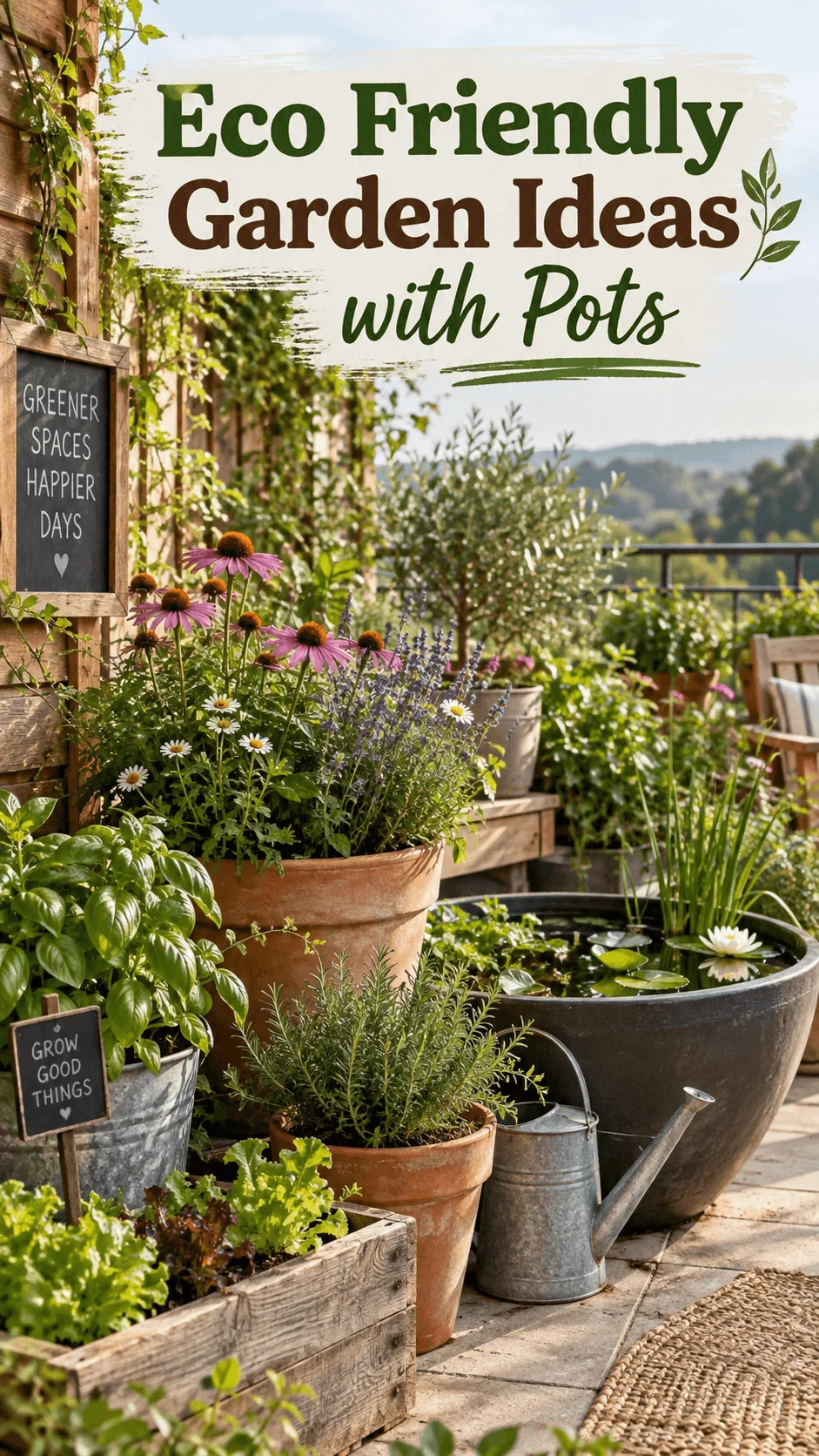
12 Eco Friendly Garden Ideas Without Grass for 2026
More homeowners are exploring eco friendly garden ideas without grass because traditional lawns often demand regular mowing, watering, edging, fertilizing, and ongoing care. A garden without a conventional lawn can still feel green, welcoming, and beautifully designed while creating more room for native plants, wildlife habitat, edible planting, natural drainage, and comfortable outdoor living. The goal is not simply to remove turf. The goal is to rethink what the space can become.
Modern sustainable landscaping increasingly focuses on climate resilience, biodiversity, soil health, water management, and practical use of outdoor space. Instead of filling a yard with one uniform surface, gardeners can combine plants, permeable paths, rainwater features, groundcovers, seating areas, food producing zones, and habitat for local wildlife.
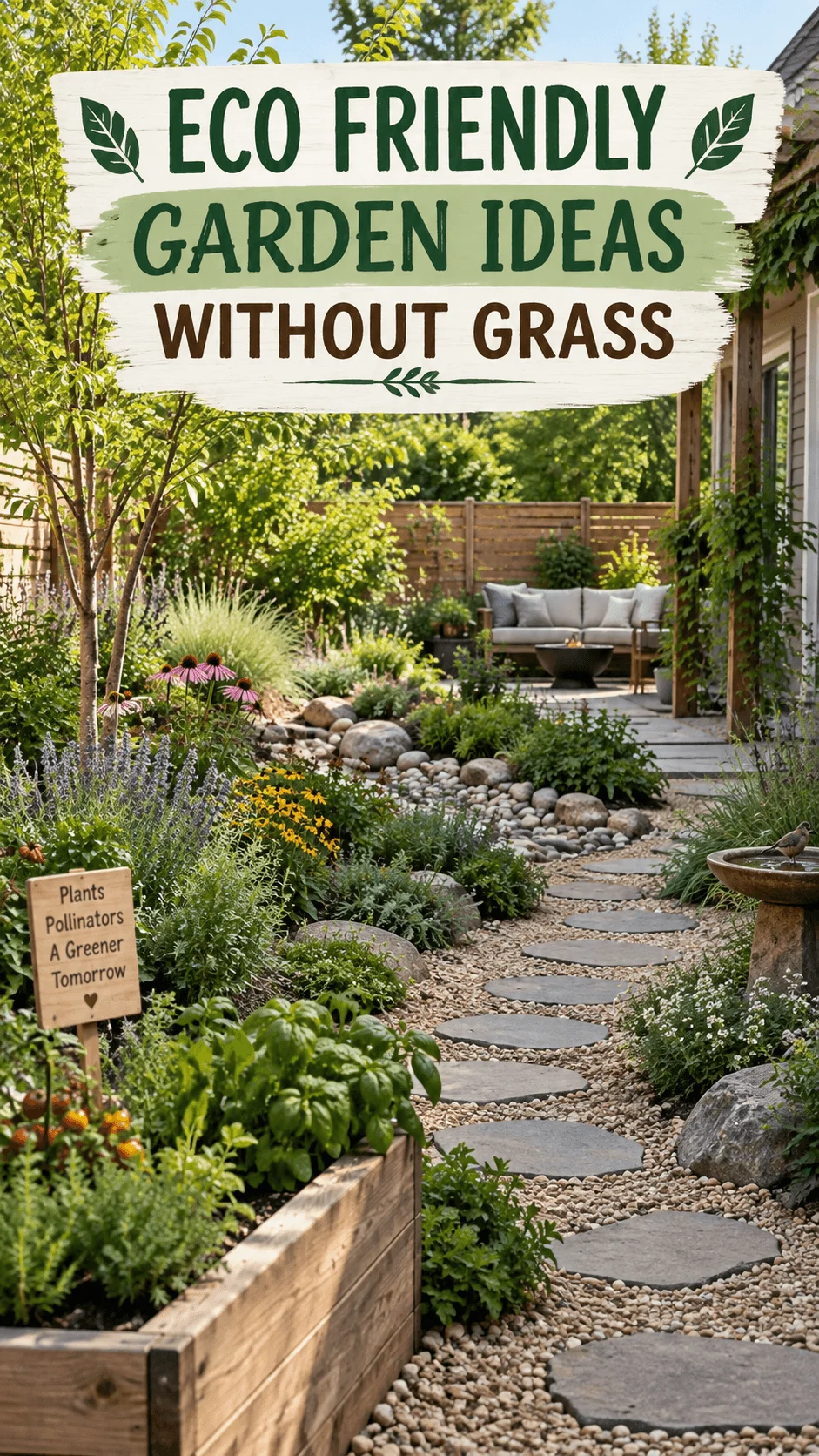
Some people assume a garden without lawn will look dry or unfinished. That does not have to happen. Many of the best eco friendly garden ideas without grass use more living plants than a traditional lawn ever could. Layers of foliage, flowering plants, shrubs, small trees, herbs, and groundcovers can create far more visual interest while helping the garden respond better to local conditions.
What to Consider Before Creating a Sustainable Garden Without Grass
Before removing a lawn, spend time understanding the garden you already have. Observe where sunlight falls during the day, where rainwater collects, which areas stay dry, where people naturally walk, and which parts receive shade from buildings or mature trees.
Soil conditions matter as well. Some plants prefer free draining soil, while others tolerate heavier ground or seasonal moisture. Choosing plants that match existing conditions usually creates better results than trying to force unsuitable species to survive.
Think about how you want to use the garden. A family may need open routes for movement, a comfortable seating area, space for children, or easy access to edible plants. A wildlife focused garden may need denser planting and quieter corners. A small front garden may benefit from stronger visual structure than a large informal backyard.
Budget also influences the design. You do not need to remove the entire lawn in one project. Many eco friendly garden ideas without grass work well when introduced gradually. You can convert one section, watch how it performs, and continue later.
Create a Climate Resilient Native Garden Instead of Grass
A climate resilient native garden can completely change the character of a former lawn. Rather than replacing turf with one low growing plant, create layers using locally appropriate groundcovers, flowering plants, sedges, shrubs, and small trees.
Layering gives the garden structure. Low plants can soften paths and edges, medium height flowers can add seasonal color, while taller shrubs and small trees create depth and shade. This makes the garden feel like a complete landscape rather than a collection of isolated plants.
Native plants can also provide food and shelter for local wildlife when gardeners choose them carefully. Flowers may support pollinators, while seed heads and fruit can provide seasonal resources for birds and other animals.
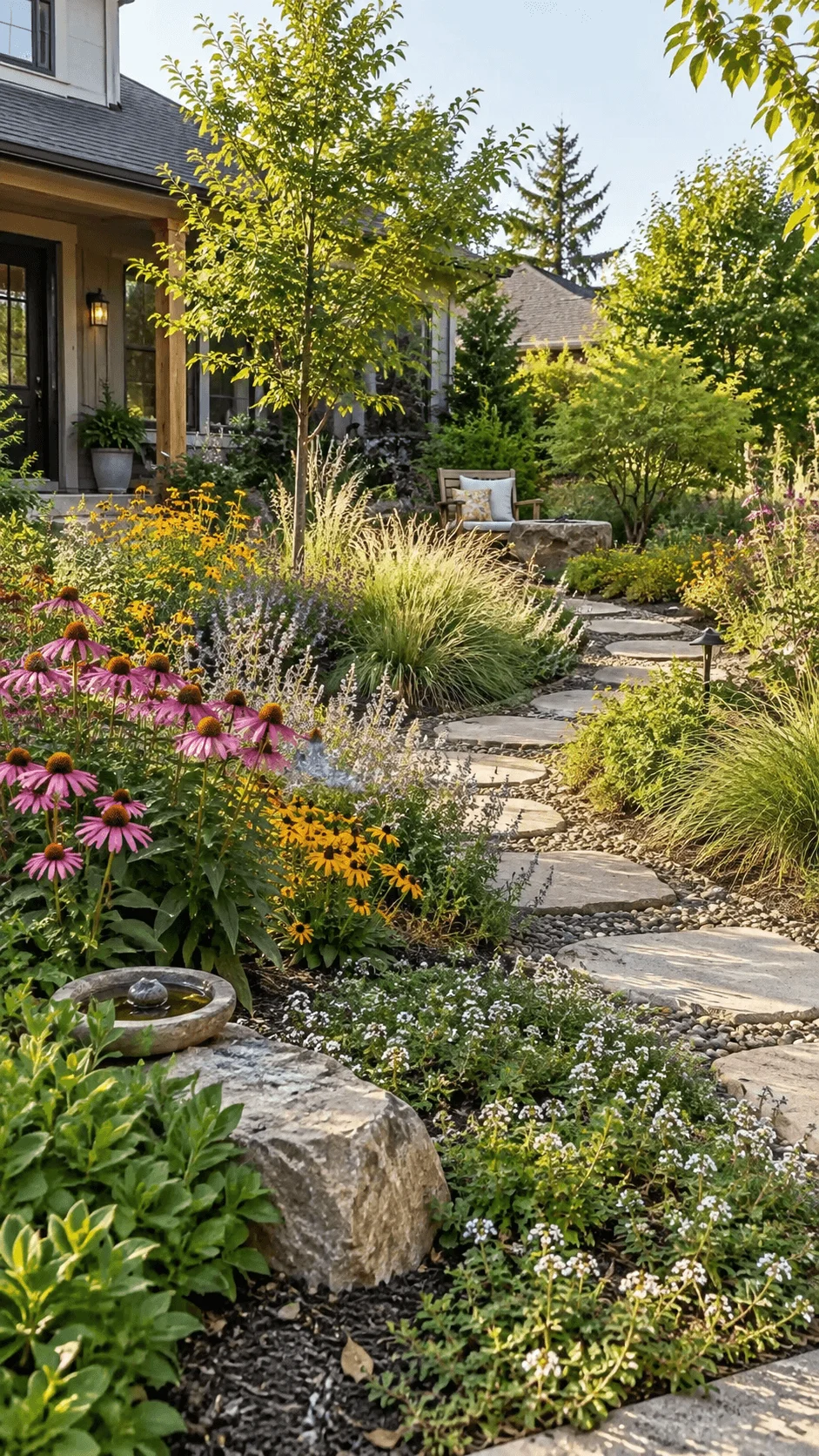
A native garden does not need to look wild or uncontrolled. Repeating certain plants throughout the space can create visual unity. Curved paths, stepping stones, seating areas, and clearly defined planting zones can also make the design feel deliberate.
Native does not automatically mean maintenance free. Some plants still need pruning, dividing, seasonal cleanup, or careful placement. Successful eco friendly garden ideas without grass always match plant choices to climate, soil, light, rainfall, and available space.
Design a Green on Green Grass Free Garden
A green on green garden creates richness through foliage rather than relying mainly on flowers. This approach works especially well for people who want a calm and lush outdoor space.
The key is variation. Broad leaves can sit beside fine textured foliage. Upright plants can rise behind spreading groundcovers. Deep green shrubs can contrast with lighter foliage nearby.
Height also plays an important role. A single layer of plants may look flat, while several layers can create a more immersive garden. Groundcovers can fill the lowest level, perennials can occupy the middle, and shrubs or small trees can provide upper structure.
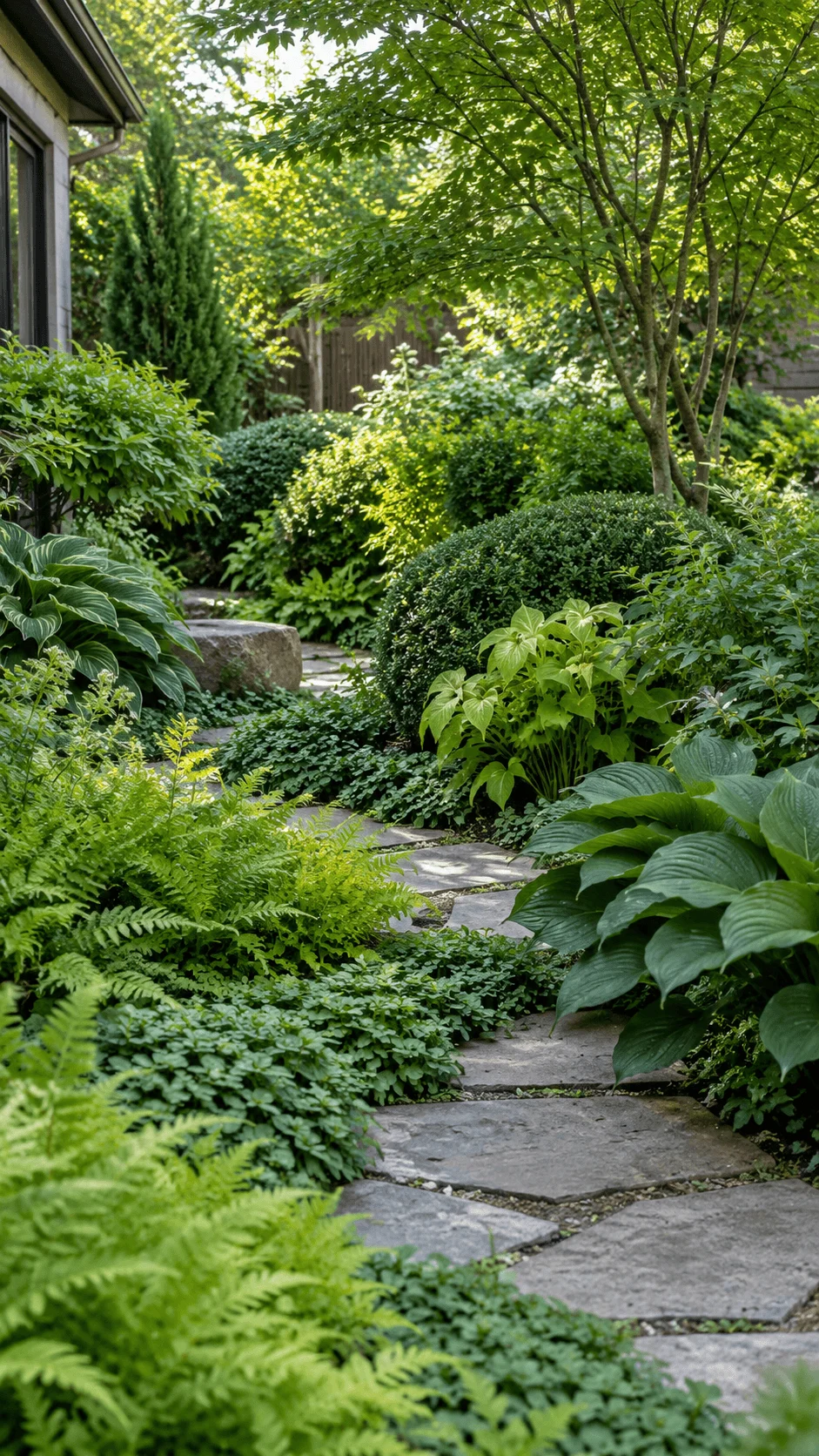
Repetition helps connect the design. Instead of choosing dozens of unrelated plants, repeat a smaller group in different parts of the garden. This creates rhythm and makes the planting feel organized.
Green on green design proves that a lawn is not the only way to create a garden dominated by healthy green color. It can also provide a useful direction for homeowners seeking elegant eco friendly garden ideas without grass that still feel soft and natural.
Replace Grass With a Native Groundcover Tapestry
A mixed groundcover tapestry can create a living surface that feels much more interesting than a single replacement plant.
Choose compatible low growing species that offer different foliage shapes, textures, flowering periods, and seasonal changes. One area may remain evergreen while another produces flowers at a different time of year.
Foot traffic deserves careful planning. Some groundcovers can tolerate occasional stepping, while others perform better beside stones or paths. If people regularly cross the area, create a clear walking route instead of expecting delicate plants to function like turf.
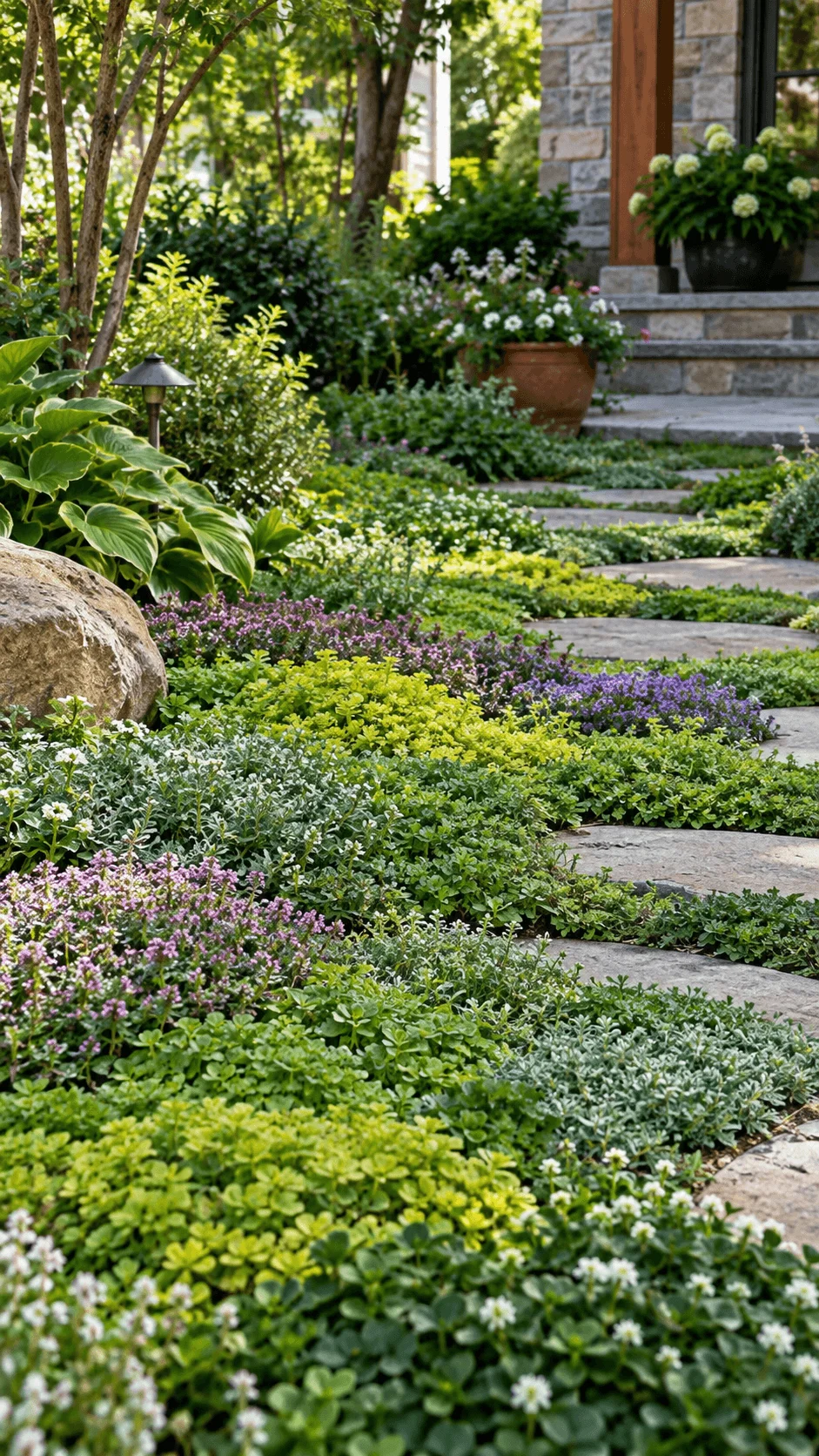
Defined edges can also improve the appearance. A clean border beside a path or planting bed tells the eye that the planting is intentional.
This idea works particularly well in spaces where homeowners still want a low growing landscape but no longer want conventional grass. It also allows different species to respond to small changes in shade, moisture, and soil across the garden.
Build a Water Wise Gravel Garden Without a Lawn
A modern gravel garden should contain plenty of living plants. Covering the entire yard with stone may reduce mowing, but it can create heat and provide little habitat.
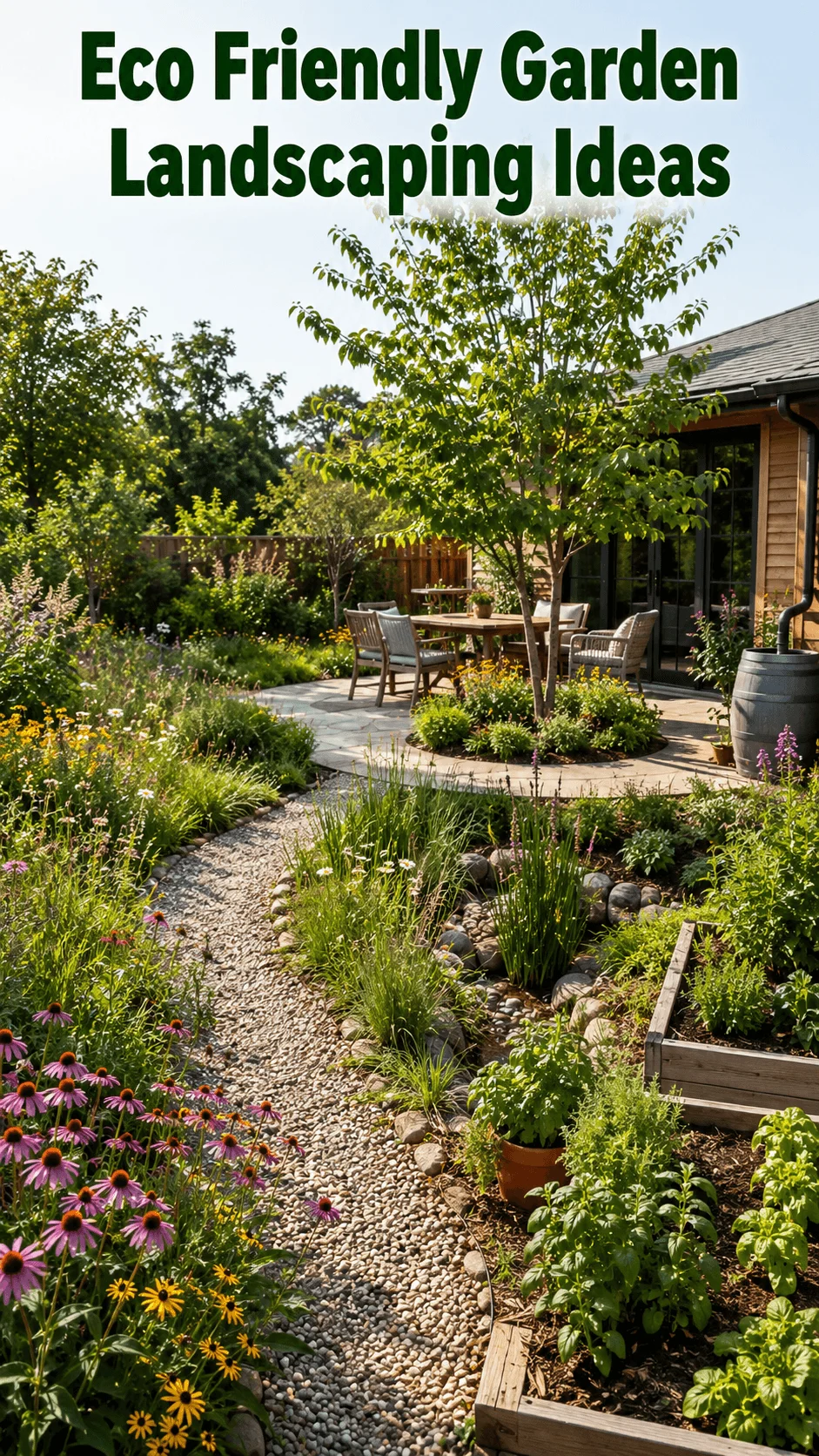
A more thoughtful design uses gravel as a background for drought tolerant plants. Planting pockets can hold herbs, flowering perennials, shrubs, or ornamental grasses and sedges suited to local conditions.
Natural stone and gravel can create strong contrast with green foliage. Repeating the same materials throughout the space can also connect paths, planting areas, and seating zones.
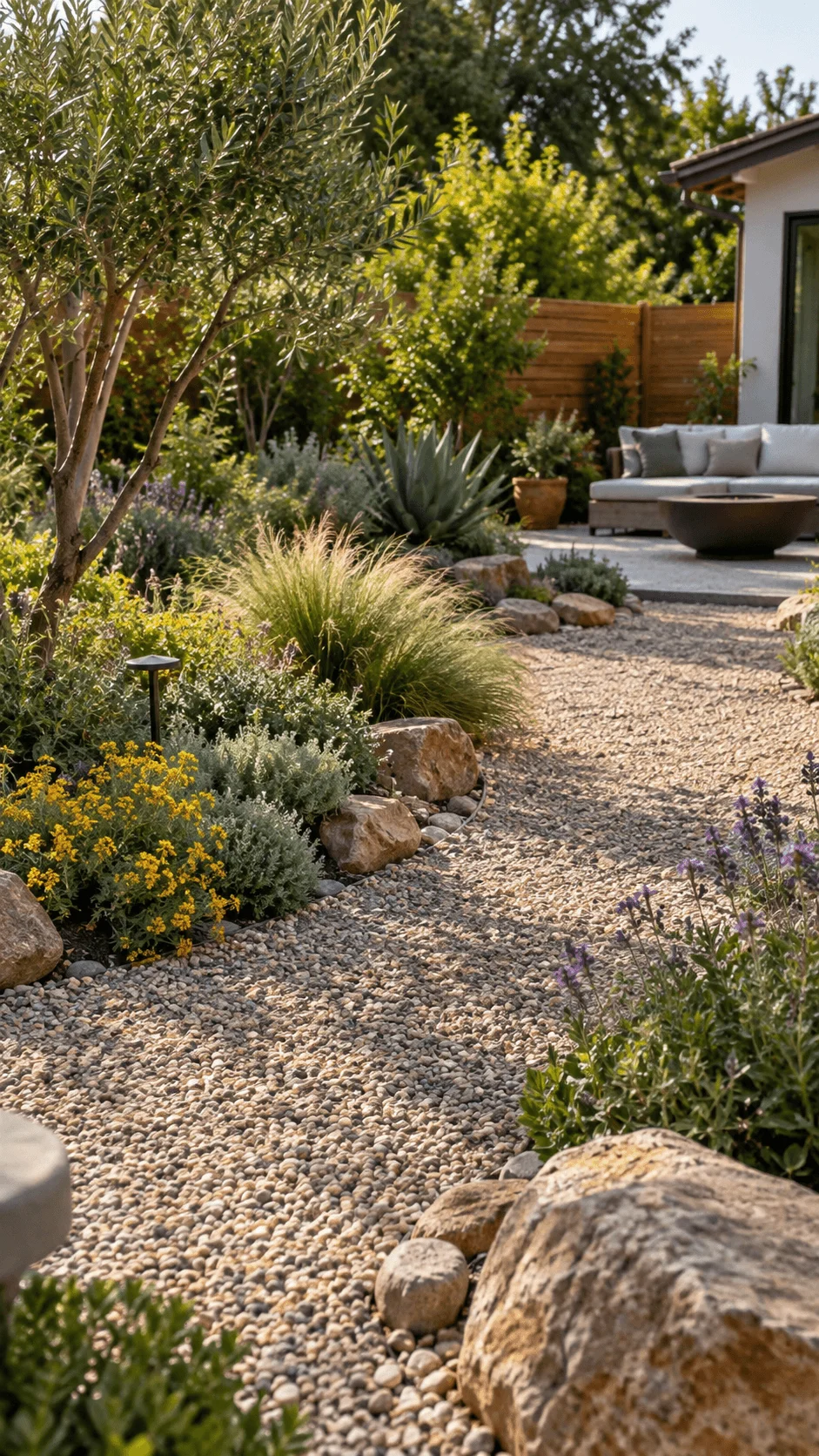
Drainage matters. Gravel works best when the site preparation supports water movement rather than trapping water below the surface.
This approach suits sunny and relatively dry locations particularly well. It can become one of the most attractive eco friendly garden ideas without grass when plants remain the dominant feature rather than stone.
Create a Rain Garden as a Natural Lawn Alternative
A rain garden can turn a suitable low area into both a functional and attractive part of the landscape.
The basic idea involves creating a shallow planted area that temporarily receives appropriate rainwater runoff. Instead of allowing water to rush across the property, the garden helps slow and hold it long enough for infiltration where site conditions allow.
Plant selection depends on moisture levels, soil, climate, and the amount of water the area receives. Choose species that can tolerate the conditions created by occasional wet periods and later drying.
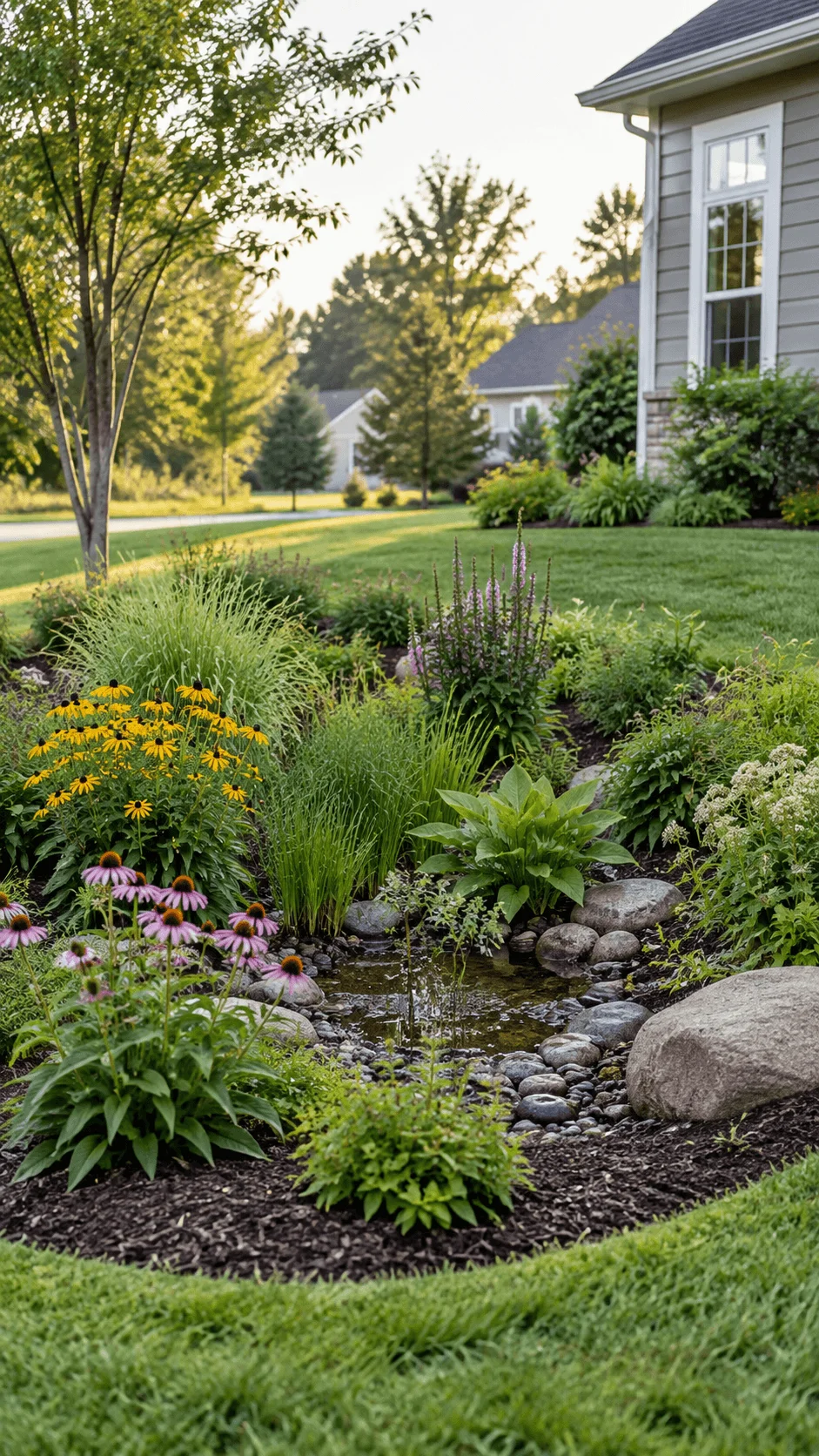
A rain garden should look like a garden, not a drainage ditch. Use several plant heights, flowering species, foliage plants, and carefully placed stones to create visual interest.
Before building one, observe existing drainage patterns. Consider slope, nearby buildings, soil behavior, and where water naturally moves. Good planning turns this feature into a meaningful part of sustainable landscaping.
Add Permeable Paths to Your Lawn Free Garden
Removing grass creates opportunities to improve movement throughout the garden.
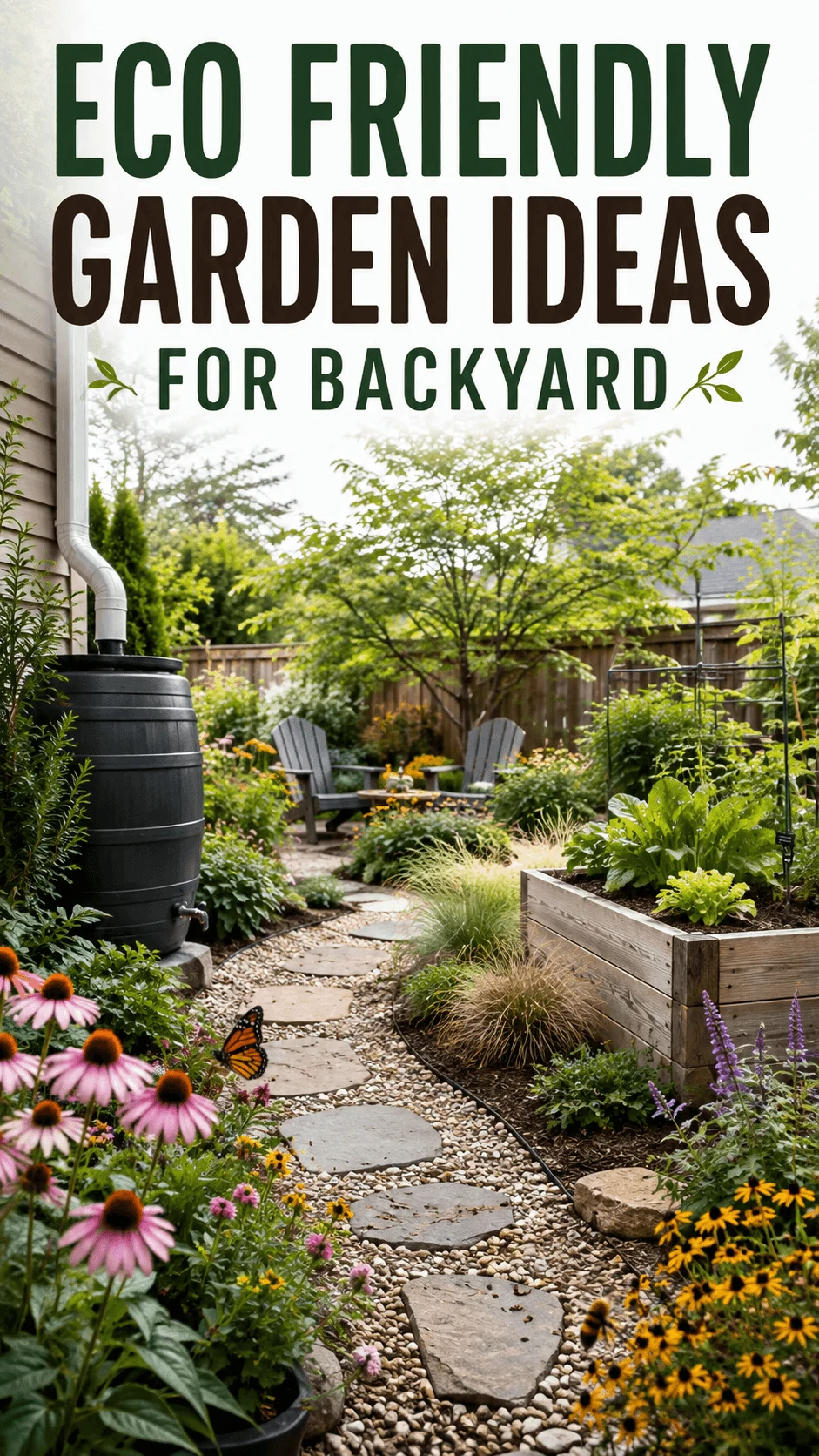
Permeable gravel, stepping stones, spaced pavers, and similar surfaces can define clear routes without covering the entire yard in solid concrete.
Paths can connect seating areas, native planting, food gardens, wildlife zones, and water features. They also make densely planted landscapes easier to navigate.
Keep the surface stable and comfortable. Path width should suit the way people use the garden, and accessibility should remain part of the design.
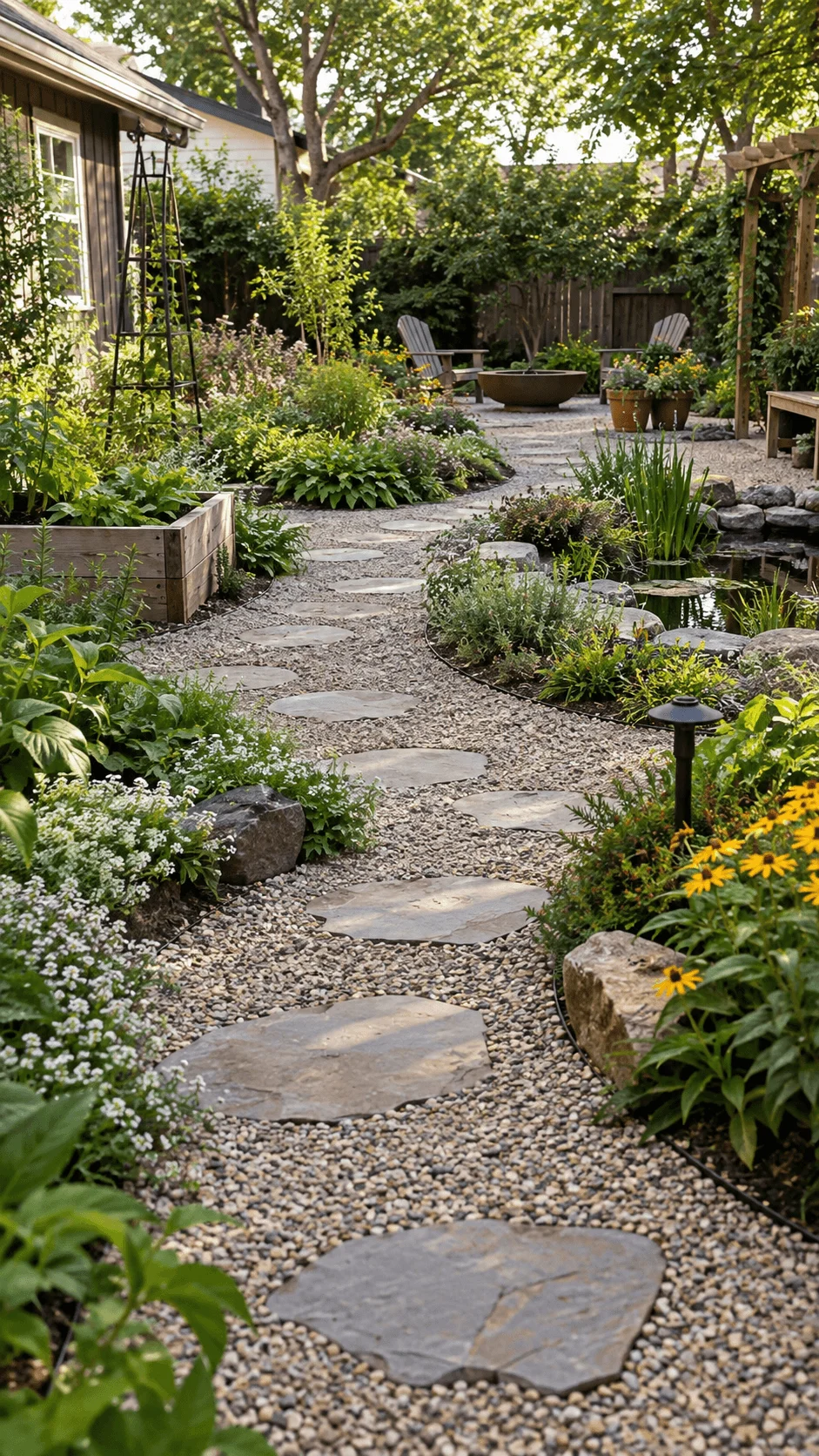
Planting along the edges can soften hard materials. Low foliage, herbs, or groundcovers can help paths feel integrated with the surrounding landscape.
These paths become especially useful when combining several eco friendly garden ideas without grass within the same yard because they visually connect each zone.
Grow a Mini Native Meadow Instead of Grass
A mini meadow can transform an ordinary lawn area into a more dynamic landscape.
An intentional meadow differs from neglected turf. It contains selected plants that suit the local climate and site conditions. These may include native flowers, grasses, sedges, and other suitable species.
Seasonal change becomes part of the appeal. Flowers may dominate one period, while seed heads and changing foliage create interest later.
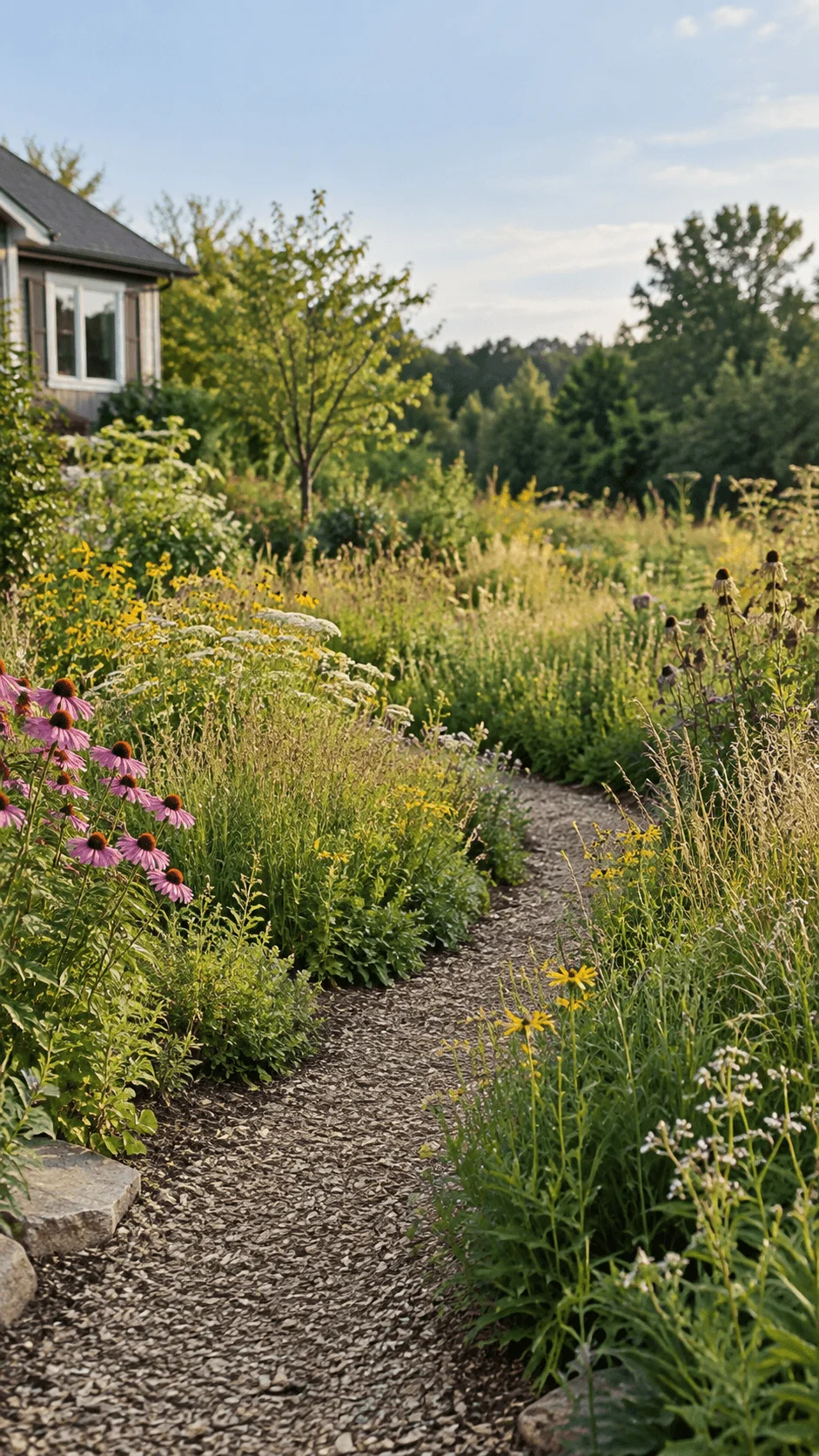
Defined edges and pathways help communicate that the meadow has been designed intentionally. A narrow path through the planting can provide access while creating a strong visual experience.
Meadows still need maintenance. Seasonal cutting, unwanted plant control, and occasional adjustment may be necessary. They are not maintenance free, but they replace constant mowing with a different style of care.
Create a Wildlife Garden Without Grass
A wildlife garden uses former lawn space to create habitat.
Plant diversity becomes central. Flowers can provide nectar, shrubs can offer berries and shelter, groundcovers can protect soil, and small trees can add structure.
Different vegetation heights create different habitat opportunities. Low plants, medium layers, and taller shrubs each contribute something distinct.
Water can improve the design as well. A small pond or shallow wildlife water feature may attract more life when placed safely and appropriately.
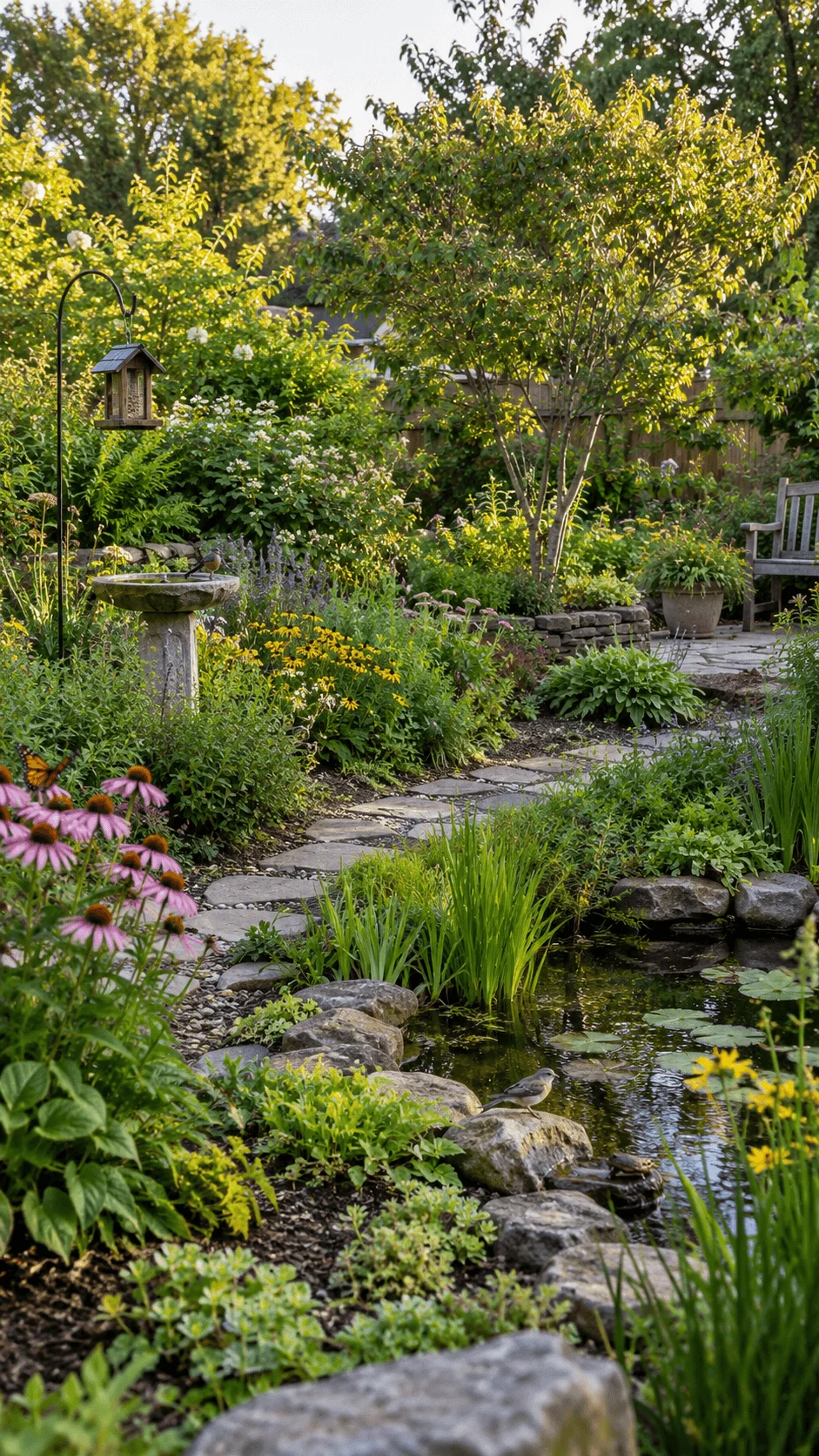
Reduce unnecessary pesticide use and avoid invasive species. Gardeners should also choose plants that suit local wildlife rather than assuming every flowering plant provides the same value.
Human use still matters. Paths, benches, and viewing areas can make a wildlife focused space enjoyable rather than difficult to access.
This is one of the most meaningful eco friendly garden ideas without grass because the former lawn can become an active part of the local ecosystem.
Replace Your Lawn With an Edible Landscape
An edible landscape turns lawn space into something productive without sacrificing appearance.
Instead of creating one separate vegetable patch, integrate herbs, fruiting shrubs, vegetables, small fruit trees, edible flowers, and pollinator friendly plants into the overall design.
Paths and repeating patterns can help productive planting look organized. Flowering herbs can soften edges, while fruiting shrubs can create attractive structure.
Sunlight and harvesting access matter. Plants that need frequent picking should remain easy to reach. Larger plants should not shade smaller crops unless the design intentionally uses that shade.
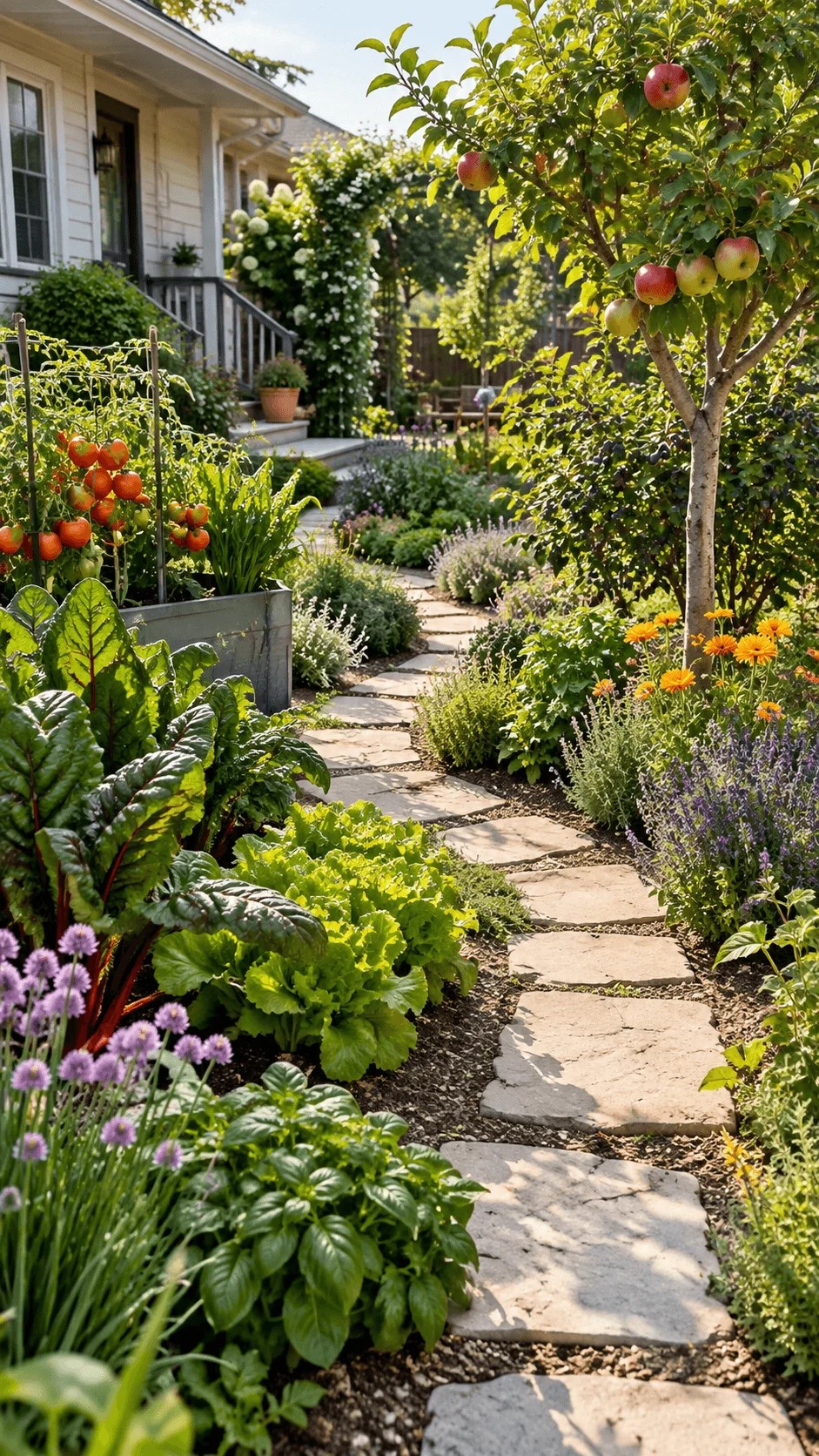
Think about mature plant size from the beginning. A tiny fruit tree at planting time may become much larger later.
Edible landscaping works especially well for homeowners who want eco friendly garden ideas without grass that also make better use of available space.
Create a Mini Food Forest as a Sustainable Lawn Alternative
A mini food forest uses several productive plant layers in one connected system.
A small fruit or nut tree may form the upper layer where suitable. Fruiting shrubs can sit below, while herbs, flowers, groundcovers, and climbers occupy other levels.
The goal is not to pack as many plants as possible into the garden. Good spacing still matters. Plants need enough light, water, air circulation, and root space to develop properly.
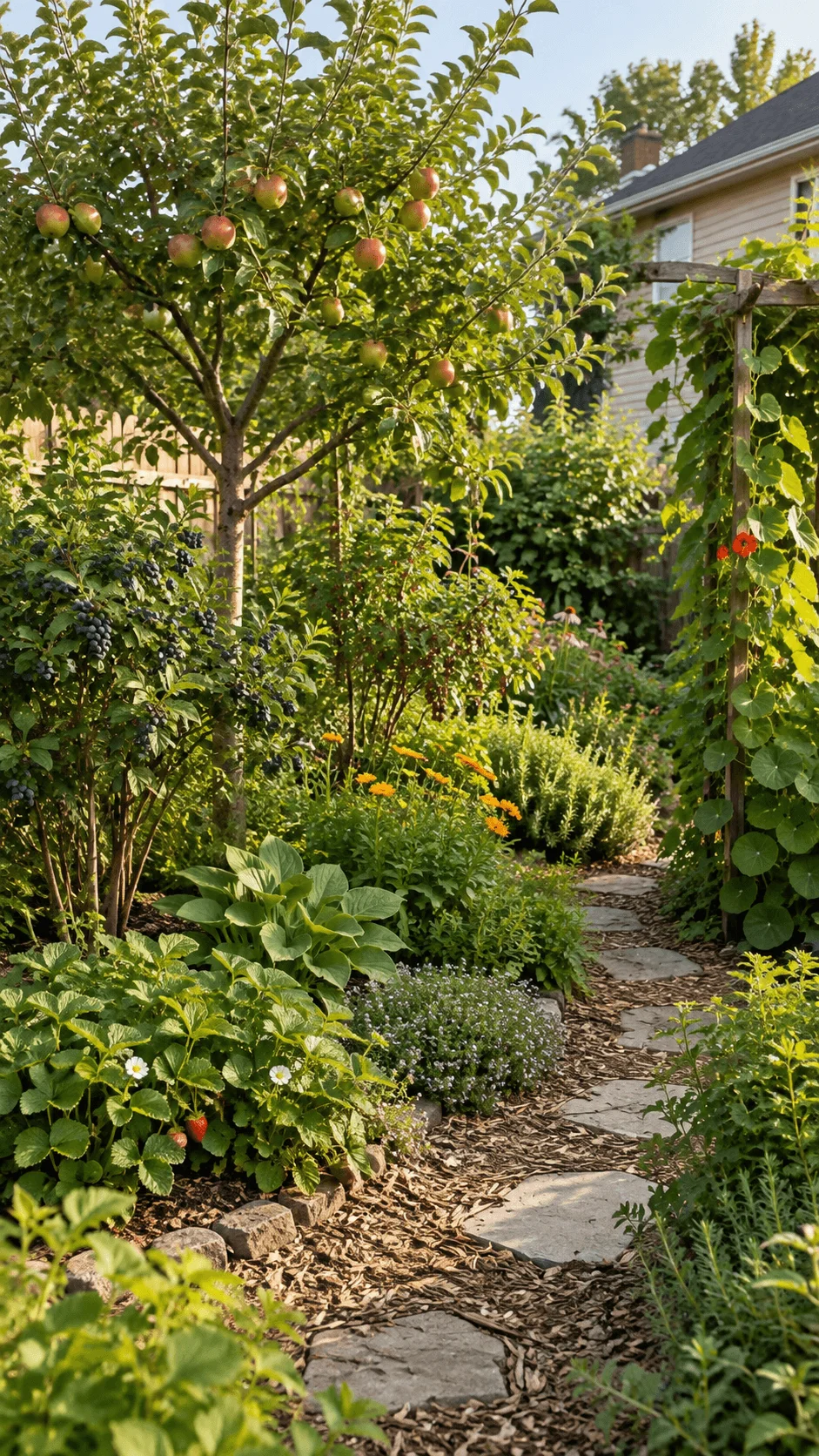
Access also matters. Paths should allow harvesting and maintenance without trampling plants.
A carefully designed mini food forest can combine ornamental beauty with food production. It can feel lush, diverse, and highly personal while replacing an area that previously served only as lawn.
Design a Dry Creek and Rainwater Garden
A dry creek can add movement and structure to a grass free landscape.
Use stones of different sizes to create a natural appearance. Gentle curves and changing widths often look more convincing than a perfectly straight channel.
Planting around the edges can soften the stone and connect the feature to the wider garden.
A dry creek should not become an automatic drainage solution. Water movement, slope, soil, runoff direction, and nearby buildings all need consideration.
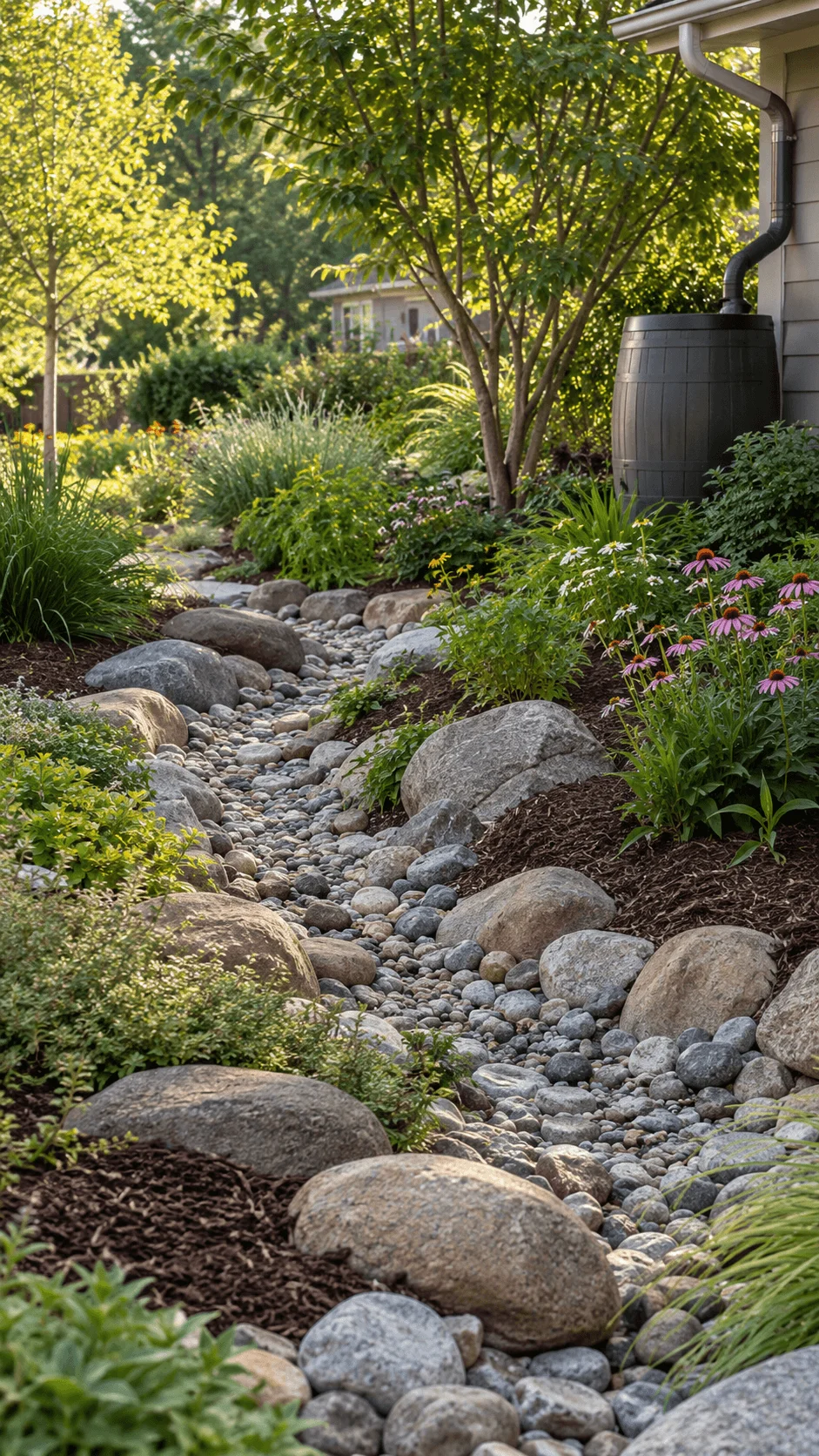
Where conditions allow, the creek may connect visually or functionally with a rain garden, rain barrel, or another water management feature.
Even when dry, it can remain an attractive focal point and help organize the surrounding planting.
Create No Dig Garden Beds Instead of Grass
No dig garden beds offer another way to replace sections of lawn while focusing on soil health.
Gardeners can use compost, organic mulch, fallen leaves, and suitable lawn suppression methods to begin transitioning a turf area into a planted bed.
Mulch can help reduce exposed soil, retain moisture, and support gradual improvement in soil condition.
Different sites need different approaches. Persistent perennial weeds or aggressive lawn grasses may need additional management before planting.
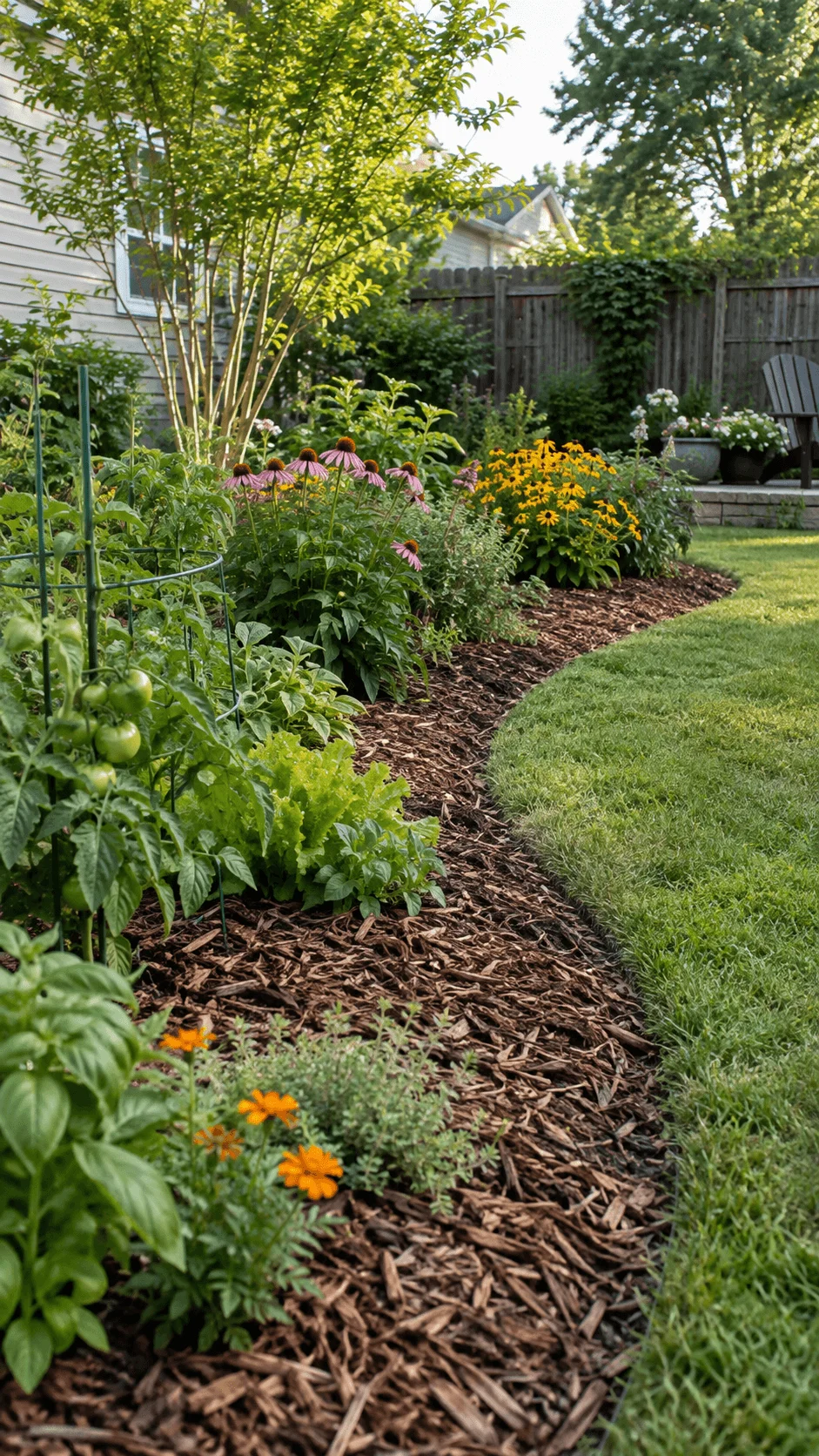
Once prepared, the beds can support shrubs, native flowers, herbs, vegetables, groundcovers, and pollinator plants.
Curved beds can create a relaxed natural feel, while geometric shapes can suit more formal gardens.
Among practical eco friendly garden ideas without grass, this method can work well for people who want to convert lawn gradually rather than redesign the entire yard at once.
How to Choose the Best Grass Free Garden Design
Start with the conditions already present.
Sunny dry areas may suit drought tolerant planting, gravel gardens, and Mediterranean inspired combinations where climate allows. Shaded spaces may perform better with woodland plants and shade tolerant groundcovers.
Naturally damp areas may offer opportunities for rain gardens, while larger open spaces may suit meadows or wildlife planting.
Small gardens benefit from careful zoning. Groundcovers, vertical planting, compact edible beds, and narrow paths can provide variety without making the space feel crowded.
Large properties can support more ambitious habitat gardens, food forests, and native planting zones.
Maintenance should remain realistic. Grass free does not mean work free. Instead of mowing, you may spend time pruning, mulching, dividing plants, managing paths, or cutting meadow growth seasonally.
Budget can guide the pace. Many eco friendly garden ideas without grass work beautifully when introduced in stages.
Common Mistakes When Creating a Lawn Free Garden
One common mistake is replacing every part of the lawn with decorative stone. This can make the garden hotter and reduce habitat value.
Another mistake is assuming artificial turf automatically counts as an environmentally friendly alternative. Synthetic surfaces do not provide the same ecological value as living plants and can introduce other environmental concerns.
Poor plant selection also creates problems. A plant may look attractive in a photograph but fail in the wrong soil, climate, or light conditions.
Drainage deserves equal attention. Large changes to the surface of a property can alter how water moves.
Maintenance expectations should also remain realistic. A successful lawn free garden still needs care. The type of work changes, but it does not disappear.
Conclusion
The best eco friendly garden ideas without grass focus on what a lawn can become rather than simply what can replace it. Former turf can turn into a native garden, meadow, wildlife habitat, edible landscape, groundcover tapestry, rain garden, food forest, or a combination of several approaches.
A sustainable grass free garden can still feel green, comfortable, inviting, and carefully designed. It can also create more opportunities for wildlife, food growing, water management, seasonal interest, and personal expression.
Homeowners do not need to transform everything at once. Start with one manageable section, choose plants and materials that suit local conditions, and expand the design as the garden develops. With thoughtful planning, eco friendly garden ideas without grass can turn a conventional yard into a more diverse, useful, and resilient outdoor space.