Eco Friendly Aesthetic Photography Camera Bags
Photography has become more than simply capturing images. For many modern photographers, the equipment they carry also reflects their personal style, lifestyle, and environmental values. This has created growing interest in eco friendly aesthetic photography camera bags that combine practical camera protection with attractive design and more responsible material choices. In 2026, the latest camera bag trends are moving beyond bulky technical shapes and predictable outdoor styling. Designers are exploring minimalist silhouettes, recycled materials, vegan alternatives, modular storage, fashion inspired details, and everyday designs that can easily move from a photography session to a normal day out.
A good camera bag needs to protect valuable equipment, but that does not mean it has to look purely functional. Modern photographers increasingly want bags that feel comfortable, look sophisticated, and fit naturally into their daily wardrobe. At the same time, sustainability is becoming a more important part of purchasing decisions. Instead of focusing only on whether a bag uses recycled fabric, shoppers are beginning to consider durability, repairability, material transparency, versatility, and how long they can realistically use the product.
The result is an exciting new direction for photography accessories. Sustainable camera bags are becoming more versatile, more visually appealing, and more closely connected to fashion and everyday carry culture. Here are some of the most interesting ideas shaping the category in 2026.
1. Minimalist Sustainable Camera Bags With a Fashion Inspired Look
Minimalism continues to influence everything from clothing and interiors to technology accessories, and camera bags are becoming part of this design movement. Instead of large logos, excessive straps, and complicated technical details, modern minimalist camera bags often use clean shapes, subtle branding, muted colors, and carefully organized compartments.
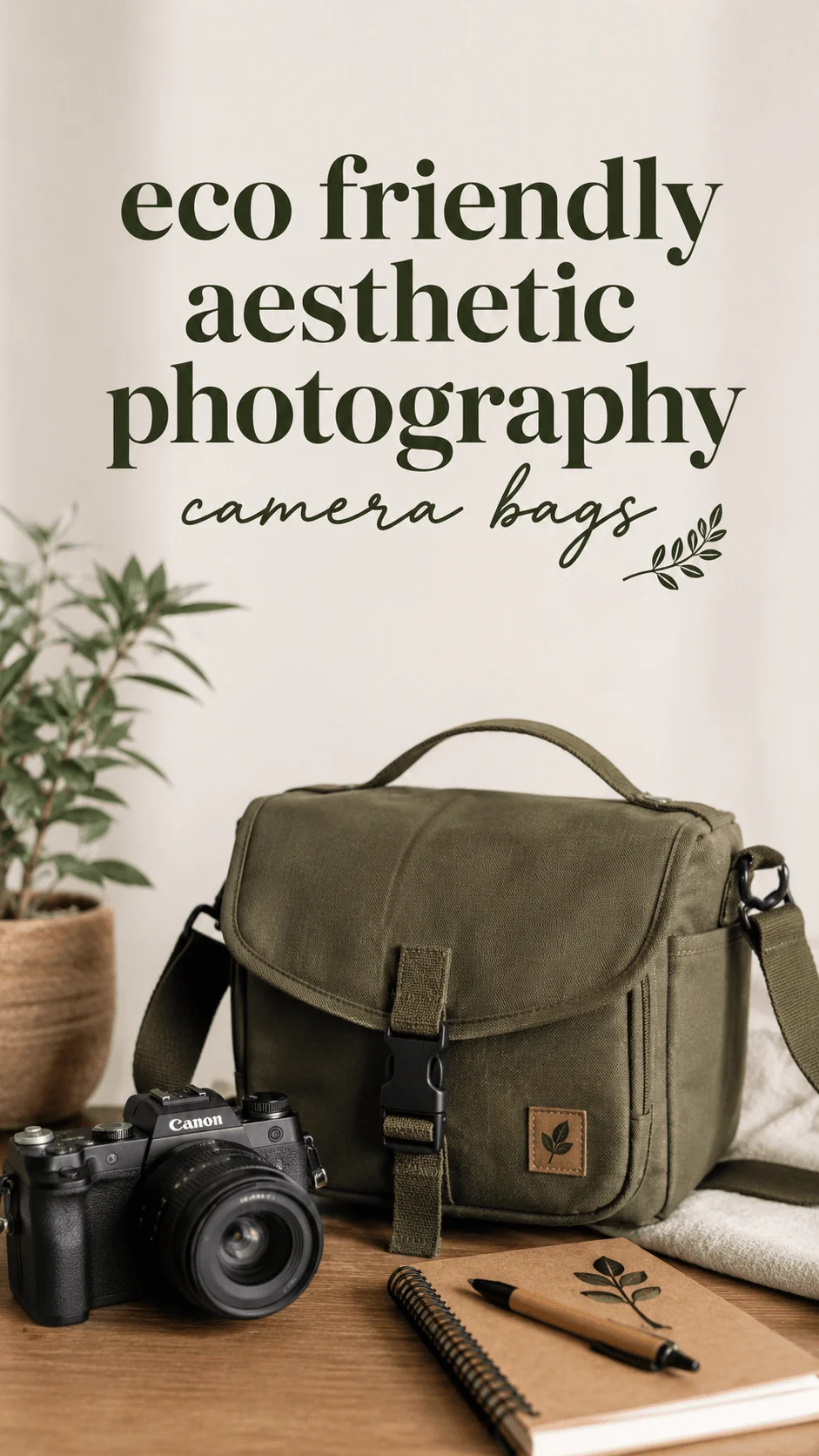
This approach works particularly well for photographers who want an accessory that does not immediately announce that it contains photography equipment. A simple black crossbody bag, soft beige shoulder bag, structured olive backpack, or understated gray camera pouch can complement everyday clothing while still providing protection for a camera and lens.
The aesthetic appeal comes from simplicity. Designers can create visual interest through texture, stitching, hardware, and carefully proportioned shapes instead of adding unnecessary decoration. This makes the bag easier to use in different situations and less likely to look outdated as fashion trends change.
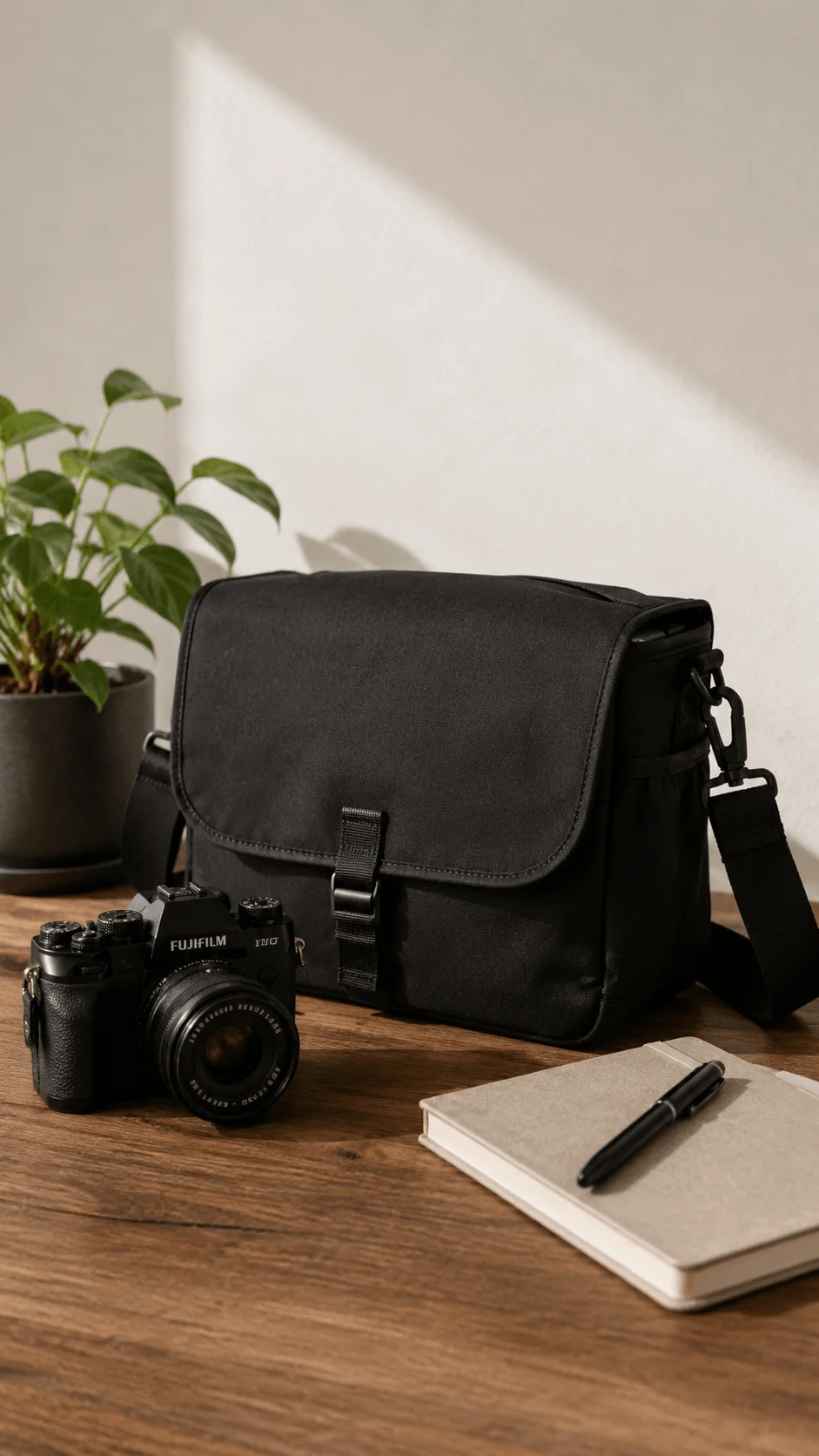
Minimalist design also connects naturally with sustainability. A timeless bag can remain useful for years instead of becoming something that the owner wants to replace when a particular trend disappears. When photographers choose a versatile design that works for travel, street photography, casual outings, and everyday use, they may also reduce the need to purchase several different bags.
For photographers who care about both appearance and environmental responsibility, a minimalist sustainable camera bag can therefore provide more than visual appeal. It can become a long term everyday accessory.
2. Recycled Nylon and ECONYL Camera Bags
Material innovation is one of the most interesting developments in sustainable photography accessories. Recycled nylon has become especially relevant because nylon already offers qualities that photographers value, including durability, relatively low weight, flexibility, and resistance to everyday wear.
Regenerated nylon such as ECONYL takes the concept further by producing new nylon material from recovered waste. This makes regenerated materials particularly interesting for brands looking to reduce reliance on newly produced materials while maintaining the performance expected from a modern camera bag.
The visual possibilities are also important. Recycled nylon does not have to create a rough or obviously outdoorsy appearance. Designers can use it in smooth, refined, structured, or subtly textured bags that feel more like premium fashion accessories.
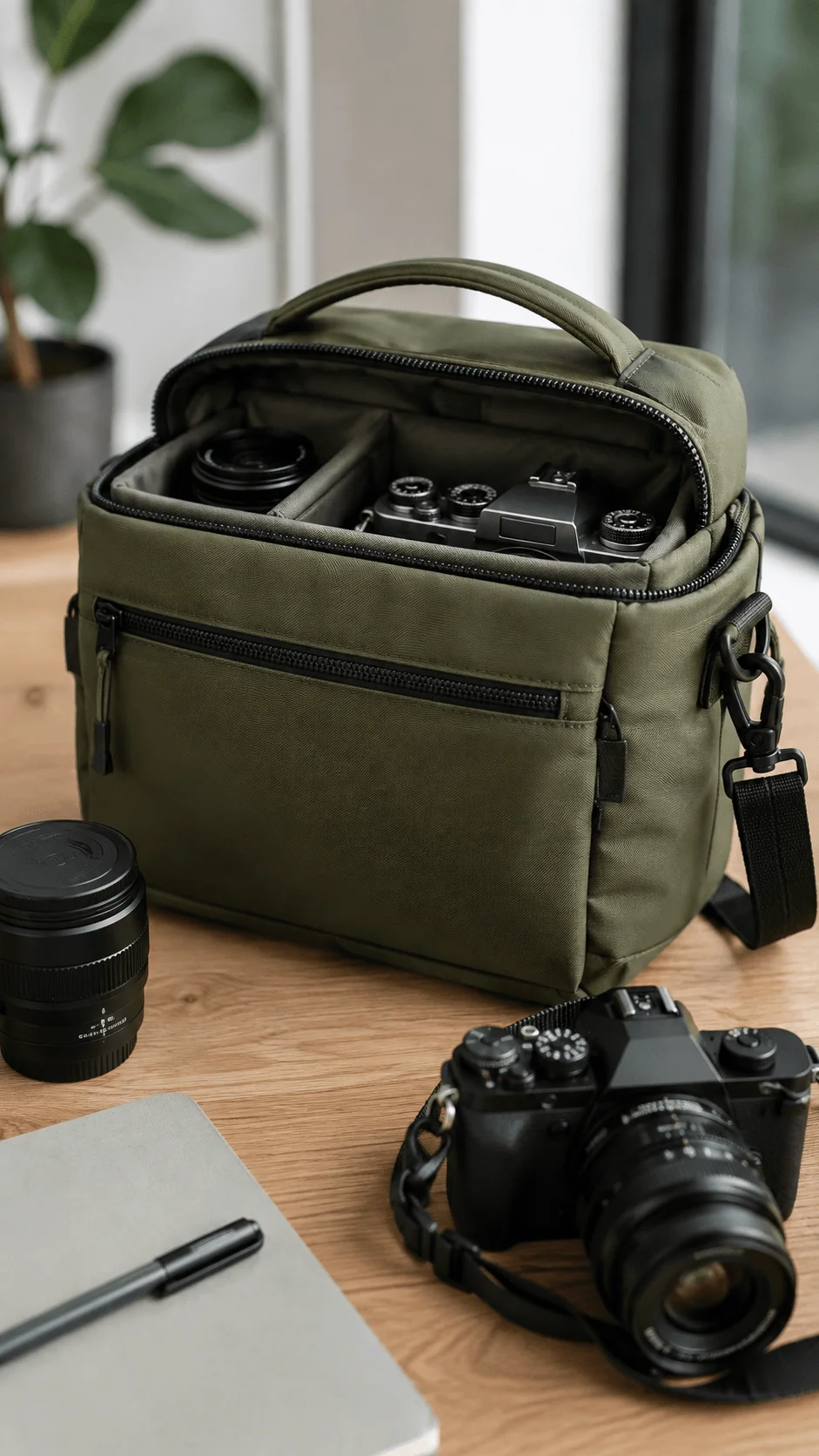
This combination of performance and aesthetics is helping change the perception of sustainable photography gear. An environmentally conscious camera bag can still have a polished appearance, sophisticated hardware, attractive colors, and carefully designed proportions.
Photographers should still look beyond the material name when evaluating a recycled nylon camera bag. It is useful to consider the percentage of recycled material, information about manufacturing, durability, repair options, and the expected lifespan of the product. A recycled material becomes much more meaningful from a sustainability perspective when it forms part of a durable product that the owner can use for many years.
3. Vegan Camera Bags With Premium Aesthetics
Vegan materials are another major direction for people looking for stylish sustainable photography accessories. Modern vegan camera bags can use advanced synthetic materials, vegan microfiber, recycled textiles, and other alternatives to conventional animal based materials.
The biggest change is aesthetic. Earlier generations of vegan accessories sometimes focused heavily on making the environmental message visible. Newer designs can take a much more sophisticated approach. Smooth surfaces, structured shapes, refined stitching, understated logos, and polished hardware can create a premium appearance without relying on traditional leather.
This makes vegan camera bags particularly interesting for photographers who treat their equipment as part of their personal style. A photographer attending a creative event, walking through a city, or meeting a client may prefer a camera bag that looks closer to a designer crossbody or premium everyday accessory than conventional technical equipment.
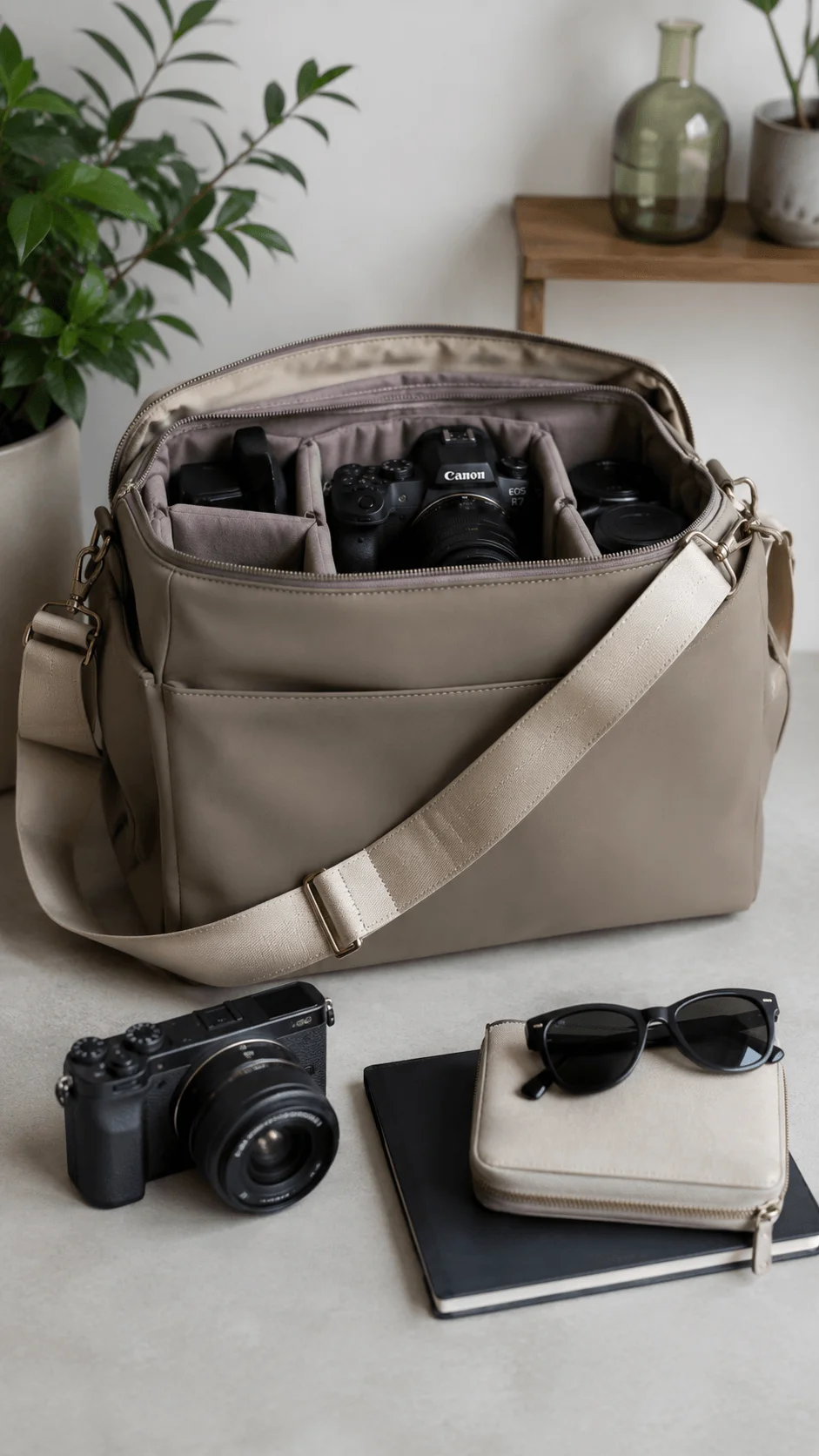
Color also plays an important role. Black, cream, brown, charcoal, muted green, and other understated shades can make a bag easier to coordinate with different outfits. Some designers are also exploring softer textures and structured forms that create a more contemporary fashion aesthetic.
However, vegan does not automatically mean environmentally friendly. Photographers should still investigate what material the product uses, whether it contains recycled content, how durable it is, and how the manufacturer approaches repair and end of life. The strongest designs combine responsible material choices with long term usability rather than relying on a single sustainability label.
4. Recycled Plastic Materials in Photography Bags
Plastic waste is another area influencing the development of sustainable photography accessories. Recycled polyester and recycled PET can transform discarded plastic into textile materials suitable for bags, linings, and other components.
This idea is especially interesting because camera bags need materials that can tolerate frequent handling. Photographers may place their bags on floors, carry them through crowded streets, take them on trips, or expose them to changing weather. A durable textile can therefore have practical advantages as well as environmental appeal.
The design possibilities are much broader than many people realize. Recycled polyester can appear in sleek urban backpacks, compact camera slings, casual shoulder bags, and more technical photography designs. The final appearance depends heavily on weaving, texture, construction, color, and finishing.
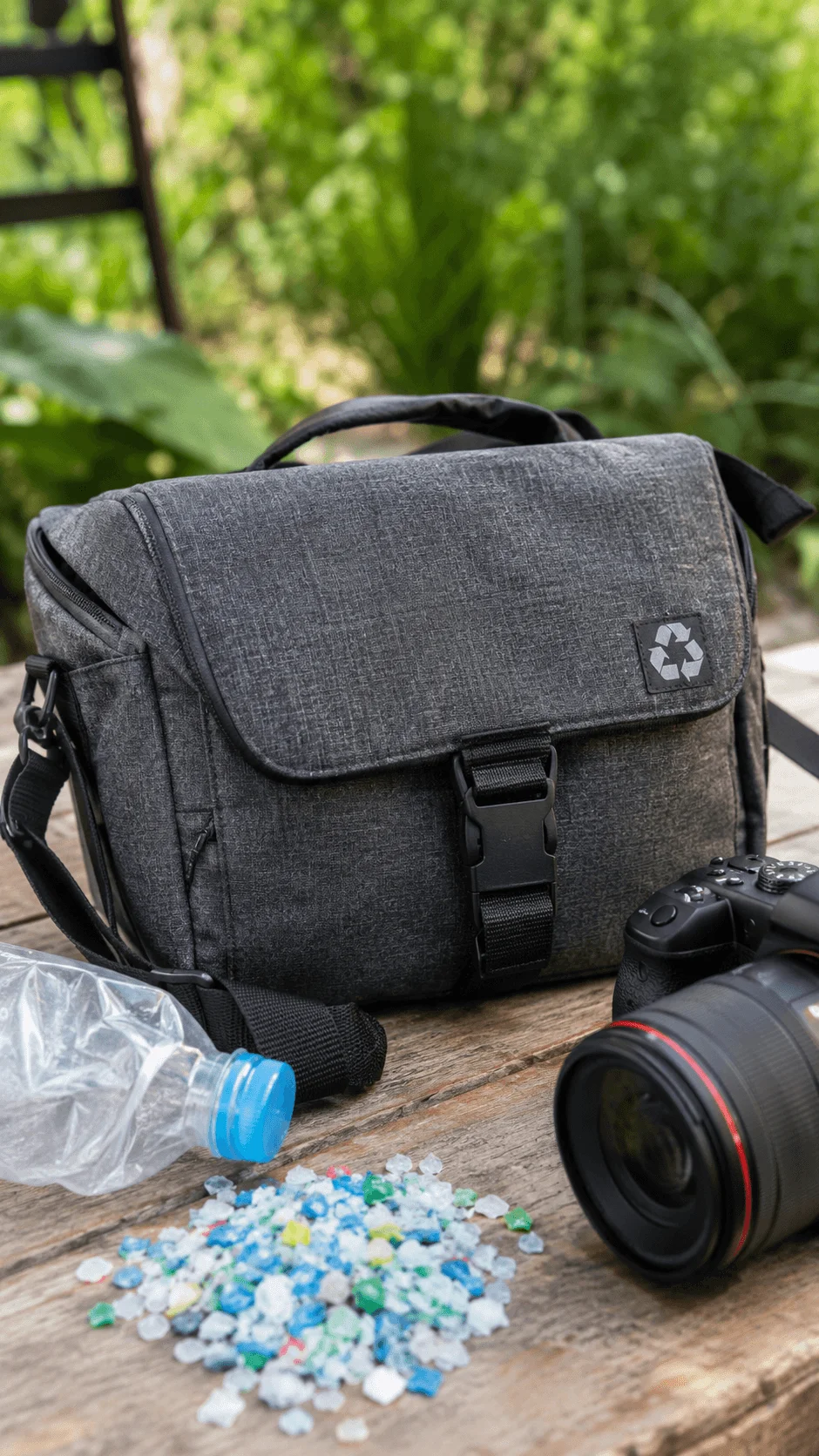
When considering a recycled plastic camera bag, photographers should avoid judging sustainability based only on marketing language. A useful question is how much recycled material the manufacturer actually uses. It is also worth considering whether the bag has a strong construction, whether its components can be repaired, and whether the owner can realistically keep using it for years.
The most responsible approach is to look at the complete product rather than one material. A durable camera bag made partly from recycled material may provide greater long term value than a fragile product that needs frequent replacement.
5. Modular Camera Bags That Adapt to Different Photography Needs
Modular design is becoming increasingly relevant as photographers carry different combinations of equipment throughout the week. Someone might use a small mirrorless camera and one lens for street photography but need additional space for travel or a longer photography session.
Instead of requiring separate bags for every situation, modular camera bags can use adjustable dividers, removable inserts, flexible compartments, and expandable storage. This allows photographers to change the internal organization according to their equipment.
The sustainability benefit comes from versatility. A single adaptable bag can serve several purposes instead of encouraging the owner to purchase a different bag for every camera setup.
Modular design also improves the everyday experience. A photographer can remove the protective camera insert when the bag is needed for ordinary belongings. The same accessory can then function as an everyday backpack, crossbody bag, or travel bag.
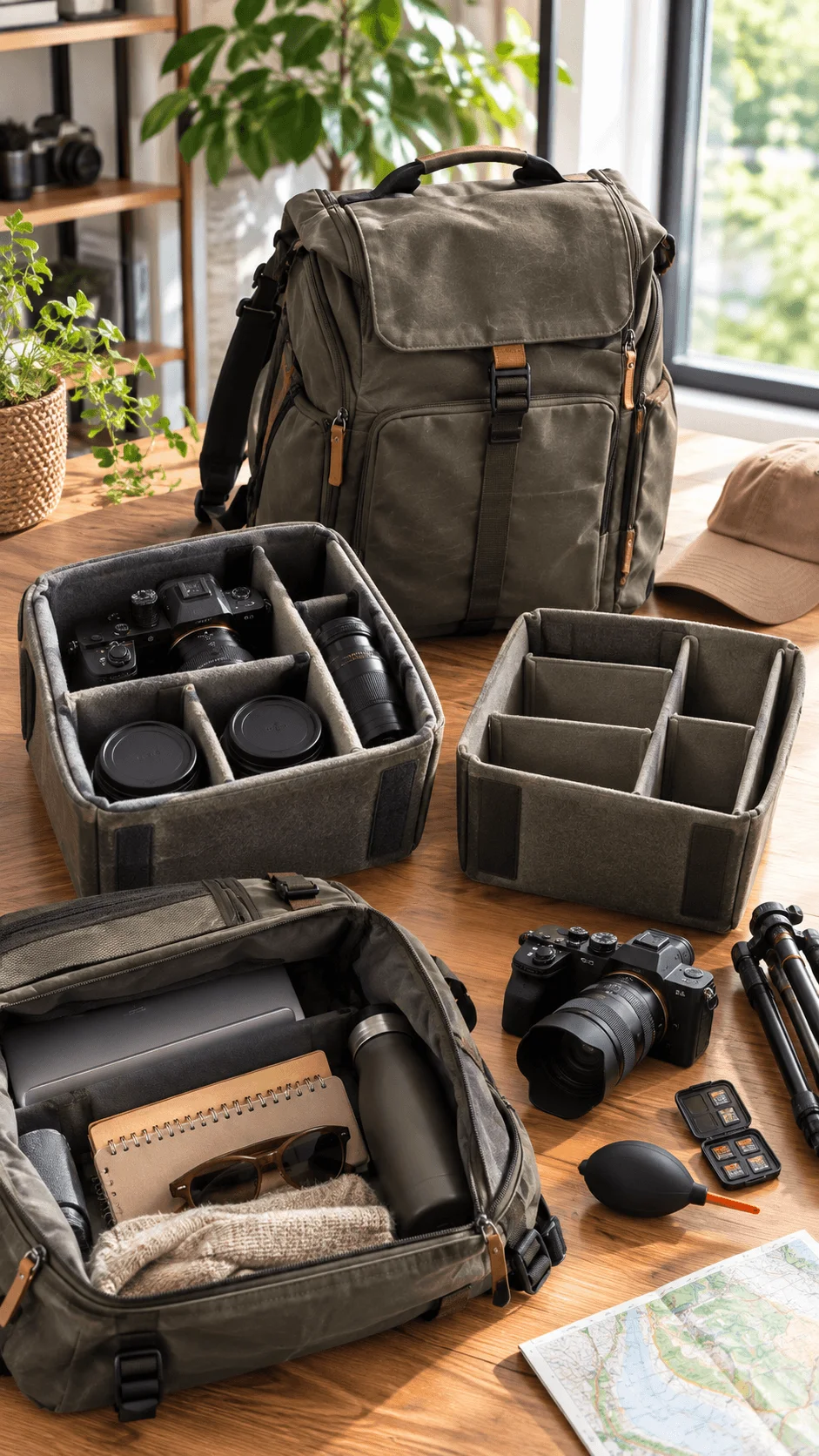
This idea fits perfectly with the growing demand for sustainable photography bags because sustainability is not only about the material used to manufacture an object. It is also about designing products that remain useful across different situations.
A modular camera bag can become more valuable as the photographer’s needs change. Instead of replacing the entire bag after upgrading equipment, the owner may simply reorganize the internal space or add an appropriate insert.
6. Everyday Aesthetic Camera Bags That Do Not Look Like Camera Gear
One of the most appealing trends for 2026 is the move toward camera bags that look like normal lifestyle accessories. Traditional camera bags often make their purpose immediately obvious through padded compartments, technical fabrics, large logos, and multiple external straps.
Modern photographers increasingly have other preferences. They may want a bag that looks like a stylish crossbody, messenger bag, tote, backpack, or compact shoulder bag while quietly providing the protection needed for photography equipment.
This approach is particularly useful for street photographers and creators who spend long periods moving through cities. A subtle design can feel more natural in cafes, shops, galleries, public spaces, and social environments.
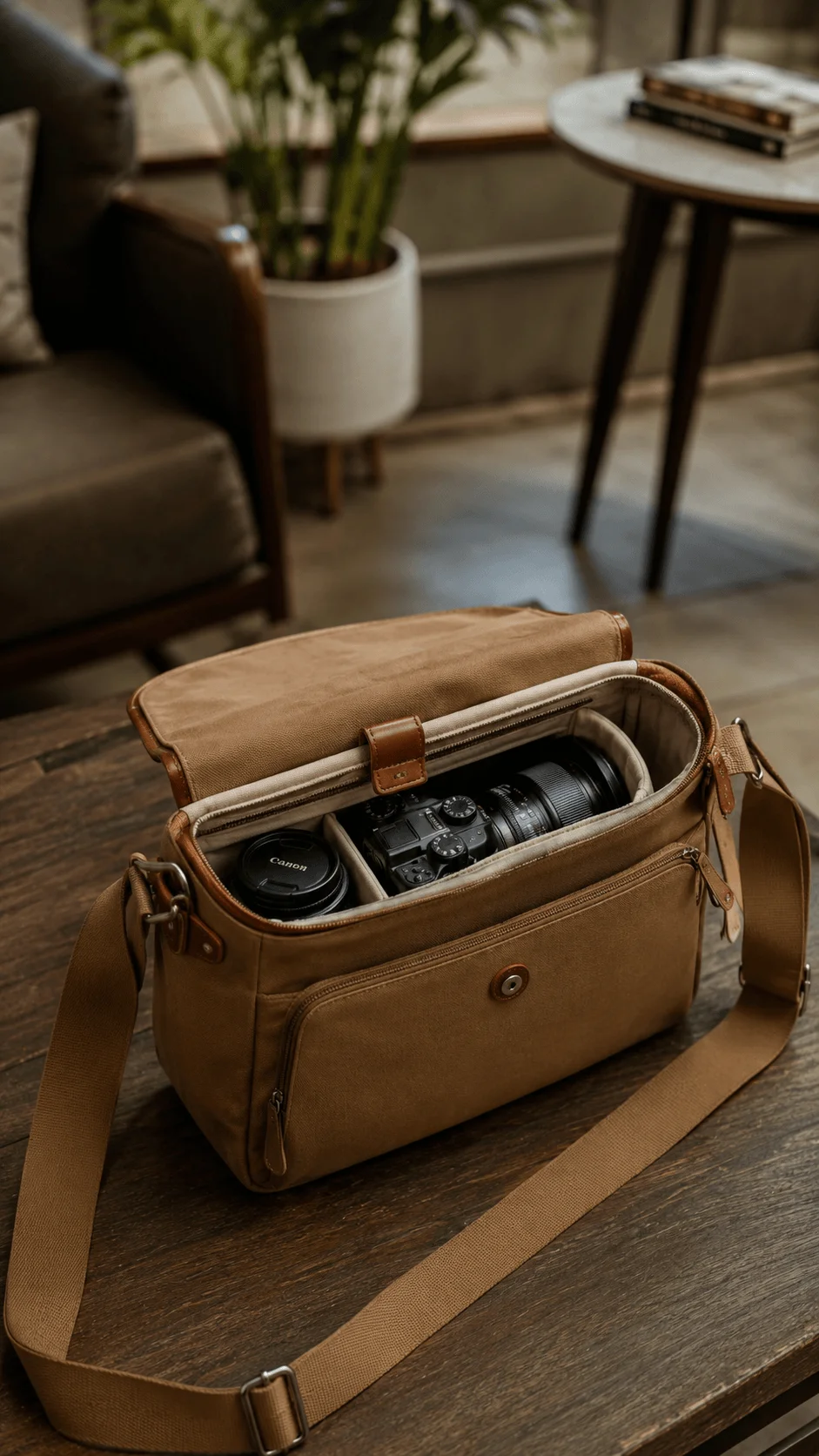
The concept also supports versatility. A removable protective insert can allow the bag to carry photography equipment during a shoot and ordinary personal items afterward. That means the bag does not become useless when the camera is left at home.
Aesthetic camera bags are therefore becoming less about separating photography from everyday life and more about integrating the two. The best designs can protect a camera while still feeling like a natural part of the photographer’s personal style.
7. Compact Eco Friendly Camera Sling Bags for Street Photography
Camera slings have become an important category because they provide quick access without the bulk of a traditional backpack. For photographers carrying a single camera and a small number of accessories, a compact sling can provide a practical balance between protection and portability.
Sustainable versions can use recycled nylon, recycled polyester, vegan materials, and other lower impact textiles. Their compact construction can also support minimalist photography habits because photographers may be encouraged to carry only the equipment they genuinely need.
The aesthetic side of the trend is equally important. Compact slings can feature smooth silhouettes, muted colors, simple hardware, and discreet branding. This makes them suitable for photographers who want functional equipment without the typical technical appearance.
For street photography, accessibility matters. A well designed sling can allow the photographer to reach the camera quickly while keeping the bag close to the body. Comfortable straps, protective padding, sensible internal organization, and weather resistant construction can make a significant difference during long walks.
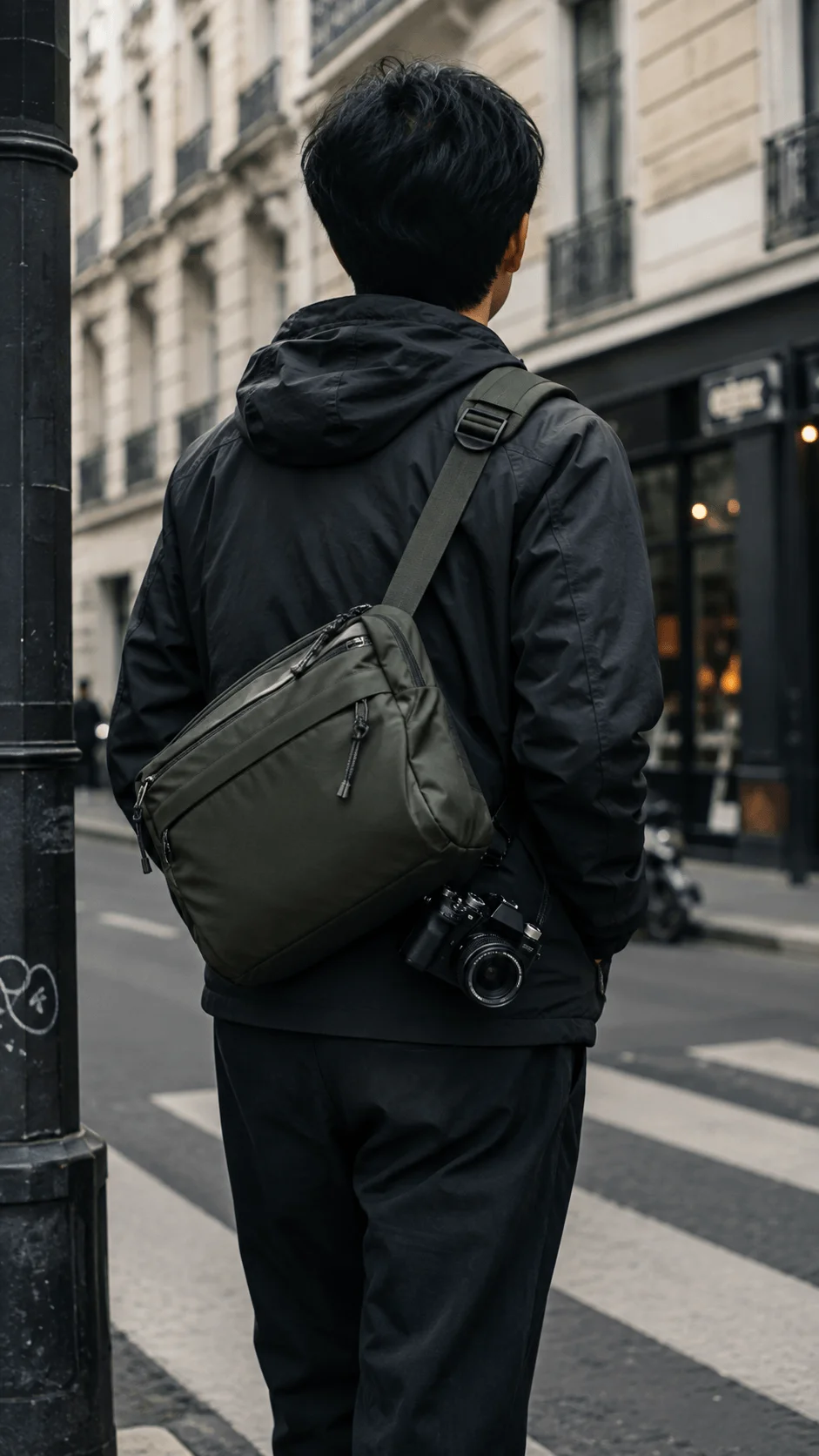
The most attractive sustainable camera sling is therefore not simply the one made from recycled fabric. It is the one that combines responsible material choices with practical design and a style the photographer will want to carry regularly.
8. Circular Sustainable Camera Bags With Second Life Programs
The idea of sustainability is expanding beyond the materials used to manufacture a product. In 2026, more attention is going toward what happens to a camera bag throughout its entire life. This has made circular design an increasingly interesting concept for photographers who want their equipment choices to have a longer useful lifespan.
A circular camera bag focuses on keeping the product and its materials useful for as long as possible. Repair programs, refurbishment, resale, trade in schemes, replacement components, and second life programs can all contribute to this approach. Instead of treating an unwanted camera bag as disposable, circular design encourages owners and manufacturers to find another use for it.
This idea can also change the way photographers think about purchasing. Rather than asking only whether a bag contains recycled material, buyers can ask whether the manufacturer provides replacement parts, repairs damaged components, or supports resale and reuse.
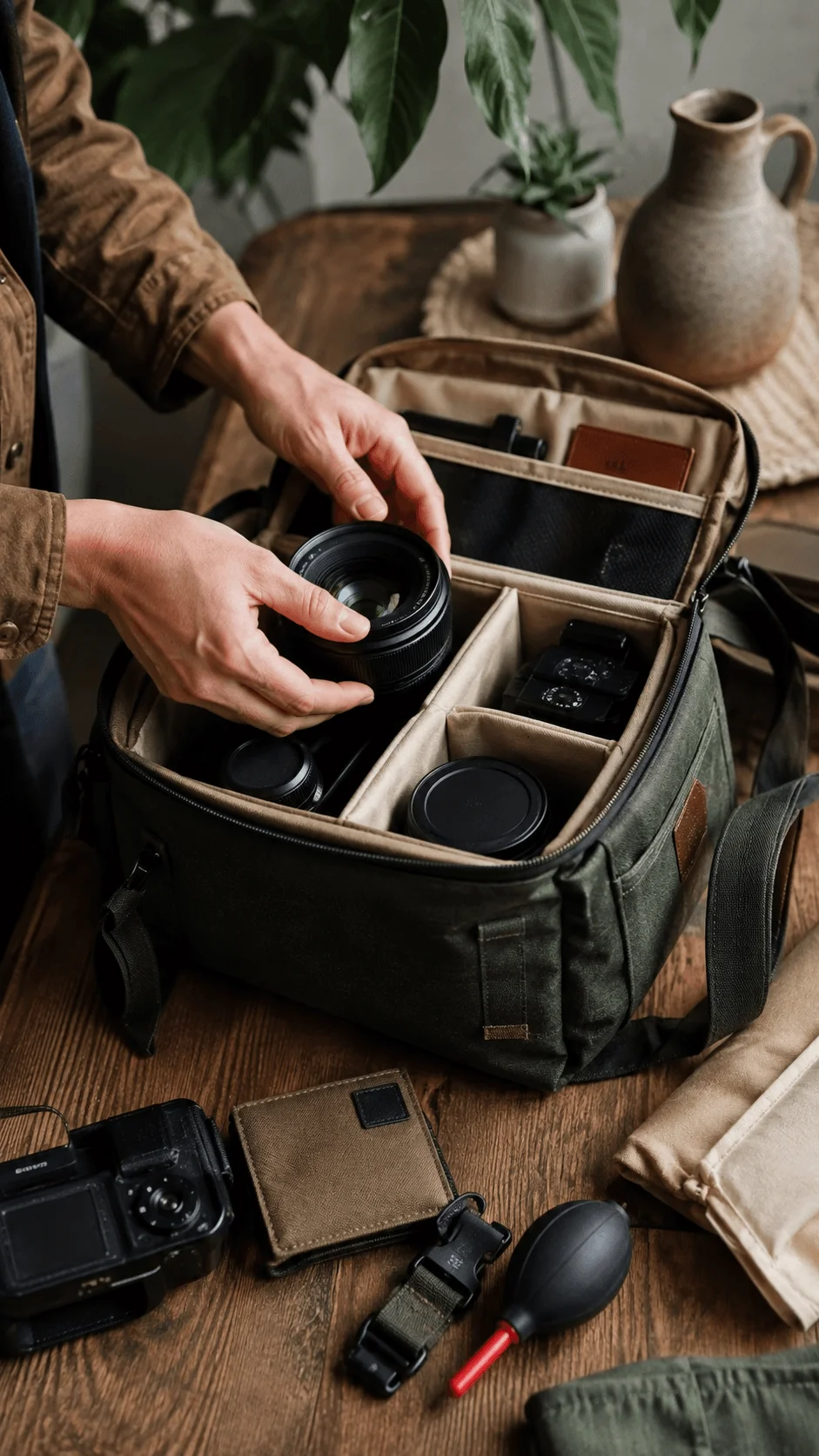
A strong camera bag can have several owners over its lifetime. A photographer might eventually upgrade to a larger bag and pass the original one to another photographer. If the bag remains functional and attractive, it can continue serving a purpose instead of becoming unnecessary waste.
The aesthetic aspect matters here as well. Timeless designs have greater potential for second life because they do not depend heavily on short lived fashion trends. Neutral colors, simple shapes, quality construction, and subtle branding can help a camera bag remain attractive for years.
For photographers interested in eco friendly aesthetic photography camera bags, circular design offers a broader way to think about sustainability. The most responsible product is not necessarily the one with the most impressive environmental marketing. It can also be the product that stays useful for the longest period.
9. Durable Camera Bags Designed for Long Term Use
Durability may sound less exciting than recycled materials or fashion inspired designs, but it is one of the most important elements of sustainable product design. A camera bag protects equipment that can cost considerably more than the bag itself, so it needs to withstand regular use.
Modern sustainable photography bags are increasingly being evaluated through their expected lifespan. Strong stitching, reliable zippers, durable fabrics, reinforced handles, quality padding, and well constructed straps can all help a bag survive frequent use.
Long term durability also changes the economics of buying a camera bag. A photographer who purchases a well made bag and uses it for several years may ultimately spend less than someone who repeatedly replaces inexpensive bags.
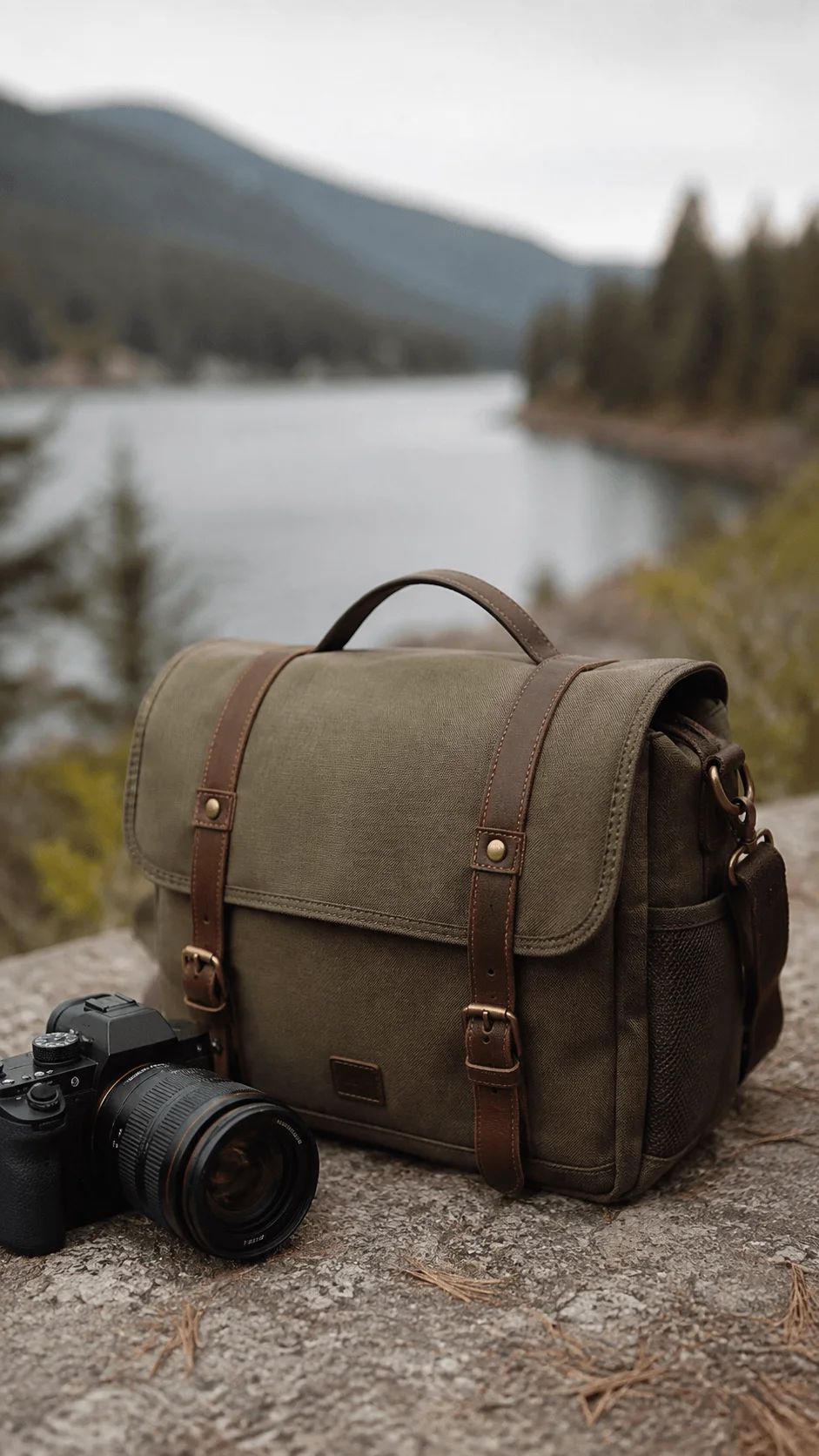
The visual design can contribute to this longevity. A bag built around a timeless aesthetic is less likely to feel outdated after a season or two. Neutral colors and simple silhouettes can work across changing fashion trends, making the product easier to keep using.
Repairability makes the idea even stronger. A damaged strap or zipper should not necessarily mean that the entire camera bag becomes unusable. When manufacturers provide repair services or replacement components, owners can extend the useful life of their equipment.
For anyone searching for sustainable camera bags, durability should therefore receive as much attention as recycled content. A sustainable material has limited value if the finished product cannot withstand everyday photography use.
10. PFAS Free and Lower Impact Technical Materials
Photography bags need to perform in real environments. Photographers may encounter rain, dust, heat, moisture, crowded streets, rough travel conditions, and long periods of outdoor use. This creates a challenge for sustainable design because technical performance often requires coatings and treatments that can raise environmental concerns.
The growing interest in PFAS free alternatives represents an important direction in lower impact technical materials. PFAS refers to a large group of chemicals that manufacturers have historically used in various products because of properties such as resistance to water, oil, and stains.
For camera bags, the challenge is finding ways to provide adequate protection while reducing reliance on materials or treatments associated with environmental concerns.
This trend is particularly interesting because sustainability does not mean abandoning functionality. A photographer still needs protection for valuable equipment. The goal is to develop materials and construction methods that balance performance with more responsible material choices.
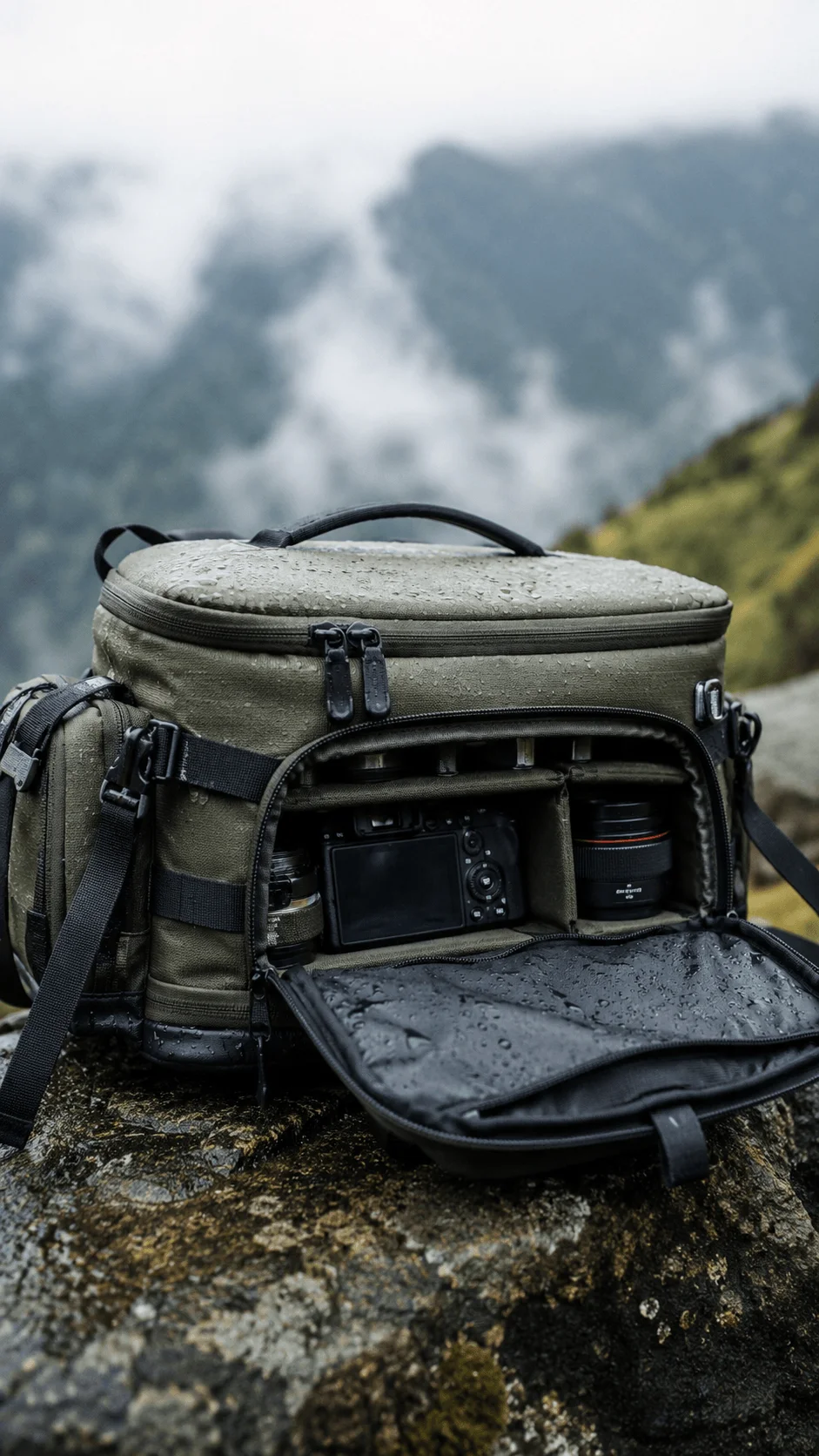
Consumers should also avoid assuming that a bag automatically becomes sustainable because it uses one lower impact material. Sustainability depends on many factors, including the fabric, coatings, manufacturing process, durability, repairability, transportation, packaging, and product lifespan.
This is why material transparency is becoming increasingly valuable. Brands that clearly explain what they use and why they use it can give photographers more information for making responsible purchasing decisions.
11. Fashion Inspired Sustainable Photography Bags
The relationship between fashion and photography accessories is becoming increasingly visible. Camera bags no longer have to resemble traditional photography equipment. Designers are experimenting with silhouettes, textures, colors, hardware, and proportions that make the bag look like a fashion accessory.
This trend is especially relevant to younger photographers, content creators, influencers, and people who use photography as part of their everyday lifestyle. When a camera accompanies someone throughout the day, the bag carrying it becomes part of their overall appearance.
A fashion inspired camera bag might use a structured silhouette, subtle metallic details, elegant stitching, a soft textured surface, or a sophisticated neutral color palette. These details can create a premium appearance without compromising the protective function required by photography equipment.
The rise of sustainable materials makes this trend even more interesting. Recycled nylon, regenerated materials, vegan alternatives, and recycled polyester can appear in designs that feel polished rather than obviously technical.
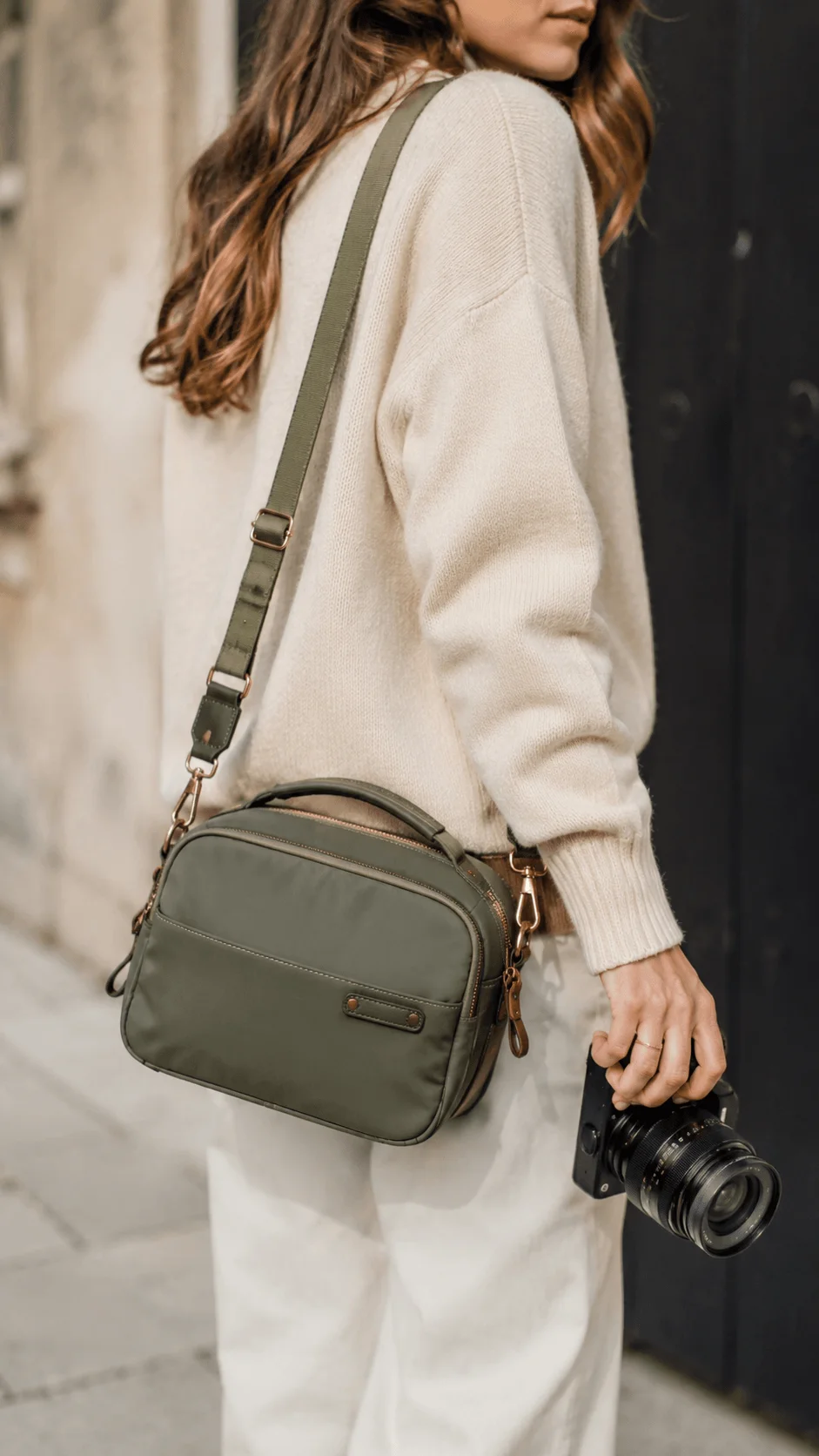
This creates a new category between conventional photography equipment and fashion accessories. The camera bag becomes something that expresses personality while still serving a practical purpose.
For example, a photographer with a minimalist wardrobe might prefer a simple monochrome crossbody bag. Someone interested in vintage aesthetics could choose a structured bag with classic proportions. Another photographer might prefer an earthy color palette inspired by natural landscapes.
The important idea is that sustainability and aesthetics do not need to compete. Good design can bring them together.
12. Sustainable Camera Bags With Timeless Aesthetic Design
Another emerging direction is the move toward timeless aesthetics. Instead of designing products around short lived trends, many modern accessories focus on shapes and colors that can remain attractive for years.
This approach has an important sustainability benefit. If photographers continue liking a camera bag after several years, they have less reason to replace it simply because its appearance feels outdated.
Earthy colors are particularly useful for this style. Olive, sand, stone, warm brown, charcoal, cream, and muted gray can create a natural appearance while remaining easy to coordinate with different clothing styles.
Monochrome designs can also provide a similar effect. A simple camera bag with one dominant color and subtle hardware can look sophisticated without relying on decorative details that may quickly fall out of fashion.
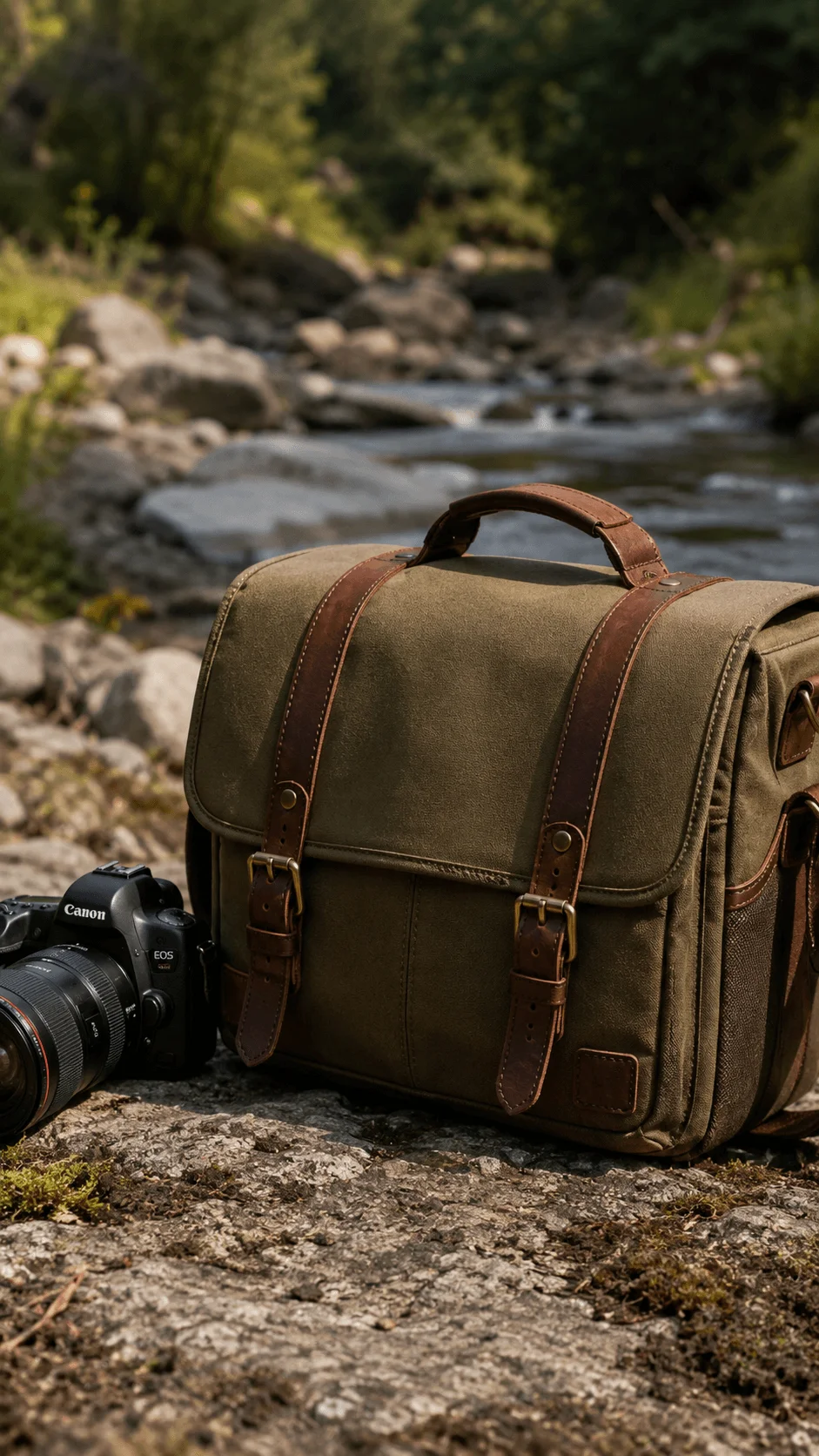
Natural looking textures are another direction worth watching. Even when a bag uses synthetic or recycled materials, designers can create surfaces that feel soft, tactile, and visually connected to natural environments.
This combination of sustainability and timeless design is particularly valuable for photographers who want to make fewer but better purchases. A camera bag that remains useful, attractive, and functional for many years can become a long term part of a photographer’s equipment rather than a temporary accessory.
How to Choose the Right Eco Friendly Aesthetic Photography Camera Bag
Choosing a sustainable camera bag should involve more than looking at the material label. The best bag needs to match the photographer’s equipment, lifestyle, aesthetic preferences, and long term expectations.
Start with camera protection. Padding should provide enough protection for the camera and lenses without making the entire bag unnecessarily large. Adjustable compartments can be particularly useful because they allow photographers to change the internal arrangement as their equipment changes.
Comfort also matters. A bag that looks attractive but becomes uncomfortable after thirty minutes may spend most of its life sitting at home. Look for practical strap construction, balanced weight distribution, comfortable handles, and an appropriate size for the equipment being carried.
Weather protection deserves attention as well. Photographers often work outdoors, so the bag should provide a suitable level of protection against everyday moisture and changing conditions. However, do not assume that a waterproof claim automatically means a product has strong environmental credentials. Look at the materials and construction together.
Material transparency is another important consideration. A manufacturer that clearly explains recycled content, material sources, certifications, production practices, and repair policies gives buyers more information than a company that simply labels a product “green.”
Versatility can also make a major difference. A camera bag that works for photography, travel, commuting, and everyday activities can remain useful across different parts of life.
Think about longevity before purchasing. Ask whether the design will still appeal to you several years from now. Consider whether the manufacturer offers repairs or replacement parts. Think about whether the bag can adapt if you change your camera system.
These questions shift the focus from simply purchasing a “green” product to choosing a product that can genuinely support more sustainable habits.
Why Aesthetic Design Matters in Sustainable Photography Gear
Aesthetic design might seem separate from environmental responsibility, but the two can actually support each other.
People tend to keep using products they enjoy. A camera bag that feels attractive, comfortable, and personal may become a regular part of someone’s life. That can increase the likelihood that the photographer continues using the same bag rather than replacing it because of changing tastes.
This makes personal style an important part of sustainable product design.
The most successful eco friendly aesthetic photography camera bags can combine visual appeal with genuine practicality. They protect cameras while blending into everyday life. They can accompany photographers on trips, city walks, creative projects, and casual outings.
This approach also challenges the assumption that sustainable products need to have a particular appearance. A responsible camera bag can be elegant, minimalist, colorful, vintage inspired, modern, luxurious, or understated.
The key is thoughtful design.
The Future of Sustainable Photography Bags
The future of eco friendly aesthetic photography camera bags is likely to involve a combination of material innovation and smarter product design.
Recycled and regenerated materials will remain important, but they represent only one part of the larger picture. Modularity, repairability, durability, circular programs, timeless aesthetics, and everyday versatility can all contribute to a more responsible product.
Fashion will likely continue influencing the category as photographers increasingly use their equipment in social, creative, and everyday environments. The traditional distinction between camera equipment and lifestyle accessories is becoming less obvious.
At the same time, consumers are becoming more interested in transparency. Instead of simply trusting environmental language, photographers can investigate materials, manufacturing, longevity, and repair options.
This could encourage brands to provide clearer information and create products that deliver genuine long term value.
Conclusion
The rise of eco friendly aesthetic photography camera bags reflects a larger change in the way photographers think about their equipment. A camera bag no longer needs to be purely technical or purely fashionable. Modern designs can combine camera protection, comfort, sustainability, versatility, and personal expression in one product.
The most exciting trends for 2026 include minimalist silhouettes, regenerated nylon, vegan materials, recycled textiles, modular storage, compact slings, circular design, durable construction, lower impact technical materials, and fashion inspired aesthetics. Together, these ideas are creating a broader definition of sustainable photography gear.
Choosing the right bag ultimately requires looking beyond the label. Material transparency, durability, repairability, functionality, comfort, and timeless design can matter just as much as recycled content. A bag that photographers genuinely enjoy using for many years can provide meaningful long term value.
As sustainable design continues to evolve, photography bags are likely to become even more adaptable and visually diverse. The future belongs to products that protect valuable equipment while fitting naturally into everyday life. For photographers, that means they no longer have to choose between responsible design and attractive style. They can look for a camera bag that supports both.