12 Eco Friendly Garden Ideas Xeriscape Ideas for 2026
Eco friendly garden ideas xeriscape designs are changing the way homeowners think about beautiful outdoor spaces in 2026. Modern xeriscaping focuses on creating attractive gardens that work with local rainfall, climate, soil, and available water rather than depending on constant irrigation. Instead of filling a yard with nothing but gravel and cactus, gardeners can combine native flowers, ornamental grasses, groundcovers, shrubs, edible herbs, rainwater features, and thoughtfully placed hardscape to create a landscape that feels green and inviting.
This approach has become especially relevant as gardeners look for practical ways to respond to hotter summers, periods of limited rainfall, rising interest in native plants, and the maintenance demands of traditional lawns. A successful xeriscape does not eliminate water from the garden. It uses water carefully and places plants where their natural requirements make sense.
The best eco friendly xeriscape ideas also consider biodiversity and the experience of spending time outdoors. A water wise garden can provide flowers for pollinators, shelter for wildlife, herbs for the kitchen, shaded seating, attractive pathways, and changing seasonal interest. The following ideas explore how modern xeriscaping can become a complete garden design approach rather than simply a strategy for reducing irrigation.
Climate Resilient Native Xeriscape Garden
A climate resilient xeriscape starts with plants that suit the conditions of the garden. Native species can play an important role because many have adapted to regional patterns of temperature and rainfall. However, gardeners should still consider the exact conditions of their property rather than assuming every native plant will thrive in every location.
Begin by looking at sunlight, drainage, soil, wind exposure, and the amount of natural rainfall the site receives. These observations can guide plant selection far more effectively than choosing plants only because a label describes them as drought tolerant.
Layering can make these eco friendly garden ideas xeriscape designs feel surprisingly lush. A suitable small tree or large shrub can provide structure, while medium shrubs create volume beneath it. Flowering perennials and ornamental grasses can fill the middle layer, and low growing plants can cover exposed soil.
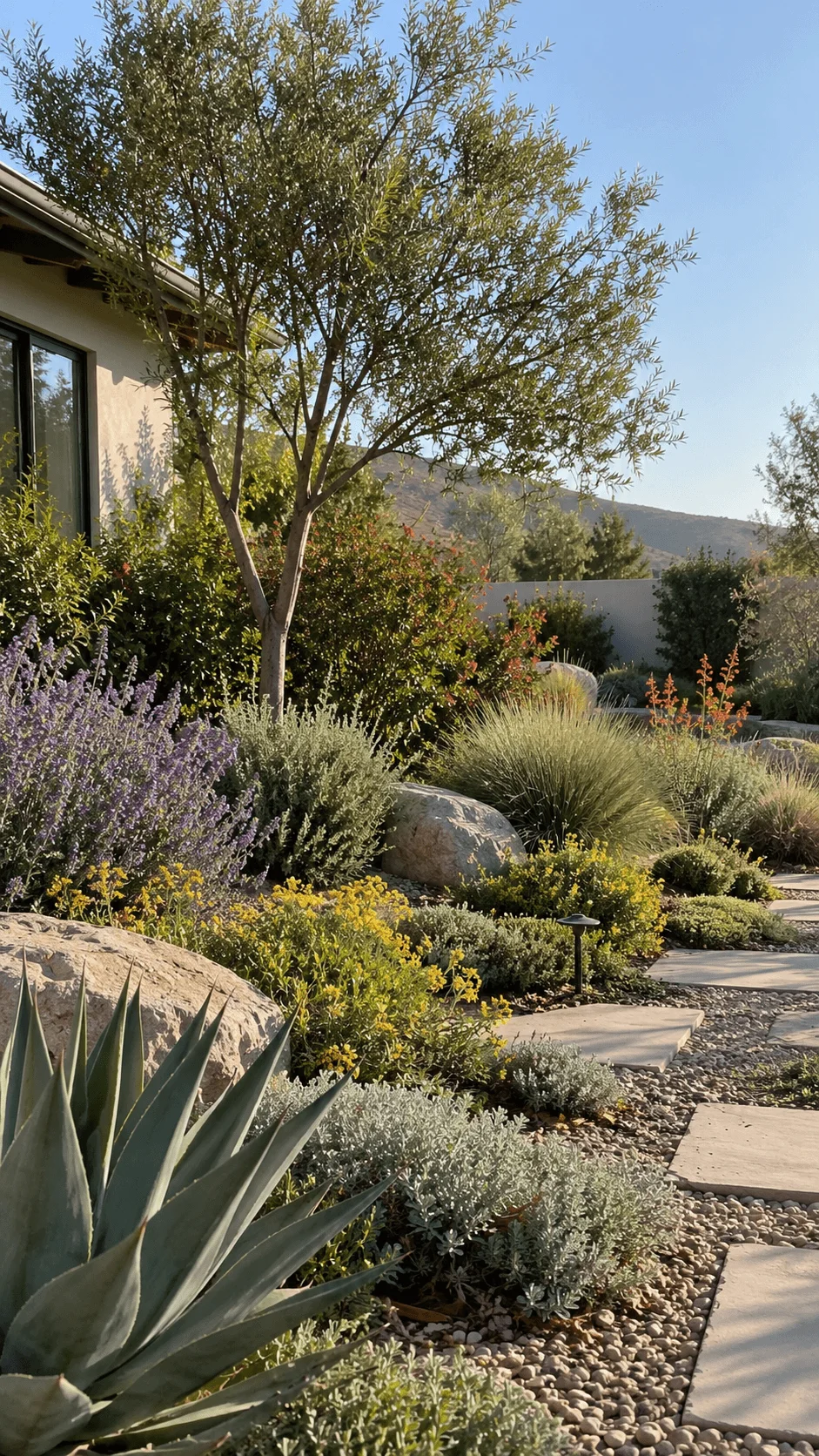
Repeating several plant varieties throughout the landscape can create visual unity. Different foliage textures also help. Fine grasses can contrast with broad leaves, while silver or blue green foliage can brighten darker vegetation. Seasonal flowers add another dimension without requiring the entire garden to remain in bloom constantly.
This approach creates a landscape that responds to its environment while still feeling deliberately designed.
Modern Gravel Xeriscape Garden With Drought Tolerant Plants
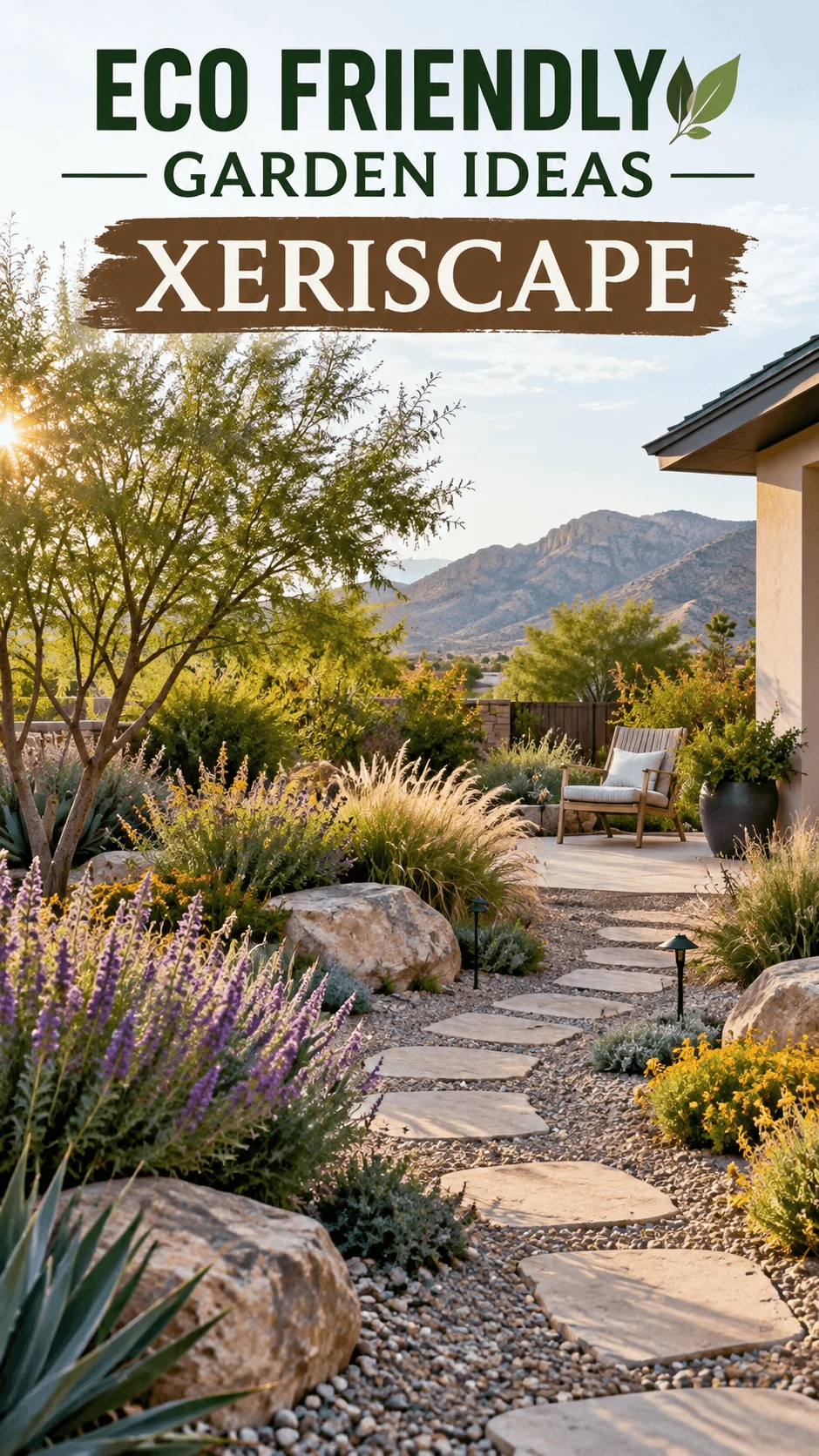
A modern gravel xeriscape should contain much more than gravel. Plants should become the main visual attraction, while gravel provides a calm background that connects different areas.
Imagine soft ornamental grasses rising through a fine gravel surface, with flowering perennials appearing between sculptural shrubs and carefully positioned stones. A simple stepping path could curve through the planting and lead toward a bench or small seating area. This combination creates a landscape that feels contemporary without looking empty.
Plant spacing deserves careful attention. Leaving some open ground can highlight individual plant shapes, but excessive empty gravel can make the landscape feel harsh. Groups of plants create stronger visual impact and can gradually soften the surface as they mature.
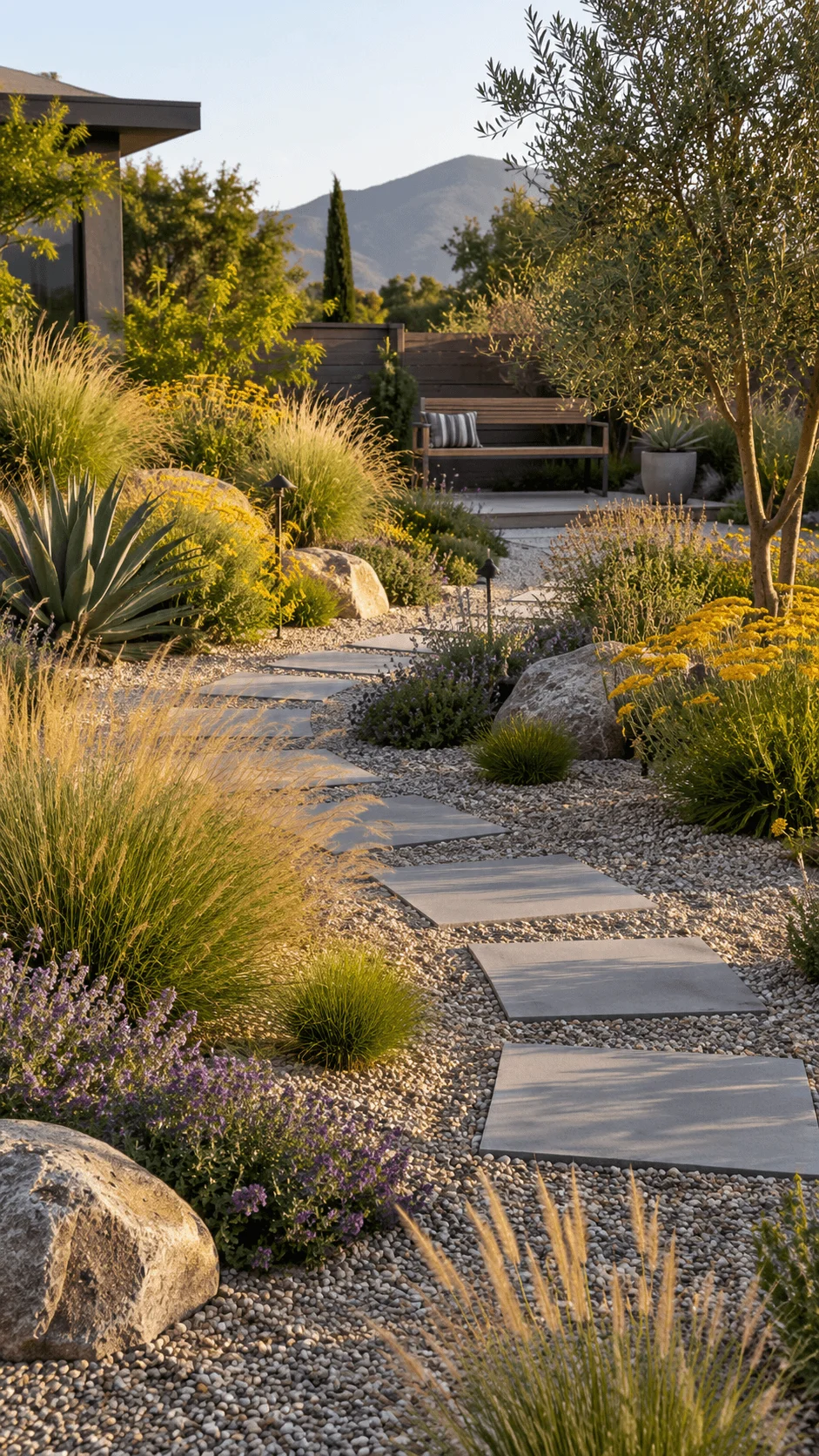
A modern gravel xeriscape garden can also use differences in height to create depth. Taller grasses or shrubs can frame the background, medium flowering plants can occupy central areas, and compact plants can soften pathway edges.
Material choice matters as well. Gardeners can consider locally available stone or suitable reclaimed materials instead of transporting decorative materials unnecessarily long distances. Gravel works best when it supports the plants and overall design rather than becoming the entire garden.
Pollinator Xeriscape Garden With Native Plants
Water conservation and wildlife gardening can work together beautifully. Pollinator xeriscape garden ideas focus on plants that tolerate local growing conditions while providing useful resources for bees, butterflies, and other beneficial insects.
Locally appropriate native plants deserve particular consideration. Some plants have especially important relationships with local insects and wildlife. Gardeners can research which species provide valuable nectar, pollen, seeds, shelter, or host opportunities in their own region.
Flowering periods also matter. A garden that produces a spectacular display for two weeks but offers little for the rest of the growing season has limited continuity. Combining plants that flower at different times can extend both visual interest and food availability for pollinators.
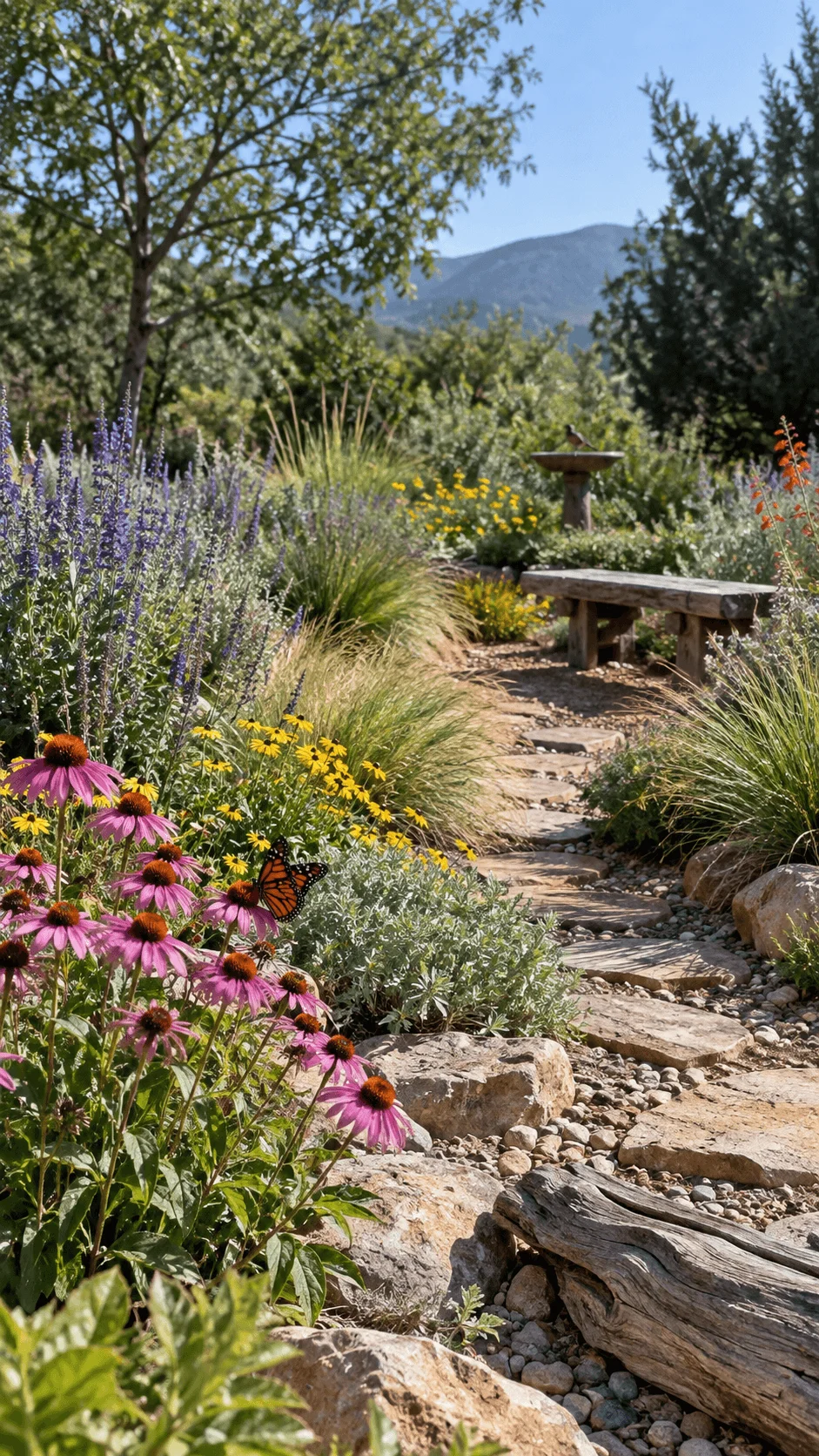
The garden can still look organized. Repeating flowering plants in generous groups creates stronger areas of color than scattering individual specimens randomly. Ornamental grasses can provide movement between flowers, while shrubs give the planting permanent structure.
A shallow path through the landscape can make the garden easier to explore. Natural stones, logs, or other suitable features can add texture and habitat value.
These eco friendly garden ideas xeriscape principles show that reducing irrigation does not require reducing biodiversity. Thoughtful planting can make a low water garden feel more alive.
Xeriscape Dry Creek Bed for Natural Rainwater Management
A dry creek bed can introduce movement and structure into a xeriscape even when no water flows through it most of the year. When site conditions allow, it may also become part of a broader approach to managing runoff.
The most convincing designs rarely use stones of one identical size. Combining gravel, rounded stones, and occasional larger boulders can create a more natural appearance. A gently curving route usually feels softer than a rigid channel running directly across the garden.
Plants make the feature more interesting. Grasses can arch over the edges while compact flowering plants emerge between selected stones. Shrubs positioned farther back can frame the creek without hiding it.
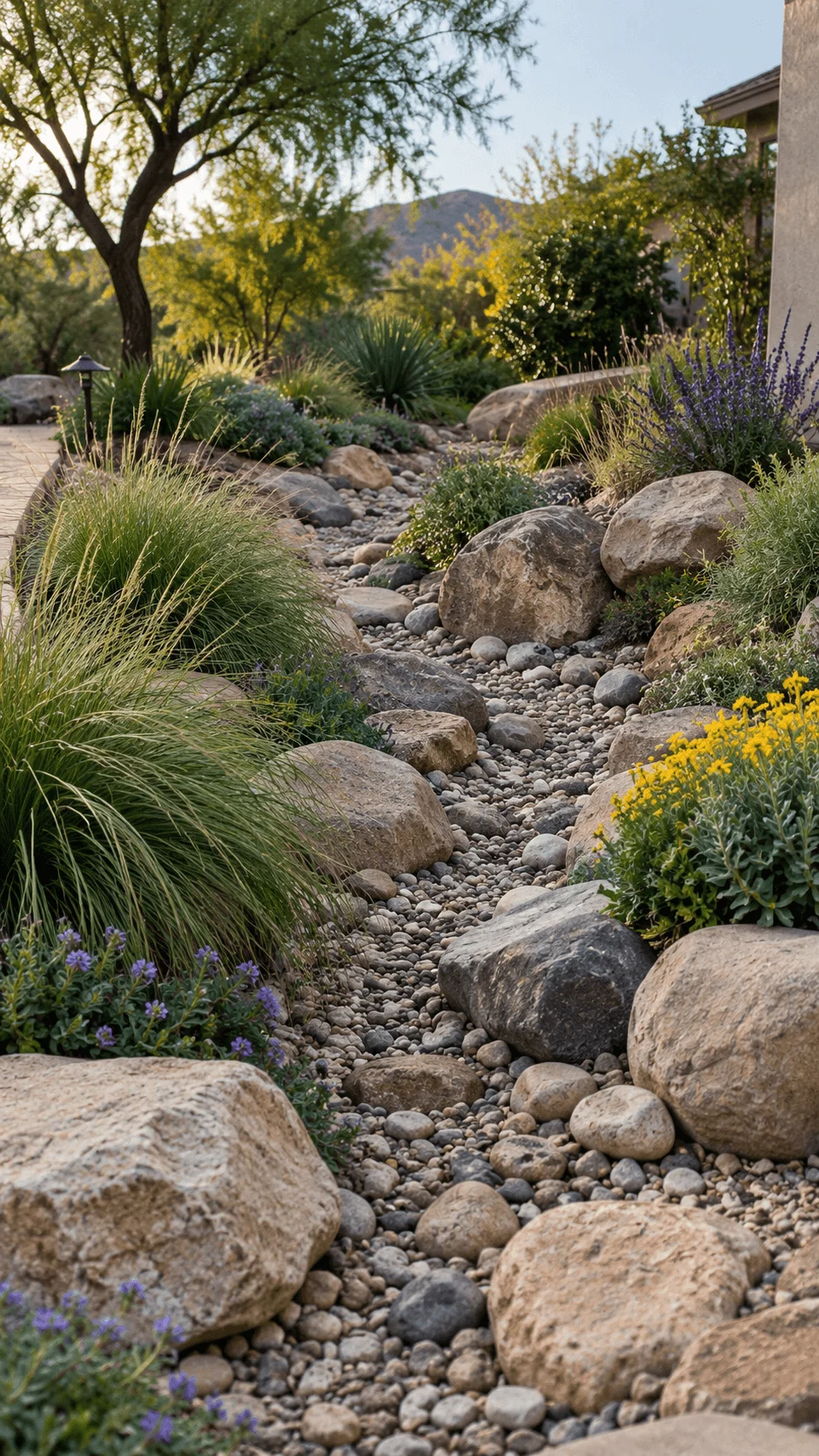
A functional dry creek requires more planning than a purely decorative one. Homeowners need to understand where rainwater originates and where it will travel. Redirecting runoff carelessly can create drainage problems elsewhere.
When planned appropriately, a dry creek can connect rainwater management with attractive xeriscape garden ideas. Even during dry weather, the feature provides texture, contrast, and a strong visual line through the landscape.
Rainwater Harvesting Xeriscape Garden
Xeriscaping reduces unnecessary water demand, while rainwater harvesting makes better use of water that already reaches the property. Combining the two strategies can create a more complete water wise garden.
A rain barrel or suitable storage system can collect roof runoff for later garden use where local conditions and regulations allow. The system does not have to dominate the landscape. Plants, screens, or thoughtful positioning can integrate storage into the overall design.
Garden contours can also influence how rainfall moves. Some areas naturally stay moist longer after rain, while raised or exposed areas dry quickly. Gardeners can use those differences instead of trying to make every part of the property behave identically.
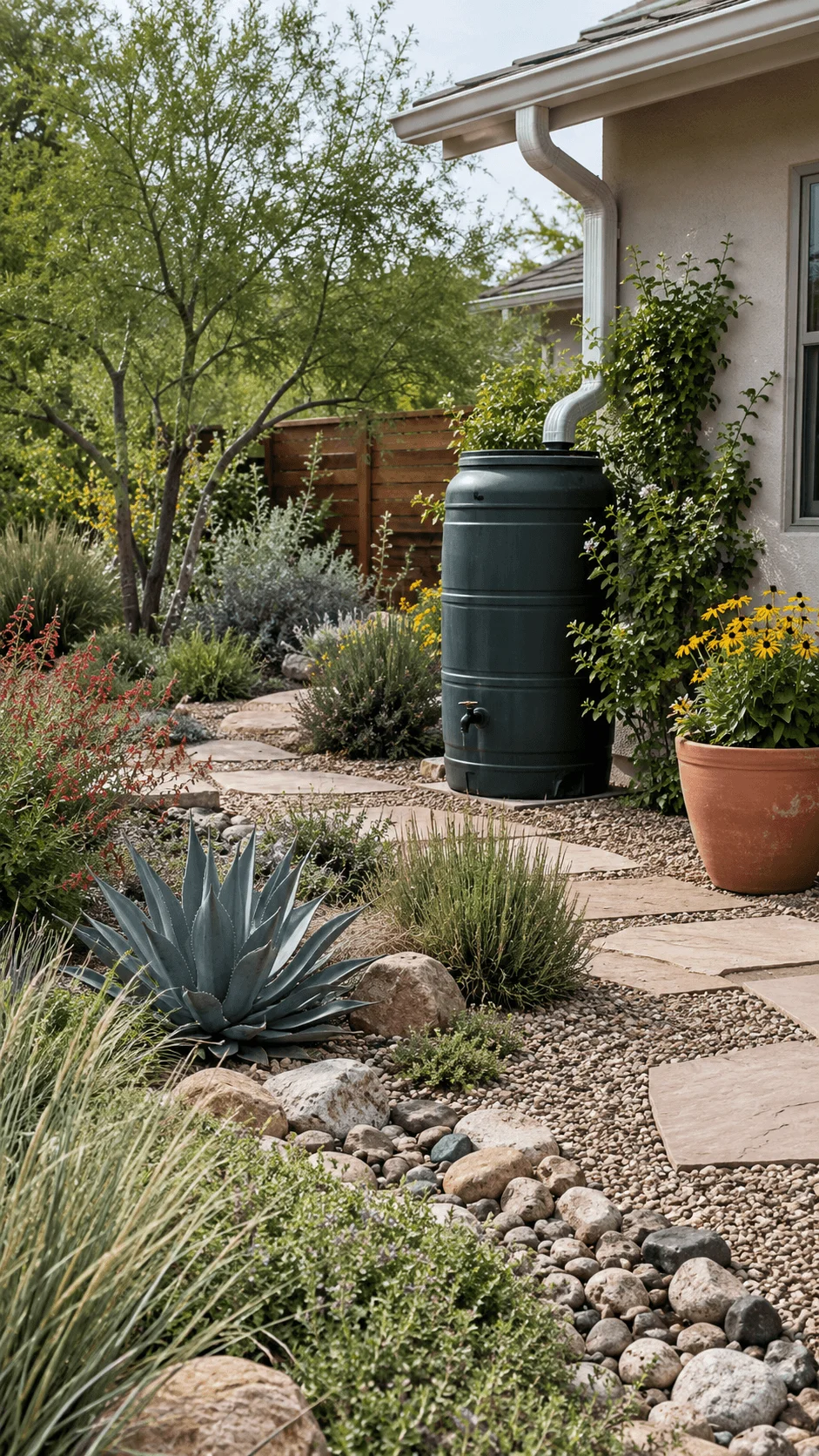
Plants that appreciate slightly more moisture can occupy naturally favorable locations. Tougher drought tolerant plants can grow in exposed areas where the soil dries faster.
Rainwater harvesting xeriscape design can also incorporate permeable surfaces that allow water to enter the ground rather than immediately leaving the property. The exact approach depends on soil, rainfall, drainage, building conditions, and local rules.
This idea makes eco friendly garden ideas xeriscape planning more responsive to both drought and rainfall.
Hydrozoned Water Wise Xeriscape Garden
Hydrozoning sounds technical, but the concept remains simple. Gardeners group plants according to similar water needs and irrigate those groups appropriately.
Consider a landscape containing drought tolerant ornamental plants, flowering perennials that appreciate occasional additional moisture, and a small edible garden. Watering all three areas equally would make little sense.
Instead, the lowest water plants can occupy one zone. Plants with moderate moisture requirements can form another, while edible or higher water plants can occupy a smaller targeted area.
Good hydrozoning does not need to look like separate garden compartments. Repeating colors and foliage shapes can visually connect different areas. A pathway might move through several water zones without making the transitions obvious.
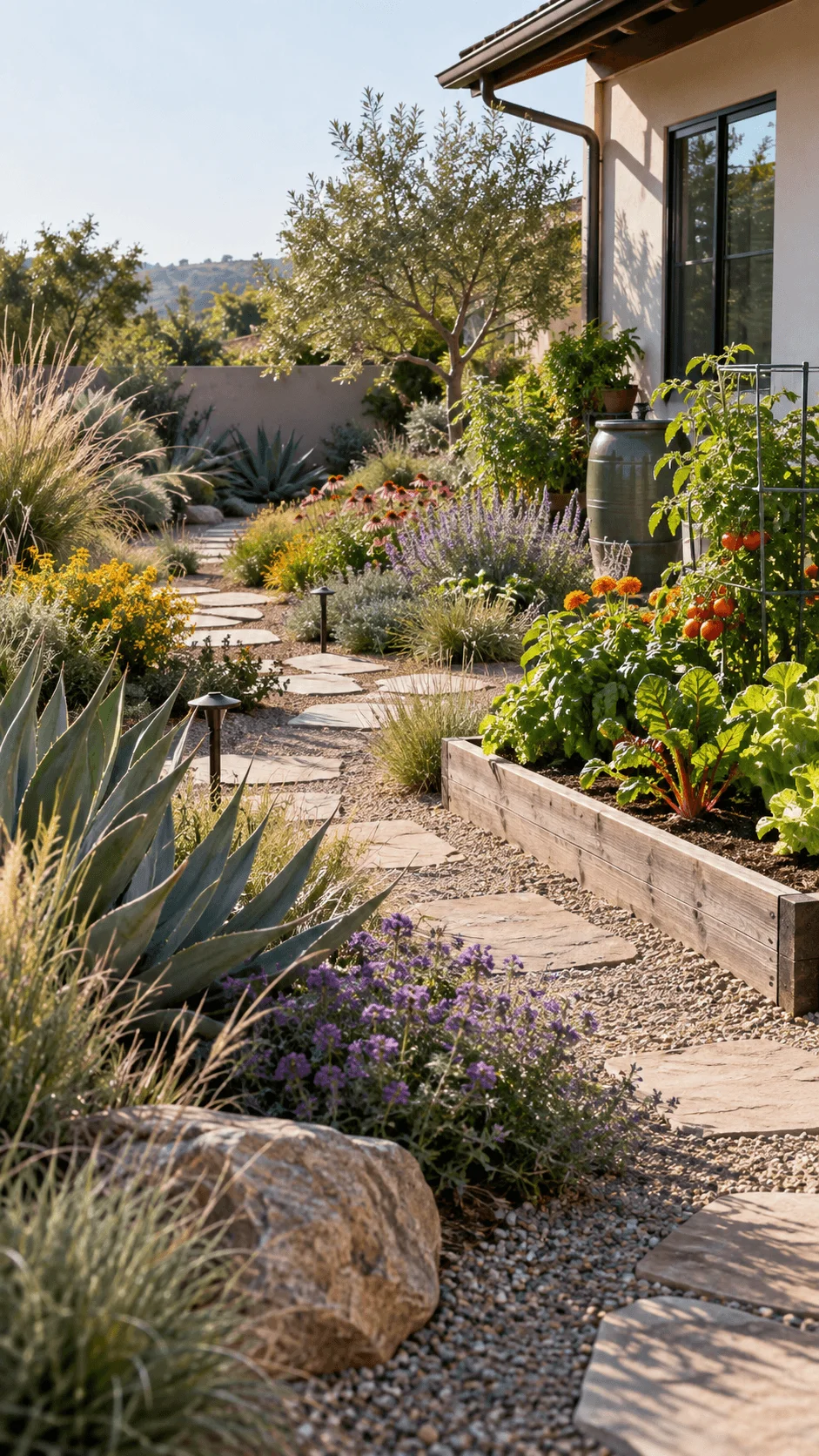
Position also helps. Plants with higher moisture needs may fit naturally near the house or another convenient water source. Tougher plants can occupy hotter boundaries or exposed sections.
Among modern water wise garden ideas, hydrozoning stands out because it treats irrigation as part of the design process rather than something gardeners consider after planting.
Smart Drip Irrigation for Eco Friendly Xeriscape Ideas
Even a drought conscious landscape may need irrigation, particularly while new plants establish their root systems. Smart watering aims to deliver that moisture more deliberately.
Drip irrigation can direct water toward plant root zones where appropriate instead of spraying broad areas indiscriminately. Separate irrigation zones can give gardeners greater control over plants with different requirements.
Modern controls can add another layer of efficiency. Weather responsive controllers, rain sensors, and soil moisture awareness can help gardeners avoid following the same watering routine regardless of conditions.
Observation remains essential. Technology cannot replace understanding the garden. Sandy soil may lose moisture differently from heavier soil, while shaded planting may stay moist longer than vegetation exposed to intense afternoon sun.
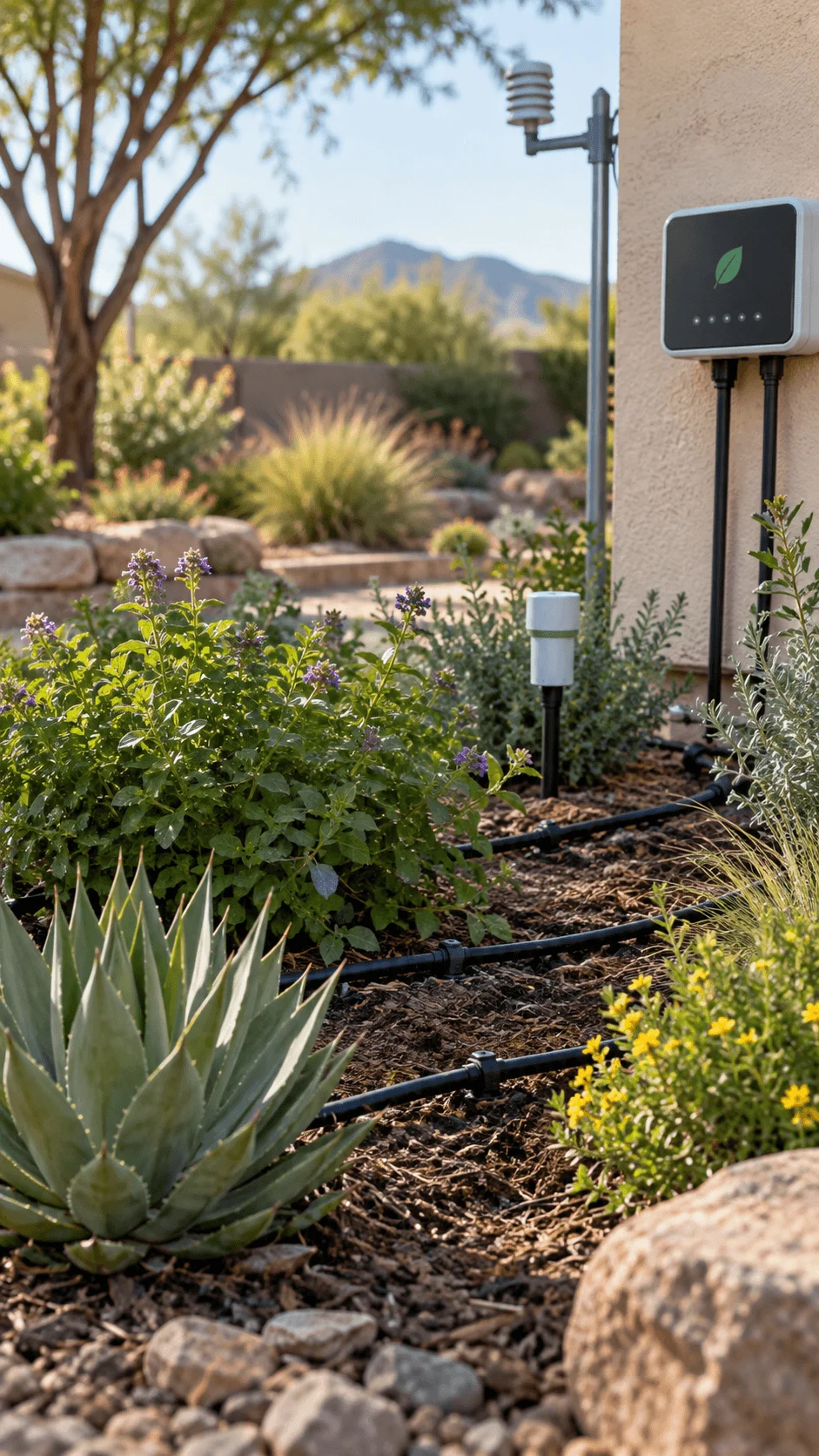
Plants also change as they mature. Newly installed drought tolerant plants may require consistent watering during establishment before they can cope with longer dry periods.
Smart irrigation makes sustainable xeriscape landscaping more adaptable. The goal should not involve watering as little as physically possible. Gardeners should provide the appropriate amount at the appropriate time.
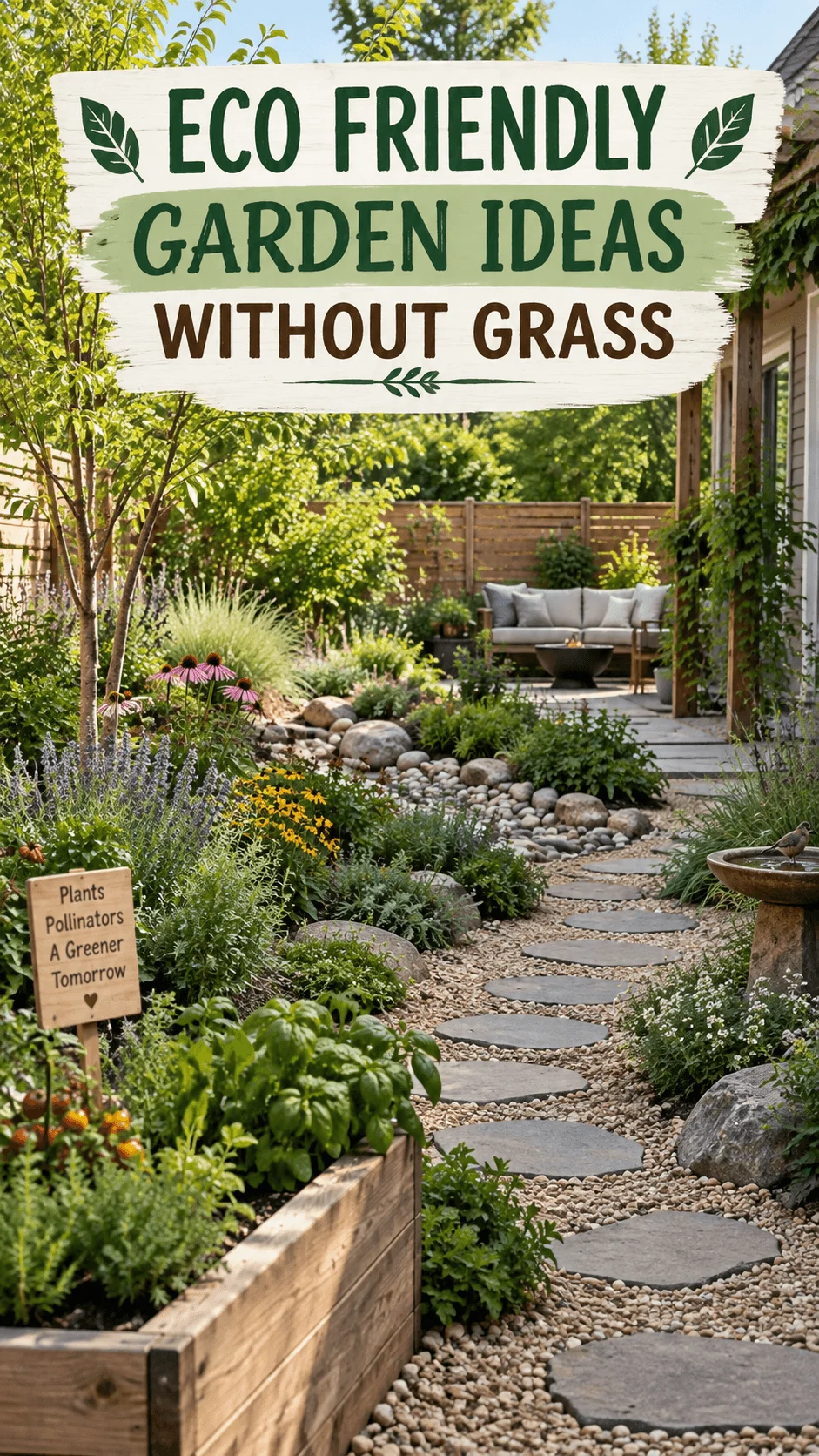
No Lawn Xeriscape Ideas With Living Groundcovers
Removing thirsty turf does not mean homeowners need to replace an entire lawn with stone. Living groundcovers can create one of the greenest interpretations of eco friendly garden ideas xeriscape design.
The first step involves considering how people use the existing lawn. A decorative front lawn that receives little foot traffic offers different opportunities from a backyard where children regularly play.
In lower traffic areas, locally appropriate groundcovers can create broad carpets of foliage. Some may produce seasonal flowers, while others offer attractive leaves throughout much of the year. Low grasses and spreading herbs can introduce additional texture where climate and growing conditions suit them.
Paths can keep the space functional. Stepping stones through low planting create access without requiring a large paved surface. Taller grasses and flowering plants can frame these routes and create small garden rooms.
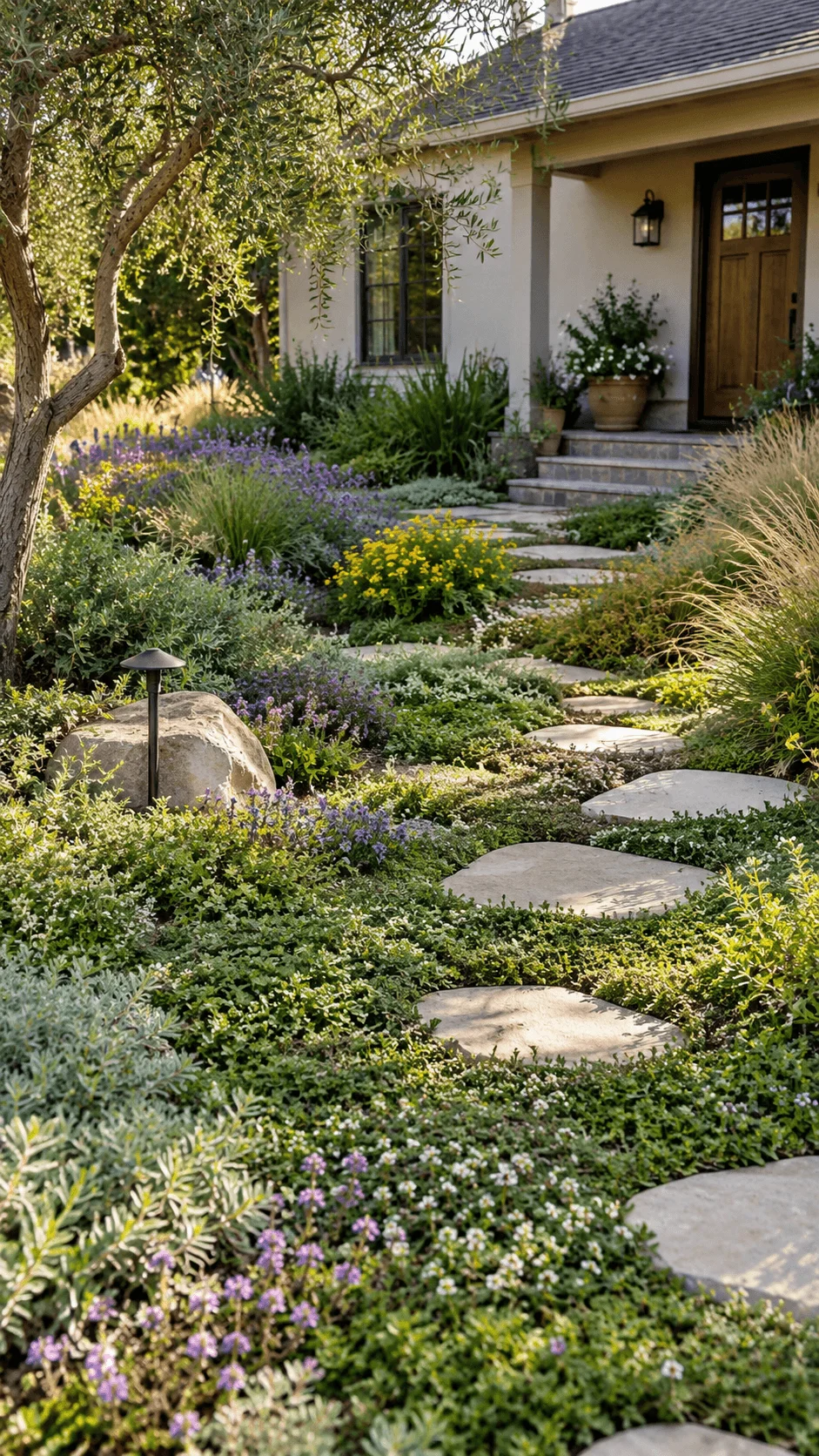
A mixed groundcover landscape can also avoid the visual monotony of a single plant covering everything. Combining compatible species can produce changes in height, texture, and seasonal interest.
This approach allows homeowners to reduce conventional lawn while preserving the soft, planted character that makes a garden inviting.
Edible Xeriscape Garden Ideas With Drought Tolerant Herbs
An edible xeriscape combines productive gardening with attractive landscape design. Instead of separating food plants from ornamental areas, gardeners can integrate suitable herbs and other edible plants into the wider planting scheme.
In appropriate climates, herbs such as rosemary, thyme, sage, and oregano can contribute fragrance, foliage, flowers, and culinary value. Their shapes and textures can complement ornamental grasses and flowering perennials.
A curved gravel or stone path could pass through beds containing herbs, low flowers, and shrubs. Larger herbs can provide structure, while compact plants can soften pathway edges. Suitable fruiting shrubs or trees may add another productive layer where local climate and water availability support them.
Not every edible plant has low water requirements. Hydrozoning becomes particularly useful here. Gardeners can place plants that need additional moisture together rather than increasing irrigation throughout the entire landscape.
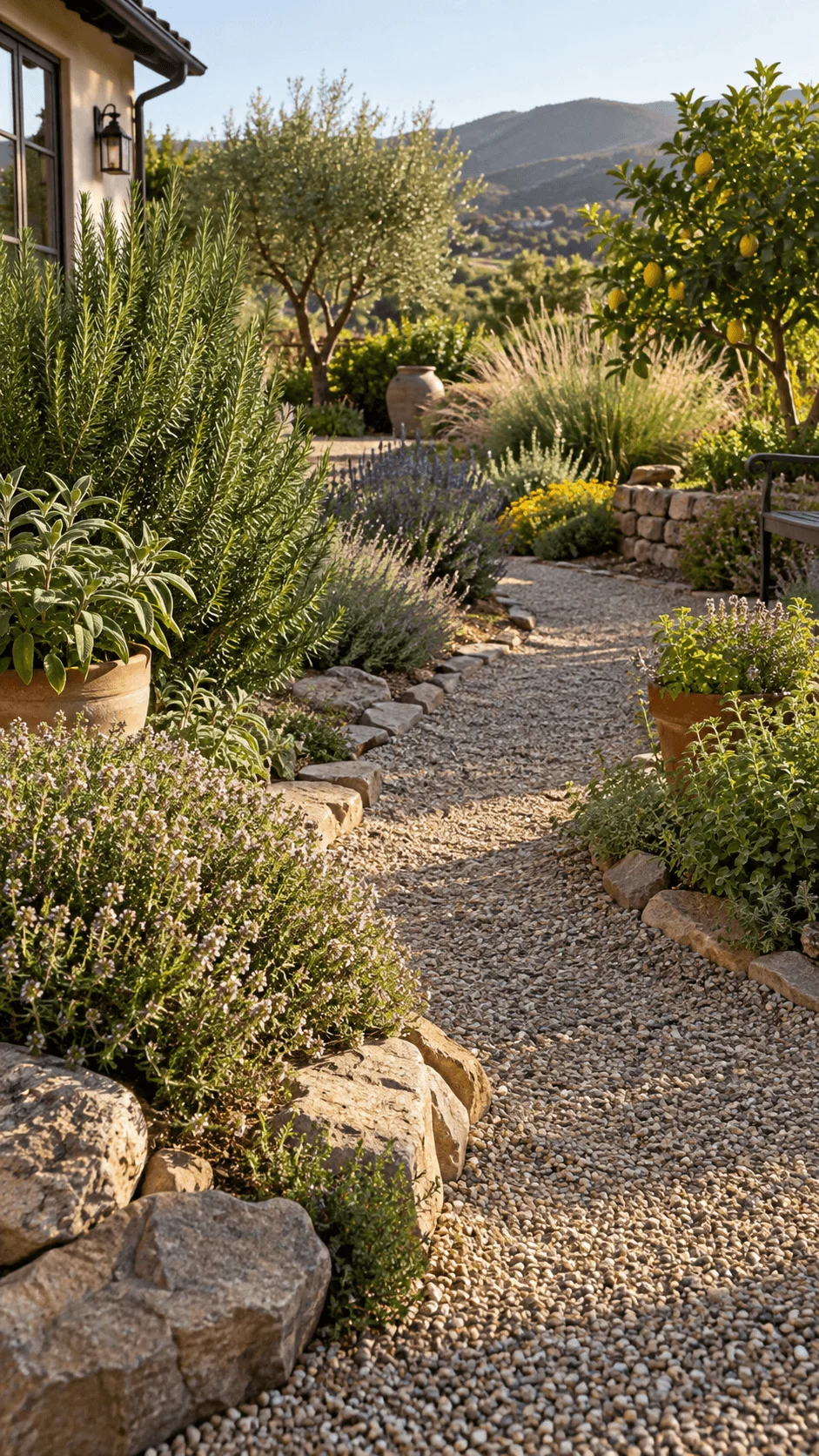
Edible xeriscape garden ideas work especially well when homeowners treat food plants as part of the design. Color, foliage, fragrance, flowers, plant form, and harvest can all contribute to the experience of the garden.
Green on Green Sustainable Xeriscape Landscaping
A xeriscape can look remarkably lush without depending on constant flowering. Green on green planting uses foliage as the main source of visual interest.
The secret lies in variation. Deep evergreen foliage can sit behind softer sage tones, while blue green leaves contrast with fine ornamental grasses. Silver foliage can reflect light and prevent the planting from appearing visually heavy.
Plant form matters just as much as color. Upright grasses can contrast with rounded shrubs, spreading groundcovers, and sculptural plants. Repeating selected forms throughout the landscape creates rhythm.
Layering adds depth. Taller plants can frame boundaries while medium vegetation fills the middle of the garden. Low plants can soften pathways and cover soil near the front.
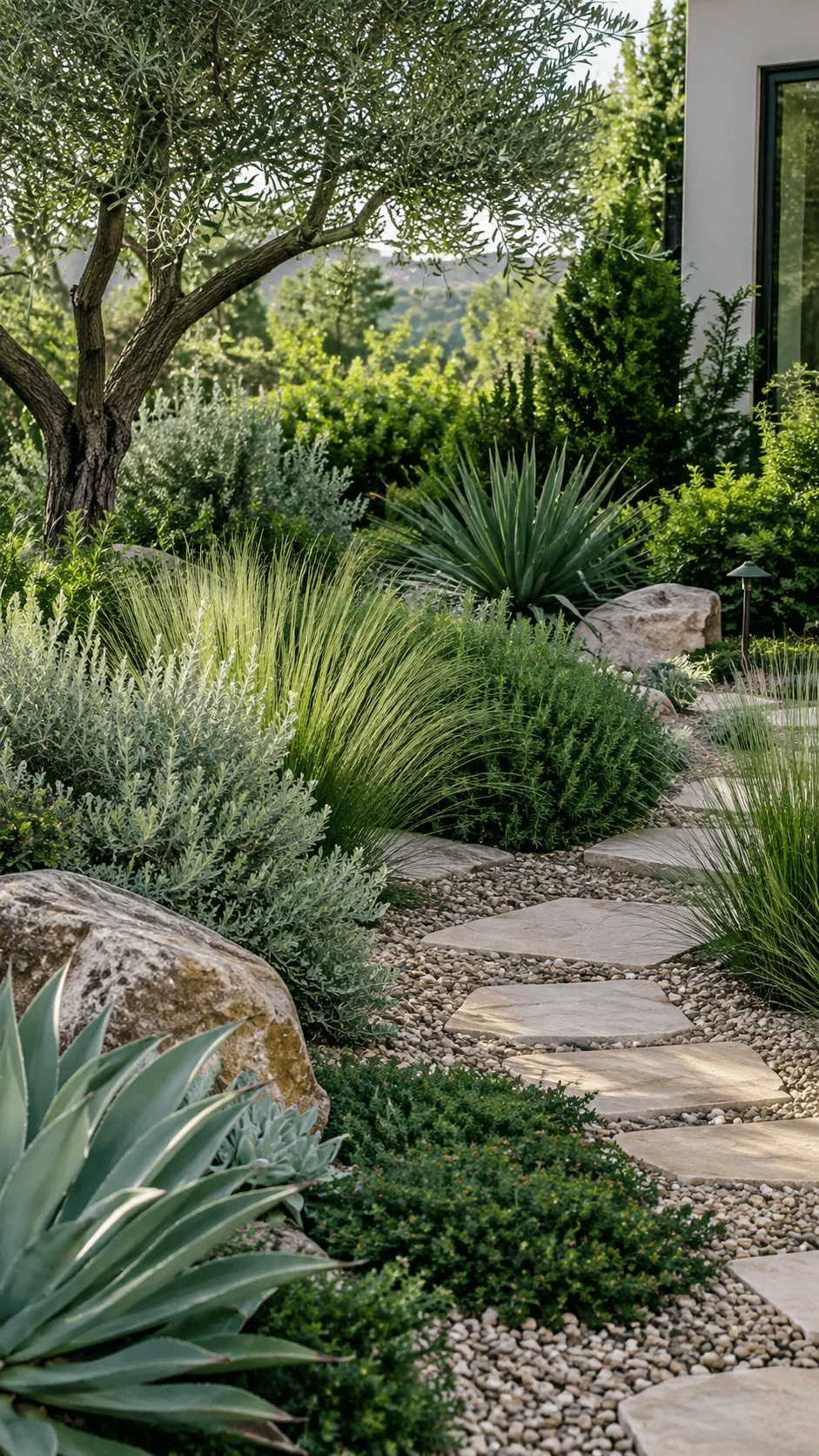
Natural stone and restrained areas of gravel can provide quiet contrast without taking attention away from the vegetation.
Green on green xeriscape garden design proves that drought tolerant garden ideas do not have to produce a dry looking landscape. Thoughtful foliage selection can create richness even when gardeners choose plants partly for modest water requirements.
Fire Conscious Climate Resilient Xeriscape Garden
Gardeners in wildfire prone areas increasingly need to think about how landscape design interacts with fire risk. Xeriscaping can form one part of a broader fire conscious strategy, but no garden design can make a property fireproof.
Plant placement matters. Dense vegetation directly beside structures can present different concerns from carefully positioned planting farther away. Gardeners should also pay attention to accumulated dry leaves, dead stems, woody debris, and other combustible material.
Hardscape can become part of the design where appropriate. Paths, patios, gravel areas, walls, and other nonliving features can create visual structure while separating areas of vegetation.
Maintenance remains essential. Even plants considered relatively suitable for fire conscious landscapes can become dry or accumulate dead material if gardeners neglect them.
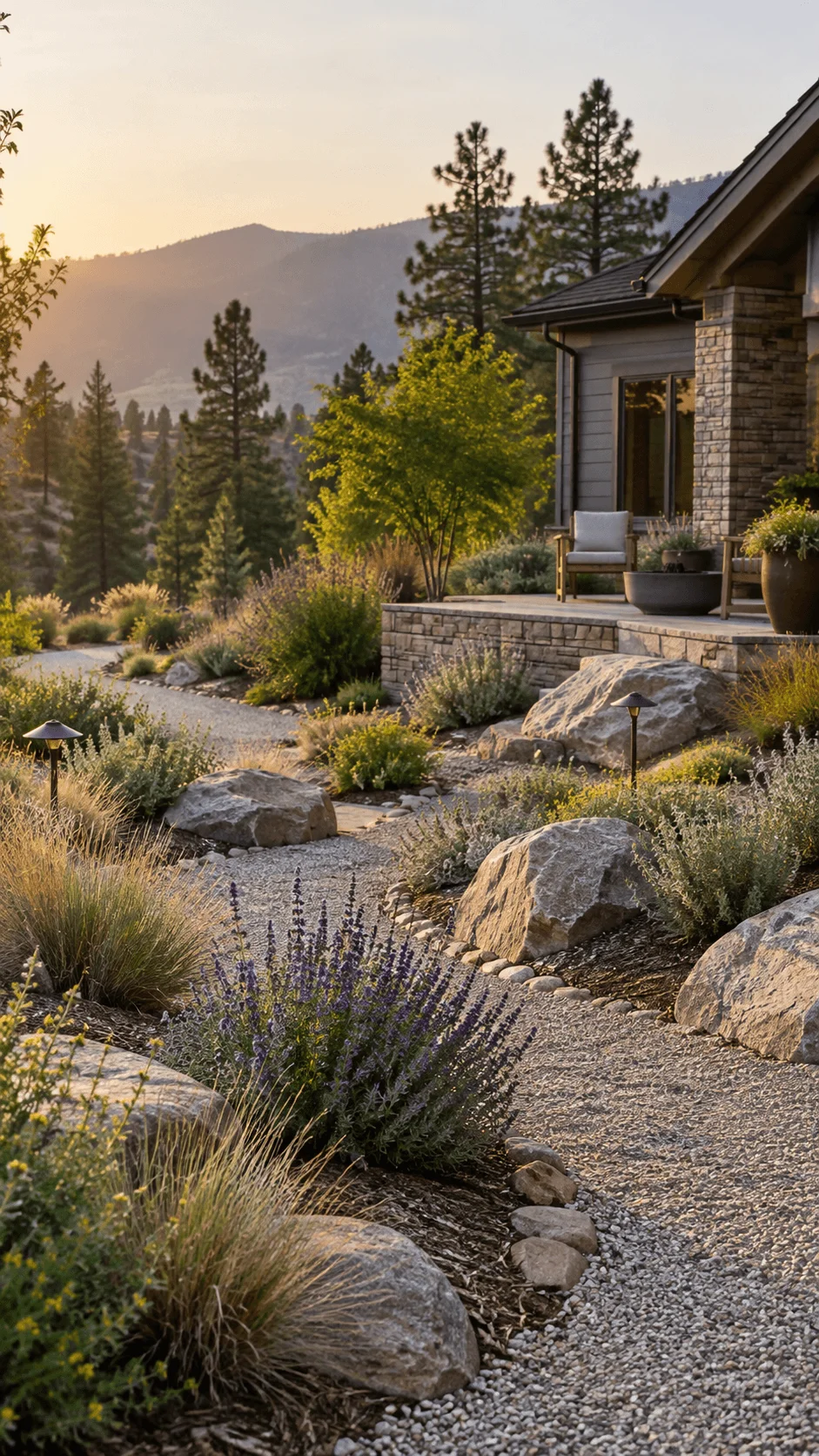
Local guidance should always take priority because wildfire conditions vary significantly between regions. Slope, wind, surrounding vegetation, building materials, and local climate can all affect risk.
A climate resilient xeriscape garden can still contain flowers, grasses, shrubs, attractive paths, and comfortable outdoor areas. The goal involves combining beauty with thoughtful placement and responsible maintenance.
Naturalistic Meadow Style Xeriscape Garden Ideas
A naturalistic meadow offers a softer alternative to highly structured xeriscaping. Instead of positioning isolated plants in large areas of gravel, gardeners can allow compatible drought tolerant plants to weave together in broad, flowing groups.
Ornamental grasses can provide the foundation. Their fine foliage creates movement, while flowering perennials and locally appropriate wildflowers introduce changing areas of color.
The design can evolve throughout the seasons. Spring may emphasize fresh foliage and early flowers. Summer can bring taller grasses and colorful blooms. Later in the year, seed heads and dried stems can create texture and movement.
Paths help maintain a sense of intention. A narrow gravel or natural stone route through the planting tells visitors that the meadow has been designed rather than abandoned. Defined edges can provide the same effect.
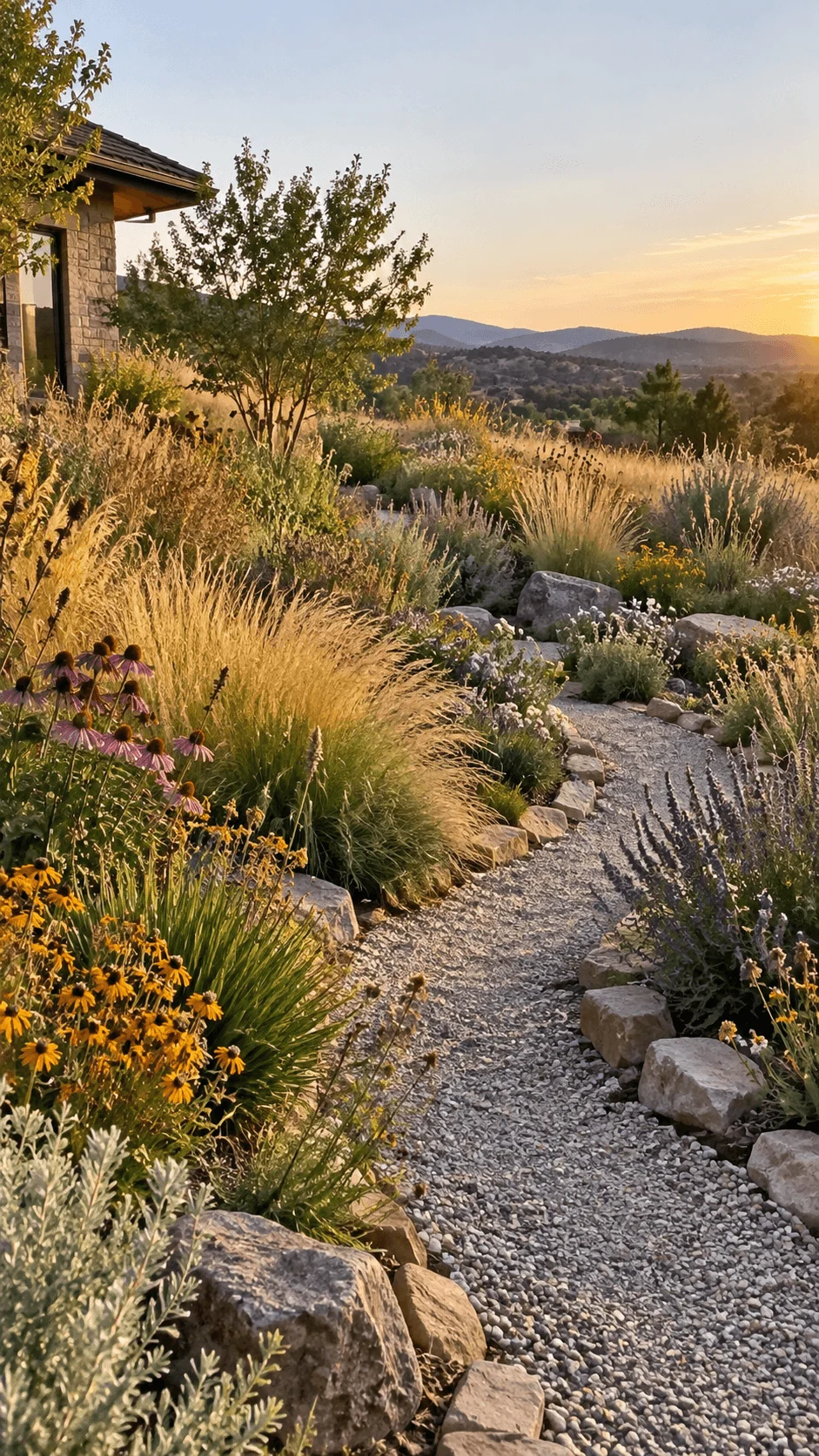
Plant density needs balance. Too much empty space may encourage weeds and make the garden feel unfinished, while overcrowding can create competition and maintenance problems.
Naturalistic eco friendly xeriscape ideas can feel relaxed without becoming chaotic. They combine the visual character of a meadow with plant choices suited to available moisture and local conditions.
Conclusion
Modern eco friendly garden ideas xeriscape design show that water wise landscaping can offer much more than gravel, cactus, and bare ground. A thoughtfully planned xeriscape can contain native flowers, layered greenery, pollinator habitat, edible herbs, ornamental grasses, living groundcovers, rainwater features, natural pathways, and comfortable outdoor spaces.
The strongest designs begin with the conditions that already exist. Sunlight, rainfall, soil, drainage, climate, available space, and the way a household uses its garden should influence decisions about plants and materials. Hydrozoning and targeted irrigation can then help gardeners provide water where plants genuinely need it rather than treating the entire landscape identically.
Biodiversity can become part of the same strategy. Native and locally appropriate plants can provide habitat while climate resilient planting can help a landscape cope with challenging conditions. Rainwater harvesting and thoughtful drainage can make natural rainfall more useful, while reduced lawn areas can open space for more diverse planting.
Most importantly, sustainable xeriscape landscaping does not require sacrificing beauty. A garden can feel lush through layers of green foliage, colorful through seasonal flowers, productive through edible plants, and dynamic through grasses that move in the wind.
The most successful xeriscape will never look exactly the same in every region, and that is one of its strengths. When gardeners work with local conditions instead of constantly fighting them, they can create outdoor spaces that use water thoughtfully while remaining beautiful, practical, resilient, and enjoyable throughout the seasons.