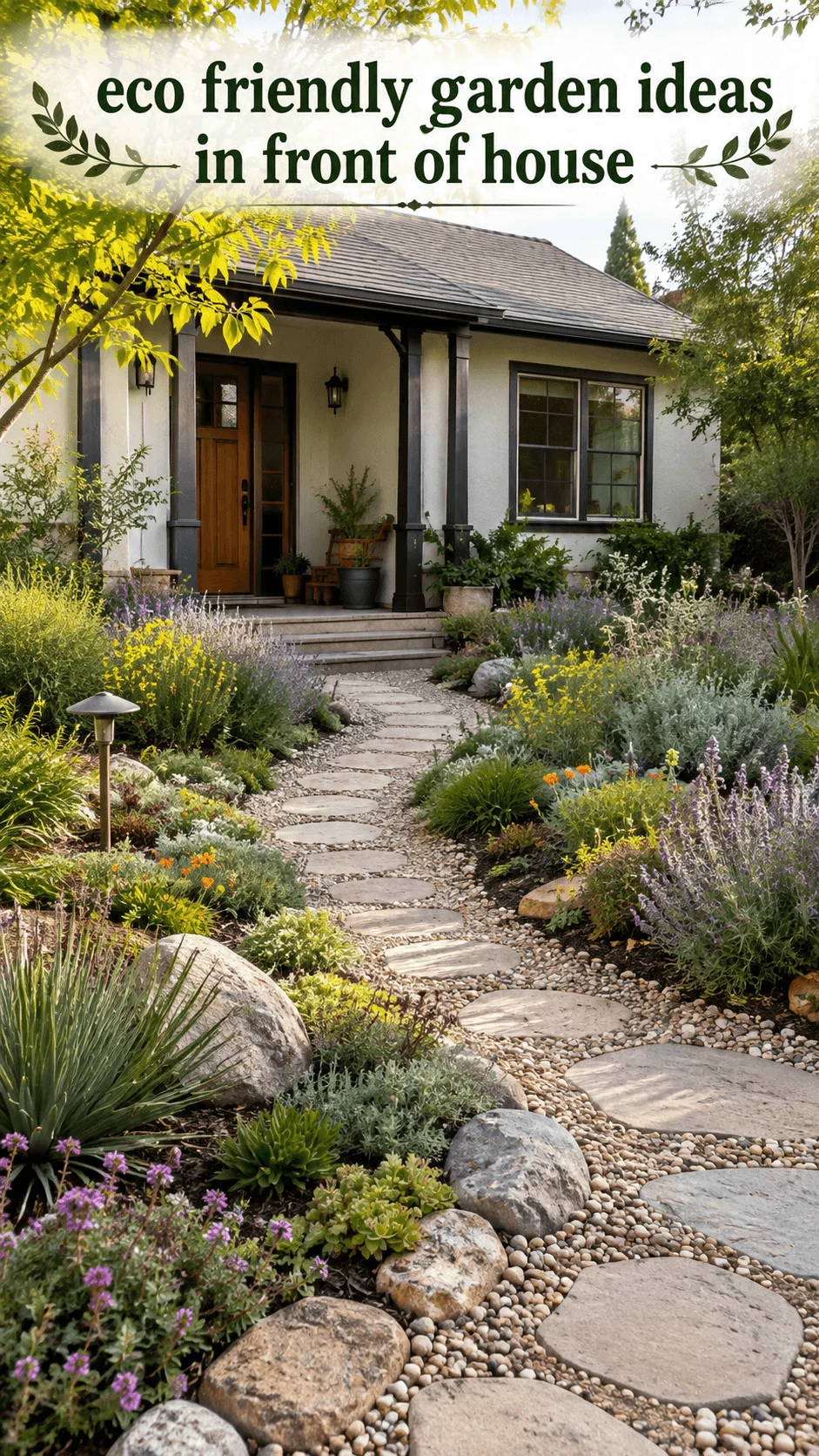
20 Eco Friendly Driveway Ideas for 2026
Eco friendly driveway design in 2026 is focused on sustainability, stormwater control, durability, and long term value. Homeowners are moving away from fully sealed concrete surfaces and choosing materials that allow water to drain naturally, reduce heat buildup, and support greener landscapes. A well planned driveway can improve curb appeal while also lowering environmental impact. Below are twenty detailed and practical eco friendly driveway ideas you can consider for your home.

Permeable Pavers
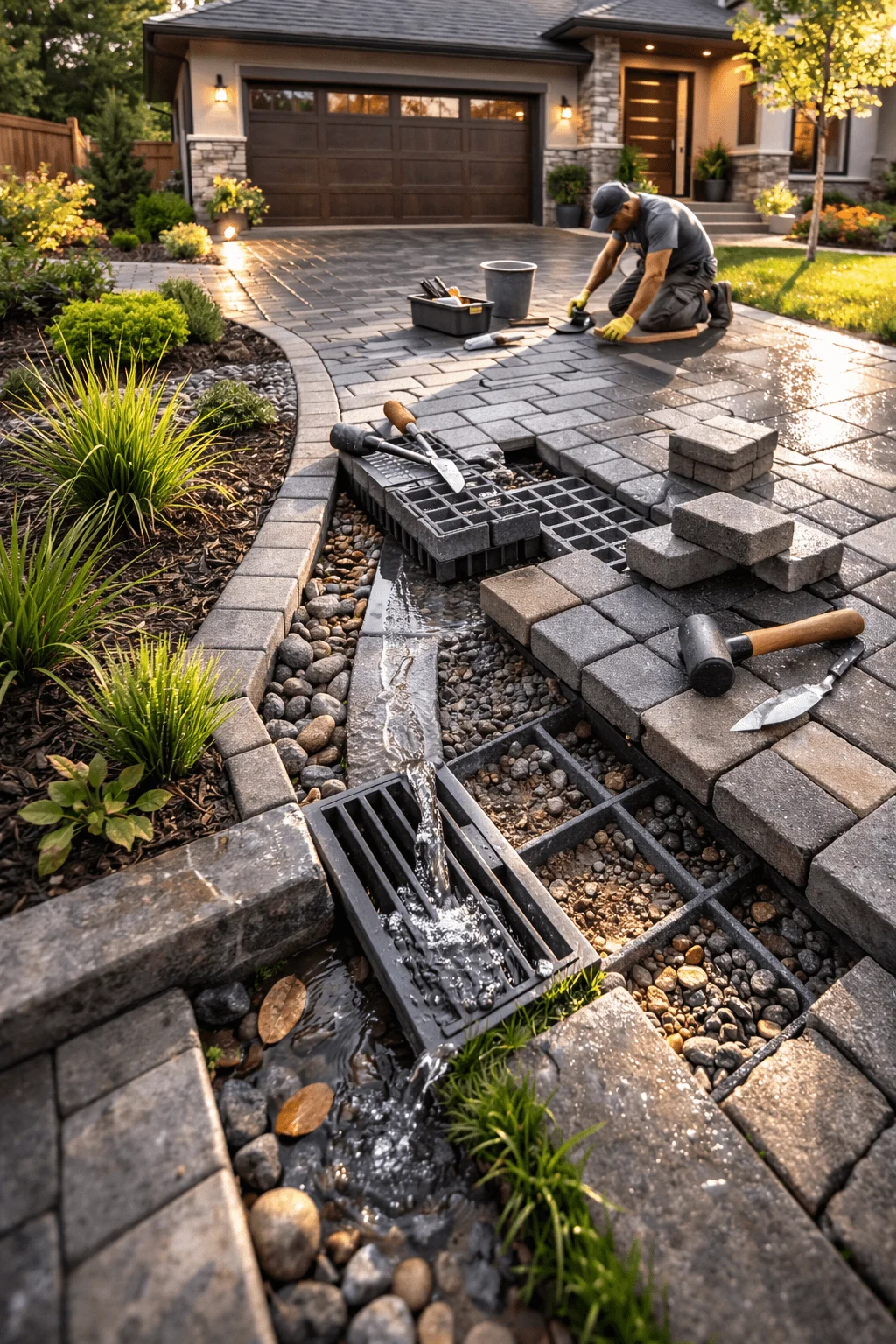
Permeable pavers are one of the most reliable sustainable driveway options available today. These interlocking concrete or stone units are installed with small gaps that allow rainwater to filter through into a prepared gravel base below. This system helps recharge groundwater and reduces flooding risk around your property.
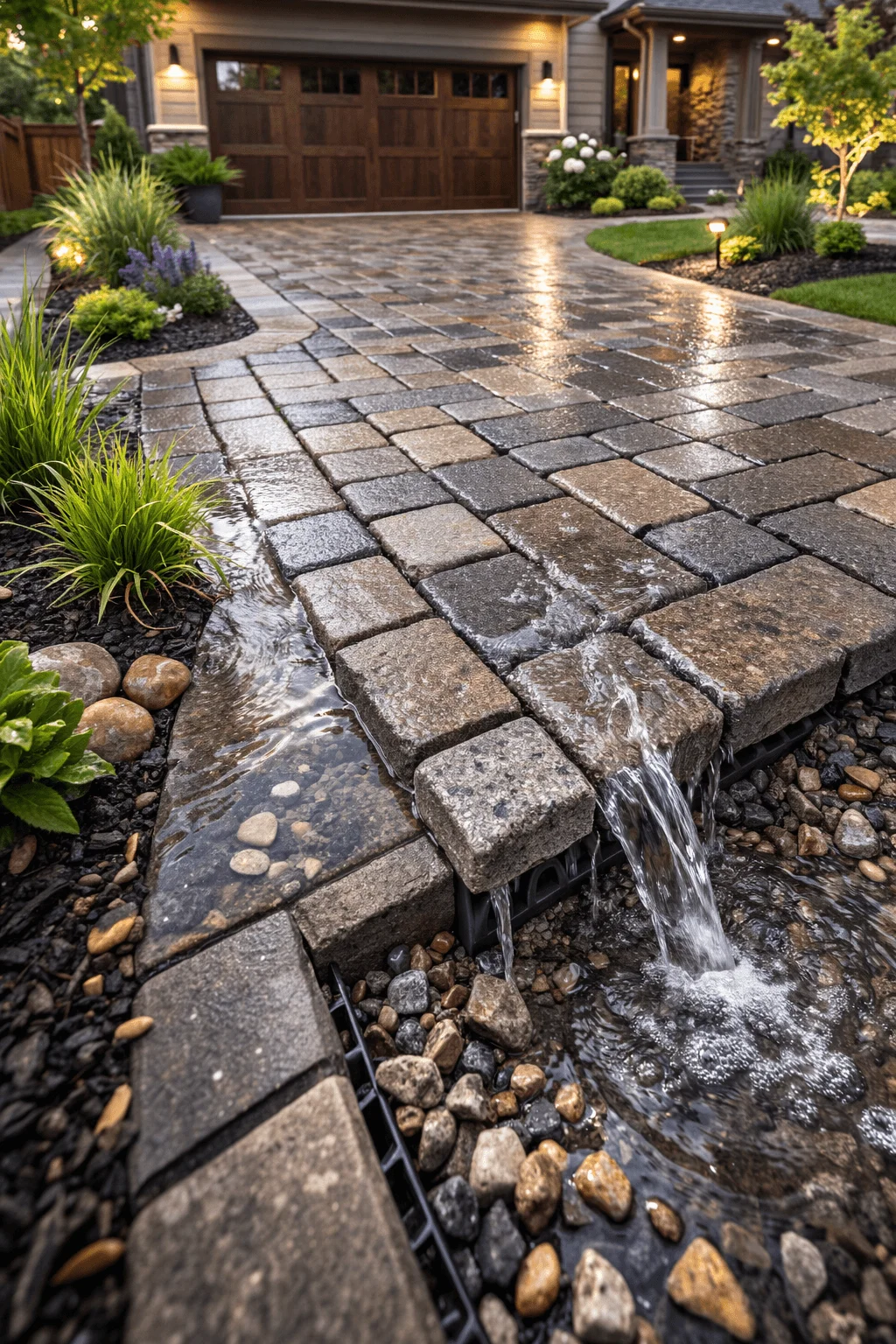
Beyond drainage benefits, permeable pavers offer design flexibility. They come in different colors, patterns, and textures that suit both modern and traditional homes. With proper installation and periodic cleaning to prevent clogging, they can last more than two decades. Although the upfront investment can be higher than regular concrete, the long term drainage performance makes them a smart eco conscious choice.
Turf Grid or Grass Paver Driveways
Turf grid systems combine structural support with living greenery. Concrete or recycled plastic grids are placed over a prepared base and filled with soil and grass. The grid supports vehicle weight while allowing vegetation to grow through the openings.
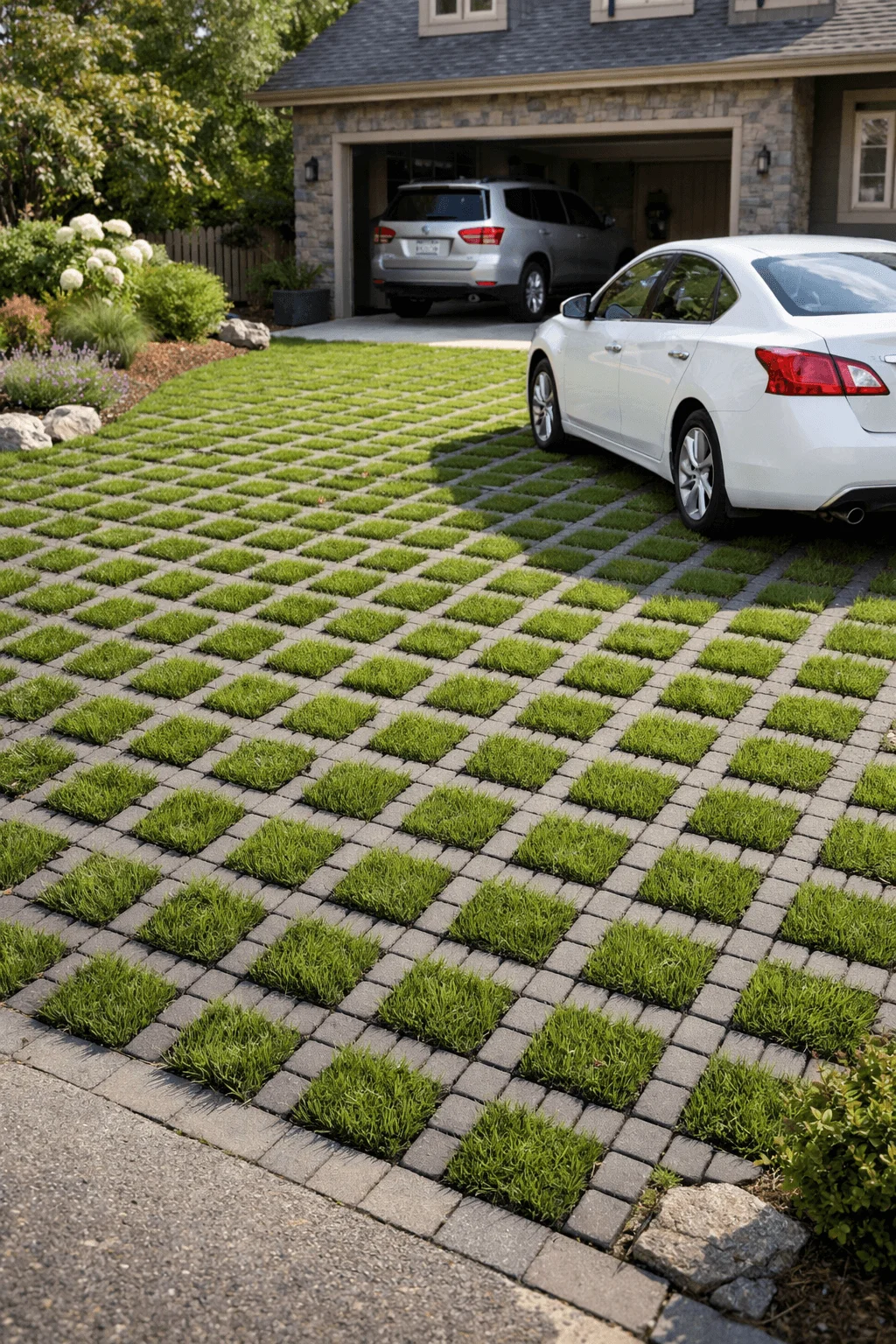
This option creates a natural lawn appearance instead of a solid paved surface. It significantly reduces runoff and helps lower surface temperatures. Turf grid driveways are best for light to moderate traffic. They require regular mowing and occasional reseeding, but they blend beautifully with landscaped yards.
Permeable Concrete or Porous Asphalt
Permeable concrete and porous asphalt look similar to traditional paving but are engineered with voids that allow water to pass through. These materials are ideal for homeowners who prefer a smooth and uniform driveway surface but still want environmental benefits.
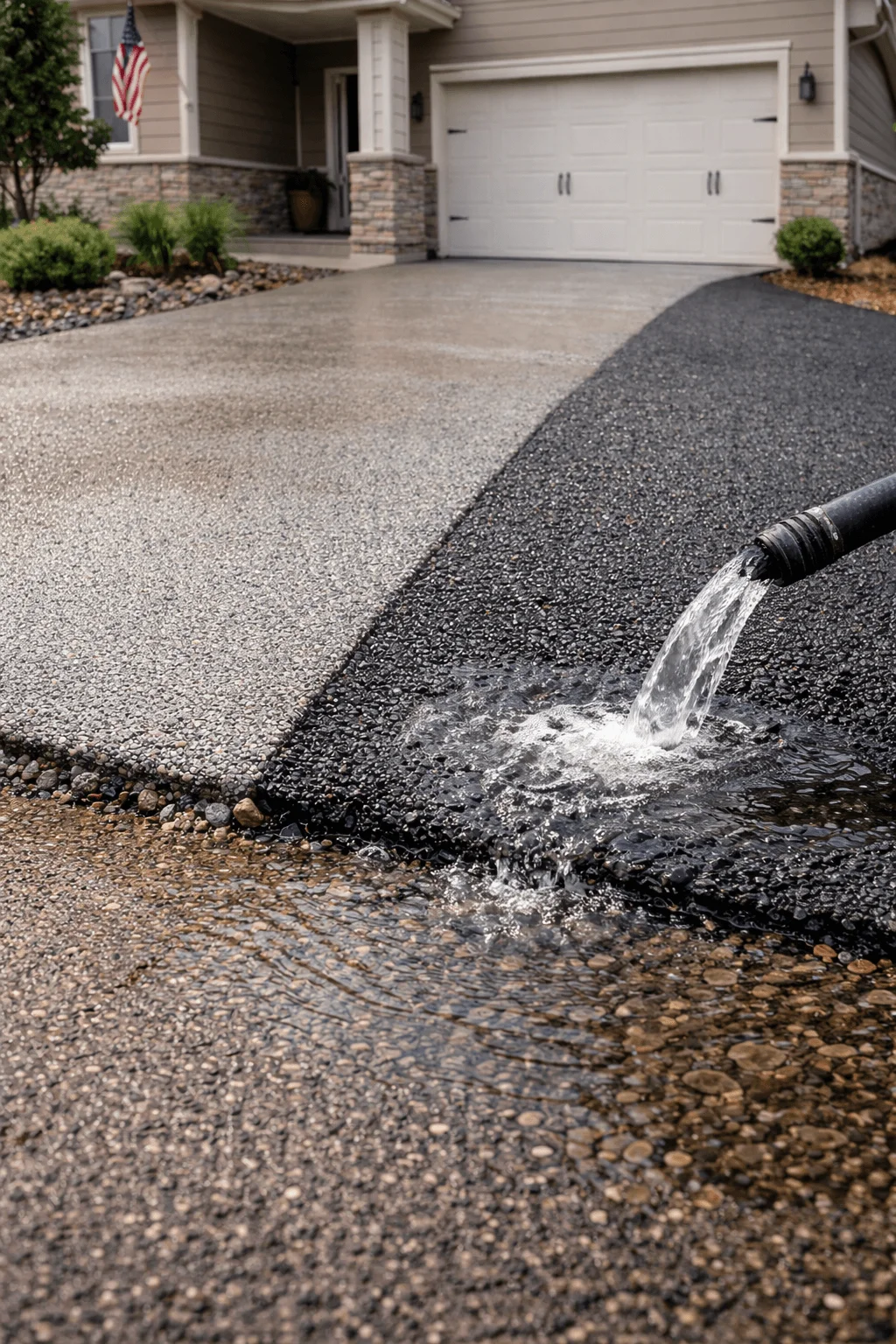
Proper installation is essential because the base layer must support water infiltration. Regular cleaning prevents debris from blocking the pores. When maintained correctly, these surfaces provide strength comparable to standard concrete while reducing stormwater runoff.
Resin Bound Surfaces Using Natural Aggregate
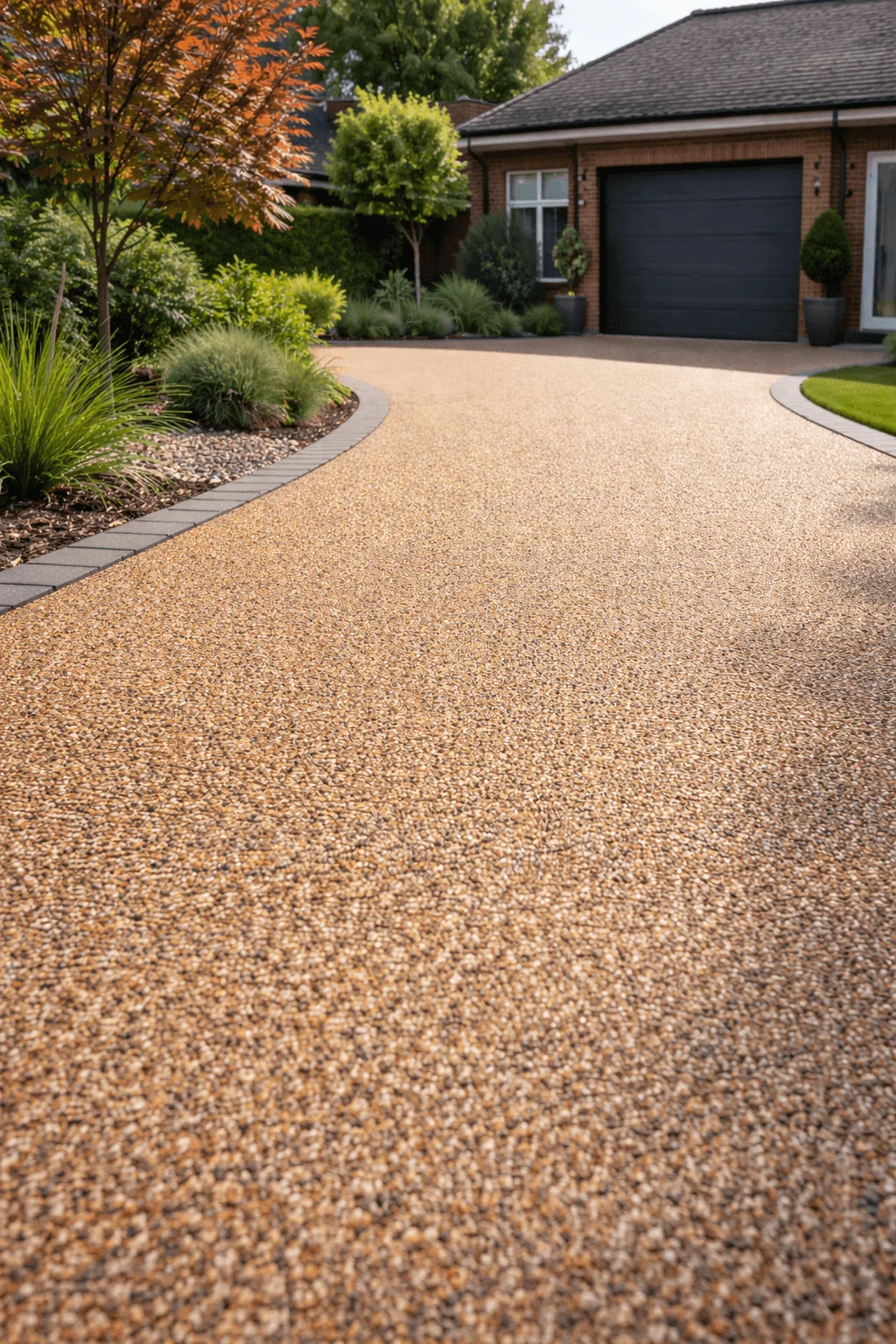
Resin bound driveways mix natural stone aggregates with a clear resin binder to create a seamless decorative finish. When installed over a permeable base, water can pass through the surface.
This style is increasingly popular for its clean modern look. It offers many color combinations and textures while remaining durable. Resin bound systems require professional installation and occasional cleaning to maintain appearance. Homeowners choose this option when they want both sustainability and strong curb appeal.
Stabilised or Bonded Gravel Driveways
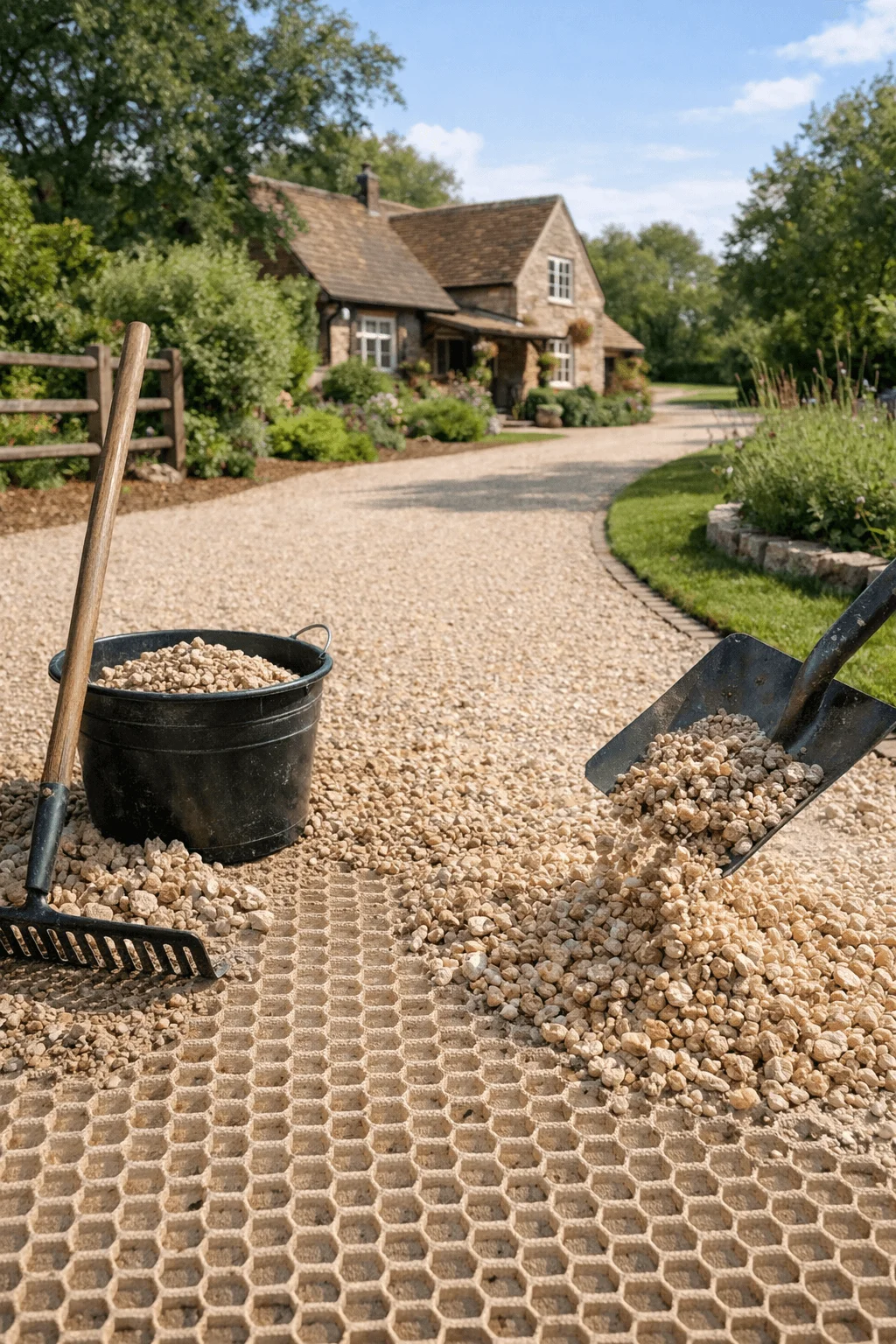
Gravel has long been considered an eco friendly material due to its natural permeability. Modern stabilizing systems improve its performance by reducing movement and rutting. Stabilised gravel remains permeable while offering better structural stability.
This option is cost effective and easy to install compared to many alternatives. It works well for rural or cottage style homes. Maintenance typically includes occasional raking and adding new gravel over time.
Recycled Material Driveways
Driveways built with recycled asphalt, crushed concrete, or reclaimed stone reduce the need for new raw materials. These surfaces reuse existing resources and lower embodied carbon.
Recycled materials can be compacted into a firm surface or used as a base layer beneath permeable systems. They often cost less than new materials and still provide solid durability. With thoughtful landscaping, they can look just as attractive as traditional options.
Vegetated Swales Beside Driveways
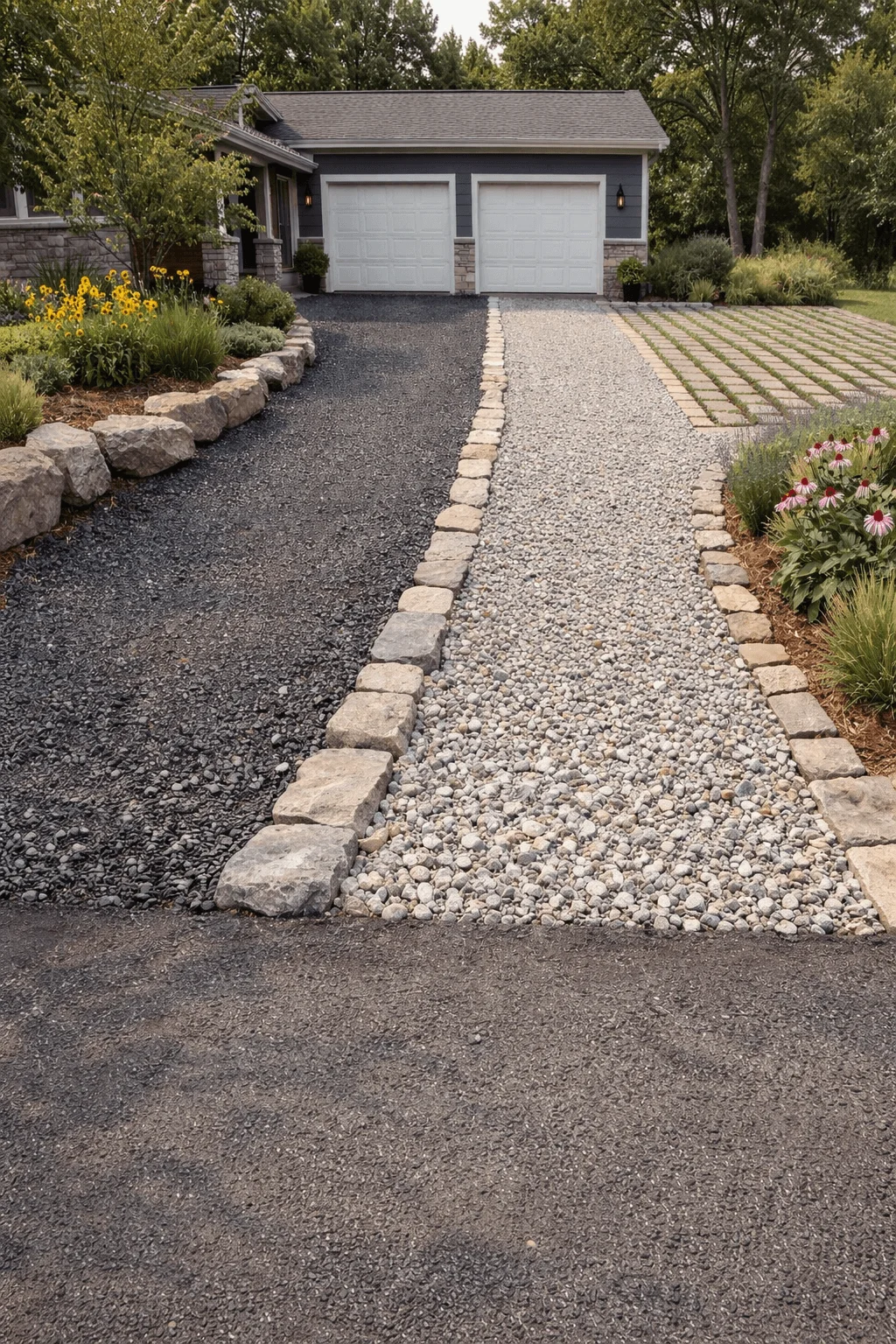
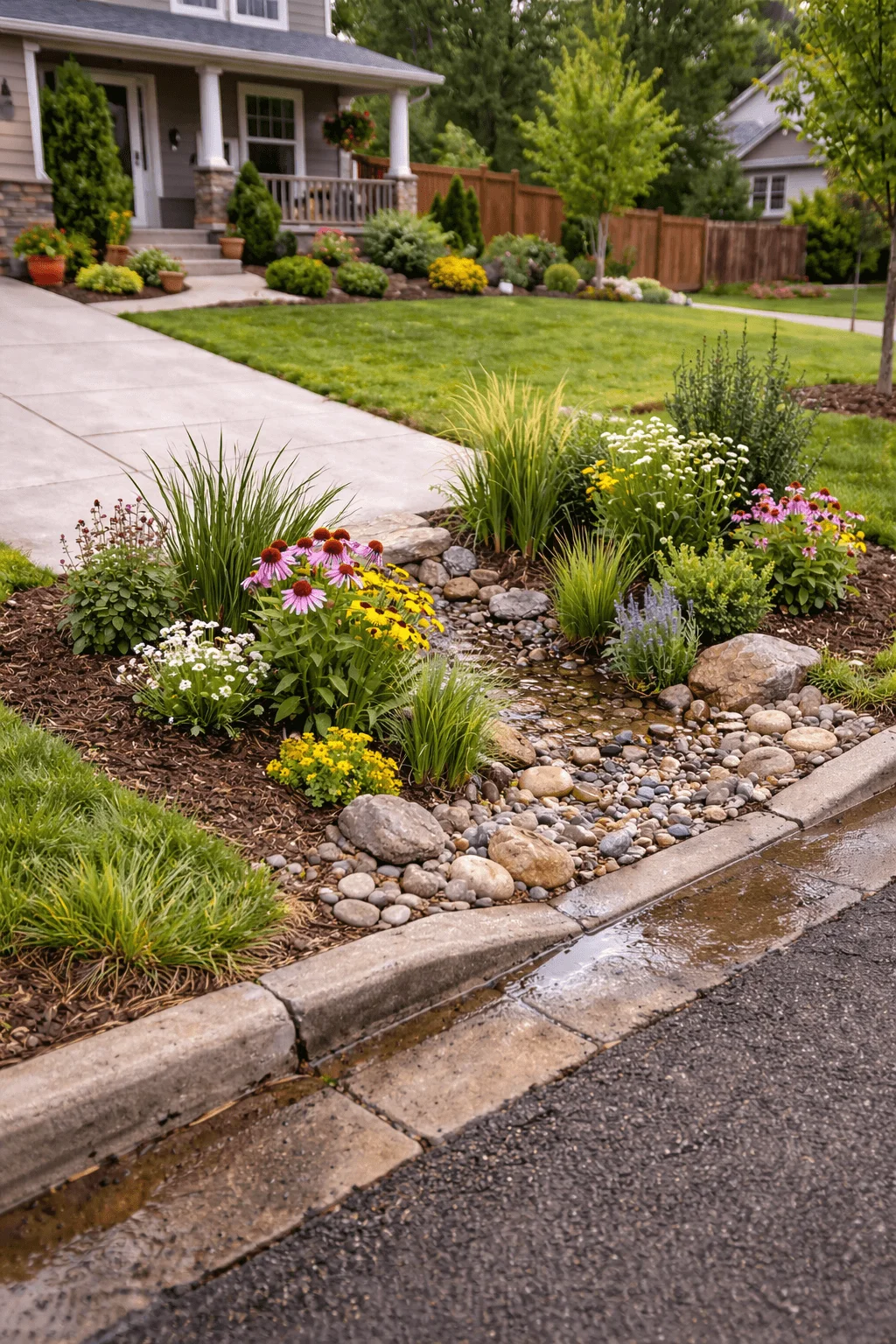
A vegetated swale is a shallow channel filled with soil and plants that captures and filters runoff. When installed along the side of a driveway, it redirects rainwater into the ground rather than toward the street.
Swales improve drainage performance and add greenery to the landscape. They are especially useful in areas with frequent heavy rainfall. Once established, they require only seasonal trimming and basic plant care.
Rain Gardens at Driveway Ends
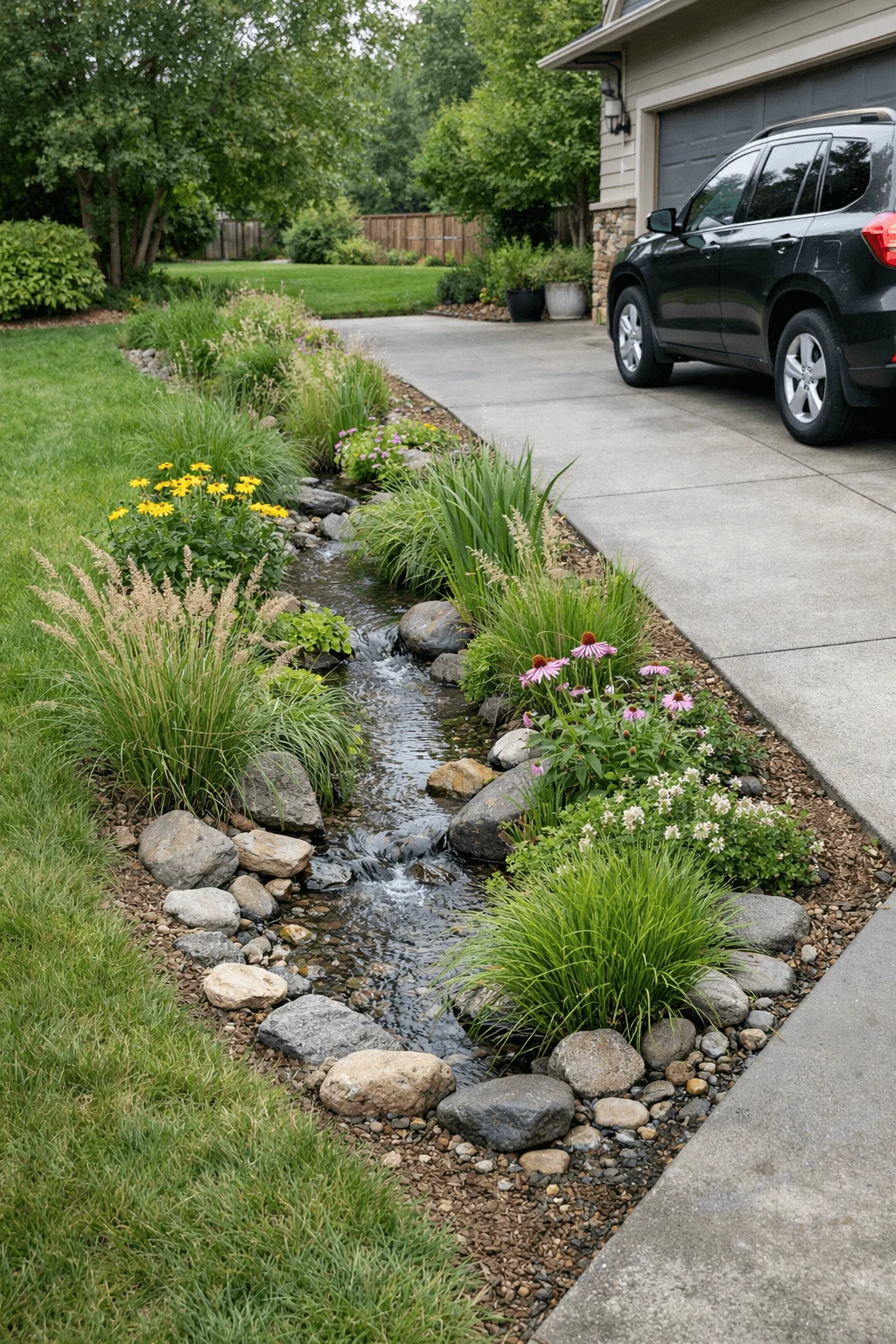
Rain gardens are planted depressions designed to collect and absorb water. Placing one at the end of a driveway turns runoff into a beneficial water source for native plants.
These gardens support pollinators and reduce strain on municipal storm systems. Proper sizing and plant selection ensure effective water absorption. They also enhance visual appeal with colorful seasonal blooms.
Porcelain Slab Driveways
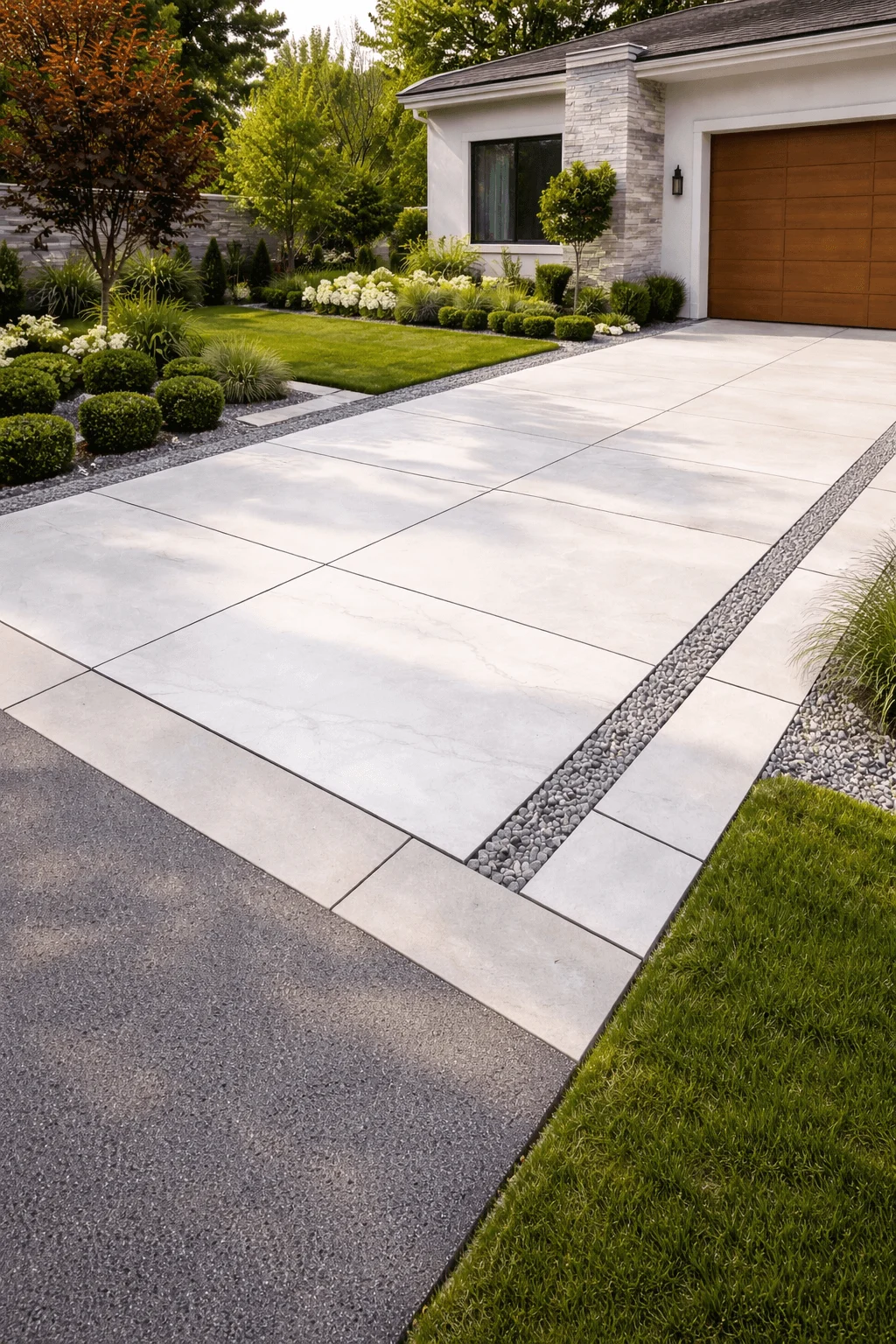
Porcelain slabs are growing in popularity due to their sleek appearance and reflective qualities. Light colored slabs reduce heat absorption compared to darker surfaces.
While porcelain is not always permeable on its own, it can be paired with permeable joints or drainage systems. The material is stain resistant and low maintenance, making it appealing for contemporary homes.
Permeable Paver and Rainwater Harvesting Hybrid
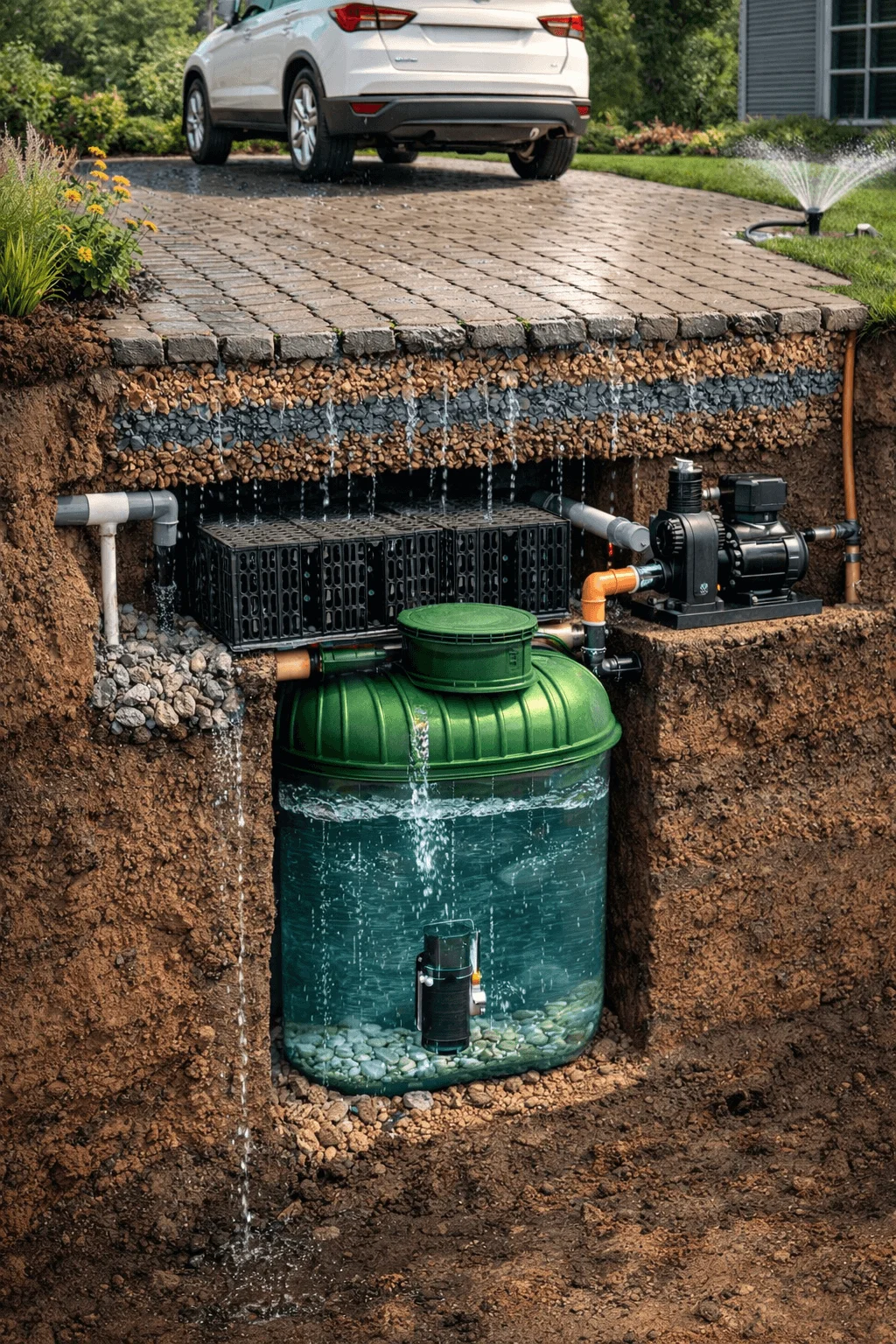
Combining permeable paving with a rainwater harvesting system allows homeowners to capture and reuse runoff. Water collected beneath the driveway can be stored in tanks and used for irrigation.
This setup is ideal for drought prone areas where water conservation is important. Although installation requires professional design, it offers long term savings and environmental benefits.
Native Plant Borders and Pollinator Strips
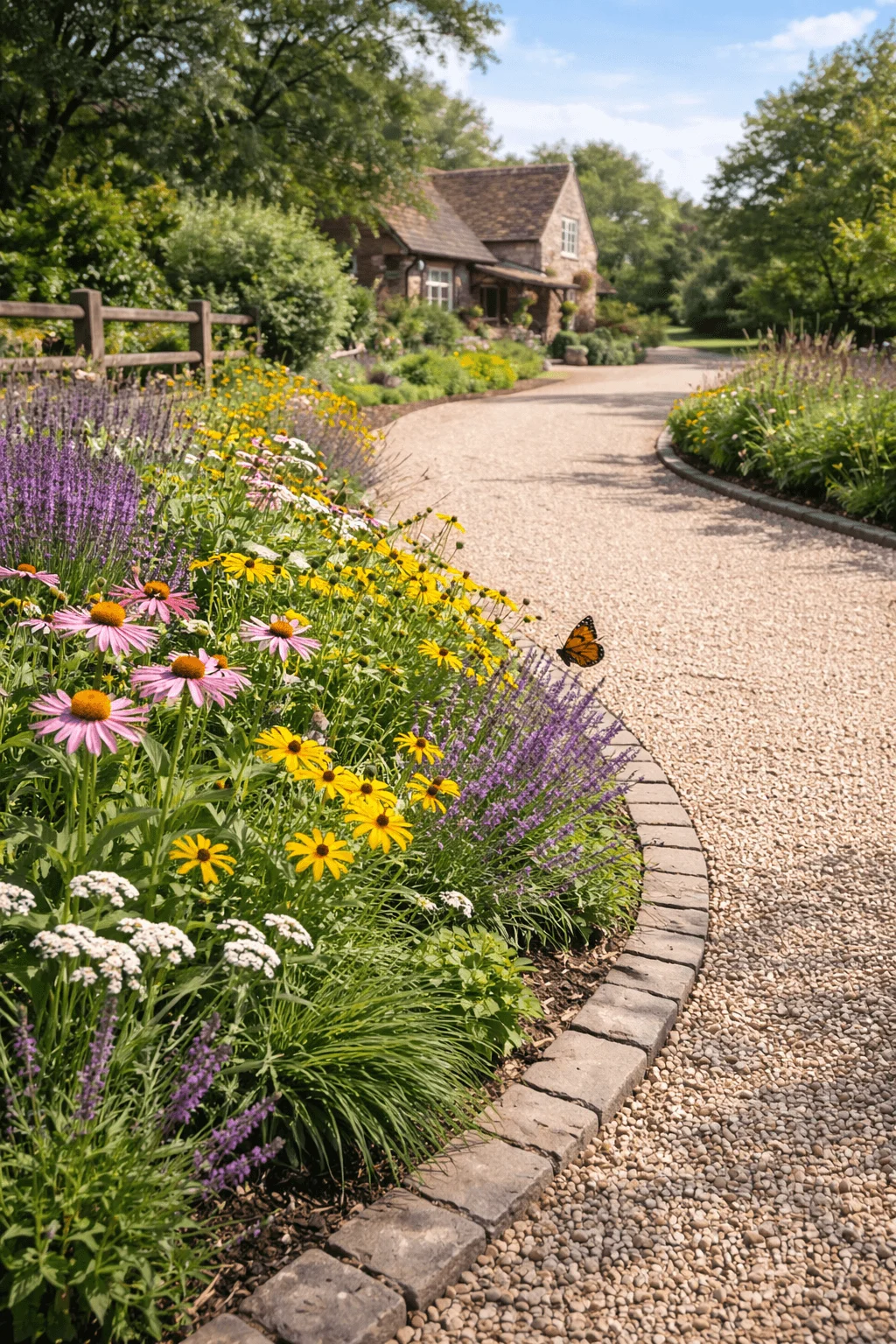
Replacing solid concrete edging with native plant borders softens the look of a driveway while supporting biodiversity. Native plants require less watering and adapt better to local climates.
Pollinator strips attract bees and butterflies, improving ecological balance. This simple landscaping upgrade complements permeable surfaces and gravel driveways.
Driveway Tree Trenches and Structural Soil Systems
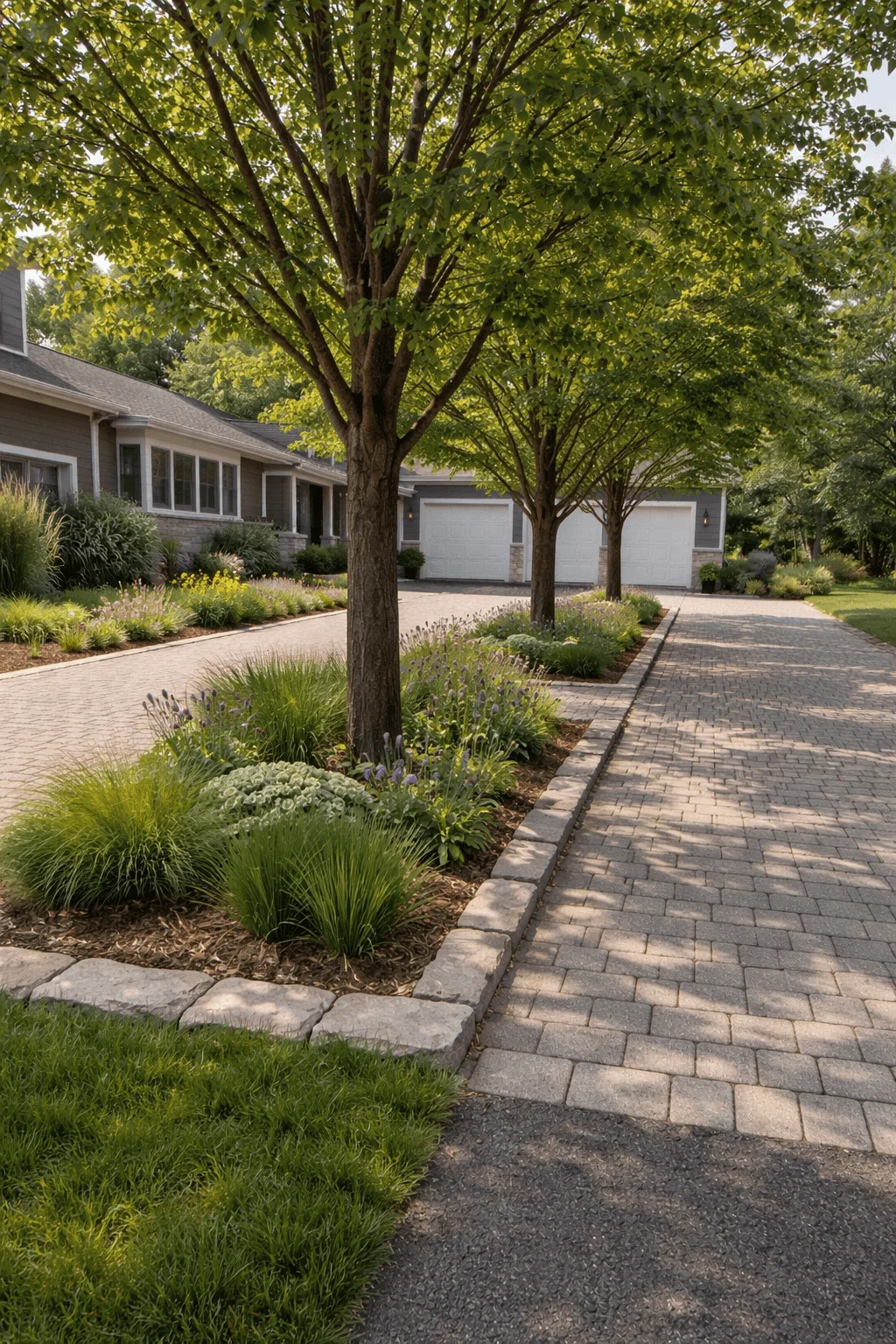
Tree trenches use engineered soil systems to allow trees to grow alongside paved surfaces without damaging them. Trees provide shade, reduce heat buildup, and improve air quality.
Although professional planning is required, the long term environmental advantages are significant. Integrating trees into driveway design adds both sustainability and visual impact.
Living Driveways with Groundcovers
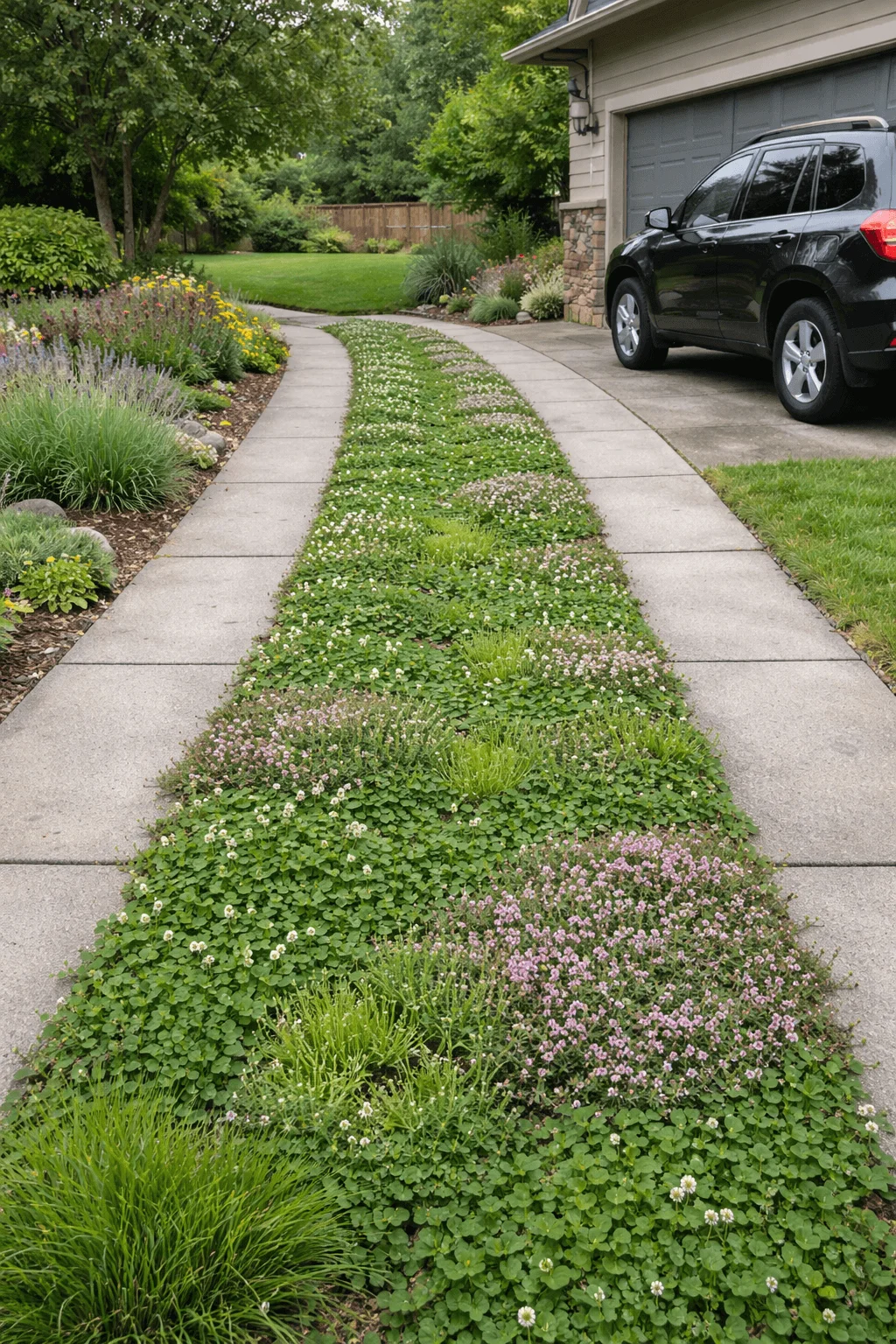
Living driveways use two solid wheel tracks with low growing plants in between. Groundcovers such as clover or creeping thyme tolerate occasional vehicle traffic.
This design reduces paved area and increases greenery. It works best for homes with limited daily vehicle use and offers a charming natural appearance.
Decorative Permeable Resin Patterns
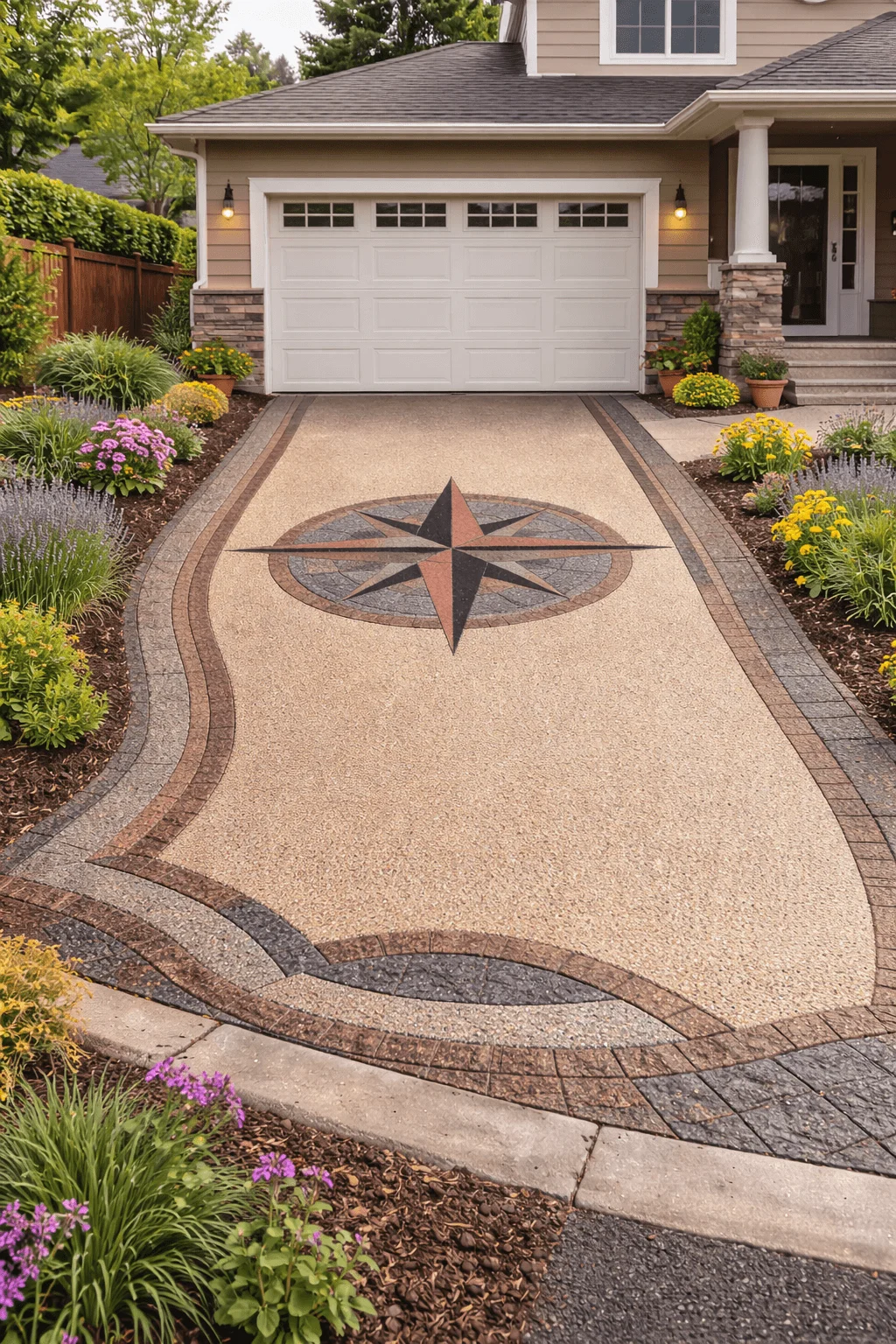
Permeable resin systems can incorporate custom patterns and borders while maintaining drainage. Homeowners can create unique designs that complement their architecture.
This option combines artistic appeal with functionality. It requires skilled installation but results in a durable and eye catching surface.
Modular Recycled Plastic Grid Pavers
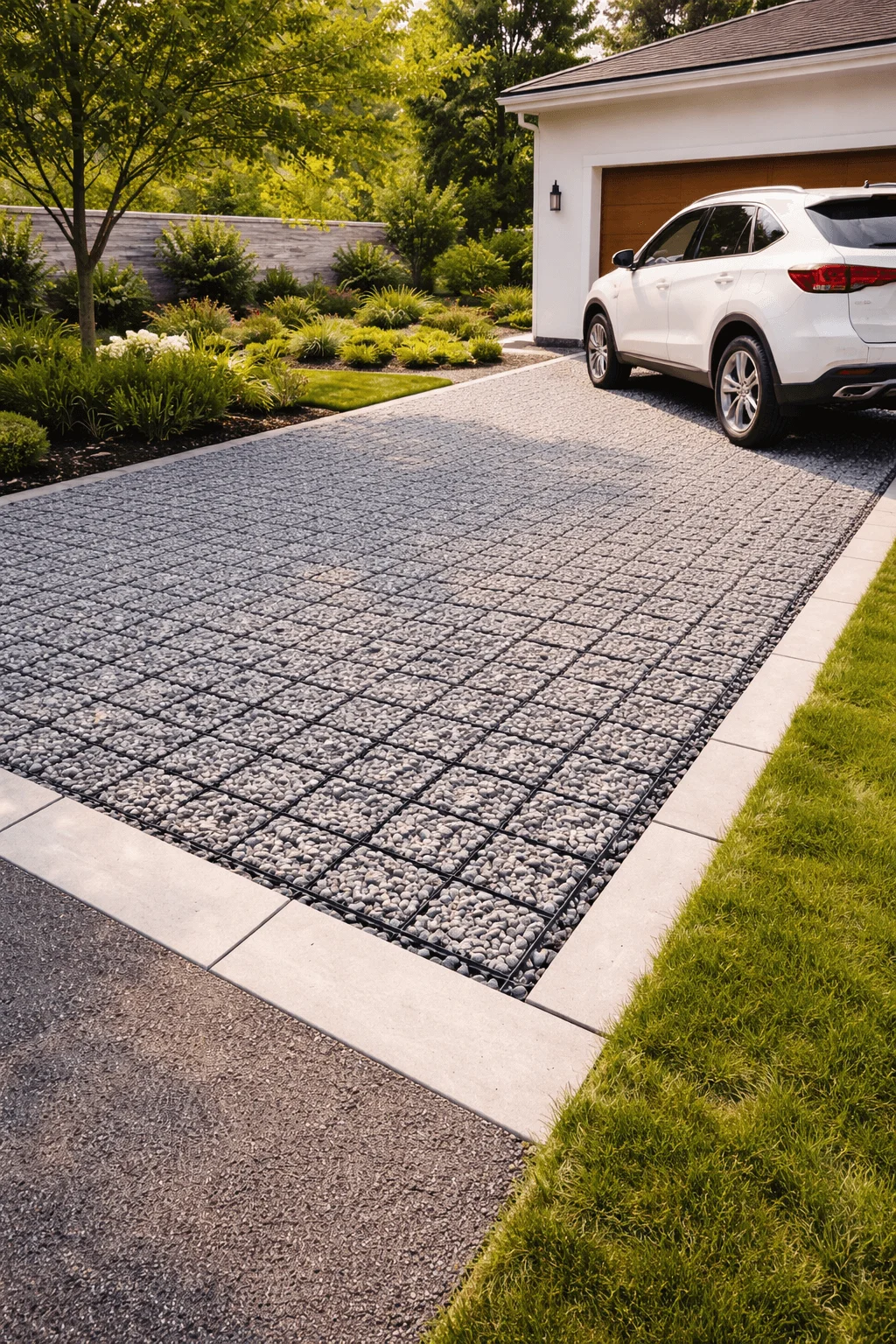
Recycled plastic grids filled with gravel or soil provide structural strength while remaining permeable. They are lightweight and easy to transport.
These modular systems can be removed or rearranged if needed, making them flexible for future changes. They offer a balance between affordability and sustainability.
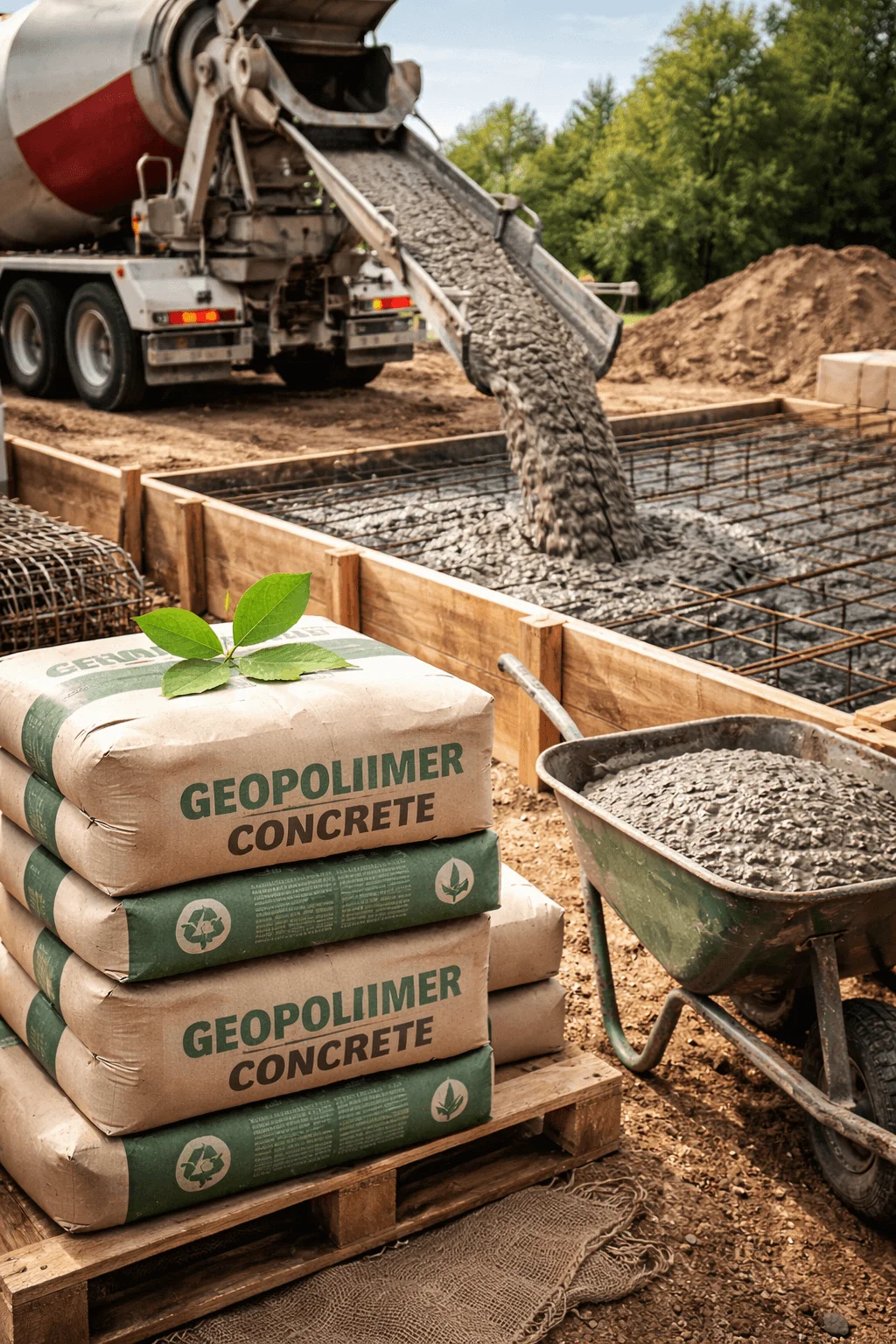
Low Carbon Cement or Geopolymer Concrete
Low carbon concrete alternatives significantly reduce greenhouse gas emissions during production. Geopolymer mixes are gaining attention in sustainable construction.
They provide similar strength to traditional concrete while offering environmental advantages. Availability varies by region, but demand is steadily increasing.
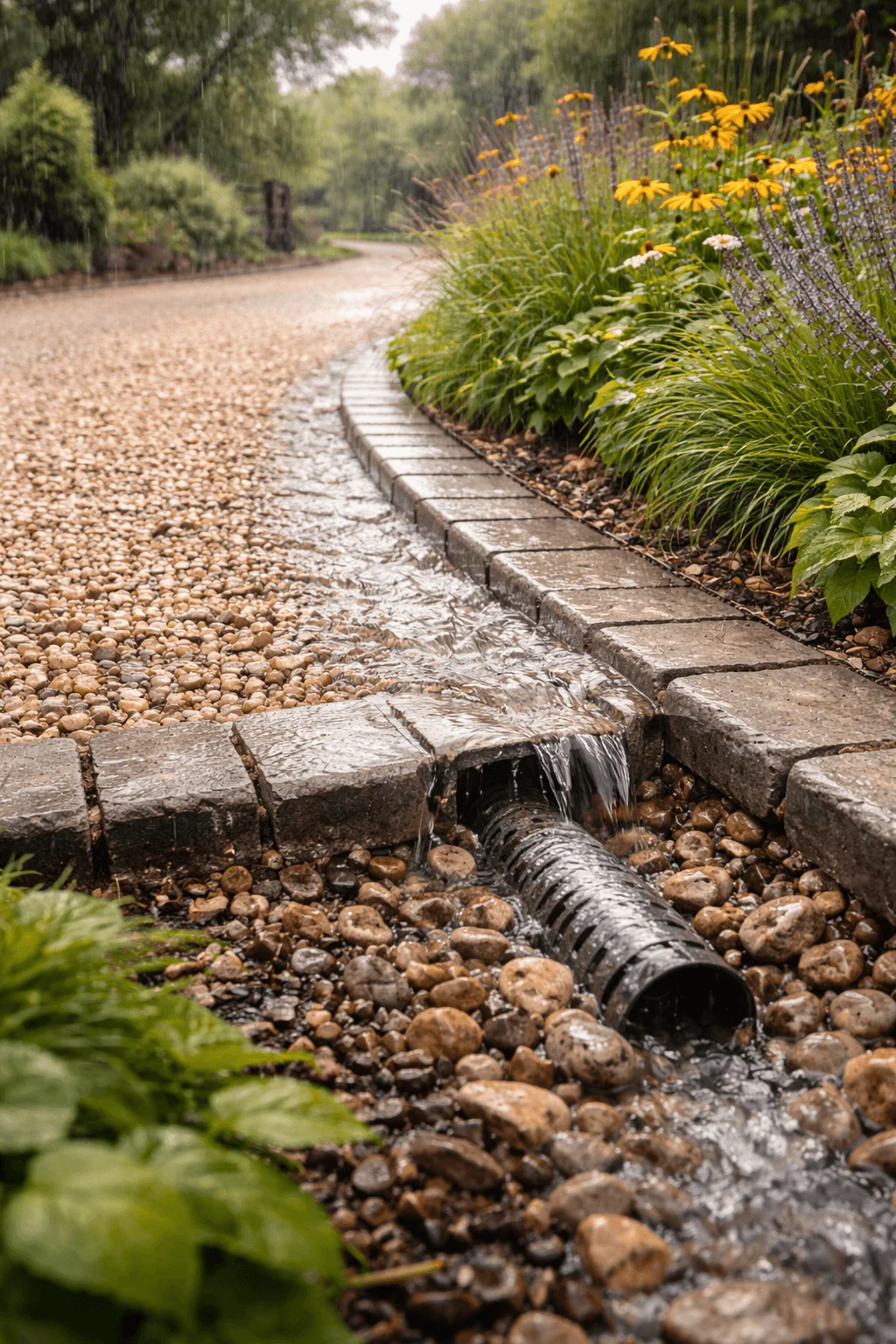
Integrated Permeable Edging and Infiltration Trenches
Integrated edging directs water into underground infiltration trenches rather than allowing runoff onto streets. This improves overall drainage performance.
This system can be added to both traditional and permeable driveways. It is especially beneficial in climates with heavy seasonal rainfall.
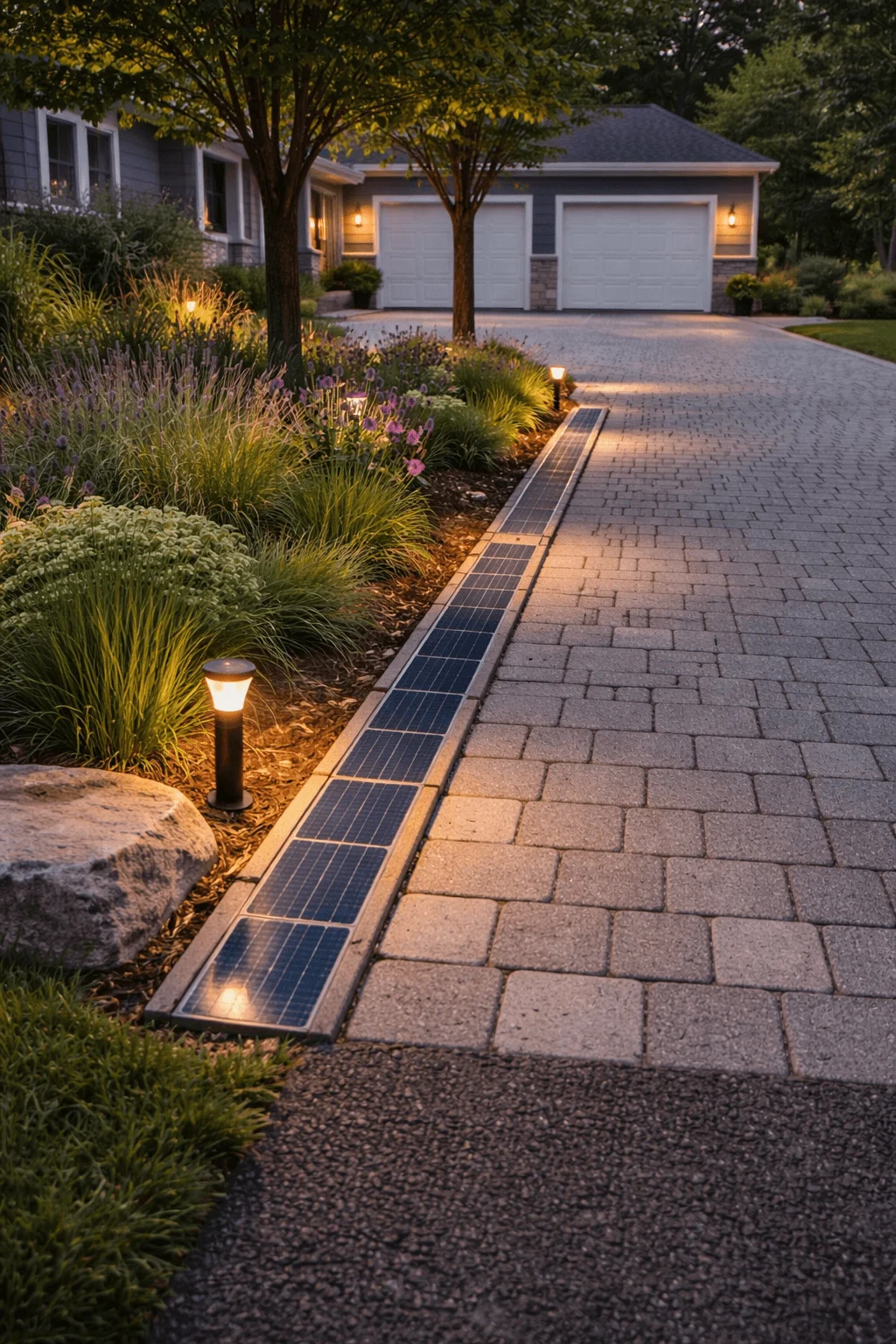
Solar Paver or Edge Solar Strips
Solar strips placed along driveway edges can power pathway lights or small outdoor devices. While not yet designed for full vehicle loads, they add renewable energy functionality.
As solar technology advances, these systems are becoming more efficient and affordable. They are ideal for homeowners interested in combining sustainability with innovation.
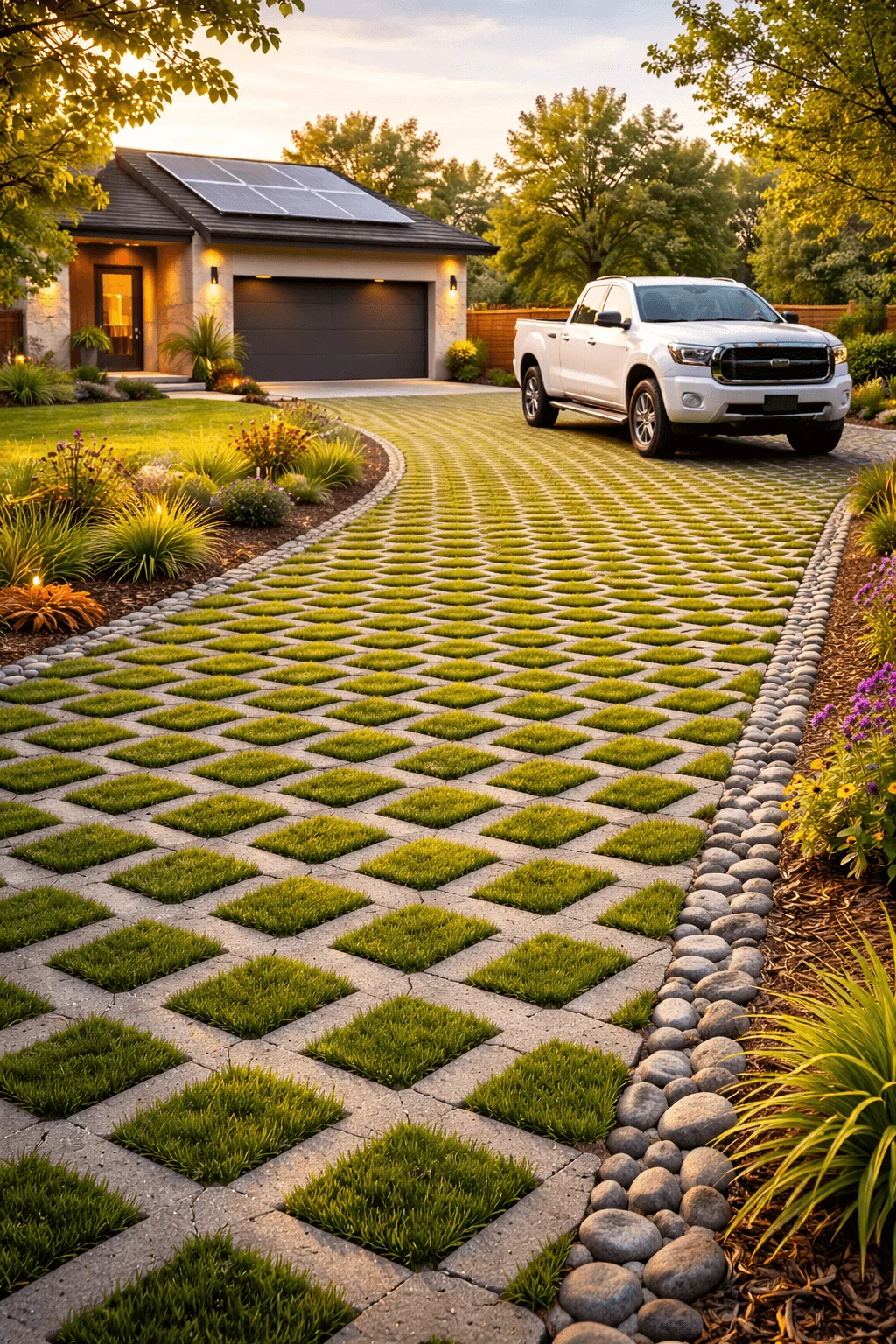
Porous Turfstone for Heavy Vehicle Access
Porous turfstone systems are reinforced grass pavers capable of handling heavier loads. They are often used for wider driveways or emergency access areas.
This solution maintains a green appearance while providing structural reliability. Regular mowing and seasonal care keep the grass healthy.
Maintenance First Sustainable Driveways
Sustainability also means designing for long term durability. Driveways built with replaceable sections and proper drainage reduce waste and future repairs.
Planning for maintenance from the beginning extends the lifespan of the surface. Choosing durable materials and modular systems minimizes environmental impact over time.
Conclusion
Eco friendly driveway ideas in 2026 focus on more than just materials. They emphasize water management, biodiversity, reduced carbon impact, and long term performance. Whether you choose permeable pavers, turf grids, recycled aggregates, or a rain garden system, the goal is to create a driveway that works with nature rather than against it. By selecting the right solution for your climate, budget, and design preferences, you can build a driveway that enhances your property while supporting a healthier environment for years to come.